
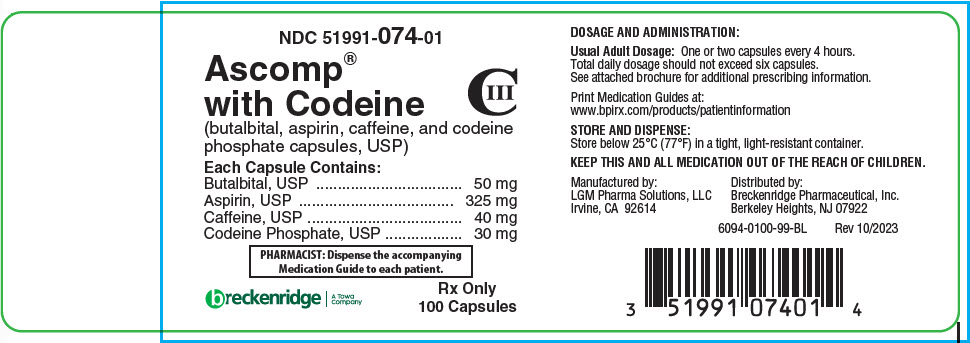
NDC 51991-0074-01: Ascomp with Codeine Butalbital, Aspirin, Caffeine and Codeine Phosphate 50 mg; 325 mg; 40 mg; 30 mg Capsule, Bottle of 100
This is a package of 100 capsules of Ascomp with Codeine Butalbital, Aspirin, Caffeine and Codeine Phosphate 50 mg; 325 mg; 40 mg; 30 mg Capsule from Breckenridge Pharmaceutical, Inc., first listed with the FDA May 2009 and currently FDA-listed; retail pharmacies pay about $1.01 per capsule (NADAC). It is the main listing for this product, which comes in 2 package sizes.
NDC Database Record
One package, one record: these facts belong to NDC 51991-074-01 alone.
- Record
- FDA NDC Directory package listing · Human prescription drug
- Code segments
- 51991 labeler · 074 product · 01 package
- Package marketed since
- May 1, 2009
- Sample package
- No — commercial package
- Listing certified through
- Dec 31, 2027
- Billing quantity
- 100 EA per package
- Barcode (UPC-A, from the NDC)
- 3 5199107401 4
- Medicaid fills, this package
- 374 prescriptions in the last four reported quarters
- FDA record last changed
- Nov 26, 2026
Identity & Classification
Regulatory identifiers FDA, NLM and CMS codes for this package
Drug-database identifiers Medi-Span GPI and First Databank GCN / HICL / AHFS classification
- GSN (GCN sequence number): 004120
- GCN: 69500
- GPI-14 (Medi-Span): 65991004300115
- HICL (First Databank): 001699
- AHFS class code: 28:08.04.24
- RxCUI (RxNorm): 994237
Where does this data come from?
- FDA openFDA NDC Directory · synced Nov 26, 2026
- FDA label on DailyMed · label index refreshed Nov 26, 2026
- RxNorm (NLM RxNav) · catalog refreshed Nov 26, 2026
- Medi-Span GPI (licensed)
- First Databank (licensed) · refreshed Nov 26, 2026
RxNorm Drug Class
This medicine belongs to the Platelet Aggregation Inhibitor class.
Where does this data come from?
- RxClass (NLM) · catalog refreshed Nov 26, 2026
Clinical
Patient education
Supplement & herbal interactions
Where does this data come from?
- MedlinePlus (NLM) · refreshed Nov 26, 2026
- FDA label on DailyMed · label index refreshed Nov 26, 2026
Ask a licensed pharmacist directly — free, answered by our team.
Pricing
A drug doesn't have one price. Each row is a different public payment system, and none is what you'd pay at the counter — that depends on your insurance. The ⓘ on each row explains what it measures.
| Price system | Per ea | Per package |
|---|---|---|
| Retail pharmacies payNADAC · weekly | $1.010 | $100.97 / 100 capsules |
| Medicaid paysCMS SDUD · 12 mo | $1.17 | $117.36 / 100 capsules |
| Medicare drug plans payPart D · Q2 2026 | $1.15 | $114.64 / 100 capsules |
See this NDC in the NADAC Price Lookup: every NDC at its price and what a fill costs the pharmacy →
Where does this data come from?
- CMS NADAC weekly file · file of Nov 25, 2026
- CMS ASP pricing files · refreshed Nov 20, 2026
- CMS Medicaid State Drug Utilization Data · through Q1 2026
- CMS Part D plan pricing files · refreshed Nov 24, 2026
- VA National Acquisition Center price file
Packaging — All Sizes for This Product
| Package NDC | Description | Per unit | Per pack | Marketing start | Marketing end | Status |
|---|---|---|---|---|---|---|
| 51991-0074-01 You're viewing this Main listing | 100 CAPSULE in 1 BOTTLE, PLASTIC | $1.01 / ea | $100.97 | 2009-05-01 | — | Active |
| 51991-0074-05 51991-074-05 | 500 CAPSULE in 1 BOTTLE, PLASTIC | $1.01 / ea | $504.87 | 2009-05-01 | — | Active |
You're viewing the smallest of 2 pack sizes for this product.
This pack has the lowest per-ea cost of the 2 priced pack sizes ($1.01 NADAC).
In Medicaid, this is the most-dispensed pack of this product — about 100% of fills over the last four reported quarters. See all packs ↓
Pack size FAQ
What quantity is in this package?
How does this package differ from NDC 51991-0074-05?
What NDC number is used to bill for this package of Ascomp with Codeine Butalbital, Aspirin, Caffeine and Codeine Phosphate 50 mg; 325 mg; 40 mg; 30 mg Capsule?
Prices are the latest CMS NADAC pharmacy acquisition cost per NDC; per-pack figures are per-unit × pack quantity, shown only when the pack is denominated in the same measure NADAC prices.
Therapeutic Equivalents
| Product | Labeler | Pack | NADAC/unit | TE | Status | Price vs. this |
|---|---|---|---|---|---|---|
| Ascomp with Codeine 50 mg/1; 325 mg/1; 40 mg/1; 30 mgthis 51991-0074-01 | Breckenridge | 100 capsules | $1.010 | AB | Availability likely | — |
| BUTALBITAL, ASPIRIN, CAFFEINE and CODEINE PHOSPHATE 50 mg/1; 325 mg/1; 40 mg/1; 30 mg 69238-1993-01 | Amneal | 100 capsules | $1.010 | AB | Availability likely | — |
| Butalbital, Aspirin, Caffeine And Codeine Phosphate 50 mg/1; 325 mg/1; 40 mg/1; 30 mg 63629-2952-01 | Bryant | 30 capsules | — | AB | FDA listed | — |
| Ascomp with Codeine 50 mg/1; 325 mg/1; 40 mg/1; 30 mg 79739-6094-01 | LGM | 100 capsules | — | AB | FDA listed | — |
Where does this data come from?
- FDA openFDA NDC Directory · synced Nov 26, 2026
- FDA Orange Book · refreshed Nov 6, 2026
- CMS NADAC weekly file · file of Nov 25, 2026
Availability & Generic Status
This product is an FDA-approved generic. Other versions of the same drug are listed under Therapeutic equivalents, least expensive first.
Where does this data come from?
- FDA Orange Book · refreshed Nov 6, 2026
What It Looks Like
Where does this data come from?
- FDA label on DailyMed · label index refreshed Nov 26, 2026
Inactive Ingredients / Excipients
Inactive ingredients, also called excipients, are components of the drug product other than the active ingredient. They may include fillers, dyes, coatings, preservatives, flavors, or other formulation ingredients.
Tap an ingredient (hover on desktop) to see what it is and why it’s used.
-
UNII 767IP0Y5NH
A synthetic red colorant used to give medicines their color. It helps patients identify their medication and makes the product visually appealing.
-
UNII 35SW5USQ3G
A synthetic yellow dye used to color medicines. It helps make tablets, capsules, and liquids visually distinct so patients can easily identify their medication.
-
UNII H3R47K3TBD
FD&C Blue No. 1 is a synthetic blue dye approved for use in foods and medicines. It serves as a colorant to give the medication its distinctive appearance and help with product identification.
-
UNII WZB9127XOA
A synthetic red dye used to color medications and make them easier to identify. It serves as a colorant in tablets, capsules, and liquid formulations.
-
UNII 2G86QN327L
Gelatin is a protein derived from animal collagen, commonly used in medicines as a gelling agent and capsule material. It helps create soft or hard capsule shells that hold and release medication, and can also thicken liquid formulations.
-
UNII OP1R32D61U
Microcrystalline cellulose is a purified form of cellulose, a natural fiber from plant sources. It acts as a binder and filler in tablets and capsules, helping hold ingredients together and give the medicine its shape and size.
-
UNII 368GB5141J
A detergent and foaming agent derived from coconut or palm oil. In medications, it helps break down and mix oil and water-based ingredients, aids in tablet disintegration, and improves how the drug dissolves and spreads in the mouth or digestive system.
-
UNII O8232NY3SJ
A plant-based carbohydrate derived from corn kernels. It acts as a filler to add bulk, a binder to hold ingredients together, and a disintegrant to help the tablet break apart in your stomach for absorption.
-
UNII 4ELV7Z65AP
Stearic acid is a fatty acid derived from plant or animal sources. It acts as a binder and lubricant in tablets and capsules, helping them hold together and flow smoothly during manufacturing.
-
UNII 7SEV7J4R1U
A powder made from a naturally occurring mineral. In medicines, talc works as a glidant and anti-caking agent, helping tablets and capsules flow smoothly during manufacturing and preventing clumping.
-
UNII 15FIX9V2JP
Titanium dioxide is a bright white mineral powder commonly used as a colorant and opacifying agent. It makes pills and tablets white or lighter in color and helps make coatings non-transparent.
11 inactive ingredients listed in the exact product block matched to this NDC.
Where does this data come from?
ingredient classCode="IACT" elements from the exact product block matched by this NDC. Label-section narrative from DailyMed / the openFDA label index is shown separately when available.- FDA label on DailyMed · label index refreshed Nov 26, 2026
- FDA openFDA NDC Directory · synced Nov 26, 2026
Inactive ingredient FAQ
Are inactive ingredients the same for every manufacturer?
Why might an inactive ingredient be missing?
Can inactive ingredients matter?
Manufacturer & Labeler
More NDCs from Breckenridge Pharmaceutical, Inc. labeler code 51991
- Milnacipran Hydrochloride 50 mg Tablet NDC 51991-036-06
- Milnacipran Hydrochloride 100 mg Tablet NDC 51991-037-06
- Oxcarbazepine 150 mg Tablet, Film Coated NDC 51991-053-01
- Oxcarbazepine 300 mg Tablet, Film Coated NDC 51991-054-01
- Oxcarbazepine 600 mg Tablet, Film Coated NDC 51991-055-01
- Butalbital, Acetaminophen, Caffeine and Codeine Phosphate 50 mg; 325 mg; 40 mg; 30 mg Capsule NDC 51991-073-01
- Methylergonovine Maleate .2 mg/mL Injection NDC 51991-144-17
- Methscopolamine Bromide 2.5 mg Tablet NDC 51991-191-01
- Methscopolamine Bromide 5 mg Tablet NDC 51991-192-06
- Oxcarbazepine 150 mg Tablet, Film Coated NDC 51991-292-01
- Oxcarbazepine 300 mg Tablet, Film Coated NDC 51991-293-01
- Oxcarbazepine 600 mg Tablet, Film Coated NDC 51991-294-01
Where does this data come from?
- FDA openFDA NDC Directory · synced Nov 26, 2026
- Drugs@FDA
Full Prescribing Information FDA SPL
Boxed Warning
WARNING: SERIOUS AND LIFE-THREATENING RISKS FROM USE OF ASCOMP WITH CODEINE Addiction, Abuse, and Misuse Because the use of ASCOMP with Codeine exposes patients and other users to the risks of opioid addiction, abuse, and misuse, which can lead to overdose and death, assess each patient's risk prior to prescribing and reassess all patients regularly for the development of these behaviors and conditions [see Warnings and Precautions (5.1) ] . Life-Threatening Respiratory Depression Serious, life-threatening, or fatal respiratory depression may occur with use of ASCOMP with Codeine, especially during initiation or following a dosage increase.
To reduce the risk of respiratory depression, proper dosing and titration of ASCOMP with Codeine are essential [see Warnings and Precautions (5.2) ] . Accidental Ingestion Accidental ingestion of even one dose of ASCOMP with Codeine, especially by children, can result in a fatal overdose of aspirin, butalbital, caffeine, and codeine phosphate [see Warnings and Precautions (5.2) ] . Risks From Concomitant Use With Benzodiazepines Or Other CNS Depressants Concomitant use of opioids with benzodiazepines or other central nervous system (CNS) depressants, including alcohol, may result in profound sedation, respiratory depression, coma, and death.
Reserve concomitant prescribing of ASCOMP with Codeine and benzodiazepines or other CNS depressants for use in patients for whom alternative treatment options are inadequate [see Warnings and Precautions (5.3) , Drug Interactions (7) ] . Neonatal Opioid Withdrawal Syndrome (NOWS) Advise pregnant women using opioids for an extended period of time of the risk of Neonatal Opioid Withdrawal Syndrome, which may be life-threatening if not recognized and treated. Ensure that management by neonatology experts will be available at delivery [see Warnings and Precautions (5.4) ] .
Opioid Analgesic Risk Evaluation and Mitigation Strategy (REMS) Healthcare providers are strongly encouraged to complete a REMS-compliant education program and to counsel patients and caregivers on serious risks, safe use, and the importance of reading the Medication Guide with each prescription [see Warnings and Precautions (5.5) ] . Ultra-Rapid Metabolism of Codeine and Other Risk Factors for Life-Threatening Respiratory Depression in Children Life-threatening respiratory depression and death have occurred in children who received codeine.
Most of the reported cases occurred following tonsillectomy and/or adenoidectomy, and many of the children had evidence of being an ultra-rapid metabolizer of codeine due to a CYP2D6 polymorphism. [see Warnings and Precautions (5.6) ]. ASCOMP with Codeine is contraindicated in children younger than 12 years of age and in children younger than 18 years of age following tonsillectomy and/or adenoidectomy [see Contraindications (4) ]. Avoid the use of ASCOMP with Codeine in adolescents 12 to 18 years of age who have other risk factors that may increase their sensitivity to the respiratory depressant effects of codeine.
Interactions with Drugs Affecting Cytochrome P450 Isoenzymes The effects of concomitant use or discontinuation of cytochrome P450 3A4 inducers, 3A4 inhibitors, or 2D6 inhibitors with codeine are complex. Use of cytochrome P450 3A4 inducers, 3A4 inhibitors, or 2D6 inhibitors with ASCOMP with Codeine requires careful consideration of the effects on codeine, and the active metabolite, morphine [see Warnings and Precautions (5.7 , 5.9) , Drug Interactions (7) ] . WARNING: SERIOUS AND LIFE-THREATENING RISKS FROM USE OF ASCOMP with Codeine See full prescribing information for complete boxed warning.
ASCOMP with Codeine exposes users to the risks of addiction, abuse, and misuse, which can lead to overdose and death. Assess patient's risk before prescribing and monitor regularly for these behaviors and conditions. ( 5.1 ) Serious, life-threatening, or fatal respiratory depression may occur.
Monitor closely, especially upon initiation or following… [Excerpted — this section continues on DailyMed.]
Indications and Usage
1 INDICATIONS AND USAGE ASCOMP with Codeine is indicated for the management of the symptom complex of tension (or muscle contraction) headache, when non-opioid analgesic and alternative treatments are inadequate. Limitations of Use: Because of the risks of addiction, abuse, misuse, overdose, and death, which can occur at any dosage or duration and persist over the course of therapy [see Warnings and Precautions (5.1) ] , reserve opioid analgesics, including ASCOMP with Codeine, for use in patients for whom alternative treatment options are ineffective, not tolerated, or would be otherwise inadequate to provide sufficient management of pain.
ASCOMP with Codeine should not be used for an extended period of time unless the pain remains severe enough to require an opioid analgesic and for which alternative treatment options continue to be inadequate. ASCOMP with Codeine is a combination of butalbital, a barbiturate, aspirin, a nonsteroidal anti-inflammatory drug, caffeine, a methylxanthine, and codeine phosphate, an opioid agonist, and is indicated for the management of the symptom complex of tension (or muscle contraction) headache, when other non-opioid analgesics and alternative treatments are inadequate.
Limitations of Use: Because of the risks of addiction, abuse, misuse, overdose, and death, which can occur at any dosage or duration and persist over the course of therapy, reserve opioid analgesics, including ASCOMP with Codeine, for use in patients for whom alternative treatment options are ineffective, not tolerated, or would be otherwise inadequate to provide sufficient management of pain. ( 1 , 5.1 )
Dosage and Administration
2 DOSAGE AND ADMINISTRATION Periodically reassess patients receiving ASCOMP with Codeine to evaluate the continued need for opioid analgesics to maintain pain control, for the signs or symptoms of adverse reactions, and for the development of addiction, abuse, or misuse. ( 2.1 ) Discuss opioid overdose reversal agents and options for acquiring them with the patient and/or caregiver, both when initiating and renewing treatment with ASCOMP with Codeine, especially if the patient has additional risk factors for overdose, or close contacts at risk for exposure and overdose.
( 2.2 , 5.1 , 5.2 , 5.3 ) ASCOMP with Codeine should be prescribed only by healthcare professionals who are knowledgeable about the use of opioids and how to mitigate the associated risks. ( 2.1 ) Use the lowest effective dosage for the shortest duration of time consistent with individual patient treatment goals. Reserve titration to higher doses of ASCOMP with Codeine for patients in whom lower doses are insufficiently effective and in whom the expected benefits of using a higher dose opioid clearly outweigh the substantial risks.
( 2.1 , 5 ) Many acute pain conditions (e.g., the pain that occurs with a number of surgical procedures or acute musculoskeletal injuries) require no more than a few days of an opioid analgesic. Clinical guidelines on opioid prescribing for some acute pain conditions are available. ( 2.1 ) Initiate the dosing regimen for each patient individually, taking into account the patient's underlying cause and severity of pain, prior analgesic treatment and response, and risk factors for addiction, abuse, and misuse.
( 2.1 , 5.1 ) Respiratory depression can occur at any time during opioid therapy, especially when initiating and following dosage increases with ASCOMP with Codeine. Consider this risk when selecting an initial dose and when making dose adjustments. ( 2.1 , 5.2 ) Initiate treatment with one or two capsules every 4 hours as needed for pain, and at the lowest dose necessary to achieve adequate analgesia.
Titrate the dose based upon the individual patient's response to their initial dose of ASCOMP with Codeine. Total daily dose should not exceed 6 capsules. ( 2 , 5 ) Do not rapidly reduce or abruptly discontinue ASCOMP with Codeine in a physically dependent patient because rapid reduction or abrupt discontinuation of opioid analgesics has resulted in serious withdrawal symptoms, uncontrolled pain, and suicide.
( 2.4 , 5.16 )
2.1Important Dosage and Administration Instructions ASCOMP with Codeine should be prescribed only by healthcare professionals who are knowledgeable about the use of opioids and how to mitigate the associated risks. Use the lowest effective dosage for the shortest duration of time consistent with individual patient treatment goals [see Warnings and Precautions (5) ] . Because the risk of overdose increases as opioid doses increase, reserve titration to higher doses of ASCOMP with Codeine for patients in whom lower doses are insufficiently effective and in whom the expected benefits of using a higher dose opioid clearly outweigh the substantial risks.
Many acute pain conditions (e.g., the pain that occurs with a number of surgical procedures or acute musculoskeletal injuries) require no more than a few days of an opioid analgesic. Clinical guidelines on opioid prescribing for some acute pain conditions are available. There is variability in the opioid analgesic dose and duration needed to adequately manage pain due both to the cause of pain and to individual patient factors.
Initiate the dosing regimen for each patient individually, taking into account the patient's underlying cause and severity of pain, prior analgesic treatment and response, and risk factors for addiction, abuse, and misuse [see Warnings and Precautions (5.1) ] . Respiratory depression can occur at any time during opioid therapy, especially when initiating and following dosage increases with ASCOMP with Codeine. Consider this risk when selectin… [Excerpted — this section continues on DailyMed.]
Dosage Forms and Strengths
3 DOSAGE FORMS AND STRENGTHS Capsules: Butalbital, 50 mg, Aspirin, 325 mg, Caffeine, 40 mg, Codeine Phosphate, 30 mg Plain blue opaque cap with a yellow opaque body imprinted with "B 074" in black ink. Capsules: 50 mg butalbital, 325 mg aspirin, 40 mg caffeine, and 30 mg codeine phosphate ( 3 ).
Contraindications
4 CONTRAINDICATIONS ASCOMP with Codeine is contraindicated for: All children younger than 12 years of age [see Warnings and Precautions (5.6) ] Postoperative management in children younger than 18 years of age following tonsillectomy and/or adenoidectomy [see Warnings and Precautions (5.6) ] . ASCOMP with Codeine is also contraindicated in patients with: Significant respiratory depression [see Warnings and Precautions (5.9) ] Acute or severe bronchial asthma in an unmonitored setting or in the absence of resuscitative equipment [see Warnings and Precautions (5.9) ] Concurrent use of monoamine oxidase inhibitors (MAOIs) or use of MAOIs within the last 14 days [see Warnings and Precautions (5.10) , Drug Interactions (7) ] .
Known or suspected gastrointestinal obstruction, including paralytic ileus [see Warnings and Precautions (5.14) ] Hypersensitivity or intolerance to aspirin, caffeine, butalbital, or codeine. Hemophilia [see Warnings and Precautions (5.19) ] Reye's Syndrome [see Warnings and Precautions (5.20) ] Known allergy to nonsteroidal anti-inflammatory drugs (NSAIDs) [see Warnings and Precautions (5.23) ] Syndrome of asthma, rhinitis, and nasal polyps [see Warnings and Precautions (5.23) ] Children younger than 12 years of age ( 4 ) Post-operative management in children younger than 18 years of age following tonsillectomy and/or adenoidectomy ( 4 ) Significant respiratory depression ( 4 ) Acute or severe bronchial asthma ( 4 ) Concurrent use of monoamine oxidase inhibitors (MAOIs) or use of MAOIs within the last 14 days ( 4 ) Known or suspected gastrointestinal obstruction, including paralytic ileus ( 4 ) Hypersensitivity to aspirin, caffeine, butalbital, or codeine ( 4 ) Hemophilia ( 4 ) Reye's Syndrome ( 4 ) Known allergy to NSAIDs ( 4 ) Syndrome of asthma, rhinitis, and nasal polyps ( 4 )
Warnings and Cautions
5 WARNINGS AND PRECAUTIONS Opioid-Induced Hyperalgesia and Allodynia : Opioid-Induced Hyperalgesia (OIH) occurs when an opioid analgesic paradoxically causes an increase in pain, or an increase in sensitivity to pain. If OIH is suspected, carefully consider appropriately decreasing the dose of the current opioid analgesic, or opioid rotation. ( 5.8 ) Life-Threatening Respiratory Depression in Patients with Chronic Pulmonary Disease or in Elderly, Cachectic, or Debilitated Patients : Regularly evaluate closely, particularly during initiation and titration.
( 5.9 ) Adrenal Insufficiency : If diagnosed, treat with physiologic replacement of corticosteroids, and wean patient off the opioid. ( 5.11 ) Severe Hypotension : Regularly evaluate during dose initiation and titration. Avoid use of ASCOMP with Codeine in patients with circulatory shock.
( 5.12 ) Risks of Use in Patients with Increased Intracranial Pressure, Brain Tumors, Head Injury, or Impaired Consciousness : Regularly evaluate for sedation and respiratory depression. Avoid use of ASCOMP with Codeine in patients with impaired consciousness or coma. ( 5.13 ) Fetal Toxicity : Limit use of NSAIDs, including ASCOMP with Codeine, between about 20 to 30 weeks in pregnancy due to the risk of oligohydramnios/fetal renal dysfunction.
Avoid use of NSAIDs in women at about 30 weeks gestation and later in pregnancy due to the risks of oligohydramnios/fetal renal dysfunction and premature closure of the fetal ductus arteriosus. ( 5.17 , 8.1 ) Drug Reaction with Eosinophilia and Systemic Symptoms (DRESS) : Discontinue and evaluate clinically. ( 5.22 )
5.1Addiction, Abuse, and Misuse ASCOMP with Codeine contains codeine. Codeine in combination with butalbital, aspirin, and caffeine is a Schedule III controlled substance. As ASCOMP with Codeine contains butalbital and codeine, it exposes users to the risks of addiction, abuse, and misuse [see Drug Abuse and Dependence (9) ] .
Although the risk of addiction in any individual is unknown, it can occur in patients appropriately prescribed ASCOMP with Codeine. Addiction can occur at recommended dosages and if the drug is misused or abused. The risk of opioid-related overdose or overdose-related death is increased with higher opioid doses, and this risk persists over the course of therapy.
In postmarketing studies, addiction, abuse, misuse, and fatal and non-fatal opioid overdose were observed in patients with long-term opioid use [see Adverse Reactions (6.2) ] . Assess each patient's risk for opioid addiction, abuse, or misuse prior to prescribing ASCOMP with Codeine, and reassess all patients receiving ASCOMP with Codeine for the development of these behaviors and conditions. Risks are increased in patients with a personal or family history of substance abuse (including drug or alcohol abuse or addiction) or mental illness (e.g., major depression).
The potential for these risks should not, however, prevent the proper management of pain in any given patient. Patients at increased risk may be prescribed opioids such as ASCOMP with Codeine, but use in such patients necessitates intensive counseling about the risks and proper use of ASCOMP with Codeine along with frequent reevaluation for signs of addiction, abuse, and misuse. Consider recommending or prescribing an opioid overdose reversal agent [see Dosage and Administration (2.2) , Warnings and Precautions (5.2) ].
Opioids are sought for nonmedical use and are subject to diversion from legitimate prescribed use. Consider these risks when prescribing or dispensing ASCOMP with Codeine. Strategies to reduce these risks include prescribing the drug in the smallest appropriate quantity and advising the patient on careful storage of the drug during the course of treatment and proper disposal of unused drug.
Contact local state professional licensing board or state-controlled substances authority for information on how to prevent and detect abuse or diversion of this product.
5.2Life-Threatening R… [Excerpted — this section continues on DailyMed.]
Adverse Reactions
6 ADVERSE REACTIONS The following serious adverse reactions are described, or described in greater detail, in other sections: Addiction, Abuse, and Misuse [see Warnings and Precautions (5.1) ] Life-Threatening Respiratory Depression [see Warnings and Precautions (5.2) ] Risks from Concomitant Use with Benzodiazepines or Other CNS Depressants [see Warnings and Precautions (5.3) ] Neonatal Opioid Withdrawal Syndrome [see Warnings and Precautions (5.4) ] Ultra-Rapid Metabolism of Codeine and Other Risk Factors for Life-Threatening Respiratory Depression in Children [see Warnings and Precautions (5.6) ] Opioid-Induced Hyperalgesia and Allodynia [see Warnings and Precautions (5.8) ] Adrenal Insufficiency [see Warnings and Precautions (5.11) ] Severe Hypotension [see Warnings and Precautions (5.12) ] Risks of Use in Patients with Gastrointestinal Conditions Including Peptic Ulcer Disease [see Warnings and Precautions (5.14) ] Increased Risk of Seizures in Patients with Seizure Disorders [see Warnings and Precautions (5.15) ] Withdrawal [see Warnings and Precautions (5.16) ] Coagulation Abnormalities and Bleeding Risks [see Warnings and Precautions (5.19) ] Reye's Syndrome [see Warnings and Precautions (5.20) ] Serious Skin Reactions [see Warnings and Precautions (5.21) ] Allergy [see Warnings and Precautions (5.23) ] Most common adverse reactions (incidence > 1%) are nausea and/or abdominal pain, drowsiness, and dizziness.
( 6 ) To report SUSPECTED ADVERSE REACTIONS, contact Breckenridge Pharmaceutical, Inc. at 1-800-367-3395 or FDA at 1-800-FDA-1088 or www.fda.gov/medwatch.
6.1Clinical Trials Experience Because clinical trials are conducted under widely varying conditions, adverse reaction rates observed in the clinical trials of a drug cannot be directly compared to rates in the clinical trials of another drug and may not reflect the rates observed in practice. Incidence in Controlled Clinical Trials The following table summarizes the incidence rates of the adverse events reported by at least 1% of the Butalbital, Aspirin, Caffeine, and Codeine Phosphate, USP Capsules treated patients in controlled clinical trials comparing Butalbital, Aspirin, Caffeine, and Codeine Phosphate, USP Capsules to placebo, and provides a comparison to the incidence rates reported by the placebo-treated patients.
The prescriber should be aware that these figures cannot be used to predict the incidence of side effects in the course of usual medical practice where patient characteristics and other factors differ from those that prevailed in the clinical trials. Similarly, the cited frequencies cannot be compared with figures obtained from other clinical investigations involving different treatments, uses, and investigators. Adverse Events Reported by at Least 1% of Butalbital, Aspirin, Caffeine, and Codeine Phosphate, USP Capsules Treated Patients During Placebo Controlled Clinical Trials Incidence Rate of Adverse Events Body System/Adverse Event Butalbital, Aspirin, Caffeine, and Codeine Phosphate, USP Capsules (N=382) Placebo (N =377) Central Nervous Drowsiness 2.4% 0.5% Dizziness/Lightheadedness 2.6% 0.5% Intoxicated Feeling 1.0% 0% Gastrointestinal Nausea/Abdominal Pain 3.7% 0.8% Other Adverse Events Reported During Controlled Clinical Trials The listing that follows represents the proportion of the 382 patients exposed to Butalbital, Aspirin, Caffeine, and Codeine Phosphate, USP Capsules while participating in the controlled clinical trials who reported, on at least one occasion, an adverse event of the type cited.
All reported adverse events, except those already presented in the previous table, are included. It is important to emphasize that, although the adverse events reported did occur while the patient was receiving Butalbital, Aspirin, Caffeine, and Codeine Phosphate, USP Capsules, the adverse events were not necessarily caused by Butalbital, Aspirin, Caffeine, and Codeine Phosphate, USP Capsules. Adverse events are classified by body system… [Excerpted — this section continues on DailyMed.]
Drug Interactions
7 DRUG INTERACTIONS Table 1 includes clinically significant drug interactions with ASCOMP with Codeine. Table 1: Clinically Significant Drug Interactions with ASCOMP with Codeine Inhibitors of CYP3A4 Clinical Impact: The concomitant use of ASCOMP with Codeine with CYP3A4 inhibitors may result in an increase in codeine plasma concentrations with subsequently greater metabolism by cytochrome CYP2D6, resulting in greater morphine levels, which could increase or prolong adverse reactions and may cause potentially fatal respiratory depression, particularly when an inhibitor is added after a stable dose of ASCOMP with Codeine is achieved.
After stopping a CYP3A4 inhibitor, as the effects of the inhibitor decline, it may result in lower codeine levels, greater norcodeine levels, and less metabolism via 2D6 with resultant lower morphine levels [see Clinical Pharmacology (12.3) ] , resulting in decreased opioid efficacy or a withdrawal syndrome in patients who had developed physical dependence to codeine. Intervention: If concomitant use with a CYP3A4 inhibitor is necessary, consider dosage reduction of ASCOMP with Codeine until stable drug effects are achieved.
Evaluate patients at frequent intervals for respiratory depression and sedation. If a CYP3A4 inhibitor is discontinued, consider increasing the ASCOMP with Codeine dosage until stable drug effects are achieved. Evaluate for signs of opioid withdrawal.
Examples: Macrolide antibiotics (e.g., erythromycin), azole-antifungal agents (e.g. ketoconazole), protease inhibitors (e.g., ritonavir) CYP3A4 Inducers Clinical Impact: The concomitant use of ASCOMP with Codeine and CYP3A4 inducers can result in lower codeine levels, greater norcodeine levels, and less metabolism via 2D6 with resultant lower morphine levels [see Clinical Pharmacology (12.3) ] , resulting in decreased efficacy or onset of a withdrawal syndrome in patients who have developed physical dependence [see Warnings and Precautions (5.16) ] .
After stopping a CYP3A4 inducer, as the effects of the inducer decline, the codeine plasma concentration may increase with subsequently greater metabolism by cytochrome CYP2D6, resulting in greater morphine levels [see Clinical Pharmacology (12.3) ] , which could increase or prolong both the therapeutic effects and adverse reactions, and may cause serious respiratory depression. Intervention: If concomitant use of a CYP3A4 inducer is necessary, evaluate patients at frequent intervals for reduced efficacy and signs of opioid withdrawal and consider increasing the ASCOMP with Codeine dosage as needed.
If a CYP3A4 inducer is discontinued, consider ASCOMP with Codeine dosage reduction, and evaluate patients at frequent intervals for signs of respiratory depression and sedation. Examples: Rifampin, carbamazepine, phenytoin Inhibitors of CYP2D6 Clinical Impact: Codeine in ASCOMP with Codeine is metabolized by CYP2D6 to form morphine. The concomitant use of ASCOMP with Codeine and CYP2D6 inhibitors can increase the plasma concentration of codeine, but can decrease the plasma concentrations of active metabolite morphine which could result in reduced analgesic efficacy or symptoms of opioid withdrawal, particularly when an inhibitor is added after a stable dose of ASCOMP with Codeine is achieved [see Clinical Pharmacology (12.3) ] .
After stopping a CYP2D6 inhibitor, as the effects of the inhibitor decline, the codeine plasma concentration will decrease but the active metabolite morphine plasma concentration will increase, which could increase or prolong adverse reactions and may cause potentially fatal respiratory depression [see Clinical Pharmacology (12.3) ] . Intervention: If concomitant use with a CYP2D6 inhibitor is necessary, or if a CYP2D6 inhibitor is discontinued after concomitant use, consider dosage adjustment of ASCOMP with Codeine and evaluate patients at frequent intervals.
If concomitant use with CYP2D6 inhibitors is necessary, evaluate patients for reduced efficacy or signs an… [Excerpted — this section continues on DailyMed.]
Use in Specific Populations
8 USE IN SPECIFIC POPULATIONS Lactation : Breastfeeding not recommended. ( 8.2 )
8.1Pregnancy Risk Summary Use of opioid analgesics for an extended period of time during pregnancy may cause neonatal opioid withdrawal syndrome [see Warnings and Precautions (5.4) ] . Use of NSAIDs, including aspirin, can cause premature closure of the fetal ductus arteriosus and fetal renal dysfunction leading to oligohydramnios and, in some cases, neonatal renal impairment. Because of these risks, limit dose and duration of ASCOMP with Codeine use between about 20 and 30 weeks of gestation, and avoid ASCOMP with Codeine use at about 30 weeks of gestation and later in pregnancy [see Clinical Considerations , Data ].
Premature Closure of Fetal Ductus Arteriosus Use of NSAIDs, including aspirin, at about 30 weeks gestation or later in pregnancy increases the risk of premature closure of the fetal ductus arteriosus. Oligohydramnios/Neonatal Renal Impairment Use of NSAIDs at about 20 weeks gestation or later in pregnancy has been associated with cases of fetal renal dysfunction leading to oligohydramnios, and in some cases, neonatal renal impairment. Animal reproduction studies have not been conducted with the combination of butalbital, aspirin, caffeine, and codeine phosphate capsules or with butalbital alone.
In animal reproduction studies, codeine administration during organogenesis has been shown to produce delayed ossification in the offspring of mice at 2.8 times maximum recommended human dose (MRHD) of 180 mg/day, embryolethal and fetotoxic effects in the offspring of rats and hamsters at approximately 4 to 6 times the MRHD, and cranial malformations/ cranioschisis in the offspring of hamsters between 2 and 8 times the MRHD [ see Data ]. Based on animal data, prostaglandins have been shown to have an important role in endometrial vascular permeability, blastocyst implantation and decidualization.
In animal studies, administration of prostaglandin synthesis inhibitors such as aspirin, resulted in increased pre-and post-implantation loss. Prostaglandins also have been shown to have an important role in fetal kidney development. In published animal studies, prostaglandin synthesis inhibitors have been reported to impair kidney development when administered at clinically relevant doses.
The estimated background risk of major birth defects and miscarriage for the indicated population(s) is unknown. All pregnancies have a background risk of birth defect, loss, or other adverse outcomes. In the U.S. general population, the estimated background risk of major birth defects and miscarriage in clinically recognized pregnancies is 2% to 4% and 15% to 20%, respectively.
Clinical Considerations Fetal/Neonatal Adverse Reactions Use of opioid analgesics for an extended period of time during pregnancy for medical or nonmedical purposes can result in physical dependence in the neonate and neonatal opioid withdrawal syndrome shortly after birth. Neonatal opioid withdrawal syndrome presents as irritability, hyperactivity and abnormal sleep pattern, high pitched cry, tremor, vomiting, diarrhea and failure to gain weight. The onset, duration, and severity of neonatal opioid withdrawal syndrome vary based on the specific opioid used, duration of use, timing and amount of last maternal use, and rate of elimination of the drug by the newborn.
Observe newborns for symptoms of neonatal opioid withdrawal syndrome and manage accordingly [see Warnings and Precautions (5.4) ] . Premature Closure of Fetal Ductus Arteriosus: Avoid use of NSAIDs in women at about 30 weeks gestation and later in pregnancy, because NSAIDs, including ASCOMP with Codeine, can cause premature closure of the fetal ductus arteriosus ( see Data ). Oligohydramnios/Neonatal Renal Impairment: If an NSAID is necessary at about 20 weeks gestation or later in pregnancy, limit the use to the lowest effective dose and shortest duration possible.
If ASCOMP with Codeine treatment extends beyond 48 hours, cons… [Excerpted — this section continues on DailyMed.]
Pregnancy
8.1Pregnancy Risk Summary Use of opioid analgesics for an extended period of time during pregnancy may cause neonatal opioid withdrawal syndrome [see Warnings and Precautions (5.4) ] . Use of NSAIDs, including aspirin, can cause premature closure of the fetal ductus arteriosus and fetal renal dysfunction leading to oligohydramnios and, in some cases, neonatal renal impairment. Because of these risks, limit dose and duration of ASCOMP with Codeine use between about 20 and 30 weeks of gestation, and avoid ASCOMP with Codeine use at about 30 weeks of gestation and later in pregnancy [see Clinical Considerations , Data ].
Premature Closure of Fetal Ductus Arteriosus Use of NSAIDs, including aspirin, at about 30 weeks gestation or later in pregnancy increases the risk of premature closure of the fetal ductus arteriosus. Oligohydramnios/Neonatal Renal Impairment Use of NSAIDs at about 20 weeks gestation or later in pregnancy has been associated with cases of fetal renal dysfunction leading to oligohydramnios, and in some cases, neonatal renal impairment. Animal reproduction studies have not been conducted with the combination of butalbital, aspirin, caffeine, and codeine phosphate capsules or with butalbital alone.
In animal reproduction studies, codeine administration during organogenesis has been shown to produce delayed ossification in the offspring of mice at 2.8 times maximum recommended human dose (MRHD) of 180 mg/day, embryolethal and fetotoxic effects in the offspring of rats and hamsters at approximately 4 to 6 times the MRHD, and cranial malformations/ cranioschisis in the offspring of hamsters between 2 and 8 times the MRHD [ see Data ]. Based on animal data, prostaglandins have been shown to have an important role in endometrial vascular permeability, blastocyst implantation and decidualization.
In animal studies, administration of prostaglandin synthesis inhibitors such as aspirin, resulted in increased pre-and post-implantation loss. Prostaglandins also have been shown to have an important role in fetal kidney development. In published animal studies, prostaglandin synthesis inhibitors have been reported to impair kidney development when administered at clinically relevant doses.
The estimated background risk of major birth defects and miscarriage for the indicated population(s) is unknown. All pregnancies have a background risk of birth defect, loss, or other adverse outcomes. In the U.S. general population, the estimated background risk of major birth defects and miscarriage in clinically recognized pregnancies is 2% to 4% and 15% to 20%, respectively.
Clinical Considerations Fetal/Neonatal Adverse Reactions Use of opioid analgesics for an extended period of time during pregnancy for medical or nonmedical purposes can result in physical dependence in the neonate and neonatal opioid withdrawal syndrome shortly after birth. Neonatal opioid withdrawal syndrome presents as irritability, hyperactivity and abnormal sleep pattern, high pitched cry, tremor, vomiting, diarrhea and failure to gain weight. The onset, duration, and severity of neonatal opioid withdrawal syndrome vary based on the specific opioid used, duration of use, timing and amount of last maternal use, and rate of elimination of the drug by the newborn.
Observe newborns for symptoms of neonatal opioid withdrawal syndrome and manage accordingly [see Warnings and Precautions (5.4) ] . Premature Closure of Fetal Ductus Arteriosus: Avoid use of NSAIDs in women at about 30 weeks gestation and later in pregnancy, because NSAIDs, including ASCOMP with Codeine, can cause premature closure of the fetal ductus arteriosus ( see Data ). Oligohydramnios/Neonatal Renal Impairment: If an NSAID is necessary at about 20 weeks gestation or later in pregnancy, limit the use to the lowest effective dose and shortest duration possible.
If ASCOMP with Codeine treatment extends beyond 48 hours, consider monitoring with ultrasound for oligohydramnios. If oligohydramnios occurs, d… [Excerpted — this section continues on DailyMed.]
Pediatric Use
8.4Pediatric Use Preparations containing aspirin should be kept out of the reach of children. Reye's Syndrome is a rare condition that affects the brain and liver and is most often observed in children given aspirin during a viral illness. Safety and effectiveness in pediatric patients have not been established.
The safety and effectiveness of ASCOMP with Codeine in pediatric patients have not been established. Life-threatening respiratory depression and death have occurred in children who received codeine [see Warnings and Precautions (5.6) ] . In most of the reported cases, these events followed tonsillectomy and/or adenoidectomy, and many of the children had evidence of being ultra-rapid metabolizers of codeine (i.e., multiple copies of the gene for cytochrome P450 isoenzyme 2D6 or high morphine concentrations).
Children with sleep apnea may be particularly sensitive to the respiratory depressant effects of codeine. Because of the risk of life-threatening respiratory depression and death: ASCOMP with Codeine is contraindicated for all children younger than 12 years of age [see Contraindications (4) ] . ASCOMP with Codeine is contraindicated for post-operative management in pediatric patients younger than 18 years of age following tonsillectomy and/or adenoidectomy [see Contraindications (4) ] .
Avoid the use of ASCOMP with Codeine in adolescents 12 to 18 years of age who have other risk factors that may increase their sensitivity to the respiratory depressant effects of codeine unless the benefits outweigh the risks. Risk factors include conditions associated with hypoventilation, such as postoperative status, obstructive sleep apnea, obesity, severe pulmonary disease, neuromuscular disease, and concomitant use of other medications that cause respiratory depression [see Warnings and Precautions (5.6) ] .
Geriatric Use
8.5Geriatric Use Clinical studies of Butalbital, Aspirin, Caffeine, and Codeine Phosphate, USP Capsules did not include sufficient numbers of subjects aged 65 and over to determine whether they respond differently from younger subjects. Other reported clinical experience has not identified differences in responses between the elderly and younger patients. In general, dose selection for an elderly patient should be cautious, usually starting at the low end of the dosing range, reflecting the greater frequency of decreased hepatic, renal, or cardiac function, and of concomitant disease or other drug therapy.
Butalbital is known to be substantially excreted by the kidney, and the risk of toxic reactions to this drug may be greater in patients with impaired renal function. Because elderly patients are more likely to have decreased renal function, care should be taken in dose selection, and it may be useful to monitor renal function. Elderly patients (aged 65 years or older) may have increased sensitivity to ASCOMP with Codeine.
In general, use caution when selecting a dosage for an elderly patient, usually starting at the low end of the dosing range, reflecting the greater frequency of decreased hepatic, renal, or cardiac function and of concomitant disease or other drug therapy. Respiratory depression is the chief risk for elderly patients treated with opioids, and has occurred after large initial doses were administered to patients who were not opioid-tolerant or when opioids were co-administered with other agents that depress respiration.
Titrate the dosage of ASCOMP with Codeine slowly in geriatric patients and frequently reevaluate the patient for signs of central nervous system and respiratory depression [see Warnings and Precautions (5.9) ] . This product is known to be substantially excreted by the kidney, and the risk of adverse reactions to this drug may be greater in patients with impaired renal function. Because elderly patients are more likely to have decreased renal function, care should be taken in dose selection, and it may be useful to monitor renal function.
Elderly patients, compared to younger patients, are at greater risk for NSAID-associated serious cardiovascular, gastrointestinal, and/or renal adverse reactions. If the anticipated benefit for the elderly patient outweighs these potential risks, dose selection should start at the low end of the dosing range, and monitor patients for adverse effects [see Warnings and Precautions (5) ] .
Overdosage
10 OVERDOSAGE Clinical Presentation Acute overdose with ASCOMP with Codeine can be manifested by respiratory depression, somnolence progressing to stupor or coma, skeletal muscle flaccidity, cold and clammy skin, constricted pupils, and, in some cases, pulmonary edema, bradycardia, hypotension, hypoglycemia, partial or complete airway obstruction, atypical snoring, and death. Marked mydriasis rather than miosis may be seen with hypoxia in overdose situations [see Clinical Pharmacology (12.2) ] . Toxic leukoencephalopathy has been reported after opioid overdose and can present hours, days, or weeks after apparent recovery from the initial intoxication.
Signs and Symptoms Acute Barbiturate Poisoning: Symptoms include drowsiness, confusion, and coma; respiratory depression; hypotension; hypovolemic shock. Acute Aspirin Poisoning: Symptoms include hyperpnea; acid-base disturbances with development of metabolic acidosis; vomiting and abdominal pain; tinnitus, hyperthermia; hypoprothrombinemia; restlessness; delirium; convulsions. Acute Caffeine Poisoning: Symptoms include insomnia, restlessness, tremor, and delirium; tachycardia and extrasystoles.
Codeine: Acute overdose with codeine can be manifested by respiratory depression, somnolence progressing to stupor or coma, skeletal muscle flaccidity, cold and clammy skin, constricted pupils, and, in some cases, pulmonary edema, bradycardia, hypotension, partial or complete airway obstruction, atypical snoring, and death. Marked mydriasis rather than miosis may be seen with hypoxia in overdose situations [see Clinical Pharmacology (12.2) ] . Treatment of Overdose In case of overdose, priorities are the reestablishment of a patent and protected airway and institution of assisted or controlled ventilation, if needed.
Employ other supportive measures (including oxygen and vasopressors) in the management of circulatory shock and pulmonary edema as indicated. Cardiac arrest or arrhythmias will require advanced life-support measures. For clinically significant respiratory or circulatory depression secondary to opioid overdose, administer an opioid overdose reversal agent such as naloxone or nalmefene.
Because the duration of opioid reversal is expected to be less than the duration of action of codeine in ASCOMP with Codeine, carefully monitor the patient until spontaneous respiration is reliably re-established. If the response to an opioid reversal agent is suboptimal or only brief in nature, administer additional reversal agent as directed by the product's prescribing information. In an individual physically dependent on opioids, administration of the recommended usual dosage of the overdose reversal agent will precipitate an acute withdrawal syndrome.
The severity of the withdrawal symptoms experienced will depend on the degree of physical dependence and the dose of the reversal agent administered. If a decision is made to treat serious respiratory depression in the physically dependent patient, administration of the reversal agent should be begun with care and by titration with smaller than usual doses of the reversal agent. Treatment consists primarily of management of barbiturate intoxication, reversal of the effects of codeine, and the correction of the acid-base imbalance due to salicylism.
Vomiting should be induced mechanically or with emetics in the conscious patient. Gastric lavage may be used if the pharyngeal and laryngeal reflexes are present and if less than 4 hours have elapsed since ingestion. A cuffed endotracheal tube should be inserted before gastric lavage of the unconscious patient and when necessary to provide assisted respiration.
Diuresis, alkalinization of the urine, and correction of electrolyte disturbances should be accomplished through administration of intravenous fluids such as 1% sodium bicarbonate and 5% dextrose in water. Meticulous attention should be given to maintaining adequate pulmonary ventilation. The value of vasopressor agents such as Norepinephrine… [Excerpted — this section continues on DailyMed.]
Clinical Pharmacology
12 CLINICAL PHARMACOLOGY
12.1Mechanism of Action Butalbital, a barbiturate, is a GABA A receptor agonist and may inhibit excitatory AMPA receptors. Aspirin is a nonsteroidal anti-inflammatory drug and a non-selective irreversible inhibitor of cyclooxygenases. Caffeine is a methylxanthine and CNS stimulant.
The exact mechanism with respect to the indication is not clear; however, the effects of caffeine may be due to antagonism of adenosine receptors. Codeine is an opioid agonist relatively selective for the mu-opioid receptor, but with a much weaker affinity than morphine. The analgesic properties of codeine have been speculated to come from its conversion to morphine, although the exact mechanism of analgesic action remains unknown.
12.2Pharmacodynamics Effects on the Central Nervous System Butalbital, a barbiturate, is a central nervous system (CNS) depressant that can produce sedation, respiratory depression, and euphoria. The potential impact of butalbital on painful stimuli is not clear and in some individuals barbiturates may increase reaction to painful stimuli. Codeine produces respiratory depression by direct action on brain stem respiratory centers.
The respiratory depression involves a reduction in the responsiveness of the brain stem respiratory centers to both increases in carbon dioxide tension and electrical stimulation. Codeine causes miosis, even in total darkness. Pinpoint pupils are a sign of opioid overdose but are not pathognomonic (e.g., pontine lesions of hemorrhagic or ischemic origins may produce similar findings).
Marked mydriasis rather than miosis may be seen due to hypoxia in overdose situations. Aspirin works by inhibiting the body's production of prostaglandins, including prostaglandins involved in inflammation. Prostaglandins cause pain sensations by stimulating muscle contractions and dilating blood vessels throughout the body.
In the CNS, aspirin works on the hypothalamus heat-regulating center to reduce fever, however, other mechanisms may be involved. Effects on the Gastrointestinal Tract and Other Smooth Muscle Codeine causes a reduction in motility associated with an increase in smooth muscle tone in the antrum of the stomach and duodenum. Digestion of food in the small intestine is delayed and propulsive contractions are decreased.
Propulsive peristaltic waves in the colon are decreased, while tone may be increased to the point of spasm, resulting in constipation. Other opioid-induced effects may include a reduction in biliary and pancreatic secretions, spasm of sphincter of Oddi, transient elevations in serum amylase, and opioid-induced esophageal dysfunction (OIED). Aspirin can produce gastrointestinal injury (lesions, ulcers) through a mechanism that is not yet completely understood, but may involve a reduction in eicosanoid synthesis by the gastric mucosa.
Decreased production of prostaglandins may compromise the defenses of the gastric mucosa and the activity of substances involved in tissue repair and ulcer healing. Effects on the Cardiovascular System Butalbital may decrease blood pressure and heart rate when administered at sedative and hypnotic doses. Codeine produces peripheral vasodilation which may result in orthostatic hypotension or syncope.
Manifestations of histamine release and/or peripheral vasodilation may include pruritus, flushing, red eyes, sweating, and/or orthostatic hypotension. Aspirin affects platelet aggregation by irreversibly inhibiting prostaglandin cyclooxygenase. This effect lasts for the life of the platelet and prevents the formation of the platelet aggregating factor, thromboxane A 2 .
Nonacetylated salicylates do not inhibit this enzyme and have no effect on platelet aggregation. At somewhat higher doses, aspirin reversibly inhibits the formation of prostaglandin 12 (prostacyclin), which is an arterial vasodilator and inhibits platelet aggregation. Effects on the Endocrine System Opioids inhibit the secretion of adrenocorticotropic hormone (ACTH), co… [Excerpted — this section continues on DailyMed.]
Mechanism of Action
12.1Mechanism of Action Butalbital, a barbiturate, is a GABA A receptor agonist and may inhibit excitatory AMPA receptors. Aspirin is a nonsteroidal anti-inflammatory drug and a non-selective irreversible inhibitor of cyclooxygenases. Caffeine is a methylxanthine and CNS stimulant.
The exact mechanism with respect to the indication is not clear; however, the effects of caffeine may be due to antagonism of adenosine receptors. Codeine is an opioid agonist relatively selective for the mu-opioid receptor, but with a much weaker affinity than morphine. The analgesic properties of codeine have been speculated to come from its conversion to morphine, although the exact mechanism of analgesic action remains unknown.
How Supplied / Storage and Handling
16 HOW SUPPLIED/STORAGE AND HANDLING ASCOMP with Codeine (Butalbital, Aspirin, Caffeine, and Codeine Phosphate Capsules, USP) have a plain blue opaque cap with a yellow opaque body imprinted with "B 074" in black ink. They are available in bottles of 100 capsules [NDC 51991-074-01] and 500 capsules [NDC 51991-074-05]. Store and Dispense Store below 25°C (77°F) in a tight, light-resistant container.
Protect from moisture. Store ASCOMP with Codeine securely and dispose of properly [see Patient Counseling Information (17) ] .
Storage and Handling
Store and Dispense Store below 25°C (77°F) in a tight, light-resistant container. Protect from moisture. Store ASCOMP with Codeine securely and dispose of properly [see Patient Counseling Information (17) ] .
Description
11 DESCRIPTION ASCOMP with Codeine (Butalbital, Aspirin, Caffeine, and Codeine Phosphate Capsules, USP) is supplied in capsule form for oral administration. Each capsule contains the following active ingredients: Butalbital, USP 50mg Aspirin, USP 325mg Caffeine, USP 40mg Codeine phosphate, USP 30mg Butalbital (5-allyl-5-isobutylbarbituric acid) is a short-to intermediate-acting barbiturate. It has the following structural formula: C 11 H 16 N 2 O 3 molecular weight 224.26 Aspirin (benzoic acid, 2-(acetyloxy)-) is a nonsteroidal anti-inflammatory drug.
It has the following structural formula: C 9 H 8 O 4 molecular weight 180.16 Caffeine (1,3,7-trimethylxanthine), a methylxanthine, is a central nervous system stimulant. It has the following structural formula: C 8 H 10 N 4 O 2 molecular weight 194.19 Codeine phosphate (7,8-Didehydro-4,5α-epoxy-3-methoxy-17-methylmorphinan-6α-ol phosphate (1:1) (salt) hemihydrate) is an opioid agonist. It has the following structural formula: C 18 H 24 NO 7 P anhydrous molecular weight 397.37 Inactive Ingredients: Corn Starch, D&C Red No.
28, D&C Yellow No. 10, FD&C Blue No. 1, FD&C Red No.
40, Gelatin, Microcrystalline Cellulose, Sodium Lauryl Sulfate, Stearic Acid, Talc, and Titanium Dioxide. The capsules are printed with edible black ink. Chemical Structure Chemical Structure Chemical Structure Chemical Structure
Information for Patients
17 PATIENT COUNSELING INFORMATION Advise the patient to read the FDA-approved patient labeling ( MEDICATION GUIDE ). Storage and Disposal Because of the risks associated with accidental ingestion, misuse, and abuse, advise patients to store ASCOMP with Codeine securely, out of sight and reach of children, and in a location not accessible by others, including visitors to the home [see Warnings and Precautions (5.1 , 5.5) , Drug Abuse and Dependence (9.2) ] . Inform patients that leaving ASCOMP with Codeine unsecured can pose a deadly risk to others in the home.
Advise patients and caregivers that when medicines are no longer needed, they should be disposed of promptly. Inform patients that medicine take-back options are the preferred way to safely dispose of most types of unneeded medicines. If no take-back programs or DEA-registered collectors are available, instruct patients to dispose of ASCOMP with Codeine by following these four steps: Mix ASCOMP with Codeine (do not crush) with an unpalatable substance such as dirt, cat litter, or used coffee grounds; Place the mixture in a container such as a sealed plastic bag; Throw the container in the household trash; Delete all personal information on the prescription label of the empty bottle Inform patients that they can visit www.fda.gov/drugdisposal for additional information on disposal of unused medicines.
Addiction, Abuse, and Misuse Inform patients that the use of ASCOMP with Codeine, even when taken as recommended, can result in addiction, abuse, and misuse, which can lead to overdose and death [see Warnings and Precautions (5.1) ] . Instruct patients not to share ASCOMP with Codeine with others and to take steps to protect ASCOMP with Codeine from theft or misuse. Life-Threatening Respiratory Depression Inform patients of the risk of life-threatening respiratory depression, including information that the risk is greatest when starting ASCOMP with Codeine or when the dosage is increased, and that it can occur even at recommended dosages.
Educate patients and caregivers on how to recognize respiratory depression and emphasize the importance of calling 911 or getting emergency medical help right away in the event of a known or suspected overdose [see Warnings and Precautions (5.2) ] . Accidental Ingestion Inform patients that accidental ingestion, especially by children, may result in respiratory depression or death. Risks from Concomitant Use with Benzodiazepines and Other CNS Depressants Inform patients and caregivers that potentially fatal additive effects may occur if ASCOMP with Codeine is used with benzodiazepines or other CNS depressants, including alcohol (e.g., nonbenzodiazepine, sedative/hypnotics, anxiolytics, tranquilizers, muscle relaxants, general anesthetics, antipsychotics, gabapentinoids [gabapentin or pregabalin], and other opioids), and not to use these concomitantly unless supervised by a healthcare provider [see Warnings and Precautions (5.3) , Drug Interactions (7) ] .
Patient Access to an Opioid Overdose Reversal Agent for the Emergency Treatment of Opioid Overdose Inform patients and caregivers about opioid overdose reversal agents (e.g., naloxone, nalmefene). Discuss the importance of having access to an opioid overdose reversal agent, especially if the patient has risk factors for overdose (e.g., concomitant use of CNS depressants, a history of opioid use disorder, or prior opioid overdose) or if there are household members (including children) or other close contacts at risk for accidental ingestion or opioid overdose.
Discuss with the patient the options for obtaining an opioid overdose reversal agent (e.g., prescription, over-the-counter, or as part of a community-based program) [see Dosage and Administration (2.2) , Warnings and Precautions (5.3) ] . Educate patients and caregivers on how to recognize the signs and symptoms of an overdose. Explain to patients and caregivers that effects of opioid overdose reversal agents like naloxone and nalmefe… [Excerpted — this section continues on DailyMed.]
Medication Guide
MEDICATION GUIDE Dispense with Medication Guide available at: www.breckenridgepharma.com/prescription-products/ Medication Guide ASCOMP with Codeine (AZ-komp) (Butalbital, Aspirin, Caffeine, and Codeine Phosphate, USP) capsules, CIII ASCOMP with Codeine is: A strong prescription pain medicine that contains an opioid (narcotic) that is indicated for the relief of the symptom complex of tension (or muscle contraction) headache, when other pain treatments such as non-opioid pain medicines do not treat your pain well enough or you cannot tolerate them.
An opioid pain medicine that can put you at risk for overdose and death. Even if you take your dose correctly as prescribed you are at risk for opioid addiction, abuse, and misuse that can lead to death. Important information about ASCOMP with Codeine: Get emergency help or call 911 right away if you take too much ASCOMP with Codeine (overdose).
When you first start taking ASCOMP with Codeine, when your dose is changed, or if you take too much (overdose), serious or life-threatening breathing problems that can lead to death may occur. Ask your healthcare provider about medicines like naloxone or nalmefene that can be used in an emergency to reverse an opioid overdose. Taking ASCOMP with Codeine with other opioid medicines, benzodiazepines, gabapentinoids (gabapentin or pregabalin), alcohol, or other central nervous system depressants (including street drugs) can cause severe drowsiness, decreased awareness, breathing problems, coma, and death.
Never give anyone else your ASCOMP with Codeine. They could die from taking it. Selling or giving away ASCOMP with Codeine is against the law.
Store ASCOMP with Codeine securely, out of sight and reach of children, and in a location not accessible by others, including visitors to the home. Important Information Guiding Use in Pediatric Patients: Do not give ASCOMP with Codeine to a child younger than 12 years of age. Do not give ASCOMP with Codeine to a child younger than 18 years of age after surgery to remove the tonsils and/or adenoids.
Avoid giving ASCOMP with Codeine to children between 12 to 18 years of age who have risk factors for breathing problems such as obstructive sleep apnea, obesity, or underlying lung problems. Do not give ASCOMP with Codeine to a child or teenager with a viral illness. Reye's syndrome, a life-threatening condition, can happen when aspirin (an ingredient in ASCOMP with Codeine) is used in children and teenagers who have certain viral illnesses.
Do not take ASCOMP with Codeine if you have: severe asthma, trouble breathing, or other lung problems. a bowel blockage or have narrowing of the stomach or intestines. known allergy to nonsteroidal anti-inflammatory drug products (NSAIDs) a rare disorder in which your blood doesn't clot normally (hemophilia) Before taking ASCOMP with Codeine, tell your healthcare provider if you have a history of: head injury, seizures problems urinating liver, kidney, thyroid problems pancreas or gallbladder problems abuse of street or prescription drugs, alcohol addiction, opioid overdose, or mental health problems. have been told by your healthcare provider that you are a "rapid metabolizer" of certain medicines Tell your healthcare provider if you are: Noticing your pain getting worse.
If your pain gets worse after you take ASCOMP with Codeine, do not take more of ASCOMP with Codeine without first talking to your healthcare provider. Talk to your healthcare provider if the pain that you have increases, if you feel more sensitive to pain, or if you have new pain after taking ASCOMP with Codeine. Are pregnant or planning to become pregnant.
ASCOMP with Codeine may harm your baby. Use of ASCOMP with Codeine for an extended period of time during pregnancy can cause withdrawal symptoms in your newborn baby that could be life-threatening if not recognized and treated. Taking NSAID-containing products like ASCOMP with CODEINE at about 20 weeks of pregnancy or later may harm your unborn baby… [Excerpted — this section continues on DailyMed.]
Pharmacokinetics
12.3Pharmacokinetics Bioavailability : The bioavailability of the components of the fixed combination of ASCOMP with Codeine is identical to their bioavailability when Butalbital, Aspirin, and Caffeine Capsules and codeine are administered separately in equivalent molar doses. The behavior of the individual components is described below. Aspirin Absorption The systemic availability of aspirin after an oral dose is highly dependent on the dosage form, the presence of food, the gastric emptying time, gastric pH, antacids, buffering agents, and particle size.
These factors affect not necessarily the extent of absorption of total salicylates but more the stability of aspirin prior to absorption. Distribution During the absorption process and after absorption, aspirin is mainly hydrolyzed to salicylic acid and distributed to all body tissues and fluids, including fetal tissues, breast milk, and the central nervous system (CNS). Highest concentrations are found in plasma, liver, renal cortex, heart, and lung.
In plasma, about 50%-80% of the salicylic acid and its metabolites are loosely bound to plasma proteins. Elimination Metabolism The biotransformation of aspirin occurs primarily in the hepatocytes. The major metabolites are salicyluric acid (75%), the phenolic and acyl glucuronides of salicylate (15%), and gentisic and gentisuric acid (1%).
The bioavailability of the aspirin component of ASCOMP with Codeine is equivalent to that of a solution except for a slower rate of absorption. A peak concentration of 8.8 mcg/mL was obtained at 40 minutes after a 650 mg dose. Excretion The clearance of total salicylates is subject to saturable kinetics; however, first-order elimination kinetics are still a good approximation for doses up to 650 mg.
The plasma half-life for aspirin is about 12 minutes and for salicylic acid and/or total salicylates is about 3 hours. The elimination of therapeutic doses is through the kidneys either as salicylic acid or other biotransformation products. The renal clearance is greatly augmented by an alkaline urine as is produced by concurrent administration of sodium bicarbonate or potassium citrate.
Codeine Absorption Codeine is readily absorbed from the gastrointestinal tract. The bioavailability of the codeine component of ASCOMP with Codeine is equivalent to that of a solution. Peak concentrations of 198 ng/mL were obtained at 1 hour after a 60 mg dose.
At therapeutic doses, the analgesic effect reaches a peak within 2 hours and persists between 4 and 6 hours. Distribution It is rapidly distributed from the intravascular spaces to the various body tissues, with preferential uptake by parenchymatous organs such as the liver, spleen, and kidney. Codeine crosses the blood-brain barrier, and is found in fetal tissue and breast milk.
The plasma concentration does not correlate with brain concentration or relief of pain, however, codeine is not bound to plasma proteins and does not accumulate in body tissues. Elimination Metabolism About 70-80% of administered dose of codeine is metabolized by conjugation with glucuronic acid to codeine-6-glucuronide (C6G) and via O -demethylation to morphine (about 5-10%) and N -demethylation to norcodeine (about 10%) respectively. UDP-glucuronosyltransferase (UGT) 2B7 and 2B4 are the major enzymes mediating glucurodination of codeine to C6G.
Cytochrome P450 2D6 is the major enzyme responsible for conversion of codeine to morphine and P450 3A4 is the major enzyme mediating conversion of codeine to norcodeine. Morphine and norcodeine are further metabolized by conjugation with glucuronic acid. The glucuronide metabolites of morphine are morphine-3-glucuronide (M3G) and morphine-6-glucuronide (M6G).
Morphine and M6G are known to have analgesic activity in humans. The analgesic activity of C6G in humans is unknown. Norcodeine and M3G are generally not considered to possess analgesic properties.
Excretion The plasma half-life is about 2.9 hours. The elimination of codeine is prim… [Excerpted — this section continues on DailyMed.]
Pharmacodynamics
12.2Pharmacodynamics Effects on the Central Nervous System Butalbital, a barbiturate, is a central nervous system (CNS) depressant that can produce sedation, respiratory depression, and euphoria. The potential impact of butalbital on painful stimuli is not clear and in some individuals barbiturates may increase reaction to painful stimuli. Codeine produces respiratory depression by direct action on brain stem respiratory centers.
The respiratory depression involves a reduction in the responsiveness of the brain stem respiratory centers to both increases in carbon dioxide tension and electrical stimulation. Codeine causes miosis, even in total darkness. Pinpoint pupils are a sign of opioid overdose but are not pathognomonic (e.g., pontine lesions of hemorrhagic or ischemic origins may produce similar findings).
Marked mydriasis rather than miosis may be seen due to hypoxia in overdose situations. Aspirin works by inhibiting the body's production of prostaglandins, including prostaglandins involved in inflammation. Prostaglandins cause pain sensations by stimulating muscle contractions and dilating blood vessels throughout the body.
In the CNS, aspirin works on the hypothalamus heat-regulating center to reduce fever, however, other mechanisms may be involved. Effects on the Gastrointestinal Tract and Other Smooth Muscle Codeine causes a reduction in motility associated with an increase in smooth muscle tone in the antrum of the stomach and duodenum. Digestion of food in the small intestine is delayed and propulsive contractions are decreased.
Propulsive peristaltic waves in the colon are decreased, while tone may be increased to the point of spasm, resulting in constipation. Other opioid-induced effects may include a reduction in biliary and pancreatic secretions, spasm of sphincter of Oddi, transient elevations in serum amylase, and opioid-induced esophageal dysfunction (OIED). Aspirin can produce gastrointestinal injury (lesions, ulcers) through a mechanism that is not yet completely understood, but may involve a reduction in eicosanoid synthesis by the gastric mucosa.
Decreased production of prostaglandins may compromise the defenses of the gastric mucosa and the activity of substances involved in tissue repair and ulcer healing. Effects on the Cardiovascular System Butalbital may decrease blood pressure and heart rate when administered at sedative and hypnotic doses. Codeine produces peripheral vasodilation which may result in orthostatic hypotension or syncope.
Manifestations of histamine release and/or peripheral vasodilation may include pruritus, flushing, red eyes, sweating, and/or orthostatic hypotension. Aspirin affects platelet aggregation by irreversibly inhibiting prostaglandin cyclooxygenase. This effect lasts for the life of the platelet and prevents the formation of the platelet aggregating factor, thromboxane A 2 .
Nonacetylated salicylates do not inhibit this enzyme and have no effect on platelet aggregation. At somewhat higher doses, aspirin reversibly inhibits the formation of prostaglandin 12 (prostacyclin), which is an arterial vasodilator and inhibits platelet aggregation. Effects on the Endocrine System Opioids inhibit the secretion of adrenocorticotropic hormone (ACTH), cortisol, and luteinizing hormone (LH) in humans [see Adverse Reactions (6.2) ] .
They also stimulate prolactin, growth hormone (GH) secretion, and pancreatic secretion of insulin and glucagon. Use of opioids for an extended period of time may influence the hypothalamic-pituitary-gonadal axis, leading to androgen deficiency that may manifest as low libido, impotence, erectile dysfunction, amenorrhea, or infertility. The causal role of opioids in the clinical syndrome of hypogonadism is unknown because the various medical, physical, lifestyle, and psychological stressors that may influence gonadal hormone levels have not been adequately controlled for in studies conducted to date [see Adverse Reactions (6.2) ] .
Effects on the Immune Syst… [Excerpted — this section continues on DailyMed.]
Clinical Studies
14 CLINICAL TRIALS Evidence supporting the efficacy of Butalbital, Aspirin, Caffeine, and Codeine Phosphate, USP Capsules is derived from 2 multi-clinic trials that compared patients with tension headache randomly assigned to 4 parallel treatments: Butalbital, Aspirin, Caffeine, and Codeine Phosphate, USP Capsules, codeine, Butalbital, Aspirin, and Caffeine capsules, USP, and placebo. Response was assessed over the course of the first 4 hours of each of 2 distinct headaches, separated by at least 24 hours. Butalbital, Aspirin, Caffeine, and Codeine Phosphate, USP Capsules proved statistically significantly superior to each of its components (butalbital, aspirin, caffeine, and codeine) and to placebo on measures of pain relief.
Evidence supporting the efficacy and safety of Butalbital, Aspirin, Caffeine, and Codeine Phosphate, USP Capsules in the treatment of multiple recurrent headaches is unavailable. Caution in this regard is required because codeine and butalbital are habit-forming and potentially abusable.
Drug Abuse and Dependence
9 DRUG ABUSE AND DEPENDENCE
9.1Controlled Substance ASCOMP with Codeine contains codeine. Codeine in combination with butalbital, aspirin, and caffeine is a Schedule III controlled substance.
9.2Abuse ASCOMP with Codeine contains aspirin, butalbital, caffeine, and codeine phosphate, a substance with high potential for misuse and abuse, which can lead to the development of substance use disorder, including addiction [see Warnings and Precautions (5.1) ]. Misuse is the intentional use, for therapeutic purposes, of a drug by an individual in a way other than prescribed by a healthcare provider or for whom it was not prescribed. Abuse is the intentional, non-therapeutic use of a drug, even once, for its desirable psychological or physiological effects.
Drug addiction is a cluster of behavioral, cognitive, and physiological phenomena that may include a strong desire to take the drug, difficulties in controlling drug use (e.g., continuing drug use despite harmful consequences, giving a higher priority to drug use than other activities and obligations), and possible tolerance or physical dependence. Misuse and abuse of ASCOMP with Codeine increases risk of overdose, which may lead to central nervous system and respiratory depression, hypotension, seizures, and death.
The risk is increased with concurrent abuse of ASCOMP with Codeine with alcohol and other CNS depressants. Abuse of and addiction to opioids in some individuals may not be accompanied by concurrent tolerance and symptoms of physical dependence. In addition, abuse of opioids can occur in the absence of addiction.
All patients treated with opioids require careful and frequent reevaluation for signs of misuse, abuse, and addiction, because use of opioid analgesic products carries the risk of addiction even under appropriate medical use. Patients at high risk of ASCOMP with Codeine abuse include those with a history of prolonged use of any opioid, including products containing aspirin, butalbital, caffeine, and codeine phosphate, those with a history of drug or alcohol abuse, or those who use ASCOMP with Codeine in combination with other abused drugs. "Drug-seeking" behavior is very common in persons with substance use disorders.
Drug-seeking tactics include emergency calls or visits near the end of office hours, refusal to undergo appropriate examination, testing, or referral, repeated "loss" of prescriptions, tampering with prescriptions, and reluctance to provide prior medical records or contact information for other treating healthcare provider(s). "Doctor shopping" (visiting multiple prescribers to obtain additional prescriptions) is common among people who abuse drugs and people with substance use disorder. Preoccupation with achieving adequate pain relief can be appropriate behavior in a patient with inadequate pain control.
ASCOMP with Codeine, like other opioids, can be diverted for nonmedical use into illicit channels of distribution. Careful record-keeping of prescribing information, including quantity, frequency, and renewal requests, as required by state and federal law, is strongly advised. Proper assessment of the patient, proper prescribing practices, periodic reevaluation of therapy, and proper dispensing and storage are appropriate measures that help to limit abuse of opioid drugs.
Risks Specific to Abuse of ASCOMP with Codeine Abuse of ASCOMP with Codeine poses a risk of overdose and death. The risk is increased with concurrent use of ASCOMP with Codeine with alcohol and/or other CNS depressants. ASCOMP with Codeine is approved for oral use only.
Parenteral drug abuse is commonly associated with transmission of infectious diseases such as hepatitis and HIV.
9.3Dependence Both tolerance and physical dependence can develop during chronic opioid therapy. Tolerance is a physiological state characterized by a reduced response to a drug after repeated administration (i.e., a higher dose of a drug is required to produce the same effect that was once obtained a… [Excerpted — this section continues on DailyMed.]
Controlled Substance
9.1Controlled Substance ASCOMP with Codeine contains codeine. Codeine in combination with butalbital, aspirin, and caffeine is a Schedule III controlled substance.
Nonclinical Toxicology
13 NONCLINICAL TOXICOLOGY
13.1Carcinogenesis, Mutagenesis, Impairment of Fertility Carcinogenesis Long-term studies in animals to evaluate the carcinogenic potential of the combination of butalbital, aspirin, caffeine, and codeine or butalbital alone have not been conducted. Administration of aspirin for 68 weeks at 0.5 percent in the feed of rats was not carcinogenic. Two-year carcinogenicity studies with codeine sulfate have been conducted in F344/N rats and B6C3F1 mice.
There was no evidence of carcinogenicity in male and female rats, respectively, at dietary doses up to 70 and 80 mg/kg/day of codeine sulfate (approximately 4 times the maximum recommended daily dose of 180 mg/day for adults on a mg/m 2 basis) for two years. Similarly there was no evidence of carcinogenicity activity in male and female mice at dietary doses up to 400 mg/kg/day of codeine sulfate (approximately 10 times the maximum recommended daily dose of 180 mg/day for adults on a mg/m 2 basis) for two years. In a 2-year study in Sprague-Dawley rats, caffeine (as caffeine base) administered in drinking water was not carcinogenic in male rats at doses up to 102 mg/kg or in female rats at doses up to 170 mg/kg (approximately 4 and 7 times, respectively, the maximum human daily dose on a mg/m 2 basis).
In an 18-month study in C57BL/6 mice, no evidence of tumorigenicity was seen at dietary doses up to 55 mg/kg (equivalent to the MHDD on a mg/m 2 basis). Mutagenesis There are no genetic toxicology data for butalbital. Codeine sulfate was not mutagenic in the in vitro bacterial reverse mutation assay or clastogenic in the in vitro Chinese hamster ovary cell chromosome aberration assay.
Aspirin is not mutagenic in the Ames Salmonella assay; however, aspirin did induce chromosome aberrations in cultured human fibroblasts. Caffeine (as caffeine base) increased the sister chromatid exchange (SCE) SCE/cell metaphase (exposure time dependent) in an in vivo mouse metaphase analysis. Caffeine also potentiated the genotoxicity of known mutagens and enhanced the micronuclei formation (5-fold) in folate-deficient mice.
However, caffeine did not increase chromosomal aberrations in in vitro Chinese hamster ovary cell (CHO) and human lymphocyte assays and was not mutagenic in an in vitro CHO/hypoxanthine guanine phosphoribosyltransferase (HGPRT) gene mutation assay, except at cytotoxic concentrations. In addition, caffeine was not clastogenic in an in vivo mouse micronucleus assay. Caffeine was negative in the in vitro bacterial reverse mutation assay (Ames test).
Impairment of Fertility No adequate studies have been conducted in animals to characterize the impact of the combinations of butalbital, aspirin, caffeine, and codeine on fertility. There are also no data on butalbital alone or codeine alone. Aspirin inhibits ovulation in rats.
Caffeine (as caffeine base) administered to male rats at 50 mg/kg/day subcutaneously (2 times the MHDD on a mg/m 2 basis) for 4 days prior to mating with untreated females, caused decreased male reproductive performance in addition to causing embryotoxicity. In addition, long-term exposure to high oral doses of caffeine (3 g over 7 weeks) was toxic to rat testes as manifested by spermatogenic cell degeneration.
Carcinogenesis, Mutagenesis, Impairment of Fertility
13.1Carcinogenesis, Mutagenesis, Impairment of Fertility Carcinogenesis Long-term studies in animals to evaluate the carcinogenic potential of the combination of butalbital, aspirin, caffeine, and codeine or butalbital alone have not been conducted. Administration of aspirin for 68 weeks at 0.5 percent in the feed of rats was not carcinogenic. Two-year carcinogenicity studies with codeine sulfate have been conducted in F344/N rats and B6C3F1 mice.
There was no evidence of carcinogenicity in male and female rats, respectively, at dietary doses up to 70 and 80 mg/kg/day of codeine sulfate (approximately 4 times the maximum recommended daily dose of 180 mg/day for adults on a mg/m 2 basis) for two years. Similarly there was no evidence of carcinogenicity activity in male and female mice at dietary doses up to 400 mg/kg/day of codeine sulfate (approximately 10 times the maximum recommended daily dose of 180 mg/day for adults on a mg/m 2 basis) for two years. In a 2-year study in Sprague-Dawley rats, caffeine (as caffeine base) administered in drinking water was not carcinogenic in male rats at doses up to 102 mg/kg or in female rats at doses up to 170 mg/kg (approximately 4 and 7 times, respectively, the maximum human daily dose on a mg/m 2 basis).
In an 18-month study in C57BL/6 mice, no evidence of tumorigenicity was seen at dietary doses up to 55 mg/kg (equivalent to the MHDD on a mg/m 2 basis). Mutagenesis There are no genetic toxicology data for butalbital. Codeine sulfate was not mutagenic in the in vitro bacterial reverse mutation assay or clastogenic in the in vitro Chinese hamster ovary cell chromosome aberration assay.
Aspirin is not mutagenic in the Ames Salmonella assay; however, aspirin did induce chromosome aberrations in cultured human fibroblasts. Caffeine (as caffeine base) increased the sister chromatid exchange (SCE) SCE/cell metaphase (exposure time dependent) in an in vivo mouse metaphase analysis. Caffeine also potentiated the genotoxicity of known mutagens and enhanced the micronuclei formation (5-fold) in folate-deficient mice.
However, caffeine did not increase chromosomal aberrations in in vitro Chinese hamster ovary cell (CHO) and human lymphocyte assays and was not mutagenic in an in vitro CHO/hypoxanthine guanine phosphoribosyltransferase (HGPRT) gene mutation assay, except at cytotoxic concentrations. In addition, caffeine was not clastogenic in an in vivo mouse micronucleus assay. Caffeine was negative in the in vitro bacterial reverse mutation assay (Ames test).
Impairment of Fertility No adequate studies have been conducted in animals to characterize the impact of the combinations of butalbital, aspirin, caffeine, and codeine on fertility. There are also no data on butalbital alone or codeine alone. Aspirin inhibits ovulation in rats.
Caffeine (as caffeine base) administered to male rats at 50 mg/kg/day subcutaneously (2 times the MHDD on a mg/m 2 basis) for 4 days prior to mating with untreated females, caused decreased male reproductive performance in addition to causing embryotoxicity. In addition, long-term exposure to high oral doses of caffeine (3 g over 7 weeks) was toxic to rat testes as manifested by spermatogenic cell degeneration.
Recent Major Changes
BOXED WARNING 11/2025 INDICATIONS AND USAGE ( 1 ) 11/2025 DOSAGE AND ADMINISTRATION ( 2.2 , 2.4 ) 11/2025 WARNINGS AND PRECAUTIONS ( 5.1 , 5.2 , 5.3 , 5.14 , 5.16 , 5.21 ) 11/2025
Package Label / Principal Display Panel
PRINCIPAL DISPLAY PANEL - 100 Capsule Bottle Label NDC 51991-074-01 Ascomp ® with Codeine CIII (butalbital, aspirin, caffeine, and codeine phosphate capsules, USP) Each Capsule Contains: Butalbital, USP 50 mg Aspirin, USP 325 mg Caffeine, USP 40 mg Codeine Phosphate, USP 30 mg PHARMACIST: Dispense the accompanying Medication Guide to each patient. breckenridge A Towa Company Rx Only 100 Capsules PRINCIPAL DISPLAY PANEL - 100 Capsule Bottle Label