
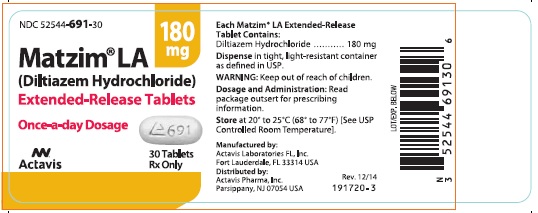
Matzim LA Diltiazem Hydrochloride 180 mg Tablet, Extended Release, 30-count — NDC 52544-691-30 (Billing 52544-0691-30)
This is a package of 30 tablets of Matzim LA Diltiazem Hydrochloride 180 mg Tablet, Extended Release from Actavis Pharma, Inc., marketed since Mar 2011 and currently FDA-listed; retail pharmacies pay about $1.03 per tablet (NADAC). It is the main listing for this product, which comes in 2 package sizes.
Other active recalls for Diltiazem Hydrochloride (different manufacturers) — 6 · tap to view
Past resolved recalls for this product (1)
Identity & classification
Regulatory identifiers FDA, NLM and CMS codes for this package
Drug-database identifiers Medi-Span GPI and First Databank GCN / HICL / AHFS classification
- GSN (GCN sequence number): 051802
- GCN: 19183
- HICL (First Databank): 000182
- AHFS class code: 24:04.04.24
Where does this data come from?
- FDA openFDA NDC Directory · synced Oct 1, 2026
- FDA label on DailyMed · label index refreshed Oct 1, 2026
- RxNorm (NLM RxNav) · catalog refreshed Oct 1, 2026
- Medi-Span GPI (licensed)
- First Databank (licensed) · refreshed Oct 1, 2026
Clinical
Diltiazem is used to treat high blood pressure and to control angina (chest pain). Diltiazem is in a class of medications called calcium-channel blockers. It works by relaxing the blood vessels so the heart does not have to pump as hard. It also increases the supply of blood and oxygen to the heart. High blood pressure is a common condition, and when not treated it can cause damage to the brain, heart, blood vessels, kidneys, and other parts of the body. Damage to these organs may cause heart disease, a heart attack, heart failure, stroke, kidney failure, loss of vision, and other problems. In...
Read the full MedlinePlus article ↗- The pills and capsules you take by mouth are used for high blood pressure and for chronic stable angina, which is chest pain from the heart's workload. Some capsule brands, such as...
- Usually it's taken once a day, and you should swallow it whole. Don't open, chew or crush the capsules. Some products, like DILT-XR, are best taken in the morning on an empty stoma...
- How should I take my extended-release capsule or tablet?
- The most common ones are a stuffy or runny nose, headache, sore throat, constipation, cough, and swelling in the legs or ankles. Most are mild. Call your doctor if you faint, feel...
Patient education
Supplement & herbal interactions
Diltiazem may be associated with lower levels of 2 nutrients — worth a chat with your pharmacist, not a cause for alarm.
Where does this data come from?
- MedlinePlus (NLM) · refreshed Oct 1, 2026
- FDA label on DailyMed · label index refreshed Oct 1, 2026
Ask a licensed pharmacist directly — free, answered by our team.
Pricing
A drug doesn't have one price. Each row is a different public payment system, and none is what you'd pay at the counter — that depends on your insurance. The ⓘ on each row explains what it measures.
| Price system | Per ea | Per package |
|---|---|---|
| Retail pharmacies payNADAC · weekly | $1.031 | $30.92 / 30 tablets |
| Medicaid paysCMS SDUD · 12 mo | $1.58 | $47.46 / 30 tablets |
| Medicare drug plans payPart D · Q2 2026 | $0.7260 | $21.78 / 30 tablets |
Where does this data come from?
- CMS NADAC weekly file · file of Sep 30, 2026
- CMS ASP pricing files · refreshed Sep 20, 2026
- CMS Medicaid State Drug Utilization Data · through Q4 2025
- CMS Part D plan pricing files · refreshed Sep 24, 2026
- VA National Acquisition Center price file
Packaging — all sizes for this product
| Package NDC | Description | Per unit | Per pack | Marketing start | Marketing end | Status |
|---|---|---|---|---|---|---|
| 52544-0691-19 52544-691-19 | 90 TABLET, EXTENDED RELEASE in 1 BOTTLE, PLASTIC | $1.03 / ea | $92.75 | 2011-03-28 | — | Active |
| 52544-0691-30 You're viewing this Main listing | 30 TABLET, EXTENDED RELEASE in 1 BOTTLE, PLASTIC | $1.03 / ea | $30.92 | 2011-03-28 | — | Active |
You're viewing the smallest of 2 pack sizes for this product.
This pack effectively ties for the lowest per-ea cost of the 2 priced pack sizes ($1.03 NADAC).
In Medicaid, this is the most-dispensed pack of this product — about 100% of fills over the last four reported quarters. See all packs ↓
Pack size FAQ
What quantity is in this package?
How does this package differ from NDC 52544-0691-19?
What NDC number is used to bill for this package of Matzim LA Diltiazem Hydrochloride 180 mg Tablet, Extended Release?
Prices are the latest CMS NADAC pharmacy acquisition cost per NDC; per-pack figures are per-unit × pack quantity, shown only when the pack is denominated in the same measure NADAC prices.
Therapeutic equivalents
| Product | Labeler | Pack | NADAC/unit | TE | Status | Price vs. this |
|---|---|---|---|---|---|---|
| Matzim LA 180 mgthis 52544-0691-30 | Actavis | 30 tablets | $1.031 | AB | Availability likely | — |
| Diltiazem Hydrochloride 180 mg 69097-0993-02 | Cipla | 30 tablets | $1.031 | AB | Availability likely | — |
| Diltiazem Hydrochloride 180 mg 70436-0196-04 | Slate | 30 tablets | $1.031 | AB | Availability likely | — |
| Diltiazem Hydrochloride 180 mg 68682-0705-30 | Oceanside | 30 tablets | $2.183 | AB | FDA listed | +112% |
| Cardizem LA 180 mg 00187-2046-30 | Bausch | 30 tablets | — | AB | FDA listed | — |
| Diltiazem Hydrochloride 180 mg 50228-0496-05 | ScieGen | 500 tablets | — | AB | FDA listed | — |
Where does this data come from?
- FDA openFDA NDC Directory · synced Oct 1, 2026
- FDA Orange Book · refreshed Sep 3, 2026
- CMS NADAC weekly file · file of Sep 30, 2026
Availability & generic status
This product is an FDA-approved generic. Other versions of the same drug are listed under Therapeutic equivalents, least expensive first.
Where does this data come from?
- FDA Orange Book · refreshed Sep 3, 2026
What it looks like
Where does this data come from?
- FDA label on DailyMed · label index refreshed Oct 1, 2026
Inactive Ingredients / Excipients
Inactive ingredients, also called excipients, are components of the drug product other than the active ingredient. They may include fillers, dyes, coatings, preservatives, flavors, or other formulation ingredients.
💡 Tap an ingredient (hover on desktop) to see what it is and why it’s used.
-
UNII WL0328HX19
A natural plant-based wax derived from candelilla shrub leaves. It acts as a coating agent, hardener, and texture modifier to control how quickly the medicine releases and to improve the tablet or capsule's appearance and stability.
-
UNII OP1R32D61U
Microcrystalline cellulose is a purified form of cellulose, a natural fiber from plant sources. It acts as a binder and filler in tablets and capsules, helping hold ingredients together and give the medicine its shape and size.
-
UNII 7Z8S9VYZ4B
Ethylcellulose is a plant-derived thickener and film-former made by chemically modifying cellulose. It's used as a binder to hold tablet ingredients together, a coating to control how quickly medicine is released, or a thickener in liquid formulations.
-
UNII 36SFW2JZ0W
Hypromellose 2910 is a plant-based thickening agent derived from cellulose. In medicines, it forms a protective coating on tablets or capsules and controls how quickly the drug dissolves and releases into your body.
-
UNII R75537T0T4
Hypromellose 2910 is a plant-derived thickening agent made from cellulose. It serves as a binder that holds tablet ingredients together, a film-coating for pills, and a viscosity controller in liquids.
-
UNII EWQ57Q8I5X
Lactose monohydrate is a natural sugar derived from milk. It serves as a filler and binder in tablets and capsules, helping create the proper size, texture, and consistency of the medicine.
-
UNII 70097M6I30
Magnesium stearate is a salt made from magnesium and stearic acid, a fatty substance. It's used in tablets and capsules as a lubricant and glidant to help ingredients flow smoothly during manufacturing and prevent sticking.
-
UNII XRK36F13ZZ
A synthetic polymer made from methacrylic acid and ethyl acrylate combined in a 1:2 ratio. It's used as a film-coating material to control how quickly the medicine dissolves and releases its active ingredients in the digestive system.
-
UNII A906T4D368
A synthetic compound derived from nonylphenol polyethylene glycol. In medications, it acts as a surfactant and emulsifier to help mix oil and water-based ingredients and improve product stability and consistency.
-
UNII 3WJQ0SDW1A
Polyethylene glycol is a synthetic liquid or solid polymer used in medicines as a solvent, lubricant, and humectant. It helps dissolve active ingredients, reduces friction during manufacturing, and retains moisture in the final product.
-
UNII 6OZP39ZG8H
Polysorbate 80 is a synthetic emulsifier derived from sorbitol and oleic acid. It helps mix oil and water-based ingredients together in medications and improves how the product disperses in the body.
-
UNII U725QWY32X
Povidone K30 is a synthetic polymer made from petroleum. It acts as a binder to hold tablet ingredients together and as a disintegrant to help the tablet break apart in the stomach so the medicine can be absorbed.
-
UNII ETJ7Z6XBU4
Silicon dioxide is a naturally occurring mineral used as a glidant and anti-caking agent. It helps powder ingredients flow smoothly and prevents clumping during manufacturing and storage.
-
UNII O8232NY3SJ
A plant-based carbohydrate derived from corn kernels. It acts as a filler to add bulk, a binder to hold ingredients together, and a disintegrant to help the tablet break apart in your stomach for absorption.
-
UNII C151H8M554
A natural sugar derived from sugar cane or sugar beets. It's used as a sweetener, filler, and binder to improve taste, add bulk, and help hold tablet or capsule ingredients together.
-
UNII 7SEV7J4R1U
A powder made from a naturally occurring mineral. In medicines, talc works as a glidant and anti-caking agent, helping tablets and capsules flow smoothly during manufacturing and preventing clumping.
-
UNII 15FIX9V2JP
Titanium dioxide is a bright white mineral powder commonly used as a colorant and opacifying agent. It makes pills and tablets white or lighter in color and helps make coatings non-transparent.
-
UNII XHX3C3X673
Triacetin is a clear, oily liquid made from glycerin and acetic acid. It works as a plasticizer and solvent in medicines, helping soften coatings and improve how liquids mix together in formulations.
18 inactive ingredients listed in the exact product block matched to this NDC.
Where does this data come from?
ingredient classCode="IACT" elements from the exact product block matched by this NDC. Label-section narrative from DailyMed / the openFDA label index is shown separately when available.- FDA label on DailyMed · label index refreshed Oct 1, 2026
- FDA openFDA NDC Directory · synced Oct 1, 2026
Inactive ingredient FAQ
Are inactive ingredients the same for every manufacturer?
Why might an inactive ingredient be missing?
Can inactive ingredients matter?
Manufacturer & labeler
Where does this data come from?
- FDA openFDA NDC Directory · synced Oct 1, 2026
- Drugs@FDA
Full prescribing information FDA SPL
🎯 Indications and Usage ▾
1 INDICATIONS AND USAGE Matzim LA (diltiazem hydrochloride) extended-release tablets are a nondihydropyridine calcium channel blocker indicated for: treatment of hypertension, to lower blood pressure. Lowering blood pressure reduces the risk of fatal and nonfatal cardiovascular events, primarily strokes and myocardial infarctions. It can be used alone or in combination with other antihypertensives.
( 1.1 ) improving exercise tolerance in patients with chronic stable angina. ( 1.2 )
1.1Hypertension Matzim LA (diltiazem hydrochloride) extended-release tablets are indicated for the treatment of hypertension, to lower blood pressure. Lowering blood pressure reduces the risk of fatal and nonfatal cardiovascular events, primarily strokes and myocardial infarctions. These benefits have been seen in controlled trials of antihypertensive drugs from a wide variety of pharmacologic classes including this drug.
Control of high blood pressure should be part of comprehensive cardiovascular risk management, including, as appropriate, lipid control, diabetes management, antithrombotic therapy, smoking cessation, exercise, and limited sodium intake. Many patients will require more than one drug to achieve blood pressure goals. For specific advice on goals and management, see published guidelines, such as those of the National High Blood Pressure Education Program’s Joint National Committee on Prevention, Detection, Evaluation, and Treatment of High Blood Pressure (JNC).
Numerous antihypertensive drugs, from a variety of pharmacologic classes and with different mechanisms of action, have been shown in randomized controlled trials to reduce cardiovascular morbidity and mortality, and it can be concluded that it is blood pressure reduction, and not some other pharmacologic property of the drugs, that is largely responsible for those benefits. The largest and most consistent cardiovascular outcome benefit has been a reduction in the risk of stroke, but reductions in myocardial infarction and cardiovascular mortality also have been seen regularly.
Elevated systolic or diastolic pressure causes increased cardiovascular risk, and the absolute risk increase per mm Hg is greater at higher blood pressures, so that even modest reductions of severe hypertension can provide substantial benefit. Relative risk reduction from blood pressure reduction is similar across populations with varying absolute risk, so the absolute benefit is greater in patients who are at higher risk independent of their hypertension (for example, patients with diabetes or hyperlipidemia), and such patients would be expected to benefit from more aggressive treatment to a lower blood pressure goal.
Some antihypertensive drugs have smaller blood pressure effects (as monotherapy) in black patients, and many antihypertensive drugs have additional approved indications and effects (e.g., on angina, heart failure, or diabetic kidney disease). These considerations may guide selection of therapy. Matzim LA (diltiazem hydrochloride) extended-release tablets may be used alone or in combination with other antihypertensive medications.
1.2Angina Matzim LA (diltiazem hydrochloride) extended-release tablets are indicated to improve exercise tolerance in patients with chronic stable angina.
⏱️ Dosage and Administration ▾
2 DOSAGE AND ADMINISTRATION Take Matzim LA (diltiazem hydrochloride) extended-release tablets once a day at approximately the same time. Do not chew or crush the tablet. Tablet should be swallowed whole and not chewed or crushed.
( 2 ) Hypertension: Initial adult dose is 180 to 240 mg once daily. Adjust dose according to blood pressure response to a maximum of 540 mg daily. ( 2.1 ) Angina: Initial adult dose is 180 mg once daily.
Adjust dose according to response to a maximum of 360 mg. ( 2.2 ) Switching to Matzim LA (diltiazem hydrochloride) extended-release tablets: Patients may be switched to the nearest equivalent total daily diltiazem dose. ( 2.3 )
2.1Hypertension Initiate dosing at 180 to 240 mg once daily, although some patients may respond to lower doses. Titrate according to blood pressure to a maximum of 540 mg daily. Maximum antihypertensive effect is usually observed by 14 days of chronic therapy.
2.2Angina Initiate dosing at 180 mg once daily and increase dose at intervals of 7 to 14 days if adequate response is not obtained, to a maximum of 360 mg.
2.3Switching to Matzim LA (Diltiazem Hydrochloride) Extended-Release Tablets Patients controlled on diltiazem alone or in combination with other medications may be switched to diltiazem hydrochloride extended-release tablets once a day at the nearest equivalent total daily dose. Higher doses of Matzim LA (diltiazem hydrochloride) extended-release tablets may be needed in some patients based on clinical response.
💊 Dosage Forms and Strengths ▾
3 DOSAGE FORMS AND STRENGTHS Extended-release tablets with 180 mg, 240 mg, 300 mg, 360 mg, or 420 mg diltiazem hydrochloride per tablet. Matzim LA (diltiazem hydrochloride) extended-release tablets, 180 mg are supplied as white, capsule-shaped tablets debossed with “ 180 ” on one side and “ 691 ”on the other. Matzim LA (diltiazem hydrochloride) extended-release tablets, 240 mg are supplied as white, capsule-shaped tablets debossed with “ 240 ” on one side and “ 692 ”on the other.
Matzim LA (diltiazem hydrochloride) extended-release tablets, 300 mg are supplied as white, capsule-shaped tablets debossed with “ 300 ” on one side and “ 693 ”on the other. Matzim LA (diltiazem hydrochloride) extended-release tablets, 360 mg are supplied as white, capsule-shaped tablets debossed with “ 360 ” on one side and “ 694 ”on the other. Matzim LA (diltiazem hydrochloride) extended-release tablets, 420 mg are supplied as white, capsule-shaped tablets debossed with “ 420 ” on one side and “ 695 ”on the other.
Extended-release tablets with 180 mg, 240 mg, 300 mg, 360 mg, or 420 mg diltiazem hydrochloride per tablet. ( 3 ) logo logo logo logo logo
⛔ Contraindications ▾
4 CONTRAINDICATIONS Matzim LA (diltiazem hydrochloride) extended-release tablets are contraindicated in: Patients with sick sinus syndrome except in the presence of a functioning ventricular pacemaker. Patients with second- or third-degree AV block except in the presence of a functioning ventricular pacemaker. Patients with hypotension (less than 90 mm Hg systolic).
Patients who have demonstrated hypersensitivity to the drug. Patients with acute myocardial infarction and pulmonary. Sick sinus syndrome except in the presence of a functioning ventricular pacemaker.
( 4 ) Second- or third-degree AV block except in the presence of a functioning ventricular pacemaker. ( 4 ) Hypotension (less than 90 mm Hg systolic). ( 4 ) Hypersensitivity to the drug.
( 4 ) Acute myocardial infarction and pulmonary. ( 4 )
⚠️ Warnings and Cautions ▾
5 WARNINGS AND PRECAUTIONS Bradycardia, second- or third-degree AV block: Monitor heart rate and rhythm. ( 5.1 ) Heart failure: Monitor for signs and symptoms. ( 5.2 ) Increased liver enzymes and acute hepatic injury. ( 5.3 ) Severe skin reactions. ( 5.4 )
5.1Bradycardia or AV Block Matzim LA (diltiazem hydrochloride) extended-release tablets may cause abnormally slow heart rates or second- or third-degree AV block. Patients with sick sinus syndrome are at increased risk of bradycardia. Concomitant use of diltiazem with beta-blockers or digitalis may result in additive effects on cardiac conduction.
A patient with Prinzmetal’s angina developed periods of asystole (2 to 5 seconds) after a single dose of 60 mg of diltiazem [see Adverse Reactions (6) ] . Monitor for effects on heart rate and cardiac conduction.
5.2Heart Failure Worsening of heart failure has been reported in patients with impairment of ventricular function. Experience with the use of diltiazem in combination with beta-blockers in patients with impaired ventricular function is limited.
5.3Acute Hepatic Injury Significant elevations in liver enzymes such as alkaline phosphatase, LDH, AST (SGOT), ALT (SGPT) and signs of acute hepatic injury have been reported with diltiazem therapy. These reactions tended to occur early after therapy initiation (1 to 8 weeks) and have been reversible upon discontinuation of drug therapy. Mild elevations of transaminases with and without concomitant elevation in alkaline phosphatase and bilirubin have also been observed.
Such elevations were usually transient and frequently resolved even with continued diltiazem treatment.
5.4Severe Skin Reactions Stevens-Johnson syndrome, toxic epidermal necrolysis, erythema multiforme and/or exfoliative dermatitis have been reported.
🤒 Adverse Reactions ▾
6 ADVERSE REACTIONS The following adverse reactions are described in greater detail, in other sections: Bradycardia and AV block [see Warnings and Precautions (5.1) ] Heart failure [see Warnings and Precautions (5.2) ] Acute hepatic injury [see Warnings and Precautions (5.3) ] Severe skin reactions [see Warnings and Precautions (5.4) ] The most common adverse reactions (> 2%) are lower limb edema, sinus congestion and rash in patients treated for hypertension, and lower limb edema, headache, dizziness, fatigue, bradycardia, first-degree AV block and cough in patients treated for angina.
( 6.1 ) To report SUSPECTED ADVERSE REACTIONS, contact Teva at 1-888-838-2872 or FDA at 1-800-FDA-1088 or www.fda.gov/medwatch.
6.1Clinical Trials Experience Because clinical trials are conducted under widely varying conditions, adverse reaction rates observed in the clinical trials of a drug cannot be directly compared to rates in the clinical trials of another drug and may not reflect the rates observed in practice. For the hypertension studies, the following table presents adverse reactions more common on diltiazem than on placebo (but excluding events with no plausible relationship to treatment), as reported in placebo-controlled hypertension trials in patients receiving a diltiazem hydrochloride extended-release formulation (once-a-day dosing) up to 540 mg.
Adverse Reactions (MedDRA Term) Placebo Diltiazem hydrochloride extended-release n=120 # pts. (%) 120-360 mg n=501 # pts. (%) 540 mg n=123 # pts.
(%) Edema lower limb 4 (3) 24 (5) 10 (8) Sinus congestion 0 (0) 2 (1) 2 (2) Rash 0 (0) 3 (1) 2 (2) In the angina study, the adverse event profile of diltiazem hydrochloride extended-release tablets was consistent with what has been previously described for diltiazem hydrochloride extended-release tablets and other formulations of diltiazem HCl. The most frequent adverse effects experienced by diltiazem hydrochloride extended-release tablets-treated patients were edema lower-limb (6.8%), dizziness (6.4%), fatigue (4.8%), bradycardia (3.6%), first-degree atrioventricular block (3.2%), and cough (2%).
In addition, the following events have been reported infrequently (less than 1%) in angina or hypertension trials: Cardiovascular: Angina, bundle branch block, palpitations, syncope, tachycardia, ventricular extrasystoles [see Warnings and Precautions (5.1 , 5.2 ) ] . Nervous System: Abnormal dreams, amnesia, depression, gait abnormality, hallucinations, insomnia, nervousness, paresthesia, personality change, somnolence, tinnitus, tremor. Gastrointestinal: Anorexia, constipation, diarrhea, dry mouth, dysgeusia, dyspepsia, thirst, vomiting, weight increase.
Dermatological: Petechiae, photosensitivity, pruritus, urticaria [see Warnings and Precautions (5.4) ] . Other: Amblyopia, CPK increase, dyspnea, epistaxis, eye irritation, hyperglycemia, hyperuricemia, impotence, muscle cramps, nasal congestion, nocturia, osteoarticular pain, polyuria, sexual difficulties.
6.2Postmarketing Experience The following adverse reactions have been identified during post-approval use of diltiazem. Because these reactions are reported voluntarily from a population of uncertain size, it is not always possible to estimate their frequency or establish a causal relationship to drug exposure. The following postmarketing reactions have been reported infrequently in patients receiving diltiazem: acute generalized exanthematous pustulosis, allergic reactions, alopecia, angioedema (including facial or periorbital edema), erythema multiforme, extrapyramidal symptoms, gingival hyperplasia, hemolytic anemia, increased bleeding time, leukopenia, photosensitivity (including lichenoid keratosis and hyperpigmentation at sun-exposed skin areas), purpura, retinopathy, myopathy, and thrombocytopenia.
In addition, events such as myocardial infarction have been observed which are not readily distinguishable from the natural history of the disease in these patients. A number of well-documen… [Excerpted — this section continues on DailyMed.]
🔄 Drug Interactions ▾
7 DRUG INTERACTIONS Beta-blockers, digitalis, and other agents known to impair cardiac contractility and conduction may increase risk for hypotension, bradycardia, and heart failure. ( 7.1 ) CYP450 3A4: Diltiazem is both a substrate and inhibitor of CYP450 3A4. CYP450 3A4 substrates may require dosage adjustment. ( 7.2 )
7.1Agents Known to Impair Cardiac Contractility and Conduction Using other agents known to affect cardiac conduction or contractility with diltiazem may increase the risk of bradycardia, AV block, and heart failure [see Warnings and Precautions (5.1 , 5.2 ) ] . Ivabradine: Concurrent use of diltiazem increases exposure to ivabradine and may exacerbate bradycardia and conduction disturbances. Avoid concomitant use of ivabradine and diltiazem.
7.2P-glycoprotein (P-gp) and Cytochrome P450 3A4 Mediated Drug Interactions Diltiazem is both a substrate and an inhibitor of the Pg-p and cytochrome P450 3A4 enzyme system which may affect exposure to diltiazem and concomitant drugs metabolized by those pathways. Patients with renal and/or hepatic impairment may be particularly at risk of exposure changes [see Clinical Pharmacology (12.3) ] .
👥 Use in Specific Populations ▾
8 USE IN SPECIFIC POPULATIONS
8.1Pregnancy Risk Summary The available data from the published literature over decades of use with diltiazem during pregnancy have not identified a drug associated risk of major birth defects, miscarriage, or adverse maternal or fetal outcomes. In animal reproduction studies in rats and rabbits, administration of diltiazem to pregnant animals during organogenesis at oral doses approximately 1 and 4 times the Maximum Recommended Human Dose (MRHD) of diltiazem produced embryofetal deaths and increased incidence of skeletal abnormalities.
An increased incidence of stillbirths was noted at diltiazem doses approximately 2 times the MRHD of diltiazem. The estimated background risk of major birth defects and miscarriage for the indicated population is unknown. All pregnancies have a background risk of major birth defects, loss, and other adverse outcomes.
In the U.S. general population, the estimated background risk of major birth defects and miscarriage in clinically recognized pregnancies is 2% to 4% and 15% to 20%, respectively. Data Animal Data Embryofetal development studies have been conducted with diltiazem in rats and rabbits. Daily oral administration of diltiazem at 0, 17.5, 35 or 70 mg/kg to pregnant rabbits during organogenesis (gestational day 6 to 18) resulted in embryo-fetal lethality at 35 mg/kg/day (approximately 1 time the MRHD of diltiazem, on a mg/m 2 basis) and higher, concurrent with maternal toxicity (reduced body weight gain).
Daily oral administration of diltiazem at 0, 100, 200 and 400 mg/kg to pregnant rats during organogenesis (gestation day 9 to 14) resulted in embryo-fetal lethality at 200 mg/kg/day (approximately 4 times the MRHD of diltiazem, on a mg/m 2 basis) and higher. These doses, in some studies, were reported to cause increased incidence of skeletal malformations (e.g. malformations of vertebral column) or variations. In an oral perinatal/postnatal study in rats with diltiazem at 0, 50, 100, 200 and 400 mg/kg/day from gestation day 15 to lactation/post-partum day 20, there was an increased incidence of stillbirths at 100 mg/kg/day, approximately 2 times (on a mg/m 2 basis) the MRHD of diltiazem.
8.2Lactation Risk Summary Diltiazem is excreted in human milk. One report suggests that concentrations in breast milk may approximate serum levels. Because of the potential for serious adverse reactions in nursing infants from diltiazem, a decision should be made whether to discontinue nursing or to discontinue the drug, taking into account the importance of the drug to the mother.
The developmental and health benefits of breastfeeding should be considered along with the mother’s clinical need for diltiazem and any potential adverse effects on the breastfed child from diltiazem or from the underlying maternal condition.
8.4Pediatric Use Safety and effectiveness in pediatric patients have not been established.
8.5Geriatric Use Clinical studies of diltiazem did not include sufficient numbers of subjects aged 65 and over to determine whether they respond differently from younger subjects. Other reported clinical experience has not identified differences in responses between the elderly and younger patients. In general, dose selection for an elderly patient should be cautious, usually starting at the low end of the dosing range, reflecting the greater frequency of decreased hepatic, renal, or cardiac function, and of concomitant disease or other drug therapy.
8.6Use in Renal Impairment No dose adjustment is necessary.
8.7Use in Hepatic Impairment No dose adjustment is likely to be needed for mild-moderate hepatic impairment.
🤰 Pregnancy ▾
8.1Pregnancy Risk Summary The available data from the published literature over decades of use with diltiazem during pregnancy have not identified a drug associated risk of major birth defects, miscarriage, or adverse maternal or fetal outcomes. In animal reproduction studies in rats and rabbits, administration of diltiazem to pregnant animals during organogenesis at oral doses approximately 1 and 4 times the Maximum Recommended Human Dose (MRHD) of diltiazem produced embryofetal deaths and increased incidence of skeletal abnormalities.
An increased incidence of stillbirths was noted at diltiazem doses approximately 2 times the MRHD of diltiazem. The estimated background risk of major birth defects and miscarriage for the indicated population is unknown. All pregnancies have a background risk of major birth defects, loss, and other adverse outcomes.
In the U.S. general population, the estimated background risk of major birth defects and miscarriage in clinically recognized pregnancies is 2% to 4% and 15% to 20%, respectively. Data Animal Data Embryofetal development studies have been conducted with diltiazem in rats and rabbits. Daily oral administration of diltiazem at 0, 17.5, 35 or 70 mg/kg to pregnant rabbits during organogenesis (gestational day 6 to 18) resulted in embryo-fetal lethality at 35 mg/kg/day (approximately 1 time the MRHD of diltiazem, on a mg/m 2 basis) and higher, concurrent with maternal toxicity (reduced body weight gain).
Daily oral administration of diltiazem at 0, 100, 200 and 400 mg/kg to pregnant rats during organogenesis (gestation day 9 to 14) resulted in embryo-fetal lethality at 200 mg/kg/day (approximately 4 times the MRHD of diltiazem, on a mg/m 2 basis) and higher. These doses, in some studies, were reported to cause increased incidence of skeletal malformations (e.g. malformations of vertebral column) or variations. In an oral perinatal/postnatal study in rats with diltiazem at 0, 50, 100, 200 and 400 mg/kg/day from gestation day 15 to lactation/post-partum day 20, there was an increased incidence of stillbirths at 100 mg/kg/day, approximately 2 times (on a mg/m 2 basis) the MRHD of diltiazem.
🧒 Pediatric Use ▾
8.4Pediatric Use Safety and effectiveness in pediatric patients have not been established.
🧓 Geriatric Use ▾
8.5Geriatric Use Clinical studies of diltiazem did not include sufficient numbers of subjects aged 65 and over to determine whether they respond differently from younger subjects. Other reported clinical experience has not identified differences in responses between the elderly and younger patients. In general, dose selection for an elderly patient should be cautious, usually starting at the low end of the dosing range, reflecting the greater frequency of decreased hepatic, renal, or cardiac function, and of concomitant disease or other drug therapy.
🆘 Overdosage ▾
10 OVERDOSAGE The oral LD 50 is 415 to 740 mg/kg in mice and 560 to 810 mg/kg in rats. The intravenous LD 50 is 60 mg/kg in mice and 38 mg/kg in rats. The oral LD 50 in dogs is considered to be in excess of 50 mg/kg, while lethality was seen in monkeys at 360 mg/kg.
The toxic dose in man is not known. Blood levels after a standard dose of diltiazem can vary over tenfold, limiting the usefulness of blood levels in overdose cases. There have been 29 reports of diltiazem overdose in doses ranging from less than 1 g to 18 g.
Sixteen of these reports involved multiple drug ingestions. Twenty-two reports indicated patients had recovered from diltiazem overdose ranging from less than 1 g to 10.8 g. There were seven reports with a fatal outcome; although the amount of diltiazem ingested was unknown, multiple drug ingestions were confirmed in six of the seven reports.
Events observed following diltiazem overdose included bradycardia, hypotension, heart block, and cardiac failure. Most reports of overdose described some supportive medical measure and/or drug treatment. Bradycardia frequently responded favorably to atropine as did heart block, although cardiac pacing was also frequently utilized to treat heart block.
Fluids and vasopressors were used to maintain blood pressure and in cases of cardiac failure, inotropic agents were administered. In addition, some patients received treatment with ventilatory support, gastric lavage, activated charcoal, and/or intravenous calcium. In the event of overdose or exaggerated response, institute appropriate supportive measures and gastrointestinal decontamination.
Diltiazem does not appear to be removed by peritoneal or hemodialysis. Limited data suggest that plasmapheresis or charcoal hemoperfusion may hasten diltiazem elimination following overdose. Based on the known pharmacological effects of diltiazem and/or reported clinical experiences, the following measures may be considered: Bradycardia: Administer atropine (0.60 to 1.0 mg).
If there is no response to vagal blockage, administer isoproterenol cautiously. High-degree AV Block: Treat as for bradycardia above. Fixed high-degree AV block should be treated with cardiac pacing.
Cardiac Failure: Administer inotropic agents (isoproterenol, dopamine, or dobutamine) and diuretics. Hypotension: Use vasopressors (e.g., dopamine or norepinephrine). Actual treatment and dosage should depend on the severity of the clinical situation and the judgment and experience of the treating physician.
🧬 Clinical Pharmacology ▾
12 CLINICAL PHARMACOLOGY
12.1Mechanism of Action The therapeutic effects of diltiazem are believed to be related to its ability to inhibit the cellular influx of calcium ions during membrane depolarization of cardiac and vascular smooth muscle. Hypertension: Diltiazem produces its antihypertensive effect primarily by relaxation of vascular smooth muscle and the resultant decrease in peripheral vascular resistance. The magnitude of blood pressure reduction is related to the degree of hypertension; thus hypertensive individuals experience an antihypertensive effect, whereas there is only a modest fall in blood pressure in normotensives.
Angina: Diltiazem has been shown to produce increases in exercise tolerance, probably due to its ability to reduce myocardial oxygen demand. This is accomplished via reductions in heart rate and systemic blood pressure at submaximal and maximal workloads. Diltiazem has been shown to be a potent dilator of coronary arteries, both epicardial and subendocardial.
Spontaneous and ergonovine-induced coronary artery spasms are inhibited by diltiazem. In animal models, diltiazem interferes with the slow inward (depolarizing) current in excitable tissue. Diltiazem causes excitation-contraction uncoupling in various myocardial.
Diltiazem produces relaxation of coronary vascular smooth muscle and dilation of both large and small coronary arteries at drug levels which cause little or no negative inotropic effect. The resultant increases in coronary blood flow (epicardial and subendocardial) occur in ischemic and nonischemic models and are accompanied by dose-dependent decreases in systemic blood pressure and decreases in peripheral resistance.
12.2Pharmacodynamics Like other calcium channel antagonists, diltiazem decreases sinoatrial and atrioventricular conduction in isolated tissues and has a negative inotropic effect in isolated preparations. In the intact animal, prolongation of the AH interval can be seen at higher doses. In man, diltiazem prevents spontaneous and ergonovine-provoked coronary artery spasm.
It causes a decrease in peripheral vascular resistance and a modest fall in blood pressure in normotensive individuals and, in exercise tolerance studies in patients with ischemic heart disease, reduces the heart rate-blood pressure product for any given workload. Studies to date, primarily in patients with good ventricular function, have not revealed evidence of a negative inotropic effect; cardiac output, ejection fraction, and left ventricular end diastolic pressure have not been affected. Such data have no predictive value with respect to effects in patients with poor ventricular function, and increased heart failure has been reported in patients with preexisting impairment of ventricular function.
There are as yet few data on the interaction of diltiazem and beta-blockers in patients with poor ventricular function. Resting heart rate is usually slightly reduced by diltiazem. Diltiazem decreases vascular resistance, increases cardiac output (by increasing stroke volume), and produces a slight decrease or no change in heart rate.
During dynamic exercise, increases in diastolic pressure are inhibited, while maximum achievable systolic pressure is usually reduced. Chronic therapy with diltiazem produces no change or an increase in plasma catecholamines. No increased activity of the renin-angiotensin-aldosterone axis has been observed.
Diltiazem reduces the renal and peripheral effects of angiotensin II. Hypertensive animal models respond to diltiazem with reductions in blood pressure and increased urinary output and natriuresis without a change in urinary sodium/potassium ratio. Intravenous diltiazem hydrochloride 20 mg prolongs AH conduction time and AV node functional and effective refractory periods by approximately 20%.
In a study involving single oral doses of diltiazem hydrochloride 300 mg in six normal volunteers, the average maximum PR prolongation was 14% with no instances of greater than… [Excerpted — this section continues on DailyMed.]
🧬 Mechanism of Action ▾
12.1Mechanism of Action The therapeutic effects of diltiazem are believed to be related to its ability to inhibit the cellular influx of calcium ions during membrane depolarization of cardiac and vascular smooth muscle. Hypertension: Diltiazem produces its antihypertensive effect primarily by relaxation of vascular smooth muscle and the resultant decrease in peripheral vascular resistance. The magnitude of blood pressure reduction is related to the degree of hypertension; thus hypertensive individuals experience an antihypertensive effect, whereas there is only a modest fall in blood pressure in normotensives.
Angina: Diltiazem has been shown to produce increases in exercise tolerance, probably due to its ability to reduce myocardial oxygen demand. This is accomplished via reductions in heart rate and systemic blood pressure at submaximal and maximal workloads. Diltiazem has been shown to be a potent dilator of coronary arteries, both epicardial and subendocardial.
Spontaneous and ergonovine-induced coronary artery spasms are inhibited by diltiazem. In animal models, diltiazem interferes with the slow inward (depolarizing) current in excitable tissue. Diltiazem causes excitation-contraction uncoupling in various myocardial.
Diltiazem produces relaxation of coronary vascular smooth muscle and dilation of both large and small coronary arteries at drug levels which cause little or no negative inotropic effect. The resultant increases in coronary blood flow (epicardial and subendocardial) occur in ischemic and nonischemic models and are accompanied by dose-dependent decreases in systemic blood pressure and decreases in peripheral resistance.
📦 How Supplied / Storage and Handling ▾
16 HOW SUPPLIED/STORAGE AND HANDLING Matzim ® LA (Diltiazem Hydrochloride) Extended-Release Tablets are available as follows: 180 mg - White, capsule-shaped tablets debossed with “ 180 ” on one side and “ 691 ”on the other. Bottles of 30 NDC 52544-691-30 Bottles of 90 NDC 52544-691-19 240 mg - White, capsule-shaped tablets debossed with “ 240 ” on one side and “ 692 ”on the other. Bottles of 30 NDC 52544-692-30 Bottles of 90 NDC 52544-692-19 300 mg - White, capsule-shaped tablets debossed with “ 300 ” on one side and “ 693 ”on the other.
Bottles of 30 NDC 52544-693-30 Bottles of 90 NDC 52544-693-19 360 mg - White, capsule-shaped tablets debossed with “ 360 ” on one side and “ 694 ”on the other. Bottles of 30 NDC 52544-694-30 Bottles of 90 NDC 52544-694-19 420 mg - White, capsule-shaped tablets debossed with “ 420 ” on one side and “ 695 ”on the other. Bottles of 30 NDC 52544-695-30 Bottles of 90 NDC 52544-695-19 Store at 20° to 25°C (68° to 77°F) [see USP Controlled Room Temperature].
Avoid excessive humidity and temperatures above 30°C (86°F). Dispense in tight, light resistant container as defined in USP. logo logo logo logo logo
📋 Description ▾
11 DESCRIPTION Matzim ® LA (Diltiazem Hydrochloride) Extended-Release Tablets are a nondihydropyridine calcium channel blocker (slow channel blocker or calcium antagonist). Chemically, diltiazem hydrochloride, USP is 1,5-benzothiazepin-4(5 H )-one, 3-(acetyloxy)-5-[2-(dimethylamino)ethyl]-2, 3-dihydro-2-(4-methoxyphenyl)-, monohydrochloride, (+)- cis -. The structural formula is: Diltiazem hydrochloride, USP is a white to off-white crystalline powder with a bitter taste.
It is soluble in water, methanol and chloroform. It has a molecular weight of 450.99. Matzim LA (Diltiazem Hydrochloride) Extended-Release Tablets, for oral administration, are formulated as a once-a-day extended-release tablet containing 180 mg, 240 mg, 300 mg, 360 mg or 420 mg of diltiazem hydrochloride.
Also contains: candelilla wax powder, colloidal silicon dioxide, corn starch, ethyl acrylate and methyl methacrylate copolymer dispersion, ethylcellulose, hypromellose 2910, lactose monohydrate, magnesium stearate, microcrystalline cellulose, nonoxynol 100, polyethylene oxide, polysorbate 80, povidone, sucrose, talc, titanium dioxide and triacetin. structural formula
💬 Information for Patients ▾
17 PATIENT COUNSELING INFORMATION Advise patients: That the Matzim LA (diltiazem hydrochloride) extended-release tablet should be swallowed whole and not chewed or crushed. To consult the physician who prescribed Matzim LA (diltiazem hydrochloride) extended-release tablets before taking or stopping any other medications, including over-the-counter products or nutritional supplements, such as St. John’s wort.
To contact the physician who prescribed Matzim LA (diltiazem hydrochloride) extended-release tablets or any other physician immediately if they experience possible adverse reactions, including bradycardia, arrhythmias, symptoms indicative of hypotension or heart failure, hepatic and skin reactions. To consult their physician if they become pregnant while taking Matzim LA (diltiazem hydrochloride) extended-release tablets or plan to become pregnant. Manufactured For: Teva Pharmaceuticals Parsippany, NJ 07054 Rev.
D 5/2025
🧬 Pharmacokinetics ▾
12.3Pharmacokinetics Diltiazem is well absorbed from the gastrointestinal tract and is subject to an extensive first-pass effect, giving an absolute bioavailability (compared to intravenous administration) of about 40%. Diltiazem undergoes extensive metabolism in which only 2% to 4% of the unchanged drug appears in the urine. Drugs that induce or inhibit hepatic microsomal enzymes may alter diltiazem disposition.
Total radioactivity measurement following short IV administration in healthy volunteers suggests the presence of other unidentified metabolites, which attain higher concentrations than those of diltiazem and are more slowly eliminated; half-life of total radioactivity is about 20 hours compared to 2 to 5 hours for diltiazem. In vitro binding studies show diltiazem is 70% to 80% bound to plasma proteins. Competitive in vitro ligand binding studies have also shown diltiazem hydrochloride binding is not altered by therapeutic concentrations of digoxin, hydrochlorothiazide, phenylbutazone, propranolol, salicylic acid, or warfarin.
The plasma elimination half-life following single or multiple drug administration is approximately 3.0 to 4.5 hours. Desacetyl diltiazem is also present in the plasma at levels of 10% to 20% of the parent drug and is 25% to 50% as potent as a coronary vasodilator as diltiazem. Minimum therapeutic plasma diltiazem concentrations appear to be in the range of 50 to 200 ng/mL.
There is a departure from linearity when dose strengths are increased; the half-life is slightly increased with dose. A study that compared patients with normal hepatic function to patients with cirrhosis found an increase in half-life and a 69% increase in bioavailability in the hepatically impaired patients. A single study in nine patients with severely impaired renal function showed no difference in the pharmacokinetic profile of diltiazem compared to patients with normal renal function.
Matzim LA (Diltiazem Hydrochloride) Extended-Release Tablets: A single 360 mg dose of Matzim LA (diltiazem hydrochloride) extended-release tablets results in detectable plasma levels within 3 to 4 hours and peak plasma levels between 11 and 18 hours; absorption occurs throughout the dosing interval. The apparent elimination half-life for Matzim LA (diltiazem hydrochloride) extended-release tablets after single or multiple dosing is 6 to 9 hours. When Matzim LA (diltiazem hydrochloride) extended-release tablets were coadministered with a high fat content breakfast, diltiazem peak and systemic exposures were not affected indicating that the tablet can be administered without regard to food.
As the dose of Matzim LA (diltiazem hydrochloride) extended-release tablets is increased from 120 to 240 mg, area-under-the-curve (AUC) increases 2.5-fold. Drug Interactions Impact of Diltiazem on Other Coadministered Drugs Anesthetics: The depression of cardiac contractility, conductivity, and automaticity as well as the vascular dilation associated with anesthetics may be potentiated by calcium channel blockers. When used concomitantly, anesthetics and calcium blockers should be titrated carefully.
Benzodiazepines: Studies showed that diltiazem increased the AUC of midazolam and triazolam by 3- to 4-fold and the C max by 2-fold, compared to placebo. The elimination half-life of midazolam and triazolam also increased (1.5- to 2.5- fold) during coadministration with diltiazem. These pharmacokinetic effects seen during diltiazem coadministration can result in increased clinical effects (e.g., prolonged sedation) of both midazolam and triazolam.
Beta-blockers: Controlled and uncontrolled domestic studies suggest that concomitant use of diltiazem and beta-blockers is usually well tolerated, but available data are not sufficient to predict the effects of concomitant treatment in patients with left ventricular dysfunction or cardiac conduction abnormalities. Administration of diltiazem concomitantly with propranolol in five normal volunteers resulted in increa… [Excerpted — this section continues on DailyMed.]
🧬 Pharmacodynamics ▾
12.2Pharmacodynamics Like other calcium channel antagonists, diltiazem decreases sinoatrial and atrioventricular conduction in isolated tissues and has a negative inotropic effect in isolated preparations. In the intact animal, prolongation of the AH interval can be seen at higher doses. In man, diltiazem prevents spontaneous and ergonovine-provoked coronary artery spasm.
It causes a decrease in peripheral vascular resistance and a modest fall in blood pressure in normotensive individuals and, in exercise tolerance studies in patients with ischemic heart disease, reduces the heart rate-blood pressure product for any given workload. Studies to date, primarily in patients with good ventricular function, have not revealed evidence of a negative inotropic effect; cardiac output, ejection fraction, and left ventricular end diastolic pressure have not been affected. Such data have no predictive value with respect to effects in patients with poor ventricular function, and increased heart failure has been reported in patients with preexisting impairment of ventricular function.
There are as yet few data on the interaction of diltiazem and beta-blockers in patients with poor ventricular function. Resting heart rate is usually slightly reduced by diltiazem. Diltiazem decreases vascular resistance, increases cardiac output (by increasing stroke volume), and produces a slight decrease or no change in heart rate.
During dynamic exercise, increases in diastolic pressure are inhibited, while maximum achievable systolic pressure is usually reduced. Chronic therapy with diltiazem produces no change or an increase in plasma catecholamines. No increased activity of the renin-angiotensin-aldosterone axis has been observed.
Diltiazem reduces the renal and peripheral effects of angiotensin II. Hypertensive animal models respond to diltiazem with reductions in blood pressure and increased urinary output and natriuresis without a change in urinary sodium/potassium ratio. Intravenous diltiazem hydrochloride 20 mg prolongs AH conduction time and AV node functional and effective refractory periods by approximately 20%.
In a study involving single oral doses of diltiazem hydrochloride 300 mg in six normal volunteers, the average maximum PR prolongation was 14% with no instances of greater than first-degree AV block. Diltiazem associated prolongation of the AH interval is not more pronounced in patients with first-degree heart block. In patients with sick sinus syndrome, diltiazem significantly prolongs sinus cycle length (up to 50% in some cases).
Chronic oral administration of diltiazem hydrochloride to patients in doses of up to 540 mg/day has resulted in small increases in PR interval, and on occasion produces abnormal prolongation [see Warnings and Precautions (5.1) ] .
🔬 Clinical Studies ▾
14 CLINICAL STUDIES
14.1Hypertension In a randomized, double-blind, parallel-group, dose-response study involving 478 patients with essential hypertension, evening doses of diltiazem hydrochloride extended-release tablets 120, 240, 360, and 540 mg were compared to placebo and to 360 mg administered in the morning. The mean reductions in diastolic blood pressure by ABPM at roughly 24 hours after the morning (4 AM to 8 AM) or evening (6 PM to 10 PM) administration (i.e., the time corresponding to expected trough serum concentrations) are shown in the table below: Mean Change in Trough Diastolic Pressure by ABPM Evening Dosing Morning Dosing 120 mg 240 mg 360 mg 540 mg 360 mg -2.0 -4.4 -4.4 -8.1 -6.4 A second randomized, double-blind, parallel-group, dose-response study (N=258) evaluated diltiazem hydrochloride extended-release tablets following morning doses of placebo or 120, 180, 300, or 540 mg.
Diastolic blood pressure measured by supine office cuff sphygmomanometer at trough (7 AM to 9 AM) decreased in an apparently linear manner over the dosage range studied. Group mean changes for placebo, 120 mg, 180 mg, 300 mg and 540 mg were -2.6, -1.9, -5.4, -6.1, and -8.6 mm Hg, respectively. Whether the time of administration impacts the clinical benefits of antihypertensive treatment is not known.
Postural hypotension is infrequently noted upon suddenly assuming an upright position. No reflex tachycardia is associated with the chronic antihypertensive effects.
14.2Angina The effects of diltiazem hydrochloride extended-release tablets on angina were evaluated in a randomized, double-blind, parallel-group, dose-response trial of 311 patients with chronic stable angina. Evening doses of 180, 360, and 420 mg were compared to placebo and to 360 mg administered in the morning. All doses of diltiazem hydrochloride extended-release tablets administered at night increased exercise tolerance when compared with placebo after 21 hours.
The mean effect, placebo-subtracted, was 20 to 28 seconds for all three doses, and no dose-response was demonstrated. Diltiazem hydrochloride extended-release tablets, 360 mg, given in the morning, also improved exercise tolerance when measured 25 hours later. As expected, the effect was smaller than the effects measured only 21 hours following nighttime administration.
Diltiazem hydrochloride extended-release tablets had a larger effect to increase exercise tolerance at peak serum concentrations than at trough.
🧪 Nonclinical Toxicology ▾
13 NONCLINICAL TOXICOLOGY
13.1Carcinogenesis, Mutagenesis, Impairment of Fertility A 24-month study in rats at oral dosage levels of up to 100 mg/kg/day, and a 21-month study in mice at oral dosage levels of up to 30 mg/kg/day showed no evidence of carcinogenicity. There was also no mutagenic response in vitro or in vivo in mammalian cell assays or in vitro in bacteria. No evidence of impaired fertility was observed in a study performed in male and female rats at oral dosages of up to 100 mg/kg/day.
📄 Carcinogenesis, Mutagenesis, Impairment of Fertility ▾
13.1Carcinogenesis, Mutagenesis, Impairment of Fertility A 24-month study in rats at oral dosage levels of up to 100 mg/kg/day, and a 21-month study in mice at oral dosage levels of up to 30 mg/kg/day showed no evidence of carcinogenicity. There was also no mutagenic response in vitro or in vivo in mammalian cell assays or in vitro in bacteria. No evidence of impaired fertility was observed in a study performed in male and female rats at oral dosages of up to 100 mg/kg/day.
📄 Package Label / Principal Display Panel ▾
PACKAGE LABEL.PRINCIPAL DISPLAY PANEL 180 MG NDC 52544 -691- 30 Matzim ® LA (Diltiazem Hydrochloride) Extended-Release Tablets Once-a-day Dosage 180 mg 30 Tablets Rx only 180mg 180mg
PACKAGE LABEL.PRINCIPAL DISPLAY PANEL 240 MG NDC 52544 -692- 30 Matzim® LA (Diltiazem Hydrochloride) Extended-Release Tablets Once-a-day Dosage 240 mg 30 Tablets Rx only 240mg 240mg
PACKAGE LABEL.PRINCIPAL DISPLAY PANEL 300 MG NDC 52544 -693- 30 Matzim® LA (Diltiazem Hydrochloride) Extended-Release Tablets Once-a-day Dosage 300 mg 30 Tablets Rx only 300mg 300mg
PACKAGE LABEL.PRINCIPAL DISPLAY PANEL 360 MG NDC 52544 -694- 30 Matzim® LA (Diltiazem Hydrochloride) Extended-Release Tablets Once-a-day Dosage 360 mg 30 Tablets Rx only 360mg 360mg
PACKAGE LABEL.PRINCIPAL DISPLAY PANEL 420 MG NDC 52544 -695- 30 Matzim® LA (Diltiazem Hydrochloride) Extended-Release Tablets Once-a-day Dosage 420 mg 30 Tablets Rx only 420mg 420mg