
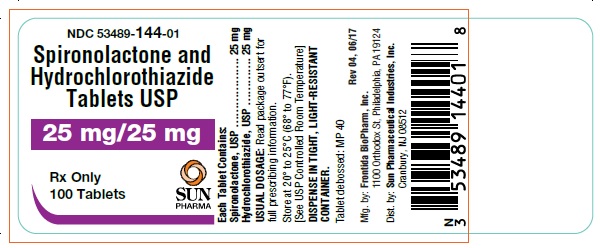
Spironolactone and Hydrochlorothiazide 25 mg; 25 mg Tablet, 500-count — NDC 53489-144-05 (Billing 53489-0144-05)
This is a package of 500 tablets of Spironolactone and Hydrochlorothiazide 25 mg; 25 mg Tablet from Sun Pharmaceutical Industries, Inc., marketed since Jul 1987 and currently FDA-listed; retail pharmacies pay about $0.4833 per tablet (NADAC).
NDC database record
One package, one record: these facts belong to NDC 53489-144-05 alone.
- Record
- FDA NDC Directory package listing · Human prescription drug
- Code segments
- 53489 labeler · 144 product · 05 package
- Package marketed since
- Jul 2, 1987
- Sample package
- No — commercial package
- Listing certified through
- Dec 31, 2026
- Billing quantity
- 500 EA per package
- Barcode (UPC-A, from the NDC)
- 3 5348914405 6
- Medicaid fills, this package
- 1,093 prescriptions in the last four reported quarters
- FDA record last changed
- Jul 24, 2026
Identity & classification
Regulatory identifiers FDA, NLM and CMS codes for this package
Drug-database identifiers Medi-Span GPI and First Databank GCN / HICL / AHFS classification
- GSN (GCN sequence number): 006813
- GCN: 82330
- GPI-14 (Medi-Span): 37990002200310
- HICL (First Databank): 002900
- AHFS class code: 24:32.20.08
- RxCUI (RxNorm): 198224
Where does this data come from?
- FDA openFDA NDC Directory · synced Oct 8, 2026
- FDA label on DailyMed · label index refreshed Oct 8, 2026
- RxNorm (NLM RxNav) · catalog refreshed Oct 1, 2026
- Medi-Span GPI (licensed)
- First Databank (licensed) · refreshed Oct 8, 2026
RxNorm drug class
This medicine belongs to the Thiazide Diuretic class.
Where does this data come from?
- RxClass (NLM) · catalog refreshed Oct 1, 2026
Clinical
The combination of spironolactone and hydrochlorothiazide is used to treat high blood pressure. This medication is also used to treat patients with edema (fluid retention) caused by various conditions, including heart, liver, or kidney disease. Spironolactone is in a class of medications called aldosterone receptor antagonists. It causes the kidneys to eliminate unneeded water and sodium from the body into the urine, but reduces the loss of potassium from the body. Hydrochlorothiazide is in a class of medications called diuretics (''water pills''). It works by causing the kidneys to get rid of...
Read the full MedlinePlus article ↗- It treats high blood pressure and fluid buildup from heart failure, cirrhosis, or nephrotic syndrome. It combines two diuretics that work together. It is meant for people who need...
- Take it by mouth as your prescriber directs, once a day or split into doses. Don’t add potassium supplements unless your prescriber says so. If you’re unsure about timing or a miss...
- Nausea, diarrhea, cramping, dizziness, headache, and tiredness can happen. Standing up slowly helps with lightheadedness. Some people notice breast tenderness or enlargement, or me...
- Call right away for muscle weakness, an irregular heartbeat, confusion, eye pain, vision changes, a severe rash, or yellowing of your skin. Also report unusual bruising, bleeding,...
Patient education
Supplement & herbal interactions
Where does this data come from?
- MedlinePlus (NLM) · refreshed Oct 8, 2026
- FDA label on DailyMed · label index refreshed Oct 8, 2026
Ask a licensed pharmacist directly — free, answered by our team.
Pricing
A drug doesn't have one price. Each row is a different public payment system, and none is what you'd pay at the counter — that depends on your insurance. The ⓘ on each row explains what it measures.
| Price system | Per ea | Per package |
|---|---|---|
| Retail pharmacies payNADAC · weekly | $0.483 | $241.65 / 500 tablets |
| Medicaid paysCMS SDUD · 12 mo | $0.7757 | $387.85 / 500 tablets |
| Medicare drug plans payPart D · Q2 2026 | $0.6348 | $317.40 / 500 tablets |
Where does this data come from?
- CMS NADAC weekly file · file of Oct 7, 2026
- CMS ASP pricing files · refreshed Sep 20, 2026
- CMS Medicaid State Drug Utilization Data · through Q1 2026
- CMS Part D plan pricing files · refreshed Sep 24, 2026
- VA National Acquisition Center price file
Packaging — all sizes for this product
| Package NDC | Description | Per unit | Per pack | Marketing start | Marketing end | Status |
|---|---|---|---|---|---|---|
| 53489-0144-01 53489-144-01 Main listing | 100 TABLET in 1 BOTTLE, PLASTIC | $0.4833 / ea | $48.33 | 1987-07-02 | — | Active |
| 53489-0144-05 You're viewing this | 500 TABLET in 1 BOTTLE, PLASTIC | $0.4833 / ea | $241.63 | 1987-07-02 | — | Active |
| 53489-0144-10 53489-144-10 | 1000 TABLET in 1 BOTTLE, PLASTIC | $0.6454 / ea | $645.41 | 1987-07-02 | — | Active |
You're viewing one of 3 pack sizes for this product.
This pack effectively ties for the lowest per-ea cost of the 3 priced pack sizes ($0.4833 NADAC).
This pack accounts for about 14% of this product's recent Medicaid fills; most go to the 100 tablets pack. See all packs ↓
Pack size FAQ
What quantity is in this package?
How does this package differ from NDC 53489-0144-01?
What NDC number is used to bill for this package of Spironolactone and Hydrochlorothiazide 25 mg; 25 mg Tablet?
Prices are the latest CMS NADAC pharmacy acquisition cost per NDC; per-pack figures are per-unit × pack quantity, shown only when the pack is denominated in the same measure NADAC prices.
Therapeutic equivalents
| Product | Labeler | Pack | NADAC/unit | TE | Status | Price vs. this |
|---|---|---|---|---|---|---|
| Spironolactone and Hydrochlorothiazide 25 mg/1; 25 mg 00378-0403-01 | Mylan | 100 tablets | $0.483 | AB | Availability likely | — |
| Spironolactone and Hydrochlorothiazide 25 mg/1; 25 mg 42292-0017-20 | Mylan | 100 tablets | $0.483 | AB | Availability likely | — |
| Spironolactone and Hydrochlorothiazide 25 mg/1; 25 mgthis 53489-0144-05 | Sun | 500 tablets | $0.483 | AB | Availability likely | — |
| Spironolactone and Hydrochlorothiazide 25 mg/1; 25 mg 66993-0188-02 | Prasco | 100 tablets | $0.483 | AB | Availability likely | — |
| Spironolactone and Hydrochlorothiazide 25 mg/1; 25 mg 48433-0090-20 | Safecor | 100 tablets | — | AB | FDA listed | — |
| Spironolactone and Hydrochlorothiazide 25 mg/1; 25 mg 63629-1068-01 | Bryant | 100 tablets | — | AB | FDA listed | — |
| Spironolactone and Hydrochlorothiazide 25 mg/1; 25 mg 63629-1069-01 | Bryant | 500 tablets | — | AB | FDA listed | — |
| Spironolactone and Hydrochlorothiazide 25 mg/1; 25 mg 63629-1071-01 | Bryant | 30 tablets | — | AB | FDA listed | — |
| Spironolactone and Hydrochlorothiazide 25 mg/1; 25 mg 71335-2202-01 | Bryant | 100 tablets | — | AB | FDA listed | — |
| Spironolactone and Hydrochlorothiazide 25 mg/1; 25 mg 71335-2674-01 | Bryant | 100 tablets | — | AB | FDA listed | — |
| Spironolactone and Hydrochlorothiazide 25 mg/1; 25 mg 72162-1625-01 | Bryant | 100 tablets | — | AB | FDA listed | — |
| Spironolactone and hydrochlorothiazide 25 mg/1; 25 mg 72888-0040-01 | Advagen | 30 tablets | — | AB | FDA listed | — |
Where does this data come from?
- FDA openFDA NDC Directory · synced Oct 8, 2026
- FDA Orange Book · refreshed Oct 3, 2026
- CMS NADAC weekly file · file of Oct 7, 2026
Availability & generic status
This product is an FDA-approved generic. Other versions of the same drug are listed under Therapeutic equivalents, least expensive first.
Where does this data come from?
- FDA Orange Book · refreshed Oct 3, 2026
What it looks like
Where does this data come from?
- FDA label on DailyMed · label index refreshed Oct 8, 2026
Inactive Ingredients / Excipients
Inactive ingredients, also called excipients, are components of the drug product other than the active ingredient. They may include fillers, dyes, coatings, preservatives, flavors, or other formulation ingredients.
🧪 Avoiding an ingredient? See Spironolactone and Hydrochlorothiazide inactive ingredients by manufacturer: every current product's list side by side, so you can ask your pharmacy for the version that does not list it.
💡 Tap an ingredient (hover on desktop) to see what it is and why it’s used.
-
UNII 3SY5LH9PMK
Anhydrous lactose is a milk sugar with no water content. It acts as a filler and binder in tablets and capsules, adding bulk and helping ingredients stick together.
-
UNII 35SW5USQ3G
A synthetic yellow dye used to color medicines. It helps make tablets, capsules, and liquids visually distinct so patients can easily identify their medication.
-
UNII F05Q2T2JA0
Docusate sodium is a stool softener compound that helps medicines dissolve and move through the digestive tract. It acts as a surfactant, reducing surface tension in the intestines, and also serves as a wetting agent in tablet formulations.
-
UNII H77VEI93A8
A synthetic yellow dye used to color medications. It helps identify the drug and make it visually distinctive, with no effect on how the medicine works.
-
UNII 70097M6I30
Magnesium stearate is a salt made from magnesium and stearic acid, a fatty substance. It's used in tablets and capsules as a lubricant and glidant to help ingredients flow smoothly during manufacturing and prevent sticking.
-
UNII OP1R32D61U
Microcrystalline cellulose is a purified form of cellulose, a natural fiber from plant sources. It acts as a binder and filler in tablets and capsules, helping hold ingredients together and give the medicine its shape and size.
-
UNII V95R5KMY2B
Peppermint is a flavoring agent derived from the peppermint plant. It's added to medicines to improve taste and mask bitter or unpleasant flavors, making them easier to take.
-
UNII FZ989GH94E
Povidone is a synthetic polymer made from a plastic-like material. It acts as a binder to hold tablet ingredients together and as a disintegrant to help the tablet break apart in your stomach so the medicine can be absorbed.
-
UNII ETJ7Z6XBU4
Silicon dioxide is a naturally occurring mineral used as a glidant and anti-caking agent. It helps powder ingredients flow smoothly and prevents clumping during manufacturing and storage.
-
UNII OJ245FE5EU
Sodium benzoate is a salt derived from benzoic acid, a preservative. It's added to medicines to prevent growth of bacteria, fungi, and other microorganisms that could spoil the product.
-
UNII 5856J3G2A2
A starch-based powder made from potatoes and processed with sodium. It acts as a disintegrant, helping the tablet or capsule break apart quickly in the stomach so the medicine can be absorbed.
11 inactive ingredients listed in the exact product block matched to this NDC.
Where does this data come from?
ingredient classCode="IACT" elements from the exact product block matched by this NDC. Label-section narrative from DailyMed / the openFDA label index is shown separately when available.- FDA label on DailyMed · label index refreshed Oct 8, 2026
- FDA openFDA NDC Directory · synced Oct 8, 2026
Inactive ingredient FAQ
Are inactive ingredients the same for every manufacturer?
Why might an inactive ingredient be missing?
Can inactive ingredients matter?
Manufacturer & labeler
More NDCs from Sun Pharmaceutical Industries, Inc. labeler code 53489
- Doxycycline Hyclate 50 mg Capsule NDC 53489-118-02
- Doxycycline Hyclate 100 mg Capsule NDC 53489-119-02
- Doxycycline Hyclate 100 mg Tablet, Film Coated NDC 53489-120-01
- Quinidine Gluconate 324 mg Tablet, Extended Release NDC 53489-141-01
- Spironolactone 25 mg Tablet NDC 53489-143-01
- Sulfamethoxazole and Trimethoprim 400 mg; 80 mg Tablet NDC 53489-145-01
- Sulfamethoxazole and Trimethoprim 800 mg; 160 mg Tablet NDC 53489-146-01
- Thioridazine Hydrochloride 10 mg Tablet, Film Coated NDC 53489-148-01
- Thioridazine Hydrochloride 25 mg Tablet, Film Coated NDC 53489-149-01
- Thioridazine Hydrochloride 50 mg Tablet, Film Coated NDC 53489-150-01
- Allopurinol 100 mg Tablet NDC 53489-156-01
Where does this data come from?
- FDA openFDA NDC Directory · synced Oct 8, 2026
- Drugs@FDA
Full prescribing information FDA SPL
🎯 Indications and Usage ▾
INDICATIONS AND USAGE Spironolactone, an ingredient of spironolactone and hydrochlorothiazide tablets, has been shown to be a tumorigen in chronic toxicity studies in rats (see Precautions section). Spironolactone and hydrochlorothiazide tablets should be used only in those conditions described below. Unnecessary use of this drug should be avoided.
Spironolactone and hydrochlorothiazide tablets are indicated for: Edematous conditions for patients with: Congestive heart failure: •For the management of edema and sodium retention when the patient is only partially responsive to, or is intolerant of, other therapeutic measures; •The treatment of diuretic-induced hypokalemia in patients with congestive heart failure when other measures are considered inappropriate; •The treatment of patients with congestive heart failure taking digitalis when other therapies are considered inadequate or inappropriate.
Cirrhosis of the liver accompanied by edema and/or ascites: Aldosterone levels may be exceptionally high in this condition. Spironolactone and hydrochlorothiazide tablets are indicated for maintenance therapy together with bed rest and the restriction of fluid and sodium. The nephrotic syndrome: For nephrotic patients when treatment of the underlying disease, restriction of fluid and sodium intake, and the use of other diuretics do not provide an adequate response.
Essential hypertension: •For patients with essential hypertension in whom other measures are considered inadequate or inappropriate; •In hypertensive patients for the treatment of a diuretic-induced hypokalemia when other measures are considered inappropriate; •Spironolactone and hydrochlorothiazide tablets are indicated for the treatment of hypertension, to lower blood pressure. Lowering blood pressure reduces the risk of fatal and nonfatal cardiovascular events, primarily strokes and myocardial infarctions. These benefits have been seen in controlled trials of antihypertensive drugs from a wide variety of pharmacologic classes, including the classes to which this drug principally belongs.
There are no controlled trials demonstrating risk reduction with spironolactone and hydrochlorothiazide tablets. Control of high blood pressure should be part of comprehensive cardiovascular risk management, including, as appropriate, lipid control, diabetes management, antithrombotic therapy, smoking cessation, exercise, and limited sodium intake. Many patients will require more than one drug to achieve blood pressure goals.
For specific advice on goals and management, see published guidelines, such as those of the National High Blood Pressure Education Program's Joint National Committee on Prevention, Detection, Evaluation, and Treatment of High Blood Pressure (JNC). Numerous antihypertensive drugs, from a variety of pharmacologic classes and with different mechanisms of action, have been shown in randomized controlled trials to reduce cardiovascular morbidity and mortality, and it can be concluded that it is blood pressure reduction, and not some other pharmacologic property of the drugs, that is largely responsible for those benefits.
The largest and most consistent cardiovascular outcome benefit has been a reduction in the risk of stroke, but reductions in myocardial infarction and cardiovascular mortality also have been seen regularly. Elevated systolic or diastolic pressure causes increased cardiovascular risk, and the absolute risk increase per mmHg is greater at higher blood pressures, so that even modest reductions of severe hypertension can provide substantial benefit. Relative risk reduction from blood pressure reduction is similar across populations with varying absolute risk, so the absolute benefit is greater in patients who are at higher risk independent of their hypertension (for example, patients with diabetes or hyperlipidemia), and such patients would be expected to benefit from more aggressive treatment to a lower blood pressure goal.
Some antihypertensive drugs have… [Excerpted — this section continues on DailyMed.]
⏱️ Dosage and Administration ▾
DOSAGE AND ADMINISTRATION Optimal dosage should be established by individual titration of the components. Edema in adults (congestive heart failure, hepatic cirrhosis, or nephrotic syndrome). The usual maintenance dose of spironolactone and hydrochlorothiazide tablets is 100 mg each of spironolactone and hydrochlorothiazide daily, administered in a single dose or in divided doses, but may range from 25 mg to 200 mg of each component daily depending on the response to the initial titration.
In some instances it may be desirable to administer separate tablets of either spironolactone or hydrochlorothiazide in addition to spironolactone and hydrochlorothiazide tablets in order to provide optimal individual therapy. The onset of diuresis with spironolactone and hydrochlorothiazide tablets occurs promptly and, due to prolonged effect of the spironolactone component, persists for two to three days after spironolactone and hydrochlorothiazide tablets are discontinued. Essential hypertension.
Although the dosage will vary depending on the results of titration of the individual ingredients, many patients will be found to have an optimal response to 50 mg to 100 mg each of spironolactone and hydrochlorothiazide daily, given in a single dose or in divided doses. Concurrent potassium supplementation is not recommended when spironolactone and hydrochlorothiazide tablets are used in the long-term management of hypertension or in the treatment of most edematous conditions, since the spironolactone content of spironolactone and hydrochlorothiazide tablets is usually sufficient to minimize loss induced by the hydrochlorothiazide component.
⛔ Contraindications ▾
CONTRAINDICATIONS Spironolactone and hydrochlorothiazide tablets are contraindicated in patients with anuria, acute renal insufficiency, significant impairment of renal excretory function, hypercalcemia, hyperkalemia, Addison's disease, and in patients who are allergic to thiazide diuretics or to other sulfonamide-derived drugs. Spironolactone and hydrochlorothiazide tablets may also be contraindicated in acute or severe hepatic failure.
⚠️ Warnings ▾
WARNINGS Potassium supplementation, either in the form of medication or as a diet rich in potassium, should not ordinarily be given in association with spironolactone and hydrochlorothiazide tablets therapy. Excessive potassium intake may cause hyperkalemia in patients receiving spironolactone and hydrochlorothiazide tablets (see Precautions : General ). Concomitant administration of spironolactone and hydrochlorothiazide tablets with the following drugs or potassium sources may lead to severe hyperkalemia: other potassium-sparing diuretics ACE inhibitors angiotensin II receptor antagonists aldosterone blockers non-steroidal anti-inflammatory drugs (NSAIDs), e.g., indomethacin heparin and low molecular weight heparin other drugs or conditions known to cause hyperkalemia potassium supplements diet rich in potassium salt substitutes containing potassium Spironolactone and hydrochlorothiazide tablets should not be administered concurrently with other potassium-sparing diuretics.
Spironolactone, when used with ACE inhibitors or indomethacin, even in the presence of a diuretic, has been associated with severe hyperkalemia. Extreme caution should be exercised when spironolactone and hydrochlorothiazide tablets are given concomitantly with these drugs (see Precautions: Drug interactions ). Spironolactone and hydrochlorothiazide tablets should be used with caution in patients with impaired hepatic function because minor alterations of fluid and electrolyte balance may precipitate hepatic coma.
Lithium generally should not be given with diuretics (see Precautions: Drug interactions ). Thiazides should be used with caution in severe renal disease. In patients with renal disease, thiazides may precipitate azotemia.
Cumulative effects of the drug may develop in patients with impaired renal function. Thiazides may add to or potentiate the action of other antihypertensive drugs. Sensitivity reactions to thiazides may occur in patients with or without a history of allergy or bronchial asthma.
Sulfonamide derivatives, including thiazides, have been reported to exacerbate or activate systemic lupus erythematosus. Acute Angle-Closure Glaucoma with or without Acute Myopia and Choroidal Effusions: Hydrochlorothiazide, a sulfonamide, can cause an idiosyncratic reaction, resulting in acute angle-closure glaucoma and elevated intraocular pressure with or without a noticeable acute myopic shift and/or choroidal effusions. Symptoms may include acute onset of decreased visual acuity or ocular pain and typically occur within hours to weeks of drug initiation.
Untreated, the angle-closure glaucoma may result in permanent visual field loss. The primary treatment is to discontinue hydrochlorothiazide as rapidly as possible. Prompt medical or surgical treatments may need to be considered if the intraocular pressure remains uncontrolled.
Risk factors for developing acute angle-closure glaucoma may include a history of sulfonamide or penicillin allergy.
🤒 Adverse Reactions ▾
ADVERSE REACTIONS The following adverse reactions have been reported and, within each category (body system), are listed in order of decreasing severity. Hydrochlorothiazide: Body as a whole: Weakness. Cardiovascular: Hypotension including orthostatic hypotension (may be aggravated by alcohol, barbiturates, narcotics, or antihypertensive drugs).
Digestive: Pancreatitis, jaundice (intrahepatic cholestatic jaundice), diarrhea, vomiting, sialoadenitis, cramping, constipation, gastric irritation, nausea, anorexia. Eye Disorders: Acute myopia and acute angle-closure glaucoma (see Warnings ). Hematologic: Aplastic anemia, agranulocytosis, leukopenia, hemolytic anemia, thrombocytopenia.
Hypersensitivity: Anaphylactic reactions, necrotizing angitis (vasculitis and cutaneous vasculitis), respiratory distress including pneumonitis and pulmonary edema, photosensitivity, fever, urticaria, rash, purpura. Metabolic: Electrolyte imbalance (see Precautions ), hyperglycemia, glycosuria, hyperuricemia. Musculoskeletal: Muscle spasm.
Nervous system/psychiatric: Vertigo, paresthesias, dizziness, headache, restlessness. Renal: Renal failure, renal dysfunction, interstitial nephritis (see Warnings ). Skin: Erythema multiforme, pruritus.
Special senses: Transient blurred vision, xanthopsia. Spironolactone: Digestive: Gastric bleeding, ulceration, gastritis, diarrhea and cramping, nausea, vomiting. Reproductive: Gynecomastia (see Precautions ), inability to achieve or maintain erection, irregular menses or amenorrhea, postmenopausal bleeding, breast pain.
Carcinoma of the breast has been reported in patients taking spironolactone but a cause and effect relationship has not been established. Hematologic: Leukopenia (including agranulocytosis), thrombocytopenia. Hypersensitivity: Fever, urticaria, maculopapular or erythematous cutaneous eruptions, anaphylactic reactions, vasculitis.
Metabolism: Hyperkalemia, electrolyte disturbances (see Warnings and Precautions ). Musculoskeletal: Leg cramps. Nervous system/psychiatric: Lethargy, mental confusion, ataxia, dizziness, headache, drowsiness.
Liver/biliary: A very few cases of mixed cholestatic/hepatocellular toxicity, with one reported fatality, have been reported with spironolactone administration. Renal: Renal dysfunction (including renal failure). Skin: Stevens-Johnson Syndrome (SJS), toxic epidermal necrolysis (TEN), drug rash with eosinophilia and systemic symptoms (DRESS), alopecia, pruritus.
Post Marketing Experience Non-melanoma Skin Cancer: Hydrochlorothiazide is associated with an increased risk of non-melanoma skin cancer. In a study conducted in the Sentinel System, increased risk was predominantly for squamous cell carcinoma (SCC) and in white patients taking large cumulative doses. The increased risk for SCC in the overall population was approximately 1 additional case per 16,000 patients per year, and for white patients taking a cumulative dose of ≥50,000 mg the risk increase was approximately 1 additional SCC case for every 6,700 patients per year.
🔄 Drug Interactions ▾
Drug interactions: ACE inhibitors, Angiotensin II receptor antagonists, aldosterone blockers, potassium supplements, heparin, low molecular weight heparin, and other drugs known to cause hyperkalemia: Concomitant administration may lead to severe hyperkalemia. Alcohol, barbiturates, or narcotics: Potentiation of orthostatic hypotension may occur. Antidiabetic drugs (e.g., oral agents, insulin): Dosage adjustment of the antidiabetic drug may be required (see Precautions ).
Corticosteroids, ACTH: Intensified electrolyte depletion, particularly hypokalemia, may occur. Pressor amines (e.g., norepinephrine): Both spironolactone and hydrochlorothiazide reduce the vascular responsiveness to norepinephrine. Therefore, caution should be exercised in the management of patients subjected to regional or general anesthesia while they are being treated with spironolactone and hydrochlorothiazide tablets.
Skeletal muscle relaxants, nondepolarizing (e.g., tubocurarine): Possible increased responsiveness to the muscle relaxant may result. Lithium: Lithium generally should not be given with diuretics. Diuretic agents reduce the renal clearance of lithium and add a high risk of lithium toxicity.
Nonsteroidal anti-inflammatory drugs (NSAIDs): In some patients, the administration of an NSAID can reduce the diuretic, natriuretic, and antihypertensive effects of loop, potassium-sparing, and thiazide diuretics. Combination of NSAIDs, e.g., indomethacin, with potassium-sparing diuretics has been associated with severe hyperkalemia. Therefore, when spironolactone and hydrochlorothiazide tablets and NSAIDs are used concomitantly, the patient should be observed closely to determine if the desired effect of the diuretic is obtained.
Acetylsalicylic acid : Acetylsalicylic acid may reduce the efficacy of spironolactone. Therefore, when spironolactone and hydrochlorothiazide tablets and acetylsalicylic acid are used concomitantly, spironolactone and hydrochlorothiazide tablets may need to be titrated to higher maintenance dose and the patient should be observed closely to determine if the desired effect is obtained. Digoxin: Spironolactone has been shown to increase the half-life of digoxin.
This may result in increased serum digoxin levels and subsequent digitalis toxicity. Monitor serum digoxin levels and adjust dose accordingly. Thiazide-induced electrolyte disturbances, i.e. hypokalemia, hypomagnesemia, increase the risk of digoxin toxicity, which may lead to fatal arrhythmic events (see Precautions ).
Cholestyramine: Hyperkalemic metabolic acidosis has been reported in patients given spironolactone concurrently with cholestyramine Abiraterone: Spironolactone binds to the androgen receptor and may increase prostate-specific antigen (PSA) levels in abiraterone-treated prostate cancer patients. Concomitant use of spironolactone is not recommended. Mitotane : Avoid concomitant use of spironolactone and hydrochlorothiazide tablets and mitotane.
Spironolactone reduces mitotane plasma levels. The effect of concomitant spironolactone on the pharmacokinetics of mitotane has not been studied; however, patients exhibited significantly lower mitotane levels compared to those who did not receive concomitant spironolactone despite receiving higher mitotane doses.
🔄 Drug / Laboratory Test Interactions ▾
Drug/Laboratory test interactions: Thiazides should be discontinued before carrying out tests for parathyroid function (see Precautions : General ). Thiazides may also decrease serum PBI levels without evidence of alteration of thyroid function. Several reports of possible interference with digoxin radioimmunoassays by spironolactone or its metabolites have appeared in the literature.
Neither the extent nor the potential clinical significance of its interference (which may be assay specific) has been fully established.
🤰 Pregnancy ▾
Usage in Pregnancy. The routine use of diuretics in an otherwise healthy woman is inappropriate and exposes mother and fetus to unnecessary hazard. Diuretics do not prevent development of toxemia of pregnancy, and there is no satisfactory evidence that they are useful in the treatment of developing toxemia.
Edema during pregnancy may arise from pathologic causes or from the physiologic and mechanical consequences of pregnancy. Spironolactone and hydrochlorothiazide tablets are indicated in pregnancy when edema is due to pathologic causes just as it is in the absence of pregnancy (however, see Precautions: Pregnancy ). Dependent edema in pregnancy, resulting from restriction of venous return by the expanded uterus, is properly treated through elevation of the lower extremities and use of support hose; use of diuretics to lower intravascular volume in this case is unsupported and unnecessary.
There is hypervolemia during normal pregnancy which is not harmful to either the fetus or the mother (in the absence of cardiovascular disease), but which is associated with edema, including generalized edema, in the majority of pregnant women. If this edema produces discomfort, increased recumbency will often provide relief. In rare instances, this edema may cause extreme discomfort that is not relieved by rest.
In these cases, a short course of diuretics may provide relief and may be appropriate.
Pregnancy: Teratogenic effects. Hydrochlorothiazide: Studies in which hydrochlorothiazide was orally administered to pregnant mice and rats during their respective periods of major organogenesis at doses up to 3,000 and 1,000 mg hydrochlorothiazide/kg, respectively, provided no evidence of harm to the fetus. There are, however, no adequate and well-controlled studies in pregnant women.
Spironolactone: Teratology studies with spironolactone have been carried out in mice and rabbits at doses of up to 20 mg/kg/day. On a body surface area basis, this dose in the mouse is substantially below the maximum recommended human dose and, in the rabbit, approximates the maximum recommended human dose. No teratogenic or other embryo-toxic effects were observed in mice, but the 20 mg/kg dose caused an increased rate of resorption and a lower number of live fetuses in rabbits.
Because of its antiandrogenic activity and the requirement of testosterone for male morphogenesis, spironolactone may have the potential for adversely affecting sex differentiation of the male during embryogenesis. When administered to rats at 200 mg/kg/day between gestation days 13 and 21 (late embryogenesis and fetal development), feminization of male fetuses was observed. Offspring exposed during late pregnancy to 50 and 100 mg/kg/day doses of spironolactone exhibited changes in the reproductive tract including dose-dependent decreases in weights of the ventral prostate and seminal vesicle in males, ovaries and uteri that were enlarged in females, and other indications of endocrine dysfunction, that persisted into adulthood.
There are no adequate and well-controlled studies with spironolactone and hydrochlorothiazide tablets in pregnant women. Spironolactone has known endocrine effects in animals including progestational and antiandrogenic effects. The antiandrogenic effects can result in apparent estrogenic side effects in humans, such as gynecomastia.
Therefore, the use of spironolactone and hydrochlorothiazide in pregnant women requires that the anticipated benefit be weighed against the possible hazards to the fetus. Non-teratogenic effects Spironolactone or its metabolites may, and hydrochlorothiazide does, cross the placental barrier and appear in cord blood. Therefore, the use of spironolactone and hydrochlorothiazide tablets in pregnant women requires that the anticipated benefit be weighed against possible hazards to the fetus.
The hazards include fetal or neonatal jaundice, thrombocytopenia, and possibly other adverse reactions that have occurred in adults.
🧒 Pediatric Use ▾
Pediatric use: Safety and effectiveness in pediatric patients have not been established.
🆘 Overdosage ▾
OVERDOSAGE The oral LD 50 of spironolactone is greater than 1000 mg/kg in mice, rats, and rabbits. The oral LD 50 of hydrochlorothiazide is greater than 10 g/kg in both mice and rats. Acute overdosage of spironolactone may be manifested by drowsiness, mental confusion, maculopapular or erythematous rash, nausea, vomiting, dizziness, or diarrhea.
Rarely, instances of hyponatremia, hyperkalemia (less commonly seen with spironolactone and hydrochlorothiazide tablets because the hydrochlorothiazide component tends to produce hypokalemia), or hepatic coma may occur in patients with severe liver disease, but these are unlikely due to acute overdosage. However, because spironolactone and hydrochlorothiazide tablets contain both spironolactone and hydrochlorothiazide, the toxic effects may be intensified, and signs of thiazide overdosage may be present. These include electrolyte imbalance such as hypokalemia and/or hyponatremia.
The potassium-sparing action of spironolactone may predominate and hyperkalemia may occur, especially in patients with impaired renal function. BUN determinations have been reported to rise transiently with hydrochlorothiazide. There may be CNS depression with lethargy or even coma.
Treatment: Induce vomiting or evacuate the stomach by lavage. There is no specific antidote. Treatment is supportive to maintain hydration, electrolyte balance, and vital functions.
Patients who have renal impairment may develop spironolactone-induced hyperkalemia. In such cases, spironolactone and hydrochlorothiazide tablets should be discontinued immediately. With severe hyperkalemia, the clinical situation dictates the procedures to be employed.
These include the intravenous administration of calcium chloride solution, sodium bicarbonate solution, and/or the oral or parenteral administration of glucose with a rapid-acting insulin preparation. These are temporary measures to be repeated as required. Cationic exchange resins such as sodium polystyrene sulfonate may be orally or rectally administered.
Persistent hyperkalemia may require dialysis.
🧬 Clinical Pharmacology ▾
ACTIONS / CLINICAL PHARMACOLOGY Mechanism of action: Spironolactone and hydrochlorothiazide tablets are a combination of two diuretic agents with different but complementary mechanisms and sites of action, thereby providing additive diuretic and antihypertensive effects. Additionally, the spironolactone component helps to minimize the potassium loss characteristically induced by the thiazide component. The diuretic effect of spironolactone is mediated through its action as a specific pharmacologic antagonist of aldosterone, primarily by competitive binding of receptors at the aldosterone-dependent sodium-potassium exchange site in the distal convoluted renal tubule.
Hydrochlorothiazide promotes the excretion of sodium and water primarily by inhibiting their reabsorption in the cortical diluting segment of the distal renal tubule. Spironolactone and hydrochlorothiazide tablets are effective in significantly lowering the systolic and diastolic blood pressure in many patients with essential hypertension, even when aldosterone secretion is within normal limits. Both spironolactone and hydrochlorothiazide reduce exchangeable sodium, plasma volume, body weight, and blood pressure.
The diuretic and antihypertensive effects of the individual components are potentiated when spironolactone and hydrochlorothiazide are given concurrently. Pharmacokinetics: Spironolactone is rapidly and extensively metabolized. Sulfur-containing products are the predominant metabolites and are thought to be primarily responsible, together with spironolactone, for the therapeutic effects of the drug.
The following pharmacokinetic data were obtained from 12 healthy volunteers following the administration of 100 mg of spironolactone (as tablets) daily for 15 days. On the 15th day, spironolactone was given immediately after a low fat breakfast and blood was drawn thereafter. Accumulation Factor: AUC (0–24 hr, day 15)/ AUC (0–24 hr, day 1) Mean Peak Serum Concentration Mean (SD) Post Steady-State Half-Life 7-α-(thiomethyl) spirolactone (TMS) 1.25 391 ng/mL at 3.2 hr 13.8 hr (6.4) (terminal) 6-β-hydroxy-7-α-(thiomethyl) spirolactone (HTMS) 1.50 125 ng/mL at 5.1 hr 15 hr (4) (terminal) Canrenone (C) 1.41 181 ng/mL at 4.3 hr 16.5 hr (6.3) (terminal) Spironolactone 1.30 80 ng/mL at 2.6 hr Approximately 1.4 hr (0.5) (β half-life) The pharmacological activity of spironolactone metabolites in man is not known.
However, in the adrenalectomized rat the antimineralocorticoid activities of the metabolites C, TMS, and HTMS, relative to spironolactone, were 1.10, 1.28, and 0.32, respectively. Relative to spironolactone, their binding affinities to the aldosterone receptors in rat kidney slices were 0.19, 0.86, and 0.06, respectively. In humans, the potencies of TMS and 7-α-thiospirolactone in reversing the effects of the synthetic mineralocorticoid, fludrocortisone, on urinary electrolyte composition were 0.33 and 0.26, respectively, relative to spironolactone.
However, since the serum concentrations of these steroids were not determined, their incomplete absorption and/or first-pass metabolism could not be ruled out as a reason for their reduced in vivo activities. Spironolactone and its metabolites are more than 90% bound to plasma proteins. The metabolites are excreted primarily in the urine and secondarily in bile.
The effect of food on spironolactone absorption (two 100 mg spironolactone tablets) was assessed in a single dose study of 9 healthy, drug-free volunteers. Food increased the bioavailability of unmetabolized spironolactone by almost 100%. The clinical importance of this finding is not known.
Hydrochlorothiazide is rapidly absorbed following oral administration. Onset of action of hydrochlorothiazide is observed within one hour and persists for 6 to 12 hours. Hydrochlorothiazide plasma concentrations attain peak levels at one to two hours and decline with a half-life of four to five hours.
Hydrochlorothiazide undergoes only slight metabolic alteration and is e… [Excerpted — this section continues on DailyMed.]
🧬 Mechanism of Action ▾
Mechanism of action: Spironolactone and hydrochlorothiazide tablets are a combination of two diuretic agents with different but complementary mechanisms and sites of action, thereby providing additive diuretic and antihypertensive effects. Additionally, the spironolactone component helps to minimize the potassium loss characteristically induced by the thiazide component. The diuretic effect of spironolactone is mediated through its action as a specific pharmacologic antagonist of aldosterone, primarily by competitive binding of receptors at the aldosterone-dependent sodium-potassium exchange site in the distal convoluted renal tubule.
Hydrochlorothiazide promotes the excretion of sodium and water primarily by inhibiting their reabsorption in the cortical diluting segment of the distal renal tubule. Spironolactone and hydrochlorothiazide tablets are effective in significantly lowering the systolic and diastolic blood pressure in many patients with essential hypertension, even when aldosterone secretion is within normal limits. Both spironolactone and hydrochlorothiazide reduce exchangeable sodium, plasma volume, body weight, and blood pressure.
The diuretic and antihypertensive effects of the individual components are potentiated when spironolactone and hydrochlorothiazide are given concurrently.
📦 How Supplied / Storage and Handling ▾
HOW SUPPLIED Spironolactone and hydrochlorothiazide tablets, USP are supplied as follows: Spironolactone and hydrochlorothiazide tablets, 25 mg/25 mg are buff, round, unscored, debossed MP 40. Bottles of 100 NDC 53489-144-01 Bottles of 500 NDC 53489-144-05 Bottles of 1000 NDC 53489-144-10 Store at 20° to 25°C (68° to 77°F). [See USP Controlled Room Temperature] DISPENSE IN TIGHT, LIGHT-RESISTANT CONTAINER. Distributed by: Sun Pharmaceutical Industries, Inc.
Cranbury, NJ 08512 Rev. 13, December 2025
📋 Description ▾
DESCRIPTION Spironolactone and hydrochlorothiazide oral tablets contain: Spironolactone, USP. . . . . . . . . . . . . . . . 25 mg Hydrochlorothiazide, USP . . . . . . . . . . . . 25 mg Spironolactone, an aldosterone antagonist, is 17-hydroxy-7α-mercapto-3-oxo-17α-pregn-4-ene-21-carboxylic acid γ-lactone acetate and has the following structural formula: Spironolactone is practically insoluble in water, soluble in alcohol, and freely soluble in benzene and in chloroform.
Hydrochlorothiazide, a diuretic and antihypertensive, is 6-chloro-3,4-dihydro-2H-1,2,4-benzothiadiazine-7-sulfonamide 1,1-dioxide and has the following structural formula: Hydrochlorothiazide is slightly soluble in water and freely soluble in sodium hydroxide solution. Inactive ingredients include anhydrous lactose, colloidal silicon dioxide, D&C yellow #10 lake, docusate sodium, FD&C yellow #6 lake, magnesium stearate, microcrystalline cellulose, peppermint flavor, povidone, sodium benzoate, and sodium starch glycolate. structure figure
💬 Information for Patients ▾
Information for patients: Patients who receive spironolactone and hydrochlorothiazide tablets should be advised to avoid potassium supplements and foods containing high levels of potassium including salt substitutes. Non-melanoma Skin Cancer: Instruct patients taking hydrochlorothiazide to protect skin from the sun and undergo regular skin cancer screening.
⚠️ Precautions ▾
PRECAUTIONS General: Serum Electrolyte Abnormalities: Spironolactone can cause hyperkalemia. The risk of hyperkalemia may be increased in patients with renal insufficiency, diabetes mellitus or with concomitant use of drugs that raise serum potassium (see Drug Interactions ). Hydrochlorothiazide can cause hypokalemia and hyponatremia.
The risk of hypokalemia may be increased in patients with cirrhosis, brisk diuresis, or with concomitant use of drugs that lower serum potassium. Hypomagnesemia can result in hypokalemia which appears difficult to treat despite potassium repletion. Monitor serum electrolytes periodically.
Other Metabolic Disturbances: Hydrochlorothiazide may alter glucose tolerance and raise serum levels of cholesterol and triglycerides. Hydrochlorothiazide may raise the serum uric acid level due to reduced clearance of uric acid and may cause or exacerbate hyperuricemia and precipitate gout in susceptible patients. Hydrochlorothiazide decreases urinary calcium excretion and may cause elevations of serum calcium.
Monitor calcium levels in patients with hypercalcemia receiving spironolactone and hydrochlorothiazide tablets. Gynecomastia: Gynecomastia may develop in association with the use of spironolactone; physicians should be alert to its possible onset. The development of gynecomastia appears to be related to both dosage level and duration of therapy and is normally reversible when spironolactone and hydrochlorothiazide tablets are discontinued.
In rare instances, some breast enlargement may persist when spironolactone and hydrochlorothiazide tablets are discontinued. Somnolence: Somnolence and dizziness have been reported to occur in some patients. Caution is advised when driving or operating machinery until the response to initial treatment has been determined.
Information for patients: Patients who receive spironolactone and hydrochlorothiazide tablets should be advised to avoid potassium supplements and foods containing high levels of potassium including salt substitutes. Non-melanoma Skin Cancer: Instruct patients taking hydrochlorothiazide to protect skin from the sun and undergo regular skin cancer screening. Laboratory tests: Periodic determination of serum electrolytes to detect possible electrolyte imbalance should be done at appropriate intervals, particularly in the elderly and those with significant renal or hepatic impairments.
Drug interactions: ACE inhibitors, Angiotensin II receptor antagonists, aldosterone blockers, potassium supplements, heparin, low molecular weight heparin, and other drugs known to cause hyperkalemia: Concomitant administration may lead to severe hyperkalemia. Alcohol, barbiturates, or narcotics: Potentiation of orthostatic hypotension may occur. Antidiabetic drugs (e.g., oral agents, insulin): Dosage adjustment of the antidiabetic drug may be required (see Precautions ).
Corticosteroids, ACTH: Intensified electrolyte depletion, particularly hypokalemia, may occur. Pressor amines (e.g., norepinephrine): Both spironolactone and hydrochlorothiazide reduce the vascular responsiveness to norepinephrine. Therefore, caution should be exercised in the management of patients subjected to regional or general anesthesia while they are being treated with spironolactone and hydrochlorothiazide tablets.
Skeletal muscle relaxants, nondepolarizing (e.g., tubocurarine): Possible increased responsiveness to the muscle relaxant may result. Lithium: Lithium generally should not be given with diuretics. Diuretic agents reduce the renal clearance of lithium and add a high risk of lithium toxicity.
Nonsteroidal anti-inflammatory drugs (NSAIDs): In some patients, the administration of an NSAID can reduce the diuretic, natriuretic, and antihypertensive effects of loop, potassium-sparing, and thiazide diuretics. Combination of NSAIDs, e.g., indomethacin, with potassium-sparing diuretics has been associated with severe hyperkalemia. Therefore, when spironolactone and hydrochlorothiazide tablets and… [Excerpted — this section continues on DailyMed.]
🍼 Nursing Mothers ▾
Nursing mothers: Canrenone, a major (and active) metabolite of spironolactone, appears in human breast milk. Because spironolactone has been found to be tumorigenic in rats, a decision should be made whether to discontinue the drug, taking into account the importance of the drug to the mother. If use of the drug is deemed essential, an alternative method of infant feeding should be instituted.
Thiazides are excreted in human milk in small amounts. Thiazides when given at high doses can cause intense diuresis which can in turn inhibit milk production. The use of spironolactone and hydrochlorothiazide tablets during breast feeding is not recommended.
If spironolactone and hydrochlorothiazide tablets are used during breast feeding, doses should be kept as low as possible.
🧬 Pharmacokinetics ▾
Pharmacokinetics: Spironolactone is rapidly and extensively metabolized. Sulfur-containing products are the predominant metabolites and are thought to be primarily responsible, together with spironolactone, for the therapeutic effects of the drug. The following pharmacokinetic data were obtained from 12 healthy volunteers following the administration of 100 mg of spironolactone (as tablets) daily for 15 days.
On the 15th day, spironolactone was given immediately after a low fat breakfast and blood was drawn thereafter. Accumulation Factor: AUC (0–24 hr, day 15)/ AUC (0–24 hr, day 1) Mean Peak Serum Concentration Mean (SD) Post Steady-State Half-Life 7-α-(thiomethyl) spirolactone (TMS) 1.25 391 ng/mL at 3.2 hr 13.8 hr (6.4) (terminal) 6-β-hydroxy-7-α-(thiomethyl) spirolactone (HTMS) 1.50 125 ng/mL at 5.1 hr 15 hr (4) (terminal) Canrenone (C) 1.41 181 ng/mL at 4.3 hr 16.5 hr (6.3) (terminal) Spironolactone 1.30 80 ng/mL at 2.6 hr Approximately 1.4 hr (0.5) (β half-life) The pharmacological activity of spironolactone metabolites in man is not known.
However, in the adrenalectomized rat the antimineralocorticoid activities of the metabolites C, TMS, and HTMS, relative to spironolactone, were 1.10, 1.28, and 0.32, respectively. Relative to spironolactone, their binding affinities to the aldosterone receptors in rat kidney slices were 0.19, 0.86, and 0.06, respectively. In humans, the potencies of TMS and 7-α-thiospirolactone in reversing the effects of the synthetic mineralocorticoid, fludrocortisone, on urinary electrolyte composition were 0.33 and 0.26, respectively, relative to spironolactone.
However, since the serum concentrations of these steroids were not determined, their incomplete absorption and/or first-pass metabolism could not be ruled out as a reason for their reduced in vivo activities. Spironolactone and its metabolites are more than 90% bound to plasma proteins. The metabolites are excreted primarily in the urine and secondarily in bile.
The effect of food on spironolactone absorption (two 100 mg spironolactone tablets) was assessed in a single dose study of 9 healthy, drug-free volunteers. Food increased the bioavailability of unmetabolized spironolactone by almost 100%. The clinical importance of this finding is not known.
Hydrochlorothiazide is rapidly absorbed following oral administration. Onset of action of hydrochlorothiazide is observed within one hour and persists for 6 to 12 hours. Hydrochlorothiazide plasma concentrations attain peak levels at one to two hours and decline with a half-life of four to five hours.
Hydrochlorothiazide undergoes only slight metabolic alteration and is excreted in urine. It is distributed throughout the extracellular space, with essentially no tissue accumulation except in the kidney.
📄 Carcinogenesis, Mutagenesis, Impairment of Fertility ▾
Carcinogenesis, mutagenesis, impairment of fertility: Spironolactone: Orally administered spironolactone has been shown to be a tumorigen in dietary administration studies performed in Sprague Dawley rats, with its proliferative effects manifested on endocrine organs and the liver. In an 18-month study using doses of about 50, 150, and 500 mg/kg/day, there were statistically significant increases in benign adenomas of the thyroid and testes and, in male rats, a dose-related increase in proliferative changes in the liver (including hepatocytomegaly and hyperplastic nodules).
In 24-month studies in which rats were administered doses of about 10, 30, 100, and 150 mg spironolactone/kg/day, the range of proliferative effects included significant increases in hepatocellular adenomas and testicular interstitial cell tumors in males, and significant increases in thyroid follicular cell adenomas and carcinomas in both sexes. There was also a statistically significant increase in benign uterine endometrial stromal polyps in females. A dose-related (above 30 mg/kg/day) incidence of myelocytic leukemia was observed in rats fed daily doses of potassium canrenoate (a compound chemically similar to spironolactone and whose primary metabolite, canrenone, is also a major product of spironolactone in man) for a period of one year.
In two year studies in the rat, oral administration of potassium canrenoate was associated with myelocytic leukemia and hepatic, thyroid, testicular, and mammary tumors. Neither spironolactone nor potassium canrenoate produced mutagenic effects in tests using bacteria or yeast. In the absence of metabolic activation, neither spironolactone nor potassium canrenoate has been shown to be mutagenic in mammalian tests in vitro .
In the presence of metabolic activation, spironolactone has been reported to be negative in some mammalian mutagenicity tests in vitro and inconclusive (but slightly positive) for mutagenicity in other mammalian tests in vitro . In the presence of metabolic activation, potassium canrenoate has been reported to test positive for mutagenicity in some mammalian tests in vitro , inconclusive in others, and negative in still others. In a three-litter reproduction study in which female rats received dietary doses of 15 and 50 mg spironolactone/kg/day, there were no effects on mating and fertility, but there was a small increase in incidence of stillborn pups at 50 mg/kg/day.
When injected into female rats (100 mg/kg/day for 7 days, i.p.), spironolactone was found to increase the length of the estrous cycle by prolonging diestrus during treatment and inducing constant diestrus during a two week posttreatment observation period. These effects were associated with retarded ovarian follicle development and a reduction in circulating estrogen levels, which would be expected to impair mating, fertility, and fecundity. Spironolactone (100 mg/kg/day), administered i.p. to female mice during a two week cohabitation period with untreated males, decreased the number of mated mice that conceived (effect shown to be caused by an inhibition of ovulation) and decreased the number of implanted embryos in those that became pregnant (effect shown to be caused by an inhibition of implantation), and at 200 mg/kg, also increased the latency period to mating.
Hydrochlorothiazide: Two year feeding studies in mice and rats conducted under the auspices of the National Toxicology Program (NTP) uncovered no evidence of a carcinogenic potential of hydrochlorothiazide in female mice (at doses of up to approximately 600 mg/kg/day) or in male and female rats (at doses of up to approximately 100 mg/kg/day). The NTP, however, found equivocal evidence for hepatocarcinogenicity in male mice. Hydrochlorothiazide was not genotoxic in in vitro assays using strains TA 98, TA 100, TA 1535, TA 1537, and TA 1538 of Salmonella typhimurium (Ames assay) and in the Chinese Hamster Ovary (CHO) test for chromosomal aberrations, or in in vivo assays us… [Excerpted — this section continues on DailyMed.]
📄 Package Label / Principal Display Panel ▾
PRINCIPAL DISPLAY PANEL - 25 mg Tablet Bottle Label PDP-25mg/25mg