
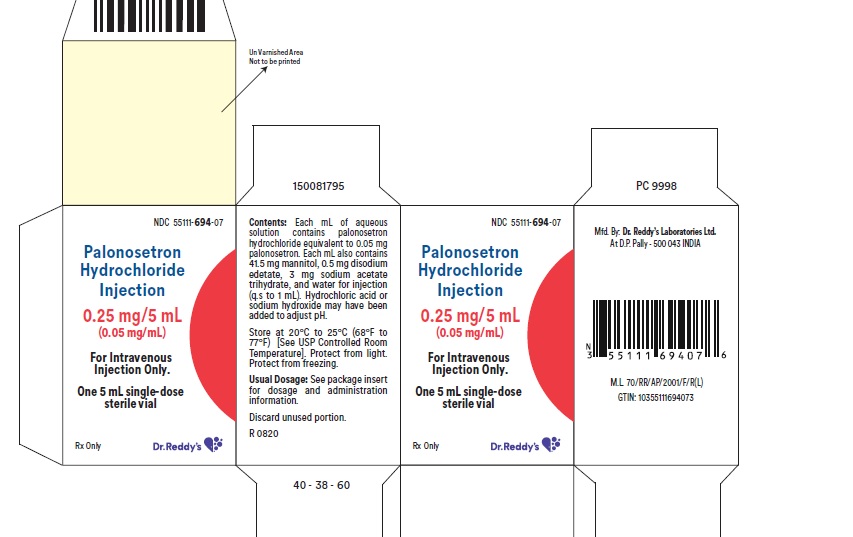
Palonosetron .05 mg/mL Injection, Solution, 5 vials — NDC 55111-694-19 (Billing 55111-0694-19)
This is a package of 5 vials of Palonosetron .05 mg/mL Injection, Solution from Dr.Reddy's Laboratories Limited, marketed since Mar 2018 and currently FDA-listed.
NDC database record
One package, one record: these facts belong to NDC 55111-694-19 alone.
- Record
- FDA NDC Directory package listing · Human prescription drug
- Code segments
- 55111 labeler · 694 product · 19 package
- Package marketed since
- Mar 23, 2018
- Sample package
- No — commercial package
- Listing certified through
- Dec 31, 2026
- Barcode (UPC-A, from the NDC)
- 3 5511169419 9
- FDA record last changed
- Jul 24, 2026
Identity & classification
Regulatory identifiers FDA, NLM and CMS codes for this package
Drug-database identifiers Medi-Span GPI and First Databank GCN / HICL / AHFS classification
- GSN (GCN sequence number): 052943
- GCN: 20228
- GPI-14 (Medi-Span): 50250070102020
- HICL (First Databank): 025512
- AHFS class code: 56:22.20.00
- RxCUI (RxNorm): 1728050
Where does this data come from?
- FDA openFDA NDC Directory · synced Oct 1, 2026
- FDA label on DailyMed · label index refreshed Oct 6, 2026
- RxNorm (NLM RxNav) · catalog refreshed Oct 1, 2026
- Medi-Span GPI (licensed)
- First Databank (licensed) · refreshed Oct 1, 2026
RxNorm drug class
This medicine belongs to the Serotonin-3 Receptor Antagonist class.
Where does this data come from?
- RxClass (NLM) · catalog refreshed Oct 1, 2026
Clinical
Palonosetron injection is used to prevent nausea and vomiting that may occur after receiving cancer chemotherapy or surgery. Palonosetron injection is in a class of medications called 5-HT3 receptor antagonists. It works by blocking the action of serotonin, a natural substance that may cause nausea and vomiting.
Read the full MedlinePlus article ↗- It's used to prevent nausea and vomiting — not to treat it once it's already started. For adults, it's given before cancer chemotherapy to stop both the immediate nausea (within th...
- What exactly is palonosetron injection used for?
- No, palonosetron injection is given directly into a vein (intravenously) by a nurse or doctor — you won't be managing this at home. For chemotherapy nausea, you'll get a single inf...
- How is it given — do I take it as a pill?
Patient education
Supplement & herbal interactions
Some supplements/herbs that may interact with Palonosetron — tap one for details:
Where does this data come from?
- MedlinePlus (NLM) · refreshed Oct 1, 2026
- FDA label on DailyMed · label index refreshed Oct 6, 2026
Ask a licensed pharmacist directly — free, answered by our team.
Pricing
A drug doesn't have one price. Each row is a different public payment system, and none is what you'd pay at the counter — that depends on your insurance. The ⓘ on each row explains what it measures.
| Price system | Per mL | Per package |
|---|---|---|
| Retail pharmacies payNADAC · weekly | Not in the retail survey — common for institutional, discontinued, or low-volume packs. | |
| Medicaid paysCMS SDUD · 12 mo | No recent Medicaid claims on file for this NDC — rare and low-volume NDCs are suppressed in the public data. | |
| Medicare drug plans payPart D · quarterly | No Part D plan price is available for this NDC in our data. | |
Where does this data come from?
- CMS NADAC weekly file
- CMS ASP pricing files · refreshed Sep 20, 2026
- CMS Medicaid State Drug Utilization Data · refreshed Oct 6, 2026
- CMS Part D plan pricing files · refreshed Sep 24, 2026
- VA National Acquisition Center price file
Packaging — all sizes for this product
| Package NDC | Description | Marketing start | Marketing end | Status |
|---|---|---|---|---|
| 55111-0694-07 55111-694-07 Main listing | 1 VIAL, SINGLE-USE in 1 CARTON / 5 mL in 1 VIAL, SINGLE-USE | 2018-03-23 | — | Active |
| 55111-0694-19 You're viewing this | 5 VIAL, SINGLE-USE in 1 CARTON / 1.5 mL in 1 VIAL, SINGLE-USE | 2018-03-23 | — | Active |
This pack shows little to no recent Medicaid volume — a different pack size carries most fills. See all packs ↓
Pack size FAQ
What quantity is in this package?
What NDC number is used to bill for this package of Palonosetron .05 mg/mL Injection, Solution?
Therapeutic equivalents
| Product | Labeler | Pack | NADAC/unit | TE | Status | Price vs. this |
|---|---|---|---|---|---|---|
| Palonosetron .05 mg/mLthis 55111-0694-19 | Dr.Reddy's | 5 vials | — | AP | FDA listed | — |
| Palonosetron .05 mg/mL 68001-0355-25 | BluePoint | 1 vial | — | AP | FDA listed | — |
| Palonosetron .05 mg/mL 16714-0834-01 | NorthStar | 1 vial | — | AP | FDA listed | — |
Where does this data come from?
- FDA openFDA NDC Directory · synced Oct 1, 2026
- FDA Orange Book · refreshed Oct 3, 2026
- CMS NADAC weekly file
Availability & generic status
This product is an FDA-approved generic. Other versions of the same drug are listed under Therapeutic equivalents, least expensive first.
Where does this data come from?
- FDA Orange Book · refreshed Oct 3, 2026
Inactive Ingredients / Excipients
Inactive ingredients, also called excipients, are components of the drug product other than the active ingredient. They may include fillers, dyes, coatings, preservatives, flavors, or other formulation ingredients.
🧪 Avoiding an ingredient? See Palonosetron Injection inactive ingredients by manufacturer: every current product's list side by side, so you can ask your pharmacy for the version that does not list it.
💡 Tap an ingredient (hover on desktop) to see what it is and why it’s used.
-
UNII 7FLD91C86K
Edetate disodium is a chemical compound that binds and removes certain metal ions. In medicines, it acts as a preservative and stabilizer by preventing metals like calcium from interfering with the product's shelf life and consistency.
-
UNII 3OWL53L36A
A natural sugar alcohol derived from seaweed or synthesized in the lab. It's used as a filler to add bulk, a sweetener in sugar-free formulas, and a disintegrant to help tablets break apart in the stomach.
-
UNII 4550K0SC9B
Sodium acetate is a salt derived from acetic acid. It acts as a buffer to help maintain the medicine's pH stability and may serve as a preservative or solubilizer in liquid formulations.
-
UNII 059QF0KO0R
Water is a liquid solvent that dissolves and mixes ingredients together in liquid medicines, syrups, and injections. It helps distribute the active drug evenly throughout the product.
4 inactive ingredients listed in the exact product block matched to this NDC.
Where does this data come from?
ingredient classCode="IACT" elements from the exact product block matched by this NDC. Label-section narrative from DailyMed / the openFDA label index is shown separately when available.- FDA label on DailyMed · label index refreshed Oct 6, 2026
- FDA openFDA NDC Directory · synced Oct 1, 2026
Inactive ingredient FAQ
Are inactive ingredients the same for every manufacturer?
Why might an inactive ingredient be missing?
Can inactive ingredients matter?
Manufacturer & labeler
More NDCs from Dr.Reddy's Laboratories Limited labeler code 55111
- Ibuprofen 800 mg Tablet NDC 55111-684-01
- Zoledronic Acid 4 mg/5mL Injection, Solution, Concentrate NDC 55111-685-07
- gemcitabine 200 mg/5mL Injection, Powder, Lyophilized, For Solution NDC 55111-686-07
- gemcitabine 1 g/25mL Injection, Powder, Lyophilized, For Solution NDC 55111-687-25
- Zoledronic Acid 5 mg/100mL Injection, Solution NDC 55111-688-52
- Sumatriptan Succinate 6 mg/.5mL Injection NDC 55111-693-12
- Cetirizine Hydrochloride 10 mg Tablet, Film Coated NDC 55111-699-04
- Naproxen and esomeprazole magnesium 500 mg; 20 mg Tablet, Delayed Release NDC 55111-701-60
- Lamotrigine 25 mg Tablet, Extended Release NDC 55111-717-05
- Lamotrigine 50 mg Tablet, Extended Release NDC 55111-718-05
- Lamotrigine 100 mg Tablet, Extended Release NDC 55111-719-05
- Lamotrigine 200 mg Tablet, Extended Release NDC 55111-720-05
Where does this data come from?
- FDA openFDA NDC Directory · synced Oct 1, 2026
- Drugs@FDA
Full prescribing information FDA SPL
🎯 Indications and Usage ▾
1 INDICATIONS AND USAGE Palonosetron hydrochloride injection is a serotonin-3 (5-HT 3 ) receptor antagonist indicated in: Adults for prevention of : acute and delayed nausea and vomiting associated with initial and repeat courses of moderately emetogenic cancer chemotherapy (MEC). ( 1 ) acute nausea and vomiting associated with initial and repeat courses of highly emetogenic cancer chemotherapy (HEC). ( 1 ) postoperative nausea and vomiting (PONV) for up to 24 hours following surgery.
Efficacy beyond 24 hours has not been demonstrated ( 1 ) Pediatric patients aged 1 month to less than 17 years for prevention of : acute nausea and vomiting associated with initial and repeat courses of emetogenic cancer chemotherapy, including highly emetogenic cancer chemotherapy (HEC). ( 1 ) Palonosetron hydrochloride injection is indicated in adults for prevention of: acute and delayed nausea and vomiting associated with initial and repeat courses of moderately emetogenic cancer chemotherapy (MEC). acute nausea and vomiting associated with initial and repeat courses highly emetogenic cancer chemotherapy (HEC). postoperative nausea and vomiting (PONV) for up to 24 hours following surgery.
Efficacy beyond 24 hours has not been demonstrated. As with other antiemetics, routine prophylaxis is not recommended in patients in whom there is little expectation that nausea and/or vomiting will occur postoperatively. In patients where nausea and vomiting must be avoided during the postoperative period, palonosetron hydrochloride is recommended even where the incidence of postoperative nausea and/or vomiting is low.
Palonosetron hydrochloride injection is indicated in pediatric patients 1 month to less than 17 years of age for prevention of: acute nausea and vomiting associated with initial and repeat courses of emetogenic cancer chemotherapy, including highly emetogenic cancer chemotherapy.
⏱️ Dosage and Administration ▾
2 DOSAGE AND ADMINISTRATION Chemotherapy-Induced Nausea and Vomiting ( 2.1 ) Age Dose Note different dosing units in pediatrics Infusion Time Adults 0.25 mg as a single dose Infuse over 30 seconds beginning approximately 30 minutes before the start of chemotherapy Pediatrics (1 month to less than 17 years) 2 0 micrograms per k ilo g ra m (maximum 1.5 mg) as a single dose Infuse over 15 minutes beginning approximately 30 minutes before the start of chemotherapy Postoperative Nausea and Vomiting ( 2.1 ) The recommended adult dosage is 0.075 mg as a single intravenous dose administered over 10 seconds immediately before the induction of anesthesia.
2.1Recommended Dosage Prevention of Chemotherapy-Induced Nausea and Vomiting The recommended dosage of palonosetron hydrochloride injection for prevention of nausea and vomiting associated with HEC and MEC in adults and associated with emetogenic chemotherapy, including HEC in pediatric patients 1 month to less than 17 years of age is shown in Table 1. Table 1: Recommended Dosage of Palonosetron Hydrochloride Injection for the Prevention of Nausea and Vomiting Associated with Chemotherapy in Adults and Pediatric Patients 1 Month to Less than 17 Years Age Dose Note different dosing units in pediatrics Infusion Time Adults 0.25 mg as a single dose Infuse over 30 seconds beginning approximately 30 minutes before the start of chemotherapy Pediatrics (1 month to less than 17 years) 20 micrograms per kilogram (max 1.5 mg) as a single dose Infuse over 15 minutes beginning approximately 30 minutes before the start of chemotherapy Postoperative Nausea and Vomiting The recommended dosage of palonosetron hydrochloride injection in adults for PONV is 0.075 mg administered as a single intravenous dose over 10 seconds immediately before the induction of anesthesia.
2.2Instructions for Intravenous Administration Palonosetron hydrochloride injection is supplied ready for intravenous administration at a concentration of 0.05 mg/mL (50 mcg/mL). Do not mix palonosetron hydrochloride injection with other drugs. Flush the infusion line with normal saline before and after administration of palonosetron hydrochloride injection.
Inspect palonosetron hydrochloride injection visually for particulate matter and discoloration before administration. Discard unused portion.
💊 Dosage Forms and Strengths ▾
3 DOSAGE FORM AND STRENGTHS Palonosetron hydrochloride injection is sterile, clear, and colorless solution: 0.25 mg palonosetron in 5 mL (0.05 mg/mL) in a single-dose vial 0.075 mg palonosetron in 1.5 mL (0.05 mg/mL) in a single-dose vial Injection: 0.25 mg palonosetron in 5 mL (0.05 mg/mL) in a single-dose vial ( 3 ) 0.075 mg palonosetron in 1.5 mL (0.05 mg/mL) single-dose vial ( 3 )
⛔ Contraindications ▾
4 CONTRAINDICATIONS Palonosetron hydrochloride is contraindicated in patients known to have hypersensitivity to palonosetron [see Warnings and Precautions (5.1) ] . Hypersensitivity to palonosetron or any of its components ( 4 )
⚠️ Warnings and Cautions ▾
5 WARNINGS AND PRECAUTIONS Hypersensitivity reactions, including anaphylaxis and anaphylactic shock : reported in patients with or without known hypersensitivity to other selective 5-HT 3 receptor antagonists. If symptoms occur, discontinue palonosetron hydrochloride and initiate appropriate medical treatment. ( 5.1 ) Serotonin syndrome : reported with 5-HT 3 receptor antagonists alone, but particularly with concomitant use of serotonergic drugs.
( 5.2 , 7.1 )
5.1Hypersensitivity Reactions Hypersensitivity reactions, including anaphylaxis and anaphylactic shock, have been reported with administration of palonosetron hydrochloride injection [see Adverse Reactions (6.2) ] . These reactions occurred in patients with or without known hypersensitivity to other 5-HT 3 receptor antagonists. If hypersensitivity reactions occur, discontinue palonosetron hydrochloride injection and initiate appropriate medical treatment.
Do not reinitiate palonosetron hydrochloride injection in patients who have previously experienced symptoms of hypersensitivity [see Contraindications (4) ] .
5.2Serotonin Syndrome The development of serotonin syndrome has been reported with 5-HT 3 receptor antagonists. Most reports have been associated with concomitant use of serotonergic drugs (e.g., selective serotonin reuptake inhibitors (SSRIs), serotonin and norepinephrine reuptake inhibitors (SNRIs), monoamine oxidase inhibitors, mirtazapine, fentanyl, lithium, tramadol, and intravenous methylene blue). Some of the reported cases were fatal.
Serotonin syndrome occurring with overdose of another 5-HT 3 receptor antagonist alone has also been reported. The majority of reports of serotonin syndrome related to 5-HT 3 receptor antagonist use occurred in a post-anesthesia care unit or an infusion center. Symptoms associated with serotonin syndrome may include the following combination of signs and symptoms: mental status changes (e.g. agitation, hallucinations, delirium, and coma), autonomic instability (e.g. tachycardia, labile blood pressure, dizziness, diaphoresis, flushing, hyperthermia), neuromuscular symptoms (e.g., tremor, rigidity, myoclonus, hyperreflexia, incoordination), seizures, with or without gastrointestinal symptoms (e.g. nausea, vomiting, diarrhea).
Patients should be monitored for the emergence of serotonin syndrome, especially with concomitant use of palonosetron hydrochloride and other serotonergic drugs. If symptoms of serotonin syndrome occur, discontinue palonosetron hydrochloride and initiate supportive treatment. Patients should be informed of the increased risk of serotonin syndrome, especially if palonosetron hydrochloride is used concomitantly with other serotonergic drugs [ see Drug Interactions (7.1) ] .
🤒 Adverse Reactions ▾
6 ADVERSE REACTIONS Serious or otherwise clinically significant adverse reactions reported in other sections of labeling: Hypersensitivity Reactions [see Warnings and Precautions (5.1) ] Serotonin Syndrome [see Warnings and Precautions ( 5.2 ) ] Most common adverse reactions in chemotherapy-induced nausea and vomiting in adults (≥5%) are: headache and constipation. ( 6.1 ) postoperative nausea and vomiting (≥ 2%) are: QT prolongation, bradycardia, headache, and constipation. ( 6.1 ) To report SUSPECTED ADVERSE REACTIONS, contact Dr.
REDDY’S LABORATORIES Inc., at 1-888-375-3784 or FDA at 1-800-FDA-1088 or www.fda.gov/medwatch .
6.1Clinical Trials Experience Because clinical trials are conducted under widely varying conditions, adverse reaction rates observed in the clinical trials of a drug cannot be directly compared to rates in the clinical trials of another drug and may not reflect the rates observed in practice. Chemotherapy-Induced Nausea and Vomiting Adults In double-blind randomized clinical trials for the prevention of nausea and vomiting induced by MEC or HEC, 1374 adult patients received a single dose of palonosetron hydrochloride injection, ondansetron (Studies 1 and 3) or dolasetron (Study 2) administered 30 minutes prior to chemotherapy [see Clinical Studies (14.1) ] .
Adverse reactions were similar in frequency and severity in all 3 treatment groups. Common adverse reactions reported in at least 2% of patients in these trials are shown in Table 2. Table 2: Common Adverse Reactions Reported in at least 2% of patients in any treatment group in Adults with Receiving MEC (Studies 1 and 2) or HEC (Study 3) Adverse Reaction Palonosetron hydrochloride injection 0.25 mg intravenously (N=633) Ondansetron 32 mg intravenously (N=410) Dolasetron 100 mg intravenously (N=194) Headache 9% 8% 16% Constipation 5% 2% 6% Diarrhea 1% 2% 2% Dizziness 1% 2% 2% Fatigue < 1% 1% 2% Abdominal Pain < 1% < 1% 2% Insomnia < 1% 1% 2% Less common adverse reactions, reported in 1% or less of patients, in Studies 1, 2 and 3 were: Cardiovascular: non-sustained tachycardia, bradycardia, hypotension, hypertension, myocardial ischemia, extrasystoles, sinus tachycardia, sinus arrhythmia, supraventricular extrasystoles and QT prolongation.
Dermatological: allergic dermatitis, rash Hearing and Vision: motion sickness, tinnitus, eye irritation and amblyopia Gastrointestinal System: diarrhea, dyspepsia, abdominal pain, dry mouth, hiccups and flatulence General: weakness, fatigue, fever, hot flash, flu-like syndrome Liver: transient, asymptomatic increases in AST and/or ALT and bilirubin. These changes occurred predominantly in patients receiving highly emetogenic chemotherapy Metabolic: hyperkalemia, electrolyte fluctuations, hyperglycemia, metabolic acidosis, glycosuria, appetite decrease, anorexia Musculoskeletal: arthralgia Nervous System: dizziness, somnolence, insomnia, hypersomnia, paresthesia Psychiatric: anxiety, euphoric mood Urinary System: urinary retention Vascular: vein discoloration, vein distention In other studies, 2 subjects experienced severe constipation following a single palonosetron hydrochloride injection dose of approximately 0.75 mg (three times the recommended dose).
Pediatrics Aged 2 Months to 17 Years In a pediatric clinical trial, 163 pediatric cancer patients with a mean age of 8 years received a single 20 mcg/kg (maximum 1.5 mg) intravenous infusion of palonosetron hydrochloride injection 30 minutes before beginning the first cycle of emetogenic chemotherapy [see Clinical Studies (14.2) ] . Adverse reactions were evaluated in pediatric patients receiving palonosetron hydrochloride injection for up to 4 chemotherapy cycles. The following adverse reactions were reported in less than 1% of patients: Nervous System: headache, dizziness, dyskinesia.
General: infusion site pain. Dermatological: allergic dermatitis, skin disorder. Postoperative Nausea and Vomiting The most common adverse reactions reported in at least 2% of adults… [Excerpted — this section continues on DailyMed.]
🔄 Drug Interactions ▾
7 DRUG INTERACTIONS Serotonergic Drugs : Monitor for serotonin syndrome; if symptoms occur, discontinue palonosetron hydrochloride and initiate supportive treatment. ( 7.1 )
7.1Serotonergic Drugs Serotonin syndrome (including altered mental status, autonomic instability, and neuromuscular symptoms) has been described following the concomitant use of 5-HT 3 receptor antagonists and other serotonergic drugs, including selective serotonin reuptake inhibitors (SSRIs) and serotonin and noradrenaline reuptake inhibitors (SNRIs). Monitor for the emergence of serotonin syndrome. If symptoms occur, discontinue palonosetron hydrochloride and initiate supportive treatment [see Warnings and Precautions ( 5.2 ) ] .
👥 Use in Specific Populations ▾
8 USE IN SPECIFIC POPULATIONS
8.1Pregnancy Risk Summary There are no available data on palonosetron HCl use in pregnant women to inform a drug-associated risk. In animal reproduction studies, no effects on embryo-fetal development were observed with the administration of oral palonosetron HCl during the period of organogenesis at doses up to 1,894 and 3,789 times the recommended human intravenous dose in rats and rabbits, respectively (see Data ). The estimated background risk of major birth defects and miscarriage for the indicated population is unknown.
All pregnancies have a background risk of birth defect, loss, or other adverse outcomes. In the U.S. general population, the estimated background risk of major birth defects and miscarriage in clinically recognized pregnancies is 2 to 4% and 15 to 20%, respectively. Data Animal Data In animal reproduction studies, no effects on embryo-fetal development were observed in pregnant rats given oral palonosetron HCl at doses up to 60 mg/kg/day (1,894 times the recommended human intravenous dose based on body surface area) or pregnant rabbits given oral doses up to 60 mg/kg/day (3,789 times the recommended human intravenous dose based on body surface area) during the period of organogenesis.
8.2Lactation Risk Summary There are no data on the presence of palonosetron in human milk, the effects of palonosetron on the breastfed infant, or the effects of palonosetron on milk production. The developmental and health benefits of breastfeeding should be considered along with the mother’s clinical need for palonosetron hydrochloride and any potential adverse effect on the breastfed infant from palonosetron or from the underlying maternal condition.
8.4Pediatric Use Chemotherapy-Induced Nausea and Vomiting Safety and effectiveness of palonosetron hydrochloride injection have been established in pediatric patients aged 1 month to less than 17 years for the prevention of acute nausea and vomiting associated with initial and repeat courses of emetogenic cancer chemotherapy, including HEC. Use is supported by a clinical trial where 165 pediatric patients aged 2 months to less than 17 years were randomized to receive a single dose of palonosetron hydrochloride injection 20 mcg/kg (maximum 1.5 mg) administered as an intravenous infusion 30 minutes prior to the start of emetogenic chemotherapy [see Clinical Studies ( 14.2 )] .
While this study demonstrated that pediatric patients require a higher palonosetron dose than adults to prevent chemotherapy-induced nausea and vomiting, the safety profile is consistent with the established profile in adults [ see Adverse Reactions ( 6.1 )] . Safety and effectiveness of palonosetron hydrochloride in neonates (less than 1 month of age) have not been established. Postoperative Nausea and Vomiting Studies Safety and effectiveness have not been established in pediatric patients for prevention of postoperative nausea and vomiting.
Two pediatric trials were performed. Pediatric Study 1, a dose finding study was conducted to compare two doses of palonosetron, 1 mcg/kg (maximum 0.075 mg) versus 3 mcg/kg (maximum 0.25 mg). A total of 150 pediatric surgical patients participated, age range 1 month to less than 17 years.
No dose response was observed. Pediatric Study 2, a multicenter, double-blind, double-dummy, randomized, parallel group, active control, single-dose non-inferiority study, compared intravenous palonosetron HCl (1 mcg/kg, maximum 0.075 mg) versus intravenous ondansetron. A total of 670 pediatric surgical patients participated, age 30 days to less than 17 years.
The primary efficacy endpoint, Complete Response (CR: no vomiting, no retching, and no antiemetic rescue medication) during the first 24 hours postoperatively was achieved in 78.2% of patients in the palonosetron group and 82.7% in the ondansetron group. Given the pre-specified non-inferiority margin of -10%, the stratum adjusted Mantel-Haenszel statistical non-inferiority confidence interval… [Excerpted — this section continues on DailyMed.]
🤰 Pregnancy ▾
8.1Pregnancy Risk Summary There are no available data on palonosetron HCl use in pregnant women to inform a drug-associated risk. In animal reproduction studies, no effects on embryo-fetal development were observed with the administration of oral palonosetron HCl during the period of organogenesis at doses up to 1,894 and 3,789 times the recommended human intravenous dose in rats and rabbits, respectively (see Data ). The estimated background risk of major birth defects and miscarriage for the indicated population is unknown.
All pregnancies have a background risk of birth defect, loss, or other adverse outcomes. In the U.S. general population, the estimated background risk of major birth defects and miscarriage in clinically recognized pregnancies is 2 to 4% and 15 to 20%, respectively. Data Animal Data In animal reproduction studies, no effects on embryo-fetal development were observed in pregnant rats given oral palonosetron HCl at doses up to 60 mg/kg/day (1,894 times the recommended human intravenous dose based on body surface area) or pregnant rabbits given oral doses up to 60 mg/kg/day (3,789 times the recommended human intravenous dose based on body surface area) during the period of organogenesis.
🧒 Pediatric Use ▾
8.4Pediatric Use Chemotherapy-Induced Nausea and Vomiting Safety and effectiveness of palonosetron hydrochloride injection have been established in pediatric patients aged 1 month to less than 17 years for the prevention of acute nausea and vomiting associated with initial and repeat courses of emetogenic cancer chemotherapy, including HEC. Use is supported by a clinical trial where 165 pediatric patients aged 2 months to less than 17 years were randomized to receive a single dose of palonosetron hydrochloride injection 20 mcg/kg (maximum 1.5 mg) administered as an intravenous infusion 30 minutes prior to the start of emetogenic chemotherapy [see Clinical Studies ( 14.2 )] .
While this study demonstrated that pediatric patients require a higher palonosetron dose than adults to prevent chemotherapy-induced nausea and vomiting, the safety profile is consistent with the established profile in adults [ see Adverse Reactions ( 6.1 )] . Safety and effectiveness of palonosetron hydrochloride in neonates (less than 1 month of age) have not been established. Postoperative Nausea and Vomiting Studies Safety and effectiveness have not been established in pediatric patients for prevention of postoperative nausea and vomiting.
Two pediatric trials were performed. Pediatric Study 1, a dose finding study was conducted to compare two doses of palonosetron, 1 mcg/kg (maximum 0.075 mg) versus 3 mcg/kg (maximum 0.25 mg). A total of 150 pediatric surgical patients participated, age range 1 month to less than 17 years.
No dose response was observed. Pediatric Study 2, a multicenter, double-blind, double-dummy, randomized, parallel group, active control, single-dose non-inferiority study, compared intravenous palonosetron HCl (1 mcg/kg, maximum 0.075 mg) versus intravenous ondansetron. A total of 670 pediatric surgical patients participated, age 30 days to less than 17 years.
The primary efficacy endpoint, Complete Response (CR: no vomiting, no retching, and no antiemetic rescue medication) during the first 24 hours postoperatively was achieved in 78.2% of patients in the palonosetron group and 82.7% in the ondansetron group. Given the pre-specified non-inferiority margin of -10%, the stratum adjusted Mantel-Haenszel statistical non-inferiority confidence interval for the difference in the primary endpoint, complete response (CR), was [-10.5, 1.7%], therefore non-inferiority was not demonstrated.
Adverse reactions to palonosetron were similar to those reported in adults.
🧓 Geriatric Use ▾
8.5Geriatric Use Of the 1374 adult cancer patients in clinical studies of intravenously administered palonosetron HCl, 316 (23%) were 65 years and over, while 71 (5%) were at least 75 years and over. Of the 1520 adult patients in clinical studies of intravenously administered palonosetron HCl, 73 (5%) were at least 65 years old [see Clinical Studies ( 14.1 , 14.3 )] . No overall differences in safety or effectiveness were observed between these subjects and younger subjects, but greater sensitivity in some older individuals cannot be ruled out.
Population pharmacokinetics analysis did not reveal any differences in palonosetron pharmacokinetics between cancer patients 65 years of age and older compared to younger patients [see Clinical Pharmacology ( 12.3 )] . No dose adjustment is required for geriatric patients.
🆘 Overdosage ▾
10 OVERDOSAGE There is no known antidote to palonosetron. Overdose should be managed with supportive care. Dialysis studies have not been performed, however, due to the large volume of distribution, dialysis is unlikely to be an effective treatment for palonosetron overdose.
A single intravenous dose of palonosetron HCl at 30 mg/kg (947 and 474 times the human dose for rats and mice, respectively, based on body surface area) was lethal to rats and mice. The major signs of toxicity were convulsions, gasping, pallor, cyanosis and collapse.
🧬 Clinical Pharmacology ▾
12 CLINICAL PHARMACOLOGY
12.1Mechanism of Action Palonosetron is a 5-HT 3 receptor antagonist with a strong binding affinity for this receptor and little or no affinity for other receptors. Cancer chemotherapy may be associated with a high incidence of nausea and vomiting, particularly when certain agents, such as cisplatin, are used. 5-HT 3 receptors are located on the nerve terminals of the vagus in the periphery and centrally in the chemoreceptor trigger zone of the area postrema.
It is thought that chemotherapeutic agents produce nausea and vomiting by releasing serotonin from the enterochromaffin cells of the small intestine and that the released serotonin then activates 5-HT 3 receptors located on vagal afferents to initiate the vomiting reflex. Postoperative nausea and vomiting is influenced by multiple patient, surgical and anesthesia related factors and is triggered by release of 5-HT in a cascade of neuronal events involving both the central nervous system and the gastrointestinal tract.
The 5-HT 3 receptor has been demonstrated to selectively participate in the emetic response.
12.2Pharmacodynamics Cardiac Electrophysiology The effect of intravenous palonosetron on blood pressure, heart rate, and ECG parameters including QTc were comparable to intravenous ondansetron and dolasetron in CINV clinical trials. In PONV clinical trials the effect of palonosetron on the QTc interval was no different from placebo. In non-clinical studies palonosetron possesses the ability to block ion channels involved in ventricular de- and re‑polarization and to prolong action potential duration.
At a dose of 9 times the maximum recommended adult dose, palonosetron hydrochloride injection does not prolong the QT interval to any clinically relevant extent.
12.3Pharmacokinetics After intravenous dosing of palonosetron HCl in healthy subjects and cancer patients, an initial decline in palonosetron plasma concentrations is followed by a slow elimination from the body. Mean maximum plasma concentration (C max ) and area under the concentration-time curve (AUC 0-∞ ) are generally dose-proportional over the dose range of 0.3 to 90 mcg/kg in healthy subjects and in cancer patients. Following a single intravenous dose of palonosetron HCl at 3 mcg/kg (or 0.21 mg/70 kg) to six cancer patients, mean (±SD) maximum plasma concentration was estimated to be 5630 ± 5480 ng/L and mean AUC was 35.8 ± 20.9 h·mcg/L.
Following intravenous administration of palonosetron hydrochloride injection 0.25 mg once every other day for 3 doses in 11 cancer patients, the mean increase in plasma palonosetron concentration from Day 1 to Day 5 was 42±34%. Following intravenous administration of palonosetron hydrochloride injection 0.25 mg once daily for 3 days in 12 healthy subjects, the mean (±SD) increase in plasma palonosetron concentration from Day 1 to Day 3 was 110±45%. After intravenous dosing of palonosetron hydrochloride injection in patients undergoing surgery (abdominal surgery or vaginal hysterectomy), the pharmacokinetic characteristics of palonosetron were similar to those observed in cancer patients.
Distribution Palonosetron has a volume of distribution of approximately 8.3 ±
2.5L/kg. Approximately 62% of palonosetron is bound to plasma proteins. Elimination After a single intravenous dose of 10 mcg/kg [ 14 C]-palonosetron, approximately 80% of the dose was recovered within 144 hours in the urine with palonosetron representing approximately 40% of the administered dose.
In healthy subjects, the total body clearance of palonosetron was 0.160 ± 0.035 L/h/kg and renal clearance was 0.067± 0.018 L/h/kg. Mean terminal elimination half‑life is approximately 40 hours. Metabolism Palonosetron is eliminated by multiple routes with approximately 50% metabolized to form two primary metabolites: N-oxide-palonosetron and 6-S-hydroxy-palonosetron.
These metabolites each have less than 1% of the 5-HT 3 receptor antagonist activity of palonosetron. In vitro metabolism st… [Excerpted — this section continues on DailyMed.]
🧬 Mechanism of Action ▾
12.1Mechanism of Action Palonosetron is a 5-HT 3 receptor antagonist with a strong binding affinity for this receptor and little or no affinity for other receptors. Cancer chemotherapy may be associated with a high incidence of nausea and vomiting, particularly when certain agents, such as cisplatin, are used. 5-HT 3 receptors are located on the nerve terminals of the vagus in the periphery and centrally in the chemoreceptor trigger zone of the area postrema.
It is thought that chemotherapeutic agents produce nausea and vomiting by releasing serotonin from the enterochromaffin cells of the small intestine and that the released serotonin then activates 5-HT 3 receptors located on vagal afferents to initiate the vomiting reflex. Postoperative nausea and vomiting is influenced by multiple patient, surgical and anesthesia related factors and is triggered by release of 5-HT in a cascade of neuronal events involving both the central nervous system and the gastrointestinal tract.
The 5-HT 3 receptor has been demonstrated to selectively participate in the emetic response.
📦 How Supplied / Storage and Handling ▾
16 HOW SUPPLIED/STORAGE AND HANDLING Palonosetron hydrochloride injection is supplied as a sterile, clear and colorless solution: 0.25 mg palonosetron in 5 mL (0.05 mg/mL) in a single-dose vial individually packaged in a carton (NDC # 55111-694-07). 0.075 mg palonosetron in 1.5 mL (0.05 mg/mL) in a s single-dose vial packaged in a carton containing 5 vials (NDC # 55111-694-19). Storage Store at 20°C to 25°C (68°F to 77°F) [see USP Controlled Room Temperature].
Protect from freezing. Protect from light.
📋 Description ▾
11 DESCRIPTION Palonosetron hydrochloride injection contains palonosetron as palonosetron HCl, an antiemetic and antinauseant agent. It is a serotonin-3 (5-HT 3 ) receptor antagonist with a strong binding affinity for this receptor. Chemically, palonosetron hydrochloride is: (3a S) -2-[( S )-1-Azabicyclo [2.2.2]oct-3-yl]-2,3,3a,4,5,6-hexahydro-1-oxo-1 H benz[ de ]isoquinoline hydrochloride.
The empirical formula is C 19 H 24 N 2 O.HCl, with a molecular weight of 332.87. Palonosetron hydrochloride exists as a single isomer and has the following structural formula: Palonosetron hydrochloride is a white to off-white crystalline powder. It is freely soluble in water and soluble in methanol.
Palonosetron hydrochloride injection is a sterile, clear, colorless, non-pyrogenic, isotonic, buffered solution for intravenous administration. Palonosetron hydrochloride injection is available as a 5 mL or 1.5 mL single-dose vial. Each 5 mL vial contains: 0.25 mg palonosetron (equivalent to 0.28 mg palonosetron HCl), 207.5 mg mannitol, disodium edetate and sodium acetate trihydrate in water for intravenous administration.
Each 1.5 mL vial contains: 0.075 mg palonosetron (equivalent to 0.084 mg palonosetron HCl), 62.25 mg mannitol, disodium edetate and sodium acetate trihydrate in water for intravenous administration. The pH of the solution in the 5 mL and 1.5 mL vials is 4.5 to 5.5, Hydrochloric acid or sodium hydroxide may have been added to adjust pH. structure
💬 Information for Patients ▾
17 PATIENT COUNSELING INFORMATION Advise the patient or caregiver to read the FDA-approved patient labeling ( Patient Information ). Hypersensitivity Reactions Advise patients that hypersensitivity reactions, including anaphylaxis and anaphylactic shock, have been reported in patients with or without known hypersensitivity to other 5-HT 3 receptor antagonists. Advise patients to seek immediate medical attention if any signs or symptoms of a hypersensitivity reaction occur with administration of palonosetron hydrochloride injection [see Warnings and Precautions ( 5.1 )] .
Serotonin Syndrome Advise patients of the possibility of serotonin syndrome, especially with concomitant use of palonosetron hydrochloride injection and another serotonergic agent such as medications to treat depression and migraines. Advise patients to seek immediate medical attention if the following symptoms occur: changes in mental status, autonomic instability, neuromuscular symptoms with or without gastrointestinal symptoms [ see Warnings and Precautions ( 5.2 ) ] . Mfd.
By: Dr. Reddy's Laboratories Ltd . At D.P.
Pally - 500 043 INDIA
Hypersensitivity Reactions Advise patients that hypersensitivity reactions, including anaphylaxis and anaphylactic shock, have been reported in patients with or without known hypersensitivity to other 5-HT 3 receptor antagonists. Advise patients to seek immediate medical attention if any signs or symptoms of a hypersensitivity reaction occur with administration of palonosetron hydrochloride injection [see Warnings and Precautions ( 5.1 )] . Serotonin Syndrome Advise patients of the possibility of serotonin syndrome, especially with concomitant use of palonosetron hydrochloride injection and another serotonergic agent such as medications to treat depression and migraines.
Advise patients to seek immediate medical attention if the following symptoms occur: changes in mental status, autonomic instability, neuromuscular symptoms with or without gastrointestinal symptoms [ see Warnings and Precautions ( 5.2 ) ] . Mfd. By: Dr.
Reddy's Laboratories Ltd . At D.P. Pally - 500 043 INDIA
🍼 Nursing Mothers ▾
8.2Lactation Risk Summary There are no data on the presence of palonosetron in human milk, the effects of palonosetron on the breastfed infant, or the effects of palonosetron on milk production. The developmental and health benefits of breastfeeding should be considered along with the mother’s clinical need for palonosetron hydrochloride and any potential adverse effect on the breastfed infant from palonosetron or from the underlying maternal condition.
🧬 Pharmacokinetics ▾
12.3Pharmacokinetics After intravenous dosing of palonosetron HCl in healthy subjects and cancer patients, an initial decline in palonosetron plasma concentrations is followed by a slow elimination from the body. Mean maximum plasma concentration (C max ) and area under the concentration-time curve (AUC 0-∞ ) are generally dose-proportional over the dose range of 0.3 to 90 mcg/kg in healthy subjects and in cancer patients. Following a single intravenous dose of palonosetron HCl at 3 mcg/kg (or 0.21 mg/70 kg) to six cancer patients, mean (±SD) maximum plasma concentration was estimated to be 5630 ± 5480 ng/L and mean AUC was 35.8 ± 20.9 h·mcg/L.
Following intravenous administration of palonosetron hydrochloride injection 0.25 mg once every other day for 3 doses in 11 cancer patients, the mean increase in plasma palonosetron concentration from Day 1 to Day 5 was 42±34%. Following intravenous administration of palonosetron hydrochloride injection 0.25 mg once daily for 3 days in 12 healthy subjects, the mean (±SD) increase in plasma palonosetron concentration from Day 1 to Day 3 was 110±45%. After intravenous dosing of palonosetron hydrochloride injection in patients undergoing surgery (abdominal surgery or vaginal hysterectomy), the pharmacokinetic characteristics of palonosetron were similar to those observed in cancer patients.
Distribution Palonosetron has a volume of distribution of approximately 8.3 ±
2.5L/kg. Approximately 62% of palonosetron is bound to plasma proteins. Elimination After a single intravenous dose of 10 mcg/kg [ 14 C]-palonosetron, approximately 80% of the dose was recovered within 144 hours in the urine with palonosetron representing approximately 40% of the administered dose.
In healthy subjects, the total body clearance of palonosetron was 0.160 ± 0.035 L/h/kg and renal clearance was 0.067± 0.018 L/h/kg. Mean terminal elimination half‑life is approximately 40 hours. Metabolism Palonosetron is eliminated by multiple routes with approximately 50% metabolized to form two primary metabolites: N-oxide-palonosetron and 6-S-hydroxy-palonosetron.
These metabolites each have less than 1% of the 5-HT 3 receptor antagonist activity of palonosetron. In vitro metabolism studies have suggested that CYP2D6 and to a lesser extent, CYP3A4 and CYP1A2 are involved in the metabolism of palonosetron. However, clinical pharmacokinetic parameters are not significantly different between poor and extensive metabolizers of CYP2D6 substrates.
Specific Populations Pediatric Patients Pharmacokinetic data was obtained from a subset of pediatric cancer patients that received 10 mcg/kg or 20 mcg/kg as a single intravenous dose of palonosetron hydrochloride injection. When the dose was increased from 10 mcg/kg to 20 mcg/kg a dose-proportional increase in mean AUC was observed. Peak plasma concentrations (CT) reported at the end of the 15-minute infusion of 20 mcg/kg were highly variable in all age groups and tended to be lower in patients less than 6 years than in older patients as shown in Table 4.
The median half-life was 30 hours in overall age groups and ranged from about 20 to 30 hours across age groups after administration of 20 mcg/kg. The total body clearance (L/h/kg) in patients 12 to 17 years old was similar to that in healthy adults. There are no apparent differences in volume of distribution when expressed as L/kg.
Table 4: Pharmacokinetics Parameters in Pediatric Cancer Patients following Intravenous Infusion of 20 mcg/kg Palonosetron Hydrochloride Injection Over 15 minutes PK Parameter a Pediatric Age Group Less than 2 years 2 years to less than 6 years 6 years to less than 12 years 12 years to less than 17 years N=12 N=42 N=38 N=44 C T b , ng/L 9025 (197) 9414 (252) 16275 (203) 11831 (176) N=5 N=7 N=10 AUC 0-∞ , h·mcg/L 103.5 (40.4) 98.7 (47.7) 124.5 (19.1) N=6 N=14 N=13 N=19 Clearance c , L/h/kg 0.31 (34.7) 0.23 (51.3) 0.19 (46.8) 0.16 (27.8) Vss c , L/kg 6.08 (36.5) 5.29 (57.8) 6.26 (40.0) 6.20 (29.0) a Geometric Mea… [Excerpted — this section continues on DailyMed.]
🧬 Pharmacodynamics ▾
12.2Pharmacodynamics Cardiac Electrophysiology The effect of intravenous palonosetron on blood pressure, heart rate, and ECG parameters including QTc were comparable to intravenous ondansetron and dolasetron in CINV clinical trials. In PONV clinical trials the effect of palonosetron on the QTc interval was no different from placebo. In non-clinical studies palonosetron possesses the ability to block ion channels involved in ventricular de- and re‑polarization and to prolong action potential duration.
At a dose of 9 times the maximum recommended adult dose, palonosetron hydrochloride injection does not prolong the QT interval to any clinically relevant extent.
🔬 Clinical Studies ▾
14 CLINICAL STUDIES
14.1Prevention of Nausea and Vomiting Associated with MEC and HEC in Adults Efficacy of a single intravenous dose of palonosetron hydrochloride injection in preventing acute and delayed nausea and vomiting associated with MEC or HEC were studied in 4 trials. In these double-blind studies, complete response rates (no emetic episodes and no rescue medication) and other efficacy parameters were assessed through at least 120 hours after administration of chemotherapy. The safety and efficacy of palonosetron hydrochloride injection in repeated courses of chemotherapy was also assessed.
Moderately Emetogenic Chemotherapy Two double-blind trials (Study 1 and Study 2) involving 1132 patients compared a single dose of palonosetron hydrochloride injection with either a single-dose of ondansetron (Study 1) or dolasetron (Study 2) given 30 minutes prior to MEC, including carboplatin, cisplatin ≤ 50 mg/m², cyclophosphamide < 1500 mg/m², doxorubicin > 25 mg/m², epirubicin, irinotecan, and methotrexate > 250 mg/m². Concomitant corticosteroids were not administered prophylactically in Study 1 and were only used by 4 to 6% of patients in Study 2.
The majority of patients in these studies were women (77%), White (65%) and naïve to previous chemotherapy (54%). The mean age was 55 years. Highly Emetogenic Chemotherapy A double-blind, dose-ranging trial evaluated the efficacy of a single intravenous dose of palonosetron hydrochloride injection from 0.3 to 90 mcg/kg (equivalent to < 0.1 mg to 6 mg fixed dose) in 161 chemotherapy-naïve adult cancer patients receiving HEC, either cisplatin ≥ 70 mg/m² or cyclophosphamide > 1100 mg/m².
Concomitant corticosteroids were not administered prophylactically. Analysis of data from this trial indicates that 0.25 mg is the lowest effective dose in preventing acute nausea and vomiting associated with HEC. A double-blind trial involving 667 patients compared a single intravenous dose of palonosetron hydrochloride injection with a single intravenous dose of ondansetron (Study 3) given 30 minutes prior to HEC, including cisplatin ≥ 60 mg/m², cyclophosphamide > 1500 mg/m², and dacarbazine.
Corticosteroids were co-administered prophylactically before chemotherapy in 67% of patients. Of the 667 patients, 51% were women, 60% White, and 59% naïve to previous chemotherapy. The mean age was 52 years.
Efficacy Results Studies 1, 2 and 3 show that palonosetron hydrochloride injection was effective in the prevention of nausea and vomiting associated with initial and repeat courses of MEC and HEC in the acute phase (0 to 24 hours) [Table 5]. Clinical superiority over other 5-HT 3 receptor antagonists has not been adequately demonstrated in the acute phase. In Study 3, efficacy was greater when prophylactic corticosteroids were administered concomitantly.
Studies 1 and 2 show that palonosetron hydrochloride injection was effective in the prevention of nausea and vomiting associated with initial and repeat course of MEC in the delayed phase (24 to 120 hours) [Table 6] and overall phase (0 to 120 hours) [Table 7]. Table 5: Prevention of Acute Nausea and Vomiting (0 to 24 Hours) in Adults with Nausea and Vomiting Associated with MEC or HEC in Studies 1, 2 and 3: Complete Response Rates Chemotherapy Study Treatment Group N a % with Complete Response p -value b 97.5% Confidence Interval palonosetron hydrochloride injection minus Comparator c Moderately Emetogenic 1 Palonosetron hydrochloride injection 0.25 mg intravenously 189 81 0.009 Ondansetron 32 mg intravenously 185 69 2 Palonosetron hydrochloride injection 0.25 mg intravenously 189 63 NS Dolasetron 100 mg intravenously 191 53 Highly Emetogenic 3 Palonosetron hydrochloride injection 0.25 mg intravenously 223 59 NS Ondansetron 32 mg intravenously 221 57 a Intent-to-treat cohort b 2-sided Fisher’s exact test.
Significance level at α=0.025. c These studies were designed to show non-inferiority. A lower bound greater than –15% demonstrates non-inferiority betw… [Excerpted — this section continues on DailyMed.]
🧪 Nonclinical Toxicology ▾
13 NONCLINICAL TOXICOLOGY
13.1Carcinogenesis, Mutagenesis, Impairment of Fertility In a 104-week carcinogenicity study in CD-1 mice, animals were treated with oral doses of palonosetron HCl at 10, 30 and 60 mg/kg/day. Treatment with palonosetron was not tumorigenic. The highest tested dose produced a systemic exposure to palonosetron (Plasma AUC) of about 150 to 289 times the human exposure (AUC= 29.8 h·mcg/L) at the recommended intravenous dose of 0.25 mg.
In a 104-week carcinogenicity study in Sprague-Dawley rats, male and female rats were treated with oral doses of 15, 30 and 60 mg/kg/day and 15, 45 and 90 mg/kg/day, respectively. The highest doses produced a systemic exposure to palonosetron (Plasma AUC) of 137 and 308 times the human exposure at the recommended dose. Treatment with palonosetron produced increased incidences of adrenal benign pheochromocytoma and combined benign and malignant pheochromocytoma, increased incidences of pancreatic Islet cell adenoma and combined adenoma and carcinoma and pituitary adenoma in male rats.
In female rats, it produced hepatocellular adenoma and carcinoma and increased the incidences of thyroid C-cell adenoma and combined adenoma and carcinoma. Palonosetron was not genotoxic in the Ames test, the Chinese hamster ovarian cell (CHO/HGPRT) forward mutation test, the ex vivo hepatocyte unscheduled DNA synthesis (UDS) test or the mouse micronucleus test. It was, however, positive for clastogenic effects in the Chinese hamster ovarian (CHO) cell chromosomal aberration test.
Palonosetron HCl at oral doses up to 60 mg/kg/day (about 1894 times the recommended human intravenous dose based on body surface area) was found to have no effect on fertility and reproductive performance of male and female rats.
📄 Carcinogenesis, Mutagenesis, Impairment of Fertility ▾
13.1Carcinogenesis, Mutagenesis, Impairment of Fertility In a 104-week carcinogenicity study in CD-1 mice, animals were treated with oral doses of palonosetron HCl at 10, 30 and 60 mg/kg/day. Treatment with palonosetron was not tumorigenic. The highest tested dose produced a systemic exposure to palonosetron (Plasma AUC) of about 150 to 289 times the human exposure (AUC= 29.8 h·mcg/L) at the recommended intravenous dose of 0.25 mg.
In a 104-week carcinogenicity study in Sprague-Dawley rats, male and female rats were treated with oral doses of 15, 30 and 60 mg/kg/day and 15, 45 and 90 mg/kg/day, respectively. The highest doses produced a systemic exposure to palonosetron (Plasma AUC) of 137 and 308 times the human exposure at the recommended dose. Treatment with palonosetron produced increased incidences of adrenal benign pheochromocytoma and combined benign and malignant pheochromocytoma, increased incidences of pancreatic Islet cell adenoma and combined adenoma and carcinoma and pituitary adenoma in male rats.
In female rats, it produced hepatocellular adenoma and carcinoma and increased the incidences of thyroid C-cell adenoma and combined adenoma and carcinoma. Palonosetron was not genotoxic in the Ames test, the Chinese hamster ovarian cell (CHO/HGPRT) forward mutation test, the ex vivo hepatocyte unscheduled DNA synthesis (UDS) test or the mouse micronucleus test. It was, however, positive for clastogenic effects in the Chinese hamster ovarian (CHO) cell chromosomal aberration test.
Palonosetron HCl at oral doses up to 60 mg/kg/day (about 1894 times the recommended human intravenous dose based on body surface area) was found to have no effect on fertility and reproductive performance of male and female rats.
📄 Patient Package Insert ▾
PATIENT INFORMATION PALONOSETRON HYDROCHLORIDE (PAL-oh-NOE-se-tron HYE roe-KLOR-ide) injection, for intravenous use Read this Patient Information before you receive palonosetron hydrochloride injection and each time you receive palonosetron hydrochloride injection. There may be new information. This information does not take the place of talking with your doctor about your medical condition or your treatment.
What is palonosetron hydrochloride injection? Palonosetron hydrochloride injection is a prescription medicine called an “antiemetic.” Palonosetron hydrochloride injection is used in adults to help prevent the nausea and vomiting that happens: right away or later with certain anti-cancer medicines (chemotherapy) up to 24 hours while recovering from anesthesia after surgery Palonosetron hydrochloride injection is used in children 1 month old to less than 17 years of age to help prevent the nausea and vomiting that happens right away with certain anti-cancer medicines (chemotherapy).
It is not known if palonosetron hydrochloride injection is safe and effective in children less than 1 month old to help prevent nausea and vomiting after chemotherapy. It is not known if palonosetron hydrochloride injection is safe and effective in children for the prevention of nausea and vomiting while recovering from anesthesia after surgery. Who should not receive palonosetron hydrochloride injection?
Do not receive palonosetron hydrochloride injection if you are allergic to palonosetron hydrochloride or any of the ingredients in palonosetron hydrochloride injection. See the end of this leaflet for a complete list of ingredients in palonosetron hydrochloride injection. What should I tell my doctor before receiving palonosetron hydrochloride injection?
Be fore receiving palonosetron hydrochloride injection, tell your doctor about all of your medical conditions, including if you: have had an allergic reaction to another medicine for nausea or vomiting are pregnant or plan to become pregnant. It is not known if palonosetron hydrochloride injection will harm your unborn baby. are breastfeeding or plan to breastfeed. It is not known if palonosetron hydrochloride passes into your breast milk or if it will affect your baby or your breast milk.
Talk to your doctor about the best way to feed your baby if you will receive palonosetron hydrochloride injection. Tell your doctor about all of the medicines you take, including prescription and over-the-counter medicines, vitamins, and herbal supplements. Palonosetron hydrochloride injection and certain other medicines can affect each other, causing serious side effects.
How will I receive palonosetron hydrochloride injection? Palonosetron hydrochloride injection will be given to you in your vein by intravenous (I.V.) injection. Palonosetron hydrochloride injection is usually given about 30 minutes before you receive your anti-cancer medicine (chemotherapy) or right before anesthesia for surgery.
What are the possible side effects of palonosetron hydrochloride injection? Palonosetron hydrochloride injection may cause serious side effects, including: Serious allergic reactions, such as anaphylaxis. Get emergency medical help right away if you get any of the following symptoms. o hives o swollen face o breathing trouble o chest pain Serotonin Syndrome.
A possible life threatening problem called serotonin syndrome can happen with medicines called 5-HT3 receptor antagonists, including palonosetron hydrochloride injection, especially when used with medicines used to treat depression and migraine headaches called serotonin reuptake inhibitors (SSRIs), serotonin and norepinephrine reuptake inhibitors (SNRIs), monoamine oxidase inhibitors (MAOIs) and certain other medicines. Tell your doctor or nurse right away if you have any of the following symptoms of serotonin syndrome : o agitation, seeing things that are not there (hallucinations), confusion, or coma o fast heartbeat or unusual and frequent changes in your b… [Excerpted — this section continues on DailyMed.]
📄 Package Label / Principal Display Panel ▾
PRINCIPAL DISPLAY PANEL NDC 55111- 694 -07 Palonosetron Hydrochloride Injection 0.25 mg/5 mL (0.05 mg/mL) For Intravenous Injection Only. One 5 mL single-dose sterile vial. Rx Only 025carton
PRINCIPAL DISPLAY PANEL NDC 55111- 694 -07 Palonosetron Hydrochloride Injection 0.25 mg/5 mL (0.05 mg/mL) For intravenous Injection Only. 5 mL single-dose sterile vial. Rx only 025vial
Medicaid utilization by pack size
Reported adverse events (FAERS)
Top reported reactions
Age at onset
Reporter sex
Serious outcomes
Where does this data come from?
About this NDC listing & data coverage
What data is (and isn’t) available for this NDC — tap to expand
| NDC identity (package / product / labeler codes) | ✓ Available |
| Labeler | ✓ Available |
| Product & package description | ✓ Available |
| Marketing category & status | ✓ Available |
| Active ingredient / dosage form / route | ✓ Available |
| FDA label (SPL via DailyMed) | ✓ Available |
| Package photos | ✓ Available |
| Inactive ingredients (structured) | ✓ Available |
| NADAC pharmacy acquisition price (CMS) | — Not published for this NDC CMS publishes NADAC only for NDCs reported in its retail-pharmacy survey. |
| Orange Book / therapeutic-equivalence data | ✓ Available |
| HCPCS J-code billing crosswalk | — Not published for this NDC Most self-administered / retail products have no J-code — that is normal. |
| Medicaid utilization (CMS SDUD) | — Not published for this NDC CMS reports utilization only for NDCs with Medicaid claims above its privacy threshold. |