
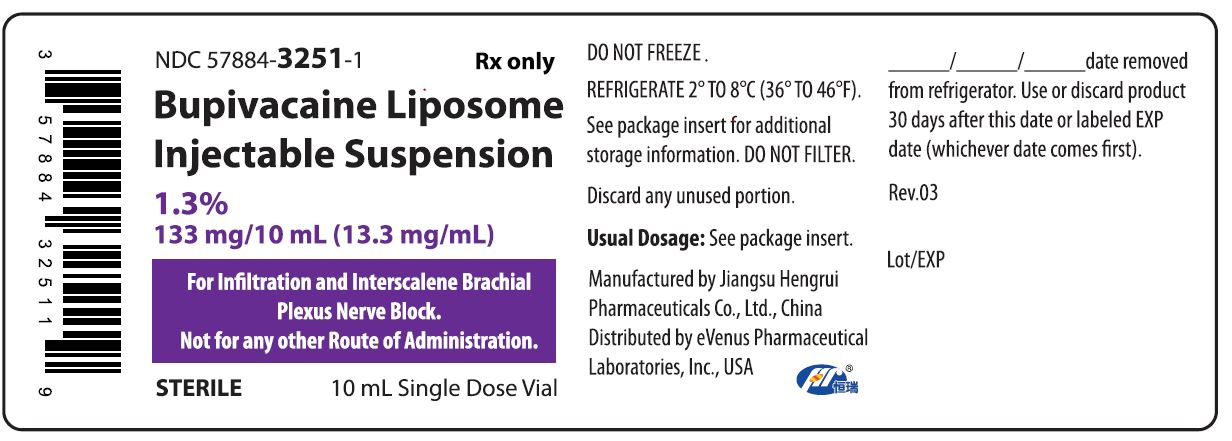
Bupivacaine 13.3 mg/mL Injection, Suspension, Liposomal
🆔 Identity & classification
Where does this data come from?
🏷️ RxNorm drug class
This medicine belongs to the Amide Local Anesthetic class.
Where does this data come from?
🏭 Manufacturer & labeler
Where does this data come from?
🩺 Clinical
Bupivacaine liposomal injection is used to manage pain after surgery. Bupivacaine is in a class of medications called local anesthetics. It works by blocking nerves from sending pain signals.
Read the full MedlinePlus article ↗- Bupivacaine is a local anesthetic — it numbs a specific area of your body so you don't feel pain during a procedure. Your doctor or anesthesiologist injects it near the nerves that...
- What exactly is bupivacaine and why is my doctor using it?
- The most common ones are nausea, vomiting, constipation, dizziness, and headache. You might also notice your heart beating a little faster or your blood pressure dropping temporari...
- What side effects should I expect after getting bupivacaine?
Patient education
Supplement & herbal interactions
Some supplements/herbs that may interact with Bupivacaine — tap one for details:
Where does this data come from?
Ask a licensed pharmacist directly — free, answered by our team.
🧪 Inactive Ingredients / Excipients
Inactive ingredients, also called excipients, are components of the drug product other than the active ingredient. They may include fillers, dyes, coatings, preservatives, flavors, or other formulation ingredients.
Where does this data come from?
IACT rows and label-wide narrative are kept separate; availability and product-level specificity depend on the submitted label.Inactive ingredient FAQ
Are inactive ingredients the same for every manufacturer?
Why might an inactive ingredient be missing?
Can inactive ingredients matter?
💲 Pricing
A drug doesn't have one price. Each row is a different public payment system, and none is what you'd pay at the counter — that depends on your insurance. The ⓘ on each row explains what it measures.
| Price system | Per mL | Per package |
|---|---|---|
| Retail pharmacies payNADAC · weekly | Not in the retail survey — common for institutional, discontinued, or low-volume packs. | |
| Medicaid paysCMS SDUD · 12 mo | No recent Medicaid claims on file for this NDC — rare and low-volume NDCs are suppressed in the public data. | |
| Medicare drug plans payPart D · quarterly | No Part D plan price is available for this NDC in our data. | |
Where does this data come from?
🔁 Therapeutic equivalents
| Product | Labeler | Pack | NADAC/unit | TE | Status | Price vs. this |
|---|---|---|---|---|---|---|
| Bupivacaine 13.3 mg/mLthis 57884-3251-01 | Jiangsu | 10 vials | — | — | FDA listed | — |
| Exparel 13.3 mg/mL 65250-0133-04 | Pacira | 4 vials | — | — | FDA listed | — |
| Exparel 13.3 mg/mL 65250-0266-04 | Pacira | 4 vials | — | — | FDA listed | — |
| Bupivacaine 13.3 mg/mL 57884-3252-01 | Jiangsu | 10 vials | — | — | FDA listed | — |
Where does this data come from?
⏳ Availability & generic status
This product is an FDA-approved generic. Other versions of the same drug are listed under Therapeutic equivalents, least expensive first.
Where does this data come from?
📦 Packaging — all sizes for this product
| Package NDC | Description | Marketing start | Status |
|---|---|---|---|
| 57884-3251-01 You're viewing this | 10 VIAL in 1 CARTON (57884-3251-1) / 10 mL in 1 VIAL | 2024-07-01 | Active |
🧭 About this NDC listing & data coverage
What data is (and isn’t) available for this NDC — tap to expand
| NDC identity (package / product / labeler codes) | ✓ Available |
| Labeler | ✓ Available |
| Product & package description | ✓ Available |
| Marketing category & status | ✓ Available |
| Active ingredient / dosage form / route | ✓ Available |
| FDA label (SPL via DailyMed) | ✓ Available |
| Package photos | ✓ Available |
| Inactive ingredients (structured) | — Not published for this NDC The labeler did not submit a structured excipient list, or no SPL is available. |
| NADAC pharmacy acquisition price (CMS) | — Not published for this NDC CMS publishes NADAC only for NDCs reported in its retail-pharmacy survey. |
| Orange Book / therapeutic-equivalence data | — Not published for this NDC Applies only to products approved under an NDA/ANDA; many listings are out of scope. |
| HCPCS J-code billing crosswalk | — Not published for this NDC Most self-administered / retail products have no J-code — that is normal. |
| Medicaid utilization (CMS SDUD) | — Not published for this NDC CMS reports utilization only for NDCs with Medicaid claims above its privacy threshold. |
Questions about this listing
Why is there no price listed?
Is the NDC printed on the package the same as the 11-digit billing NDC?
What do the three segments of this NDC mean?
Is this package still being marketed?
Who lists this product with the FDA?
Do I need a prescription for this product?
Where does this data come from?
📄 Full prescribing information FDA SPL
🎯 Indications and Usage ▾
1. INDICATIONS AND USAGE Bupivacaine liposome injectable suspension is indicated to produce postsurgical: Local analgesia via infiltration in adults Regional analgesia via an interscalene brachial plexus nerve block in adults Limitations of Use The safety and effectiveness of bupivacaine liposome injectable suspension have not been established to produce postsurgical regional analgesia via other nerve blocks besides an interscalene brachial plexus nerve block. Bupivacaine liposome injectable suspension contains bupivacaine, an amide local anesthetic, and is indicated to produce postsurgical: Local analgesia via infiltration in adults ( 1 ).
Regional analgesia via an interscalene brachial plexus nerve block in adults ( 1 ). Limitations of Use The safety and effectiveness of bupivacaine liposome injectable suspension have not been established to produce postsurgical regional analgesia via other nerve blocks besides an interscalene brachial plexus nerve block.
⏱️ Dosage and Administration ▾
2. DOSAGE AND ADMINISTRATION Bupivacaine liposome injectable suspension is for single administration only ( 2.1 ). Bupivacaine liposome injectable suspension is not substitutable with other bupivacaine products even if the strength is the same.
Therefore, it is not possible to convert a dose from other bupivacaine products to a bupivacaine liposome injectable suspension dose and vice versa ( 2.1 , 2.5 ). Do not dilute bupivacaine liposome injectable suspension with water or other hypotonic solutions ( 2.1 ). The recommended dose of bupivacaine liposome injectable suspension for: Local infiltration in adults is up to a maximum dose of 266 mg.
See Full Prescribing Information for guidance on dose selection ( 2.2 ). Interscalene brachial plexus nerve block in adults is 133 mg ( 2.3 ). For the nerve block, administer additional analgesics, which may include other immediate-release local anesthetics, as appropriate ( 2.3 ).
See Full Prescribing Information for important preparation and administration instructions and compatibility considerations ( 2.4 , 2.5 ).
2.1Important Dose, Preparation, and Administration Instructions Bupivacaine liposome injectable suspension is for single administration only. Bupivacaine liposome injectable suspension is not substitutable with other bupivacaine products even if the strength is the same. Therefore, it is not possible to convert a dose from other bupivacaine products to a bupivacaine liposome injectable suspension dose and vice versa.
Do not dilute bupivacaine liposome injectable suspension with water or other hypotonic agents, as it will result in disruption of the liposomal particles. Do not administer bupivacaine liposome injectable suspension if it is suspected that the vial has been frozen or exposed to high temperature (greater than 40°C or 104°F) for an extended period. Inspect bupivacaine liposome injectable suspension visually for particulate matter and discoloration prior to administration, whenever solution and container permit.
Do not administer bupivacaine liposome injectable suspension if the product is discolored. Do not heat or autoclave before use. Do not filter during administration.
2.2Recommended Dose for Local Analgesia via Infiltration Local Analgesia via Infiltration in Adults The recommended dose of bupivacaine liposome injectable suspension for local infiltration in adults is up to a maximum dose of 266 mg, and is based on the following factors: Size of the surgical site Volume required to cover the area Individual patient factors that may impact the safety of an amide local anesthetic As general guidance in selecting the proper bupivacaine liposome injectable suspension dose for local infiltration in adults, two examples are provided [ see Clinical Studies ( 14.2 )].
In adult patients undergoing: Bunionectomy, a total of 106 mg (8 mL) of bupivacaine liposome injectable suspension was administered, with 7 mL infiltrated into the tissues surrounding the osteotomy, and 1 mL infiltrated into the subcutaneous tissue. Hemorrhoidectomy, a total of 266 mg (20 mL) of bupivacaine liposome injectable suspension was diluted with 10 mL of saline, for a total of 30 mL, divided into six 5 mL aliquots, injected by visualizing the anal sphincter as a clock face and slowly infiltrating one aliquot to each of the even numbers to produce a field block.
2.3Recommended Dose for Regional Analgesia The maximum recommended dose of bupivacaine liposome injectable suspension via perineural use for interscalene brachial plexus nerve block is 133 mg. For all nerve blocks, administer additional analgesics, which may include other immediate-release local anesthetics, as appropriate. Regional Analgesia via Interscalene Brachial Plexus Nerve Block in Adults The recommended dose of bupivacaine liposome injectable suspension for interscalene brachial plexus nerve block in adults is 133 mg and is based upon one study of patients undergoing either total shoulder arthroplasty or rotator cuff repair [ s…
💊 Dosage Forms and Strengths ▾
3. DOSAGE FORMS AND STRENGTHS Bupivacaine liposome injectable suspension is a white to off-white, milky aqueous suspension that is available in the following vial sizes: 1.3% (133 mg/10 mL) (13.3 mg/mL) single-dose vial 1.3% (266 mg/20 mL) (13.3 mg/mL) single-dose vial Injectable suspension: 1.3% (133 mg/10 mL) (13.3 mg/mL) in a single-dose vial ( 3 ) 1.3% (266 mg/20 mL) (13.3 mg/mL) in a single-dose vial ( 3 )
⛔ Contraindications ▾
4. CONTRAINDICATIONS Bupivacaine liposome injectable suspension is contraindicated in obstetrical paracervical block anesthesia [ see Use in Specific Populations ( 8.1 ) ]. While bupivacaine liposome injectable suspension has not been tested with this technique, the use of bupivacaine HCl with this technique has resulted in fetal bradycardia and death.
Bupivacaine liposome injectable suspension is contraindicated in obstetrical paracervical block anesthesia ( 4 ).
⚠️ Warnings and Cautions ▾
5. WARNINGS AND PRECAUTIONS Monitor cardiovascular status, neurological status, and vital signs during and after injection of bupivacaine liposome injectable suspension ( 5.1 ). Because amide-type local anesthetics, such as bupivacaine, are metabolized by the liver, use bupivacaine liposome injectable suspension cautiously in patients with hepatic disease.
Patients with severe hepatic disease, because of their inability to metabolize local anesthetics normally, are at a greater risk of developing toxic plasma concentrations ( 5.1 ). Methemoglobinemia: Cases of methemoglobinemia have been reported in association with local anesthetic use ( 5.1 ). Avoid additional use of local anesthetics within 96 hours following administration of bupivacaine liposome injectable suspension ( 5.2 ).
5.1Warnings and Precautions for Bupivacaine-Containing Products The safety and effectiveness of bupivacaine liposome injectable suspension, other bupivacaine products, and other amide-containing products depend on proper dosage, correct technique, adequate precautions, and readiness for emergencies. As there is a potential risk of severe life-threatening adverse reactions associated with the administration of bupivacaine, any bupivacaine-containing product should be administered in a setting where trained personnel and equipment are available to promptly treat patients who show evidence of neurological or cardiac toxicity [ see Overdosage ( 10 ) ].
Careful and constant monitoring of cardiovascular and respiratory (adequacy of ventilation) vital signs and the patient’s state of consciousness should be performed after injection of bupivacaine and other amide-containing products. Restlessness, anxiety, incoherent speech, lightheadedness, numbness and tingling of the mouth and lips, metallic taste, tinnitus, dizziness, blurred vision, tremors, twitching, depression, or drowsiness may be early warning signs of central nervous system toxicity. Bupivacaine liposome injectable suspension, other bupivacaine products, and other amide-containing products should also be used with caution in patients with impaired cardiovascular function because they may be less able to compensate for functional changes associated with the prolongation of AV conduction produced by these drugs.
Injection of multiple doses of bupivacaine liposome injectable suspension, other bupivacaine products, and other amide-containing products may cause significant increases in plasma concentrations with each repeated dose due to slow accumulation of the drug or its metabolites, or to slow metabolic degradation. Tolerance to elevated blood concentrations varies with the status of the patient. Because amide-type local anesthetics, such as bupivacaine, are metabolized by the liver, these drugs should be used cautiously in patients with hepatic disease.
Patients with severe hepatic disease, because of their inability to metabolize local anesthetics normally, are at a greater risk of developing toxic plasma concentrations. Central Nervous System Reactions The incidences of adverse neurologic reactions associated with the use of local anesthetics may be related to the total dose of local anesthetic administered and are also dependent upon the particular drug used, the route of administration, and the physical status of the patient. Many of these effects may be related to local anesthetic techniques, with or without a contribution from the drug.
Neurologic effects following infiltration of soft tissue may include persistent anesthesia, paresthesia, weakness, and paralysis, all of which may have slow, incomplete, or no recovery. Central nervous system reactions are characterized by excitation and/or depression. Restlessness, anxiety, dizziness, tinnitus, blurred vision, or tremors may occur, possibly proceeding to convulsions.
However, excitement may be transient or absent, with depression being the first manifestation of an adverse reaction. This may quickly be followed by drowsiness merging into u…
🤒 Adverse Reactions ▾
6. ADVERSE REACTIONS The following serious adverse reactions have been associated with bupivacaine hydrochloride in clinical trials and are described in greater detail in other sections of the labeling: Central Nervous System Reactions [ see Warnings and Precautions ( 5.1 ) ] Cardiovascular System Reactions [ see Warnings and Precautions ( 5.1 ) ] Allergic Reactions [ see Warnings and Precautions ( 5.1 ) ] Chondrolysis [ see Warnings and Precautions ( 5.1 ) ] Methemoglobinemia [ see Warnings and Precautions ( 5.1 ) ] Accidental intravascular injection [ see Warnings and Precautions ( 5.2 ) ] Adverse reactions reported with an incidence greater than or equal to 10% following bupivacaine liposome injectable suspension administration via: Infiltration in adults were nausea, constipation, and vomiting ( 6.1 ).
Nerve block in adults were nausea, pyrexia, headache, and constipation ( 6.1 ). To report SUSPECTED ADVERSE REACTIONS, contact eVenus Pharmaceutical Laboratories, Inc. at 1-609-395-8625 or FDA at 1-800-FDA-1088 or www.fda.gov/medwatch .
6.1Clinical Trials Experience Because clinical studies are conducted under widely varying conditions, adverse reaction rates observed in the clinical trials of a drug cannot be directly compared to rates in the clinical studies of another drug and may not reflect the rates observed in practice. Adverse Reactions Reported in All Local Infiltration Clinical Studies in Adults The safety of bupivacaine liposome injectable suspension (local administration into the surgical site) was evaluated in 10 randomized, double-blind, clinical studies (including Studies 1 and 2 [ see Clinical Studies ( 14.2 ) ]) that included 823 adult patients who had various surgical procedures.
Patients were administered a bupivacaine liposome injectable suspension dose ranging from 66 to 532 mg (two times the maximum recommended dose of 266 mg). In these studies, following bupivacaine liposome injectable suspension administration, the: Most common adverse reactions (incidence greater than or equal to 10%) were nausea, constipation, and vomiting. Common adverse reactions (incidence greater than or equal to 2% to less than 10%) were pyrexia, dizziness, peripheral edema, anemia, hypotension, pruritus, tachycardia, headache, insomnia, postoperative anemia, muscle spasms, hemorrhagic anemia, back pain, somnolence, and procedural pain.
Less common adverse reactions (incidence less than 2%) were chills, erythema, bradycardia, anxiety, urinary retention, pain, edema, tremor, postural dizziness, paresthesia, syncope, incision site edema, procedural hypertension, procedural hypotension, procedural nausea, muscular weakness, neck pain, generalized pruritus, pruritic rash, hyperhidrosis, cold sweat, urticaria, palpitations, sinus bradycardia, supraventricular extrasystoles, ventricular extrasystoles, ventricular tachycardia, hypertension, pallor, anxiety, confusional state, depression, agitation, restlessness, hypoxia, laryngospasm, apnea, respiratory depression, respiratory failure, increased body temperature, increased blood pressure (BP),decreased BP, decreased oxygen saturation, urinary incontinence, blurred vision, tinnitus, drug hypersensitivity, and hypersensitivity.
Neurological and Cardiac Adverse Reactions In the bupivacaine liposome injectable suspension surgical site infiltration studies, following bupivacaine liposome injectable suspension administration adverse reactions with an incidence greater than or equal to 1% in the: Nervous System Disorders system organ class were dizziness (6.2%), headache (3.8%), somnolence (2.1%), hypoesthesia (1.5%), and lethargy (1.3%). Cardiac Disorders system organ class were tachycardia (3.9%) and bradycardia (1.6%). Adverse Reactions Reported in All Local Infiltration Placebo-Controlled Trials in Adults Adverse reactions with an incidence greater than or equal to 2% reported by adult patients in clinical studies who underwent a bunionectomy (Study 1) or hemorrhoidectomy (Study 2) [ se…
🔄 Drug Interactions ▾
7. DRUG INTERACTIONS The toxic effects of local anesthetics are additive and concomitant use should be used with caution including monitoring for neurologic and cardiovascular effects related to local anesthetic systemic toxicity [ See Dosage and Administration ( 2.2 ), Warnings and Precautions ( 5.1 ), and Overdosage ( 10 ) ]. Avoid additional use of local anesthetics within 96 hours following administration of bupivacaine liposome injectable suspension.
Patients who are administered local anesthetics, including bupivacaine liposome injectable suspension, may be at increased risk of developing methemoglobinemia when concurrently exposed to the following drugs, which could include other local anesthetics: Class Examples Nitrates/Nitrites nitric oxide, nitroglycerin, nitroprusside, nitrous oxide Local anesthetics articaine, benzocaine, bupivacaine, lidocaine, mepivacaine, prilocaine, procaine, ropivacaine, tetracaine Antineoplastic agents cyclophosphamide, flutamide, hydroxyurea, ifosfamide, rasburicase Antibiotics dapsone, nitrofurantoin, para-aminosalicylic acid, sulfonamides Antimalarials chloroquine, primaquine Anticonvulsants Phenobarbital, phenytoin, sodium valproate Other drugs acetaminophen, metoclopramide, quinine, sulfasalazine Bupivacaine Bupivacaine HCl administered together with bupivacaine liposome injectable suspension may impact the pharmacokinetic and/or physicochemical properties of bupivacaine liposome injectable suspension, and this effect is concentration dependent.
Therefore, bupivacaine HCl and bupivacaine liposome injectable suspension may be administered simultaneously in the same syringe, and bupivacaine HCl may be injected immediately before bupivacaine liposome injectable suspension as long as the ratio of the milligram dose of bupivacaine HCl solution to bupivacaine liposome injectable suspension does not exceed 1:2. Non-Bupivacaine Local Anesthetics Bupivacaine liposome injectable suspension should not be admixed with local anesthetics other than bupivacaine. Non-bupivacaine based local anesthetics, including lidocaine, may cause an immediate release of bupivacaine from bupivacaine liposome injectable suspension if administered together locally.
The administration of bupivacaine liposome injectable suspension may follow the administration of lidocaine after a delay of 20 minutes or more. There are no data to support administration of other local anesthetics prior to administration of bupivacaine liposome injectable suspension. Other than bupivacaine as noted above, bupivacaine liposome injectable suspension should not be admixed with other drugs prior to administration.
Water and Hypotonic Agents Do not dilute bupivacaine liposome injectable suspension with water or other hypotonic agents, as it will result in disruption of the liposomal particles. Lidocaine or other non-bupivacaine local anesthetics: Do not admix with bupivacaine liposome injectable suspension. Bupivacaine liposome injectable suspension may be administered at least 20 minutes or more following local administration of lidocaine ( 7 ).
Bupivacaine HCl: Do not exceed a milligram dose of bupivacaine HCl solution to bupivacaine liposome injectable suspension of 1:2 when admixing, as this may impact the pharmacokinetics and/or physicochemical properties of the drugs ( 7 ).
👥 Use in Specific Populations ▾
8. USE IN SPECIFIC POPULATIONS Pregnancy : May cause fetal harm ( 8.1 ).
8.1Pregnancy Risk Summary There are no studies conducted with bupivacaine liposome injectable suspension in pregnant women. In animal reproduction studies, embryo-fetal deaths were observed with subcutaneous administration of bupivacaine to rabbits during organogenesis at a dose equivalent to 1.6 times the maximum recommended human dose (MRHD) of 266 mg. Subcutaneous administration of bupivacaine to rats from implantation through weaning produced decreased pup survival at a dose equivalent to 1.5 times the MRHD [ see Data ].
Based on animal data, advise pregnant women of the potential risks to a fetus. The background risk of major birth defects and miscarriage for the indicated population is unknown. However, the background risk in the U.S. general population of major birth defects is 2% to 4% and of miscarriage is 15% to 20% of clinically recognized pregnancies.
Clinical Considerations Labor or Delivery Bupivacaine is contraindicated for obstetrical paracervical block anesthesia. While bupivacaine liposome injectable suspension has not been studied with this technique, the use of bupivacaine for obstetrical paracervical block anesthesia has resulted in fetal bradycardia and death. Bupivacaine can rapidly cross the placenta, and when used for epidural, caudal, or pudendal block anesthesia, can cause varying degrees of maternal, fetal, and neonatal toxicity [ See Clinical Pharmacology ( 12.3 )].
The incidence and degree of toxicity depend upon the procedure performed, the type, and amount of drug used, and the technique of drug administration. Adverse reactions in the parturient, fetus, and neonate involve alterations of the central nervous system, peripheral vascular tone, and cardiac function. Data Animal Data Bupivacaine hydrochloride was administered subcutaneously to rats and rabbits during the period of organogenesis (implantation to closure of the hard plate).
Rat doses were 4.4, 13.3, and 40 mg/kg/day (equivalent to 0.2, 0.5 and 1.5 times the MRHD, respectively, based on the BSA comparisons and a 60 kg human weight) and rabbit doses were 1.3, 5.8, and 22.2 mg/kg/day (equivalent to 0.1, 0.4 and 1.6 times the MRHD, respectively, based on the BSA comparisons and a 60 kg human weight). No embryo-fetal effects were observed in rats at the doses tested with the high dose causing increased maternal lethality. An increase in embryo-fetal deaths was observed in rabbits at the high dose in the absence of maternal toxicity.
Decreased pup survival was noted at 1.5 times the MRHD in a rat pre- and post-natal development study when pregnant animals were administered subcutaneous doses of 4.4, 13.3, and 40 mg/kg/day bupivacaine hydrochloride (equivalent to 0.2, 0.5 and 1.5 times the MRHD, respectively, based on the BSA comparisons and a 60 kg human weight) from implantation through weaning (during pregnancy and lactation).
8.2Lactation Risk Summary Limited published literature reports that bupivacaine and its metabolite, pipecoloxylidide, are present in human milk at low levels. There is no available information on effects of the drug in the breastfed infant or effects of the drug on milk production. The developmental and health benefits of breastfeeding should be considered along with the mother’s clinical need for bupivacaine liposome injectable suspension and any potential adverse effects on the breastfed infant from bupivacaine liposome injectable suspension or from the underlying maternal condition.
8.4Pediatric Use Safety and effectiveness of bupivacaine liposome injectable suspension have not been established to produce postsurgical: Local analgesia via infiltration in pediatric patients aged less than 6 years old. Regional analgesia via interscalene brachial plexus nerve block in pediatric patients.
8.5Geriatric Use Of the total number of patients in the bupivacaine liposome injectable suspension local infiltration clinical studies (N=823), 171 patien…
🤰 Pregnancy ▾
8.1Pregnancy Risk Summary There are no studies conducted with bupivacaine liposome injectable suspension in pregnant women. In animal reproduction studies, embryo-fetal deaths were observed with subcutaneous administration of bupivacaine to rabbits during organogenesis at a dose equivalent to 1.6 times the maximum recommended human dose (MRHD) of 266 mg. Subcutaneous administration of bupivacaine to rats from implantation through weaning produced decreased pup survival at a dose equivalent to 1.5 times the MRHD [ see Data ].
Based on animal data, advise pregnant women of the potential risks to a fetus. The background risk of major birth defects and miscarriage for the indicated population is unknown. However, the background risk in the U.S. general population of major birth defects is 2% to 4% and of miscarriage is 15% to 20% of clinically recognized pregnancies.
Clinical Considerations Labor or Delivery Bupivacaine is contraindicated for obstetrical paracervical block anesthesia. While bupivacaine liposome injectable suspension has not been studied with this technique, the use of bupivacaine for obstetrical paracervical block anesthesia has resulted in fetal bradycardia and death. Bupivacaine can rapidly cross the placenta, and when used for epidural, caudal, or pudendal block anesthesia, can cause varying degrees of maternal, fetal, and neonatal toxicity [ See Clinical Pharmacology ( 12.3 )].
The incidence and degree of toxicity depend upon the procedure performed, the type, and amount of drug used, and the technique of drug administration. Adverse reactions in the parturient, fetus, and neonate involve alterations of the central nervous system, peripheral vascular tone, and cardiac function. Data Animal Data Bupivacaine hydrochloride was administered subcutaneously to rats and rabbits during the period of organogenesis (implantation to closure of the hard plate).
Rat doses were 4.4, 13.3, and 40 mg/kg/day (equivalent to 0.2, 0.5 and 1.5 times the MRHD, respectively, based on the BSA comparisons and a 60 kg human weight) and rabbit doses were 1.3, 5.8, and 22.2 mg/kg/day (equivalent to 0.1, 0.4 and 1.6 times the MRHD, respectively, based on the BSA comparisons and a 60 kg human weight). No embryo-fetal effects were observed in rats at the doses tested with the high dose causing increased maternal lethality. An increase in embryo-fetal deaths was observed in rabbits at the high dose in the absence of maternal toxicity.
Decreased pup survival was noted at 1.5 times the MRHD in a rat pre- and post-natal development study when pregnant animals were administered subcutaneous doses of 4.4, 13.3, and 40 mg/kg/day bupivacaine hydrochloride (equivalent to 0.2, 0.5 and 1.5 times the MRHD, respectively, based on the BSA comparisons and a 60 kg human weight) from implantation through weaning (during pregnancy and lactation).
🧒 Pediatric Use ▾
8.4Pediatric Use Safety and effectiveness of bupivacaine liposome injectable suspension have not been established to produce postsurgical: Local analgesia via infiltration in pediatric patients aged less than 6 years old. Regional analgesia via interscalene brachial plexus nerve block in pediatric patients.
🧓 Geriatric Use ▾
8.5Geriatric Use Of the total number of patients in the bupivacaine liposome injectable suspension local infiltration clinical studies (N=823), 171 patients were greater than or equal to 65 years of age and 47 patients were greater than or equal to 75 years of age. Of the total number of patients in the bupivacaine liposome injectable suspension nerve block clinical studies (N= 1046), 312 patients were greater than or equal to 65 years of age and 70 patients were greater than or equal to 75 years of age. No overall differences in safety or effectiveness of bupivacaine liposome injectable suspension have been observed between patients 65 years of age and older and younger adult patients.
In clinical studies, differences in various pharmacokinetic parameters have been observed between patients 65 years of age and older and younger adult patients. Bupivacaine is known to be substantially excreted by the kidney, and the risk of adverse reactions to bupivacaine may be greater in patients with renal impairment than in patients with normal renal function. Because patients 65 years of age and older are more likely to have renal impairment, increase monitoring for bupivacaine liposome injectable suspension -associated adverse reactions [ see Adverse Reactions ( 6 ) ].
🆘 Overdosage ▾
10. OVERDOSAGE Clinical Presentation Acute emergencies from local anesthetics are generally related to high plasma concentrations encountered during therapeutic use of local anesthetics or to unintended intravascular injection of local anesthetic solution [ See Warnings and Precautions ( 5 ) and Adverse Reactions ( 6 )] . Signs and symptoms of overdose include CNS symptoms (perioral paresthesia, dizziness, dysarthria, confusion, mental obtundation, sensory and visual disturbances, and eventually convulsions) and cardiovascular effects (that range from hypertension and tachycardia to myocardial depression, hypotension, bradycardia, and asystole).
Plasma levels of bupivacaine associated with toxicity can vary. Although concentrations of 2,500 to 4,000 ng/mL have been reported to elicit early subjective CNS symptoms of bupivacaine toxicity, symptoms of toxicity have been reported at levels as low as 800 ng/mL. Management of Local Anesthetic Overdose At the first sign of change, oxygen should be administered.
The first step in the management of convulsions, as well as underventilation or apnea, consists of immediate attention to the maintenance of a patent airway and assisted or controlled ventilation with oxygen and a delivery system capable of permitting immediate positive airway pressure by mask. Immediately after the institution of these ventilatory measures, the adequacy of the circulation should be evaluated, keeping in mind that drugs used to treat convulsions sometimes depress the circulation when administered intravenously.
Should convulsions persist despite adequate respiratory support, and if the status of the circulation permits, small increments of an ultra-short acting barbiturate (such as thiopental or thiamylal) or a benzodiazepine (such as diazepam) may be administered intravenously. The clinician should be familiar, prior to the use of anesthetics, with these anticonvulsant drugs. Supportive treatment of circulatory depression may require administration of intravenous fluids and, when appropriate, a vasopressor dictated by the clinical situation (such as ephedrine to enhance myocardial contractile force).
If not treated immediately, both convulsions and cardiovascular depression can result in hypoxia, acidosis, bradycardia, arrhythmias, and cardiac arrest. If cardiac arrest should occur, standard cardiopulmonary resuscitative measures should be instituted. Endotracheal intubation, employing drugs and techniques familiar to the clinician, may be indicated, after initial administration of oxygen by mask, if difficulty is encountered in the maintenance of a patent airway or if prolonged ventilatory support (assisted or controlled) is indicated.
🧬 Clinical Pharmacology ▾
12. CLINICAL PHARMACOLOGY
12.1Mechanism of Action Local anesthetics block the generation and the conduction of nerve impulses presumably by increasing the threshold for electrical excitation in the nerve, by slowing the propagation of the nerve impulse, and by reducing the rate of rise of the action potential. In general, the progression of anesthesia is related to the diameter, myelination, and conduction velocity of affected nerve fibers. Clinically, the order of loss of nerve function is as follows: (1) pain, (2) temperature, (3) touch, (4) proprioception, and (5) skeletal muscle tone.
12.2Pharmacodynamics Systemic absorption of local anesthetics produces effects on the cardiovascular and central nervous systems. At blood concentrations achieved with normal therapeutic doses, changes in cardiac conduction, excitability, refractoriness, contractility, and peripheral vascular resistance are minimal. However, toxic blood concentrations depress cardiac conductivity and excitability, which may lead to atrioventricular block, ventricular arrhythmias, and cardiac arrest, sometimes resulting in fatalities.
In addition, myocardial contractility is depressed and peripheral vasodilation occurs, leading to decreased cardiac output and arterial blood pressure. Clinical reports and animal research suggest that these cardiovascular changes are more likely to occur after accidental intravascular injection of bupivacaine. Following systemic absorption, local anesthetics can produce central nervous system stimulation, depression, or both.
Apparent central stimulation is manifested as restlessness, tremors, and shivering progressing to convulsions, followed by depression and coma progressing ultimately to respiratory arrest. However, the local anesthetics have a primary depressant effect on the medulla and on higher centers. The depressed stage may occur without a prior excited state.
12.3Pharmacokinetics After administration of bupivacaine liposome injectable suspension, the systemic plasma levels of bupivacaine were observed for 96 hours after local infiltration and 120 hours after interscalene brachial plexus nerve block. [ see Warnings and Precautions ( 5.2 ) ]. In general, peripheral nerve blocks have shown systemic plasma levels of bupivacaine for extended duration when compared to local infiltration. Systemic plasma levels of bupivacaine following administration of bupivacaine liposome injectable suspension are not correlated with local efficacy.
Absorption The rate of systemic absorption of bupivacaine is dependent upon the total dose of bupivacaine liposome injectable suspension administered, the route of administration, and the vascularity of the administration site. Pharmacokinetic parameters of bupivacaine liposome injectable suspension after local infiltration and following an interscalene brachial plexus nerve block were evaluated following surgical procedures. Descriptive statistics of pharmacokinetic parameters of representative bupivacaine liposome injectable suspension doses in each study are provided in Table 5 for adult patients after administration of single doses of bupivacaine liposome injectable suspension via local infiltration; and Table 6 for adult patients after administration of single doses of bupivacaine liposome injectable suspension via nerve block.
Table 5: Summary of Pharmacokinetic Parameters for Bupivacaine after Administration of Single Doses of Bupivacaine Liposome Injectable Suspension via Local Infiltration in Adult Patients * Arithmetic mean (standard deviation) except T max where it is median (minimum, maximum). 1 Patients undergoing bunionectomy (Study 1) 2 Patients undergoing hemorrhoidectomy (Study 2) 3 Patients undergoing open posterior spinal fusion or reconstructive surgery 4 Patients undergoing posterolateral thoracotomy 5 AUC 0-last , 0-72h; 6 AUC 0-last , 0-96h ; NE: Not evaluated Parameters* Bunionectomy 1 106 mg (8 mL) Hemorrhoidectomy 2 266 mg (20 mL) Spine Surgery 3 266 mg (20 mL) Car…
🧬 Mechanism of Action ▾
12.1Mechanism of Action Local anesthetics block the generation and the conduction of nerve impulses presumably by increasing the threshold for electrical excitation in the nerve, by slowing the propagation of the nerve impulse, and by reducing the rate of rise of the action potential. In general, the progression of anesthesia is related to the diameter, myelination, and conduction velocity of affected nerve fibers. Clinically, the order of loss of nerve function is as follows: (1) pain, (2) temperature, (3) touch, (4) proprioception, and (5) skeletal muscle tone.
📦 How Supplied / Storage and Handling ▾
16. HOW SUPPLIED/STORAGE AND HANDLING Bupivacaine liposome injectable suspension is a white to off-white milky aqueous suspension that is available in the following single-dose vials. 1.3% (133 mg/10 mL) (13.3 mg/mL) single-dose vial, (NDC 57884-3251-1) packaged in cartons of 10 (NDC 57884-3251-1) 1.3% (266 mg/20 mL) (13.3 mg/mL) single-dose vial, (NDC 57884-3252-1) packaged in cartons of 10 (NDC 57884-3252-1) Storage Store bupivacaine liposome injectable suspension vials refrigerated between 2° to 8°C (36° to 46°F).
Bupivacaine liposome injectable suspension may be held at a controlled room temperature of 20° to 25°C (68° to 77°F) for up to 30 days in sealed, intact (unopened) vials. Do not re-refrigerate vials. Do not freeze or expose bupivacaine liposome injectable suspension to high temperatures (greater than 40°C or 104°F) for an extended period.
Do not administer bupivacaine liposome injectable suspension if it is suspected of having been frozen or exposed to high temperatures. Do not use the vial if the stopper is bulging. Handling See Dosage and Administration ( 2.1 , 2.4 ) for important preparation instructions.
📦 Storage and Handling ▾
Storage Store bupivacaine liposome injectable suspension vials refrigerated between 2° to 8°C (36° to 46°F). Bupivacaine liposome injectable suspension may be held at a controlled room temperature of 20° to 25°C (68° to 77°F) for up to 30 days in sealed, intact (unopened) vials. Do not re-refrigerate vials.
Do not freeze or expose bupivacaine liposome injectable suspension to high temperatures (greater than 40°C or 104°F) for an extended period. Do not administer bupivacaine liposome injectable suspension if it is suspected of having been frozen or exposed to high temperatures. Do not use the vial if the stopper is bulging.
Handling See Dosage and Administration ( 2.1 , 2.4 ) for important preparation instructions.
📋 Description ▾
11. DESCRIPTION Bupivacaine liposome injectable suspension is a sterile, non-pyrogenic white to off-white preservative-free aqueous suspension consisting of multivesicular liposomes containing bupivacaine for infiltration and interscalene brachial plexus nerve block. Bupivacaine is present at a concentration of 13.3 mg/mL.
After injection of bupivacaine liposome injectable suspension, bupivacaine is released from the multivesicular liposomes. Bupivacaine liposome injectable suspension is for infiltration or perineural use. Active Ingredient Bupivacaine is related chemically and pharmacologically to the amide-type local anesthetics.
It is a homologue of mepivacaine and is related chemically to lidocaine. All three of these anesthetics contain an amide linkage between the aromatic nucleus and the amino, or piperidine group. They differ in this respect from the procaine-type local anesthetics, which have an ester linkage.
Chemically, bupivacaine is 1-butyl-N-(2,6-dimethylphenyl)-2-piperidinecarboxamide with a molecular weight of 288.4. Bupivacaine has the following structural formula: Bupivacaine Liposome Injectable Suspension The median diameter of the liposome particles in bupivacaine liposome injectable suspension ranges from 22 to 30 μm. The liposomes are suspended in a 0.9% Sodium Chloride Injection.
Each vial contains bupivacaine at a nominal concentration of 13.3 mg/mL. Inactive ingredients and their nominal concentrations are: cholesterol, 4.7 mg/mL; 1, 2-dipalmitoyl-sn-glycero-3 phospho-rac-(1-glycerol) sodium salt (DPPG), 0.9 mg/mL; tricaprylin, 2.0 mg/mL; 1, 2-dierucoylphosphatidylcholine (DEPC), 8.2 mg/mL; and phosphoric acid to adjust pH. The pH of bupivacaine liposome injectable suspension is in the range of 5.8 to 7.4.
Bupivacaine in bupivacaine liposome injectable suspension has different functional properties relative to those of the unencapsulated or nonlipid-associated bupivacaine products. Bupivacaine that is released from bupivacaine liposome injectable suspension has a different pharmacokinetic and systemic profile relative to other bupivacaine products. In addition, the nominal weight percent concentration of bupivacaine in bupivacaine liposome injectable suspension is based on bupivacaine free base rather than bupivacaine HCl (100 mg of bupivacaine HCl contains 88.6 mg of bupivacaine free base) [ see Dosage and Administration ( 2.1 ) ]. structure
💬 Information for Patients ▾
17. PATIENT COUNSELING INFORMATION Inform patients that use of local anesthetics may cause methemoglobinemia, a serious condition that must be treated promptly. Advise patients or caregivers to seek immediate medical attention if they or someone in their care experience the following signs or symptoms: pale, gray, or blue colored skin (cyanosis); headache; rapid heart rate; shortness of breath; lightheadedness; or fatigue.
Inform patients in advance that bupivacaine liposome injectable suspension can cause temporary loss of sensation or motor activity that may last for up to 5 days. Manufactured by: Jiangsu Hengrui Pharmaceuticals Co., Ltd. Lianyungang, Jiangsu 222047, China Distributed by: eVenus Pharmaceutical Laboratories, Inc.
506 Carnegie Center, Suite 100, Princeton, NJ 08540 USA Revised: June 2024 Rev.06