
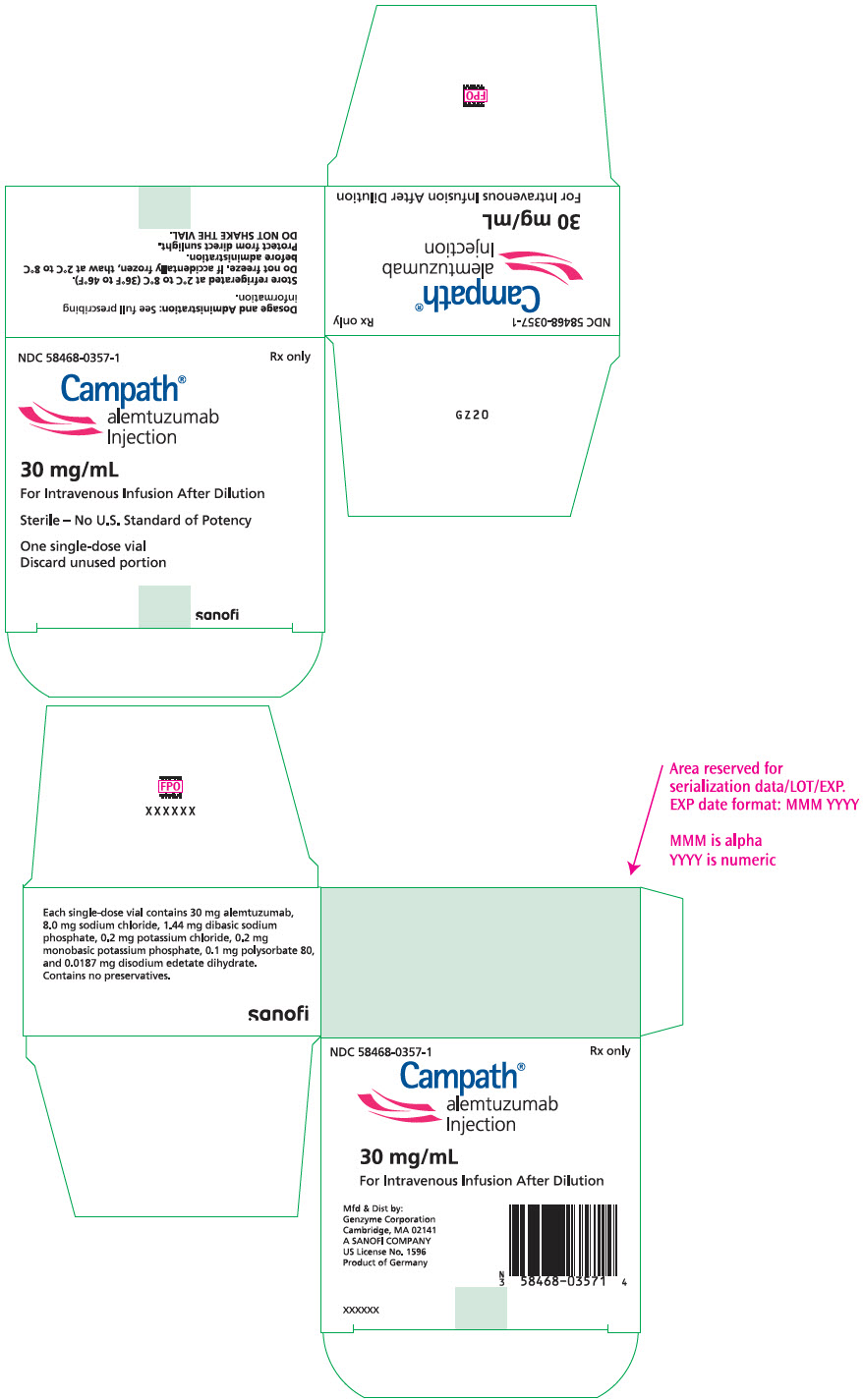
Campath ALEMTUZUMAB 30 mg/mL Injection, 1 vial — NDC 58468-0357-1 (Billing 58468-0357-01)
This is a package of 1 vial of Campath ALEMTUZUMAB 30 mg/mL Injection from Genzyme Corporation, marketed since Nov 2009 and currently FDA-listed. It is the main listing for this product, which comes in 2 package sizes.
NDC database record
One package, one record: these facts belong to NDC 58468-0357-1 alone.
- Record
- FDA NDC Directory package listing · Human prescription drug
- Code segments
- 58468 labeler · 0357 product · 1 package
- Package marketed since
- Nov 30, 2009
- Sample package
- No — commercial package
- Listing certified through
- Dec 31, 2026
- Barcode (UPC-A, from the NDC)
- 3 5846803571 4
- FDA record last changed
- Jul 24, 2026
Identity & classification
Regulatory identifiers FDA, NLM and CMS codes for this package
Drug-database identifiers Medi-Span GPI and First Databank GCN / HICL / AHFS classification
- GSN (GCN sequence number): 058969
- GCN: 24507
- GPI-14 (Medi-Span): 21354410002040
- HICL (First Databank): 022112
- AHFS class code: 10:00.00.00
- RxCUI (RxNorm): 828265
Where does this data come from?
- FDA openFDA NDC Directory · synced Oct 8, 2026
- FDA label on DailyMed · label index refreshed Oct 8, 2026
- RxNorm (NLM RxNav) · catalog refreshed Oct 1, 2026
- Medi-Span GPI (licensed)
- First Databank (licensed) · refreshed Oct 8, 2026
RxNorm drug class
This medicine belongs to the CD52-directed Cytolytic Antibody class.
Where does this data come from?
- RxClass (NLM) · catalog refreshed Oct 1, 2026
Clinical
Alemtuzumab injection is used to treat B-cell chronic lymphocytic leukemia (B-CLL; a slowly developing cancer in which too many of a certain type of white blood cell accumulate in the body). Alemtuzumab is in a class of medications called monoclonal antibodies. It works by activating the immune system to destroy cancer cells. Alemtuzumab is also available as an injection (Lemtrada) that is used to treat multiple sclerosis (a disease in which the nerves do not function properly; you may experience weakness, numbness, loss of muscle coordination and problems with vision, speech, and bladder cont...
Read the full MedlinePlus article ↗- Alemtuzumab is generally reserved for people whose MS hasn't responded well enough to at least two other medications. It's a more aggressive treatment that can make a real differen...
- Why is my doctor recommending this medication when there are other MS treatments out there?
- Each infusion takes about 4 hours, and you'll need to stay for at least 2 more hours of monitoring afterward. Before the infusion, you'll receive a corticosteroid medication to hel...
- What should I expect on the days I get the infusion?
Patient education
Supplement & herbal interactions
Some supplements/herbs that may interact with Alemtuzumab — tap one for details:
Where does this data come from?
- MedlinePlus (NLM) · refreshed Oct 8, 2026
- FDA label on DailyMed · label index refreshed Oct 8, 2026
Ask a licensed pharmacist directly — free, answered by our team.
Pricing
A drug doesn't have one price. Each row is a different public payment system, and none is what you'd pay at the counter — that depends on your insurance. The ⓘ on each row explains what it measures.
| Price system | Per each | Per package |
|---|---|---|
| Retail pharmacies payNADAC · weekly | Not in the retail survey — common for institutional, discontinued, or low-volume packs. | |
| Medicaid paysCMS SDUD · 12 mo | No recent Medicaid claims on file for this NDC — rare and low-volume NDCs are suppressed in the public data. | |
| Medicare drug plans payPart D · quarterly | No Part D plan price is available for this NDC in our data. | |
Where does this data come from?
- CMS NADAC weekly file
- CMS ASP pricing files · refreshed Sep 20, 2026
- CMS Medicaid State Drug Utilization Data · refreshed Oct 8, 2026
- CMS Part D plan pricing files · refreshed Sep 24, 2026
- VA National Acquisition Center price file
Packaging — all sizes for this product
| Package NDC | Description | Marketing start | Marketing end | Status |
|---|---|---|---|---|
| 58468-0357-01 You're viewing this Main listing | 1 VIAL, SINGLE-USE in 1 CARTON / 1 mL in 1 VIAL, SINGLE-USE | 2009-11-30 | — | Active |
| 58468-0357-03 58468-0357-3 | 3 VIAL, SINGLE-USE in 1 CARTON / 1 mL in 1 VIAL, SINGLE-USE | 2009-11-30 | — | Active |
Pack size FAQ
What quantity is in this package?
How does this package differ from NDC 58468-0357-03?
What NDC number is used to bill for this package of Campath ALEMTUZUMAB 30 mg/mL Injection?
Therapeutic equivalents
| Product | Labeler | Pack | NADAC/unit | TE | Status | Price vs. this |
|---|---|---|---|---|---|---|
| Campath 30 mg/mLthis 58468-0357-01 | Genzyme | 1 vial | — | — | FDA listed | — |
Where does this data come from?
- FDA openFDA NDC Directory · synced Oct 8, 2026
- FDA Purple Book · refreshed Oct 5, 2026
- CMS NADAC weekly file
Availability & biosimilar status
Biologics have no small-molecule generics; biosimilar competition is tracked in the FDA Purple Book.
Where does this data come from?
- FDA Purple Book · refreshed Oct 5, 2026
Inactive Ingredients / Excipients
Inactive ingredients, also called excipients, are components of the drug product other than the active ingredient. They may include fillers, dyes, coatings, preservatives, flavors, or other formulation ingredients.
🧪 Avoiding an ingredient? See Alemtuzumab Injection (Chronic Lymphocytic Leukemia) inactive ingredients by manufacturer: every current product's list side by side, so you can ask your pharmacy for the version that does not list it.
💡 Tap an ingredient (hover on desktop) to see what it is and why it’s used.
-
0.0187 mg / 1 mL
UNII 7FLD91C86K
Edetate disodium is a chemical compound that binds and removes certain metal ions. In medicines, it acts as a preservative and stabilizer by preventing metals like calcium from interfering with the product's shelf life and consistency.
-
0.2 mg / 1 mL
UNII 4J9FJ0HL51
Potassium phosphate, monobasic is a salt compound used in medicines as a pH buffer and electrolyte source. It helps stabilize the acidity level of liquid and powdered formulations.
-
0.1 mg / 1 mL
UNII 6OZP39ZG8H
Polysorbate 80 is a synthetic emulsifier derived from sorbitol and oleic acid. It helps mix oil and water-based ingredients together in medications and improves how the product disperses in the body.
-
0.2 mg / 1 mL
UNII 660YQ98I10
Potassium chloride is a mineral salt used in medicines as a buffer and to help maintain the proper pH balance and stability of the formulation during storage and use.
-
8 mg / 1 mL
UNII 451W47IQ8X
Sodium chloride is common table salt. It's used in medicines as a buffer to maintain proper pH, as a filler to add bulk, or to adjust the osmotic balance in liquid formulations.
-
1.44 mg / 1 mL
UNII GR686LBA74
Sodium phosphate, dibasic is a salt derived from phosphoric acid. It acts as a buffer to help maintain the medicine's pH balance and may serve as a binder or filler in tablets and capsules.
6 inactive ingredients listed in the exact product block matched to this NDC.
Where does this data come from?
ingredient classCode="IACT" elements from the exact product block matched by this NDC. Label-section narrative from DailyMed / the openFDA label index is shown separately when available.- FDA label on DailyMed · label index refreshed Oct 8, 2026
- FDA openFDA NDC Directory · synced Oct 8, 2026
Inactive ingredient FAQ
Are inactive ingredients the same for every manufacturer?
Why might an inactive ingredient be missing?
Can inactive ingredients matter?
Manufacturer & labeler
More NDCs from Genzyme Corporation labeler code 58468
- Aubagio teriflunomide 7 mg Tablet, Film Coated NDC 58468-0211-2
- Cerdelga eliglustat 84 mg Capsule NDC 58468-0220-1
- Cablivi caplacizumab Kit NDC 58468-0225-1
- Wayrilz rilzabrutinib 400 mg Tablet, Film Coated NDC 58468-0251-5
- Qfitlia fitusiran 20 mg/.2mL Injection, Solution NDC 58468-0347-1
- Qfitlia fitusiran 50 mg/.5mL Injection, Solution NDC 58468-0348-1
- Nexviazyme avalglucosidase alfa-ngpt 100 mg/10mL Injection, Powder, Lyophilized, For Solution NDC 58468-0426-1
- Cerezyme IMIGLUCERASE 40 U/mL Injection, Powder, Lyophilized, For Solution NDC 58468-4663-1
- Alglucosidase alfa 5 mg/mL Solution NDC 58468-5005-1
- Avalglucosidase alfa 10 mg/mL Solution NDC 58468-5006-1
- IMIGLUCERASE 40 U/mL Injection, Powder, Lyophilized, For Solution NDC 58468-5010-1
- AVALGLUCOSIDASE ALFA 100 mg/10mL Injection, Powder, Lyophilized, For Solution NDC 58468-5011-1
Where does this data come from?
- FDA openFDA NDC Directory · synced Oct 8, 2026
- Drugs@FDA
Full prescribing information FDA SPL
🚨 Boxed Warning ▾
WARNING: CYTOPENIAS, INFUSION-RELATED REACTIONS, AND INFECTIONS WARNING: CYTOPENIAS, INFUSION-RELATED REACTIONS, AND INFECTIONS See full prescribing information for complete boxed warning. Serious, including fatal, cytopenias, infusion-related reactions, and infections can occur (5.1–5.3). Limit doses to 30 mg (single) and 90 mg (cumulative weekly); higher doses increase risk of pancytopenia.
( 2.1 ) Escalate dose gradually and monitor patients during infusion. Withhold therapy for Grade 3 or 4 infusion-related reactions. ( 5.2 ) Administer prophylaxis against Pneumocystis jirovecii pneumonia (PCP) and herpes virus infections.
( 2.2 , 5.3 ) Cytopenias : Serious, including fatal, pancytopenia/marrow hypoplasia, autoimmune idiopathic thrombocytopenia, and autoimmune hemolytic anemia can occur in patients receiving CAMPATH. Single doses of CAMPATH greater than 30 mg or cumulative doses greater than 90 mg per week increase the incidence of pancytopenia [see Warnings and Precautions (5.1) ] . Infusion-Related Reactions : CAMPATH administration can result in serious, including fatal, infusion-related reactions.
Carefully monitor patients during infusions and withhold CAMPATH for Grade 3 or 4 infusion-related reactions. Gradually escalate CAMPATH to the recommended dose at the initiation of therapy and after interruption of therapy for 7 or more days [see Dosage and Administration (2.1) and Warnings and Precautions (5.2) ] . Immunosuppression/Infections : Serious, including fatal, bacterial, viral, fungal, and protozoan infections can occur in patients receiving CAMPATH.
Administer prophylaxis against Pneumocystis jirovecii pneumonia (PCP) and herpes virus infections [see Dosage and Administration (2.2) and Warnings and Precautions (5.3) ] .
🎯 Indications and Usage ▾
1 INDICATIONS AND USAGE CAMPATH is indicated as a single agent for the treatment of B-cell chronic lymphocytic leukemia (B-CLL). CAMPATH is a CD52-directed cytolytic antibody indicated as a single agent for the treatment of B-cell chronic lymphocytic leukemia (B-CLL). ( 1 )
⏱️ Dosage and Administration ▾
2 DOSAGE AND ADMINISTRATION Administer as an intravenous infusion over 2 hours. ( 2.1 ) Escalate to recommended dose of 30 mg/day three times per week for 12 weeks. ( 2.1 ) Premedicate with oral antihistamine and acetaminophen. ( 2.2 )
2.1Dosing Schedule and Administration Administer as an intravenous infusion over 2 hours. Do not administer as intravenous push or bolus. Recommended Dosing Regimen Gradually escalate to the maximum recommended single dose of 30 mg.
Escalation is required at initiation of dosing or if dosing is held ≥7 days during treatment. Escalation to 30 mg ordinarily can be accomplished in 3 to 7 days. Escalation Strategy: – Administer 3 mg daily until infusion-related reactions are ≤ Grade 2 [see Adverse Reactions (6.1) ] . – Then administer 10 mg daily until infusion-related reactions are ≤ Grade 2. – Then administer 30 mg/day three times per week on alternate days (e.g., Mon-Wed-Fri).
The total duration of therapy, including dose escalation, is 12 weeks. Single doses of greater than 30 mg or cumulative doses greater than 90 mg per week increase the incidence of pancytopenia.
2.2Recommended Concomitant Medications Premedicate with diphenhydramine (50 mg) and acetaminophen (500–1000 mg) 30 minutes prior to first infusion and each dose escalation. Institute appropriate medical management (e.g., glucocorticoids, epinephrine, meperidine) for infusion-related reactions as needed [see Warnings and Precautions (5.2) and Adverse Reactions (6.1) ] . Administer trimethoprim/sulfamethoxazole double strength (DS) twice daily 3 times per week (or equivalent) as Pneumocystis jirovecii pneumonia (PCP) prophylaxis.
Administer famciclovir 250 mg BID or equivalent as herpetic prophylaxis. Continue PCP and herpes viral prophylaxis for a minimum of 2 months after completion of CAMPATH or until the CD4+ count is ≥200 cells/µL, whichever occurs later [see Warnings and Precautions (5.3) ] .
2.3Dosage Modification Withhold CAMPATH during serious infection or other serious adverse reactions until resolution. Discontinue CAMPATH for autoimmune anemia or autoimmune thrombocytopenia. There are no dose modifications recommended for lymphopenia.
Dose Modification for Neutropenia or Thrombocytopenia [see Warnings and Precautions (5.1) ] Hematologic Values Dosage Modification If the delay between dosing is ≥7 days, initiate therapy at CAMPATH 3 mg and escalate to 10 mg and then to 30 mg as tolerated [see Dosage and Administration (2.1) ] . ANC <250/μL and/or platelet count ≤25,000/μL For first occurrence: Withhold CAMPATH therapy. Resume CAMPATH at 30 mg when ANC ≥500/μL and platelet count ≥50,000/μL.
For second occurrence: Withhold CAMPATH therapy. Resume CAMPATH at 10 mg when ANC ≥500/μL and platelet count ≥50,000/μL. For third occurrence: Discontinue CAMPATH therapy. ≥50% decrease from baseline in patients initiating therapy with a baseline ANC ≤250/μL and/or a baseline platelet count ≤25,000/μL For first occurrence: Withhold CAMPATH therapy.
Resume CAMPATH at 30 mg upon return to baseline value(s). For second occurrence: Withhold CAMPATH therapy. Resume CAMPATH at 10 mg upon return to baseline value(s).
For third occurrence: Discontinue CAMPATH therapy.
2.4Preparation and Administration Parenteral drug products should be inspected visually for particulate matter and discoloration prior to administration. If particulate matter is present or the solution is discolored, discard the vial. DO NOT SHAKE VIAL .
Use aseptic technique during the preparation and administration of CAMPATH. Withdraw the necessary amount of CAMPATH from the vial into a syringe. To prepare the 3 mg dose, withdraw 0.1 mL into a 1 mL syringe calibrated in increments of 0.01 mL.
To prepare the 10 mg dose, withdraw 0.33 mL into a 1 mL syringe calibrated in increments of 0.01 mL. To prepare the 30 mg dose, withdraw 1 mL in either a 1 mL or 3 mL syringe calibrated in 0.1 mL increments. Inject syringe contents into 100 mL sterile 0.9% Sodium Chloride USP or 5% Dextr… [Excerpted — this section continues on DailyMed.]
💊 Dosage Forms and Strengths ▾
3 DOSAGE FORMS AND STRENGTHS Injection: 30 mg/1 mL as a clear, colorless solution in single-dose vial Injection: 30 mg/1 mL single-dose vial ( 3 )
⛔ Contraindications ▾
4 CONTRAINDICATIONS None. None ( 4 )
⚠️ Warnings and Cautions ▾
5 WARNINGS AND PRECAUTIONS Cytopenias : Obtain complete blood counts (CBC) and platelet counts at weekly intervals during therapy and CD4 counts after therapy until recovery to ≥200 cells/µL. Withhold for severe cytopenias. Discontinue for autoimmune or severe hematologic adverse reactions.
( 2.2 , 5.1 ) Immunosuppression/Infections : CAMPATH induces severe and prolonged lymphopenia and increases risk of infection. If a serious infection occurs, withhold treatment until infection resolves. ( 5.3 ) Immunization : Do not administer live viral vaccines to patients who have recently received CAMPATH.
( 5.4 )
5.1Cytopenias Severe, including fatal, autoimmune anemia and thrombocytopenia, and prolonged myelosuppression have been reported in patients receiving CAMPATH. In addition, hemolytic anemia, pure red cell aplasia, bone marrow aplasia, and hypoplasia have been reported after treatment with CAMPATH at the recommended dose. Single doses of CAMPATH greater than 30 mg or cumulative doses greater than 90 mg per week increase the incidence of pancytopenia.
Withhold CAMPATH for severe cytopenias (except lymphopenia). Discontinue for autoimmune cytopenias or recurrent/persistent severe cytopenias (except lymphopenia) [see Dosage and Administration (2.3) ] . No data exist on the safety of CAMPATH resumption in patients with autoimmune cytopenias or marrow aplasia [see Adverse Reactions (6.1) ] .
Obtain complete blood counts (CBC) at weekly intervals during CAMPATH therapy and more frequently if worsening anemia, neutropenia, or thrombocytopenia occurs. Assess CD4+ counts after treatment until recovery to ≥200 cells/µL [see Dosage and Administration (2.3) and Adverse Reactions (6) ] .
5.2Infusion-Related Reactions Adverse reactions occurring during or shortly after CAMPATH infusion include pyrexia, chills/rigors, nausea, hypotension, urticaria, dyspnea, rash, emesis, and bronchospasm [see Adverse Reactions (6.1) ] . In clinical trials, the frequency of infusion-related reactions was highest in the first week of treatment. Monitor for the signs and symptoms listed above and withhold infusion for Grade 3 or 4 infusion-related reactions.
The following serious, including fatal, infusion-related reactions have been identified in postmarketing reports: syncope, pulmonary infiltrates, acute respiratory distress syndrome (ARDS), respiratory arrest, cardiac arrhythmias, myocardial infarction, acute cardiac insufficiency, cardiac arrest, angioedema, and anaphylactoid shock. Initiate CAMPATH according to the recommended dose-escalation scheme [see Dosage and Administration (2.1) ] . Premedicate patients with an antihistamine and acetaminophen prior to each dose.
Institute appropriate medical management (e.g., glucocorticoids, epinephrine, meperidine) for infusion-related reactions as needed [see Dosage and Administration (2.2) ] . If therapy is interrupted for 7 or more days, reinstitute CAMPATH with gradual dose escalation [see Dosage and Administration (2.1) ].
5.3Immunosuppression/Infections CAMPATH treatment results in severe and prolonged lymphopenia with a concomitant increased incidence of opportunistic infections [see Adverse Reactions (6.1) ] . Administer PCP and herpes viral prophylaxis during treatment with CAMPATH and for a minimum of 2 months after completion of CAMPATH or until the CD4+ count is ≥200 cells/µL, whichever occurs later [see Dosage and Administration (2.2) ] . Prophylaxis does not eliminate these infections.
Routinely monitor patients for CMV infection during treatment with CAMPATH and for at least 2 months following completion of CAMPATH. Withhold CAMPATH for serious infections and during antiviral treatment for CMV infection or confirmed CMV viremia (defined as polymerase chain reaction [PCR] positive CMV in ≥2 consecutive samples obtained 1 week apart). Initiate therapeutic ganciclovir (or equivalent) for CMV infection or confirmed CMV viremia.
Epstein-Barr virus (EBV) infection, including severe and fatal EBV-assoc… [Excerpted — this section continues on DailyMed.]
🤒 Adverse Reactions ▾
6 ADVERSE REACTIONS The following clinically significant adverse reactions are discussed in greater detail in other sections of the label: Cytopenias [see Warnings and Precautions (5.1) ] Infusion-Related Reactions [see Warnings and Precautions (5.2) ] Immunosuppression/Infections [see Warnings and Precautions (5.3) ] Most common adverse reactions (≥10%): cytopenias, infusion-related reactions, cytomegalovirus (CMV) and other infections, nausea, emesis, diarrhea, and insomnia. ( 6 ) To report SUSPECTED ADVERSE REACTIONS, contact Genzyme Corporation at 1-877-4-CAMPATH (1-877-422-6728) or FDA at 1-800-FDA-1088 or www.fda.gov/medwatch.
6.1Clinical Trials Experience Because clinical trials are conducted under widely varying conditions, adverse reaction rates observed in the clinical trials of a drug cannot be directly compared to rates in the clinical trials of another drug and may not reflect the rates observed in practice. The data below reflect exposure to CAMPATH in 296 patients with CLL of whom 147 were previously untreated and 149 received at least 2 prior chemotherapy regimens. The median duration of exposure was 11.7 weeks for previously untreated patients and 8 weeks for previously treated patients.
The most common adverse reactions with CAMPATH are: infusion-related reactions (pyrexia, chills, hypotension, urticaria, nausea, rash, tachycardia, dyspnea), cytopenias (neutropenia, lymphopenia, thrombocytopenia, anemia), infections (CMV viremia, CMV infection, other infections), gastrointestinal symptoms (nausea, emesis, abdominal pain), and neurological symptoms (insomnia, anxiety). The most common serious adverse reactions are cytopenias, infusion-related reactions, and immunosuppression/infections. Lymphopenia Severe lymphopenia and a rapid and sustained decrease in lymphocyte subsets occurred in previously untreated and previously treated patients following administration of CAMPATH.
In previously untreated patients, the median CD4+ was 0 cells/μL at one month after treatment and 238 cells/μL [25%–75% interquartile range 115 to 418 cells/μL at 6 months post treatment [see Warnings and Precautions (5.3) ] . Neutropenia In previously untreated patients, the incidence of Grade 3 or 4 neutropenia was 42% with a median time to onset of 31 days and a median duration of 37 days. In previously treated patients, the incidence of Grade 3 or 4 neutropenia was 64% with a median duration of 28 days.
Ten percent of previously untreated patients and 17% of previously treated patients received granulocyte colony stimulating factors. Anemia In previously untreated patients, the incidence of Grade 3 or 4 anemia was 12% with a median time to onset of 31 days and a median duration of 8 days. In previously treated patients, the incidence of Grade 3 or 4 anemia was 38%.
Seventeen percent of previously untreated patients and 66% of previously treated patients received either erythropoiesis stimulating agents, transfusions or both. Thrombocytopenia In previously untreated patients, the incidence of Grade 3 or 4 thrombocytopenia was 14% with a median time to onset of 9 days and a median duration of 14 days. In previously treated patients, the incidence of Grade 3 or 4 thrombocytopenia was 52% with a median duration of 21 days.
Autoimmune thrombocytopenia was reported in 2% of previously treated patients with one fatality. Infusion-Related Reactions Infusion-related reactions, which included pyrexia, chills, hypotension, urticaria, and dyspnea, were common. Grade 3 and 4 pyrexia and/or chills occurred in approximately 10% of previously untreated patients and in approximately 35% of previously treated patients.
The occurrence of infusion-related reactions was greatest during the initial week of treatment and decreased with subsequent doses of CAMPATH. All patients were pretreated with antipyretics and antihistamines; additionally, 43% of previously untreated patients received glucocorticoid pre-treatment. Infections In the study of previously unt… [Excerpted — this section continues on DailyMed.]
🔄 Drug Interactions ▾
7 DRUG INTERACTIONS No formal drug interaction studies have been performed with CAMPATH.
👥 Use in Specific Populations ▾
8 USE IN SPECIFIC POPULATIONS Pregnancy : May cause fetal harm. ( 8.1 ) Lactation : Advise not to breastfeed. ( 8.2 )
8.1Pregnancy Risk Summary Based on findings from animal studies, CAMPATH may cause fetal harm when administered to a pregnant woman. Available data from published cohort studies in pregnant women are insufficient to establish a CAMPATH-associated risk of major birth defects, miscarriage or adverse maternal or fetal outcomes. Alemtuzumab was embryolethal in pregnant huCD52 transgenic mice when administered during organogenesis (see Data ) .
Human IgG antibodies are known to cross the placental barrier; therefore, CAMPATH may be transmitted from the mother to the developing fetus. Advise women of the potential risk to the fetus. Infants born to pregnant women treated with CAMPATH may be at increased risk of infection (see Clinical Considerations ) .
The background risk of major birth defects and miscarriage for the indicated population is unknown. All pregnancies have a background risk of birth defect, loss, or other adverse outcomes. In the U.S. general population, the estimated background risk of major birth defects and miscarriage in clinically recognized pregnancies is 2% to 4% and 15% to 20%, respectively.
Clinical Considerations Fetal/Neonatal adverse reactions Monoclonal antibodies are transported across the placenta as pregnancy progresses, with the largest amount transferred during the third trimester. Consider the risks and benefits of administering live or live-attenuated vaccines to infants exposed to CAMPATH in utero [see Warnings and Precautions (5.3 , 5.4) ] . Data Animal data When alemtuzumab was administered to pregnant huCD52 transgenic mice during organogenesis (gestation days [GD] 6–10 or GD 11–15) at intravenous doses of 3 or 10 mg/kg, no teratogenic effects were observed.
However, there was an increase in embryolethality (increased postimplantation loss and the number of dams with all fetuses dead or resorbed) in pregnant animals dosed during GD 11–15. In a separate study in pregnant huCD52 transgenic mice, administration of alemtuzumab during organogenesis (GD 6–10 or GD 11–15) at intravenous doses of 3 or 10 mg/kg, decreases in B-lymphocyte and T-lymphocyte populations were observed in the offspring at both doses tested. In pregnant huCD52 transgenic mice administered alemtuzumab at intravenous doses of 3 or 10 mg/kg/day throughout gestation and lactation, there was an increase in pup deaths during the lactation period at 10 mg/kg.
Decreases in T-lymphocyte and B-lymphocyte populations and in antibody response were observed in offspring at both doses tested.
8.2Lactation Risk Summary There are no data on the presence of alemtuzumab in human milk, effects on milk production, or the breastfed child. The effects of local gastrointestinal exposure and limited systemic exposure in the breastfed infant to alemtuzumab are unknown. Alemtuzumab was detected in the milk of lactating huCD52 transgenic mice administered alemtuzumab (see Data ) .
Maternal IgG is known to be present in human milk and when a drug is present in animal milk, it is likely that the drug will be present in human milk. Because of the potential for serious adverse reactions from CAMPATH in a breastfed child, including reduced lymphocyte counts, advise lactating women not to breastfeed during treatment with CAMPATH and for at least 3 months following the last dose. Data Alemtuzumab was detected in the milk of lactating huCD52 transgenic mice following intravenous administration of alemtuzumab at a dose of 10 mg/kg on postpartum days 8–12.
Serum levels of alemtuzumab were similar in lactating mice and offspring on postpartum day 13 and were associated with evidence of pharmacological activity (decrease in lymphocyte counts) in the offspring.
8.3Females and Males of Reproductive Potential CAMPATH may cause embryo-fetal harm when administered to pregnant women [see Use in Specific Populations (8.1) ] . Pregnancy Testing Pregnanc… [Excerpted — this section continues on DailyMed.]
🤰 Pregnancy ▾
8.1Pregnancy Risk Summary Based on findings from animal studies, CAMPATH may cause fetal harm when administered to a pregnant woman. Available data from published cohort studies in pregnant women are insufficient to establish a CAMPATH-associated risk of major birth defects, miscarriage or adverse maternal or fetal outcomes. Alemtuzumab was embryolethal in pregnant huCD52 transgenic mice when administered during organogenesis (see Data ) .
Human IgG antibodies are known to cross the placental barrier; therefore, CAMPATH may be transmitted from the mother to the developing fetus. Advise women of the potential risk to the fetus. Infants born to pregnant women treated with CAMPATH may be at increased risk of infection (see Clinical Considerations ) .
The background risk of major birth defects and miscarriage for the indicated population is unknown. All pregnancies have a background risk of birth defect, loss, or other adverse outcomes. In the U.S. general population, the estimated background risk of major birth defects and miscarriage in clinically recognized pregnancies is 2% to 4% and 15% to 20%, respectively.
Clinical Considerations Fetal/Neonatal adverse reactions Monoclonal antibodies are transported across the placenta as pregnancy progresses, with the largest amount transferred during the third trimester. Consider the risks and benefits of administering live or live-attenuated vaccines to infants exposed to CAMPATH in utero [see Warnings and Precautions (5.3 , 5.4) ] . Data Animal data When alemtuzumab was administered to pregnant huCD52 transgenic mice during organogenesis (gestation days [GD] 6–10 or GD 11–15) at intravenous doses of 3 or 10 mg/kg, no teratogenic effects were observed.
However, there was an increase in embryolethality (increased postimplantation loss and the number of dams with all fetuses dead or resorbed) in pregnant animals dosed during GD 11–15. In a separate study in pregnant huCD52 transgenic mice, administration of alemtuzumab during organogenesis (GD 6–10 or GD 11–15) at intravenous doses of 3 or 10 mg/kg, decreases in B-lymphocyte and T-lymphocyte populations were observed in the offspring at both doses tested. In pregnant huCD52 transgenic mice administered alemtuzumab at intravenous doses of 3 or 10 mg/kg/day throughout gestation and lactation, there was an increase in pup deaths during the lactation period at 10 mg/kg.
Decreases in T-lymphocyte and B-lymphocyte populations and in antibody response were observed in offspring at both doses tested.
🧒 Pediatric Use ▾
8.4Pediatric Use Safety and effectiveness of CAMPATH have not been established in pediatric patients.
🧓 Geriatric Use ▾
8.5Geriatric Use Of 147 previously untreated B-CLL patients treated with CAMPATH, 35% were ≥ age 65 and 4% were ≥ age 75. Of 149 previously treated patients with B-CLL, 44% were ≥65 years of age and 10% were ≥75 years of age. Clinical studies of CAMPATH did not include sufficient number of subjects age 65 and over to determine whether they respond differently than younger subjects.
Other reported clinical experience has not identified differences in responses between the elderly and younger patients.
🆘 Overdosage ▾
10 OVERDOSAGE Across all clinical experience, the reported maximum single dose received was 90 mg. Bone marrow aplasia, infections, or severe infusion-related reactions occurred in patients who received a dose higher than recommended. One patient who received an 80 mg dose intravenously experienced acute bronchospasm, cough, and dyspnea, followed by anuria and death.
Another patient received two 90 mg doses intravenously one day apart during the second week of treatment and experienced a rapid onset of bone marrow aplasia. There is no known specific antidote for CAMPATH overdosage. Discontinue CAMPATH and provide supportive therapy.
🧬 Clinical Pharmacology ▾
12 CLINICAL PHARMACOLOGY
12.1Mechanism of Action CAMPATH binds to CD52, an antigen present on the surface of B and T lymphocytes, a majority of monocytes, macrophages, NK cells, and a subpopulation of granulocytes. A proportion of bone marrow cells, including some CD34+ cells, express variable levels of CD52. The proposed mechanism of action is antibody-dependent cellular-mediated lysis following cell surface binding of CAMPATH to the leukemic cells.
12.2Pharmacodynamics Cardiac Electrophysiology The effect of multiple doses of alemtuzumab (12 mg/day for 5 days) on the QTc interval was evaluated in a single-arm study in 53 patients without malignancy. No large changes in the mean QTc interval (i.e., >20 ms) were detected in the study. A mean increase in heart rate of 22 to 26 beats/min was observed for at least 2 hours following the initial infusion of alemtuzumab.
This increase in heart rate was not observed with subsequent doses.
12.3Pharmacokinetics CAMPATH pharmacokinetics were characterized in a study of 30 previously treated B-CLL patients in whom CAMPATH was administered at the recommended dose and schedule. After 12 weeks of dosing, patients exhibited a 7-fold increase in mean AUC. Distribution After the last 30 mg dose, the mean volume of distribution at steady-state was
0.18L/kg (range 0.1 to
0.4L/kg). Elimination CAMPATH pharmacokinetics displayed nonlinear elimination kinetics. Systemic clearance decreased with repeated administration due to decreased receptor-mediated clearance (i.e., loss of CD52 receptors in the periphery).
Mean half-life was 11 hours (range 2 to 32 hours) after the first 30 mg dose and was 6 days (range 1 to 14 days) after the last 30 mg dose. Specific Populations The effects of renal or hepatic impairment on the pharmacokinetics of CAMPATH have not been studied.
🧬 Mechanism of Action ▾
12.1Mechanism of Action CAMPATH binds to CD52, an antigen present on the surface of B and T lymphocytes, a majority of monocytes, macrophages, NK cells, and a subpopulation of granulocytes. A proportion of bone marrow cells, including some CD34+ cells, express variable levels of CD52. The proposed mechanism of action is antibody-dependent cellular-mediated lysis following cell surface binding of CAMPATH to the leukemic cells.
📦 How Supplied / Storage and Handling ▾
16 HOW SUPPLIED/STORAGE AND HANDLING CAMPATH (alemtuzumab) is supplied in clear glass single-dose vial containing 30 mg of alemtuzumab in 1 mL of solution. Each carton contains three CAMPATH vials (NDC 58468-0357-3) or one CAMPATH vial (NDC 58468-0357-1). Store CAMPATH at 2°C to 8°C (36°F to 46°F). Do not freeze. If accidentally frozen, thaw at 2°C to 8°C before administration. Protect from direct sunlight.
📦 Storage and Handling ▾
Store CAMPATH at 2°C to 8°C (36°F to 46°F). Do not freeze. If accidentally frozen, thaw at 2°C to 8°C before administration. Protect from direct sunlight.
📋 Description ▾
11 DESCRIPTION Alemtuzumab, a CD52-directed cytolytic antibody, is a recombinant DNA-derived humanized monoclonal antibody (CAMPATH-1H). CAMPATH-1H is an IgG1 kappa antibody with human variable framework and constant regions, and complementarity-determining regions from a murine (rat) monoclonal antibody (CAMPATH-1G). The CAMPATH-1H antibody has an approximate molecular weight of 150 kD.
CAMPATH is produced in mammalian cell (Chinese hamster ovary) suspension culture in a medium containing neomycin. Neomycin is not detectable in the final product. CAMPATH (alemtuzumab) injection is a sterile, clear, colorless, isotonic solution (pH 6.8–7.4) in a single-dose vial for intravenous use.
Each single-dose vial of CAMPATH contains 30 mg alemtuzumab, 8.0 mg sodium chloride, 1.44 mg dibasic sodium phosphate, 0.2 mg potassium chloride, 0.2 mg monobasic potassium phosphate, 0.1 mg polysorbate 80, and 0.0187 mg disodium edetate dihydrate. No preservatives are added.
💬 Information for Patients ▾
17 PATIENT COUNSELING INFORMATION Cytopenias Advise patients to report any signs or symptoms such as bleeding, easy bruising, petechiae or purpura, pallor, weakness or fatigue [see Warnings and Precautions (5.1) and Adverse Reactions (6.1) ] . Infusion-Related Reactions Advise patients of the signs and symptoms of infusion-related reactions and of the need to take premedications as prescribed [see Warnings and Precautions (5.2) and Adverse Reactions (6.1) ] . Immunosuppression/Infections Advise patients to immediately report symptoms of infection (e.g., pyrexia) and to take prophylactic anti-infectives for PCP (trimethoprim/sulfamethoxazole DS or equivalent) and for herpes virus (famciclovir or equivalent) as prescribed [see Warnings and Precautions (5.3) and Adverse Reactions (6.1) ] .
Advise patients that irradiation of blood products is required [see Warnings and Precautions (5.3) ] . Immunization Advise patients that they should not be immunized with live viral vaccines if they have recently been treated with CAMPATH. Advise females with infants exposed to CAMPATH in utero to inform the pediatrician of the exposure [see Warnings and Precautions (5.4) ] .
Embryo-Fetal Toxicity Advise pregnant women and females of reproductive potential of the potential risk to a fetus. Advise females to inform their healthcare provider of a known or suspected pregnancy [see Use in Specific Populations (8.1 , 8.3) ] . Advise female patients of reproductive potential to use effective contraception during treatment with CAMPATH and for 3 months after the final dose [see Use in Specific Populations (8.1 , 8.3) ] .
Lactation Advise females not to breastfeed during treatment with CAMPATH and for 3 months after the final dose [see Use in Specific Populations (8.2) ] . Infertility Advise females and males of reproductive potential that CAMPATH may impair fertility [see Use in Specific Populations (8.3) and Nonclinical Toxicology (13.1) ] . Glomerular Nephropathies Advise patients on signs and symptoms of glomerular nephropathies that may occur months to years after receiving CAMPATH [see Adverse Reactions (6.2) ] .
🧬 Pharmacokinetics ▾
12.3Pharmacokinetics CAMPATH pharmacokinetics were characterized in a study of 30 previously treated B-CLL patients in whom CAMPATH was administered at the recommended dose and schedule. After 12 weeks of dosing, patients exhibited a 7-fold increase in mean AUC. Distribution After the last 30 mg dose, the mean volume of distribution at steady-state was
0.18L/kg (range 0.1 to
0.4L/kg). Elimination CAMPATH pharmacokinetics displayed nonlinear elimination kinetics. Systemic clearance decreased with repeated administration due to decreased receptor-mediated clearance (i.e., loss of CD52 receptors in the periphery).
Mean half-life was 11 hours (range 2 to 32 hours) after the first 30 mg dose and was 6 days (range 1 to 14 days) after the last 30 mg dose. Specific Populations The effects of renal or hepatic impairment on the pharmacokinetics of CAMPATH have not been studied.
🧬 Pharmacodynamics ▾
12.2Pharmacodynamics Cardiac Electrophysiology The effect of multiple doses of alemtuzumab (12 mg/day for 5 days) on the QTc interval was evaluated in a single-arm study in 53 patients without malignancy. No large changes in the mean QTc interval (i.e., >20 ms) were detected in the study. A mean increase in heart rate of 22 to 26 beats/min was observed for at least 2 hours following the initial infusion of alemtuzumab.
This increase in heart rate was not observed with subsequent doses.
🔬 Clinical Studies ▾
14 CLINICAL STUDIES
14.1Previously Untreated B-CLL Patients CAMPATH was evaluated in an open-label, randomized (1:1) active-controlled study in previously untreated patients with B-CLL, Rai Stage I–IV, with evidence of progressive disease requiring therapy. Patients received either CAMPATH 30 mg intravenously 3 times per week for a maximum of 12 weeks or chlorambucil 40 mg/m 2 orally once every 28 days for a maximum of 12 cycles. Of the 297 patients randomized, the median age was 60 years, 72% were male, 99% were Caucasian, 96% had a WHO performance status 0–1, 23% had maximum lymph node diameter ≥5 cm, 34% were Rai Stage III/IV, and 8% were treated in the U.S.
Patients randomized to receive CAMPATH experienced longer progression free survival (PFS) compared to those randomized to receive chlorambucil (median PFS 14.6 months vs. 11.7 months, respectively). The overall response rates were 83% and 55% (p <0.0001) and the complete response rates were 24% and 2% (p <0.0001) for CAMPATH and chlorambucil arms, respectively.
The Kaplan-Meier curve for PFS is shown in Figure 1. Figure 1: Progression Free Survival in Previously Untreated B-CLL Patients Log-rank test adjusted for Rai Stage (I–II vs. III–IV).
Figure 1
14.2Previously Treated B-CLL Patients CAMPATH was evaluated in three multicenter, open-label, single-arm studies of 149 patients with B-CLL previously treated with alkylating agents, fludarabine, or other chemotherapies. Patients were treated with the recommended dose of CAMPATH 30 mg intravenously 3 times per week for up to 12 weeks. Partial response rates of 21% to 31% and complete response rates of 0% to 2% were observed.
🧪 Nonclinical Toxicology ▾
13 NONCLINICAL TOXICOLOGY
13.1Carcinogenesis, Mutagenesis, Impairment of Fertility Studies to assess the carcinogenic or genotoxic potential of CAMPATH have not been conducted. In fertility studies, alemtuzumab (3 or 10 mg/kg intravenously) was administered to huCD52 transgenic male mice on 5 consecutive days prior to cohabitation with untreated wild-type females. No effect on fertility or reproductive performance was observed.
However, adverse effects on sperm parameters (including abnormal morphology [detached/no head] and reduced total count and motility) were observed at both doses tested. When alemtuzumab (3 or 10 mg/kg intravenously) was administered to huCD52 transgenic female mice for 5 consecutive days prior to cohabitation with untreated wild-type males, there was a decrease in the average number of corpora lutea and implantation sites and an increase in postimplantation loss, resulting in fewer viable embryos at the higher dose tested.
📄 Carcinogenesis, Mutagenesis, Impairment of Fertility ▾
13.1Carcinogenesis, Mutagenesis, Impairment of Fertility Studies to assess the carcinogenic or genotoxic potential of CAMPATH have not been conducted. In fertility studies, alemtuzumab (3 or 10 mg/kg intravenously) was administered to huCD52 transgenic male mice on 5 consecutive days prior to cohabitation with untreated wild-type females. No effect on fertility or reproductive performance was observed.
However, adverse effects on sperm parameters (including abnormal morphology [detached/no head] and reduced total count and motility) were observed at both doses tested. When alemtuzumab (3 or 10 mg/kg intravenously) was administered to huCD52 transgenic female mice for 5 consecutive days prior to cohabitation with untreated wild-type males, there was a decrease in the average number of corpora lutea and implantation sites and an increase in postimplantation loss, resulting in fewer viable embryos at the higher dose tested.
📄 Package Label / Principal Display Panel ▾
PRINCIPAL DISPLAY PANEL - 1 Vial Carton NDC 58468-0357-1 Rx only Campath ® alemtuzumab Injection 30 mg/mL For Intravenous Infusion After Dilution Sterile – No U.S. Standard of Potency One single-dose vial Discard unused portion sanofi PRINCIPAL DISPLAY PANEL - 1 Vial Carton
PRINCIPAL DISPLAY PANEL - 3 Vial Carton NDC 58468-0357-3 Rx only Campath ® alemtuzumab Injection 30 mg/mL For Intravenous Infusion After Dilution Sterile – No U.S. Standard of Potency Three single-dose vials Discard unused portion sanofi PRINCIPAL DISPLAY PANEL - 3 Vial Carton
Reported adverse events (FAERS)
Top reported reactions
Age at onset
Reporter sex
Serious outcomes
Where does this data come from?
About this NDC listing & data coverage
What data is (and isn’t) available for this NDC — tap to expand
| NDC identity (package / product / labeler codes) | ✓ Available |
| Labeler | ✓ Available |
| Product & package description | ✓ Available |
| Marketing category & status | ✓ Available |
| Active ingredient / dosage form / route | ✓ Available |
| FDA label (SPL via DailyMed) | ✓ Available |
| Package photos | ✓ Available |
| Inactive ingredients (structured) | ✓ Available |
| NADAC pharmacy acquisition price (CMS) | — Not published for this NDC CMS publishes NADAC only for NDCs reported in its retail-pharmacy survey. |
| Orange Book / therapeutic-equivalence data | — Not published for this NDC Applies only to products approved under an NDA/ANDA; many listings are out of scope. |
| HCPCS J-code billing crosswalk | — Not published for this NDC Most self-administered / retail products have no J-code — that is normal. |
| Medicaid utilization (CMS SDUD) | — Not published for this NDC CMS reports utilization only for NDCs with Medicaid claims above its privacy threshold. |