
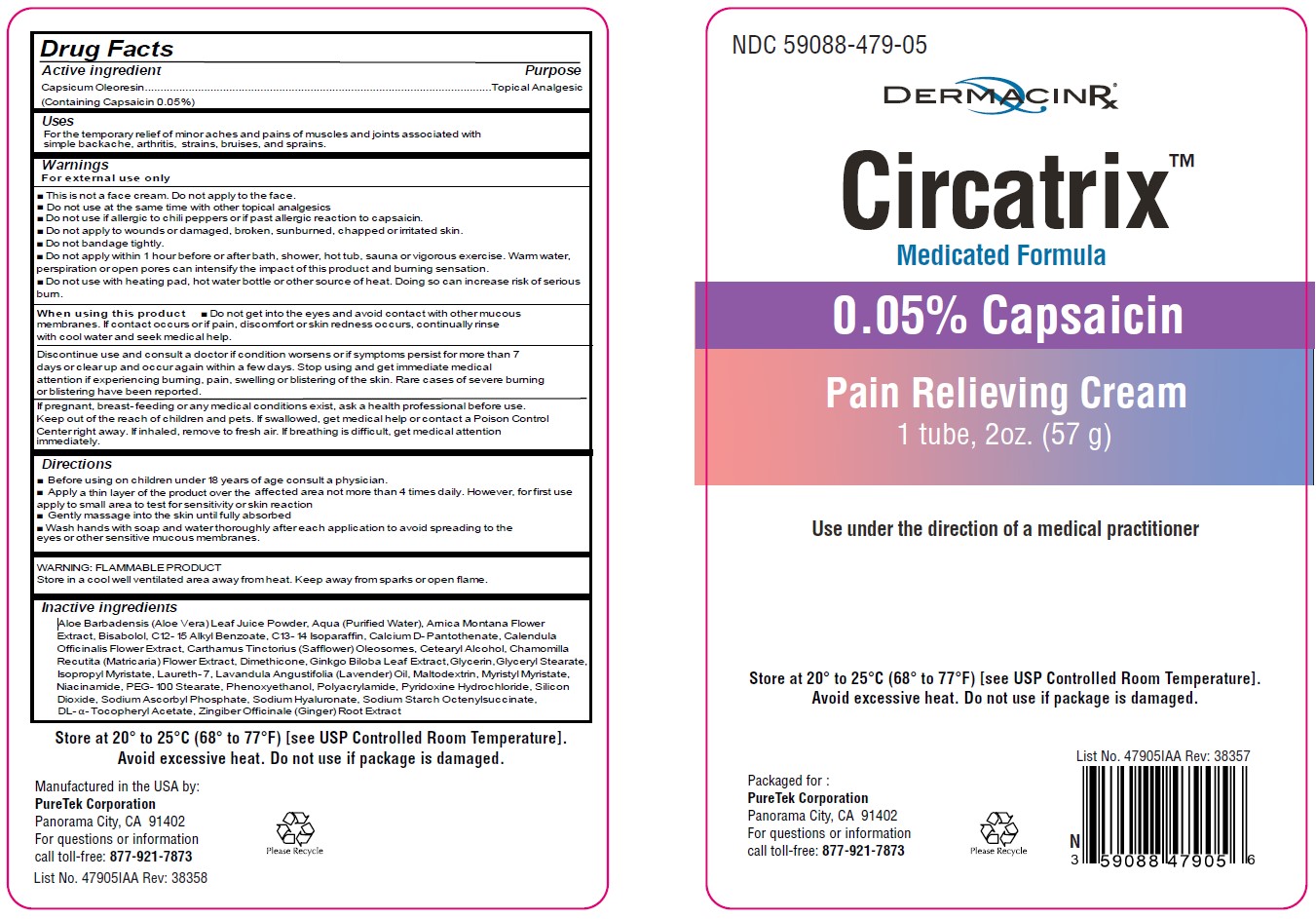
Circatrix Capsaicin .05 g/100g Cream, 57 g
🆔 Identity & classification
Where does this data come from?
🏷️ RxNorm drug class
This medicine belongs to the Capsaicin and similar agents class.
Where does this data come from?
🏭 Manufacturer & labeler
Where does this data come from?
🩺 Clinical
Topical capsaicin is used to relieve minor pain in muscles and joints caused by arthritis, backaches, muscle strains, bruises, cramps, and sprains. Capsaicin is a substance that is found in chili peppers. It works by affecting nerve cells in the skin that are associated with pain, which results in decreased activity of these nerve cells and a reduced sense of pain.
Read the full MedlinePlus article ↗- Yes, that burning or warming feeling is expected and is actually part of how it works. Capsaicin activates the same heat-sensing nerve endings that cause pain, so you feel that war...
- Why does capsaicin make my skin burn — is that normal?
- Please don't — that combination can cause serious burns. Heat sources like heating pads or hot water bottles significantly increase the risk when used alongside capsaicin. For the...
- Can I put a heating pad on after applying it to help with the pain more?
Patient education
Supplement & herbal interactions
Some supplements/herbs that may interact with Capsaicin (prescription drug) — tap one for details:
Where does this data come from?
Ask a licensed pharmacist directly — free, answered by our team.
🧪 Inactive Ingredients / Excipients
Inactive ingredients, also called excipients, are components of the drug product other than the active ingredient. They may include fillers, dyes, coatings, preservatives, flavors, or other formulation ingredients.
💡 Tap an ingredient (hover on desktop) to see what it is and why it’s used.
-
UNII WR1WPI7EW8
A synthetic form of vitamin E used as an antioxidant. It prevents oils and fats in the medicine from breaking down and becoming rancid, helping keep the product stable during storage.
-
UNII A9EJ3J61HQ
A synthetic liquid derived from benzoic acid and long-chain alcohols. It functions as a solvent and penetration enhancer in topical formulations, helping active ingredients dissolve and absorb into the skin.
-
UNII ZY81Z83H0X
Aloe vera leaf is a plant extract derived from the aloe plant. It is used in medicines as a natural moisturizer and skin-soothing agent in topical formulations.
-
UNII OZ0E5Y15PZ
A plant extract from arnica flowers, used as a flavoring agent or fragrance component in medicines. It may also provide mild soothing properties to certain topical formulations.
-
UNII E4F12ROE70
A refined mineral oil derived from crude petroleum containing 13 to 14 carbon chains. It acts as a solvent, emollient, and carrier in topical formulations to help dissolve active ingredients and improve product texture and spreadability.
-
UNII 568ET80C3D
Calcium pantothenate is a salt form of pantothenic acid, a B-vitamin derivative. It's used as a nutritional supplement or vitamin fortification ingredient in medicines and formulations.
-
UNII P0M7O4Y7YD
A plant extract from calendula flowers, traditionally used in formulations. It typically serves as a botanical ingredient that may provide color, fragrance, or skin-conditioning properties to topical products.
-
UNII 9S60Q72309
A plant-derived ingredient made from safflower seed components. It acts as an emulsifier and carrier to help distribute oils and active ingredients evenly throughout the medicine.
-
UNII 2DMT128M1S
A waxy solid derived from plant or animal sources. It acts as an emulsifier to blend oil and water components, and also thickens the medicine to give it the right texture and consistency.
-
UNII FGL3685T2X
Chamomile is a plant extract used in medications as a flavoring agent and for its mild soothing properties in formulations. It helps improve taste and aroma of the medicine.
-
UNII 92RU3N3Y1O
Dimethicone is a silicone-based oil that acts as an anti-foaming agent and lubricant in medicines. It reduces gas bubbles in liquid formulations and helps coat and protect the stomach lining when ingested.
-
UNII C5529G5JPQ
Ginger is a plant-derived ingredient used as a flavoring agent to add taste and aroma to medicines. It may also provide mild soothing properties to support product palatability.
-
UNII 19FUJ2C58T
Ginkgo biloba leaf is a plant extract used as a flavoring or coloring agent in some medicines. It may also serve as a natural ingredient to support the product's formulation.
-
UNII PDC6A3C0OX
Glycerin is a clear, thick liquid derived from plant oils or fats. It acts as a humectant to retain moisture, a sweetener, and a solvent in medications.
-
UNII 230OU9XXE4
A waxy substance made from glycerin and stearic acid that acts as an emulsifier to blend oily and watery ingredients together. It also helps thicken and stabilize the medicine's texture.
-
UNII YSE9PPT4TH
Hyaluronate sodium is a natural carbohydrate that holds moisture. It's used in medicines as a lubricant, thickener, and moisture-retaining agent to improve texture and delivery of the active ingredient.
-
UNII 0RE8K4LNJS
Isopropyl myristate is an oily liquid made from coconut or palm oil. It's used in medicines as an emollient and penetration enhancer to help the medicine absorb through skin or improve spreadability in topical products.
-
UNII Z95S6G8201
A synthetic surfactant derived from lauryl alcohol and ethylene oxide. It helps dissolve and mix oily and watery ingredients in liquid formulations, and may improve how the medicine spreads or is absorbed.
-
UNII ZBP1YXW0H8
A fragrant oil extracted from lavender plants, used as a flavoring and scent agent in medicines to improve taste and aroma.
-
UNII 24WE03BX2T
Levomenol is a naturally derived alcohol compound used as a skin-conditioning and anti-inflammatory agent in topical formulations. It helps soothe and protect the skin while improving product texture and absorption.
-
UNII 7CVR7L4A2D
A starch-derived carbohydrate produced by breaking down corn, potato, or tapioca starch. It functions as a filler and binder to give the medicine bulk and texture, and sometimes as a mild sweetener or texture enhancer in powders and tablets.
-
UNII 4042ZC00DY
A waxy ester derived from myristic acid, used as an emollient and lubricant in topical formulations. It helps soften skin contact, reduce friction during application, and improve the texture and spreadability of creams and ointments.
-
UNII 25X51I8RD4
Niacinamide is a form of vitamin B3, a water-soluble nutrient. In medicines, it may be added as a nutritional supplement or to support skin health, though its primary role here is as an active ingredient rather than a traditional inactive filler.
-
UNII 12UZE4X73L
A modified starch derived by chemically treating regular starch with succinic acid. It acts as a thickener, stabilizer, and emulsifier to improve texture and prevent separation in liquid or semi-solid formulations.
-
UNII HIE492ZZ3T
Phenoxyethanol is a synthetic preservative and antimicrobial agent used to prevent bacterial and fungal growth in medicines and cosmetic products, extending shelf life and maintaining product safety.
-
UNII E2KR9C9V2I
Polyacrylamide is a synthetic polymer used as a thickening agent and binder in medications. It helps create the proper texture and hold ingredients together in the formulation.
-
UNII YD01N1999R
A waxy substance made from polyethylene glycol and stearic acid. It helps mix oil and water-based ingredients together and serves as an emulsifier and solubilizer in liquid and semi-solid medicines.
-
UNII 68Y4CF58BV
Pyridoxine hydrochloride is a form of vitamin B6, added to medicines as a nutritional supplement or to meet dietary requirements. It supports the body's metabolism and nerve function.
-
UNII ETJ7Z6XBU4
Silicon dioxide is a naturally occurring mineral used as a glidant and anti-caking agent. It helps powder ingredients flow smoothly and prevents clumping during manufacturing and storage.
-
UNII 836SJG51DR
Sodium ascorbyl phosphate is a derivative of vitamin C that acts as an antioxidant and preservative in medications. It helps protect the drug's active ingredients from degradation caused by air and light exposure.
-
UNII 059QF0KO0R
Water is a liquid solvent that dissolves and mixes ingredients together in liquid medicines, syrups, and injections. It helps distribute the active drug evenly throughout the product.
31 inactive ingredients listed in the exact product block matched to this NDC.
Label-section wording can be broader than the structured product block and may mention additional formulation ingredients.
Where does this data come from?
ingredient classCode="IACT" elements from the exact product block matched by this NDC. Label-section narrative from DailyMed / the openFDA label index is shown separately when available.Inactive ingredient FAQ
Are inactive ingredients the same for every manufacturer?
Why might an inactive ingredient be missing?
Can inactive ingredients matter?
💲 Pricing
A drug doesn't have one price. Each row is a different public payment system, and none is what you'd pay at the counter — that depends on your insurance. The ⓘ on each row explains what it measures.
| Price system | Per g | Per package |
|---|---|---|
| Retail pharmacies payNADAC · weekly | Not in the retail survey — common for institutional, discontinued, or low-volume packs. | |
| Medicaid paysCMS SDUD · 12 mo | No recent Medicaid claims on file for this NDC — rare and low-volume NDCs are suppressed in the public data. | |
| Medicare drug plans payPart D · quarterly | No Part D plan price is available for this NDC in our data. | |
Where does this data come from?
🔁 Therapeutic equivalents
| Product | Labeler | Pack | NADAC/unit | TE | Status | Price vs. this |
|---|---|---|---|---|---|---|
| Capsaicin 0.05% Cream .5 mg/g 59088-0223-08 | Puretek | 120 g | — | — | FDA listed | — |
| Circata .05 g/100g 59088-0433-05 | PureTek | 57 g | — | — | FDA listed | — |
| Circatrix .05 g/100gthis 59088-0479-05 | PureTek | 57 g | — | — | FDA listed | — |
Where does this data come from?
⏳ Availability & generic status
We did not find an FDA-approved generic match for this exact strength, form and route.
Where does this data come from?
🔬 Reported adverse events (FAERS)
Top reported reactions
Age at onset
Reporter sex
Serious outcomes
Where does this data come from?
📦 Packaging — all sizes for this product
| Package NDC | Description | Marketing start | Status |
|---|---|---|---|
| 59088-0479-05 You're viewing this | 57 g in 1 TUBE (59088-479-05) | 2022-01-14 | Active |
🧭 About this NDC listing & data coverage
What data is (and isn’t) available for this NDC — tap to expand
| NDC identity (package / product / labeler codes) | ✓ Available |
| Labeler | ✓ Available |
| Product & package description | ✓ Available |
| Marketing category & status | ✓ Available |
| Active ingredient / dosage form / route | ✓ Available |
| FDA label (SPL via DailyMed) | ✓ Available |
| Package photos | ✓ Available |
| Inactive ingredients (structured) | ✓ Available |
| NADAC pharmacy acquisition price (CMS) | — Not published for this NDC CMS publishes NADAC only for NDCs reported in its retail-pharmacy survey. |
| Orange Book / therapeutic-equivalence data | — Not published for this NDC Applies only to products approved under an NDA/ANDA; many listings are out of scope. |
| HCPCS J-code billing crosswalk | — Not published for this NDC Most self-administered / retail products have no J-code — that is normal. |
| Medicaid utilization (CMS SDUD) | — Not published for this NDC CMS reports utilization only for NDCs with Medicaid claims above its privacy threshold. |
Questions about this listing
Is this NDC FDA-approved?
Why is there no price listed?
Is the NDC printed on the package the same as the 11-digit billing NDC?
What do the three segments of this NDC mean?
Is this package still being marketed?
Who lists this product with the FDA?
Do I need a prescription for this product?
Where does this data come from?
📄 FDA label — Drug Facts FDA SPL
🎯 Indications and Usage ▾
Uses For the temporary relief of minor aches and pains of muscles and joints associated with simple backache, arthritis, strains, bruises, and sprains.
⏱️ Dosage and Administration ▾
Directions Before using on children under 18 years of age consult a physician. Apply sparingly to affected area not more than 4 times daily. However, for first use, apply to small area to test for sensitivity or skin reaction Gently massage into the skin until fully absorbed Wash hands with soap and water thoroughly after each application to avoid spreading to the eyes or other sensitive mucous membranes.
⚠️ Warnings ▾
Warnings For external use only This is not a face cream. Do not apply to the face. Do not use at the same time with other topical analgesics Do not use if allergic to chili peppers or if past allergic reaction to capsaicin.
Do not apply to wounds or damaged, broken, sunburned, chapped, or irritated skin. Do not bandage tightly. Do not apply within 1 hour before or after bath, shower, hot tub, sauna, or vigorous exercise.
Warm water, perspiration, or open pores can intensify the impact of this product and burning sensation. Do not use with heating pad, hot water bottle or other source of heat. Doing so can increase risk of serious burn.
When using this product Do not get into the eyes and avoid contact with other mucous membranes. If contact occurs or if pain, discomfort, or skin redness occurs, continually rinse with cool water and seek medical help. Discontinue use and consult a doctor if condition worsens or if symptoms persist for more than 7 days or clear up and occur again within a few days.
Stop using and get immediate medical attention if experience burning, pain, swelling, or blistering of the skin. Rare cases of severe burning or blistering have been reported. If pregnant, breast- feeding or any medical conditions exist, ask a health professional before use.
Keep out of reach of children and pets. If swallowed, get medical help or contact a Poison Control Center right away. If inhaled, remove to fresh air.
If breathing is difficult, get medical attention immediately.
📦 Storage and Handling ▾
Storage WARNING: FLAMMABLE PRODUCT Store in a cool well-ventilated area away from heat. Keep away from sparks or open flame. Store at 20° to 25°C (68° to 77°F) [see USP Controlled Room Temperature]. Avoid excessive heat. Do not use if package is damaged.
🧪 Active Ingredient ▾
Active ingredient Capsicum Oleoresin (Containing Capsaicin 0.05%)
🧪 Inactive Ingredients ▾
Inactive ingredients Aloe Barbadensis (Aloe Vera) Leaf Juice Powder, Aqua (Purified Water), Arnica Montana Flower Extract, Bisabolol, C12- 15 Alkyl Benzoate, C13- 14 Isoparaffin, Calcium D-Pantothenate, Calendula Officinalis Flower Extract, Carthamus Tinctorius (Safflower) Oleosomes, Cetearyl Alcohol, Chamomilla Recutita (Matricaria) Flower Extract, Dimethicone, DL- α- Tocopheryl Acetate, Ginkgo Biloba Leaf Extract, Glycerin, Glyceryl Stearate, Isopropyl Myristate, Laureth- 7, Lavandula Angustifolia (Lavender) Oil, Maltodextrin, Myristyl Myristate, Niacinamide, PEG- 100 Stearate, Phenoxyethanol, Polyacrylamide, Pyridoxine Hydrochloride, Silicon Dioxide, Sodium Ascorbyl Phosphate, Sodium Hyaluronate, Sodium Starch Octenylsuccinate, Zingiber Officinale ( Ginger) Root Extract
🎯 Purpose ▾
Purpose Topical Analgesic