
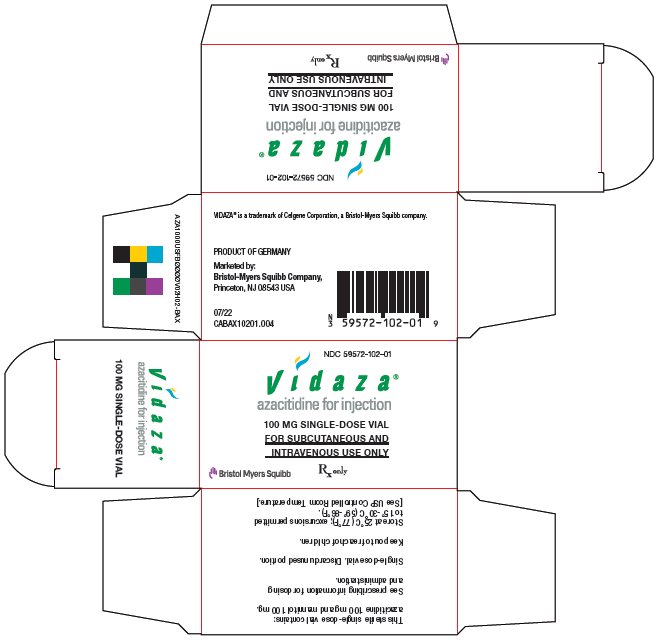
Vidaza azacitidine 100 mg Injection, Powder, Lyophilized, For Solution, 1 injection — NDC 59572-102-01 (Billing 59572-0102-01)
This is a package of 1 injection of Vidaza azacitidine 100 mg Injection, Powder, Lyophilized, For Solution from Celgene Corporation, marketed since Jul 2004 and currently FDA-listed. It is this product's only package size.
Identity & classification
Regulatory identifiers FDA, NLM and CMS codes for this package
Drug-database identifiers Medi-Span GPI and First Databank GCN / HICL / AHFS classification
- GSN (GCN sequence number): 054660
- GCN: 22663
- GPI-14 (Medi-Span): 21300003001920
- HICL (First Databank): 026361
- AHFS class code: 10:00.00.00
- RxCUI (RxNorm): 485246
Where does this data come from?
- FDA openFDA NDC Directory · synced Oct 1, 2026
- FDA label on DailyMed · label index refreshed Oct 1, 2026
- RxNorm (NLM RxNav) · catalog refreshed Oct 1, 2026
- Medi-Span GPI (licensed)
- First Databank (licensed) · refreshed Oct 1, 2026
RxNorm drug class
This medicine belongs to the Nucleoside Metabolic Inhibitor class.
Where does this data come from?
- RxClass (NLM) · catalog refreshed Oct 1, 2026
Clinical
Azacitidine is used to treat myelodysplastic syndrome (a group of conditions in which the bone marrow produces blood cells that are misshapen and does not produce enough healthy blood cells). Azacitidine is in a class of medications called demethylation agents. It works by helping the bone marrow to produce normal blood cells and by killing abnormal cells in the bone marrow.
Read the full MedlinePlus article ↗- It treats certain types of myelodysplastic syndromes (MDS) in adults. These are bone marrow disorders where the marrow doesn't make healthy blood cells. Vidaza also has dosing for...
- A healthcare professional gives it either as an injection under the skin or as an IV infusion. For adults it's usually once a day for 7 days, repeated about every 4 weeks. You'll t...
- Nausea, vomiting, fever, diarrhea or constipation, and injection site redness or bruising are common. Low blood counts are also common, so you'll have regular blood tests.
- Call for fever or signs of infection, unusual bleeding or bruising, yellow skin or eyes, confusion, or reduced urination. These could signal low blood counts or liver or kidney pro...
Patient education
Supplement & herbal interactions
Some supplements/herbs that may interact with Azacitidine — tap one for details:
Where does this data come from?
- MedlinePlus (NLM) · refreshed Oct 1, 2026
- FDA label on DailyMed · label index refreshed Oct 1, 2026
Ask a licensed pharmacist directly — free, answered by our team.
Pricing
A drug doesn't have one price. Each row is a different public payment system, and none is what you'd pay at the counter — that depends on your insurance. The ⓘ on each row explains what it measures.
| Price system | Per mL | Per package |
|---|---|---|
| Retail pharmacies payNADAC · weekly | Not in the retail survey — common for institutional, discontinued, or low-volume packs. | |
| Medicaid paysCMS SDUD · 12 mo | $102.39 | — |
| Medicare drug plans payPart D · quarterly | No Part D plan price is available for this NDC in our data. | |
| Medicare Part B allowsASP · J9025 | $0.401 / J9025 unit | — |
Where does this data come from?
- CMS NADAC weekly file
- CMS ASP pricing files · refreshed Sep 20, 2026
- CMS Medicaid State Drug Utilization Data · through Q1 2026
- CMS Part D plan pricing files · refreshed Sep 24, 2026
- VA National Acquisition Center price file
Billing & reimbursement
Where does this data come from?
- CMS ASP NDC-HCPCS crosswalk · refreshed Sep 22, 2026
- DMEPDAC NDC-HCPCS crosswalk
- openFDA NSDE billing units · refreshed Sep 7, 2026
Packaging — all sizes for this product
| Package NDC | Description | Marketing start | Marketing end | Status |
|---|---|---|---|---|
| 59572-0102-01 You're viewing this Main listing | 1 INJECTION, POWDER, LYOPHILIZED, FOR SOLUTION in 1 CARTON | 2004-07-05 | — | Active |
Therapeutic equivalents
| Product | Labeler | Pack | NADAC/unit | TE | Status | Price vs. this |
|---|---|---|---|---|---|---|
| Azacitidine 100 mg 00143-9606-01 | Hikma | 1 vial | — | AP | FDA listed | — |
| Azacitidine 100 mg 00781-3491-94 | Sandoz | 1 injection | — | AP | FDA listed | — |
| Azacitidine 100 mg 16714-0927-01 | NorthStar | 1 injection | — | AP | FDA listed | — |
| Azacitidine 100 mg 16729-0306-10 | Accord | 1 injection | — | AP | FDA listed | — |
| Azacitidine 100 mg 31722-0365-31 | Camber | 1 injection | — | AP | FDA listed | — |
| Azacitidine 100 mg 43598-0305-62 | Dr. | 1 injection | — | AP | FDA listed | — |
| Azacitidine 100 mg 43598-0465-62 | Dr. | 1 injection | — | AP | FDA listed | — |
| Azacitidine Azacitidine 100 mg 43598-0678-11 | Dr. | 1 injection | — | AP | FDA listed | — |
| Azacitidine 100 mg/50mL 43817-0906-01 | Panacea | 1 vial | — | AP | FDA listed | — |
| Azacitidine 100 mg/4mL 55150-0393-01 | Eugia | 1 vial | — | AP | FDA listed | — |
| Azacitidine 100 mg 58458-0002-02 | Reliance | 1 vial | — | AP | FDA listed | — |
| Vidaza 100 mgthis 59572-0102-01 | Celgene | 1 injection | — | AP | FDA listed | — |
| Azacitidine 100 mg 60505-6271-01 | Apotex | 1 injection | — | AP | FDA listed | — |
| Azacitidine 100 mg/30mL 63323-0771-39 | Fresenius | 1 vial | — | AP | FDA listed | — |
| Azacitidine 100 mg 68001-0313-56 | BluePoint | 1 injection | — | AP | FDA listed | — |
| Azacitidine 100 mg 68001-0527-54 | BluePoint | 1 injection | — | AP | FDA listed | — |
| Azacitidine 100 mg 68001-0620-54 | BluePoint | 1 injection | — | AP | FDA listed | — |
| Azacitidine 100 mg 69539-0112-01 | MSN | 1 injection | — | AP | FDA listed | — |
| Azacitidine 100 mg 70069-0857-01 | Somerset | 1 vial | — | AP | FDA listed | — |
| Azacitidine 100 mg 70121-1237-01 | Amneal | 1 injection | — | — | FDA listed | — |
| Azacitidine 100 mg 71288-0115-30 | Meitheal | 1 vial | — | AP | FDA listed | — |
| Azacitidine 100 mg 71288-0153-95 | Meitheal | 1 vial | — | AP | FDA listed | — |
| Azacitidine 100 mg 72485-0201-01 | Armas | 1 injection | — | AP | FDA listed | — |
| Azacitidine 100 mg 72572-0020-01 | Civica, | 1 injection | — | AP | FDA listed | — |
| Azacitidine 100 mg 75907-0225-11 | Dr. | 1 vial | — | AP | FDA listed | — |
| Azacitidine 100 mg 83774-0102-01 | Pilnova | 1 injection | — | AP | FDA listed | — |
Where does this data come from?
- FDA openFDA NDC Directory · synced Oct 1, 2026
- FDA Orange Book · refreshed Sep 3, 2026
- CMS NADAC weekly file
Availability & generic status
The FDA lists approved generic versions of this medicine, but that does not always mean a pharmacy can get one today. Patent rules, launch agreements, supply and pricing can affect when generics actually arrive.
Why the date isn’t exact: Generic timing can change because patents may be challenged, settled, licensed, added, removed, or worked around with a narrower label — and FDA approval does not always mean a pharmacy can get the generic today.
🛈 What do these terms mean?
- Patent
- Legal protection listed in the Orange Book that may delay generic approval or launch. Issued by the U.S. Patent & Trademark Office.
- Substance patent
- Covers the active drug molecule itself — the hardest to design around. A generic generally can’t launch until it expires.
- Formulation (product) patent
- Covers a specific formulation or dosage form. A generic can sometimes work around it with a different formulation.
- Method-of-use patent
- A patent covering one specific approved use of the drug — not necessarily the whole molecule. A generic can sometimes launch with a “skinny label” that carves out the protected use and keeps the others.
- Skinny label
- A generic label that omits a still-patented use when the FDA allows it — letting a generic reach the market for the unprotected uses.
- Exclusivity
- FDA-granted marketing protection, separate from patents — e.g. 5-yr new chemical entity, 7-yr orphan drug, or a +6-month pediatric extension.
- Paragraph IV
- A generic applicant’s formal challenge to a listed patent. It can potentially lead to earlier generic entry, but often involves litigation or a settlement.
- RLD / RS
- Reference Listed Drug — the brand product the FDA uses as the reference for generic applications. Reference Standard — the product the FDA expects generics to compare against in bioequivalence testing.
- TE / AB rating
- FDA therapeutic-equivalence rating. An AB rating generally means the FDA considers a generic therapeutically equivalent to — and substitutable for — the brand.
- LOE (loss of exclusivity)
- The latest patent or exclusivity currently listed — the loss-of-exclusivity / latest-listed-protection date shown on this page. Paragraph-IV challenges and settlements can move the real date earlier; FDA approval and a manufacturer’s decision to market can move it later.
Built from the FDA Orange Book. The bars above are scaled to each protection’s expiry; the red LOE marker is the last one to lapse.
| Code | What it grants | Expires |
|---|---|---|
| ODE-399 | Orphan Drug Exclusivity (7-year) | May 20, 2029 |
Is there a generic version of VIDAZA 100 MG VIAL?
The FDA approved a generic — why can’t I get it at my pharmacy yet?
Why do different websites show different generic release dates?
What does “FDA listed” mean?
What does a patent or protection date mean here?
What does “current Orange Book estimate” mean?
Can a generic come out before the last patent expires?
Can a generic come out after the listed dates?
What is the difference between patents and exclusivity?
Why are there multiple patent dates?
Where does this data come from?
- FDA Orange Book · refreshed Sep 3, 2026
Inactive Ingredients / Excipients
Inactive ingredients, also called excipients, are components of the drug product other than the active ingredient. They may include fillers, dyes, coatings, preservatives, flavors, or other formulation ingredients.
Where does this data come from?
IACT rows and label-wide narrative are kept separate; availability and product-level specificity depend on the submitted label.- FDA label on DailyMed · label index refreshed Oct 1, 2026
- FDA openFDA NDC Directory · synced Oct 1, 2026
Inactive ingredient FAQ
Are inactive ingredients the same for every manufacturer?
Why might an inactive ingredient be missing?
Can inactive ingredients matter?
Manufacturer & labeler
Where does this data come from?
- FDA openFDA NDC Directory · synced Oct 1, 2026
- Drugs@FDA
Full prescribing information FDA SPL
🎯 Indications and Usage ▾
1 INDICATIONS AND USAGE VIDAZA is a nucleoside metabolic inhibitor indicated for the treatment of: • Adult patients with the following FAB myelodysplastic syndrome (MDS) subtypes: Refractory anemia (RA) or refractory anemia with ringed sideroblasts (RARS) (if accompanied by neutropenia or thrombocytopenia or requiring transfusions), refractory anemia with excess blasts (RAEB), refractory anemia with excess blasts in transformation (RAEB-T), and chronic myelomonocytic leukemia (CMMoL). ( 1.1 ) • Pediatric patients aged 1 month and older with newly diagnosed Juvenile Myelomonocytic Leukemia (JMML).
( 1.2 )
1.1Myelodysplastic Syndromes (MDS) VIDAZA ® is indicated for treatment of adult patients with the following French-American-British (FAB) myelodysplastic syndrome subtypes: refractory anemia (RA) or refractory anemia with ringed sideroblasts (if accompanied by neutropenia or thrombocytopenia or requiring transfusions), refractory anemia with excess blasts (RAEB), refractory anemia with excess blasts in transformation (RAEB-T), and chronic myelomonocytic leukemia (CMMoL).
1.2Juvenile Myelomonocytic Leukemia (JMML) VIDAZA is indicated for the treatment of pediatric patients aged one month and older with newly diagnosed JMML.
⏱️ Dosage and Administration ▾
2 DOSAGE AND ADMINISTRATION • Do not substitute VIDAZA for oral azacitidine. The indications and dosing regimen for VIDAZA differ from that of oral azacitidine ( 2.1 , 5.1 ). • MDS: The recommended starting dosage for the first treatment cycle, for all patients regardless of baseline hematology values, is VIDAZA 75 mg/m 2 daily for 7 days to be administered by subcutaneous injection or intravenous infusion. See full prescribing information for schedule for subsequent cycles.
Premedicate for nausea and vomiting ( 2.2 ). • JMML: See full prescribing information for recommended dosage and schedule. • Continue treatment as long as the patient continues to benefit; up to 6 cycles for pediatric patients with JMML ( 2.3 , 2.4 ). • Monitor all patients for hematologic response and for renal toxicity; delay or reduce dosage as appropriate ( 2.3 , 2.4 , 2.6 , 2.7 ).
2.1Important Administration Information Do not substitute VIDAZA for oral azacitidine. The indications and dosing regimen for VIDAZA differ from that of oral azacitidine [see Warnings and Precautions ( 5.1 )] .
2.2First Treatment Cycle for Adults The recommended starting dose for the first treatment cycle, for all patients regardless of baseline hematology laboratory values, is 75 mg/m 2 subcutaneously or intravenously, daily for 7 days. Premedicate patients for nausea and vomiting. Obtain complete blood counts, liver chemistries and serum creatinine prior to the first dose.
2.3Subsequent Treatment Cycles for Adults Repeat cycles every 4 weeks. The dose may be increased to 100 mg/m 2 if no beneficial effect is seen after 2 treatment cycles and if no toxicity other than nausea and vomiting has occurred. It is recommended that patients be treated for a minimum of 4 to 6 cycles.
However, complete or partial response may require additional treatment cycles. Treatment may be continued as long as the patient continues to benefit. Monitor patients for hematologic response and renal toxicities [see Warnings and Precautions ( 5.4 )], and delay or reduce dosage if necessary [see Dosage and Administration ( 2.6 )].
2.4Pediatric Patients with JMML Table 1: Dosage and Administration for Pediatric Patients (JMML) Pediatric Patients with JMML Recommended Dose Age 1 month to less than 1 year OR weighing less than 10 kg 2.5 mg/kg Age 1 year and older AND weighing 10 kg or greater 75 mg/m 2 The recommended dosage for pediatric patients with JMML is provided in Table 1. VIDAZA is administered as an intravenous infusion daily for 7 days in a 28-day cycle. Patients should be treated for a minimum of 3 cycles and maximum of 6 cycles.
A delay in dose not exceeding 14 days can be considered for non-hematologic toxicities. Monitor patients for hematologic response and renal toxicities [see Warnings and Precautions ( 5.4 )] , and delay or reduce dosage if necessary. Treatment may be continued up to six cycles as long as the patient continues to benefit.
2.5Dosage Adjustment Based on Hematology Laboratory Values • For adult patients with baseline (start of treatment) WBC greater than or equal to 3 x10 9 /L, ANC greater than or equal to 1.5 x10 9 /L, and platelets greater than or equal to 75 x10 9 /L, adjust the dose as follows, based on nadir counts for any given cycle: Nadir Counts % Dose in the Next Course ANC (x10 9 /L) Less than 0.5 0.5 –1.5 Greater than
1.5Platelets (x10 9 /L) Less than 25 25-50 Greater than 50 50% 67% 100% • For adult patients whose baseline counts are WBC less than 3 x10 9 /L, ANC less than 1.5 x10 9 /L, or platelets less than 75 x10 9 /L, base dose adjustments on nadir counts and bone marrow biopsy cellularity at the time of the nadir as noted below, unless there is clear improvement in differentiation (percentage of mature granulocytes is higher and ANC is higher than at onset of that course) at the time of the next cycle, in which case continue the current dose.
WBC or Platelet Nadir % decrease in counts from baseline Bone Marrow Biopsy Cellularity at Time of Nadir (%)… [Excerpted — this section continues on DailyMed.]
💊 Dosage Forms and Strengths ▾
3 DOSAGE FORMS AND STRENGTHS VIDAZA (azacitidine for injection) is supplied as lyophilized powder in 100 mg single-dose vials. • Lyophilized powder in 100 mg single-dose vials ( 3 ).
⛔ Contraindications ▾
4 CONTRAINDICATIONS • Advanced Malignant Hepatic Tumors ( 4.1 ). • Hypersensitivity to Azacitidine or Mannitol ( 4.2 ).
4.1Advanced Malignant Hepatic Tumors VIDAZA is contraindicated in patients with advanced malignant hepatic tumors [see Warnings and Precautions ( 5.3 )] .
4.2Hypersensitivity to Azacitidine or Mannitol VIDAZA is contraindicated in patients with a known hypersensitivity to azacitidine or mannitol.
⚠️ Warnings and Cautions ▾
5 WARNINGS AND PRECAUTIONS • Risks of Substitution with Other Azacitidine Products: Do not substitute VIDAZA for oral azacitidine ( 2.1 , 5.1 ). • Anemia, Neutropenia and Thrombocytopenia: Monitor complete blood counts (CBC) frequently ( 5.2 ). • Hepatotoxicity: Patients with severe preexisting hepatic impairment are at higher risk for toxicity ( 5.3 ). • Renal Toxicity: Monitor patients with renal impairment for toxicity since azacitidine and its metabolites are primarily excreted by the kidneys ( 5.4 ). • Tumor Lysis Syndrome: VIDAZA may cause fatal or serious tumor lysis syndrome, including in patients with MDS.
Assess baseline risk and monitor and treat as appropriate ( 5.5 ). • Embryo-Fetal Toxicity: VIDAZA can cause fetal harm. Advise female patients and male patients with female partners of reproductive potential of the potential risk to a fetus and to use effective contraception ( 5.6 ).
5.1Risks of Substitution with Other Azacitidine Products Due to substantial differences in the pharmacokinetic parameters [see Clinical Pharmacology ( 12.3 )] , the recommended dose and schedule for VIDAZA are different from those of oral azacitidine products. Treatment of patients using VIDAZA at the recommended dosage of oral azacitidine may result in a fatal adverse reaction. Treatment of patients using oral azacitidine at the doses recommended for VIDAZA may not be effective.
Do not substitute VIDAZA for oral azacitidine [see Dosage and Administration ( 2.1 )] .
5.2Anemia, Neutropenia and Thrombocytopenia VIDAZA causes anemia, neutropenia and thrombocytopenia in adult patients with MDS and in pediatric patients with JMML. Monitor complete blood counts frequently for response and/or toxicity, at a minimum, prior to each dosing cycle. In adult patients with MDS, after administration of the recommended dosage for the first cycle, adjust dosage for subsequent cycles based on nadir counts and hematologic response [see Dosage and Administration ( 2.5 )] .
In pediatric patients with JMML, dose reductions due to hematological toxicity are not recommended within the first 3 cycles as hematological toxicity will be difficult to assess and to differentiate from the natural course of the underlying disorder [see Dosage and Administration ( 2.5 )] .
5.3Hepatotoxicity in Patients with Severe Pre-existing Hepatic Impairment Because azacitidine is potentially hepatotoxic in patients with severe pre-existing hepatic impairment, caution is needed in patients with liver disease. Patients with extensive tumor burden due to metastatic disease have been reported to experience progressive hepatic coma and death during azacitidine treatment, especially in such patients with baseline albumin <30 g/L. Azacitidine is contraindicated in patients with advanced malignant hepatic tumors [see Contraindications ( 4.1 )].
Monitor liver chemistries prior to initiation of therapy and with each cycle. Safety and effectiveness of VIDAZA in patients with MDS or in pediatric patients with JMML and hepatic impairment have not been studied as these patients were excluded from the clinical trials.
5.4Renal Toxicity Renal toxicity ranging from elevated serum creatinine to renal failure and death have been reported in patients treated with intravenous azacitidine in combination with other chemotherapeutic agents for non-MDS conditions. In addition, renal tubular acidosis, defined as a fall in serum bicarbonate to <20 mEq/L in association with an alkaline urine and hypokalemia (serum potassium <3 mEq/L) developed in 5 patients with CML treated with azacitidine and etoposide. Monitor serum creatinine and electrolytes prior to initiation of therapy and with each cycle.
If unexplained reductions in serum bicarbonate <20 mEq/L or elevations of BUN or serum creatinine occur, reduce or hold the dose [see Dosage and Administration ( 2.6 )] . Patients with renal impairment may be at increased risk for renal toxicity. Also, azacitidine and its metabolites are primarily excreted by… [Excerpted — this section continues on DailyMed.]
🤒 Adverse Reactions ▾
6 ADVERSE REACTIONS The following adverse reactions are described in other labeling sections: o Anemia, Neutropenia and Thrombocytopenia [see Warnings and Precautions ( 5.2 )] o Hepatotoxicity in Patients with Severe Pre-existing Hepatic Impairment [see Warnings and Precautions ( 5.3 )] o Renal Toxicity [see Warnings and Precautions ( 5.4 )] o Tumor Lysis Syndrome [see Warnings and Precautions ( 5.5 )] Most common adverse reactions (>30%) in adult patients with MDS by subcutaneous route are: nausea, anemia, thrombocytopenia, vomiting, pyrexia, leukopenia, diarrhea, injection site erythema, constipation, neutropenia and ecchymosis.
Most common adverse reactions by intravenous route also included petechiae, rigors, weakness and hypokalemia ( 6.1 ). Most common adverse reactions (>30%) by intravenous route in pediatric patients with JMML are pyrexia, rash, upper respiratory tract infection, and anemia ( 6.1 ). To report SUSPECTED ADVERSE REACTIONS, contact Bristol-Myers Squibb at 1-800-721-5072 or FDA at 1-800-FDA-1088 or www.fda.gov/medwatch .
6.1Clinical Trials Experience Because clinical trials are conducted under widely varying conditions, adverse reaction rates observed in the clinical trials of a drug cannot be directly compared to rates in the clinical trials of another drug and may not reflect the rates observed in practice. MDS The data described below reflect exposure to VIDAZA in 443 patients with MDS from 4 clinical studies. Study 1 was a supportive-care controlled trial (subcutaneous administration), Studies 2 and 3 were single arm studies (one with subcutaneous administration and one with intravenous administration), and Study 4 was an international randomized trial (subcutaneous administration) [see Clinical Studies ( 14.1 )].
In Studies 1, 2 and 3, a total of 268 patients were exposed to VIDAZA, including 116 exposed for 6 cycles (approximately 6 months) or more and 60 exposed for greater than 12 cycles (approximately one year). VIDAZA was studied primarily in supportive-care controlled and uncontrolled trials (n=150 and n=118, respectively). The population in the subcutaneous studies (n=220) was 23 to 92 years old (mean 66.4 years), 68% male, and 94% white, and had MDS or AML.
The population in the intravenous study (n=48) was 35 to 81 years old (mean 63.1 years), 65% male, and 100% white. Most patients received average daily doses between 50 and 100 mg/m 2 . In Study 4, a total of 175 patients with higher-risk MDS (primarily RAEB and RAEB-T subtypes) were exposed to VIDAZA.
Of these patients, 119 were exposed for 6 or more cycles, and 63 for at least 12 cycles. The mean age of this population was 68.1 years (ranging from 42 to 83 years), 74% were male, and 99% were white. Most patients received daily VIDAZA doses of 75 mg/m 2 .
Most Commonly Occurring Adverse Reactions (Subcutaneous or Intravenous Route) in Adult Patients with MDS: nausea, anemia, thrombocytopenia, vomiting, pyrexia, leukopenia, diarrhea, injection site erythema, constipation, neutropenia, ecchymosis. The most common adverse reactions by intravenous route also included petechiae, rigors, weakness and hypokalemia. Adverse Reactions Most Frequently (>2%) Resulting in Clinical Intervention (Subcutaneous or Intravenous Route) in Adult Patients with MDS: Discontinuation: leukopenia, thrombocytopenia, neutropenia.
Dose Held: leukopenia, neutropenia, thrombocytopenia, pyrexia, pneumonia, febrile neutropenia. Dose Reduced: leukopenia, neutropenia, thrombocytopenia. Table 3 presents adverse reactions occurring in at least 5% of patients treated with VIDAZA (subcutaneous) in Studies 1 and 2.
It is important to note that duration of exposure was longer for the VIDAZA-treated group than for the observation group: patients received VIDAZA for a mean of 11.4 months while mean time in the observation arm was 6.1 months. Table 3: Most Frequently Observed Adverse Reactions (≥ 5% in All Subcutaneous VIDAZA Treated Patients; Studies 1 and 2) Number (%) of Patient… [Excerpted — this section continues on DailyMed.]
👥 Use in Specific Populations ▾
8 USE IN SPECIFIC POPULATIONS • Lactation: Advise not to breastfeed ( 8.2 ).
8.1Pregnancy Risk Summary Based on its mechanism of action and findings in animals, VIDAZA can cause fetal harm when administered to a pregnant woman [see Clinical Pharmacology ( 12.1 )]. There are no data on the use of azacitidine in pregnant women. Azacitidine was teratogenic and caused embryo-fetal lethality in animals at doses lower than the recommended human daily dose (see Data).
Advise pregnant women of the potential risk to the fetus. The background rate of major birth defects and miscarriage is unknown for the indicated population. All pregnancies have a background risk of birth defect, loss, or other adverse outcomes.
In the U.S. general population, the estimated background risk of major birth defects and miscarriage in clinically recognized pregnancies is 2%-4% and 15%-20%, respectively. Data Animal Data Early embryotoxicity studies in mice revealed a 44% frequency of intrauterine embryonal death (increased resorption) after a single IP (intraperitoneal) injection of 6 mg/m 2 (approximately 8% of the recommended human daily dose on a mg/m 2 basis) azacitidine on gestation day 10. Developmental abnormalities in the brain have been detected in mice given azacitidine on or before gestation day 15 at doses of ~3-12 mg/m 2 (approximately 4%-16% the recommended human daily dose on a mg/m 2 basis).
In rats, azacitidine was clearly embryotoxic when given IP on gestation days 4-8 (postimplantation) at a dose of 6 mg/m 2 (approximately 8% of the recommended human daily dose on a mg/m 2 basis), although treatment in the preimplantation period (on gestation days 1-3) had no adverse effect on the embryos. Azacitidine caused multiple fetal abnormalities in rats after a single IP dose of 3 to 12 mg/m 2 (approximately 8% the recommended human daily dose on a mg/m 2 basis) given on gestation day 9, 10, 11 or 12. In this study azacitidine caused fetal death when administered at 3-12 mg/m 2 on gestation days 9 and 10; average live animals per litter was reduced to 9% of control at the highest dose on gestation day 9.
Fetal anomalies included: CNS anomalies (exencephaly/encephalocele), limb anomalies (micromelia, club foot, syndactyly, oligodactyly), and others (micrognathia, gastroschisis, edema, and rib abnormalities).
8.2Lactation Risk Summary There is no information regarding the presence of azacitidine in human milk, the effects of VIDAZA on the breastfed infant, or the effects of VIDAZA on milk production. Because many drugs are excreted in human milk and because of the potential for tumorigenicity shown for azacitidine in animal studies [see Nonclinical Toxicology ( 13.1 )] and the potential for serious adverse reactions in nursing infants from VIDAZA, advise patients not to breastfeed during treatment with VIDAZA and for 1 week after the last dose.
8.3Females and Males of Reproductive Potential Based on its mechanism of action and findings in animals, VIDAZA can cause fetal harm when administered to a pregnant woman [see Use in Specific Populations ( 8.1 )]. Pregnancy Testing Verify the pregnancy status of females of reproductive potential prior to initiating VIDAZA. Contraception Females Advise pregnant women of the potential risk to a fetus.
Advise females of reproductive potential to use effective contraception during treatment with VIDAZA and for 6 months after the last dose. Males Advise males with female partners of reproductive potential to use effective contraception during treatment with VIDAZA and for 3 months after the last dose. Infertility Based on animal data, azacitidine could have an effect on male or female fertility [see Nonclinical Toxicology ( 13.1 )].
8.4Pediatric Use Safety and effectiveness of VIDAZA in pediatric patients with MDS have not been established. The safety and effectiveness of VIDAZA have been established in pediatric patients with newly diagnosed JMML aged 1 month and older and the information on this use is disc… [Excerpted — this section continues on DailyMed.]
🤰 Pregnancy ▾
8.1Pregnancy Risk Summary Based on its mechanism of action and findings in animals, VIDAZA can cause fetal harm when administered to a pregnant woman [see Clinical Pharmacology ( 12.1 )]. There are no data on the use of azacitidine in pregnant women. Azacitidine was teratogenic and caused embryo-fetal lethality in animals at doses lower than the recommended human daily dose (see Data).
Advise pregnant women of the potential risk to the fetus. The background rate of major birth defects and miscarriage is unknown for the indicated population. All pregnancies have a background risk of birth defect, loss, or other adverse outcomes.
In the U.S. general population, the estimated background risk of major birth defects and miscarriage in clinically recognized pregnancies is 2%-4% and 15%-20%, respectively. Data Animal Data Early embryotoxicity studies in mice revealed a 44% frequency of intrauterine embryonal death (increased resorption) after a single IP (intraperitoneal) injection of 6 mg/m 2 (approximately 8% of the recommended human daily dose on a mg/m 2 basis) azacitidine on gestation day 10. Developmental abnormalities in the brain have been detected in mice given azacitidine on or before gestation day 15 at doses of ~3-12 mg/m 2 (approximately 4%-16% the recommended human daily dose on a mg/m 2 basis).
In rats, azacitidine was clearly embryotoxic when given IP on gestation days 4-8 (postimplantation) at a dose of 6 mg/m 2 (approximately 8% of the recommended human daily dose on a mg/m 2 basis), although treatment in the preimplantation period (on gestation days 1-3) had no adverse effect on the embryos. Azacitidine caused multiple fetal abnormalities in rats after a single IP dose of 3 to 12 mg/m 2 (approximately 8% the recommended human daily dose on a mg/m 2 basis) given on gestation day 9, 10, 11 or 12. In this study azacitidine caused fetal death when administered at 3-12 mg/m 2 on gestation days 9 and 10; average live animals per litter was reduced to 9% of control at the highest dose on gestation day 9.
Fetal anomalies included: CNS anomalies (exencephaly/encephalocele), limb anomalies (micromelia, club foot, syndactyly, oligodactyly), and others (micrognathia, gastroschisis, edema, and rib abnormalities).
🧒 Pediatric Use ▾
8.4Pediatric Use Safety and effectiveness of VIDAZA in pediatric patients with MDS have not been established. The safety and effectiveness of VIDAZA have been established in pediatric patients with newly diagnosed JMML aged 1 month and older and the information on this use is discussed throughout the labeling. The safety and effectiveness of VIDAZA have not been established in pediatric patients younger than 1 month old [see Clinical Studies ( 14.2 )] .
🧓 Geriatric Use ▾
8.5Geriatric Use Of the total number of patients in Studies 1, 2 and 3, 62% were 65 years and older and 21% were 75 years and older. No overall differences in effectiveness were observed between these patients and younger patients. In addition, there were no relevant differences in the frequency of adverse reactions observed in patients 65 years and older compared to younger patients.
Of the 179 patients randomized to azacitidine in Study 4, 68% were 65 years and older and 21% were 75 years and older. Survival data for patients 65 years and older were consistent with overall survival results. The majority of adverse reactions occurred at similar frequencies in patients <65 years of age and patients 65 years of age and older.
Elderly patients are more likely to have decreased renal function. Monitor renal function in these patients [see Dosage and Administration ( 2.7 ) and Warnings and Precautions ( 5.4 )].
🆘 Overdosage ▾
10 OVERDOSAGE One case of overdose with VIDAZA was reported during clinical trials. A patient experienced diarrhea, nausea, and vomiting after receiving a single intravenous dose of approximately 290 mg/m 2 , almost 4 times the recommended starting dose. The events resolved without sequelae, and the correct dose was resumed the following day.
In the event of overdosage, the patient should be monitored with appropriate blood counts and should receive supportive treatment, as necessary. There is no known specific antidote for VIDAZA overdosage.
🧬 Clinical Pharmacology ▾
12 CLINICAL PHARMACOLOGY
12.1Mechanism of Action VIDAZA is a pyrimidine nucleoside analog of cytidine. VIDAZA is believed to exert its antineoplastic effects by causing hypomethylation of DNA and direct cytotoxicity on abnormal hematopoietic cells in the bone marrow. The concentration of azacitidine required for maximum inhibition of DNA methylation in vitro does not cause major suppression of DNA synthesis.
Hypomethylation may restore normal function to genes that are critical for differentiation and proliferation. The cytotoxic effects of azacitidine cause the death of rapidly dividing cells, including cancer cells that are no longer responsive to normal growth control mechanisms. Non-proliferating cells are relatively insensitive to azacitidine.
12.2Pharmacodynamics In pediatric patients with JMML post azacitidine treatment (75 mg/m 2 or 2.5 mg/kg), reductions in genome-wide DNA methylation (global DNA methylation scores) were attained in bone marrow granulocytes during the first treatment cycle, confirming the DNA-hypomethylating activity of azacitidine.
12.3Pharmacokinetics The pharmacokinetics of azacitidine were studied in 6 adult patients with MDS following a single 75 mg/m 2 subcutaneous dose and a single 75 mg/m 2 intravenous dose. Absorption Azacitidine is rapidly absorbed after subcutaneous administration; the peak plasma azacitidine concentration of 750 ± 403 ng/ml occurred in 0.5 hour after subcutaneous administration. Distribution The bioavailability of subcutaneous azacitidine relative to intravenous azacitidine is approximately 89%, based on area under the curve.
Mean volume of distribution following intravenous dosing is 76 ± 26 L. Mean apparent subcutaneous clearance is 167 ± 49 L/hour and mean half-life after subcutaneous administration is 41 ± 8 minutes. The AUC and C max of subcutaneous administration of azacitidine in 21 patients with cancer were approximately dose proportional within the 25 to 100 mg/m 2 dose range.
Multiple dosing at the recommended dose-regimen does not result in drug accumulation with intravenous or subcutaneous administration. Elimination Metabolism An in vitro study of azacitidine incubation in human liver fractions indicated that azacitidine is not metabolized by the cytochrome P450 (CYP) enzymes. Azacitidine undergoes spontaneous hydrolysis and deamination mediated by cytidine deaminase.
Excretion Published studies indicate that urinary excretion is the primary route of elimination of azacitidine and its metabolites. Following intravenous administration of radioactive azacitidine to 5 cancer patients, the cumulative urinary excretion was 85% of the radioactive dose. Fecal excretion accounted for <1% of administered radioactivity over 3 days.
Mean excretion of radioactivity in urine following subcutaneous administration of 14 C-azacitidine was 50%. The mean elimination half-lives of total radioactivity (azacitidine and its metabolites) were similar after intravenous and subcutaneous administrations, about 4 hours. Specific Populations The effects of hepatic impairment, gender, or race/ethnicity on the pharmacokinetics of intravenous and subcutaneous azacitidine have not been studied.
Pediatric Patients Following intravenous administration of a 75 mg/m 2 or 2.5 mg/kg dose in pediatric patients with JMML, population pharmacokinetic analysis determined that azacitidine rapidly reached a geometric mean C max of 4510 ng/mL (CV%: 65.6%), and a geometric mean AUC 0-24 of 1550 ng∙h/mL (CV%: 56.6%). The geometric mean t 1/2 was 0.3 hours (CV%: 59.9%), and the geometric mean clearance was
21.8L/h (CV%: 102.2%). Population PK analysis of 6 adults and 34 pediatric patients did not identify any clinically meaningful differences in the pharmacokinetics of intravenous azacitidine according to sex (62.5% male), and tumor type (MDS, JMML, AML). Increased clearance was associated with increased baseline body weight (4.6 to 102 kg). BSA or body weight-based dosing resulted in consistent plasma a… [Excerpted — this section continues on DailyMed.]
🧬 Mechanism of Action ▾
12.1Mechanism of Action VIDAZA is a pyrimidine nucleoside analog of cytidine. VIDAZA is believed to exert its antineoplastic effects by causing hypomethylation of DNA and direct cytotoxicity on abnormal hematopoietic cells in the bone marrow. The concentration of azacitidine required for maximum inhibition of DNA methylation in vitro does not cause major suppression of DNA synthesis.
Hypomethylation may restore normal function to genes that are critical for differentiation and proliferation. The cytotoxic effects of azacitidine cause the death of rapidly dividing cells, including cancer cells that are no longer responsive to normal growth control mechanisms. Non-proliferating cells are relatively insensitive to azacitidine.
📦 How Supplied / Storage and Handling ▾
16 HOW SUPPLIED/STORAGE AND HANDLING How Supplied VIDAZA (azacitidine for injection) is supplied as a lyophilized powder in 100 mg single-dose vials packaged in cartons of 1 vial (NDC 59572-102-01). Storage Store unreconstituted vials at 25º C (77º F); excursions permitted to 15º-30º C (59º-86º F) (See USP Controlled Room Temperature). Handling and Disposal VIDAZA is a hazardous drug. Follow applicable special handling and disposal procedures.
📦 Storage and Handling ▾
Storage Store unreconstituted vials at 25º C (77º F); excursions permitted to 15º-30º C (59º-86º F) (See USP Controlled Room Temperature).
📋 Description ▾
11 DESCRIPTION VIDAZA (azacitidine for injection) contains azacitidine, which is a nucleoside metabolic inhibitor. Azacitidine is 4-amino-1-β-D-ribofuranosyl-s-triazin-2(1H)-one. The structural formula is as follows: The empirical formula is C 8 H 12 N 4 O 5.
The molecular weight is 244. Azacitidine is a white to off-white solid. Azacitidine was found to be insoluble in acetone, ethanol, and methyl ethyl ketone; slightly soluble in ethanol/water (50/50), propylene glycol, and polyethylene glycol; sparingly soluble in water, water saturated octanol, 5% dextrose in water, N-methyl-2-pyrrolidone, normal saline and 5% Tween 80 in water; and soluble in dimethylsulfoxide (DMSO).
The finished product is supplied in a sterile form for reconstitution as a suspension for subcutaneous injection or reconstitution as a solution with further dilution for intravenous infusion. Vials of VIDAZA contain 100 mg of azacitidine and 100 mg mannitol as a sterile lyophilized powder. AzacitidineStructuralFormula
💬 Information for Patients ▾
17 PATIENT COUNSELING INFORMATION Hepatotoxicity in Patients with Severe Pre-Existing Hepatic Impairment Instruct patients to inform their physician about any underlying liver disease [see Warnings and Precautions ( 5.3 )]. Renal Toxicity Instruct patients to inform their physician about any underlying renal disease [see Warnings and Precautions ( 5.4 )]. Embryo-Fetal Toxicity Advise pregnant women of the potential risk to a fetus [see Warnings and Precautions ( 5.6 ) and Use in Specific Populations ( 8.1 )].
Advise females of reproductive potential to use effective contraception during treatment with VIDAZA and for 6 months after the last dose. Advise males with female partners of reproductive potential to use effective contraception during treatment with VIDAZA and for 3 months after the last dose. Advise patients to report known or suspected pregnancy to their physicians immediately [see Warnings and Precautions ( 5.6 ) and Use in Specific Populations ( 8.3 )].
Lactation Advise patients to avoid breastfeeding while receiving VIDAZA and for 1 week after the last dose [see Use in Specific Populations ( 8.2 )]. Infertility Advise males and females that VIDAZA may impair fertility [see Use in Specific Populations ( 8.3 ) and Nonclinical Toxicology ( 13.1 )] . Marketed by: Bristol-Myers Squibb Company Princeton, NJ 08543 USA VIDAZA ® is a trademark of Celgene Corporation, a Bristol-Myers Squibb company.
VIDPI.19
🧬 Pharmacokinetics ▾
12.3Pharmacokinetics The pharmacokinetics of azacitidine were studied in 6 adult patients with MDS following a single 75 mg/m 2 subcutaneous dose and a single 75 mg/m 2 intravenous dose. Absorption Azacitidine is rapidly absorbed after subcutaneous administration; the peak plasma azacitidine concentration of 750 ± 403 ng/ml occurred in 0.5 hour after subcutaneous administration. Distribution The bioavailability of subcutaneous azacitidine relative to intravenous azacitidine is approximately 89%, based on area under the curve.
Mean volume of distribution following intravenous dosing is 76 ± 26 L. Mean apparent subcutaneous clearance is 167 ± 49 L/hour and mean half-life after subcutaneous administration is 41 ± 8 minutes. The AUC and C max of subcutaneous administration of azacitidine in 21 patients with cancer were approximately dose proportional within the 25 to 100 mg/m 2 dose range.
Multiple dosing at the recommended dose-regimen does not result in drug accumulation with intravenous or subcutaneous administration. Elimination Metabolism An in vitro study of azacitidine incubation in human liver fractions indicated that azacitidine is not metabolized by the cytochrome P450 (CYP) enzymes. Azacitidine undergoes spontaneous hydrolysis and deamination mediated by cytidine deaminase.
Excretion Published studies indicate that urinary excretion is the primary route of elimination of azacitidine and its metabolites. Following intravenous administration of radioactive azacitidine to 5 cancer patients, the cumulative urinary excretion was 85% of the radioactive dose. Fecal excretion accounted for <1% of administered radioactivity over 3 days.
Mean excretion of radioactivity in urine following subcutaneous administration of 14 C-azacitidine was 50%. The mean elimination half-lives of total radioactivity (azacitidine and its metabolites) were similar after intravenous and subcutaneous administrations, about 4 hours. Specific Populations The effects of hepatic impairment, gender, or race/ethnicity on the pharmacokinetics of intravenous and subcutaneous azacitidine have not been studied.
Pediatric Patients Following intravenous administration of a 75 mg/m 2 or 2.5 mg/kg dose in pediatric patients with JMML, population pharmacokinetic analysis determined that azacitidine rapidly reached a geometric mean C max of 4510 ng/mL (CV%: 65.6%), and a geometric mean AUC 0-24 of 1550 ng∙h/mL (CV%: 56.6%). The geometric mean t 1/2 was 0.3 hours (CV%: 59.9%), and the geometric mean clearance was
21.8L/h (CV%: 102.2%). Population PK analysis of 6 adults and 34 pediatric patients did not identify any clinically meaningful differences in the pharmacokinetics of intravenous azacitidine according to sex (62.5% male), and tumor type (MDS, JMML, AML). Increased clearance was associated with increased baseline body weight (4.6 to 102 kg).
BSA or body weight-based dosing resulted in consistent plasma azacitidine exposure in pediatric patients with JMML across the body weight range (4.6 to 18.5 kg) and age range (0.2 to 6.9 years). Patients with Renal Impairment In adult patients with cancer, the pharmacokinetics of azacitidine in 6 patients with normal renal function (CLcr >80 mL/min) and 6 patients with severe renal impairment (CLcr <30 mL/min) were compared following daily subcutaneous dosing (Days 1 through 5) at 75 mg/m 2 /day. Severe renal impairment increased azacitidine exposure by approximately 70% after single and 41% after multiple subcutaneous administrations.
This increase in exposure was not correlated with an increase in adverse events. The exposure was similar to exposure in patients with normal renal function receiving 100 mg/m 2 . Drug-Drug Interactions No formal clinical drug interaction studies with azacitidine have been conducted.
In vitro Studies Cytochrome P450 (CYP) Enzymes: An in vitro study at azacitidine concentrations up to 100 µM (IV C max = 10.6 µM) in human liver microsomes indicated that azacitidine does not cause any inhibitio… [Excerpted — this section continues on DailyMed.]
🧬 Pharmacodynamics ▾
12.2Pharmacodynamics In pediatric patients with JMML post azacitidine treatment (75 mg/m 2 or 2.5 mg/kg), reductions in genome-wide DNA methylation (global DNA methylation scores) were attained in bone marrow granulocytes during the first treatment cycle, confirming the DNA-hypomethylating activity of azacitidine.
🔬 Clinical Studies ▾
14 CLINICAL STUDIES
14.1Myelodysplastic Syndromes (MDS) Study 1 was a randomized, open-label, controlled trial carried out in 53 U.S. sites compared the safety and efficacy of subcutaneous VIDAZA plus supportive care with supportive care alone (“observation”) in adult patients with any of the five FAB subtypes of myelodysplastic syndromes (MDS): refractory anemia (RA), RA with ringed sideroblasts (RARS), RA with excess blasts (RAEB), RAEB in transformation (RAEB-T), and chronic myelomonocytic leukemia (CMMoL). RA and RARS patients were included if they met one or more of the following criteria: required packed RBC transfusions; had platelet counts ≤50.0 x 10 9 /L; required platelet transfusions; or were neutropenic (ANC <1.0 x 10 9 /L) with infections requiring treatment with antibiotics.
Patients with acute myelogenous leukemia (AML) were not intended to be included. Supportive care allowed in this study included blood transfusion products, antibiotics, antiemetics, analgesics and antipyretics. The use of hematopoietic growth factors was prohibited.
Baseline patient and disease characteristics are summarized in Table 6; the 2 groups were similar. VIDAZA was administered at a subcutaneous dose of 75 mg/m 2 daily for 7 days every 4 weeks. The dose was increased to 100 mg/m 2 if no beneficial effect was seen after 2 treatment cycles.
The dose was decreased and/or delayed based on hematologic response or evidence of renal toxicity. Patients in the observation arm were allowed by protocol to cross over to VIDAZA if they had increases in bone marrow blasts, decreases in hemoglobin, increases in red cell transfusion requirements, or decreases in platelets, or if they required a platelet transfusion or developed a clinical infection requiring treatment with antibiotics. For purposes of assessing efficacy, the primary endpoint was response rate (as defined in Table 7).
Of the 191 patients included in the study, independent review (adjudicated diagnosis) found that 19 had the diagnosis of AML at baseline. These patients were excluded from the primary analysis of response rate, although they were included in an intent-to-treat (ITT) analysis of all patients randomized. Approximately 55% of the patients randomized to observation crossed over to receive VIDAZA treatment.
Table 6. Baseline Demographics and Disease Characteristics VIDAZA (N=99) Observation (N=92) Gender (n%) Male 72 (72.7) 60 (65.2) Female 27 (27.3) 32 (34.8) Race (n%) White 93 (93.9) 85 (92.4) Black 1 (1.0) 1 (1.1) Hispanic 3 (3.0) 5 (5.4) Asian/Oriental 2 (2.0) 1 (1.1) Age (years) N 99 91 Mean ± SD 67.3 ± 10.39 68.0 ±
10.23Range 31 - 92 35 - 88 Adjudicated MDS diagnosis at study entry (n%) RA 21 (21.2) 18 (19.6) RARS 6 (6.1) 5 (5.4) RAEB 38 (38.4) 39 (42.4) RAEB-T 16 (16.2) 14 (15.2) CMMoL 8 (8.1) 7 (7.6) AML 10 (10.1) 9 (9.8) Transfusion product used in 3 months before study entry (n%) Any transfusion product 70 (70.7) 59 (64.1) Blood cells, packed human 66 (66.7) 55 (59.8) Platelets, human blood 15 (15.2) 12 (13.0) Hetastarch 0 (0.0) 1 (1.1) Plasma protein fraction 1 (1.0) 0 (0.0) Other 2 (2.0) 2 (2.2) Table 7. Response Criteria RA RARS RAEB RAEB-T CMMoL Complete Response (CR), duration ≥4 weeks Marrow <5% blasts Peripheral Blood Normal CBC if abnormal at baseline Absence of blasts in the peripheral circulation Partial Response (PR), duration ≥4 weeks Marrow No marrow requirements ≥50% decrease in blasts Improvement of marrow dyspoiesis Peripheral Blood ≥50% restoration in the deficit from normal levels of baseline white cells, hemoglobin and platelets if abnormal at baseline No blasts in the peripheral circulation For CMMoL, if WBC is elevated at baseline, a ≥75% reduction in the excess count over the upper limit of normal The overall response rate (CR + PR) of 15.7% in VIDAZA-treated patients without AML (16.2% for all VIDAZA randomized patients including AML) was statistically significantly higher than the response rate of 0% in the observation group (p<0.0001) (Ta… [Excerpted — this section continues on DailyMed.]
🧪 Nonclinical Toxicology ▾
13 NONCLINICAL TOXICOLOGY
13.1Carcinogenesis, Mutagenesis, Impairment of Fertility The potential carcinogenicity of azacitidine was evaluated in mice and rats. Azacitidine induced tumors of the hematopoietic system in female mice at 2.2 mg/kg (6.6 mg/m 2 , approximately 8% the recommended human daily dose on a mg/m 2 basis) administered IP three times per week for 52 weeks. An increased incidence of tumors in the lymphoreticular system, lung, mammary gland, and skin was seen in mice treated with azacitidine IP at 2.0 mg/kg (6.0 mg/m 2 , approximately 8% the recommended human daily dose on a mg/m 2 basis) once a week for 50 weeks.
A tumorigenicity study in rats dosed twice weekly at 15 or 60 mg/m 2 (approximately 20%-80% the recommended human daily dose on a mg/m 2 basis) revealed an increased incidence of testicular tumors compared with controls. The mutagenic and clastogenic potential of azacitidine was tested in in vitro bacterial systems Salmonella typhimurium strains TA100 and several strains of trpE8, Escherichia coli strains WP14 Pro, WP3103P, WP3104P, and CC103; in in vitro forward gene mutation assay in mouse lymphoma cells and human lymphoblast cells; and in an in vitro micronucleus assay in mouse L5178Y lymphoma cells and Syrian hamster embryo cells.
Azacitidine was mutagenic in bacterial and mammalian cell systems. The clastogenic effect of azacitidine was shown by the induction of micronuclei in L5178Y mouse cells and Syrian hamster embryo cells. Administration of azacitidine to male mice at 9.9 mg/m 2 (approximately 9% the recommended human daily dose on a mg/m 2 basis) daily for 3 days prior to mating with untreated female mice resulted in decreased fertility and loss of offspring during subsequent embryonic and postnatal development.
Treatment of male rats 3 times per week for 11 or 16 weeks at doses of 15-30 mg/m 2 (approximately 20%-40%, the recommended human daily dose on a mg/m 2 basis) resulted in decreased weight of the testes and epididymides, and decreased sperm counts accompanied by decreased pregnancy rates and increased loss of embryos in mated females. In a related study, male rats treated for 16 weeks at 24 mg/m 2 resulted in an increase in abnormal embryos in mated females when examined on day 2 of gestation.
📚 References ▾
15 REFERENCES 1. “OSHA Hazardous Drugs.” OSHA. http://www.osha.gov/SLTC/hazardousdrugs/index.html
📄 Package Label / Principal Display Panel ▾
Package Label - Principal Display Panel - 100 mg Vial Label vidaza-label
Package Label - Principal Display Panel - 100 mg Carton Label vidaza-carton
Medicaid utilization & spend
Medicare Part D spend CMS · PART D · 2026 (Q1)
Reported adverse events (FAERS)
Top reported reactions
Reporter sex
Serious outcomes
Where does this data come from?
About this NDC listing & data coverage
What data is (and isn’t) available for this NDC — tap to expand
| NDC identity (package / product / labeler codes) | ✓ Available |
| Labeler | ✓ Available |
| Product & package description | ✓ Available |
| Marketing category & status | ✓ Available |
| Active ingredient / dosage form / route | ✓ Available |
| FDA label (SPL via DailyMed) | ✓ Available |
| Package photos | ✓ Available |
| Inactive ingredients (structured) | — Not published for this NDC The labeler did not submit a structured excipient list, or no SPL is available. |
| NADAC pharmacy acquisition price (CMS) | — Not published for this NDC CMS publishes NADAC only for NDCs reported in its retail-pharmacy survey. |
| Orange Book / therapeutic-equivalence data | ✓ Available |
| HCPCS J-code billing crosswalk | ✓ Available |
| Medicaid utilization (CMS SDUD) | ✓ Available |