
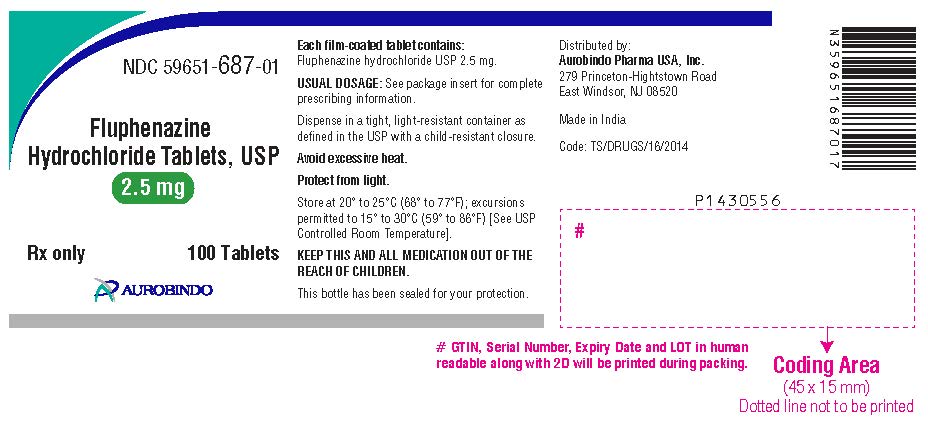
FLUPHENAZINE HYDROCHLORIDE 2.5 mg Tablet, 100-count
Other active recalls for Fluphenazine Hydrochloride (different manufacturers) — 2 · tap to view
🆔 Identity & classification
Where does this data come from?
🏭 Manufacturer & labeler
Where does this data come from?
🩺 Clinical
- Fluphenazine is an antipsychotic medication used to manage psychotic disorders — most commonly schizophrenia. It's available as tablets, an oral liquid, and injections. The long-ac...
- Fluphenazine Decanoate Injection is chemically designed to release slowly after a single shot, so one injection can keep working for up to four weeks or even longer. The regular ta...
- How is the long-acting injection different from the tablets or regular shot?
- The most common side effects involve movement — things like muscle stiffness, a restless, fidgety feeling, or tremors. These can often be managed by adjusting your dose or adding a...
Patient education
Supplement & herbal interactions
Where does this data come from?
Ask a licensed pharmacist directly — free, answered by our team.
💊 What it looks like
Where does this data come from?
🧪 Inactive Ingredients / Excipients
Inactive ingredients, also called excipients, are components of the drug product other than the active ingredient. They may include fillers, dyes, coatings, preservatives, flavors, or other formulation ingredients.
💡 Tap an ingredient (hover on desktop) to see what it is and why it’s used.
-
UNII CQ3XH3DET6
D&C Yellow No. 10 Aluminum Lake is a yellow colorant made by combining a dye with aluminum salts. It's used in medicines to add color for product identification and visual appeal.
-
UNII H77VEI93A8
A synthetic yellow dye used to color medications. It helps identify the drug and make it visually distinctive, with no effect on how the medicine works.
-
UNII 0WZ8WG20P6
Hypromellose 2910 is a plant-based cellulose derivative that acts as a thickener, binder, and film-coating agent. It helps control how quickly the medicine dissolves and protects the tablet or capsule from moisture and light.
-
UNII EWQ57Q8I5X
Lactose monohydrate is a natural sugar derived from milk. It serves as a filler and binder in tablets and capsules, helping create the proper size, texture, and consistency of the medicine.
-
UNII 70097M6I30
Magnesium stearate is a salt made from magnesium and stearic acid, a fatty substance. It's used in tablets and capsules as a lubricant and glidant to help ingredients flow smoothly during manufacturing and prevent sticking.
-
UNII OP1R32D61U
Microcrystalline cellulose is a purified form of cellulose, a natural fiber from plant sources. It acts as a binder and filler in tablets and capsules, helping hold ingredients together and give the medicine its shape and size.
-
UNII B697894SGQ
Polyethylene glycol 400 is a clear, thick liquid made from petroleum-derived polymers. It acts as a solvent and humectant in medicines, helping dissolve active ingredients and retain moisture in the formulation.
-
UNII O8232NY3SJ
A plant-based carbohydrate derived from corn kernels. It acts as a filler to add bulk, a binder to hold ingredients together, and a disintegrant to help the tablet break apart in your stomach for absorption.
-
UNII 15FIX9V2JP
Titanium dioxide is a bright white mineral powder commonly used as a colorant and opacifying agent. It makes pills and tablets white or lighter in color and helps make coatings non-transparent.
9 inactive ingredients listed in the exact product block matched to this NDC.
Where does this data come from?
ingredient classCode="IACT" elements from the exact product block matched by this NDC. Label-section narrative from DailyMed / the openFDA label index is shown separately when available.Inactive ingredient FAQ
Are inactive ingredients the same for every manufacturer?
Why might an inactive ingredient be missing?
Can inactive ingredients matter?
💲 Pricing
A drug doesn't have one price. Each row is a different public payment system, and none is what you'd pay at the counter — that depends on your insurance. The ⓘ on each row explains what it measures.
| Price system | Per ea | Per package |
|---|---|---|
| Retail pharmacies payNADAC · weekly | $0.216 | $21.58 / 100 tablets |
| Medicaid paysCMS SDUD · 12 mo | $0.5604 | $56.04 / 100 tablets |
| Medicare drug plans payPart D · Q2 2026 | $0.5833 | $58.33 / 100 tablets |
Where does this data come from?
🔁 Therapeutic equivalents
| Product | Labeler | Pack | NADAC/unit | TE | Status | Price vs. this |
|---|---|---|---|---|---|---|
| Fluphenazine Hydrochloride 2.5 mg 00527-1789-01 | Lannett | 100 tablets | $0.216 | AB | Availability likely | — |
| Fluphenazine Hydrochloride 2.5 mg 00832-6004-11 | Upsher-Smith | 100 tablets | $0.216 | AB | Availability likely | — |
| Fluphenazine Hydrochloride 2.5 mg 00904-7158-61 | Major | 1 tablet | $0.216 | AB | Availability likely | — |
| Fluphenazine Hydrochoride 2.5 mg 16571-0890-09 | Rising | 90 tablets | $0.216 | AB | Availability likely | — |
| Fluphenazine Hydrochloride 2.5 mg 24979-0137-01 | Upsher-Smith | 100 tablets | $0.216 | — | Availability likely | — |
| Fluphenazine hydrochloride 2.5 mg 27241-0254-01 | Ajanta | 100 tablets | $0.216 | AB | Availability likely | — |
| Fluphenazine Hydrochloride 2.5 mg 31722-0385-01 | Camber | 100 tablets | $0.216 | AB | Availability likely | — |
| Fluphenazine Hydrochloride 2.5 mg 43598-0035-01 | Dr. | 100 tablets | $0.216 | AB | Availability likely | — |
| Fluphenazine Hydrochloride 2.5 mg 50268-0367-15 | AvPAK | 1 tablet | $0.216 | AB | Availability likely | — |
| Fluphenazine Hydrochloride 2.5 mg 51672-4234-01 | Sun | 100 tablets | $0.216 | AB | Availability likely | — |
| Fluphenazine Hydrochloride 2.5 mgthis 59651-0687-01 | Aurobindo | 100 tablets | $0.216 | — | Availability likely | — |
| fluphenazine hydrochloride 2.5 mg 62135-0416-90 | Chartwell | 90 tablets | $0.216 | AB | Availability likely | — |
| Fluphenazine Hydrochloride 2.5 mg 62332-0789-31 | Alembic | 100 tablets | $0.216 | AB | Availability likely | — |
| Fluphenazine Hydrochloride 2.5 mg 68462-0336-01 | Glenmark | 100 tablets | $0.216 | AB | Availability likely | — |
| fluphenazine hydrochloride 2.5 mg 69238-1679-01 | Amneal | 100 tablets | $0.216 | AB | Availability likely | — |
| Fluphenazine Hydrochloride 2.5 mg 70954-0274-10 | ANI | 100 tablets | $0.216 | AB | Availability likely | — |
| Fluphenazine Hydrochloride 2.5 mg 70710-1489-01 | Zydus | 100 tablets | $0.609 | AB | FDA listed | +182% |
| Fluphenazine Hydrochloride 2.5 mg 90096-0122-01 | Zameer | 100 tablets | $0.609 | AB | FDA listed | +182% |
| Fluphenazine Hydrochloride 2.5 mg 10135-0726-01 | Marlex | 100 tablets | — | AB | FDA listed | — |
| Fluphenazine Hydrochloride 2.5 mg 46708-0789-31 | Alembic | 100 tablets | — | AB | FDA listed | — |
| Fluphenazine Hydrochloride 2.5 mg 51407-0459-01 | Golden | 100 tablets | — | AB | FDA listed | — |
| Fluphenazine Hydrochloride 2.5 mg 70771-1582-01 | Zydus | 100 tablets | — | AB | FDA listed | — |
| Fluphenazine Hydrochloride 2.5 mg 71205-0838-00 | Proficient | 100 tablets | — | — | FDA listed | — |
| Fluphenazine Hydrochloride 2.5 mg 72205-0113-05 | Novadoz | 500 tablets | — | AB | FDA listed | — |
Where does this data come from?
⏳ Availability & generic status
FDA-approved generic versions are listed, and recent pricing/market data suggests they may be available — see Therapeutic equivalents.
Where does this data come from?
🗺️ Medicaid utilization & spend
💊 Medicaid utilization by pack size
🔬 Reported adverse events (FAERS)
Top reported reactions
Age at onset
Reporter sex
Serious outcomes
Where does this data come from?
📦 Packaging — all sizes for this product
| Package NDC | Description | Per unit | Per pack | Marketing start | Status |
|---|---|---|---|---|---|
| 59651-0687-01 You're viewing this | 100 TABLET in 1 BOTTLE (59651-687-01) | $0.2158 / ea | $21.58 | 2023-08-18 | Active |
| 59651-0687-47 | 115000 TABLET in 1 BAG (59651-687-47) | — | — | — | Active |
You're viewing the smallest of 2 pack sizes for this product.
In Medicaid, this is the most-dispensed pack of this product — about 100% of fills over the last four reported quarters. See all packs ↓
Pack size FAQ
What quantity is in NDC 59651-0687-01?
What is the difference between NDC 59651-0687-01 and NDC 59651-0687-47?
What NDC number is used to bill for this package of FLUPHENAZINE HYDROCHLORIDE 2.5 mg Tablet?
Prices are the latest CMS NADAC pharmacy acquisition cost per NDC; per-pack figures are per-unit × pack quantity, shown only when the pack is denominated in the same measure NADAC prices.
🧭 About this NDC listing & data coverage
What "drug for further processing" means
FDA lists this package under the "drug for further processing" marketing category: Aurobindo Pharma Limited supplies it to other companies for further processing or repackaging (blister cards that are later repackaged or co-packaged are a common example). The units themselves are a finished dosage form — which is why pricing or Medicaid data can still appear — but this exact package code may not be the presentation a retail pharmacy dispenses.
What data is (and isn’t) available for this NDC — tap to expand
| NDC identity (package / product / labeler codes) | ✓ Available |
| Labeler | ✓ Available |
| Product & package description | ✓ Available |
| Marketing category & status | ✓ Available |
| Active ingredient / dosage form / route | ✓ Available |
| FDA label (SPL via DailyMed) | ✓ Available |
| Package photos | ✓ Available |
| Inactive ingredients (structured) | ✓ Available |
| NADAC pharmacy acquisition price (CMS) | ✓ Available |
| Orange Book / therapeutic-equivalence data | — Not published for this NDC Applies only to products approved under an NDA/ANDA; many listings are out of scope. |
| HCPCS J-code billing crosswalk | — Not published for this NDC Most self-administered / retail products have no J-code — that is normal. |
| Medicaid utilization (CMS SDUD) | ✓ Available |
Questions about this listing
Is this NDC FDA-approved?
Is the NDC printed on the package the same as the 11-digit billing NDC?
What do the three segments of this NDC mean?
Is this package still being marketed?
Does this product come in other package sizes?
Who lists this product with the FDA?
Where does this data come from?
📄 Full FDA label FDA SPL
🚨 Boxed Warning ▾
WARNING Increased Mortality in Elderly Patients with Dementia-Related Psychosis: Elderly patients with dementia-related psychosis treated with antipsychotic drugs are at an increased risk of death. Analyses of seventeen placebo-controlled trials (modal duration of 10 weeks), largely in patients taking atypical antipsychotic drugs, revealed a risk of death in drug-treated patients of between 1.6 to 1.7 times the risk of death in placebo-treated patients. Over the course of a typical 10-week controlled trial, the rate of death in drug- treated patients was about 4.5%, compared to a rate of about 2.6% in the placebo group.
Although the causes of death were varied, most of the deaths appeared to be either cardiovascular (e.g., heart failure, sudden death) or infectious (e.g., pneumonia) in nature. Observational studies suggest that, similar to atypical antipsychotic drugs, treatment with conventional antipsychotic drugs may increase mortality. The extent to which the findings of increased mortality in observational studies may be attributed to the antipsychotic drug as opposed to some characteristic(s) of the patients is not clear.
Fluphenazine hydrochloride is not approved for the treatment of patients with dementia-related psychosis (see WARNINGS ).
🎯 Indications and Usage ▾
INDICATIONS AND USAGE Fluphenazine hydrochloride tablets are indicated in the management of manifestations of psychotic disorders. Fluphenazine hydrochloride has not been shown effective in the management of behavioral complications in patients with mental retardation.
⏱️ Dosage and Administration ▾
DOSAGE AND ADMINISTRATION Depending on severity and duration of symptoms, total daily dosage for adult psychotic patients may range initially from 2.5 mg to 10 mg and should be divided and given at 6 to 8 hour intervals. The smallest amount that will produce the desired results must be carefully determined for each individual, since optimal dosage levels of this potent drug vary from patient to patient. In general, the oral dose has been found to be approximately 2 to 3 times the parenteral dose of fluphenazine.
Treatment is best instituted with a low initial dosage, which may be increased, if necessary, until the desired clinical effects are achieved. Therapeutic effect is often achieved with doses under 20 mg daily. Patients remaining severely disturbed or inadequately controlled may require upward titration of dosage.
Daily doses up to 40 mg may be necessary; controlled clinical studies have not been performed to demonstrate safety of prolonged administration of such doses. When symptoms are controlled, dosage can generally be reduced gradually to daily maintenance doses of 1 mg to 5 mg, often given as a single daily dose. Continued treatment is needed to achieve maximum therapeutic benefits; further adjustments in dosage may be necessary during the course of therapy to meet the patient’s requirements.
For psychotic patients who have been stabilized on a fixed daily dosage of orally administered fluphenazine hydrochloride dosage forms, conversion to the long-acting fluphenazine decanoate may be indicated (see package insert for fluphenazine decanoate for conversion information). For geriatric patients, the suggested starting dose is 1 mg to 2.5 mg daily, adjusted according to the response of the patient.
⛔ Contraindications ▾
CONTRAINDICATIONS Phenothiazines are contraindicated in patients with suspected or established subcortical brain damage, in patients receiving large doses of hypnotics, and in comatose or severely depressed states. The presence of blood dyscrasia or liver damage precludes the use of fluphenazine hydrochloride. Fluphenazine hydrochloride tablets are contraindicated in patients who have shown hypersensitivity to fluphenazine; cross-sensitivity to phenothiazine derivatives may occur.
⚠️ Warnings ▾
WARNINGS Increased Mortality in Elderly Patients with Dementia-Related Psychosis: Elderly patients with dementia-related psychosis treated with antipsychotic drugs are at an increased risk of death. Fluphenazine hydrochloride is not approved for the treatment of patients with dementia-related psychosis (see BOXED WARNING ). Tardive Dyskinesia: Tardive dyskinesia, a syndrome consisting of potentially irreversible, involuntary, dyskinetic movements may develop in patients treated with neuroleptic (antipsychotic) drugs.
Although the prevalence of the syndrome appears to be highest among the elderly, especially elderly women, it is impossible to rely upon prevalence estimates to predict, at the inception of neuroleptic treatment, which patients are likely to develop the syndrome. Whether neuroleptic drug products differ in their potential to cause tardive dyskinesia is unknown. Both the risk of developing the syndrome and the likelihood that it will become irreversible are believed to increase as the duration of treatment and the total cumulative dose of neuroleptic drugs administered to the patient increase.
However, the syndrome can develop, although much less commonly, after relatively brief treatment periods at low doses. There is no known treatment for established cases of tardive dyskinesia, although the syndrome may remit, partially or completely, if neuroleptic treatment is withdrawn. Neuroleptic treatment itself, however, may suppress (or partially suppress) the signs and symptoms of the syndrome and thereby may possibly mask the underlying disease process.
The effect that symptomatic suppression has upon the long-term course of the syndrome is unknown. Given these considerations, neuroleptics should be prescribed in a manner that is most likely to minimize the occurrence of tardive dyskinesia. Chronic neuroleptic treatment should generally be reserved for patients who suffer from a chronic illness that, 1) is known to respond to neuroleptic drugs, and, 2) for whom alternative, equally effective, but potentially less harmful treatments are not available or appropriate.
In patients who do require chronic treatment, the smallest dose and the shortest duration of treatment producing a satisfactory clinical response should be sought. The need for continued treatment should be reassessed periodically. If signs and symptoms of tardive dyskinesia appear in a patient on neuroleptics, drug discontinuation should be considered.
However, some patients may require treatment despite the presence of the syndrome. (For further information about the description of tardive dyskinesia and its clinical detection, please refer to the sections on PRECAUTIONS, Information for Patients and ADVERSE REACTIONS, Tardive Dyskinesia . ) Neuroleptic Malignant Syndrome (NMS): A potentially fatal symptom complex sometimes referred to as Neuroleptic Malignant Syndrome (NMS) has been reported in association with antipsychotic drugs. Clinical manifestations of NMS are hyperpyrexia, muscle rigidity, altered mental status and evidence of autonomic instability (irregular pulse or blood pressure, tachycardia, diaphoresis, and cardiac dysrhythmias).
The diagnostic evaluation of patients with this syndrome is complicated. In arriving at a diagnosis, it is important to identify cases where the clinical presentation includes both serious medical illness (e.g., pneumonia, systemic infection, etc.) and untreated or inadequately treated extrapyramidal signs and symptoms (EPS). Other important considerations in the differential diagnosis include central anticholinergic toxicity, heat stroke, drug fever and primary central nervous system (CNS) pathology.
The management of NMS should include: 1) immediate discontinuation of antipsychotic drugs and other drugs not essential to concurrent therapy, 2) intensive symptomatic treatment and medical monitoring, and, 3) treatment of any concomitant serious medical problems for which specific treatments are available. There is no…
🤒 Adverse Reactions ▾
ADVERSE REACTIONS Central Nervous System: The side effects most frequently reported with phenothiazine compounds are extrapyramidal symptoms including pseudoparkinsonism, dystonia, dyskinesia, akathisia, oculogyric crises, opisthotonos, and hyperreflexia. Most often these extrapyramidal symptoms are reversible; however, they may be persistent (see below). With any given phenothiazine derivative, the incidence and severity of such reactions depend more on individual patient sensitivity than on other factors, but dosage level and patient age are also determinants.
Extrapyramidal reactions may be alarming, and the patient should be forewarned and reassured. These reactions can usually be controlled by administration of antiparkinsonian drugs such as benztropine mesylate or intravenous caffeine and sodium benzoate injection, and by subsequent reduction in dosage. Extrapyramidal Symptoms: Dystonia: Class Effect: Symptoms of dystonia, prolonged abnormal contractions of muscle groups, may occur in susceptible individuals during the first few days of treatment.
Dystonic symptoms include: spasm of the neck muscles, sometimes progressing to tightness of the throat, swallowing difficulty, difficulty breathing, and/or protrusion of the tongue. While these symptoms can occur at low doses, they occur more frequently and with greater severity with high potency and at higher doses of first generation antipsychotic drugs. An elevated risk of acute dystonia is observed in males and younger age groups.
Tardive Dyskinesia: See WARNINGS. The syndrome is characterized by involuntary choreoathetoid movements which variously involve the tongue, face, mouth, lips, or jaw (e.g., protrusion of the tongue, puffing of cheeks, puckering of the mouth, chewing movements), trunk and extremities. The severity of the syndrome and the degree of impairment produced vary widely.
The syndrome may become clinically recognizable either during treatment, upon dosage reduction, or upon withdrawal of treatment. Early detection of tardive dyskinesia is important. To increase the likelihood of detecting the syndrome at the earliest possible time, the dosage of neuroleptic drug should be reduced periodically (if clinically possible) and the patient observed for signs of the disorder.
This maneuver is critical, since neuroleptic drugs may mask the signs of the syndrome. Other CNS Effects: Occurrences of neuroleptic malignant syndrome (NMS) have been reported in patients on neuroleptic therapy (see WARNINGS , Neuroleptic Malignant Syndrome ); leukocytosis, elevated CPK, liver function abnormalities, and acute renal failure may also occur with NMS. Drowsiness or lethargy, if they occur, may necessitate a reduction in dosage; the induction of a catatonic-like state has been known to occur with dosages of fluphenazine far in excess of the recommended amounts.
As with other phenothiazine compounds, reactivation or aggravation of psychotic processes may be encountered. Phenothiazine derivatives have been known to cause, in some patients, restlessness, excitement, or bizarre dreams. Autonomic Nervous System: Hypertension and fluctuations in blood pressure have been reported with fluphenazine hydrochloride.
Hypotension has rarely presented a problem with fluphenazine. However, patients with pheochromocytoma, cerebral vascular or renal insufficiency, or a severe cardiac reserve deficiency such as mitral insufficiency appear to be particularly prone to hypotensive reactions with phenothiazine compounds, and should therefore be observed closely when the drug is administered. If severe hypotension should occur, supportive measures including the use of intravenous vasopressor drugs should be instituted immediately.
Norepinephrine Bitartrate Injection is the most suitable drug for this purpose; epinephrine should not be used since phenothiazine derivatives have been found to reverse its action, resulting in a further lowering of blood pressure. Autonomic reactions including nausea and lo…
🔄 Drug Interactions ▾
Leukopenia, Neutropenia and Agranulocytosis: In clinical trial and postmarketing experience, events of leukopenia/neutropenia have been reported temporally related to antipsychotic agents, including fluphenazine hydrochloride. Agranulocytosis (including fatal cases) has also been reported. Possible risk factors for leukopenia/neutropenia include preexisting low white blood cell count (WBC) and history of drug induced leukopenia/neutropenia.
Patients with a preexisting low WBC or a history of drug induced leukopenia/neutropenia should have their complete blood count (CBC) monitored frequently during the first few months of therapy and should discontinue fluphenazine hydrochloride at the first sign of a decline in WBC in the absence of other causative factors. Patients with neutropenia should be carefully monitored for fever or other symptoms or signs of infection and treated promptly if such symptoms or signs occur. Patients with severe neutropenia (absolute neutrophil count <1000/mm 3 ) should discontinue fluphenazine hydrochloride and have their WBC followed until recovery.
🧬 Clinical Pharmacology ▾
CLINICAL PHARMACOLOGY Fluphenazine hydrochloride has activity at all levels of the central nervous system as well as on multiple organ systems. The mechanism whereby its therapeutic action is exerted is unknown.
📦 How Supplied / Storage and Handling ▾
HOW SUPPLIED Fluphenazine Hydrochloride Tablets, USP are available as follows: 1 mg tablets are white in color, biconvex round shaped film-coated tablet debossed with ‘FL’ on one side and ‘1’ on the other side. They are supplied as follows: Bottles of 100 NDC 59651-686-01 2.5 mg tablets are yellow in color, biconvex round shaped film-coated tablet debossed with ‘FL’ on one side and ‘2.5’ on the other side. They are supplied as follows: Bottles of 100 NDC 59651-687-01 5 mg tablets are green in color, biconvex round shaped film-coated tablet debossed with ‘FL’ on one side and ‘5’ on the other side.
They are supplied as follows: Bottles of 100 NDC 59651-688-01 Bottles of 500 NDC 59651-688-05 10 mg tablets are orange in color, biconvex round shaped film-coated tablet debossed with ‘FL’ on one side and ‘10’ on the other side. They are supplied as follows: Bottles of 100 NDC 59651-689-01 Bottles of 500 NDC 59651-689-05 Store at 20° to 25°C (68° to 77°F); excursions permitted to 15° to 30°C (59° to 86°F) [See USP Controlled Room Temperature]. Avoid excessive heat.
Protect from light. Dispense in a tight, light-resistant container as defined in the USP with a child-resistant closure. Distributed by: Aurobindo Pharma USA, Inc.
279 Princeton-Hightstown Road East Windsor, NJ 08520 Manufactured by: Aurobindo Pharma Limited Hyderabad–500 032, India Revised: 11/2024
📋 Description ▾
DESCRIPTION Fluphenazine hydrochloride is a trifluoromethyl phenothiazine derivative intended for the management of schizophrenia. The chemical designation is 4-[3-[2-(Trifluoromethyl) phenothiazin-10-yl] propyl]-1-piperazineethanol dihydrochloride. The structural formula is represented below: Fluphenazine Hydrochloride Tablets, USP, for oral administration, contain 1 mg, 2.5 mg, 5 mg, or 10 mg fluphenazine hydrochloride, USP per tablet.
Each tablet contains hypromellose, magnesium stearate, microcrystalline cellulose, polyethylene glycol, pregelatinized starch (maize), starlac (which contains lactose monohydrate and maize starch) and titanium dioxide. In addition, 1 mg tablet contains talc, 2.5 mg tablet contains D&C Yellow # 10 Aluminium Lake and FD& C Yellow # 6/sunset yellow Aluminum Lake, 5 mg tablet contains D&C Yellow # 10 Aluminium Lake, FD & C Blue # 1/Brilliant Blue FCF Aluminum Lake and FD& C Yellow # 6/sunset yellow Aluminum Lake, 10 mg tablet contains FD& C Yellow # 6/sunset yellow Aluminum Lake.
Meets USP Dissolution Test 2. str
💬 Information for Patients ▾
Information for Patients : Given the likelihood that some patients exposed chronically to neuroleptics will develop tardive dyskinesia, it is advised that all patients in whom chronic use is contemplated be given, if possible, full information about this risk. The decision to inform patients and/or their guardians must obviously take into account the clinical circumstances and the competency of the patient to understand the information provided.