
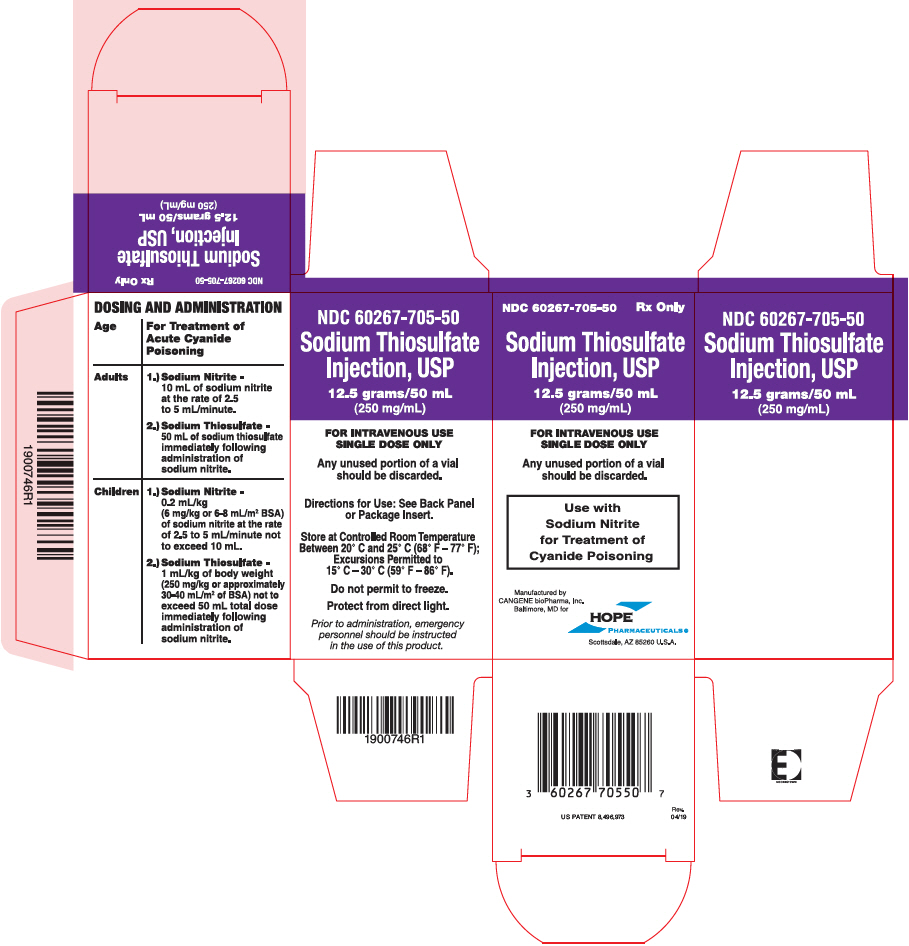
Sodium Thiosulfate 250 mg/mL Injection, Solution, 50 mL — NDC 60267-705-50 (Billing 60267-0705-50)
This is a package of 50 mL of Sodium Thiosulfate 250 mg/mL Injection, Solution from Hope Pharmaceuticals, marketed since Feb 2012 and currently FDA-listed. It is this product's only package size.
NDC database record
One package, one record: these facts belong to NDC 60267-705-50 alone.
- Record
- FDA NDC Directory package listing · Human prescription drug
- Code segments
- 60267 labeler · 705 product · 50 package
- Package marketed since
- Feb 14, 2012
- Sample package
- No — commercial package
- Listing certified through
- Dec 31, 2027
- Billing quantity
- 50 mL per package
- Barcode (UPC-A, from the NDC)
- 3 6026770550 7
- FDA record last changed
- Jul 24, 2026
Identity & classification
Regulatory identifiers FDA, NLM and CMS codes for this package
Drug-database identifiers Medi-Span GPI and First Databank GCN / HICL / AHFS classification
- GSN (GCN sequence number): 002552
- GCN: 07166
- GPI-14 (Medi-Span): 93000075002025
- HICL (First Databank): 001108
- AHFS class code: 91:00.00.00
- RxCUI (RxNorm): 237832
Where does this data come from?
- FDA openFDA NDC Directory · synced Oct 8, 2026
- FDA label on DailyMed · label index refreshed Oct 8, 2026
- RxNorm (NLM RxNav) · catalog refreshed Oct 1, 2026
- Medi-Span GPI (licensed)
- First Databank (licensed) · refreshed Oct 8, 2026
RxNorm drug class
This medicine belongs to the Antidotes class.
Where does this data come from?
- RxClass (NLM) · catalog refreshed Oct 1, 2026
Clinical
Patient education
Supplement & herbal interactions
Some supplements/herbs that may interact with Sodium Thiosulfate — tap one for details:
Where does this data come from?
- MedlinePlus (NLM) · refreshed Oct 8, 2026
- FDA label on DailyMed · label index refreshed Oct 8, 2026
Ask a licensed pharmacist directly — free, answered by our team.
Pricing
A drug doesn't have one price. Each row is a different public payment system, and none is what you'd pay at the counter — that depends on your insurance. The ⓘ on each row explains what it measures.
| Price system | Per mL | Per package |
|---|---|---|
| Retail pharmacies payNADAC · weekly | Not in the retail survey — common for institutional, discontinued, or low-volume packs. | |
| Medicaid paysCMS SDUD · 12 mo | No recent Medicaid claims on file for this NDC — rare and low-volume NDCs are suppressed in the public data. | |
| Medicare drug plans payPart D · quarterly | No Part D plan price is available for this NDC in our data. | |
| Medicare Part B allowsASP · J0209 | No ASP payment limit on file for J0209 this quarter. | |
Where does this data come from?
- CMS NADAC weekly file
- CMS ASP pricing files · refreshed Sep 20, 2026
- CMS Medicaid State Drug Utilization Data · refreshed Oct 8, 2026
- CMS Part D plan pricing files · refreshed Sep 24, 2026
- VA National Acquisition Center price file
Billing & reimbursement
Where does this data come from?
- CMS ASP NDC-HCPCS crosswalk · refreshed Sep 22, 2026
- DMEPDAC NDC-HCPCS crosswalk
- openFDA NSDE billing units · refreshed Oct 7, 2026
Packaging — all sizes for this product
| Package NDC | Description | Marketing start | Marketing end | Status |
|---|---|---|---|---|
| 60267-0705-50 You're viewing this Main listing | 50 mL in 1 VIAL, SINGLE-DOSE | 2012-02-14 | — | Active |
Therapeutic equivalents
| Product | Labeler | Pack | NADAC/unit | TE | Status | Price vs. this |
|---|---|---|---|---|---|---|
| Sodium Thiosulfate 250 mg/mLthis 60267-0705-50 | Hope | 50 ml | — | — | FDA listed | — |
Where does this data come from?
- FDA openFDA NDC Directory · synced Oct 8, 2026
- FDA Orange Book · refreshed Oct 3, 2026
- CMS NADAC weekly file
Availability & generic status
We did not find an FDA-approved generic match for this exact strength, form and route. Patent/protection dates below may affect future generic timing.
Why the date isn’t exact: Generic timing can change because patents may be challenged, settled, licensed, added, removed, or worked around with a narrower label — and FDA approval does not always mean a pharmacy can get the generic today.
🛈 What do these terms mean?
- Patent
- Legal protection listed in the Orange Book that may delay generic approval or launch. Issued by the U.S. Patent & Trademark Office.
- Substance patent
- Covers the active drug molecule itself — the hardest to design around. A generic generally can’t launch until it expires.
- Formulation (product) patent
- Covers a specific formulation or dosage form. A generic can sometimes work around it with a different formulation.
- Method-of-use patent
- A patent covering one specific approved use of the drug — not necessarily the whole molecule. A generic can sometimes launch with a “skinny label” that carves out the protected use and keeps the others.
- Skinny label
- A generic label that omits a still-patented use when the FDA allows it — letting a generic reach the market for the unprotected uses.
- Exclusivity
- FDA-granted marketing protection, separate from patents — e.g. 5-yr new chemical entity, 7-yr orphan drug, or a +6-month pediatric extension.
- Paragraph IV
- A generic applicant’s formal challenge to a listed patent. It can potentially lead to earlier generic entry, but often involves litigation or a settlement.
- RLD / RS
- Reference Listed Drug — the brand product the FDA uses as the reference for generic applications. Reference Standard — the product the FDA expects generics to compare against in bioequivalence testing.
- TE / AB rating
- FDA therapeutic-equivalence rating. An AB rating generally means the FDA considers a generic therapeutically equivalent to — and substitutable for — the brand.
- LOE (loss of exclusivity)
- The latest patent or exclusivity currently listed — the loss-of-exclusivity / latest-listed-protection date shown on this page. Paragraph-IV challenges and settlements can move the real date earlier; FDA approval and a manufacturer’s decision to market can move it later.
Built from the FDA Orange Book. The bars above are scaled to each protection’s expiry; the red LOE marker is the last one to lapse.
| Patent | Type | Use code | Expires |
|---|---|---|---|
| US 9345724 ↗ | Drug substance | U-2015 | Jul 7, 2030 |
| US 8496973 ↗ | Drug substance | U-1419 | Mar 29, 2031 |
| US 10479686 ↗ | Method of use | U-3390 | Jul 7, 2030 |
| US 11753301 ↗ | Drug substance | U-3682 | Feb 10, 2030 |
| US 9585912 ↗ | Drug substance | — | Jul 7, 2030 |
| US 12304813 ↗ | Drug product | — | Feb 10, 2030 |
Is there a generic version of SODIUM THIOSULFAT 12.5 G/50 ML?
The FDA approved a generic — why can’t I get it at my pharmacy yet?
Why do different websites show different generic release dates?
What does “FDA listed” mean?
What does a patent or protection date mean here?
What does “current Orange Book estimate” mean?
Can a generic come out before the last patent expires?
Can a generic come out after the listed dates?
What is the difference between patents and exclusivity?
Why are there multiple patent dates?
Where does this data come from?
- FDA Orange Book · refreshed Oct 3, 2026
Inactive Ingredients / Excipients
Inactive ingredients, also called excipients, are components of the drug product other than the active ingredient. They may include fillers, dyes, coatings, preservatives, flavors, or other formulation ingredients.
💡 Tap an ingredient (hover on desktop) to see what it is and why it’s used.
-
2.8 mg / 1 mL
UNII R57ZHV85D4
Boric acid is a weak acid derived from boron. In medicines, it typically serves as a buffer to help maintain the product's pH level and may act as a preservative in certain formulations.
-
UNII N762921K75
A colorless, odorless gas that makes up most of the air we breathe. In medicines, it's used as a packaging gas or propellant to protect products from oxidation and maintain freshness.
-
4.4 mg / 1 mL
UNII 660YQ98I10
Potassium chloride is a mineral salt used in medicines as a buffer and to help maintain the proper pH balance and stability of the formulation during storage and use.
-
UNII 55X04QC32I
A strong alkaline chemical used to adjust and maintain the pH balance of liquid medicines. It helps keep the medicine stable and ensures it stays effective during storage.
-
UNII 059QF0KO0R
Water is a liquid solvent that dissolves and mixes ingredients together in liquid medicines, syrups, and injections. It helps distribute the active drug evenly throughout the product.
5 inactive ingredients listed in the exact product block matched to this NDC.
Where does this data come from?
ingredient classCode="IACT" elements from the exact product block matched by this NDC. Label-section narrative from DailyMed / the openFDA label index is shown separately when available.- FDA label on DailyMed · label index refreshed Oct 8, 2026
- FDA openFDA NDC Directory · synced Oct 8, 2026
Inactive ingredient FAQ
Are inactive ingredients the same for every manufacturer?
Why might an inactive ingredient be missing?
Can inactive ingredients matter?
Manufacturer & labeler
More NDCs from Hope Pharmaceuticals labeler code 60267
Where does this data come from?
- FDA openFDA NDC Directory · synced Oct 8, 2026
- Drugs@FDA
Full prescribing information FDA SPL
🎯 Indications and Usage ▾
1 INDICATIONS AND USAGE Sodium Thiosulfate Injection is indicated for sequential use with sodium nitrite for the treatment of acute cyanide poisoning that is judged to be serious or life-threatening. When the diagnosis of cyanide poisoning is uncertain, the potential risks associated with Sodium Thiosulfate Injection should be carefully weighed against the potential benefits, especially if the patient is not in extremis. Sodium Thiosulfate Injection, an antidote, is indicated for sequential use with sodium nitrite for treatment of acute cyanide poisoning that is judged to be serious or life-threatening.
( 1 ) Use with caution if the diagnosis of cyanide poisoning is uncertain. ( 1 )
⏱️ Dosage and Administration ▾
2. DOSAGE AND ADMINISTRATION If clinical suspicion of cyanide poisoning is high, administer Sodium Thiosulfate Injection without delay and in conjunction with appropriate airway, ventilatory, and circulatory support. ( 2.1 ) The expert advice of a regional poison control center may be obtained by calling 1-800-222-1222.
( 2.1 ) Dosing : Age Intravenous Dose of Sodium Nitrite and Sodium Thiosulfate Adults 1.) Sodium Nitrite -10 mL of sodium nitrite at the rate of 2.5 to 5 mL/minute 2.) Sodium Thiosulfate - 50 mL of sodium thiosulfate immediately following administration of sodium nitrite. Children 1.) Sodium Nitrite - 0.2 mL/kg (6 mg/kg or 6-8 mL/m 2 BSA) of sodium nitrite at the rate of 2.5 to 5 mL/minute not to exceed 10 mL 2.) Sodium Thiosulfate - 1 mL/kg of body weight (250 mg/kg or approximately 30-40 mL/m 2 of BSA) not to exceed 50 mL total dose immediately following administration of sodium nitrite.
Redosing : If signs of cyanide poisoning reappear, repeat treatment using one-half the original dose of both sodium nitrite and sodium thiosulfate. ( 2.2 ) Monitoring : Blood pressure must be monitored during treatment. ( 2.2 ) Sodium thiosulfate is chemically incompatible with hydroxocobalamin and should not be administered via the same intravenous line.
(2.4)
2.1Important Dosage and Administration Instructions If clinical suspicion of cyanide poisoning is high, administer Sodium Thiosulfate Injection without delay. Comprehensive treatment of acute cyanide intoxication requires support of vital functions. Administration of sodium nitrite and sodium thiosulfate should be considered adjunctive to appropriate supportive therapies.
Airway, ventilatory and circulatory support, and oxygen administration should not be delayed in order to administer sodium nitrite and sodium thiosulfate [see Warnings and Precautions (5.1) ] . The expert advice of a regional poison control center may be obtained by calling 1-800-222-1222. Identifying Patients with Cyanide Poisoning Cyanide poisoning may result from inhalation, ingestion, or dermal exposure to various cyanide-containing compounds, including smoke from closed-space fires.
Sources of cyanide poisoning include hydrogen cyanide and its salts, cyanogenic plants, aliphatic nitriles, and prolonged exposure to sodium nitroprusside. The presence and extent of cyanide poisoning are often initially unknown. There is no widely available, rapid, confirmatory cyanide blood test.
Treatment decisions must be made on the basis of clinical history and signs and symptoms of cyanide intoxication. Table 1. Common Signs and Symptoms of Cyanide Poisoning Symptoms Signs Headache Confusion Dyspnea Chest Tightness Nausea Altered Mental Status (e.g., confusion, disorientation) Seizures or Coma Mydriasis Tachypnea/Hyperpnea (early) Bradypnea/Apnea (late) Hypertension (early)/ Hypotension (late) Cardiovascular Collapse Vomiting Plasma Lactate Concentration ≥ 8 mmol/L In some settings, panic symptoms including tachypnea and vomiting may mimic early cyanide poisoning signs.
The presence of altered mental status (e.g., confusion and disorientation) and/or mydriasis is suggestive of true cyanide poisoning although these signs can occur with other toxic exposures as well. Smoke Inhalation Not all smoke inhalation victims will have cyanide poisoning and may present with burns, trauma, and exposure to other toxic substances making a diagnosis of cyanide poisoning particularly difficult. Prior to administration of Sodium Thiosulfate Injection, smoke-inhalation victims should be assessed for the following: Exposure to fire or smoke in an enclosed area Presence of soot around the mouth, nose, or oropharynx Altered mental status Although hypotension is highly suggestive of cyanide poisoning, it is only present in a small percentage of cyanide-poisoned smoke inhalation victims.
Also indicative of cyanide poisoning is a plasma lactate concentration greater than or equal to 10 mmol/L (a value higher than that typically listed… [Excerpted — this section continues on DailyMed.]
💊 Dosage Forms and Strengths ▾
3 DOSAGE FORMS AND STRENGTHS Sodium Thiosulfate Injection consists of: One vial of sodium thiosulfate injection USP 12.5 grams/50 mL (250 mg/mL) Administration of one vial constitutes a single dose. Sodium Thiosulfate Injection consists of: One vial of sodium thiosulfate injection USP 12.5 grams/50 mL (250 mg/mL) ( 3 )
⛔ Contraindications ▾
4 CONTRAINDICATIONS None None. ( 4 )
⚠️ Warnings and Cautions ▾
5 WARNINGS AND PRECAUTIONS Sulfites: Sodium thiosulfate may contain trace impurities of sodium sulfite ( 5.1 )
5.1Sulfites Sodium thiosulfate drug product may contain trace impurities of sodium sulfite. The presence of a trace amount of sulfites in this product should not deter administration of the drug for treatment of emergency situations, even if the patient is sulfite-sensitive.
🤒 Adverse Reactions ▾
6 ADVERSE REACTIONS There have been no controlled clinical trials conducted to systematically assess the adverse events profile of sodium thiosulfate. The medical literature has reported the following adverse events in association with sodium thiosulfate administration. These adverse events were not reported in the context of controlled trials or with consistent monitoring and reporting methodologies for adverse events.
Therefore, frequency of occurrence of these adverse events cannot be assessed. Cardiovascular system: hypotension Central nervous system: headache, disorientation Gastrointestinal system: nausea, vomiting Hematological : prolonged bleeding time Body as a Whole: salty taste in mouth, warm sensation over body In humans, rapid administration of concentrated solutions or solutions not freshly prepared, and administration of large doses of sodium thiosulfate have been associated with a higher incidence of nausea and vomiting.
However, administration of 0.1 g sodium thiosulfate per pound up to a maximum of 15 g in a 10-15% solution over 10-15 minutes was associated with nausea and vomiting in 7 of 26 patients without concomitant cyanide intoxication. In a series of 11 human subjects, a single intravenous infusion of 50 mL of 50% sodium thiosulfate was associated with increases in clotting time 1-3 days after administration. However, no significant changes were observed in other hematological parameters.
Most common adverse reactions are: Hypotension, headache, disorientation ( 6 ) To report SUSPECTED ADVERSE REACTIONS, contact Hope Pharmaceuticals at 1-800-755-9595 or FDA at 1-800-FDA-1088 or www.fda.gov/medwatch .
🔄 Drug Interactions ▾
7 DRUG INTERACTIONS Formal drug interaction studies have not been conducted with Sodium Thiosulfate Injection.
👥 Use in Specific Populations ▾
8 USE IN SPECIFIC POPULATIONS Lactation : Breastfeeding not recommended. ( 8.2 ) Renal impairment : Sodium thiosulfate is substantially excreted by the kidney. The risk of toxic reactions to this drug may be greater in patients with impaired renal function. ( 8.6 ).
8.1Pregnancy Risk Summary There are no available data on Sodium Thiosulfate Injection use in pregnant women to establish a drug-associated risk for major birth defects, miscarriage, or adverse maternal or fetal outcomes. There are risks to the pregnant woman and fetus associated with untreated cyanide poisoning (see Clinical Considerations ). Therefore, if a pregnant woman has known or suspected cyanide poisoning, Sodium Thiosulfate Injection for sequential use with sodium nitrite is recommended [see Indications and Usage (1) ] .
In published animal studies, no evidence of embryotoxicity or malformations was reported when sodium thiosulfate was administered during organogenesis to pregnant mice, rats, hamsters, or rats at 0.2 to 0.9 times the human daily dose of 12.5 g for cyanide poisoning. The studies did not test doses that were comparable to the human dose for cyanide poisoning (see Data ). The estimated background risk of major birth defects and miscarriage for the indicated population is unknown.
All pregnancies have a background risk of birth defect, loss, or other adverse outcomes. In the US general population, the estimated background risk of major birth defects and miscarriage in clinically recognized pregnancies is 2 to 4% and 15 to 20%, respectively. Clinical Considerations Disease-associated maternal and/or embryo/fetal risk Cyanide readily crosses the placenta.
Cyanide poisoning is a medical emergency in pregnancy, which can be fatal for the pregnant woman and fetus if left untreated. Life-sustaining therapy should not be withheld due to pregnancy. Data Animal Data: No malformations or evidence of embryo-fetal toxicity were noted when pregnant mice, rats, hamsters, or rabbits were administered oral doses of sodium thiosulfate of up to 550, 400, 400, or 580 mg/kg, respectively during organogenesis (0.2, 0.3, 0.26, and 0.9 times the human dose of 12.5 g/60 kg person for cyanide poisoning based on body surface area).
Published studies suggest that treatment with sodium thiosulfate ameliorates the teratogenic effects of maternal cyanide poisoning in hamsters.
8.2Lactation Risk Summary There are no data on the presence of sodium thiosulfate in human or animal milk, the effects on the breastfed infant, or the effects on milk production. Cyanide and thiocyanate (which is formed when sodium thiosulfate combines with cyanide) are present in human milk. Because of the potential for serious adverse reactions in the breastfed infant, breastfeeding is not recommended during treatment with Sodium Thiosulfate Injection.
There are no data to determine when breastfeeding may be safely restarted following the administration of Sodium Thiosulfate Injection.
8.4Pediatric Use There are case reports in the medical literature of sodium nitrite in conjunction with sodium thiosulfate being administered to pediatric patients with cyanide poisoning; however, there have been no clinical studies to evaluate the safety or efficacy of sodium thiosulfate in the pediatric population. As for adult patients, dosing recommendations for pediatric patients have been based on theoretical calculations of antidote detoxifying potential, extrapolation from animal experiments, and a small number of human case reports.
8.5Geriatric Use Sodium thiosulfate is known to be substantially excreted by the kidney, and the risk of adverse reactions to this drug may be greater in patients with impaired renal function. Because elderly patients are more likely to have decreased renal function, care should be taken in dose selection, and it may be useful to monitor renal function.
8.6Renal Disease Sodium thiosulfate is known to be substantially excreted by the kidney, and the risk of toxic reactions to… [Excerpted — this section continues on DailyMed.]
🤰 Pregnancy ▾
8.1Pregnancy Risk Summary There are no available data on Sodium Thiosulfate Injection use in pregnant women to establish a drug-associated risk for major birth defects, miscarriage, or adverse maternal or fetal outcomes. There are risks to the pregnant woman and fetus associated with untreated cyanide poisoning (see Clinical Considerations ). Therefore, if a pregnant woman has known or suspected cyanide poisoning, Sodium Thiosulfate Injection for sequential use with sodium nitrite is recommended [see Indications and Usage (1) ] .
In published animal studies, no evidence of embryotoxicity or malformations was reported when sodium thiosulfate was administered during organogenesis to pregnant mice, rats, hamsters, or rats at 0.2 to 0.9 times the human daily dose of 12.5 g for cyanide poisoning. The studies did not test doses that were comparable to the human dose for cyanide poisoning (see Data ). The estimated background risk of major birth defects and miscarriage for the indicated population is unknown.
All pregnancies have a background risk of birth defect, loss, or other adverse outcomes. In the US general population, the estimated background risk of major birth defects and miscarriage in clinically recognized pregnancies is 2 to 4% and 15 to 20%, respectively. Clinical Considerations Disease-associated maternal and/or embryo/fetal risk Cyanide readily crosses the placenta.
Cyanide poisoning is a medical emergency in pregnancy, which can be fatal for the pregnant woman and fetus if left untreated. Life-sustaining therapy should not be withheld due to pregnancy. Data Animal Data: No malformations or evidence of embryo-fetal toxicity were noted when pregnant mice, rats, hamsters, or rabbits were administered oral doses of sodium thiosulfate of up to 550, 400, 400, or 580 mg/kg, respectively during organogenesis (0.2, 0.3, 0.26, and 0.9 times the human dose of 12.5 g/60 kg person for cyanide poisoning based on body surface area).
Published studies suggest that treatment with sodium thiosulfate ameliorates the teratogenic effects of maternal cyanide poisoning in hamsters.
🧒 Pediatric Use ▾
8.4Pediatric Use There are case reports in the medical literature of sodium nitrite in conjunction with sodium thiosulfate being administered to pediatric patients with cyanide poisoning; however, there have been no clinical studies to evaluate the safety or efficacy of sodium thiosulfate in the pediatric population. As for adult patients, dosing recommendations for pediatric patients have been based on theoretical calculations of antidote detoxifying potential, extrapolation from animal experiments, and a small number of human case reports.
🧓 Geriatric Use ▾
8.5Geriatric Use Sodium thiosulfate is known to be substantially excreted by the kidney, and the risk of adverse reactions to this drug may be greater in patients with impaired renal function. Because elderly patients are more likely to have decreased renal function, care should be taken in dose selection, and it may be useful to monitor renal function.
🆘 Overdosage ▾
10 OVERDOSAGE There is limited information about the effects of large doses of sodium thiosulfate in humans. Oral administration of 3 g sodium thiosulfate per day for 1-2 weeks in humans resulted in reductions in room air arterial oxygen saturation to as low as 75%, which was due to a rightward shift in the oxygen hemoglobin dissociation curve. The subjects returned to baseline oxygen saturations 1 week after discontinuation of sodium thiosulfate.
A single intravenous administration of 20 mL of 10% sodium thiosulfate reportedly did not change oxygen saturations.
🧬 Clinical Pharmacology ▾
12 CLINICAL PHARMACOLOGY
12.1Mechanism of Action Exposure to a high dose of cyanide can result in death within minutes due to the inhibition of cytochrome oxidase resulting in arrest of cellular respiration. Specifically, cyanide binds rapidly with cytochrome a3, a component of the cytochrome c oxidase complex in mitochondria. Inhibition of cytochrome a3 prevents the cell from using oxygen and forces anaerobic metabolism, resulting in lactate production, cellular hypoxia and metabolic acidosis.
In massive acute cyanide poisoning, the mechanism of toxicity may involve other enzyme systems as well. The synergy resulting from treatment of cyanide poisoning with the combination of sodium nitrite and sodium thiosulfate is the result of differences in their primary mechanisms of action as antidotes for cyanide poisoning. Sodium Nitrite Sodium nitrite is thought to exert its therapeutic effect by reacting with hemoglobin to form methemoglobin, an oxidized form of hemoglobin incapable of oxygen transport but with high affinity for cyanide.
Cyanide preferentially binds to methemoglobin over cytochrome a 3 , forming the nontoxic cyanomethemoglobin. Methemoglobin displaces cyanide from cytochrome oxidase, allowing resumption of aerobic metabolism. The chemical reaction is as follows: NaNO 2 + Hemoglobin → Methemoglobin HCN + Methemoglobin → Cyanomethemoglobin Vasodilation has also been cited to account for at least part of the therapeutic effect of sodium nitrite.
It has been suggested that sodium nitrite-induced methemoglobinemia may be more efficacious against cyanide poisoning than comparable levels of methemoglobinemia induced by other oxidants. Also, sodium nitrite appears to retain some efficacy even when the formation of methemoglobin is inhibited by methylene blue. Sodium Thiosulfate The primary route of endogenous cyanide detoxification is by enzymatic transulfuration to thiocyanate (SCN - ), which is relatively nontoxic and readily excreted in the urine.
Sodium thiosulfate is thought to serve as a sulfur donor in the reaction catalyzed by the enzyme rhodanese, thus enhancing the endogenous detoxification of cyanide in the following chemical reaction: Rhodanese Na 2 S 2 O 3 + CN - → SCN - + Na 2 SO 3 . 12. 2 Pharmacodynamics In dogs, pretreatment with sodium thiosulfate to achieve a steady state level of 2 μmol/mL increased the rate of conversion of cyanide to thiocyanate over 30-fold.
12.3Pharmacokinetics Sodium Thiosulfate Thiosulfate taken orally is not systemically absorbed. Most of the thiosulfate is oxidized to sulfate or is incorporated into endogenous sulphur compounds; a small proportion is excreted through the kidneys. Approximately 20-50% of exogenously administered thiosulfate is eliminated unchanged via the kidneys.
After an intravenous injection of 1 g sodium thiosulfate in patients, the reported serum thiosulfate half-life was approximately 20 minutes. However, after an intravenous injection of a substantially higher dose of sodium thiosulfate (150 mg/kg, that is, 9 g for 60 kg body weight) in normal healthy men, the reported elimination half-life was 182 minutes. Cyanide The apparent terminal elimination half life and volume of distribution of cyanide, in a patient treated for an acute cyanide poisoning with sodium nitrite and sodium thiosulfate administration, have been reported to be 19 hours and
0.41L/kg, respectively. Additionally, an initial elimination half life of cyanide has been reported to be approximately 1-3 hours. Thiocyanate After detoxification, in healthy subjects, thiocyanate is excreted mainly in the urine at a rate inversely proportional to creatinine clearance. In healthy subjects, the elimination half-life and volume of distribution of thiocyanate have been reported to be 2.7 days and
0.25L/kg, respectively. However, in subjects with renal insufficiency the reported elimination half life is approximately 9 days.
🧬 Mechanism of Action ▾
12.1Mechanism of Action Exposure to a high dose of cyanide can result in death within minutes due to the inhibition of cytochrome oxidase resulting in arrest of cellular respiration. Specifically, cyanide binds rapidly with cytochrome a3, a component of the cytochrome c oxidase complex in mitochondria. Inhibition of cytochrome a3 prevents the cell from using oxygen and forces anaerobic metabolism, resulting in lactate production, cellular hypoxia and metabolic acidosis.
In massive acute cyanide poisoning, the mechanism of toxicity may involve other enzyme systems as well. The synergy resulting from treatment of cyanide poisoning with the combination of sodium nitrite and sodium thiosulfate is the result of differences in their primary mechanisms of action as antidotes for cyanide poisoning. Sodium Nitrite Sodium nitrite is thought to exert its therapeutic effect by reacting with hemoglobin to form methemoglobin, an oxidized form of hemoglobin incapable of oxygen transport but with high affinity for cyanide.
Cyanide preferentially binds to methemoglobin over cytochrome a 3 , forming the nontoxic cyanomethemoglobin. Methemoglobin displaces cyanide from cytochrome oxidase, allowing resumption of aerobic metabolism. The chemical reaction is as follows: NaNO 2 + Hemoglobin → Methemoglobin HCN + Methemoglobin → Cyanomethemoglobin Vasodilation has also been cited to account for at least part of the therapeutic effect of sodium nitrite.
It has been suggested that sodium nitrite-induced methemoglobinemia may be more efficacious against cyanide poisoning than comparable levels of methemoglobinemia induced by other oxidants. Also, sodium nitrite appears to retain some efficacy even when the formation of methemoglobin is inhibited by methylene blue. Sodium Thiosulfate The primary route of endogenous cyanide detoxification is by enzymatic transulfuration to thiocyanate (SCN - ), which is relatively nontoxic and readily excreted in the urine.
Sodium thiosulfate is thought to serve as a sulfur donor in the reaction catalyzed by the enzyme rhodanese, thus enhancing the endogenous detoxification of cyanide in the following chemical reaction: Rhodanese Na 2 S 2 O 3 + CN - → SCN - + Na 2 SO 3 .
📦 How Supplied / Storage and Handling ▾
16 HOW SUPPLIED/STORAGE AND HANDLING Each Sodium Thiosulfate carton (NDC 60267-705-50) consists of the following: One 50 mL glass vial of sodium thiosulfate injection 250 mg/mL (containing 12.5 grams of sodium thiosulfate); Storage Store at controlled room temperature between 20°C and 25°C (68°F to 77°F); excursions permitted from 15 to 30°C (59 to 86°F). Protect from direct light. Do not freeze. (Note: Sodium Nitrite must be obtained separately.)
📦 Storage and Handling ▾
Storage Store at controlled room temperature between 20°C and 25°C (68°F to 77°F); excursions permitted from 15 to 30°C (59 to 86°F). Protect from direct light. Do not freeze. (Note: Sodium Nitrite must be obtained separately.)
📋 Description ▾
11 DESCRIPTION Sodium thiosulfate has the chemical name thiosulfuric acid, disodium salt, pentahydrate. The chemical formula is Na 2 S 2 O 3 ∙ 5H 2 O and the molecular weight is 248.17. The structural formula is: Structure of Sodium Thiosulfate Pentahydrate Sodium Thiosulfate Injection is a cyanide antidote which contains one 50 mL glass vial containing a 25% solution of sodium thiosulfate injection.
Sodium thiosulfate injection is a sterile aqueous solution and is intended for intravenous injection. Each vial contains 12.5 grams of sodium thiosulfate in 50 mL solution (250 mg/mL). Each mL also contains 2.8 mg boric acid and 4.4 mg of potassium chloride.
The pH of the solution is adjusted with boric acid and/or sodium hydroxide. Sodium thiosulfate injection is a clear solution with a pH between 7.5 and 9.0. Chemical Structure
💬 Information for Patients ▾
17 PATIENT COUNSELING INFORMATION Sodium Thiosulfate Injection is indicated for cyanide poisoning and in this setting, patients will likely be unresponsive or may have difficulty in comprehending counseling information. Hypotension When feasible, patients should be informed of the possibility of hypotension. Monitoring Where feasible, patients should be informed of the need for close monitoring of blood pressure and oxygenation.
Lactation Advise women that breastfeeding is not recommended during treatment with Sodium Thiosulfate Injection [see Use in Specific Populations (8.2) ].
🧬 Pharmacokinetics ▾
12.3Pharmacokinetics Sodium Thiosulfate Thiosulfate taken orally is not systemically absorbed. Most of the thiosulfate is oxidized to sulfate or is incorporated into endogenous sulphur compounds; a small proportion is excreted through the kidneys. Approximately 20-50% of exogenously administered thiosulfate is eliminated unchanged via the kidneys.
After an intravenous injection of 1 g sodium thiosulfate in patients, the reported serum thiosulfate half-life was approximately 20 minutes. However, after an intravenous injection of a substantially higher dose of sodium thiosulfate (150 mg/kg, that is, 9 g for 60 kg body weight) in normal healthy men, the reported elimination half-life was 182 minutes. Cyanide The apparent terminal elimination half life and volume of distribution of cyanide, in a patient treated for an acute cyanide poisoning with sodium nitrite and sodium thiosulfate administration, have been reported to be 19 hours and
0.41L/kg, respectively. Additionally, an initial elimination half life of cyanide has been reported to be approximately 1-3 hours. Thiocyanate After detoxification, in healthy subjects, thiocyanate is excreted mainly in the urine at a rate inversely proportional to creatinine clearance. In healthy subjects, the elimination half-life and volume of distribution of thiocyanate have been reported to be 2.7 days and
0.25L/kg, respectively. However, in subjects with renal insufficiency the reported elimination half life is approximately 9 days.
🧬 Pharmacodynamics ▾
12. 2 Pharmacodynamics In dogs, pretreatment with sodium thiosulfate to achieve a steady state level of 2 μmol/mL increased the rate of conversion of cyanide to thiocyanate over 30-fold.
🔬 Clinical Studies ▾
14 CLINICAL STUDIES Human Data The human data supporting the use of sodium thiosulfate for cyanide poisoning consists primarily of published case reports. There are no randomized controlled clinical trials. Nearly all the human data describing the use of sodium thiosulfate report its use in conjunction with sodium nitrite.
Dosing recommendations for humans have been based on theoretical calculations of antidote detoxifying potential, extrapolation from animal experiments, and a small number of human case reports. There have been no human studies to prospectively and systematically evaluate the safety of sodium thiosulfate or sodium nitrite in humans. Available human safety information is based largely on anecdotal case reports and case series of limited scope.
Animal Data (Cyanide Poisoning) THE EFFECTIVENESS OF SODIUM THIOSULFATE AND SODIUM NITRITE FOR THE TREATMENT OF ACUTE CYANIDE POISONING HAS NOT BEEN STUDIED IN HUMANS IN ADEQUATE AND WELL-CONTROLLED CLINICAL TRIALS BECAUSE INDUCING THE CONDITION IN HUMANS TO STUDY THE DRUG'S EFFICACY IS NOT ETHICAL. Due to the extreme toxicity of cyanide, experimental evaluation of treatment efficacy has predominantly been completed in animal models. The efficacy of sodium thiosulfate treatment alone to counteract the toxicity of cyanide was initially reported in 1895 by Lang.
The efficacy of amyl nitrite treatment in cyanide poisoning of the dog model was first reported in 1888 by Pedigo. Further studies in the dog model, which demonstrated the utility of sodium nitrite as a therapeutic intervention, were reported in 1929 by Mladoveanu and Gheorghiu. However, Hugs and Chen et al. independently reported upon the superior efficacy of the combination of sodium nitrite and sodium thiosulfate in 1932-1933.
Treatment consisted of intravenously administered 22.5 mg/kg (half the lethal dose) sodium nitrite or 1 g/kg sodium thiosulfate alone or in sequence immediately after subcutaneous injection of sodium cyanide into dogs over a range of doses. Subsequent doses of 10 mg/kg sodium nitrite and/or 0.5 g/kg sodium thiosulfate were administered when clinical signs or symptoms of poisoning persisted or reappeared. Either therapy administered alone increased the dose of sodium cyanide required to cause death, and when administered together, sodium nitrite and sodium thiosulfate resulted in a synergistic effect in raising the lethal dose of sodium cyanide.
The combined therapy appeared to have reduced efficacy when therapy was delayed until signs of poisoning (e.g. convulsions) appeared; however, other investigators have reported survival in dogs that were administered antidotal treatment after respiratory arrest had occurred. Animal studies conducted in other species (e.g., rat, guinea pig, sheep, pigeon and cat) have also supported a synergistic effect of intravenous sodium nitrite and sodium thiosulfate in the treatment of cyanide poisoning. While intravenous injection of sodium nitrite and sodium thiosulfate was effective in reversing the effects of lethal doses of cyanide in dogs, intramuscular injection of sodium nitrite, with or without sodium thiosulfate, was found not to be effective in the same setting.
🧪 Nonclinical Toxicology ▾
13 NONCLINICAL TOXICOLOGY
13.1Carcinogenesis, Mutagenesis, Impairment of Fertility Carcinogenesis Long-term studies in animals have not been performed to evaluate the potential carcinogenicity of sodium thiosulfate. Mutagenesis: The mutagenic potential of sodium thiosulfate has been examined in the in vitro Bacterial Reverse Mutation Assay (Ames Assay). Sodium thiosulfate was not mutagenic in the absence of metabolic activation in S. typhimurium strains TA98, TA100, TA1535, TA537, or TA1538.
Sodium thiosulfate was not mutagenic in the presence of metabolic activation in strains TA 98, TA1535, TA1537, TA1538 or E. coli strain WP2. Sodium thiosulfate was negative for clastogenic potential in the in vivo mammalian erythrocyte micronucleus assay in rats. Impairment of Fertility : Animal studies to examine the effects of sodium thiosulfate on fertility have not been conducted.
📄 Carcinogenesis, Mutagenesis, Impairment of Fertility ▾
13.1Carcinogenesis, Mutagenesis, Impairment of Fertility Carcinogenesis Long-term studies in animals have not been performed to evaluate the potential carcinogenicity of sodium thiosulfate. Mutagenesis: The mutagenic potential of sodium thiosulfate has been examined in the in vitro Bacterial Reverse Mutation Assay (Ames Assay). Sodium thiosulfate was not mutagenic in the absence of metabolic activation in S. typhimurium strains TA98, TA100, TA1535, TA537, or TA1538.
Sodium thiosulfate was not mutagenic in the presence of metabolic activation in strains TA 98, TA1535, TA1537, TA1538 or E. coli strain WP2. Sodium thiosulfate was negative for clastogenic potential in the in vivo mammalian erythrocyte micronucleus assay in rats. Impairment of Fertility : Animal studies to examine the effects of sodium thiosulfate on fertility have not been conducted.
📄 Package Label / Principal Display Panel ▾
PRINCIPAL DISPLAY PANEL - 50 mL Vial Carton NDC 60267-705-50 Rx Only Sodium Thiosulfate Injection, USP 12.5 grams/50 mL (250 mg/mL) FOR INTRAVENOUS USE SINGLE DOSE ONLY Any unused portion of a vial should be discarded. Use with Sodium Nitrite for Treatment of Cyanide Poisoning Manufactured by Pharmaceutics International, Inc. Hunt Valley, MD for HOPE PHARMACEUTICALS ® Scottsdale, AZ 85260 U.S.A. PRINCIPAL DISPLAY PANEL - 50 mL Vial Carton
Reported adverse events (FAERS)
Top reported reactions
Reporter sex
Serious outcomes
Where does this data come from?
About this NDC listing & data coverage
What data is (and isn’t) available for this NDC — tap to expand
| NDC identity (package / product / labeler codes) | ✓ Available |
| Labeler | ✓ Available |
| Product & package description | ✓ Available |
| Marketing category & status | ✓ Available |
| Active ingredient / dosage form / route | ✓ Available |
| FDA label (SPL via DailyMed) | ✓ Available |
| Package photos | ✓ Available |
| Inactive ingredients (structured) | ✓ Available |
| NADAC pharmacy acquisition price (CMS) | — Not published for this NDC CMS publishes NADAC only for NDCs reported in its retail-pharmacy survey. |
| Orange Book / therapeutic-equivalence data | ✓ Available |
| HCPCS J-code billing crosswalk | ✓ Available |
| Medicaid utilization (CMS SDUD) | — Not published for this NDC CMS reports utilization only for NDCs with Medicaid claims above its privacy threshold. |