
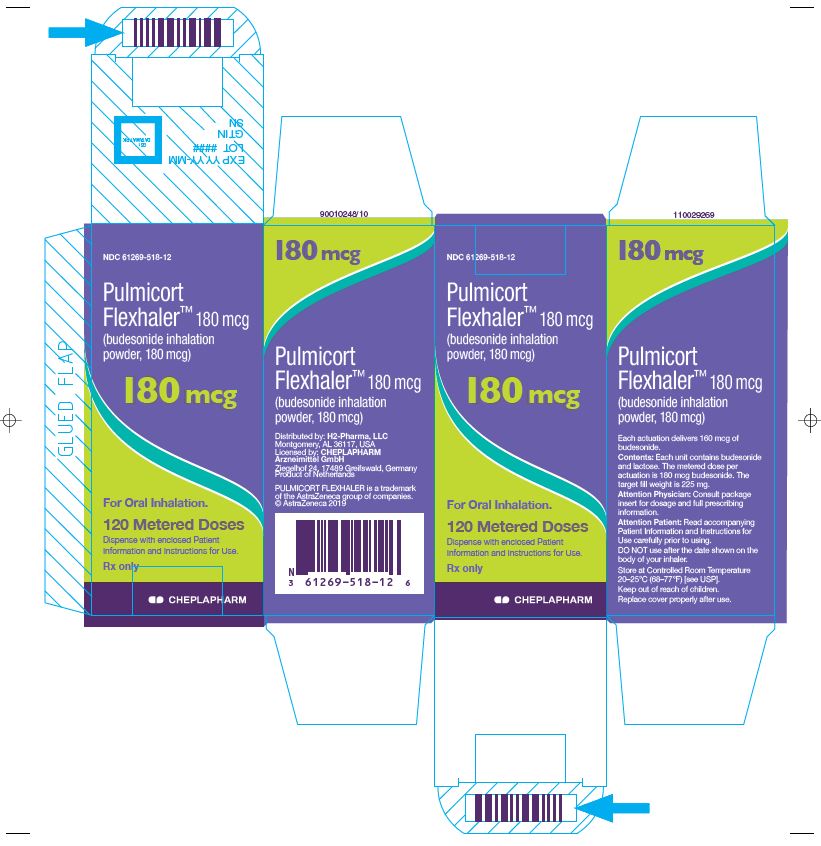
PULMICORT FLEXHALER Budesonide 180 ug Aerosol, Powder
Other active recalls for Budesonide (different manufacturers) — 3 · tap to view
🆔 Identity & classification
Where does this data come from?
🏷️ RxNorm drug class
This medicine belongs to the Corticosteroid class.
Where does this data come from?
🏭 Manufacturer & labeler
Where does this data come from?
🩺 Clinical
Budesonide is used to prevent difficulty breathing, chest tightness, wheezing, and coughing caused by asthma. Budesonide powder for oral inhalation (Pulmicort Flexhaler) is used in adults and children 6 years of age and older. Budesonide suspension (liquid) for oral inhalation (Pulmicort Respules) is used in children 12 months to 8 years of age. Budesonide belongs to a class of medications called corticosteroids. It works by decreasing swelling and irritation in the airways to allow for easier breathing.
Read the full MedlinePlus article ↗- No — and this is really important to understand. Budesonide inhalation suspension is a daily controller medication, not a rescue treatment. It works by slowly calming inflammation...
- My child has asthma. Can I use this nebulizer treatment when they're having an attack?
- You may start to notice some improvement in your child's asthma symptoms within 2 to 8 days of starting treatment. But full benefit — where the airways are as calm and well-control...
- Yes, please do — it makes a real difference. Inhaled steroids like budesonide can leave a small amount of residue in the mouth and throat, which can lead to a yeast infection calle...
Patient education
Supplement & herbal interactions
Some supplements/herbs that may interact with Budesonide — tap one for details:
Budesonide may be associated with lower levels of 8 nutrients — worth a chat with your pharmacist, not a cause for alarm.
Where does this data come from?
Ask a licensed pharmacist directly — free, answered by our team.
🧪 Inactive Ingredients / Excipients
Inactive ingredients, also called excipients, are components of the drug product other than the active ingredient. They may include fillers, dyes, coatings, preservatives, flavors, or other formulation ingredients.
💡 Tap an ingredient (hover on desktop) to see what it is and why it’s used.
-
UNII J2B2A4N98G
Lactose is a natural sugar derived from milk. In medications, it serves as a filler and binder to add bulk and help hold tablet or capsule ingredients together during manufacturing.
1 inactive ingredient listed in the exact product block matched to this NDC.
Where does this data come from?
ingredient classCode="IACT" elements from the exact product block matched by this NDC. Label-section narrative from DailyMed / the openFDA label index is shown separately when available.Inactive ingredient FAQ
Are inactive ingredients the same for every manufacturer?
Why might an inactive ingredient be missing?
Can inactive ingredients matter?
💲 Pricing
A drug doesn't have one price. Each row is a different public payment system, and none is what you'd pay at the counter — that depends on your insurance. The ⓘ on each row explains what it measures.
| Price system | Per ea | Per package |
|---|---|---|
| Retail pharmacies payNADAC · weekly | $253.497 | $30,419.64 / 120 aerosols |
| Medicaid paysCMS SDUD · 12 mo | $257.76 | $30,930.68 / 120 aerosols |
| Medicare drug plans payPart D · Q2 2026 | $187.94 | $22,552.61 / 120 aerosols |
Where does this data come from?
🔁 Therapeutic equivalents
| Product | Labeler | Pack | NADAC/unit | TE | Status | Price vs. this |
|---|---|---|---|---|---|---|
| Pulmicort Flexhaler 180 ugthis 61269-0518-12 | H2-Pharma | 1 inhaler | $253.497 | — | Availability likely | — |
| Pulmicort Flexhaler 180 ug 50090-2239-00 | A-S | 1 inhaler | — | — | FDA listed | — |
| Pulmicort Flexhaler 180 ug 50090-6796-00 | A-S | 1 inhaler | — | — | FDA listed | — |
| Pulmicort Flexhaler 180 ug 50090-7867-00 | A-S | 1 inhaler | — | — | FDA listed | — |
| Pulmicort Flexhaler 180 ug 85612-0011-01 | Rubicon | 1 inhaler | — | — | FDA listed | — |
Where does this data come from?
⏳ Availability & generic status
FDA-approved generic versions are listed, and recent pricing/market data suggests they may be available — see Therapeutic equivalents.
Where does this data come from?
🗺️ Medicaid utilization & spend
📊 Medicare Part D spend CMS · PART D · 2026 (Q1)
🔬 Reported adverse events (FAERS)
Top reported reactions
Age at onset
Reporter sex
Serious outcomes
Where does this data come from?
📦 Packaging — all sizes for this product
| Package NDC | Description | Marketing start | Status |
|---|---|---|---|
| 61269-0518-12 You're viewing this | 1 INHALER in 1 CARTON (61269-518-12) / 120 AEROSOL, POWDER in 1 INHALER | 2007-03-19 | Active |
📄 Full prescribing information FDA SPL
🎯 Indications and Usage ▾
1 INDICATIONS AND USAGE PULMICORT FLEXHALER is a corticosteroid indicated for: • Maintenance treatment of asthma as prophylactic therapy in adult and pediatric patients six years of age or older ( 1 ) Limitations of Use: Not indicated for the relief of acute bronchospasm ( 1 )
1.1Treatment of Asthma PULMICORT FLEXHALER is indicated for the maintenance treatment of asthma as prophylactic therapy in patients six years of age or older. Limitations of Use: •PULMICORT FLEXHALER is NOT indicated for the relief of acute bronchospasm.
⏱️ Dosage and Administration ▾
2 DOSAGE AND ADMINISTRATION PULMICORT FLEXHALER should be administered twice daily by the orally inhaled route only. After inhalation, the patient should rinse the mouth with water without swallowing [see Patient Counseling Information (17.1) ] . Patients should be instructed to prime PULMICORT FLEXHALER prior to its initial use, and instructed to inhale deeply and forcefully each time the device is used.
The safety and efficacy of PULMICORT FLEXHALER when administered in excess of recommended doses have not been established. After asthma stability has been achieved, it is desirable to titrate to the lowest effective dosage to reduce the possibility of side effects. For patients who do not respond adequately to the starting dose after 1-2 weeks of therapy with PULMICORT FLEXHALER, increasing the dose may provide additional asthma control.
For oral inhalation only. • Patients 18 Years of Age and Older: For patients 18 years of age and older, the recommended starting dosage is 360 mcg twice daily. In some adult patients, a starting dose of 180 mcg twice daily may be adequate. The maximum dosage should not exceed 720 mcg twice daily ( 2.1 ) • Patients 6 to 17 Years of Age: The recommended starting dosage is 180 mcg twice daily.
In some pediatric patients, a starting dose of 360 mcg twice daily may be appropriate. The maximum dosage should not exceed 360 mcg twice daily ( 2.1 )
2.1Asthma If asthma symptoms arise in the period between doses, an inhaled, short-acting beta 2 -agonist should be taken for immediate relief. Patients 18 Years of Age and Older: For patients 18 years of age and older, the recommended starting dosage is 360 mcg twice daily. In some adult patients, a starting dose of 180 mcg twice daily may be adequate.
The maximum dosage should not exceed 720 mcg twice daily. Patients 6 to 17 Years of Age: The recommended starting dosage is 180 mcg twice daily. In some pediatric patients, a starting dose of 360 mcg twice daily may be appropriate.
The maximum dosage should not exceed 360 mcg twice daily. For all patients, it is desirable to titrate to the lowest effective dose after adequate asthma stability is achieved. Improvement in asthma control following inhaled administration of budesonide can occur within 24 hours of initiation of treatment, although maximum benefit may not be achieved for 1 to 2 weeks, or longer.
Individual patients will experience a variable onset and degree of symptom relief. If a previously effective dosage regimen of PULMICORT FLEXHALER fails to provide adequate control of asthma, the therapeutic regimen should be re-evaluated and additional therapeutic options (e.g., replacing the lower strength of PULMICORT FLEXHALER with the higher strength or initiating oral corticosteroids) should be considered.
💊 Dosage Forms and Strengths ▾
3 DOSAGE FORMS AND STRENGTHS PULMICORT FLEXHALER is available as a dry powder for inhalation containing budesonide in the following 2 strengths: 90 mcg and 180 mcg. Each inhaler contains 60 or 120 actuations. FLEXHALER device containing budesonide (90 mcg or 180 mcg) as an inhalation powder ( 3 )
⛔ Contraindications ▾
4 CONTRAINDICATIONS The use of PULMICORT FLEXHALER is contraindicated in the following conditions: • Primary treatment of status asthmaticus or other acute episodes of asthma where intensive measures are required. • Severe hypersensitivity to milk proteins or any ingredients of PULMICORT FLEXHALER [see Warnings and Precautions (5.3) , Description (11) ]. • Primary treatment of status asthmaticus or other acute episodes of asthma where intensive measures are required ( 4 ) • Severe hypersensitivity to milk proteins and any of the ingredients in PULMICORT FLEXHALER ( 4 )
⚠️ Warnings and Cautions ▾
5 WARNINGS AND PRECAUTIONS • Localized Infections: Candida albicans infection of the mouth and throat may occur. Monitor patients periodically for signs of adverse effects on the oral cavity. Advise patients to rinse the mouth following inhalation ( 5.1 ) • Deterioration of Asthma or Acute Episodes: PULMICORT FLEXHALER should not be used for relief of acute symptoms.
Patients require immediate re-evaluation during rapidly deteriorating asthma ( 5.2 ) • Hypersensitivity Reactions: Anaphylaxis, rash, contact dermatitis, urticaria, angioedema, and bronchospasm have been reported with use of PULMICORT FLEXHALER. Discontinue PULMICORT FLEXHALER if such reactions occur ( 5.3 ) • Immunosuppression: Potential worsening of infections (e.g., existing tuberculosis, fungal, bacterial, viral, or parasitic infection; or ocular herpes simplex). Use with caution in patients with these infections.
More serious or even fatal course of chickenpox or measles can occur in susceptible patients ( 5.4 ) • Transferring Patients from Systemic Corticosteroid Therapy: Risk of impaired adrenal function when transferring from oral steroids. Taper patients slowly from systemic corticosteroids if transferring to PULMICORT FLEXHALER ( 5.5 ) • Hypercorticism and Adrenal Suppression: May occur with very high dosages or at the regular dosage in susceptible individuals. If such changes occur, reduce PULMICORT FLEXHALER slowly ( 5.6 ) • Reduction in Bone Mineral Density with Long term Administration: Monitor patients with major risk factors for decreased bone mineral content ( 5.8 ) • Effects on Growth: Monitor growth of pediatric patients ( 5.9 ) • Glaucoma and Cataracts: Close monitoring is warranted ( 5.10 ) • Paradoxical Bronchospasm: Discontinue PULMICORT FLEXHALER and institute alternative therapy if paradoxical bronchospasm occurs ( 5.11 ) • Eosinophilic Conditions and Churg-Strauss Syndrome: Be alert to eosinophilic conditions ( 5.12 )
5.1Local Effects In clinical studies, the development of localized infections of the mouth and pharynx with Candida albicans has occurred in patients treated with PULMICORT FLEXHALER. When such an infection develops, it should be treated with appropriate local or systemic (i.e., oral antifungal) therapy while treatment with PULMICORT FLEXHALER continues, but at times, therapy with PULMICORT FLEXHALER may need to be interrupted. Patients should rinse the mouth after inhalation of PULMICORT FLEXHALER.
5.2Deterioration of Asthma or Acute Episodes PULMICORT FLEXHALER is not a bronchodilator and is not indicated for the rapid relief of bronchospasm or other acute episodes of asthma. Patients should be instructed to contact their physician immediately if episodes of asthma not responsive to their usual doses of bronchodilators occur during the course of treatment with PULMICORT FLEXHALER. During such episodes, patients may require therapy with oral corticosteroids.
An inhaled short acting beta 2 -agonist, not PULMICORT FLEXHALER, should be used to relieve acute symptoms such as shortness of breath. When prescribing PULMICORT FLEXHALER, the physician must also provide the patient with an inhaled, short-acting beta 2 -agonist (e.g., albuterol) for treatment of acute symptoms, despite regular twice-daily (morning and evening) use of PULMICORT FLEXHALER.
5.3Hypersensitivity Reactions Including Anaphylaxis Hypersensitivity reactions including anaphylaxis, rash, contact dermatitis, urticaria, angioedema, and bronchospasm have been reported with use of PULMICORT FLEXHALER. Discontinue PULMICORT FLEXHALER if such reactions occur [see Contraindications (4) , Adverse Reactions (6) ] . PULMICORT FLEXHALER contains small amounts of lactose, which contains trace levels of milk proteins.
It is possible that cough, wheezing, or bronchospasm may occur in patients who have a severe milk protein allergy [see Contraindications (4) , Adverse Reactions (6.2) ] .
5.4 Immunosuppression Patients who are on drugs that suppress the immune system are mor…
🤒 Adverse Reactions ▾
6 ADVERSE REACTIONS Systemic and inhaled corticosteroid use may result in the following: • Candida albicans Infection [see Warnings and Precautions (5.1) ] • Hypersensitivity Including Anaphylaxis [see Warnings and Precautions (5.3) ] • Immunosuppression [see Warnings and Precautions (5.4) ] • Hypercorticism and Adrenal Suppression [see Warnings and Precautions (5.6) ] • Reduction in Bone Mineral Density [see Warnings and Precautions (5.8) ] • Growth Effects [see Warnings and Precautions (5.9) , Use in Specific Populations (8.4) ] • Glaucoma and Cataracts [see Warnings and Precautions (5.10) ] • Eosinophilic Conditions and Churg-Strauss [see Warnings and Precautions (5.12) ] Most common adverse reactions (incidence ≥1%) are nasopharyngitis, nasal congestion, pharyngitis, rhinitis allergic, viral upper respiratory tract infection, nausea, viral gastroenteritis, otitis media, oral candidiasis ( 6.1 ) To report SUSPECTED ADVERSE REACTIONS, contact the Safety Call Center at 1-888-994-8116 or FDA at 1-800-FDA-1088 or www.fda.gov/medwatch
6.1Clinical Trials Experience Because clinical trials are conducted under widely varying conditions, adverse reaction rates observed in the clinical trials of a drug cannot be directly compared to rates in the clinical trials of another drug and may not reflect the rates observed in practice. PULMICORT FLEXHALER Patients 6 years and older The incidence of common adverse reactions in Table 1 is based upon pooled data reported in patients treated with PULMICORT FLEXHALER 180 or 90 mcg in two double-blind, placebo-controlled clinical trials in which 226 patients (106 females and 120 males) with mild to moderate asthma, previously receiving bronchodilators, inhaled corticosteroids, or both, were treated with PULMICORT FLEXHALER, administered as 360 mcg twice daily for 12 weeks.
In these trials, the patients on PULMICORT FLEXHALER had a mean age of 28 years (range 6-80 years) and were predominantly Caucasian (59.7%) and Asian (31.4%). Table 1 includes all adverse reactions (regardless of investigator causality assessment) that occurred at a rate of ≥1% in the PULMICORT FLEXHALER group and more commonly than the placebo group. Table 1 - Adverse Reactions occurring at an incidence of ≥1% and more commonly than placebo in the PULMICORT FLEXHALER group: pooled data from two 12-week, double-blind, placebo-controlled clinical asthma trials in patients 6 years and older Adverse Event PULMICORT FLEXHALER 360 mcg twice daily N=226 % Placebo N=230 % Nasopharyngitis 9.3
8.3Nasal congestion 2.7
0.4Pharyngitis 2.7
1.7Rhinitis allergic 2.2
1.3Viral upper respiratory tract infection 2.2
1.3Nausea 1.8
0.9Viral gastroenteritis 1.8
0.4Otitis media 1.3
0.9Oral candidiasis 1.3
0.4Average exposure duration (days) 76.2
68.2Long-Term Safety in Patients 6 years of age and older Non-placebo controlled long-term studies in children (at doses up to 360 mcg daily), and adolescent and adult subjects (at doses up to 720 mcg daily), treated for up to one year with PULMICORT FLEXHALER, revealed a similar pattern and incidence of adverse events. PULMICORT TURBUHALER; a different PULMICORT DPI The following adverse reactions occurred in placebo-controlled clinical trials with similar or lower doses with inhaled budesonide via a different PULMICORT dry powder inhaler with an incidence of ≥1% in the budesonide group and were more common than in the placebo group: ≥3%: respiratory infection, sinusitis, headache, pain, back pain, fever. ≥1-3%: neck pain, syncope, abdominal pain, dry mouth, vomiting, weight gain, fracture, myalgia, hypertonia, migraine, ecchymosis, insomnia, infection, taste perversion, voice alteration.
Higher doses of inhaled budesonide (800 mcg twice daily) via a different PULMICORT dry powder inhaler resulted in an increased incidence of voice alteration, flu syndrome, dyspepsia, gastroenteritis, nausea, and back pain, compared with doses of 400 mcg twice daily. In a 20-week trial in adult asthmatics who previ…
🔄 Drug Interactions ▾
7 DRUG INTERACTIONS • Strong Cytochrome P450 3A4 Inhibitors (e.g., ritonavir): Use with caution. May cause increased systemic corticosteroid effects ( 5.7 , 7.1 )
7.1Inhibitors of Cytochrome P450 3A4 The main route of metabolism of corticosteroids, including budesonide, is via cytochrome P450 (CYP) isoenzyme 3A4 (CYP3A4). After oral administration of ketoconazole, a strong inhibitor of CYP3A4, the mean plasma concentration of orally administered budesonide increased. Concomitant administration of CYP3A4 may inhibit the metabolism of, and increase the systemic exposure to, budesonide.
Caution should be exercised when considering the co-administration of PULMICORT FLEXHALER with long-term ketoconazole and other known strong CYP3A4 inhibitors (e.g., ritonavir, atazanavir, clarithromycin, indinavir, itraconazole, nefazodone, nelfinavir, saquinavir, telithromycin) [see Warnings and Precautions (5.7) ] .
👥 Use in Specific Populations ▾
8 USE IN SPECIFIC POPULATIONS
8.1Pregnancy Risk Summary There are no adequate well-controlled studies of PULMICORT FLEXHALER in pregnant women. However, there are published studies on the use of budesonide, the active ingredient in PULMICORT FLEXHALER, in pregnant women. In animal reproduction studies, budesonide, administered by the subcutaneous route, caused structural abnormalities, was embryocidal, and reduced fetal weights in rats and rabbits at less than the maximum recommended human daily inhalation dose (MRHDID), but these effects were not seen in rats that received inhaled doses approximately 2 times the MRHDID ( see Data ).
Studies of pregnant women have not shown that inhaled budesonide increases the risk of abnormalities when administered during pregnancy. Experience with oral corticosteroids suggests that rodents are more prone to structural abnormalities from corticosteroid exposure than humans. The estimated background risk of major birth defects and miscarriage of the indicated populations is unknown.
In the U.S. general population, the estimated background risk of major birth defects and miscarriage in clinically recognized pregnancies is 2% to 4% and 15% to 20%, respectively. Clinical Considerations Disease-Associated Maternal and/or Embryo/Fetal risk In women with poorly or moderately controlled asthma, there is an increased risk of several perinatal adverse outcomes such as preeclampsia in the mother and prematurity, low birth weight, and small for gestational age in the neonate. Pregnant women with asthma should be closely monitored and medication adjusted as necessary to maintain optimal asthma control.
Labor or Delivery There are no well-controlled human studies that have investigated the effects of PULMICORT FLEXHALER during labor and delivery. Data Human Data Studies of pregnant women have not shown that inhaled budesonide increases the risk of abnormalities when administered during pregnancy. The results from a large population-based prospective cohort epidemiological study reviewing data from three Swedish registries covering approximately 99% of the pregnancies from 1995-1997 (i.e., Swedish Medical Birth Registry; Registry of Congenital Malformations; Child Cardiology Registry) indicate no increased risk for congenital malformations from the use of inhaled budesonide during early pregnancy.
Congenital malformations were studied in 2014 infants born to mothers reporting the use of inhaled budesonide for asthma in early pregnancy (usually 10-12 weeks after the last menstrual period), the period when most major organ malformations occur. The rate of recorded congenital malformations was similar compared to the general population rate (3.8% vs. 3.5%, respectively).
In addition, after exposure to inhaled budesonide, the number of infants born with orofacial clefts was similar to the expected number in the normal population (4 children vs. 3.3, respectively). These same data were utilized in a second study bringing the total to 2534 infants whose mothers were exposed to inhaled budesonide.
In this study, the rate of congenital malformations among infants whose mothers were exposed to inhaled budesonide during early pregnancy was not different from the rate for all newborn babies during the same period (3.6%). Animal Data In a fertility and reproduction study, male rats were subcutaneously dosed for 9 weeks and females for 2 weeks prior to pairing and throughout the mating period. Females were dosed up until weaning of their offspring.
Budesonide caused a decrease in prenatal viability and viability in the pups at birth and during lactation, along with a decrease in maternal body-weight gain, at doses 0.1 times the MRHDID (on a mcg/m 2 basis at maternal subcutaneous doses of 20 mcg/kg/day and above). No such effects were noted at a dose 0.03 times the MRHDID (on a mcg/m 2 basis at a maternal subcutaneous dose of 5 mcg/kg/day). In an embryo-fetal development study in pregnant rabbits dosed during the perio…
🤰 Pregnancy ▾
8.1Pregnancy Risk Summary There are no adequate well-controlled studies of PULMICORT FLEXHALER in pregnant women. However, there are published studies on the use of budesonide, the active ingredient in PULMICORT FLEXHALER, in pregnant women. In animal reproduction studies, budesonide, administered by the subcutaneous route, caused structural abnormalities, was embryocidal, and reduced fetal weights in rats and rabbits at less than the maximum recommended human daily inhalation dose (MRHDID), but these effects were not seen in rats that received inhaled doses approximately 2 times the MRHDID ( see Data ).
Studies of pregnant women have not shown that inhaled budesonide increases the risk of abnormalities when administered during pregnancy. Experience with oral corticosteroids suggests that rodents are more prone to structural abnormalities from corticosteroid exposure than humans. The estimated background risk of major birth defects and miscarriage of the indicated populations is unknown.
In the U.S. general population, the estimated background risk of major birth defects and miscarriage in clinically recognized pregnancies is 2% to 4% and 15% to 20%, respectively. Clinical Considerations Disease-Associated Maternal and/or Embryo/Fetal risk In women with poorly or moderately controlled asthma, there is an increased risk of several perinatal adverse outcomes such as preeclampsia in the mother and prematurity, low birth weight, and small for gestational age in the neonate. Pregnant women with asthma should be closely monitored and medication adjusted as necessary to maintain optimal asthma control.
Labor or Delivery There are no well-controlled human studies that have investigated the effects of PULMICORT FLEXHALER during labor and delivery. Data Human Data Studies of pregnant women have not shown that inhaled budesonide increases the risk of abnormalities when administered during pregnancy. The results from a large population-based prospective cohort epidemiological study reviewing data from three Swedish registries covering approximately 99% of the pregnancies from 1995-1997 (i.e., Swedish Medical Birth Registry; Registry of Congenital Malformations; Child Cardiology Registry) indicate no increased risk for congenital malformations from the use of inhaled budesonide during early pregnancy.
Congenital malformations were studied in 2014 infants born to mothers reporting the use of inhaled budesonide for asthma in early pregnancy (usually 10-12 weeks after the last menstrual period), the period when most major organ malformations occur. The rate of recorded congenital malformations was similar compared to the general population rate (3.8% vs. 3.5%, respectively).
In addition, after exposure to inhaled budesonide, the number of infants born with orofacial clefts was similar to the expected number in the normal population (4 children vs. 3.3, respectively). These same data were utilized in a second study bringing the total to 2534 infants whose mothers were exposed to inhaled budesonide.
In this study, the rate of congenital malformations among infants whose mothers were exposed to inhaled budesonide during early pregnancy was not different from the rate for all newborn babies during the same period (3.6%). Animal Data In a fertility and reproduction study, male rats were subcutaneously dosed for 9 weeks and females for 2 weeks prior to pairing and throughout the mating period. Females were dosed up until weaning of their offspring.
Budesonide caused a decrease in prenatal viability and viability in the pups at birth and during lactation, along with a decrease in maternal body-weight gain, at doses 0.1 times the MRHDID (on a mcg/m 2 basis at maternal subcutaneous doses of 20 mcg/kg/day and above). No such effects were noted at a dose 0.03 times the MRHDID (on a mcg/m 2 basis at a maternal subcutaneous dose of 5 mcg/kg/day). In an embryo-fetal development study in pregnant rabbits dosed during the period of organogenesis from gestat…
🧒 Pediatric Use ▾
8.4Pediatric Use In a 12-week pivotal study, 204 patients 6 to 17 years of age were treated with PULMICORT FLEXHALER twice daily [see Clinical Studies (14.1) ] . Efficacy results in this age group were similar to those observed in patients 18 years and older. There were no obvious differences in the type or frequency of adverse events reported in this age group compared with patients 18 years of age and older.
The safety and effectiveness of PULMICORT FLEXHALER in asthma patients below 6 years of age have not been established. Controlled clinical studies have shown that orally inhaled corticosteroids, including budesonide, may cause a reduction in growth velocity in pediatric patients. This effect has been observed in the absence of laboratory evidence of hypothalamic-pituitary-adrenal (HPA) axis suppression, suggesting that growth velocity is a more sensitive indicator of systemic corticosteroid exposure in pediatric patients than some commonly used tests of HPA-axis function.
The long-term effects of this reduction in growth velocity associated with orally inhaled corticosteroids including the impact on final adult height are unknown. The potential for “catch up” growth following discontinuation of treatment with orally inhaled corticosteroids has not been adequately studied. In a study of asthmatic children 5-12 years of age, those treated with inhaled budesonide via a different PULMICORT dry powder inhaler 200 mcg twice daily (n=311) had a 1.1-centimeter reduction in growth compared with those receiving placebo (n=418) at the end of one year; the difference between these two treatment groups did not increase further over three years of additional treatment.
By the end of four years, children treated with a different PULMICORT dry powder inhaler and children treated with placebo had similar growth velocities. Conclusions drawn from this study may be confounded by the unequal use of corticosteroids in the treatment groups and inclusion of data from patients attaining puberty during the course of the study. The administration of inhaled budesonide via a different PULMICORT dry-powder inhaler in doses up to 800 mcg/day (mean daily dose 445 mcg/day) or via a pressurized metered-dose inhaler in doses up to 1200 mcg/day (mean daily dose 620 mcg/day) to 216 pediatric patients (age 3 to 11 years) for 2 to 6 years had no significant effect on statural growth compared with non-corticosteroid therapy in 62 matched control patients.
However, the long-term effect of inhaled budesonide on growth is not fully known. The growth of pediatric patients receiving orally inhaled corticosteroids, including PULMICORT FLEXHALER, should be monitored (e.g., via stadiometry). If a child or adolescent on any corticosteroid appears to have growth suppression, the possibility that he/she is particularly sensitive to this effect should be considered.
The potential growth effects of prolonged treatment should be weighed against clinical benefits obtained. To minimize the systemic effects of inhaled corticosteroids, including PULMICORT FLEXHALER, each patient should be titrated to the lowest dose that effectively controls his/her asthma [see Dosage and Administration (2) ] .
🧓 Geriatric Use ▾
8.5Geriatric Use Of the total number of patients in controlled clinical studies receiving inhaled budesonide, 153 (n=11 treated with PULMICORT FLEXHALER) were 65 years of age or older and one was age 75 years or older. No overall differences in safety were observed between these patients and younger patients. Clinical studies did not include sufficient numbers of patients aged 65 years and over to determine differences in efficacy between elderly and younger patients.
Other reported clinical or medical surveillance experience has not identified differences in responses between the elderly and younger patients. In general, dose selection for an elderly patient should be cautious, usually starting at the low end of the dosing range, reflecting the greater frequency of decreased hepatic, renal, or cardiac function, and of concomitant disease or other drug therapy.
🆘 Overdosage ▾
10 OVERDOSAGE The potential for acute toxic effects following overdose of PULMICORT FLEXHALER is low. If used at excessive doses for prolonged periods, systemic corticosteroid effects such as hypercorticism may occur [see Warnings and Precautions (5.6) ] . Another budesonide-containing dry powder inhaler at 3200 mcg daily administered for 6 weeks caused a significant reduction (27%) in the plasma cortisol response to a 6-hour infusion of ACTH compared with placebo (+1%).
The corresponding effect of 10 mg prednisone daily was a 35% reduction in the plasma cortisol response to ACTH. Postmarketing experience showed that acute overdose of inhaled budesonide commonly remained asymptomatic. The use of excessive doses (up to 6400 mcg daily) for prolonged periods showed systemic corticosteroid effects such as hypercorticism.
🧬 Clinical Pharmacology ▾
12 CLINICAL PHARMACOLOGY
12.1Mechanism of Action Budesonide is an anti-inflammatory corticosteroid that exhibits potent glucocorticoid activity and weak mineralocorticoid activity. In standard in vitro and animal models, budesonide has approximately a 200-fold higher affinity for the glucocorticoid receptor and a 1000-fold higher topical anti-inflammatory potency than cortisol (rat croton oil ear edema assay). As a measure of systemic activity, budesonide is 40 times more potent than cortisol when administered subcutaneously and 25 times more potent when administered orally in the rat thymus involution assay.
The clinical significance of this is unknown. The activity of PULMICORT FLEXHALER is due to the parent drug, budesonide. In glucocorticoid receptor affinity studies, the 22R form was two times as active as the 22S epimer.
In vitro studies indicated that the two forms of budesonide do not interconvert. The precise mechanism of corticosteroid actions on inflammation in asthma is not known. Inflammation is an important component in the pathogenesis of asthma.
Corticosteroids have a wide range of inhibitory activities against multiple cell types (e.g., mast cells, eosinophils, neutrophils, macrophages, and lymphocytes) and mediators (e.g., histamine, eicosanoids, leukotrienes, and cytokines) involved in allergic and non-allergic-mediated inflammation. These anti-inflammatory actions of corticosteroids may contribute to their efficacy in asthma. Studies in asthmatic patients have shown a favorable ratio between topical anti-inflammatory activity and systemic corticosteroid effects over a wide range of doses of inhaled budesonide.
This is explained by a combination of a relatively high local anti-inflammatory effect, extensive first pass hepatic degradation of orally absorbed drug (85-95%), and the low potency of formed metabolites (see below).
12.2Pharmacodynamics To confirm that systemic absorption is not a significant factor in the clinical efficacy of inhaled budesonide, a clinical study in patients with asthma was performed comparing 400 mcg budesonide administered via a pressurized metered-dose inhaler with a tube spacer to 1400 mcg of oral budesonide and placebo. The study demonstrated the efficacy of inhaled budesonide but not orally administered budesonide, even though systemic budesonide exposure was comparable for both treatments, indicating that the inhaled treatment is working locally in the lung.
Thus, the therapeutic effect of conventional doses of orally inhaled budesonide are largely explained by its direct action on the respiratory tract. Inhaled budesonide has been shown to decrease airway reactivity in various challenge models, including histamine, methacholine, sodium metabisulfite, and adenosine monophosphate in patients with hyperreactive airways. The clinical relevance of these models is not certain.
Pre-treatment with inhaled budesonide 1600 mcg daily (800 mcg twice daily) for 2 weeks reduced the acute (early-phase reaction) and delayed (late-phase reaction) decrease in FEV 1 following inhaled allergen challenge. HPA Axis effects: The effects of inhaled budesonide on the hypothalamic-pituitary-adrenal (HPA) axis were studied in 905 adults and 404 pediatric patients with asthma. For most patients, the ability to increase cortisol production in response to stress, as assessed by cosyntropin (ACTH) stimulation test, remained intact with inhaled budesonide treatment at recommended doses.
For adult patients treated with 100, 200, 400, or 800 mcg twice daily for 12 weeks, 4%, 2%, 6%, and 13% respectively, had an abnormal stimulated cortisol response (peak cortisol <14.5 mcg/dL assessed by liquid chromatography following short-cosyntropin test) as compared with 8% of patients treated with placebo. Similar results were obtained in pediatric patients. In another study in adults, doses of 400, 800 and 1600 mcg of inhaled budesonide twice daily for 6 weeks were examined; 1600 mcg twice daily (twice the maximum r…
🧬 Mechanism of Action ▾
12.1Mechanism of Action Budesonide is an anti-inflammatory corticosteroid that exhibits potent glucocorticoid activity and weak mineralocorticoid activity. In standard in vitro and animal models, budesonide has approximately a 200-fold higher affinity for the glucocorticoid receptor and a 1000-fold higher topical anti-inflammatory potency than cortisol (rat croton oil ear edema assay). As a measure of systemic activity, budesonide is 40 times more potent than cortisol when administered subcutaneously and 25 times more potent when administered orally in the rat thymus involution assay.
The clinical significance of this is unknown. The activity of PULMICORT FLEXHALER is due to the parent drug, budesonide. In glucocorticoid receptor affinity studies, the 22R form was two times as active as the 22S epimer.
In vitro studies indicated that the two forms of budesonide do not interconvert. The precise mechanism of corticosteroid actions on inflammation in asthma is not known. Inflammation is an important component in the pathogenesis of asthma.
Corticosteroids have a wide range of inhibitory activities against multiple cell types (e.g., mast cells, eosinophils, neutrophils, macrophages, and lymphocytes) and mediators (e.g., histamine, eicosanoids, leukotrienes, and cytokines) involved in allergic and non-allergic-mediated inflammation. These anti-inflammatory actions of corticosteroids may contribute to their efficacy in asthma. Studies in asthmatic patients have shown a favorable ratio between topical anti-inflammatory activity and systemic corticosteroid effects over a wide range of doses of inhaled budesonide.
This is explained by a combination of a relatively high local anti-inflammatory effect, extensive first pass hepatic degradation of orally absorbed drug (85-95%), and the low potency of formed metabolites (see below).
📦 How Supplied / Storage and Handling ▾
16 HOW SUPPLIED/STORAGE AND HANDLING PULMICORT FLEXHALER is available as a dry powder for inhalation containing budesonide in the following 2 strengths: 90 mcg and 180 mcg. Each dosage strength contains 60 or 120 actuations per device. 180 mcg/dose (NDC 61269-518-12) with a target fill weight of 225 mg (range 200-250), and 90 mcg/dose, 60 dose (NDC 61269-509-06) with a target fill weight of 165 mg (range 140-190).
PULMICORT FLEXHALER consists of a number of assembled plastic details, the main parts being the dosing mechanism, the storage unit for drug substance, and the mouthpiece. The inhaler is protected by a white outer tubular cover screwed onto the inhaler. The body of the inhaler is white and the turning grip is brown.
The PULMICORT FLEXHALER inhaler cannot be refilled and should be discarded when empty. The number in the middle of the dose indicator window shows how many doses are left in the inhaler. The inhaler is empty when the number zero (“0”) on the red background reaches the middle of the window.
If the unit is used beyond the point at which the zero reaches the middle of the window, the correct amount of medication may not be obtained and the unit should be discarded. Store in a dry place at controlled room temperature 20-25°C (68-77°F) [see USP] with the cover tightly in place. Keep out of the reach of children.
📋 Description ▾
11 DESCRIPTION Budesonide, the active component of PULMICORT FLEXHALER, is a corticosteroid designated chemically as (RS)-11β, 16α, 17,21-Tetrahydroxypregna-1,4-diene-3,20-dione cyclic 16,17-acetal with butyraldehyde. Budesonide is provided as a mixture of two epimers (22R and 22S). The empirical formula of budesonide is C 25 H 34 O 6 and its molecular weight is 430.5.
Its structural formula is: Budesonide is a white to off-white, tasteless, odorless powder that is practically insoluble in water and in heptane, sparingly soluble in ethanol, and freely soluble in chloroform. Its partition coefficient between octanol and water at pH 7.4 is 1.6 x 10 3 . PULMICORT FLEXHALER is an inhalation-driven multi-dose dry powder inhaler containing a formulation of 1 mg per actuation of micronized budesonide and micronized lactose monohydrate which contains trace levels of milk proteins [see Contraindications (4) , Adverse Reactions (6.2) ] .
Each actuation of PULMICORT FLEXHALER 180 mcg delivers 160 mcg budesonide from the mouthpiece and each actuation of PULMICORT FLEXHALER 90 mcg delivers 80 mcg budesonide from the mouthpiece (based on in vitro testing at 60 L/min for 2 sec). Each PULMICORT FLEXHALER 180 mcg contains 120 actuations and each PULMICORT FLEXHALER 90 mcg contains 60 actuations. In vitro testing has shown that the dose delivery for PULMICORT FLEXHALER is dependent on airflow through the device, as evidenced by a decrease in the fine particle dose at a flow rate of 30 L/min to a value that is approximately 40-50% of that produced at 60 L/min.
At a flow rate of 40 L/min, the fine particle dose is approximately 70% of that produced at 60 L/min. Patient factors such as inspiratory flow rates will also affect the dose delivered to the lungs of patients in actual use [see Patient Information and Instructions for Use ] . In asthmatic children age 6 to 17 (N=516, FEV 1 2.29 [0.97– 4.28]) peak inspiratory flow (PIF) through PULMICORT FLEXHALER was 72.5 [19.1 – 103.6] L/min).
Inspiratory flows were not measured in the adult pivotal study. Patients should be carefully instructed on the use of this drug product to assure optimal dose delivery. structural formula
💬 Information for Patients ▾
17 PATIENT COUNSELING INFORMATION Patients being treated with PULMICORT FLEXHALER should receive the following information and instructions. This information is intended to aid the patient in the safe and effective use of the medication. It is not a disclosure of all possible adverse or intended effects.
For proper use of PULMICORT FLEXHALER and to attain maximum improvement, the patient should read and follow the accompanying FDA Approved Patient Labeling.
17.1Oral Candidiasis Patients should be advised that localized infections with Candida albicans occurred in the mouth and pharynx in some patients. If oropharyngeal candidiasis develops, it should be treated with appropriate local or systemic (i.e., oral) antifungal therapy while still continuing therapy with PULMICORT FLEXHALER, but at times therapy with PULMICORT FLEXHALER may need to be temporarily interrupted under close medical supervision. Rinsing the mouth after inhalation is advised [see Warnings and Precautions (5.1) ] .
17.2Not for Acute Symptoms PULMICORT FLEXHALER is not meant to relieve acute asthma symptoms and extra doses should not be used for that purpose. Acute symptoms should be treated with an inhaled, short-acting beta 2 -agonist such as albuterol (the physician should provide the patient with such medication and instruct the patient in how it should be used). Patients should be instructed to notify their physician immediately if they experience any of the following: Decreasing effectiveness of inhaled, short-acting beta 2 -agonists Need for more inhalations than usual of inhaled, short-acting beta 2 -agonists Significant decrease in lung function as outlined by the physician Patients should not stop therapy with PULMICORT FLEXHALER without physician/provider guidance since symptoms may recur after discontinuation [see Warnings and Precautions (5.1) ] .
17.3Hypersensitivity Including Anaphylaxis Hypersensitivity reactions including anaphylaxis, rash, contact dermatitis, urticaria, angioedema, and bronchospasm have been reported with use of PULMICORT FLEXHALER. Discontinue PULMICORT FLEXHALER if such reactions occur [see Contraindications (4) , Warnings and Precautions (5.3) , Adverse Reactions (6) ] . PULMICORT FLEXHALER contains small amounts of lactose, which contains trace levels of milk proteins.
It is possible that cough, wheezing, or bronchospasm may occur in patients who have a severe milk protein allergy [see Contraindications (4) ] .
17.4Immunosuppression Patients who are on immunosuppressant doses of corticosteroids should be warned to avoid exposure to chickenpox or measles and, if exposed, to consult their physician without delay. Patients should be informed of potential worsening of existing tuberculosis, fungal, bacterial, viral, or parasitic infections, or ocular herpes simplex [see Warnings and Precautions (5.4) ] .
17.5Hypercorticism and Adrenal Suppression Patients should be advised that PULMICORT FLEXHALER may cause systemic corticosteroid effects of hypercorticism and adrenal suppression. Additionally, patients should be instructed that deaths due to adrenal insufficiency have occurred during and after transfer from systemic corticosteroids. Patients should taper slowly from systemic corticosteroids if transferring to PULMICORT FLEXHALER [see Warnings and Precautions (5.5, 5.6) ] .
17.6Reduction in Bone Mineral Density Patients who are at an increased risk for decreased BMD should be advised that the use of corticosteroids may pose an additional risk [see Warnings and Precautions (5.8) ] .
17.7Reduced Growth Velocity Patients should be informed that orally inhaled corticosteroids, including budesonide inhalation powder, may cause a reduction in growth velocity when administered to pediatric patients. Physicians should closely follow the growth of children and adolescents taking corticosteroids by any route [see Warnings and Precautions (5.9) ] .