
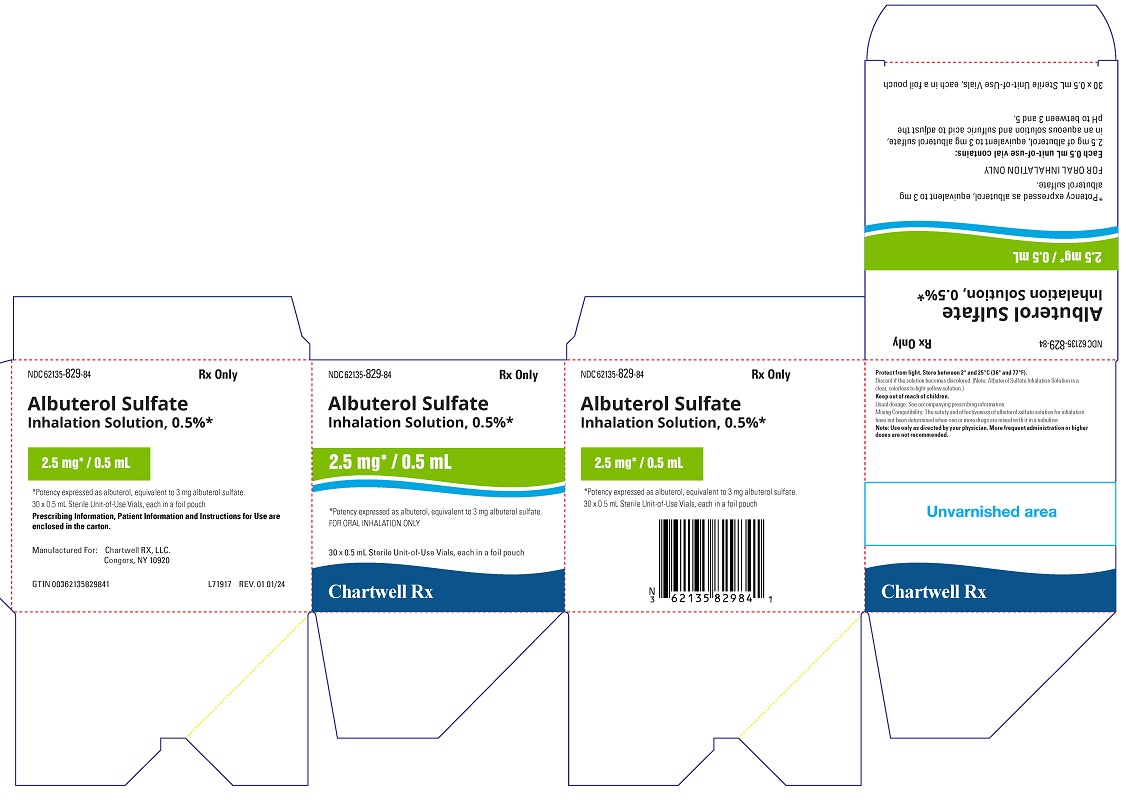
Albuterol Sulfate 2.5 mg/.5mL Solution, 30 pouches — NDC 62135-829-84 (Billing 62135-0829-84)
This is a package of 30 pouches of Albuterol Sulfate 2.5 mg/.5mL Solution from Chartwell RX, LLC., marketed since Jun 2001 and currently FDA-listed; retail pharmacies pay about $0.5270 per pouche (NADAC). It is this product's only package size.
NDC database record
One package, one record: these facts belong to NDC 62135-829-84 alone.
- Record
- FDA NDC Directory package listing · Human prescription drug
- Code segments
- 62135 labeler · 829 product · 84 package
- Package marketed since
- Jan 23, 2024
- Sample package
- No — commercial package
- Listing certified through
- Dec 31, 2026
- Billing quantity
- 30 EA per package
- Barcode (UPC-A, from the NDC)
- 3 6213582984 1
- Medicaid fills, this package
- 110 prescriptions in the last four reported quarters
- FDA record last changed
- Jul 24, 2026
Other active recalls for Albuterol Sulfate (different manufacturers) — 1 · tap to view
Identity & classification
Regulatory identifiers FDA, NLM and CMS codes for this package
Drug-database identifiers Medi-Span GPI and First Databank GCN / HICL / AHFS classification
- GSN (GCN sequence number): 054687
- GCN: 22697
- GPI-14 (Medi-Span): 44201010102520
- HICL (First Databank): 002073
- AHFS class code: 12:12.08.12
- RxCUI (RxNorm): 245314
Where does this data come from?
- FDA openFDA NDC Directory · synced Oct 8, 2026
- FDA label on DailyMed · label index refreshed Oct 6, 2026
- RxNorm (NLM RxNav) · catalog refreshed Oct 1, 2026
- Medi-Span GPI (licensed)
- First Databank (licensed) · refreshed Oct 8, 2026
RxNorm drug class
This medicine belongs to the beta2-Adrenergic Agonist class.
Where does this data come from?
- RxClass (NLM) · catalog refreshed Oct 1, 2026
Clinical
Albuterol is used to prevent and treat difficulty breathing, wheezing, shortness of breath, coughing, and chest tightness caused by lung diseases such as asthma and chronic obstructive pulmonary disease (COPD; a group of diseases that affect the lungs and airways). Albuterol inhalation aerosol and powder for oral inhalation is also used to prevent breathing difficulties during exercise. Albuterol inhalation aerosol (Proair HFA, Proventil HFA, Ventolin HFA) is used in adults and children 4 years of age and older. Albuterol powder for oral inhalation (Proair Respiclick) is used in children 12 ye...
Read the full MedlinePlus article ↗- Albuterol opens up your airways when the muscles around them tighten (bronchospasm), as in asthma. Inhalers and powders are also used before exercise to prevent exercise-induced br...
- It is breathed in through your mouth. The usual pattern for bronchospasm is a couple of puffs every 4 to 6 hours, and before exercise it is used 15 to 30 minutes ahead. Some inhale...
- The most common are throat irritation, cough, upper respiratory irritation, viral respiratory infections and muscle or bone aches. These are usually manageable. Call me or your doc...
- Get help right away if your breathing gets worse after a dose, or if you have hives, swelling of the face or throat, or chest pain or a racing heartbeat. Also call your doctor if y...
Patient education
Supplement & herbal interactions
Some supplements/herbs that may interact with Albuterol Sulfate — tap one for details:
Albuterol Sulfate may be associated with lower levels of 2 nutrients — worth a chat with your pharmacist, not a cause for alarm.
Where does this data come from?
- MedlinePlus (NLM) · refreshed Oct 1, 2026
- FDA label on DailyMed · label index refreshed Oct 6, 2026
Ask a licensed pharmacist directly — free, answered by our team.
Pricing
A drug doesn't have one price. Each row is a different public payment system, and none is what you'd pay at the counter — that depends on your insurance. The ⓘ on each row explains what it measures.
| Price system | Per ea | Per package |
|---|---|---|
| Retail pharmacies payNADAC · weekly | $0.527 | $15.81 / 30 vials |
| Medicaid paysCMS SDUD · 12 mo | $0.4969 | $14.91 / 30 vials |
| Medicare drug plans payPart D · Q2 2026 | $0.6296 | $18.89 / 30 vials |
| Medicare Part B allowsASP · J7611 | $0.232 / J7611 unit | — |
Where does this data come from?
- CMS NADAC weekly file · file of Sep 2, 2026
- CMS ASP pricing files · refreshed Sep 20, 2026
- CMS Medicaid State Drug Utilization Data · through Q1 2026
- CMS Part D plan pricing files · refreshed Sep 24, 2026
- VA National Acquisition Center price file
Billing & reimbursement
Where does this data come from?
- CMS ASP NDC-HCPCS crosswalk · refreshed Sep 22, 2026
- DMEPDAC NDC-HCPCS crosswalk
- openFDA NSDE billing units · refreshed Oct 7, 2026
Packaging — all sizes for this product
| Package NDC | Description | Marketing start | Marketing end | Status |
|---|---|---|---|---|
| 62135-0829-84 You're viewing this Main listing | 30 POUCH in 1 CARTON / 1 VIAL, SINGLE-DOSE in 1 POUCH / .5 mL in 1 VIAL, SINGLE-DOSE | 2024-01-23 | — | Active |
Therapeutic equivalents
| Product | Labeler | Pack | NADAC/unit | TE | Status | Price vs. this |
|---|---|---|---|---|---|---|
| Albuterol Sulfate 2.5 mg/.5mL 64980-0642-03 | Rising | 30 pouches | $0.516 | AN | Availability likely | save 2% |
| Albuterol Sulfate Inhalation Solution, 0.5% 2.5 mg/.5mL 76204-0027-01 | Ritedose | 30 pouches | $0.516 | AN | Availability likely | save 2% |
| Albuterol Sulfate 2.5 mg/.5mLthis 62135-0829-84 | Chartwell | 30 pouches | $0.527 | AN | Availability likely | — |
| Albuterol Sulfate 2.5 mg/.5mL 00487-9901-02 | Nephron | 1 pouch | — | AN | FDA listed | — |
Where does this data come from?
- FDA openFDA NDC Directory · synced Oct 8, 2026
- FDA Orange Book · refreshed Oct 3, 2026
- CMS NADAC weekly file · file of Sep 2, 2026
Availability & generic status
This product is an FDA-approved generic. Other versions of the same drug are listed under Therapeutic equivalents, least expensive first.
Where does this data come from?
- FDA Orange Book · refreshed Oct 3, 2026
Inactive Ingredients / Excipients
Inactive ingredients, also called excipients, are components of the drug product other than the active ingredient. They may include fillers, dyes, coatings, preservatives, flavors, or other formulation ingredients.
🧪 Avoiding an ingredient? See Albuterol inactive ingredients by manufacturer: every current product's list side by side, so you can ask your pharmacy for the version that does not list it.
💡 Tap an ingredient (hover on desktop) to see what it is and why it’s used.
-
UNII O40UQP6WCF
A strong acid used in small amounts to adjust and maintain the pH balance of a medicine, helping ensure stability and proper dissolution of the active ingredients.
-
UNII 059QF0KO0R
Water is a liquid solvent that dissolves and mixes ingredients together in liquid medicines, syrups, and injections. It helps distribute the active drug evenly throughout the product.
2 inactive ingredients listed in the exact product block matched to this NDC.
Where does this data come from?
ingredient classCode="IACT" elements from the exact product block matched by this NDC. Label-section narrative from DailyMed / the openFDA label index is shown separately when available.- FDA label on DailyMed · label index refreshed Oct 6, 2026
- FDA openFDA NDC Directory · synced Oct 8, 2026
Inactive ingredient FAQ
Are inactive ingredients the same for every manufacturer?
Why might an inactive ingredient be missing?
Can inactive ingredients matter?
Manufacturer & labeler
More NDCs from Chartwell RX, LLC. labeler code 62135
- Budesonide .5 mg/2mL Suspension NDC 62135-823-84
- Amoxicillin 250 mg Capsule NDC 62135-824-01
- Amoxicillin 500 mg Capsule NDC 62135-825-05
- Albuterol Sulfate .63 mg/3mL Solution NDC 62135-826-84
- Albuterol Sulfate 1.25 mg/3mL Solution NDC 62135-827-84
- Albuterol Sulfate 2.5 mg/3mL Solution NDC 62135-828-84
- Ipratropium Bromide .5 mg/2.5mL Solution NDC 62135-830-84
- Ipratropium Bromide and Albuterol Sulfate .5 mg/3mL; 3 mg/3mL Solution NDC 62135-831-84
- Sterile Water 1 mL/mL Injection NDC 62135-833-84
- Tinidazole 250 mg Tablet, Film Coated NDC 62135-834-20
- Tinidazole 500 mg Tablet, Film Coated NDC 62135-835-20
- Metronidazole 375 mg Capsule NDC 62135-836-50
Where does this data come from?
- FDA openFDA NDC Directory · synced Oct 8, 2026
- Drugs@FDA
Full prescribing information FDA SPL
🎯 Indications and Usage ▾
INDICATIONS AND USAGE Albuterol sulfate inhalation solution is indicated for the relief of bronchospasm in patients 12 years of age and older with reversible obstructive airway disease and acute attacks of bronchospasm.
⏱️ Dosage and Administration ▾
DOSAGE AND ADMINISTRATION The usual dosage for adults and pediatric patients 12 years of age and older is 2.5 mg of albuterol (one unit-of-use vial) administered 3 to 4 times daily by nebulization. More frequent administration or higher doses are not recommended. To administer 2.5 mg of albuterol, dilute 0.5 mL of the 0.5% solution for inhalation to a total volume of 3 mL with sterile normal saline solution and administer by nebulization.
The flow rate is regulated to suit the particular nebulizer so that albuterol sulfate inhalation solution will be delivered over approximately 5 to 15 minutes. Drug compatibility (physical and chemical), efficacy, and safety of albuterol sulfate inhalation solution when mixed with other drugs in a nebulizer have not been established. The use of albuterol sulfate inhalation solution can be continued as medically indicated to control recurring bouts of bronchospasm.
During treatment, most patients gain optimum benefit from regular use of the nebulizer solution. If a previously effective dosage regimen fails to provide the usual relief, medical advice should be sought immediately, as this is often a sign of seriously worsening asthma which would require reassessment of therapy. The nebulizer should be cleaned in accordance with the manufacturer’s instructions.
Failure to do so could lead to bacterial contamination of the nebulizer and possible infection.
⛔ Contraindications ▾
CONTRAINDICATIONS Albuterol sulfate inhalation solution is contraindicated in patients with a history of hypersensitivity to albuterol or any of its components.
⚠️ Warnings ▾
WARNINGS PARADOXICAL BRONCHOSPASM Albuterol sulfate inhalation solution can produce paradoxical bronchospasm, which may be life threatening. If paradoxical bronchospasm occurs, albuterol sulfate inhalation solution should be discontinued immediately and alternative therapy instituted. It should be recognized that paradoxical bronchospasm, when associated with inhaled formulations, frequently occurs with the first use of a new vial.
Fatalities have been reported in association with excessive use of inhaled sympathomimetic drugs and with the home use of nebulizers. It is therefore essential that the physician instruct the patient in the need for further evaluation if his/her asthma becomes worse. CARDIOVASCULAR EFFECTS Albuterol sulfate inhalation solution, like all other beta-adrenergic agonists, can produce a clinically significant cardiovascular effect in some patients as measured by pulse rate, blood pressure, and/or symptoms.
Although such effects are uncommon after administration of albuterol sulfate inhalation solution at recommended doses, if they occur, the drug may need to be discontinued. In addition, beta-agonists have been reported to produce electrocardiogram (ECG) changes, such as flattening of the T wave, prolongation of the QTc interval, and ST segment depression. The clinical significance of these findings is unknown.
Therefore, albuterol sulfate inhalation solution, like all sympathomimetic amines, should be used with caution in patients with cardiovascular disorders, especially coronary insufficiency, cardiac arrhythmias, and hypertension. DETERIORATION OF ASTHMA Asthma may deteriorate acutely over a period of hours or chronically over several days or longer. If the patient needs more doses of albuterol sulfate inhalation solution than usual, this may be a marker of destabilization of asthma and requires re-evaluation of the patient and treatment regimen, giving special consideration to the possible need for anti-inflammatory treatment, e.g., corticosteroids.
IMMEDIATE HYPERSENSITIVITY REACTIONS Immediate hypersensitivity reactions may occur after administration of albuterol, as demonstrated by rare cases of urticaria, angioedema, rash, bronchospasm, anaphylaxis, and oropharyngeal edema. USE OF ANTI-INFLAMMATORY AGENTS The use of beta-adrenergic agonist bronchodilators alone may not be adequate to control asthma in many patients. Early consideration should be given to adding anti-inflammatory agents, e.g., corticosteroids.
🤒 Adverse Reactions ▾
ADVERSE REACTIONS The results of clinical trials with albuterol sulfate inhalation solution in 135 patients showed the following side effects which were considered probably or possibly drug related: Percent Incidence of Adverse Reactions Reaction Percent Incidence n = 135 Central Nervous System Tremors 20 Dizziness 7 Nervousness 4 Headache 3 Sleeplessness 1 Gastrointestinal Nausea 4 Dyspepsia 1 Ear, nose and throat Nasal congestion 1 Pharyngitis <1 Cardiovascular Tachycardia 1 Hypertensions 1 Respiratory Bronchospasm 8 Cough 4 Bronchitis 4 Wheezing 1 No clinically relevant laboratory abnormalities related to albuterol sulfate inhalation solution were determined in these studies.
Cases of urticaria, angioedema, rash, bronchospasm, hoarseness, oropharyngeal edema, and arrythmias (including atrial fibrillation, supraventricular tachycardia, and extrasystoles) have been reported after the use of albuterol sulfate inhalation solution.
🆘 Overdosage ▾
OVERDOSAGE The expected symptoms with overdosage are those of excessive beta-adrenergic stimulation and/or occurrence or exaggeration of any of the symptoms listed under ADVERSE REACTIONS , e.g., seizures, angina, hypertension or hypotension, tachycardia with rates up to 200 beats per minute, arrhythmias, nervousness, headache, tremor, dry mouth, palpitation, nausea, dizziness, fatigue, malaise, and sleeplessness. Hypokalemia may also occur. In isolated cases in children 2 to 12 years of age, tachycardia with rates > 200 beats/min has been observed.
As with all sympathomimetic l medications, cardiac arrest and even death may be associated with abuse of albuterol sulfate inhalation solution. Treatment consists of discontinuation of albuterol sulfate inhalation solution together with appropriate symptomatic therapy. The judicious use of a cardioselective beta-receptor blocker may be considered, bearing in mind that such medication can produce bronchospasm.
There is insufficient evidence to determine if dialysis is beneficial for overdosage of albuterol sulfate inhalation solution. The oral median lethal dose of albuterol sulfate in mice is greater than 2000 mg/kg (approximately 810 times the maximum recommended daily inhalation dose for adults on an mg/ m 2 basis or approximately 300 times the maximum recommended daily inhalation dose for children on a mg/ m 2 basis). In mature rats, the subcutaneous (sc) median lethal dose of albuterol sulfate is approximately 450 mg/kg (approximately 365 times the maximum recommended daily inhalation dose for adults on an mg/ m 2 basis or approximately 135 times the maximum recommended daily inhalation dose for children on a mg/ m 2 basis).
In small young rats, the sc median lethal dose is approximately 2000 mg/kg (approximately 1600 times the maximum recommended daily inhalation dose for adults on a mg/ m 2 basis or approximately 600 times the maximum recommended daily inhalation dose for children on a mg/ m 2 basis). The inhalational median lethal dose has not been determined in animals.
🧬 Clinical Pharmacology ▾
CLINICAL PHARMACOLOGY In vitro studies and in vivo pharmacologic studies have demonstrated that albuterol has a preferential effect on beta 2-adrenergic receptors compared with isoproterenol. While it is recognized that beta 2-adrenergic receptors are the predominant receptors in bronchial smooth muscle, data indicate that there is a population of beta 2-receptors in the human heart existing in a concentration between 10% and 50%. The precise function of these receptors has not been established (see WARNINGS ).
The pharmacologic effects of beta-adrenergic agonist drugs, including albuterol, are at least in part attributable to stimulation through beta-adrenergic receptors of intracellular adenyl cyclase, the enzyme that catalyzes the conversion of adenosine triphosphate (ATP) to cyclic-3’,5’-adenosine monophosphate (cyclic AMP). Increased cyclic AMP levels are associated with relaxation of bronchial smooth muscle and inhibition of release of mediators of immediate hypersensitivity from cells, especially from mast cells. Albuterol has been shown in most controlled clinical trials to have more effect on the respiratory tract, in the form of bronchial smooth muscle relaxation, than isoproterenol at comparable doses while producing fewer cardiovascular effects.
Controlled clinical studies and other clinical experience have shown that inhaled albuterol, like other beta-adrenergic agonist drugs, can produce a significant cardiovascular effect in some patients, as measured by pulse rate, blood pressure, symptoms, and/or electrocardiographic changes. Albuterol is longer acting than isoproterenol in most patients by any route of administration because it is not a substrate for the cellular uptake processes for catecholamines nor for catechol- O -methyl transferase. Pharmacokinetics Studies in asthmatic patients have shown that less than 20% of a single albuterol dose was absorbed following either intermittent positive-pressure breathing (IPPB) or nebulizer administration; the remaining amount was recovered from the nebulizer and apparatus and expired air.
Most of the absorbed dose was recovered in the urine 24 hours after drug administration. Following a 3 mg dose of nebulized albuterol, the maximum albuterol plasma level at 0.5 hour was 2.1 ng/mL (range 1.4 to 3.2 ng/mL). There was a significant dose-related response in FEV 1 and peak flow rate.
It has been demonstrated that following oral administration of 4 mg of albuterol, the elimination half-life was 5 to 6 hours.
📦 How Supplied / Storage and Handling ▾
HOW SUPPLIED Albuterol Sulfate Inhalation Solution, 0.5%, is a clear, colorless to light yellow solution, and is supplied in plastic sterile unit-of-use vials of 0.5 mL each, supplied in individual foil pouches: NDC 62135-829-84: 30 foil pouches, each containing 1 vial, total 30 vials per carton. Storage and Handling Store between 2°C and 25°C (36°F - 77°F). Rx Only Manufactured for: Chartwell RX, LLC. Congers, NY 10920 L71918 Rev. 01/2024
📋 Description ▾
DESCRIPTION Albuterol Sulfate Inhalation Solution, 0.5% contains albuterol sulfate, USP, the racemic form of albuterol and a relatively selective beta 2-adrenergic bronchodilator (see CLINICAL PHARMACOLOGY section below). Albuterol sulfate has the chemical name α 1-[( tert -Butylamino) methyl]-4-hydroxy- m -xylene-α,α′-diol sulfate (2:1) (salt) and the following chemical structure: (C 13 H 21 NO 3 ) 2 • H 2 SO 4 Mol. Wt.
576.7 Albuterol sulfate is a white crystalline powder, soluble in water and slightly soluble in ethanol. The World Health Organization’s recommended name for albuterol base is salbutamol. Albuterol sulfate inhalation solution, 0.5%, is in concentrated form.
Dilute 0.5 mL of the solution to 3 mL with sterile normal saline solution prior to administration by nebulization (see DOSAGE AND ADMINISTRATION ). Each 0.5 mL Unit-of-Use Vial Contains: ACTIVE: 2.5 mg of albuterol (equivalent to 3 mg of albuterol sulfate, USP) in a sterile, aqueous solution; sulfuric acid is used to adjust the pH to between 3 and 5. Albuterol sulfate inhalation solution contains no sulfiting agents or preservatives.
It is supplied in 0.5 mL sterile Unit-of-Use Vials. Albuterol sulfate inhalation solution is a clear, colorless to light yellow solution. image description
⚠️ Precautions ▾
PRECAUTIONS General Albuterol, as with all sympathomimetic amines, should be used with caution in patients with cardiovascular disorders, especially coronary insufficiency, cardiac arrhythmias, and hypertension; in patients with convulsive disorders, hyperthyroidism, or diabetes mellitus; and in patients who are unusually responsive to sympathomimetic amines. Clinically significant changes in systolic and diastolic blood pressure have been seen in individual patients and could be expected to occur in some patients after use of any beta-adrenergic bronchodilator.
Large doses of intravenous albuterol have been reported to aggravate pre-existing diabetes mellitus and ketoacidosis. As with other beta-agonist medications, albuterol may produce significant hypokalemia in some patients, possibly through intracellular shunting, which has the potential to produce adverse cardiovascular effects. The decrease is usually transient, not requiring potassium supplementation.
Repeated dosing with 0.15 mg/kg of albuterol inhalation solution in children aged 5 to 17 years who were initially normokalemic has been associated with an asymptomatic decline of 20% to 25% in serum potassium levels. Information for Patients The action of albuterol sulfate inhalation solution may last up to 6 hours or longer. Albuterol sulfate inhalation solution should not be used more frequently than recommended.
Do not increase the dose or frequency of albuterol sulfate inhalation solution without consulting your physician. If you find that treatment with albuterol sulfate inhalation solution becomes less effective for symptomatic relief, your symptoms become worse, and/or you need to use the product more frequently than usual, you should seek medical attention immediately. While you are using albuterol sulfate inhalation solution, other inhaled drugs and asthma medications should be taken only as directed by your physician.
Common adverse effects include palpitations, chest pain, rapid heart rate, tremor or nervousness. If you are pregnant or nursing, contact your physician about use of albuterol sulfate inhalation solution. Effective and safe use of albuterol sulfate inhalation solution includes an understanding of the way that it should be administered.
Drug compatibility (physical and chemical), efficacy, and safety of albuterol sulfate inhalation solution when mixed with other drugs in a nebulizer have not been established. See illustrated Patient's Instructions for Use . Drug Interactions Other short-acting sympathomimetic aerosol bronchodilators or epinephrine should not be used concomitantly with albuterol.
If additional adrenergic drugs are to be administered by any route, they should be used with caution to avoid deleterious cardiovascular effects. Monoamine Oxidase Inhibitors or Tricyclic Antidepressants: Albuterol should be administered with extreme caution to patients being treated with monoamine oxidase inhibitors or tricyclic antidepressants, or within 2 weeks of discontinuation of such agents, because the action of albuterol on the vascular system may be potentiated. Beta-Blockers: Beta-adrenergic receptor blocking agents not only block the pulmonary effect of beta-agonists, such as albuterol sulfate inhalation solution, but may produce severe bronchospasm in asthmatic patients.
Therefore, patients with asthma should not normally be treated with beta blockers. However, under certain circumstances, e.g., as prophylaxis after myocardial infarction, there may be no acceptable alternatives to the use of beta-adrenergic blocking agents in patients with asthma. In this setting, cardioselective beta blockers could be considered, although they should be administered with caution.
Diuretics: The ECG changes and/or hypokalemia that may result from the administration of nonpotassium-sparing diuretics (such as loop or thiazide diuretics) can be acutely worsened by beta-agonists, especially when the recommended dose of the beta-agonist is exceeded. Although the cl… [Excerpted — this section continues on DailyMed.]
🔬 Clinical Studies ▾
CLINICAL STUDIES In controlled clinical trials in adults, most patients exhibited an onset of improvement in pulmonary function within 5 minutes as determined by FEV 1 . FEV 1 measurements also showed that the maximum average improvement in pulmonary function usually occurred at approximately 1 hour following inhalation of 2.5 mg of albuterol by compressor-nebulizer and remained close to peak for 2 hours. Clinically significant improvement in pulmonary function (defined as maintenance of a 15% or more increase in FEV 1 over baseline values) continued for 3 to 4 hours in most patients and in some patients continued up to 6 hours.
Published reports of trials in asthmatic children aged 3 years or older have demonstrated significant improvement in either FEV 1 or PEFR within 2 to 20 minutes following single doses of albuterol inhalation solution. An increase of 15% or more in baseline FEV 1 has been observed in children aged 5 to 11 years up to 6 hours after treatment with doses of 0.10 mg/kg or higher of albuterol inhalation solution. Single doses of 3, 4, or 10 mg resulted in improvement in baseline PEFR that was comparable in extent and duration to a 2 mg dose, but doses above 3 mg were associated with heart rate increases of more than 10%.
📄 Patient Package Insert ▾
Patient Package Insert Note: The Albuterol Sulfate Inhalation Solution is concentrated and must be diluted. Read complete instructions carefully before using. Note: Use only as directed by your physician.
More frequent administration or higher doses are not recommended. Mixing Compatibility: The safety and effectiveness of Albuterol sulfate solution for inhalation have not been determined when one or more drugs are mixed with it in a nebulizer. Store Albuterol Sulfate Inhalation Solution, 0.5%, between 2° and 25° C (36° and 77° F).
INSTRUCTIONS FOR USE Twist open the top of one Albuterol Sulfate Inhalation Solution unit-of-use container (Figure 1). 2. Squeeze the solution into the nebulizer reservoir through the appropriate opening (Figure 2).
3. Add 2.5 mL of diluting fluid – sterile normal saline solution (as your doctor has directed). 4.
Gently swirl the nebulizer to mix the contents and connect it with the mouthpiece or face mask (Figure 3). 5. Connect the nebulizer to the compressor.
6. Sit in a comfortable, upright position; place the mouthpiece in your mouth (Figure 4) (or put on the face mask); and turn the compressor on. 7.
Breathe as calmly, deeply and evenly as possible until no more mist is formed in the nebulizer chamber (about 5 to 15 minutes). At this point, the treatment is finished. 8.
Clean the nebulizer (see manufacturer’s instructions). Failure to clean the nebulizer in accordance with the manufacturer’s instructions could lead to bacterial contamination of the nebulizer, and possible infection. L71918 Rev.
01/2024 image description image description image description image description
📄 Package Label / Principal Display Panel ▾
PACKAGE LABEL.PRINCIPAL DISPLAY PANEL Albuterol Sulfate Inhalation Solution, 0.5%, 2.5mg* / 0.5 mL - 62135-829-84 - Carton - Label image description