
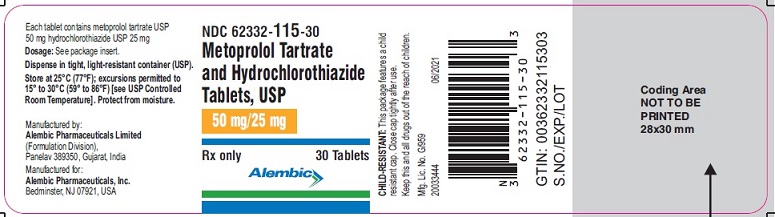
NDC 62332-0115-91: Metoprolol Tartrate and Hydrochlorothiazide 50 mg; 25 mg Tablet, Bottle of 1,000
This is a package of 1,000 tablets of Metoprolol Tartrate and Hydrochlorothiazide 50 mg; 25 mg Tablet from Alembic Pharmaceuticals Inc., first listed with the FDA Oct 2015 and currently FDA-listed.
NDC Database Record
One package, one record: these facts belong to NDC 62332-115-91 alone.
- Record
- FDA NDC Directory package listing · Human prescription drug
- Code segments
- 62332 labeler · 115 product · 91 package
- Package marketed since
- Oct 15, 2015
- Sample package
- No — commercial package
- Listing certified through
- Dec 31, 2027
- Barcode (UPC)
- 0362332115303
- FDA record last changed
- Nov 12, 2026
Identity & Classification
Regulatory identifiers FDA, NLM and CMS codes for this package
Drug-database identifiers Medi-Span GPI and First Databank GCN / HICL / AHFS classification
- GSN (GCN sequence number): 000413
- GCN: 51550
- GPI-14 (Medi-Span): 36992002200310
- HICL (First Databank): 000143
- AHFS class code: 12:16.08.08
- RxCUI (RxNorm): 866479
Where does this data come from?
- FDA openFDA NDC Directory · synced Nov 26, 2026
- FDA label on DailyMed · label index refreshed Nov 26, 2026
- RxNorm (NLM RxNav) · catalog refreshed Nov 26, 2026
- Medi-Span GPI (licensed)
- First Databank (licensed) · refreshed Nov 26, 2026
RxNorm Drug Class
This medicine belongs to the Thiazide Diuretic class.
Where does this data come from?
- RxClass (NLM) · catalog refreshed Nov 26, 2026
Clinical
Hydrochlorothiazide is used alone or in combination with other medications to treat high blood pressure. Hydrochlorothiazide is used to treat edema (fluid retention; excess fluid held in body tissues) caused by various medical problems, including heart, kidney, and liver disease and to treat edema caused by using certain medications including estrogen and corticosteroids. Hydrochlorothiazide is in a class of medications called diuretics ('water pills'). It works by causing the kidneys to get rid of unneeded water and salt from the body into the urine. High blood pressure is a common condition...
Read the full MedlinePlus article ↗Patient education
Supplement & herbal interactions
Where does this data come from?
- MedlinePlus (NLM) · refreshed Nov 26, 2026
- FDA label on DailyMed · label index refreshed Nov 26, 2026
Ask a licensed pharmacist directly — free, answered by our team.
Pricing
A drug doesn't have one price. Each row is a different public payment system, and none is what you'd pay at the counter — that depends on your insurance. The ⓘ on each row explains what it measures.
| Price system | Per each | Per package |
|---|---|---|
| Retail pharmacies payNADAC · weekly | Not in the retail survey — common for institutional, discontinued, or low-volume packs. | |
| Medicaid paysCMS SDUD · 12 mo | No recent Medicaid claims on file for this NDC — rare and low-volume NDCs are suppressed in the public data. | |
| Medicare drug plans payPart D · Q2 2026 | $0.6464 | $646.40 / 1000 tablets |
Where does this data come from?
- CMS NADAC weekly file
- CMS ASP pricing files · refreshed Nov 20, 2026
- CMS Medicaid State Drug Utilization Data · refreshed Nov 28, 2026
- CMS Part D plan pricing files · refreshed Nov 24, 2026
- VA National Acquisition Center price file
Packaging — All Sizes for This Product
| Package NDC | Description | Per unit | Per pack | Marketing start | Marketing end | Status |
|---|---|---|---|---|---|---|
| 62332-0115-30 62332-115-30 | 30 TABLET in 1 BOTTLE | — | — | 2015-10-15 | — | Active |
| 62332-0115-31 62332-115-31 Main listing | 100 TABLET in 1 BOTTLE | $0.9346 / ea | $93.46 | 2015-10-15 | — | Active |
| 62332-0115-91 You're viewing this | 1000 TABLET in 1 BOTTLE | — | — | 2015-10-15 | — | Active |
You're viewing the largest of 3 pack sizes for this product.
This pack shows little to no recent Medicaid volume — the 100 tablets pack carries most fills. See all packs ↓
Pack size FAQ
What quantity is in this package?
How does this package differ from NDC 62332-0115-30?
What NDC number is used to bill for this package of Metoprolol Tartrate and Hydrochlorothiazide 50 mg; 25 mg Tablet?
Prices are the latest CMS NADAC pharmacy acquisition cost per NDC; per-pack figures are per-unit × pack quantity, shown only when the pack is denominated in the same measure NADAC prices.
Therapeutic Equivalents
| Product | Labeler | Pack | NADAC/unit | TE | Status | Price vs. this |
|---|---|---|---|---|---|---|
| Metoprolol Tartrate and Hydrochlorothiazide 50 mg/1; 25 mg 00378-0424-01 | Mylan | 100 tablets | $0.935 | AB | Availability likely | — |
| Metoprolol Tartrate And Hydrochlorothiazide 50 mg/1; 25 mg 27241-0301-01 | Ajanta | 100 tablets | $0.935 | AB | Availability likely | — |
| Metoprolol Tartrate and Hydrochlorothiazide 50 mg/1; 25 mg 46708-0115-01 | Alembic | 1000 tablets | — | AB | FDA listed | — |
| Metoprolol Tartrate and Hydrochlorothiazide 50 mg/1; 25 mgthis 62332-0115-91 | Alembic | 1000 tablets | — | AB | FDA listed | — |
| Metoprolol Tartrate and Hydrochlorothiazide 50 mg/1; 25 mg 62756-0370-08 | Sun | 100 tablets | — | — | FDA listed | — |
Where does this data come from?
- FDA openFDA NDC Directory · synced Nov 26, 2026
- FDA Orange Book · refreshed Nov 6, 2026
- CMS NADAC weekly file
Availability & Generic Status
This product is an FDA-approved generic. Other versions of the same drug are listed under Therapeutic equivalents, least expensive first.
Where does this data come from?
- FDA Orange Book · refreshed Nov 6, 2026
What It Looks Like
Where does this data come from?
- FDA label on DailyMed · label index refreshed Nov 26, 2026
Inactive Ingredients / Excipients
Inactive ingredients, also called excipients, are components of the drug product other than the active ingredient. They may include fillers, dyes, coatings, preservatives, flavors, or other formulation ingredients.
Tap an ingredient (hover on desktop) to see what it is and why it’s used.
-
UNII 3SY5LH9PMK
Anhydrous lactose is a milk sugar with no water content. It acts as a filler and binder in tablets and capsules, adding bulk and helping ingredients stick together.
-
UNII 70097M6I30
Magnesium stearate is a salt made from magnesium and stearic acid, a fatty substance. It's used in tablets and capsules as a lubricant and glidant to help ingredients flow smoothly during manufacturing and prevent sticking.
-
UNII OP1R32D61U
Microcrystalline cellulose is a purified form of cellulose, a natural fiber from plant sources. It acts as a binder and filler in tablets and capsules, helping hold ingredients together and give the medicine its shape and size.
-
UNII FZ989GH94E
Povidone is a synthetic polymer made from a plastic-like material. It acts as a binder to hold tablet ingredients together and as a disintegrant to help the tablet break apart in your stomach so the medicine can be absorbed.
-
UNII ETJ7Z6XBU4
Silicon dioxide is a naturally occurring mineral used as a glidant and anti-caking agent. It helps powder ingredients flow smoothly and prevents clumping during manufacturing and storage.
-
UNII 5856J3G2A2
A starch-based powder made from potatoes and processed with sodium. It acts as a disintegrant, helping the tablet or capsule break apart quickly in the stomach so the medicine can be absorbed.
-
UNII O8232NY3SJ
A plant-based carbohydrate derived from corn kernels. It acts as a filler to add bulk, a binder to hold ingredients together, and a disintegrant to help the tablet break apart in your stomach for absorption.
7 inactive ingredients listed in the exact product block matched to this NDC.
Where does this data come from?
ingredient classCode="IACT" elements from the exact product block matched by this NDC. Label-section narrative from DailyMed / the openFDA label index is shown separately when available.- FDA label on DailyMed · label index refreshed Nov 26, 2026
- FDA openFDA NDC Directory · synced Nov 26, 2026
Inactive ingredient FAQ
Are inactive ingredients the same for every manufacturer?
Why might an inactive ingredient be missing?
Can inactive ingredients matter?
Manufacturer & Labeler
More NDCs from Alembic Pharmaceuticals Inc. labeler code 62332
- Ropinirole 6 mg Tablet, Film Coated, Extended Release NDC 62332-109-10
- Ropinirole 8 mg Tablet, Film Coated, Extended Release NDC 62332-110-10
- Ropinirole 12 mg Tablet, Film Coated, Extended Release NDC 62332-111-10
- Metoprolol Tartrate 25 mg Tablet NDC 62332-112-30
- Metoprolol Tartrate 50 mg Tablet NDC 62332-113-30
- Metoprolol Tartrate 100 mg Tablet NDC 62332-114-30
- Metoprolol Tartrate and Hydrochlorothiazide 100 mg; 25 mg Tablet NDC 62332-116-30
- Metoprolol Tartrate and Hydrochlorothiazide 100 mg; 50 mg Tablet NDC 62332-117-30
- Bupropion Hydrochloride 75 mg Tablet, Film Coated NDC 62332-118-31
- Pregabalin 25 mg Capsule NDC 62332-119-10
- Pregabalin 50 mg Capsule NDC 62332-120-10
- Pregabalin 75 mg Capsule NDC 62332-121-10
Where does this data come from?
- FDA openFDA NDC Directory · synced Nov 26, 2026
- Drugs@FDA
Full Prescribing Information FDA SPL
Indications and Usage
1 INDICATIONS AND USAGE Metoprolol tartrate and hydrochlorothiazide tablets are indicated for the treatment of hypertension, to lower blood pressure. Lowering blood pressure lowers the risk of fatal and non-fatal cardiovascular events, primarily strokes and myocardial infarctions. These benefits have been seen in controlled trials of antihypertensive drugs from a wide variety of pharmacologic classes including metoprolol.
Control of high blood pressure should be part of comprehensive cardiovascular risk management, including, as appropriate, lipid control, diabetes management, antithrombotic therapy, smoking cessation, exercise, and limited sodium intake. Many patients will require more than 1 drug to achieve blood pressure goals. For specific advice on goals and management, see published guidelines, such as those of the National High Blood Pressure Education Program’s Joint National Committee on Prevention, Detection, Evaluation, and Treatment of High Blood Pressure (JNC).
Numerous antihypertensive drugs, from a variety of pharmacologic classes and with different mechanisms of action, have been shown in randomized controlled trials to reduce cardiovascular morbidity and mortality, and it can be concluded that it is blood pressure reduction, and not some other pharmacologic property of the drugs, that is largely responsible for those benefits. The largest and most consistent cardiovascular outcome benefit has been a reduction in the risk of stroke, but reductions in myocardial infarction and cardiovascular mortality also have been seen regularly.
Elevated systolic or diastolic pressure causes increased cardiovascular risk, and the absolute risk increase per mmHg is greater at higher blood pressures, so that even modest reductions of severe hypertension can provide substantial benefit. Relative risk reduction from blood pressure reduction is similar across populations with varying absolute risk, so the absolute benefit is greater in patients who are at higher risk independent of their hypertension (for example, patients with diabetes or hyperlipidemia), and such patients would be expected to benefit from more aggressive treatment to a lower blood pressure goal.
Some antihypertensive drugs have smaller blood pressure effects (as monotherapy) in black patients, and many antihypertensive drugs have additional approved indications and effects (e.g., on angina, heart failure, or diabetic kidney disease). These considerations may guide selection of therapy. Metoprolol tartrate and hydrochlorothiazide tablets may be administered with other antihypertensive agents.
Limitation of Use Metoprolol tartrate and hydrochlorothiazide tablets are not indicated for initial therapy of hypertension. If the fixed combination represents the dose titrated to the individual patient’s needs, therapy with the fixed combination may be more convenient than with the separate components. Metoprolol tartrate and hydrochlorothiazide tablet is the combination tablet of metoprolol tartrate, a beta adrenoceptor blocker and hydrochlorothiazide (HCTZ), a thiazide diuretic, indicated for the treatment of hypertension, to lower blood pressure.
Lowering blood pressure reduces the risk of fatal and nonfatal cardiovascular events, primarily strokes and myocardial infarctions. (1)
Dosage and Administration
2 DOSAGE AND ADMINISTRATION Usual dose range: Hydrochlorothiazide 12.5 to 25 mg and metoprolol tartrate 100 mg dosed once daily. (2.1)
2.1Recommended Dosage Titrate doses of individual components before switching to metoprolol tartrate and hydrochlorothiazide tablets. Administer metoprolol tartrate and hydrochlorothiazide tablets with or immediately following meals. Hydrochlorothiazide is usually given at a dosage of 12.5 mg to 50 mg per day.
The usual initial dosage of metoprolol is 100 mg daily in single or divided doses. Dosage may be increased gradually until optimum blood pressure control is achieved. Once daily dosing may not maintain the full effect for the entire dosing period, particularly at lower doses.
In such patients, consider administration in divided doses. Dosing regimens that exceed 50 mg of hydrochlorothiazide per day are not recommended.
Dosage Forms and Strengths
3 DOSAGE FORMS AND STRENGTHS Metoprolol tartrate and hydrochlorothiazide tablets, USP are supplied in the following strengths: 50 mg/25 mg: Tablets are white to off-white colored, round shaped, biconvex, bevel edged scored uncoated tablet debossed with “L” on one side of score line and “230” on another side of score line and plain on other side. 100 mg/25 mg: Tablets are white to off-white colored, oval shaped, biconvex, bevel edged scored uncoated tablet debossed with “L” on one side of score line and “232” on another side of score line and plain on other side.
100 mg/50 mg: Tablets are white to off-white colored, capsule shaped, biconvex, bevel edged scored uncoated tablet debossed with “L” on one side of score line and “231” on another side of score line and plain on other side. Tablets (metoprolol tartrate/hydrochlorothiazide): 50/25mg; 100/25mg; 100/50mg (3)
Contraindications
4 CONTRAINDICATIONS Metoprolol tartrate and hydrochlorothiazide tablets are contraindicated in patients with: Cardiogenic shock or decompensated heart failure. Sinus bradycardia, sick sinus syndrome, and greater than first-degree block unless a permanent pacemaker is in place. Anuria Hypersensitivity to metoprolol tartrate or hydrochlorothiazide or to other sulfonamide derived drugs.
Hypersensitivity to metoprolol tartrate or hydrochlorothiazide or other sulfonamide-derived drugs. (4) Cardiogenic shock or decompensated heart failure. (4) Sinus bradycardia, sick sinus syndrome, and greater than first-degree block unless a permanent pacemaker is in place.
(4) Anuria. (4)
Warnings and Cautions
5 WARNINGS AND PRECAUTIONS • Abrupt cessation may exacerbate myocardial ischemia. (5.1) • May worsen congestive heart failure. (5.2) • Bronchospasm: Avoid beta-blockers.
(5.3) • Bradycardia. (5.4) • Avoid discontinuing therapy prior to major surgery. (5.5) • Diabetes: May mask symptoms of hypoglycemia and alter glucose levels; monitor.
(5.6). • Monitor serum electrolytes and creatinine periodically. (5.7) • Peripheral vascular disease: Can aggravate symptoms of arterial insufficiency. (5.9) • Pheochromocytoma: First initiate therapy with an alpha blocker.
(5.10) • Abrupt withdrawal in thyrotoxicosis might precipitate a thyroid storm. (5.11) • Patients may be unresponsive to the usual doses of epinephrine used to treat allergic reaction. (5.12)
5.1Abrupt Cessation of Therapy Following abrupt cessation of therapy with beta adrenergic blockers, exacerbations of angina pectoris and myocardial infarction may occur. When discontinuing chronically administered metoprolol tartrate and hydrochlorothiazide, particularly in patients with ischemic heart disease, gradually reduce the dosage over a period of 1 to 2 weeks and monitor the patient. If angina markedly worsens or acute coronary ischemia develops, promptly resume therapy and take measures appropriate for the management of unstable angina.
Warn patients not to interrupt therapy without their physician’s advice. Because coronary artery disease is common and may be unrecognized, avoid abruptly discontinuing metoprolol tartrate in patients treated only for hypertension.
5.2Heart Failure Worsening cardiac failure may occur during up-titration of beta-blockers. If such symptoms occur, increase diuretics and restore clinical stability before advancing the dose of metoprolol. It may be necessary to lower the dose of metoprolol tartrate or temporarily discontinue it. Such episodes do not preclude subsequent successful titration of metoprolol tartrate.
5.3Bronchospastic Disease Beta adrenergic blockers can cause bronchospasm. Patients with bronchospastic diseases should, in general, not receive beta-blockers. Because of its relative beta 1 cardio-selectivity, however, metoprolol tartrate may be used in patients with bronchospastic disease who do not respond to, or cannot tolerate, other antihypertensive treatment.
Because beta 1 -selectivity is not absolute, use the lowest possible dose of metoprolol tartrate and have bronchodilators (e.g., beta 2 -agonists) readily available or administered concomitantly .
5.4Bradycardia Bradycardia, including sinus pause, heart block, and cardiac arrest have occurred with the use of metoprolol tartrate and hydrochlorothiazide. Patients with first-degree atrioventricular block, sinus node dysfunction, conduction disorders (including Wolff-Parkinson-White) or on concomitant drugs [see Drug Interactions (7)] that cause bradycardia may be at increased risk. Monitor heart rate in patients receiving metoprolol tartrate and hydrochlorothiazide.
If severe bradycardia develops, reduce or stop metoprolol tartrate and hydrochlorothiazide.
5.5Major Surgery Avoid initiation of high-dose regimen of metoprolol tartrate and hydrochlorothiazide in patients with cardiovascular risk factors undergoing non-cardiac surgery, since use in such patients has been associated with bradycardia, hypotension, stroke and death. Chronically administered beta-adrenergic blockers should not be routinely withdrawn prior to major surgery; however, the impaired ability of the heart to respond to reflex adrenergic stimuli may augment the risks of general anesthesia and surgical procedures [see Warnings and Precautions (5.1)].
5.6Masked Symptoms of Hypoglycemia Beta-blockers may prevent early warning signs of hypoglycemia, such as tachycardia, and increase the risk for severe or prolonged hypoglycemia at anytime during treatment, especially in patients with diabetes mellitus or children and patients who are fasting (i.e., surgery, not eating regularly, or are vomiting). If severe hypogl… [Excerpted — this section continues on DailyMed.]
Adverse Reactions
6 ADVERSE REACTIONS The following adverse reactions are described in more detail elsewhere in the label; Worsening angina or myocardial infarction [see Warnings and Precautions (5)] Worsening heart failure [see Warnings and Precautions (5)] Worsening AV block [see Contraindications (4)] To report SUSPECTED ADVERSE REACTIONS, contact Alembic Pharmaceuticals Limited at 1-866-210-9797 or FDA at 1-800-FDA-1088 or www.fda.gov/medwatch.
6.2Post-Marketing Experience The following adverse reactions have been reported in postmarketing experience: adverse reactions have been identified during post approval use of metoprolol tartrate and hydrochlorothiazide. Because these reactions are reported voluntarily from a population of uncertain size, it is not always possible to reliably estimate their frequency or establish a causal relationship to drug exposure. Metoprolol Confusional state, an increase in blood triglycerides and a decrease in High Density Lipoprotein (HDL).
Very rare reports of hepatitis, jaundice and non-specific hepatic dysfunction. Isolated cases of transaminase, alkaline phosphatase, and lactic dehydrogenase elevations have also been reported. Hydrochlorothiazide Digestive: Pancreatitis, jaundice (intrahepatic cholestatic), sialadenitis, vomiting, diarrhea, cramping, nausea, gastric irritation, constipation, anorexia.
Cardiovascular: Orthostatic hypotension (may be potentiated by alcohol, barbiturates, or narcotics). Neurologic: Vertigo, dizziness, transient blurred vision, headache, paresthesia, xanthopsia, weakness, restlessness. Musculoskeletal: Muscle spasm.
Hematologic: Aplastic anemia, agranulocytosis, leukopenia, thrombocytopenia. Metabolic: Hyperglycemia, glycosuria, hyperuricemia. Hypersensitive Reactions: Necrotizing angiitis, Stevens-Johnson syndrome, respiratory distress including pneumonitis and pulmonary edema, purpura, urticaria, rash, photosensitivity.
Other beta-adrenergic agent reactions A variety of adverse reactions have been reported with other beta-adrenergic blocking agents and should be considered potential adverse reactions to metoprolol tartrate. Central Nervous System: Reversible mental depression progressing to catatonia; visual disturbances; hallucinations; an acute reversible syndrome characterized by disorientation for time and place, emotional lability, clouded sensorium, and decreased performance on neuropsychometrics. Hematologic: Agranulocytosis, nonthrombocytopenic purpura, thrombocytopenic purpura.
Hypersensitive Reactions: Laryngospasm and respiratory distress.
Drug Interactions
7 DRUG INTERACTIONS Catecholamine-depleting drugs (e.g., MAO inhibitors): Hypotension, bradycardia. (7.1) CYP2D6 inhibitors: Increased metoprolol concentration. (12.3) Digitalis glycosides, clonidine, diltiazem and verapamil: Bradycardia.
(5.4, 7.1) Clonidine: Rebound hypertension following clonidine withdrawal. (7.1) Antidiabetic drugs: Dosage adjustment may be required. (7.2) Cholestyramine and colestipol: Reduced absorption of thiazides.
(7.2) Lithium: Risk of lithium toxicity. (7.2) Non-Steroidal Anti-Inflammatory Drugs (NSAIDs): Reduced diuretic, natriuretic, and antihypertensive effects of diuretics. (7.2)
7.1Drug Interactions with Metoprolol Catecholamine Depleting Drugs: The concomitant use of catecholamine-depleting drugs (e.g., reserpine, monoamine oxidase (MAO) inhibitors) with beta adrenergic blockers may have an additive affect and increase the risk of hypotension or bradycardia. CYP2D6 Inhibitors: Drugs that are strong inhibitors of CYP2D6 such as quinidine, fluoxetine, paroxetine, and propafenone were shown to double metoprolol concentrations. While there is no information about moderate or weak inhibitors, these too are likely to increase metoprolol concentration.
Increases in plasma concentration decrease the cardioselectivity of metoprolol [see Clinical Pharmacology (12.3)] . Monitor patients closely when the combination cannot be avoided. Digitalis, Clonidine, and Calcium Channel Blockers: Digitalis glycosides, clonidine, diltiazem and verapamil slow atrioventricular conduction and decrease heart rate.
Concomitant use with beta blockers can increase the risk of bradycardia. If clonidine and a beta blocker, such as metoprolol are coadministered, withdraw the beta-blocker several days before the gradual withdrawal of clonidine because beta-blockers may exacerbate the rebound hypertension that can follow the withdrawal of clonidine. If replacing clonidine by beta-blocker therapy, delay the introduction of beta-blockers for several days after clonidine administration has stopped.
7.2Drug Interactions with Hydrochlorothiazide Antidiabetic drugs (oral agents and insulin) : Dosage adjustment of the antidiabetic drug may be required. Ion exchange resins: Absorption of hydrochlorothiazide is impaired in the presence of anionic exchange resins. Single doses of either cholestyramine or colestipol resins bind the hydrochlorothiazide and reduce its absorption from the gastrointestinal tract by up to 85% and 43%, respectively.
Stagger the dosage of hydrochlorothiazide and ion exchange resins ( e.g., cholestyramine and colestipol resins ) such that hydrochlorothiazide is administered at least 4 hours before or 4 to 6 hours after the administration of resins to minimize the interaction. Lithium : Diuretics reduce the renal clearance of lithium and increase the risk of lithium toxicity. Monitor serum lithium concentrations during concurrent use.
Non-Steroidal Anti-Inflammatory Drugs : NSAIDs can reduce the diuretic, natriuretic, and antihypertensive effects of thiazide diuretics.
Use in Specific Populations
8 USE IN SPECIFIC POPULATIONS • Hepatic Impairment: Consider initiating metoprolol tartrate therapy at low doses and gradually increase dosage to optimize therapy, while monitoring closely for adverse events. (8.6)
8.1Pregnancy Risk Summary Untreated hypertension during pregnancy can lead to adverse outcomes for the mother and the fetus (see Clinical Considerations) . Available data from published observational studies have not demonstrated a drug-associated risk of major birth defects, miscarriage, or adverse maternal or fetal outcomes with metoprolol use during pregnancy. However, there are inconsistent reports of intrauterine growth restriction, preterm birth, and perinatal mortality with maternal use of beta blockers, including metoprolol, during pregnancy (see Data).
There have been rare reports of jaundice, thrombocytopenia, and electrolyte imbalances in infants exposed to thiazide medications during pregnancy. In animal reproduction studies, metoprolol has been shown to increase post-implantation loss and decrease neonatal survival in rats at oral dosages up to 24 times, on a mg/m 2 basis, the daily dose of 200 mg in a 60-kg patient. The combination of metoprolol tartrate/hydrochlorothiazide administered to rats from mid-late gestation through lactation also produced increased post-implantation loss and decreased neonatal survival (see Data) .
The estimated background risk of major birth defects and miscarriage for the indicated population is unknown. All pregnancies have a background risk of birth defect, loss, or other adverse outcomes. In the U.S. general population, the estimated background risk of major birth defects and miscarriage in clinically recognized pregnancies is 2 to 4% and 15 to 20%, respectively.
Clinical consideration Disease-associated maternal and/or embryo/fetal risk Hypertension in pregnancy increases the maternal risk for pre-eclampsia, gestational diabetes, premature delivery, and delivery complications (e.g., need for cesarean section, and post-partum hemorrhage). Hypertension increases the fetal risk for intrauterine growth restriction and intrauterine death. Pregnant women with hypertension should be carefully monitored and managed accordingly.
Fetal/Neonatal adverse reactions Metoprolol Metoprolol crosses the placenta. Neonates born to mothers who are receiving metoprolol during pregnancy, may be at risk for hypotension, hypoglycemia, bradycardia, and respiratory depression. Observe neonates for symptoms of hypotension, bradycardia, hypoglycemia and respiratory depression and manage accordingly.
Data Human Data Data from published observational studies did not demonstrate an association of major congenital malformations and use of either metoprolol or hydrochlorothiazide in pregnancy. The published literature has reported inconsistent findings of intrauterine growth retardation, preterm birth and perinatal mortality with maternal use of metoprolol during pregnancy; however, these studies have methodological limitations hindering interpretation. Methodological limitations include retrospective design, concomitant use of other medications, and other unadjusted confounders that may account for the study findings including the underlying disease in the mother.
These observational studies cannot definitely establish or exclude any drug-associated risk during pregnancy. Animal Data Oral administration of metoprolol tartrate/hydrochlorothiazide combinations to pregnant rats during organogenesis at doses up to 200/50 mg/kg/day (10 and 20 times the MRHD on a mg/m 2 basis for metoprolol and hydrochlorothiazide, respectively) or to pregnant rabbits at doses up to 25/6.25 mg/kg/day (about 2.5 and 5 times the MRHD on a mg/m 2 basis for metoprolol and hydrochlorothiazide, respectively) produced no teratogenic effects.
A 200/50 mg/kg/day metoprolol tartrate/hydrochlorothiazide combination administered to rats from mid-late gestation through lactation produced increased post-implantation loss and decreased… [Excerpted — this section continues on DailyMed.]
Pregnancy
8.1Pregnancy Risk Summary Untreated hypertension during pregnancy can lead to adverse outcomes for the mother and the fetus (see Clinical Considerations) . Available data from published observational studies have not demonstrated a drug-associated risk of major birth defects, miscarriage, or adverse maternal or fetal outcomes with metoprolol use during pregnancy. However, there are inconsistent reports of intrauterine growth restriction, preterm birth, and perinatal mortality with maternal use of beta blockers, including metoprolol, during pregnancy (see Data).
There have been rare reports of jaundice, thrombocytopenia, and electrolyte imbalances in infants exposed to thiazide medications during pregnancy. In animal reproduction studies, metoprolol has been shown to increase post-implantation loss and decrease neonatal survival in rats at oral dosages up to 24 times, on a mg/m 2 basis, the daily dose of 200 mg in a 60-kg patient. The combination of metoprolol tartrate/hydrochlorothiazide administered to rats from mid-late gestation through lactation also produced increased post-implantation loss and decreased neonatal survival (see Data) .
The estimated background risk of major birth defects and miscarriage for the indicated population is unknown. All pregnancies have a background risk of birth defect, loss, or other adverse outcomes. In the U.S. general population, the estimated background risk of major birth defects and miscarriage in clinically recognized pregnancies is 2 to 4% and 15 to 20%, respectively.
Clinical consideration Disease-associated maternal and/or embryo/fetal risk Hypertension in pregnancy increases the maternal risk for pre-eclampsia, gestational diabetes, premature delivery, and delivery complications (e.g., need for cesarean section, and post-partum hemorrhage). Hypertension increases the fetal risk for intrauterine growth restriction and intrauterine death. Pregnant women with hypertension should be carefully monitored and managed accordingly.
Fetal/Neonatal adverse reactions Metoprolol Metoprolol crosses the placenta. Neonates born to mothers who are receiving metoprolol during pregnancy, may be at risk for hypotension, hypoglycemia, bradycardia, and respiratory depression. Observe neonates for symptoms of hypotension, bradycardia, hypoglycemia and respiratory depression and manage accordingly.
Data Human Data Data from published observational studies did not demonstrate an association of major congenital malformations and use of either metoprolol or hydrochlorothiazide in pregnancy. The published literature has reported inconsistent findings of intrauterine growth retardation, preterm birth and perinatal mortality with maternal use of metoprolol during pregnancy; however, these studies have methodological limitations hindering interpretation. Methodological limitations include retrospective design, concomitant use of other medications, and other unadjusted confounders that may account for the study findings including the underlying disease in the mother.
These observational studies cannot definitely establish or exclude any drug-associated risk during pregnancy. Animal Data Oral administration of metoprolol tartrate/hydrochlorothiazide combinations to pregnant rats during organogenesis at doses up to 200/50 mg/kg/day (10 and 20 times the MRHD on a mg/m 2 basis for metoprolol and hydrochlorothiazide, respectively) or to pregnant rabbits at doses up to 25/6.25 mg/kg/day (about 2.5 and 5 times the MRHD on a mg/m 2 basis for metoprolol and hydrochlorothiazide, respectively) produced no teratogenic effects.
A 200/50 mg/kg/day metoprolol tartrate/hydrochlorothiazide combination administered to rats from mid-late gestation through lactation produced increased post-implantation loss and decreased neonatal survival. Metoprolol Metoprolol has been shown to increase post-implantation loss and decrease neonatal survival in rats at doses up to 24 times, on a mg/m 2 basis, the daily dose of 200 mg in a 60-kg patie… [Excerpted — this section continues on DailyMed.]
Pediatric Use
8.4Pediatric Use Safety and effectiveness in pediatric patients have not been established.
Geriatric Use
8.5Geriatric Use Clinical studies of metoprolol tartrate and hydrochlorothiazide did not include sufficient numbers of subjects aged 65 and over to determine whether they respond differently from younger subjects. Other reported clinical experience has not identified differences in responses between the elderly and younger patients. Hydrochlorothiazide is known to be substantially excreted by the kidney, and the risk of toxic reactions to this drug may be greater in patients with impaired renal function.
Because elderly patients are more likely to have decreased renal function, care should be taken in dose selection, and it may be useful to monitor renal function [see Warnings and Precautions (5.8)]. In general, dose selection for an elderly patient should be cautious, usually starting at the low end of the dosing range, reflecting the greater frequency of decreased hepatic, renal, or cardiac function, and concomitant disease or other drug therapy.
Overdosage
10 OVERDOSAGE
10.1Signs and Symptoms The most frequently observed signs expected with overdosage of a beta-adrenergic blocker are bradycardia and bradyarrhythmia, hypotension, heart failure, cardiac conduction disturbances and bronchospasm, atrioventricular block, hypoxia, impairment of consciousness/coma, cardiogenic shock, nausea and vomiting. With thiazide diuretics, acute intoxication is rare. The most prominent feature of overdose is acute loss of fluid, electrolytes and magnesium.
Signs and symptoms of overdose may include hypotension, dizziness, muscle cramps, renal impairment or failure, and sedation/ impairment of consciousness. Altered laboratory findings can also occur (e.g., hypokalemia, hypomagnesemia, hyponatremia, hypochloremia, alkalosis, increased BUN).
10.2Management Care should be provided at a facility that can provide appropriate supporting measures, monitoring and supervision as treatment is symptomatic and supportive and there is no specific antidote. Limited data suggest that neither metoprolol nor hydrochlorothiazide is dialyzable. If justified, gastric lavage and/or activated charcoal can be administered.
Based on the expected pharmacologic actions and recommendations for other beta-adrenergic blockers and hydrochlorothiazide, the following measures should be considered when clinically warranted. Hemodialysis is unlikely to make a useful contribution to metoprolol elimination [see Clinical Pharmacology (12.3)]. Bradycardia and conduction disturbances: Use atropine, adrenergic-stimulating drugs or pacemaker.
Hypotension or shock : Treat underlying bradycardia. Consider intravenous expansion, vasopressors, injection of glucagon (if necessary, followed by an intravenous infusion of glucagon), or intravenous administration of adrenergic drugs such as dobutamine, Heart failure : Treat bradycardia if present and support hemodynamics with inotropes if necessary. Bronchospasm: Can usually be reversed by bronchodilators.
Clinical Pharmacology
12 CLINICAL PHARMACOLOGY
12.1Mechanism of Action Metoprolol is a beta 1 -selective (cardioselective) adrenergic receptor blocker. This preferential effect is not absolute however, and at higher plasma concentrations, metoprolol also inhibits beta2-adrenoreceptors, chiefly located in the bronchial and vascular musculature. Metoprolol has no intrinsic sympathomimetic activity, and membrane-stabilizing activity is detectable only at plasma concentrations much greater than required for beta-blockade.
Animal and human experiments indicate that metoprolol slows the sinus rate and decreases AV nodal conduction. The mechanism of the antihypertensive effects of beta-blocking agents has not been elucidated. However, several possible mechanisms have been proposed: (1) competitive antagonism of catecholamines at peripheral (especially cardiac) adrenergic neuron sites, leading to decreased cardiac output; (2) a central effect leading to reduced sympathetic outflow to the periphery; and (3) suppression of renin activity.
The mechanism of antihypertensive effect of thiazide diuretics is unknown.
12.2Pharmacodynamics Metoprolol Clinical pharmacology studies have confirmed the beta-blocking activity of metoprolol in man, as shown by (1) reduction in heart rate and cardiac output at rest and upon exercise, (2) reduction of systolic blood pressure upon exercise, (3) inhibition of isoproterenol-induced tachycardia, and (4) reduction of reflex orthostatic tachycardia. Significant beta-blocking effect (as measured by reduction of exercise heart rate) occurs within 1 hour after oral administration, and its duration is dose-related.
For example, a 50% reduction of the maximum registered effect after single oral doses of 20, 50, and 100 mg occurred at 3.3, 5, and 6.4 hours, respectively, in normal subjects. After repeated oral dosages of 100 mg twice daily, a significant reduction in exercise systolic blood pressure was evident at 12 hours. There is a linear relationship between the log of plasma levels and reduction of exercise heart rate.
However, antihypertensive activity does not appear to be related to plasma levels. Because of variable plasma levels attained with a given dose and lack of a consistent relationship of antihypertensive activity to dose, selection of proper dosage requires individual titration. The onset of action of thiazides occurs in 2 hours and the peak effect at about 4 hours.
The action persists for approximately 6 to 12 hours.
12.3Pharmacokinetics Absorption In man, absorption of metoprolol HCT is rapid and complete. Plasma levels following oral administration, however, approximate 50% of levels following intravenous administration, indicating about 50% first-pass metabolism. Hydrochlorothiazide is rapidly absorbed, as indicated by peak plasma concentrations 1 to 2.5 hours after oral administration.
Plasma levels of the drug are proportional to dose; the concentration in whole blood is 1.6 to 1.8 times higher than in plasma. Thiazides affect the renal tubular mechanism of electrolyte reabsorption. At maximal therapeutic dosage, all thiazides are approximately equal in their diuretic potency.
Thiazides increase excretion of sodium and chloride in approximately equivalent amounts. Natriuresis causes a secondary loss of potassium. The mechanism of the antihypertensive effect of thiazides is unknown.
Thiazides do not affect normal blood pressure. Effect of Food Gastrointestinal absorption of hydrochlorothiazide is enhanced when administered with food. Absorption is decreased in patients with congestive heart failure, and the pharmacokinetics are considerably different in these patients.
Distribution Plasma levels achieved are highly variable after oral administration. Only a small fraction of the drug (about 12%) is bound to human serum albumin. Metoprolol is a racemic mixture of R- and S-enantiomers.
Less than 5% of an oral dose of metoprolol is recovered unchanged in the urine; the rest is excreted by the kidneys as metaboli… [Excerpted — this section continues on DailyMed.]
Mechanism of Action
12.1Mechanism of Action Metoprolol is a beta 1 -selective (cardioselective) adrenergic receptor blocker. This preferential effect is not absolute however, and at higher plasma concentrations, metoprolol also inhibits beta2-adrenoreceptors, chiefly located in the bronchial and vascular musculature. Metoprolol has no intrinsic sympathomimetic activity, and membrane-stabilizing activity is detectable only at plasma concentrations much greater than required for beta-blockade.
Animal and human experiments indicate that metoprolol slows the sinus rate and decreases AV nodal conduction. The mechanism of the antihypertensive effects of beta-blocking agents has not been elucidated. However, several possible mechanisms have been proposed: (1) competitive antagonism of catecholamines at peripheral (especially cardiac) adrenergic neuron sites, leading to decreased cardiac output; (2) a central effect leading to reduced sympathetic outflow to the periphery; and (3) suppression of renin activity.
The mechanism of antihypertensive effect of thiazide diuretics is unknown.
How Supplied / Storage and Handling
16 HOW SUPPLIED/STORAGE AND HANDLING Metoprolol tartrate and hydrochlorothiazide Tablets, USP are available containing 50 mg/25 mg, 100 mg/25 mg or 100 mg/50 mg of metoprolol tartrate, USP and hydrochlorothiazide, USP. 50 mg/25 mg tablets are white to off-white colored, round shaped, biconvex, bevel edged scored uncoated tablet debossed with “L” on one side of score line and “230” on another side of score line and plain on other side. NDC 62332-115-30 bottle of 30 tablets NDC 62332-115-31 bottles of 100 tablets NDC 62332-115-91 bottles of 1000 tablets 100 mg/25 mg tablets are white to off-white colored, oval shaped, biconvex, bevel edged scored uncoated tablet debossed with “L” on one side of score line and “232” on another side of score line and plain on other side.
NDC 62332-116-30 bottle of 30 tablets NDC 62332-116-31 bottle of 100 tablets NDC 62332-116-71 bottle of 500 tablets 100 mg/50 mg tablets are white to off-white colored, capsule shaped, biconvex, bevel edged scored uncoated tablet debossed with “L” on one side of score line and “231” on another side of score line and plain on other side. NDC 62332-117-30 bottle of 30 tablets NDC 62332-117-31 bottle of 100 tablets NDC 62332-117-71 bottle of 500 tablets Store at 25°C (77°F); excursions permitted to 15° to 30°C (59° to 86°F) [see USP Controlled Room Temperature].
Protect from moisture. Dispense in tight, light-resistant container (USP).
Description
11 DESCRIPTION Metoprolol tartrate and hydrochlorothiazide tablets, USP has the antihypertensive effect of metoprolol tartrate, a beta adrenoreceptor blocker, and hydrochlorothiazide, a thiazide diruetic. It is available as tablets for oral administration. The 50/25 tablets contain 50 mg of metoprolol tartrate USP and 25 mg of hydrochlorothiazide USP; the 100/25 tablets contain 100 mg of metoprolol tartrate USP and 25 mg of hydrochlorothiazide USP; and the 100/50 tablets contain 100 mg of metoprolol tartrate USP and 50 mg of hydrochlorothiazide USP.
Metoprolol tartrate USP is (±)-1-(Isopropylamino)-3-[ p -(2-methoxyethyl)phenoxy]-2-propanol L-(+)-tartrate (2:1) salt, and its structural formula is Metoprolol tartrate USP is a white, crystalline powder. It is very soluble in water; freely soluble in methylene chloride, in chloroform, and in alcohol; slightly soluble in acetone; and insoluble in ether. Its molecular weight is 684.82.
Hydrochlorothiazide is 6-chloro-3, 4-dihydro-2 H -1,2,4-benzothiadiazine-7-sulfonamide 1,1- dioxide, and its structural formula is Hydrochlorothiazide USP is a white, or practically white, practically odorless, crystalline powder. It is freely soluble in sodium hydroxide solution, in n -butylamine, and in dimethylformamide; sparingly soluble in methanol; slightly soluble in water; and insoluble in ether, in chloroform, and in dilute mineral acids. Its molecular weight is 297.73.
Inactive Ingredients: colloidal silicon dioxide, magnesium stearate, microcrystalline cellulose, sodium starch glycolate, povidone, lactose, pregelatinized starch. metoprolol hydrochlorothiazide
Information for Patients
17 PATIENT COUNSELING INFORMATION Inform patients or caregivers that there is a risk of hypoglycemia when metoprolol tartrate and hydrochlorothiazide tablet is given to patients who are fasting or who are vomiting. Instruct patients or caregivers how to monitor for signs of hypoglycemia [see Warnings and Precautions (5.6)]. Advise patients to take metoprolol tartrate and hydrochlorothiazide tablets as directed, with or immediately following meals.
If a dose is missed, advise the patient to take only the next scheduled dose (without doubling it). Advise patients to not discontinue metoprolol tartrate and hydrochlorothiazide tablets without consulting their healthcare provider. Call your doctor for medical advice about side effects.
You may report side effects to FDA at 1-800-FDA-1088. For more information, you can also call Alembic Pharmaceuticals Limited at 1-866-210-9797. Manufactured by: Alembic Pharmaceuticals Limited (Formulation Division), Panelav 389350, Gujarat, India Manufactured for: Alembic Pharmaceuticals, Inc.
Bedminster, NJ 07921, USA Revised: 12/2023
Pharmacokinetics
12.3Pharmacokinetics Absorption In man, absorption of metoprolol HCT is rapid and complete. Plasma levels following oral administration, however, approximate 50% of levels following intravenous administration, indicating about 50% first-pass metabolism. Hydrochlorothiazide is rapidly absorbed, as indicated by peak plasma concentrations 1 to 2.5 hours after oral administration.
Plasma levels of the drug are proportional to dose; the concentration in whole blood is 1.6 to 1.8 times higher than in plasma. Thiazides affect the renal tubular mechanism of electrolyte reabsorption. At maximal therapeutic dosage, all thiazides are approximately equal in their diuretic potency.
Thiazides increase excretion of sodium and chloride in approximately equivalent amounts. Natriuresis causes a secondary loss of potassium. The mechanism of the antihypertensive effect of thiazides is unknown.
Thiazides do not affect normal blood pressure. Effect of Food Gastrointestinal absorption of hydrochlorothiazide is enhanced when administered with food. Absorption is decreased in patients with congestive heart failure, and the pharmacokinetics are considerably different in these patients.
Distribution Plasma levels achieved are highly variable after oral administration. Only a small fraction of the drug (about 12%) is bound to human serum albumin. Metoprolol is a racemic mixture of R- and S-enantiomers.
Less than 5% of an oral dose of metoprolol is recovered unchanged in the urine; the rest is excreted by the kidneys as metabolites that appear to have no clinical significance. The systemic availability and half-life of metoprolol in patients with renal failure do not differ to a clinically significant degree from those in normal subjects. Consequently, no reduction in dosage is usually needed in patients with chronic renal failure.
Elimination Thiazides are eliminated rapidly by the kidney. After oral administration of 25 mg to 100 mg doses, 72% to 97% of the dose is excreted in the urine, indicating dose-independent absorption. Hydrochlorothiazide is eliminated from plasma in a biphasic fashion with a terminal half-life of 10 to 17 hours.
Plasma protein binding is 67.9%. Plasma clearance is 15.9 to 30 L/hr; volume of distribution is 3.6 to
7.8L/kg. Specific Populations: Geriatric Patients In elderly subjects with clinically normal renal function, there are no significant differences in metoprolol pharmacokinetics compared to young subjects. Racial or Ethnic Groups Metoprolol is extensively metabolized by the cytochrome P450 enzyme system in the liver.
The oxidative metabolism of metoprolol is under genetic control with a major contribution of the polymorphic cytochrome P450 isoform 2D6 (CYP2D6). There are marked ethnic differences in the prevalence of the poor metabolizers (PM) phenotype. Approximately 7% of Caucasians and less than 1% Asian are poor metabolizers.
Pharmacodynamics
12.2Pharmacodynamics Metoprolol Clinical pharmacology studies have confirmed the beta-blocking activity of metoprolol in man, as shown by (1) reduction in heart rate and cardiac output at rest and upon exercise, (2) reduction of systolic blood pressure upon exercise, (3) inhibition of isoproterenol-induced tachycardia, and (4) reduction of reflex orthostatic tachycardia. Significant beta-blocking effect (as measured by reduction of exercise heart rate) occurs within 1 hour after oral administration, and its duration is dose-related.
For example, a 50% reduction of the maximum registered effect after single oral doses of 20, 50, and 100 mg occurred at 3.3, 5, and 6.4 hours, respectively, in normal subjects. After repeated oral dosages of 100 mg twice daily, a significant reduction in exercise systolic blood pressure was evident at 12 hours. There is a linear relationship between the log of plasma levels and reduction of exercise heart rate.
However, antihypertensive activity does not appear to be related to plasma levels. Because of variable plasma levels attained with a given dose and lack of a consistent relationship of antihypertensive activity to dose, selection of proper dosage requires individual titration. The onset of action of thiazides occurs in 2 hours and the peak effect at about 4 hours.
The action persists for approximately 6 to 12 hours.
Nonclinical Toxicology
13 NONCLINICAL TOXICOLOGY Metoprolol tartrate and hydrochlorothiazide: Carcinogenicity and mutagenicity studies have not been conducted with metoprolol tartrate and hydrochlorothiazide. Metoprolol tartrate and hydrochlorothiazide produced no evidence of impaired fertility in male or female rats administered gavaged doses up to 200/50 mg/kg (about 10 and 20 times the maximum recommended human dose (MRHD) of metoprolol and hydrochlorothiazide, respectively, on a mg/m 2 basis) prior to mating and throughout gestation and rearing of young.
Metoprolol tartrate : Long-term studies in animals have been conducted to evaluate carcinogenic potential. In a 2- year study in rats at three oral dosage levels of up to 800 mg/kg per day (41 times, on a mg/m 2 basis, the daily dose of 200 mg for a 60-kg patient), there was no increase in the development of spontaneously occurring benign or malignant neoplasms of any type. The only histologic changes that appeared to be drug related were an increased incidence of generally mild focal accumulation of foamy macrophages in pulmonary alveoli and a slight increase in biliary hyperplasia.
In a 21-month study in Swiss albino mice at three oral dosage levels of up to 750 mg/kg per day (about 18 times, on a mg/m 2 basis, the daily dose of 200 mg for a 60-kg patient), benign lung tumors (small adenomas) occurred more frequently in female mice receiving the highest dose than in untreated control animals. There was no increase in malignant or total (benign plus malignant) lung tumors, or in the overall incidence of tumors or malignant tumors. This 21-month study was repeated in CD-1 mice, and no statistically or biologically significant differences were observed between treated and control mice of either sex for any type of tumor.
All mutagenicity tests performed (a dominant lethal study in mice, chromosome studies in somatic cells, a Salmonella /mammalian-microsome mutagenicity test, and a nucleus anomaly test in somatic interphase nuclei) were negative. No evidence of impaired fertility due to metoprolol tartrate was observed in a study performed in rats at doses up to 22 times, on a mg/m 2 basis, the daily dose of 200 mg in a 60 kg patient. Hydrochlorothiazide: Two-year feeding studies in mice and rats uncovered no evidence of a carcinogenic potential of hydrochlorothiazide in female mice at doses up to approximately 600 mg/kg/day (about 120 times the MRHD of 25 mg/day on a mg/m 2 basis) or in male and female rats at doses up to approximately 100 mg/kg/day (about 40 times the MRHD on a mg/m 2 basis).
However, there was equivocal evidence for hepatocarcinogenicity in male mice. Hydrochlorothiazide was not genotoxic in the Ames bacterial mutagenicity test or the Chinese Hamster Ovary (CHO) test for chromosomal aberrations. Nor was it genotoxic in vivo assays using mouse germinal cell chromosomes, Chinese hamster bone marrow chromosomes, and the Drosophila sex-linked recessive lethal trait gene.
Positive test results were obtained in the in vitro CHO Sister Chromatid Exchange (clastogenicity) and in the Mouse Lymphoma Cell (mutagenicity) assays, and in the Aspergillus nidulans nondisjunction assay at an unspecified concentration. Hydrochlorothiazide had no adverse effects on the fertility of mice and rats of either sex in studies wherein these species were exposed, via their diet, to doses of up to 100 and 4 mg/kg/day (about 20 and 1.6 times the MRHD, on a mg/m 2 basis), respectively, prior to mating and throughout gestation.
Package Label / Principal Display Panel
PACKAGE LABEL.PRINCIPAL DISPLAY PANEL 50 mg/25 mg NDC 62332-115-30 Metoprolol Tartrate and Hydrochlorothiazide Tablets, USP 50 mg/25 mg Rx only 30 Tablets Alembic 30 tablets
PACKAGE LABEL.PRINCIPAL DISPLAY PANEL 100 mg/25 mg NDC 62332-116-30 Metoprolol Tartrate and Hydrochlorothiazide Tablets, USP 100 mg/25 mg Rx only 30 Tablets Alembic 30 tablets
PACKAGE LABEL.PRINCIPAL DISPLAY PANEL 100 mg/50 mg NDC 62332-117-30 Metoprolol Tartrate and Hydrochlorothiazide Tablets, USP 100 mg/50 mg Rx only 30 Tablets Alembic 30 tablets
Medicaid Utilization by Pack Size
Reported Adverse Events (FAERS)
Top reported reactions
Age at onset
Reporter sex
Serious outcomes
Where does this data come from?
About This NDC Listing & Data Coverage
What data is (and isn’t) available for this NDC — tap to expand
| NDC identity (package / product / labeler codes) | Available |
| Labeler | Available |
| Product & package description | Available |
| Marketing category & status | Available |
| Active ingredient / dosage form / route | Available |
| FDA label (SPL via DailyMed) | Available |
| Package photos | Available |
| Inactive ingredients (structured) | Available |
| NADAC pharmacy acquisition price (CMS) | — Not published for this NDC CMS publishes NADAC only for NDCs reported in its retail-pharmacy survey. |
| Orange Book / therapeutic-equivalence data | Available |
| HCPCS J-code billing crosswalk | — Not published for this NDC Most self-administered / retail products have no J-code — that is normal. |
| Medicaid utilization (CMS SDUD) | — Not published for this NDC CMS reports utilization only for NDCs with Medicaid claims above its privacy threshold. |