
Aztreonam 1 g Injection, Powder, Lyophilized, For Solution, 10 vials — NDC 63323-401-24 (Billing 63323-0401-24)
This is a package of 10 vials of Aztreonam 1 g Injection, Powder, Lyophilized, For Solution from Fresenius Kabi USA, LLC, marketed since Nov 2009 and currently FDA-listed.
NDC database record
One package, one record: these facts belong to NDC 63323-401-24 alone.
- Record
- FDA NDC Directory package listing · Human prescription drug
- Code segments
- 63323 labeler · 401 product · 24 package
- Package marketed since
- Nov 5, 2009
- Sample package
- No — commercial package
- Listing certified through
- Dec 31, 2026
- Billing quantity
- 10 EA per package
- Barcode (UPC)
- 0363323401016, 0363323402013
- FDA record last changed
- Oct 8, 2026
Identity & classification
Regulatory identifiers FDA, NLM and CMS codes for this package
Drug-database identifiers Medi-Span GPI and First Databank GCN / HICL / AHFS classification
- GSN (GCN sequence number): 009361
- GCN: 41911
- GPI-14 (Medi-Span): 16140010002120
- HICL (First Databank): 004053
- AHFS class code: 08:12.07.16
- RxCUI (RxNorm): 1664981
Where does this data come from?
- FDA openFDA NDC Directory · synced Oct 8, 2026
- FDA label on DailyMed · label index refreshed Oct 8, 2026
- RxNorm (NLM RxNav) · catalog refreshed Oct 1, 2026
- Medi-Span GPI (licensed)
- First Databank (licensed) · refreshed Oct 8, 2026
RxNorm drug class
This medicine belongs to the Monobactam Antibacterial class.
Where does this data come from?
- RxClass (NLM) · catalog refreshed Oct 1, 2026
Clinical
Aztreonam injection is used to treat certain infections that are caused by bacteria, including respiratory tract (including pneumonia and bronchitis), urinary tract, blood, skin, gynecological, and abdominal (stomach area) infections, that are caused by bacteria. Aztreonam injection also may be used before, during, and sometimes for a brief period after surgery in order to prevent the patient from getting an infection. It is also used for the prevention of infections following colorectal surgery. Aztreonam is in a class of medications called monobactam antibiotics. It works by killing bacteria...
Read the full MedlinePlus article ↗- It treats serious infections caused by susceptible Gram-negative bacteria. That includes urinary tract, lung, skin, abdominal and gynecologic infections, plus bloodstream infection...
- It's given as an injection into a vein or deep into a large muscle. Your prescriber decides the route and how often based on your infection and kidney function. Severe infections u...
- The most common are soreness or swelling where you get the shot, vein irritation, diarrhea, nausea, vomiting and rash. These are usually mild. Tell your care team if they bother yo...
- Get emergency help for swelling of the face or throat, trouble breathing or hives. Call your doctor for severe or watery diarrhea, even weeks after finishing, or for severe skin pe...
Patient education
Supplement & herbal interactions
Some supplements/herbs that may interact with Aztreonam — tap one for details:
Aztreonam may be associated with lower levels of 7 nutrients — worth a chat with your pharmacist, not a cause for alarm.
Where does this data come from?
- MedlinePlus (NLM) · refreshed Oct 8, 2026
- FDA label on DailyMed · label index refreshed Oct 8, 2026
Ask a licensed pharmacist directly — free, answered by our team.
Pricing
A drug doesn't have one price. Each row is a different public payment system, and none is what you'd pay at the counter — that depends on your insurance. The ⓘ on each row explains what it measures.
| Price system | Per mL | Per package |
|---|---|---|
| Retail pharmacies payNADAC · weekly | Not in the retail survey — common for institutional, discontinued, or low-volume packs. | |
| Medicaid paysCMS SDUD · 12 mo | No recent Medicaid claims on file for this NDC — rare and low-volume NDCs are suppressed in the public data. | |
| Medicare drug plans payPart D · Q2 2026 | $29.32 | — |
| Medicare Part B allowsASP · J0457 | $2.271 / J0457 unit | — |
Where does this data come from?
- CMS NADAC weekly file
- CMS ASP pricing files · refreshed Sep 20, 2026
- CMS Medicaid State Drug Utilization Data · refreshed Oct 8, 2026
- CMS Part D plan pricing files · refreshed Sep 24, 2026
- VA National Acquisition Center price file
Billing & reimbursement
Where does this data come from?
- CMS ASP NDC-HCPCS crosswalk · refreshed Sep 22, 2026
- DMEPDAC NDC-HCPCS crosswalk
- openFDA NSDE billing units · refreshed Oct 7, 2026
Packaging — all sizes for this product
| Package NDC | Description | Marketing start | Marketing end | Status |
|---|---|---|---|---|
| 63323-0401-26 63323-401-26 | 10 VIAL in 1 TRAY / 1 INJECTION, POWDER, LYOPHILIZED, FOR SOLUTION in 1 VIAL | 2009-11-05 | — | Active |
| 63323-0401-24 You're viewing this | 10 VIAL in 1 TRAY / 1 INJECTION, POWDER, LYOPHILIZED, FOR SOLUTION in 1 VIAL | 2009-11-05 | — | Active |
| 63323-0401-20 63323-401-20 Main listing | 10 VIAL in 1 TRAY / 1 INJECTION, POWDER, LYOPHILIZED, FOR SOLUTION in 1 VIAL | 2009-11-05 | — | Active |
Pack size FAQ
What quantity is in this package?
How does this package differ from NDC 63323-0401-26?
What NDC number is used to bill for this package of Aztreonam 1 g Injection, Powder, Lyophilized, For Solution?
Therapeutic equivalents
| Product | Labeler | Pack | NADAC/unit | TE | Status | Price vs. this |
|---|---|---|---|---|---|---|
| Azactam 1 g 00003-2560-16 | E.R. | 10 vials | — | AP | FDA listed | — |
| Aztreonam 1 g 00409-0829-01 | Hospira, | 10 vials | — | AP | FDA listed | — |
| Azactam 1 g 50090-7494-00 | A-S | 10 vials | — | AP | FDA listed | — |
| Aztreonam 1 gthis 63323-0401-24 | Fresenius | 10 vials | — | AP | FDA listed | — |
Where does this data come from?
- FDA openFDA NDC Directory · synced Oct 8, 2026
- FDA Orange Book · refreshed Oct 3, 2026
- CMS NADAC weekly file
Availability & generic status
This product is an FDA-approved generic. Other versions of the same drug are listed under Therapeutic equivalents, least expensive first.
Where does this data come from?
- FDA Orange Book · refreshed Oct 3, 2026
Inactive Ingredients / Excipients
Inactive ingredients, also called excipients, are components of the drug product other than the active ingredient. They may include fillers, dyes, coatings, preservatives, flavors, or other formulation ingredients.
🧪 Avoiding an ingredient? See Aztreonam Injection inactive ingredients by manufacturer: every current product's list side by side, so you can ask your pharmacy for the version that does not list it.
💡 Tap an ingredient (hover on desktop) to see what it is and why it’s used.
-
780 mg
UNII 94ZLA3W45F
Arginine is an amino acid used in medicines as a buffer and pH adjuster. It helps maintain the proper acidity level and stability of liquid formulations.
1 inactive ingredient listed in the exact product block matched to this NDC.
Where does this data come from?
ingredient classCode="IACT" elements from the exact product block matched by this NDC. Label-section narrative from DailyMed / the openFDA label index is shown separately when available.- FDA label on DailyMed · label index refreshed Oct 8, 2026
- FDA openFDA NDC Directory · synced Oct 8, 2026
Inactive ingredient FAQ
Are inactive ingredients the same for every manufacturer?
Why might an inactive ingredient be missing?
Can inactive ingredients matter?
Manufacturer & labeler
More NDCs from Fresenius Kabi USA, LLC labeler code 63323
- Octreotide 1000 ug/mL Injection, Solution NDC 63323-379-05
- Cefotetan 1 g/10mL Injection, Powder, For Solution NDC 63323-385-10
- Cefotetan 2 g/20mL Injection, Powder, For Solution NDC 63323-386-20
- Colistimethate 150 mg/2mL Injection, Powder, Lyophilized, For Solution NDC 63323-393-06
- Azithromycin 500 mg/5mL Injection, Powder, Lyophilized, For Solution NDC 63323-398-10
- Levetiracetam 100 mg/mL Injection, Solution NDC 63323-400-05
- Aztreonam 2 g Injection, Powder, Lyophilized, For Solution NDC 63323-402-20
- Fosphenytoin 50 mg/mL Injection, Solution NDC 63323-403-02
- Caffeine Citrate 20 mg/mL Solution NDC 63323-406-03
- Caffeine Citrate 20 mg/mL Injection, Solution NDC 63323-407-03
- Midazolam 1 mg/mL Injection, Solution NDC 63323-411-10
- Midazolam 5 mg/mL Injection, Solution NDC 63323-412-00
Where does this data come from?
- FDA openFDA NDC Directory · synced Oct 8, 2026
- Drugs@FDA
Full prescribing information FDA SPL
🎯 Indications and Usage ▾
INDICATIONS AND USAGE To reduce the development of drug-resistant bacteria and maintain the effectiveness of aztreonam for injection, USP and other antibacterial drugs, aztreonam for injection should be used only to treat or prevent infections that are proven or strongly suspected to be caused by susceptible bacteria. When culture and susceptibility information are available, they should be considered in selecting or modifying antibacterial therapy. In the absence of such data, local epidemiology and susceptibility patterns may contribute to the empiric selection of therapy.
Aztreonam for Injection is indicated for the treatment of the following infections caused by susceptible Gram-negative microorganisms: Urinary Tract Infections (complicated and uncomplicated), including pyelonephritis and cystitis (initial and recurrent) caused by Escherichia coli, Klebsiella pneumoniae, Proteus mirabilis, Pseudomonas aeruginosa, Enterobacter cloacae, Klebsiella oxytoca *, Citrobacter species*, and Serratia marcescens *. Lower Respiratory Tract Infections , including pneumonia and bronchitis caused by Escherichia coli, Klebsiella pneumoniae, Pseudomonas aeruginosa, Haemophilus influenzae, Proteus mirabilis, Enterobacter species, and Serratia marcescens *.
Septicemia caused by Escherichia coli, Klebsiella pneumoniae, Pseudomonas aeruginosa, Proteus mirabilis *, Serratia marcescens *, and Enterobacter species. Skin and Skin-Structure Infections , including those associated with postoperative wounds, ulcers, and burns, caused by Escherichia coli, Proteus mirabilis, Serratia marcescens, Enterobacter species, Pseudomonas aeruginosa, Klebsiella pneumoniae, and Citrobacter species*. *Efficacy for this organism in this organ system was studied in fewer than 10 infections. Intra-abdominal Infections , including peritonitis caused by Escherichia coli, Klebsiella species including K. pneumoniae, Enterobacter species including E. cloacae *, Pseudomonas aeruginosa, Citrobacter species* including C. freundii *, and Serratia species* including S. marcescens *.
Gynecologic Infections , including endometritis and pelvic cellulitis caused by Escherichia coli, Klebsiella pneumoniae *, Enterobacter species* including E. cloacae *, and Proteus mirabilis *. Aztreonam for injection is indicated for adjunctive therapy to surgery in the management of infections caused by susceptible organisms, including abscesses, infections complicating hollow viscus perforations, cutaneous infections, and infections of serous surfaces. Aztreonam for injection is effective against most of the commonly encountered Gram-negative aerobic pathogens seen in general surgery.
Concurrent Therapy Concurrent initial therapy with other antimicrobial agents and aztreonam for injection is recommended before the causative organism(s) is known in seriously ill patients who are also at risk of having an infection due to Gram-positive aerobic pathogens. If anaerobic organisms are also suspected as etiologic agents, therapy should be initiated using an anti-anaerobic agent concurrently with aztreonam for injection (see DOSAGE AND ADMINISTRATION ). Certain antibiotics (e.g., cefoxitin, imipenem) may induce high levels of beta-lactamase in vitro in some Gram-negative aerobes such as Enterobacter and Pseudomonas species, resulting in antagonism to many beta-lactam antibiotics including aztreonam.
These in vitro findings suggest that such beta-lactamase-inducing antibiotics not be used concurrently with aztreonam. Following identification and susceptibility testing of the causative organism(s), appropriate antibiotic therapy should be continued.
⏱️ Dosage and Administration ▾
DOSAGE AND ADMINISTRATION Dosage in Adult Patients Aztreonam for injection may be administered intravenously or by intramuscular injection. Dosage and route of administration should be determined by susceptibility of the causative organisms, severity and site of infection, and the condition of the patient. Table 2: Aztreonam for Injection Dosage Guidelines for Adults* * Maximum recommended dose is 8 g per day.
Type of Infection Dose Frequency (hours) Urinary tract infections 500 mg or 1 g 8 or 12 Moderately severe systemic infections 1 g or 2 g 8 or 12 Severe systemic or life-threatening infections 2 g 6 or 8 Because of the serious nature of infections due to Pseudomonas aeruginosa , dosage of 2 g every six or eight hours is recommended, at least upon initiation of therapy, in systemic infections caused by this organism. The intravenous route is recommended for patients requiring single doses greater than 1 g or those with bacterial septicemia, localized parenchymal abscess (e.g., intra-abdominal abscess), peritonitis, or other severe systemic or life-threatening infections.
The duration of therapy depends on the severity of infection. Generally, aztreonam for injection should be continued for at least 48 hours after the patient becomes asymptomatic or evidence of bacterial eradication has been obtained. Persistent infections may require treatment for several weeks.
Doses smaller than those indicated should not be used. Renal Impairment in Adult Patients Prolonged serum levels of aztreonam may occur in patients with transient or persistent renal insufficiency. Therefore, the dosage of aztreonam for injection should be halved in patients with estimated creatinine clearances between 10 and 30 mL/min/1.73 m 2 after an initial loading dose of 1 or 2 g.
When only the serum creatinine concentration is available, the following formula (based on sex, weight, and age of the patient) may be used to approximate the creatinine clearance (Clcr). The serum creatinine should represent a steady state of renal function. Males: Clcr = weight (kg) x (140 - age) 72 x serum creatinine (mg/dL) Females: 0.85 x above value In patients with severe renal failure (creatinine clearance less than 10 mL/min/1.73 m 2 ), such as those supported by hemodialysis, the usual dose of 500 mg, 1 g, or 2 g should be given initially.
The maintenance dose should be one-fourth of the usual initial dose given at the usual fixed interval of 6, 8, or 12 hours. For serious or life-threatening infections, in addition to the maintenance doses, one-eighth of the initial dose should be given after each hemodialysis session. Dosage in the Elderly Renal status is a major determinant of dosage in the elderly; these patients in particular may have diminished renal function.
Serum creatinine may not be an accurate determinant of renal status. Therefore, as with all antibiotics eliminated by the kidneys, estimates of creatinine clearance should be obtained and appropriate dosage modifications made if necessary. Dosage in Pediatric Patients Aztreonam for injection should be administered intravenously to pediatric patients with normal renal function.
There are insufficient data regarding intramuscular administration to pediatric patients or dosing in pediatric patients with renal impairment. (See PRECAUTIONS: Pediatric Use . ) Table 3: Aztreonam for Injection Dosage Guidelines for Pediatric Patients* * Maximum recommended dose is 120 mg/kg/day. Type of Infection Dose Frequency (hours) Mild to moderate infections 30 mg/kg 8 Moderate to severe infections 30 mg/kg 6 or 8
⛔ Contraindications ▾
CONTRAINDICATIONS This preparation is contraindicated in patients with known hypersensitivity to aztreonam or any other component in the formulation.
⚠️ Warnings ▾
WARNINGS Both animal and human data suggest that aztreonam for injection, USP is rarely cross-reactive with other beta-lactam antibiotics and weakly immunogenic. Treatment with aztreonam can result in hypersensitivity reactions in patients with or without prior exposure. (See CONTRAINDICATIONS . ) Careful inquiry should be made to determine whether the patient has any history of hypersensitivity reactions to any allergens.
While cross-reactivity of aztreonam with other beta-lactam antibiotics is rare, this drug should be administered with caution to any patient with a history of hypersensitivity to beta-lactams (e.g., penicillins, cephalosporins, and/or carbapenems). Treatment with aztreonam can result in hypersensitivity reactions in patients with or without prior exposure to aztreonam. If an allergic reaction to aztreonam occurs, discontinue the drug and institute supportive treatment as appropriate (e.g., maintenance of ventilation, pressor amines, antihistamines, corticosteroids).
Serious hypersensitivity reactions may require epinephrine and other emergency measures. (See ADVERSE REACTIONS . ) Clostridium difficile- associated diarrhea (CDAD) has been reported with use of nearly all antibacterial agents, including aztreonam for injection, and may range in severity from mild diarrhea to fatal colitis. Treatment with antibacterial agents alters the normal flora of the colon leading to overgrowth of C. difficile .
C. difficile produces toxins A and B which contribute to the development of CDAD. Hypertoxin-producing strains of C. difficile cause increased morbidity and mortality, as these infections can be refractory to antimicrobial therapy and may require colectomy. CDAD must be considered in all patients who present with diarrhea following antibiotic use.
Careful medical history is necessary since CDAD has been reported to occur over 2 months after the administration of antibacterial agents. If CDAD is suspected or confirmed, ongoing antibiotic use not directed against C. difficile may need to be discontinued. Appropriate fluid and electrolyte management, protein supplementation, antibiotic treatment of C. difficile , and surgical evaluation should be instituted as clinically indicated.
Rare cases of toxic epidermal necrolysis have been reported in association with aztreonam in patients undergoing bone marrow transplant with multiple risk factors including sepsis, radiation therapy, and other concomitantly administered drugs associated with toxic epidermal necrolysis.
🤒 Adverse Reactions ▾
ADVERSE REACTIONS To report SUSPECTED ADVERSE REACTIONS, contact Fresenius Kabi USA, LLC at 1-800-551-7176 or FDA at 1-800-FDA-1088 or www.fda.gov/medwatch. Local reactions such as phlebitis/thrombophlebitis following intravenous administration, and discomfort/swelling at the injection site following intramuscular administration occurred at rates of approximately 1.9% and 2.4%, respectively. Systemic reactions (considered to be related to therapy or of uncertain etiology) occurring at an incidence of 1% to 1.3% include diarrhea, nausea and/or vomiting, and rash.
Reactions occurring at an incidence of less than 1% are listed within each body system in order of decreasing severity: Hypersensitivity —anaphylaxis, angioedema, bronchospasm Hematologic —pancytopenia, neutropenia, thrombocytopenia, anemia, eosinophilia, leukocytosis, thrombocytosis Gastrointestinal —abdominal cramps; rare cases of C. difficile -associated diarrhea, including pseudomembranous colitis, or gastrointestinal bleeding have been reported. Onset of pseudomembranous colitis symptoms may occur during or after antibiotic treatment.
(See WARNINGS . ) Dermatologic —toxic epidermal necrolysis (see WARNINGS ), purpura, erythema multiforme, exfoliative dermatitis, urticaria, petechiae, pruritus, diaphoresis Cardiovascular —hypotension, transient ECG changes (ventricular bigeminy and PVC), flushing Respiratory —wheezing, dyspnea, chest pain Hepatobiliary —hepatitis, jaundice Nervous System —seizure, confusion, encephalopathy, vertigo, paresthesia, insomnia, dizziness Musculoskeletal —muscular aches Special Senses —tinnitus, diplopia, mouth ulcer, altered taste, numb tongue, sneezing, nasal congestion, halitosis Other —vaginal candidiasis, vaginitis, breast tenderness Body as a Whole —weakness, headache, fever, malaise Pediatric Adverse Reactions Of the 612 pediatric patients who were treated with aztreonam for injection in clinical trials, less than 1% required discontinuation of therapy due to adverse events.
The following systemic adverse events, regardless of drug relationship, occurred in at least 1% of treated patients in domestic clinical trials: rash (4.3%), diarrhea (1.4%), and fever (1.0%). These adverse events were comparable to those observed in adult clinical trials. In 343 pediatric patients receiving intravenous therapy, the following local reactions were noted: pain (12%), erythema (2.9%), induration (0.9%), and phlebitis (2.1%).
In the US patient population, pain occurred in 1.5% of patients, while each of the remaining 3 local reactions had an incidence of 0.5%. The following laboratory adverse events, regardless of drug relationship, occurred in at least 1% of treated patients: increased eosinophils (6.3%), increased platelets (3.6%), neutropenia (3.2%), increased AST (3.8%), increased ALT (6.5%), and increased serum creatinine (5.8%). In US pediatric clinical trials, neutropenia (absolute neutrophil count less than 1,000/mm 3 ) occurred in 11.3% of patients (8/71) younger than 2 years receiving 30 mg/kg every 6 hours.
AST and ALT elevations to greater than 3 times the upper limit of normal were noted in 15% to 20% of patients aged 2 years or above receiving 50 mg/kg every 6 hours. The increased frequency of these reported laboratory adverse events may be due to either increased severity of illness treated or higher doses of aztreonam for injection administered. Adverse Laboratory Changes Adverse laboratory changes without regard to drug relationship that were reported during clinical trials were: Hepatic —elevations of AST (SGOT), ALT (SGPT), and alkaline phosphatase; signs or symptoms of hepatobiliary dysfunction occurred in less than 1% of recipients (see above).
Hematologic —increases in prothrombin and partial thromboplastin times, positive Coombs' test. Renal —increases in serum creatinine.
🤰 Pregnancy ▾
Pregnancy In pregnant women, aztreonam crosses the placenta and enters the fetal circulation. Developmental toxicity studies in pregnant rats and rabbits with daily doses of aztreonam up to 1,800 and 1,200 mg/kg, respectively, revealed no evidence of embryotoxicity or fetotoxicity or teratogenicity. These doses, based on body surface area, are 2.2- and 2.9-fold greater than the MRHD for adults of 8 g per day.
A peri/postnatal study in rats revealed no drug-induced changes in any maternal, fetal, or neonatal parameters. The highest dose used in this study, 1,800 mg/kg/day, is 2.2 times the MRHD based on body surface area. There are no adequate and well-controlled studies of aztreonam on human pregnancy outcomes.
Because animal reproduction studies are not always predictive of human response, aztreonam should be used during pregnancy only if clearly needed.
🧒 Pediatric Use ▾
Pediatric Use The safety and effectiveness of intravenous aztreonam for injection have been established in the age groups 9 months to 16 years. Use of aztreonam for injection in these age groups is supported by evidence from adequate and well-controlled studies of aztreonam for injection in adults with additional efficacy, safety, and pharmacokinetic data from noncomparative clinical studies in pediatric patients. Sufficient data are not available for pediatric patients under 9 months of age or for the following treatment indications/pathogens: septicemia and skin and skin-structure infections (where the skin infection is believed or known to be due to H. influenzae type b).
In pediatric patients with cystic fibrosis, higher doses of aztreonam for injection may be warranted. (See CLINICAL PHARMACOLOGY , DOSAGE AND ADMINISTRATION , and CLINICAL STUDIES . )
🧓 Geriatric Use ▾
Geriatric Use Clinical studies of aztreonam for injection did not include sufficient numbers of subjects aged 65 years and over to determine whether they respond differently from younger subjects. Other reported clinical experience has not identified differences in responses between the elderly and younger patients. In general, dose selection for an elderly patient should be cautious, reflecting the greater frequency of decreased hepatic, renal, or cardiac function, and of concomitant disease or other drug therapy.
In elderly patients, the mean serum half-life of aztreonam increased and the renal clearance decreased, consistent with the age-related decrease in creatinine clearance. Since aztreonam is known to be substantially excreted by the kidney, the risk of toxic reactions to this drug may be greater in patients with impaired renal function. Because elderly patients are more likely to have decreased renal function, renal function should be monitored and dosage adjustments made accordingly (see DOSAGE AND ADMINISTRATION: Renal Impairment in Adult Patients and Dosage in the Elderly ).
Aztreonam for injection contains no sodium.
🆘 Overdosage ▾
OVERDOSAGE If necessary, aztreonam may be cleared from the serum by hemodialysis and/or peritoneal dialysis.
🧬 Clinical Pharmacology ▾
CLINICAL PHARMACOLOGY Single 30-minute intravenous infusions of 500 mg, 1 g, and 2 g doses of aztreonam for injection in healthy subjects produced aztreonam peak serum levels of 54 mcg/mL, 90 mcg/mL, and 204 mcg/mL, respectively, immediately after administration; at 8 hours, serum levels were 1 mcg/mL, 3 mcg/mL, and 6 mcg/mL, respectively ( Figure 1 ). Single 3-minute intravenous injections of the same doses resulted in serum levels of 58 mcg/mL, 125 mcg/mL, and 242 mcg/mL at 5 minutes following completion of injection.
Serum concentrations of aztreonam in healthy subjects following completion of single intramuscular injections of 500 mg and 1 g doses are depicted in Figure 1 ; maximum serum concentrations occur at about 1 hour. After identical single intravenous or intramuscular doses of aztreonam for injection, the serum concentrations of aztreonam are comparable at 1 hour (1.5 hours from start of intravenous infusion) with similar slopes of serum concentrations thereafter. The serum levels of aztreonam following single 500 mg or 1 g (intramuscular or intravenous) or 2 g (intravenous) doses of aztreonam for injection exceed the MIC90 for Neisseria sp., Haemophilus influenzae , and most genera of the Enterobacteriaceae for 8 hours (for Enterobacter sp., the 8-hour serum levels exceed the MIC for 80% of strains).
For Pseudomonas aeruginosa , a single 2 g intravenous dose produces serum levels that exceed the MIC90 for approximately 4 to 6 hours. All of the above doses of aztreonam for injection result in average urine levels of aztreonam that exceed the MIC90 for the same pathogens for up to 12 hours. When aztreonam pharmacokinetics were assessed for adult and pediatric patients, they were found to be comparable (down to 9 months old).
The serum half-life of aztreonam averaged 1.7 hours (1.5-2.0) in subjects with normal renal function, independent of the dose and route of administration. In healthy subjects, based on a 70 kg person, the serum clearance was 91 mL/min and renal clearance was 56 mL/min; the apparent mean volume of distribution at steady-state averaged 12.6 liters, approximately equivalent to extracellular fluid volume. In elderly patients, the mean serum half-life of aztreonam increased and the renal clearance decreased, consistent with the age-related decrease in creatinine clearance.
The dosage of aztreonam for injection should be adjusted accordingly (see DOSAGE AND ADMINISTRATION: Renal Impairment in Adult Patients ). In patients with impaired renal function, the serum half-life of aztreonam is prolonged. (See DOSAGE AND ADMINISTRATION: Renal Impairment in Adult Patients . ) The serum half-life of aztreonam is only slightly prolonged in patients with hepatic impairment since the liver is a minor pathway of excretion.
Average urine concentrations of aztreonam were approximately 1,100 mcg/mL, 3,500 mcg/mL, and 6,600 mcg/mL within the first 2 hours following single 500 mg, 1 g, and 2 g intravenous doses of aztreonam for injection (30-minute infusions), respectively. The range of average concentrations for aztreonam in the 8- to 12-hour urine specimens in these studies was 25 to 120 mcg/mL. After intramuscular injection of single 500 mg and 1 g doses of aztreonam for injection, urinary levels were approximately 500 mcg/mL and 1,200 mcg/mL, respectively, within the first 2 hours, declining to 180 mcg/mL and 470 mcg/mL in the 6- to 8-hour specimens.
In healthy subjects, aztreonam is excreted in the urine about equally by active tubular secretion and glomerular filtration. Approximately 60% to 70% of an intravenous or intramuscular dose was recovered in the urine by 8 hours. Urinary excretion of a single parenteral dose was essentially complete by 12 hours after injection.
About 12% of a single intravenous radiolabeled dose was recovered in the feces. Unchanged aztreonam and the inactive beta-lactam ring hydrolysis product of aztreonam were present in feces and urine. Intravenous or intramuscular administration of a… [Excerpted — this section continues on DailyMed.]
🧬 Mechanism of Action ▾
Mechanism of Action Aztreonam is a bactericidal agent that acts by inhibition of bacterial cell wall synthesis. Aztreonam has activity in the presence of some beta-lactamases, both penicillinases and cephalosporinases, of Gram-negative and Gram-positive bacteria.
📦 How Supplied / Storage and Handling ▾
HOW SUPPLIED Aztreonam for Injection, USP Product Code Unit of Sale Strength Each NP400120 NDC 63323-401-26 Unit of 10 1 g per vial NDC 63323-401-21 20 mL single-dose vial NP400220 NDC 63323-402-30 Unit of 10 2 g per vial NDC 63323-402-03 30 mL single-dose vial Storage Store in original packages at 20º to 25ºC (68º to 77ºF) [see USP Controlled Room Temperature]; avoid excessive heat. The container closure is not made with natural rubber latex. The brand names mentioned in this document are the trademarks of their respective owners.
Novaplus is a registered trademark of Vizient, Inc. Manufactured by: Fresenius Kabi Lake Zurich, IL 60047 www.fresenius-kabi.com/us 451441B Revised: March 2022 Figure
📦 Storage and Handling ▾
Storage Store in original packages at 20º to 25ºC (68º to 77ºF) [see USP Controlled Room Temperature]; avoid excessive heat. The container closure is not made with natural rubber latex. The brand names mentioned in this document are the trademarks of their respective owners. Novaplus is a registered trademark of Vizient, Inc. Manufactured by: Fresenius Kabi Lake Zurich, IL 60047 www.fresenius-kabi.com/us 451441B Revised: March 2022 Figure
📋 Description ▾
DESCRIPTION Aztreonam for Injection, USP contains the active ingredient aztreonam, a monobactam. It was originally isolated from Chromobacterium violaceum . It is a synthetic bactericidal antibiotic.
The monobactams, having a unique monocyclic beta-lactam nucleus, are structurally different from other beta-lactam antibiotics (e.g., penicillins, cephalosporins, cephamycins). The sulfonic acid substituent in the 1-position of the ring activates the beta-lactam moiety; an aminothiazolyl oxime side chain in the 3-position and a methyl group in the 4-position confer the specific antibacterial spectrum and beta-lactamase stability. Aztreonam is designated chemically as (Z)-2-[[[(2-amino-4-thiazolyl)[[(2S,3S)-2-methyl-4-oxo-1-sulfo-3-azetidinyl] carbamoyl]methylene]amino]oxy]-2-methylpropionic acid.
Structural formula: C 13 H 17 N 5 O 8 S 2 M.W. 435.44 Aztreonam for injection is a sterile, nonpyrogenic, sodium-free lyophilized, off-white to slightly yellow solid containing approximately 780 mg arginine per gram of aztreonam. Following constitution, the product is for intramuscular or intravenous use.
Aqueous solutions of the product have a pH in the range of 4.5 to 7.5. Each 1 gram vial contains 1 gram aztreonam with approximately 780 mg arginine. Each 2 gram vial contains 2 grams aztreonam with approximately 1.56 grams arginine.
Structural Formula
💬 Information for Patients ▾
Information for Patients Patients should be counseled that antibacterial drugs including aztreonam for injection should only be used to treat bacterial infections. They do not treat viral infections (e.g., the common cold). When aztreonam for injection is prescribed to treat a bacterial infection, patients should be told that although it is common to feel better early in the course of therapy, the medication should be taken exactly as directed.
Skipping doses or not completing the full course of therapy may (1) decrease the effectiveness of the immediate treatment and (2) increase the likelihood that bacteria will develop resistance and will not be treatable by aztreonam for injection or other antibacterial drugs in the future. Diarrhea is a common problem caused by antibiotics which usually ends when the antibiotic is discontinued. Sometimes after starting treatment with antibiotics, patients can develop watery and bloody stools (with or without stomach cramps and fever) even as late as 2 or more months after having taken the last dose of the antibiotic.
If this occurs, patients should contact their physician as soon as possible.
⚠️ Precautions ▾
PRECAUTIONS General Prescribing aztreonam for injection in the absence of a proven or strongly suspected bacterial infection or a prophylactic indication is unlikely to provide benefit to the patient and increases the risk of the development of drug-resistant bacteria. In patients with impaired hepatic or renal function, appropriate monitoring is recommended during therapy. If an aminoglycoside is used concurrently with aztreonam, especially if high dosages of the former are used or if therapy is prolonged, renal function should be monitored because of the potential nephrotoxicity and ototoxicity of aminoglycoside antibiotics.
The use of antibiotics may promote the overgrowth of nonsusceptible organisms, including Gram-positive organisms ( Staphylococcus aureus and Streptococcus faecalis ) and fungi. Should superinfection occur during therapy, appropriate measures should be taken. Information for Patients Patients should be counseled that antibacterial drugs including aztreonam for injection should only be used to treat bacterial infections.
They do not treat viral infections (e.g., the common cold). When aztreonam for injection is prescribed to treat a bacterial infection, patients should be told that although it is common to feel better early in the course of therapy, the medication should be taken exactly as directed. Skipping doses or not completing the full course of therapy may (1) decrease the effectiveness of the immediate treatment and (2) increase the likelihood that bacteria will develop resistance and will not be treatable by aztreonam for injection or other antibacterial drugs in the future.
Diarrhea is a common problem caused by antibiotics which usually ends when the antibiotic is discontinued. Sometimes after starting treatment with antibiotics, patients can develop watery and bloody stools (with or without stomach cramps and fever) even as late as 2 or more months after having taken the last dose of the antibiotic. If this occurs, patients should contact their physician as soon as possible.
Carcinogenesis, Mutagenesis, Impairment of Fertility Carcinogenicity studies with aztreonam have not been conducted using an intravenous route of administration. A 104-week rat inhalation toxicology study to assess the carcinogenic potential of aztreonam demonstrated no drug-related increase in the incidence of tumors. Rats were exposed to aerosolized aztreonam for up to 4 hours per day.
Peak plasma levels of aztreonam averaging approximately 6.8 mcg/mL were measured in rats at the highest dose level. Genetic toxicology studies performed with aztreonam in vitro (Ames test, mouse lymphoma forward mutation assay, gene conversion assay, chromosome aberration assay in human lymphocytes) and in vivo (mouse bone marrow cytogenetic assay) did not reveal evidence of mutagenic or clastogenic potential. A two-generation reproduction study in rats at daily doses of 150, 600, or 2,400 mg/kg given prior to and during gestation and lactation, revealed no evidence of impaired fertility.
Based on body surface area, the high dose is 2.9-fold greater than the maximum recommended human dose (MRHD) for adults of 8 g per day. There was a slightly reduced survival rate during the lactation period in the offspring of rats that received the highest dose, but not in offspring of rats that received lower doses of aztreonam. Pregnancy In pregnant women, aztreonam crosses the placenta and enters the fetal circulation.
Developmental toxicity studies in pregnant rats and rabbits with daily doses of aztreonam up to 1,800 and 1,200 mg/kg, respectively, revealed no evidence of embryotoxicity or fetotoxicity or teratogenicity. These doses, based on body surface area, are 2.2- and 2.9-fold greater than the MRHD for adults of 8 g per day. A peri/postnatal study in rats revealed no drug-induced changes in any maternal, fetal, or neonatal parameters.
The highest dose used in this study, 1,800 mg/kg/day, is 2.2 times the MRHD based on body surface area. There ar… [Excerpted — this section continues on DailyMed.]
🍼 Nursing Mothers ▾
Nursing Mothers Aztreonam is excreted in human milk in concentrations that are less than 1% of concentrations determined in simultaneously obtained maternal serum; consideration should be given to temporary discontinuation of nursing and use of formula feedings.
🔬 Clinical Studies ▾
CLINICAL STUDIES A total of 612 pediatric patients aged 1 month to 12 years were enrolled in uncontrolled clinical trials of aztreonam in the treatment of serious Gram-negative infections, including urinary tract, lower respiratory tract, skin and skin-structure, and intra-abdominal infections. Preparation of Parenteral Solutions General Upon the addition of the diluent to the container, contents should be shaken immediately and vigorously . Constituted solutions are not for multiple-dose use; should the entire volume in the container not be used for a single dose, the unused solution must be discarded.
Depending upon the concentration of aztreonam and diluent used, constituted aztreonam for injection yields a colorless to light straw yellow solution which may develop a slight pink tint on standing (potency is not affected). Parenteral drug products should be inspected visually for particulate matter and discoloration whenever solution and container permit. Admixtures with Other Antibiotics Intravenous infusion solutions of aztreonam not exceeding 2% w/v prepared with Sodium Chloride Injection, USP 0.9% or Dextrose Injection, USP 5%, to which clindamycin phosphate, gentamicin sulfate, tobramycin sulfate, or cefazolin sodium have been added at concentrations usually used clinically, are stable for up to 48 hours at room temperature or 7 days under refrigeration.
Ampicillin sodium admixtures with aztreonam in Sodium Chloride Injection, USP 0.9% are stable for 24 hours at room temperature and 48 hours under refrigeration; stability in Dextrose Injection, USP 5% is 2 hours at room temperature and 8 hours under refrigeration. Aztreonam-cloxacillin sodium and aztreonam-vancomycin hydrochloride admixtures are stable in Dianeal 137 (Peritoneal Dialysis Solution) with 4.25% Dextrose for up to 24 hours at room temperature. Aztreonam is incompatible with nafcillin sodium, cephradine, and metronidazole.
Other admixtures are not recommended since compatibility data are not available. Intravenous Solutions For Bolus Injection: The contents of an aztreonam for injection vial should be constituted with 6 to 10 mL Sterile Water for Injection, USP. For Infusion: If the contents of a vial are to be transferred to an appropriate infusion solution, each gram of aztreonam should be initially constituted with at least 3 mL Sterile Water for Injection, USP.
Further dilution may be obtained with one of the following intravenous infusion solutions: Sodium Chloride Injection, USP, 0.9% Ringer's Injection, USP Lactated Ringer's Injection, USP Dextrose Injection, USP, 5% or 10% Dextrose and Sodium Chloride Injection, USP, 5%:0.9%, 5%:0.45%, or 5%:0.2% Sodium Lactate Injection, USP (M/6 Sodium Lactate) Ionosol ® B and 5% Dextrose Isolyte ® E Isolyte ® E with 5% Dextrose Isolyte ® M with 5% Dextrose Normosol ® -R Normosol ® -R and 5% Dextrose Normosol ® -M and 5% Dextrose Mannitol Injection, USP, 5% or 10% Lactated Ringer's and 5% Dextrose Injection Plasma-Lyte M and 5% Dextrose Intramuscular Solutions The contents of an aztreonam for injection vial should be constituted with at least 3 mL of an appropriate diluent per gram aztreonam.
The following diluents may be used: Sterile Water for Injection, USP Sterile Bacteriostatic Water for Injection, USP (with benzyl alcohol or with methyl- and propylparabens) Sodium Chloride Injection, USP, 0.9% Bacteriostatic Sodium Chloride Injection, USP (with benzyl alcohol) Stability of Intravenous and Intramuscular Solutions Aztreonam solutions for intravenous infusion at concentrations not exceeding 2% w/v must be used within 48 hours following constitution if kept at controlled room temperature (20º to 25ºC/68º to 77ºF, see USP) or within 7 days if refrigerated (2º to 8ºC/ 36° to 46°F).
Aztreonam for Injection, USP, solutions at concentrations exceeding 2% w/v, except those prepared with Sterile Water for Injection, USP or Sodium Chloride Injection, USP, should be used promptly after preparation; the 2 excepted solution… [Excerpted — this section continues on DailyMed.]
📄 Carcinogenesis, Mutagenesis, Impairment of Fertility ▾
Carcinogenesis, Mutagenesis, Impairment of Fertility Carcinogenicity studies with aztreonam have not been conducted using an intravenous route of administration. A 104-week rat inhalation toxicology study to assess the carcinogenic potential of aztreonam demonstrated no drug-related increase in the incidence of tumors. Rats were exposed to aerosolized aztreonam for up to 4 hours per day.
Peak plasma levels of aztreonam averaging approximately 6.8 mcg/mL were measured in rats at the highest dose level. Genetic toxicology studies performed with aztreonam in vitro (Ames test, mouse lymphoma forward mutation assay, gene conversion assay, chromosome aberration assay in human lymphocytes) and in vivo (mouse bone marrow cytogenetic assay) did not reveal evidence of mutagenic or clastogenic potential. A two-generation reproduction study in rats at daily doses of 150, 600, or 2,400 mg/kg given prior to and during gestation and lactation, revealed no evidence of impaired fertility.
Based on body surface area, the high dose is 2.9-fold greater than the maximum recommended human dose (MRHD) for adults of 8 g per day. There was a slightly reduced survival rate during the lactation period in the offspring of rats that received the highest dose, but not in offspring of rats that received lower doses of aztreonam.
📄 Package Label / Principal Display Panel ▾
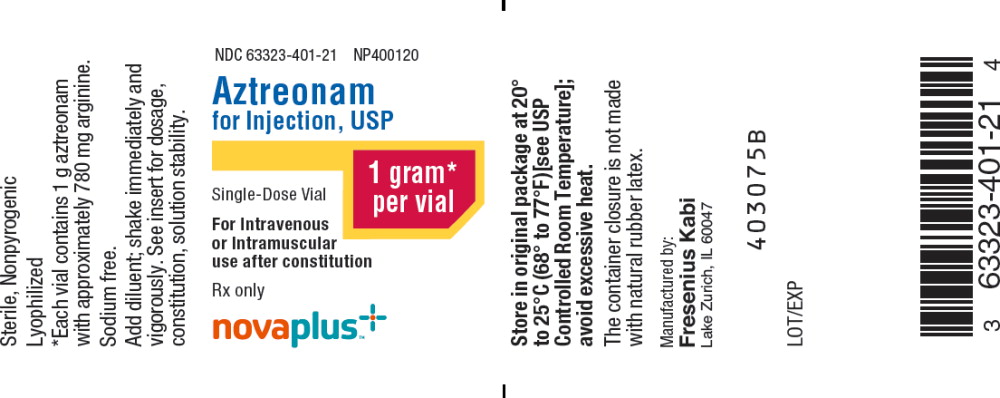
PACKAGE LABEL - PRINCIPAL DISPLAY - Aztreonam 1 gram Single Dose Vial Label NDC 63323-401-21 NP400120 Aztreonam for Injection, USP 1 gram* per vial Single-Dose Vial For Intravenous or Intramuscular use after constitution Rx only PACKAGE LABEL - PRINCIPAL DISPLAY - Aztreonam 1 gram Single Dose Vial Label
PACKAGE LABEL – PRINCIPAL DISPLAY – Aztreonam 1 gram Single Dose Vial Tray Label NDC 63323-401-26 NP400120 Aztreonam for Injection, USP 1 gram* per vial For Intravenous or Intramuscular use after constitution 10 x 20 mL Single-Dose Vials Rx only PACKAGE LABEL – PRINCIPAL DISPLAY – Aztreonam 1 gram Single Dose Vial Tray Label
PACKAGE LABEL - PRINCIPAL DISPLAY - Aztreonam 2 grams Single Dose Vial Label NDC 63323-402-03 NP400220 Aztreonam for Injection, USP 2 grams * per vial Single-Dose Vial For Intravenous or Intramuscular use after constitution Rx only PACKAGE LABEL - PRINCIPAL DISPLAY - Aztreonam 2 grams Single Dos e Vial Label
PACKAGE LABEL – PRINCIPAL DISPLAY – Aztreonam 2 grams Single Dose Vial Tray Label NDC 63323-402-30 NP400220 Aztreonam for Injection, USP 2 grams* per vial For Intravenous or Intramuscular use after constitution 10 x 30 mL Single-Dose Vials Rx only PACKAGE LABEL – PRINCIPAL DISPLAY – Aztreonam 2 grams Single Dose Vial Tray Label
Medicaid utilization by pack size
Medicare Part D spend CMS · PART D · 2026 (Q1)
Reported adverse events (FAERS)
Top reported reactions
Age at onset
Reporter sex
Serious outcomes
Where does this data come from?
About this NDC listing & data coverage
What data is (and isn’t) available for this NDC — tap to expand
| NDC identity (package / product / labeler codes) | ✓ Available |
| Labeler | ✓ Available |
| Product & package description | ✓ Available |
| Marketing category & status | ✓ Available |
| Active ingredient / dosage form / route | ✓ Available |
| FDA label (SPL via DailyMed) | ✓ Available |
| Package photos | ✓ Available |
| Inactive ingredients (structured) | ✓ Available |
| NADAC pharmacy acquisition price (CMS) | — Not published for this NDC CMS publishes NADAC only for NDCs reported in its retail-pharmacy survey. |
| Orange Book / therapeutic-equivalence data | ✓ Available |
| HCPCS J-code billing crosswalk | ✓ Available |
| Medicaid utilization (CMS SDUD) | — Not published for this NDC CMS reports utilization only for NDCs with Medicaid claims above its privacy threshold. |