
Trintellix vortioxetine 20 mg Tablet, Film Coated, 30-count — NDC 64764-750-30 (Billing 64764-0750-30)
This is a package of 30 tablets of Trintellix vortioxetine 20 mg Tablet, Film Coated from Takeda Pharmaceuticals America, Inc., marketed since Oct 2013 and currently FDA-listed; retail pharmacies pay about $17.20 per tablet (NADAC). It is the main listing for this product, which comes in 5 package sizes.
NDC database record
One package, one record: these facts belong to NDC 64764-750-30 alone.
- Record
- FDA NDC Directory package listing · Human prescription drug
- Code segments
- 64764 labeler · 750 product · 30 package
- Package marketed since
- Oct 2, 2013
- Sample package
- No — commercial package
- Listing certified through
- Dec 31, 2026
- Billing quantity
- 30 EA per package
- Barcode (UPC)
- 0364764720308, 0364764750305, 0364764730307
- Medicaid fills, this package
- 169,738 prescriptions in the last four reported quarters
- FDA record last changed
- Jul 24, 2026
Identity & classification
Regulatory identifiers FDA, NLM and CMS codes for this package
Drug-database identifiers Medi-Span GPI and First Databank GCN / HICL / AHFS classification
- GSN (GCN sequence number): 071512
- GCN: 35349
- GPI-14 (Medi-Span): 58120093100340
- HICL (First Databank): 040637
- AHFS class code: 28:16.04.24
- RxCUI (RxNorm): 1439808
Where does this data come from?
- FDA openFDA NDC Directory · synced Oct 8, 2026
- FDA label on DailyMed · label index refreshed Oct 8, 2026
- RxNorm (NLM RxNav) · catalog refreshed Oct 1, 2026
- Medi-Span GPI (licensed)
- First Databank (licensed) · refreshed Oct 8, 2026
RxNorm drug class
This medicine belongs to the Other antidepressants class.
Where does this data come from?
- RxClass (NLM) · catalog refreshed Oct 1, 2026
Clinical
Vortioxetine is used to treat depression in adults. Vortioxetine is in a class of medications called serotonin modulators. It works mainly by increasing the amount of serotonin, a natural substance in the brain that helps maintain mental balance.
Read the full MedlinePlus article ↗- Vortioxetine, sold as Trintellix, treats major depressive disorder in adults. It is not approved for children or teens.
- Take one tablet by mouth once a day, with or without food. Your prescriber may adjust your dose over time, so follow their directions. If you want to stop, talk to them first, sinc...
- Nausea is the most common, and it was the top reason people stopped it in studies. Constipation, vomiting, diarrhea, dry mouth, and dizziness can also happen. Let your doctor know...
- Call if you have new or worsening depression, suicidal thoughts, or unusual mood or behavior changes. Also call for unusual bleeding, signs of serotonin syndrome, a rash or swellin...
Patient education
Supplement & herbal interactions
Some supplements/herbs that may interact with Vortioxetine — tap one for details:
Vortioxetine may be associated with lower levels of 1 nutrient — worth a chat with your pharmacist, not a cause for alarm.
Where does this data come from?
- MedlinePlus (NLM) · refreshed Oct 8, 2026
- FDA label on DailyMed · label index refreshed Oct 8, 2026
Ask a licensed pharmacist directly — free, answered by our team.
Pricing
A drug doesn't have one price. Each row is a different public payment system, and none is what you'd pay at the counter — that depends on your insurance. The ⓘ on each row explains what it measures.
| Price system | Per ea | Per package |
|---|---|---|
| Retail pharmacies payNADAC · weekly | $17.200 | $515.99 / 30 tablets |
| Medicaid paysCMS SDUD · 12 mo | $16.71 | $501.38 / 30 tablets |
| Medicare drug plans payPart D · Q2 2026 | $17.31 | $519.32 / 30 tablets |
Where does this data come from?
- CMS NADAC weekly file · file of Oct 7, 2026
- CMS ASP pricing files · refreshed Sep 20, 2026
- CMS Medicaid State Drug Utilization Data · through Q1 2026
- CMS Part D plan pricing files · refreshed Sep 24, 2026
- VA National Acquisition Center price file
Packaging — all sizes for this product
| Package NDC | Description | Per unit | Per pack | Marketing start | Marketing end | Status |
|---|---|---|---|---|---|---|
| 64764-0750-07 64764-750-07 | 1 BOTTLE in 1 CARTON / 7 TABLET, FILM COATED in 1 BOTTLE | — | — | 2013-10-02 | — | Active |
| 64764-0750-09 64764-750-09 | 30 TABLET, FILM COATED in 1 BOTTLE | — | — | 2013-10-02 | — | Active |
| 64764-0750-30 You're viewing this Main listing | 30 TABLET, FILM COATED in 1 BOTTLE | $17.20 / ea | $515.99 | 2013-10-02 | — | Active |
| 64764-0750-77 64764-750-77 | 500 TABLET, FILM COATED in 1 BOTTLE | — | — | 2013-10-02 | — | Active |
| 64764-0750-90 64764-750-90 | 90 TABLET, FILM COATED in 1 BOTTLE | — | — | 2013-10-02 | — | Active |
In Medicaid, this is the most-dispensed pack of this product — about 100% of fills over the last four reported quarters. See all packs ↓
Pack size FAQ
What quantity is in this package?
How does this package differ from NDC 64764-0750-07?
What NDC number is used to bill for this package of Trintellix vortioxetine 20 mg Tablet, Film Coated?
Prices are the latest CMS NADAC pharmacy acquisition cost per NDC; per-pack figures are per-unit × pack quantity, shown only when the pack is denominated in the same measure NADAC prices.
Therapeutic equivalents
| Product | Labeler | Pack | NADAC/unit | TE | Status | Price vs. this |
|---|---|---|---|---|---|---|
| Trintellix 20 mgthis 64764-0750-30 | Takeda | 30 tablets | $17.200 | — | Availability likely | — |
| Trintellix 20 mg 55154-0257-08 | Cardinal | 2430 tablets | — | — | FDA listed | — |
Where does this data come from?
- FDA openFDA NDC Directory · synced Oct 8, 2026
- FDA Orange Book · refreshed Oct 3, 2026
- CMS NADAC weekly file · file of Oct 7, 2026
Availability & generic status
We did not find an FDA-approved generic match for this exact strength, form and route. Patent/protection dates below may affect future generic timing.
Why the date isn’t exact: Generic timing can change because patents may be challenged, settled, licensed, added, removed, or worked around with a narrower label — and FDA approval does not always mean a pharmacy can get the generic today.
🛈 What do these terms mean?
- Patent
- Legal protection listed in the Orange Book that may delay generic approval or launch. Issued by the U.S. Patent & Trademark Office.
- Substance patent
- Covers the active drug molecule itself — the hardest to design around. A generic generally can’t launch until it expires.
- Formulation (product) patent
- Covers a specific formulation or dosage form. A generic can sometimes work around it with a different formulation.
- Method-of-use patent
- A patent covering one specific approved use of the drug — not necessarily the whole molecule. A generic can sometimes launch with a “skinny label” that carves out the protected use and keeps the others.
- Skinny label
- A generic label that omits a still-patented use when the FDA allows it — letting a generic reach the market for the unprotected uses.
- Exclusivity
- FDA-granted marketing protection, separate from patents — e.g. 5-yr new chemical entity, 7-yr orphan drug, or a +6-month pediatric extension.
- Paragraph IV
- A generic applicant’s formal challenge to a listed patent. It can potentially lead to earlier generic entry, but often involves litigation or a settlement.
- RLD / RS
- Reference Listed Drug — the brand product the FDA uses as the reference for generic applications. Reference Standard — the product the FDA expects generics to compare against in bioequivalence testing.
- TE / AB rating
- FDA therapeutic-equivalence rating. An AB rating generally means the FDA considers a generic therapeutically equivalent to — and substitutable for — the brand.
- LOE (loss of exclusivity)
- The latest patent or exclusivity currently listed — the loss-of-exclusivity / latest-listed-protection date shown on this page. Paragraph-IV challenges and settlements can move the real date earlier; FDA approval and a manufacturer’s decision to market can move it later.
Built from the FDA Orange Book. The bars above are scaled to each protection’s expiry; the red LOE marker is the last one to lapse.
| Patent | Type | Use code | Expires |
|---|---|---|---|
| US 9227946 ↗ | Method of use | U-1668 | Jun 15, 2027 |
| US 9861630 ↗ | Method of use | U-1668 | Jun 15, 2027 |
| US 9861630 ↗ | Method of use | U-1668 | Jun 15, 2027 |
| US 9861630 ↗ | Method of use | U-1668 | Jun 15, 2027 |
| US 9125908 ↗ | Method of use | U-2309 | Jun 15, 2027 |
| US 9125908 ↗ | Method of use | U-2309 | Jun 15, 2027 |
| US 9125909 ↗ | Method of use | U-2309 | Jun 15, 2027 |
| US 9125909 ↗ | Method of use | U-2309 | Jun 15, 2027 |
| US 9125910 ↗ | Method of use | U-2309 | Jun 15, 2027 |
| US 9125910 ↗ | Method of use | U-2309 | Jun 15, 2027 |
| US 7144884 ↗ | Drug substance | U-1439 | Jun 17, 2026 |
| US 7144884 ↗ | Drug substance | U-1439 | Jun 17, 2026 |
| US 9278096 ↗ | Method of use | U-2436 | Mar 21, 2032 |
| US 9278096 ↗ | Method of use | U-2436 | Mar 21, 2032 |
| US 8969355 ↗ | Method of use | U-1668 | Jun 15, 2027 |
| US 8969355 ↗ | Method of use | U-1668 | Jun 15, 2027 |
| US 9227946 ↗ | Method of use | U-1668 | Jun 15, 2027 |
| US 9227946 ↗ | Method of use | U-1668 | Jun 15, 2027 |
| US 9125910 ↗ | Method of use | U-2309 | Jun 15, 2027 |
| US 7144884 ↗ | Drug substance | U-1439 | Jun 17, 2026 |
| US 8969355 ↗ | Method of use | U-1668 | Jun 15, 2027 |
| US 9227946 ↗ | Method of use | U-1668 | Jun 15, 2027 |
| US 9125909 ↗ | Method of use | U-2309 | Jun 15, 2027 |
| US 9125908 ↗ | Method of use | U-2309 | Jun 15, 2027 |
| US 9125908 ↗ | Method of use | U-2309 | Jun 15, 2027 |
| US 9125910 ↗ | Method of use | U-2309 | Jun 15, 2027 |
| US 11458134 ↗ | Method of use | U-3463 | Jun 15, 2027 |
| US 11458134 ↗ | Method of use | U-3463 | Jun 15, 2027 |
| US 11458134 ↗ | Method of use | U-3463 | Jun 15, 2027 |
| US 11458134 ↗ | Method of use | U-3463 | Jun 15, 2027 |
| US 9125909 ↗ | Method of use | U-2309 | Jun 15, 2027 |
| US 9861630 ↗ | Method of use | U-1668 | Jun 15, 2027 |
| US 9278096 ↗ | Method of use | U-2436 | Mar 21, 2032 |
| US 9278096 ↗ | Method of use | U-2436 | Mar 21, 2032 |
| US 7144884 ↗ | Drug substance | U-1439 | Jun 17, 2026 |
| US 8969355 ↗ | Method of use | U-1668 | Jun 15, 2027 |
| US 8722684 ↗ | Drug substance | — | Jun 30, 2031 |
| US 8722684 ↗ | Drug substance | — | Jun 30, 2031 |
| US 8722684 ↗ | Drug substance | — | Jun 30, 2031 |
| US 8722684 ↗ | Drug substance | — | Jun 30, 2031 |
| US 8722684*PED ↗ | Drug product | — | Dec 30, 2031 |
| US 8722684*PED ↗ | Drug product | — | Dec 30, 2031 |
| US 8722684*PED ↗ | Drug product | — | Dec 30, 2031 |
| US 8722684*PED ↗ | Drug product | — | Dec 30, 2031 |
| US 7144884*PED ↗ | Drug product | — | Dec 17, 2026 |
| US 7144884*PED ↗ | Drug product | — | Dec 17, 2026 |
| US 7144884*PED ↗ | Drug product | — | Dec 17, 2026 |
| US 7144884*PED ↗ | Drug product | — | Dec 17, 2026 |
| US 8969355*PED ↗ | Drug product | — | Dec 15, 2027 |
| US 8969355*PED ↗ | Drug product | — | Dec 15, 2027 |
| US 8969355*PED ↗ | Drug product | — | Dec 15, 2027 |
| US 8969355*PED ↗ | Drug product | — | Dec 15, 2027 |
| US 9227946*PED ↗ | Drug product | — | Dec 15, 2027 |
| US 9227946*PED ↗ | Drug product | — | Dec 15, 2027 |
| US 9227946*PED ↗ | Drug product | — | Dec 15, 2027 |
| US 9227946*PED ↗ | Drug product | — | Dec 15, 2027 |
| US 9125908*PED ↗ | Drug product | — | Dec 15, 2027 |
| US 9125909*PED ↗ | Drug product | — | Dec 15, 2027 |
| US 9125908*PED ↗ | Drug product | — | Dec 15, 2027 |
| US 9125909*PED ↗ | Drug product | — | Dec 15, 2027 |
| US 9125908*PED ↗ | Drug product | — | Dec 15, 2027 |
| US 9125909*PED ↗ | Drug product | — | Dec 15, 2027 |
| US 9125908*PED ↗ | Drug product | — | Dec 15, 2027 |
| US 9125909*PED ↗ | Drug product | — | Dec 15, 2027 |
| US 9125910*PED ↗ | Drug product | — | Dec 15, 2027 |
| US 9125910*PED ↗ | Drug product | — | Dec 15, 2027 |
| US 9125910*PED ↗ | Drug product | — | Dec 15, 2027 |
| US 9125910*PED ↗ | Drug product | — | Dec 15, 2027 |
| US 9861630*PED ↗ | Drug product | — | Dec 15, 2027 |
| US 9861630*PED ↗ | Drug product | — | Dec 15, 2027 |
| US 9861630*PED ↗ | Drug product | — | Dec 15, 2027 |
| US 9861630*PED ↗ | Drug product | — | Dec 15, 2027 |
| US 9278096*PED ↗ | Drug product | — | Sep 21, 2032 |
| US 9278096*PED ↗ | Drug product | — | Sep 21, 2032 |
| US 9278096*PED ↗ | Drug product | — | Sep 21, 2032 |
| US 9278096*PED ↗ | Drug product | — | Sep 21, 2032 |
| US 11458134*PED ↗ | Drug product | — | Dec 15, 2027 |
| US 11458134*PED ↗ | Drug product | — | Dec 15, 2027 |
| US 11458134*PED ↗ | Drug product | — | Dec 15, 2027 |
| US 11458134*PED ↗ | Drug product | — | Dec 15, 2027 |
| Code | What it grants | Expires |
|---|---|---|
| M-232 | New indication / labeling change (3-year) | Aug 23, 2026 |
| M-232 | New indication / labeling change (3-year) | Aug 23, 2026 |
| M-232 | New indication / labeling change (3-year) | Aug 23, 2026 |
| M-232 | New indication / labeling change (3-year) | Aug 23, 2026 |
| PED | Pediatric Exclusivity (+6 months) | Feb 23, 2027 |
| PED | Pediatric Exclusivity (+6 months) | Feb 23, 2027 |
| PED | Pediatric Exclusivity (+6 months) | Feb 23, 2027 |
| PED | Pediatric Exclusivity (+6 months) | Feb 23, 2027 |
Is there a generic version of TRINTELLIX 20 MG TABLET?
The FDA approved a generic — why can’t I get it at my pharmacy yet?
Why do different websites show different generic release dates?
What does “FDA listed” mean?
What does a patent or protection date mean here?
What does “current Orange Book estimate” mean?
Can a generic come out before the last patent expires?
Can a generic come out after the listed dates?
What is the difference between patents and exclusivity?
Why are there multiple patent dates?
Where does this data come from?
- FDA Orange Book · refreshed Oct 3, 2026
What it looks like
Where does this data come from?
- FDA label on DailyMed · label index refreshed Oct 8, 2026
Inactive Ingredients / Excipients
Inactive ingredients, also called excipients, are components of the drug product other than the active ingredient. They may include fillers, dyes, coatings, preservatives, flavors, or other formulation ingredients.
🧪 Avoiding an ingredient? See Vortioxetine inactive ingredients by manufacturer: every current product's list side by side, so you can ask your pharmacy for the version that does not list it.
💡 Tap an ingredient (hover on desktop) to see what it is and why it’s used.
-
UNII 1K09F3G675
Ferric oxide red is an inorganic iron compound used as a colorant in medicines. It gives tablets, capsules, or other dosage forms a red or reddish tint for identification and appearance.
-
UNII UKE75GEA7F
Hydroxypropyl cellulose is a plant-based polymer used as a binder and thickener. It helps hold tablet ingredients together, controls how fast the medicine dissolves, and improves the texture of liquid formulations.
-
UNII 0WZ8WG20P6
Hypromellose 2910 is a plant-based cellulose derivative that acts as a thickener, binder, and film-coating agent. It helps control how quickly the medicine dissolves and protects the tablet or capsule from moisture and light.
-
UNII 70097M6I30
Magnesium stearate is a salt made from magnesium and stearic acid, a fatty substance. It's used in tablets and capsules as a lubricant and glidant to help ingredients flow smoothly during manufacturing and prevent sticking.
-
UNII 3OWL53L36A
A natural sugar alcohol derived from seaweed or synthesized in the lab. It's used as a filler to add bulk, a sweetener in sugar-free formulas, and a disintegrant to help tablets break apart in the stomach.
-
UNII OP1R32D61U
Microcrystalline cellulose is a purified form of cellulose, a natural fiber from plant sources. It acts as a binder and filler in tablets and capsules, helping hold ingredients together and give the medicine its shape and size.
-
UNII B697894SGQ
Polyethylene glycol 400 is a clear, thick liquid made from petroleum-derived polymers. It acts as a solvent and humectant in medicines, helping dissolve active ingredients and retain moisture in the formulation.
-
UNII 5856J3G2A2
A starch-based powder made from potatoes and processed with sodium. It acts as a disintegrant, helping the tablet or capsule break apart quickly in the stomach so the medicine can be absorbed.
-
UNII 15FIX9V2JP
Titanium dioxide is a bright white mineral powder commonly used as a colorant and opacifying agent. It makes pills and tablets white or lighter in color and helps make coatings non-transparent.
9 inactive ingredients listed in the exact product block matched to this NDC.
Where does this data come from?
ingredient classCode="IACT" elements from the exact product block matched by this NDC. Label-section narrative from DailyMed / the openFDA label index is shown separately when available.- FDA label on DailyMed · label index refreshed Oct 8, 2026
- FDA openFDA NDC Directory · synced Oct 8, 2026
Inactive ingredient FAQ
Are inactive ingredients the same for every manufacturer?
Why might an inactive ingredient be missing?
Can inactive ingredients matter?
Manufacturer & labeler
More NDCs from Takeda Pharmaceuticals America, Inc. labeler code 64764
- Prevacid SoluTab lansoprazole 15 mg Tablet, Orally Disintegrating, Delayed Release NDC 64764-543-05
- Prevacid SoluTab lansoprazole 30 mg Tablet, Orally Disintegrating, Delayed Release NDC 64764-544-05
- Nesina alogliptin 6.25 mg Tablet, Film Coated NDC 64764-625-30
- Uloric febuxostat 80 mg Tablet NDC 64764-677-11
- Trintellix vortioxetine 5 mg Tablet, Film Coated NDC 64764-720-07
- Trintellix vortioxetine 10 mg Tablet, Film Coated NDC 64764-730-07
- Livtencity MARIBAVIR 200 mg Tablet, Coated NDC 64764-800-28
- Rozerem ramelteon 8 mg Tablet, Film Coated NDC 64764-805-10
- Uloric febuxostat 40 mg Tablet NDC 64764-918-11
Where does this data come from?
- FDA openFDA NDC Directory · synced Oct 8, 2026
- Drugs@FDA
Full prescribing information FDA SPL
🚨 Boxed Warning ▾
WARNING: SUICIDAL THOUGHTS AND BEHAVIORS Antidepressants increased the risk of suicidal thoughts and behavior in pediatric and young adult patients in short-term studies. Closely monitor all antidepressant-treated patients for clinical worsening, and for emergence of suicidal thoughts and behaviors [see Warnings and Precautions (5.1) ] . TRINTELLIX is not approved for use in pediatric patients [see Use in Specific Populations (8.4) ] .
WARNING: SUICIDAL THOUGHTS AND BEHAVIORS See full prescribing information for complete boxed warning. Increased risk of suicidal thinking and behavior in pediatric and young adult patients taking antidepressants. Closely monitor for worsening and emergence of suicidal thoughts and behaviors ( 5.1 ).
TRINTELLIX is not approved for use in pediatric patients ( 8.4 ).
🎯 Indications and Usage ▾
1 INDICATIONS AND USAGE TRINTELLIX is indicated for the treatment of major depressive disorder (MDD) in adults. TRINTELLIX is indicated for the treatment of major depressive disorder (MDD) in adults ( 1 , 14 ).
⏱️ Dosage and Administration ▾
2 DOSAGE AND ADMINISTRATION The recommended starting dose is 10 mg administered orally once daily without regard to meals ( 2.1 ). The dose should then be increased to 20 mg/day, as tolerated ( 2.1 ). Consider 5 mg/day for patients who do not tolerate higher doses ( 2.1 ).
TRINTELLIX can be discontinued abruptly. However, it is recommended that doses of 15 mg/day or 20 mg/day be reduced to 10 mg/day for one week prior to full discontinuation if possible ( 2.3 ). The maximum recommended dose is 10 mg/day in known CYP2D6 poor metabolizers ( 2.5 ).
2.1Recommended Dosage The recommended starting dose is 10 mg administered orally once daily without regard to meals. Dosage should then be increased to 20 mg/day, as tolerated. The efficacy and safety of doses above 20 mg/day have not been evaluated in controlled clinical trials. A dose decrease down to 5 mg/day may be considered for patients who do not tolerate higher doses [see Clinical Studies (14) ] .
2.2Screen for Bipolar Disorder Prior to Starting TRINTELLIX Prior to initiating treatment with TRINTELLIX or another antidepressant, screen patients for personal or family history of bipolar disorder, mania, or hypomania [see Warnings and Precautions (5.4) ] .
2.3Discontinuing Treatment Although TRINTELLIX can be abruptly discontinued, in placebo-controlled trials patients experienced transient adverse reactions such as headache and muscle tension following abrupt discontinuation of TRINTELLIX 15 mg/day or 20 mg/day. It is recommended that the dose be decreased to 10 mg/day for one week before full discontinuation of TRINTELLIX 15 mg/day or 20 mg/day [see Warnings and Precautions (5.5) and Adverse Reactions (6) ] .
2.4Switching a Patient to or From a Monoamine Oxidase Inhibitor (MAOI) Intended to Treat Psychiatric Disorders At least 14 days must elapse between discontinuation of a MAOI intended to treat psychiatric disorders and initiation of therapy with TRINTELLIX to avoid the risk of Serotonin Syndrome [see Warnings and Precautions (5.2) ] . Conversely, at least 21 days must elapse after stopping TRINTELLIX before starting an MAOI intended to treat psychiatric disorders [see Contraindications (4) ] .
2.5Use of TRINTELLIX in Known CYP2D6 Poor Metabolizers or in Patients Taking Strong CYP2D6 Inhibitors The maximum recommended dose of TRINTELLIX is 10 mg/day in known CYP2D6 poor metabolizers. Reduce the dose of TRINTELLIX by one-half when patients are receiving a CYP2D6 strong inhibitor (e.g., bupropion, fluoxetine, paroxetine, or quinidine) concomitantly. The dose should be increased to the original level when the CYP2D6 inhibitor is discontinued [see Drug Interactions (7.1) , Use in Specific Populations (8.6) ] .
2.6Use of TRINTELLIX in Patients Taking Strong CYP Inducers Consider increasing the dose of TRINTELLIX when a strong CYP inducer (e.g., rifampin, carbamazepine, or phenytoin) is coadministered for greater than 14 days. The maximum recommended dose should not exceed three times the original dose. The dose of TRINTELLIX should be reduced to the original level within 14 days, when the inducer is discontinued [see Drug Interactions (7.1) ] .
💊 Dosage Forms and Strengths ▾
3 DOSAGE FORMS AND STRENGTHS TRINTELLIX is available as: 5 mg: pink, almond shaped biconvex film coated tablet, debossed with "5" on one side and "TL" on the other side 10 mg: yellow, almond shaped biconvex film coated tablet, debossed with "10" on one side and "TL" on the other side 20 mg: red, almond shaped biconvex film coated tablet, debossed with "20" on one side and "TL" on the other side Tablets: 5 mg, 10 mg, and 20 mg ( 3 ).
⛔ Contraindications ▾
4 CONTRAINDICATIONS Hypersensitivity to vortioxetine or any component of the formulation. Hypersensitivity reactions including anaphylaxis, angioedema, and urticaria have been reported in patients treated with TRINTELLIX [see Adverse Reactions (6.2) ] . The use of MAOIs intended to treat psychiatric disorders with TRINTELLIX or within 21 days of stopping treatment with TRINTELLIX is contraindicated because of an increased risk of serotonin syndrome.
The use of TRINTELLIX within 14 days of stopping an MAOI intended to treat psychiatric disorders is also contraindicated [see Dosage and Administration (2.4) , Warnings and Precautions (5.2) ] . Starting TRINTELLIX in a patient who is being treated with MAOIs such as linezolid or intravenous methylene blue is also contraindicated because of an increased risk of serotonin syndrome [see Warnings and Precautions (5.2) ] . Hypersensitivity to vortioxetine or any components of the TRINTELLIX formulation ( 4 ).
Monoamine Oxidase Inhibitors (MAOIs): Do not use MAOIs intended to treat psychiatric disorders with TRINTELLIX or within 21 days of stopping treatment with TRINTELLIX. Do not use TRINTELLIX within 14 days of stopping an MAOI intended to treat psychiatric disorders. In addition, do not start TRINTELLIX in a patient who is being treated with linezolid or intravenous methylene blue ( 4 ).
⚠️ Warnings and Cautions ▾
5 WARNINGS AND PRECAUTIONS Serotonin Syndrome : Increased risk when coadministered with other serotonergic agents, but also when taken alone. If it occurs, discontinue TRINTELLIX and serotonergic agents and initiate supportive measures ( 5.2 ). Increased Risk of Bleeding : Concomitant use of aspirin, nonsteroidal anti-inflammatory drugs, other antiplatelet drugs, warfarin, or other drugs that affect coagulation may increase risk ( 5.3 ).
Activation of Mania/Hypomania : Screen patients for bipolar disorder ( 5.4 ). Angle Closure Glaucoma: Angle closure glaucoma has occurred in patients with untreated anatomically narrow angles treated with antidepressants ( 5.6 ). Hyponatremia : Can occur in association with the syndrome of inappropriate antidiuretic hormone secretion (SIADH) ( 5.7 ).
Sexual Dysfunction: TRINTELLIX may cause symptoms of sexual dysfunction ( 5.8 ).
5.1Suicidal Thoughts and Behaviors in Adolescents and Young Adults In pooled analyses of placebo-controlled trials of antidepressant drugs (SSRIs and other antidepressant classes) that included approximately 77,000 adult patients and 4,500 pediatric patients, the incidence of suicidal thoughts and behaviors in antidepressant-treated patients age 24 years and younger was greater than in placebo-treated patients. There was considerable variation in risk of suicidal thoughts and behaviors among drugs, but there was an increased risk identified in young patients for most drugs studied.
There were differences in absolute risk of suicidal thoughts and behaviors across the different indications, with the highest incidence in patients with MDD. The drug-placebo differences in the number of cases of suicidal thoughts and behaviors per 1,000 patients treated are provided in Table 1 . Table 1: Risk Differences of the Number of Patients of Suicidal Thoughts and Behaviors in the Pooled Placebo-Controlled Trials of Antidepressants in Pediatric TRINTELLIX is not approved for use in pediatric patients. and Adult Patients Age Range Drug-Placebo Difference in Number of Patients with Suicidal Thoughts and Behaviors per 1000 Patients Treated Increases Compared to Placebo <18 years old 14 additional patients 18 to 24 years old 5 additional patients Decreases Compared to Placebo 25 to 64 years old 1 fewer patient ≥65 years old 6 fewer patients It is unknown whether the risk of suicidal thoughts and behaviors in adolescents and young adults extends to longer-term use, i.e., beyond four months.
However, there is substantial evidence from placebo-controlled maintenance trials in adults with MDD that the use of antidepressants can delay the recurrence of depression and that depression itself is a risk factor for suicidal thoughts and behaviors. Monitor all antidepressant-treated patients for all approved populations for clinical worsening and emergence of suicidal thoughts and behaviors, especially during the initial few months of drug therapy, and at times of dosage changes. Counsel family members or caregivers of patients to monitor for changes in behavior and to alert the healthcare provider.
Consider changing the therapeutic regimen, including possibly discontinuing TRINTELLIX, in patients whose depression is persistently worse, or who are experiencing emergent suicidal thoughts and behaviors.
5.2Serotonin Syndrome Serotonergic antidepressants, including TRINTELLIX, can precipitate serotonin syndrome, a potentially life-threatening condition. The risk is increased with concomitant use of other serotonergic drugs (including triptans, tricyclic antidepressants, fentanyl, lithium, tramadol, tryptophan, meperidine, methadone, buspirone, amphetamines, and St. John's Wort) and with drugs that impair metabolism of serotonin, i.e., MAOIs [see Contraindications (4) , Drug Interactions (7.1) ] .
Serotonin syndrome can also occur when these drugs are used alone. Serotonin syndrome signs and symptoms may include mental status changes (e.g., agitation, hallucinations, delirium, and coma), autonomic i… [Excerpted — this section continues on DailyMed.]
🤒 Adverse Reactions ▾
6 ADVERSE REACTIONS The following adverse reactions are discussed in greater detail in other sections of the label. Hypersensitivity [see Contraindications (4) ] Clinical Worsening and Suicide Risk [see Warnings and Precautions (5.1) ] Serotonin Syndrome [see Warnings and Precautions (5.2) ] Increased Risk of Bleeding [see Warnings and Precautions (5.3) ] Activation of Mania/Hypomania [see Warnings and Precautions (5.4) ] Discontinuation Syndrome [see Warnings and Precautions (5.5) ] Angle Closure Glaucoma [see Warnings and Precautions (5.6) ] Hyponatremia [see Warnings and Precautions (5.7) ] Most common adverse reactions (incidence ≥5% and at least twice the rate of placebo) were: nausea, constipation and vomiting ( 6 ).
To report SUSPECTED ADVERSE REACTIONS, contact Takeda Pharmaceuticals America, Inc. at 1-877-TAKEDA-7 (1-877-825-3327) or FDA at 1-800-FDA-1088 or www.fda.gov/medwatch.
6.1Clinical Studies Experience Because clinical trials are conducted under widely varying conditions, adverse reaction rates observed in the clinical trials of a drug cannot be directly compared to rates in the clinical trials of another drug and may not reflect the rates observed in clinical practice. Patient Exposure TRINTELLIX was evaluated for safety in 5,852 patients (18 years to 88 years of age) diagnosed with MDD who participated in pre- and postmarketing clinical studies; 2,616 of those patients were exposed to TRINTELLIX in 6 to 8 week, placebo-controlled studies at doses ranging from 5 mg to 20 mg once daily; 204 patients were exposed to TRINTELLIX in a 24 to 64 week placebo-controlled maintenance study at doses of 5 mg to 10 mg once daily; and 429 patients were exposed to TRINTELLIX in a 32 week placebo-controlled maintenance study in the U.S. at doses of 5 mg, 10 mg, and 20 mg, once daily.
Patients from the 6 to 8 week studies continued into 12-month open-label studies. A total of 2,586 patients were exposed to at least one dose of TRINTELLIX in open-label studies, 1,727 were exposed to TRINTELLIX for 6 months and 885 were exposed for at least 1 year. Adverse Reactions Reported as Reasons for Discontinuation of Treatment In pooled 6 to 8 week placebo-controlled studies the incidence of patients who received TRINTELLIX 5 mg/day, 10 mg/day, 15 mg/day, and 20 mg/day and discontinued treatment because of an adverse reaction was 5%, 6%, 8%, and 8%, respectively, compared to 4% of placebo-treated patients.
Nausea was the most common adverse reaction reported as a reason for discontinuation. Common Adverse Reactions in Placebo-Controlled MDD Studies The most commonly observed adverse reactions in MDD patients treated with TRINTELLIX in 6 to 8 week placebo-controlled studies (incidence ≥5% and at least twice the rate of placebo) were nausea, constipation and vomiting. Table 2 shows the incidence of common adverse reactions that occurred in ≥2% of MDD patients treated with any TRINTELLIX dose and at least 2% more frequently than in placebo-treated patients in the 6 to 8 week placebo-controlled studies.
Table 2: Adverse Reactions Occurring in ≥2% of Patients Treated with Any TRINTELLIX Dose and at Least 2% Greater Than the Incidence in Placebo-Treated Patients System Organ Class Preferred Term TRINTELLIX 5 mg/day TRINTELLIX 10 mg/day TRINTELLIX 15 mg/day TRINTELLIX 20 mg/day Placebo N=1013 % N=699 % N=449 % N=455 % N=1621 % Gastrointestinal disorders Nausea 21 26 32 32 9 Diarrhea 7 7 10 7 6 Dry mouth 7 7 6 8 6 Constipation 3 5 6 6 3 Vomiting 3 5 6 6 1 Flatulence 1 3 2 1 1 Nervous system disorders Dizziness 6 6 8 9 6 Psychiatric disorders Abnormal dreams <1 <1 2 3 1 Skin and subcutaneous tissue disorders Pruritus includes pruritus generalized 1 2 3 3 1 Nausea Nausea was the most common adverse reaction and its frequency was dose-related (Table 2) .
It was usually considered mild or moderate in intensity and the median duration was two weeks. Nausea was more common in females than males. Nausea most commonly occurred in the first week of TRI… [Excerpted — this section continues on DailyMed.]
🔄 Drug Interactions ▾
7 DRUG INTERACTIONS Strong inhibitors of CYP2D6: Reduce TRINTELLIX dose by half when coadministered ( 2.5 , 7.1 ). Strong CYP Inducers: Consider dose increase of TRINTELLIX dose when coadministered for more than 14 days. The maximum recommended dose should not exceed 3 times the original dose ( 2.6 , 7.1 ).
7.1Drugs Having Clinically Important Interactions with TRINTELLIX Table 4: Clinically Important Drug Interactions with TRINTELLIX Monoamine Oxidase Inhibitors (MAOIs) Clinical Impact The concomitant use of SSRIs and SNRIs including TRINTELLIX with MAOIs increases the risk of serotonin syndrome. Intervention Concomitant use of TRINTELLIX is contraindicated: With an MAOI intended to treat psychiatric disorders or within 21 days of stopping treatment with TRINTELLIX. Within 14 days of stopping an MAOI intended to treat psychiatric disorders.
In a patient who is being treated with linezolid or intravenous methylene blue. [see Dosage and Administration (2.4) , Contraindications (4) , Warnings and Precautions (5.2) ] Examples selegiline, tranylcypromine, isocarboxazid, phenelzine, linezolid, methylene blue Other Serotonergic Drugs Clinical Impact Concomitant use of TRINTELLIX with other serotonergic drugs increases the risk of serotonin syndrome. Intervention Monitor for symptoms of serotonin syndrome when TRINTELLIX is used concomitantly with other drugs that may affect the serotonergic neurotransmitter systems.
If serotonin syndrome occurs, consider discontinuation of TRINTELLIX and/or concomitant serotonergic drugs [see Warnings and Precautions (5.2) ] . Examples Other SNRIs, SSRIs, triptans, tricyclic antidepressants, opioids, lithium, buspirone, amphetamines, tryptophan, and St. John's Wort Strong Inhibitors of CYP2D6 Clinical Impact Concomitant use of TRINTELLIX with strong CYP2D6 inhibitors increases plasma concentrations of vortioxetine.
Intervention Reduce TRINTELLIX dose by half when a strong CYP2D6 inhibitor is coadministered [see Dosage and Administration (2.5) ] . Examples bupropion, fluoxetine, paroxetine, quinidine Strong CYP Inducers Clinical Impact Concomitant use of TRINTELLIX with a strong CYP inducer decreases plasma concentrations of vortioxetine. Intervention Consider increasing the TRINTELLIX dose when a strong CYP inducer is coadministered.
The maximum dose is not recommended to exceed three times the original dose [see Dosage and Administration (2.6) ]. Examples rifampin, carbamazepine, phenytoin Drugs that Interfere with Hemostasis (antiplatelets agents and anticoagulants) Clinical Impact Concomitant use of TRINTELLIX with an antiplatelet or anticoagulant drug may potentiate the risk of bleeding. Intervention Inform patients of the increased risk of bleeding associated with the concomitant use of TRINTELLIX and antiplatelet agents and anticoagulants.
For patients taking warfarin, carefully monitor the international normalized ratio [see Warnings and Precautions (5.3) , Drug Interactions (7.2) ] . Examples aspirin, clopidogrel, heparin, warfarin Drugs Highly Bound to Plasma Protein Clinical Impact TRINTELLIX is highly bound to plasma protein. The concomitant use of TRINTELLIX with another drug that is highly bound to plasma protein may increase free concentrations of TRINTELLIX or other tightly-bound drugs in plasma .
Intervention Monitor for adverse reactions and reduce dosage of TRINTELLIX or other protein bound drugs as warranted [see Drug Interactions (7.2) ] . Examples Warfarin
7.2Effect of TRINTELLIX on Other Drugs Other CNS Active Agents No clinically relevant effect was observed on steady-state lithium exposure following coadministration with multiple daily doses of TRINTELLIX. Multiple doses of TRINTELLIX did not affect the pharmacokinetics or pharmacodynamics (composite cognitive score) of diazepam [see Clinical Pharmacology (12.3) ] . A clinical study has shown that TRINTELLIX (single dose of 20 or 40 mg) did not increase the impairment of mental and motor skills caused by alcohol (single dos… [Excerpted — this section continues on DailyMed.]
👥 Use in Specific Populations ▾
8 USE IN SPECIFIC POPULATIONS Pregnancy: Third trimester use may increase risk for persistent pulmonary hypertension and withdrawal in the newborn ( 8.1 ).
8.1Pregnancy Pregnancy Exposure Registry There is a pregnancy exposure registry that monitors pregnancy outcomes in women exposed to antidepressants during pregnancy. Healthcare providers are encouraged to register patients by calling the National Pregnancy Registry for Antidepressants at 1-844-405-6185 or visiting online at https://womensmentalhealth.org/clinical-and-research-programs/pregnancyregistry/antidepressants/. Risk Summary Based on data from published observational studies, exposure to SSRIs or SNRIs, particularly in the month before delivery, has been associated with a less than 2-fold increase in the risk of postpartum hemorrhage [see Warnings and Precautions (5.3) and Clinical Considerations ] .
There are limited human data on TRINTELLIX use during pregnancy to inform any drug-associated risks. However, there are clinical considerations regarding neonates exposed to SSRIs and SNRIs, including TRINTELLIX, during the third trimester of pregnancy [see Clinical Considerations ] . Vortioxetine administered to pregnant rats and rabbits during the period of organogenesis at doses ≥15 times and 10 times the maximum recommended human dose (MRHD), respectively, resulted in decreased fetal body weight and delayed ossification.
No malformations were seen at doses up to 77 times and 58 times the MRHD, respectively. Vortioxetine administered to pregnant rats during gestation and lactation at oral doses ≥20 times the MRHD resulted in a decrease in the number of live-born pups and an increase in early postnatal pup mortality. Decreased pup weight at birth to weaning occurred at 58 times the MRHD and delayed physical development occurred at ≥20 times the MRHD.
These effects were not seen at 5 times the MRHD [see Data ] . Advise a pregnant woman of the potential risk to a fetus. The estimated background risk of major birth defects and miscarriage for the indicated population is unknown.
All pregnancies have a background risk of birth defect, loss or other adverse outcomes. In the U.S. general population, the estimated background risk of major birth defects and miscarriage in clinically recognized pregnancies is 2-4% and 15-20%, respectively. Clinical Considerations Disease-associated Maternal and/or Embryo/Fetal Risk A prospective, longitudinal study followed 201 pregnant women with a history of major depressive disorder who were euthymic and taking antidepressants at the beginning of pregnancy.
The women who discontinued antidepressants during pregnancy were more likely to experience a relapse of major depression than women who continued antidepressants. Consider the risks of untreated depression when discontinuing or changing treatment with antidepressant medication during pregnancy and postpartum. Fetal/Neonatal Adverse Reactions Exposure to serotonergic antidepressants, including TRINTELLIX, in late pregnancy may lead to an increased risk for neonatal complications requiring prolonged hospitalization, respiratory support, and tube feeding, and/or persistent pulmonary hypertension of the newborn (PPHN).
Monitor neonates who were exposed to TRINTELLIX in the third trimester of pregnancy for PPHN and drug discontinuation syndrome [see Data ] . Maternal Adverse Reactions Use of TRINTELLIX in the month before delivery may be associated with an increased risk of postpartum hemorrhage [see Warnings and Precautions (5.3) ]. Data Human Data Third Trimester Exposure Neonates exposed to SSRIs or SNRIs, late in the third trimester have developed complications requiring prolonged hospitalization, respiratory support and tube feeding.
These findings are based on postmarketing reports. Such complications can arise immediately upon delivery. Reported clinical findings have included respiratory distress, cyanosis, apnea, seizures, temperature instability, feeding difficulty, vomiting, hypo… [Excerpted — this section continues on DailyMed.]
🤰 Pregnancy ▾
8.1Pregnancy Pregnancy Exposure Registry There is a pregnancy exposure registry that monitors pregnancy outcomes in women exposed to antidepressants during pregnancy. Healthcare providers are encouraged to register patients by calling the National Pregnancy Registry for Antidepressants at 1-844-405-6185 or visiting online at https://womensmentalhealth.org/clinical-and-research-programs/pregnancyregistry/antidepressants/. Risk Summary Based on data from published observational studies, exposure to SSRIs or SNRIs, particularly in the month before delivery, has been associated with a less than 2-fold increase in the risk of postpartum hemorrhage [see Warnings and Precautions (5.3) and Clinical Considerations ] .
There are limited human data on TRINTELLIX use during pregnancy to inform any drug-associated risks. However, there are clinical considerations regarding neonates exposed to SSRIs and SNRIs, including TRINTELLIX, during the third trimester of pregnancy [see Clinical Considerations ] . Vortioxetine administered to pregnant rats and rabbits during the period of organogenesis at doses ≥15 times and 10 times the maximum recommended human dose (MRHD), respectively, resulted in decreased fetal body weight and delayed ossification.
No malformations were seen at doses up to 77 times and 58 times the MRHD, respectively. Vortioxetine administered to pregnant rats during gestation and lactation at oral doses ≥20 times the MRHD resulted in a decrease in the number of live-born pups and an increase in early postnatal pup mortality. Decreased pup weight at birth to weaning occurred at 58 times the MRHD and delayed physical development occurred at ≥20 times the MRHD.
These effects were not seen at 5 times the MRHD [see Data ] . Advise a pregnant woman of the potential risk to a fetus. The estimated background risk of major birth defects and miscarriage for the indicated population is unknown.
All pregnancies have a background risk of birth defect, loss or other adverse outcomes. In the U.S. general population, the estimated background risk of major birth defects and miscarriage in clinically recognized pregnancies is 2-4% and 15-20%, respectively. Clinical Considerations Disease-associated Maternal and/or Embryo/Fetal Risk A prospective, longitudinal study followed 201 pregnant women with a history of major depressive disorder who were euthymic and taking antidepressants at the beginning of pregnancy.
The women who discontinued antidepressants during pregnancy were more likely to experience a relapse of major depression than women who continued antidepressants. Consider the risks of untreated depression when discontinuing or changing treatment with antidepressant medication during pregnancy and postpartum. Fetal/Neonatal Adverse Reactions Exposure to serotonergic antidepressants, including TRINTELLIX, in late pregnancy may lead to an increased risk for neonatal complications requiring prolonged hospitalization, respiratory support, and tube feeding, and/or persistent pulmonary hypertension of the newborn (PPHN).
Monitor neonates who were exposed to TRINTELLIX in the third trimester of pregnancy for PPHN and drug discontinuation syndrome [see Data ] . Maternal Adverse Reactions Use of TRINTELLIX in the month before delivery may be associated with an increased risk of postpartum hemorrhage [see Warnings and Precautions (5.3) ]. Data Human Data Third Trimester Exposure Neonates exposed to SSRIs or SNRIs, late in the third trimester have developed complications requiring prolonged hospitalization, respiratory support and tube feeding.
These findings are based on postmarketing reports. Such complications can arise immediately upon delivery. Reported clinical findings have included respiratory distress, cyanosis, apnea, seizures, temperature instability, feeding difficulty, vomiting, hypoglycemia, hypotonia, hypertonia, hyperreflexia, tremor, jitteriness, irritability and constant crying.
These features are consistent with either a direct to… [Excerpted — this section continues on DailyMed.]
🧒 Pediatric Use ▾
8.4Pediatric Use The safety and effectiveness of TRINTELLIX have not been established in pediatric patients. The safety and efficacy of TRINTELLIX were evaluated in two randomized, double-blind, placebo- and active-controlled 8-week studies in pediatric patients with MDD, one in patients 7 to 11 years of age (N=540 randomized) and one in patients 12 to 17 years of age (N=616 randomized). The primary efficacy endpoint for both studies was the change from baseline to week 8 in the Children's Depression Rating Scale-Revised (CDRS-R) total score.
The CDRS-R assesses the severity of depression and change in depressive symptoms in children and adolescents with depression. TRINTELLIX was not superior to placebo in either study. Patients from the controlled 8-week studies were eligible to enroll in a 6-month open-label extension study (N=662 treated).
Across the three studies, the most commonly observed adverse reactions to TRINTELLIX in pediatric patients 7 to 17 years of age were generally similar to those observed in adults [see Adverse Reactions (6) ] . Antidepressants, such as TRINTELLIX, increase the risk of suicidal thoughts and behaviors in pediatric patients [see Boxed Warning and Warnings and Precautions (5.1) ] . Juvenile Animal Toxicity Data Administration of vortioxetine to juvenile rats (oral doses of 10, 20, and 40 mg/kg/day twice daily from Postnatal Day 21 to 91) resulted in a neurobehavioral effect at the highest dose of 40 mg/kg twice daily (increased peak auditory startle amplitude) during the treatment period.
The effect was not seen at the end of the recovery period. When animals were mated after the 4-week recovery period, viability was decreased in the offspring of mated pairs treated with 40 mg/kg twice daily. The no-observed adverse effect dose was 20 mg/kg twice daily based on both the neurobehavioral and reproductive effects.
This dose was associated with plasma vortioxetine exposure (AUC) approximately 2 times that in pediatric patients.
🧓 Geriatric Use ▾
8.5Geriatric Use No dose adjustment is recommended on the basis of age (Figure 1) . Results from a single-dose pharmacokinetic study in elderly (>65 years old) vs young (24 to 45 years old) subjects demonstrated that the pharmacokinetics were generally similar between the two age groups. Of the 2,616 subjects in clinical studies of TRINTELLIX, 11% (286) were 65 and over, which included subjects from a placebo-controlled study specifically in elderly patients [see Clinical Studies (14) ] .
No overall differences in safety or effectiveness were observed between these subjects and younger subjects, and other reported clinical experience has not identified differences in responses between the elderly and younger patients. Serotonergic antidepressants have been associated with cases of clinically significant hyponatremia in elderly patients, who may be at greater risk for this adverse event [see Warnings and Precautions (5.7) ] .
🆘 Overdosage ▾
10 OVERDOSAGE There is limited clinical trial experience regarding human overdosage with TRINTELLIX. In premarketing clinical studies, cases of overdose were limited to patients who accidentally or intentionally consumed up to a maximum dose of 40 mg of TRINTELLIX. The maximum single dose tested was 75 mg in men.
Ingestion of TRINTELLIX in the dose range of 40 to 75 mg was associated with increased rates of nausea, dizziness, diarrhea, abdominal discomfort, generalized pruritus, somnolence, and flushing. There have been postmarketing reports of overdoses of TRINTELLIX. The most frequently reported symptoms with overdoses up to 80 mg (four times the maximum recommended daily dose) were nausea and vomiting.
With overdoses greater than 80 mg, a case of serotonin syndrome in combination with another serotonergic drug, and a case of seizure, have been reported. No specific antidotes for TRINTELLIX are known. Consider contacting the Poison Help Line (1-800-222-1222) or a medical toxicologist for additional overdose management recommendations.
🧬 Clinical Pharmacology ▾
12 CLINICAL PHARMACOLOGY
12.1Mechanism of Action The mechanism of the antidepressant effect of vortioxetine is not fully understood, but is thought to be related to its enhancement of serotonergic activity in the CNS through inhibition of the reuptake of serotonin (5-HT). It also has several other activities including 5-HT3 receptor antagonism and 5-HT1A receptor agonism. The contribution of these activities to vortioxetine's antidepressant effect has not been established.
12.2Pharmacodynamics Vortioxetine binds with high affinity to the human serotonin transporter (Ki=1.6 nM), but not to the norepinephrine (Ki=113 nM) or dopamine (Ki>1000 nM) transporters. Vortioxetine potently and selectively inhibits reuptake of serotonin (IC50=5.4 nM). Vortioxetine binds to 5-HT3 (Ki=3.7 nM), 5-HT1A (Ki=15 nM), 5-HT7 (Ki=19 nM), 5-HT1D (Ki=54 nM), and 5-HT1B (Ki=33 nM), receptors and is a 5-HT3, 5-HT1D, and 5-HT7 receptor antagonist, 5-HT1B receptor partial agonist, and 5-HT1A receptor agonist.
In humans, the mean 5-HT transporter occupancy, based on the results from two clinical PET studies using 5-HTT ligands ([ 11 C]-MADAM or [ 11 C]-DASB), was approximately 50% at 5 mg/day, 65% at 10 mg/day and approximately 80% at 20 mg/day in the regions of interest. Effect on Cardiac Repolarization The effect of vortioxetine 10 mg and 40 mg administered once daily on QTc interval was evaluated in a randomized, double-blind, placebo-, and active-controlled (moxifloxacin 400 mg), four-treatment-arm parallel study in 340 male subjects.
In the study the upper bound of the one-sided 95% confidence interval for the QTc was below 10 ms, the threshold for regulatory concern. The oral dose of 40 mg is sufficient to assess the effect of metabolic inhibition. Effect on Driving Performance In a clinical study in healthy subjects, TRINTELLIX did not impair driving performance, or have adverse psychomotor or cognitive effects following single and multiple doses of 10 mg/day.
12.3Pharmacokinetics Vortioxetine pharmacological activity is due to the parent drug. The pharmacokinetics of vortioxetine (2.5 mg to 60 mg) are linear and dose-proportional when vortioxetine is administered once daily. The mean terminal half-life is approximately 66 hours, and steady-state plasma concentrations are typically achieved within two weeks of dosing.
Absorption The maximal plasma vortioxetine concentration (C max ) after dosing is reached within 7 to 11 hours postdose (T max ). Steady-state mean C max values were 9, 18, and 33 ng/mL following doses of 5, 10, and 20 mg/day. Absolute bioavailability is 75%.
Effect of Food No effect of food on the pharmacokinetics was observed. Distribution The apparent volume of distribution of vortioxetine is approximately 2600 L, indicating extensive extravascular distribution. The plasma protein binding of vortioxetine in humans is 98%, independent of plasma concentrations.
No apparent difference in the plasma protein binding between healthy subjects and subjects with hepatic (mild, moderate or severe) or renal (mild, moderate, severe, ESRD) impairment is observed. Elimination Metabolism Vortioxetine is extensively metabolized primarily through oxidation via cytochrome P450 isozymes CYP2D6, CYP3A4/5, CYP2C19, CYP2C9, CYP2A6, CYP2C8, and CYP2B6 and subsequent glucuronic acid conjugation. CYP2D6 is the primary enzyme catalyzing the metabolism of vortioxetine to its major, pharmacologically inactive, carboxylic acid metabolite, and poor metabolizers of CYP2D6 have approximately twice the vortioxetine plasma concentration of extensive metabolizers [see Dosage and Administration (2.5) ] .
Excretion Following a single oral dose of [ 14 C]-labeled vortioxetine, approximately 59% and 26% of the administered radioactivity was recovered in the urine and feces, respectively as metabolites. Negligible amounts of unchanged vortioxetine were excreted in the urine up to 48 hours. The presence of hepatic (mild, moderate or severe) or renal impairment (mild, m… [Excerpted — this section continues on DailyMed.]
🧬 Mechanism of Action ▾
12.1Mechanism of Action The mechanism of the antidepressant effect of vortioxetine is not fully understood, but is thought to be related to its enhancement of serotonergic activity in the CNS through inhibition of the reuptake of serotonin (5-HT). It also has several other activities including 5-HT3 receptor antagonism and 5-HT1A receptor agonism. The contribution of these activities to vortioxetine's antidepressant effect has not been established.
📦 How Supplied / Storage and Handling ▾
16 HOW SUPPLIED/STORAGE AND HANDLING TRINTELLIX tablets are available as follows: Features Strengths 5 mg 10 mg 20 mg Color pink yellow red Debossment "5" on one side of tablet "10" on one side of tablet "20" on one side of tablet "TL" on other side of tablet "TL" on other side of tablet "TL" on other side of tablet Presentations and NDC Codes Bottles of 30 64764-720-30 64764-730-30 64764-750-30 Bottles of 90 64764-720-90 64764-730-90 64764-750-90 Bottles of 500 64764-720-77 64764-730-77 64764-750-77 Store at 77°F (25°C); excursions permitted to 59°F to 86°F (15°C to 30°C) [see USP Controlled Room Temperature].
📦 Storage and Handling ▾
Store at 77°F (25°C); excursions permitted to 59°F to 86°F (15°C to 30°C) [see USP Controlled Room Temperature].
📋 Description ▾
11 DESCRIPTION TRINTELLIX is an immediate-release tablet for oral administration that contains the beta (β) polymorph of vortioxetine hydrobromide (HBr), an antidepressant. Vortioxetine HBr is known chemically as 1-[2-(2,4-Dimethyl-phenylsulfanyl)-phenyl]-piperazine, hydrobromide. The empirical formula is C 18 H 22 N 2 S, HBr with a molecular weight of 379.36 g/mol.
The structural formula is: Vortioxetine HBr is a white to very slightly beige powder that is slightly soluble in water. Each TRINTELLIX tablet contains 6.355 mg, 12.71 mg or 25.42 mg of vortioxetine HBr equivalent to 5 mg, 10 mg, or 20 mg of vortioxetine, respectively. The inactive ingredients in TRINTELLIX tablets include mannitol, microcrystalline cellulose, hydroxypropyl cellulose, sodium starch glycolate, magnesium stearate and film coating which consists of hypromellose, titanium dioxide, polyethylene glycol 400, iron oxide red (5 mg and 20 mg) and iron oxide yellow (10 mg).
Chemical Structure
💬 Information for Patients ▾
17 PATIENT COUNSELING INFORMATION Advise the patient to read the FDA-approved patient labeling (Medication Guide) . Suicidal Thoughts and Behaviors Advise patients and caregivers to look for the emergence of suicidal ideation and behavior, especially early during treatment and when the dose is adjusted up or down, and instruct them to report such symptoms to the healthcare provider [see Boxed Warning , Warnings and Precautions (5.1) ] . Concomitant Medication Advise patients to inform their healthcare provider if they are taking, or plan to take, any prescription or over-the-counter medications because of a potential for interactions.
Instruct patients not to take TRINTELLIX with an MAOI or within 14 days of stopping an MAOI and to allow 21 days after stopping TRINTELLIX before starting an MAOI [see Dosage and Administration (2.4) , Contraindications (4) , Warnings and Precautions (5.2) , Drug Interactions (7.1) ] . Serotonin Syndrome Caution patients about the risk of serotonin syndrome, particularly with the concomitant use of TRINTELLIX and triptans, tricyclic antidepressants, opioids, lithium, tryptophan supplements, busipirone, and St. John's Wort and with drugs that impair metabolism of serotonin (in particular, MAOIs, both those intended to treat psychiatric disorders and also others, such as linezolid) [see Warnings and Precautions (5.2) , Drug Interactions (7.1 , 7.2) ] .
Instruct patients to contact their health care provider or report to the emergency room if they experience signs or symptoms of serotonin syndrome. Increased Risk of Bleeding Inform patients about the concomitant use of TRINTELLIX with NSAIDs, aspirin, warfarin, or other drugs that affect coagulation because combined use has been associated with an increased risk of bleeding. Advise patients to inform their health care provider if they are taking or planning to take any prescription or over-the-counter medications that increase the risk of bleeding [see Warnings and Precautions (5.3) ] .
Activation of Mania/Hypomania Advise patients and their caregivers to look for signs of activation of mania/hypomania [see Warnings and Precautions (5.4) ] . Discontinuation of Treatment Advise patients not to abruptly stop taking TRINTELLIX without first talking to their healthcare provider. Patients should be aware that discontinuation effects may occur when stopping TRINTELLIX and they should monitor for discontinuation symptoms [see Warnings and Precautions (5.5) and Adverse Reactions (6.1) ].
Angle Closure Glaucoma Patients should be advised that taking TRINTELLIX can cause mild pupillary dilation, which in susceptible individuals, can lead to an episode of angle closure glaucoma. Pre-existing glaucoma is almost always open-angle glaucoma because angle closure glaucoma, when diagnosed, can be treated definitively with iridectomy. Open-angle glaucoma is not a risk factor for angle closure glaucoma.
Patients may wish to be examined to determine whether they are susceptible to angle closure, and have a prophylactic procedure (e.g., iridectomy), if they are susceptible [see Warnings and Precautions (5.6) ] . Hyponatremia Advise patients that if they are treated with diuretics, or are otherwise volume depleted, or are elderly, they may be at greater risk of developing hyponatremia while taking TRINTELLIX [see Warnings and Precautions (5.7) ] . Sexual Dysfunction Advise patients that use of TRINTELLIX may cause symptoms of sexual dysfunction in both male and female patients.
Inform patients that they should discuss any changes in sexual function and potential management strategies with their healthcare provider [see Warnings and Precautions (5.8) ]. Nausea Advise patients that nausea is one of the most common adverse reactions, and is dose related. Nausea commonly occurs within the first week of treatment, then decreases in frequency but can persist in some patients [see Adverse Reactions (6.1) ] .
Allergic Reactions Advise patients to notify their healthcare provider… [Excerpted — this section continues on DailyMed.]
💬 Medication Guide ▾
This Medication Guide has been approved by the U.S. Food and Drug Administration. Revised: 2/2025 MEDICATION GUIDE TRINTELLIX ® (trin'-TELL-ix) (vortioxetine) Tablets What is the most important information I should know about TRINTELLIX?
TRINTELLIX can cause serious side effects, including: Increased risk of suicidal thoughts and actions. TRINTELLIX and other antidepressant medicines increase the risk of suicidal thoughts and actions in people 24 years of age and younger, especially within the first few months of treatment or when the dose is changed. TRINTELLIX is not for use in children.
Depression or other mental illnesses are the most important causes of suicidal thoughts or actions. How can I watch for and try to prevent suicidal thoughts and actions? Pay close attention to any changes, especially sudden changes in mood, behavior, thoughts, or feelings, of if you develop suicidal thoughts or actions.
This is very important when an antidepressant medicine is started or when the dose is changed. Call your healthcare provider right away to report new or sudden changes in mood, behavior, thoughts, or feelings or if you develop suicidal thoughts or actions. Keep all follow-up visits with your healthcare provider as scheduled.
Call your healthcare provider between visits as needed, especially if you have concerns about symptoms. Call your healthcare provider or get emergency help right away if you have any of the following symptoms, especially if they are new, worse, or worry you: attempts to commit suicide thoughts about suicide or dying feeling agitated, restless, angry or irritable other unusual changes in behavior or mood acting on dangerous impulses new or worse depression trouble sleeping acting aggressive or violent new or worse anxiety or panic attacks an increase in activity or talking more than what is normal for you What is TRINTELLIX?
TRINTELLIX is a prescription medicine used in adults to treat a certain type of depression called Major Depressive Disorder (MDD). TRINTELLIX has not been shown to be safe and effective for use in children. Do not take TRINTELLIX if you: are allergic to vortioxetine or any of the ingredients in TRINTELLIX.
See the end of this Medication Guide for a complete list of ingredients in TRINTELLIX are taking, or have stopped taking within the last 14 days, a medicine called a Monoamine Oxidase Inhibitor (MAOI), including the antibiotic linezolid or intravenous methylene blue Ask your healthcare provider or pharmacist if you are not sure if you take an MAOI, including the antibiotic linezolid or intravenous methylene blue. Do not start taking an MAOI for at least 21 days after you stop treatment with TRINTELLIX. Before taking TRINTELLIX, tell your healthcare provider about all your medical conditions, including if you: have or had bleeding problems have, or have a family history of, bipolar disorder, mania, or hypomania have high pressure in the eye (glaucoma) have low sodium levels in your blood are pregnant or plan to become pregnant.
TRINTELLIX may harm your unborn baby. Taking TRINTELLIX during your third trimester of pregnancy may cause your baby to have withdrawal symptoms after birth or may cause your baby to be at increased risk for a serious lung problem at birth. Talk to your healthcare provider about the risks to you and your unborn or newborn baby if you take TRINTELLIX during pregnancy.
Tell your healthcare provider right away if you become pregnant or think you are pregnant during treatment with TRINTELLIX. There is a pregnancy registry for females who are exposed to TRINTELLIX during pregnancy. The purpose of the registry is to collect information about the health of females exposed to TRINTELLIX and their baby.
If you become pregnant during treatment with TRINTELLIX, talk to your healthcare provider about registering with the National Pregnancy Registry for Antidepressants at 1-844-405-6185 or visit online at https://womensmentalhealth.org/clinical-and-research-programs/pregnan… [Excerpted — this section continues on DailyMed.]
🧬 Pharmacokinetics ▾
12.3Pharmacokinetics Vortioxetine pharmacological activity is due to the parent drug. The pharmacokinetics of vortioxetine (2.5 mg to 60 mg) are linear and dose-proportional when vortioxetine is administered once daily. The mean terminal half-life is approximately 66 hours, and steady-state plasma concentrations are typically achieved within two weeks of dosing.
Absorption The maximal plasma vortioxetine concentration (C max ) after dosing is reached within 7 to 11 hours postdose (T max ). Steady-state mean C max values were 9, 18, and 33 ng/mL following doses of 5, 10, and 20 mg/day. Absolute bioavailability is 75%.
Effect of Food No effect of food on the pharmacokinetics was observed. Distribution The apparent volume of distribution of vortioxetine is approximately 2600 L, indicating extensive extravascular distribution. The plasma protein binding of vortioxetine in humans is 98%, independent of plasma concentrations.
No apparent difference in the plasma protein binding between healthy subjects and subjects with hepatic (mild, moderate or severe) or renal (mild, moderate, severe, ESRD) impairment is observed. Elimination Metabolism Vortioxetine is extensively metabolized primarily through oxidation via cytochrome P450 isozymes CYP2D6, CYP3A4/5, CYP2C19, CYP2C9, CYP2A6, CYP2C8, and CYP2B6 and subsequent glucuronic acid conjugation. CYP2D6 is the primary enzyme catalyzing the metabolism of vortioxetine to its major, pharmacologically inactive, carboxylic acid metabolite, and poor metabolizers of CYP2D6 have approximately twice the vortioxetine plasma concentration of extensive metabolizers [see Dosage and Administration (2.5) ] .
Excretion Following a single oral dose of [ 14 C]-labeled vortioxetine, approximately 59% and 26% of the administered radioactivity was recovered in the urine and feces, respectively as metabolites. Negligible amounts of unchanged vortioxetine were excreted in the urine up to 48 hours. The presence of hepatic (mild, moderate or severe) or renal impairment (mild, moderate, severe and ESRD) did not affect the apparent clearance of vortioxetine.
Specific Populations No clinically significant differences in the exposures of vortioxetine were observed based on age, gender, ethnicity, renal function, or hepatic function. The effects of intrinsic patient factors on the pharmacokinetics of vortioxetine are presented in Figure 1 . Figure 1.
Impact of Intrinsic Factors on Vortioxetine PK Figure 1 Drug Interaction Studies Clinical Studies Other Drugs on TRINTELLIX The effects of other drugs on vortioxetine exposure are summarized in Figure 2 . Figure 2. Impact of Other Drugs on Vortioxetine PK Figure 2 TRINTELLIX on Other Drugs The effects of vortioxetine on the exposures of other drugs are summarized in Figure 3 .
Figure 3. Impact of Vortioxetine on PK of Other Drugs Figure 3 In Vitro Vortioxetine and its metabolite(s) are unlikely to inhibit the following CYP enzymes and transporter based on in vitro data: CYP1A2, CYP2A6, CYP2B6, CYP2C8, CYP2C9, CYP2C19, CYP2D6, CYP2E1, CYP3A4/5, P-gp, BCRP, BSEP, MATE1, MATE2-K, OAT1, OAT3, OATP1B1, OATP1B3, OCT1, and OCT2. As such, no clinically relevant interactions with drugs metabolized/transported by these CYP enzymes or transporters would be expected.
In addition, vortioxetine did not induce CYP1A2, CYP2A6, CYP2B6, CYP2C8, CYP2C9, CYP2C19, and CYP3A4/5 in an in vitro study in cultured human hepatocytes. Chronic administration of TRINTELLIX is unlikely to induce the metabolism of drugs metabolized by these CYP isoforms. Furthermore, in a series of clinical drug interaction studies, coadministration of TRINTELLIX with substrates for CYP2B6 (e.g., bupropion), CYP2C9 (e.g., warfarin), and CYP2C19 (e.g., diazepam), had no clinical meaningful effect on the pharmacokinetics of these substrates.
🧬 Pharmacodynamics ▾
12.2Pharmacodynamics Vortioxetine binds with high affinity to the human serotonin transporter (Ki=1.6 nM), but not to the norepinephrine (Ki=113 nM) or dopamine (Ki>1000 nM) transporters. Vortioxetine potently and selectively inhibits reuptake of serotonin (IC50=5.4 nM). Vortioxetine binds to 5-HT3 (Ki=3.7 nM), 5-HT1A (Ki=15 nM), 5-HT7 (Ki=19 nM), 5-HT1D (Ki=54 nM), and 5-HT1B (Ki=33 nM), receptors and is a 5-HT3, 5-HT1D, and 5-HT7 receptor antagonist, 5-HT1B receptor partial agonist, and 5-HT1A receptor agonist.
In humans, the mean 5-HT transporter occupancy, based on the results from two clinical PET studies using 5-HTT ligands ([ 11 C]-MADAM or [ 11 C]-DASB), was approximately 50% at 5 mg/day, 65% at 10 mg/day and approximately 80% at 20 mg/day in the regions of interest. Effect on Cardiac Repolarization The effect of vortioxetine 10 mg and 40 mg administered once daily on QTc interval was evaluated in a randomized, double-blind, placebo-, and active-controlled (moxifloxacin 400 mg), four-treatment-arm parallel study in 340 male subjects.
In the study the upper bound of the one-sided 95% confidence interval for the QTc was below 10 ms, the threshold for regulatory concern. The oral dose of 40 mg is sufficient to assess the effect of metabolic inhibition. Effect on Driving Performance In a clinical study in healthy subjects, TRINTELLIX did not impair driving performance, or have adverse psychomotor or cognitive effects following single and multiple doses of 10 mg/day.
🔬 Clinical Studies ▾
14 CLINICAL STUDIES The efficacy of TRINTELLIX in treatment for MDD was established in six, 6 to 8 week randomized, double-blind, placebo-controlled, fixed-dose studies (including one study in the elderly) and one maintenance study in adult inpatients and outpatients who met the Diagnostic and Statistical Manual of Mental Disorders (DSM-IV-TR) criteria for MDD. Adults (aged 18 years to 75 years) The efficacy of TRINTELLIX in patients aged 18 years to 75 years was demonstrated in five, 6 to 8 week, placebo-controlled studies (Studies 1 to 5 in Table 5 ).
In these studies, patients were randomized to TRINTELLIX 5 mg, 10 mg, 15 mg, or 20 mg or placebo once daily. For patients who were randomized to TRINTELLIX 15 mg/day or 20 mg/day, the final doses were titrated up from 10 mg/day after the first week. The primary efficacy measures were the Hamilton Depression Scale (HAMD-24) total score in Study 2 and the Montgomery-Asberg Depression Rating Scale (MADRS) total score in all other studies.
In each of these studies, at least one dose group of TRINTELLIX was superior to placebo in improvement of depressive symptoms as measured by mean change from baseline to endpoint visit on the primary efficacy measurement (see Table 5 ) . Subgroup analysis by age, gender or race did not suggest any clear evidence of differential responsiveness. Two studies of the 5 mg dose in the U.S.
(not represented in Table 5 ) failed to show effectiveness. Elderly Study (aged 64 years to 88 years) The efficacy of TRINTELLIX for the treatment of MDD was also demonstrated in a randomized, double-blind, placebo-controlled, fixed-dose study of TRINTELLIX in elderly patients (aged 64 years to 88 years) with MDD (Study 6 in Table 5 ). Patients meeting the diagnostic criteria for recurrent MDD with at least one previous major depressive episode before the age of 60 years and without comorbid cognitive impairment (Mini Mental State Examination score <24) received TRINTELLIX 5 mg or placebo.
Table 5: Primary Efficacy Results of 6 Week to 8 Week Clinical Trials Study No. [Primary Measure] Treatment Group Number of Patients Mean Baseline Score (SD) LS Mean Change from Baseline (SE) Placebo-subtracted Difference Difference (drug minus placebo) in least-squares mean change from baseline. (95% CI) SD: standard deviation; SE: standard error; LS Mean: least-squares mean; CI: unadjusted confidence interval. Study 1 [MADRS] Non-US Study TRINTELLIX (5 mg/day) Doses that are statistically significantly superior to placebo after adjusting for multiplicity.
108 34.1 (2.6) -20.4 (1.0) -5.9 (-8.6, -3.2) TRINTELLIX (10 mg/day) 100 34.0 (2.8) -20.2 (1.0) -5.7 (-8.5, -2.9) Placebo 105 33.9 (2.7) -14.5 (1.0) -- Study 2 [HAMD-24] Non-US Study TRINTELLIX (5 mg/day) 139 32.2 (5.0) -15.4 (0.7) -4.1 (-6.2, -2.1) TRINTELLIX (10 mg/day) 139 33.1 (4.8) -16.2 (0.8) -4.9 (-7.0, -2.9) Placebo 139 32.7 (4.4) -11.3 (0.7) -- Study 3 [MADRS] Non-US Study TRINTELLIX (15 mg/day) 149 31.8 (3.4) -17.2 (0.8) -5.5 (-7.7, -3.4) TRINTELLIX (20 mg/day) 151 31.2 (3.4) -18.8 (0.8) -7.1 (-9.2, -5.0) Placebo 158 31.5 (3.6) -11.7 (0.8) -- Study 4 [MADRS] US Study TRINTELLIX (15 mg/day) 145 31.9 (4.1) -14.3 (0.9) -1.5 (-3.9, 0.9) TRINTELLIX (20 mg/day) 147 32.0 (4.4) -15.6 (0.9) -2.8 (-5.1, -0.4) Placebo 153 31.5 (4.2) -12.8 (0.8) -- Study 5 [MADRS] US Study TRINTELLIX (10 mg/day) 154 32.2 (4.5) -13.0 (0.8) -2.2 (-4.5, 0.1) TRINTELLIX (20 mg/day) 148 32.5 (4.3) -14.4 (0.9) -3.6 (-5.9, -1.4) Placebo 155 32.0 (4.0) -10.8 (0.8) -- Study 6 (elderly) [HAMD-24] US and Non-US TRINTELLIX (5 mg/day) 155 29.2 (5.0) -13.7 (0.7) -3.3 (-5.3, -1.3) Placebo 145 29.4 (5.1) -10.3 (0.8) -- TRINTELLIX was superior to placebo on the Clinical Global Impression of Improvement (CGI-I) scale, which is a clinician's impression of how much the patient's clinical condition has improved or worsened relative to baseline on a scale of 1 (very much improved) to 7 (very much worse).
Time Course of Treatment Response In the 6 to 8 week placebo-contr… [Excerpted — this section continues on DailyMed.]
🧪 Nonclinical Toxicology ▾
13 NONCLINICAL TOXICOLOGY
13.1Carcinogenesis, Mutagenesis, Impairment of Fertility Carcinogenesis Carcinogenicity studies were conducted in which CD-1 mice and Wistar rats were given oral doses of vortioxetine up to 50 and 100 mg/kg/day for male and female mice, respectively, and 40 and 80 mg/kg/day for male and female rats, respectively, for two years. The doses in the two species were approximately 12, 24, 20, and 39 times, respectively, the maximum recommended human dose (MRHD) of 20 mg on a mg/m 2 basis. In rats, the incidence of benign polypoid adenomas of the rectum was statistically significantly increased in females at doses 39 times the MRHD, but not at 15 times the MRHD.
These were considered related to inflammation and hyperplasia and possibly caused by an interaction with a vehicle component of the formulation used for the study. The finding did not occur in male rats at 20 times the MRHD. In mice, vortioxetine was not carcinogenic in males or females at doses up to 12 and 24 times, respectively, the MRHD.
Mutagenicity Vortioxetine was not genotoxic in the in vitro bacterial reverse mutation assay (Ames test), an in vitro chromosome aberration assay in cultured human lymphocytes, and an in vivo rat bone marrow micronucleus assay. Impairment of Fertility Treatment of rats with vortioxetine at doses up to 120 mg/kg/day had no effect on male or female fertility, which is 58 times the maximum recommended human dose (MRHD) of 20 mg on a mg/m 2 basis.
📄 Carcinogenesis, Mutagenesis, Impairment of Fertility ▾
13.1Carcinogenesis, Mutagenesis, Impairment of Fertility Carcinogenesis Carcinogenicity studies were conducted in which CD-1 mice and Wistar rats were given oral doses of vortioxetine up to 50 and 100 mg/kg/day for male and female mice, respectively, and 40 and 80 mg/kg/day for male and female rats, respectively, for two years. The doses in the two species were approximately 12, 24, 20, and 39 times, respectively, the maximum recommended human dose (MRHD) of 20 mg on a mg/m 2 basis. In rats, the incidence of benign polypoid adenomas of the rectum was statistically significantly increased in females at doses 39 times the MRHD, but not at 15 times the MRHD.
These were considered related to inflammation and hyperplasia and possibly caused by an interaction with a vehicle component of the formulation used for the study. The finding did not occur in male rats at 20 times the MRHD. In mice, vortioxetine was not carcinogenic in males or females at doses up to 12 and 24 times, respectively, the MRHD.
Mutagenicity Vortioxetine was not genotoxic in the in vitro bacterial reverse mutation assay (Ames test), an in vitro chromosome aberration assay in cultured human lymphocytes, and an in vivo rat bone marrow micronucleus assay. Impairment of Fertility Treatment of rats with vortioxetine at doses up to 120 mg/kg/day had no effect on male or female fertility, which is 58 times the maximum recommended human dose (MRHD) of 20 mg on a mg/m 2 basis.
📄 Package Label / Principal Display Panel ▾
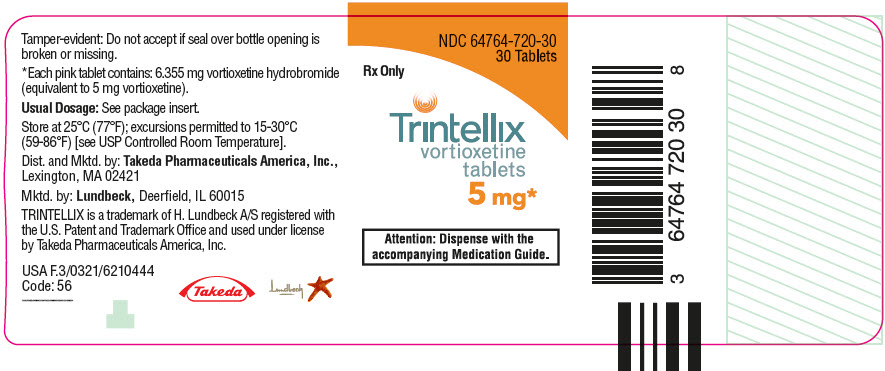
PRINCIPAL DISPLAY PANEL - 5 mg Tablet Bottle Label NDC 64764-720-30 30 Tablets Rx Only Trintellix ® vortioxetine tablets 5 mg* Attention: Dispense with the accompanying Medication Guide. Takeda PRINCIPAL DISPLAY PANEL - 5 mg Tablet Bottle Label
PRINCIPAL DISPLAY PANEL - 10 mg Tablet Bottle Label NDC 64764-730-30 30 Tablets Rx Only Trintellix ® vortioxetine tablets 10 mg* Attention: Dispense with the accompanying Medication Guide. Takeda PRINCIPAL DISPLAY PANEL - 10 mg Tablet Bottle Label
PRINCIPAL DISPLAY PANEL - 20 mg Tablet Bottle Label NDC 64764-750-30 30 Tablets Rx Only Trintellix ® vortioxetine tablets 20 mg* Attention: Dispense with the accompanying Medication Guide. Takeda PRINCIPAL DISPLAY PANEL - 20 mg Tablet Bottle Label