
Plenvu POLYETHYLENE GLYCOL 3350, SODIUM SULFATE, SODIUM CHLORIDE, POTASSIUM CHLORIDE, ASCORBIC ACID, SODIUM ASCORBATE Kit — NDC 65649-400-01 (Billing 65649-0400-01)
This is a package of Plenvu POLYETHYLENE GLYCOL 3350, SODIUM SULFATE, SODIUM CHLORIDE, POTASSIUM CHLORIDE, ASCORBIC ACID, SODIUM ASCORBATE Kit from Salix Pharmaceuticals, Inc, marketed since May 2018 and currently FDA-listed, this package's marketing is listed to end Sep 2027; retail pharmacies pay about $45.14 per unit (NADAC). It is the main listing for this product, which comes in 2 package sizes.
NDC database record
One package, one record: these facts belong to NDC 65649-400-01 alone.
- Record
- FDA NDC Directory package listing · Human prescription drug
- Code segments
- 65649 labeler · 400 product · 01 package
- Package marketed since
- May 4, 2018
- Package marketing ended
- Sep 30, 2027
- Sample package
- No — commercial package
- Barcode (UPC-A, from the NDC)
- 3 6564940001 8
- Medicaid fills, this package
- 5,485 prescriptions in the last four reported quarters
- FDA record last changed
- Aug 20, 2026
Identity & classification
Regulatory identifiers FDA, NLM and CMS codes for this package
Drug-database identifiers Medi-Span GPI and First Databank GCN / HICL / AHFS classification
- GSN (GCN sequence number): 078699
- GCN: 43893
- HICL (First Databank): 034026
- AHFS class code: 56:12.00.00
- RxCUI (RxNorm): 2045233
Where does this data come from?
- FDA openFDA NDC Directory · synced Oct 8, 2026
- FDA label on DailyMed · label index refreshed Oct 6, 2026
- RxNorm (NLM RxNav) · catalog refreshed Oct 1, 2026
- Medi-Span GPI (licensed)
- First Databank (licensed) · refreshed Oct 8, 2026
RxNorm drug class
This medicine belongs to the Osmotic Laxative class.
Where does this data come from?
- RxClass (NLM) · catalog refreshed Oct 1, 2026
Clinical
- No, this is a one-time prescription bowel prep taken only before your colonoscopy. It's not meant for everyday constipation. Its sole job is to flush your colon completely clean so...
- What exactly is this prep for — is it a laxative I'll take regularly?
- Most people have their first bowel movement about 1 to 2 hours after starting the preparation. It will be watery and frequent — that's completely expected and is exactly what the p...
- When will I actually start going to the bathroom after I take it?
Patient education
Supplement & herbal interactions
Where does this data come from?
- MedlinePlus (NLM) · refreshed Oct 1, 2026
- FDA label on DailyMed · label index refreshed Oct 6, 2026
Ask a licensed pharmacist directly — free, answered by our team.
Pricing
A drug doesn't have one price. Each row is a different public payment system, and none is what you'd pay at the counter — that depends on your insurance. The ⓘ on each row explains what it measures.
| Price system | Per ea | Per package |
|---|---|---|
| Retail pharmacies payNADAC · weekly | $45.135 | — |
| Medicaid paysCMS SDUD · 12 mo | $146.67 | — |
| Medicare drug plans payPart D · Q2 2026 | $48.74 | — |
Where does this data come from?
- CMS NADAC weekly file · file of Feb 21, 2024
- CMS ASP pricing files · refreshed Sep 20, 2026
- CMS Medicaid State Drug Utilization Data · through Q4 2025
- CMS Part D plan pricing files · refreshed Sep 24, 2026
- VA National Acquisition Center price file
Packaging — all sizes for this product
| Package NDC | Description | Per unit | Per pack | Marketing start | Marketing end | Status |
|---|---|---|---|---|---|---|
| 65649-0400-01 You're viewing this Main listing | 1 KIT in 1 CARTON * 46.26 POWDER, FOR SOLUTION in 1 POUCH * 55.65 POWDER, FOR SOLUTION in 1 POUCH * 115.96 POWDER, FOR SOLUTION in 1 POUCH | $45.14 / ea | — | 2018-05-04 | Sep 30, 2027 | Active |
| 65649-0400-02 65649-400-02 | 1 KIT in 1 CARTON * 46.26 POWDER, FOR SOLUTION in 1 POUCH * 55.65 POWDER, FOR SOLUTION in 1 POUCH * 115.96 POWDER, FOR SOLUTION in 1 POUCH Sample | — | — | 2018-05-04 | Sep 30, 2027 | Active |
In Medicaid, this is the most-dispensed pack of this product — about 100% of fills over the last four reported quarters. See all packs ↓
Pack size FAQ
What quantity is in this package?
What NDC number is used to bill for this package of Plenvu POLYETHYLENE GLYCOL 3350, SODIUM SULFATE, SODIUM CHLORIDE, POTASSIUM CHLORIDE, ASCORBIC ACID, SODIUM ASCORBATE Kit?
Prices are the latest CMS NADAC pharmacy acquisition cost per NDC; per-pack figures are per-unit × pack quantity, shown only when the pack is denominated in the same measure NADAC prices.
Therapeutic equivalents
| Product | Labeler | Pack | NADAC/unit | TE | Status | Price vs. this |
|---|---|---|---|---|---|---|
| Plenvuthis 65649-0400-01 | Salix | 1 kit | $45.135 | — | FDA listed | — |
| MoviPrep 65649-0201-75 | Salix | 1 kit | $120.378 | AA | FDA listed | +167% |
Where does this data come from?
- FDA openFDA NDC Directory · synced Oct 8, 2026
- FDA Orange Book · refreshed Oct 3, 2026
- CMS NADAC weekly file · file of Feb 21, 2024
Availability & generic status
We did not find an FDA-approved generic match for this exact strength, form and route. Patent/protection dates below may affect future generic timing.
Why the date isn’t exact: Generic timing can change because patents may be challenged, settled, licensed, added, removed, or worked around with a narrower label — and FDA approval does not always mean a pharmacy can get the generic today.
🛈 What do these terms mean?
- Patent
- Legal protection listed in the Orange Book that may delay generic approval or launch. Issued by the U.S. Patent & Trademark Office.
- Substance patent
- Covers the active drug molecule itself — the hardest to design around. A generic generally can’t launch until it expires.
- Formulation (product) patent
- Covers a specific formulation or dosage form. A generic can sometimes work around it with a different formulation.
- Method-of-use patent
- A patent covering one specific approved use of the drug — not necessarily the whole molecule. A generic can sometimes launch with a “skinny label” that carves out the protected use and keeps the others.
- Skinny label
- A generic label that omits a still-patented use when the FDA allows it — letting a generic reach the market for the unprotected uses.
- Exclusivity
- FDA-granted marketing protection, separate from patents — e.g. 5-yr new chemical entity, 7-yr orphan drug, or a +6-month pediatric extension.
- Paragraph IV
- A generic applicant’s formal challenge to a listed patent. It can potentially lead to earlier generic entry, but often involves litigation or a settlement.
- RLD / RS
- Reference Listed Drug — the brand product the FDA uses as the reference for generic applications. Reference Standard — the product the FDA expects generics to compare against in bioequivalence testing.
- TE / AB rating
- FDA therapeutic-equivalence rating. An AB rating generally means the FDA considers a generic therapeutically equivalent to — and substitutable for — the brand.
- LOE (loss of exclusivity)
- The latest patent or exclusivity currently listed — the loss-of-exclusivity / latest-listed-protection date shown on this page. Paragraph-IV challenges and settlements can move the real date earlier; FDA approval and a manufacturer’s decision to market can move it later.
Built from the FDA Orange Book. The bars above are scaled to each protection’s expiry; the red LOE marker is the last one to lapse.
| Patent | Type | Use code | Expires |
|---|---|---|---|
| US 9326969 ↗ | Method of use | U-2310 | Sep 10, 2033 |
| US 9592252 ↗ | Method of use | U-2310 | Aug 11, 2032 |
| US 11529368 ↗ | Method of use | U-2310 | Mar 9, 2032 |
| US 10792306 ↗ | Method of use | U-2310 | Mar 9, 2032 |
| US 10918723 ↗ | Method of use | U-2310 | Sep 10, 2033 |
| US 12083179 ↗ | Method of use | U-2310 | Sep 10, 2033 |
| US 10780112 ↗ | Drug product | — | Mar 9, 2032 |
| US 10016504 ↗ | Drug product | — | Sep 10, 2033 |
| US 10646512 ↗ | Drug product | — | Mar 25, 2032 |
| US 9707297 ↗ | Drug product | — | Sep 10, 2033 |
| US 8999313 ↗ | Drug product | — | Sep 10, 2033 |
Is there a generic version of PLENVU POWDER PACKETS?
The FDA approved a generic — why can’t I get it at my pharmacy yet?
Why do different websites show different generic release dates?
What does “FDA listed” mean?
What does a patent or protection date mean here?
What does “current Orange Book estimate” mean?
Can a generic come out before the last patent expires?
Can a generic come out after the listed dates?
What is the difference between patents and exclusivity?
Why are there multiple patent dates?
Where does this data come from?
- FDA Orange Book · refreshed Oct 3, 2026
Inactive Ingredients / Excipients
Inactive ingredients, also called excipients, are components of the drug product other than the active ingredient. They may include fillers, dyes, coatings, preservatives, flavors, or other formulation ingredients.
Where does this data come from?
IACT rows and label-wide narrative are kept separate; availability and product-level specificity depend on the submitted label.- FDA label on DailyMed · label index refreshed Oct 6, 2026
- FDA openFDA NDC Directory · synced Oct 8, 2026
Inactive ingredient FAQ
Are inactive ingredients the same for every manufacturer?
Why might an inactive ingredient be missing?
Can inactive ingredients matter?
Manufacturer & labeler
More NDCs from Salix Pharmaceuticals, Inc labeler code 65649
- MoviPrep POLYETHYLENE GLYCOL 3350, SODIUM SULFATE, SODIUM CHLORIDE, POTASSIUM CHLORIDE, ASCORBIC ACID, SODIUM ASCORBATE Kit NDC 65649-201-75
- Azasan Azathioprine 75 mg Tablet NDC 65649-231-41
- Azasan Azathioprine 100 mg Tablet NDC 65649-241-41
- Xifaxan rifaximin 200 mg Tablet NDC 65649-301-03
- Xifaxan rifaximin 550 mg Tablet NDC 65649-303-01
- DIURIL CHLOROTHIAZIDE 250 mg/5mL Suspension NDC 65649-311-12
- Anusol HC hydrocortisone 25 mg/g Cream NDC 65649-401-30
- Anusol HC HYDROCORTISONE ACETATE 25 mg Suppository NDC 65649-411-12
- Proctocort HYDROCORTISONE 10 mg/g Cream NDC 65649-501-30
- Proctocort HYDROCORTISONE ACETATE 30 mg Suppository NDC 65649-511-12
- Relistor Methylnaltrexone bromide 12 mg/.6mL Injection, Solution NDC 65649-551-02
- Relistor Methylnaltrexone bromide 8 mg/.4mL Injection, Solution NDC 65649-552-04
Where does this data come from?
- FDA openFDA NDC Directory · synced Oct 8, 2026
- Drugs@FDA
Full prescribing information FDA SPL
🎯 Indications and Usage ▾
1 INDICATIONS AND USAGE PLENVU ® is indicated for cleansing of the colon in preparation for colonoscopy in adults. PLENVU is an osmotic laxative indicated for cleansing of the colon in preparation for colonoscopy in adults. ( 1 )
⏱️ Dosage and Administration ▾
2 DOSAGE AND ADMINISTRATION Preparation and Administration: • Two doses of PLENVU are required for a complete preparation for colonoscopy, using a “Two-Day” or “One-Day” dosage regimen. ( 2.1 ) • Reconstitute PLENVU in water prior to ingestion. ( 2.1 ) • Consume additional clear liquids after each dose of PLENVU in both dosing regimens.
( 2.1 , 5.1 ) • Administer oral medications at least 1 hour before starting each dose of PLENVU. ( 2.1 , 7.2 ) Recommended Dosage Regimens: • Two-Day Split Dosage : Dose 1 the evening before the colonoscopy (approximately 4 pm to 8 pm) and Dose 2 the next morning (approximately12 hours after the start of Dose 1). ( 2.1 , 2.2 ) • One-Day Morning Dosage : Dose 1 the morning of the colonoscopy (approximately 3 am to 7 am) and Dose 2 a minimum of 2 hours after the start of Dose 1.
( 2.1 , 2.3 ) • For complete information on dosing, preparation and administration, see full prescribing information. ( 2.1 , 2.2 , 2.3 )
2.1Important Preparation and Administration Instructions • Correct fluid and electrolyte abnormalities before treatment with PLENVU [see Warnings and Precautions ( 5.1 )] . • Two doses of PLENVU are required for a complete preparation for colonoscopy. The time interval between the two doses depends on the regimen prescribed and the planned timing of the colonoscopy procedure [see Dosage and Administration ( 2.2 , 2.3 )] . • The recommended “Two-Day Split Dosage” method consists of two separate doses: the first dose is taken the evening before the colonoscopy and the second dose is taken the next day, the morning of the day of the colonoscopy [see Dosage and Administration ( 2.2 )]. • The recommended “One-Day Morning Dosage” method consists of two separate doses: both doses are taken in the morning of the day of the colonoscopy, with a minimum of 2 hours between the start of the first dose and the start of the second dose [see Dosage and Administration ( 2.3 )]. • Reconstitute each pouch of PLENVU in the mixing container with water prior to ingestion.
It may take 2 to 3 minutes for complete dissolution. Do not reconstitute with other liquids and/or add starch-based thickeners to the mixing container [see Warnings and Precautions ( 5.7 )]. • Consume additional clear liquids (including water) in both dosing regimens [see Dosage and Administration ( 2.2 , 2.3 ), Warnings and Precautions ( 5.1 )] . • Consume only clear liquids (no solid food) from the start of PLENVU treatment until after the colonoscopy. • Do not eat or drink alcohol, milk, anything colored red or purple or any other foods containing pulp material. • Do not take other laxatives while taking PLENVU. • Administer oral medications at least 1 hour before starting each dose of PLENVU [see Drug Interactions ( 7.2 )]. • Ensure completion of Dose 2, including all additional liquids, at least 2 hours before the colonoscopy.
2.2Recommended Two-Day Split Dosage Regimen The recommended Two-Day Split Dosage regimen commences in the evening of the day before the colonoscopy. Instruct adult patients that on the day before the clinical procedure, they can consume a light breakfast followed by a light lunch, which must be completed at least 3 hours prior to the start of the first PLENVU dose. Instruct patients to take two separate doses in conjunction with clear liquids as follows: Dose 1 – In the evening before the colonoscopy, between approximately 4 pm and 8 pm: 1.
Empty the contents of Dose 1 into the mixing container that comes with PLENVU. 2. Add water to the fill line on the mixing container (at least 16 fluid ounces).
Do not add other ingredients to the PLENVU solution. 3. Thoroughly mix with a spoon or shake with lid on securely until completely dissolved (which may take 2 to 3 minutes).
4. Drink over the next 30 minutes. Be sure to drink all of the solution.
5. Refill the mixing container to the fill line (at least 16 fluid ounces) with clear liquids and drink over the next 30 minutes. 6.
Consume additional clear liquids during… [Excerpted — this section continues on DailyMed.]
💊 Dosage Forms and Strengths ▾
3 DOSAGE FORMS AND STRENGTHS PLENVU (polyethylene glycol 3350, sodium ascorbate, sodium sulfate, ascorbic acid, sodium chloride and potassium chloride for oral solution) is supplied as a white to yellow powder for reconstitution. First dose: one pouch labeled Dose 1; Second dose: two pouches labeled Dose 2 Pouch A and Dose 2 Pouch B. • Dose 1 contains 100 grams of polyethylene glycol (PEG) 3350, 9 grams of sodium sulfate, 2 grams of sodium chloride, and 1 gram of potassium chloride. • Dose 2 Pouch A contains 40 grams of PEG 3350, 3.2 grams of sodium chloride, and 1.2 grams of potassium chloride. • Dose 2 Pouch B contains 48.11 grams of sodium ascorbate and 7.54 grams of ascorbic acid.
For Oral Solution: First dose: one pouch labeled Dose 1; Second dose: two pouches labeled Dose 2 Pouch A and Dose 2 Pouch B. • Dose 1 contains 100 grams of polyethylene glycol (PEG) 3350, 9 grams of sodium sulfate, 2 grams of sodium chloride, and 1 gram of potassium chloride. ( 3 ) • Dose 2 Pouch A contains 40 grams of PEG 3350, 3.2 grams of sodium chloride, and 1.2 grams of potassium chloride. ( 3 ) • Dose 2 Pouch B contains 48.11 grams of sodium ascorbate and 7.54 grams of ascorbic acid.
( 3 )
⛔ Contraindications ▾
4 CONTRAINDICATIONS PLENVU is contraindicated in the following conditions: • Gastrointestinal (GI) obstruction [see Warnings and Precautions ( 5.6 )] • Bowel perforation [see Warnings and Precautions ( 5.6 )] • Gastric retention • Ileus • Toxic megacolon • Hypersensitivity to any ingredient in PLENVU [see Warnings and Precautions ( 5.10 )] • Gastrointestinal (GI) obstruction ( 4 , 5.6 ) • Bowel perforation ( 4 , 5.6 ) • Gastric retention ( 4 ) • Ileus ( 4 ) • Toxic megacolon ( 4 ) • Hypersensitivity to any ingredient in PLENVU ( 4 , 5.10 )
⚠️ Warnings and Cautions ▾
5 WARNINGS AND PRECAUTIONS • Risk of fluid and electrolyte abnormalities: Encourage adequate hydration, assess concurrent medications, and consider laboratory assessments prior to and after use. ( 5.1 , 5.2 , 7.1 ) • Cardiac arrhythmias: Consider pre-dose and post-colonoscopy ECGs in patients at increased risk. ( 5.2 ) • Seizures: Use caution in patients with a history of seizures and patients at increased risk of seizure, including medications that lower the seizure threshold.
( 5.3 , 7.1 ) • Patients with renal impairment or taking concomitant medications that affect renal function: Use caution, ensure adequate hydration and consider testing. ( 5.4 , 7.1 , 8.6 ) • Mucosal ulcerations : Consider potential for mucosal ulcerations when interpreting colonoscopy findings in patients with known or suspected inflammatory bowel disease. ( 5.5 ) • Suspected GI obstruction or perforation : Rule out diagnosis before administration.
( 4 , 5.6 ) • Patients at risk for aspiration : Observe during administration. ( 5.7 ) • Glucose-6-phosphate dehydrogenase deficiency (G6PD): Use with caution. ( 5.8 ) • Risks in patients with phenylketonuria : Contains phenylalanine.
( 5.9 ) • Hypersensitivity reactions, including anaphylaxis: Inform patients to seek immediate medical care if symptoms occur. ( 5.10 )
5.1Serious Fluid and Electrolyte Abnormalities Advise patients to hydrate adequately before, during, and after the use of PLENVU. If a patient develops significant vomiting or signs of dehydration after taking PLENVU, consider performing post-colonoscopy laboratory tests (electrolytes, creatinine, and BUN). Bowel preparations can cause fluid and electrolyte disturbances, which can lead to serious adverse reactions including cardiac arrhythmias, seizures, and renal impairment.
Correct fluid and electrolyte abnormalities before treatment with PLENVU. PLENVU should be used with caution in patients using concomitant medications that increase the risk of electrolyte abnormalities [such as diuretics, angiotensin converting enzyme (ACE) inhibitors or angiotensin receptor blockers (ARBs)] [see Drug Interactions ( 7.1 )] . Consider performing pre-dose and post-colonoscopy laboratory tests (sodium, potassium, calcium, creatinine, and BUN) in patients receiving these concomitant medications.
5.2Cardiac Arrhythmias There have been rare reports of serious arrhythmias (including atrial fibrillation) associated with the use of ionic osmotic laxative products for bowel preparation. These occur predominantly in patients with underlying cardiac risk factors and electrolyte disturbances. Use caution when prescribing PLENVU for patients at increased risk of arrhythmias (e.g., patients with a history of prolonged QT, uncontrolled arrhythmias, recent myocardial infarction, unstable angina, congestive heart failure, cardiomyopathy or electrolyte imbalance).
Consider pre-dose and post-colonoscopy ECGs in patients at increased risk of serious cardiac arrhythmias.
5.3Seizures There have been rare reports of generalized tonic-clonic seizures and/or loss of consciousness associated with use of bowel preparation products in patients with no prior history of seizures. The seizure cases were associated with electrolyte abnormalities (e.g., hyponatremia, hypokalemia, hypocalcemia, and hypomagnesemia) and low serum osmolality. The neurologic abnormalities resolved with correction of fluid and electrolyte abnormalities.
Use caution when prescribing PLENVU for patients with a history of seizures and in patients at increased risk of seizure, such as patients taking medications that lower the seizure threshold (e.g., tricyclic antidepressants), patients withdrawing from alcohol or benzodiazepines, or patients with known or suspected hyponatremia. [see Drug Interactions ( 7.1 )].
5.4Use in Patients with Renal Impairment Use PLENVU with caution in patients with renal impairment or patients taking concomitant medications that affect renal function (such as diuretics, ACE inhibito… [Excerpted — this section continues on DailyMed.]
🤒 Adverse Reactions ▾
6 ADVERSE REACTIONS The following serious or otherwise important adverse reactions for bowel preparations are described elsewhere in the labeling: • Serious Fluid and Electrolyte Abnormalities [see Warnings and Precautions ( 5.1 )] • Cardiac Arrhythmias [see Warnings and Precautions ( 5.2 )] • Seizures [see Warnings and Precautions ( 5.3 )] • Patients with Renal Impairment [see Warnings and Precautions ( 5.4 )] • Colonic Mucosal Ulceration, Ischemic Colitis and Ulcerative Colitis [see Warnings and Precautions ( 5.5 )] • Patients with Significant Gastrointestinal Disease [see Warnings and Precautions ( 5.6 )] • Aspiration [see Warnings and Precautions ( 5.7 )] • Glucose-6-Phosphate Dehydrogenase (G6PD) Deficiency [see Warnings and Precautions ( 5.8 )] • Risks in Patients with Phenylketonuria [see Warnings and Precautions ( 5.9 )] • Hypersensitivity Reactions [see Warnings and Precautions ( 5.10 )] Most common adverse reactions (>2%) are nausea, vomiting, dehydration and abdominal pain/discomfort.
( 6.1 ) To report SUSPECTED ADVERSE REACTIONS, contact Salix Pharmaceuticals at 1-800-321-4576 or FDA at 1-800-FDA-1088 or www.fda.gov/medwatch.
6.1Clinical Trials Experience Because clinical trials are conducted under widely varying conditions, adverse reaction rates observed in the clinical trials of a drug cannot be directly compared to rates in the clinical trials of another drug and may not reflect the rates observed in practice. The safety of PLENVU Two-Day Split Dosage and One-Day Morning Dosage regimens was evaluated in two randomized, parallel group, multicenter, investigator-blinded clinical trials (Two-Day Split Dosage in the NOCT and MORA trials and One-Day Morning Dosage in the MORA trial) in 1351 adult patients undergoing colonoscopy.
The mean age of the study population was 56 years (range 18 to 86 years), 92% of patients were Caucasian and 51% were female. In the NOCT trial, 61% of patients had mild renal impairment. In the MORA trial, 67% had mild renal impairment and 5% had moderate renal impairment.
Patients with severe renal impairment were not enrolled in the clinical trials of PLENVU [see Clinical Studies ( 14 )]. The most common adverse reactions (>2%) in the PLENVU treatment groups in both trials were: nausea, vomiting, dehydration and abdominal pain/discomfort. Table 1 and Table 2 display adverse reactions reported in at least 1% of patients in one or more treatment group(s) in the NOCT and MORA trials, respectively.
Since diarrhea was considered as a part of the efficacy assessment, it was not defined as an adverse reaction in these trials. Table 1: Common Adverse Reactions* in Patients Undergoing Colonoscopy in the NOCT Trial by Treatment Group Preferred Term PLENVU Two-Day Split Dosage Regimen (N = 275) % Trisulfate Trisulfate: Two 6-ounce bottles of oral solution each containing sodium sulfate 17.5 grams, potassium sulfate 3.13 grams, magnesium sulfate 1.6 grams Two-Day Split Dosage Regimen (N = 271) % Nausea 7 2 Vomiting 6 3 Dehydration Includes signs and symptoms of dehydration, including dizziness, dry mouth, orthostatic hypotension, pre-syncope, syncope, and thirst 4 2 Abdominal Pain/Discomfort Includes abdominal discomfort, abdominal pain, lower abdominal pain, upper abdominal pain, and abdominal tenderness 2 2 Decline in Glomerular Filtration Rate (GFR) Decreased or abnormal GFR 2 2 Electrolyte Abnormalities Includes increased anion gap, decreased blood bicarbonate, hypomagnesemia, hyperosmolarity, hypokalemia, hyperkalemia, hypercalcemia, hypernatremia, hyperosmolar state, hyperuricemia, hypocalcemia, and hypophosphatemia 2 1 Fatigue 2 1 Headache 2 1 Abdominal Distension 1 1 Gastritis 1 1 Hiatus Hernia 1 0 Nasopharyngitis 1 1 * Reported in at least 1% of patients in either treatment group N = Total number of patients in the treatment group Table 2: Common Adverse Reactions* in Patients Undergoing Colonoscopy in the MORA Trial by Treatment Group Preferred Term PLENVU One-Day Morning Dosage Regimen (N… [Excerpted — this section continues on DailyMed.]
🔄 Drug Interactions ▾
7 DRUG INTERACTIONS Drugs that increase risks due to fluid and electrolyte changes. ( 7.1 )
7.1Drugs That May Increase Risks Due to Fluid and Electrolyte Abnormalities Use caution when prescribing PLENVU for patients with conditions and/or who are using medications that increase the risk of fluid and electrolyte disturbances or may increase the risk of renal impairment, seizures, arrhythmias, or QT prolongation in the setting of fluid and electrolyte abnormalities [see Warnings and Precautions ( 5.1 , 5.2 , 5.3 , 5.4 )]. Consider additional patient evaluations as appropriate.
7.2Potential for Reduced Drug Absorption PLENVU can reduce the absorption of other coadministered oral drugs . Administer oral medications at least 1 hour before starting each dose of PLENVU [see Dosage and Administration ( 2.1 )].
7.3Stimulant Laxatives Concurrent use of stimulant laxatives and PLENVU may increase the risk of mucosal ulceration or ischemic colitis. Avoid use of stimulant laxatives (e.g., bisacodyl, sodium picosulfate) while taking PLENVU [see Warnings and Precautions ( 5.5 )] .
👥 Use in Specific Populations ▾
8 USE IN SPECIFIC POPULATIONS
8.1Pregnancy Risk Summary There are no available data with PLENVU in pregnant women to inform a drug-associated risk for adverse developmental outcomes. Animal reproduction studies have not been conducted with PLENVU. The estimated background risk of major birth defects and miscarriage for the indicated population is unknown.
All pregnancies have a background risk of birth defect, loss, or other adverse outcomes. In the U.S. general population, the estimated background risk of major birth defects and miscarriage in clinically recognized pregnancies is 2% to 4% and 15% to 20%, respectively.
8.2Lactation Risk Summary There are no data available to assess the presence of PLENVU in human milk, the effects on the breastfed child or the effects on milk production. The lack of clinical data during lactation precludes a clear determination of the risk of PLENVU to a child during lactation; therefore, the developmental and health benefits of breastfeeding should be considered along with the mother’s clinical need for PLENVU and any potential adverse effects on the breastfed child from PLENVU or from the underlying maternal condition.
8.4Pediatric Use The safety and effectiveness of PLENVU in pediatric patients has not been established.
8.5Geriatric Use Of the approximately 1,000 patients in clinical trials receiving PLENVU, 217 (21%) patients were over 65 years of age. No overall differences in safety or effectiveness were observed between geriatric patients and younger patients, and other reported clinical experience has not identified differences in responses between geriatric patients and younger patients. However, elderly patients are more likely to have decreased hepatic, renal or cardiac function and may be more susceptible to adverse reactions resulting from fluid and electrolyte abnormalities [see Warnings and Precautions ( 5.1 )] .
8.6Renal Impairment Use PLENVU with caution in patients with renal impairment or patients taking concomitant medications that may affect renal function [see Drug Interactions ( 7.1 )] . These patients may be at risk for renal injury. Advise these patients of the importance of adequate hydration before, during and after the use of PLENVU, and consider performing baseline and post-colonoscopy laboratory tests (electrolytes, creatinine, and BUN) in these patients [see Warnings and Precautions ( 5.4 )] .
🤰 Pregnancy ▾
8.1Pregnancy Risk Summary There are no available data with PLENVU in pregnant women to inform a drug-associated risk for adverse developmental outcomes. Animal reproduction studies have not been conducted with PLENVU. The estimated background risk of major birth defects and miscarriage for the indicated population is unknown.
All pregnancies have a background risk of birth defect, loss, or other adverse outcomes. In the U.S. general population, the estimated background risk of major birth defects and miscarriage in clinically recognized pregnancies is 2% to 4% and 15% to 20%, respectively.
🧒 Pediatric Use ▾
8.4Pediatric Use The safety and effectiveness of PLENVU in pediatric patients has not been established.
🧓 Geriatric Use ▾
8.5Geriatric Use Of the approximately 1,000 patients in clinical trials receiving PLENVU, 217 (21%) patients were over 65 years of age. No overall differences in safety or effectiveness were observed between geriatric patients and younger patients, and other reported clinical experience has not identified differences in responses between geriatric patients and younger patients. However, elderly patients are more likely to have decreased hepatic, renal or cardiac function and may be more susceptible to adverse reactions resulting from fluid and electrolyte abnormalities [see Warnings and Precautions ( 5.1 )] .
🆘 Overdosage ▾
10 OVERDOSAGE Overdosage of more than the recommended dose of PLENVU may lead to severe electrolyte disturbances, as well as dehydration and hypovolemia, with signs and symptoms of these disturbances [see Warnings and Precautions ( 5.1 )] . Monitor for fluid and electrolyte disturbances and treat symptomatically.
🧬 Clinical Pharmacology ▾
12 CLINICAL PHARMACOLOGY
12.1Mechanism of Action The primary mode of action is osmotic action of the components of PLENVU (PEG 3350 plus sodium sulfate components in Dose 1, and sodium ascorbate and ascorbic acid plus PEG 3350 components in Dose 2) which induce the laxative effect. The physiological consequence is increased water retention in the lumen of the colon, resulting in loose stools.
12.2Pharmacodynamics The osmotic effect of the unabsorbed PEG, ascorbate and sulfate ions, when ingested, produces a copious watery diarrhea. The first bowel movement may happen about 1 to 2 hours after the start of PLENVU intake.
12.3Pharmacokinetics The plasma pharmacokinetic parameters for PEG 3350, ascorbate and sulfate are shown in Table 4. Table 4: Plasma Pharmacokinetic Data Following Two-Day Split Dosage Regimen of 140 grams PEG 3350, 33.9 grams Sodium Ascorbate, 9 grams Sodium Sulfate, 20.1 grams Ascorbic Acid, 4.8 grams Sodium Chloride and 2.3 grams Potassium Chloride in Healthy Subjects Four-day study with controlled diet including fasting from 2 pm on Day 1 to 2 pm on Day 2. (N=21) Product studied contains the same amount of PEG 3350 and sodium sulfate, although the amount of sodium ascorbate and ascorbic acid are slightly different, compared to PLENVU.
PK Parameter PEG 3350 Mean (SD) Ascorbate Baseline-corrected Mean (SD) Sulfate Mean (SD) C max [mcg/mL] 2.7 (1.17) 70.8 (22.37) 17.6 (4.80) T max [h] 3.0 (0.61) 16.8 (0.75) 8.1 (5.51) AUC(0-t last ) [mcg●h/mL] 17.3 (7.19) 433.1 (157.29) 206.2 (74.32) V d [l] 48,481 (29,811) 1,026 (675) 231 (205) t 1/2 [h] 4.1 (2.34) 7.2 (6.16) 10.5 (15.19) SD = standard deviation; C max = maximum concentration; T max = time to maximum concentration from start of dosing; AUC(0-t last ) = area under the curve from t 0 to t last ; V d = volume of distribution; t 1/2 = half-life.
A pharmacokinetic study measured up to 85% to 99% of a 140 grams oral PEG 3350 dose in excreted feces. A pharmacokinetic study measured up to 69% of a 50 grams oral ascorbate dose in excreted feces and up to 5% of the 50 grams oral ascorbate dose is recovered in the urine (with up to 0.07% as the ascorbate metabolite, oxalic acid). Sulfate is endogenous and also present in the diet.
A pharmacokinetic study measured up to 69% to 73% of a 9 grams oral sodium sulfate dose in excreted feces, with approximately 43% recovered in the urine. Following a One-Day Morning Dosage regimen of PLENVU, C max values of glycolic acid (after baseline correction) ranged from 76 to 1,770 ng/mL with a median T max of 9 hours and AUC 0-last in the range of 3,770 to 17,700 ng●h/mL. The concentrations of ethylene glycol and diethylene glycol in any individual subject were lower than 2.5 mcg/mL (lower limit of quantitation (LLOQ): 2.5 mcg/mL) and oxalic acid was not measurable (LLOQ: 10 mcg/mL).
🧬 Mechanism of Action ▾
12.1Mechanism of Action The primary mode of action is osmotic action of the components of PLENVU (PEG 3350 plus sodium sulfate components in Dose 1, and sodium ascorbate and ascorbic acid plus PEG 3350 components in Dose 2) which induce the laxative effect. The physiological consequence is increased water retention in the lumen of the colon, resulting in loose stools.
📦 How Supplied / Storage and Handling ▾
16 HOW SUPPLIED/STORAGE AND HANDLING PLENVU (polyethylene glycol 3350, sodium ascorbate, sodium sulfate, ascorbic acid, sodium chloride and potassium chloride for oral solution) is supplied as a white to yellow powder for reconstitution. Dose 1 contains 100 grams of PEG 3350, 9 grams of sodium sulfate, 2 grams of sodium chloride, and 1 gram of potassium chloride: NDC 65649-400-01. Dose 2 Pouch A contains 40 grams of PEG 3350, 3.2 grams of sodium chloride, and 1.2 grams of potassium chloride: NDC 65649-400-01.
Dose 2 Pouch B contains 48.11 grams of sodium ascorbate and 7.54 grams of ascorbic acid: NDC 65649-400-01. PLENVU, single-use inner carton: The inner carton contains three pouches labeled Dose 1, Dose 2 Pouch A and Dose 2 Pouch B: NDC 65649-400-01. PLENVU, single-use outer carton: Each outer carton contains the inner carton, prescribing information and patient information and a disposable mixing container with lid for reconstitution of PLENVU: NDC 65649-400-01.
Storage Store pack at room temperature, between 68°F to 77°F (20°C to 25°C) with excursions permitted to 59°F to 86°F (15°C to 30°C) [see USP Controlled Room Temperature]. The pack may be stored in a refrigerator.
📋 Description ▾
11 DESCRIPTION The active ingredients contained in PLENVU are provided in Table 3. Table 3: Details of Active Ingredients contained in PLENVU Chemical Name Chemical Formula Average Molecular Weight (g/mol) Chemical Structure Polyethylene Glycol (PEG) 3350 H-(OCH 2 -CH 2 ) n -OH 3350 Table 3: Details of Active Ingredients contained in PLENVU Sodium Ascorbate C 6 H 7 NaO 6 198.1 Table 3: Details of Active Ingredients contained in PLENVU Sodium Sulfate Na 2 SO 4 142.0 Table 3: Details of Active Ingredients contained in PLENVU Ascorbic Acid C 6 H 8 O 6 176.1 Table 3: Details of Active Ingredients contained in PLENVU Sodium Chloride NaCl
58.4 Na + Cl - Potassium Chloride KCl
74.6K + Cl + PLENVU (polyethylene glycol 3350, sodium ascorbate, sodium sulfate, ascorbic acid, sodium chloride and potassium chloride for oral solution) is an osmotic laxative consisting of three pouches (one for Dose 1, one for Dose 2 Pouch A and one for Dose 2 Pouch B) containing white to yellow powder for reconstitution. Dose 1 contains 100 grams of PEG 3350, 9 grams of sodium sulfate, 2 grams of sodium chloride, and 1 gram of potassium chloride, and the following excipients: sucralose, encapsulated citric acid and mango flavoring.
When Dose 1 is dissolved in water to a volume of 16 fluid ounces, PLENVU Dose 1 (PEG 3350, sodium sulfate, sodium chloride and potassium chloride) is an oral solution having a mango flavor. Each Dose 2 Pouch A contains 40 grams of PEG 3350, 3.2 grams of sodium chloride, and 1.2 grams of potassium chloride, and the following excipients: aspartame and fruit punch flavoring. Each Dose 2 Pouch B contains 48.11 grams of sodium ascorbate and 7.54 grams of ascorbic acid.
When Dose 2 Pouch A and Dose 2 Pouch B are dissolved together in water to a volume of 16 fluid ounces, PLENVU Dose 2 (sodium ascorbate, PEG 3350, ascorbic acid, sodium chloride and potassium chloride) is an oral solution having a fruit punch flavor. The entire reconstituted 32 fluid ounces of PLENVU bowel preparation contains 140 grams of PEG 3350, 48.11 grams of sodium ascorbate, 9 grams of sodium sulfate, 7.54 grams of ascorbic acid, 5.2 grams of sodium chloride and 2.2 grams of potassium chloride and the following excipients: aspartame, sucralose, encapsulated citric acid, mango and fruit punch flavorings.
A mixing container for reconstitution is enclosed. Phenylketonurics: Contains Phenylalanine 491 mg per treatment. Contains no ingredient made from a gluten-containing grain (wheat, barley, or rye). table3image1 table3image2 table3image3 table3image4
💬 Information for Patients ▾
17 PATIENT COUNSELING INFORMATION Advise the patient to read the FDA-approved patient labeling (Medication Guide and Instructions for Use). Instruct patients: • Two doses of PLENVU are required for a complete preparation for colonoscopy either as a Two-Day Split Dosage or One-Day Morning Dosage regimen [see Instructions for Use]. • Follow the directions in the Instructions for Use , for either the Two-Day Split Dosage or the One-Day Morning Dosage regimen, as prescribed. • Reconstitute each pouch of PLENVU in the mixing container with water before ingestion and drink additional clear liquids.
Examples of clear liquids can be found in the Instructions for Use. Do not reconstitute with other liquids and/or add starch-based thickeners to the mixing container [see Warnings and Precautions (5.7)]. • Consume additional clear liquids before, during, and after the use of PLENVU to prevent dehydration [see Warnings and Precautions (5.1)] . • Consume only clear liquids (no solid food) from the start of PLENVU treatment until after the colonoscopy. • Do not eat or drink alcohol, milk, anything colored red or purple or any other foods containing pulp material. • Do not take other laxatives while taking PLENVU. • PLENVU contains 491 mg of phenylalanine per treatment [see Warnings and Precautions (5.9)] . • Administer oral medications at least 1 hour before starting each dose of PLENVU. • Contact their healthcare provider if they develop significant vomiting or signs of dehydration after taking PLENVU or if they experience altered consciousness or seizures [see Warnings and Precautions (5.1, 5.2, 5.3, 5.4)]. • Stop drinking PLENVU temporarily or drink each portion at longer intervals if severe abdominal discomfort or distention develops until these symptoms diminish.
If severe symptoms persist, contact their healthcare provider. Distributed by: Salix Pharmaceuticals, a division of Bausch Health US, LLC Bridgewater, NJ 08807 USA Manufactured by: Norgine Limited 7 Tir-y-berth Industrial Estate New Road, Tir-y-berth Hengoed, CF82 8SJ United Kingdom (GBR) Patented. See https://patents.salix.com for US patent information.
PLENVU is a registered trademark of the Norgine group of companies used under license. © 2023 Salix Pharmaceuticals, Inc. or its affiliates 9643003
💬 Medication Guide ▾
Medication Guide MEDICATION GUIDE PLENVU ® (plen-vu) (polyethylene glycol 3350, sodium ascorbate, sodium sulfate, ascorbic acid, sodium chloride and potassium chloride for oral solution) Read this Medication Guide and Instructions for Use before your colonoscopy and again before you start taking PLENVU. What is the most important information I should know about PLENVU? PLENVU and other bowel preparations can cause serious side effects, including: • Serious loss of body fluid (dehydration) and changes in blood salts (electrolytes) in your blood.
These changes can cause: • abnormal heartbeats that can cause death. • seizures. This can happen even if you have never had a seizure. • kidney problems. Your chance of having fluid loss and changes in body salts with PLENVU is higher if you: • have heart problems. • have kidney problems. • take water pills (diuretics), high blood pressure medicine or non-steroidal anti-inflammatory drugs (NSAIDs).
Tell your healthcare provider right away if you have any of these symptoms of serious loss of body fluid (dehydration) while taking PLENVU: • vomiting • dizziness • urinating less often than normal • headache See “What are the possible side effects of PLENVU?” for more information about side effects. What is PLENVU? PLENVU is a prescription medicine used by adults to clean the colon before a colonoscopy.
PLENVU cleans your colon by causing you to have diarrhea (loose stools). Cleaning your colon helps your healthcare provider see the inside of your colon more clearly during your colonoscopy. It is not known if PLENVU is safe and effective in children.
Do not take PLENVU if your healthcare provider has told you that you have: • a blockage in your intestine (bowel obstruction). • an opening in the wall of your stomach or intestine (bowel perforation). • problems with food and fluid emptying from your stomach (gastric retention). • a problem with food moving too slowly through your intestines (ileus). • a very dilated intestine (toxic megacolon). • an allergy to any of the ingredients in PLENVU. See the end of this Medication Guide for a complete list of ingredients in PLENVU.
Before taking PLENVU, tell your healthcare provider about all of your medical conditions, including if you: • have problems with serious loss of body fluid (dehydration) and changes in blood salts (electrolytes). • have heart problems. • have seizures or take medicines for seizures. • have kidney problems or take medicines for kidney problems. • have stomach or bowel problems, including ulcerative colitis. • have problems with swallowing, gastric reflux or if you inhale food or fluid into your lungs when eating or drinking (aspirate). • have a condition called glucose-6-phosphate dehydrogenase (G6PD) deficiency that destroys red blood cells. • are withdrawing from drinking alcohol. • have phenylketonuria (PKU).
PLENVU contains phenylalanine. • are allergic to any of the ingredients in PLENVU. • are pregnant or plan to become pregnant. It is not known if PLENVU will harm your unborn baby. Talk to your healthcare provider if you are pregnant. • are breastfeeding or plan to breastfeed.
It is not known if PLENVU passes into your breast milk. You and your healthcare provider should decide if you will take PLENVU while breastfeeding. Tell your healthcare provider about all the medicines you take, including prescription and over-the-counter medicines, vitamins, and herbal supplements.
PLENVU may affect how other medicines work. If you need to take any other medicines by mouth, take those medicines at least 1 hour before starting each dose of PLENVU. Especially tell your healthcare provider if you take: • medicines to treat a blood salt (electrolyte) imbalance. • medicines for blood pressure or heart problems. • medicines for seizures (antiepileptics). • medicines for kidney problems. • water pills (diuretics). • non-steroidal anti-inflammatory drugs (NSAIDs). • laxatives.
Do not take other laxatives while taking PLENVU. • medicin… [Excerpted — this section continues on DailyMed.]
🧬 Pharmacokinetics ▾
12.3Pharmacokinetics The plasma pharmacokinetic parameters for PEG 3350, ascorbate and sulfate are shown in Table 4. Table 4: Plasma Pharmacokinetic Data Following Two-Day Split Dosage Regimen of 140 grams PEG 3350, 33.9 grams Sodium Ascorbate, 9 grams Sodium Sulfate, 20.1 grams Ascorbic Acid, 4.8 grams Sodium Chloride and 2.3 grams Potassium Chloride in Healthy Subjects Four-day study with controlled diet including fasting from 2 pm on Day 1 to 2 pm on Day 2. (N=21) Product studied contains the same amount of PEG 3350 and sodium sulfate, although the amount of sodium ascorbate and ascorbic acid are slightly different, compared to PLENVU.
PK Parameter PEG 3350 Mean (SD) Ascorbate Baseline-corrected Mean (SD) Sulfate Mean (SD) C max [mcg/mL] 2.7 (1.17) 70.8 (22.37) 17.6 (4.80) T max [h] 3.0 (0.61) 16.8 (0.75) 8.1 (5.51) AUC(0-t last ) [mcg●h/mL] 17.3 (7.19) 433.1 (157.29) 206.2 (74.32) V d [l] 48,481 (29,811) 1,026 (675) 231 (205) t 1/2 [h] 4.1 (2.34) 7.2 (6.16) 10.5 (15.19) SD = standard deviation; C max = maximum concentration; T max = time to maximum concentration from start of dosing; AUC(0-t last ) = area under the curve from t 0 to t last ; V d = volume of distribution; t 1/2 = half-life.
A pharmacokinetic study measured up to 85% to 99% of a 140 grams oral PEG 3350 dose in excreted feces. A pharmacokinetic study measured up to 69% of a 50 grams oral ascorbate dose in excreted feces and up to 5% of the 50 grams oral ascorbate dose is recovered in the urine (with up to 0.07% as the ascorbate metabolite, oxalic acid). Sulfate is endogenous and also present in the diet.
A pharmacokinetic study measured up to 69% to 73% of a 9 grams oral sodium sulfate dose in excreted feces, with approximately 43% recovered in the urine. Following a One-Day Morning Dosage regimen of PLENVU, C max values of glycolic acid (after baseline correction) ranged from 76 to 1,770 ng/mL with a median T max of 9 hours and AUC 0-last in the range of 3,770 to 17,700 ng●h/mL. The concentrations of ethylene glycol and diethylene glycol in any individual subject were lower than 2.5 mcg/mL (lower limit of quantitation (LLOQ): 2.5 mcg/mL) and oxalic acid was not measurable (LLOQ: 10 mcg/mL).
🧬 Pharmacodynamics ▾
12.2Pharmacodynamics The osmotic effect of the unabsorbed PEG, ascorbate and sulfate ions, when ingested, produces a copious watery diarrhea. The first bowel movement may happen about 1 to 2 hours after the start of PLENVU intake.
🔬 Clinical Studies ▾
14 CLINICAL STUDIES Study Design The colon cleansing efficacy, safety and tolerability of PLENVU was evaluated in two randomized, parallel-group, multicenter, investigator-blinded trials in adult patients scheduled to undergo a screening, surveillance, or diagnostic colonoscopy. The overall patient population consisted of 49% male and 51% female patients, mean age of 56 years (range 18 to 86 years), 92% Caucasian, 5% Black and 2% Asian. In general, the demographic characteristics were balanced across the trials.
In Study NER1006-01/2014 (referred to as NOCT; NCT02254486) and Study NER1006-02/2014 (referred to as MORA; NCT02273167), the bowel cleansing efficacy of PLENVU was compared to two different comparators (see Table 5) using two different PLENVU dosing regimen(s): • PLENVU Two-Day Split Dosage regimen allows for an overnight gap between doses (Dose 1 taken in the evening before the colonoscopy, between approximately 4 pm and 8 pm, and Dose 2 the next morning, on the day of the colonoscopy, approximately 12 hours after the start of Dose 1). • PLENVU One-Day Morning Dosage regimen gives both doses the morning of the day of colonoscopy (Dose 1 between approximately 3 am and 7 am, and Dose 2 a minimum of 2 hours after the start of Dose 1).
Table 5: Treatment Regimens by Trial Trial PLENVU Dosage Regimen(s) Comparator Regimens NOCT Two-Day Split Dosage Trisulfate bowel cleansing solution administered as a Two-Day Split Dosage regimen: • [Trisulfate (Two 6-ounce bottles each containing sodium sulfate 17.5 grams, potassium sulfate 3.13 grams, and magnesium sulfate 1.6 grams)] MORA Two-Day Split Dosage and One-Day Morning Dosage 2 liter PEG + electrolytes (2 L PEG+E) preparation administered as a Two-Day Split Dosage regimen: • Two doses, each containing PEG 3350 100 grams, sodium sulfate 7.5 grams, sodium chloride 2.691 grams, potassium chloride 1.015 grams, sodium ascorbate 5.9 grams, and ascorbic acid 4.7 grams Primary Endpoint The primary efficacy endpoint in both trials was the proportion of patients achieving “overall bowel cleansing success,” which was defined by a result of Grade A or B (Grades A or B [see Table 6] corresponding to full visualization of the bowel mucosa on the Harefield Cleansing Scale [HCS]), as assessed on withdrawal of colonoscope.
The HCS segmental scores were initially evaluated by the colonoscopist at the site, who was blinded to treatment, and evaluated for endpoint analysis by central readers (gastroenterologists) using video recordings of the colonoscopy. Table 6: Harefield Cleansing Scale * Colon ascendens, Colon transversum, Colon descendens, Colon sigmoideum, Rectum Overall Grade Description A All five segments* scored 3 or 4 (Mucosa is fully visualized without cleaning.) B One or more segments scored 2, remaining segments scored 3 or 4 (Mucosa is fully visualized.) C One or more segments scored 1, remaining segments scored 2, 3 or 4 D One or more segments scored 0 Segmental Score Description 4 Empty and clean 3 Clear liquid 2 Brown liquid/fully removable semisolid stools 1 Semisolid, only partially removable stools 0 Irremovable, heavy, hard stools Statistical Analysis The modified Intent-to-Treat (mITT) population was used as the primary population for the efficacy analyses and was defined as all randomized patients with the exception of any patient who (i) was randomized but subsequently failed to meet entry criteria and (ii) in whom it was confirmed (from their patient diary) that the same patient did not receive any study drug.
Non-inferiority was assessed using a one-sided 97.5% confidence interval (CI) for the difference in proportions of patients for the overall bowel cleansing success endpoint. Non-inferiority was demonstrated if the difference between PLENVU and the comparator was above the predefined non-inferiority margin set at -10%. Efficacy Results The results for the overall bowel cleansing success endpoint in the mITT population in NOCT are shown in Table 7.
The Two-Day Split… [Excerpted — this section continues on DailyMed.]
📖 Instructions for Use ▾
Instructions for Use PLENVU ® (plen-vu) (polyethylene glycol 3350, sodium ascorbate, sodium sulfate, ascorbic acid, sodium chloride and potassium chloride for oral solution) There are two different options for taking PLENVU. Your healthcare provider will tell you to take the Two-Day Split-Dosage option or the One-Day Morning Dosage option. The following are provided with the pack: • An outer carton: • An inner carton: • A mixing container with removable lid: • Prescribing Information and Patient Information The inner carton contains: • Dose 1 • Dose 2 Pouch A and Dose 2 Pouch B (to be taken together) Additional supplies (not included in the pack): • Water (to mix with PLENVU). • Scissors (optional to cut the pouches on the dotted line). • Spoon (optional to mix the water and PLENVU together.
You can also mix the water and PLENVU by putting the lid on securely and shaking it. See step 1c below). Important Information on PLENVU: • You must drink all of Dose 1 (one pouch) and Dose 2 (two pouches) of PLENVU for either dosing option.
Make sure you finish Dose 2 at least 2 hours before your colonoscopy. Do not add any other ingredients to PLENVU. • Do no t mix PLENVU with starch-based thickeners. • PLENVU must be mixed with water. • Drink clear liquids before, during, and after you take PLENVU, up until 2 hours before your colonoscopy, to help prevent fluid loss (dehydration), and changes in blood salt (electrolyte) levels. It is important for you to drink the additional amount of clear liquids listed here in the Instructions for Use.
Examples of clear liquids are: • water • clear broth soups • herbal tea, black tea or coffee • watered down (diluted) (from concentrate) clear fruit juices (without pulp) including apple juice or white grape juice • clear soda • gelatin (without added fruit or topping) • popsicles (without pieces of fruit or fruit pulp) • strained limeade or lemonade • Do not eat or drink alcohol, milk, anything colored red or purple or any foods that have pulp. • Do not take other laxatives while taking PLENVU. • If you need to take any other medicines by mouth (oral), take those medicines at least 1 hour before starting each dose of PLENVU. • Do not eat solid food while taking PLENVU until after your colonoscopy. • For the Two-Day Split Dosage schedule: • On the day before the colonoscopy you can eat a light breakfast followed by a light lunch. • You must finish eating lunch at least 3 hours before you start taking PLENVU. • After you start taking PLENVU you can only drink clear liquids. • For the One-Day Morning Dosage schedule: • On the day before the colonoscopy you can eat a light breakfast followed by a light lunch.
For dinner you may have clear broth soup or plain yogurt. • You should finish dinner by about 8 pm. • After you start taking PLENVU you can only drink clear liquids. • Do not eat the morning of your colonoscopy. Two-Day Split Dosage Schedule Take Dose 1 in the evening sometime between 4 pm and 8 pm. Take Dose 2 the next morning, on the day of the colonoscopy.
This should be about 12 hours (between about 4 am and 8 am) after you started Dose 1. Make sure you finish Dose 2 at least 2 hours before your colonoscopy. Follow Step 1 to Step 3 on how to mix with a spoon or shake with lid on securely and take PLENVU: Step 1a: Empty Dose 1 into the mixing container that comes with your PLENVU.
Step 1b: Add water to the fill line. You will need to add at least 16 ounces. Step 1c: Mix the water and PLENVU together with a spoon or put lid on mixing container securely and shake the water and PLENVU, until it is completely dissolved.
This can take 2 to 3 minutes. Step 2: Drink the entire contents of the mixing container over the next 30 minutes. If you feel like you have severe stomach pain or discomfort you can stop taking PLENVU for a short time and then continue taking it or you can take smaller sips of PLENVU so that you space out your dose longer than 30 minutes.
If you still have severe stomach pain, call you… [Excerpted — this section continues on DailyMed.]
📄 Recent Major Changes ▾
Dosage and Administration ( 2.1 ) 9/2023
📄 Package Label / Principal Display Panel ▾
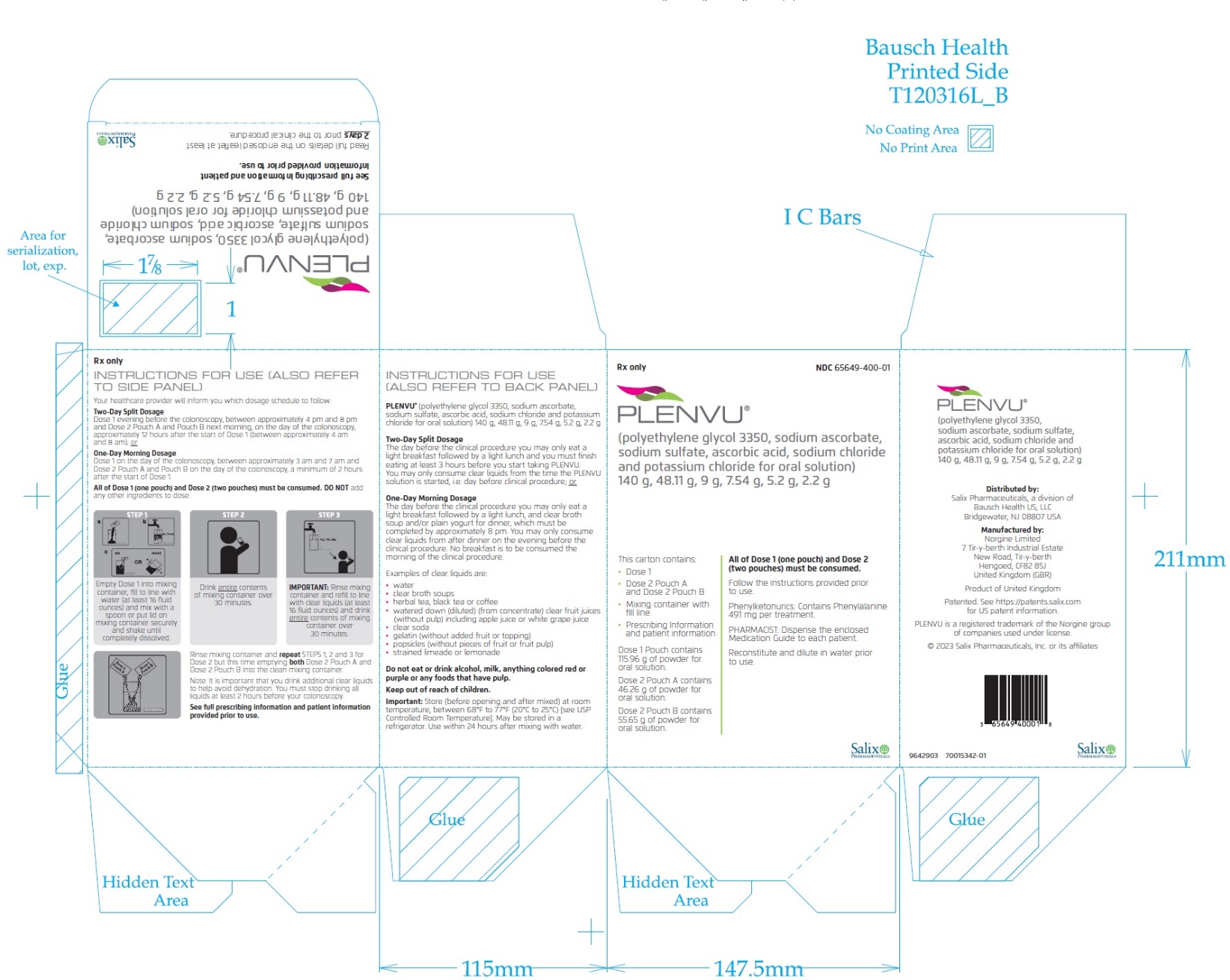
PACKAGE/LABEL PRINCIPAL DISPLAY PANEL – Plenvu Outer Carton Rx only NDC 65649-400-01 PLENVU ® (polyethylene glycol 3350, sodium ascorbate, sodium sulfate, ascorbic acid, sodium chloride and potassium chloride for oral solution) 140 g, 48.11 g, 9 g, 7.54 g, 5.2 g, 2.2 g This carton contains: • Dose 1 • Dose 2 Pouch A and Dose 2 Pouch B • Mixing container with fill line • Prescribing Information and patient information Dose 1 Pouch contains 115.96 g of powder for oral solution. Dose 2 Pouch A contains 46.26 g of powder for oral solution.
Dose 2 Pouch B contains 55.65 g of powder for oral solution. All of Dose 1 (one pouch) and Dose 2 (two pouches) must be consumed. Follow the instructions provided prior to use.
Phenylketonurics: Contains Phenylalanine 491 mg per treatment. Dispense the enclosed Medication Guide to each patient. Reconstitute and dilute in water prior to use.
Salix PHARMACEUTICALS 9642903 Carton
Medicaid utilization & spend
Medicaid utilization by pack size
Medicare Part D spend CMS · PART D · 2026 (Q1)
Reported adverse events (FAERS)
Top reported reactions
Reporter sex
Serious outcomes
Where does this data come from?
About this NDC listing & data coverage
Kit / multi-component package
This NDC identifies a kit — a package containing more than one component. Structured data (pricing, ingredients, equivalents) is often reported per component rather than for the kit NDC itself, which can make this page look thinner than the components' own pages.
What data is (and isn’t) available for this NDC — tap to expand
| NDC identity (package / product / labeler codes) | ✓ Available |
| Labeler | ✓ Available |
| Product & package description | ✓ Available |
| Marketing category & status | ✓ Available |
| Active ingredient / dosage form / route | ✓ Available |
| FDA label (SPL via DailyMed) | ✓ Available |
| Package photos | ✓ Available |
| Inactive ingredients (structured) | — Not published for this NDC The labeler did not submit a structured excipient list, or no SPL is available. |
| NADAC pharmacy acquisition price (CMS) | ✓ Available |
| Orange Book / therapeutic-equivalence data | ✓ Available |
| HCPCS J-code billing crosswalk | — Not published for this NDC Most self-administered / retail products have no J-code — that is normal. |
| Medicaid utilization (CMS SDUD) | ✓ Available |