
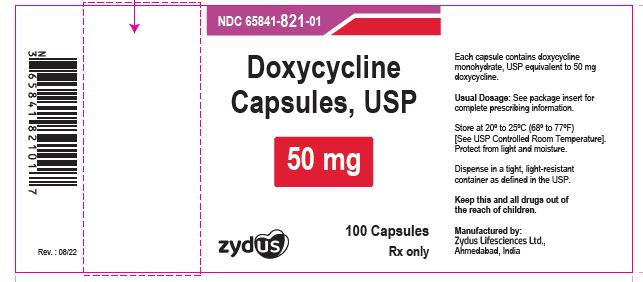
doxycycline 75 mg Capsule, 50-count
🆔 Identity & classification
Where does this data come from?
🏷️ RxNorm drug class
This medicine belongs to the Tetracycline-class Drug class.
Where does this data come from?
🏭 Manufacturer & labeler
Where does this data come from?
🩺 Clinical
Doxycycline is used to treat infections caused by bacteria and certain other infections spread by ticks, lice, mites, and infected animals. Doxycyline is also used to prevent malaria and to treat acne and rosacea (a skin disease that causes redness, flushing, and pimples on the face) Doxycycline is in a class of medications called tetracycline antibiotics. It works to treat infections by stopping bacteria from growing and spreading. It works to treat acne by killing the bacteria that infects pores and by lowering the amount of oil on your skin that can cause acne. It works to treat rosacea b...
Read the full MedlinePlus article ↗- Doxycycline is quite versatile. It treats a wide range of bacterial infections — respiratory infections, STIs like chlamydia and gonorrhea, tick-borne illnesses like Rocky Mountain...
- What kinds of infections does doxycycline actually treat?
- It depends on the tablet strength your doctor prescribed. In general, if doxycycline bothers your stomach, taking it with food or milk can help — and for the 200 mg tablet specific...
- Should I take doxycycline with food or on an empty stomach?
Patient education
Supplement & herbal interactions
Some supplements/herbs that may interact with Doxycycline — tap one for details:
Doxycycline may be associated with lower levels of 7 nutrients — worth a chat with your pharmacist, not a cause for alarm.
Where does this data come from?
Ask a licensed pharmacist directly — free, answered by our team.
💊 What it looks like
Where does this data come from?
🧪 Inactive Ingredients / Excipients
Inactive ingredients, also called excipients, are components of the drug product other than the active ingredient. They may include fillers, dyes, coatings, preservatives, flavors, or other formulation ingredients.
💡 Tap an ingredient (hover on desktop) to see what it is and why it’s used.
-
UNII 5138Q19F1X
Ammonia is a colorless gas made from nitrogen and hydrogen. It's used in medicines as a pH buffer to maintain the correct acidity level and help keep the product stable.
-
UNII OP1R32D61U
Microcrystalline cellulose is a purified form of cellulose, a natural fiber from plant sources. It acts as a binder and filler in tablets and capsules, helping hold ingredients together and give the medicine its shape and size.
-
UNII 35SW5USQ3G
A synthetic yellow dye used to color medicines. It helps make tablets, capsules, and liquids visually distinct so patients can easily identify their medication.
-
UNII H3R47K3TBD
FD&C Blue No. 1 is a synthetic blue dye approved for use in foods and medicines. It serves as a colorant to give the medication its distinctive appearance and help with product identification.
-
UNII PN2ZH5LOQY
A synthetic red dye approved by the FDA for use in foods, medicines, and cosmetics. It serves as a colorant to make tablets, capsules, and liquids visually distinctive for product identification.
-
UNII H77VEI93A8
A synthetic yellow dye used to color medications. It helps identify the drug and make it visually distinctive, with no effect on how the medicine works.
-
UNII XM0M87F357
A dark iron oxide compound that gives medicines their black or dark color. It's used as a colorant in tablets and capsules to help identify the product and make it visually distinctive.
-
UNII 2G86QN327L
Gelatin is a protein derived from animal collagen, commonly used in medicines as a gelling agent and capsule material. It helps create soft or hard capsule shells that hold and release medication, and can also thicken liquid formulations.
-
UNII 70097M6I30
Magnesium stearate is a salt made from magnesium and stearic acid, a fatty substance. It's used in tablets and capsules as a lubricant and glidant to help ingredients flow smoothly during manufacturing and prevent sticking.
-
UNII WZH3C48M4T
Potassium hydroxide is a strong alkaline chemical used in medicines to adjust and maintain the pH level of liquid formulations, helping keep the product stable and the active ingredients effective.
-
UNII 6DC9Q167V3
Propylene glycol is a clear liquid derived from petroleum or vegetable sources. It acts as a solvent, humectant, and preservative in medicines, helping dissolve active ingredients and maintain product stability.
-
UNII 46N107B71O
Shellac is a natural resin secreted by the lac beetle. It's used as a coating on tablets and capsules to control how quickly the medicine dissolves and to improve appearance and stability.
-
UNII ETJ7Z6XBU4
Silicon dioxide is a naturally occurring mineral used as a glidant and anti-caking agent. It helps powder ingredients flow smoothly and prevents clumping during manufacturing and storage.
-
UNII 368GB5141J
A detergent and foaming agent derived from coconut or palm oil. In medications, it helps break down and mix oil and water-based ingredients, aids in tablet disintegration, and improves how the drug dissolves and spreads in the mouth or digestive system.
-
UNII 5856J3G2A2
A starch-based powder made from potatoes and processed with sodium. It acts as a disintegrant, helping the tablet or capsule break apart quickly in the stomach so the medicine can be absorbed.
-
UNII 15FIX9V2JP
Titanium dioxide is a bright white mineral powder commonly used as a colorant and opacifying agent. It makes pills and tablets white or lighter in color and helps make coatings non-transparent.
16 inactive ingredients listed in the exact product block matched to this NDC.
Where does this data come from?
ingredient classCode="IACT" elements from the exact product block matched by this NDC. Label-section narrative from DailyMed / the openFDA label index is shown separately when available.Inactive ingredient FAQ
Are inactive ingredients the same for every manufacturer?
Why might an inactive ingredient be missing?
Can inactive ingredients matter?
💲 Pricing
A drug doesn't have one price. Each row is a different public payment system, and none is what you'd pay at the counter — that depends on your insurance. The ⓘ on each row explains what it measures.
| Price system | Per each | Per package |
|---|---|---|
| Retail pharmacies payNADAC · weekly | Not in the retail survey — common for institutional, discontinued, or low-volume packs. | |
| Medicaid paysCMS SDUD · 12 mo | No recent Medicaid claims on file for this NDC — rare and low-volume NDCs are suppressed in the public data. | |
| Medicare drug plans payPart D · Q2 2026 | $0.2701 | $13.51 / 50 capsules |
Where does this data come from?
🔁 Therapeutic equivalents
| Product | Labeler | Pack | NADAC/unit | TE | Status | Price vs. this |
|---|---|---|---|---|---|---|
| Doxycycline 75 mg 43386-0791-01 | Lupin | 100 capsules | — | — | FDA listed | — |
| Doxycycline 75 mg 46708-0249-30 | Alembic | 30 capsules | — | AB | FDA listed | — |
| Doxycycline Monohydrate 75 mg 62135-0261-01 | Chartwell | 100 capsules | — | AB | FDA listed | — |
| Doxycycline 75 mg 62332-0249-30 | Alembic | 30 capsules | — | AB | FDA listed | — |
| Doxycycline 75 mg 63304-0615-01 | Sun | 100 capsules | — | AB | FDA listed | — |
| Doxycycline 75 mg 64380-0921-01 | Strides | 100 capsules | — | AB | FDA listed | — |
| doxycycline 75 mgthis 65841-0822-18 | Zydus | 50 capsules | — | AB | FDA listed | — |
| doxycycline 75 mg 68382-0706-01 | Zydus | 100 capsules | — | AB | FDA listed | — |
Where does this data come from?
⏳ Availability & generic status
This product is an FDA-approved generic. Other versions of the same drug are listed under Therapeutic equivalents, least expensive first.
Where does this data come from?
📦 Packaging — all sizes for this product
| Package NDC | Description | Marketing start | Status |
|---|---|---|---|
| 65841-0822-01 | 100 CAPSULE in 1 BOTTLE (65841-822-01) | 2016-03-14 | Active |
| 65841-0822-05 | 500 CAPSULE in 1 BOTTLE (65841-822-05) | 2016-03-14 | Active |
| 65841-0822-06 | 30 CAPSULE in 1 BOTTLE (65841-822-06) | 2016-03-14 | Active |
| 65841-0822-10 | 1000 CAPSULE in 1 BOTTLE (65841-822-10) | 2016-03-14 | Active |
| 65841-0822-16 | 90 CAPSULE in 1 BOTTLE (65841-822-16) | 2016-03-14 | Active |
| 65841-0822-18 You're viewing this | 50 CAPSULE in 1 BOTTLE (65841-822-18) | 2016-03-14 | Active |
| 65841-0822-77 | 10 BLISTER PACK in 1 CARTON (65841-822-77) / 10 CAPSULE in 1 BLISTER PACK (65841-822-30) | 2016-03-14 | Active |
Pack size FAQ
What quantity is in NDC 65841-0822-18?
What is the difference between NDC 65841-0822-18 and NDC 65841-0822-06?
What NDC number is used to bill for this package of doxycycline 75 mg Capsule?
🧭 About this NDC listing & data coverage
What data is (and isn’t) available for this NDC — tap to expand
| NDC identity (package / product / labeler codes) | ✓ Available |
| Labeler | ✓ Available |
| Product & package description | ✓ Available |
| Marketing category & status | ✓ Available |
| Active ingredient / dosage form / route | ✓ Available |
| FDA label (SPL via DailyMed) | ✓ Available |
| Package photos | ✓ Available |
| Inactive ingredients (structured) | ✓ Available |
| NADAC pharmacy acquisition price (CMS) | — Not published for this NDC CMS publishes NADAC only for NDCs reported in its retail-pharmacy survey. |
| Orange Book / therapeutic-equivalence data | ✓ Available |
| HCPCS J-code billing crosswalk | — Not published for this NDC Most self-administered / retail products have no J-code — that is normal. |
| Medicaid utilization (CMS SDUD) | — Not published for this NDC CMS reports utilization only for NDCs with Medicaid claims above its privacy threshold. |
Questions about this listing
Why is there no price listed?
Is the NDC printed on the package the same as the 11-digit billing NDC?
What do the three segments of this NDC mean?
Is this package still being marketed?
Does this product come in other package sizes?
Who lists this product with the FDA?
Do I need a prescription for this product?
Where does this data come from?
📄 Full prescribing information FDA SPL
📄 FDA label ▾
No readable label sections were found for this product.