
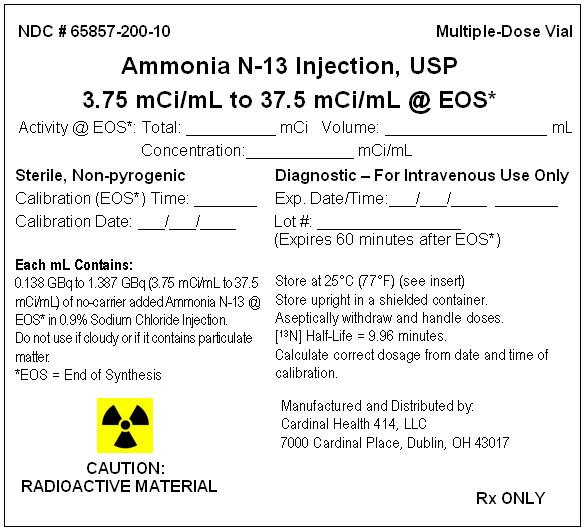
Ammonia N-13 37.5 mCi/mL Injection, 10 mL
🆔 Identity & classification
Where does this data come from?
🏭 Manufacturer & labeler
Where does this data come from?
🩺 Clinical
Patient education
Supplement & herbal interactions
Where does this data come from?
Ask a licensed pharmacist directly — free, answered by our team.
🧪 Inactive Ingredients / Excipients
Inactive ingredients, also called excipients, are components of the drug product other than the active ingredient. They may include fillers, dyes, coatings, preservatives, flavors, or other formulation ingredients.
Where does this data come from?
IACT rows and label-wide narrative are kept separate; availability and product-level specificity depend on the submitted label.Inactive ingredient FAQ
Are inactive ingredients the same for every manufacturer?
Why might an inactive ingredient be missing?
Can inactive ingredients matter?
💲 Pricing
A drug doesn't have one price. Each row is a different public payment system, and none is what you'd pay at the counter — that depends on your insurance. The ⓘ on each row explains what it measures.
| Price system | Per each | Per package |
|---|---|---|
| Retail pharmacies payNADAC · weekly | Not in the retail survey — common for institutional, discontinued, or low-volume packs. | |
| Medicaid paysCMS SDUD · 12 mo | No recent Medicaid claims on file for this NDC — rare and low-volume NDCs are suppressed in the public data. | |
| Medicare drug plans payPart D · quarterly | No Part D plan price is available for this NDC in our data. | |
Where does this data come from?
🔁 Therapeutic equivalents
| Product | Labeler | Pack | NADAC/unit | TE | Status | Price vs. this |
|---|---|---|---|---|---|---|
| Ammonia N-13 37.5 mCi/mL 24450-0113-10 | Brigham | 10 ml | — | AP | FDA listed | — |
| Ammonia N-13 37.5 mCi/mLthis 65857-0200-10 | Cardinal | 10 ml | — | AP | FDA listed | — |
| Ammonia N 13 37.5 mCi/mL 76318-0643-30 | Massachusetts | 30 ml | — | AP | FDA listed | — |
| Ammonia N 13 37.5 mCi/mL 70681-0001-30 | The | 30 ml | — | AP | FDA listed | — |
| Ammonia N 13 37.5 mCi/mL 71162-0001-05 | Ionetix | 5 ml | — | AP | FDA listed | — |
| Ammonia N 13 37.5 mCi/mL 52670-0552-30 | Mayo | 30 ml | — | AP | FDA listed | — |
| Ammonia N 13 37.5 mCi/mL 24562-0004-30 | Biomedical | 30 ml | — | AP | FDA listed | — |
| Ammonia N 13 37.5 mCi/mL 76451-0013-10 | 3D | 10 ml | — | AP | FDA listed | — |
| Ammonia N 13 37.5 mCi/mL 62072-0456-56 | Kreitchman | 8 ml | — | AP | FDA listed | — |
Where does this data come from?
⏳ Availability & generic status
This product is an FDA-approved generic. Other versions of the same drug are listed under Therapeutic equivalents, least expensive first.
Where does this data come from?
🔬 Reported adverse events (FAERS)
Top reported reactions
Reporter sex
Serious outcomes
Where does this data come from?
📦 Packaging — all sizes for this product
| Package NDC | Description | Marketing start | Status |
|---|---|---|---|
| 65857-0200-10 You're viewing this | 10 mL in 1 VIAL, GLASS (65857-200-10) | 2013-02-25 | Active |
🧭 About this NDC listing & data coverage
What data is (and isn’t) available for this NDC — tap to expand
| NDC identity (package / product / labeler codes) | ✓ Available |
| Labeler | ✓ Available |
| Product & package description | ✓ Available |
| Marketing category & status | ✓ Available |
| Active ingredient / dosage form / route | ✓ Available |
| FDA label (SPL via DailyMed) | ✓ Available |
| Package photos | ✓ Available |
| Inactive ingredients (structured) | — Not published for this NDC The labeler did not submit a structured excipient list, or no SPL is available. |
| NADAC pharmacy acquisition price (CMS) | — Not published for this NDC CMS publishes NADAC only for NDCs reported in its retail-pharmacy survey. |
| Orange Book / therapeutic-equivalence data | ✓ Available |
| HCPCS J-code billing crosswalk | — Not published for this NDC Most self-administered / retail products have no J-code — that is normal. |
| Medicaid utilization (CMS SDUD) | — Not published for this NDC CMS reports utilization only for NDCs with Medicaid claims above its privacy threshold. |
Questions about this listing
Why is there no price listed?
Is the NDC printed on the package the same as the 11-digit billing NDC?
What do the three segments of this NDC mean?
Is this package still being marketed?
Who lists this product with the FDA?
Do I need a prescription for this product?
Where does this data come from?
📄 Full prescribing information FDA SPL
🎯 Indications and Usage ▾
1 INDICATIONS AND USAGE Ammonia N-13 Injection, USP is indicated for diagnostic Positron Emission Tomography (PET) imaging of the myocardium under rest or pharmacologic stress conditions to evaluate myocardial perfusion in patients with suspected or existing coronary artery disease. Ammonia N-13 Injection, USP is a radioactive diagnostic agent for Positron Emission Tomography (PET) indicated for diagnostic PET imaging of the myocardium under rest or pharmacologic stress conditions to evaluate myocardial perfusion in patients with suspected or existing coronary artery disease ( 1 ).
⏱️ Dosage and Administration ▾
2 DOSAGE AND ADMINISTRATION Rest Imaging Study ( 2.1 ): • Aseptically withdraw Ammonia N-13 Injection, USP from its container and administer 10-20 mCi (0.368 – 0.736 GBq) as a bolus through a catheter inserted into a large peripheral vein. • Start imaging 3 minutes after the injection and acquire images for a total of 10-20 minutes. Stress Imaging Study ( 2.2 ): • If a rest imaging study is performed, begin the stress imaging study 40 minutes or more after the first Ammonia N-13 Injection, USP to allow sufficient isotope decay. • Administer a pharmacologic stress-inducing drug in accordance with its labeling. • Aseptically withdraw Ammonia N-13 Injection, USP from its container and administer 10-20 mCi (0.368 – 0.736 GBq) of Ammonia N-13 Injection, USP as a bolus at 8 minutes after the administration of the pharmacologic stress-inducing drug. • Start imaging 3 minutes after the Ammonia N-13 Injection, USP and acquire images for a total of 10-20 minutes.
Patient Preparation ( 2.3 ): • To increase renal clearance of radioactivity and to minimize radiation dose to the bladder, hydrate the patient before the procedure and encourage voiding as soon as each image acquisition is completed and as often as possible thereafter for at least one hour.
2.1Rest Imaging Study • Aseptically withdraw Ammonia N-13 Injection, USP from its container and administer 10-20 mCi (0.368 – 0.736 GBq) as a bolus through a catheter inserted into a large peripheral vein. • Start imaging 3 minutes after the injection and acquire images for a total of 10-20 minutes.
2.2Stress Imaging Study • If a rest imaging study is performed, begin the stress imaging study 40 minutes or more after the first Ammonia N-13 Injection, USP to allow sufficient isotope decay. • Administer a pharmacologic stress-inducing drug in accordance with its labeling. • Aseptically withdraw Ammonia N-13 Injection, USP from its container and administer 10-20 mCi (0.368 – 0.736 GBq) of Ammonia N-13 Injection, USP as a bolus at 8 minutes after the administration of the pharmacologic stress-inducing drug. • Start imaging 3 minutes after the Ammonia N-13 Injection, USP and acquire images for a total of 10-20 minutes.
2.3Patient Preparation To increase renal clearance of radioactivity and to minimize radiation dose to the bladder, ensure that the patient is well hydrated before the procedure and encourage voiding as soon as a study is completed and as often as possible thereafter for at least one hour.
2.4Radiation Dosimetry The converted radiation absorbed doses in rem/mCi are shown in Table 1. These estimates are calculated from the Task Group of Committee 2 of the International Commission on Radiation Protection. 1 Table 1: N-13 Absorbed Radiation Dose Per Unit Activity (rem/mCi) for Adults and Pediatric Groups * Upper large intestine; ** Lower large intestine Organ Adult 15-year old 10-year old 5-year old 1-year old Adrenals 0.0085 0.0096 0.016 0.025 0.048 Bladder wall 0.030 0.037 0.056 0.089
0.17Bone surfaces 0.0059 0.0070 0.011 0.019 0.037 Brain 0.016 0.016 0.017 0.019 0.027 Breast 0.0067 0.0067 0.010 0.017 0.033 Stomach wall 0.0063 0.0078 0.012 0.019 0.037 Small intestine 0.0067 0.0081 00013 0.021 0.041 *ULI 0.0067 0.0078 0.013 0.021 0.037 **LLI 0.0070 0.0078 0.013 0.020 0.037 Heart 0.0078 0.0096 0.015 0.023 0.041 Kidneys 0.017 0.021 0.031 0.048 0.089 Liver 0.015 0.018 0.029 0.044 0.085 Lungs 0.0093 0.011 0.018 0.029 0.056 Ovaries 0.0063 0.0085 0.014 0.021 0.041 Pancreas 0.0070 0.0085 0.014 0.021 0.041 Red marrow 0.0063 0.0078 0.012 0.020 0.037 Spleen 0.0093 0.011 0.019 0.030 0.056 Testes 0.0067 0.0070 0.011 0.018 0.035 Thyroid 0.0063 0.0081 0.013 0.021 0.041 Uterus 0.0070 0.0089 0.014 0.023 0.041 Other tissues 0.0059 0.0070 0.011 0.018 0.035
2.5Drug Handling • Inspect Ammonia N-13 Injection, USP visually for particulate matter and discoloration before administration, whenever solution and container permit. • Do not administer Ammonia N-13 Injection, USP containing particulate matte…
💊 Dosage Forms and Strengths ▾
3 DOSAGE FORMS AND STRENGTHS Glass vial (10 mL) containing 0.138-1.387 GBq (3.75-37.5 mCi/mL) of Ammonia N-13 Injection, USP in aqueous 0.9 % sodium chloride solution (approximately 8 mL to 10 mL volume) that is suitable for intravenous administration. Glass vial containing 0.138-1.387 GBq (3.75-37.5 mCi/mL) of Ammonia N-13 Injection, USP in aqueous 0.9 % sodium chloride solution (approximately 8 mL to 10 mL volume) ( 3 ).
⛔ Contraindications ▾
4 CONTRAINDICATIONS None None ( 4 )
⚠️ Warnings and Cautions ▾
5 WARNINGS AND PRECAUTIONS Ammonia N-13 Injection, USP may increase the risk of cancer. Use the smallest dose necessary for imaging and ensure safe handling to protect the patient and health care worker ( 5 ).
5.1Radiation Risks Ammonia N-13 Injection, USP may increase the risk of cancer. Use the smallest dose necessary for imaging and ensure safe handling to protect the patient and health care worker [see Dosage and Administration ( 2.4 )] .
🤒 Adverse Reactions ▾
6 ADVERSE REACTIONS No adverse reactions have been reported for Ammonia N-13 Injection, USP based on a review of the published literature, publicly available reference sources, and adverse drug reaction reporting systems. However, the completeness of these sources is not known. No adverse reactions have been reported for Ammonia N-13 Injection, USP based on a review of the published literature, publicly available reference sources, and adverse drug reaction reporting system ( 6 ).
To report SUSPECTED ADVERSE REACTIONS, contact Cardinal Health at 1-800-618-2768 or FDA at 1-800-FDA-1088 or www.fda.gov/medwatch
🔄 Drug Interactions ▾
7 DRUG INTERACTIONS The possibility of interactions of Ammonia N-13 Injection, USP with other drugs taken by patients undergoing PET imaging has not been studied.
👥 Use in Specific Populations ▾
8 USE IN SPECIFIC POPULATIONS • It is not known whether this drug is excreted in human milk. Alternatives to breastfeeding (e.g. using stored breast milk or infant formula) should be used for 2 hours (>10 half-lives of radioactive decay for N-13 isotope) after administration of Ammonia N-13 Injection, USP ( 8.3 ). • The safety and effectiveness of Ammonia N-13 Injection, USP has been established in pediatric patients ( 8.4 ).
8.1Pregnancy Pregnancy Category C Animal reproduction studies have not been conducted with Ammonia N-13 Injection, USP. It is also not known whether Ammonia N-13 Injection, USP can cause fetal harm when administered to a pregnant woman or can affect reproduction capacity. Ammonia N-13 Injection, USP should be given to a pregnant woman only if clearly needed.
8.3Nursing Mothers It is not known whether this drug is excreted in human milk. Because many drugs are excreted in human milk and because of the potential for radiation exposure to nursing infants from Ammonia N-13 Injection, USP, use alternative infant nutrition sources (e.g. stored breast milk or infant formula) for 2 hours (>10 half-lives of radioactive decay for N-13 isotope) after administration of the drug or avoid use of the drug, taking into account the importance of the drug to the mother.
8.4Pediatric Use The safety and effectiveness of Ammonia N-13 Injection, USP has been established in pediatric patients based on known metabolism of ammonia, radiation dosimetry in the pediatric population, and clinical studies in adults [see Dosage and Administration ( 2.4 )] .
🤰 Pregnancy ▾
8.1Pregnancy Pregnancy Category C Animal reproduction studies have not been conducted with Ammonia N-13 Injection, USP. It is also not known whether Ammonia N-13 Injection, USP can cause fetal harm when administered to a pregnant woman or can affect reproduction capacity. Ammonia N-13 Injection, USP should be given to a pregnant woman only if clearly needed.
🧒 Pediatric Use ▾
8.4Pediatric Use The safety and effectiveness of Ammonia N-13 Injection, USP has been established in pediatric patients based on known metabolism of ammonia, radiation dosimetry in the pediatric population, and clinical studies in adults [see Dosage and Administration ( 2.4 )] .
🧬 Clinical Pharmacology ▾
12 CLINICAL PHARMACOLOGY
12.1Mechanism of Action Ammonia N-13 Injection, USP is a radiolabeled analog of ammonia that is distributed to all organs of the body after intravenous administration. It is extracted from the blood in the coronary capillaries into the myocardial cells where it is metabolized to glutamine N-13 and retained in the cells. The presence of ammonia N-13 and glutamine N-13 in the myocardium allows for PET imaging of the myocardium.
12.2Pharmacodynamics Following intravenous injection, ammonia N-13 enters the myocardium through the coronary arteries. The PET technique measures myocardial blood flow based on the assumption of a three-compartmental disposition of intravenous ammonia N-13 in the myocardium. In this model, the value of the rate constant, which represents the delivery of blood to myocardium, and the fraction of ammonia N-13 extracted into the myocardial cells, is a measure of myocardial blood flow.
Optimal PET imaging of the myocardium is generally achieved between 10 to 20 minutes after administration.
12.3Pharmacokinetics Following intravenous injection, Ammonia N-13 Injection, USP is cleared from the blood with a biologic half-life of about 2.84 minutes (effective half-life of about 2.21 minutes). In the myocardium, its biologic half-life has been estimated to be less than 2 minutes (effective half-life less than 1.67 minutes). The mass dose of Ammonia N-13 Injection, USP is very small as compared to the normal range of ammonia in the blood (0.72-3.30 mg) in a healthy adult man [see Description ( 11.1 )] .
Plasma protein binding of ammonia N-13 or its N-13 metabolites has not been studied. Ammonia N-13 undergoes a five-enzyme step metabolism in the liver to yield urea N-13 (the main circulating metabolite). It is also metabolized to glutamine N-13 (the main metabolite in tissues) by glutamine synthesis in the skeletal muscles, liver, brain, myocardium, and other organs.
Other metabolites of ammonia N-13 include small amounts of N-13 amino acid anions (acidic amino acids) in the forms of glutamate N-13 or aspartate N-13. Ammonia N-13 is eliminated from the body by urinary excretion mainly as urea N-13. The pharmacokinetics of Ammonia N-13 Injection, USP have not been studied in renally impaired, hepatically impaired, or pediatric patients.
🧬 Mechanism of Action ▾
12.1Mechanism of Action Ammonia N-13 Injection, USP is a radiolabeled analog of ammonia that is distributed to all organs of the body after intravenous administration. It is extracted from the blood in the coronary capillaries into the myocardial cells where it is metabolized to glutamine N-13 and retained in the cells. The presence of ammonia N-13 and glutamine N-13 in the myocardium allows for PET imaging of the myocardium.
📦 How Supplied / Storage and Handling ▾
16 HOW SUPPLIED/STORAGE AND HANDLING Ammonia N-13 Injection, USP is packaged in 10 mL multiple dose glass vial containing between 1.11–11.1 GBq (30–300 mCi/mL) of [ 13 N] ammonia, at the end of synthesis (EOS) reference time, in 0.9% sodium chloride injection solution in approximately 8 mL to 10 mL volume. The recommended dose of radioactivity (10-20 mCi) is associated with a theoretical mass dose of 0.5-1.0 picomoles of Ammonia. NDC 65857-200-10 Storage Store at 25°C (77°F); excursions permitted to 15-30°C (59-86°F).
Use the solution within 60 minutes of the End of Synthesis (EOS) calibration.
📋 Description ▾
11 DESCRIPTION
11.1Chemical Characteristics Ammonia N-13 Injection, USP is a positron emitting radiopharmaceutical that is used for diagnostic purposes in conjunction with positron emission tomography (PET) imaging. The active ingredient, [ 13 N] ammonia, has the molecular formula of 13 NH 3 with a molecular weight of 16.02, and has the following chemical structure: Ammonia N-13 Injection, USP is provided as a ready to use sterile, pyrogen-free, clear and colorless solution. Each mL of the solution contains between 0.138 GBq to 1.387 GBq (3.75 mCi to 37.5 mCi) of [ 13 N] ammonia, at the end of synthesis (EOS) reference time, in 0.9% aqueous sodium chloride.
The pH of the solution is between 4.5 to 7.5. The recommended dose of radioactivity (10-20 mCi) is associated with a theoretical mass dose of 0.5-1.0 picomoles of ammonia. Chemical Structure
11.2Physical Characteristics Nitrogen N-13 decays by emitting positron to Carbon C-13 (stable) and has a physical half-life of 9.96 minutes. The principal photons useful for imaging are the dual 511 keV gamma photons that are produced and emitted simultaneously in opposite direction when the positron interacts with an electron (Table 2). Table 2: Principal Radiation Emission Data for Nitrogen 13 Radiation/Emission % Per Disintegration Energy Positron(β+) 100 1190 keV (Max.) Gamma(±) Produced by positron annihilation.
200 511.0 keV The specific gamma ray constant (point source air kerma coefficient) for nitrogen N-13 is
5.9R/hr/mCi (1.39 x 10 -6 Gy/hr/kBq) at 1 cm. The half-value layer (HVL) of lead (Pb) for 511 keV photons is 4 mm, or 2.9 mm tungsten (W) alloy. Selected coefficients of attenuation are listed in Table 3 as a function of lead shield thickness.
For example, the use of 39 mm thickness of lead or 28 mm of tungsten alloy will attenuate the external radiation by a factor of about 1000. Table 3: Radiation Attenuation of 511 keV Photons by Lead (Pb) Shielding Shield Thickness (Pb) mm Shield Thickness (W) Alloy mm Coefficient of Attenuation 0 0 0.00 4 2.9 0.50 8 5.8 0.25 13 9.4 0.10 26 18.7 0.01 39 27.6 0.001 Table 4 lists fractions remaining at selected time intervals from the calibration time. This information may be used to correct for physical decay of the radionuclide.
Table 4: Physical Decay Chart for Nitrogen N-13 Minutes Fraction Remaining 0 calibration time 1.000 5 0.706 10 0.499 15 0.352 20 0.249 25 0.176 30 0.124 60 0.016
💬 Information for Patients ▾
17 PATIENT COUNSELING INFORMATION
17.1Pre-study Hydration Instruct patients to drink plenty of water or other fluids (as tolerated) in the 4 hours before their PET study.
17.2Post-study Voiding Instruct patients to void after completion of each image acquisition session and as often as possible for one hour after the PET scan ends.
17.3Post-study Breastfeeding Avoidance Instruct nursing patients to substitute stored breast milk or infant formula for breast milk for 2 hours after administration of Ammonia N-13 Injection, USP.