
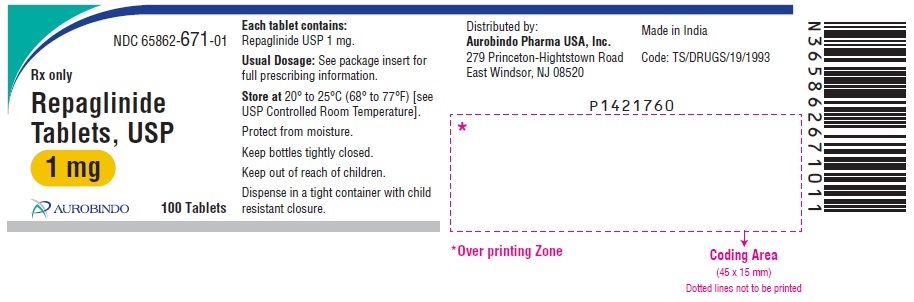
Repaglinide 1 mg Tablet, 100-count — NDC 65862-671-01 (Billing 65862-0671-01)
This is a package of 100 tablets of Repaglinide 1 mg Tablet from Aurobindo Pharma Limited, marketed since Jan 2014 and currently FDA-listed; retail pharmacies pay about $0.0987 per tablet (NADAC). It is the main listing for this product, which comes in 4 package sizes.
NDC database record
One package, one record: these facts belong to NDC 65862-671-01 alone.
- Record
- FDA NDC Directory package listing · Drug for further processing
- Code segments
- 65862 labeler · 671 product · 01 package
- Listing certified through
- Dec 31, 2026
- Billing quantity
- 100 EA per package
- Barcode (UPC-A, from the NDC)
- 3 6586267101 1
- Medicaid fills, this package
- 3,567 prescriptions in the last four reported quarters
- FDA record last changed
- Oct 8, 2026
Identity & classification
Regulatory identifiers FDA, NLM and CMS codes for this package
Drug-database identifiers Medi-Span GPI and First Databank GCN / HICL / AHFS classification
- GSN (GCN sequence number): 038907
- GCN: 26312
- GPI-14 (Medi-Span): 27280060000320
- HICL (First Databank): 017915
- AHFS class code: 68:20.16.00
Where does this data come from?
- FDA openFDA NDC Directory · synced Oct 8, 2026
- FDA label on DailyMed · label index refreshed Oct 8, 2026
- RxNorm (NLM RxNav) · catalog refreshed Oct 1, 2026
- Medi-Span GPI (licensed)
- First Databank (licensed) · refreshed Oct 8, 2026
Clinical
Repaglinide is used to treat type 2 diabetes (condition in which the body does not use insulin normally and, therefore, cannot control the amount of sugar in the blood). Repaglinide helps your body regulate the amount of glucose (sugar) in your blood. It decreases the amount of glucose by stimulating the pancreas to release insulin. Over time, people who have diabetes and high blood sugar can develop serious or life-threatening complications, including heart disease, stroke, kidney problems, nerve damage, and eye problems. Taking medication(s), making lifestyle changes (e.g., diet, exercise, q...
Read the full MedlinePlus article ↗- It helps adults with type 2 diabetes lower blood sugar, alongside diet and exercise. It is not for type 1 diabetes or diabetic ketoacidosis.
- Take it within 30 minutes before a meal. If you skip a meal, skip that dose too, which lowers your risk of low blood sugar. Follow your prescriber's directions on how many times a...
- Low blood sugar is the most common. Others include cold-like infections, headache, sinus problems, joint or back pain, nausea and diarrhea. Call your doctor if lows happen often or...
- Treat low blood sugar right away as your doctor has taught you, and check your glucose. Your doctor may lower your dose. Severe lows with confusion or seizure are an emergency.
Patient education
Supplement & herbal interactions
Some supplements/herbs that may interact with Repaglinide — tap one for details:
Repaglinide may be associated with lower levels of 1 nutrient — worth a chat with your pharmacist, not a cause for alarm.
Where does this data come from?
- MedlinePlus (NLM) · refreshed Oct 8, 2026
- FDA label on DailyMed · label index refreshed Oct 8, 2026
Ask a licensed pharmacist directly — free, answered by our team.
Pricing
A drug doesn't have one price. Each row is a different public payment system, and none is what you'd pay at the counter — that depends on your insurance. The ⓘ on each row explains what it measures.
| Price system | Per ea | Per package |
|---|---|---|
| Retail pharmacies payNADAC · weekly | $0.099 | $9.87 / 100 tablets |
| Medicaid paysCMS SDUD · 12 mo | $0.1855 | $18.55 / 100 tablets |
| Medicare drug plans payPart D · Q2 2026 | $0.1282 | $12.82 / 100 tablets |
Where does this data come from?
- CMS NADAC weekly file · file of Oct 7, 2026
- CMS ASP pricing files · refreshed Sep 20, 2026
- CMS Medicaid State Drug Utilization Data · through Q1 2026
- CMS Part D plan pricing files · refreshed Sep 24, 2026
- VA National Acquisition Center price file
Packaging — all sizes for this product
| Package NDC | Description | Per unit | Per pack | Marketing start | Marketing end | Status |
|---|---|---|---|---|---|---|
| 65862-0671-01 You're viewing this Main listing | 100 TABLET in 1 BOTTLE | $0.0987 / ea | $9.87 | 2014-01-22 | — | Active |
| 65862-0671-05 65862-671-05 | 500 TABLET in 1 BOTTLE | — | — | 2014-01-22 | — | Active |
| 65862-0671-99 65862-671-99 | 1000 TABLET in 1 BOTTLE | — | — | 2014-01-22 | — | Active |
| 65862-0671-45 65862-671-45 | 4500 TABLET in 1 BAG | — | — | — | — | Active |
You're viewing the smallest of 4 pack sizes for this product.
In Medicaid, this is the most-dispensed pack of this product — about 100% of fills over the last four reported quarters. See all packs ↓
Pack size FAQ
What quantity is in this package?
How does this package differ from NDC 65862-0671-05?
What NDC number is used to bill for this package of Repaglinide 1 mg Tablet?
Prices are the latest CMS NADAC pharmacy acquisition cost per NDC; per-pack figures are per-unit × pack quantity, shown only when the pack is denominated in the same measure NADAC prices.
Therapeutic equivalents
| Product | Labeler | Pack | NADAC/unit | TE | Status | Price vs. this |
|---|---|---|---|---|---|---|
| Repaglinide 1 mg 33342-0249-11 | Macleods | 100 tablets | $0.099 | AB | Availability likely | — |
| Repaglinide 1 mg 57237-0158-01 | Rising | 100 tablets | $0.099 | AB | Availability likely | — |
| Repaglinide 1 mg 60687-0560-21 | American | 30 tablets | $0.099 | AB | Availability likely | — |
| Repaglinide 1 mg 62135-0947-90 | Chartwell | 90 tablets | $0.099 | AB | Availability likely | — |
| Repaglinide 1 mgthis 65862-0671-01 | Aurobindo | 100 tablets | $0.099 | — | Availability likely | — |
| Repaglinide 1 mg 72603-0811-01 | NorthStar | 100 tablets | $0.099 | AB | Availability likely | — |
| Repaglinide 1 mg 72162-2558-01 | Bryant | 100 tablets | — | AB | FDA listed | — |
Where does this data come from?
- FDA openFDA NDC Directory · synced Oct 8, 2026
- FDA Orange Book · refreshed Oct 3, 2026
- CMS NADAC weekly file · file of Oct 7, 2026
Availability & generic status
FDA-approved generic versions are listed, and recent pricing/market data suggests they may be available — see Therapeutic equivalents.
Where does this data come from?
- FDA Orange Book · refreshed Oct 3, 2026
What it looks like
Where does this data come from?
- FDA label on DailyMed · label index refreshed Oct 8, 2026
Inactive Ingredients / Excipients
Inactive ingredients, also called excipients, are components of the drug product other than the active ingredient. They may include fillers, dyes, coatings, preservatives, flavors, or other formulation ingredients.
🧪 Avoiding an ingredient? See Repaglinide inactive ingredients by manufacturer: every current product's list side by side, so you can ask your pharmacy for the version that does not list it.
💡 Tap an ingredient (hover on desktop) to see what it is and why it’s used.
-
UNII L11K75P92J
A mineral salt made from calcium and phosphate. It acts as a filler and binder in tablets to add bulk and help hold the medicine together in solid form.
-
UNII EX438O2MRT
Ferric oxide yellow is a naturally occurring iron compound used as a colorant in medications. It gives tablets, capsules, and other forms a yellow or golden hue for identification and appearance.
-
UNII PDC6A3C0OX
Glycerin is a clear, thick liquid derived from plant oils or fats. It acts as a humectant to retain moisture, a sweetener, and a solvent in medications.
-
UNII 70097M6I30
Magnesium stearate is a salt made from magnesium and stearic acid, a fatty substance. It's used in tablets and capsules as a lubricant and glidant to help ingredients flow smoothly during manufacturing and prevent sticking.
-
UNII 6HG8UB2MUY
Meglumine is a sugar-alcohol compound used as a solubilizer and pH buffer in medicines. It helps dissolve drugs that don't mix well in water and maintains stable acidity levels in the formulation.
-
UNII OP1R32D61U
Microcrystalline cellulose is a purified form of cellulose, a natural fiber from plant sources. It acts as a binder and filler in tablets and capsules, helping hold ingredients together and give the medicine its shape and size.
-
UNII 0BZ5A00FQU
Polacrilin potassium is a synthetic polymer that absorbs water and swells. It acts as a disintegrant, helping tablets or capsules break apart quickly so the active ingredient can be absorbed in your body.
-
UNII LQA7B6G8JG
A synthetic polymer made by combining water-soluble compounds. It acts as a surfactant and solubilizer to help mix oil and water-based ingredients, improving the medicine's texture and how active ingredients dissolve.
-
UNII FZ989GH94E
Povidone is a synthetic polymer made from a plastic-like material. It acts as a binder to hold tablet ingredients together and as a disintegrant to help the tablet break apart in your stomach so the medicine can be absorbed.
-
UNII O8232NY3SJ
A plant-based carbohydrate derived from corn kernels. It acts as a filler to add bulk, a binder to hold ingredients together, and a disintegrant to help the tablet break apart in your stomach for absorption.
10 inactive ingredients listed in the exact product block matched to this NDC.
Where does this data come from?
ingredient classCode="IACT" elements from the exact product block matched by this NDC. Label-section narrative from DailyMed / the openFDA label index is shown separately when available.- FDA label on DailyMed · label index refreshed Oct 8, 2026
- FDA openFDA NDC Directory · synced Oct 8, 2026
Inactive ingredient FAQ
Are inactive ingredients the same for every manufacturer?
Why might an inactive ingredient be missing?
Can inactive ingredients matter?
Manufacturer & labeler
More NDCs from Aurobindo Pharma Limited labeler code 65862
- Aripiprazole 5 mg Tablet NDC 65862-662-01
- Aripiprazole 10 mg Tablet NDC 65862-663-01
- Aripiprazole 15 mg Tablet NDC 65862-664-01
- Aripiprazole 20 mg Tablet NDC 65862-665-01
- Aripiprazole 30 mg Tablet NDC 65862-666-01
- Repaglinide .5 mg Tablet NDC 65862-670-01
- Repaglinide 2 mg Tablet NDC 65862-672-01
- Felodipine 2.5 mg Tablet, Film Coated, Extended Release NDC 65862-673-01
- Felodipine 5 mg Tablet, Film Coated, Extended Release NDC 65862-674-01
- Felodipine 10 mg Tablet, Film Coated, Extended Release NDC 65862-675-01
- Alprazolam .25 mg Tablet NDC 65862-676-01
- Alprazolam .5 mg Tablet NDC 65862-677-01
Where does this data come from?
- FDA openFDA NDC Directory · synced Oct 8, 2026
- Drugs@FDA
Full FDA label FDA SPL
🎯 Indications and Usage ▾
1 INDICATIONS AND USAGE Repaglinide tablets are indicated as an adjunct to diet and exercise to improve glycemic control in adults with type 2 diabetes mellitus. Limitation of Use: Repaglinide tablets should not be used in patients with type 1 diabetes mellitus or for the treatment of diabetic ketoacidosis. Repaglinide tablets are a glinide indicated as an adjunct to diet and exercise to improve glycemic control in adults with type 2 diabetes mellitus.
(1) Limitation of Use : Not for treatment of type 1 diabetes mellitus or diabetic ketoacidosis (1)
⏱️ Dosage and Administration ▾
2 DOSAGE AND ADMINISTRATION The recommended starting dose is 0.5 mg orally before each meal if HbA1c is less than 8%; and 1 or 2 mg orally before each meal if HbA1c is 8% or greater. (2.1) The recommended dose range is 0.5 mg to 4 mg before meals, with a maximum daily dose of 16 mg. (2.1) The patient’s dose should be doubled up to 4 mg with each meal until satisfactory glycemic control is achieved.
At least one week should elapse to assess response after each dose adjustment. (2.1) Instruct patients to skip the dose of repaglinide tablets if a meal is skipped. In patients who experience hypoglycemia, the dose of repaglinide tablets should be reduced.
(2.1 ; 5.1) Instruct patients to take repaglinide tablets within 30 minutes before meals. (2.1) In patients with severe renal impairment (CrCl = 20 to 40 mL/min), recommended starting dose is 0.5 mg orally before each meal. (2.2) Dose modifications are required when used concominantly with some medications.
(2.3 , 7)
2.1Recommended Dosage and Administration The recommended starting dose for patients whose HbA 1c is less than 8% is 0.5 mg orally before each meal. For patients whose HbA 1c is 8% or greater the starting dose is 1 mg or 2 mg orally before each meal. The recommended dose range is 0.5 mg to 4 mg before meals, with a maximum daily dose of 16 mg.
The patient’s dose should be doubled up to 4 mg with each meal until satisfactory glycemic control is achieved. At least one week should elapse to assess response after each dose adjustment. Instruct patients to take repaglinide tablets within 30 minutes before meals.
Repaglinide tablets may be dosed 2, 3, or 4 times a day in response to changes in the patient’s meal pattern. In patients who skip meals, instruct patients to skip the scheduled dose of repaglinide tablets to reduce the risk of hypoglycemia. In patients who experience hypoglycemia, the dose of repaglinide tablets should be reduced [see Warnings and Precautions (5.1) ] .
2.2Patients with Severe Renal Impairment In patients with severe renal impairment (CrCl = 20 to 40 mL/min) initiate repaglinide tablets 0.5 mg orally before each meal. Gradually titrate the dose, if needed to achieve glycemic control.
2.3Dose Modifications for Drug Interactions Dosage adjustments are recommended in patients taking concomitant strong CYP3A4 or CYP2C8 inhibitors or strong CYP3A4 or CYP2C8 inducers [see Drug Interactions (7) , Clinical Pharmacology (12.3) ] . Concomitant use with gemfibrozil is contraindicated [see Contraindications (4) ] . Avoid concomitant use of repaglinide tablets with clopidogrel.
If concomitant use cannot be avoided, initiate repaglinide tablets at 0.5 mg before each meal and do not exceed a total daily dose of 4 mg [see Drug Interactions (7) , Clinical Pharmacology (12.3) ] . Do not exceed a total daily dose of 6 mg of repaglinide tablets in patients receiving cyclosporine [see Drug Interactions (7) , Clinical Pharmacology (12.3) ] .
💊 Dosage Forms and Strengths ▾
3 DOSAGE FORMS AND STRENGTHS Repaglinide tablets USP, 0.5 mg are white to off white, round, biconvex uncoated tablets, debossed with ‘H’ on one side and ‘10’ on other side. Repaglinide tablets USP, 1 mg are yellow colored, round, biconvex uncoated tablets, debossed with ‘H’ on one side and ‘11’ on other side. Repaglinide tablets USP, 2 mg are peach colored, mottled round, biconvex uncoated tablets, debossed with ‘H’ on one side and ‘12’ on other side.
Tablets: 0.5 mg, 1 mg, 2 mg (3)
⛔ Contraindications ▾
4 CONTRAINDICATIONS Repaglinide tablets are contraindicated in patients with: Concomitant use of gemfibrozil [see Drug Interactions (7) ] Known hypersensitivity to repaglinide or any inactive ingredients Concomitant use with gemfibrozil (4) Known hypersensitivity to repaglinide or any inactive ingredients (4)
⚠️ Warnings and Cautions ▾
5 WARNINGS AND PRECAUTIONS Hypoglycemia : Repaglinide may cause hypoglycemia. Skip the scheduled dose of repaglinide if a meal is skipped to reduce the risk of hypoglycemia. Reduce the dose of repaglinide if hypoglycemia occurs.
(5.1) Serious Cardiovascular Adverse Reactions with Concomitant NPH-insulin : Repaglinide is not indicated for use in combination with NPH-insulin. (5.2) Macrovascular outcomes : There have been no clinical studies establishing conclusive evidence of macrovascular risk reduction with repaglinide. (5.3)
5.1Hypoglycemia All glinides, including repaglinide, can cause hypoglycemia [see Adverse Reactions (6.1) ] . Severe hypoglycemia can cause seizures, may be life-threatening, or cause death. Hypoglycemia can impair concentration ability and reaction time; this may place an individual and others at risk in situations where these abilities are important (e.g., driving or operating other machinery).
Hypoglycemia can happen suddenly and symptoms may differ in each individual and change over time in the same individual. Symptomatic awareness of hypoglycemia may be less pronounced in patients with longstanding diabetes, in patients with diabetic nerve disease, in patients using medications that block the sympathetic nervous system (e.g., beta-blockers) [see Drug Interactions (7) ] , or in patients who experience recurrent hypoglycemia. Factors which may increase the risk of hypoglycemia include changes in meal pattern (e.g., macronutrient content), changes in level of physical activity, changes to co-administered medication [see Drug Interactions (7) ] , and concomitant use with other antidiabetic agents.
Patients with renal or hepatic impairment may be at higher risk of hypoglycemia [see Use in Specific Populations (8.6 , 8.7) ] . Patients should administer repaglinide before meals and be instructed to skip the dose of repaglinide if a meal is skipped. In patients who experience hypoglycemia, the dose of repaglinide should be reduced [see Dosage and Administration (2.1) ] .
Patients and caregivers must be educated to recognize and manage hypoglycemia. Self-monitoring of blood glucose plays an essential role in the prevention and management of hypoglycemia. In patients at higher risk for hypoglycemia and patients who have reduced symptomatic awareness of hypoglycemia, increased frequency of blood glucose monitoring is recommended.
5.2Serious Cardiovascular Adverse Reactions with Concomitant Use with NPH-insulin Across seven controlled trials, there were six serious adverse events of myocardial ischemia in patients treated with repaglinide plus NPH-insulin from two studies, and one event in patients using insulin formulations alone from another study [See Adverse Reactions (6.1) ] . Repaglinide is not indicated for use in combination with NPH-insulin.
5.3Macrovascular Outcomes There have been no clinical studies establishing conclusive evidence of macrovascular risk reduction with repaglinide.
🤒 Adverse Reactions ▾
6 ADVERSE REACTIONS The following serious adverse reaction is also described elsewhere in the labeling: Hypoglycemia [see Warnings and Precautions (5.1) ] The most common adverse reactions (5% or greater incidence) among patients treated with repaglinide were: hypoglycemia, upper respiratory infection, headache, sinusitis, arthralgia, nausea, diarrhea, and back pain. (6.1) To report SUSPECTED ADVERSE REACTIONS, contact Aurobindo Pharma USA, Inc. at 1-866-850-2876 or FDA at 1-800-FDA-1088 or www.fda.gov/medwatch.
6.1Clinical Trials Experience Because clinical trials are conducted under widely varying designs, the adverse reaction rates reported in one clinical trial may not be easily compared to those rates reported in another clinical trial, and may not reflect the rates actually observed in clinical practice. Repaglinide has been administered to 2931 individuals during clinical trials. Approximately 1500 of these individuals with type 2 diabetes have been treated for at least 3 months, 1000 for at least 6 months, and 800 for at least 1 year.
The majority of these individuals (1228) received repaglinide in one of five 1-year, active-controlled trials. Over one year, 13% of repaglinide patients were discontinued due to adverse reactions. The most common adverse reactions leading to withdrawal were hyperglycemia, hypoglycemia, and related symptoms.
Table 1 lists the common adverse reactions for repaglinide patients compared to placebo in trials 12 to 24 weeks duration. Table 1: Adverse Reactions (%) occurring ≥ 2% in Repaglinide Treated Patients from Pool of 12 to 24 Week Placebo Controlled Trials* *See trial descriptions in Clinical Trials (14) Repaglinide N=352 Placebo N=108 Upper Respiratory Infection Headache Sinusitis Arthralgia Nausea Diarrhea Back Pain Rhinitis Constipation Vomiting Paresthesia Chest pain Bronchitis Dyspepsia Urinary tract infection Tooth disorder Allergy 16 11 6 6 5 5 5 3 3 3 3 3 2 2 2 2 2 8 10 2 3 5 2 4 3 2 3 3 1 1 2 1 0 0 Hypoglycemia In clinical trials with repaglinide, hypoglycemia is the most commonly observed adverse reaction.
Mild or moderate hypoglycemia occurred in 31% of repaglinide treated patients and 7% of placebo treated patients [see Warnings and Precautions (5.1) ] . Hypoglycemia was reported in 16% of 1228 repaglinide patients, 20% of 417 glyburide patients, and 19% of 81 glipizide patients in 1-year controlled trials. Of repaglinide-treated patients with symptomatic hypoglycemia, none developed coma or required hospitalization.
In a 24-week placebo controlled trial, patients who were naïve to oral hypoglycemic agent therapy and patients with a HbA 1c below 8% at baseline had a higher frequency of hypoglycemia. Weight Gain There was no average gain in body weight when patients previously treated with oral hypoglycemic agents were switched to repaglinide. The average weight gain in patients treated with repaglinide and not previously treated with sulfonylurea drugs was 3.3%.
Cardiovascular Events The incidence of total serious cardiovascular adverse events, including ischemia, was higher for repaglinide (51/1228 or 4%) than for sulfonylurea drugs (13/498 or 3%) in controlled comparator clinical trials. Table 2: Summary of Serious Cardiovascular Events in Trials Comparing Repaglinide to Sulfonylureas (% of total patients with events) *: glyburide and glipizide Repaglinide SU* Total Exposed Serious CV Events Cardiac Ischemic Events Deaths due to CV Events 1228 4% 2% 0.5% 498 3% 2% 0.4% Seven controlled clinical trials included repaglinide combination therapy with NPH-insulin (n=431), insulin formulations alone (n=388) or other combinations (sulfonylurea plus NPH-insulin or repaglinide plus metformin) (n=120).
There were six serious adverse events of myocardial ischemia in patients treated with repaglinide plus NPH-insulin from two studies, and one event in patients using insulin formulations alone from another study [see Warnings and Precautions (5.3) ] . Combination Therapy with Thiazolid… [Excerpted — this section continues on DailyMed.]
🔄 Drug Interactions ▾
7 DRUG INTERACTIONS Clinically Important Drug Interactions with Repaglinide Table 3 includes a list of drugs with clinically important drug interactions when administered concomitantly with repaglinide and instructions for preventing or managing them. Table 3: Clinically Important Drug Interactions with Repaglinide Gemfibrozil Clinical Impact: Gemfibrozil significantly increased repaglinide exposures by 8.1 fold [see Clinical Pharmacology (12.3) ] Intervention: Do not administer repaglinide to patients receiving gemfibrozil [see Contraindications (4) ] .
Clopidogrel Clinical Impact: Clopidogrel increased repaglinide exposures by 3.9 to 5.1 fold [see Clinical Pharmacology (12.3) ] Intervention: Avoid concomitant use of repaglinide with clopidogrel. If concomitant use cannot be avoided, initiate repaglinide at 0.5 mg before each meal and do not exceed a total daily dose of 4 mg [see DOSAGE AND ADMINISTRATION (2.3) ] . Increased frequency of glucose monitoring may be required during concomitant use.
Cyclosporine Clinical Impact: Cyclosporine increased low dose repaglinide exposures by 2.5 fold [see Clinical Pharmacology (12.3) ] Intervention: Daily maximum repaglinide dose should be limited to 6 mg, and increased frequency of glucose monitoring may be required when repaglinide is co-administered with cyclosporine. CYP2C8 and CYP3A4 Inhibitors Intervention: Repaglinide dose reductions and increased frequency of glucose monitoring may be required when co-administered. Examples: Drugs that are known to inhibit CYP3A4 include antifungal agents (ketoconazole, itraconazole) and antibacterial agents (clarithromycin, erythromycin).
Drugs that are known to inhibit CYP2C8 include trimethoprim, gemfibrozil, montelukast, deferasirox, and clopidiogrel. CYP2C8 and CYP3A4 Inducers Intervention: Repaglinide dose increases and increased frequency of glucose monitoring may be required when co-administered. Examples: Drugs that induce the CYP3A4 and/or 2C8 enzyme systems include rifampin, barbiturates, and carbamezapine Drugs That May Increase the Risk of Hypoglycemia Intervention: Repaglinide dose reductions and increased frequency of glucose monitoring may be required when co-administered.
Examples: Antidiabetic agents, ACE inhibitors, angiotensin II receptor blocking agents, disopyramide, fibrates, fluoxetine, monoamine oxidase inhibitors, nonsteroidal anti-inflammatory agents (NSAIDs), pentoxifylline, pramlintide, propoxyphene, salicylates, somatostatin analogs (e.g., octreotide), and sulfonamide antibiotics Drugs That May Decrease the Blood Glucose Lowering Effect of Repaglinide Intervention: Repaglinide dose increases and increased frequency of glucose monitoring may be required when co-administered.
Examples: Atypical antipsychotics (e.g., olanzapine and clozapine), calcium channel antagonists, corticosteroids, danazol, diuretics, estrogens, glucagon, isoniazid, niacin, oral contraceptives, phenothiazines, progestogens (e.g., in oral contraceptives), protease inhibitors, somatropin, sympathomimetic agents (e.g., albuterol, epinephrine, terbutaline), and thyroid hormones. Drugs That May Blunt Signs and Symptoms of Hypoglycemia Intervention: Increased frequency of glucose monitoring may be required when repaglinide is co-administered with these drugs.
Examples: beta-blockers, clonidine, guanethidine, and reserpine Clopidogrel : Avoid concomitant use; if used concomitantly initiate at 0.5 mg before each meal and limit total daily dose to 4 mg (7) Cyclosporine : Limit daily dose of repaglinide to 6 mg and increase frequency of glucose monitoring when co-administered (7) CYP2C8 and CYP3A4 Inhibitors and Drugs That May Increase the Risk of Hypoglycemia : Co-administration may require repaglinide dose reductions and increased frequency of glucose monitoring (7) CYP2C8 and CYP3A4 Inducers and Drugs That May Decrease the Blood Glucose Lowering Effect of Repaglinide : Co-administration may require repaglinide dose increases and increased frequency… [Excerpted — this section continues on DailyMed.]
👥 Use in Specific Populations ▾
8 USE IN SPECIFIC POPULATIONS Lactation: Repaglinide is not recommended when breastfeeding ( 8.2 )
8.1Pregnancy Risk Summary Limited available data from case reports and case series with repaglinide use in pregnant women have not identified a drug-associated risk of major birth defects, miscarriage or adverse maternal or fetal outcomes. There are risks to the mother and fetus associated with poorly controlled diabetes in pregnancy (see Clinical Considerations ) . Teratogenicity was not observed in rats and rabbits administered repaglinide during organogenesis at approximately 60 and 1 times the maximum daily clinical dose, based on body surface area.
No adverse developmental effects were observed in offspring of rats administered repaglinide during late gestation and lactation at approximately 4 times the maximum daily clinical dose (see Data). The estimated background risk of major birth defects is 6 to 10% in women with pre-gestational diabetes with a HbA1c>7 and has been reported to be as high as 20 to 25% in women with a HbA1c>10. The estimated background risk of miscarriage for the indicated population is unknown.
In the U.S. general population, the estimated background risk of major birth defects and miscarriage in clinically recognized pregnancies is 2 to 4% and 15 to 20%, respectively. Clinical Considerations Disease-associated maternal and/or embryo/fetal risk Poorly controlled diabetes in pregnancy increases the maternal risk for diabetic ketoacidosis, pre-eclampsia, spontaneous abortions, preterm delivery, and delivery complications. Poorly controlled diabetes increases the fetal risk for major birth defects, stillbirth and macrosomia related morbidity.
Data Animal Data Repaglinide was not teratogenic in rats or rabbits at doses 60 times (rats) and approximately 1 times (rabbit) clinical exposure (on a mg/m 2 basis) when administered during the period of organogenesis. Offspring of rat dams exposed to repaglinide at ≥22 times clinical exposure on a mg/m 2 basis during days 17 to 22 of gestation and during lactation were less viable and developed skeletal deformations consisting of shortening, thickening, and bending of the humerus during the postnatal period. This effect was not seen at doses up to 4 times clinical exposure (on a mg/m 2 basis).
8.2Lactation Risk Summary There are no data on the presence of repaglinide in human milk, the effects on the breastfeeding infant, or the effects on milk production. The drug is present in animal milk. When a drug is present in animal milk, it is likely that the drug will be present in human milk ( see Data ).
Because of the potential for hypoglycemia in breastfed infants, repaglinide is not recommended for use when breastfeeding. Data In rat reproduction studies, measurable levels of repaglinide were detected in the breast milk of the dams and lowered blood glucose levels were observed in the pups. Cross fostering studies indicated that skeletal changes [see Use in Specific Populations (8.1) ] could be induced in control pups nursed by treated dams, although this occurred to a lesser degree than those pups treated in utero .
8.4Pediatric Use Safety and effectiveness have not been established in pediatric patients.
8.5Geriatric Use In clinical studies of 24 weeks or greater duration, 415 patients were over 65 years of age and no patients were greater than 75 years of age. In one-year, active-controlled trials, no differences were seen in effectiveness or adverse events between these subjects and those less than 65. There was no increase in frequency or severity of hypoglycemia in older subjects, but greater sensitivity of some older individuals to repaglinide therapy cannot be ruled out.
8.6Renal Impairment Pharmacokinetic studies of repaglinide were conducted in patients with mild to moderate renal function impairment (CrCl = 40 to 80 mL/min), and severe renal function impairment (CrCl = 20 to 40 mL/min). Initial dose adjustment is not required in patients with mild to… [Excerpted — this section continues on DailyMed.]
🤰 Pregnancy ▾
8.1Pregnancy Risk Summary Limited available data from case reports and case series with repaglinide use in pregnant women have not identified a drug-associated risk of major birth defects, miscarriage or adverse maternal or fetal outcomes. There are risks to the mother and fetus associated with poorly controlled diabetes in pregnancy (see Clinical Considerations ) . Teratogenicity was not observed in rats and rabbits administered repaglinide during organogenesis at approximately 60 and 1 times the maximum daily clinical dose, based on body surface area.
No adverse developmental effects were observed in offspring of rats administered repaglinide during late gestation and lactation at approximately 4 times the maximum daily clinical dose (see Data). The estimated background risk of major birth defects is 6 to 10% in women with pre-gestational diabetes with a HbA1c>7 and has been reported to be as high as 20 to 25% in women with a HbA1c>10. The estimated background risk of miscarriage for the indicated population is unknown.
In the U.S. general population, the estimated background risk of major birth defects and miscarriage in clinically recognized pregnancies is 2 to 4% and 15 to 20%, respectively. Clinical Considerations Disease-associated maternal and/or embryo/fetal risk Poorly controlled diabetes in pregnancy increases the maternal risk for diabetic ketoacidosis, pre-eclampsia, spontaneous abortions, preterm delivery, and delivery complications. Poorly controlled diabetes increases the fetal risk for major birth defects, stillbirth and macrosomia related morbidity.
Data Animal Data Repaglinide was not teratogenic in rats or rabbits at doses 60 times (rats) and approximately 1 times (rabbit) clinical exposure (on a mg/m 2 basis) when administered during the period of organogenesis. Offspring of rat dams exposed to repaglinide at ≥22 times clinical exposure on a mg/m 2 basis during days 17 to 22 of gestation and during lactation were less viable and developed skeletal deformations consisting of shortening, thickening, and bending of the humerus during the postnatal period. This effect was not seen at doses up to 4 times clinical exposure (on a mg/m 2 basis).
🧒 Pediatric Use ▾
8.4Pediatric Use Safety and effectiveness have not been established in pediatric patients.
🧓 Geriatric Use ▾
8.5Geriatric Use In clinical studies of 24 weeks or greater duration, 415 patients were over 65 years of age and no patients were greater than 75 years of age. In one-year, active-controlled trials, no differences were seen in effectiveness or adverse events between these subjects and those less than 65. There was no increase in frequency or severity of hypoglycemia in older subjects, but greater sensitivity of some older individuals to repaglinide therapy cannot be ruled out.
🆘 Overdosage ▾
10 OVERDOSAGE Severe hypoglycemic reactions with coma, seizure, or other neurological impairment may occur and constitute medical emergencies requiring immediate hospitalization. Hypoglycemic symptoms without loss of consciousness or neurologic findings should be treated aggressively with oral glucose and adjustments in drug dosage and/or meal patterns. Close monitoring may continue until the physician is assured that the patient is out of danger.
Patients should be closely monitored for a minimum of 24 to 48 hours, since hypoglycemia may recur after apparent clinical recovery. There is no evidence that repaglinide is dialyzable using hemodialysis.
🧬 Clinical Pharmacology ▾
12 CLINICAL PHARMACOLOGY
12.1Mechanism of Action Repaglinide lowers blood glucose levels by stimulating the release of insulin from the pancreas. This action is dependent upon functioning beta (ß) cells in the pancreatic islets. Insulin release is glucose-dependent and diminishes at low glucose concentrations.
Repaglinide closes ATP-dependent potassium channels in the ß-cell membrane by binding at characterizable sites. This potassium channel blockade depolarizes the ß-cell, which leads to an opening of calcium channels. The resulting increased calcium influx induces insulin secretion.
The ion channel mechanism is highly tissue selective with low affinity for heart and skeletal muscle.
12.2Pharmacodynamics A four-week, double-blind, placebo-controlled dose-response trial was conducted in 138 patients with type 2 diabetes using doses ranging from 0.25 (not an approved dose) to 4 mg taken with each of three meals. Repaglinide therapy resulted in dose-proportional glucose lowering over the full dose range. Plasma insulin levels increased after meals and reverted toward baseline before the next meal.
Most of the fasting blood glucose-lowering effect was demonstrated within 1 to 2 weeks. In a double-blind, placebo-controlled, 3-month dose titration study, repaglinide or placebo doses for each patient were increased weekly from 0.25 mg (not an approved dose) through 0.5, 1, and 2 mg, to a maximum of 4 mg, until a fasting plasma glucose (FPG) level <160 mg/dL was achieved or the maximum dose reached. The dose that achieved the targeted control or the maximum dose was continued to end of study.
FPG and 2-hour post-prandial glucose (PPG) increased in patients receiving placebo and decreased in patients treated with repaglinide. Differences between the repaglinide- and placebo-treated groups were -61 mg/dL (FPG) and -104 mg/dL (PPG) (Table 4). Table 4: Repaglinide vs Placebo Mean Change from Baseline after 3 Months of Treatment *: p< 0.05 for between group difference Repaglinide Placebo N 66 33 Fasting Plasma Glucose (mg/dL) Baseline Change from baseline (at last visit) Post Prandial Glucose (mg/dL) Baseline Change from baseline (at last visit) 220.2 -31.0 * 261.7 -47.6 * 215.3 30.3 245.2
56.5The dosing of repaglinide relative to meal-related insulin release was studied in three trials including 58 patients. Glycemic control was maintained during a period in which the meal and dosing pattern was varied (2, 3 or 4 meals per day; before meals x 2, 3, or 4) compared with a period of 3 regular meals and 3 doses per day (before meals x 3). Blood glucose-lowering effect did not differ when repaglinide was administered at the start of a meal, 15 minutes before, or 30 minutes before the meal.
12.3Pharmacokinetics The pharmacokinetic parameters of repaglinide obtained from a single-dose, crossover study in healthy subjects and from a multiple-dose, parallel, dose-proportionality (0.5, 1, 2 and 4 mg) study in patients with type 2 diabetes are summarized in Tables 5 and 6. These data indicate that repaglinide did not accumulate in serum. Clearance of oral repaglinide did not change over the 0.5 to 4 mg dose range, indicating a linear relationship between dose and plasma drug levels.
Table 5: Pharmacokinetic Parameters for Repaglinide in Healthy Subjects CL = total body clearance Vss = volume of distribution at steady state AbsBio = absolute bioavailability Parameter CL (based on i.v.) 38 ± 16 L/hr Vss (based on i.v.) 31 ± 12 L AbsBio 56 ± 9% Table 6: Pharmacokinetic Parameters for Repaglinide in Patients with Type 2 Diabetes* *dosed preprandially with three meals Pharmacokinetic Parameter Dose (mg) AUC 0-24 hr (ng/mL*hr) Mean (SD) C max0-5 hr (ng/mL) Mean (SD) 0.5 68.9 (154.4) 9.8 (10.2) 1 125.8 (129.8) 18.3 (9.1) 2 152.4 (89.60) 26.0 (13.0) 4 447.4 (211.3) 65.8 (30.1) T max0-5 hr Means (SD) T ½ Means (Ind Range) 0.5 to 4 1.0 to 1.4 (0.3 to 0.5) hr 1.0 to 1.4 (0.4 to 8.0) hr Absorption After oral administration, repaglinide is completely absor… [Excerpted — this section continues on DailyMed.]
🧬 Mechanism of Action ▾
12.1Mechanism of Action Repaglinide lowers blood glucose levels by stimulating the release of insulin from the pancreas. This action is dependent upon functioning beta (ß) cells in the pancreatic islets. Insulin release is glucose-dependent and diminishes at low glucose concentrations.
Repaglinide closes ATP-dependent potassium channels in the ß-cell membrane by binding at characterizable sites. This potassium channel blockade depolarizes the ß-cell, which leads to an opening of calcium channels. The resulting increased calcium influx induces insulin secretion.
The ion channel mechanism is highly tissue selective with low affinity for heart and skeletal muscle.
📦 How Supplied / Storage and Handling ▾
16 HOW SUPPLIED/STORAGE AND HANDLING Repaglinide Tablets USP, 0.5 mg are white to off white, round, biconvex uncoated tablets, debossed with ‘H’ on one side and ‘10’ on other side. Bottles of 100 NDC 65862-670-01 Bottles of 500 NDC 65862-670-05 Bottles of 1,000 NDC 65862-670-99 Repaglinide Tablets USP, 1 mg are yellow colored, round, biconvex uncoated tablets, debossed with ‘H’ on one side and ‘11’ on other side. Bottles of 100 NDC 65862-671-01 Bottles of 500 NDC 65862-671-05 Bottles of 1,000 NDC 65862-671-99 Repaglinide Tablets USP, 2 mg are peach colored, mottled round, biconvex uncoated tablets, debossed with ‘H’ on one side and ‘12’ on other side.
Bottles of 100 NDC 65862-672-01 Bottles of 500 NDC 65862-672-05 Bottles of 1,000 NDC 65862-672-99 Store at 20° to 25°C (68° to 77°F) [see USP Controlled Room Temperature]. Protect from moisture. Keep bottles tightly closed.
Dispense in tight containers with safety closures.
📋 Description ▾
11 DESCRIPTION Repaglinide is an oral blood glucose-lowering drug of the glinide class. Repaglinide, S(+)2-ethoxy-4(2((3-methyl-1-(2-(1-piperidinyl) phenyl)-butyl) amino)-2-oxoethyl) benzoic acid, is chemically unrelated to the oral sulfonylurea insulin secretagogues. Structural Formula of Repaglinide Repaglinide USP is a white to off-white solid with molecular formula C 27 H 36 N 2 O 4 and a molecular weight of 452.6.
Repaglinide tablets, USP contain 0.5 mg, 1 mg, or 2 mg of repaglinide USP. In addition, each tablet contains the following inactive ingredients: anhydrous dibasic calcium phosphate, corn starch, glycerol, magnesium stearate, meglumine, microcrystalline cellulose, polacrillin potassium, poloxamer, and povidone. In addition, the 1 mg tablet contains ferric oxide (Sicovit Yellow 10) and 2 mg tablet contains ferric oxide (Sicovit Red 30).
Chemical Structure
💬 Information for Patients ▾
17 PATIENT COUNSELING INFORMATION Hypoglycemia Inform patients that repaglinide tablets can cause hypoglycemia and instruct patients and their caregivers on self-management procedures including glucose monitoring and management of hypoglycemia. Inform patients that their ability to concentrate and react may be impaired as a result of hypoglycemia. In patients at higher risk for hypoglycemia and patients who have reduced symptomatic awareness of hypoglycemia, increased frequency of blood glucose monitoring is recommended [see Warnings and Precautions (5.1) ] .
Administration Instruct patients to take repaglinide tablet within 30 minutes before meals. Instruct patients to skip their dose of repaglinide tablet when a meal is skipped. [see Dosage and Administration (2) ] . Drug Interactions Discuss potential drug interactions with patients and inform them of potential drug-drug interactions with repaglinide tablets. [see Drug Interactions (7) ] .
Distributed by: Aurobindo Pharma USA, Inc. 279 Princeton-Hightstown Road East Windsor, NJ 08520 Manufactured by: Aurobindo Pharma Limited Hyderabad–500 032, India Revised: 12/2022
🧬 Pharmacokinetics ▾
12.3Pharmacokinetics The pharmacokinetic parameters of repaglinide obtained from a single-dose, crossover study in healthy subjects and from a multiple-dose, parallel, dose-proportionality (0.5, 1, 2 and 4 mg) study in patients with type 2 diabetes are summarized in Tables 5 and 6. These data indicate that repaglinide did not accumulate in serum. Clearance of oral repaglinide did not change over the 0.5 to 4 mg dose range, indicating a linear relationship between dose and plasma drug levels.
Table 5: Pharmacokinetic Parameters for Repaglinide in Healthy Subjects CL = total body clearance Vss = volume of distribution at steady state AbsBio = absolute bioavailability Parameter CL (based on i.v.) 38 ± 16 L/hr Vss (based on i.v.) 31 ± 12 L AbsBio 56 ± 9% Table 6: Pharmacokinetic Parameters for Repaglinide in Patients with Type 2 Diabetes* *dosed preprandially with three meals Pharmacokinetic Parameter Dose (mg) AUC 0-24 hr (ng/mL*hr) Mean (SD) C max0-5 hr (ng/mL) Mean (SD) 0.5 68.9 (154.4) 9.8 (10.2) 1 125.8 (129.8) 18.3 (9.1) 2 152.4 (89.60) 26.0 (13.0) 4 447.4 (211.3) 65.8 (30.1) T max0-5 hr Means (SD) T ½ Means (Ind Range) 0.5 to 4 1.0 to 1.4 (0.3 to 0.5) hr 1.0 to 1.4 (0.4 to 8.0) hr Absorption After oral administration, repaglinide is completely absorbed from the gastrointestinal tract.
After single and multiple oral doses in healthy subjects or in patients, peak plasma drug levels (C max ) occur within 1 hour (T max ). Repaglinide is eliminated from the blood stream with a half-life of approximately 1 hour. The mean absolute bioavailability is 56%.
When repaglinide was given with food, the mean T max was not changed, but the mean C max and AUC (area under the time/plasma concentration curve) were decreased 20% and 12.4%, respectively. Distribution After intravenous (IV) dosing in healthy subjects, the volume of distribution at steady state (V ss ) was 31 L, and the total body clearance (CL) was 38 L/h. Protein binding and binding to human serum albumin was greater than 98%.
Metabolism and Elimination Repaglinide is completely metabolized by oxidative biotransformation and direct conjugation with glucuronic acid after either an IV or oral dose. The major metabolites are an oxidized dicarboxylic acid (M2), the aromatic amine (M1), and the acyl glucuronide (M7). The cytochrome P-450 enzyme system, specifically 2C8 and 3A4, have been shown to be involved in the N-dealkylation of repaglinide to M2 and the further oxidation to M1.
Metabolites do not contribute to the glucose-lowering effect of repaglinide. Within 96 hours after dosing with 14 C-repaglinide as a single, oral dose, approximately 90% of the radiolabel was recovered in the feces and approximately 8% in the urine. Only 0.1% of the dose is cleared in the urine as parent compound.
The major metabolite (M2) accounted for 60% of the administered dose. Less than 2% of parent drug was recovered in feces. Repaglinide appears to be a substrate for active hepatic uptake transporter (organic anion transporting protein OATP1B1).
Variability of Exposure Repaglinide AUC after multiple doses of 0.25 to 4 mg with each meal varies over a wide range. The intra-individual and inter- individual coefficients of variation were 36% and 69%, respectively. AUC over the therapeutic dose range included 69 to 1005 ng/mL*hr, but AUC exposure up to 5417 ng/mL*hr was reached in dose escalation studies without apparent adverse consequences.
Specific Populations Geriatric Healthy volunteers were treated with a regimen of 2 mg repaglinide taken before each of 3 meals. There were no significant differences in repaglinide pharmacokinetics between the group of patients <65 years of age and a comparably sized group of patients ≥65 years of age [see Use in Specific Populations (8.5) ] . Gender A comparison of pharmacokinetics in males and females showed the AUC over the 0.5 mg to 4 mg dose range to be 15% to 70% higher in females with type 2 diabetes.
This difference was not reflected in the frequency of… [Excerpted — this section continues on DailyMed.]
🧬 Pharmacodynamics ▾
12.2Pharmacodynamics A four-week, double-blind, placebo-controlled dose-response trial was conducted in 138 patients with type 2 diabetes using doses ranging from 0.25 (not an approved dose) to 4 mg taken with each of three meals. Repaglinide therapy resulted in dose-proportional glucose lowering over the full dose range. Plasma insulin levels increased after meals and reverted toward baseline before the next meal.
Most of the fasting blood glucose-lowering effect was demonstrated within 1 to 2 weeks. In a double-blind, placebo-controlled, 3-month dose titration study, repaglinide or placebo doses for each patient were increased weekly from 0.25 mg (not an approved dose) through 0.5, 1, and 2 mg, to a maximum of 4 mg, until a fasting plasma glucose (FPG) level <160 mg/dL was achieved or the maximum dose reached. The dose that achieved the targeted control or the maximum dose was continued to end of study.
FPG and 2-hour post-prandial glucose (PPG) increased in patients receiving placebo and decreased in patients treated with repaglinide. Differences between the repaglinide- and placebo-treated groups were -61 mg/dL (FPG) and -104 mg/dL (PPG) (Table 4). Table 4: Repaglinide vs Placebo Mean Change from Baseline after 3 Months of Treatment *: p< 0.05 for between group difference Repaglinide Placebo N 66 33 Fasting Plasma Glucose (mg/dL) Baseline Change from baseline (at last visit) Post Prandial Glucose (mg/dL) Baseline Change from baseline (at last visit) 220.2 -31.0 * 261.7 -47.6 * 215.3 30.3 245.2
56.5The dosing of repaglinide relative to meal-related insulin release was studied in three trials including 58 patients. Glycemic control was maintained during a period in which the meal and dosing pattern was varied (2, 3 or 4 meals per day; before meals x 2, 3, or 4) compared with a period of 3 regular meals and 3 doses per day (before meals x 3). Blood glucose-lowering effect did not differ when repaglinide was administered at the start of a meal, 15 minutes before, or 30 minutes before the meal.
🔬 Clinical Studies ▾
14 CLINICAL STUDIES
14.1Monotherapy Trials A double-blind, placebo-controlled trial was carried out in 362 patients treated for 24 weeks. HbA 1c for the repaglinide-treated groups (1 and 4 mg groups combined) at the end of the study was decreased compared to the placebo-treated group in treatment naïve patients and in patients previously treated with oral hypoglycemic agents by 2.1% and 1.7%, respectively. In this fixed-dose trial, patients who were treatment naïve to oral hypoglycemic agent therapy and patients with a HbA 1c below 8% at baseline showed greater blood glucose-lowering.
14.2Combination Trials Repaglinide in Combination With Metformin Repaglinide was studied in combination with metformin in 83 patients not satisfactorily controlled on exercise, diet, and metformin alone. Repaglinide dosage was titrated for 4 to 8 weeks, followed by a 3-month maintenance period. Combination therapy with repaglinide and metformin resulted in statistically significant improvement in HbA 1c and fasting plasma glucose (FPG) compared to repaglinide or metformin monotherapy (Table 8).
In this study where metformin dosage was kept constant, the combination therapy of repaglinide and metformin showed dose-sparing effects with respect to repaglinide. The improvement in HbA 1c and FPG of the combination group was achieved at a lower daily repaglinide dosage than in the repaglinide monotherapy group (Table 8). Table 8: Repaglinide in Combination with Metformin: Mean Change from Baseline after 4 to 5 Months of Treatment 1 1 : based on intent-to-treat analysis ∗ : p< 0.05, for pairwise comparisons with repaglinide and metformin monotherapy. # : p< 0.05, for pairwise comparison with metformin.
Repaglinide Monotherapy Repaglinide Combination Therapy with Metformin Metformin Monotherapy N 28 27 27 Median Final Dose (mg/day) 12 6 (Repaglinide) 1500 (metformin) 1500 HbA 1c (%) Baseline 8.6 8.3
8.6Change from baseline -0.38 -1.41 * -0.33 Fasting Plasma Glucose (mg/dL) Baseline 174 184 194 Change from baseline 8.8 -39.2 ∗ -4.5 Weight (kg) Baseline 87 93 91 Change from baseline 3.0 2.4 # -0.90 Repaglinide in Combination With Pioglitazone A combination therapy regimen of repaglinide and pioglitazone (N=123) was compared to repaglinide alone (N=61) and pioglitazone alone (N=62) in a 24-week trial that enrolled 246 patients previously treated with sulfonylurea or metformin monotherapy (HbA 1c > 7.0%). repaglinide dosage was titrated during the first 12 weeks, followed by a 12-week maintenance period.
Combination therapy resulted in statistically significant improvement in HbA 1c and FPG compared to monotherapy (Figure 1). The changes from baseline for completers in FPG (mg/dL) and HbA 1c (%), respectively were: -39.8 mg/dL and -0.1% for repaglinide, -35.3 mg/dL and -0.1% for pioglitazone and -92.4 mg/dL and -1.9% for the combination. In this study where pioglitazone dosage was kept constant, the combination therapy group showed dose-sparing effects with respect to repaglinide (see Figure 1 Legend).
The improvement in HbA 1c and FPG of the combination group was achieved at a lower daily repaglinide dosage than in the repaglinide monotherapy group. Figure 1: Repaglinide in Combination with Pioglitazone: HbA 1c Values LEGEND: HbA 1c values by study week for patients who completed study (combination, N = 101; repaglinide, N = 35, pioglitazone, N = 26). Subjects with FPG above 270 mg/dL were withdrawn from the study.
Pioglitazone dose: fixed at 30 mg/day; repaglinide median final dose: 6 mg/day for combination and 10 mg/day for monotherapy. Repaglinide in Combination With Rosiglitazone A combination therapy regimen of repaglinide and rosiglitazone was compared to monotherapy with either agent alone in a 24-week trial that enrolled 252 patients previously treated with sulfonylurea or metformin (HbA 1c > 7.0%). Combination therapy resulted in statistically significant improvement in HbA 1c and FPG compared to monotherapy (Table 9 below).
The glycemic effects… [Excerpted — this section continues on DailyMed.]
🧪 Nonclinical Toxicology ▾
13 NONCLINICAL TOXICOLOGY
13.1Carcinogenesis, Mutagenesis, Impairment of Fertility In a 104-week carcinogenicity study in rats at doses up to 120 mg/kg/day, which is approximately 90 times clinical exposure on a mg/m 2 basis, the incidences of benign adenomas of the thyroid and liver were increased in male rats. No evidence of carcinogenicity was found in female rats. The higher incidences of thyroid and liver tumors in male rats were not seen at lower dose of 30 mg/kg/day and 60 mg/kg/day respectively (which are over 20 and 45 times, respectively, clinical exposures on a mg/m 2 basis).
In a 104-week carcinogenicity study in mice at doses up to 500 mg/kg/day, no evidence of carcinogenicity was found in mice (which is approximately 187 times clinical exposure on a mg/m 2 basis). Repaglinide was non-genotoxic in a battery of in vivo and in vitro studies: Bacterial mutagenesis (Ames test), in vitro forward cell mutation assay in V79 cells (HGPRT), in vitro chromosomal aberration assay in human lymphocytes, unscheduled and replicating DNA synthesis in rat liver, and in vivo mouse and rat micronucleus tests.
In a rat fertility study, repaglinide was administered to male and female rats at doses up to 300 and 80 mg/kg/day, respectively. No adverse effects on fertility were observed (which are over 60 times clinical exposure on a mg/m 2 basis).
📄 Carcinogenesis, Mutagenesis, Impairment of Fertility ▾
13.1Carcinogenesis, Mutagenesis, Impairment of Fertility In a 104-week carcinogenicity study in rats at doses up to 120 mg/kg/day, which is approximately 90 times clinical exposure on a mg/m 2 basis, the incidences of benign adenomas of the thyroid and liver were increased in male rats. No evidence of carcinogenicity was found in female rats. The higher incidences of thyroid and liver tumors in male rats were not seen at lower dose of 30 mg/kg/day and 60 mg/kg/day respectively (which are over 20 and 45 times, respectively, clinical exposures on a mg/m 2 basis).
In a 104-week carcinogenicity study in mice at doses up to 500 mg/kg/day, no evidence of carcinogenicity was found in mice (which is approximately 187 times clinical exposure on a mg/m 2 basis). Repaglinide was non-genotoxic in a battery of in vivo and in vitro studies: Bacterial mutagenesis (Ames test), in vitro forward cell mutation assay in V79 cells (HGPRT), in vitro chromosomal aberration assay in human lymphocytes, unscheduled and replicating DNA synthesis in rat liver, and in vivo mouse and rat micronucleus tests.
In a rat fertility study, repaglinide was administered to male and female rats at doses up to 300 and 80 mg/kg/day, respectively. No adverse effects on fertility were observed (which are over 60 times clinical exposure on a mg/m 2 basis).
📄 Package Label / Principal Display Panel ▾
PACKAGE LABEL-PRINCIPAL DISPLAY PANEL - 0.5 mg (100 Tablet Bottle) NDC 65862-670-01 Repaglinide Tablets, USP 0.5 mg Rx only 100 Tablets AUROBINDO PACKAGE LABEL-PRINCIPAL DISPLAY PANEL - 0.5 mg (100 Tablet Bottle)
PACKAGE LABEL-PRINCIPAL DISPLAY PANEL - 1 mg (100 Tablet Bottle) NDC 65862-671-01 Rx only Repaglinide Tablets, USP 1 mg AUROBINDO 100 Tablets PACKAGE LABEL-PRINCIPAL DISPLAY PANEL - 1 mg (100 Tablet Bottle)
PACKAGE LABEL-PRINCIPAL DISPLAY PANEL - 2 mg (100 Tablet Bottle) NDC 65862-672-01 Rx only Repaglinide Tablets, USP 2 mg AUROBINDO 100 Tablets PACKAGE LABEL-PRINCIPAL DISPLAY PANEL - 2 mg (100 Tablet Bottle)
Medicaid utilization & spend
Medicaid utilization by pack size
Medicare Part D spend CMS · PART D · 2026 (Q1)
Reported adverse events (FAERS)
Top reported reactions
Age at onset
Reporter sex
Serious outcomes
Where does this data come from?
About this NDC listing & data coverage
What "drug for further processing" means
FDA lists this package under the "drug for further processing" marketing category: Aurobindo Pharma Limited supplies it to other companies for further processing or repackaging (blister cards that are later repackaged or co-packaged are a common example). The units themselves are a finished dosage form — which is why pricing or Medicaid data can still appear — but this exact package code may not be the presentation a retail pharmacy dispenses.
What data is (and isn’t) available for this NDC — tap to expand
| NDC identity (package / product / labeler codes) | ✓ Available |
| Labeler | ✓ Available |
| Product & package description | ✓ Available |
| Marketing category & status | ✓ Available |
| Active ingredient / dosage form / route | ✓ Available |
| FDA label (SPL via DailyMed) | ✓ Available |
| Package photos | ✓ Available |
| Inactive ingredients (structured) | ✓ Available |
| NADAC pharmacy acquisition price (CMS) | ✓ Available |
| Orange Book / therapeutic-equivalence data | — Not published for this NDC Applies only to products approved under an NDA/ANDA; many listings are out of scope. |
| HCPCS J-code billing crosswalk | — Not published for this NDC Most self-administered / retail products have no J-code — that is normal. |
| Medicaid utilization (CMS SDUD) | ✓ Available |