
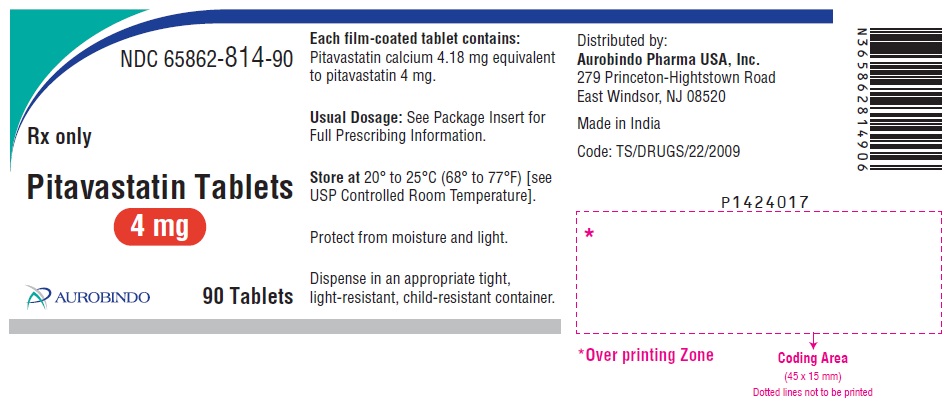
Pitavastatin 4 mg Tablet, Film Coated, 90-count — NDC 65862-814-90 (Billing 65862-0814-90)
This is a package of 90 tablets of Pitavastatin 4 mg Tablet, Film Coated from Aurobindo Pharma Limited, marketed since Nov 2023 and currently FDA-listed; retail pharmacies pay about $1.03 per tablet (NADAC). It is the main listing for this product, which comes in 2 package sizes.
NDC database record
One package, one record: these facts belong to NDC 65862-814-90 alone.
- Record
- FDA NDC Directory package listing · Human prescription drug
- Code segments
- 65862 labeler · 814 product · 90 package
- Package marketed since
- Nov 2, 2023
- Sample package
- No — commercial package
- Listing certified through
- Dec 31, 2026
- Billing quantity
- 90 EA per package
- Barcode (UPC)
- 0365862813909, 0365862812902
- Medicaid fills, this package
- 179 prescriptions in the last four reported quarters
- FDA record last changed
- Jul 24, 2026
Identity & classification
Regulatory identifiers FDA, NLM and CMS codes for this package
Drug-database identifiers Medi-Span GPI and First Databank GCN / HICL / AHFS classification
- GSN (GCN sequence number): 066351
- GCN: 28595
- GPI-14 (Medi-Span): 39400058100341
- HICL (First Databank): 036983
- AHFS class code: 24:06.08.00
- RxCUI (RxNorm): 861643
Where does this data come from?
- FDA openFDA NDC Directory · synced Oct 1, 2026
- FDA label on DailyMed · label index refreshed Oct 5, 2026
- RxNorm (NLM RxNav) · catalog refreshed Oct 1, 2026
- Medi-Span GPI (licensed)
- First Databank (licensed) · refreshed Oct 1, 2026
RxNorm drug class
This medicine belongs to the HMG-CoA Reductase Inhibitor class.
Where does this data come from?
- RxClass (NLM) · catalog refreshed Oct 1, 2026
Clinical
- It lowers LDL, the “bad” cholesterol, along with a healthy diet. It is used in adults with primary hyperlipidemia. Some products, such as Livalo, are also used for inherited high c...
- Take one tablet by mouth once a day, with or without food, at about the same time each day. Your doctor may recheck your cholesterol after about 4 weeks. Follow the directions on y...
- The most common are muscle aches, constipation, diarrhea, back pain, and pain in the arms or legs. Most are mild. Call your doctor if muscle pain or weakness is unexplained, especi...
- Yes. Cyclosporine must not be taken with it, and gemfibrozil should be avoided. Erythromycin and rifampin require a lower dose limit. Niacin, other fibrates and colchicine can rais...
Patient education
Supplement & herbal interactions
Some supplements/herbs that may interact with Pitavastatin — tap one for details:
Pitavastatin may be associated with lower levels of 1 nutrient — worth a chat with your pharmacist, not a cause for alarm.
Where does this data come from?
- MedlinePlus (NLM) · refreshed Oct 1, 2026
- FDA label on DailyMed · label index refreshed Oct 5, 2026
Ask a licensed pharmacist directly — free, answered by our team.
Pricing
A drug doesn't have one price. Each row is a different public payment system, and none is what you'd pay at the counter — that depends on your insurance. The ⓘ on each row explains what it measures.
| Price system | Per ea | Per package |
|---|---|---|
| Retail pharmacies payNADAC · weekly | $1.029 | $92.62 / 90 tablets |
| Medicaid paysCMS SDUD · 12 mo | $2.00 | $180.43 / 90 tablets |
| Medicare drug plans payPart D · Q2 2026 | $2.69 | $241.88 / 90 tablets |
Where does this data come from?
- CMS NADAC weekly file · file of Sep 30, 2026
- CMS ASP pricing files · refreshed Sep 20, 2026
- CMS Medicaid State Drug Utilization Data · through Q4 2025
- CMS Part D plan pricing files · refreshed Sep 24, 2026
- VA National Acquisition Center price file
Packaging — all sizes for this product
| Package NDC | Description | Per unit | Per pack | Marketing start | Marketing end | Status |
|---|---|---|---|---|---|---|
| 65862-0814-05 65862-814-05 | 500 TABLET, FILM COATED in 1 BOTTLE | — | — | 2023-11-02 | — | Active |
| 65862-0814-90 You're viewing this Main listing | 90 TABLET, FILM COATED in 1 BOTTLE | $1.03 / ea | $92.62 | 2023-11-02 | — | Active |
You're viewing the smallest of 2 pack sizes for this product.
In Medicaid, this is the most-dispensed pack of this product — about 100% of fills over the last four reported quarters. See all packs ↓
Pack size FAQ
What quantity is in this package?
How does this package differ from NDC 65862-0814-05?
What NDC number is used to bill for this package of Pitavastatin 4 mg Tablet, Film Coated?
Prices are the latest CMS NADAC pharmacy acquisition cost per NDC; per-pack figures are per-unit × pack quantity, shown only when the pack is denominated in the same measure NADAC prices.
Therapeutic equivalents
| Product | Labeler | Pack | NADAC/unit | TE | Status | Price vs. this |
|---|---|---|---|---|---|---|
| Pitavastatin Calcium 4 mg 00378-5057-77 | Mylan | 90 tablets | $1.029 | AB | Availability likely | — |
| Pitavastatin 4.18 mg 00480-3633-98 | Teva | 90 tablets | $1.029 | AB | Availability likely | — |
| Pitavastatin 4 mg 00832-6050-90 | Upsher-Smith | 90 tablets | $1.029 | AB | Availability likely | — |
| pitavastatin calcium 4.18 mg 31722-0877-90 | Camber | 90 tablets | $1.029 | AB | Availability likely | — |
| Pitavastatin 4 mgthis 65862-0814-90 | Aurobindo | 90 tablets | $1.029 | AB | Availability likely | — |
| pitavastatin calcium 4 mg 68382-0483-16 | Zydus | 90 tablets | $1.029 | AB | Availability likely | — |
| pitavastatin calcium 4.18 mg 72603-0480-01 | NorthStar | 90 tablets | $1.029 | AB | Availability likely | — |
| Pitavastatin 4.18 mg 42291-0907-90 | AvKARE | 90 tablets | — | AB | FDA listed | — |
| Pitavastatin 4 mg 51407-0958-90 | Golden | 90 tablets | — | AB | FDA listed | — |
| Pitavastatin 4 mg 65162-0031-03 | Amneal | 30 tablets | — | AB | FDA listed | — |
| Livalo 4.18 mg 66869-0404-07 | Kowa | 7 tablets | — | AB | Discontinued | — |
| pitavastatin calcium 4 mg 70771-1786-09 | Zydus | 90 tablets | — | AB | FDA listed | — |
| pitavastatin calcium 4 mg 72865-0293-90 | XLCare | 90 tablets | — | AB | FDA listed | — |
Where does this data come from?
- FDA openFDA NDC Directory · synced Oct 1, 2026
- FDA Orange Book · refreshed Oct 3, 2026
- CMS NADAC weekly file · file of Sep 30, 2026
Availability & generic status
This product is an FDA-approved generic. Other versions of the same drug are listed under Therapeutic equivalents, least expensive first.
Where does this data come from?
- FDA Orange Book · refreshed Oct 3, 2026
What it looks like
Where does this data come from?
- FDA label on DailyMed · label index refreshed Oct 5, 2026
Inactive Ingredients / Excipients
Inactive ingredients, also called excipients, are components of the drug product other than the active ingredient. They may include fillers, dyes, coatings, preservatives, flavors, or other formulation ingredients.
🧪 Avoiding an ingredient? See Pitavastatin inactive ingredients by manufacturer: every current product's list side by side, so you can ask your pharmacy for the version that does not list it.
💡 Tap an ingredient (hover on desktop) to see what it is and why it’s used.
-
UNII 2165RE0K14
A plant-based thickener made from cellulose that helps control how quickly the medicine dissolves and releases its active ingredient. It also binds ingredients together and improves the tablet's texture and handling during manufacturing.
-
UNII R75537T0T4
Hypromellose 2910 is a plant-derived thickening agent made from cellulose. It serves as a binder that holds tablet ingredients together, a film-coating for pills, and a viscosity controller in liquids.
-
UNII EWQ57Q8I5X
Lactose monohydrate is a natural sugar derived from milk. It serves as a filler and binder in tablets and capsules, helping create the proper size, texture, and consistency of the medicine.
-
UNII 8XK1039013
A clay-like mineral compound used as a glidant and anti-caking agent. It helps powder or granule ingredients flow smoothly during tablet or capsule manufacturing and prevents clumping in the finished product.
-
UNII 70097M6I30
Magnesium stearate is a salt made from magnesium and stearic acid, a fatty substance. It's used in tablets and capsules as a lubricant and glidant to help ingredients flow smoothly during manufacturing and prevent sticking.
-
UNII ETJ7Z6XBU4
Silicon dioxide is a naturally occurring mineral used as a glidant and anti-caking agent. It helps powder ingredients flow smoothly and prevents clumping during manufacturing and storage.
-
UNII 15FIX9V2JP
Titanium dioxide is a bright white mineral powder commonly used as a colorant and opacifying agent. It makes pills and tablets white or lighter in color and helps make coatings non-transparent.
-
UNII 8Z96QXD6UM
Triethyl citrate is a clear liquid derived from citric acid. It acts as a plasticizer and solvent in tablet coatings and film formulations, helping the coating remain flexible and adhere properly to the medicine.
8 inactive ingredients listed in the exact product block matched to this NDC.
Where does this data come from?
ingredient classCode="IACT" elements from the exact product block matched by this NDC. Label-section narrative from DailyMed / the openFDA label index is shown separately when available.- FDA label on DailyMed · label index refreshed Oct 5, 2026
- FDA openFDA NDC Directory · synced Oct 1, 2026
Inactive ingredient FAQ
Are inactive ingredients the same for every manufacturer?
Why might an inactive ingredient be missing?
Can inactive ingredients matter?
Manufacturer & labeler
More NDCs from Aurobindo Pharma Limited labeler code 65862
- Methenamine Hippurate 50 kg/50kg Powder NDC 65862-808-37
- Prasugrel Hydrochloride 50 kg/50kg Powder NDC 65862-809-37
- Saxagliptin Monohydrate 50 kg/50kg Powder NDC 65862-810-37
- Pitavastatin Calcium 50 kg/50kg Powder NDC 65862-811-37
- Pitavastatin 1 mg Tablet, Film Coated NDC 65862-812-05
- Pitavastatin 2 mg Tablet, Film Coated NDC 65862-813-05
- Tenofovir Disoproxil Fumarate 150 mg Tablet, Film Coated NDC 65862-818-03
- Tenofovir Disoproxil Fumarate 200 mg Tablet, Film Coated NDC 65862-819-03
- Tenofovir Disoproxil Fumarate 250 mg Tablet, Film Coated NDC 65862-820-03
- Saxagliptin 2.5 mg Tablet, Film Coated NDC 65862-825-01
- Saxagliptin 5 mg Tablet, Film Coated NDC 65862-826-01
- Prasugrel 5 mg Tablet, Film Coated NDC 65862-829-03
Where does this data come from?
- FDA openFDA NDC Directory · synced Oct 1, 2026
- Drugs@FDA
Full prescribing information FDA SPL
🎯 Indications and Usage ▾
1 INDICATIONS AND USAGE Pitavastatin tablets are indicated as an adjunct to diet to reduce low-density lipoprotein cholesterol (LDL-C) in: Adults with primary hyperlipidemia. Adults and pediatric patients aged 8 years and older with heterozygous familial hypercholesterolemia (HeFH). Pitavastatin is a HMG-CoA reductase inhibitor (statin) indicated as an adjunct to diet to reduce low-density lipoprotein cholesterol (LDL-C) in: ( 1 ) Adults with primary hyperlipidemia.
Adults and pediatric patients aged 8 years and older with heterozygous familial hypercholesterolemia (HeFH).
⏱️ Dosage and Administration ▾
2 DOSAGE AND ADMINISTRATION Take orally once daily with or without food at the same time each day. ( 2.1 ) For patients requiring a high-intensity statin or are unable to achieve their LDL-C goal receiving pitavastatin tablets 4 mg daily, prescribe alternative LDL-C-lowering treatment. ( 2.1 ) Assess LDL-C when clinically appropriate, as early as 4 weeks after initiation of pitavastatin tablets, and adjust the dosage if necessary.
( 2.1 ) Recommended dosage is 2 mg to 4 mg once daily. Maximum recommended dosage is 4 mg once daily. ( 2.2 ) Recommended starting dosage for patients with moderate and severe renal impairment and end-stage renal disease on hemodialysis is 1 mg once daily.
Maximum recommended dosage is 2 mg once daily. ( 2.3 ) See full prescribing information for pitavastatin tablets dosage modifications due to drug interactions. ( 2.4 )
2.1Important Dosage and Administration Information Take pitavastatin tablets orally once daily with or without food at the same time each day. For patients that require a high-intensity statin or are unable to achieve their LDL-C goal receiving pitavastatin tablets 4 mg daily, prescribe alternative LDL-C-lowering treatment. Assess LDL-C when clinically appropriate, as early as 4 weeks after initiating pitavastatin tablets, and adjust the dosage if necessary.
2.2Recommended Dosage for Adults and Pediatric Patients Aged 8 Years and Older The recommended dosage range of pitavastatin tablets are 2 mg to 4 mg daily. The maximum recommended dosage is pitavastatin tablets 4 mg once daily.
2.3Recommended Dosage in Patients with Renal Impairment The recommended starting dosage for patients with moderate and severe renal impairment (estimated glomerular filtration rate 30 to 59 mL/minute/1.73 m 2 and 15 to 29 mL/minute/1.73 m 2 , respectively) and patients with end-stage renal disease receiving hemodialysis is pitavastatin tablets 1 mg once daily. The maximum recommended dose for these patients is pitavastatin tablets 2 mg once daily [see Use in Specific Populations (8.5) ] . There are no dosage adjustment recommendations for patients with mild renal impairment.
2.4Dosage Modifications Due to Drug Interactions In patients taking erythromycin, do not exceed pitavastatin tablets 1 mg once daily [see Drug Interactions (7) ] . In patients taking rifampin, do not exceed pitavastatin tablets 2 mg once daily [see Drug Interactions (7) ] .
💊 Dosage Forms and Strengths ▾
3 DOSAGE FORMS AND STRENGTHS 1 mg: White to off-white, round shaped film-coated tablets, debossed with ‘K’ on one side and ‘55’ on the other side. 2 mg: White to off-white, round shaped film-coated tablets, debossed with ‘K’ on one side and ‘56’ on the other side. 4 mg: White to off-white, round shaped film-coated tablets, debossed with ‘K’ on one side and ‘57’ on the other side. Tablets: 1 mg, 2 mg, and 4 mg (3)
⛔ Contraindications ▾
4 CONTRAINDICATIONS Pitavastatin tablets are contraindicated in the following conditions: Concomitant use of cyclosporine [see Drug Interactions (7) ]. Acute liver failure or decompensated cirrhosis [see Warnings and Precautions (5.3) ] . Hypersensitivity to pitavastatin or any excipents in pitavastatin tablets.
Hypersensitivity reactions including angioedema, rash, pruritus, and urticaria have been reported with pitavastatin tablets [see Adverse Reactions (6.1) ]. Cyclosporine ( 4 , 7 ) Active liver failure or decompensated cirrhosis ( 4 , 5.3 ) Hypersensitivity to pitavastatin or any excipients in pitavastatin tablets ( 4 )
⚠️ Warnings and Cautions ▾
5 WARNINGS AND PRECAUTIONS Myopathy and Rhabdomyolysis: Risk factors include age 65 or greater, uncontrolled hypothyroidism, renal impairment, concomitant use with certain other drugs, and higher pitavastatin dosage. Discontinue pitavastatin if markedly elevated CK levels occur or myopathy is diagnosed or suspected. Temporarily discontinue pitavastatin in patients experiencing an acute or serious condition at high risk of developing renal failure secondary to rhabdomyolysis.
Inform patients of the risk of myopathy and rhabdomyolysis when starting or increasing the pitavastatin dosage. Instruct patients to promptly report unexplained muscle pain, tenderness or weakness particularly if accompanied by malaise or fever. ( 5.1 , 7 , 8.5 , 8.6 ) Immune-Mediated Necrotizing Myopathy (IMNM): Rare reports of IMNM, an autoimmune myopathy, have been reported.
Discontinue pitavastatin if IMNM is suspected. ( 5.2 ) Hepatic Dysfunction: Increases in serum transaminases have occurred, some persistent. Rare reports of fatal and non-fatal hepatic failure have occurred.
Consider testing liver enzymes before initiating therapy and as clinically indicated thereafter. If serious hepatic injury with clinical symptoms and/or hyperbilirubinemia or jaundice occurs, promptly discontinue pitavastatin. ( 5.3 )
5.1Myopathy and Rhabdomyolysis Pitavastatin may cause myopathy (muscle pain, tenderness, or weakness associated with elevated creatine kinase [CK]) and rhabdomyolysis. Acute kidney injury secondary to myoglobinuria and rare fatalities have occurred as a result of rhabdomyolysis in patients treated with statins, including pitavastatin. Risk Factors for Myopathy Risk factors for myopathy include age 65 years or greater, uncontrolled hypothyroidism, renal impairment, concomitant use of certain drugs (including other lipid-lowering therapies), and higher pitavastatin dosage [see Dosage and Administration (2.2) , Drug Interactions (7) , and Use in Specific Populations (8.5, 8.6) ] .
Dosages of pitavastatin greater than 4 mg once daily were associated with an increased risk for severe myopathy in premarketing clinical studies. The maximum recommended dose of pitavastatin is 4 mg once daily . Steps to Prevent or Reduce the Risk of Myopathy and Rhabdomyolysis Pitavastatin is contraindicated in patients taking cyclosporine and not recommended in patients taking gemfibrozil [see Contraindications (4) and Drug Interactions (7) ].
There are pitavastatin dosage restrictions for patients taking erythromycin or rifampin [see Dosage and Administration (2.4) ]. The following drugs when used concomitantly with pitavastatin may also increase the risk of myopathy and rhabdomyolysis: lipid-modifying dosages of niacin (>1grams/day), fibrates, and colchicine [see Drug Interactions (7) ]. Discontinue pitavastatin if markedly elevated CK levels occur or if myopathy is either diagnosed or suspected.
Muscle symptoms and CK elevations may resolve if pitavastatin is discontinued. Temporarily discontinue pitavastatin in patients experiencing an acute or serious condition at high risk of developing renal failure secondary to rhabdomyolysis (e.g., sepsis; shock; severe hypovolemia; major surgery; trauma; severe metabolic, endocrine, or electrolyte disorders; or uncontrolled epilepsy). Inform patients of the risk of myopathy and rhabdomyolysis when starting or increasing the pitavastatin dosage.
Instruct patients to promptly report any unexplained muscle pain, tenderness or weakness, particularly if accompanied by malaise or fever.
5.2Immune-Mediated Necrotizing Myopathy There have been rare reports of immune-mediated necrotizing myopathy (IMNM), an autoimmune myopathy, associated with statin use, including reports of recurrence when the same or a different statin was administered. IMNM is characterized by proximal muscle weakness and elevated serum creatine kinase that persist despite discontinuation of statin treatment; positive anti-HMG CoA reductase antibody; muscle biopsy s… [Excerpted — this section continues on DailyMed.]
🤒 Adverse Reactions ▾
6 ADVERSE REACTIONS The following serious adverse reactions are discussed in other sections of the labeling: Myopathy and Rhabdomyolysis [see Warnings and Precautions (5.1) ] Immune-Mediated Necrotizing Myopathy [see Warning and Precautions (5.2) ] Hepatic Dysfunction [see Warning and Precautions (5.3) ] Increases in HbA1c and Fasting Serum Glucose Levels [see Warning and Precautions (5.4) ] . The most frequent adverse reactions (rate ≥ 2%) were myalgia, constipation, diarrhea, back pain, and pain in extremity. ( 6 ) To report SUSPECTED ADVERSE REACTIONS, contact Aurobindo Pharma USA, Inc. at 1-866-850-2876 or FDA at 1-800-FDA-1088 or www.fda.gov/medwatch.
6.1Clinical Studies Experience Because clinical studies are conducted under widely varying conditions, adverse reaction rates observed in the clinical studies of one drug cannot be directly compared to rates in the clinical studies of another drug and may not reflect the rates observed in practice. Adverse Reactions in Adults with Primary Hyperlipidemia In 10 controlled clinical studies and 4 subsequent open-label extension studies, 3,291 adult patients with primary hyperlipidemia were administered pitavastatin 1 mg to 4 mg daily.
The mean continuous exposure of pitavastatin (1 mg to 4 mg) was 36.7 weeks (median 51.1 weeks). The mean age of the patients was 60.9 years (range; 18 years to 89 years) and 52% were females. Approximately 93% of the patients were White, 7% were Asian/Indian, 0.2% were African American and 0.3% were Hispanic and other.
In controlled clinical studies and their open-label extensions, 3.9% (1 mg), 3.3% (2 mg), and 3.7% (4 mg) of pitavastatin-treated patients were discontinued due to adverse reactions. The most common adverse reactions that led to treatment discontinuation were: elevated creatine phosphokinase (0.6% on 4 mg) and myalgia (0.5% on 4 mg). Adverse reactions reported in ≥ 2% of patients in controlled clinical studies and at a rate greater than or equal to placebo are shown in Table 1.
These studies had treatment duration of up to 12 weeks. Table 1. Adverse Reactions (≥ 2% and ≥ placebo) in Adults with Primary Hyperlipidemia in Studies up to 12 Weeks Adverse Reactions Placebo (n= 208) % Pitavastatin 1 mg (n=309) % Pitavastatin 2 mg (n=951) % Pitavastatin 4 mg (n=1540) % Myalgia 1.4 1.9 2.8
3.1Constipation 1.9 3.6 1.5
2.2Diarrhea 1.9 2.6 1.5
1.9Back pain 2.9 3.9 1.8
1.4Pain in extremity 1.9 2.3 0.6
0.9Other adverse reactions reported from clinical studies were arthralgia, headache, influenza, and nasopharyngitis. Hypersensitivity reactions including rash, pruritus, and urticaria have been reported with pitavastatin. The following laboratory abnormalities have been reported: elevated creatine phosphokinase, transaminases, alkaline phosphatase, bilirubin, and glucose.
Adverse Reactions in Adult HIV-Infected Patients with Dyslipidemia In a double-blind, randomized, controlled, 52-week trial, 252 HIV-infected patients with dyslipidemia were treated with either pitavastatin 4 mg once daily (n=126) or another statin (n=126). All patients were taking antiretroviral therapy (excluding darunavir) and had HIV-1 RNA less than 200 copies/mL and CD4 count greater than 200 cell/μL for at least 3 months prior to randomization. The safety profile of pitavastatin was generally consistent with that observed in the clinical trials described above.
One patient (0.8%) treated with pitavastatin had a peak creatine phosphokinase value exceeding 10 times the upper limit of normal (ULN), which resolved spontaneously. Four patients (3%) treated with pitavastatin had at least one ALT value exceeding 3 times but less than 5 times the ULN, none of which led to drug discontinuation. Virologic failure was reported for four patients (3%) treated with pitavastatin, defined as a confirmed measurement of HIV-1 RNA exceeding 200 copies/mL that was also more than a 2-fold increase from baseline.
Adverse Reactions in Pediatric Patients Aged 8 Years and Older with HeFH In a… [Excerpted — this section continues on DailyMed.]
🔄 Drug Interactions ▾
7 DRUG INTERACTIONS Table 2 includes a list of drugs that increase the risk of myopathy and rhabdomyolysis when administered concomitantly with pitavastatin and instructions for preventing or managing drug interactions [see Warnings and Precautions (5.1) , Clinical Pharmacology (12.3) ]. Table 2: Drug Interactions that Increase the Risk of Myopathy and Rhabdomyolysis with Pitavastatin Cyclosporine Clinical Impact: Cyclosporine significantly increases pitavastatin exposure and increases the risk of myopathy and rhabdomyolysis.
Intervention: Concomitant use of cyclosporine with pitavastatin is contraindicated [see Contraindications (4) ]. Gemfibrozil Clinical Impact: Gemfibrozil may cause myopathy when given alone. The risk of myopathy and rhabdomyolysis is increased with concomitant use of gemfibrozil with statins, including pitavastatin.
Intervention: Avoid concomitant use of gemfibrozil with pitavastatin. Erythromycin Clinical Impact: Erythromycin significantly increases pitavastatin exposure and increases the risk of myopathy and rhabdomyolysis. Intervention: In patients taking erythromycin, do not exceed pitavastatin 1 mg once daily [see Dosage and Administration (2.4) ].
Rifampin Clinical Impact: Rifampin significantly increases peak pitavastatin exposure and increases the risk of myopathy and rhabdomyolysis. Intervention: In patients taking rifampin, do not exceed pitavastatin 2 mg once daily [see Dosage and Administration (2.4) ]. Fibrates Clinical Impact: Fibrates may cause myopathy when given alone.
The risk of myopathy and rhabdomyolysis is increased with concomitant use of fibrates with statins, including pitavastatin. Intervention: Consider if the benefit of using fibrates concomitantly with pitavastatin outweighs the increased risk of myopathy and rhabdomyolysis. N i a c in Clinical Impact: The risk of myopathy and rhabdomyolysis may be increased with concomitant use of lipid-modifying doses (≥1 g/day) of niacin with pitavastatin.
Intervention: Consider if the benefit of using lipid-modifying doses (≥1 g/day) of niacin concomitantly with pitavastatin outweighs the increased risk of myopathy and rhabdomyolysis. Colchicine Clinical Impact: Cases of myopathy and rhabdomyolysis have been reported with concomitant use of colchicine with statins, including pitavastatin. Intervention: Consider the risk/benefit of concomitant use of colchicine with pitavastatin.
See full prescribing information for details regarding concomitant use of pitavastatin with other drugs that increase the risk of myopathy and rhabdomyolysis. ( 2.4 , 7 )
👥 Use in Specific Populations ▾
8 USE IN SPECIFIC POPULATIONS Pregnancy: May cause fetal harm. ( 8.1 ) Lactation: Breastfeeding not recommended during treatment with pitavastatin. ( 8.2 )
8.1Pregnancy Risk Summary Discontinue pitavastatin when pregnancy is recognized. Alternatively, consider the ongoing therapeutic needs of the individual patient. Pitavastatin decreases synthesis of cholesterol and possibly other biologically active substances derived from cholesterol; therefore, pitavastatin may cause fetal harm when administered to pregnant patients based on the mechanism of action [see Clinical Pharmacology (12.1) ].
In addition, treatment of hyperlipidemia is not generally necessary during pregnancy. Atherosclerosis is a chronic process and the discontinuation of lipid-lowering drugs during pregnancy should have little impact on the outcome of long-term therapy of primary hyperlipidemia for most patients. Available data from case series and prospective and retrospective observational cohort studies over decades of use with statins in pregnant women have not identified a drug-associated risk of major congenital malformations.
Published data from prospective and retrospective observational cohort studies with statin use in pregnant women are insufficient to determine if there is a drug associated risk of miscarriage (see Data) . In animal reproduction studies, no embryo-fetal toxicity or congenital malformations were observed in pregnant rats and rabbits orally administered pitavastatin during the period of organogenesis at doses which were 22 and 4 times, respectively, the human exposure at the maximum recommended human dosage (MRHD) of 4 mg, based on AUC [see Data].
The estimated background risk of major birth defects and miscarriage for the indicated population is unknown. Adverse outcomes in pregnancy occur regardless of the health of the mother or the use of medications. In the U.S. general population, the estimated background risk of major birth defects and miscarriage in clinically recognized pregnancies is 2 to 4% and 15 to 20%, respectively.
Data Human Data A Medicaid cohort linkage study of 1152 statin-exposed pregnant women compared to 886,996 controls did not find a significant teratogenic effect from maternal use of statins in the first trimester of pregnancy, after adjusting for potential confounders - including maternal age, diabetes mellitus, hypertension, obesity, and alcohol and tobacco use - using propensity score-based methods. The relative risk of congenital malformations between the group with statin use and the group with no statin use in the first trimester was 1.07 (95% confidence interval 0.85 to 1.37) after controlling for confounders, particularly pre-existing diabetes mellitus.
There were also no statistically significant increases in any of the organ-specific malformations assessed after accounting for confounders. In the majority of pregnancies, statin treatment was initiated prior to pregnancy and was discontinued at some point in the first trimester when pregnancy was identified. Study limitations include reliance on physician coding to define the presence of a malformation, lack of control for certain confounders such as body mass index, use of prescription dispensing as verification for the use of a statin, and lack of information on non-live births.
Animal Data Embryo-fetal developmental studies were conducted in pregnant rats administered 3, 10, 30 mg/kg/day pitavastatin by oral gavage during organogenesis (gestation days 7 to 17). No adverse effects were observed at 3 mg/kg/day, systemic exposures 22 times human systemic exposure at 4 mg/day based on AUC. Embryo-fetal developmental studies were conducted in pregnant rabbits administered 0.1, 0.3, 1 mg/kg/day pitavastatin by oral gavage during the period of fetal organogenesis (gestation days 6 to 18).
Maternal toxicity consisting of reduced body weight and abortion was observed at all doses tested (4 times human systemic exposure at 4 mg/day based on AUC). In perinata… [Excerpted — this section continues on DailyMed.]
🤰 Pregnancy ▾
8.1Pregnancy Risk Summary Discontinue pitavastatin when pregnancy is recognized. Alternatively, consider the ongoing therapeutic needs of the individual patient. Pitavastatin decreases synthesis of cholesterol and possibly other biologically active substances derived from cholesterol; therefore, pitavastatin may cause fetal harm when administered to pregnant patients based on the mechanism of action [see Clinical Pharmacology (12.1) ].
In addition, treatment of hyperlipidemia is not generally necessary during pregnancy. Atherosclerosis is a chronic process and the discontinuation of lipid-lowering drugs during pregnancy should have little impact on the outcome of long-term therapy of primary hyperlipidemia for most patients. Available data from case series and prospective and retrospective observational cohort studies over decades of use with statins in pregnant women have not identified a drug-associated risk of major congenital malformations.
Published data from prospective and retrospective observational cohort studies with statin use in pregnant women are insufficient to determine if there is a drug associated risk of miscarriage (see Data) . In animal reproduction studies, no embryo-fetal toxicity or congenital malformations were observed in pregnant rats and rabbits orally administered pitavastatin during the period of organogenesis at doses which were 22 and 4 times, respectively, the human exposure at the maximum recommended human dosage (MRHD) of 4 mg, based on AUC [see Data].
The estimated background risk of major birth defects and miscarriage for the indicated population is unknown. Adverse outcomes in pregnancy occur regardless of the health of the mother or the use of medications. In the U.S. general population, the estimated background risk of major birth defects and miscarriage in clinically recognized pregnancies is 2 to 4% and 15 to 20%, respectively.
Data Human Data A Medicaid cohort linkage study of 1152 statin-exposed pregnant women compared to 886,996 controls did not find a significant teratogenic effect from maternal use of statins in the first trimester of pregnancy, after adjusting for potential confounders - including maternal age, diabetes mellitus, hypertension, obesity, and alcohol and tobacco use - using propensity score-based methods. The relative risk of congenital malformations between the group with statin use and the group with no statin use in the first trimester was 1.07 (95% confidence interval 0.85 to 1.37) after controlling for confounders, particularly pre-existing diabetes mellitus.
There were also no statistically significant increases in any of the organ-specific malformations assessed after accounting for confounders. In the majority of pregnancies, statin treatment was initiated prior to pregnancy and was discontinued at some point in the first trimester when pregnancy was identified. Study limitations include reliance on physician coding to define the presence of a malformation, lack of control for certain confounders such as body mass index, use of prescription dispensing as verification for the use of a statin, and lack of information on non-live births.
Animal Data Embryo-fetal developmental studies were conducted in pregnant rats administered 3, 10, 30 mg/kg/day pitavastatin by oral gavage during organogenesis (gestation days 7 to 17). No adverse effects were observed at 3 mg/kg/day, systemic exposures 22 times human systemic exposure at 4 mg/day based on AUC. Embryo-fetal developmental studies were conducted in pregnant rabbits administered 0.1, 0.3, 1 mg/kg/day pitavastatin by oral gavage during the period of fetal organogenesis (gestation days 6 to 18).
Maternal toxicity consisting of reduced body weight and abortion was observed at all doses tested (4 times human systemic exposure at 4 mg/day based on AUC). In perinatal/postnatal studies in pregnant rats given oral gavage doses of pitavastatin at 0.1, 0.3, 1, 3, 10, 30 mg/kg/day from organogenesis through weaning (gestati… [Excerpted — this section continues on DailyMed.]
🧒 Pediatric Use ▾
8.4Pediatric Use The safety and effectiveness of pitavastatin as an adjunctive therapy to diet to reduce elevated LDL-C in pediatric patients aged 8 years and older with HeFH have been established. Use of pitavastatin for this indication is supported by a 12-week, double-blind, placebo-controlled trial in 82 pediatric patients 8 to 16 years of age with HeFH [see Clinical Studies (14) ] and a 52-week open-label trial in 85 pediatric patients with HeFH. The safety and effectiveness of pitavastatin have not been established in pediatric patients younger than 8 years of age with heterozygous familial hypercholesterolemia (HeFH) or in pediatric patients with other types of hyperlipidemia (other than HeFH).
🧓 Geriatric Use ▾
8.5Geriatric Use In controlled clinical studies, 1,209 (43%) patients were 65 years and older. No overall differences in safety or effectiveness were observed between these patients and younger patients. Advanced age (≥65 years) is a risk factor for pitavastatin-associated myopathy and rhabdomyolysis.
Dose selection for a geriatric patient should be cautious, reognizing the greater frequency of decreased hepatic, renal, or cardiac function, and of concomitant disease or other drug therapy and the higher risk of myopathy. Monitor geriatric patients receiving pitavastatin for the increased risk of myopathy [see Warnings and Precautions (5.1) ].
🆘 Overdosage ▾
10 OVERDOSAGE No specific treatment for pitavastatin overdose is known. Contact Poison Control (1-800-222-1222) for latest recommendations. Hemodialysis is unlikely to be of benefit due to high protein binding ratio of pitavastatin.
🧬 Clinical Pharmacology ▾
12 CLINICAL PHARMACOLOGY
12.1Mechanism of Action Pitavastatin is an inhibitor of 3-hydroxy-3-methylglutaryl-coenzyme A (HMG-CoA) reductase, the enzyme that catalyzes the conversion of HMG-CoA to mevalonate, a rate-limiting step in the biosynthetic pathway for cholesterol. As a result, the expression of LDL-receptors followed by the uptake of LDL from blood to liver is accelerated and then the plasma TC decreases. Sustained inhibition of cholesterol synthesis in the liver also decreases levels of very low density lipoproteins.
12.2Pharmacodynamics Cardiac Electrophysiology In a randomized, double-blind, placebo-controlled, 4-way parallel, active-comparator study with moxifloxacin in 174 healthy participants, pitavastatin was not associated with clinically meaningful prolongation of the QTc interval or heart rate at daily doses up to 16 mg (4 times the recommended maximum dose of 4 mg daily).
12.3Pharmacokinetics Absorption Pitavastatin peak plasma concentrations are achieved about 1 hour after oral administration. Both C max and AUC 0-inf increased in an approximately dose-proportional manner for single pitavastatin doses from 1 mg to 24 mg once daily. The absolute bioavailability of pitavastatin oral solution is 51%.
The C max and AUC of pitavastatin did not differ following evening or morning drug administration. In healthy volunteers receiving 4 mg pitavastatin, the percent change from baseline for LDL-C following evening dosing was slightly greater than that following morning dosing. Pitavastatin was absorbed in the small intestine but very little in the colon.
Effect of Food Administration of pitavastatin with a high fat meal (50% fat content) decreases pitavastatin C max by 43% but does not significantly reduce pitavastatin AUC. Distribution Pitavastatin is more than 99% protein bound in human plasma, mainly to albumin and alpha 1-acid glycoprotein, and the mean volume of distribution is approximately 148 L. Elimination Metabolism The principal route of pitavastatin metabolism is glucuronidation via liver uridine 5'-diphosphate glucuronosyltransferase (UGT) with subsequent formation of pitavastatin lactone.
There is only minimal metabolism by the cytochrome P450 system. Pitavastatin is marginally metabolized by CYP2C9 and to a lesser extent by CYP2C8. The major metabolite in human plasma is the lactone, which is formed via an ester-type pitavastatin glucuronide conjugate by UGTs (UGT1A3 and UGT2B7).
Excretion A mean of 15% of radioactivity of orally administered, single 32 mg 14 C-labeled pitavastatin dose was excreted in urine, whereas a mean of 79% of the dose was excreted in feces within 7 days. The mean plasma elimination half-life is approximately 12 hours. Specific Populations Geriatric Patients In a pharmacokinetic study which compared healthy young and geriatric (≥65 years) volunteers, pitavastatin C max and AUC were 10 and 30% higher, respectively, in the geriatric patients [see Use in Specific Populations (8.4) ] Pediatric Patients A 12-week study in pediatric patients 8 to 16 years of age treated with pitavastatin 1 mg, 2 mg and 4 mg administered once daily, showed a dose-dependent increase in pitavastatin plasma concentrations at trough (for 2 mg and 4 mg doses) and 1 hour post dose.
A dose-dependent increase in pitavastatin lactone plasma concentrations was observed at trough and 1 hour post dose. Male and Female Patients In a pharmacokinetic study, which compared healthy male and female volunteers, pitavastatin C max and AUC were 60 and 54% higher, respectively in females. Racial or Ethnic Groups In pharmacokinetic studies pitavastatin C max and AUC were 21 and 5% lower, respectively in Black or African American healthy volunteers compared with those of White healthy volunteers.
In pharmacokinetic comparison between White volunteers and Japanese volunteers, there were no significant differences in C max and AUC. Patients with Renal Impairment In patients with moderate renal impairment (estimated glomerula… [Excerpted — this section continues on DailyMed.]
🧬 Mechanism of Action ▾
12.1Mechanism of Action Pitavastatin is an inhibitor of 3-hydroxy-3-methylglutaryl-coenzyme A (HMG-CoA) reductase, the enzyme that catalyzes the conversion of HMG-CoA to mevalonate, a rate-limiting step in the biosynthetic pathway for cholesterol. As a result, the expression of LDL-receptors followed by the uptake of LDL from blood to liver is accelerated and then the plasma TC decreases. Sustained inhibition of cholesterol synthesis in the liver also decreases levels of very low density lipoproteins.
📦 How Supplied / Storage and Handling ▾
16 HOW SUPPLIED/STORAGE AND HANDLING Pitavastatin tablets for oral administration are provided as white to off-white, round shaped film-coated tablets that contain 1 mg, 2 mg, or 4 mg of pitavastatin. Packaging Pitavastatin Tablets, 1 mg are white to off-white, round shaped film-coated tablets, debossed with ‘K’ on one side and ‘55’ on the other side. Bottles of 90 NDC 65862-812-90 Bottles of 500 NDC 65862-812-05 Pitavastatin Tablets, 2 mg are white to off-white, round shaped film-coated tablets, debossed with ‘K’ on one side and ‘56’ on the other side.
Bottles of 90 NDC 65862-813-90 Bottles of 500 NDC 65862-813-05 Pitavastatin Tablets, 4 mg are white to off-white, round shaped film-coated tablets, debossed with ‘K’ on one side and ‘57’ on the other side. Bottles of 90 NDC 65862-814-90 Bottles of 500 NDC 65862-814-05 Storage Store at 20° to 25°C (68° to 77°F) [see USP Controlled Room Temperature]. Protect from light.
📋 Description ▾
11 DESCRIPTION Pitavastatin tablets for oral use is an HMG-CoA reductase inhibitor. The chemical name for pitavastatin is (+)monocalcium bis {(3R, 5S, 6 E )-7-[2-cyclopropyl-4-(4-fluorophenyl)-3-quinolyl]-3,5-dihydroxy-6-heptenoate}. The structural formula is: The molecular formula for pitavastatin is C 50 H 46 CaF 2 N 2 O 8 and the molecular weight is 880.98.
Pitavastatin is odorless and occurs as a white to pale yellow powder. It is freely soluble in pyridine, chloroform, dilute hydrochloric acid, and tetrahydrofuran, soluble in ethylene glycol, sparingly soluble in octanol, slightly soluble in methanol, very slightly soluble in water or ethanol, and practically insoluble in acetonitrile or diethyl ether. Pitavastatin is hygroscopic and slightly unstable in light.
Each film-coated tablet of pitavastatin contains 1 mg, 2 mg, or 4 mg of pitavastatin, which is equivalent to 1.045 mg, 2.09 mg, or 4.18 mg, respectively, of pitavastatin calcium and the following inactive ingredients: hypromellose, lactose monohydrate, low-substituted hydroxypropyl cellulose, magnesium aluminometa silicate type I-B, magnesium stearate, silicon dioxide, titanium dioxide, and triethyl citrate. Chemical Structure
💬 Information for Patients ▾
17 PATIENT COUNSELING INFORMATION Myopathy and Rhabdomyolysis Advise patients that pitavastatin may cause myopathy and rhabdomyolysis. Inform patients that the risk is increased when taking certain types of medication and they should discuss all medication, both prescription and over the counter, with their healthcare provider. Instruct patients to promptly report any unexplained muscle pain, tenderness or weakness particularly if accompanied by malaise or fever [see Warnings and Precautions (5.1) ] .
Hepatic Dysfunction Inform patients that pitavastatin may cause liver enzyme elevations and possibly liver failure. Advise patients to promptly report fatigue, anorexia, right upper abdominal discomfort, dark urine or jaundice [see Warnings and Precautions (5.3) ]. Increases in HbA1c and Fasting Serum Glucose Levels Inform patients that increases in HbA1c and fasting serum glucose levels may occur with pitavastatin.
Encourage patients to optimize lifestyle measures, including regular exercise, maintaining a healthy body weight, and making healthy food choices [see Warnings and Precautions (5.4) ]. Pregnancy Advise pregnant patients and patients who become pregnant of the potential risk to a fetus. Advise patients to inform their healthcare provider of a known or suspected pregnancy to discuss if pitavastatin should be discontinued [see Use in Specific Populations (8.1) ].
Lactation Advise patients that breastfeeding is not recommended during treatment with pitavastatin [see Use in Specific Populations (8.2) ]. Distributed by: Aurobindo Pharma USA, Inc. 279 Princeton-Hightstown Road East Windsor, NJ 08520 Manufactured by: Aurobindo Pharma Limited Hyderabad–500 032, India Revised: 04/2024
🧬 Pharmacokinetics ▾
12.3Pharmacokinetics Absorption Pitavastatin peak plasma concentrations are achieved about 1 hour after oral administration. Both C max and AUC 0-inf increased in an approximately dose-proportional manner for single pitavastatin doses from 1 mg to 24 mg once daily. The absolute bioavailability of pitavastatin oral solution is 51%.
The C max and AUC of pitavastatin did not differ following evening or morning drug administration. In healthy volunteers receiving 4 mg pitavastatin, the percent change from baseline for LDL-C following evening dosing was slightly greater than that following morning dosing. Pitavastatin was absorbed in the small intestine but very little in the colon.
Effect of Food Administration of pitavastatin with a high fat meal (50% fat content) decreases pitavastatin C max by 43% but does not significantly reduce pitavastatin AUC. Distribution Pitavastatin is more than 99% protein bound in human plasma, mainly to albumin and alpha 1-acid glycoprotein, and the mean volume of distribution is approximately 148 L. Elimination Metabolism The principal route of pitavastatin metabolism is glucuronidation via liver uridine 5'-diphosphate glucuronosyltransferase (UGT) with subsequent formation of pitavastatin lactone.
There is only minimal metabolism by the cytochrome P450 system. Pitavastatin is marginally metabolized by CYP2C9 and to a lesser extent by CYP2C8. The major metabolite in human plasma is the lactone, which is formed via an ester-type pitavastatin glucuronide conjugate by UGTs (UGT1A3 and UGT2B7).
Excretion A mean of 15% of radioactivity of orally administered, single 32 mg 14 C-labeled pitavastatin dose was excreted in urine, whereas a mean of 79% of the dose was excreted in feces within 7 days. The mean plasma elimination half-life is approximately 12 hours. Specific Populations Geriatric Patients In a pharmacokinetic study which compared healthy young and geriatric (≥65 years) volunteers, pitavastatin C max and AUC were 10 and 30% higher, respectively, in the geriatric patients [see Use in Specific Populations (8.4) ] Pediatric Patients A 12-week study in pediatric patients 8 to 16 years of age treated with pitavastatin 1 mg, 2 mg and 4 mg administered once daily, showed a dose-dependent increase in pitavastatin plasma concentrations at trough (for 2 mg and 4 mg doses) and 1 hour post dose.
A dose-dependent increase in pitavastatin lactone plasma concentrations was observed at trough and 1 hour post dose. Male and Female Patients In a pharmacokinetic study, which compared healthy male and female volunteers, pitavastatin C max and AUC were 60 and 54% higher, respectively in females. Racial or Ethnic Groups In pharmacokinetic studies pitavastatin C max and AUC were 21 and 5% lower, respectively in Black or African American healthy volunteers compared with those of White healthy volunteers.
In pharmacokinetic comparison between White volunteers and Japanese volunteers, there were no significant differences in C max and AUC. Patients with Renal Impairment In patients with moderate renal impairment (estimated glomerular filtration rate of 30 to 59 mL/min/1.73 m 2 ) and end stage renal disease receiving hemodialysis, pitavastatin AUC 0-inf is 102% and 86% higher than those of healthy volunteers, respectively, while pitavastatin C max is 60% and 40% higher than those of healthy volunteers, respectively. Patients received hemodialysis immediately before pitavastatin dosing and did not undergo hemodialysis during the pharmacokinetic study.
Hemodialysis patients have 33% and 36% increases in the mean unbound fraction of pitavastatin as compared to healthy volunteers and patients with moderate renal impairment, respectively [see Use in Specific Populations (8.5) ] . In another pharmacokinetic study, patients with severe renal impairment (estimated glomerular filtration rate 15 to 29 mL/min/1.73 m 2 ) not receiving hemodialysis were administered a single dose of pitavastatin 4 mg. The AUC 0-inf and the C max were… [Excerpted — this section continues on DailyMed.]
🧬 Pharmacodynamics ▾
12.2Pharmacodynamics Cardiac Electrophysiology In a randomized, double-blind, placebo-controlled, 4-way parallel, active-comparator study with moxifloxacin in 174 healthy participants, pitavastatin was not associated with clinically meaningful prolongation of the QTc interval or heart rate at daily doses up to 16 mg (4 times the recommended maximum dose of 4 mg daily).
🔬 Clinical Studies ▾
14 CLINICAL STUDIES Primary Hyperlipidemia in Adults Study with Atorvastatin (Study 301) Pitavastatin was compared with atorvastatin calcium tablets (referred to as atorvastatin) in a randomized, multicenter, double-blind, double-dummy, active-controlled, non-inferiority study of 817 adult patients with primary hyperlipidemia or mixed dyslipidemia. Patients entered a 6- to 8-week wash-out/dietary lead-in period and then were randomized to a 12-week treatment with either pitavastatin or atorvastatin (Table 5). Non-inferiority of pitavastatin to a given dose of atorvastatin was considered to be demonstrated if the lower bound of the 95% CI for the mean treatment difference was greater than -6% for the mean percent change in LDL-C.
Lipid results are shown in Table 5. For the percent change from baseline to endpoint in LDL-C, pitavastatin was non-inferior to atorvastatin for the two pairwise comparisons: Pitavastatin 2 mg vs. atorvastatin 10 mg and pitavastatin 4 mg vs. atorvastatin 20 mg. Mean treatment differences (95% CI) were 0% (-3%, 3%) and 1% (-2%, 4%), respectively.
Table 5. Lipid Response by Dose of Pitavastatin and Atorvastatin in Adult Patients with Primary Hyperlipidemia or Mixed Dyslipidemia in Study 301 (Mean % Change from Baseline at Week 12) Treatment N LDL-C Apo-B TC TG HDL-C non-HDL-C Pitavastatin 2 mg daily 315 -38 -30 -28 -14 4 -35 Pitavastatin 4 mg daily 298 -45 -35 -32 -19 5 -41 Atorvastatin 10 mg daily 102 -38 -29 -28 -18 3 -35 Atorvastatin 20 mg daily 102 -44 -36 -33 -22 2 -41 Study with Simvastatin (Study 302) Pitavastatin was compared with simvastatin tablets (referred to as simvastatin) in a randomized, multicenter, double-blind, double-dummy, active-controlled, non-inferiority study of 843 adult patients with primary hyperlipidemia or mixed dyslipidemia.
Patients entered a 6- to 8-week wash-out/dietary lead-in period and then were randomized to a 12 week treatment with either pitavastatin or simvastatin (Table 6). Non-inferiority of pitavastatin to a given dose of simvastatin was considered to be demonstrated if the lower bound of the 95% CI for the mean treatment difference was greater than -6% for the mean percent change in LDL-C. Lipid results are shown in Table 6.
For the percent change from baseline to endpoint in LDL-C, pitavastatin was non-inferior to simvastatin for the two pairwise comparisons: pitavastatin 2 mg vs. simvastatin 20 mg and pitavastatin 4 mg vs. simvastatin 40 mg. Mean treatment differences (95% CI) were 4% (1%, 7%) and 1% (-2%, 4%), respectively. Table 6.
Lipid Response by Dose of Pitavastatin and Simvastatin in Adult Patients with Primary Hyperlipidemia or Mixed Dyslipidemia in Study 302 (Mean % Change from Baseline at Week 12) Treatment N LDL-C Apo-B TC TG HDL-C non-HDL-C Pitavastatin 2 mg daily 307 -39 -30 -28 -16 6 -36 Pitavastatin 4 mg daily 319 -44 -35 -32 -17 6 -41 Simvastatin 20 mg daily 107 -35 -27 -25 -16 6 -32 Simvastatin 40 mg daily 110 -43 -34 -31 -16 7 -39 Study with Pravastatin in Geriatric Patients (Study 306) Pitavastatin was compared with pravastatin sodium tablets (referred to as pravastatin) in a randomized, multicenter, double-blind, double-dummy, parallel group, active-controlled non-inferiority study of 942 geriatric patients (≥65 years) with primary hyperlipidemia or mixed dyslipidemia.
Patients entered a 6- to 8-week wash-out/dietary lead-in period, and then were randomized to a once daily dose of pitavastatin or pravastatin for 12 weeks (Table 7). Non-inferiority of pitavastatin to a given dose of pravastatin was assumed if the lower bound of the 95% CI for the treatment difference was greater than -6% for the mean percent change in LDL-C. Lipid results are shown in Table 7.
Pitavastatin significantly reduced LDL-C compared to pravastatin as demonstrated by the following pairwise dose comparisons: Pitavastatin 1 mg vs. pravastatin 10 mg, pitavastatin 2 mg vs. pravastatin 20 mg and pitavastatin 4 mg vs. pravastatin 40 mg. Mean treatment differences (95% C… [Excerpted — this section continues on DailyMed.]
🧪 Nonclinical Toxicology ▾
13 NONCLINICAL TOXICOLOGY
13.1Carcinogenesis, Mutagenesis, Impairment of Fertility In a 92-week carcinogenicity study in mice given pitavastatin, at the maximum tolerated dose of 75 mg/kg/day with systemic maximum exposures (AUC) 26 times the clinical maximum exposure at 4 mg daily, there was an absence of drug-related tumors. In a 92-week carcinogenicity study in rats given pitavastatin at 1, 5, 25 mg/kg/day by oral gavage there was a significant increase in the incidence of thyroid follicular cell tumors at 25 mg/kg/day, which represents 295 times human systemic exposures based on AUC at the 4 mg daily maximum human dose.
In a 26-week transgenic mouse (Tg rasH2) carcinogenicity study where animals were given pitavastatin at 30, 75, and 150 mg/kg/day by oral gavage, no clinically significant tumors were observed. Pitavastatin was not mutagenic in the Ames test with Salmonella typhimurium and Escherichia coli with and without metabolic activation, the micronucleus test following a single administration in mice and multiple administrations in rats, the unscheduled DNA synthesis test in rats, and a Comet assay in mice. In the chromosomal aberration test, clastogenicity was observed at the highest doses tested, which also elicited high levels of cytotoxicity.
Pitavastatin had no adverse effects on male and female rat fertility at oral doses of 10 and 30 mg/kg/day, respectively, at systemic exposures 56- and 354-times clinical exposure at 4 mg daily based on AUC. Pitavastatin treatment in rabbits resulted in mortality in males and females given 1 mg/kg/day (30-times clinical systemic exposure at 4 mg daily based on AUC) and higher during a fertility study. Although the cause of death was not determined, rabbits had gross signs of renal toxicity (kidneys whitened) indicative of possible ischemia.
Lower doses (15-times human systemic exposure) did not show significant toxicity in adult males and females. However, decreased implantations, increased resorptions, and decreased viability of fetuses were observed.
📄 Carcinogenesis, Mutagenesis, Impairment of Fertility ▾
13.1Carcinogenesis, Mutagenesis, Impairment of Fertility In a 92-week carcinogenicity study in mice given pitavastatin, at the maximum tolerated dose of 75 mg/kg/day with systemic maximum exposures (AUC) 26 times the clinical maximum exposure at 4 mg daily, there was an absence of drug-related tumors. In a 92-week carcinogenicity study in rats given pitavastatin at 1, 5, 25 mg/kg/day by oral gavage there was a significant increase in the incidence of thyroid follicular cell tumors at 25 mg/kg/day, which represents 295 times human systemic exposures based on AUC at the 4 mg daily maximum human dose.
In a 26-week transgenic mouse (Tg rasH2) carcinogenicity study where animals were given pitavastatin at 30, 75, and 150 mg/kg/day by oral gavage, no clinically significant tumors were observed. Pitavastatin was not mutagenic in the Ames test with Salmonella typhimurium and Escherichia coli with and without metabolic activation, the micronucleus test following a single administration in mice and multiple administrations in rats, the unscheduled DNA synthesis test in rats, and a Comet assay in mice. In the chromosomal aberration test, clastogenicity was observed at the highest doses tested, which also elicited high levels of cytotoxicity.
Pitavastatin had no adverse effects on male and female rat fertility at oral doses of 10 and 30 mg/kg/day, respectively, at systemic exposures 56- and 354-times clinical exposure at 4 mg daily based on AUC. Pitavastatin treatment in rabbits resulted in mortality in males and females given 1 mg/kg/day (30-times clinical systemic exposure at 4 mg daily based on AUC) and higher during a fertility study. Although the cause of death was not determined, rabbits had gross signs of renal toxicity (kidneys whitened) indicative of possible ischemia.
Lower doses (15-times human systemic exposure) did not show significant toxicity in adult males and females. However, decreased implantations, increased resorptions, and decreased viability of fetuses were observed.
📄 Package Label / Principal Display Panel ▾
PACKAGE LABEL PRINCIPAL DISPLAY PANEL - 1 mg (90 Tablet Bottle) NDC 65862-812-90 Rx only Pitavastatin Tablets 1 mg AUROBINDO 90 Tablets PACKAGE LABEL PRINCIPAL DISPLAY PANEL - 1 mg (90 Tablet Bottle)
PACKAGE LABEL PRINCIPAL DISPLAY PANEL - 2 mg (90 Tablet Bottle) NDC 65862-813-90 Rx only Pitavastatin Tablets 2 mg AUROBINDO 90 Tablets PACKAGE LABEL PRINCIPAL DISPLAY PANEL - 2 mg (90 Tablet Bottle)
PACKAGE LABEL PRINCIPAL DISPLAY PANEL - 4 mg (90 Tablet Bottle) NDC 65862-814-90 Rx only Pitavastatin Tablets 4 mg AUROBINDO 90 Tablets PACKAGE LABEL PRINCIPAL DISPLAY PANEL - 4 mg (90 Tablet Bottle)