
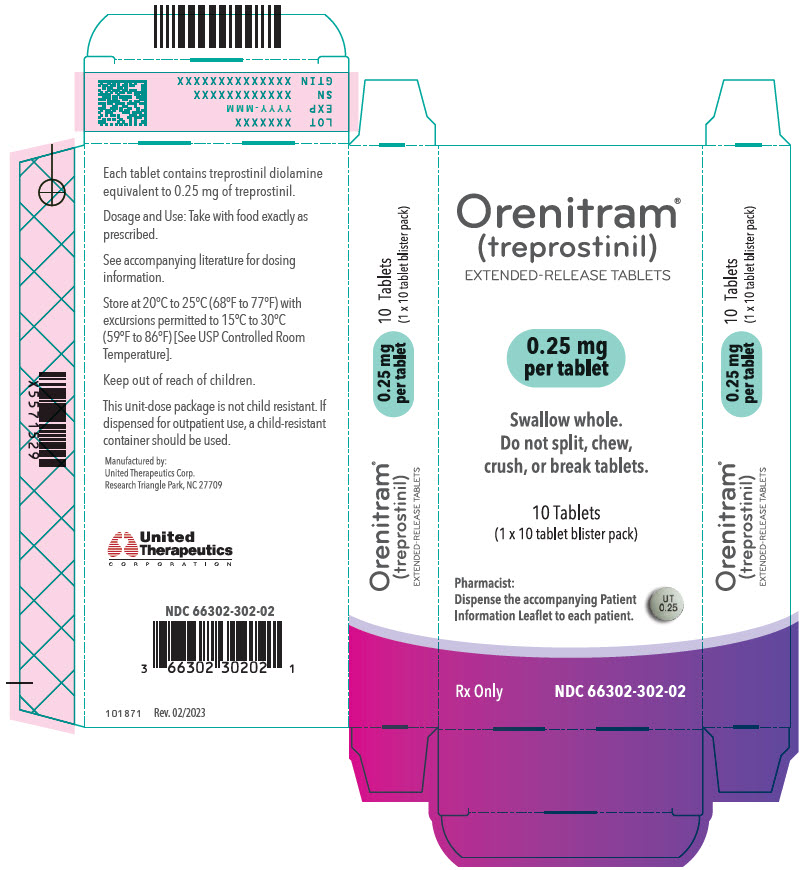
Orenitram treprostinil .25 mg Tablet, Extended Release, 10-count
🆔 Identity & classification
Where does this data come from?
🏷️ RxNorm drug class
This medicine belongs to the Prostacycline Vasodilator class.
Where does this data come from?
🏭 Manufacturer & labeler
Where does this data come from?
🩺 Clinical
Treprostinil is used to treat certain kinds of pulmonary arterial hypertension (PAH; high blood pressure in the vessels carrying blood to the lungs, causing shortness of breath, dizziness, and tiredness). Treprostinil may improve the ability to exercise and slow the worsening of symptoms in patients with PAH. Treprostinil is in a class of medications called vasodilators. It works by relaxing the blood vessels, including those in the lungs, and improving blood flow.
Read the full MedlinePlus article ↗- Treprostinil mimics a natural substance your body makes to keep blood vessel walls relaxed. In pulmonary arterial hypertension (PAH) — and in some lung-disease-related forms of hig...
- What exactly is treprostinil and why did my doctor prescribe it?
- The inhaled products are all used multiple times per day, spaced out across your waking hours. Tyvaso and Tyvaso DPI are typically used 4 times a day, roughly 4 hours apart. Yutrep...
- I'm on the inhaled version — how often do I need to use it each day?
Patient education
Supplement & herbal interactions
Some supplements/herbs that may interact with Treprostinil — tap one for details:
Treprostinil (Inh) may be associated with lower levels of 1 nutrient — worth a chat with your pharmacist, not a cause for alarm.
Where does this data come from?
Ask a licensed pharmacist directly — free, answered by our team.
💊 What it looks like
Where does this data come from?
🧪 Inactive Ingredients / Excipients
Inactive ingredients, also called excipients, are components of the drug product other than the active ingredient. They may include fillers, dyes, coatings, preservatives, flavors, or other formulation ingredients.
Where does this data come from?
IACT rows and label-wide narrative are kept separate; availability and product-level specificity depend on the submitted label.Inactive ingredient FAQ
Are inactive ingredients the same for every manufacturer?
Why might an inactive ingredient be missing?
Can inactive ingredients matter?
💲 Pricing
A drug doesn't have one price. Each row is a different public payment system, and none is what you'd pay at the counter — that depends on your insurance. The ⓘ on each row explains what it measures.
| Price system | Per each | Per package |
|---|---|---|
| Retail pharmacies payNADAC · weekly | Not in the retail survey — common for institutional, discontinued, or low-volume packs. | |
| Medicaid paysCMS SDUD · 12 mo | No recent Medicaid claims on file for this NDC — rare and low-volume NDCs are suppressed in the public data. | |
| Medicare drug plans payPart D · Q2 2026 | $7.89 | $78.91 / 10 tablets |
Where does this data come from?
🔁 Therapeutic equivalents
| Product | Labeler | Pack | NADAC/unit | TE | Status | Price vs. this |
|---|---|---|---|---|---|---|
| Orenitram .25 mgthis 66302-0302-02 | United | 10 tablets | — | — | FDA listed | — |
Where does this data come from?
⏳ Availability & generic status
We did not find an FDA-approved generic match for this exact strength, form and route. Patent/protection dates below may affect future generic timing.
Why the date isn’t exact: Generic timing can change because patents may be challenged, settled, licensed, added, removed, or worked around with a narrower label — and FDA approval does not always mean a pharmacy can get the generic today.
🛈 What do these terms mean?
- Patent
- Legal protection listed in the Orange Book that may delay generic approval or launch. Issued by the U.S. Patent & Trademark Office.
- Substance patent
- Covers the active drug molecule itself — the hardest to design around. A generic generally can’t launch until it expires.
- Formulation (product) patent
- Covers a specific formulation or dosage form. A generic can sometimes work around it with a different formulation.
- Method-of-use patent
- A patent covering one specific approved use of the drug — not necessarily the whole molecule. A generic can sometimes launch with a “skinny label” that carves out the protected use and keeps the others.
- Skinny label
- A generic label that omits a still-patented use when the FDA allows it — letting a generic reach the market for the unprotected uses.
- Exclusivity
- FDA-granted marketing protection, separate from patents — e.g. 5-yr new chemical entity, 7-yr orphan drug, or a +6-month pediatric extension.
- Paragraph IV
- A generic applicant’s formal challenge to a listed patent. It can potentially lead to earlier generic entry, but often involves litigation or a settlement.
- RLD / RS
- Reference Listed Drug — the brand product the FDA uses as the reference for generic applications. Reference Standard — the product the FDA expects generics to compare against in bioequivalence testing.
- TE / AB rating
- FDA therapeutic-equivalence rating. An AB rating generally means the FDA considers a generic therapeutically equivalent to — and substitutable for — the brand.
- LOE (loss of exclusivity)
- The latest patent or exclusivity currently listed — the loss-of-exclusivity / latest-listed-protection date shown on this page. Paragraph-IV challenges and settlements can move the real date earlier; FDA approval and a manufacturer’s decision to market can move it later.
Built from the FDA Orange Book. The bars above are scaled to each protection’s expiry; the red LOE marker is the last one to lapse.
| Patent | Type | Use code | Expires |
|---|---|---|---|
| US 9393203 ↗ | Method of use | U-1877 | Apr 27, 2026 |
| US 9393203 ↗ | Method of use | U-1877 | Apr 27, 2026 |
| US 8747897 ↗ | Method of use | U-2725 | Aug 11, 2031 |
| US 8747897 ↗ | Method of use | U-2724 | Aug 11, 2031 |
| US 8747897 ↗ | Method of use | U-2725 | Aug 11, 2031 |
| US 8747897 ↗ | Method of use | U-2724 | Aug 11, 2031 |
| US 8747897 ↗ | Method of use | U-2724 | Aug 11, 2031 |
| US 8747897 ↗ | Method of use | U-2725 | Aug 11, 2031 |
| US 8747897 ↗ | Method of use | U-2725 | Aug 11, 2031 |
| US 8747897 ↗ | Method of use | U-2724 | Aug 11, 2031 |
| US 8747897 ↗ | Method of use | U-2725 | Aug 11, 2031 |
| US 8747897 ↗ | Method of use | U-2724 | Aug 11, 2031 |
| US 9393203 ↗ | Method of use | U-1877 | Apr 27, 2026 |
| US 9393203 ↗ | Method of use | U-1877 | Apr 27, 2026 |
| US 9393203 ↗ | Method of use | U-1877 | Apr 27, 2026 |
| US 8410169 ↗ | Drug product | — | Feb 13, 2030 |
| US 8410169 ↗ | Drug product | — | Feb 13, 2030 |
| US 11723887 ↗ | Drug substance | — | Dec 15, 2028 |
| US 8497393 ↗ delist req. | Drug substance | — | Dec 15, 2028 |
| US 9593066 ↗ | Drug substance | — | Dec 15, 2028 |
| US 11723887 ↗ | Drug substance | — | Dec 15, 2028 |
| US 9604901 ↗ delist req. | Drug substance | — | Dec 15, 2028 |
| US 9593066 ↗ | Drug substance | — | Dec 15, 2028 |
| US 9593066 ↗ | Drug substance | — | Dec 15, 2028 |
| US 7417070 ↗ | Drug substance | — | Jul 30, 2026 |
| US 8349892 ↗ | Drug product | — | Jan 22, 2031 |
| US 9604901 ↗ delist req. | Drug substance | — | Dec 15, 2028 |
| US 11723887 ↗ | Drug substance | — | Dec 15, 2028 |
| US 9593066 ↗ | Drug substance | — | Dec 15, 2028 |
| US 7417070 ↗ | Drug substance | — | Jul 30, 2026 |
| US 7417070 ↗ | Drug substance | — | Jul 30, 2026 |
| US 8349892 ↗ | Drug product | — | Jan 22, 2031 |
| US 8410169 ↗ | Drug product | — | Feb 13, 2030 |
| US 7417070 ↗ | Drug substance | — | Jul 30, 2026 |
| US 8349892 ↗ | Drug product | — | Jan 22, 2031 |
| US 8497393 ↗ delist req. | Drug substance | — | Dec 15, 2028 |
| US 11723887 ↗ | Drug substance | — | Dec 15, 2028 |
| US 11723887 ↗ | Drug substance | — | Dec 15, 2028 |
| US 8497393 ↗ delist req. | Drug substance | — | Dec 15, 2028 |
| US 8349892 ↗ | Drug product | — | Jan 22, 2031 |
| US 8349892 ↗ | Drug product | — | Jan 22, 2031 |
| US 9593066 ↗ | Drug substance | — | Dec 15, 2028 |
| US 7417070 ↗ | Drug substance | — | Jul 30, 2026 |
| US 8410169 ↗ | Drug product | — | Feb 13, 2030 |
| US 8410169 ↗ | Drug product | — | Feb 13, 2030 |
| Code | What it grants | Expires |
|---|---|---|
| ODE-272 | Orphan Drug Exclusivity (7-year) | Oct 18, 2026 |
| ODE-272 | Orphan Drug Exclusivity (7-year) | Oct 18, 2026 |
| ODE-272 | Orphan Drug Exclusivity (7-year) | Oct 18, 2026 |
| ODE-272 | Orphan Drug Exclusivity (7-year) | Oct 18, 2026 |
| ODE-272 | Orphan Drug Exclusivity (7-year) | Oct 18, 2026 |
Is there a generic version of ORENITRAM ER 0.25 MG TABLET?
The FDA approved a generic — why can’t I get it at my pharmacy yet?
Why do different websites show different generic release dates?
What does “FDA listed” mean?
What does a patent or protection date mean here?
What does “current Orange Book estimate” mean?
Can a generic come out before the last patent expires?
Can a generic come out after the listed dates?
What is the difference between patents and exclusivity?
Why are there multiple patent dates?
Where does this data come from?
💊 Medicaid utilization by pack size
📊 Medicare Part D spend CMS · PART D · 2026 (Q1)
📦 Packaging — all sizes for this product
| Package NDC | Description | Marketing start | Status |
|---|---|---|---|
| 66302-0302-01 | 100 TABLET, EXTENDED RELEASE in 1 BOTTLE (66302-302-01) | 2013-12-20 | Active |
| 66302-0302-02 You're viewing this | 1 BLISTER PACK in 1 CARTON (66302-302-02) / 10 TABLET, EXTENDED RELEASE in 1 BLISTER PACK | 2021-06-30 | Active |
| 66302-0302-10 | 10 TABLET, EXTENDED RELEASE in 1 BOTTLE (66302-302-10) | 2013-12-20 | Discontinued by firm |
This pack shows little to no recent Medicaid volume — the 100 tablets pack carries most fills. See all packs ↓
Pack size FAQ
What quantity is in NDC 66302-0302-02?
What is the difference between NDC 66302-0302-02 and NDC 66302-0302-10?
What NDC number is used to bill for this package of Orenitram treprostinil .25 mg Tablet, Extended Release?
🧭 About this NDC listing & data coverage
What data is (and isn’t) available for this NDC — tap to expand
| NDC identity (package / product / labeler codes) | ✓ Available |
| Labeler | ✓ Available |
| Product & package description | ✓ Available |
| Marketing category & status | ✓ Available |
| Active ingredient / dosage form / route | ✓ Available |
| FDA label (SPL via DailyMed) | ✓ Available |
| Package photos | ✓ Available |
| Inactive ingredients (structured) | — Not published for this NDC The labeler did not submit a structured excipient list, or no SPL is available. |
| NADAC pharmacy acquisition price (CMS) | — Not published for this NDC CMS publishes NADAC only for NDCs reported in its retail-pharmacy survey. |
| Orange Book / therapeutic-equivalence data | ✓ Available |
| HCPCS J-code billing crosswalk | — Not published for this NDC Most self-administered / retail products have no J-code — that is normal. |
| Medicaid utilization (CMS SDUD) | — Not published for this NDC CMS reports utilization only for NDCs with Medicaid claims above its privacy threshold. |
Questions about this listing
Why is there no price listed?
Is the NDC printed on the package the same as the 11-digit billing NDC?
What do the three segments of this NDC mean?
Is this package still being marketed?
Does this product come in other package sizes?
Who lists this product with the FDA?
Do I need a prescription for this product?
Where does this data come from?
📄 Full prescribing information FDA SPL
🎯 Indications and Usage ▾
1 INDICATIONS AND USAGE Orenitram is a prostacyclin mimetic indicated for the treatment of pulmonary arterial hypertension (PAH) (WHO Group 1): To delay disease progression and to improve exercise capacity. The studies that established effectiveness included predominately patients with WHO functional class II-III symptoms and etiologies of idiopathic or heritable PAH (66%) or PAH associated with connective tissue disease (26%). ( 1.1 )
1.1Pulmonary Arterial Hypertension Orenitram is indicated for the treatment of pulmonary arterial hypertension (PAH) (WHO Group 1) to delay disease progression and to improve exercise capacity. The studies that established effectiveness included predominately patients with WHO functional class II-III symptoms and etiologies of idiopathic or heritable PAH (66%) or PAH associated with connective tissue disease (26%).
⏱️ Dosage and Administration ▾
2 DOSAGE AND ADMINISTRATION Give with food. Swallow tablets whole; use only intact tablets. ( 2.1 ) Starting dose: 0.125 mg TID or 0.25 mg BID.
( 2.1 ) Titrate by 0.125 mg TID or by 0.25 mg or 0.5 mg BID, not more frequently than every 3 to 4 days as tolerated. The maximum daily dose is 120 mg. ( 2.1 ) If transitioning from intravenous (IV) or subcutaneous (SC) Remodulin ® , the Orenitram dose should be increased while simultaneously decreasing the IV/SC infusion rate.
( 2.2 ) Mild hepatic impairment (Child Pugh Class A): Initiate at 0.125 mg BID. Increment at 0.125 mg BID not more frequently than every 3 to 4 days. ( 2.3 ) Avoid use in patients with moderate hepatic impairment.
( 2.3 )
2.1Recommended Dosing Take Orenitram with food. Swallow Orenitram tablets whole; do not crush, split, or chew. The recommended starting dose of Orenitram is 0.125 mg three times daily (TID) with food, taken approximately 8 hours apart or 0.25 mg twice daily (BID) with food, taken approximately 12 hours apart.
Titrate by 0.125 mg TID or 0.25 or 0.5 mg BID not more frequently than every 3 to 4 days. Increase the dose to the highest tolerated dose. The recommended maximum daily dose is 120 mg.
If dose increments are not tolerated, consider titrating slower. If intolerable pharmacologic effects occur, decrease the dose in increments of 0.125 mg TID or 0.25 mg BID. Avoid abrupt discontinuation [see Warnings and Precautions (5.1) ] .
2.2Transitioning from Subcutaneous or Intravenous Routes of Administration of Treprostinil Decrease the dose of Remodulin while simultaneously increasing the dose of Orenitram. The dose of Remodulin can be reduced up to 30 ng/kg/min per day and the dose of Orenitram simultaneously increased up to 6 mg per day (2 mg TID) if tolerated. The following equation can be used to estimate a target total daily dose of Orenitram in mg using a patient's dose of intravenous (IV)/subcutaneous (SC) treprostinil (in ng/kg/min) and weight (in kg).
Orenitram total daily dose (mg) = 0.0072 × Remodulin dose (ng/kg/min) × weight (kg)
2.3Dose Adjustment in Patients with Hepatic Impairment In patients with mild hepatic impairment (Child Pugh Class A) start at 0.125 mg BID with 0.125 mg BID dose increments not more frequently than every 3 to 4 days. Avoid use of Orenitram in patients with moderate hepatic impairment (Child Pugh Class B). Orenitram is contraindicated in patients with severe hepatic impairment (Child Pugh Class C) due to increases in systemic exposure [see Contraindications (4) , Use in Specific Populations (8.6) , and Clinical Pharmacology (12.3) ] .
2.4Dose Adjustment for Use with CYP2C8 Inhibitors When co-administered with strong CYP2C8 inhibitors (e.g., gemfibrozil) the initial dose is 0.125 mg BID with 0.125 mg BID dose increments not more frequently than every 3 to 4 days.
2.5Interruptions and Discontinuation If a dose of medication is missed, the patient should take the missed dose as soon as possible, with food. If a patient misses two or more doses, restart at a lower dose and re-titrate. In the event of a planned short-term treatment interruption for patients unable to take oral medications, consider a temporary infusion of subcutaneous or intravenous treprostinil.
To calculate the total daily dose (mg) of treprostinil for the parenteral route use the following equation: Remodulin (ng/kg/min) = 139 × Orenitram total daily dose (mg) weight (kg) When discontinuing Orenitram, reduce the dose in steps of 0.5 to 1 mg per day [see Warnings and Precautions (5.1) ] .
💊 Dosage Forms and Strengths ▾
3 DOSAGE FORMS AND STRENGTHS Orenitram (treprostinil) extended-release tablets are available in the following five strengths: - 0.125 mg [White tablet imprinted with UT 0.125] - 0.25 mg [Green tablet imprinted with UT 0.25] - 1 mg [Yellow tablet imprinted with UT 1] - 2.5 mg [Pink tablet imprinted with UT 2.5] - 5 mg [Red tablet imprinted with UT 5] Extended-Release Tablets: 0.125 mg, 0.25 mg, 1 mg, 2.5 mg, and 5 mg. ( 3 )
⛔ Contraindications ▾
4 CONTRAINDICATIONS Severe hepatic impairment (Child Pugh Class C) [see Use In Specific Populations (8.6) and Clinical Pharmacology (12.3) ] . Severe hepatic impairment (Child Pugh Class C). ( 4 )
⚠️ Warnings and Cautions ▾
5 WARNINGS AND PRECAUTIONS Do not abruptly discontinue dosing. ( 2.5 , 5.1 ) In patients with diverticulosis, Orenitram tablets can become lodged in a diverticulum. ( 5.2 )
5.1Worsening PAH Symptoms upon Abrupt Withdrawal Abrupt discontinuation or sudden large reductions in dosage of Orenitram may result in worsening of PAH symptoms.
5.2Use in Patients with Blind-end Pouches The tablet shell does not dissolve. In patients with diverticulosis, Orenitram tablets can lodge in a diverticulum.
🤒 Adverse Reactions ▾
6 ADVERSE REACTIONS Most common adverse reactions (incidence >10%) reported in clinical studies in patients treated with Orenitram compared with placebo are headache, diarrhea, nausea, vomiting, jaw pain, and flushing. ( 6.1 ) To report SUSPECTED ADVERSE REACTIONS, contact United Therapeutics Corp. at 1-866-458-6479 or FDA at 1-800-FDA-1088 or www.fda.gov/medwatch.
6.1Clinical Trials Experience Because clinical trials are conducted under widely varying conditions, adverse reaction rates observed in the clinical trials of a drug cannot be directly compared to rates in the clinical trials of another drug and may not reflect the rates observed in clinical practice. In a 12-week, placebo-controlled, monotherapy study (Study 1; WHO Group 1; functional class II-III), and an event-driven, placebo-controlled, combination therapy study (Study 4; WHO Group 1; functional class I-III), the most commonly reported adverse reactions that occurred in patients receiving Orenitram included: headache, diarrhea, nausea, and flushing.
Orenitram patients in Study 1 (N=151) had access to 0.25 mg tablets at randomization. Approximately 91% of such patients in Study 1 experienced an adverse reaction, but only 4% discontinued therapy for an adverse reaction (compared to 3% receiving placebo). Study 4 enrolled a total of 690 patients, 346 received Orenitram and 344 received placebo.
Overall, 19% of patients treated with Orenitram discontinued treatment in Study 4 due to an adverse event (compared to 4% of patients receiving placebo). The exposure to Orenitram in Study 4 was up to 5.1 years with a median duration of exposure of 1.2 years. Table 1 summarizes adverse events with rates at least 5% higher on Orenitram therapy than on placebo that were reported in either Study 1 or 4.
Table 1: Adverse Events with Rates at Least 5% Higher on Orenitram Therapy than on Placebo in Either Study 1 or Study 4 Reaction Study 1 N=228 Includes all subjects in the Primary Analysis Population Study 4 N=690 Orenitram n=151 Placebo n=77 Orenitram n=346 Placebo n=344 Headache 63% 19% 75% 35% Diarrhea 30% 16% 69% 29% Nausea 30% 18% 40% 23% Vomiting 17% 16% 36% 10% Flushing 15% 6% 45% 8% Pain in jaw 11% 4% 18% 3% Pain in extremity 14% 8% 18% 9% Hypokalemia 9% 3% 4% 3% Abdominal discomfort 6% 0% 8% 4% Upper abdominal pain 5% 3% 12% 5% Orenitram was studied in a long-term, open-label, extension study in which 824 patients were dosed for a mean duration of approximately 2 years.
About 70% of patients continued treatment with Orenitram for at least a year. The mean dose was 4.2 mg BID at one year. The adverse reactions were similar to those observed in the placebo-controlled trials.
The safety of Orenitram was also evaluated in an open-label study transitioning patients from Remodulin. The safety profile during this study was similar to that observed in the three pivotal studies.
6.2Post-Marketing Experience The following adverse reactions have been identified during postapproval use of Orenitram: dizziness, dyspepsia, vomiting, myalgia, and arthralgia. Because these reactions are reported voluntarily from a population of uncertain size, it is not always possible to reliably estimate their frequency or establish a causal relationship to drug exposure.
🔄 Drug Interactions ▾
7 DRUG INTERACTIONS When co-administered with strong CYP2C8 inhibitors the initial dose is 0.125 mg BID with 0.125 mg BID dose increments not more frequently than every 3 to 4 days. ( 2.4 , 7.1 )
7.1Effect of CYP2C8 Inhibitors on Treprostinil Co-administration of Orenitram and the CYP2C8 enzyme inhibitor gemfibrozil in healthy adult volunteers increases exposure to treprostinil. Reduce the starting dose of Orenitram to 0.125 mg BID and use 0.125 mg BID increments not more frequently than every 3 to 4 days [see Dosage and Administration (2.4) and Clinical Pharmacology (12.3) ] .
👥 Use in Specific Populations ▾
8 USE IN SPECIFIC POPULATIONS
8.1Pregnancy Risk Summary Limited published data from case reports with Orenitram use in pregnant women are not sufficient to assess for a drug-associated risk of major birth defects, miscarriage, or adverse maternal or fetal outcomes. There are risks to the mother and the fetus associated with pulmonary arterial hypertension (see Clinical Considerations ) . Animal reproductive studies with treprostinil diolamine administered orally have shown an adverse effect on the fetus.
In rats, administration of treprostinil to pregnant rats during the period of organogenesis at doses ≥10 mg/kg/day (approximately 15 times the human exposure at the dose of 3.5 mg BID on an AUC basis) resulted in decreased pregnancy rate, increased post-implantation loss, and decreased fetal viability and growth. In rabbits, teratogenicity and decreased fetal viability and growth were observed at doses ≥1.5 mg/kg/day (approximately 7 times the human exposure at the dose of 3.5 mg BID on an AUC basis) (see Animal Data ) .
The estimated background risk of major birth defects and miscarriage for the indicated populations is unknown. All pregnancies have a background risk of birth defect, loss, or other adverse outcomes. In the U.S. general population, the estimated background risk of major birth defects and miscarriage in clinically recognized pregnancies is 2 to 4% and 15 to 20%, respectively.
Clinical Considerations Disease-associated maternal and embryo-fetal risk Pulmonary arterial hypertension in pregnancy increases the risk of maternal heart failure, stroke and death, preterm delivery, low birth weight, and stillbirth. Data Animal Data In pregnant rats, reversible, dose-dependent decreases in body weight gain and food consumption were observed during the first four days of dosing in animals administered 10, 20, and 30 mg/kg/day treprostinil diolamine. In a dose range-finding study, there was a 17% decrease in the pregnancy rate in the animals administered 20 and 30 mg/kg/day.
One dam in each of the 20 and 30 mg/kg/day had litters with no viable fetuses. In the definitive study (0, 5, 10, and 20 mg/kg/day), there were four treatment-related deaths, and a 32% decrease in the pregnancy rate for rats administered 20 mg/kg/day. There was an 8% decrease in the pregnancy rate in the animals administered 10 mg/kg/day.
Across both studies, an increase in post-implantation loss was observed in animals administered 10 to 30 mg/kg/day, and a significant decrease in the mean number of live births was seen at dose levels ≥10 mg/kg/day. The no observed adverse effect level was 5 mg/kg/day (maternal, fetal viability and growth), and 20 mg/kg/day (teratogenicity), the highest dose tested in the definitive study. The exposures at 5 and 20 mg/kg/day doses represent 8 and 33 times, respectively, the human exposure at the dose of 3.5 mg BID on an AUC basis.
For F 1 progeny, a decreased copulation index was observed at the 5 and 10 mg/kg/day treprostinil diolamine dose levels in rats. The no observed effect levels for physical development, reflex development, exploratory behavior, learning and memory, and sexual maturation was 10 mg/kg/day. The no observed effect level for F 1 progeny general development (based on body weight) was 10 mg/kg/day for females and ≤2.5 mg/kg/day for males; the no observed effect level for F 1 reproductive performance was 2.5 mg/kg/day (approximately 4 times the human exposure at the dose of 3.5 mg BID on an AUC basis).
In pregnant rabbits, the primary maternal adverse effect was gastrointestinal disturbance; dose-dependent decreases in mean body weight, body weight gain, and food consumption were observed. During the post-dose phase, the effect was reversed. In a dose range-finding study, there was a 17% decrease in the pregnancy rate for animals administered 4 mg/kg/day.
A dose-dependent increase in post-implantation loss was observed. Two dams administered 4 mg/kg/day had litters with no viable fetuses; the mean f…
🤰 Pregnancy ▾
8.1Pregnancy Risk Summary Limited published data from case reports with Orenitram use in pregnant women are not sufficient to assess for a drug-associated risk of major birth defects, miscarriage, or adverse maternal or fetal outcomes. There are risks to the mother and the fetus associated with pulmonary arterial hypertension (see Clinical Considerations ) . Animal reproductive studies with treprostinil diolamine administered orally have shown an adverse effect on the fetus.
In rats, administration of treprostinil to pregnant rats during the period of organogenesis at doses ≥10 mg/kg/day (approximately 15 times the human exposure at the dose of 3.5 mg BID on an AUC basis) resulted in decreased pregnancy rate, increased post-implantation loss, and decreased fetal viability and growth. In rabbits, teratogenicity and decreased fetal viability and growth were observed at doses ≥1.5 mg/kg/day (approximately 7 times the human exposure at the dose of 3.5 mg BID on an AUC basis) (see Animal Data ) .
The estimated background risk of major birth defects and miscarriage for the indicated populations is unknown. All pregnancies have a background risk of birth defect, loss, or other adverse outcomes. In the U.S. general population, the estimated background risk of major birth defects and miscarriage in clinically recognized pregnancies is 2 to 4% and 15 to 20%, respectively.
Clinical Considerations Disease-associated maternal and embryo-fetal risk Pulmonary arterial hypertension in pregnancy increases the risk of maternal heart failure, stroke and death, preterm delivery, low birth weight, and stillbirth. Data Animal Data In pregnant rats, reversible, dose-dependent decreases in body weight gain and food consumption were observed during the first four days of dosing in animals administered 10, 20, and 30 mg/kg/day treprostinil diolamine. In a dose range-finding study, there was a 17% decrease in the pregnancy rate in the animals administered 20 and 30 mg/kg/day.
One dam in each of the 20 and 30 mg/kg/day had litters with no viable fetuses. In the definitive study (0, 5, 10, and 20 mg/kg/day), there were four treatment-related deaths, and a 32% decrease in the pregnancy rate for rats administered 20 mg/kg/day. There was an 8% decrease in the pregnancy rate in the animals administered 10 mg/kg/day.
Across both studies, an increase in post-implantation loss was observed in animals administered 10 to 30 mg/kg/day, and a significant decrease in the mean number of live births was seen at dose levels ≥10 mg/kg/day. The no observed adverse effect level was 5 mg/kg/day (maternal, fetal viability and growth), and 20 mg/kg/day (teratogenicity), the highest dose tested in the definitive study. The exposures at 5 and 20 mg/kg/day doses represent 8 and 33 times, respectively, the human exposure at the dose of 3.5 mg BID on an AUC basis.
For F 1 progeny, a decreased copulation index was observed at the 5 and 10 mg/kg/day treprostinil diolamine dose levels in rats. The no observed effect levels for physical development, reflex development, exploratory behavior, learning and memory, and sexual maturation was 10 mg/kg/day. The no observed effect level for F 1 progeny general development (based on body weight) was 10 mg/kg/day for females and ≤2.5 mg/kg/day for males; the no observed effect level for F 1 reproductive performance was 2.5 mg/kg/day (approximately 4 times the human exposure at the dose of 3.5 mg BID on an AUC basis).
In pregnant rabbits, the primary maternal adverse effect was gastrointestinal disturbance; dose-dependent decreases in mean body weight, body weight gain, and food consumption were observed. During the post-dose phase, the effect was reversed. In a dose range-finding study, there was a 17% decrease in the pregnancy rate for animals administered 4 mg/kg/day.
A dose-dependent increase in post-implantation loss was observed. Two dams administered 4 mg/kg/day had litters with no viable fetuses; the mean fetal weight was slightly decre…
🧒 Pediatric Use ▾
8.4Pediatric Use Safety and effectiveness in pediatric patients have not been established.
🧓 Geriatric Use ▾
8.5Geriatric Use Use of Orenitram in patients aged 65 years and over demonstrated slightly higher absolute and relative adverse event rates compared to younger patients. In general, dose selection for an elderly patient should be cautious, reflecting the greater frequency of decreased hepatic or cardiac function, and of concomitant disease or other drug therapy.
🆘 Overdosage ▾
10 OVERDOSAGE Signs and symptoms of overdose with Orenitram during clinical trials reflect its dose-limiting pharmacologic effects and include severe headache, nausea, vomiting, diarrhea, and hypotension. Treat supportively.
🧬 Clinical Pharmacology ▾
12 CLINICAL PHARMACOLOGY
12.1Mechanism of Action The major pharmacologic actions of treprostinil are direct vasodilation of pulmonary and systemic arterial vascular beds, inhibition of platelet aggregation, and inhibition of smooth muscle cell proliferation.
12.2Pharmacodynamics In a clinical trial of 240 healthy adult volunteers, single doses of inhaled treprostinil 54 µg (the target clinical dose) and 84 µg (supratherapeutic inhalation dose) prolonged the corrected QTc interval by approximately 10 msec. The QTc effect dissipated rapidly as the concentration of treprostinil decreased. Orenitram has not been evaluated in a thorough QTc study.
12.3Pharmacokinetics In patients with PAH, pharmacokinetics of treprostinil is dose-proportional for systemic exposure (AUC 0-t ) over the dose range from 0.5 to 15 mg BID. Upon repeat administration with a BID regimen, the accumulation in the systemic exposures to treprostinil is minimal and results in a peak-to-trough ratio of approximately 7. However, a TID regimen will reduce the peak-to-trough fluctuations to approximately 2.5 for the same total daily dose.
Absorption The absolute oral bioavailability of Orenitram is approximately 17%. Maximum treprostinil concentrations occur between approximately 4 and 6 hours following Orenitram administration. Time to reach steady-state concentrations for both BID and TID regimens is approximately 1 to 2 days.
The absorption of Orenitram is affected by food. The AUC inf of treprostinil was increased by 49% and the C max was increased by an average of 13% when Orenitram was administered following a high-fat, high-calorie meal compared to fasting conditions in healthy volunteers. The relative bioavailability of treprostinil following oral administration of Orenitram 1 mg is not significantly altered by meal types ranging from 250 to 500 calories in healthy volunteers.
When Orenitram 1 mg was administered with alcohol at 0.5 mg/kg or the equivalent of 3 servings (at the same time, or ± 1 hour relative to alcohol consumption), there was no significant change (10% to 20% increase) in the exposure to treprostinil compared to Orenitram administered alone. Distribution The treprostinil component of Orenitram is highly bound to human plasma proteins, approximately 96% over a treprostinil concentration range of 0.01 to 10 µg/mL. Metabolism and Excretion In a study conducted in healthy volunteers using [ 14 C] treprostinil, treprostinil was extensively metabolized on the side chain of the molecule via oxidation, oxidative cleavage, dehydration, and glucuronic acid conjugation.
Treprostinil is primarily metabolized by CYP2C8 and to a lesser extent by CYP2C9. No new major metabolites are found upon oral administration compared to parenteral administration of treprostinil. Only 1.13% and 0.19% is excreted as unchanged parent drug in the feces and urine, respectively.
Based on in vitro studies, treprostinil does not inhibit or induce major CYP enzymes [see Drug Interactions (7.1) ] . Specific Populations Hepatic Impairment: In subjects with mild (n=8) hepatic impairment, administration of a single 1 mg dose of Orenitram resulted in a mean C max and an AUC 0-inf that were 1.6- and 2.1-fold values seen in healthy subjects, respectively. With moderate impairment (n=8), the corresponding ratios were 4.0- and 4.8-fold, and with severe impairment (n=6), they were 4.8- and 7.6-fold [see Dosage and Administration (2.3) , Contraindications (4) , and Use in Specific Populations (8.6) ].
Renal Impairment: In patients with severe renal impairment requiring dialysis (n=8), administration of a single 1 mg dose of Orenitram pre- and post-dialysis resulted in an AUC 0-inf that was not significantly altered compared to healthy subjects. Drug Interactions Results of drug interaction studies are shown in Figure 1. Only for the strong CYP2C8 inhibitor does the interaction affect dosing [see Dosage and Administration (2.4) ] .
Figure 1: Impact of Co-Administered Drugs on the Sys…
🧬 Mechanism of Action ▾
12.1Mechanism of Action The major pharmacologic actions of treprostinil are direct vasodilation of pulmonary and systemic arterial vascular beds, inhibition of platelet aggregation, and inhibition of smooth muscle cell proliferation.
📦 How Supplied / Storage and Handling ▾
16 HOW SUPPLIED/STORAGE AND HANDLING
16.1How Supplied Orenitram is an 8-mm round biconvex tablet with strength identified by color and print and supplied as follows: Strength Color Printing on Tablets NDC # 100-Count Bottle NDC # 10-Count Bottle NDC # 10-Count Carton (Unit-Dose Blister) 0.125 mg White UT 0.125 66302-300-01 66302-300-10 66302-300-02 0.25 mg Green UT 0.25 66302-302-01 66302-302-10 66302-302-02 1 mg Yellow UT 1 66302-310-01 66302-310-10 66302-310-02 2.5 mg Pink UT 2.5 66302-325-01 66302-325-10 66302-325-02 5 mg Red UT 5 66302-350-01 66302-350-10 66302-350-02 Titration Kits for Orenitram are supplied in the following configurations: Titration Kit Blister Configurations NDC # Month 1 containing four weekly cartons Seven daily wallet blister packs in each weekly carton containing the following total number of tablets: Week 1 (twenty-one × 0.125 mg tablets) Week 2 (forty-two × 0.125 mg tablets) Week 3 (twenty-one × 0.125 mg tablets and twenty-one × 0.25 mg tablets) Week 4 (forty-two × 0.125 mg tablets and twenty-one × 0.25 mg tablets) 66302-361-28 Month 2 containing four weekly cartons Seven daily wallet blister packs in each weekly carton containing the following total number of tablets: Week 5 (twenty-one × 0.125 mg tablets and forty-two × 0.25 mg tablets) Week 6 (forty-two × 0.125 mg tablets and forty-two × 0.25 mg tablets) Week 7 (twenty-one × 0.125 mg tablets and sixty-three × 0.25 mg tablets) Week 8 (forty-two × 0.125 mg tablets and sixty-three × 0.25 mg tablets) 66302-362-56 Month 3 containing four weekly cartons Seven daily wallet blister packs in each weekly carton containing the following total number of tablets: Week 9 (twenty-one × 0.125 mg tablets and twenty-one × 1 mg tablets) Week 10 (forty-two × 0.125 mg tablets and twenty-one × 1 mg tablets) Week 11 (twenty-one × 0.125 mg tablets, twenty-one × 0.25 mg tablets, and twenty-one × 1 mg tablets) Week 12 (forty-two × 0.125 mg tablets, twenty-one × 0.25 mg tablets, and twenty-one × 1 mg tablets) 66302-363-84
16.2Storage Store at 20°C to 25°C (68°F to 77°F) with excursions permitted to 15°C to 30°C (59°F to 86°F) [See USP Controlled Room Temperature]. Keep out of reach of children.
📦 Storage and Handling ▾
16.2Storage Store at 20°C to 25°C (68°F to 77°F) with excursions permitted to 15°C to 30°C (59°F to 86°F) [See USP Controlled Room Temperature]. Keep out of reach of children.
📋 Description ▾
11 DESCRIPTION Orenitram is an extended-release osmotic tablet for oral administration. Orenitram is formulated as the diolamine salt of treprostinil, a tricyclic benzindene analogue of prostacyclin. The chemical name is Acetic acid, 2-[[(1 R ,2 R ,3a S ,9a S )-2,3,3a,4,9,9a-hexahydro-2-hydroxy-1-[(3 S )-3-hydroxyoctyl]-1 H -benz[f]inden-5-yl]oxy]-, complexed with 2,2'-iminobis[ethanol] (1:1).
The molecular formula is C 23 H 34 O 5 ∙C 4 H 11 NO 2 , the molecular weight is 495.65, and it has the following structural formula: Orenitram tablets are formulated in five strengths, which contain 0.125 mg of treprostinil (equivalent to 0.159 mg treprostinil diolamine), 0.25 mg of treprostinil (equivalent to 0.317 mg treprostinil diolamine), 1 mg of treprostinil (equivalent to 1.27 mg treprostinil diolamine), 2.5 mg of treprostinil (equivalent to 3.17 mg treprostinil diolamine), or 5 mg of treprostinil (equivalent to 6.35 mg treprostinil diolamine).
The formulations also contain xylitol, maltodextrin, sodium lauryl sulfate, magnesium stearate, cellulose acetate, triethyl citrate, polyvinyl alcohol, titanium dioxide, polyethylene glycol, and talc. In addition, tablets may contain colorants FD&C Blue #2, iron oxide yellow, and iron oxide red. The imprint ink contains shellac glaze, ethanol, isopropyl alcohol USP, iron oxide black, n-butyl alcohol, and propylene glycol.
Orenitram is designed to release treprostinil at a near zero-order rate using an osmotic tablet technology. The tablet core is coated with a semi-permeable membrane and has a laser-drilled aperture through the membrane. Upon contact with water (e.g., after ingestion), the core tablet absorbs water through the semi-permeable membrane.
The water dissolves the water-soluble treprostinil diolamine and the water-soluble osmotic excipients, which creates hydrostatic pressure within the membrane, eventually forcing the drug across the membrane at a controlled rate. Chemical Structure
💬 Information for Patients ▾
17 PATIENT COUNSELING INFORMATION See FDA-approved patient labeling (Patient Information) . Tell patients: Abrupt discontinuation of therapy could result in worsening of PAH symptoms. Take Orenitram with food.
Swallow Orenitram tablets whole. Do not split, chew, crush, or break. Do not take a tablet that is damaged or broken.
The biologically inert components of the tablet remain intact during gastrointestinal transit and are eliminated in the feces as an insoluble shell.