
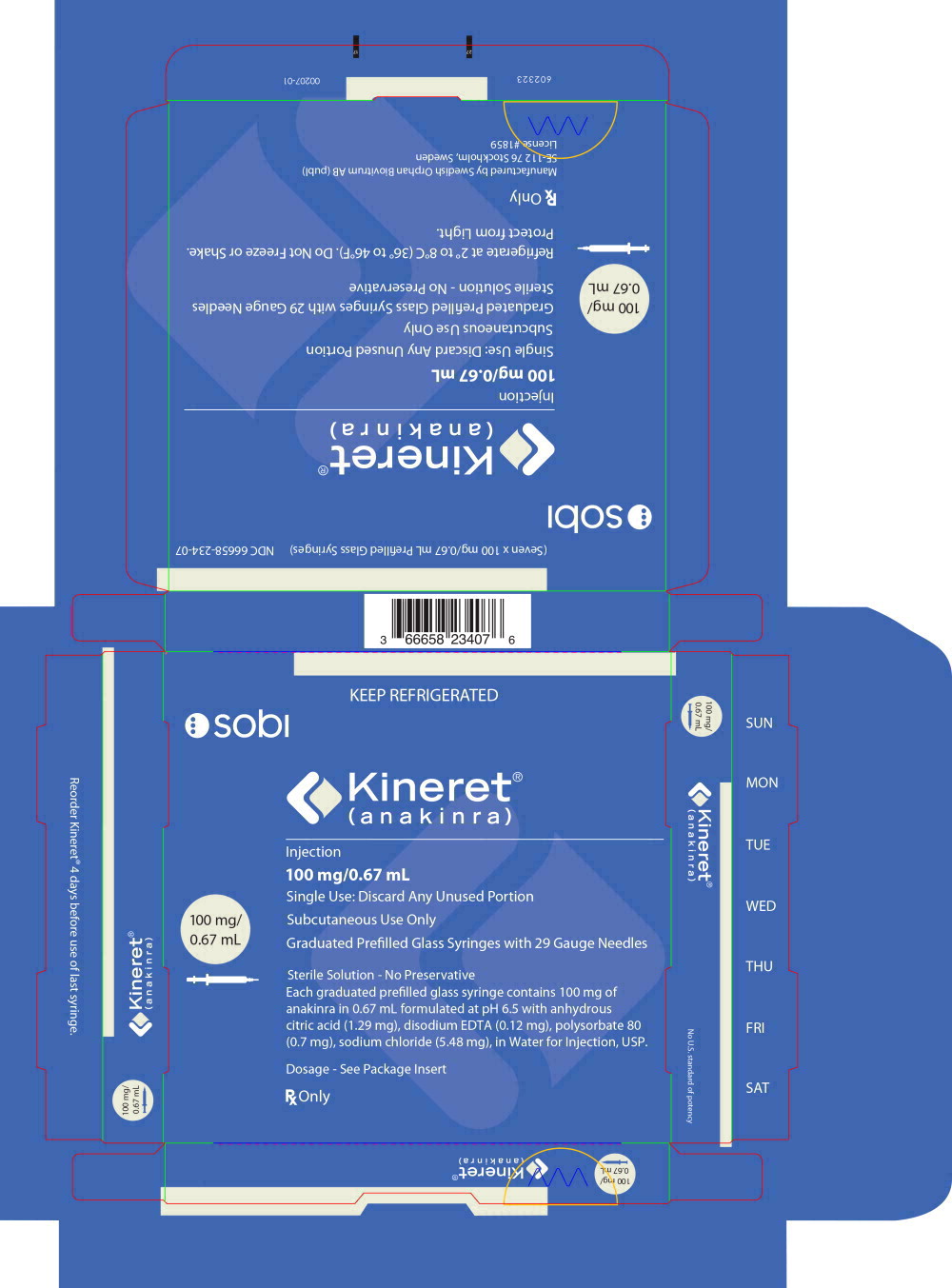
Kineret anakinra 100 mg/.67mL Injection, Solution, 7 syringes — NDC 66658-234-07 (Billing 66658-0234-07)
This is a package of 7 syringes of Kineret anakinra 100 mg/.67mL Injection, Solution from Swedish Orphan Biovitrum AB (publ), marketed since Dec 2009 and currently FDA-listed. It is the main listing for this product, which comes in 2 package sizes.
NDC database record
One package, one record: these facts belong to NDC 66658-234-07 alone.
- Record
- FDA NDC Directory package listing · Human prescription drug
- Code segments
- 66658 labeler · 234 product · 07 package
- Package marketed since
- Dec 15, 2009
- Sample package
- No — commercial package
- Listing certified through
- Dec 31, 2027
- Barcode (UPC-A, from the NDC)
- 3 6665823407 6
- Medicaid fills, this package
- 3,231 prescriptions in the last four reported quarters
- FDA record last changed
- Jul 24, 2026
Identity & classification
Regulatory identifiers FDA, NLM and CMS codes for this package
Drug-database identifiers Medi-Span GPI and First Databank GCN / HICL / AHFS classification
- GSN (GCN sequence number): 048899
- GCN: 14867
- GPI-14 (Medi-Span): 6626001000E520
- HICL (First Databank): 022953
- AHFS class code: 90:24.20.92
- RxCUI (RxNorm): 727711
Where does this data come from?
- FDA openFDA NDC Directory · synced Oct 1, 2026
- FDA label on DailyMed · label index refreshed Oct 6, 2026
- RxNorm (NLM RxNav) · catalog refreshed Oct 1, 2026
- Medi-Span GPI (licensed)
- First Databank (licensed) · refreshed Oct 1, 2026
RxNorm drug class
This medicine belongs to the Interleukin-1 Receptor Antagonist class.
Where does this data come from?
- RxClass (NLM) · catalog refreshed Oct 1, 2026
Clinical
Anakinra is used to treat rheumatoid arthritis (condition in which the body attacks its own joints causing pain, swelling, and loss of function), neonatal-onset multisystem inflammatory disease (NOMID; a disorder that causes inflammation and damages the nervous system, skin, and joints), and deficiency of interleukin-1 receptor antagonist (DIRA; a disorder in which the body attacks its own tissues causing inflammation and damages bones, nervous system, skin, lungs, liver, and joints). Anakinra is authorized for the treatment of coronavirus disease 2019 (COVID-19 infection). Anakinra is in a cl...
Read the full MedlinePlus article ↗- Kineret is a biologic injection used for three conditions. In adults, it helps treat moderately to severely active rheumatoid arthritis when other disease-modifying drugs haven't w...
- Kineret comes as a prefilled syringe that you inject just under the skin — usually once a day, at about the same time each day. Your healthcare provider will show you how to inject...
- How do I take Kineret, and do I need to refrigerate it?
- The most common thing people notice is redness, swelling, or mild pain at the injection site — this is very common, especially in the first month, and is usually mild and gets bett...
Patient education
Supplement & herbal interactions
Where does this data come from?
- MedlinePlus (NLM) · refreshed Oct 1, 2026
- FDA label on DailyMed · label index refreshed Oct 6, 2026
Ask a licensed pharmacist directly — free, answered by our team.
Pricing
A drug doesn't have one price. Each row is a different public payment system, and none is what you'd pay at the counter — that depends on your insurance. The ⓘ on each row explains what it measures.
| Price system | Per mL | Per package |
|---|---|---|
| Retail pharmacies payNADAC · weekly | Not in the retail survey — common for institutional, discontinued, or low-volume packs. | |
| Medicaid paysCMS SDUD · 12 mo | $316.42 | $1,484.00 / 4.69 ml |
| Medicare drug plans payPart D · Q2 2026 | $340.96 | $1,599.09 / 4.69 ml |
Where does this data come from?
- CMS NADAC weekly file
- CMS ASP pricing files · refreshed Sep 20, 2026
- CMS Medicaid State Drug Utilization Data · through Q1 2026
- CMS Part D plan pricing files · refreshed Sep 24, 2026
- VA National Acquisition Center price file
Packaging — all sizes for this product
| Package NDC | Description | Marketing start | Marketing end | Status |
|---|---|---|---|---|
| 66658-0234-07 You're viewing this Main listing | 7 SYRINGE, GLASS in 1 CARTON / .67 mL in 1 SYRINGE, GLASS | 2009-12-15 | — | Active |
| 66658-0234-28 66658-234-28 | 4 CARTON in 1 CASE / 7 SYRINGE, GLASS in 1 CARTON / .67 mL in 1 SYRINGE, GLASS | 2009-12-15 | — | Active |
In Medicaid, this is the most-dispensed pack of this product — about 100% of fills over the last four reported quarters. See all packs ↓
Pack size FAQ
What quantity is in this package?
What NDC number is used to bill for this package of Kineret anakinra 100 mg/.67mL Injection, Solution?
Therapeutic equivalents
| Product | Labeler | Pack | NADAC/unit | TE | Status | Price vs. this |
|---|---|---|---|---|---|---|
| Kineret 100 mg/.67mLthis 66658-0234-07 | Swedish | 7 syringes | — | — | FDA listed | — |
Where does this data come from?
- FDA openFDA NDC Directory · synced Oct 1, 2026
- FDA Purple Book · refreshed Oct 5, 2026
- CMS NADAC weekly file
Availability & biosimilar status
Biologics have no small-molecule generics; biosimilar competition is tracked in the FDA Purple Book.
Where does this data come from?
- FDA Purple Book · refreshed Oct 5, 2026
Inactive Ingredients / Excipients
Inactive ingredients, also called excipients, are components of the drug product other than the active ingredient. They may include fillers, dyes, coatings, preservatives, flavors, or other formulation ingredients.
🧪 Avoiding an ingredient? See Anakinra inactive ingredients by manufacturer: every current product's list side by side, so you can ask your pharmacy for the version that does not list it.
💡 Tap an ingredient (hover on desktop) to see what it is and why it’s used.
-
1.29 mg / 0.67 mL
UNII XF417D3PSL
Anhydrous citric acid is a sour, crystalline powder derived from citric acid with water removed. In medicines, it acts as a buffer to control pH, adds tartness to improve taste, and helps tablets disintegrate.
-
0.12 mg / 0.67 mL
UNII 7FLD91C86K
Edetate disodium is a chemical compound that binds and removes certain metal ions. In medicines, it acts as a preservative and stabilizer by preventing metals like calcium from interfering with the product's shelf life and consistency.
-
0.7 mg / 0.67 mL
UNII 6OZP39ZG8H
Polysorbate 80 is a synthetic emulsifier derived from sorbitol and oleic acid. It helps mix oil and water-based ingredients together in medications and improves how the product disperses in the body.
-
5.48 mg / 0.67 mL
UNII 451W47IQ8X
Sodium chloride is common table salt. It's used in medicines as a buffer to maintain proper pH, as a filler to add bulk, or to adjust the osmotic balance in liquid formulations.
-
UNII 059QF0KO0R
Water is a liquid solvent that dissolves and mixes ingredients together in liquid medicines, syrups, and injections. It helps distribute the active drug evenly throughout the product.
5 inactive ingredients listed in the exact product block matched to this NDC.
Where does this data come from?
ingredient classCode="IACT" elements from the exact product block matched by this NDC. Label-section narrative from DailyMed / the openFDA label index is shown separately when available.- FDA label on DailyMed · label index refreshed Oct 6, 2026
- FDA openFDA NDC Directory · synced Oct 1, 2026
Inactive ingredient FAQ
Are inactive ingredients the same for every manufacturer?
Why might an inactive ingredient be missing?
Can inactive ingredients matter?
Manufacturer & labeler
More NDCs from Swedish Orphan Biovitrum AB (publ) labeler code 66658
- Orfadin Nitisinone 10 mg Capsule NDC 66658-110-60
- KEPIVANCE palifermin 5.16 mg/1.2mL Injection, Powder, Lyophilized, For Solution NDC 66658-113-03
- Orfadin Nitisinone 20 mg Capsule NDC 66658-120-60
- ORFADIN nitisinone 4 mg/mL Suspension NDC 66658-204-90
- Synagis palivizumab 50 mg/.5mL Injection, Solution NDC 66658-230-01
- Synagis palivizumab 100 mg/mL Injection, Solution NDC 66658-231-01
- GAMIFANT emapalumab-lzsg 10 mg/2mL Injection NDC 66658-501-01
- GAMIFANT emapalumab-lzsg 50 mg/10mL Injection NDC 66658-505-01
- GAMIFANT emapalumab-lzsg 100 mg/20mL Injection NDC 66658-510-01
- GAMIFANT emapalumab-lzsg 50 mg/2mL Injection NDC 66658-522-01
- GAMIFANT emapalumab-lzsg 100 mg/4mL Injection NDC 66658-523-01
- GAMIFANT emapalumab-lzsg 250 mg/10mL Injection NDC 66658-524-01
Where does this data come from?
- FDA openFDA NDC Directory · synced Oct 1, 2026
- Drugs@FDA
Full prescribing information FDA SPL
🎯 Indications and Usage ▾
1 INDICATIONS AND USAGE KINERET is an interleukin-1 receptor antagonist indicated for: Rheumatoid Arthritis (RA) Reduction in signs and symptoms and slowing the progression of structural damage in moderately to severely active rheumatoid arthritis, in patients 18 years of age or older who have failed 1 or more disease modifying antirheumatic drugs (DMARDs) ( 1.1 ) Cryopyrin-Associated Periodic Syndromes (CAPS) Treatment of Neonatal-Onset Multisystem Inflammatory Disease (NOMID) ( 1.2 ) Deficiency of Interleukin-1 Receptor Antagonist (DIRA) Treatment of Deficiency of Interleukin-1 Receptor Antagonist (DIRA) ( 1.3 )
1.1Active Rheumatoid Arthritis KINERET is indicated for the reduction in signs and symptoms and slowing the progression of structural damage in moderately to severely active rheumatoid arthritis (RA), in patients 18 years of age or older who have failed 1 or more disease modifying antirheumatic drugs (DMARDs). KINERET can be used alone or in combination with DMARDs other than Tumor Necrosis Factor (TNF) blocking agents [see Warnings and Precautions ( 5.2 )].
1.2Cryopyrin-Associated Periodic Syndromes (CAPS) KINERET is indicated for the treatment of Neonatal-Onset Multisystem Inflammatory Disease (NOMID).
1.3Deficiency of Interleukin-1 Receptor Antagonist (DIRA) KINERET is indicated for the treatment of Deficiency of Interleukin-1 Receptor Antagonist (DIRA)
⏱️ Dosage and Administration ▾
2 DOSAGE AND ADMINISTRATION Rheumatoid Arthritis (RA) The recommended dose of KINERET for the treatment of patients with rheumatoid arthritis is 100 mg/day administered daily by subcutaneous injection. The dose should be administered at approximately the same time every day ( 2.1 ) Physicians should consider a dose of 100 mg of KINERET administered every other day for RA patients who have severe renal insufficiency or end stage renal disease (defined as creatinine clearance < 30 mL/min, as estimated from serum creatinine levels) ( 2.4 ) Cryopyrin-Associated Periodic Syndromes (CAPS) The recommended starting dose of KINERET is 1-2 mg/kg daily for NOMID patients.
The dose can be individually adjusted to a maximum of 8 mg/kg daily to control active inflammation. ( 2.2 ) Physicians should consider administration of the prescribed KINERET dose every other day for NOMID patients who have severe renal insufficiency or end stage renal disease (defined as creatinine clearance < 30 mL/min, as estimated from serum creatinine levels) ( 2.4 ) Deficiency of Interleukin-1 Receptor Antagonist (DIRA) The recommended starting dose of KINERET is 1-2 mg/kg daily for patients with DIRA. The dose can be individually adjusted to a maximum of 8 mg/kg daily to control active inflammation.
( 2.3 ) Physicians should consider administration of the prescribed KINERET dose every other day for patients with DIRA who have severe renal insufficiency or end stage renal disease (defined as creatinine clearance < 30 mL/min, as estimated from serum creatinine levels) ( 2.4 ) See full prescribing information for administration instructions ( 2.4 )
2.1Active Rheumatoid Arthritis The recommended dose of KINERET for the treatment of patients with rheumatoid arthritis is 100 mg/day administered daily by subcutaneous injection. Higher doses did not result in a higher response. The dose should be administered at approximately the same time every day.
2.2Cryopyrin-Associated Periodic Syndromes (CAPS) The recommended starting dose of KINERET is 1-2 mg/kg for NOMID patients. The dose can be individually adjusted to a maximum of 8 mg/kg daily to control active inflammation. Adjust doses in 0.5 to 1 mg/kg increments.
Once daily administration is generally recommended, but the dose may be split into twice daily administrations. Each syringe is intended for a single use. A new syringe must be used for each dose.
Any unused portion after each dose should be discarded.
2.3Deficiency of Interleukin-1 Receptor Antagonist (DIRA) The recommended starting dose of KINERET is 1-2 mg/kg daily for patients with DIRA. The dose can be individually adjusted to a maximum of 8 mg/kg daily to control active inflammation. Adjust doses in 0.5 to 1 mg/kg increments. Each syringe is intended for a single use. A new syringe must be used for each dose. Any unused portion after each dose should be discarded.
2.4Renal Impairment Physicians should consider administration of the prescribed dose of KINERET every other day for patients who have severe renal insufficiency or end stage renal disease (defined as creatinine clearance < 30 mL/min, as estimated from serum creatinine levels) [see Use in Specific Populations ( 8.6 ) and Clinical Pharmacology ( 12.3 )] .
2.5Administration Instructions on appropriate use should be given by the healthcare provider to the patient or caregiver. Patients or caregivers should not be allowed to administer KINERET until the patient or caregiver has demonstrated a thorough understanding of procedures and an ability to inject the product correctly. The prescribed dose of KINERET should be administered according to the instructions for use and any unused portions discarded.
After administration of KINERET it is essential to follow the proper procedure for disposal of syringes and any residual drug. Recommend patients to rotate their injection sites to reduce the risk of injection site reactions and injection site amyloid deposits [see Warnings and precautions ( 5.5 )] .… [Excerpted — this section continues on DailyMed.]
💊 Dosage Forms and Strengths ▾
3 DOSAGE FORMS AND STRENGTHS Injection: 100 mg/0.67 mL solution in a single-use prefilled syringe for subcutaneous injection. Graduated syringe allows for doses between 20 and 100 mg. Injection: 100 mg/0.67 mL solution in a single-use prefilled syringe for subcutaneous injection. Graduated syringe allows for doses between 20 mg and 100 mg. ( 3 )
⛔ Contraindications ▾
4 CONTRAINDICATIONS KINERET is contraindicated in patients with known hypersensitivity to E coli -derived proteins, KINERET, or any components of the product [see Hypersensitivity Reactions ( 5.3 )] . Known hypersensitivity to E coli -derived proteins, Kineret, or to any component of the product. ( 4 )
⚠️ Warnings and Cautions ▾
5 WARNINGS AND PRECAUTIONS In RA, discontinue use if serious infection develops. In KINERET-treated NOMID or DIRA patients, the risk of a disease flare when discontinuing KINERET treatment should be weighed against the potential risk of continued treatment. Do not initiate KINERET in patients with active infections.
( 5.1 ) Use in combination with Tumor Necrosis Factor (TNF) blocking agents is not recommended ( 5.2 ) Hypersensitivity reactions, including anaphylactic reactions and angioedema, and serious cutaneous reactions including Drug Reaction with Eosinophilia and Systemic Symptoms (DRESS) can occur; discontinue KINERET, treat promptly, and monitor until reaction resolves. Patients with DIRA may have an increased risk of allergic reactions, particularly in the first several weeks after starting KINERET treatment ( 5.3 ) The impact of treatment with KINERET on active and/or chronic infections and the development of malignancies is not known ( 5.4 ) Recommend patients to rotate injection sites to reduce the risk of injection site amyloid deposits ( 5.5 ) Live vaccines should not be given concurrently with KINERET ( 5.6 ) Neutrophil counts should be assessed prior to initiating KINERET treatment, and while receiving KINERET, monthly for 3 months, and thereafter quarterly for a period up to 1 year ( 5.7 )
5.1Serious Infections KINERET has been associated with an increased incidence of serious infections (2%) vs. Placebo (< 1%) in clinical trials in RA. Administration of KINERET in RA should be discontinued if a patient develops a serious infection.
In KINERET treated NOMID and DIRA patients the risk of a disease flare when discontinuing KINERET treatment should be weighed against the potential risk of continued treatment. Treatment with KINERET should not be initiated in patients with active infections. The safety and efficacy of KINERET in immunosuppressed patients or in patients with chronic infections have not been evaluated.
Drugs that affect the immune system by blocking tumor necrosis factor (TNF) have been associated with an increased risk of reactivation of latent tuberculosis (TB). It is possible that taking drugs such as KINERET that blocks IL-1 increases the risk of TB or other atypical or opportunistic infections. Health care providers should follow current CDC guidelines both to evaluate for and to treat possible latent tuberculosis infections before initiating therapy with KINERET.
5.2Use with TNF Blocking Agents In a 24-week study of concurrent KINERET and etanercept therapy in RA patients, the rate of serious infections in the combination arm (7%) was higher than with etanercept alone (0%). The combination of KINERET and etanercept did not result in higher ACR response rates compared to etanercept alone [see Clinical Studies ( 14 )] . Use of KINERET in combination with TNF blocking agents is not recommended.
5.3Hypersensitivity Reactions Hypersensitivity reactions, including anaphylactic reactions and angioedema, have been reported with KINERET. Serious cutaneous reactions, including Drug Reaction with Eosinophilia and Systemic Symptoms (DRESS), have been reported in patients with autoinflammatory conditions treated with KINERET. If a severe hypersensitivity reaction occurs, immediately discontinue KINERET; treat promptly and monitor until signs and symptoms resolve.
KINERET is the recombinant form of IL-1Ra that DIRA patients are lacking. Patients with DIRA may have an increased risk of allergic reactions, particularly in the first several weeks after starting KINERET treatment. Patients should be closely monitored during this time period.
If a severe allergic reaction occurs, appropriate treatment should be initiated and discontinuation of KINERET should be considered.
5.4Immunosuppression The impact of treatment with KINERET on active and/or chronic infections and the development of malignancies is not known [see Adverse Reactions ( 6 )] .
5.5Amyloidosis Post-marketing cases of injection site amyloid d… [Excerpted — this section continues on DailyMed.]
🤒 Adverse Reactions ▾
6 ADVERSE REACTIONS Because clinical trials are conducted under widely varying conditions, adverse reaction rates observed in the clinical trials of a drug cannot be directly compared to rates in the clinical trials of another drug and may not reflect the rates observed in clinical practice. Rheumatoid Arthritis (RA) Most common adverse reactions (incidence ≥ 5%) are injection site reaction, worsening of rheumatoid arthritis, upper respiratory tract infection, headache, nausea, diarrhea, sinusitis, arthralgia, flu like-symptoms, and abdominal pain ( 6.1 ) NOMID The most common AEs during the first 6 months of treatment (incidence > 10%) are injection site reaction, headache, vomiting, arthralgia, pyrexia, and nasopharyngitis ( 6.2 ) DIRA The most common AEs are upper respiratory tract infections, rash, pyrexia, influenza like illness, and gastroenteritis ( 6.3 ) To report SUSPECTED ADVERSE REACTIONS, contact Swedish Orphan Biovitrum at 1-866-547-0644 or FDA at 1-800-FDA-1088 or www.fda.gov/medwatch.
6.1Clinical Studies Experience in RA The most serious adverse reactions were: Serious Infections – [see Warnings and Precautions ( 5.1 )] Neutropenia, particularly when used in combination with TNF blocking agents The most common adverse reaction with KINERET is injection-site reactions. These reactions were the most common reason for withdrawing from studies. The data described herein reflect exposure to KINERET in 3025 patients, including 2124 exposed for at least 6 months and 884 exposed for at least one year.
Studies 1 and 4 used the recommended dose of 100 mg per day. The patients studied were representative of the general population of patients with rheumatoid arthritis. Injection-site Reactions The most common and consistently reported treatment-related adverse event associated with KINERET is injection-site reaction (ISR).
In Studies 1 and 4, 71% of patients developed an ISR, which was typically reported within the first 4 weeks of therapy. The majority of ISRs were reported as mild (72.6% mild, 24.1% moderate and 3.2% severe). The ISRs typically lasted for 14 to 28 days and were characterized by 1 or more of the following: erythema, ecchymosis, inflammation, and pain.
Injection-site Reactions The most common and consistently reported treatment-related adverse event associated with KINERET is injection-site reaction (ISR). In Studies 1 and 4, 71% of patients developed an ISR, which was typically reported within the first 4 weeks of therapy. The majority of ISRs were reported as mild (72.6% mild, 24.1% moderate and 3.2% severe).
The ISRs typically lasted for 14 to 28 days and were characterized by 1 or more of the following: erythema, ecchymosis, inflammation, and pain. Injection-site Reactions The most common and consistently reported treatment-related adverse event associated with KINERET is injection-site reaction (ISR). In Studies 1 and 4, 71% of patients developed an ISR, which was typically reported within the first 4 weeks of therapy.
The majority of ISRs were reported as mild (72.6% mild, 24.1% moderate and 3.2% severe). The ISRs typically lasted for 14 to 28 days and were characterized by 1 or more of the following: erythema, ecchymosis, inflammation, and pain. Infections In Studies 1 and 4 combined, the incidence of infection was 39% in the KINERET-treated patients and 37% in placebo-treated patients during the first 6 months of blinded treatment.
The incidence of serious infections in Studies 1 and 4 was 2% in KINERET-treated patients and 1% in patients receiving placebo over 6 months. The incidence of serious infection over 1 year was 3% in KINERET-treated patients and 2% in patients receiving placebo. These infections consisted primarily of bacterial events such as cellulitis, pneumonia, and bone and joint infections.
Majority of patients (73%) continued on study drug after the infection resolved. No serious opportunistic infections were reported. Patients with asthma appeared to be at higher risk of developing… [Excerpted — this section continues on DailyMed.]
🔄 Drug Interactions ▾
7 DRUG INTERACTIONS No drug-drug interaction studies in human subjects have been conducted. Toxicologic and toxicokinetic studies in rats did not demonstrate any alterations in the clearance or toxicologic profile of either methotrexate or KINERET when the two agents were administered together. A higher rate of serious infections has been observed in RA patients treated with concurrent KINERET and etanercept therapy than in patients treated with etanercept alone.
Use of KINERET in combination with TNF blocking agents is not recommended ( 7 )
7.1TNF Blocking Agents A higher rate of serious infections has been observed in patients treated with concurrent KINERET and etanercept therapy than in patients treated with etanercept alone [see Warnings and Precautions ( 5.2 )] . Two percent of patients treated concurrently with KINERET and etanercept developed neutropenia (ANC < 1 x 10 9 /L). Use of KINERET in combination with TNF blocking agents is not recommended.
👥 Use in Specific Populations ▾
8 USE IN SPECIFIC POPULATIONS Pediatric use: KINERET is indicated for use in pediatric patients with NOMID and DIRA ( 8.4 ) Geriatric use: Because there is a higher incidence of infections in the elderly population in general, caution should be used in treating the elderly ( 8.5 ) Renal impairment: This drug is known to be substantially excreted by the kidney, and the risk of toxic reactions to this drug may be greater in patients with impaired renal function ( 8.6 )
8.1Pregnancy Risk Summary Available data from retrospective studies and case reports on KINERET use in pregnant women are insufficient to identify a drug associated risk of major birth defects, miscarriage, or maternal and fetal adverse events. There are risks to the mother and fetus associated with active rheumatoid arthritis or Cryopyrin-Associated Periodic Syndromes (CAPS). In animal reproduction studies, subcutaneous administration of anakinra to pregnant rats and rabbits during organogenesis demonstrated no evidence of fetal harm at doses up to 25 times the maximum recommended human dose (MRHD).
The estimated background risk of major birth defects and miscarriage for the indicated population is unknown. All pregnancies have a background risk of birth defect, loss, or other adverse outcomes. In the U.S. general population, the estimated background risk of major birth defects and miscarriage in clinically recognized pregnancies is 2-4% and 15-20%, respectively.
Clinical Considerations Disease-associated maternal and/or embryo/fetal risk Published data suggest the risk of adverse pregnancy outcomes in women with rheumatoid arthritis or CAPS is associated with increased disease activity. Adverse pregnancy outcomes include preterm delivery (before 37 weeks of gestation), low birth weight (<2500 grams), and small for gestational age at birth. Data Human Data The available data from retrospective studies and case reports of anakinra-exposed pregnancies have not identified an increased frequency or pattern of birth defects, miscarriage, or adverse maternal or fetal outcomes.
An international multi-center retrospective study of pregnancy outcomes with interleukin-1 inhibitors reported on 23 anakinra-exposed pregnancies. There were 21 live births of healthy infants, 1 miscarriage, and 1 infant with left renal agenesis. The estimated background rate of detected renal malformations is 0.2-2% of all newborns.
Another retrospective study reported on 10 anakinra-exposed pregnancies in women with CAPS. There were 9 live births, 1 miscarriage, and 1 fetal demise in a twin pregnancy. The surviving twin was born healthy.
Overall, these data cannot definitively establish or exclude any anakinra-associated risks during pregnancy. Methodological limitations of these data include small sample size and the inability to control for confounders such as the timing of drug exposure, underlying maternal disease, and concomitant medication use. Animal Data Animal reproduction studies were conducted in rats and rabbits.
In embryo-fetal development studies, anakinra was administered throughout the period of organogenesis at the subcutaneous doses of 12.5, 50, and 200 mg/kg/day to pregnant rats from gestation days (GD) 7 to 17 and pregnant rabbits from GD 6 to 18. In these studies, anakinra at doses up to 25 times the MRHD (on a mg/kg basis at maternal subcutaneous doses up to 200 mg/kg/day) revealed no evidence of harm to the fetus.
8.2Lactation Risk Summary There are no data on the presence of anakinra in either human or animal milk or the effects on milk production. Available published data from a small retrospective study and postmarketing case reports do not establish an association between maternal anakinra use during lactation and adverse effects on breastfed infants. The limited clinical data during lactation precludes a clear determination of the risk of KINERET to an infant during lactation.
Therefore, the developmental and health benefits of breastfeeding should be considered al… [Excerpted — this section continues on DailyMed.]
🤰 Pregnancy ▾
8.1Pregnancy Risk Summary Available data from retrospective studies and case reports on KINERET use in pregnant women are insufficient to identify a drug associated risk of major birth defects, miscarriage, or maternal and fetal adverse events. There are risks to the mother and fetus associated with active rheumatoid arthritis or Cryopyrin-Associated Periodic Syndromes (CAPS). In animal reproduction studies, subcutaneous administration of anakinra to pregnant rats and rabbits during organogenesis demonstrated no evidence of fetal harm at doses up to 25 times the maximum recommended human dose (MRHD).
The estimated background risk of major birth defects and miscarriage for the indicated population is unknown. All pregnancies have a background risk of birth defect, loss, or other adverse outcomes. In the U.S. general population, the estimated background risk of major birth defects and miscarriage in clinically recognized pregnancies is 2-4% and 15-20%, respectively.
Clinical Considerations Disease-associated maternal and/or embryo/fetal risk Published data suggest the risk of adverse pregnancy outcomes in women with rheumatoid arthritis or CAPS is associated with increased disease activity. Adverse pregnancy outcomes include preterm delivery (before 37 weeks of gestation), low birth weight (<2500 grams), and small for gestational age at birth. Data Human Data The available data from retrospective studies and case reports of anakinra-exposed pregnancies have not identified an increased frequency or pattern of birth defects, miscarriage, or adverse maternal or fetal outcomes.
An international multi-center retrospective study of pregnancy outcomes with interleukin-1 inhibitors reported on 23 anakinra-exposed pregnancies. There were 21 live births of healthy infants, 1 miscarriage, and 1 infant with left renal agenesis. The estimated background rate of detected renal malformations is 0.2-2% of all newborns.
Another retrospective study reported on 10 anakinra-exposed pregnancies in women with CAPS. There were 9 live births, 1 miscarriage, and 1 fetal demise in a twin pregnancy. The surviving twin was born healthy.
Overall, these data cannot definitively establish or exclude any anakinra-associated risks during pregnancy. Methodological limitations of these data include small sample size and the inability to control for confounders such as the timing of drug exposure, underlying maternal disease, and concomitant medication use. Animal Data Animal reproduction studies were conducted in rats and rabbits.
In embryo-fetal development studies, anakinra was administered throughout the period of organogenesis at the subcutaneous doses of 12.5, 50, and 200 mg/kg/day to pregnant rats from gestation days (GD) 7 to 17 and pregnant rabbits from GD 6 to 18. In these studies, anakinra at doses up to 25 times the MRHD (on a mg/kg basis at maternal subcutaneous doses up to 200 mg/kg/day) revealed no evidence of harm to the fetus.
🧒 Pediatric Use ▾
8.4Pediatric Use Neonatal-Onset Multisystem Inflammatory Disease (NOMID) The NOMID study included 36 pediatric patients: 13 below 2 years, 18 between 2 and 11 years, and 5 between 12 and 17 years of age. A subcutaneous KINERET starting dose of 1–2 mg/kg/day was administered in all age groups. An average maintenance dose of 3–4 mg/kg/day was adequate to maintain clinical response throughout the study irrespective of age but a higher dose was, on occasion, required in severely affected patients.
The prefilled syringe does not allow doses lower than 20 mg to be administered. Deficiency of Interleukin-1 Receptor Antagonist (DIRA) The study in DIRA patients included 9 pediatric patients (ages 1 month to 9 years at start of KINERET treatment). Most patients received a starting dose of 1 to 2 mg/kg/day.
Doses up to 7.5 mg/kg/day were given. The prefilled syringe does not allow doses lower than 20 mg to be administered. Juvenile Rheumatoid Arthritis (JRA) The safety and effectiveness of KINERET in the treatment of pediatric patients with Juvenile Rheumatoid Arthritis (JRA) have not been established.
KINERET was studied in a single randomized, blinded multi-center trial in 86 patients with polyarticular course JRA; ages 2-17 years receiving a dose of 1 mg/kg subcutaneously daily, up to a maximum dose of 100 mg. The 50 patients who achieved a clinical response after a 12-week open-label run-in were randomized to KINERET (25 patients) or placebo (25 patients), administered daily for an additional 16 weeks. A subset of these patients continued open-label treatment with KINERET for up to 1 year in a companion extension study.
An adverse event profile similar to that seen in adult RA patients was observed in these studies. These study data are insufficient to demonstrate efficacy and, therefore, KINERET is not recommended for pediatric use in JRA.
Neonatal-Onset Multisystem Inflammatory Disease (NOMID) The NOMID study included 36 pediatric patients: 13 below 2 years, 18 between 2 and 11 years, and 5 between 12 and 17 years of age. A subcutaneous KINERET starting dose of 1–2 mg/kg/day was administered in all age groups. An average maintenance dose of 3–4 mg/kg/day was adequate to maintain clinical response throughout the study irrespective of age but a higher dose was, on occasion, required in severely affected patients.
The prefilled syringe does not allow doses lower than 20 mg to be administered.
Deficiency of Interleukin-1 Receptor Antagonist (DIRA) The study in DIRA patients included 9 pediatric patients (ages 1 month to 9 years at start of KINERET treatment). Most patients received a starting dose of 1 to 2 mg/kg/day. Doses up to 7.5 mg/kg/day were given. The prefilled syringe does not allow doses lower than 20 mg to be administered.
Juvenile Rheumatoid Arthritis (JRA) The safety and effectiveness of KINERET in the treatment of pediatric patients with Juvenile Rheumatoid Arthritis (JRA) have not been established. KINERET was studied in a single randomized, blinded multi-center trial in 86 patients with polyarticular course JRA; ages 2-17 years receiving a dose of 1 mg/kg subcutaneously daily, up to a maximum dose of 100 mg. The 50 patients who achieved a clinical response after a 12-week open-label run-in were randomized to KINERET (25 patients) or placebo (25 patients), administered daily for an additional 16 weeks.
A subset of these patients continued open-label treatment with KINERET for up to 1 year in a companion extension study. An adverse event profile similar to that seen in adult RA patients was observed in these studies. These study data are insufficient to demonstrate efficacy and, therefore, KINERET is not recommended for pediatric use in JRA.
🧓 Geriatric Use ▾
8.5Geriatric Use A total of 752 RA patients ≥ 65 years of age, including 163 patients ≥ 75 years of age, were studied in clinical trials. No differences in safety or effectiveness were observed between these patients and younger patients, but greater sensitivity of some older individuals cannot be ruled out. Because there is a higher incidence of infections in the elderly population in general, caution should be used in treating the elderly.
This drug is known to be substantially excreted by the kidney, and the risk of toxic reactions to this drug may be greater in patients with impaired renal function.
🆘 Overdosage ▾
10 OVERDOSAGE There have been no cases of overdose reported with KINERET in clinical trials of RA or NOMID. In sepsis trials no serious toxicities attributed to KINERET were seen when administered at mean calculated doses of up to 35 times those given patients with RA over a 72-hour treatment period.
🧬 Clinical Pharmacology ▾
12 CLINICAL PHARMACOLOGY
12.1Mechanism of Action KINERET blocks the biologic activity of IL-1 alpha and beta by competitively inhibiting IL-1 binding to the interleukin-1 type I receptor (IL-1RI), which is expressed in a wide variety of tissues and organs. IL-1 production is induced in response to inflammatory stimuli and mediates various physiologic responses including inflammatory and immunological responses. IL-1 has a broad range of activities including cartilage degradation by its induction of the rapid loss of proteoglycans, as well as stimulation of bone resorption.
The levels of the naturally occurring IL-1Ra in synovium and synovial fluid from RA patients are not sufficient to compete with the elevated amount of locally produced IL-1. Spontaneous mutations in the CIAS1/NLRP3 gene have been identified in a majority of patients with cryopyrin-associated periodic syndromes such as NOMID. CIAS1/NLRP3 encodes for cryopyrin, a component of the inflammasome.
The activated inflammasome results in proteolytic maturation and secretion of IL-1β, which has an important role in the systemic inflammation and manifestations of NOMID. DIRA is an autosomal recessive monogenic autoinflammatory disease caused by mutations in the IL1RN gene leading to loss of secretion of the interleukin-1 receptor antagonist (IL-1Ra). The deficiency of IL-1Ra results in unopposed IL-1α and IL-1β pro-inflammatory signaling causing systemic inflammation with skin and bone involvement.
12.3Pharmacokinetics The absolute bioavailability of KINERET after a 70 mg subcutaneous bolus injection in healthy subjects (n = 11) is 95%. In subjects with RA, maximum plasma concentrations of KINERET occurred 3 to 7 hours after subcutaneous administration of KINERET at clinically relevant doses (1 to 2 mg/kg; n = 18); the terminal half-life ranged from 4 to 6 hours. In RA patients, no unexpected accumulation of KINERET was observed after daily subcutaneous doses for up to 24 weeks.
The influence of demographic covariates on the pharmacokinetics of KINERET was studied using population pharmacokinetic analysis encompassing 341 patients receiving daily subcutaneous injection of KINERET at doses of 30, 75, and 150 mg for up to 24 weeks. The estimated KINERET clearance increased with increasing creatinine clearance and body weight. After adjusting for creatinine clearance and body weight, gender and age were not significant factors for mean plasma clearance.
In NOMID patients, at a median SC dose of 3 mg/kg once daily and a median treatment time of 3.5 years, the median (range) steady-state serum exposure of anakinra was C max 3628 (655–8511) ng/mL (n=16) and C 24h 203 (53–1979) ng/mL (n=16). The median (range) half-life of anakinra was 5.7 (3.1–28.2) hours (n=12). There was no obvious gender difference.
Patients With Renal Impairment: The mean plasma clearance of KINERET in subjects with mild (creatinine clearance 50-80 mL/min) and moderate (creatinine clearance 30-49 mL/min) renal insufficiency was reduced by 16% and 50%, respectively. In severe renal insufficiency and end stage renal disease (creatinine clearance < 30 mL/min 1 ), mean plasma clearance declined by 70% and 75%, respectively. Less than 2.5% of the administered dose of KINERET was removed by hemodialysis or continuous ambulatory peritoneal dialysis.
Based on these observations, a dose schedule change should be considered for subjects with severe renal insufficiency or end stage renal disease [see Dosage and Administration ( 2.2 )] . Patients with Hepatic Dysfunction: No formal studies have been conducted examining the pharmacokinetics of KINERET administered subcutaneously in patients with hepatic impairment.
🧬 Mechanism of Action ▾
12.1Mechanism of Action KINERET blocks the biologic activity of IL-1 alpha and beta by competitively inhibiting IL-1 binding to the interleukin-1 type I receptor (IL-1RI), which is expressed in a wide variety of tissues and organs. IL-1 production is induced in response to inflammatory stimuli and mediates various physiologic responses including inflammatory and immunological responses. IL-1 has a broad range of activities including cartilage degradation by its induction of the rapid loss of proteoglycans, as well as stimulation of bone resorption.
The levels of the naturally occurring IL-1Ra in synovium and synovial fluid from RA patients are not sufficient to compete with the elevated amount of locally produced IL-1. Spontaneous mutations in the CIAS1/NLRP3 gene have been identified in a majority of patients with cryopyrin-associated periodic syndromes such as NOMID. CIAS1/NLRP3 encodes for cryopyrin, a component of the inflammasome.
The activated inflammasome results in proteolytic maturation and secretion of IL-1β, which has an important role in the systemic inflammation and manifestations of NOMID. DIRA is an autosomal recessive monogenic autoinflammatory disease caused by mutations in the IL1RN gene leading to loss of secretion of the interleukin-1 receptor antagonist (IL-1Ra). The deficiency of IL-1Ra results in unopposed IL-1α and IL-1β pro-inflammatory signaling causing systemic inflammation with skin and bone involvement.
📦 How Supplied / Storage and Handling ▾
16 HOW SUPPLIED/STORAGE AND HANDLING KINERET is supplied in single-use preservative free, prefilled glass syringes with 29 gauge needles. Each prefilled glass syringe contains 100 mg of anakinra per 0.67 mL. The full syringe contains 100 mg anakinra.
KINERET is dispensed in a 1 x 7 syringe dispensing pack containing 7 syringes (NDC 66658-234-07). Storage KINERET should be stored in the refrigerator at 2°C to 8°C (36°F to 46°F). DO NOT FREEZE OR SHAKE.
Protect from light. Rx only
📦 Storage and Handling ▾
Storage KINERET should be stored in the refrigerator at 2°C to 8°C (36°F to 46°F). DO NOT FREEZE OR SHAKE. Protect from light. Rx only
📋 Description ▾
11 DESCRIPTION KINERET (anakinra) is a recombinant , nonglycosylated form of the human interleukin-1 receptor antagonist (IL-1Ra). KINERET differs from native human IL-1Ra in that it has the addition of a single methionine residue at its amino terminus. KINERET consists of 153 amino acids and has a molecular weight of 17.3 kilodaltons.
It is produced by recombinant DNA technology using an E coli bacterial expression system. KINERET is supplied in single use prefilled glass syringes with 29 gauge needles as a sterile, clear, colorless-to-white, preservative free solution for daily subcutaneous (SC) administration. The solution may contain trace amounts of small, translucent-to-white amorphous proteinaceous particles.
Each prefilled glass syringe contains: 0.67 mL (100 mg) of anakinra in a solution (pH 6.5) containing anhydrous citric acid (1.29 mg), disodium EDTA (0.12 mg), polysorbate 80 (0.70 mg), and sodium chloride (5.48 mg) in Water for Injection, USP. The prefilled syringe contains an outer rigid plastic needle shield attached to an inner needle cover. The syringe or needle shield components are not made with natural rubber latex.
💬 Information for Patients ▾
17 PATIENT COUNSELING INFORMATION Advise the patient to read the FDA-approved patient labeling ( Patient Information and Instructions for Use ). Instruct patients and their caregivers on the proper dosage and administration of KINERET and provide all patients with the “Patient information and Instructions for Use” insert. While this Patient Information and Instructions for Use provides information about the product and its use, it is not intended to take the place of regular discussions between the patient and healthcare provider.
The ability to inject subcutaneously should be assessed to ensure proper administration of KINERET. Thoroughly instruct patients and their caregivers on the importance of proper disposal and caution against the reuse of needles, syringes, and drug product. A puncture-resistant container for the disposal of used syringes should be available to the patient.
The full container should be disposed of according to the directions provided by the healthcare provider. Infections : Inform patients that KINERET may lower the ability of their immune system to fight infections. Advise patients of the importance of contacting their doctor if they develop any symptoms of infection.
Injection-site reactions : Physicians should explain to patients that almost a quarter of patients in the clinical trial experienced a reaction at the injection site. Injection-site reactions may include pain, erythema, swelling, pruritus, bruising, mass, inflammation, dermatitis, edema, urticaria, vesicles, warmth, and hemorrhage. Inform patients or their caregivers that the prefilled syringe should be removed from refrigeration and left at room temperature for 30 minutes before injecting.
Patients should be advised to rotate the injection site and to avoid injecting into an area that is already swollen or red. Any persistent reaction should be brought to the attention of the prescribing physician. Hypersensitivity reactions : Inform patients that serious allergic and skin reactions have been reported with KINERET.
Advise patients to stop taking KINERET and seek immediate medical attention if they experience any symptoms suggesting allergic reactions (including rash, hives, and swelling of the face, lips, tongue, and throat that may cause difficulty in breathing or swallowing). Inform patients with DIRA and their caregivers, that DIRA patients may have an increased risk of allergic reactions, particularly in the first several weeks of treatment and they should be monitored closely. sobi SWEDISH ORPAHN BIOVITRUM Manufactured by : Swedish Orphan Biovitrum AB (publ) SE-112 76 Stockholm, Sweden U.S.
License No. 1859 © Swedish Orphan Biovitrum AB (publ). All rights reserved.
The product, its production and/or its use may be covered by one or more US Patents, including US Patent Nos. 6,599,873 and 6,858,409 as well as other patents or patents pending.
🧬 Pharmacokinetics ▾
12.3Pharmacokinetics The absolute bioavailability of KINERET after a 70 mg subcutaneous bolus injection in healthy subjects (n = 11) is 95%. In subjects with RA, maximum plasma concentrations of KINERET occurred 3 to 7 hours after subcutaneous administration of KINERET at clinically relevant doses (1 to 2 mg/kg; n = 18); the terminal half-life ranged from 4 to 6 hours. In RA patients, no unexpected accumulation of KINERET was observed after daily subcutaneous doses for up to 24 weeks.
The influence of demographic covariates on the pharmacokinetics of KINERET was studied using population pharmacokinetic analysis encompassing 341 patients receiving daily subcutaneous injection of KINERET at doses of 30, 75, and 150 mg for up to 24 weeks. The estimated KINERET clearance increased with increasing creatinine clearance and body weight. After adjusting for creatinine clearance and body weight, gender and age were not significant factors for mean plasma clearance.
In NOMID patients, at a median SC dose of 3 mg/kg once daily and a median treatment time of 3.5 years, the median (range) steady-state serum exposure of anakinra was C max 3628 (655–8511) ng/mL (n=16) and C 24h 203 (53–1979) ng/mL (n=16). The median (range) half-life of anakinra was 5.7 (3.1–28.2) hours (n=12). There was no obvious gender difference.
Patients With Renal Impairment: The mean plasma clearance of KINERET in subjects with mild (creatinine clearance 50-80 mL/min) and moderate (creatinine clearance 30-49 mL/min) renal insufficiency was reduced by 16% and 50%, respectively. In severe renal insufficiency and end stage renal disease (creatinine clearance < 30 mL/min 1 ), mean plasma clearance declined by 70% and 75%, respectively. Less than 2.5% of the administered dose of KINERET was removed by hemodialysis or continuous ambulatory peritoneal dialysis.
Based on these observations, a dose schedule change should be considered for subjects with severe renal insufficiency or end stage renal disease [see Dosage and Administration ( 2.2 )] . Patients with Hepatic Dysfunction: No formal studies have been conducted examining the pharmacokinetics of KINERET administered subcutaneously in patients with hepatic impairment.
🔬 Clinical Studies ▾
14 CLINICAL STUDIES
14.1Clinical Studies in RA The safety and efficacy of KINERET have been evaluated in three randomized, double-blind, placebo-controlled trials of 1790 patients ≥ 18 years of age with active rheumatoid arthritis (RA). An additional fourth study was conducted to assess safety. In the efficacy trials, KINERET was studied in combination with other disease-modifying antirheumatic drugs (DMARDs) other than Tumor Necrosis Factor (TNF) blocking agents (Studies 1 and 2) or as a monotherapy (Study 3).
Study 1 involved 899 patients with active RA who had been on a stable dose of methotrexate (MTX) (10 to 25 mg/week) for at least 8 weeks. All patients had at least 6 swollen/painful and 9 tender joints and either a C-reactive protein (CRP) of ≥ 1.5 mg/dL or an erythrocyte sedimentation rate (ESR) of ≥ 28 mm/hr. Patients were randomized to KINERET or placebo in addition to their stable doses of MTX.
The first 501 patients were evaluated for signs and symptoms of active RA. The total 899 patients were evaluated for progression of structural damage. Study 2 evaluated 419 patients with active RA who had received MTX for at least 6 months including a stable dose (15 to 25 mg/week) for at least 3 consecutive months prior to enrollment.
Patients were randomized to receive placebo or one of five doses of KINERET subcutaneous daily for 12 to 24 weeks in addition to their stable doses of MTX. Study 3 evaluated 472 patients with active RA and had similar inclusion criteria to Study 1 except that these patients had received no DMARD for the previous 6 weeks or during the study. Patients were randomized to receive either KINERET or placebo.
Patients were DMARD-naïve or had failed no more than 3 DMARDs. Study 4 was a placebo-controlled, randomized trial designed to assess the safety of KINERET in 1414 patients receiving a variety of concurrent medications for their RA including some DMARD therapies, as well as patients who were DMARD-free. The TNF blocking agents etanercept and infliximab were specifically excluded.
Concurrent DMARDs included MTX, sulfasalazine, hydroxychloroquine, gold, penicillamine, leflunomide, and azathioprine. Unlike Studies 1, 2 and 3, patients predisposed to infection due to a history of underlying disease such as pneumonia, asthma, controlled diabetes, and chronic obstructive pulmonary disease (COPD) were also enrolled [see Adverse Reactions ( 6 )] . In Studies 1, 2 and 3, the improvement in signs and symptoms of RA was assessed using the American College of Rheumatology (ACR) response criteria (ACR 20 , ACR 50 , ACR 70 ).
In these studies, patients treated with KINERET were more likely to achieve an ACR 20 or higher magnitude of response (ACR 50 and ACR 70 ) than patients treated with placebo ( Table 3 ). The treatment response rates did not differ based on gender or ethnic group. The results of the ACR component scores in Study 1 are shown in Table 4 .
Most clinical responses, both in patients receiving placebo and patients receiving KINERET, occurred within 12 weeks of enrollment. Table 3: Percent of Patients with ACR Responses in Studies 1 and 3 a p < 0.05, KINERET versus placebo b p < 0.01, KINERET versus placebo c p < 0.001, KINERET versus placebo Study 1 (Patients on MTX) Study 3 (No DMARDs) KINERET Response Placebo (n = 251) KINERET 100 mg/day (n = 250) Placebo (n = 119) 75 mg/day (n = 115) 150 mg/day (n = 115) ACR 20 Month 3 Month 6 24% 22% 34% a 38% c 23% 27% 33% 34% 33% 43% a ACR 50 Month 3 Month 6 6% 8% 13% b 17% b 5% 8% 10% 11% 8% 19% a ACR 70 Month 3 Month 6 0% 2% 3% a 6% a 0% 1% 0% 1% 0% 1% Table 4: Median ACR Component Scores in Study 1 a Health Assessment Questionnaire; 0 = best, 3 = worst; includes eight categories: dressing and grooming, arising, eating, walking, hygiene, reach, grip, and activities. b Visual analog scale; 0 = best, 100 = worst c Scale 0 to 68 d Scale 0 to 66 Placebo/MTX KINERET/MTX 100 mg/day (n = 251) (n = 250) Parameter (median) Baseline Month 6 Baseline Month 6 Patien… [Excerpted — this section continues on DailyMed.]
🧪 Nonclinical Toxicology ▾
13 NONCLINICAL TOXICOLOGY
13.1Carcinogenesis, Mutagenesis, and Impairment of Fertility Long-term animal studies to evaluate the carcinogenic potential of KINERET were not conducted. KINERET had no effects on fertility and reproductive performance indices in male and female rats subcutaneous doses up to 200 mg/kg/day (approximately 25 times theMRHD on a mg/kg basis).
📄 Carcinogenesis, Mutagenesis, Impairment of Fertility ▾
13.1Carcinogenesis, Mutagenesis, and Impairment of Fertility Long-term animal studies to evaluate the carcinogenic potential of KINERET were not conducted. KINERET had no effects on fertility and reproductive performance indices in male and female rats subcutaneous doses up to 200 mg/kg/day (approximately 25 times theMRHD on a mg/kg basis).
📚 References ▾
15 REFERENCES Cockcroft DW and Gault HM. Prediction of creatinine clearance from serum creatinine. Nephron 1976; 16:31-41.
Sharp JT, Young DY, Bluhm GB, et al. How many joints in the hands and wrists should be included in a score of radiologic abnormalities used to assess rheumatoid arthritis? Arthritis Rheum.
1985; 28:1326-1335. National Cancer Institute. Surveillance, Epidemiology, and End Results Database (SEER) Program.
SEER Incidence Crude Rates, 11 Registries, 1992-1999.
📄 Patient Package Insert ▾
This Patient Information has been approved by the U.S. Food and Drug Administration Revised: October 2025 Patient Information KINERET® (KIN-eh-ret) (anakinra) injection, for subcutaneous use What is KINERET? KINERET is a prescription medicine called an interleukin-1 receptor antagonist (IL-1Ra) used to: Reduce the signs and symptoms and slow the damage of moderate to severe active rheumatoid arthritis (RA) in people age 18 years and older when 1 or more other medicines for RA have not worked.
Treat people with a form of Cryopyrin-Associated Periodic Syndromes (CAPS) called Neonatal-Onset Multisystem Inflammatory Disease (NOMID). Treat people with Deficiency of Interleukin-1 Receptor Antagonist (DIRA). KINERET is not for children with Juvenile Rheumatoid Arthritis.
Do not use KINERET if you are allergic to: proteins made from bacteria called E.Coli. Ask your healthcare provider if you are not sure. anakinra or any of the ingredients in KINERET. See the end of this leaflet for a complete list of ingredients in KINERET.
Before you use KINERET, tell your healthcare provider about all of your medical conditions, including if you: have an infection, a history of infections that keep coming back or other problems that can increase your risk of infections. are scheduled to receive any vaccines. People using KINERET should not receive live vaccines. have kidney problems. are pregnant or plan to become pregnant. It is not known if KINERET will harm your unborn baby. are breastfeeding or plan to breastfeed.
It is not known if KINERET passes into your breast milk. You and your healthcare provider should decide if you will use KINERET or breastfeed. Tell your healthcare provider about all the medicines you take, including prescription and over-the-counter medicines, vitamins, and herbal supplements.
KINERET and other medicines may affect each other and cause serious side effects. Especially, tell your healthcare provider if you take certain other medicines that: affect your immune system called Tumor Necrosis Factor (TNF) blockers Ask your healthcare provider for a list of these medicines if you are not sure. Know the medicines you take.
Keep a list of your medicines and show it to your healthcare provider and pharmacist when you get a new prescription. How should I use KINERET? Read the Instructions for Use at the end of this Patient Information for information about the right way to use KINERET.
Use KINERET exactly as your healthcare provider tells you to. You may not have to use all of the liquid medicine in the prefilled syringe. Your healthcare provider will show you how to find the correct dose of KINERET for you or your child.
KINERET is given by injection under your skin. Inject KINERET at about the same time each day. If you have a kidney problem your healthcare provider may need to change how often you use your KINERET injections.
If you miss a dose of KINERET, talk to your healthcare provider to find out when you should use your next injection. What are the possible side effects of KINERET? KINERET may cause serious side effects, including: serious infections.
KINERET may lower your ability to fight infections. During your treatment with KINERET, call your healthcare provider right away if you: get an infection. have any sign of an infection including a fever or chills. have any open sores on your body. You may get an infection if you receive live vaccines while you use KINERET.
You should not receive live vaccines while you use KINERET. serious allergic reactions. Stop using KINERET, call your healthcare provider and, get emergency help right away if you have any of these symptoms of a serious allergic reaction: swelling of your face, lips, mouth or tongue trouble breathing wheezing severe itching skin rash, hives, redness, or swelling outside of the injection site area dizziness or fainting fast heartbeat or pounding in your chest (tachycardia) sweating People with DIRA may have an increased risk of allergic reactions, especia… [Excerpted — this section continues on DailyMed.]
📖 Instructions for Use ▾
Instructions for Use KINERET ® (KIN-eh-ret) (anakinra) injection, for subcutaneous use Read this Instructions for Use before you start using KINERET and each time you get a refill. There may be new information. This information does not take the place of talking to your healthcare provider about your medical condition or your treatment.
Supplies you will need to give your KINERET injection: See Figure A . 1 KINERET prefilled syringe 1 alcohol wipe 1 dry sterile gauze or tissue 1 puncture-resistant sharps disposal container Figure A Each KINERET dose comes in a prefilled glass syringe. There are 7 syringes in each new KINERET box, 1 for each day of the week.
Use a new KINERET syringe each day. Use the KINERET prefilled syringe that matches the day of the week until all 7 syringes are used. Setting up for your injection: Step 1 .
Take the carton containing the prefilled syringes of KINERET out of the refrigerator. Remove the prefilled syringe from the box that matches the day of the week. Put the carton containing the remaining prefilled syringes back in the refrigerator.
Step 2. Find a clean, flat work surface, such as a table. Step 3.
Check the expiration date (EXP) on the syringe label. See Figure B . If the expiration date has passed, do not use the syringe.
Call your pharmacist or call 1-866-773-5274 for assistance. Figure B Step 4. Take the KINERET prefilled syringe out of the refrigerator and leave it in room temperature for 30 minutes before your injection.
Make sure the liquid medicine in the prefilled syringe is clear and colorless. It is normal to see a small amount of tiny particles that are white, or that you can see through. Do not inject the medicine if it is cloudy or discolored, or has large or colored particles.
Call your healthcare provider or pharmacist if you have any questions about your KINERET prefilled syringe. Step 5. Gather all the supplies you will need for your injection.
Step 6. Wash your hands with soap and warm water. Preparing your correct dose of KINERET: Preparing a 100mg dose of KINERET : Hold the syringe barrel and pull the cover straight off the needle.
See Figure C . Do not touch the needle or push the plunger. Throw away the needle cover.
Figure C You may notice small air bubbles in the prefilled syringe. You do not have to remove the air bubbles before injecting. Injecting the solution with the air bubbles is harmless.
Carefully place the barrel of the syringe on the table until you are ready to inject. Do not let the needle touch the table. Do not recap the needle.
How to prepare a dose of KINERET less than 100 mg : Hold the syringe in 1 hand with the needle pointing straight upwards. See Figure D . Put your thumb on the plunger rod and push slowly until you see a tiny liquid drop at the tip of the needle.
Figure D Turn the syringe so that the needle is now pointing downwards. Place a sterile gauze or tissue on a flat surface and hold the syringe above it with the needle pointing towards the gauze or tissue. See Figure E .
Make sure the needle does not touch the gauze or tissue. Figure E Put your thumb on the plunger rod and push slowly until you can see that the top of the plunger has reached the correct number for your KINERET dose your healthcare provider has prescribed. The liquid that was pushed out of the needle will be absorbed by the gauze or tissue.
See Figure E . If you are not able to select the correct dose of KINERET, throw away the syringe and use a new one. Carefully place the barrel of the syringe on the table until you are ready to inject.
Do not let the needle touch the table. Do not recap the needle. Selecting and preparing the injection site: Step 7.
Choose an injection site. See Figure F . Recommended injection sites for adults and children include: outer area of the upper arms abdomen (except the 2-inch area around the belly button) front of the middle thighs upper outer areas of the buttocks Adult Child Figure F Choose a new site each time you use KINERET.
Choosing… [Excerpted — this section continues on DailyMed.]
📄 Recent Major Changes ▾
Dosage and Administration, Administration ( 2.5 ) 10/2025 Warnings and Precautions, Amyloidosis ( 5.5 ) 10/2025
📄 Package Label / Principal Display Panel ▾
Principal Display Panel - Carton Label 4 x 7 Syringe Dispensing Packs (28 x 100 mg/0.67 mL Prefilled Glass Syringes) NDC 66658-234-28 sobi Kineret® (anakinra) Injecton 100 mg/0.67 mL Single Use: Discard Any Unused Portion Subcutaneous Use Only Graduated Prefilled Glass Syringes with 29 Gauge Needles Sterile Solution - No Preservative Manufactured by Swedish Orphan Biovitrum AB (publ) SE-112 76 Stockholm, Sweden License # 1859 Rx Only Principal Display Panel - Carton Label
Principal Display Panel - Carton Label (Seven x 100 mg/0.67 mL Prefilled Glass Syringes) NDC 66658-234-07 sobi Kineret® (anakinra) Injecton 100 mg/0.67 mL Single Use: Discard Any Unused Portion Subcutaneous Use Only Graduated Prefilled Glass Syringes with 29 Gauge Needles Sterile Solution - No Preservative Refrigerate at 2 ° to 8 ° C (36 ° to 46 ° F). Do Not Freeze or Shake. Protect from Light.
Rx Only Manufactured by Swedish Orphan Biovitrum AB (publ) SE-112 76 Stockholm, Sweden License # 1859 Principal Display Panel - Carton Label 2
Medicaid utilization & spend
Medicaid utilization by pack size
Medicare Part D spend CMS · PART D · 2026 (Q1)
Reported adverse events (FAERS)
Top reported reactions
Age at onset
Reporter sex
Serious outcomes
Where does this data come from?
About this NDC listing & data coverage
What data is (and isn’t) available for this NDC — tap to expand
| NDC identity (package / product / labeler codes) | ✓ Available |
| Labeler | ✓ Available |
| Product & package description | ✓ Available |
| Marketing category & status | ✓ Available |
| Active ingredient / dosage form / route | ✓ Available |
| FDA label (SPL via DailyMed) | ✓ Available |
| Package photos | ✓ Available |
| Inactive ingredients (structured) | ✓ Available |
| NADAC pharmacy acquisition price (CMS) | — Not published for this NDC CMS publishes NADAC only for NDCs reported in its retail-pharmacy survey. |
| Orange Book / therapeutic-equivalence data | — Not published for this NDC Applies only to products approved under an NDA/ANDA; many listings are out of scope. |
| HCPCS J-code billing crosswalk | — Not published for this NDC Most self-administered / retail products have no J-code — that is normal. |
| Medicaid utilization (CMS SDUD) | ✓ Available |