
EPOPROSTENOL .5 mg/10mL Injection, Powder, Lyophilized, For Solution — NDC 67457-587-10 (Billing 67457-0587-10)
This is a package of EPOPROSTENOL .5 mg/10mL Injection, Powder, Lyophilized, For Solution from Mylan Institutional LLC, marketed since Sep 2024 and currently FDA-listed. It is this product's only package size.
NDC database record
One package, one record: these facts belong to NDC 67457-587-10 alone.
- Record
- FDA NDC Directory package listing · Human prescription drug
- Code segments
- 67457 labeler · 587 product · 10 package
- Package marketed since
- Sep 25, 2024
- Sample package
- No — commercial package
- Listing certified through
- Dec 31, 2027
- Barcode (UPC)
- 0367457587103
- FDA record last changed
- Oct 8, 2026
Identity & classification
Regulatory identifiers FDA, NLM and CMS codes for this package
Drug-database identifiers Medi-Span GPI and First Databank GCN / HICL / AHFS classification
- GSN (GCN sequence number): 069964
- GCN: 33243
- GPI-14 (Medi-Span): 40170040102110
- HICL (First Databank): 007323
- AHFS class code: 24:12.92.00
- RxCUI (RxNorm): 562501
Where does this data come from?
- FDA openFDA NDC Directory · synced Oct 8, 2026
- FDA label on DailyMed · label index refreshed Oct 8, 2026
- RxNorm (NLM RxNav) · catalog refreshed Oct 1, 2026
- Medi-Span GPI (licensed)
- First Databank (licensed) · refreshed Oct 8, 2026
RxNorm drug class
This medicine belongs to the Prostacycline Vasodilator class.
Where does this data come from?
- RxClass (NLM) · catalog refreshed Oct 1, 2026
Clinical
- It treats pulmonary arterial hypertension (PAH), which is high blood pressure in the arteries of your lungs. It helps you be more active and improves exercise capacity. Veletri and...
- It runs continuously into a vein, usually through a central catheter and a small portable pump. Your care team prepares it and sets the rate. Don't mix it with anything else or cha...
- Because the drug clears in just minutes, even a short break can bring back shortness of breath, dizziness, and weakness. This can be dangerous. Call your care team immediately if y...
- Flushing, headache, nausea, diarrhea, and jaw pain are common. Many ease as your dose is adjusted. Call your doctor for fever, chills, or redness at the catheter site, fainting, un...
Patient education
Supplement & herbal interactions
Some supplements/herbs that may interact with Epoprostenol — tap one for details:
Epoprostenol may be associated with lower levels of 1 nutrient — worth a chat with your pharmacist, not a cause for alarm.
Where does this data come from?
- MedlinePlus (NLM) · refreshed Oct 8, 2026
- FDA label on DailyMed · label index refreshed Oct 8, 2026
Ask a licensed pharmacist directly — free, answered by our team.
Pricing
A drug doesn't have one price. Each row is a different public payment system, and none is what you'd pay at the counter — that depends on your insurance. The ⓘ on each row explains what it measures.
| Price system | Per mL | Per package |
|---|---|---|
| Retail pharmacies payNADAC · weekly | Not in the retail survey — common for institutional, discontinued, or low-volume packs. | |
| Medicaid paysCMS SDUD · 12 mo | No recent Medicaid claims on file for this NDC — rare and low-volume NDCs are suppressed in the public data. | |
| Medicare drug plans payPart D · quarterly | No Part D plan price is available for this NDC in our data. | |
| Medicare Part B allowsASP · J1325 | $16.918 / J1325 unit | — |
Where does this data come from?
- CMS NADAC weekly file
- CMS ASP pricing files · refreshed Sep 20, 2026
- CMS Medicaid State Drug Utilization Data · refreshed Oct 8, 2026
- CMS Part D plan pricing files · refreshed Sep 24, 2026
- VA National Acquisition Center price file
Billing & reimbursement
Where does this data come from?
- CMS ASP NDC-HCPCS crosswalk · refreshed Sep 22, 2026
- DMEPDAC NDC-HCPCS crosswalk
- openFDA NSDE billing units · refreshed Oct 7, 2026
Packaging — all sizes for this product
| Package NDC | Description | Marketing start | Marketing end | Status |
|---|---|---|---|---|
| 67457-0587-10 You're viewing this Main listing | 1 VIAL in 1 CARTON / 10 mL in 1 VIAL | 2024-09-25 | — | Active |
Therapeutic equivalents
| Product | Labeler | Pack | NADAC/unit | TE | Status | Price vs. this |
|---|---|---|---|---|---|---|
| epoprostenol .5 mg/10mL 62756-0059-40 | Sun | 1 vial | — | AP2 | FDA listed | — |
| Veletri .5 mg/10mL 66215-0403-01 | Actelion | 1 vial | — | AP2 | FDA listed | — |
| Epoprostenol .5 mg/10mLthis 67457-0587-10 | Mylan | 1 vial | — | AP2 | FDA listed | — |
| Epoprostenol .5 mg/10mL 68083-0707-01 | Gland | 1 vial | — | AP2 | FDA listed | — |
Where does this data come from?
- FDA openFDA NDC Directory · synced Oct 8, 2026
- FDA Orange Book · refreshed Oct 3, 2026
- CMS NADAC weekly file
Availability & generic status
This product is an FDA-approved generic. Other versions of the same drug are listed under Therapeutic equivalents, least expensive first.
Where does this data come from?
- FDA Orange Book · refreshed Oct 3, 2026
Inactive Ingredients / Excipients
Inactive ingredients, also called excipients, are components of the drug product other than the active ingredient. They may include fillers, dyes, coatings, preservatives, flavors, or other formulation ingredients.
🧪 Avoiding an ingredient? See Epoprostenol inactive ingredients by manufacturer: every current product's list side by side, so you can ask your pharmacy for the version that does not list it.
💡 Tap an ingredient (hover on desktop) to see what it is and why it’s used.
-
UNII 94ZLA3W45F
Arginine is an amino acid used in medicines as a buffer and pH adjuster. It helps maintain the proper acidity level and stability of liquid formulations.
-
UNII 55X04QC32I
A strong alkaline chemical used to adjust and maintain the pH balance of liquid medicines. It helps keep the medicine stable and ensures it stays effective during storage.
-
UNII C151H8M554
A natural sugar derived from sugar cane or sugar beets. It's used as a sweetener, filler, and binder to improve taste, add bulk, and help hold tablet or capsule ingredients together.
3 inactive ingredients listed in the exact product block matched to this NDC.
Where does this data come from?
ingredient classCode="IACT" elements from the exact product block matched by this NDC. Label-section narrative from DailyMed / the openFDA label index is shown separately when available.- FDA label on DailyMed · label index refreshed Oct 8, 2026
- FDA openFDA NDC Directory · synced Oct 8, 2026
Inactive ingredient FAQ
Are inactive ingredients the same for every manufacturer?
Why might an inactive ingredient be missing?
Can inactive ingredients matter?
Manufacturer & labeler
More NDCs from Mylan Institutional LLC labeler code 67457
- Docetaxel 10 mg/mL Injection, Solution NDC 67457-532-08
- Docetaxel 10 mg/mL Injection, Solution NDC 67457-533-16
- Fondaparinux Sodium 2.5 mg/.5mL Injection, Solution NDC 67457-582-10
- Fondaparinux Sodium 5 mg/.4mL Injection, Solution NDC 67457-583-04
- Fondaparinux Sodium 7.5 mg/.6mL Injection, Solution NDC 67457-584-06
- Fondaparinux Sodium 10 mg/.8mL Injection, Solution NDC 67457-585-08
- EPOPROSTENOL 1.5 mg/10mL Injection, Powder, Lyophilized, For Solution NDC 67457-588-10
- Arixtra fondaparinux sodium 2.5 mg/.5mL Injection, Solution NDC 67457-592-10
- Arixtra fondaparinux sodium 5 mg/.4mL Injection, Solution NDC 67457-593-04
- Arixtra fondaparinux sodium 7.5 mg/.6mL Injection, Solution NDC 67457-594-06
- Arixtra fondaparinux sodium 10 mg/.8mL Injection, Solution NDC 67457-595-08
- Heparin Sodium 10000 [USP'U]/mL Injection NDC 67457-603-99
Where does this data come from?
- FDA openFDA NDC Directory · synced Oct 8, 2026
- Drugs@FDA
Full prescribing information FDA SPL
🎯 Indications and Usage ▾
1 INDICATIONS AND USAGE Epoprostenol for injection is indicated for the treatment of pulmonary arterial hypertension (PAH) (WHO Group 1) to improve exercise capacity. Studies establishing effectiveness included predominantly patients with NYHA Functional Class III-IV symptoms and etiologies of idiopathic or heritable PAH or PAH associated with connective tissue diseases. Epoprostenol for injection is a prostacyclin vasodilator indicated for the treatment of pulmonary arterial hypertension (PAH) (WHO Group 1) to improve exercise capacity.
Studies establishing effectiveness included predominantly patients with NYHA Functional Class III-IV symptoms and etiologies of idiopathic or heritable PAH or PAH associated with connective tissue diseases. ( 1 )
⏱️ Dosage and Administration ▾
2 DOSAGE AND ADMINISTRATION Important Note: Reconstitute Epoprostenol for Injection only as directed with Sterile Water for Injection, USP, or Sodium Chloride 0.9% Injection, USP. Do not dilute reconstituted solutions of epoprostenol for injection or administer it with other parenteral solutions or medications [see Dosage and Administration (2.4) ]. • Dosage - Infusion of epoprostenol for injection should be initiated at 2 ng/kg/min and increased in increments of 2 ng/kg/min every 15 minutes or longer until dose-limiting pharmacologic effects are elicited or until a tolerance limit to the drug is established.
( 2.1 ) - If symptoms of pulmonary hypertension persist or recur after improving - the infusion should be increased by 1 ng/kg/min to 2 ng/kg/min increments at intervals sufficient to allow assessment of clinical response; these intervals should be at least 15 minutes. ( 2.2 ) • Administration - Epoprostenol for injection is administered by continuous intravenous infusion via a central venous catheter using an ambulatory infusion pump. ( 2.3 ) - Do not mix with any other parenteral medications or solutions prior to or during administration.
( 2.4 ) • Reconstitution - Reconstituted in vial with only 5 mL of either Sterile Water for Injection or Sodium Chloride 0.9% Injection. - Epoprostenol for injection solution reconstituted and immediately diluted to the final concentration in the drug delivery reservoir can be administered per the conditions of use as outlined in Table 1. ( 2.4 ) - Solution for chronic delivery should be prepared in a drug delivery reservoir appropriate for the infusion pump. ( 2.4 )
2.1Dosage Prepare continuous chronic infusion of epoprostenol for injection as directed, and administer through a central venous catheter. Temporary peripheral intravenous infusion may be used until central access is established. Initiate chronic infusion of epoprostenol for injection at 2 ng/kg/min and increase in increments of 2 ng/kg/min every 15 minutes or longer until a tolerance limit to the drug is established or further increases in the infusion rate are not clinically warranted.
If dose-limiting pharmacologic effects occur, then decrease the infusion rate until epoprostenol for injection is tolerated. In clinical trials, the most common dose-limiting adverse events were nausea, vomiting, hypotension, sepsis, headache, abdominal pain, or respiratory disorder (most treatment-limiting adverse events were not serious). If the initial infusion rate of 2 ng/kg/min is not tolerated, use a lower dose.
In the controlled 12-week trial in PAH/SSD, for example, the dose increased from a mean starting dose of 2.2 ng/kg/min. During the first 7 days of treatment, the dose was increased daily to a mean dose of 4.1 ng/kg/min on day 7 of treatment. At the end of week 12, the mean dose was 11.2 ng/kg/min.
The mean incremental increase was 2 ng/kg/min to 3 ng/kg/min every 3 weeks.
2.2Dosage Adjustments Base changes in the chronic infusion rate on persistence, recurrence, or worsening of the patient’s symptoms of pulmonary hypertension and the occurrence of adverse events due to excessive doses of epoprostenol for injection. In general, expect increases in dose from the initial chronic dose. Consider increments in dose if symptoms of pulmonary hypertension persist or recur.
Adjust the infusion by 1 ng/kg/min to 2 ng/kg/min increments at intervals sufficient to allow assessment of clinical response; these intervals should be at least 15 minutes. In clinical trials, incremental increases in dose occurred at intervals of 24 to 48 hours or longer. Following establishment of new chronic infusion rate, observe the patient, and monitor standing and supine blood pressure and heart rate for several hours to ensure that the new dose is tolerated.
During chronic infusion, the occurrence of dose-limiting pharmacological events may necessitate a decrease in infusion rate, but the adverse event may occasionally resolve without dosage adjustment.… [Excerpted — this section continues on DailyMed.]
💊 Dosage Forms and Strengths ▾
3 DOSAGE FORMS AND STRENGTHS Epoprostenol for Injection contains epoprostenol sodium equivalent to 0.5 mg (500,000 ng) or 1.5 mg (1,500,000 ng) epoprostenol and is supplied as a sterile lyophilized powder or cake in a 10 mL vial. Injection: 10 mL single-dose vial with 0.5 mg (500,000 ng) or 1.5 mg (1,500,000 ng) epoprostenol for injection. ( 3 )
⛔ Contraindications ▾
4 CONTRAINDICATIONS A large study evaluating the effect of epoprostenol on survival in NYHA Class III and IV patients with congestive heart failure due to severe left ventricular systolic dysfunction was terminated after an interim analysis of 471 patients revealed a higher mortality in patients receiving epoprostenol plus conventional therapy than in those receiving conventional therapy alone. The chronic use of epoprostenol in patients with congestive heart failure due to severe left ventricular systolic dysfunction is therefore contraindicated.
Some patients with pulmonary hypertension have developed pulmonary edema during dose initiation, which may be associated with pulmonary veno-occlusive disease. Epoprostenol should not be used chronically in patients who develop pulmonary edema during dose initiation. Epoprostenol is also contraindicated in patients with known hypersensitivity to the drug or to structurally related compounds. • Congestive heart failure due to severe left ventricular systolic dysfunction ( 4 ) • Pulmonary edema (4) • Hypersensitivity to the drug or to structurally related compounds ( 4 )
⚠️ Warnings and Cautions ▾
5 WARNINGS AND PRECAUTIONS • Do not abruptly lower the dose or withdraw dosing. All dosing initiation and changes should be closely monitored. ( 5.2 , 5.3 )
5.1Dose Initiation Epoprostenol is a potent pulmonary and systemic vasodilator. Initiate epoprostenol in a setting with adequate personnel and equipment for physiologic monitoring and emergency care. Dose initiation has been performed during right heart catheterization and without cardiac catheterization.
During dose initiation, asymptomatic increases in pulmonary artery pressure coincident with increases in cardiac output occurred rarely. In such cases, consider dose reduction, but such an increase does not imply that chronic treatment is contraindicated.
5.2Chronic Use and Dose Adjustment During chronic use, deliver epoprostenol continuously on an ambulatory basis through a permanent indwelling central venous catheter. Unless contraindicated, administer anticoagulant therapy to patients receiving epoprostenol to reduce the risk of pulmonary thromboembolism or systemic embolism through a patent foramen ovale. To reduce the risk of infection, use aseptic technique in the reconstitution and administration of epoprostenol and in routine catheter care.
Because epoprostenol is metabolized rapidly, even brief interruptions in the delivery of epoprostenol may result in symptoms associated with rebound pulmonary hypertension including dyspnea, dizziness, and asthenia. Intravenous therapy with epoprostenol will likely be needed for prolonged periods, possibly years, so consider the patient’s capacity to accept and care for a permanent intravenous catheter and infusion pump. Based on clinical trials, the acute hemodynamic response (reduction in pulmonary artery resistance) to epoprostenol did not correlate well with improvement in exercise tolerance or survival during chronic use of epoprostenol.
Adjust dosage of epoprostenol during chronic use at the first sign of recurrence or worsening of symptoms attributable to pulmonary hypertension or the occurrence of adverse events associated with epoprostenol [see Dosage and Administration (2.2) ] . Following dosage adjustments, monitor standing and supine blood pressure and heart rate closely for several hours.
5.3Withdrawal Effects Abrupt withdrawal (including interruptions in drug delivery) or sudden large reductions in dosage of epoprostenol may result in symptoms associated with rebound pulmonary hypertension, including dyspnea, dizziness, and asthenia. In clinical trials, one Class III primary pulmonary hypertension patient’s death was judged attributable to the interruption of epoprostenol. Avoid abrupt withdrawal.
🤒 Adverse Reactions ▾
6 ADVERSE REACTIONS • Most common adverse reactions during: - Dose Initiation and Escalation: Nausea, vomiting, headache, hypotension, flushing, chest pain, anxiety, dizziness, bradycardia, dyspnea, abdominal pain, musculoskeletal pain, and tachycardia ( 6.1 ) - Chronic Dosing: Headache, jaw pain, flushing, diarrhea, nausea and vomiting, flu-like symptoms, and anxiety/nervousness ( 6.1 ) To report SUSPECTED ADVERSE REACTIONS, contact Mylan at 1-877-446-3679 (1-877-4-INFO-RX) or FDA at 1-800-FDA-1088 or www.fda.gov/medwatch.
6.1Clinical Trials Experience Because clinical trials are conducted under widely varying conditions, adverse reaction rates observed in the clinical trials of a drug cannot be directly compared to rates in the clinical trials of another drug and may not reflect the rates observed in practice. During clinical trials, adverse events were classified as follows: (1) adverse events during dose initiation and escalation, (2) adverse events during chronic dosing, and (3) adverse events associated with the drug delivery system.
Adverse Events during Dose Initiation and Escalation During early clinical trials, epoprostenol was increased in 2 ng/kg/min increments until the patients developed symptomatic intolerance. The most common adverse events and the adverse events that limited further increases in dose were generally related to vasodilation, the major pharmacologic effect of epoprostenol. The most common dose-limiting adverse events (occurring in > 1% of patients) were nausea, vomiting, headache, hypotension, and flushing, but also include chest pain, anxiety, dizziness, bradycardia, dyspnea, abdominal pain, musculoskeletal pain, and tachycardia.
Table 8 lists the adverse events reported during dose initiation and escalation in decreasing order of frequency. Table 8: Adverse Events during Dose Initiation and Escalation Adverse Events Occurring in > 1% of Patients Epoprostenol (n=391) Flushing 58% Headache 49% Nausea/vomiting 32% Hypotension 16% Anxiety, nervousness, agitation 11% Chest pain 11% Dizziness 8% Bradycardia 5% Abdominal pain 5% Musculoskeletal pain 3% Dyspnea 2% Back pain 2% Sweating 1% Dyspepsia 1% Hypesthesia/paresthesia 1% Tachycardia 1% Adverse Events during Chronic Administration Interpretation of adverse events is complicated by the clinical features of PAH, which are similar to some of the pharmacologic effects of epoprostenol (e.g., dizziness, syncope).
Adverse events which may be related to the underlying disease include dyspnea, fatigue, chest pain, edema, hypoxia, right ventricular failure, and pallor. Several adverse events, on the other hand, can clearly be attributed to epoprostenol. These include hypotension, bradycardia, tachycardia, pulmonary edema, bleeding at various sites, thrombocytopenia, headache, abdominal pain, pain (unspecified), sweating, rash, arthralgia, jaw pain, flushing, diarrhea, nausea and vomiting, flu-like symptoms, anxiety/nervousness, and agitation.
In addition, chest pain, fatigue, and pallor have been reported during epoprostenol therapy, and a role for the drug in these events cannot be excluded. Adverse Events during Chronic Administration for Idiopathic or Heritable PAH In an effort to separate the adverse effects of the drug from the adverse effects of the underlying disease, Table 9 lists adverse events that occurred at a rate at least 10% greater on epoprostenol than on conventional therapy in controlled trials for idiopathic or heritable PAH. Table 9: Adverse Events Regardless of Attribution Occurring in Patients with Idiopathic or Heritable PAH with ≥10% Difference between Epoprostenol and Conventional Therapy Alone Adverse Event Epoprostenol (n = 52) Conventional Therapy (n = 54) Occurrence More Common With Epoprostenol General Chills/fever/sepsis/flu-like symptoms 25% 11% Cardiovascular Tachycardia 35% 24% Flushing 42% 2% Gastrointestinal Diarrhea 37% 6% Nausea/vomiting 67% 48% Musculoskeletal Jaw pain 54% 0% Myalgia 44% 31% Nonspecific musculoskelet… [Excerpted — this section continues on DailyMed.]
🔄 Drug Interactions ▾
7 DRUG INTERACTIONS Additional reductions in blood pressure may occur when epoprostenol is administered with diuretics, antihypertensive agents, or other vasodilators. When other antiplatelet agents or anticoagulants are used concomitantly, there is the potential for epoprostenol to increase the risk of bleeding. However, patients receiving infusions of epoprostenol in clinical trials were maintained on anticoagulants without evidence of increased bleeding.
In clinical trials, epoprostenol was used with digoxin, diuretics, anticoagulants, oral vasodilators, and supplemental oxygen. In a pharmacokinetic substudy in patients with congestive heart failure receiving furosemide or digoxin in whom therapy with epoprostenol was initiated, apparent oral clearance values for furosemide (n = 23) and digoxin (n = 30) were decreased by 13% and 15%, respectively, on the second day of therapy and had returned to baseline values by day 87. The change in furosemide clearance value is not likely to be clinically significant.
However, patients on digoxin may show elevations of digoxin concentrations after initiation of therapy with epoprostenol, which may be clinically significant in patients prone to digoxin toxicity. • Diuretics, antihypertensive agents, or other vasodilators: reduction in blood pressure ( 7 ) • Antiplatelet agents or anticoagulants: increase the risk of bleeding ( 7 ) • Patients on digoxin: elevations of digoxin concentrations clinically significant in patients prone to digoxin toxicity ( 7 )
👥 Use in Specific Populations ▾
8 USE IN SPECIFIC POPULATIONS
8.1Pregnancy Risk Summary Limited published data from case series and case reports with epoprostenol have not established a drug associated risk of major birth defects, miscarriage or adverse maternal or fetal outcomes when used during pregnancy. There are risks to the mother and fetus from untreated pulmonary arterial hypertension ( see Clinical Considerations ). In animal reproduction studies, pregnant rats and rabbits received epoprostenol sodium during organogenesis at exposures of 2.5 and 4.8 times the maximum recommended human dose (MRHD), respectively, and there was no effect on the fetus ( see Data ).
The estimated background risk of major birth defects and miscarriage for the indicated population is unknown. All pregnancies have a background risk of birth defect, loss, or other adverse outcomes. In the U.S. general population, the estimated background risk of major birth defects and miscarriage in clinically recognized pregnancies is 2% to 4% and 15% to 20%, respectively.
Clinical Considerations Disease-Associated Maternal and/or Embryo/Fetal Risk Pregnant women with untreated pulmonary arterial hypertension are at risk for heart failure, stroke, preterm delivery, and maternal and fetal death. Data Animal Data Embryo-fetal development studies have been performed in rats and rabbits during organogenesis. Epoprostenol sodium doses up to 100 mcg/kg/day, a dose that was maternally toxic in rabbits but not in rats, (600 mcg/m 2 /day in rats, 2.5 times the MRHD, and 1,180 mcg/m 2 /day in rabbits, 4.8 times the MRHD based on body surface area), had no effect on the fetus.
In a postnatal development study, epoprostenol sodium was administered subcutaneously to female rats for 2 weeks prior to mating through weaning and to male rats for 60 days prior to and through mating at a male and female toxic dose of up to 100 mcg/kg/day (600 mcg/m 2 /day, 2.5 times the MRHD based on body surface area). There was no effect on growth and development of the offspring.
8.2Lactation Risk Summary There are no data on the presence of epoprostenol in either human or animal milk, the effects on the breastfed infant, or the effect on milk production. The developmental and health benefits of breastfeeding should be considered along with the mother’s clinical need for epoprostenol and any potential adverse effects on the breastfed child from epoprostenol or from the underlying maternal condition.
8.4Pediatric Use Safety and effectiveness in pediatric patients have not been established.
8.5Geriatric Use Clinical studies of epoprostenol in pulmonary hypertension did not include sufficient numbers of subjects aged 65 and over to determine whether they respond differently from younger patients. Other reported clinical experience has not identified differences in responses between the elderly and younger patients. In general, dose selection for an elderly patient should be cautious, usually starting at the low end of the dosing range, reflecting the greater frequency of decreased hepatic, renal, or cardiac function and of concomitant disease or other drug therapy.
🤰 Pregnancy ▾
8.1Pregnancy Risk Summary Limited published data from case series and case reports with epoprostenol have not established a drug associated risk of major birth defects, miscarriage or adverse maternal or fetal outcomes when used during pregnancy. There are risks to the mother and fetus from untreated pulmonary arterial hypertension ( see Clinical Considerations ). In animal reproduction studies, pregnant rats and rabbits received epoprostenol sodium during organogenesis at exposures of 2.5 and 4.8 times the maximum recommended human dose (MRHD), respectively, and there was no effect on the fetus ( see Data ).
The estimated background risk of major birth defects and miscarriage for the indicated population is unknown. All pregnancies have a background risk of birth defect, loss, or other adverse outcomes. In the U.S. general population, the estimated background risk of major birth defects and miscarriage in clinically recognized pregnancies is 2% to 4% and 15% to 20%, respectively.
Clinical Considerations Disease-Associated Maternal and/or Embryo/Fetal Risk Pregnant women with untreated pulmonary arterial hypertension are at risk for heart failure, stroke, preterm delivery, and maternal and fetal death. Data Animal Data Embryo-fetal development studies have been performed in rats and rabbits during organogenesis. Epoprostenol sodium doses up to 100 mcg/kg/day, a dose that was maternally toxic in rabbits but not in rats, (600 mcg/m 2 /day in rats, 2.5 times the MRHD, and 1,180 mcg/m 2 /day in rabbits, 4.8 times the MRHD based on body surface area), had no effect on the fetus.
In a postnatal development study, epoprostenol sodium was administered subcutaneously to female rats for 2 weeks prior to mating through weaning and to male rats for 60 days prior to and through mating at a male and female toxic dose of up to 100 mcg/kg/day (600 mcg/m 2 /day, 2.5 times the MRHD based on body surface area). There was no effect on growth and development of the offspring.
🧒 Pediatric Use ▾
8.4Pediatric Use Safety and effectiveness in pediatric patients have not been established.
🧓 Geriatric Use ▾
8.5Geriatric Use Clinical studies of epoprostenol in pulmonary hypertension did not include sufficient numbers of subjects aged 65 and over to determine whether they respond differently from younger patients. Other reported clinical experience has not identified differences in responses between the elderly and younger patients. In general, dose selection for an elderly patient should be cautious, usually starting at the low end of the dosing range, reflecting the greater frequency of decreased hepatic, renal, or cardiac function and of concomitant disease or other drug therapy.
🆘 Overdosage ▾
10 OVERDOSAGE Signs and symptoms of excessive doses of epoprostenol during clinical trials are the expected dose-limiting pharmacologic effects of epoprostenol, including flushing, headache, hypotension, tachycardia, nausea, vomiting, and diarrhea. Treatment will ordinarily require dose reduction of epoprostenol. One patient with secondary pulmonary hypertension accidentally received 50 mL of an unspecified concentration of epoprostenol.
The patient vomited and became unconscious with an initially unrecordable blood pressure. Epoprostenol was discontinued and the patient regained consciousness within seconds. In clinical practice, fatal occurrences of hypoxemia, hypotension, and respiratory arrest have been reported following overdosage of epoprostenol.
Single intravenous doses of epoprostenol at 10 and 50 mg/kg (2,703 and 27,027 times the recommended acute phase human dose based on body surface area) were lethal to mice and rats, respectively. Symptoms of acute toxicity were hypoactivity, ataxia, loss of righting reflex, deep slow breathing, and hypothermia.
🧬 Clinical Pharmacology ▾
12 CLINICAL PHARMACOLOGY
12.1Mechanism of Action Epoprostenol has 2 major pharmacological actions: (1) direct vasodilation of pulmonary and systemic arterial vascular beds, and (2) inhibition of platelet aggregation.
12.2Pharmacodynamics In animals, the vasodilatory effects reduce right- and left-ventricular afterload and increase cardiac output and stroke volume. The effect of epoprostenol on heart rate in animals varies with dose. At low doses, there is vagally mediated bradycardia, but at higher doses, epoprostenol causes reflex tachycardia in response to direct vasodilation and hypotension.
No major effects on cardiac conduction have been observed. Additional pharmacologic effects of epoprostenol in animals include bronchodilation, inhibition of gastric acid secretion, and decreased gastric emptying.
12.3Pharmacokinetics Epoprostenol is rapidly hydrolyzed at neutral pH in blood and is also subject to enzymatic degradation. Animal studies using tritium-labeled epoprostenol have indicated a high clearance (93 mL/kg/min), small volume of distribution (357 mL/kg), and a short half-life (2.7 minutes). During infusions in animals, steady-state plasma concentrations of tritium-labeled epoprostenol were reached within 15 minutes and were proportional to infusion rates.
No available chemical assay is sufficiently sensitive and specific to assess the in vivo human pharmacokinetics of epoprostenol. The in vitro half-life of epoprostenol in human blood at 37°C and pH 7.4 is approximately 6 minutes; therefore, the in vivo half-life of epoprostenol in humans is expected to be no greater than 6 minutes. The in vitro pharmacologic half-life of epoprostenol in human plasma, based on inhibition of platelet aggregation, was similar for males (n = 954) and females (n = 1,024).
Tritium-labeled epoprostenol has been administered to humans in order to identify the metabolic products of epoprostenol. Epoprostenol is metabolized to 2 primary metabolites: 6-keto-PGF 1α (formed by spontaneous degradation) and 6,15-diketo-13,14-dihydro-PGF 1α (enzymatically formed), both of which have pharmacological activity orders of magnitude less than epoprostenol in animal test systems. The recovery of radioactivity in urine and feces over a 1-week period was 82% and 4% of the administered dose, respectively.
Fourteen additional minor metabolites have been isolated from urine, indicating that epoprostenol is extensively metabolized in humans.
🧬 Mechanism of Action ▾
12.1Mechanism of Action Epoprostenol has 2 major pharmacological actions: (1) direct vasodilation of pulmonary and systemic arterial vascular beds, and (2) inhibition of platelet aggregation.
📦 How Supplied / Storage and Handling ▾
16 HOW SUPPLIED/STORAGE AND HANDLING
16.1How Supplied Epoprostenol for injection is supplied as a sterile white to off-white lyophilized powder or cake in 10 mL vials. 10 mL vial with a white flip-off seal containing epoprostenol sodium equivalent to 0.5 mg (500,000 ng) epoprostenol, is packaged in carton of 1 vial ( NDC 67457-587-10) . 10 mL vial with a light blue flip-off seal containing epoprostenol sodium equivalent to 1.5 mg (1,500,000 ng) epoprostenol, is packaged in carton of 1 vial (NDC 67457-588-10).
Store the vials of epoprostenol for injection at 20° to 25°C (68° to 77°F) [see USP Controlled Room Temperature].
16.2Storage and Stability Unopened vials of epoprostenol for injection are stable until the date indicated on the package when stored at 20° to 25°C (68° to 77°F). The unopened vial should be kept in the carton and not exposed to direct sunlight. Use after reconstitution and immediate dilution to final concentration can be found in DOSAGE AND ADMINISTRATION (2.4) Reconstitution, Table 1: Maximum duration of administration (hours) at room temperature (77°F /25°C) of fully diluted solutions in the drug delivery reservoir.
Inspect parenteral drug products for particulate matter and discoloration prior to administration whenever solution and container permit. If either occurs, do not administer.
📋 Description ▾
11 DESCRIPTION Epoprostenol sodium is the sodium salt of epoprostenol, formulated as a sterile lyophilized powder for intravenous (IV) administration. Each vial of epoprostenol for injection contains epoprostenol sodium equivalent to either 0.5 mg (500,000 ng) or 1.5 mg (1,500,000 ng) epoprostenol, 50 mg arginine and 100 mg sucrose. Sodium hydroxide is added to adjust pH.
Epoprostenol (PGI 2 , PGX, prostacyclin), a metabolite of arachidonic acid, is a naturally occurring prostaglandin with potent vasodilatory activity and inhibitory activity of platelet aggregation. Epoprostenol is (5 Z ,9a,11a,13 E ,15 S )-6,9-epoxy-11,15-dihydroxyprosta-5,13-dien-1-oic acid. Epoprostenol sodium has a molecular weight of 374.5 and a molecular formula of C 20 H 31 NaO 5 .
The structural formula is: Epoprostenol for injection is a white to off-white lyophilized powder or cake. It is reconstituted with Sterile Water for Injection, USP, or Sodium Chloride 0.9% Injection, USP. The reconstituted solution of epoprostenol for injection has a pH ranging from 11 to 13 and is increasingly unstable at a lower pH.
Epoprostenol Structural Formula
💬 Information for Patients ▾
17 PATIENT COUNSELING INFORMATION Patients receiving epoprostenol should receive the following information. Epoprostenol must be reconstituted as directed using only Sterile Water for Injection, USP, or Sodium Chloride 0.9% Injection, USP. Epoprostenol is infused continuously through a permanent indwelling central venous catheter via a small, portable infusion pump.
Thus, therapy with epoprostenol requires commitment by the patient to drug reconstitution, drug administration, and care of the permanent central venous catheter. Patients must adhere to sterile technique in preparing the drug and in the care of the catheter, and even brief interruptions in the delivery of epoprostenol may result in rapid symptomatic deterioration. A patient’s decision to receive epoprostenol should be based upon the understanding that there is a high likelihood that therapy with epoprostenol will be needed for prolonged periods, possibly years.
The patient’s ability to accept and care for a permanent intravenous catheter and infusion pump should also be carefully considered. Manufactured for: Mylan Institutional LLC Morgantown, WV 26505 U.S.A. Manufactured by: Mylan Laboratories Limited Bangalore, India MAY 2022
🧬 Pharmacokinetics ▾
12.3Pharmacokinetics Epoprostenol is rapidly hydrolyzed at neutral pH in blood and is also subject to enzymatic degradation. Animal studies using tritium-labeled epoprostenol have indicated a high clearance (93 mL/kg/min), small volume of distribution (357 mL/kg), and a short half-life (2.7 minutes). During infusions in animals, steady-state plasma concentrations of tritium-labeled epoprostenol were reached within 15 minutes and were proportional to infusion rates.
No available chemical assay is sufficiently sensitive and specific to assess the in vivo human pharmacokinetics of epoprostenol. The in vitro half-life of epoprostenol in human blood at 37°C and pH 7.4 is approximately 6 minutes; therefore, the in vivo half-life of epoprostenol in humans is expected to be no greater than 6 minutes. The in vitro pharmacologic half-life of epoprostenol in human plasma, based on inhibition of platelet aggregation, was similar for males (n = 954) and females (n = 1,024).
Tritium-labeled epoprostenol has been administered to humans in order to identify the metabolic products of epoprostenol. Epoprostenol is metabolized to 2 primary metabolites: 6-keto-PGF 1α (formed by spontaneous degradation) and 6,15-diketo-13,14-dihydro-PGF 1α (enzymatically formed), both of which have pharmacological activity orders of magnitude less than epoprostenol in animal test systems. The recovery of radioactivity in urine and feces over a 1-week period was 82% and 4% of the administered dose, respectively.
Fourteen additional minor metabolites have been isolated from urine, indicating that epoprostenol is extensively metabolized in humans.
🧬 Pharmacodynamics ▾
12.2Pharmacodynamics In animals, the vasodilatory effects reduce right- and left-ventricular afterload and increase cardiac output and stroke volume. The effect of epoprostenol on heart rate in animals varies with dose. At low doses, there is vagally mediated bradycardia, but at higher doses, epoprostenol causes reflex tachycardia in response to direct vasodilation and hypotension.
No major effects on cardiac conduction have been observed. Additional pharmacologic effects of epoprostenol in animals include bronchodilation, inhibition of gastric acid secretion, and decreased gastric emptying.
🔬 Clinical Studies ▾
14 CLINICAL STUDIES
14.1Clinical Trials in Pulmonary Arterial Hypertension (PAH) Acute Hemodynamic Effects Acute intravenous infusions of epoprostenol for up to 15 minutes in patients with idiopathic or heritable PAH or PAH associated with scleroderma spectrum of diseases (PAH/SSD) produce dose-related increases in cardiac index (CI) and stroke volume (SV) and dose-related decreases in pulmonary vascular resistance (PVR), total pulmonary resistance (TPR), and mean systemic arterial pressure (SAPm). The effects of epoprostenol on mean pulmonary arterial pressure (PAPm) were variable and minor.
Chronic Infusion in Idiopathic or Heritable PAH Hemodynamic Effects Chronic continuous infusions of epoprostenol in patients with idiopathic or heritable PAH were studied in 2 prospective, open, randomized trials of 8 and 12 weeks’ duration comparing epoprostenol plus conventional therapy to conventional therapy alone. Dosage of epoprostenol was determined as described in DOSAGE AND ADMINISTRATION (2) and averaged 9.2 ng/kg/min at study’s end. Conventional therapy varied among patients and included some or all of the following: anticoagulants in essentially all patients; oral vasodilators, diuretics, and digoxin in one half to two thirds of patients; and supplemental oxygen in about half the patients.
Except for 2 New York Heart Association (NYHA) functional Class II patients, all patients were either functional Class III or Class IV. As results were similar in the 2 studies, the pooled results are described. Chronic hemodynamic effects were generally similar to acute effects.
Increases in CI, SV, and arterial oxygen saturation and decreases in PAPm, mean right atrial pressure (RAPm), TPR, and systemic vascular resistance (SVR) were observed in patients who received epoprostenol chronically compared to those who did not. Table 11 illustrates the treatment-related hemodynamic changes in these patients after 8 or 12 weeks of treatment. Table 11: Hemodynamics during Chronic Administration of Epoprostenol in Patients with Idiopathic or Heritable PAH Baseline Mean Change from Baseline at End of Treatment Period At 8 weeks: Epoprostenol N = 10, conventional therapy N = 11 (N is the number of patients with hemodynamic data).
At 12 weeks: Epoprostenol N = 38, conventional therapy N = 30 (N is the number of patients with hemodynamic data). Hemodynamic Parameter Epoprostenol (N = 52) Standard Therapy (N = 54) Epoprostenol (N = 48) Standard Therapy (N = 41) CI (L/min/m 2 ) 2 2 0.3 † Denotes statistically significant difference between Epoprostenol and conventional therapy groups. CI = cardiac index, PAPm = mean pulmonary arterial pressure, PVR = pulmonary vascular resistance, SAPm = mean systemic arterial pressure, SV = stroke volume, TPR = total pulmonary resistance. -0.1 PAPm (mmHg) 60 60 -5 1 PVR (Wood U) 16 17 -4 1 SAPm (mmHg) 89 91 -4 -3 SV (mL/beat) 44 43 6 -1 TPR (Wood U) 20 21 -5 1 These hemodynamic improvements appeared to persist when epoprostenol was administered for at least 36 months in an open, nonrandomized study.
Clinical Effects Statistically significant improvement was observed in exercise capacity, as measured by the 6-minute walk test in patients receiving continuous intravenous epoprostenol plus conventional therapy (N = 52) for 8 or 12 weeks compared to those receiving conventional therapy alone (N = 54). Improvements were apparent as early as the first week of therapy. Increases in exercise capacity were accompanied by statistically significant improvement in dyspnea and fatigue, as measured by the Chronic Heart Failure Questionnaire and the Dyspnea Fatigue Index.
Survival was improved in NYHA functional Class III and Class IV patients with idiopathic or heritable PAH treated with epoprostenol for 12 weeks in a multicenter, open, randomized, parallel study. At the end of the treatment period, 8 of 40 (20%) patients receiving conventional therapy alone died, whereas none of the 41 patients receiving epoprostenol died (p = 0.00… [Excerpted — this section continues on DailyMed.]
🧪 Nonclinical Toxicology ▾
13 NONCLINICAL TOXICOLOGY
13.1Carcinogenesis, Mutagenesis, Impairment of Fertility Long-term studies in animals have not been performed to evaluate carcinogenic potential. A micronucleus test in rats revealed no evidence of mutagenicity. The Ames test and DNA elution tests were also negative, although the instability of epoprostenol makes the significance of these tests uncertain.
Fertility was not impaired in rats given epoprostenol by subcutaneous injection at doses up to 100 mcg/kg/day (600 mcg/m 2 /day, 2.5 times the recommended human dose [4.6 ng/kg/min or 245.1 mcg/m 2 /day, IV] based on body surface area).
📄 Carcinogenesis, Mutagenesis, Impairment of Fertility ▾
13.1Carcinogenesis, Mutagenesis, Impairment of Fertility Long-term studies in animals have not been performed to evaluate carcinogenic potential. A micronucleus test in rats revealed no evidence of mutagenicity. The Ames test and DNA elution tests were also negative, although the instability of epoprostenol makes the significance of these tests uncertain.
Fertility was not impaired in rats given epoprostenol by subcutaneous injection at doses up to 100 mcg/kg/day (600 mcg/m 2 /day, 2.5 times the recommended human dose [4.6 ng/kg/min or 245.1 mcg/m 2 /day, IV] based on body surface area).
📄 Package Label / Principal Display Panel ▾
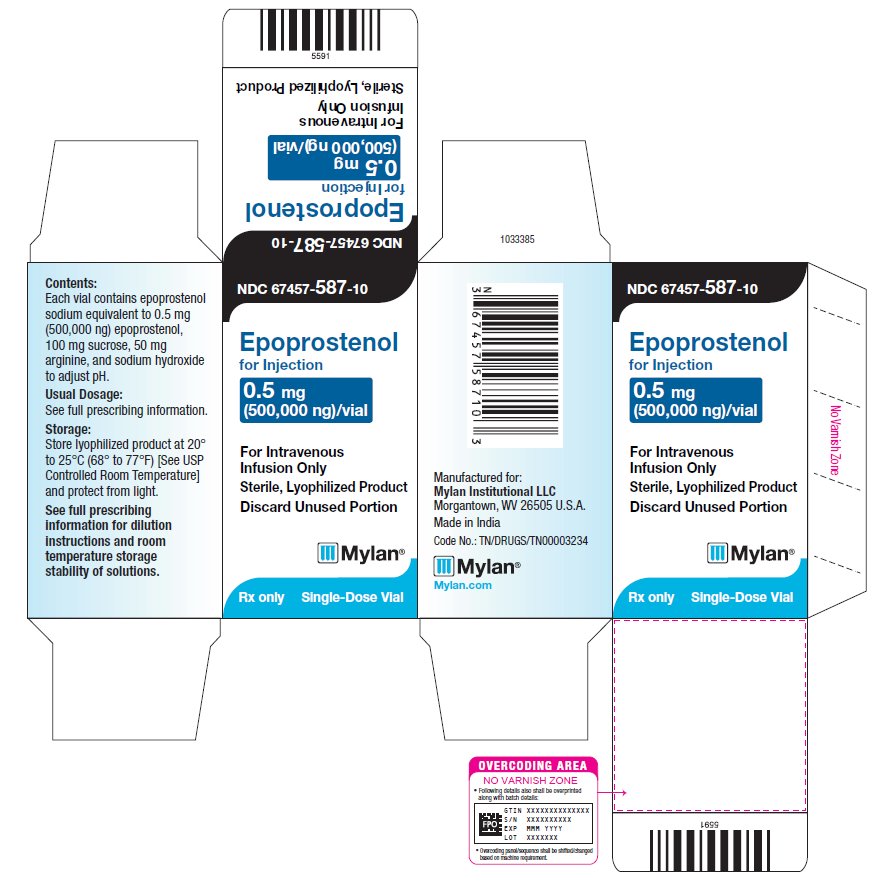
PRINCIPAL DISPLAY PANEL – 0.5 mg NDC 67457-587-10 Epoprostenol for Injection 0.5 mg (500,000 ng)/vial For Intravenous Infusion Only Sterile, Lyophilized Product Discard Unused Portion Mylan ® Rx only Single-Dose Vial Contents: Each vial contains epoprostenol sodium equivalent to 0.5 mg (500,000 ng) epoprostenol, 100 mg sucrose, 50 mg arginine, and sodium hydroxide to adjust pH. Usual Dosage: See full prescribing information. Storage: Store lyophilized product at 20º to 25ºC (68º to 77ºF) [See USP Controlled Room Temperature] and protect from light.
See full prescribing information for dilution instructions and room temperature storage stability of solutions. Manufactured for: Mylan Institutional LLC Morgantown, WV 26505 U.S.A. Made in India Code No.: TN/DRUGS/TN00003234 Epoprostenol for Injection 0.5 mg Carton Label
PRINCIPAL DISPLAY PANEL – 1.5 mg NDC 67457-588-10 Epoprostenol for Injection 1.5 mg (1,500,000 ng)/vial For Intravenous Infusion Only Sterile, Lyophilized Product Discard Unused Portion Mylan ® Rx only Single-Dose Vial Contents: Each vial contains epoprostenol sodium equivalent to 1.5 mg (1,500,000 ng) epoprostenol, 100 mg sucrose, 50 mg arginine, and sodium hydroxide to adjust pH. Usual Dosage: See full prescribing information. Storage: Store lyophilized product at 20º to 25ºC (68º to 77ºF) [See USP Controlled Room Temperature] and protect from light.
See full prescribing information for dilution instructions and room temperature storage stability of solutions. Manufactured for: Mylan Institutional LLC Morgantown, WV 26505 U.S.A. Made in India Code No.: TN/DRUGS/TN00003234 Epoprostenol for Injection 1.5 mg Carton Label
About this NDC listing & data coverage
What data is (and isn’t) available for this NDC — tap to expand
| NDC identity (package / product / labeler codes) | ✓ Available |
| Labeler | ✓ Available |
| Product & package description | ✓ Available |
| Marketing category & status | ✓ Available |
| Active ingredient / dosage form / route | ✓ Available |
| FDA label (SPL via DailyMed) | ✓ Available |
| Package photos | ✓ Available |
| Inactive ingredients (structured) | ✓ Available |
| NADAC pharmacy acquisition price (CMS) | — Not published for this NDC CMS publishes NADAC only for NDCs reported in its retail-pharmacy survey. |
| Orange Book / therapeutic-equivalence data | ✓ Available |
| HCPCS J-code billing crosswalk | ✓ Available |
| Medicaid utilization (CMS SDUD) | — Not published for this NDC CMS reports utilization only for NDCs with Medicaid claims above its privacy threshold. |