
galsulfase 5 mg/5mL Solution, 20000 mL — NDC 68135-020-99 (Billing 68135-0020-99)
This is a package of 20,000 mL of galsulfase 5 mg/5mL Solution from BioMarin Pharmaceutical Inc., marketed since Jun 2005 and currently FDA-listed.
NDC database record
One package, one record: these facts belong to NDC 68135-020-99 alone.
- Record
- FDA NDC Directory package listing · Drug for further processing
- Code segments
- 68135 labeler · 020 product · 99 package
- Package marketed since
- Jun 9, 2005
- Listing certified through
- Dec 31, 2027
- Barcode (UPC-A, from the NDC)
- 3 6813502099 8
- FDA record last changed
- Oct 8, 2026
Identity & classification
Regulatory identifiers FDA, NLM and CMS codes for this package
Drug-database identifiers Medi-Span GPI and First Databank GCN / HICL / AHFS classification
- GSN (GCN sequence number): 059200
- GCN: 24744
- GPI-14 (Medi-Span): 30907535002020
- HICL (First Databank): 032963
- AHFS class code: 44:00.00.00
Where does this data come from?
- FDA openFDA NDC Directory · synced Oct 8, 2026
- FDA label on DailyMed · label index refreshed Oct 8, 2026
- RxNorm (NLM RxNav) · catalog refreshed Oct 1, 2026
- Medi-Span GPI (licensed)
- First Databank (licensed) · refreshed Oct 8, 2026
Clinical
Naglazyme is an intravenous prescription solution containing galsulfase, an enzyme. It is typically used in the treatment of Maroteaux-Lamy syndrome, a rare genetic disorder in which the body cannot break down certain complex sugars that build up in cells and tissues. Galsulfase functions as a replacement enzyme designed to help reduce this buildup and manage the symptoms of the condition.
Patient education
Supplement & herbal interactions
Where does this data come from?
- MedlinePlus (NLM) · refreshed Oct 8, 2026
- FDA label on DailyMed · label index refreshed Oct 8, 2026
Ask a licensed pharmacist directly — free, answered by our team.
Pricing
A drug doesn't have one price. Each row is a different public payment system, and none is what you'd pay at the counter — that depends on your insurance. The ⓘ on each row explains what it measures.
| Price system | Per mL | Per package |
|---|---|---|
| Retail pharmacies payNADAC · weekly | Not in the retail survey — common for institutional, discontinued, or low-volume packs. | |
| Medicaid paysCMS SDUD · 12 mo | No recent Medicaid claims on file for this NDC — rare and low-volume NDCs are suppressed in the public data. | |
| Medicare drug plans payPart D · quarterly | No Part D plan price is available for this NDC in our data. | |
Where does this data come from?
- CMS NADAC weekly file
- CMS ASP pricing files · refreshed Sep 20, 2026
- CMS Medicaid State Drug Utilization Data · refreshed Oct 8, 2026
- CMS Part D plan pricing files · refreshed Sep 24, 2026
- VA National Acquisition Center price file
Packaging — all sizes for this product
| Package NDC | Description | Marketing start | Marketing end | Status |
|---|---|---|---|---|
| 68135-0020-01 68135-020-01 Main listing | 1 VIAL in 1 CARTON / 5 mL in 1 VIAL | 2005-06-09 | — | Active |
| 68135-0020-99 You're viewing this | 20000 mL in 1 BAG | — | — | Active |
This pack shows little to no recent Medicaid volume — a different pack size carries most fills. See all packs ↓
Pack size FAQ
What quantity is in this package?
What NDC number is used to bill for this package of galsulfase 5 mg/5mL Solution?
Therapeutic equivalents
| Product | Labeler | Pack | NADAC/unit | TE | Status | Price vs. this |
|---|---|---|---|---|---|---|
| galsulfase 5 mg/5mLthis 68135-0020-99 | BioMarin | 20000 ml | — | — | FDA listed | — |
Where does this data come from?
- FDA openFDA NDC Directory · synced Oct 8, 2026
- FDA Orange Book · refreshed Oct 3, 2026
- CMS NADAC weekly file
Availability & generic status
We did not find an FDA-approved generic match for this exact strength, form and route.
Where does this data come from?
- FDA Orange Book · refreshed Oct 3, 2026
Inactive Ingredients / Excipients
Inactive ingredients, also called excipients, are components of the drug product other than the active ingredient. They may include fillers, dyes, coatings, preservatives, flavors, or other formulation ingredients.
Where does this data come from?
IACT rows and label-wide narrative are kept separate; availability and product-level specificity depend on the submitted label.- FDA label on DailyMed · label index refreshed Oct 8, 2026
- FDA openFDA NDC Directory · synced Oct 8, 2026
Inactive ingredient FAQ
Are inactive ingredients the same for every manufacturer?
Why might an inactive ingredient be missing?
Can inactive ingredients matter?
Manufacturer & labeler
More NDCs from BioMarin Pharmaceutical Inc. labeler code 68135
- laronidase 2.9 mg/5mL Injection, Solution, Concentrate NDC 68135-000-99
- Palynziq pegvaliase-pqpz 2.5 mg/.5mL Injection, Solution NDC 68135-058-90
- pegvaliase-pqpz 5 mg/mL Injection, Solution NDC 68135-060-00
- Vosoritide 8 g/kg Injection, Solution, Concentrate NDC 68135-062-99
- VOXZOGO 0.4mg vosoritide Kit NDC 68135-082-36
- VIMIZIM elosulfase alfa 5 mg/5mL Injection, Solution, Concentrate NDC 68135-100-01
- pegvaliase-pqpz 20 mg/mL Injection, Solution NDC 68135-117-00
Where does this data come from?
- FDA openFDA NDC Directory · synced Oct 8, 2026
- Drugs@FDA
Full FDA label FDA SPL
🚨 Boxed Warning ▾
WARNING: HYPERSENSITIVITY REACTIONS INCLUDING ANAPHYLAXIS Patients treated with enzyme replacement therapies have experienced life-threatening hypersensitivity reactions, including anaphylaxis. Anaphylaxis has occurred during the early course of enzyme replacement therapy and after extended duration of therapy. Initiate NAGLAZYME in a healthcare setting with appropriate medical monitoring and support measures, including access to cardiopulmonary resuscitation equipment.
If a severe hypersensitivity reaction (e.g., anaphylaxis) occurs, discontinue NAGLAZYME and immediately initiate appropriate medical treatment, including use of epinephrine. Inform patients of the symptoms of life-threatening hypersensitivity reactions, including anaphylaxis and to seek immediate medical care should symptoms occur [see Warnings and Precautions (5.1) ] . WARNING: HYPERSENSITIVITY REACTIONS INCLUDING ANAPHYLAXIS See full prescribing information for complete boxed warning.
Anaphylaxis has occurred during the early course of enzyme replacement therapy and after extended duration of therapy. ( 5.1 ) Initiate NAGLAZYME in a healthcare setting with appropriate medical monitoring and support measures, including access to cardiopulmonary resuscitation equipment. ( 5.1 ) If a severe hypersensitivity reaction (e.g., anaphylaxis) occurs, discontinue NAGLAZYME and immediately initiate appropriate medical treatment, including use of epinephrine.
( 5.1 )
🎯 Indications and Usage ▾
1 INDICATIONS AND USAGE NAGLAZYME is indicated for patients with Mucopolysaccharidosis VI (MPS VI, Maroteaux-Lamy syndrome). NAGLAZYME has been shown to improve walking and stair-climbing capacity. NAGLAZYME is a hydrolytic lysosomal glycosaminoglycan (GAG)-specific enzyme indicated for patients with Mucopolysaccharidosis VI (MPS VI; Maroteaux-Lamy syndrome). NAGLAZYME has been shown to improve walking and stair-climbing capacity. ( 1 )
⏱️ Dosage and Administration ▾
2 DOSAGE AND ADMINISTRATION Administration of NAGLAZYME should be supervised by a healthcare provider knowledgeable in the management of hypersensitivity reactions including anaphylaxis. ( 2.1 ) The recommended dosage is 1 mg per kg of body weight administered once weekly as an intravenous infusion. ( 2.2 )
2.1Recommendations Prior to NAGLAZYME Treatment Administration of NAGLAZYME should be supervised by a healthcare provider knowledgeable in the management of hypersensitivity reactions including anaphylaxis [see Warnings and Precautions (5.1) ] . Initiate NAGLAZYME in a healthcare setting with appropriate medical monitoring and support measures, including access to cardiopulmonary resuscitation equipment [see Warnings and Precautions (5.1) ] . Pretreatment with antihistamines with or without antipyretics is recommended 30 to 60 minutes prior to the start of the infusion [see Warnings and Precautions (5.5) ].
2.2Recommended Dosage and Administration The recommended dosage regimen of NAGLAZYME is 1 mg per kg of body weight administered once weekly as an intravenous infusion. The total volume of the infusion should be delivered over a period of time of no less than 4 hours. NAGLAZYME should be diluted with 0.9% Sodium Chloride Injection, USP, to a final volume of 250 mL and delivered by controlled intravenous infusion using an infusion pump.
The initial infusion rate should be 6 mL per hour for the first hour. If the infusion is well tolerated, the rate of infusion may be increased to 80 mL per hour for the remaining 3 hours. The infusion time can be extended up to 20 hours if infusion reactions occur.
For patients 20 kg and under or those who are susceptible to fluid volume overload, physicians may consider diluting NAGLAZYME in a volume of 100 mL [see Warnings and Precautions (5.3) ] . The infusion rate (mL per hour) should be decreased so that the total infusion duration remains no less than 4 hours. Each vial of NAGLAZYME provides 5 mg of galsulfase (expressed as protein content) in 5 mL of solution and is intended for single use only.
Do not use the vial more than one time. The concentrated solution for infusion must be diluted with 0.9% Sodium Chloride Injection, USP, using aseptic techniques. Prepare NAGLAZYME using low-protein-binding containers and administer the diluted NAGLAZYME solution to patients using a low-protein-binding infusion set equipped with a low-protein-binding 0.2 µm in-line filter.
There is no information on the compatibility of diluted NAGLAZYME with glass containers.
2.3Instructions for Use Prepare and use NAGLAZYME according to the following steps. Use aseptic techniques. Determine the number of vials to be used based on the patient's weight and the recommended dose of 1 mg per kg: Patient's weight (kg) × 1 mL/kg of NAGLAZYME = Total number of mL of NAGLAZYME Total number of mL of NAGLAZYME ÷ 5 mL per vial = Total number of vials Round up to the next whole vial.
Remove the required number of vials from the refrigerator to allow them to reach room temperature. Do not allow vials to remain at room temperature longer than 24 hours prior to dilution. Do not heat or microwave vials.
Before withdrawing the NAGLAZYME solution from the vial, visually inspect each vial for particulate matter and discoloration. The NAGLAZYME solution should be clear to slightly opalescent and colorless to pale yellow. Some translucency may be present in the solution.
Do not use if the solution is discolored or if there is particulate matter in the solution. From a 250 mL infusion bag of 0.9% Sodium Chloride Injection, USP, withdraw and discard a volume equal to the volume of NAGLAZYME solution to be added. If using a 100 mL infusion bag, this step is not necessary.
Slowly withdraw the calculated volume of NAGLAZYME from the appropriate number of vials using caution to avoid excessive agitation. Do not use a filter needle, as this may cause agitation. Agitation may denature NAGLAZYME, rendering it biologically inactive.
Sl… [Excerpted — this section continues on DailyMed.]
💊 Dosage Forms and Strengths ▾
3 DOSAGE FORMS AND STRENGTHS Injection: 5 mg/5 mL (1 mg/mL) as a colorless to pale yellow, clear to slightly opalescent solution single-dose vials Injection: 5 mg/5 mL (1 mg/mL) in a single-dose vial. ( 3 )
⛔ Contraindications ▾
4 CONTRAINDICATIONS None. None. (4)
⚠️ Warnings and Cautions ▾
5 WARNINGS AND PRECAUTIONS Immune-Mediated Reactions : Immune-mediated reactions can occur with NAGLAZYME. Monitor patients for the development of immune complex-mediated reactions while receiving NAGLAZYME. ( 5.2 ) Risk of Acute Cardiorespiratory Failure : Caution should be exercised when administering NAGLAZYME to patients susceptible to fluid volume overload.
Consider a decreased total infusion volume and infusion rate when administering NAGLAZYME to these patients. Appropriate medical monitoring and support measures should be available during infusion. ( 2.2 , 5.3 ) Acute Respiratory Complications : Sleep apnea is common in MPS VI patients and antihistamine pretreatment may increase the risk of apneic episodes.
Appropriate respiratory support should be available during infusion. ( 5.4 ) Infusion Reactions : Pretreatment with antihistamines with or without antipyretics is recommended prior to the start of infusion to reduce the risk of infusion-reactions. If infusion reactions occur, decreasing the infusion rate, temporarily stopping the infusion, or administering additional antihistamines and/or antipyretics is recommended.
( 2.2 , 5.5 )
5.1Hypersensitivity Reactions Including Anaphylaxis Life-threatening hypersensitivity reactions, including anaphylaxis, have been observed in patients treated with enzyme replacement therapies, including NAGLAZYME. These reactions have occurred during and up to 24 hours after completion of the NAGLAZYME infusion. Some of the reactions included shock, respiratory distress, dyspnea, bronchospasm, laryngeal edema, and hypotension [see Adverse Reactions (6.1 , 6.2 )] .
Anaphylaxis has occurred during the early course of enzyme replacement therapy and after extended duration of therapy. Administration of NAGLAZYME should be supervised by a healthcare provider knowledgeable in the management of hypersensitivity reactions including anaphylaxis. Initiate NAGLAZYME in a healthcare setting with appropriate medical monitoring and support measures, including access to cardiopulmonary resuscitation equipment.
If a severe hypersensitivity reaction (e.g., anaphylaxis) occurs, discontinue NAGLAZYME and immediately initiate appropriate medical treatment, including use of epinephrine. In patients who have experienced anaphylaxis or other serious hypersensitivity reactions during infusion with NAGLAZYME, caution should be exercised upon rechallenge . Inform patients of the symptoms of life-threatening hypersensitivity reactions, including anaphylaxis and to seek immediate medical care should symptoms occur.
5.2Immune-Mediated Reactions Type III immune complex-mediated reactions, including membranous glomerulonephritis have been observed with NAGLAZYME, as with other enzyme replacement therapies. If immune-mediated reactions occur, discontinuation of the administration of NAGLAZYME should be considered, and appropriate medical treatment initiated. The risks and benefits of re-administering NAGLAZYME following an immune-mediated reaction should be considered.
Some patients have successfully been rechallenged and have continued to receive NAGLAZYME under close clinical supervision [see Adverse Reactions (6.2) ] .
5.3Risk of Acute Cardiorespiratory Failure Caution should be exercised when administering NAGLAZYME to patients susceptible to fluid volume overload, such as patients weighing 20 kg or less, patients with acute underlying respiratory illness, or patients with compromised cardiac and/or respiratory function, because congestive heart failure may result. Appropriate medical support and monitoring measures should be readily available during NAGLAZYME infusion and some patients may require prolonged observation times that should be based on the individual needs of the patient [see Adverse Reactions ( 6.2 )] .
5.4Acute Respiratory Complications Associated with Administration Sleep apnea is common in MPS VI patients and antihistamine pretreatment may increase the risk of apneic episodes. Evaluation of air… [Excerpted — this section continues on DailyMed.]
🤒 Adverse Reactions ▾
6 ADVERSE REACTIONS Serious and/or clinically significant adverse reactions described elsewhere in labeling include: Hypersensitivity Reactions Including Anaphylaxis [see Warnings and Precautions ( 5.1 )] Immune-Mediated Reactions [see Warnings and Precautions ( 5.2 )] Risk of Acute Cardiorespiratory Failure [see Warnings and Precautions ( 5.2 )] Acute Respiratory Complications Associated with Administration [see Warnings and Precautions ( 5.4 )] Infusion Reactions [see Warnings and Precautions ( 5.5 )] Spinal or Cervical Cord Compression [see Warnings and Precautions ( 5.6 )] The most common adverse reactions (≥10%) are: rash, pain, urticaria, pyrexia, pruritus, chills, headache, nausea, vomiting, abdominal pain and dyspnea.
The most common adverse reactions requiring interventions are infusion-related reactions. ( 6.1 ) To report SUSPECTED ADVERSE REACTIONS, contact: BioMarin Pharmaceutical Inc. at 1-866-906-6100 or FDA at 1-800-FDA-1088 or www.fda.gov/medwatch.
6.1Clinical Trials Experience Because clinical trials are conducted under widely varying conditions, adverse reaction rates observed in the clinical trials of a drug cannot be directly compared to rates observed in the clinical trials of another drug and may not reflect the rates observed in clinical practice. NAGLAZYME was studied in a randomized, double-blind, placebo-controlled trial in which 19 patients received weekly infusions of 1 mg/kg NAGLAZYME and 20 patients received placebo; of the 39 patients 66% were female, and 62% were White, non-Hispanic.
Patients were aged 5 years to 29 years. NAGLAZYME-treated patients were approximately 3 years older than placebo-treated patients (mean age 13.7 years versus 10.7 years, respectively). Serious adverse reactions experienced in this trial include apnea, pyrexia, and respiratory distress.
Severe adverse reactions include chest pain, dyspnea, laryngeal edema, and conjunctivitis. The most common adverse reactions requiring interventions were infusion reactions . Table 1 summarizes the adverse reactions that occurred in the placebo-controlled trial in at least 2 patients more in the NAGLAZYME‑treated group than in the placebo-treated group.
Table 1: Adverse Reactions that Occurred in the Placebo-Controlled Trial in at least 2 Patients More in the NAGLAZYME Group than in the Placebo Group NAGLAZYME (n = 19) Placebo (n = 20 One of the 20 patients in the placebo group dropped out after Week 4 infusion ) MedDRA Preferred Term No. Patients (%) No. Patients (%) All 19 (100) 20 (100) Abdominal Pain 9 (47) 7 (35) Ear Pain 8 (42) 4 (20) Arthralgia 8 (42) 5 (25) Pain 6 (32) 1 (5) Conjunctivitis 4 (21) 0 Dyspnea 4 (21) 2 (10) Rash 4 (21) 2 (10) Chills 4 (21) 0 Chest Pain 3 (16) 1 (5) Pharyngitis 2 (11) 0 Areflexia 2 (11) 0 Corneal Opacity 2 (11) 0 Gastroenteritis 2 (11) 0 Hypertension 2 (11) 0 Malaise 2 (11) 0 Nasal Congestion 2 (11) 0 Umbilical Hernia 2 (11) 0 Hearing Impairment 2 (11) 0 Four open-label clinical trials were conducted in MPS VI patients aged 3 months to 29 years with NAGLAZYME administered at doses of 0.2 mg/kg (n = 2), 1 mg/kg (n = 55), and 2 mg/kg (n = 2).
The mean exposure to the recommended dose of NAGLAZYME (1 mg/kg) was 138 weeks (range = 54 to 261 weeks). Two infants (12.1 months and 12.7 months) were exposed to 2 mg/kg of NAGLAZYME for 105 and 81 weeks, respectively. In addition to those listed in Table 1, common adverse reactions observed in the open-label trials include pruritus, urticaria, pyrexia, headache, nausea, and vomiting.
The most common adverse reactions requiring interventions were infusion reactions. Serious adverse reactions included laryngeal edema, urticaria, angioedema, and other hypersensitivity reactions. Severe adverse reactions included urticaria, rash, and abdominal pain.
Observed adverse events in four open-label studies (up to 261 weeks treatment) were not different in nature or severity to those observed in the placebo-controlled study. No patients discontinued during open-label tr… [Excerpted — this section continues on DailyMed.]
👥 Use in Specific Populations ▾
8 USE IN SPECIFIC POPULATIONS
8.1Pregnancy Risk Summary Available data from a pregnancy sub-study within the MPS VI Clinical Surveillance Program and case reports with NAGLAZYME use in pregnant women have not identified a drug-associated risk of major birth defects, miscarriage, or adverse maternal or fetal outcomes. In animal reproduction studies, galsulfase administered intravenously to pregnant rats and rabbits during the period of organogenesis, showed no evidence of harm to the fetus at doses of about 0.5 and 0.97 times, respectively for rats and rabbits, the recommended human dose of 1 mg/kg based on body surface area (see Data) .
The estimated background risk of major birth defects and miscarriage for the indicated population is unknown. All pregnancies have a background risk of birth defects, loss, or other adverse outcomes. In the U.S. general population, the estimated background risk of major birth defects and miscarriage in clinically recognized pregnancies is 2% to 4% and 15% to 20%, respectively.
Clinical Considerations Disease-associated maternal and embryo/fetal risk Pregnancy can exacerbate preexisting clinical manifestations of MPS and lead to adverse pregnancy outcomes for both mother and fetus. Data Human Data Available data from a pregnancy sub-study within the MPS VI Clinical Surveillance Program and case reports with the use of NAGLAZYME during pregnancy have identified seventeen pregnancies. No major birth defects have been reported.
Drug-associated adverse maternal and fetal outcomes have not been identified. Animal Data Reproduction studies have been performed with intravenous galsulfase during the period of organogenesis in pregnant rats at doses of galsulfase up to 3 mg/kg/day (about 0.5 times the recommended human dose of 1 mg/kg based on the body surface area) and in pregnant rabbits at doses up to 3 mg/kg/day (about 0.97 times the recommended human dose of 1 mg/kg based on the body surface area) and have revealed no evidence of harm to the fetus due to galsulfase.
8.2Lactation Risk Summary There are no data on the presence of galsulfase in human milk, the effects on the breastfed infant, or the effects on milk production. The developmental and health benefits of breastfeeding should be considered along with the mother’s clinical need for NAGLAZYME and any potential adverse effects on the breastfed infant from NAGLAZYME or from the underlying maternal condition.
8.4Pediatric Use Clinical studies with NAGLAZYME were conducted in 56 patients, ages 5 to 29 years, with the majority of these patients in the pediatric age group [see Clinical Studies (14) ] . In addition, an open-label study was conducted in four infants (3 months to 12.7 months) treated with 1 mg/kg (n = 2) or 2 mg/kg (n = 2) of NAGLAZYME. Safety results in infants were consistent with results observed in patients 5 to 29 years old [see Adverse Reactions (6) ] .
8.5Geriatric Use Clinical studies of NAGLAZYME did not include patients older than 29 years of age. It is not known whether older patients respond differently from younger patients.
🤰 Pregnancy ▾
8.1Pregnancy Risk Summary Available data from a pregnancy sub-study within the MPS VI Clinical Surveillance Program and case reports with NAGLAZYME use in pregnant women have not identified a drug-associated risk of major birth defects, miscarriage, or adverse maternal or fetal outcomes. In animal reproduction studies, galsulfase administered intravenously to pregnant rats and rabbits during the period of organogenesis, showed no evidence of harm to the fetus at doses of about 0.5 and 0.97 times, respectively for rats and rabbits, the recommended human dose of 1 mg/kg based on body surface area (see Data) .
The estimated background risk of major birth defects and miscarriage for the indicated population is unknown. All pregnancies have a background risk of birth defects, loss, or other adverse outcomes. In the U.S. general population, the estimated background risk of major birth defects and miscarriage in clinically recognized pregnancies is 2% to 4% and 15% to 20%, respectively.
Clinical Considerations Disease-associated maternal and embryo/fetal risk Pregnancy can exacerbate preexisting clinical manifestations of MPS and lead to adverse pregnancy outcomes for both mother and fetus. Data Human Data Available data from a pregnancy sub-study within the MPS VI Clinical Surveillance Program and case reports with the use of NAGLAZYME during pregnancy have identified seventeen pregnancies. No major birth defects have been reported.
Drug-associated adverse maternal and fetal outcomes have not been identified. Animal Data Reproduction studies have been performed with intravenous galsulfase during the period of organogenesis in pregnant rats at doses of galsulfase up to 3 mg/kg/day (about 0.5 times the recommended human dose of 1 mg/kg based on the body surface area) and in pregnant rabbits at doses up to 3 mg/kg/day (about 0.97 times the recommended human dose of 1 mg/kg based on the body surface area) and have revealed no evidence of harm to the fetus due to galsulfase.
🧒 Pediatric Use ▾
8.4Pediatric Use Clinical studies with NAGLAZYME were conducted in 56 patients, ages 5 to 29 years, with the majority of these patients in the pediatric age group [see Clinical Studies (14) ] . In addition, an open-label study was conducted in four infants (3 months to 12.7 months) treated with 1 mg/kg (n = 2) or 2 mg/kg (n = 2) of NAGLAZYME. Safety results in infants were consistent with results observed in patients 5 to 29 years old [see Adverse Reactions (6) ] .
🧓 Geriatric Use ▾
8.5Geriatric Use Clinical studies of NAGLAZYME did not include patients older than 29 years of age. It is not known whether older patients respond differently from younger patients.
🧬 Clinical Pharmacology ▾
12 CLINICAL PHARMACOLOGY
12.1Mechanism of Action Mucopolysaccharide storage disorders are caused by the deficiency of specific lysosomal enzymes required for the catabolism of GAG. MPS VI is characterized by the absence or marked reduction in N-acetylgalactosamine 4-sulfatase. The sulfatase activity deficiency results in the accumulation of the GAG substrate, dermatan sulfate, throughout the body.
This accumulation leads to widespread cellular, tissue, and organ dysfunction. NAGLAZYME is intended to provide an exogenous enzyme that will be taken up into lysosomes and increase the catabolism of GAG. Galsulfase uptake by cells into lysosomes is most likely mediated by the binding of mannose-6-phosphate-terminated oligosaccharide chains of galsulfase to specific mannose-6-phosphate receptors.
12.2Pharmacodynamics The responsiveness of urinary GAG to dosage alterations of NAGLAZYME is unknown, and the relationship of urinary GAG to other measures of clinical response has not been established.
12.3Pharmacokinetics The pharmacokinetic parameters of galsulfase were evaluated in 13 patients with MPS VI who received 1 mg/kg of NAGLAZYME as a weekly 4-hour infusion for 24 weeks. The pharmacokinetic parameters at Week 1 and Week 24 are shown in Table 2. Galsulfase pharmacokinetic parameters listed in Table 2 require cautious interpretation because of large assay variability.
Table 2: Pharmacokinetic Parameters (Median, Range) of Galsulfase in Patients with MPS VI Pharmacokinetic Parameter Week 1 Week 24 C max (mcg/mL) 0.8 (0.4 to 1.3) 1.5 (0.2 to 5.5) AUC 0-t (hr•mcg/mL) Area under the plasma galsulfase concentration-time curve from start of infusion to 60 minutes post infusion 2.3 (1.0 to 3.5) 4.3 (0.3 to 14.2) Vz (mL/kg) 103 (56 to 323) 69 (59 to 2,799) CL (mL/kg/min) 7.2 (4.7 to 10.5) 3.7 (1.1 to 55.9) Half-life (min) 9 (6 to 21) 26 (8 to 40)
12.6Immunogenicity The observed incidence of anti-drug antibodies (ADA) is highly dependent on the sensitivity and specificity of the assay. Differences in assay methods preclude meaningful comparisons of the incidence of ADA in the studies described below with the incidence of ADA in other studies, including those of NAGLAZYME or of other galsulfase products. In four clinical studies [see Clinical Studies (14) ] of MPS VI patients 5 to 29 years of age, 53 of 54 (98%) NAGLAZYME-treated patients developed anti-galsulfase IgG antibodies (referred to as ADA) within 4 to 8 weeks of treatment.
In the placebo-controlled study, 19 of 19 (100%) NAGLAZYME-treated patients developed ADA. Neutralizing antibodies were detected in 4 of 16 (25%) patients who had samples available for neutralizing antibody assessments. There was no identified clinically significant effect of ADA on infusion-associated reactions, urinary glycosaminoglycan (GAG) levels, or endurance measures.
There is insufficient information to characterize the effects of ADA on pharmacokinetics of galsulfase.
🧬 Mechanism of Action ▾
12.1Mechanism of Action Mucopolysaccharide storage disorders are caused by the deficiency of specific lysosomal enzymes required for the catabolism of GAG. MPS VI is characterized by the absence or marked reduction in N-acetylgalactosamine 4-sulfatase. The sulfatase activity deficiency results in the accumulation of the GAG substrate, dermatan sulfate, throughout the body.
This accumulation leads to widespread cellular, tissue, and organ dysfunction. NAGLAZYME is intended to provide an exogenous enzyme that will be taken up into lysosomes and increase the catabolism of GAG. Galsulfase uptake by cells into lysosomes is most likely mediated by the binding of mannose-6-phosphate-terminated oligosaccharide chains of galsulfase to specific mannose-6-phosphate receptors.
📦 How Supplied / Storage and Handling ▾
16 HOW SUPPLIED/STORAGE AND HANDLING NAGLAZYME injection is supplied as a sterile colorless to pale yellow, clear to slightly opalescent solution in clear Type I glass 5 mL vials, containing 5 mg galsulfase (expressed as protein content) per 5 mL solution. The closure consists of a siliconized chlorobutyl rubber stopper and an aluminum seal with a plastic flip-off cap. NDC 68135-020-01, 5 mL vial Store NAGLAZYME under refrigeration at 2°C to 8°C (36°F to 46°F).
Do not freeze or shake. Protect from light. This product contains no preservatives.
📋 Description ▾
11 DESCRIPTION NAGLAZYME is a formulation of galsulfase, which is a purified human enzyme that is produced by recombinant DNA technology in a Chinese hamster ovary cell line. Galsulfase (glycosaminoglycan N -acetylgalactosamine 4-sulfatase, EC 3.1.6.12) is a lysosomal enzyme that catalyzes the cleavage of the sulfate ester from terminal N –acetylgalactosamine 4-sulfate residues of glycosaminoglycans (GAG), chondroitin 4-sulfate and dermatan sulfate. Galsulfase is a glycoprotein with a molecular weight of approximately 56 kDa.
The recombinant protein consists of 495 amino acids and possesses six asparagine‑linked glycosylation sites, four of which carry a bis‑mannose-6–phosphate residue for specific cellular recognition. Post-translational modification of Cys53 produces the catalytic amino acid residue, Cα-formylglycine, which is required for enzyme activity. NAGLAZYME has a specific activity of approximately 70 units per mg of protein content.
One activity unit is defined as the amount of enzyme required to convert 1 micromole of 4-methylumbelliferyl sulfate to 4-methylumbelliferone and free sulfate per minute at 37°C. NAGLAZYME is intended for intravenous infusion and is supplied as a sterile, nonpyrogenic, colorless to pale yellow, clear to slightly opalescent solution that must be diluted with 0.9% Sodium Chloride Injection, USP, prior to administration. NAGLAZYME is supplied in clear Type I glass 5 mL vials.
Each vial provides 5 mg galsulfase, 43.8 mg sodium chloride, 6.20 mg sodium phosphate monobasic monohydrate, 1.34 mg sodium phosphate dibasic heptahydrate, and 0.25 mg polysorbate 80 in a 5 mL extractable solution with pH of approximately 5.8. NAGLAZYME does not contain preservatives. Each vial is for single use only.
💬 Information for Patients ▾
17 PATIENT COUNSELING INFORMATION Hypersensitivity Reactions Including Anaphylaxis and Infusion Reactions Advise the patient or caregiver that life-threatening hypersensitivity reactions, including anaphylaxis and infusion reactions, may occur with NAGLAZYME treatment. Advise the patient or caregiver that anaphylaxis has occurred during the early course of enzyme replacement therapy and after extended duration of therapy. Inform the patient or caregiver of the symptoms of life-threatening hypersensitivity reactions, including anaphylaxis, and infusion reactions and to seek immediate medical care should symptoms occur [see Warnings and Precautions (5.1 , 5.5) ] .
Respiratory Adverse Reactions Advise the patient or caregiver to report immediately to a healthcare provider if signs or symptoms of cardiac or respiratory decompensation occur during or following an infusion [see Warnings and Precautions (5.3 , 5.4) ] . Inform patients using supplemental oxygen or continuous positive airway pressure (CPAP) during sleep to have these treatments readily available during infusion or extreme drowsiness/sleep induced by antihistamine use.
🧬 Pharmacokinetics ▾
12.3Pharmacokinetics The pharmacokinetic parameters of galsulfase were evaluated in 13 patients with MPS VI who received 1 mg/kg of NAGLAZYME as a weekly 4-hour infusion for 24 weeks. The pharmacokinetic parameters at Week 1 and Week 24 are shown in Table 2. Galsulfase pharmacokinetic parameters listed in Table 2 require cautious interpretation because of large assay variability.
Table 2: Pharmacokinetic Parameters (Median, Range) of Galsulfase in Patients with MPS VI Pharmacokinetic Parameter Week 1 Week 24 C max (mcg/mL) 0.8 (0.4 to 1.3) 1.5 (0.2 to 5.5) AUC 0-t (hr•mcg/mL) Area under the plasma galsulfase concentration-time curve from start of infusion to 60 minutes post infusion 2.3 (1.0 to 3.5) 4.3 (0.3 to 14.2) Vz (mL/kg) 103 (56 to 323) 69 (59 to 2,799) CL (mL/kg/min) 7.2 (4.7 to 10.5) 3.7 (1.1 to 55.9) Half-life (min) 9 (6 to 21) 26 (8 to 40)
🧬 Pharmacodynamics ▾
12.2Pharmacodynamics The responsiveness of urinary GAG to dosage alterations of NAGLAZYME is unknown, and the relationship of urinary GAG to other measures of clinical response has not been established.
🔬 Clinical Studies ▾
14 CLINICAL STUDIES A total of 56 patients with MPS VI, ages 5 years to 29 years, were enrolled in four clinical studies. The majority of patients had severe manifestations of the disease as evidenced by poor performance on a test of physical endurance. In the randomized, double-blind, multicenter, placebo-controlled clinical trial, 38 patients with MPS VI received 1 mg/kg NAGLAZYME or placebo, once-weekly for 24 weeks.
The patients’ ages ranged from 5 to 29 years. Enrollment was restricted to patients with a 12‑minute walk distance of 5 to 400 meters. All patients were treated with antihistamines prior to each infusion.
The NAGLAZYME-treated group showed greater mean increases in the distance walked in 12 minutes (12‑minute walk test, 12‑MWT) and in the rate of stair climbing in a 3-minute stair climb test, compared with the placebo group (Table 3). Table 3: Results from Placebo-Controlled Clinical Study NAGLAZYME Placebo NAGLAZYME vs. Placebo Baseline Week 24 Change Baseline Week 24 Change Difference in Changes N 19 19 19 20 19 One patient in the placebo group dropped out after 4 weeks of infusion 19 Results from the 12-Minute Walk Test (Meters) Mean ± SD Median Percentiles (25 th , 75 th ) 227 ± 170 210 90, 330 336 ± 227 316 125, 483 109 ± 154 48 7, 183 381 ± 202 365 256, 560 399 ± 217 373 204, 573 26 ± 122 34 –3, 89 83 ± 45 Observed mean of NAGLAZYME - Placebo ± SE 92 ± 40 Model-based mean of NAGLAZYME - Placebo ± SE, adjusted for baseline (p = 0.025) , p-value based on the model-based mean difference Results from 3-Minute Stair Climb Test (Stairs/Minute) Mean ± SD Median Percentiles (25 th , 75 th ) 19.4 ± 12.9 16.7 10.0, 26.3 26.9 ± 16.8 22.8 14.8, 33.0 7.4 ± 9.9 5.2 2.2, 9.9 31.0 ± 18.1 24.7 18.1, 51.5 32.6 ± 19.6 29.0 14.2, 57.9 2.7 ± 6.9 4.3 1.0, 6.2 4.7 ± 2.8 5.7 ± 2.9 (p = 0.053) , Following the 24-week placebo-controlled study period, 38 patients received open-label NAGLAZYME for 72 weeks.
Among the 19 patients who were initially randomized to NAGLAZYME and who continued to receive treatment for 72 weeks (total of 96 weeks), increases in the 12-MWT distance and in the rate of stair climbing were observed compared to the start of the open-label period (mean [ ± SD] change): 72 ± 116 meters and 5.6 ± 10.6 stairs/minute, respectively). Among the 19 patients who were randomized initially to placebo for 24 weeks, and then crossed over to treatment with NAGLAZYME, the increases after 72 weeks of NAGLAZYME treatment compared to the start of the open-label period, (mean [ ± SD] change): were 118 ± 127 meters and 11.1 ± 10.0 stairs/minute, for the 12-MWT and the rate of stair climbing, respectively.
Bioactivity was evaluated with urinary GAG concentration. Overall, 95% of patients showed at least a 50% reduction in urinary GAG levels after 72 weeks of treatment with NAGLAZYME. No patient receiving NAGLAZYME reached the normal range for urinary GAG levels [see Clinical Pharmacology (12.2) ] .
In an additional open-label extension study, patients receiving NAGLAZYME showed maintenance of initial improvement in endurance for approximately 240 weeks.
🧪 Nonclinical Toxicology ▾
13 NONCLINICAL TOXICOLOGY
13.1Carcinogenesis, Mutagenesis, Impairment of Fertility Long-term studies in animals to evaluate carcinogenic potential or studies to evaluate mutagenic potential have not been performed with galsulfase. Galsulfase at intravenous doses up to 3.0 mg/kg (about 0.5 times the recommended human dose of 1 mg/kg based on body surface area) was found to have no effect on the fertility and reproductive performance of male and female rats .
📄 Carcinogenesis, Mutagenesis, Impairment of Fertility ▾
13.1Carcinogenesis, Mutagenesis, Impairment of Fertility Long-term studies in animals to evaluate carcinogenic potential or studies to evaluate mutagenic potential have not been performed with galsulfase. Galsulfase at intravenous doses up to 3.0 mg/kg (about 0.5 times the recommended human dose of 1 mg/kg based on body surface area) was found to have no effect on the fertility and reproductive performance of male and female rats .
📄 Recent Major Changes ▾
Boxed Warning 7/2024 Dosage and Administration ( 2.1 ) 7/2024 Warnings and Precautions ( 5.1 ) 7/2024
📄 Package Label / Principal Display Panel ▾
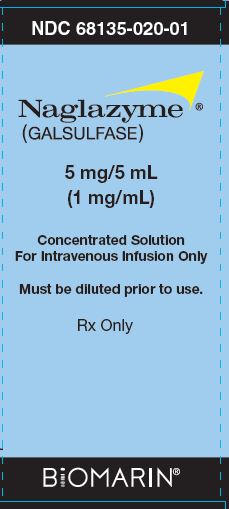
Packaging Components NDC 68135-020-01 Naglazyme ® (GALSULFASE) 5 mg/5 mL (1 mg/mL) Concentrated Solution For Intravenous Infusion Only Must be diluted prior to use. Rx Only Naglazyme Carton Naglazyme Carton
Medicaid utilization by pack size
Medicare Part D spend CMS · PART D · 2025 (Q1-Q4)
Reported adverse events (FAERS)
Top reported reactions
Age at onset
Reporter sex
Serious outcomes
Where does this data come from?
About this NDC listing & data coverage
What "drug for further processing" means
FDA lists this package under the "drug for further processing" marketing category: BioMarin Pharmaceutical Inc. supplies it to other companies for further processing or repackaging (blister cards that are later repackaged or co-packaged are a common example). The units themselves are a finished dosage form — which is why pricing or Medicaid data can still appear — but this exact package code may not be the presentation a retail pharmacy dispenses.
What data is (and isn’t) available for this NDC — tap to expand
| NDC identity (package / product / labeler codes) | ✓ Available |
| Labeler | ✓ Available |
| Product & package description | ✓ Available |
| Marketing category & status | ✓ Available |
| Active ingredient / dosage form / route | ✓ Available |
| FDA label (SPL via DailyMed) | ✓ Available |
| Package photos | ✓ Available |
| Inactive ingredients (structured) | — Not published for this NDC The labeler did not submit a structured excipient list, or no SPL is available. |
| NADAC pharmacy acquisition price (CMS) | — Not published for this NDC CMS publishes NADAC only for NDCs reported in its retail-pharmacy survey. |
| Orange Book / therapeutic-equivalence data | — Not published for this NDC Applies only to products approved under an NDA/ANDA; many listings are out of scope. |
| HCPCS J-code billing crosswalk | — Not published for this NDC Most self-administered / retail products have no J-code — that is normal. |
| Medicaid utilization (CMS SDUD) | — Not published for this NDC CMS reports utilization only for NDCs with Medicaid claims above its privacy threshold. |