
Palynziq pegvaliase-pqpz 10 mg/.5mL Injection, Solution, 1 syringe — NDC 68135-756-20 (Billing 68135-0756-20)
This is a package of 1 syringe of Palynziq pegvaliase-pqpz 10 mg/.5mL Injection, Solution from BioMarin Pharmaceutical Inc., marketed since May 2018 and currently FDA-listed. It is this product's only package size.
NDC database record
One package, one record: these facts belong to NDC 68135-756-20 alone.
- Record
- FDA NDC Directory package listing · Human prescription drug
- Code segments
- 68135 labeler · 756 product · 20 package
- Package marketed since
- May 24, 2018
- Sample package
- No — commercial package
- Listing certified through
- Dec 31, 2027
- Barcode (UPC-A, from the NDC)
- 3 6813575620 0
- Medicaid fills, this package
- 68 prescriptions in the last four reported quarters
- FDA record last changed
- Jul 24, 2026
Identity & classification
Regulatory identifiers FDA, NLM and CMS codes for this package
Drug-database identifiers Medi-Span GPI and First Databank GCN / HICL / AHFS classification
- GSN (GCN sequence number): 078458
- GCN: 44792
- GPI-14 (Medi-Span): 3090855040E520
- HICL (First Databank): 044944
- AHFS class code: 44:00.00.00
- RxCUI (RxNorm): 2046365
Where does this data come from?
- FDA openFDA NDC Directory · synced Oct 8, 2026
- FDA label on DailyMed · label index refreshed Oct 8, 2026
- RxNorm (NLM RxNav) · catalog refreshed Oct 1, 2026
- Medi-Span GPI (licensed)
- First Databank (licensed) · refreshed Oct 8, 2026
RxNorm drug class
This medicine belongs to the Phenylalanine Metabolizing Enzyme class.
Where does this data come from?
- RxClass (NLM) · catalog refreshed Oct 1, 2026
Clinical
- It lowers phenylalanine in your blood if you are 12 or older and have PKU that is not controlled on your current management, with blood Phe above 600 micromol/L.
- Palynziq can cause anaphylaxis, a severe allergic reaction, at any time during treatment. Epinephrine is the emergency treatment, so you must carry it always and know how to use it...
- It is injected under the skin from a prefilled syringe. Your first doses are given with a healthcare provider watching. Self-injection comes only after you show you can do it safel...
- How is it given, and can I inject it myself?
Patient education
Supplement & herbal interactions
Where does this data come from?
- MedlinePlus (NLM) · refreshed Oct 8, 2026
- FDA label on DailyMed · label index refreshed Oct 8, 2026
Ask a licensed pharmacist directly — free, answered by our team.
Pricing
A drug doesn't have one price. Each row is a different public payment system, and none is what you'd pay at the counter — that depends on your insurance. The ⓘ on each row explains what it measures.
| Price system | Per mL | Per package |
|---|---|---|
| Retail pharmacies payNADAC · weekly | Not in the retail survey — common for institutional, discontinued, or low-volume packs. | |
| Medicaid paysCMS SDUD · 12 mo | $1,345.37 | $672.69 / 0.5 ml |
| Medicare drug plans payPart D · Q2 2026 | $1,397.64 | $698.82 / 0.5 ml |
Where does this data come from?
- CMS NADAC weekly file
- CMS ASP pricing files · refreshed Sep 20, 2026
- CMS Medicaid State Drug Utilization Data · through Q1 2026
- CMS Part D plan pricing files · refreshed Sep 24, 2026
- VA National Acquisition Center price file
Packaging — all sizes for this product
| Package NDC | Description | Marketing start | Marketing end | Status |
|---|---|---|---|---|
| 68135-0756-20 You're viewing this Main listing | 1 SYRINGE in 1 CARTON / .5 mL in 1 SYRINGE | 2018-05-24 | — | Active |
Therapeutic equivalents
| Product | Labeler | Pack | NADAC/unit | TE | Status | Price vs. this |
|---|---|---|---|---|---|---|
| Palynziq 10 mg/.5mLthis 68135-0756-20 | BioMarin | 1 syringe | — | — | FDA listed | — |
Where does this data come from?
- FDA openFDA NDC Directory · synced Oct 8, 2026
- FDA Purple Book · refreshed Oct 5, 2026
- CMS NADAC weekly file
Availability & biosimilar status
Biologics have no small-molecule generics; biosimilar competition is tracked in the FDA Purple Book.
Why the date isn’t exact: Biosimilar timing can change because patents may be challenged, settled, licensed, added or removed, and litigation can move the real date earlier or later.
🛈 What do these terms mean?
- Biologic patent
- A patent the reference product’s maker has publicly listed. A biosimilar generally can’t launch until these expire — unless they’re invalidated or resolved in a settlement.
- Reference-product exclusivity
- A flat 12 years of FDA market protection from the biologic’s first licensure (the BPCIA). No biosimilar can be licensed before it ends, regardless of patents.
- Interchangeable exclusivity
- The first interchangeable biosimilar can earn a period as the only interchangeable version (pharmacists can substitute it without the prescriber).
- Earliest biosimilar (LOE)
- The latest of all the dates above — the soonest a biosimilar can realistically reach the market. Litigation and settlements can move it earlier.
Biologics have no small-molecule “generics” — competition comes from FDA-licensed biosimilars, tracked in the FDA Purple Book.
| Code | What it grants | Expires |
|---|---|---|
| RefProduct | Reference-product exclusivity (12-year, BPCIA) — no biosimilar can be licensed before this date | May 24, 2030 |
Is there a biosimilar for PALYNZIQ 10 MG/0.5 ML SYRINGE?
Why do different websites show different biosimilar dates?
Can a biosimilar launch before the last patent expires?
What does “current Purple Book estimate” mean?
What does “FDA listed” mean?
What does a patent or protection date mean here?
Where does this data come from?
- FDA Purple Book · refreshed Oct 5, 2026
Inactive Ingredients / Excipients
Inactive ingredients, also called excipients, are components of the drug product other than the active ingredient. They may include fillers, dyes, coatings, preservatives, flavors, or other formulation ingredients.
🧪 Avoiding an ingredient? See Pegvaliase-pqpz Injection inactive ingredients by manufacturer: every current product's list side by side, so you can ask your pharmacy for the version that does not list it.
Where does this data come from?
IACT rows and label-wide narrative are kept separate; availability and product-level specificity depend on the submitted label.- FDA label on DailyMed · label index refreshed Oct 8, 2026
- FDA openFDA NDC Directory · synced Oct 8, 2026
Inactive ingredient FAQ
Are inactive ingredients the same for every manufacturer?
Why might an inactive ingredient be missing?
Can inactive ingredients matter?
Manufacturer & labeler
More NDCs from BioMarin Pharmaceutical Inc. labeler code 68135
- VOXZOGO 1.2mg vosoritide Kit NDC 68135-181-93
- Kuvan SAPROPTERIN DIHYDROCHLORIDE 100 mg Tablet NDC 68135-300-02
- Kuvan SAPROPTERIN DIHYDROCHLORIDE 100 mg Powder, For Solution NDC 68135-301-22
- Kuvan sapropterin dihydrochloride 500 mg Powder, For Solution NDC 68135-482-11
- cerliponase alfa 150 mg/5mL Injection, Solution NDC 68135-502-00
- Palynziq pegvaliase-pqpz 20 mg/mL Injection, Solution NDC 68135-673-40
- Brineura cerliponase alfa Kit NDC 68135-811-02
Where does this data come from?
- FDA openFDA NDC Directory · synced Oct 8, 2026
- Drugs@FDA
Full prescribing information FDA SPL
🚨 Boxed Warning ▾
WARNING: ANAPHYLAXIS Anaphylaxis has been reported after administration of PALYNZIQ and may occur at any time during treatment [see Warnings and Precautions (5.1) ] . Administer the initial dose of PALYNZIQ under the supervision of a healthcare provider equipped to manage anaphylaxis, and closely observe patients for at least 60 minutes following injection. Prior to self-injection, confirm patient competency with self-administration, and patient's and observer's (if applicable) ability to recognize signs and symptoms of anaphylaxis and administer epinephrine, if needed [see Dosage and Administration (2.5) ] .
Consider having an adult observer for patients who may need assistance in recognizing and managing anaphylaxis during PALYNZIQ treatment. If an adult observer is needed, the observer should be present during and for at least 60 minutes after PALYNZIQ administration, should be able to administer epinephrine, and call for emergency medical support upon its use [see Warnings and Precautions (5.1) ] . Prescribe epinephrine to all patients treated with PALYNZIQ.
Prior to the first dose, instruct the patient and observer (if applicable) how to recognize the signs and symptoms of anaphylaxis, how to properly administer epinephrine, and to seek immediate medical care upon its use. Instruct patients to carry epinephrine with them at all times during treatment with PALYNZIQ [see Dosage and Administration (2.5) and Warnings and Precautions (5.1) ] . Consider the risks and benefits of readministering PALYNZIQ following an episode of anaphylaxis.
If the decision is made to readminister PALYNZIQ, readminister the first dose under the supervision of a healthcare provider equipped to manage anaphylaxis and closely observe the patient for at least 60 minutes following the dose [see Dosage and Administration (2.5) and Warnings and Precautions (5.1) ] . Because of the risk of anaphylaxis, PALYNZIQ is available only through a restricted program under a Risk Evaluation and Mitigation Strategy (REMS) called the PALYNZIQ REMS [see Warnings and Precautions (5.2) ]. WARNING: ANAPHYLAXIS See full prescribing information for complete boxed warning.
Anaphylaxis has been reported after administration of PALYNZIQ and may occur at any time during treatment. ( 5.1 ) Administer the initial dose of PALYNZIQ under the supervision of a healthcare provider equipped to manage anaphylaxis, and closely observe patients for at least 60 minutes following injection. Prior to self-injection, confirm patient competency with self-administration, and patient's and observer's (if applicable) ability to recognize signs and symptoms of anaphylaxis and to administer epinephrine, if needed.
( 2.5 ) Prescribe epinephrine. Prior to first dose, instruct the patient and observer (if applicable) on its appropriate use. Instruct the patient to seek immediate medical care upon its use.
Instruct patients to carry epinephrine with them at all times during PALYNZIQ treatment. ( 2.5 , 5.1 ) PALYNZIQ is available only through a restricted program called the PALYNZIQ REMS. ( 5.2 )
🎯 Indications and Usage ▾
1 INDICATIONS AND USAGE PALYNZIQ is indicated to reduce blood phenylalanine concentrations in adult and pediatric patients 12 years of age and older with phenylketonuria (PKU) who have uncontrolled blood phenylalanine concentrations greater than 600 micromol/L on existing management. PALYNZIQ is a phenylalanine (Phe)-metabolizing enzyme indicated to reduce blood phenylalanine concentrations in adult and pediatric patients 12 years of age and older with phenylketonuria (PKU) who have uncontrolled blood phenylalanine concentrations greater than 600 micromol/L on existing management.
( 1 )
⏱️ Dosage and Administration ▾
2 DOSAGE AND ADMINISTRATION Obtain baseline blood Phe concentration before initiating treatment. ( 2.1 ) Consider premedication for hypersensitivity reactions. ( 2.1 , 5.1 , 5.3 ) The recommended initial dosage for PALYNZIQ is 2.5 mg subcutaneously once weekly for 4 weeks.
( 2.2 ) See the Full Prescribing Information for titration, maintenance, discontinuation, and dose reduction. ( 2.2 ) See Full Prescribing Information for dosage and administration modifications due to anaphylaxis. ( 2.3 ) Obtain blood Phe concentrations every 4 weeks until a maintenance dosage is established.
( 2.4 ) Periodically monitor blood Phe concentrations during maintenance therapy and monitor dietary protein and phenylalanine intake throughout treatment. ( 2.4 ) Rotate injection sites. If more than one injection is needed for a single dose, the injection sites should be at least 2 inches away from each other.
( 2.5 )
2.1Important Recommendation Prior to PALYNZIQ Treatment Treatment with PALYNZIQ should be managed by a healthcare provider experienced in the management of PKU. Obtain baseline blood phenylalanine concentration before initiating treatment. Consider premedication with an H 1 -receptor antagonist, H 2 -receptor antagonist, and/or antipyretic based upon individual patient tolerability [see Warnings and Precautions (5.1 , 5.3) ] .
2.2Recommended Dosage and Administration Induction The recommended initial induction dosage for PALYNZIQ is 2.5 mg subcutaneously once weekly for 4 weeks. Administer the initial dose under the supervision of a healthcare provider [see Dosage and Administration (2.5) ]. Titration Titrate the PALYNZIQ dosage in a step-wise manner, based on tolerability, over at least 5 weeks, to achieve a dosage of 20 mg subcutaneously once daily according to Table 1.
Maintenance Therapeutic response may not be achieved until the patient is titrated to an effective maintenance dosage of PALYNZIQ. Use the lowest effective and tolerated dosage of PALYNZIQ. Assess patient tolerability, blood phenylalanine concentrations, and dietary protein and phenylalanine intake throughout treatment.
Individualize the maintenance dosage to achieve blood phenylalanine control (blood phenylalanine concentrations less than or equal to 600 micromol/L), taking into account patient tolerability to PALYNZIQ and dietary protein and phenylalanine intake (see Table 1 ). Maintain the PALYNZIQ dosage at 20 mg once daily for at least 24 weeks. Consider increasing the PALYNZIQ dosage to 40 mg once daily in patients who have been on 20 mg once daily continuously for at least 24 weeks without achieving blood phenylalanine control.
Consider increasing the PALYNZIQ dosage to a maximum of 60 mg once daily in patients who have been on 40 mg once daily continuously for at least 16 weeks without achieving blood phenylalanine control. Discontinuation Discontinue PALYNZIQ in patients who have not achieved an adequate response after 16 weeks of continuous treatment with the maximum dosage of 60 mg once daily [see Clinical Studies (14) ]. Table 1: Recommended Dosing Regimen Treatment PALYNZIQ Dosage Duration Additional time may be required prior to each dosage escalation based on patient tolerability.
Induction 2.5 mg once weekly 4 weeks Titration 2.5 mg twice weekly 1 week 10 mg once weekly 1 week 10 mg twice weekly 1 week 10 mg four times per week 1 week 10 mg once daily 1 week Maintenance Individualize treatment to the lowest effective and tolerated dosage. Consider increasing to 40 mg once daily in patients who have not achieved a response with 20 mg once daily continuous treatment for at least 24 weeks. Consider increasing to a maximum of 60 mg once daily in patients who have not achieved a response with 40 mg once daily continuous treatment for at least 16 weeks [see Clinical Studies (14) ].
20 mg once daily 24 weeks 40 mg once daily 16 weeks Maximum Discontinue PALYNZIQ in patients who have not achieved an adequate response after 16 weeks of continuous treatment at… [Excerpted — this section continues on DailyMed.]
💊 Dosage Forms and Strengths ▾
3 DOSAGE FORMS AND STRENGTHS PALYNZIQ is a clear to slightly opalescent, colorless to pale yellow solution available as follows: Injection: 2.5 mg/0.5 mL single-dose prefilled syringe Injection: 10 mg/0.5 mL single-dose prefilled syringe Injection: 20 mg/mL single-dose prefilled syringe Injection: 2.5 mg/0.5 mL, 10 mg/0.5 mL, and 20 mg/mL in a single-dose prefilled syringe. ( 3 )
⛔ Contraindications ▾
4 CONTRAINDICATIONS None. None. ( 4 )
⚠️ Warnings and Cautions ▾
5 WARNINGS AND PRECAUTIONS Hypersensitivity Reactions, Other than Anaphylaxis : Management should be based on the severity of the reaction, recurrence, and clinical judgement. ( 5.3 ) Injection Site Infections : Serious injection site infections, including abscess, cellulitis, necrosis, and ulcer have been reported. Instruct patients to contact their healthcare provider if signs or symptoms of an infection develop, persist, or worsen.
( 5.4 ) Hypophenylalaninemia : Some PKU patients treated with PALYNZIQ have experienced hypophenylalaninemia; monitor blood Phe levels periodically during treatment. ( 5.5 )
5.1Anaphylaxis In PALYNZIQ Studies 1, 2, and 3 with an induction/titration/maintenance dosage regimen, 10% (29/285) of PALYNZIQ-treated patients experienced a total of 42 anaphylaxis episodes [see Adverse Reactions (6.1) and Clinical Pharmacology (12.6) ]. The exposure-adjusted rate of anaphylaxis was highest during the induction and titration phases (0.25 episodes/person-years; 5% of PALYNZIQ-treated patients with at least one episode) and decreased in the maintenance phase (0.05 episodes/person-years; 7% of PALYNZIQ-treated patients with at least one episode).
Signs and symptoms of anaphylaxis reported in PALYNZIQ-treated patients included syncope, hypotension, hypoxia, dyspnea, wheezing, chest discomfort/chest tightness, tachycardia, angioedema (swelling of face, lips, eyes, tongue), throat tightness, skin flushing, rash, urticaria, pruritus, and gastrointestinal symptoms (vomiting, nausea, diarrhea). Anaphylaxis occurred within 1 hour after injection in 81% of PALYNZIQ-treated patients (34/42 episodes); however, delayed episodes also occurred up to 48 hours after PALYNZIQ administration.
Anaphylaxis occurred within the first year of dosing in 69% of PALYNZIQ-treated patients (29/42 episodes), but cases also occurred after one year of dosing and up to 1,604 days (4.4 years) into treatment. Management of anaphylaxis in PALYNZIQ-treated patients included: administration of epinephrine (48%; 20/42 episodes), corticosteroids (55%; 23/42 episodes), antihistamines (57%; 24/42 episodes), and/or oxygen (5%; 2/42 episodes). In these trials, 72% (21/29) of patients who experienced anaphylaxis were rechallenged with PALYNZIQ and 29% (6/21) of patients who were rechallenged had recurrence of anaphylaxis.
All anaphylaxis episodes resolved without sequelae. In Study 4, conducted in patients who were 12 to less than 18 years of age [see Clinical Trials (14) ], premedication was administered to all patients. A single episode of anaphylaxis, was reported in 11% (4/36) of PALYNZIQ-treated patients with symptoms similar to those reported in the adult clinical trials.
All 4 patients were managed with administration of epinephrine. Treatment with PALYNZIQ was discontinued in two patients and the other two patients were rechallenged with PALYNZIQ without recurrence of anaphylaxis. Steps to Take to Prevent, Mitigate, Monitor for, and Manage Anaphylaxis Prior to PALYNZIQ administration, consider premedication with an H 1 -receptor antagonist, H 2 -receptor antagonist, and/or antipyretic based upon individual patient tolerability.
Consider having an adult observer for patients who may need assistance in recognizing and managing anaphylaxis during PALYNZIQ treatment. If an adult observer is needed, the observer should be present during and for at least 60 minutes after PALYNZIQ administration, should be able to administer epinephrine, and call for emergency medical support upon its use. Anaphylaxis requires immediate treatment with epinephrine.
Prescribe epinephrine to all PALYNZIQ-treated patients while considering the risks associated with epinephrine use (refer to the epinephrine prescribing information for complete information). Instruct patients to carry epinephrine with them at all times during PALYNZIQ treatment. Prior to the first PALYNZIQ dose, instruct the patient and observer (if applicable) on how to recognize the signs and symptoms of… [Excerpted — this section continues on DailyMed.]
🤒 Adverse Reactions ▾
6 ADVERSE REACTIONS The following serious adverse reactions are discussed below and in other sections of labeling: Anaphylaxis [see Warnings and Precautions (5.1) ] Other Hypersensitivity Reactions [see Warnings and Precautions (5.3) ] Injection Site Infections [see Warnings and Precautions (5.4) ] Hypophenylalaninemia [see Warnings and Precautions (5.5) ] Most common adverse reactions (at least 20% in either treatment phase) are: injection site reactions, arthralgia, hypersensitivity reactions, headache, generalized skin reactions lasting at least 14 days, nausea, abdominal pain, vomiting, cough, oropharyngeal pain, pruritus, diarrhea, nasal congestion, fatigue, dizziness, and anxiety.
( 6.1 ) Most common adverse reactions in patients who are 12 to less than 18 years of age (at least 20% and greater than in control) are: injection site reactions, arthralgia, headache, pyrexia, hypersensitivity reactions, dizziness, nausea, vomiting, fatigue, and pain in extremity. ( 6.1 ) To report SUSPECTED ADVERSE REACTIONS, contact BioMarin Pharmaceutical Inc. at 1-866-906-6100, or FDA at 1-800-FDA-1088 or www.fda.gov/medwatch.
6.1Clinical Trial Experience Because clinical trials are conducted under widely varying conditions, adverse reaction rates observed in the clinical trials of a drug cannot be directly compared to rates in the clinical trials of another drug and may not reflect the rates observed in practice. Clinical Trials With Induction/Titration/Maintenance Dosage Regimen in Patients With PKU (Study 1, Study 2, and Study 3) The data described below reflect a total treatment exposure of 789 patient-years in 285 patients who received PALYNZIQ in an induction/titration/maintenance regimen in a pooled safety analysis of a phase 2 study (Study 1), and 2 phase 3 studies (Studies 2 and 3, respectively) [see Clinical Studies (14) ] .
Twelve patients aged 16-17 years at enrollment received PALYNZIQ as part of the overall induction/titration/maintenance population and are included in this analysis. Of the 285 patients, 229 patients were exposed to PALYNZIQ for 24 weeks, 209 patients were exposed for 1 year, 181 patients were exposed for 2 years, and 160 patients were exposed for 3 years or longer. The patient population was evenly distributed between male and female patients, the mean age was 29 years (range: 16 to 56 years), and 98% of patients were White.
The most common adverse reactions (at least 20% of patients in either treatment phase) were injection site reactions, arthralgia, hypersensitivity reactions, headache, generalized skin reactions lasting at least 14 days, nausea, abdominal pain, vomiting, cough, oropharyngeal pain, pruritus, diarrhea, nasal congestion, fatigue, dizziness, and anxiety. Of the 285 patients exposed to PALYNZIQ from the pooled safety analysis, 44 (15%) patients discontinued treatment due to adverse reactions. The most common adverse reactions leading to treatment discontinuation were hypersensitivity reactions (6% of patients) including anaphylaxis (3% of patients), angioedema (1% of patients), arthralgia (4% of patients), generalized skin reactions lasting at least 14 days (2% of patients), and injection site reactions (1% of patients).
The most common adverse reactions leading to dosage reduction were arthralgia (15% of patients), hypersensitivity reactions (9% of patients), injection site reactions (4% of patients), alopecia (3% of patients), and generalized skin reactions lasting at least 14 days (2% of patients). The most common adverse reactions leading to temporary drug interruption were hypersensitivity reactions (14% of patients), arthralgia (13% of patients), anaphylaxis (4% of patients), and injection site reactions (4% of patients). Table 2 lists adverse reactions reported in at least 15% of patients treated with PALYNZIQ in an induction/titration/maintenance dosage regimen in clinical trials and illustrates the adverse reaction rates over time by treatment phase.
Table 3 lists laboratory abnorm… [Excerpted — this section continues on DailyMed.]
🔄 Drug Interactions ▾
7 DRUG INTERACTIONS Effect of PALYNZIQ on Other PEGylated Products : Monitor for hypersensitivity reactions, including anaphylaxis, with concomitant treatment. ( 7.1 )
7.1Effect of PALYNZIQ on Other PEGylated Products In a single dose study of PALYNZIQ in adult patients with PKU, two patients receiving concomitant injections of medroxyprogesterone acetate suspension (a formulation containing PEG 3350) experienced a hypersensitivity reaction. One of the two patients experienced a hypersensitivity reaction on day 15 after a single PALYNZIQ dosage of 0.67 mg within 15 minutes following medroxyprogesterone acetate injectable suspension, and subsequently experienced anaphylaxis on day 89 within 30 minutes after the next dose of medroxyprogesterone acetate injectable suspension.
The other patient experienced a hypersensitivity reaction on day 40 after a single PALYNZIQ dosage of 0.08 mg within 10 minutes following medroxyprogesterone acetate injectable suspension. Both patients had high anti-PEG IgG antibody titers at or around the time of the hypersensitivity reactions. In PALYNZIQ clinical trials, the majority of patients developed anti-PEG IgM and IgG antibodies after treatment with PALYNZIQ [see Clinical Pharmacology (12.6) ] .
The clinical effects of concomitant treatment with different PEGylated products is unknown. Monitor patients treated with PALYNZIQ and concomitantly with other PEGylated products for hypersensitivity reactions including anaphylaxis.
👥 Use in Specific Populations ▾
8 USE IN SPECIFIC POPULATIONS
8.1Pregnancy Risk Summary Available data from pharmacovigilance and published literature with pegvaliase-pqpz use in pregnant women have not identified a clear association with major birth defects, miscarriage or other adverse maternal or fetal outcomes (see Data ) . There are risks to the fetus associated with poorly controlled phenylalanine concentrations in women with PKU during pregnancy including increased risk for miscarriage, major birth defects (including microcephaly and major cardiac malformations), intrauterine fetal growth retardation, and future intellectual disability with low IQ; therefore, phenylalanine concentrations should be closely monitored in women with PKU during pregnancy (see Clinical Considerations and Data ).
Advise pregnant women of the potential risks to the fetus. A reproduction study in pregnant rabbits without PKU treated with pegvaliase-pqpz demonstrated a high incidence of fetal malformations throughout the skeletal system, and in kidneys, lungs, and eyes. Embryo-fetal toxicity (increased resorptions and reduced fetal weight) was also observed.
These effects occurred at 5 times the maximum recommended daily dose and were associated with strong signs of maternal toxicity, including marked reductions in weight gain and food consumption, and death. A reproduction study in pregnant rats without PKU treated with pegvaliase-pqpz demonstrated an increase in skeletal variations with no malformations observed. The effects in rats occurred at 2.8 times the maximum recommended daily dose.
In a pre-/post-natal development study in rats, pegvaliase-pqpz produced reduced survival of offspring during lactation, decreases in pup weight and litter size, and delayed sexual maturation of offspring when administered daily at 13 times the maximum recommended daily dose. Observed embryofetal and postnatal findings could be attributable to maternal toxicity. All pregnancies have a background risk of major birth defects, pregnancy loss, or other adverse pregnancy outcomes.
In the U.S. general population, the estimated background risk of major birth defects and miscarriage in clinically recognized pregnancies is 2 to 4% and 15 to 20%, respectively. The estimated background risk of major birth defects and miscarriage in pregnant women with PKU who maintain blood phenylalanine concentrations greater than 600 micromol/L during pregnancy is 12-73% and 24%, respectively. There is a pregnancy surveillance program for PALYNZIQ.
If PALYNZIQ is administered during pregnancy, or if a patient becomes pregnant while receiving PALYNZIQ or within one month following the last dose of PALYNZIQ, healthcare providers should report PALYNZIQ exposure by calling 1-866-906-6100. Clinical Considerations Disease-Associated Maternal and/or Embryo-Fetal Risk Uncontrolled blood phenylalanine concentrations above 600 micromol/L before and during pregnancy are associated with an increased risk of adverse pregnancy outcomes and fetal adverse effects, including increased risk for miscarriage, major birth defects (including microcephaly and major cardiac malformations), intrauterine fetal growth retardation, and future intellectual disability with low IQ (see Data ).
To reduce the risk of hyperphenylalaninemia-induced fetal adverse effects, blood phenylalanine concentrations should be maintained between 120 and 360 micromol/L during pregnancy and during the 3 months before conception [see Dosage and Administration (2.4) ]. Dose Adjustments During Pregnancy and the Postpartum Period Phenylalanine concentrations below 30 micromol/L in pregnant women with PKU treated with PALYNZIQ may be associated with adverse fetal outcomes. Monitor blood phenylalanine concentrations during pregnancy.
Adjust the dosage of PALYNZIQ or modify dietary protein and phenylalanine intake to avoid blood phenylalanine concentrations below 30 micromol/L [see Dosage and Administration (2.4) ]. Data Human Data Uncontrolled Maternal PKU: Available d… [Excerpted — this section continues on DailyMed.]
🤰 Pregnancy ▾
8.1Pregnancy Risk Summary Available data from pharmacovigilance and published literature with pegvaliase-pqpz use in pregnant women have not identified a clear association with major birth defects, miscarriage or other adverse maternal or fetal outcomes (see Data ) . There are risks to the fetus associated with poorly controlled phenylalanine concentrations in women with PKU during pregnancy including increased risk for miscarriage, major birth defects (including microcephaly and major cardiac malformations), intrauterine fetal growth retardation, and future intellectual disability with low IQ; therefore, phenylalanine concentrations should be closely monitored in women with PKU during pregnancy (see Clinical Considerations and Data ).
Advise pregnant women of the potential risks to the fetus. A reproduction study in pregnant rabbits without PKU treated with pegvaliase-pqpz demonstrated a high incidence of fetal malformations throughout the skeletal system, and in kidneys, lungs, and eyes. Embryo-fetal toxicity (increased resorptions and reduced fetal weight) was also observed.
These effects occurred at 5 times the maximum recommended daily dose and were associated with strong signs of maternal toxicity, including marked reductions in weight gain and food consumption, and death. A reproduction study in pregnant rats without PKU treated with pegvaliase-pqpz demonstrated an increase in skeletal variations with no malformations observed. The effects in rats occurred at 2.8 times the maximum recommended daily dose.
In a pre-/post-natal development study in rats, pegvaliase-pqpz produced reduced survival of offspring during lactation, decreases in pup weight and litter size, and delayed sexual maturation of offspring when administered daily at 13 times the maximum recommended daily dose. Observed embryofetal and postnatal findings could be attributable to maternal toxicity. All pregnancies have a background risk of major birth defects, pregnancy loss, or other adverse pregnancy outcomes.
In the U.S. general population, the estimated background risk of major birth defects and miscarriage in clinically recognized pregnancies is 2 to 4% and 15 to 20%, respectively. The estimated background risk of major birth defects and miscarriage in pregnant women with PKU who maintain blood phenylalanine concentrations greater than 600 micromol/L during pregnancy is 12-73% and 24%, respectively. There is a pregnancy surveillance program for PALYNZIQ.
If PALYNZIQ is administered during pregnancy, or if a patient becomes pregnant while receiving PALYNZIQ or within one month following the last dose of PALYNZIQ, healthcare providers should report PALYNZIQ exposure by calling 1-866-906-6100. Clinical Considerations Disease-Associated Maternal and/or Embryo-Fetal Risk Uncontrolled blood phenylalanine concentrations above 600 micromol/L before and during pregnancy are associated with an increased risk of adverse pregnancy outcomes and fetal adverse effects, including increased risk for miscarriage, major birth defects (including microcephaly and major cardiac malformations), intrauterine fetal growth retardation, and future intellectual disability with low IQ (see Data ).
To reduce the risk of hyperphenylalaninemia-induced fetal adverse effects, blood phenylalanine concentrations should be maintained between 120 and 360 micromol/L during pregnancy and during the 3 months before conception [see Dosage and Administration (2.4) ]. Dose Adjustments During Pregnancy and the Postpartum Period Phenylalanine concentrations below 30 micromol/L in pregnant women with PKU treated with PALYNZIQ may be associated with adverse fetal outcomes. Monitor blood phenylalanine concentrations during pregnancy.
Adjust the dosage of PALYNZIQ or modify dietary protein and phenylalanine intake to avoid blood phenylalanine concentrations below 30 micromol/L [see Dosage and Administration (2.4) ]. Data Human Data Uncontrolled Maternal PKU: Available data from the Maternal Phenylke… [Excerpted — this section continues on DailyMed.]
🧒 Pediatric Use ▾
8.4Pediatric Use The safety and effectiveness of PALYNZIQ to reduce blood phenylalanine concentrations have been established in pediatric patients 12 years and older with PKU who have uncontrolled blood phenylalanine concentrations greater than 600 micromol/L on existing management. Use of PALYNZIQ for this indication is supported by evidence from Study 4, an open label randomized 2-arm study in patients who are 12 to less than 18 years of age [see Clinical Pharmacology (12) and Clinical studies (14) ] . In Study 4, 16 out of 36 (44%) pegvaliase-treated patients experienced eosinophilia.
Incidence of eosinophil levels higher than upper limit of normal was more frequent during the induction/titration phase and decreased during the maintenance phase [see Adverse Reactions (6.1) ] . The safety and effectiveness of PALYNZIQ in pediatric patients younger than 12 years of age have not been established.
🧓 Geriatric Use ▾
8.5Geriatric Use Clinical studies of PALYNZIQ did not include patients aged 65 years and older.
🧬 Clinical Pharmacology ▾
12 CLINICAL PHARMACOLOGY
12.1Mechanism of Action Pegvaliase-pqpz is a PEGylated phenylalanine ammonia lyase (PAL) enzyme that converts phenylalanine to ammonia and trans -cinnamic acid. It substitutes for the deficient phenylalanine hydroxylase (PAH) enzyme activity in patients with PKU and reduces blood phenylalanine concentrations.
12.2Pharmacodynamics PALYNZIQ treatment of adult patients with PKU resulted in the reduction of blood phenylalanine concentrations from pre-treatment baseline [see Clinical Studies (14) ] . The reduction of blood phenylalanine concentrations diminished with decreased pegvaliase-pqpz plasma concentrations . PALYNZIQ treatment of patients with PKU resulted in increased ammonia and trans -cinnamic acid concentrations from pre-treatment baseline.
The time course of ammonia and trans -cinnamic acid concentrations and the exposure-response relationships for the safety of ammonia and trans -cinnamic acid have not been well-characterized in patients with PKU.
12.3Pharmacokinetics The pharmacokinetics of pegvaliase-pqpz exhibit high inter-patient and intra-patient variability due to the heterogeneity of the immune response in adult patients with PKU. Higher antibody titers correlated with higher apparent clearance of pegvaliase-pqpz. In the first eight weeks of induction/titration treatment, plasma pegvaliase-pqpz concentrations were low to not measurable.
At steady state during maintenance treatment with PALYNZIQ 20 mg, 40 mg, and 60 mg subcutaneously once daily, the mean ± SD (range) plasma trough pegvaliase-pqpz concentrations were: 11.2 ± 9 (0.21 to 29.6) mg/L, 10.4 ± 12.7 (0.18 to 43.1) mg/L and 4.8 ± 10.7 (0 to 39.7) mg/L, respectively. The following pharmacokinetic parameters were observed in adult patients with PKU treated with PALYNZIQ at maintenance dosages of 20 mg once daily and 40 mg once daily. Absorption The median T max was approximately 8 hours.
The mean ± SD (range) peak concentration (C max ) at steady state was: 14 ± 16.3 (0.26 to 68.5) mg/L and 16.7 ± 19.5 (0.24 to 63.8) mg/L, respectively. Distribution The mean ± SD (range) apparent volume of distribution was 26.4 ± 64.8 (1.8 to 241) L and 22.2 ± 19.7 (3.1 to 49.5) L, respectively. Elimination The mean ± SD (range) apparent clearance at steady state was 0.39 ± 0.87 (0.018 to 3.66) L/h and 1.25 ± 2.46 (0.034 to 8.88) L/h, respectively.
The mean ± SD (range) half-life was 47 ± 42 (14 to 132) hours and 60 ± 45 (14 to 127) hours, respectively. Metabolism The metabolism of phenylalanine ammonia lyase is expected to occur via catabolic pathways and be degraded into small peptides and amino acids. Excretion The route of elimination of pegvaliase-pqpz has not been studied in humans.
Special Populations In patients who are 12 to less than 18 years of age in Study 4, the mean ± SD (range) plasma peak concentration (C max ) at steady state during maintenance treatment with PALYNZIQ 20 mg, 40 mg, and 60 mg subcutaneously once daily was: 2.33 mg/L (n=1), 2.48 ± 3.81 (0.038 to 12.5) mg/L, and 1.75 ± 2.2 (0.074 to 6.01) mg/L, respectively.
12.6Immunogenicity The observed incidence of anti-drug antibodies (ADA) is highly dependent on the sensitivity and specificity of the assay. Differences in assay methods preclude meaningful comparisons of the incidence of ADA in the studies described below with the incidence of ADA in other studies, including those of pegvaliase-pqpz or of other pegvaliase products. Anti-Drug Antibodies In Studies 1, 2, and 3 (clinical trials of PALYNZIQ with induction/titration/maintenance dosage regimen), 100% of PALYNZIQ-treated patients developed anti-pegvaliase-pqpz antibodies, including 91% (N = 235/258) of patients who developed anti-pegvaliase-pqpz antibodies by Week 4 of treatment.
Mean anti-pegvaliase-pqpz antibody titers peaked 2 weeks after PALYNZIQ initiation and remained elevated throughout treatment (greater than 3 years after treatment initiation). Anti-Phenylalanine Ammonia Lyase Antibodies Anti-phenylalanine… [Excerpted — this section continues on DailyMed.]
🧬 Mechanism of Action ▾
12.1Mechanism of Action Pegvaliase-pqpz is a PEGylated phenylalanine ammonia lyase (PAL) enzyme that converts phenylalanine to ammonia and trans -cinnamic acid. It substitutes for the deficient phenylalanine hydroxylase (PAH) enzyme activity in patients with PKU and reduces blood phenylalanine concentrations.
📦 How Supplied / Storage and Handling ▾
16 HOW SUPPLIED/STORAGE AND HANDLING How Supplied PALYNZIQ (pegvaliase-pqpz) injection is supplied as a preservative-free, sterile, clear to slightly opalescent, colorless to pale yellow solution. All dosage strengths of PALYNZIQ are provided in a 1 mL glass syringe with a 26-gauge, 0.5 inch needle. Each carton contains 1 or 10 trays with single-dose prefilled syringe(s), Prescribing Information, Medication Guide, and Instructions for Use.
The following packaging configurations are available. Table 8: PALYNZIQ Packaging Configurations Pegvaliase-pqpz 2.5 mg/0.5 mL 1 syringe/carton NDC 68135-058-90 Pegvaliase-pqpz 10 mg/0.5 mL 1 syringe/carton NDC 68135-756-20 Pegvaliase-pqpz 20 mg/mL 1 syringe/carton 10 syringes/carton NDC 68135-673-40 NDC 68135-673-45 Storage and Handling Store in refrigerator at 36°F to 46°F (2°C to 8°C) in its original carton to protect from light. Do not freeze or shake.
For patients : If needed, store PALYNZIQ in the original carton at room temperature between 68°F to 77°F (20°C to 25°C) for up to 30 days. Record the date removed from refrigeration on the carton. Once stored at room temperature, do not return the product to the refrigerator.
The shelf-life expires after storage at room temperature for 30 days, or after the expiration date on the product carton, whichever is earlier.
📦 Storage and Handling ▾
Storage and Handling Store in refrigerator at 36°F to 46°F (2°C to 8°C) in its original carton to protect from light. Do not freeze or shake. For patients : If needed, store PALYNZIQ in the original carton at room temperature between 68°F to 77°F (20°C to 25°C) for up to 30 days.
Record the date removed from refrigeration on the carton. Once stored at room temperature, do not return the product to the refrigerator. The shelf-life expires after storage at room temperature for 30 days, or after the expiration date on the product carton, whichever is earlier.
📋 Description ▾
11 DESCRIPTION Pegvaliase-pqpz is a phenylalanine-metabolizing enzyme that is composed of recombinant phenylalanine ammonia lyase (rAvPAL) conjugated to N-hydroxysuccinimide (NHS)-methoxypolyethylene glycol (PEG). rAvPAL is manufactured in Escherichia coli bacteria transformed with a plasmid containing the phenylalanine ammonia lyase (PAL) gene derived from Anabaena variabilis . During the rAvPAL manufacturing process, fermentation is carried out in nutrient medium containing the antibiotic kanamycin. However, kanamycin is cleared in the manufacturing process and is not detectable in the final product. rAvPAL is a homotetrameric protein with a molecular weight of 62 kD per monomer.
To produce pegvaliase-pqpz, an average of nine (9) 20 kD PEG molecules are covalently bound (or conjugated) to each monomer of rAvPAL. The total molecular weight of pegvaliase-pqpz (rAvPAL-PEG) is approximately 1000 kD. PALYNZIQ (pegvaliase-pqpz) injection, intended for subcutaneous injection, is a clear to slightly opalescent, colorless to pale yellow, sterile, preservative-free solution and is formulated at pH 6.6 to 7.4.
PALYNZIQ is provided in a single-dose prefilled syringe and is available in three dosage strengths: 2.5 mg/0.5 mL, 10 mg/0.5 mL, and 20 mg/mL. PALYNZIQ contents for each dosage strength are summarized in Table 5. Table 5: Contents of PALYNZIQ Strength Total Contents per Prefilled Syringe PALYNZIQ 2.5 mg/0.5 mL prefilled syringe 2.5 mg pegvaliase-pqpz (expressed as the amount of rAvPAL conjugated to 7.25 mg of 20 kD PEG in 0.5 mL Water for Injection, USP) and contains the following inactive ingredients: sodium chloride (for tonicity adjustment), trans -cinnamic acid (0.07 mg), and tromethamine and tromethamine hydrochloride (for pH adjustment).
PALYNZIQ 10 mg/0.5 mL prefilled syringe 10 mg pegvaliase-pqpz (expressed as the amount of rAvPAL conjugated to 29 mg of 20 kD PEG in 0.5 mL Water for Injection, USP) and contains the following inactive ingredients: sodium chloride (for tonicity adjustment), trans -cinnamic acid (0.07 mg), and tromethamine and tromethamine hydrochloride (for pH adjustment). PALYNZIQ 20 mg/mL prefilled syringe 20 mg pegvaliase-pqpz (expressed as the amount of rAvPAL conjugated to 58 mg of 20 kD PEG in 1 mL Water for Injection, USP) and contains the following inactive ingredients: sodium chloride (for tonicity adjustment), trans -cinnamic acid (0.15 mg), and tromethamine and tromethamine hydrochloride (for pH adjustment).
💬 Information for Patients ▾
17 PATIENT COUNSELING INFORMATION Advise the patient to read the FDA-approved patient labeling (Medication Guide and Instructions for Use). Anaphylaxis and Other Hypersensitivity Reactions Advise patients that PALYNZIQ may cause hypersensitivity reactions, including anaphylaxis that can occur at any time. Instruct patients to recognize the signs and symptoms of anaphylaxis [see Warnings and Precautions (5.1 , 5.3) ] .
Instruct patients to carry epinephrine with them at all times during PALYNZIQ treatment. Instruct the patient and observer (if applicable) on the appropriate use of epinephrine for anaphylaxis [see Warnings and Precautions (5.1) ]. Instruct patients who experience anaphylaxis to seek immediate medical care, discontinue therapy, and resume treatment only at the instruction of a healthcare provider [see Warnings and Precautions (5.1) ].
PALYNZIQ REMS Program PALYNZIQ is available only through a restricted program called the PALYNZIQ REMS [see Warnings and Precautions (5.2) ]. Inform the patient of the following notable requirements: Patients must be enrolled in the PALYNZIQ REMS. Patients must be educated about the risk of anaphylaxis by a certified prescriber to ensure they understand the risks and benefits of treatment with PALYNZIQ.
Patients must fill a prescription for epinephrine and carry it with them at all times. Patients will be given a PALYNZIQ Patient Wallet Card that they should carry with them at all times. This card describes symptoms which, if experienced, should prompt the patient and observer (if applicable) to immediately seek medical care.
Advise the patient to show the PALYNZIQ Wallet Card to other treating healthcare providers. PALYNZIQ is available only from certified pharmacies participating in the program. Therefore, provide patients with the telephone number and website for information on how to obtain the product.
Administration Advise patients to monitor their dietary protein and phenylalanine intake throughout treatment with PALYNZIQ, and adjust intake as directed by their healthcare provider based on blood phenylalanine concentrations [see Dosage and Administration (2.4) ] . Provide appropriate instruction for methods of self-injection, including careful review of the PALYNZIQ Medication Guide and Instructions for Use. Instruct patients in the use of aseptic technique when administering PALYNZIQ [see Dosage and Administration (2.5) ] .
Inform patients that a healthcare provider will show them or their caregiver how to prepare to inject PALYNZIQ before self-administering. Advise patients not to inject into moles, scars, birthmarks, bruises, rashes, or areas where the skin is hard, tender, red, damaged, burned, inflamed, or tattooed. Advise patients to rotate injection sites with each dose.
Advise patients that injection site infections may occur and to check the injection site for redness, swelling, or tenderness prior to injection. Instruct patients to contact their healthcare provider if signs or symptoms of an infection develop, persist, or worsen [see Warnings and Precautions (5.4) ] . Advise patients to not administer PALYNZIQ into the affected area until the infection has resolved.
Advise patients to follow sharps disposal recommendations [see Instructions for Use ]. Instruct patients on safe disposal procedures. Advise patients that the shelf-life expires after storage at room temperature for 30 days or after the expiration date on the product carton, whichever is earlier.
Pregnancy Advise pregnant women and females of reproductive potential of the potential risk to a fetus. Advise females to inform their healthcare provider of a known or suspected pregnancy [see Use in Specific Populations (8.1) ]. Advise women who are exposed to PALYNZIQ during pregnancy or who become pregnant within one month following the last dose of PALYNZIQ that there is a pregnancy surveillance program that monitors pregnancy outcomes.
Encourage these patients to report their pregnancy to BioMarin (1-866-9… [Excerpted — this section continues on DailyMed.]
💬 Medication Guide ▾
Medication Guide PALYNZIQ ® (Pal-lin-zeek) (pegvaliase-pqpz) injection, for subcutaneous use This Medication Guide has been approved by the U.S. Food and Drug Administration. Revised: 2/2026 What is the most important information I should know about PALYNZIQ?
PALYNZIQ can cause a severe allergic reaction (anaphylaxis). These reactions may be life-threatening and may happen any time during treatment with PALYNZIQ . Severe allergic reactions are a serious and common side effect of PALYNZIQ.
You will get your first injection of PALYNZIQ under the supervision of a healthcare provider prepared to manage a severe allergic reaction. You will be closely watched for at least 1 hour after your injection for a severe allergic reaction. If you have a severe allergic reaction during treatment with PALYNZIQ, you will need to receive epinephrine and get emergency medical help right away.
Your healthcare provider will decide if you (or your caregiver) are able to give PALYNZIQ injections, recognize the signs and symptoms of a severe allergic reaction, and use epinephrine and get emergency medical help, if needed. Your healthcare provider may ask an adult observer (or your caregiver) to be with you during and for at least 1 hour after each PALYNZIQ injection to watch for signs of a severe allergic reaction. If needed, they should be ready to give you epinephrine and get emergency medical help right away.
Stop PALYNZIQ and get emergency medical care right away if you have any of the following signs or symptoms of a severe allergic reaction during treatment with PALYNZIQ: fainting (passing out) dizziness or lightheadedness sudden confusion trouble breathing or wheezing chest discomfort or chest tightness fast heart rate swelling of your face, lips, eyes, or tongue throat swelling or tightness flushed or red skin skin rash, itching, or raised bumps on skin nausea, vomiting, or diarrhea losing control of urine or stools Your healthcare provider will give you a prescription for epinephrine and teach you (or your caregiver) and your observer, if needed, how to use it if you have a severe allergic reaction.
Carry epinephrine with you at all times during treatment with PALYNZIQ. Read the Patient Information that comes with epinephrine for more information. If you have a severe allergic reaction, stop taking PALYNZIQ until you talk with your healthcare provider.
Tell them that you had a severe allergic reaction. They will decide if it is safe for you to keep using it. Your healthcare provider may prescribe other medicines to take before your PALYNZIQ injection to help reduce the symptoms of an allergic reaction.
If your healthcare provider decides you can continue treatment with PALYNZIQ, you will receive your next injection under the supervision of a healthcare provider prepared to manage a severe allergic reaction, where you will be closely watched for at least 1 hour after your injection for signs of a severe allergic reaction. Your healthcare provider will give you a PALYNZIQ Patient Wallet Card that lists the signs and symptoms of a severe allergic reaction. You (or your caregiver), or your observer, should get emergency medical help right away if any of these signs or symptoms occur.
Carry this card with you at all times during treatment with PALYNZIQ. Show this card to any other healthcare provider who treats you. PALYNZIQ is only available through a restricted program called the PALYNZIQ Risk Evaluation and Mitigation Strategy (REMS) .
Before you can receive PALYNZIQ, you must: enroll in the program. learn about the risk of a severe allergic reaction (anaphylaxis) from a healthcare provider certified in the PALYNZIQ REMS so you can understand the risks and benefits of treatment with PALYNZIQ. fill a prescription for epinephrine and carry it with you at all times during treatment with PALYNZIQ. carry the PALYNZIQ Patient Wallet Card with you at all times. See " What are the possible side effects of PALYNZIQ? " for more information about side eff… [Excerpted — this section continues on DailyMed.]
🧬 Pharmacokinetics ▾
12.3Pharmacokinetics The pharmacokinetics of pegvaliase-pqpz exhibit high inter-patient and intra-patient variability due to the heterogeneity of the immune response in adult patients with PKU. Higher antibody titers correlated with higher apparent clearance of pegvaliase-pqpz. In the first eight weeks of induction/titration treatment, plasma pegvaliase-pqpz concentrations were low to not measurable.
At steady state during maintenance treatment with PALYNZIQ 20 mg, 40 mg, and 60 mg subcutaneously once daily, the mean ± SD (range) plasma trough pegvaliase-pqpz concentrations were: 11.2 ± 9 (0.21 to 29.6) mg/L, 10.4 ± 12.7 (0.18 to 43.1) mg/L and 4.8 ± 10.7 (0 to 39.7) mg/L, respectively. The following pharmacokinetic parameters were observed in adult patients with PKU treated with PALYNZIQ at maintenance dosages of 20 mg once daily and 40 mg once daily. Absorption The median T max was approximately 8 hours.
The mean ± SD (range) peak concentration (C max ) at steady state was: 14 ± 16.3 (0.26 to 68.5) mg/L and 16.7 ± 19.5 (0.24 to 63.8) mg/L, respectively. Distribution The mean ± SD (range) apparent volume of distribution was 26.4 ± 64.8 (1.8 to 241) L and 22.2 ± 19.7 (3.1 to 49.5) L, respectively. Elimination The mean ± SD (range) apparent clearance at steady state was 0.39 ± 0.87 (0.018 to 3.66) L/h and 1.25 ± 2.46 (0.034 to 8.88) L/h, respectively.
The mean ± SD (range) half-life was 47 ± 42 (14 to 132) hours and 60 ± 45 (14 to 127) hours, respectively. Metabolism The metabolism of phenylalanine ammonia lyase is expected to occur via catabolic pathways and be degraded into small peptides and amino acids. Excretion The route of elimination of pegvaliase-pqpz has not been studied in humans.
Special Populations In patients who are 12 to less than 18 years of age in Study 4, the mean ± SD (range) plasma peak concentration (C max ) at steady state during maintenance treatment with PALYNZIQ 20 mg, 40 mg, and 60 mg subcutaneously once daily was: 2.33 mg/L (n=1), 2.48 ± 3.81 (0.038 to 12.5) mg/L, and 1.75 ± 2.2 (0.074 to 6.01) mg/L, respectively.
🧬 Pharmacodynamics ▾
12.2Pharmacodynamics PALYNZIQ treatment of adult patients with PKU resulted in the reduction of blood phenylalanine concentrations from pre-treatment baseline [see Clinical Studies (14) ] . The reduction of blood phenylalanine concentrations diminished with decreased pegvaliase-pqpz plasma concentrations . PALYNZIQ treatment of patients with PKU resulted in increased ammonia and trans -cinnamic acid concentrations from pre-treatment baseline.
The time course of ammonia and trans -cinnamic acid concentrations and the exposure-response relationships for the safety of ammonia and trans -cinnamic acid have not been well-characterized in patients with PKU.
🔬 Clinical Studies ▾
14 CLINICAL STUDIES Study 2: Induction/Titration/Maintenance Treatment Study 2 (NCT01819727) was an open-label, randomized, multi-center study of adults with PKU to assess safety and tolerability of self-administered PALYNZIQ in an induction/titration/maintenance regimen with a target maintenance dose of 20 mg subcutaneously once daily or 40 mg subcutaneously once daily. At PALYNZIQ treatment initiation, 253 patients demonstrated inadequate blood phenylalanine control (blood phenylalanine concentration greater than 600 micromol/L) on existing management, and 8 patients had blood phenylalanine concentrations less than or equal to 600 micromol/L.
Existing management options included prior or current restriction of dietary protein and phenylalanine intake, and/or prior treatment with sapropterin dihydrochloride. Patients previously treated with sapropterin dihydrochloride were required to discontinue use at least 14 days prior to the first dose. The 261 enrolled patients were aged 16 to 55 years (mean: 29 years) and had a baseline mean (range) blood phenylalanine of 1,233 (285, 2330) micromol/L.
One hundred forty nine out of 261 (57%) patients were taking medical food at baseline and 41 out of 261 patients (16%) were on a Phe-restricted diet at baseline (defined as receiving greater than 75% of total protein intake from medical food). Patients were randomized (1:1) to one of two target maintenance dosage arms: 20 mg once daily or 40 mg once daily. Patients were titrated to reach their randomized target dosage of 20 mg once daily or 40 mg once daily.
The duration of titration varied among patients and was based on patient tolerability. Of the 261 enrolled patients, 195 (75%) patients reached their randomized maintenance dosage (103 in the 20 mg once daily arm, 92 in the 40 mg once daily arm). Among the patients who reached their randomized maintenance dosage, patients in the 20 mg once daily randomized arm reached their maintenance dosage at a median time of 10 weeks (range: 9 to 29 weeks) and patients in the 40 mg once daily arm reached their maintenance dosage at a median time of 11 weeks (range: 10 to 33 weeks).
Of the 261 patients who enrolled in Study 2, 54 (21%) patients discontinued treatment during Study 2, 4 patients completed Study 2 and did not continue to Study 3 (referred to as Study 302, NCT01889862), 152 patients continued to the eligibility period of Study 3, and 51 patients continued directly from Study 2 into the long-term treatment period of Study 3. Study 3: Efficacy Assessment A total of 164 adult patients with PKU who were previously treated with PALYNZIQ (152 patients from Study 2 and 12 patients from other PALYNZIQ trials) enrolled in Study 3 and continued treatment with PALYNZIQ in Study 3 for up to 13 weeks to assess eligibility for randomized withdrawal period.
Randomized Withdrawal Period Following this period of up to 13 weeks of additional PALYNZIQ treatment in Study 3, eligibility for entry into the efficacy assessment period (randomized withdrawal period) was determined by whether a patient achieved at least a 20% reduction in blood phenylalanine concentration from pre-treatment baseline (when in previous studies). Eighty-six out of 164 patients (52%) met this response target and continued into the randomized withdrawal period. In the double-blind, placebo-controlled, randomized withdrawal period, patients were randomized in a 2:1 ratio to either continue their maintenance PALYNZIQ dosage or to receive matching placebo for a total of 8 weeks.
The treatment difference in least squares (LS) mean change in blood phenylalanine concentration from the Study 3 randomized withdrawal baseline to randomized withdrawal Week 8 for each randomized study arm is shown in Table 6. Mean blood phenylalanine concentrations at pre-treatment baseline (Study 2 or other PALYNZIQ trials) are also shown in Table 6. At Study 3 randomized withdrawal Week 8, PALYNZIQ-treated patients (20 mg once daily or 40 mg once daily) main… [Excerpted — this section continues on DailyMed.]
🧪 Nonclinical Toxicology ▾
13 NONCLINICAL TOXICOLOGY
13.1Carcinogenesis, Mutagenesis, Impairment of Fertility Carcinogenicity and genotoxicity studies have not been performed with pegvaliase-pqpz. Based on its mechanism of action, pegvaliase-pqpz is not expected to be tumorigenic. Pegvaliase-pqpz produced impaired fertility in female rats at 20 mg/kg/day subcutaneously (13 times the human steady-state AUC at the maximum recommended daily dose), as indicated by decreases in corpora lutea, implantations, and litter size.
These effects were associated with maternal toxicity (decreased body weight, ovarian weight, and food consumption). No effects on mating or fertility were observed in female rats with 8 mg/kg/day subcutaneously (2.8 times the human steady-state AUC at the maximum recommended daily dose) or in male rats with 20 mg/kg/day subcutaneously.
13.2Animal Toxicology and/or Pharmacology In rats without PKU treated with pegvaliase-pqpz, dose-dependent vacuolation in multiple organs and tissues was observed in the 4- and 26-week repeat dose toxicity studies at doses of 8 mg/kg subcutaneously or greater administered twice weekly (less than the human steady state AUC at the maximum recommended daily dose). Vacuolation occurred in renal tubule cells and in histiocytic cells of the liver, spleen, testes, adrenal cortex, mesenteric lymph node, and mandibular lymph node.
Vacuolation in histiocytes of the affected organs and tissues persisted after cessation of treatment. The vacuolation observed in these studies was not associated with organ-related toxicities as determined by clinical chemistry/urinalysis and histopathological examination. The clinical significance of these findings and functional consequences are unknown.
In the 39-week repeat dose toxicity study in monkeys, pegvaliase-pqpz 3 mg/kg subcutaneously twice weekly (2 times the human steady state AUC at the maximum recommended daily dose) produced systemic arteritis involving small arteries and arterioles in a wide range of organs and tissues (kidney, urinary bladder, pancreas, gallbladder, esophagus, stomach, duodenum, jejunum, ileum, cecum, colon, rectum, lung, heart, sciatic nerve, lacrimal gland, mandibular lymph node, epididymis, seminal vesicle, ovary, uterus, cervix, and vagina) and in subcutaneous injection sites.
Arteritis was likely due to the immune-mediated response (e.g., immune complex deposition in blood vessels) associated with chronic administration of a foreign protein to the animals. The incidence and severity of systemic arteritis was dose-dependent. The vascular inflammation observed in this study was not associated with organ related toxicities as determined by clinical pathology parameters (hematology, clinical chemistry, and urinalysis) and histopathological examination.
Studies of longer duration in rats and monkeys treated with pegvaliase-pqpz have not been conducted.
📄 Carcinogenesis, Mutagenesis, Impairment of Fertility ▾
13.1Carcinogenesis, Mutagenesis, Impairment of Fertility Carcinogenicity and genotoxicity studies have not been performed with pegvaliase-pqpz. Based on its mechanism of action, pegvaliase-pqpz is not expected to be tumorigenic. Pegvaliase-pqpz produced impaired fertility in female rats at 20 mg/kg/day subcutaneously (13 times the human steady-state AUC at the maximum recommended daily dose), as indicated by decreases in corpora lutea, implantations, and litter size.
These effects were associated with maternal toxicity (decreased body weight, ovarian weight, and food consumption). No effects on mating or fertility were observed in female rats with 8 mg/kg/day subcutaneously (2.8 times the human steady-state AUC at the maximum recommended daily dose) or in male rats with 20 mg/kg/day subcutaneously.
📖 Instructions for Use ▾
INSTRUCTIONS FOR USE PALYNZIQ (Pal-lin-zeek) (pegvaliase-pqpz) injection, for subcutaneous use single-dose prefilled syringe This Instructions for Use contains information on how to inject PALYNZIQ. Read this Instructions for Use before you start using the PALYNZIQ prefilled syringe and each time you get a new prescription. There may be new information.
This information does not take the place of talking to your healthcare provider about your medical condition or your treatment. Important Information You Need to Know Before Injecting PALYNZIQ: Follow these instructions carefully while you are using PALYNZIQ. If your healthcare provider decides that you (or your caregiver) can give the injections of PALYNZIQ at home, your healthcare provider will show you (or your caregiver) how to inject PALYNZIQ the right way.
Your healthcare provider should watch you (or your caregiver) give the first PALYNZIQ injection and monitor you for signs and symptoms of a severe allergic reaction (anaphylaxis). Do not inject PALYNZIQ until your healthcare provider shows you (or your caregiver) how to inject PALYNZIQ the right way and has watched you (or your caregiver) give your injection. Do not use a PALYNZIQ prefilled syringe more than 1 time.
Do not pull back on the plunger at any time. Do not remove the needle cap until you are ready to inject. Do not share your prefilled syringes with anyone else.
You may give an infection to them or get an infection from them. Store your PALYNZIQ prefilled syringe(s) in its original carton in the refrigerator. See " Storing PALYNZIQ " at the end of this Instructions for Use.
Talk to your healthcare provider if you (or your caregiver) have any questions about how to inject PALYNZIQ the right way. Supplies you will need for each injection of PALYNZIQ (See Figure A ): PALYNZIQ prefilled syringe(s) in sealed tray(s). Each tray contains 1 prefilled syringe.
You may need more than 1 prefilled syringe for your prescribed dose. 1 gauze pad or cotton ball 1 alcohol pad 1 bandage 1 puncture resistant or sharps disposal container. See " Dispose of the used prefilled syringes " at the end of this Instructions for Use.
Figure A Figure B below shows what the prefilled syringe looks like before use. Figure B Select the correct PALYNZIQ prefilled syringe(s) for your dose. You may need more than 1 prefilled syringe for your prescribed dose.
Your healthcare provider will tell you which prefilled syringe(s) to use. Ask your healthcare provider if you have any questions. When you receive your PALYNZIQ prefilled syringe(s), check that the name "Palynziq" appears on the carton(s).
PALYNZIQ prefilled syringes come in 3 different strengths (See Figure C ). Before you inject PALYNZIQ, check each carton and syringe to make sure you have the right prefilled syringe for your prescribed dose. Figure C Set up your injection Step 1: Gather your supplies for the injection(s) (See Figure A ) and place them on a clean flat surface.
Take out the number of cartons needed for your prescribed dose from the refrigerator. Check the expiration date (EXP) on the carton(s) (See Figure D ). If the expiration date has passed, do not use the prefilled syringe(s) in that carton.
Call BioMarin at 1-866-906-6100 or your healthcare provider for help with PALYNZIQ. Figure D Step 2: Open the carton(s) and take out the sealed tray(s) that you need for your prescribed dose (See Figure E ). You may need more than 1 prefilled syringe for your prescribed dose.
Place the sealed tray(s) on a clean, flat surface out of reach of children and pets. Put the carton with any remaining trays back in the refrigerator. Figure E Step 3: Let the sealed tray(s) sit at room temperature for at least 30 minutes .
Injecting PALYNZIQ when cold can make the injection feel uncomfortable. Do not warm up the prefilled syringe in any other way other than letting it sit at room temperature. Do not warm in a microwave and do not place in hot water.
Let the sealed tray(s) sit at room temperat… [Excerpted — this section continues on DailyMed.]
📄 Recent Major Changes ▾
Indications and Usage ( 1 ) 2/2026 Dosage and Administration ( 2.2 , 2.3 , 2.4 ) 2/2026 Warnings and Precautions, Anaphylaxis ( 5.1 ) 2/2026 Warnings and Precautions, Other Hypersensitivity Reactions ( 5.3 ) 2/2026 Warnings and Precautions, Injection Site Infections ( 5.4 ) 10/2025 Warnings and Precautions, Hypophenylalaninemia ( 5.5 ) 2/2026
📄 Package Label / Principal Display Panel ▾
PALYNZIQ -
2.5MG/0.5 ML NDC 68135-058-90 Rx only Palynziq TM (pegvaliase-pqpz) Injection 2.5 mg/0.5 mL For Subcutaneous Use Only Contains one x 2.5 mg/0.5 mL single-dose prefilled syringe. Discard after use. ATTENTION: Dispense the enclosed Medication Guide to each patient. 2.5 mg Carton 2.5 mg Tray Cover 2.5 mg Syringe Label
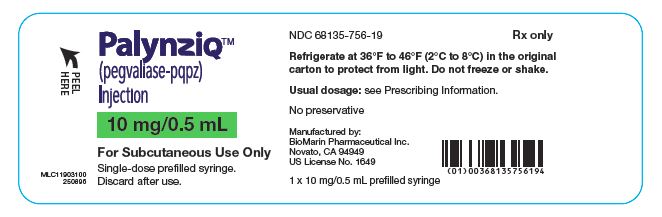
PALYNZIQ - 10 MG/0.5ML NDC 68135-756-20 Rx only Palynziq TM (pegvaliase-pqpz) Injection 10 mg/0.5 mL For Subcutaneous Use Only Contains one x 10 mg/0.5 mL single-dose prefilled syringe. Discard after use. ATTENTION: Dispense the enclosed Medication Guide to each patient. 10 mg Carton 10 mg Tray Cover 10 mg Syringe Label
PALYNZIQ (SINGLE PACK) - 20 MG/ML NDC 68135-673-40 Rx only Palynziq TM (pegvaliase-pqpz) Injection 20 mg/mL For Subcutaneous Use Only Contains one x 20 mg/mL single-dose prefilled syringe. Discard after use. ATTENTION: Dispense the enclosed Medication Guide to each patient. 20 mg Carton 20 mg Tray Cover 20 mg Syringe Label
PALYNZIQ (MULTI-PACK) - 20 MG/ML NDC 68135-673-45 Rx only Palynziq TM (pegvaliase-pqpz) Injection 20 mg/mL For Subcutaneous Use Only Contains ten 20 mg/mL single-dose prefilled syringes. Discard after use. ATTENTION: Dispense the enclosed Medication Guide to each patient. 20 mg Carton (Multi Pack)
Medicaid utilization & spend
Medicare Part D spend CMS · PART D · 2026 (Q1)
About this NDC listing & data coverage
What data is (and isn’t) available for this NDC — tap to expand
| NDC identity (package / product / labeler codes) | ✓ Available |
| Labeler | ✓ Available |
| Product & package description | ✓ Available |
| Marketing category & status | ✓ Available |
| Active ingredient / dosage form / route | ✓ Available |
| FDA label (SPL via DailyMed) | ✓ Available |
| Package photos | ✓ Available |
| Inactive ingredients (structured) | — Not published for this NDC The labeler did not submit a structured excipient list, or no SPL is available. |
| NADAC pharmacy acquisition price (CMS) | — Not published for this NDC CMS publishes NADAC only for NDCs reported in its retail-pharmacy survey. |
| Orange Book / therapeutic-equivalence data | ✓ Available |
| HCPCS J-code billing crosswalk | — Not published for this NDC Most self-administered / retail products have no J-code — that is normal. |
| Medicaid utilization (CMS SDUD) | ✓ Available |