
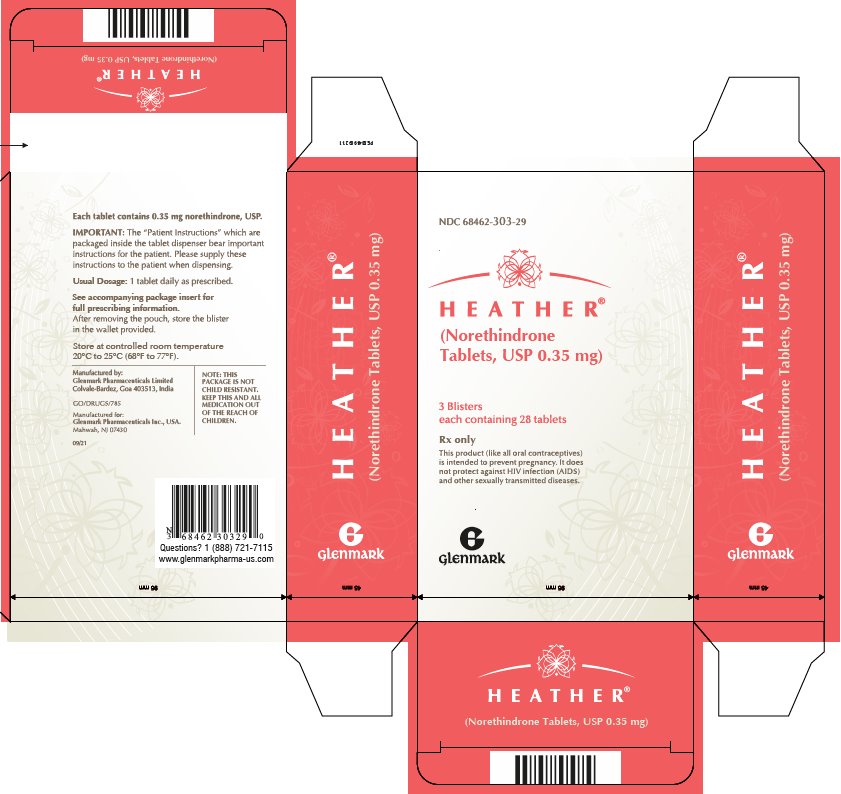
HEATHER Norethindrone .35 mg Tablet, 84-count — NDC 68462-303-29 (Billing 68462-0303-29)
This is a package of 84 tablets of HEATHER Norethindrone .35 mg Tablet from Glenmark Pharmaceuticals Inc., USA, marketed since Apr 2010 and currently FDA-listed; retail pharmacies pay about $0.0924 per tablet (NADAC). It is this product's only package size.
Identity & classification
Regulatory identifiers FDA, NLM and CMS codes for this package
Drug-database identifiers Medi-Span GPI and First Databank GCN / HICL / AHFS classification
- GSN (GCN sequence number): 003313
- GCN: 11520
- GPI-14 (Medi-Span): 25100010000305
- HICL (First Databank): 001459
- AHFS class code: 68:12.00.00
- RxCUI (RxNorm): 198042
Where does this data come from?
- FDA openFDA NDC Directory · synced Oct 1, 2026
- FDA label on DailyMed · label index refreshed Oct 1, 2026
- RxNorm (NLM RxNav) · catalog refreshed Oct 1, 2026
- Medi-Span GPI (licensed)
- First Databank (licensed) · refreshed Oct 1, 2026
RxNorm drug class
This medicine belongs to the Progestin class.
Where does this data come from?
- RxClass (NLM) · catalog refreshed Oct 1, 2026
Clinical
- Most norethindrone products, like Errin, Camila and Emzahh, are progestin-only birth control pills that prevent pregnancy. Norethindrone acetate tablets, such as Gallifrey, are use...
- Take one tablet by mouth every day at the same time. Don't take a break between packs. Following the schedule exactly gives you the best protection, so follow your label and the pa...
- Changes in your bleeding are the most common, including irregular or frequent bleeding. Some people get headache, breast tenderness, nausea or dizziness. Call me or your doctor if...
- It's best not to. Smoking greatly raises the risk of heart attack and stroke in women using oral contraceptives. If you smoke, let's talk about options and quitting.
Patient education
Supplement & herbal interactions
Some supplements/herbs that may interact with Norethindrone — tap one for details:
Where does this data come from?
- MedlinePlus (NLM) · refreshed Oct 1, 2026
- FDA label on DailyMed · label index refreshed Oct 1, 2026
Ask a licensed pharmacist directly — free, answered by our team.
Pricing
A drug doesn't have one price. Each row is a different public payment system, and none is what you'd pay at the counter — that depends on your insurance. The ⓘ on each row explains what it measures.
| Price system | Per ea | Per package |
|---|---|---|
| Retail pharmacies payNADAC · weekly | $0.092 | $7.76 / 84 tablets |
| Medicaid paysCMS SDUD · 12 mo | $0.2198 | $18.46 / 84 tablets |
| Medicare drug plans payPart D · Q2 2026 | $0.1648 | $13.84 / 84 tablets |
Where does this data come from?
- CMS NADAC weekly file · file of Sep 30, 2026
- CMS ASP pricing files · refreshed Sep 20, 2026
- CMS Medicaid State Drug Utilization Data · through Q1 2026
- CMS Part D plan pricing files · refreshed Sep 24, 2026
- VA National Acquisition Center price file
Packaging — all sizes for this product
| Package NDC | Description | Marketing start | Marketing end | Status |
|---|---|---|---|---|
| 68462-0303-29 You're viewing this Main listing | 3 BLISTER PACK in 1 CARTON / 28 TABLET in 1 BLISTER PACK Sample | 2010-04-23 | — | Active |
Therapeutic equivalents
| Product | Labeler | Pack | NADAC/unit | TE | Status | Price vs. this |
|---|---|---|---|---|---|---|
| Camila .35 mg 51862-0884-03 | Mayne | 84 tablets | $0.091 | AB1 | Discontinued | save 2% |
| Errin .35 mg 51862-0886-03 | Mayne | 84 tablets | $0.091 | AB2 | Discontinued | save 2% |
| Norethindrone .35 mg 00378-7292-53 | Mylan | 84 tablets | $0.091 | AB1 | Availability likely | save 2% |
| Incassia .35 mg 65862-0925-28 | Aurobindo | 1 tablet | $0.092 | AB1 | Availability likely | — |
| Lyleq .35 mg 50102-0300-13 | Afaxys | 84 tablets | $0.092 | AB1 | Availability likely | — |
| Emzahh .35 mg 59651-0136-28 | Aurobindo | 1 tablet | $0.092 | AB2 | Availability likely | — |
| Meleya .35 mg 70700-0317-85 | Xiromed | 84 tablets | $0.092 | AB2 | Availability likely | — |
| Norethindrone .35 mg 68462-0305-29 | Glenmark | 84 tablets | $0.092 | AB2 | Availability likely | — |
| Orquidea .35 mg 70700-0316-85 | Xiromed, | 84 tablets | $0.092 | AB1 | Availability likely | — |
| Camila .35 mg 75907-0074-32 | Dr. | 84 tablets | $0.092 | AB1 | Availability likely | — |
| Norethindrone .35 mg 68180-0876-73 | Lupin | 84 tablets | $0.092 | AB1 | Availability likely | — |
| Jencycla .35 mg 68180-0877-73 | Lupin | 28 tablets | $0.092 | AB2 | Availability likely | — |
| Heather .35 mgthis 68462-0303-29 | Glenmark | 84 tablets | $0.092 | AB1 | Availability likely | — |
| Nora BE .35 mg 00480-3475-16 | Teva | 168 tablets | $0.092 | AB1 | Availability likely | — |
| Errin .35 mg 75907-0075-32 | Dr. | 84 tablets | $0.092 | AB2 | Availability likely | — |
| Nora BE .35 mg 52544-0629-28 | Actavis | 168 tablets | $0.094 | AB1 | Discontinued | +2% |
| Norethindrone .35 mg 63187-0748-28 | Proficient | 28 tablets | — | AB2 | FDA listed | — |
| Errin .35 mg 71205-0526-28 | Proficient | 28 tablets | — | AB2 | FDA listed | — |
| Norethindrone .35 mg 60505-4900-08 | Apotex | 84 tablets | — | AB1 | FDA listed | — |
| Affodel .35 mg 79929-0015-07 | Naari | 2352 tablets | — | AB1 | FDA listed | — |
| Norethindrone .35 mg 82804-0175-28 | Proficient | 28 tablets | — | AB1 | FDA listed | — |
| Norethindrone .35 mg 50090-6161-00 | A-S | 28 tablets | — | AB1 | FDA listed | — |
Where does this data come from?
- FDA openFDA NDC Directory · synced Oct 1, 2026
- FDA Orange Book · refreshed Sep 3, 2026
- CMS NADAC weekly file · file of Sep 30, 2026
Availability & generic status
This product is an FDA-approved generic. Other versions of the same drug are listed under Therapeutic equivalents, least expensive first.
Where does this data come from?
- FDA Orange Book · refreshed Sep 3, 2026
Inactive Ingredients / Excipients
Inactive ingredients, also called excipients, are components of the drug product other than the active ingredient. They may include fillers, dyes, coatings, preservatives, flavors, or other formulation ingredients.
💡 Tap an ingredient (hover on desktop) to see what it is and why it’s used.
-
UNII 35SW5USQ3G
A synthetic yellow dye used to color medicines. It helps make tablets, capsules, and liquids visually distinct so patients can easily identify their medication.
-
UNII H77VEI93A8
A synthetic yellow dye used to color medications. It helps identify the drug and make it visually distinctive, with no effect on how the medicine works.
-
UNII EWQ57Q8I5X
Lactose monohydrate is a natural sugar derived from milk. It serves as a filler and binder in tablets and capsules, helping create the proper size, texture, and consistency of the medicine.
-
UNII 70097M6I30
Magnesium stearate is a salt made from magnesium and stearic acid, a fatty substance. It's used in tablets and capsules as a lubricant and glidant to help ingredients flow smoothly during manufacturing and prevent sticking.
-
UNII FZ989GH94E
Povidone is a synthetic polymer made from a plastic-like material. It acts as a binder to hold tablet ingredients together and as a disintegrant to help the tablet break apart in your stomach so the medicine can be absorbed.
-
UNII O8232NY3SJ
A plant-based carbohydrate derived from corn kernels. It acts as a filler to add bulk, a binder to hold ingredients together, and a disintegrant to help the tablet break apart in your stomach for absorption.
-
UNII 7SEV7J4R1U
A powder made from a naturally occurring mineral. In medicines, talc works as a glidant and anti-caking agent, helping tablets and capsules flow smoothly during manufacturing and preventing clumping.
7 inactive ingredients listed in the exact product block matched to this NDC.
Where does this data come from?
ingredient classCode="IACT" elements from the exact product block matched by this NDC. Label-section narrative from DailyMed / the openFDA label index is shown separately when available.- FDA label on DailyMed · label index refreshed Oct 1, 2026
- FDA openFDA NDC Directory · synced Oct 1, 2026
Inactive ingredient FAQ
Are inactive ingredients the same for every manufacturer?
Why might an inactive ingredient be missing?
Can inactive ingredients matter?
Manufacturer & labeler
Where does this data come from?
- FDA openFDA NDC Directory · synced Oct 1, 2026
- Drugs@FDA
Full prescribing information FDA SPL
🎯 Indications and Usage ▾
INDICATIONS AND USAGE 1. Indications Progestin-only oral contraceptives are indicated for the prevention of pregnancy. 2.
Efficacy If used perfectly, the first-year failure rate for progestin-only oral contraceptives is 0.5%. However, the typical failure rate is estimated to be closer to 5%, due to late or omitted pills. The following table lists the pregnancy rates for users of all major methods of contraception.
Table 2. Percentage of Women Experiencing an Unintended Pregnancy During the First Year of Typical Use and the First Year of Perfect Use of Contraception and the Percentage Continuing Use at the End of the First Year. United States.
Emergency Contraceptive Pills: Treatment initiated within 72 hours after unprotected intercourse reduces the risk of pregnancy by at least 75%. Lactational Amenorrhea Method: LAM is a highly effective, temporary method of contraception. Source: Trussell J, Contraceptive Efficacy.
In: Hatcher RA, Trussell J, Stewart F, Cates W, Stewart GK, Kowal D, Guest F, Contraceptive Technology: Seventeenth Revised Edition. New York, NY: Irvington Publishers, 1998. % of Women Experiencing an Unintended Pregnancy within the First Year of Use % of Women Continuing Use at One Year Among couples attempting to avoid pregnancy, the percentage who continue to use a method for one year Method (1) Typical Use (2) Perfect Use (3) (4) Chance 85 85 Spermicides 26 6 40 Periodic abstinence 25 63 Calendar 9 Ovulation Method 3 Sympto-Thermal 2 Post-Ovulation 1 Cap Parous Women 40 26 42 Nulliparous Women 20 9 56 Sponge Parous Women 40 20 42 Nulliparous Women 20 9 56 Diaphragm 20 6 56 Withdrawal 19 4 Condom Female (Reality) 21 5 56 Male 14 3 61 Pill 5 71 Progestin only
0.5 Combined
0.1IUDs Progesterone T 2.0 1.5 81 Copper T 380A 0.8 0.6 78 LNg 20 0.1 0.1 81 Depo-Provera ® 0.3 0.3 70 Levonorgestrel Implants (Norplant ® ) 0.05 0.05 88 Female Sterilization 0.5 0.5 100 Male Sterilization 0.15 0.10 100
⏱️ Dosage and Administration ▾
DOSAGE AND ADMINISTRATION To achieve maximum contraceptive effectiveness, HEATHER must be taken exactly as directed. One tablet is taken every day, at the same time. Administration is continuous, with no interruption between pill packs. See PATIENT LABELING for detailed instructions.
⛔ Contraindications ▾
CONTRAINDICATIONS Progestin-only oral contraceptives (POPs) should not be used by women who currently have the following conditions: • Known or suspected pregnancy • Known or suspected carcinoma of the breast. • Undiagnosed abnormal genital bleeding • Hypersensitivity to any component of this product • Benign or malignant liver tumors • Acute liver disease.
⚠️ Warnings ▾
WARNINGS Cigarette smoking greatly increases the possibility of suffering heart attacks and strokes. Women who use oral contraceptives are strongly advised not to smoke. HEATHER does not contain estrogen and, therefore, this insert does not discuss the serious health risks that have been associated with the estrogen component of combined oral contraceptives.
The health care provider is referred to the prescribing information of combined oral contraceptives for a discussion of those risks, including, but not limited to, an increased risk of serious cardiovascular disease in women who smoke, carcinoma of the breast and reproductive organs, hepatic neoplasia, and changes in carbohydrate and lipid metabolism. The relationship between progestin-only oral contraceptives and these risks have not been established and there are no studies definitely linking progestin-only pill (POP) use to an increased risk of heart attack or stroke.
The physician should remain alert to the earliest manifestation of symptoms of any serious disease and discontinue oral contraceptive therapy when appropriate. 1. Ectopic pregnancy The incidence of ectopic pregnancies for progestin-only oral contraceptive users is 5 per 1000 woman-years.
Up to 10% of pregnancies reported in clinical studies of progestin-only oral contraceptive users are extrauterine. Although symptoms of ectopic pregnancy should be watched for, a history of ectopic pregnancy need not be considered a contraindication to use of this contraceptive method. Health providers should be alert to the possibility of an ectopic pregnancy in women who become pregnant or complain of lower abdominal pain while on progestin-only oral contraceptives.
2. Delayed follicular atresia/Ovarian cysts If follicular development occurs, atresia of the follicle is sometimes delayed, and the follicle may continue to grow beyond the size it would attain in a normal cycle. Generally these enlarged follicles disappear spontaneously.
Often they are asymptomatic; in some cases they are associated with mild abdominal pain. Rarely they may twist or rupture, requiring surgical intervention. 3.
Irregular genital bleeding Irregular menstrual patterns are common among women using progestin-only oral contraceptives. If genital bleeding is suggestive of infection, malignancy or other abnormal conditions, such nonpharmacologic causes should be ruled out. If prolonged amenorrhea occurs, the possibility of pregnancy should be evaluated.
4. Carcinoma of the breast and reproductive organs Some epidemiologic studies of oral contraceptive users have reported an increased relative risk of developing breast cancer, particularly at a younger age and apparently related to duration of use. These studies have predominantly involved combined oral contraceptives and there is insufficient data to determine whether the use of POPs similarly increase the risk.
Women with breast cancer should not use oral contraceptives because the role of female hormone in breast cancer has not been fully determined. Some studies suggest that oral contraceptive use has been associated with an increase in the risk of cervical intraepithelial neoplasia in some populations of women. However, there continues to be controversy about the extent to which such findings may be due to differences in sexual behavior and other factors.
There is insufficient data to determine whether the use of POPs increases the risk of developing cervical intraepithelial neoplasia. 5. Hepatic neoplasia.
Benign hepatic adenomas are associated with combined oral contraceptive use, although the incidence of benign tumors is rare in the United States. Rupture of benign, hepatic adenomas may cause death through intra-abdominal hemorrhage. Studies from Britain and the U.S. have shown as increased risk of developing hepatocellular carcinoma in combined oral contraceptive users.
However, these cancers are rare. There is insufficient data to determine whether POPs increase the risk of developing hepa… [Excerpted — this section continues on DailyMed.]
🤒 Adverse Reactions ▾
ADVERSE REACTIONS • Menstrual irregularity is the most frequently reported side effect. • Frequent and irregular bleeding are common, while long duration of bleeding episodes and amenorrhea are less likely. • Headache, breast tenderness, nausea, and dizziness are increased among progestin-only oral contraceptive users in some studies. • Androgenic side effects such as acne, hirsutism, and weight gain occur rarely.
🔄 Drug Interactions ▾
4. Drug Interactions Change in contraceptive effectiveness associated with co-administration of other products: a. Anti-infective agents and anticonvulsants Contraceptive effectiveness may be reduced when hormonal contraceptives are co-administered with antibiotics, anticonvulsants, and other drugs that increase the metabolism of contraceptive steroids.
This could result in unintended pregnancy or breakthrough bleeding. Examples include rifampin, barbiturates, phenylbutazone, phenytoin, carbamazepine, felbamate, oxcarbazepine, topiramate, and griseofulvin. b. Anti-HIV protease inhibitors Several of the anti-HIV protease inhibitors have been studied with co-administration of oral contraceptives; significant changes (increase and decrease) in the plasma levels of the estrogen and progestin have been noted in some cases.
The safety and efficacy of OC products may be affected with the co-administration of anti-HIV protease inhibitors. Health care providers should refer to the label of the individual anti-HIV protease inhibitors for further drug-drug interaction information. c. Herbal products Herbal products containing St.
John’s Wort (hypericum perforatum) may induce hepatic enzymes (cytochrome P450) and p-glycoprotein transporter and may reduce the effectiveness of contraceptive steroids. This may also result in breakthrough bleeding.
🔄 Drug / Laboratory Test Interactions ▾
5. Interactions with laboratory tests The following endocrine tests may be affected by progestin-only oral contraceptive use: • Sex hormone-binding globulin (SHBG) concentrations may be decreased. • Thyroxine concentrations may be decreased, due to a decrease in thyroid binding globulin (TBG).
🤰 Pregnancy ▾
7. Pregnancy Many studies have found no effects on fetal development associated with long-term use of contraceptive doses of oral progestins. The few studies of infant growth and development that have been conducted have not demonstrated significant adverse effects. It is nonetheless prudent to rule out suspected pregnancy before initiating any hormonal contraceptive use.
🧒 Pediatric Use ▾
12. Pediatric use Safety and efficacy of HEATHER has been established in women of reproductive age. Safety and efficacy are expected to be the same for postpubertal adolescents under the age of 16 and for users 16 years and older. Use of this product before menarche is not indicated.
🆘 Overdosage ▾
OVERDOSAGE There have been no reports of serious ill effects from overdosage, including ingestion by children.
🧬 Clinical Pharmacology ▾
CLINICAL PHARMACOLOGY 1. Mode of Action HEATHER progestin-only oral contraceptives prevent conception by suppressing ovulation in approximately half of users, thickening the cervical mucus to inhibit sperm penetration, lowering the mid-cycle LH and FSH peaks, slowing the movement of the ovum through the fallopian tubes, and altering the endometrium. 2.
Pharmacokinetics Absorption: Norethindrone is rapidly absorbed with maximum plasma concentrations occurring within 1 to 2 hours after HEATHER administration (see Table 1). Norethindrone appears to be completely absorbed following oral administration; however, it is subject to first pass metabolism resulting in an absolute bioavailability of approximately 65%. Figure 1: Mean ± SD Norethindrone Plasma Concentrations Following HEATHER Administration Peak plasma concentrations occur approximately 1 hour after administration (mean T max 1.2 hours).
The mean (SD) C max was 4816.8 (1532.6) pg/mL and generally occurred within 1 hour (mean) of tablet administration, ranging from 0.5 to 2 hours. The mean (SD) C avg was 885 (250) pg/mL, however, the mean concentration at 24 hrs was 130 (47) pg/mL. Table 1 provides summary statistics of the pharmacokinetic parameters associated with single dose HEATHER administration.
Table 1: Mean ± SD Pharmacokinetic Parameters Following Single Dose Administration of HEATHER in 12 Healthy Female Subjects Under Fasting Conditions Pharmacokinetic Parameter Norethindrone 0.35 mg T max (hr) 1.2 ±
0.5C max (pg/mL) 4817 ± 1533 AUC (0-48) (pg•h/mL) 21233 ± 6002 t 1/2 (h) 7.7 ±
0.5The food effect on the rate and extent of norethindrone absorption after HEATHER administration has not been evaluated. figure 1 Distribution: Following oral administration, norethindrone is 36% bound to sex hormone-binding globulin (SHBG) and 61% bound to albumin. Volume of distribution of norethindrone is approximately 4 L/kg. Metabolism: Norethindrone undergoes extensive biotransformation, primarily via reduction, followed by sulfate and glucuronide conjugation; less than 5% of a norethindrone dose is excreted unchanged; greater than 50% and 20-40% of a dose is excreted in urine and feces, respectively.
The majority of metabolites in the circulation are sulfate, with glucuronides accounting for most of the urinary metabolites. Excretion: Plasma clearance rate for norethindrone has been estimated to be approximately 600 L/day. Norethindrone is excreted in both urine and feces, primarily as metabolites.
The mean terminal elimination half-life of norethindrone following single dose administration of HEATHER is approximately 8 hours.
📦 How Supplied / Storage and Handling ▾
HOW SUPPLIED HEATHER (Norethindrone Tablets, USP 0.35 mg) is available in cartons (NDC 68462-303-29) of 3 blisters (NDC 68462-303-84) each containing 28 pale yellow, round, flat faced, beveled edged, uncoated tablets with ‘303’ debossed on one side and ‘G’ on the other side.
📦 Storage and Handling ▾
STORAGE Store at controlled room temperature 20 o C to 25 o C (68 to 77 o F).
📋 Description ▾
DESCRIPTION Each pale yellow HEATHER tablet provides a continuous oral contraceptive regimen of 0.35 mg norethindrone, USP daily, and the inactive ingredients include corn starch, lactose monohydrate, magnesium stearate, povidone, talc, D&C Yellow No. 10 aluminium lake and FD&C Yellow No. 6 aluminium lake.
The chemical name for norethindrone, USP is 17-Hydroxy-19-Nor-17α-pregn-4-en-20-yn-3-one. The structural formula follows: Norethindrone, USP Therapeutic class = oral contraceptive Structure of Norethindrone
💬 Information for Patients ▾
INFORMATION FOR THE PATIENT 1. See PATIENT LABELING for detailed information. 2.
Counseling issues. The following points should be discussed with prospective users before prescribing progestin-only oral contraceptives • The necessity of taking pills at the same time every day, including throughout all bleeding episodes. • The need to use a backup method such as condoms and spermicides for the next 48 hours whenever a progestin-only oral contraceptive is taken 3 or more hours late. • The potential side effects of progestin-only oral contraceptives, particularly menstrual irregularities. • The need to inform the clinician of prolonged episodes of bleeding, amenorrhea or severe abdominal pain. • The importance of using a barrier method in addition to progestin-only oral contraceptives if a woman is at risk of contracting or transmitting STDs/HIV.
⚠️ Precautions ▾
PRECAUTIONS 1. General Patients should be counseled that oral contraceptives do not protect against transmission of HIV (AIDS) and other sexually transmitted diseases (STDs) such as Chlamydia, genital herpes, genital warts, gonorrhea, hepatitis B, and syphilis. 2.
Physical examination and follow-up It is considered good medical practice for sexually active women using oral contraceptives to have annual history and physical examinations. The physical examination may be deferred until after initiation of oral contraceptives if requested by the woman and judged appropriate by the clinician. 3.
Carbohydrate and lipid metabolism Some users may experience slight deterioration in glucose tolerance, with increases in plasma insulin, but women with diabetes mellitus who use progestin-only oral contraceptives do not generally experience changes in their insulin requirements. Nonetheless, prediabetic and diabetic women in particular should be carefully monitored while taking POPs. Lipid metabolism is occasionally affected in that HDL, HDL 2 , and apolipoprotein A-I and A-II may be decreased; hepatic lipase may be increased.
There is no effect on total cholesterol, HDL 3 , LDL, or VLDL. 4. Drug Interactions Change in contraceptive effectiveness associated with co-administration of other products: a.
Anti-infective agents and anticonvulsants Contraceptive effectiveness may be reduced when hormonal contraceptives are co-administered with antibiotics, anticonvulsants, and other drugs that increase the metabolism of contraceptive steroids. This could result in unintended pregnancy or breakthrough bleeding. Examples include rifampin, barbiturates, phenylbutazone, phenytoin, carbamazepine, felbamate, oxcarbazepine, topiramate, and griseofulvin. b.
Anti-HIV protease inhibitors Several of the anti-HIV protease inhibitors have been studied with co-administration of oral contraceptives; significant changes (increase and decrease) in the plasma levels of the estrogen and progestin have been noted in some cases. The safety and efficacy of OC products may be affected with the co-administration of anti-HIV protease inhibitors. Health care providers should refer to the label of the individual anti-HIV protease inhibitors for further drug-drug interaction information. c.
Herbal products Herbal products containing St. John’s Wort (hypericum perforatum) may induce hepatic enzymes (cytochrome P450) and p-glycoprotein transporter and may reduce the effectiveness of contraceptive steroids. This may also result in breakthrough bleeding.
5. Interactions with laboratory tests The following endocrine tests may be affected by progestin-only oral contraceptive use: • Sex hormone-binding globulin (SHBG) concentrations may be decreased. • Thyroxine concentrations may be decreased, due to a decrease in thyroid binding globulin (TBG). 6.
Carcinogenesis See WARNINGS section. 7. Pregnancy Many studies have found no effects on fetal development associated with long-term use of contraceptive doses of oral progestins.
The few studies of infant growth and development that have been conducted have not demonstrated significant adverse effects. It is nonetheless prudent to rule out suspected pregnancy before initiating any hormonal contraceptive use. 8.
Nursing mothers Small amounts of progestin pass into the breast milk, resulting in steroid levels in infant plasma of 1-6% of the levels of maternal plasma. However, isolated post-market cases of decreased milk production have been reported in POPs. Very rarely, adverse effects in the infant/child have been reported, including jaundice.
9. Fertility following discontinuation The limited available data indicate a rapid return of normal ovulation and fertility following discontinuation of progestin-only oral contraceptives. 10.
Headache/Migraine If you have a headache or a worsening migraine headache with a new pattern that is recurrent, persistent, or severe, this requires discontinuation of oral contraceptives and evaluation of… [Excerpted — this section continues on DailyMed.]
🍼 Nursing Mothers ▾
8. Nursing mothers Small amounts of progestin pass into the breast milk, resulting in steroid levels in infant plasma of 1-6% of the levels of maternal plasma. However, isolated post-market cases of decreased milk production have been reported in POPs. Very rarely, adverse effects in the infant/child have been reported, including jaundice.
🧬 Pharmacokinetics ▾
2. Pharmacokinetics Absorption: Norethindrone is rapidly absorbed with maximum plasma concentrations occurring within 1 to 2 hours after HEATHER administration (see Table 1). Norethindrone appears to be completely absorbed following oral administration; however, it is subject to first pass metabolism resulting in an absolute bioavailability of approximately 65%.
Figure 1: Mean ± SD Norethindrone Plasma Concentrations Following HEATHER Administration Peak plasma concentrations occur approximately 1 hour after administration (mean T max 1.2 hours). The mean (SD) C max was 4816.8 (1532.6) pg/mL and generally occurred within 1 hour (mean) of tablet administration, ranging from 0.5 to 2 hours. The mean (SD) C avg was 885 (250) pg/mL, however, the mean concentration at 24 hrs was 130 (47) pg/mL.
Table 1 provides summary statistics of the pharmacokinetic parameters associated with single dose HEATHER administration. Table 1: Mean ± SD Pharmacokinetic Parameters Following Single Dose Administration of HEATHER in 12 Healthy Female Subjects Under Fasting Conditions Pharmacokinetic Parameter Norethindrone 0.35 mg T max (hr) 1.2 ±
0.5C max (pg/mL) 4817 ± 1533 AUC (0-48) (pg•h/mL) 21233 ± 6002 t 1/2 (h) 7.7 ±
0.5The food effect on the rate and extent of norethindrone absorption after HEATHER administration has not been evaluated. figure 1 Distribution: Following oral administration, norethindrone is 36% bound to sex hormone-binding globulin (SHBG) and 61% bound to albumin. Volume of distribution of norethindrone is approximately 4 L/kg. Metabolism: Norethindrone undergoes extensive biotransformation, primarily via reduction, followed by sulfate and glucuronide conjugation; less than 5% of a norethindrone dose is excreted unchanged; greater than 50% and 20-40% of a dose is excreted in urine and feces, respectively.
The majority of metabolites in the circulation are sulfate, with glucuronides accounting for most of the urinary metabolites. Excretion: Plasma clearance rate for norethindrone has been estimated to be approximately 600 L/day. Norethindrone is excreted in both urine and feces, primarily as metabolites.
The mean terminal elimination half-life of norethindrone following single dose administration of HEATHER is approximately 8 hours.
📄 Carcinogenesis, Mutagenesis, Impairment of Fertility ▾
6. Carcinogenesis See WARNINGS section.
📄 Patient Package Insert ▾
DETAILED INFORMATION FOR THE PATIENT Patients should be counseled that oral contraceptives do not protect against transmission of HIV (AIDS) and other sexually transmitted diseases (STDs) such as Chlamydia, genital herpes, genital warts, gonorrhea, hepatitis B, and syphilis. INTRODUCTION This leaflet is about birth control pills that contain one hormone, a progestin. Please read this leaflet before you begin to take your pills.
It is meant to be used along with talking with your doctor or clinic. Progestin-only pills are often called “POPs” or “the minipill”. POPs have less progestin than the combined birth control pill (or “the pill”) which contains both an estrogen and a progestin.
HOW EFFECTIVE ARE POPS? About 1 in 200 (0.5%) POPs users will get pregnant in the first year if they all take POPs perfectly (that is, on time, every day). About 1 in 20 (5%) “typical” POPs users (including women who are late taking pills or miss pills) gets pregnant in the first year of use.
The following table will help you compare the efficacy of different methods. IUD: 1-2% Depo-Provera ® (injectable progesterone): 0.3% Norplant ® System (levonorgestrel implants): 0.1% Diaphragm with spermicides: 18% Spermicides alone: 21% Male condom alone: 12% Female condom alone: 21% Cervical cap: Women who have never given birth : 18% Women who have given birth : 36% Periodic abstinence: 20% No methods: 85% HOW DO POPS WORK? • They make the cervical mucus at the entrance to the womb (the uterus) too thick for the sperm to get through to the egg. • They prevent ovulation (release of the egg from the ovary) in about half the time. • They also affect other hormones, the fallopian tubes and the lining of the uterus.
YOU SHOULD NOT TAKE POPS • If there is any chance you may be pregnant. • If you have breast cancer. • If you have bleeding between your periods which has not been diagnosed. • If you are taking certain drugs for epilepsy (seizures) or for TB. (See USING POPS WITH OTHER MEDICINES below). • If you are hypersensitive or allergic to any component of this product. • If you have liver tumors, either benign or cancerous. • If you have acute liver disease. RISKS OF TAKING POPS WARNING: If you have sudden or severe pain in your lower abdomen or stomach area, you may have an ectopic pregnancy or an ovarian cyst.
If this happens, you should contact your doctor or clinic immediately. 1. Ectopic pregnancy.
An ectopic pregnancy is a pregnancy outside the womb. Because POPs protect against pregnancy, the chance of having a pregnancy outside the womb is very low. If you do get pregnant while taking POPs, you have slightly higher chance that the pregnancy will be ectopic than do users of some other birth control methods.
2. Ovarian cysts. These cysts are small sacs of fluid in the ovary.
They are more common among POP users than among users of most other birth control methods. They usually disappear without treatment and rarely cause problems. 3.
Cancer of the reproductive organs and breasts. Some studies in women who use combined oral contraceptives that contain both estrogen and a progestin have reported an increase in the risk of developing breast cancer, particularly at a younger age and apparently related to duration of use. There is insufficient data to determine whether the use of POPs similarly increases this risk.
Some studies have found an increase in the incidence of cancer of the cervix in women who use oral contraceptives. However, this finding may be related to factors other than the use of oral contraceptives and there is insufficient data to determine whether the use of POPs increases the risk of developing cancer of the cervix. 4.
Liver tumors. In rare cases, combined oral contraceptives can cause benign but dangerous liver tumors. These benign liver tumors can rupture and cause fatal internal bleeding.
In addition, a possible but not definite association has been found with combined oral contraceptives and liver cancers in studies in which a few w… [Excerpted — this section continues on DailyMed.]
📄 Package Label / Principal Display Panel ▾
PACKAGE/LABEL PRINCIPAL DISPLAY PANEL Carton Carton carton
Pouch Pouch pouch