
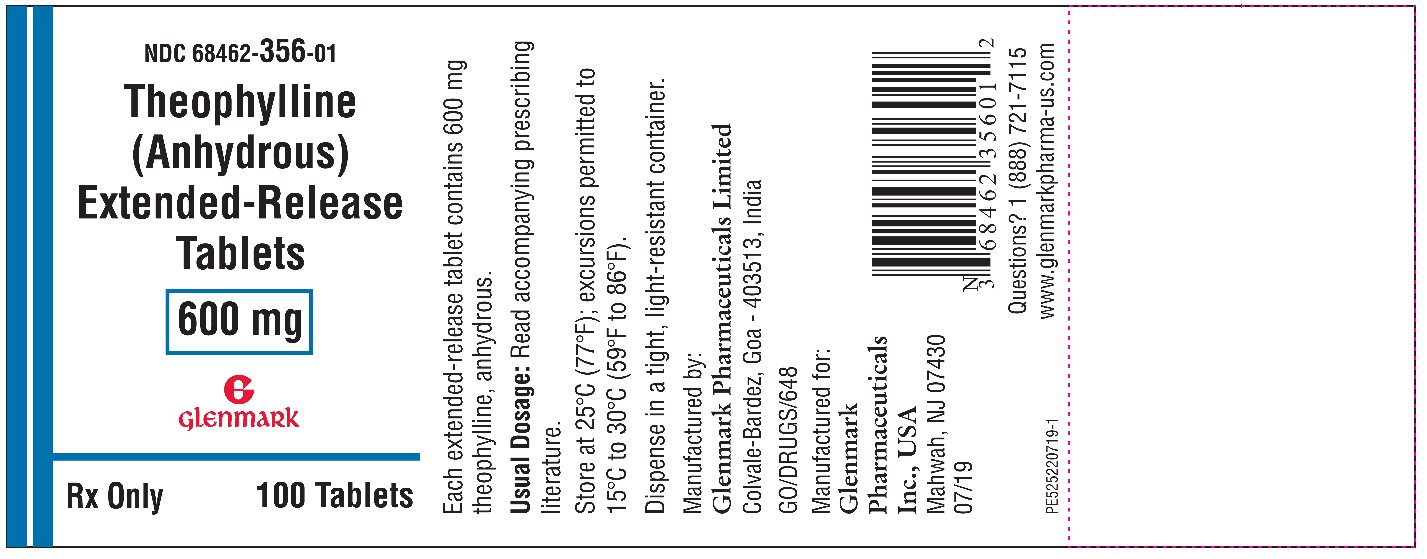
Theophylline 600 mg Tablet, Extended Release, 100-count — NDC 68462-356-01 (Billing 68462-0356-01)
This is a package of 100 tablets of Theophylline 600 mg Tablet, Extended Release from Glenmark Pharmaceuticals Inc., USA, marketed since Jul 2010 and currently FDA-listed; retail pharmacies pay about $1.40 per tablet (NADAC). It is the main listing for this product, which comes in 2 package sizes.
NDC database record
One package, one record: these facts belong to NDC 68462-356-01 alone.
- Record
- FDA NDC Directory package listing · Human prescription drug
- Code segments
- 68462 labeler · 356 product · 01 package
- Package marketed since
- Jul 13, 2010
- Sample package
- No — commercial package
- Listing certified through
- Dec 31, 2027
- Billing quantity
- 100 EA per package
- Barcode (UPC)
- 0368462380017, 0368462356012
- Medicaid fills, this package
- 55 prescriptions in the last four reported quarters
- FDA record last changed
- Jul 24, 2026
Identity & classification
Regulatory identifiers FDA, NLM and CMS codes for this package
Drug-database identifiers Medi-Span GPI and First Databank GCN / HICL / AHFS classification
- GSN (GCN sequence number): 011810
- GCN: 00417
- GPI-14 (Medi-Span): 44300040007560
- HICL (First Databank): 000025
- AHFS class code: 24:36.92.00
- RxCUI (RxNorm): 313291
Where does this data come from?
- FDA openFDA NDC Directory · synced Oct 1, 2026
- FDA label on DailyMed · label index refreshed Oct 3, 2026
- RxNorm (NLM RxNav) · catalog refreshed Oct 1, 2026
- Medi-Span GPI (licensed)
- First Databank (licensed) · refreshed Oct 1, 2026
RxNorm drug class
This medicine belongs to the Methylxanthine class.
Where does this data come from?
- RxClass (NLM) · catalog refreshed Oct 1, 2026
Clinical
- Theophylline is a long-term controller medicine for chronic asthma, emphysema, and chronic bronchitis. It works by relaxing the muscles around your airways so they stay more open,...
- What exactly is theophylline supposed to do for me?
- Yes, timing matters. If you're on Theo-24 extended-release capsules once a day, take it every morning at roughly the same time — taking it at night is not recommended because your...
- How should I take my theophylline, and does it matter when I take it?
Patient education
Supplement & herbal interactions
Some supplements/herbs that may interact with Theophylline — tap one for details:
Theophylline may be associated with lower levels of 2 nutrients — worth a chat with your pharmacist, not a cause for alarm.
Where does this data come from?
- MedlinePlus (NLM) · refreshed Oct 1, 2026
- FDA label on DailyMed · label index refreshed Oct 3, 2026
Ask a licensed pharmacist directly — free, answered by our team.
Pricing
A drug doesn't have one price. Each row is a different public payment system, and none is what you'd pay at the counter — that depends on your insurance. The ⓘ on each row explains what it measures.
| Price system | Per ea | Per package |
|---|---|---|
| Retail pharmacies payNADAC · weekly | $1.395 | $139.52 / 100 tablets |
| Medicaid paysCMS SDUD · 12 mo | $1.26 | $126.11 / 100 tablets |
| Medicare drug plans payPart D · Q2 2026 | $1.20 | $120.39 / 100 tablets |
Where does this data come from?
- CMS NADAC weekly file · file of Sep 30, 2026
- CMS ASP pricing files · refreshed Sep 20, 2026
- CMS Medicaid State Drug Utilization Data · through Q1 2026
- CMS Part D plan pricing files · refreshed Sep 24, 2026
- VA National Acquisition Center price file
Packaging — all sizes for this product
| Package NDC | Description | Per unit | Per pack | Marketing start | Marketing end | Status |
|---|---|---|---|---|---|---|
| 68462-0356-01 You're viewing this Main listing | 100 TABLET, EXTENDED RELEASE in 1 BOTTLE | $1.40 / ea | $139.52 | 2010-07-13 | — | Active |
| 68462-0356-05 68462-356-05 | 500 TABLET, EXTENDED RELEASE in 1 BOTTLE | — | — | 2010-07-13 | — | Active |
You're viewing the smallest of 2 pack sizes for this product.
Pack size FAQ
What quantity is in this package?
How does this package differ from NDC 68462-0356-05?
What NDC number is used to bill for this package of Theophylline 600 mg Tablet, Extended Release?
Prices are the latest CMS NADAC pharmacy acquisition cost per NDC; per-pack figures are per-unit × pack quantity, shown only when the pack is denominated in the same measure NADAC prices.
Therapeutic equivalents
| Product | Labeler | Pack | NADAC/unit | TE | Status | Price vs. this |
|---|---|---|---|---|---|---|
| Theophylline 600 mgthis 68462-0356-01 | Glenmark | 100 tablets | $1.395 | AB | Availability likely | — |
| Theophylline (Anhydrous) 600 mg 69367-0415-01 | Westminster | 100 tablets | $1.395 | AB | Availability likely | — |
| Theophylline (Anhydrous) 600 mg 51407-0319-01 | Golden | 100 tablets | — | AB | FDA listed | — |
Where does this data come from?
- FDA openFDA NDC Directory · synced Oct 1, 2026
- FDA Orange Book · refreshed Oct 3, 2026
- CMS NADAC weekly file · file of Sep 30, 2026
Availability & generic status
This product is an FDA-approved generic. Other versions of the same drug are listed under Therapeutic equivalents, least expensive first.
Where does this data come from?
- FDA Orange Book · refreshed Oct 3, 2026
Inactive Ingredients / Excipients
Inactive ingredients, also called excipients, are components of the drug product other than the active ingredient. They may include fillers, dyes, coatings, preservatives, flavors, or other formulation ingredients.
💡 Tap an ingredient (hover on desktop) to see what it is and why it’s used.
-
UNII 2DMT128M1S
A waxy solid derived from plant or animal sources. It acts as an emulsifier to blend oil and water components, and also thickens the medicine to give it the right texture and consistency.
-
UNII ZYD53NBL45
Hydroxyethyl cellulose is a plant-based thickening agent derived from cellulose. It helps control the texture and consistency of liquid or semi-solid medicines, and may also help keep ingredients evenly mixed throughout the product.
-
UNII 70097M6I30
Magnesium stearate is a salt made from magnesium and stearic acid, a fatty substance. It's used in tablets and capsules as a lubricant and glidant to help ingredients flow smoothly during manufacturing and prevent sticking.
-
UNII FZ989GH94E
Povidone is a synthetic polymer made from a plastic-like material. It acts as a binder to hold tablet ingredients together and as a disintegrant to help the tablet break apart in your stomach so the medicine can be absorbed.
-
UNII 7SEV7J4R1U
A powder made from a naturally occurring mineral. In medicines, talc works as a glidant and anti-caking agent, helping tablets and capsules flow smoothly during manufacturing and preventing clumping.
5 inactive ingredients listed in the exact product block matched to this NDC.
Where does this data come from?
ingredient classCode="IACT" elements from the exact product block matched by this NDC. Label-section narrative from DailyMed / the openFDA label index is shown separately when available.- FDA label on DailyMed · label index refreshed Oct 3, 2026
- FDA openFDA NDC Directory · synced Oct 1, 2026
Inactive ingredient FAQ
Are inactive ingredients the same for every manufacturer?
Why might an inactive ingredient be missing?
Can inactive ingredients matter?
Manufacturer & labeler
More NDCs from Glenmark Pharmaceuticals Inc., USA labeler code 68462
- Hydralazine Hydrochloride 10 mg Tablet NDC 68462-341-01
- Hydralazine Hydrochloride 25 mg Tablet NDC 68462-342-01
- Hydralazine Hydrochloride 50 mg Tablet NDC 68462-343-01
- Hydralazine Hydrochloride 100 mg Tablet NDC 68462-344-01
- Levocetirizine Dihydrochloride 5 mg Tablet NDC 68462-346-05
- Diclofenac Sodium 30 mg/g Gel NDC 68462-355-94
- Potassium Chloride 750 mg Capsule, Extended Release NDC 68462-357-01
- Topiramate 150 mg Capsule, Extended Release NDC 68462-370-05
- Topiramate 200 mg Capsule, Extended Release NDC 68462-371-05
- Topiramate 25 mg Capsule, Extended Release NDC 68462-372-05
- Topiramate 50 mg Capsule, Extended Release NDC 68462-373-05
- Topiramate 100 mg Capsule, Extended Release NDC 68462-374-05
Where does this data come from?
- FDA openFDA NDC Directory · synced Oct 1, 2026
- Drugs@FDA
Full prescribing information FDA SPL
🎯 Indications and Usage ▾
INDICATIONS AND USAGE Theophylline is indicated for the treatment of the symptoms and reversible airflow obstruction associated with chronic asthma and other chronic lung diseases, e.g., emphysema and chronic bronchitis.
⏱️ Dosage and Administration ▾
DOSAGE AND ADMINISTRATION Theophylline 400 or 600 mg extended-release tablets can be taken once a day in the morning or evening. It is recommended that theophylline extended-release tablets be taken with meals. Patients should be advised that if they choose to take theophylline extended-release tablets with food it should be taken consistently with food and if they take it in a fasted condition it should routinely be taken fasted.
It is important that the product whenever dosed be dosed consistently with or without food. Theophylline extended-release tablets are not to be chewed or crushed because it may lead to a rapid release of theophylline with the potential for toxicity. The tablet may be split.
Infrequently, patients receiving theophylline extended-release tablets 400 or 600 mg may pass an intact matrix tablet in the stool or via colostomy. These matrix tablets usually contain little or no residual theophylline. Stabilized patients, 12 years of age or older, who are taking an immediate-release or controlled-release theophylline product may be transferred to once-daily administration of 400 mg or 600 mg theophylline extended-release tablets on a mg-for-mg basis.
It must be recognized that the peak and trough serum theophylline levels produced by the once-daily dosing may vary from those produced by the previous product and/or regimen. General Considerations The steady-state peak serum theophylline concentration is a function of the dose, the dosing interval, and the rate of theophylline absorption and clearance in the individual patient. Because of marked individual differences in the rate of theophylline clearance, the dose required to achieve a peak serum theophylline concentration in the 10 to 20 mcg/mL range varies fourfold among otherwise similar patients in the absence of factors known to alter theophylline clearance (e.g., 400 to 1600 mg/day in adults <60 years old and 10 to 36 mg/kg/day in children 1 to 9 years old).
For a given population there is no single theophylline dose that will provide both safe and effective serum concentrations for all patients. Administration of the median theophylline dose required to achieve a therapeutic serum theophylline concentration in a given population may result in either sub-therapeutic or potentially toxic serum theophylline concentrations in individual patients. For example, at a dose of 900 mg/d in adults <60 years or 22 mg/kg/d in children 1 to years, the steady-state peak serum theophylline concentration will be <10 mcg/mL in about 30% of patients, 10 to 20 mcg/mL in about 50% and 20 to 30 mcg/mL in about 20% of patients.
The dose of theophylline must be individualized on the basis of peak serum theophylline concentration measurements in order to achieve a dose that will provide maximum potential benefit with minimal risk of adverse effects. Transient caffeine-like adverse effects and excessive serum concentrations in slow metabolizers can be avoided in most patients by starting with a sufficiently low dose and slowly increasing the dose, if judged to be clinically indicated , in small increments (See Table V ). Dose increases should only be made if the previous dosage is well tolerated and at intervals of no less than 3 days to allow serum theophylline concentrations to reach the new steady-state.
Dosage adjustment should be guided by serum theophylline concentration measurement (see PRECAUTIONS, Laboratory Tests and DOSAGE AND ADMINISTRATION, Table VI ). Healthcare providers should instruct patients and caregivers to discontinue any dosage that causes adverse effects, to withhold the medication until these symptoms are gone and to then resume therapy at a lower, previously tolerated dosage (see WARNINGS ). If the patient’s symptoms are well controlled, there are no apparent adverse effects, and no intervening factors that might alter dosage requirements (see WARNINGS and PRECAUTIONS ), serum theophylline concentrations should be monitored at 6 month intervals for rapid… [Excerpted — this section continues on DailyMed.]
⛔ Contraindications ▾
CONTRAINDICATIONS Theophylline extended-release tablets are contraindicated in patients with a history of hypersensitivity to theophylline or other components in the product.
⚠️ Warnings ▾
WARNINGS Concurrent Illness Theophylline should be used with extreme caution in patients with the following clinical conditions due to the increased risk of exacerbation of the concurrent condition: Active peptic ulcer disease Seizure disorders Cardiac arrhythmias (not including bradyarrhythmias) Conditions That Reduce Theophylline Clearance There are several readily identifiable causes of reduced theophylline clearance. If the total daily dose is not appropriately reduced in the presence of these risk factors, severe and potentially fatal theophylline toxicity can occur.
Careful consideration must be given to the benefits and risks of theophylline use and the need for more intensive monitoring of serum theophylline concentrations in patients with the following risk factors: Age Neonates (term and premature) Children <1 year Elderly (>60 years) Concurrent Diseases Acute pulmonary edema Congestive heart failure Cor-pulmonale Fever; ≥102° for 24 hours or more; or lesser temperature elevations for longer periods Hypothyroidism Liver disease; cirrhosis, acute hepatitis Reduced renal function in infants <3 months of age Sepsis with multi-organ failure Shock Cessation of Smoking Drug Interactions: Adding a drug that inhibits theophylline metabolism (e.g., cimetidine, erythromycin, tacrine) or stopping a concurrently administered drug that enhances theophylline metabolism (e.g., carbamazepine, rifampin).
(See PRECAUTIONS , Drug Interactions , Table II ). When Signs or Symptoms of Theophylline Toxicity Are Present Whenever a patient receiving theophylline develops nausea or vomiting, particularly repetitive vomiting, or other signs or symptoms consistent with theophylline toxicity (even if another cause may be suspected), additional doses of theophylline should be withheld and a serum theophylline concentration measured immediately. Patients should be instructed not to continue any dosage that causes adverse effects and to withhold subsequent doses until the symptoms have resolved, at which time the healthcare professional may instruct the patient to resume the drug at a lower dosage (see DOSAGE AND ADMINISTRATION , Dosing Guidelines, Table VI ).
Dosage Increases Increases in the dose of theophylline should not be made in response to an acute exacerbation of symptoms of chronic lung disease since theophylline provides little added benefit to inhaled beta 2 -selective agonists and systemically administered corticosteroids in this circumstance and increases the risk of adverse effects. A peak steady-state serum theophylline concentration should be measured before increasing the dose in response to persistent chronic symptoms to ascertain whether an increase in dose is safe.
Before increasing the theophylline dose on the basis of a low serum concentration, the healthcare professional should consider whether the blood sample was obtained at an appropriate time in relationship to the dose and whether the patient has adhered to the prescribed regimen (see PRECAUTIONS , Laboratory Tests ). As the rate of theophylline clearance may be dose-dependent (i.e., steady-state serum concentrations may increase disproportionately to the increase in dose), an increase in dose based upon a sub-therapeutic serum concentration measurement should be conservative.
In general, limiting dose increases to about 25% of the previous total daily dose will reduce the risk of unintended excessive increases in serum theophylline concentration (see DOSAGE AND ADMINISTRATION , Table VI ).
🤒 Adverse Reactions ▾
ADVERSE REACTIONS Adverse reactions associated with theophylline are generally mild when peak serum theophylline concentrations are <20 mcg/mL and mainly consist of transient caffeine-like adverse effects such as nausea, vomiting, headache, and insomnia. When peak serum theophylline concentrations exceed 20 mcg/mL, however, theophylline produces a wide range of adverse reactions including persistent vomiting, cardiac arrhythmias, and intractable seizures which can be lethal (see OVERDOSAGE ). The transient caffeine-like adverse reactions occur in about 50% of patients when theophylline therapy is initiated at doses higher than recommended initial doses (e.g., >300 mg/day in adults and >12 mg/kg/day in children beyond >1 year of age).
During the initiation of theophylline therapy, caffeine-like adverse effects may transiently alter patient behavior, especially in school age children, but this response rarely persists. Initiation of theophylline therapy at a low dose with subsequent slow titration to a predetermined age-related maximum dose will significantly reduce the frequency of these transient adverse effects (see DOSAGE AND ADMINISTRATION , Table V ). In a small percentage of patients (<3% of children and <10% of adults) the caffeine-like adverse effects persist during maintenance therapy, even at peak serum theophylline concentrations within the therapeutic range (i.e., 10 to 20 mcg/mL).
Dosage reduction may alleviate the caffeine-like adverse effects in these patients, however, persistent adverse effects should result in a reevaluation of the need for continued theophylline therapy and the potential therapeutic benefit of alternative treatment. Other adverse reactions that have been reported at serum theophylline concentrations <20 mcg/mL include diarrhea, irritability, restlessness, fine skeletal muscle tremors, and transient diuresis. In patients with hypoxia secondary to COPD, multifocal atrial tachycardia and flutter have been reported at serum theophylline concentrations ≥15 mcg/mL.
There have been a few isolated reports of seizures at serum theophylline concentrations <20 mcg/mL in patients with an underlying neurological disease or in elderly patients. The occurrence of seizures in elderly patients with serum theophylline concentrations <20 mcg/mL may be secondary to decreased protein binding resulting in a larger proportion of the total serum theophylline concentration in the pharmacologically active unbound form. The clinical characteristics of the seizures reported in patients with serum theophylline concentrations <20 mcg/mL have generally been milder than seizures associated with excessive serum theophylline concentrations resulting from an overdose (i.e., they have generally been transient, often stopped without anticonvulsant therapy, and did not result in neurological residua).
Table IV. Manifestations of theophylline toxicity. These data are derived from two studies in patients with serum theophylline concentrations >30 mcg/mL.
In the first study (Study #1—Shanon, Ann Intern Med 1993;119:1161-67), data were prospectively collected from 249 consecutive cases of theophylline toxicity referred to a regional poison center for consultation. In the second study (Study #2—Sessler, Am J Med 1990;88:567-76), data were retrospectively collected from 116 cases with serum theophylline concentrations >30 mcg/mL among 6000 blood samples obtained for measurement of serum theophylline concentrations in three emergency departments. Differences in the incidence of manifestations of theophylline toxicity between the two studies may reflect sample selection as a result of study design (e.g., in Study #1, 48% of the patients had acute intoxications versus only 10% in Study #2) and different methods of reporting results. **NR=Not reported in a comparable manner.
Percentage of patients reported with sign or symptom Acute Overdose (Large Single Ingestion) Chronic Overdosage (Multiple Excessive Doses) Sign/Symptom Study 1 (n = 15… [Excerpted — this section continues on DailyMed.]
🔄 Drug Interactions ▾
Drug Interactions: Adding a drug that inhibits theophylline metabolism (e.g., cimetidine, erythromycin, tacrine) or stopping a concurrently administered drug that enhances theophylline metabolism (e.g., carbamazepine, rifampin). (See PRECAUTIONS , Drug Interactions , Table II ).
Drug Interactions Theophylline interacts with a wide variety of drugs. The interaction may be pharmacodynamic, i.e., alterations in the therapeutic response to theophylline or another drug or occurrence of adverse effects without a change in serum theophylline concentration. More frequently, however, the interaction is pharmacokinetic, i.e., the rate of theophylline clearance is altered by another drug resulting in increased or decreased serum theophylline concentrations.
Theophylline only rarely alters the pharmacokinetics of other drugs. The drugs listed in Table II have the potential to produce clinically significant pharmacodynamic or pharmacokinetic interactions with theophylline. The information in the “Effect” column of Table II assumes that the interacting drug is being added to a steady-state theophylline regimen.
If theophylline is being initiated in a patient who is already taking a drug that inhibits theophylline clearance (e.g., cimetidine, erythromycin), the dose of theophylline required to achieve a therapeutic serum theophylline concentration will be smaller. Conversely, if theophylline is being initiated in a patient who is already taking a drug that enhances theophylline clearance (e.g., rifampin), the dose of theophylline required to achieve a therapeutic serum theophylline concentration will be larger. Discontinuation of a concomitant drug that increases theophylline clearance will result in accumulation of theophylline to potentially toxic levels, unless the theophylline dose is appropriately reduced.
Discontinuation of a concomitant drug that inhibits theophylline clearance will result in decreased serum theophylline concentrations, unless the theophylline dose is appropriately increased. The drugs listed in Table III have either been documented not to interact with theophylline or do not produce a clinically significant interaction (i.e., <15% change in theophylline clearance). The listing of drugs in Tables II and III are current as of February 9, 1995.
New interactions are continuously being reported for theophylline, especially with new chemical entities. The healthcare professional should not assume that a drug does not interact with theophylline if it is not listed in Table II. Before addition of a newly available drug in a patient receiving theophylline, the package insert of the new drug and/or the medical literature should be consulted to determine if an interaction between the new drug and theophylline has been reported.
Table II. Clinically significant drug interactions with theophylline. *Refer to PRECAUTIONS, Drug Interactions for further information regarding table. Drug Type of Interaction Effect Average effect on steady-state theophylline concentration or other clinical effect for pharmacologic interactions.
Individual patients may experience larger changes in serum theophylline concentration than the value listed. Adenosine Theophylline blocks adenosine receptors. Higher doses of adenosine may be required to achieve desired effect.
Alcohol A single large dose of alcohol (3 mL/kg of whiskey) decreases theophylline clearance for up to 24 hours. 30% increase Allopurinol Decreases theophylline clearance at allopurinol doses > 600 mg/day. 25% increase Aminoglutethimide Increases theophylline clearance by induction of microsomal enzyme activity.
25% decrease Carbamazepine Similar to aminoglutethimide. 30% decrease Cimetidine Decreases theophylline clearance by inhibiting cytochrome P450 1A2. 70% increase Ciprofloxacin Similar to cimetidine.
40% increase Clarithromycin Similar to erythromycin. 25% increase Diazepam Benzodiazepines increase CNS concentrations of adenosine, a potent CNS depressant, while theophylline bloc… [Excerpted — this section continues on DailyMed.]
🤰 Pregnancy ▾
Pregnancy: Teratogenic Effects: Category C In studies in which pregnant mice, rats and rabbits were dosed during the period of organogenesis, theophylline produced teratogenic effects. In studies with mice, a single intraperitoneal dose at and above 100 mg/kg (approximately equal to the maximum recommended oral dose for adults on a mg/m 2 basis) during organogenesis produced cleft palate and digital abnormalities. Micromelia, micrognathia, clubfoot, subcutaneous hematoma, open eyelids, and embryolethality were observed at doses that are approximately 2 times the maximum recommended oral dose for adults on a mg/m 2 basis.
In a study with rats dosed from conception through organogenesis, an oral dose of 150 mg/kg/day (approximately 2 times the maximum recommended oral dose for adults on a mg/m 2 basis) produced digital abnormalities. Embryolethality was observed with a subcutaneous dose of 200 mg/kg/day (approximately 4 times the maximum recommended oral dose for adults on a mg/m 2 basis). In a study in which pregnant rabbits were dosed throughout organogenesis, an intravenous dose of 60 mg/kg/day (approximately 2 times the maximum recommended oral dose for adults on a mg/m 2 basis), which caused the death of one doe and clinical signs in others, produced cleft palate and was embryolethal.
Doses at and above 15 mg/kg/day (less than the maximum recommended oral dose for adults on a mg/m 2 basis) increased the incidence of skeletal variations. There are no adequate and well-controlled studies in pregnant women. Theophylline should be used during pregnancy only if the potential benefit justifies the potential risk to the fetus.
🧒 Pediatric Use ▾
Pediatric Use: Theophylline is safe and effective for the approved indications in pediatric patients. The maintenance dose of theophylline must be selected with caution in pediatric patients since the rate of theophylline clearance is highly variable across the pediatric age range (see CLINICAL PHARMACOLOGY , Table I , WARNINGS , and DOSAGE AND ADMINISTRATION , Table V ).
🧓 Geriatric Use ▾
Geriatric Use: Elderly patients are at a significantly greater risk of experiencing serious toxicity from theophylline than younger patients due to pharmacokinetic and pharmacodynamic changes associated with aging. The clearance of theophylline is decreased by an average of 30% in healthy elderly adults ( > 60 yrs) compared to healthy young adults. Theophylline clearance may be further reduced by concomitant diseases prevalent in the elderly, which further impair clearance of this drug and have the potential to increase serum levels and potential toxicity.
These conditions include impaired renal function, chronic obstructive pulmonary disease, congestive heart failure, hepatic disease and an increased prevalence of use of certain medications (see PRECAUTIONS: Drug Interactions ) with the potential for pharmacokinetic and pharmacodynamic interaction. Protein binding may be decreased in the elderly resulting in an increased proportion of the total serum theophylline concentration in the pharmacologically active unbound form. Elderly patients also appear to be more sensitive to the toxic effects of theophylline after chronic overdosage than younger patients.
Careful attention to dose reduction and frequent monitoring of serum theophylline concentrations are required in elderly patients (see PRECAUTIONS, Monitoring Serum Theophylline Concentrations , and DOSAGE AND ADMINISTRATION ). The maximum daily dose of theophylline in patients greater than 60 years of age ordinarily should not exceed 400 mg/day unless the patient continues to be symptomatic and the peak steady-state serum theophylline concentration is <10 mcg/mL (see DOSAGE AND ADMINISTRATION ). Theophylline doses greater than 400 mg/d should be prescribed with caution in elderly patients.
🆘 Overdosage ▾
OVERDOSAGE General The chronicity and pattern of theophylline overdosage significantly influences clinical manifestations of toxicity, management and outcome. There are two common presentations: (1) acute overdose , i.e., ingestion of a single large excessive dose (>10 mg/kg), as occurs in the context of an attempted suicide or isolated medication error, and (2) chronic overdosage , i.e., ingestion of repeated doses that are excessive for the patient’s rate of theophylline clearance. The most common causes of chronic theophylline overdosage include patient or caregiver error in dosing, healthcare professional prescribing of an excessive dose or a normal dose in the presence of factors known to decrease the rate of theophylline clearance, and increasing the dose in response to an exacerbation of symptoms without first measuring the serum theophylline concentration to determine whether a dose increase is safe.
Severe toxicity from theophylline overdose is a relatively rare event. In one health maintenance organization, the frequency of hospital admissions for chronic overdosage of theophylline was about 1 per 1000 person-years exposure. In another study, among 6000 blood samples obtained for measurement of serum theophylline concentration, for any reason, from patients treated in an emergency department, 7% were in the 20 to 30 mcg/mL range and 3% were >30 mcg/mL.
Approximately two-thirds of the patients with serum theophylline concentrations in the 20 to 30 mcg/mL range had one or more manifestations of toxicity while >90% of patients with serum theophylline concentrations >30 mcg/mL were clinically intoxicated. Similarly, in other reports, serious toxicity from theophylline is seen principally at serum concentrations >30 mcg/mL. Several studies have described the clinical manifestations of theophylline overdose and attempted to determine the factors that predict life-threatening toxicity.
In general, patients who experience an acute overdose are less likely to experience seizures than patients who have experienced a chronic overdosage, unless the peak serum theophylline concentration is >100 mcg/mL. After a chronic overdosage, generalized seizures, life-threatening cardiac arrhythmias, and death may occur at serum theophylline concentrations >30 mcg/mL. The severity of toxicity after chronic overdosage is more strongly correlated with the patient’s age than the peak serum theophylline concentration; patients >60 years are at the greatest risk for severe toxicity and mortality after a chronic overdosage.
Pre-existing or concurrent disease may also significantly increase the susceptibility of a patient to a particular toxic manifestation, e.g., patients with neurologic disorders have an increased risk of seizures and patients with cardiac disease have an increased risk of cardiac arrhythmias for a given serum theophylline concentration compared to patients without the underlying disease. The frequency of various reported manifestations of theophylline overdose according to the mode of overdose are listed in Table IV.
Other manifestations of theophylline toxicity include increases in serum calcium, creatine kinase, myoglobin and leukocyte count, decreases in serum phosphate and magnesium, acute myocardial infarction, and urinary retention in men with obstructive uropathy. Seizures associated with serum theophylline concentrations >30 mcg/mL are often resistant to anticonvulsant therapy and may result in irreversible brain injury if not rapidly controlled. Death from theophylline toxicity is most often secondary to cardiorespiratory arrest and/or hypoxic encephalopathy following prolonged generalized seizures or intractable cardiac arrhythmias causing hemodynamic compromise.
Overdose Management General Recommendations for Patients with Symptoms of Theophylline Overdose or Serum Theophylline Concentrations >30 mcg/mL (Note: Serum theophylline concentrations may continue to increase after presentation of the patient for medical care… [Excerpted — this section continues on DailyMed.]
🧬 Clinical Pharmacology ▾
CLINICAL PHARMACOLOGY Mechanism of Action Theophylline has two distinct actions in the airways of patients with reversible obstruction; smooth muscle relaxation (i.e., bronchodilation) and suppression of the response of the airways to stimuli (i.e., non-bronchodilator prophylactic effects). While the mechanisms of action of theophylline are not known with certainty, studies in animals suggest that bronchodilatation is mediated by the inhibition of two isozymes of phosphodiesterase (PDE III and, to a lesser extent, PDE IV) while non-bronchodilator prophylactic actions are probably mediated through one or more different molecular mechanisms, that do not involve inhibition of PDE III or antagonism of adenosine receptors.
Some of the adverse effects associated with theophylline appear to be mediated by inhibition of PDE III (e.g., hypotension, tachycardia, headache, and emesis) and adenosine receptor antagonism (e.g., alterations in cerebral blood flow). Theophylline increases the force of contraction of diaphragmatic muscles. This action appears to be due to enhancement of calcium uptake through an adenosine-mediated channel.
Serum Concentration-Effect Relationship Bronchodilation occurs over the serum theophylline concentration range of 5 to 20 mcg/mL. Clinically important improvement in symptom control has been found in most studies to require peak serum theophylline concentrations >10 mcg/mL, but patients with mild disease may benefit from lower concentrations. At serum theophylline concentrations >20 mcg/mL, both the frequency and severity of adverse reactions increase.
In general, maintaining peak serum theophylline concentrations between 10 and 15 mcg/mL will achieve most of the drug’s potential therapeutic benefit while minimizing the risk of serious adverse events. Pharmacokinetics Overview: Theophylline is rapidly and completely absorbed after oral administration in solution or immediate-release solid oral dosage form. Theophylline does not undergo any appreciable pre-systemic elimination, distributes freely into fat-free tissues, and is extensively metabolized in the liver.
The pharmacokinetics of theophylline vary widely among similar patients and cannot be predicted by age, sex, body weight or other demographic characteristics. In addition, certain concurrent illnesses and alterations in normal physiology (see Table I) and co-administration of other drugs (see Table II) can significantly alter the pharmacokinetic characteristics of theophylline. Within-subject variability in metabolism has also been reported in some studies, especially in acutely ill patients.
It is, therefore, recommended that serum theophylline concentrations be measured frequently in acutely ill patients (e.g., at 24-hr intervals) and periodically in patients receiving long-term therapy, e.g., at 6 to 12 month intervals. More frequent measurements should be made in the presence of any condition that may significantly alter theophylline clearance (see PRECAUTIONS, Laboratory Tests). TABLE I.
Mean and range of total body clearance and half-life of theophylline related to age and altered physiological states For various North American patient populations from literature reports. Different rates of elimination and consequent dosage requirements have been observed among other peoples. . Population Characteristics Total body clearance Clearance represents the volume of blood completely cleared of theophylline by the liver in one minute.
Values listed were generally determined at serum theophylline concentrations <20 mcg/mL; clearance may decrease and half-life may increase at higher serum concentrations due to non-linear pharmacokinetics. mean (range) Reported range or estimated range (mean ±2 SD) where actual range not reported. (mL/kg/min) Half-life mean (range) (hr) Age Premature neonates postnatal age 3 to 15 days 0.29 (0.09 to 0.49) 30 (17 to 43) postnatal age 25 to 57 days 0.64 (0.04 to 1.2) 20 (9.4 to 30.6) Term infants postnatal age 1 to 2 days N… [Excerpted — this section continues on DailyMed.]
🧬 Mechanism of Action ▾
Mechanism of Action Theophylline has two distinct actions in the airways of patients with reversible obstruction; smooth muscle relaxation (i.e., bronchodilation) and suppression of the response of the airways to stimuli (i.e., non-bronchodilator prophylactic effects). While the mechanisms of action of theophylline are not known with certainty, studies in animals suggest that bronchodilatation is mediated by the inhibition of two isozymes of phosphodiesterase (PDE III and, to a lesser extent, PDE IV) while non-bronchodilator prophylactic actions are probably mediated through one or more different molecular mechanisms, that do not involve inhibition of PDE III or antagonism of adenosine receptors.
Some of the adverse effects associated with theophylline appear to be mediated by inhibition of PDE III (e.g., hypotension, tachycardia, headache, and emesis) and adenosine receptor antagonism (e.g., alterations in cerebral blood flow). Theophylline increases the force of contraction of diaphragmatic muscles. This action appears to be due to enhancement of calcium uptake through an adenosine-mediated channel.
📦 How Supplied / Storage and Handling ▾
HOW SUPPLIED Theophylline (Anhydrous) Extended-Release Tablets 400 mg are supplied in CRC bottles containing 100 tablets (NDC 68462-380-01) and non-CRC bottles containing 500 tablets (NDC 68462-380-05). Each white to off-white, round shaped, uncoated 400 mg tablet is debossed with ‘G70’ on either side of the break line and ‘400’ on the other side. Theophylline (Anhydrous) Extended-Release Tablets 600 mg are supplied in CRC bottles containing 100 tablets (NDC 68462-356-01) and non-CRC bottles containing 500 tablets (NDC 68462-356-05).
Each white to off-white rectangular shaped, uncoated 600 mg tablet is debossed with ‘G70’ on either side of the score line and ‘600’ on the other side.
📦 Storage and Handling ▾
Store at 25°C (77°F); excursions permitted between 15°C to 30°C (59°F to 86°F). Dispense in a tight, light-resistant container. Distributed by: Glenmark Pharmaceuticals Inc., USA Elmwood Park, NJ 07407 Questions? 1 (888) 721-7115 www.glenmarkpharma-us.com August 2025 logo
📋 Description ▾
DESCRIPTION Theophylline (anhydrous) Extended-Release Tablets in a controlled-release system allows a 24-hour dosing interval for appropriate patients. Theophylline is structurally classified as a methylxanthine. It occurs as a white, odorless, crystalline powder with a bitter taste.
Anhydrous theophylline has the chemical name 1 H -purine-2,6-dione, 3,7-dihydro-1,3-dimethyl-, and is represented by the following structural formula: The molecular formula of anhydrous theophylline is C 7 H 8 N 4 O 2 with a molecular weight of 180.17 g/mol. Each extended-release tablet for oral administration contains 400 or 600 mg of anhydrous theophylline. Inactive Ingredients: cetostearyl alcohol, hydroxyethyl cellulose, magnesium stearate, povidone and talc. structure-theophylline
💬 Information for Patients ▾
Information for Patients: The patient (or parent/caregiver) should be instructed to seek medical advice whenever nausea, vomiting, persistent headache, insomnia, or rapid heartbeat occurs during treatment with theophylline, even if another cause is supected. The patient should be instructed to contact their healthcare professional if they develop a new illness, especially if accompanied by a persistent fever, if they experience worsening of a chronic illness, if they start or stop smoking cigarettes or marijuana, or if another healthcare professional adds a new medication or discontinues a previously prescribed medication.
Patients should be informed that theophylline interacts with a wide variety of drugs (see Table II). The dietary supplement St.John's Wort (Hypericum perforatum) should not be taken at the same time as theophylline, since it may result in decreased theophylline levels. If patients are already taking St.
John's Wort and theophylline together, they should consult their healthcare professional before stopping the St. John's Wort, since their theophylline concentrations may rise when this is done, resulting in toxicity. Patients should be instructed to inform all healthcare professionals involved in their care that they are taking theophylline, especially when a medication is being added or deleted from their treatment.
Patients should be instructed to not alter the dose, timing of the dose, or frequency of administration without first consulting their healthcare professional. If a dose is missed, the patient should be instructed to take the next dose at the usually scheduled time and to not attempt to make up for the missed dose. Theophylline tablets can be taken once a day in the morning or evening.
It is recommended that theophylline be taken with meals. Patients should be advised that if they choose to take theophylline with food it should be taken consistently with food and if they take it in a fasted condition it should routinely be taken fasted. It is important that the product whenever dosed be dosed consistently with or without food.
Theophylline tablets are not to be chewed or crushed because it may lead to a rapid release of theophylline with the potential for toxicity. The scored tablet may be split. Patients receiving theophylline tablets may pass an intact matrix tablet in the stool or via colostomy.
These matrix tablets usually contain little or no residual theophylline.
⚠️ Precautions ▾
PRECAUTIONS General Careful consideration of the various interacting drugs and physiologic conditions that can alter theophylline clearance and require dosage adjustment should occur prior to initiation of theophylline therapy, prior to increases in theophylline dose, and during follow up (see WARNINGS ). The dose of theophylline selected for initiation of therapy should be low and, if tolerated , increased slowly over a period of a week or longer with the final dose guided by monitoring serum theophylline concentrations and the patient’s clinical response (see DOSAGE AND ADMINISTRATION , Table V ).
Monitoring Serum Theophylline Concentrations Serum theophylline concentration measurements are readily available and should be used to determine whether the dosage is appropriate. Specifically, the serum theophylline concentration should be measured as follows: • When initiating therapy to guide final dosage adjustment after titration. • Before making a dose increase to determine whether the serum concentration is sub-therapeutic in a patient who continues to be symptomatic. • Whenever signs or symptoms of theophylline toxicity are present. • Whenever there is a new illness, worsening of a chronic illness or a change in the patient’s treatment regimen that may alter theophylline clearance (e.g., fever >102°F sustained for ≥24 hours, hepatitis, or drugs listed in Table II are added or discontinued).
To guide a dose increase, the blood sample should be obtained at the time of the expected peak serum theophylline concentration; 12 hours after an evening dose or 9 hours after a morning dose at steady-state. For most patients, steady-state will be reached after 3 days of dosing when no doses have been missed, no extra doses have been added, and none of the doses have been taken at unequal intervals. A trough concentration (i.e., at the end of the dosing interval) provides no additional useful information and may lead to an inappropriate dose increase since the peak serum theophylline concentration can be two or more times greater than the trough concentration with an immediate-release formulation.
If the serum sample is drawn more than 12 hours after the evening dose, or more than 9 hours after a morning dose, the results must be interpreted with caution since the concentration may not be reflective of the peak concentration. In contrast, when signs or symptoms of theophylline toxicity are present, a serum sample should be obtained as soon as possible, analyzed immediately, and the result reported to the healthcare professional without delay. In patients in whom decreased serum protein binding is suspected (e.g., cirrhosis, women during the third trimester of pregnancy), the concentration of unbound theophylline should be measured and the dosage adjusted to achieve an unbound concentration of 6 to 12 mcg/mL.
Saliva concentrations of theophylline cannot be used reliably to adjust dosage without special techniques. Effects on Laboratory Tests As a result of its pharmacological effects, theophylline at serum concentrations within the 10 to 20 mcg/mL range modestly increases plasma glucose (from a mean of 88 mg% to 98 mg%), uric acid (from a mean of 4 mg/dL to 6 mg/dL), free fatty acids (from a mean of 451 μEq/L to 800 μEq/L, total cholesterol (from a mean of 140 vs 160 mg/dL), HDL (from a mean of 36 to 50 mg/dL), HDL/LDL ratio (from a mean of 0.5 to 0.7), and urinary free cortisol excretion (from a mean of 44 to 63 mcg/24 hr).
Theophylline at serum concentrations within the 10 to 20 mcg/mL range may also transiently decrease serum concentrations of triiodothyronine (144 before, 131 after one week and 142 ng/dL after 4 weeks of theophylline). The clinical importance of these changes should be weighed against the potential therapeutic benefit of theophylline in individual patients. Information for Patients: The patient (or parent/caregiver) should be instructed to seek medical advice whenever nausea, vomiting, persistent headache, insomnia,… [Excerpted — this section continues on DailyMed.]
🍼 Nursing Mothers ▾
Nursing Mothers: Theophylline is excreted into breast milk and may cause irritability or other signs of mild toxicity in nursing human infants. The concentration of theophylline in breast milk is about equivalent to the maternal serum concentration. An infant ingesting a liter of breast milk containing 10 to 20 mcg/mL of theophylline per day is likely to receive 10 to 20 mg of theophylline per day.
Serious adverse effects in the infant are unlikely unless the mother has toxic serum theophylline concentrations.
🧬 Pharmacokinetics ▾
Pharmacokinetics Overview: Theophylline is rapidly and completely absorbed after oral administration in solution or immediate-release solid oral dosage form. Theophylline does not undergo any appreciable pre-systemic elimination, distributes freely into fat-free tissues, and is extensively metabolized in the liver. The pharmacokinetics of theophylline vary widely among similar patients and cannot be predicted by age, sex, body weight or other demographic characteristics.
In addition, certain concurrent illnesses and alterations in normal physiology (see Table I) and co-administration of other drugs (see Table II) can significantly alter the pharmacokinetic characteristics of theophylline. Within-subject variability in metabolism has also been reported in some studies, especially in acutely ill patients. It is, therefore, recommended that serum theophylline concentrations be measured frequently in acutely ill patients (e.g., at 24-hr intervals) and periodically in patients receiving long-term therapy, e.g., at 6 to 12 month intervals.
More frequent measurements should be made in the presence of any condition that may significantly alter theophylline clearance (see PRECAUTIONS, Laboratory Tests). TABLE I. Mean and range of total body clearance and half-life of theophylline related to age and altered physiological states For various North American patient populations from literature reports.
Different rates of elimination and consequent dosage requirements have been observed among other peoples. . Population Characteristics Total body clearance Clearance represents the volume of blood completely cleared of theophylline by the liver in one minute. Values listed were generally determined at serum theophylline concentrations <20 mcg/mL; clearance may decrease and half-life may increase at higher serum concentrations due to non-linear pharmacokinetics. mean (range) Reported range or estimated range (mean ±2 SD) where actual range not reported.
(mL/kg/min) Half-life mean (range) (hr) Age Premature neonates postnatal age 3 to 15 days 0.29 (0.09 to 0.49) 30 (17 to 43) postnatal age 25 to 57 days 0.64 (0.04 to 1.2) 20 (9.4 to 30.6) Term infants postnatal age 1 to 2 days NR NR = not reported or not reported in a comparable format. 25.7 (25 to 26.5) postnatal age 3-30 weeks NR 11 (6 to 29) Children 1 to 4 years 1.7 (0.5 to 2.9) 3.4 (1.2 to 5.6) 4 to 12 years 1.6 (0.8 to 2.4) NR 13 to 15 years 0.9 (0.48 to 1.3) NR 6 to 17 years 1.4 (0.2 to 2.6) 3.7 (1.5 to 5.9) Adults (16 to 60 years) otherwise healthy non-smoking asthmatics 0.65 (0.27 to 1.03) 8.7 (6.1 to 12.8) Elderly (>60 years) non-smokers with normal cardiac, liver, and renal function 0.41 (0.21 to 0.61) 9.8 (1.6 to 18) Concurrent illness or altered physiological state Acute pulmonary edema
0.33Median (0.07 to 2.45) 19 (3.1 to 82) COPD->60 years, stable non-smoker > 1 year 0.54 (0.44 to 0.64) 11 (9.4 to 12.6) COPD with cor pulmonale 0.48 (0.08 to 0.88) NR Cystic fibrosis (14 to 28 years) 1.25 (0.31 to 2.2) 6.0 (1.8 to 10.2) Fever associated with acute viral respiratory illness (children 9 to 15 years) NR 7.0 (1.0 to 13) Liver disease cirrhosis 0.31 (0.1 to 0.7) 32 (10 to 56) acute hepatitis 0.35 (0.25 to 0.45) 19.2 (16.6 to 21.8) cholestasis 0.65 (0.25 to 1.45) 14.4 (5.7 to 31.8) Pregnancy 1st trimester NR 8.5 (3.1 to 13.9) 2nd trimester NR 8.8 (3.8 to 13.8) 3rd trimester NR 13.0 (8.4 to 17.6) Sepsis with multi-organ failure 0.47 (0.19 to 1.9) 18.8 (6.3 to 24.1) Thyroid disease hypothyroid 0.38 (0.13 to 0.57) 11.6 (8.2 to 25) hyperthyroid 0.8 (0.68 to 0.97) 4.5 (3.7 to 5.6) Note: In addition to the factors listed above, theophylline clearance is increased and half-life decreased by low carbohydrate/high protein diets, parenteral nutrition, and daily consumption of charcoal-broiled beef.
A high carbohydrate/low protein diet can decrease the clearance and prolong the half-life of theophylline. Absorption: Theophylline administered in the fed state is completely absorbed after oral admin… [Excerpted — this section continues on DailyMed.]
🔬 Clinical Studies ▾
Clinical Studies In patients with chronic asthma, including patients with severe asthma requiring inhaled corticosteroids or alternate-day oral corticosteroids, many clinical studies have shown that theophylline decreases the frequency and severity of symptoms, including nocturnal exacerbations, and decreases the “as needed” use of inhaled beta-2 agonists. Theophylline has also been shown to reduce the need for short courses of daily oral prednisone to relieve exacerbations of airway obstruction that are unresponsive to bronchodilators in asthmatics.
In patients with chronic obstructive pulmonary disease (COPD), clinical studies have shown that theophylline decreases dyspnea, air trapping, the work of breathing, and improves contractility of diaphragmatic muscles with little or no improvement in pulmonary function measurements.
📄 Carcinogenesis, Mutagenesis, Impairment of Fertility ▾
Carcinogenesis, Mutagenesis, and Impairment of Fertility: Long term carcinogenicity studies have been carried out in mice (oral doses 30 to 150 mg/kg) and rats (oral doses 5 to 75 mg/kg). Results are pending. Theophylline has been studied in Ames salmonella, in vivo and in vitro cytogenetics, micronucleus and Chinese hamster ovary test systems and has not been shown to be genotoxic.
In a 14 week continuous breeding study, theophylline, administered to mating pairs of B6C3F1mice at oral doses of 120, 270 and 500 mg/kg (approximately 1 to 3 times the human dose on a mg/m 2 basis) impaired fertility, as evidenced by decreases in the number of live pups per litter, decreases in the mean number of litters per fertile pair, and increases in the gestation period at the high dose as well as decreases in the proportion of pups born alive at the mid and high dose. In 13 week toxicity studies, theophylline was administered to F344 rats and B6C3F1mice at oral doses of 40 to 300 mg/kg (approximately 2 times the human dose on a mg/m 2 basis).
At the high dose, systemic toxicity was observed in both species including decreases in testicular weight.
📄 Package Label / Principal Display Panel ▾
Principal Display Panel - 400 mg NDC 68462-380-01 Theophylline (Anhydrous) Extended-Release Tablets 400 mg 100 Tablets label-400-mg
Principal Display Panel - 600 mg NDC 68462-356-01 Theophylline (Anhydrous) Extended-Release Tablets 600 mg 100 Tablets label-600-mg