
Digoxin 250 ug Tablet, 1,000-count — NDC 69238-1992-7 (Billing 69238-1992-07)
This is a package of 1,000 tablets of Digoxin 250 ug Tablet from Amneal Pharmaceuticals NY LLC, marketed since Apr 2019 and currently FDA-listed; retail pharmacies pay about $0.1484 per tablet (NADAC). It is the main listing for this product, which comes in 2 package sizes.
NDC database record
One package, one record: these facts belong to NDC 69238-1992-7 alone.
- Record
- FDA NDC Directory package listing · Human prescription drug
- Code segments
- 69238 labeler · 1992 product · 7 package
- Package marketed since
- Apr 1, 2019
- Sample package
- No — commercial package
- Listing certified through
- Dec 31, 2027
- Billing quantity
- 1,000 EA per package
- Barcode (UPC)
- 0369238199215, 0369238199116
- Medicaid fills, this package
- 2,631 prescriptions in the last four reported quarters
- FDA record last changed
- Oct 8, 2026
Identity & classification
Regulatory identifiers FDA, NLM and CMS codes for this package
Drug-database identifiers Medi-Span GPI and First Databank GCN / HICL / AHFS classification
- GSN (GCN sequence number): 000019
- GCN: 00133
- GPI-14 (Medi-Span): 31200010000310
- HICL (First Databank): 000004
- AHFS class code: 24:04.08.00
- RxCUI (RxNorm): 197604
Where does this data come from?
- FDA openFDA NDC Directory · synced Oct 8, 2026
- FDA label on DailyMed · label index refreshed Oct 8, 2026
- RxNorm (NLM RxNav) · catalog refreshed Oct 8, 2026
- Medi-Span GPI (licensed)
- First Databank (licensed) · refreshed Oct 8, 2026
RxNorm drug class
This medicine belongs to the Cardiac Glycoside class.
Where does this data come from?
- RxClass (NLM) · catalog refreshed Oct 8, 2026
Clinical
Digoxin is used to treat heart failure and abnormal heart rhythms (arrhythmias). It helps the heart work better and it helps control your heart rate.
Read the full MedlinePlus article ↗- It treats mild to moderate heart failure in adults and helps control the heart rate in chronic atrial fibrillation. It is also used in children with heart failure. It can ease symp...
- Take it exactly as your prescriber directs, at about the same time each day. Tablets can be taken with or after meals, but try to be consistent. Avoid high-bran meals around your d...
- Nausea, vomiting, loss of appetite, diarrhea, dizziness, headache and tiredness are among the more common ones. Call me or your doctor if you notice vision changes like blurred or...
- Many medicines interact with digoxin. Heart rhythm drugs, some antibiotics and antacids are common examples, and St. John’s Wort can lower digoxin levels. Always check with me befo...
Patient education
Supplement & herbal interactions
Some supplements/herbs that may interact with Digoxin — tap one for details:
Digoxin may be associated with lower levels of 1 nutrient — worth a chat with your pharmacist, not a cause for alarm.
Where does this data come from?
- MedlinePlus (NLM) · refreshed Oct 8, 2026
- FDA label on DailyMed · label index refreshed Oct 8, 2026
Ask a licensed pharmacist directly — free, answered by our team.
Pricing
A drug doesn't have one price. Each row is a different public payment system, and none is what you'd pay at the counter — that depends on your insurance. The ⓘ on each row explains what it measures.
| Price system | Per ea | Per package |
|---|---|---|
| Retail pharmacies payNADAC · weekly | $0.148 | $148.40 / 1000 tablets |
| Medicaid paysCMS SDUD · 12 mo | $0.3188 | $318.80 / 1000 tablets |
| Medicare drug plans payPart D · Q2 2026 | $0.3107 | $310.70 / 1000 tablets |
Where does this data come from?
- CMS NADAC weekly file · file of Oct 7, 2026
- CMS ASP pricing files · refreshed Sep 20, 2026
- CMS Medicaid State Drug Utilization Data · through Q1 2026
- CMS Part D plan pricing files · refreshed Sep 24, 2026
- VA National Acquisition Center price file
Packaging — all sizes for this product
| Package NDC | Description | Per unit | Per pack | Marketing start | Marketing end | Status |
|---|---|---|---|---|---|---|
| 69238-1992-01 69238-1992-1 | 100 TABLET in 1 BOTTLE | $0.1484 / ea | $14.84 | 2019-04-01 | — | Active |
| 69238-1992-07 You're viewing this Main listing | 1000 TABLET in 1 BOTTLE | $0.1484 / ea | $148.43 | 2019-04-01 | — | Active |
You're viewing the largest of 2 pack sizes for this product.
This pack effectively ties for the lowest per-ea cost of the 2 priced pack sizes ($0.1484 NADAC).
In Medicaid, this is the most-dispensed pack of this product — about 50% of fills over the last four reported quarters. See all packs ↓
Pack size FAQ
What quantity is in this package?
How does this package differ from NDC 69238-1992-01?
What NDC number is used to bill for this package of Digoxin 250 ug Tablet?
Prices are the latest CMS NADAC pharmacy acquisition cost per NDC; per-pack figures are per-unit × pack quantity, shown only when the pack is denominated in the same measure NADAC prices.
Therapeutic equivalents
| Product | Labeler | Pack | NADAC/unit | TE | Status | Price vs. this |
|---|---|---|---|---|---|---|
| Digoxin 250 ug 00143-1241-01 | Hikma | 100 tablets | $0.148 | AB | Availability likely | — |
| Digoxin 250 ug 00904-5922-61 | Major | 100 tablets | $0.148 | AB | Availability likely | — |
| Digoxin .25 mg 59651-0438-01 | Aurobindo | 100 tablets | $0.148 | AB | Availability likely | — |
| Digoxin .25 mg 60687-0869-01 | American | 100 tablets | $0.148 | AB | Availability likely | — |
| Digoxin 250 ugthis 69238-1992-07 | Amneal | 1000 tablets | $0.148 | AB | Availability likely | — |
| Digoxin .25 mg 70954-0202-10 | ANI | 100 tablets | $0.148 | AB | Availability likely | — |
| Digoxin 250 ug 82685-0202-01 | Oliva | 100 tablets | $0.148 | AB | Availability likely | — |
| Digoxin 250 ug 00115-9822-01 | Amneal | 100 tablets | — | — | FDA listed | — |
| Digoxin .25 mg 10135-0748-01 | Marlex | 100 tablets | — | AB | FDA listed | — |
| Digoxin 250 ug 50090-5862-01 | A-S | 100 tablets | — | — | FDA listed | — |
| Digoxin 250 ug 50090-6588-01 | A-S | 100 tablets | — | — | FDA listed | — |
| Digoxin .25 mg 50090-7865-01 | A-S | 100 tablets | — | AB | FDA listed | — |
| Lanoxin .25 mg 59212-0249-55 | Advanz | 100 tablets | — | AB | FDA listed | — |
| Digoxin 250 ug 60429-0100-01 | Golden | 100 tablets | — | AB | Discontinued | — |
| Digoxin .25 mg 70518-3860-00 | REMEDYREPACK | 30 tablets | — | AB | FDA listed | — |
| Digoxin 250 ug 71335-2464-01 | Bryant | 1000 tablets | — | AB | FDA listed | — |
| Digoxin 250 ug 72162-2269-00 | Bryant | 1000 tablets | — | AB | FDA listed | — |
| Digoxin 250 ug 82804-0244-90 | Proficient | 90 tablets | — | AB | FDA listed | — |
| Digoxin 250 ug 71335-3156-01 | Bryant | 30 tablets | — | AB | FDA listed | — |
Where does this data come from?
- FDA openFDA NDC Directory · synced Oct 8, 2026
- FDA Orange Book · refreshed Oct 3, 2026
- CMS NADAC weekly file · file of Oct 7, 2026
Availability & generic status
This product is an FDA-approved generic. Other versions of the same drug are listed under Therapeutic equivalents, least expensive first.
Where does this data come from?
- FDA Orange Book · refreshed Oct 3, 2026
What it looks like
Where does this data come from?
- FDA label on DailyMed · label index refreshed Oct 8, 2026
Inactive Ingredients / Excipients
Inactive ingredients, also called excipients, are components of the drug product other than the active ingredient. They may include fillers, dyes, coatings, preservatives, flavors, or other formulation ingredients.
🧪 Avoiding an ingredient? See Digoxin inactive ingredients by manufacturer: every current product's list side by side, so you can ask your pharmacy for the version that does not list it.
💡 Tap an ingredient (hover on desktop) to see what it is and why it’s used.
-
UNII 3SY5LH9PMK
Anhydrous lactose is a milk sugar with no water content. It acts as a filler and binder in tablets and capsules, adding bulk and helping ingredients stick together.
-
UNII OP1R32D61U
Microcrystalline cellulose is a purified form of cellulose, a natural fiber from plant sources. It acts as a binder and filler in tablets and capsules, helping hold ingredients together and give the medicine its shape and size.
-
UNII M28OL1HH48
Croscarmellose sodium is a plant-based substance derived from cellulose. It acts as a disintegrant, helping tablets and capsules break down quickly in the digestive system so the medicine can be absorbed.
-
UNII 70097M6I30
Magnesium stearate is a salt made from magnesium and stearic acid, a fatty substance. It's used in tablets and capsules as a lubricant and glidant to help ingredients flow smoothly during manufacturing and prevent sticking.
-
UNII ETJ7Z6XBU4
Silicon dioxide is a naturally occurring mineral used as a glidant and anti-caking agent. It helps powder ingredients flow smoothly and prevents clumping during manufacturing and storage.
-
UNII 4ELV7Z65AP
Stearic acid is a fatty acid derived from plant or animal sources. It acts as a binder and lubricant in tablets and capsules, helping them hold together and flow smoothly during manufacturing.
6 inactive ingredients listed in the exact product block matched to this NDC.
Where does this data come from?
ingredient classCode="IACT" elements from the exact product block matched by this NDC. Label-section narrative from DailyMed / the openFDA label index is shown separately when available.- FDA label on DailyMed · label index refreshed Oct 8, 2026
- FDA openFDA NDC Directory · synced Oct 8, 2026
Inactive ingredient FAQ
Are inactive ingredients the same for every manufacturer?
Why might an inactive ingredient be missing?
Can inactive ingredients matter?
Manufacturer & labeler
More NDCs from Amneal Pharmaceuticals NY LLC labeler code 69238
- Levothyroxine Sodium .137 mg Tablet NDC 69238-1837-1
- Levothyroxine Sodium .15 mg Tablet NDC 69238-1838-1
- Levothyroxine Sodium .175 mg Tablet NDC 69238-1839-1
- Levothyroxine Sodium .2 mg Tablet NDC 69238-1840-1
- Levothyroxine Sodium .3 mg Tablet NDC 69238-1841-1
- Digoxin 125 ug Tablet NDC 69238-1991-1
- Butalbital, Aspirin, Caffeine and Codeine Phosphate 50 mg; 325 mg; 40 mg; 30 mg Capsule NDC 69238-1993-1
- Ipratropium Bromide 21 ug Spray NDC 69238-2016-3
- Ipratropium Bromide 42 ug Spray NDC 69238-2017-2
- Spironolactone 25 mg/5mL Suspension NDC 69238-2027-2
- Mupirocin 2 g/100g Cream NDC 69238-2029-3
- Clindamycin Phosphate 1 g/100mL Gel NDC 69238-2031-7
Where does this data come from?
- FDA openFDA NDC Directory · synced Oct 8, 2026
- Drugs@FDA
Full prescribing information FDA SPL
🎯 Indications and Usage ▾
INDICATIONS AND USAGE Heart Failure: Digoxin is indicated for the treatment of mild to moderate heart failure. Digoxin increases left ventricular ejection fraction and improves heart failure symptoms as evidenced by exercise capacity and heart failure symptoms as evidenced by exercise capacity and heart failure-related hospitalizations and emergency care, while having no effect on mortality. Where possible, digoxin should be used with a diuretic and an angiotensin-converting enzyme inhibitor, but an optimal order for starting these three drugs cannot be specified.
Atrial Fibrillation: Digoxin is indicated for the control of ventricular response rate in patients with chronic atrial fibrillation.
⏱️ Dosage and Administration ▾
DOSAGE AND ADMINISTRATION General: Recommended dosages of digoxin may require considerable modification because of individual sensitivity of the patient to the drug, the presence of associated conditions, or the use of concurrent medications. In selecting a dose of digoxin, the following factors must be considered: The body weight of the patient. Doses should be calculated based upon lean (i.e., ideal) body weight.
The patient’s renal function, preferably evaluated on the basis of estimated creatinine clearance. The patient’s age. Infants and children require different doses of digoxin than adults.
Also, advanced age may be indicative of diminished renal function even in patients with normal serum creatinine concentration (i.e., below 1.5 mg/dL). Concomitant disease states, concurrent medications, or other factors likely to alter the pharmacokinetic or pharmacodynamic profile of digoxin (see PRECAUTIONS). Serum Digoxin Concentrations: In general, the dose of digoxin used should be determined on clinical grounds.
However, measurement of serum digoxin concentrations can be helpful to the clinician in determining the adequacy of digoxin therapy and in assigning certain probabilities to the likelihood of digoxin intoxication. About two-thirds of adults considered adequately digitalized (without evidence of toxicity) have serum digoxin concentrations ranging from 0.8 to 2.0 ng/mL. However, digoxin may produce clinical benefits even at serum concentrations below this range.
About two-thirds of adult patients with clinical toxicity have serum digoxin concentrations greater than 2.0 ng/mL. However, since one-third of patients with clinical toxicity have concentrations less than 2.0 ng/mL, values below 2.0 ng/mL do not rule out the possibility that a certain sign or symptom is related to digoxin therapy. Rarely, there are patients who are unable to tolerate digoxin at serum concentrations below 0.8 ng/mL.
Consequently, the serum concentration of digoxin should always be interpreted in the overall clinical context, and an isolated measurement should not be used alone as the basis for increasing or decreasing the dose of the drug. To allow adequate time for equilibration of digoxin between serum and tissue, sampling of serum concentrations should be done just before the next scheduled dose of the drug. If this is not possible, sampling should be done at least 6 to 8 hours after the last dose, regardless of the route of administration or the formulation used.
On a once-daily dosing schedule, the concentration of digoxin will be 10% to 25% lower when sampled at 24 versus 8 hours, depending upon the patient’s renal function. On a twice-daily dosing schedule, there will be only minor differences in serum digoxin concentrations whether sampling is done at 8 or 12 hours after a dose. If a discrepancy exists between the reported serum concentration and the observed clinical response, the clinician should consider the following possibilities: Analytical problems in the assay procedure.
Inappropriate serum sampling time. Administration of a digitalis glycoside other than digoxin Conditions (described in WARNINGS and PRECAUTIONS) causing an alteration in the sensitivity of the patient to digoxin. Serum digoxin concentration may decrease acutely during periods of exercise without any associated change in clinical efficacy due to increased binding of digoxin to skeletal muscle.
Heart Failure: Adults: Digitalization may be accomplished by either of two general approaches that vary in dosage and frequency of administration, but reach the same endpoint in terms of total amount of digoxin accumulated in the body. If rapid digitalization is considered medically appropriate, it may be achieved by administering a loading dose based upon projected peak digoxin body stores. Maintenance dose can be calculated as a percentage of the loading dose.
More gradual digitalization may be obtained by beginning an appropriate maintenance dose, thus allowing digoxin bod… [Excerpted — this section continues on DailyMed.]
⛔ Contraindications ▾
CONTRAINDICATIONS Digitalis glycosides are contraindicated in patients with ventricular fibrillation or in patients with a known hypersensitivity to digoxin. A hypersensitivity reaction to other digitalis preparations usually constitutes a contraindication to digoxin.
⚠️ Warnings ▾
WARNINGS Sinus Node Disease and AV Block: Because digoxin slows sinoatrial and AV conduction, the drug commonly prolongs the PR interval. The drug may cause severe sinus bradycardia or sinoatrial block in patients with pre-existing sinus node disease and may cause advanced or complete heart block in patients with pre-existing incomplete AV block. In such patients consideration should be given to the insertion of a pacemaker before treatment with digoxin.
Accessory AV Pathway (Wolff-Parkinson-White Syndrome): After intravenous digoxin therapy, some patients with paroxysmal atrial fibrillation or flutter and a coexisting accessory AV pathway have developed increased antegrade conduction across the accessory pathway bypassing the Av node, leading to a very rapid ventricular response or ventricular fibrillation. Unless conduction down the accessory pathway has been blocked (either pharmacologically or by surgery), digoxin should not be used in such patients. The treatment of paroxysmal supraventricular tachycardia in such patients is usually direct-current cardioversion.
Use in Patients with Preserved Left Ventricular Systolic Function: Patients with certain disorders involving heart failure associated with preserved left ventricular ejection fraction may be particularly susceptible to toxicity of the drug. Such disorders include restrictive cardiomyopathy, constrictive pericarditis, amyloid heart disease, and acute cor pulmonale. Patients with idiopathic hypertrophic subaortic stenosis may have worsening of the outflow obstruction due to the inotropic effects of digoxin.
🤒 Adverse Reactions ▾
ADVERSE REACTIONS In general, the adverse reactions of digoxin are dose-dependent and occur at doses higher than those needed to achieve a therapeutic effect. Hence, adverse reactions are less common when digoxin is used within the recommended dose range or therapeutic serum concentration range and when there is careful attention to concurrent medications and conditions. Because some patients may be particularly susceptible to side effects with digoxin, the dosage of the drug should always be selected carefully and adjusted as the clinical condition of the patient warrants.
In the past, when high doses of digoxin were used and little attention was paid to clinical status or concurrent medications, adverse reactions to digoxin were more frequent and severe. Cardiac adverse reactions accounted for about one-half, gastrointestinal disturbances for about one-fourth, and CNS and other toxicity for about one-fourth of these adverse reactions. However, available evidence suggests that the incidence and severity of digoxin toxicity has decreased substantially in recent years.
In recent controlled clinical trials, in patients with predominantly mild to moderate heart failure, the incidence of adverse experiences was comparable in patients taking digoxin and in those taking placebo. In a large mortality trial, the incidence of hospitalization for suspected digoxin toxicity was 2% in patients taking digoxin compared to 0.9% in patients taking placebo. In this trial, the most common manifestations of digoxin toxicity included gastrointestinal and cardiac disturbances; CNS manifestations were less common.
Adults: Cardiac: Therapeutic doses of digoxin may cause heart block in patients with pre-existing sinoatrial or AV conduction disorders; heart block can be avoided by adjusting the dose of digoxin. Prophylactic use of a cardiac pacemaker may be considered if the risk of heart block is considered unacceptable. High doses of digoxin may produce a variety of rhythm disturbances, such as first-degree, second-degree (Wenckebach), or third-degree heart block (including asystole); atrial tachycardia with block; AV dissociation; accelerated junctional (nodal) rhythm; unifocal or multiform ventricular premature contractions (especially bigeminy or trigeminy); ventricular tachycardia; and ventricular fibrillation.
Digoxin produces PR prolongation and ST segment depression which should not by themselves be considered digoxin toxicity. Cardiac toxicity can also occur at therapeutic doses in patients who have conditions which may alter their sensitivity to digoxin (see WARNINGS and PRECAUTIONS). Gastrointestinal: Digoxin may cause anorexia, nausea, vomiting, and diarrhea.
Rarely, the use of digoxin has been associated with abdominal pain, intestinal ischemia, and hemorrhagic necrosis of the intestines. CNS: Digoxin can produce visual disturbances (blurred or yellow vision), headache, weakness, dizziness, apathy, confusion, and mental disturbances (such as anxiety, depression, delirium, and hallucination). Other: Gynecomastia has been occasionally observed following the prolonged use of digoxin.
Thrombocytopenia and maculopapular rash and other skin reactions have been rarely observed. Table 4 summarizes the incidence of those adverse experiences listed above for patients treated with digoxin tablets or placebo from two randomized, double-blind, placebo-controlled withdrawal trials. Patients in these trials were also receiving diuretics with or without angiotensin-converting enzyme inhibitors.
These patients had been stable on digoxin, and were randomized to digoxin or placebo. The results shown in Table 4 reflect the experience in patients following dosage titration with the use of serum digoxin concentrations and careful follow-up. These adverse experiences are consistent with results from a large, placebo-controlled mortality trial (DIG trial) wherein over half the patients were not receiving digoxin prior to enrollment.
Table 4: Adverse Experiences… [Excerpted — this section continues on DailyMed.]
🔄 Drug Interactions ▾
Drug Interactions Potassium-depleting diuretics are a major contributing factor to digitalis toxicity. Calcium, particularly if administered rapidly by the intravenous route, may produce serious arrhythmias in digitalized patients. Quinidine, verapamil, amiodarone, propafenone, indomethacin, itraconazole, alprazolam, and spironolactone raise the serum digoxin concentration due to a reduction in clearance and/or in volume of distribution of the drug, with the implication that digitalis intoxication may result.
Erythromycin and clarithromycin (and possibly other macrolide antibiotics ) and tetracycline may increase digoxin absorption in patients who inactivate digoxin by bacterial metabolism in the lower intestine, so that digitalis intoxication may result (see CLINICAL PHARMACOLOGY: Absorption). Propantheline and diphenoxylate, by decreasing gut motility, may increase digoxin absorption. Antacids, kaolin-pectin, sulfasalazine, neomycin, cholestyramine, certain anticancer drugs, and metoclopramide may interfere with intestinal digoxin absorption, resulting in unexpectedly low serum concentrations.
Rifampin may decrease serum digoxin concentration, especially in patients with renal dysfunction, by increasing the non-renal clearance of digoxin. There have been inconsistent reports regarding the effects of other drugs [e.g., quinine, penicillamine ] on serum digoxin concentration. Thyroid administration to a digitalized, hypothyroid patient may increase the dose requirement of digoxin.
Concomitant use of digoxin and sympathomimetics increases the risk of cardiac arrhythmias. Succinylcholine may cause a sudden extrusion of potassium from muscle cells, and may thereby cause arrhythmias in digitalized patients. Although beta-adrenergic blockers or calcium channel blockers and digoxin may be useful in combination to control atrial fibrillation, their additive effects on AV node conduction can result in advanced or complete heart block.
Due to the considerable variability of these interactions, the dosage of digoxin should be individualized when patients receive these medications concurrently. Furthermore, caution should be exercised when combining digoxin with any drug that may cause a significant deterioration in renal function, since a decline in glomerular filtration or tubular secretion may impair the excretion of digoxin.
🔄 Drug / Laboratory Test Interactions ▾
Drug/Laboratory Test Interactions The use of therapeutic doses of digoxin may cause prolongation of the PR interval and depression of the ST segment on the electrocardiogram. Digoxin may produce false positive ST-T changes on the electrocardiogram during exercise testing. These electrophysiologic effects reflect an expected effect of the drug and are not indicative of toxicity.
🤰 Pregnancy ▾
Pregnancy Teratogenic Effects Pregnancy Category C. Animal reproduction studies have not been conducted with digoxin. It is also not known whether digoxin can cause fetal harm when administered to a pregnant woman or can affect reproductive capacity. Digoxin should be given to a pregnant woman only if clearly needed.
🧒 Pediatric Use ▾
Pediatric Use Newborn infants display considerable variability in their tolerance to digoxin. Premature and immature infants are particularly sensitive to the effects of digoxin, and the dosage of the drug must not only be reduced but must be individualized according to their degree of maturity. Digitalis glycosides can cause poisoning in children due to accidental ingestion.
🧓 Geriatric Use ▾
Geriatric Use The majority of clinical experience gained with digoxin has been in the elderly population. This experience has not identified differences in response or adverse effects between the elderly and younger patients. However, this drug is known to be substantially excreted by the kidney, and the risk of toxic reactions to this drug may be greater in patients with impaired renal function.
Because elderly patients are more likely to have decreased renal function, care should be taken in dose selection, which should be based on renal function, and it may be useful to monitor renal function (see DOSAGE AND ADMINISTRATION).
🆘 Overdosage ▾
OVERDOSAGE Treatment of Adverse Reactions Produced by Overdosage: Digoxin should be temporarily discontinued until the adverse reaction resolves. Every effort should also be made to correct factors that may contribute to the adverse reaction (such as electrolyte disturbances or concurrent medications). Once the adverse reaction has resolved, therapy with digoxin may be reinstituted, following a careful reassessment of dose.
Withdrawal of digoxin may be all that is required to treat the adverse reaction. However, when the primary manifestation of digoxin overdosage is a cardiac arrhythmia, additional therapy may be needed. If the rhythm disturbance is a symptomatic bradyarrhythmia or heart block, consideration should be given to the reversal of toxicity with DIGIBIND ® [Digoxin Immune Fab (Ovine)] (see Massive Digitalis Overdosage subsection), the use of atropine, or the insertion of a temporary cardiac pacemaker.
However, asymptomatic bradycardia or heart block related to digoxin may require only temporary withdrawal of the drug and cardiac monitoring of the patient. If the rhythm disturbance is a ventricular arrhythmia, consideration should be given to the correction of electrolyte disorders, particularly if hypokalemia (see Administration of Potassium subsection) or hypomagnesemia is present. DIGIBIND is a specific antidote for digoxin and may be used to reverse potentially life-threatening ventricular arrhythmias due to digoxin overdosage.
Administration of Potassium: Every effort should be made to maintain the serum potassium concentration between 4.0 and 5.5 mmol/L. Potassium is usually administered orally, but when correction of the arrhythmia is urgent and the serum potassium concentration is low, potassium may be administered cautiously by the intravenous route. The electrocardiogram should be monitored for any evidence of potassium toxicity (e.g., peaking of T waves) and to observe the effect on the arrhythmia.
Potassium salts may be dangerous in patients who manifest bradycardia or heart block due to digoxin (unless primarily related to supraventricular tachycardia) and in the setting of massive digitalis overdosage (see Massive Digitalis Overdosage subsection). Massive Digitalis Overdosage: Manifestations of life-threatening toxicity include ventricular tachycardia or ventricular fibrillation, or progressive bradyarrhythmias, or heart block. The administration of more than 10 mg of digoxin in a previously healthy adult, or more than 4 mg in a previously healthy child, or a steady-state serum concentration greater than 10 ng/mL often results in cardiac arrest.
DIGIBIND should be used to reverse the toxic effects of ingestion of a massive overdose. The decision to administer DIGIBIND to a patient who has ingested a massive dose of digoxin but who has not yet manifested life-threatening toxicity should depend on the likelihood that life-threatening toxicity will occur (see above). Patients with massive digitalis ingestion should receive large doses of activated charcoal to prevent absorption and bind digoxin in the gut during enteroenteric recirculation.
Emesis or gastric lavage may be indicated especially if ingestion has occurred withing 30 minutes of the patient’s presentation at the hospital. Emesis should not be induced in patients who are obtunded. If a patient presents more than 2 hours after ingestion or already has toxic manifestations, it may be unsafe to induce vomiting or attempt passage of a gastric tube, because such maneuvers may induce an acute vagal episode that can worsen digitalis-related arrhythmias.
Severe digitalis intoxication can cause a massive shift of potassium from inside to outside the cell, leading to life-threatening hyperkalemia. The administration of potassium supplements in the setting of massive intoxication may be hazardous and should be avoided. Hyperkalemia caused be massive digitalis toxicity is best treated with DIGIBIND; initial treatment with glucose and insulin may also be req… [Excerpted — this section continues on DailyMed.]
🧬 Clinical Pharmacology ▾
CLINICAL PHARMACOLOGY Mechanism of Action Digoxin inhibits sodium-potassium ATPase, an enzyme that regulates the quantity of sodium and potassium inside cells. Inhibition of the enzyme leads to an increase in the intracellular concentration of sodium and thus (by stimulation of sodium-calcium exchange) an increase in the intracellular concentration of calcium. The beneficial effects of digoxin result from direct actions on cardiac muscle, as well as indirect actions on the cardiovascular system mediated by effects on the autonomic nervous system.
The autonomic effects include: (1) a vagomimetic action, which is responsible for the effects of digoxin on the sinoatrial and atrioventricular (AV) nodes; and (2) baroreceptor sensitization, which results in increased afferent inhibitory activity and reduced activity of the sympathetic nervous system and renin-angiotensin system for any given increment in mean arterial pressure. The pharmacologic consequences of these direct and indirect effects are: (1) an increase in the force and velocity of myocardial systolic contraction (positive inotropic action); (2) a decrease in the degree of activation of the sympathetic nervous system and renin-angiotensin system (neurohormonal deactivating effect); and (3) slowing of the heart rate and decreased conduction velocity through the AV node (vagomimetic effect).
The effects of digoxin in heart failure are mediated by its positive inotropic and neurohormonal deactivating effects, whereas the effects of the drug in atrial arrhythmias are related to its vagomimetic actions. In high doses, digoxin increases sympathetic outflow from the central nervous system (CNS). This increase in sympathetic activity may be an important factor in digitalis toxicity.
Pharmacokinetics Absorption: Following oral administration, peak serum concentrations of digoxin occur at 1 to 3 hours. Absorption of digoxin from digoxin tablets has been demonstrated to be 60% to 80% complete compared to an identical intravenous dose of digoxin (absolute bioavailability) or digoxin solution in capsules (relative bioavailability). When digoxin tablets are taken after meals, the rate of absorption is slowed, but the total amount of digoxin absorbed is usually unchanged.
When taken with meals high in bran fiber, however, the amount absorbed from an oral dose may be reduced. Comparisons of the systemic availability and equivalent doses for oral preparations of digoxin are shown in Table 1: Table 1: Comparisons of the Systemic Availability and Equivalent Doses for Oral Preparations of Digoxin Product Absolute Bioavailability Equivalent Doses (mcg) For example, 125 mcg Digoxin Tablets equivalent to 125 mcg Digoxin Elixir Pediatric equivalent to 100 mcg Digoxin Solution in Capsules equivalent to 100 mcg Digoxin Injection/IV.
Among Dosage Forms Digoxin Tablets 60-80% 62.5 125 250 500 Digoxin Elixir Pediatric 70-85% 62.5 125 250 500 Digoxin Solution in Capsules 90-100% 50 100 200 400 Digoxin Injection/IV 100% 50 100 200 400 In some patients, orally administered digoxin is converted to inactive reduction products (e.g., dihydrodigoxin) by colonic bacteria in the gut. Data suggest that one in ten patients treated with digoxin tablets will degrade 40% or more of the ingested dose. As a result, certain antibiotics may increase the absorption of digoxin in such patients.
Although inactivation of these bacteria by antibiotics is rapid, the serum digoxin concentration will rise at a rate consistent with the elimination half-life of digoxin. The magnitude of rise in serum digoxin concentration relates to the extent of bacterial inactivation, and may be as much as two-fold in some cases. Distribution: Following drug administration, a 6- to 8-hour tissue distribution phase is observed.
This is followed by a much more gradual decline in the serum concentration of the drug, which is dependent on the elimination of digoxin from the body. The peak height and slope of the early portion (absorption/distrib… [Excerpted — this section continues on DailyMed.]
🧬 Mechanism of Action ▾
Mechanism of Action Digoxin inhibits sodium-potassium ATPase, an enzyme that regulates the quantity of sodium and potassium inside cells. Inhibition of the enzyme leads to an increase in the intracellular concentration of sodium and thus (by stimulation of sodium-calcium exchange) an increase in the intracellular concentration of calcium. The beneficial effects of digoxin result from direct actions on cardiac muscle, as well as indirect actions on the cardiovascular system mediated by effects on the autonomic nervous system.
The autonomic effects include: (1) a vagomimetic action, which is responsible for the effects of digoxin on the sinoatrial and atrioventricular (AV) nodes; and (2) baroreceptor sensitization, which results in increased afferent inhibitory activity and reduced activity of the sympathetic nervous system and renin-angiotensin system for any given increment in mean arterial pressure. The pharmacologic consequences of these direct and indirect effects are: (1) an increase in the force and velocity of myocardial systolic contraction (positive inotropic action); (2) a decrease in the degree of activation of the sympathetic nervous system and renin-angiotensin system (neurohormonal deactivating effect); and (3) slowing of the heart rate and decreased conduction velocity through the AV node (vagomimetic effect).
The effects of digoxin in heart failure are mediated by its positive inotropic and neurohormonal deactivating effects, whereas the effects of the drug in atrial arrhythmias are related to its vagomimetic actions. In high doses, digoxin increases sympathetic outflow from the central nervous system (CNS). This increase in sympathetic activity may be an important factor in digitalis toxicity.
📦 How Supplied / Storage and Handling ▾
HOW SUPPLIED Digoxin Tablets, USP, 125 mcg (0.125 mg), Scored I.D. Imprint JSP-544 (yellow): Bottles of 100 (NDC 69238-1991-1) and 1000 (NDC 69238-1991-7). Digoxin Tablets, USP, 250 mcg (0.250 mg), Scored I.D.
Imprint JSP-545 (white): Bottles of 100 (NDC 69238-1992-1) and 1000 (NDC 69238-1992-7). Store at controlled room temperature 15°-25°C (59°-77°F) in a dry place and protect from light. Dispense in a tight, light-resistant container as defined in the USP.
Rx ONLY Distributed by: Amneal Pharmaceuticals LLC Bridgewater, NJ 08807 Manufactured by: Jerome Stevens Pharmaceuticals, Inc. Bohemia, NY 11716 Rev. 02/19 MG #45109
📋 Description ▾
DESCRIPTION Digoxin is one of the cardiac (or digitalis) glycosides, a closely related group of drugs having in common specific effects on the myocardium. These drugs are found in a number of plants. Digoxin is extracted from the leaves of Digitalis lanata .
The term “digitalis” is used to designate the whole group of glycosides. The glycosides are composed of two portions: a sugar and a cardenolide (hence “glycosides”). Digoxin is described chemically as (3β,5β,12β)-3-[( 0 -2,6-dideoxy-β- D-ribo -hexopyranosyl-(1→4)- 0 -2,6-dideoxy-β- D-ribo -hexopyranosyl-(1→4)-2,6-dideoxy-β- D-ribo -hexopyranosyl)oxy]-12,14-dihydroxy-card-20(22)-enolide.
Its molecular formula is C 41 H 64 O 14 , its molecular weight is 780.95, and its structural formula is: Digoxin exists as odorless white crystals that melt with decomposition above 230°C. The drug is practically insoluble in water and in ether; slightly soluble in diluted (50%) alcohol and in chloroform; and freely soluble in pyridine. Digoxin is supplied as 125 mcg (0.125 mg) or 250 mcg (0.25 mg) tablets for oral administration.
Each tablet contains the labeled amount of digoxin USP and the following inactive ingredients: 0.250 mg - colloidal silicon dioxide, croscarmellose sodium, lactose anhydrous, magnesium stearate, microcrystalline cellulose, stearic acid. 0.125 mg - colloidal silicon dioxide, croscarmellose sodium, D&C yellow aluminum lake #10, lactose anhydrous, magnesium stearate, microcrystalline cellulose, stearic acid. digoxin-molec-struc
⚠️ Precautions ▾
PRECAUTIONS Use in Patients with Impaired Renal Function: Digoxin is primarily excreted by the kidneys; therefore, patients with impaired renal function require smaller than usual maintenance doses of digoxin (see DOSAGE AND ADMINISTRATION). Because of the prolonged elimination half-life, a longer period of time is required to achieve an initial or new steady-state serum concentration in patients with renal impairment than in patients with normal renal function. If appropriate care is not taken to reduce the dose of digoxin, such patients are at high risk for toxicity, and toxic effects will last longer in such patients than in patients with normal renal function.
Use in Patients with Electrolyte Disorders: In patients with hypokalemia or hypomagnesemia, toxicity may occur despite serum digoxin concentrations below 2.0 ng/mL, because potassium or magnesium depletion sensitizes the myocardium to digoxin. Therefore, it is desirable to maintain normal serum potassium and magnesium concentrations in patients being treated with digoxin. Deficiencies of these electrolytes may result from malnutrition, diarrhea, or prolonged vomiting, as well as the use of the following drugs or procedures: diuretics, amphotericin B, corticosteroids, antacids, dialysis, and mechanical suction of gastrointestinal secretions.
Hypercalcemia from any cause predisposes the patient to digitalis toxicity. Calcium, particularly when administered rapidly by the intravenous route, may produce serious arrhythmias in digitalized patients. On the other hand, hypocalcemia can nullify the effects of digoxin in humans; thus, digoxin may be ineffective until serum calcium is restored to normal.
These interactions are related to the fact that digoxin affects contractility and excitability of the heart in a manner similar to that of calcium. Use in Thyroid Disorders and Hypermetabolic States: Hypothyroidism may reduce the requirements for digoxin. Heart failure and/or atrial arrhythmias resulting from hypermetabolic or hyperdynamic states (e.g., hyperthyroidism, hypoxia, or arteriovenous shunt) are best treated by addressing the underlying condition.
Atrial arrhythmias associated with hypermetabolic states are particularly resistant to digoxin treatment. Care must be taken to avoid toxicity if digoxin is used. Use in Patients with Acute Myocardial Infarction: Digoxin should be used with caution in patients with acute myocardial infarction.
The use of inotropic drugs in some patients in this setting may result in undesirable increases in myocardial oxygen demand and ischemia. Use During Electrical Cardioversion: It may be desirable to reduce the dose of digoxin for 1 to 2 days prior to electrical cardioversion of atrial fibrillation to avoid the induction of ventricular arrhythmias, but physicians must consider the consequences of increasing the ventricular response if digoxin is withdrawn. If digitalis toxicity is suspected, elective cardioversion should be delayed.
If it is not prudent to delay cardioversion, the lowest possible energy level should be selected to avoid provoking ventricular arrhythmias. Laboratory Test Monitoring Patients receiving digoxin should have their serum electrolytes and renal function (serum creatinine concentrations) assessed periodically; the frequency of assessments will depend on the clinical setting. For discussion of serum digoxin concentrations, see DOSAGE AND ADMINISTRATION section.
Drug Interactions Potassium-depleting diuretics are a major contributing factor to digitalis toxicity. Calcium, particularly if administered rapidly by the intravenous route, may produce serious arrhythmias in digitalized patients. Quinidine, verapamil, amiodarone, propafenone, indomethacin, itraconazole, alprazolam, and spironolactone raise the serum digoxin concentration due to a reduction in clearance and/or in volume of distribution of the drug, with the implication that digitalis intoxication may result.
Erythromycin and clarithromycin (and possibly… [Excerpted — this section continues on DailyMed.]
🍼 Nursing Mothers ▾
Nursing Mothers Studies have shown that digoxin concentrations in the mother’s serum and milk are similar. However, the estimated exposure of a nursing infant to digoxin via breast feeding will be far below the usual infant maintenance dose. Therefore, this amount should have no pharmacologic effect upon the infant. Nevertheless, caution should be exercised when digoxin is administered to a nursing woman.
🧬 Pharmacokinetics ▾
Pharmacokinetics Absorption: Following oral administration, peak serum concentrations of digoxin occur at 1 to 3 hours. Absorption of digoxin from digoxin tablets has been demonstrated to be 60% to 80% complete compared to an identical intravenous dose of digoxin (absolute bioavailability) or digoxin solution in capsules (relative bioavailability). When digoxin tablets are taken after meals, the rate of absorption is slowed, but the total amount of digoxin absorbed is usually unchanged.
When taken with meals high in bran fiber, however, the amount absorbed from an oral dose may be reduced. Comparisons of the systemic availability and equivalent doses for oral preparations of digoxin are shown in Table 1: Table 1: Comparisons of the Systemic Availability and Equivalent Doses for Oral Preparations of Digoxin Product Absolute Bioavailability Equivalent Doses (mcg) For example, 125 mcg Digoxin Tablets equivalent to 125 mcg Digoxin Elixir Pediatric equivalent to 100 mcg Digoxin Solution in Capsules equivalent to 100 mcg Digoxin Injection/IV.
Among Dosage Forms Digoxin Tablets 60-80% 62.5 125 250 500 Digoxin Elixir Pediatric 70-85% 62.5 125 250 500 Digoxin Solution in Capsules 90-100% 50 100 200 400 Digoxin Injection/IV 100% 50 100 200 400 In some patients, orally administered digoxin is converted to inactive reduction products (e.g., dihydrodigoxin) by colonic bacteria in the gut. Data suggest that one in ten patients treated with digoxin tablets will degrade 40% or more of the ingested dose. As a result, certain antibiotics may increase the absorption of digoxin in such patients.
Although inactivation of these bacteria by antibiotics is rapid, the serum digoxin concentration will rise at a rate consistent with the elimination half-life of digoxin. The magnitude of rise in serum digoxin concentration relates to the extent of bacterial inactivation, and may be as much as two-fold in some cases. Distribution: Following drug administration, a 6- to 8-hour tissue distribution phase is observed.
This is followed by a much more gradual decline in the serum concentration of the drug, which is dependent on the elimination of digoxin from the body. The peak height and slope of the early portion (absorption/distribution phases) of the serum concentration-time curve are dependent upon the route of administration and the absorption characteristics of the formulation. Clinical evidence indicates that the early high serum concentrations do not reflect the concentration of digoxin at its site of action, but that with chronic use, the steady-state post-distribution serum concentrations are in equilibrium with tissue concentrations and correlate with pharmacologic effects.
In individual patients, these post-distribution serum concentrations may be useful in evaluating therapeutic and toxic effects (see DOSAGE AND ADMINISTRATION: Serum Digoxin Concentrations). Digoxin is concentrated in tissues and therefore has a large apparent volume of distribution. Digoxin crosses both the blood-brain barrier and the placenta.
At delivery, the serum digoxin concentration in the newborn is similar to the serum concentration in the mother. Approximately 25% of digoxin in the plasma is bound to protein. Serum digoxin concentrations are not significantly altered by large changes in fat tissue weight, so that its distribution space correlates best with lean (i.e., ideal) body weight, not total body weight.
Metabolism: Only a small percentage (16%) of a dose of digoxin is metabolized. The end metabolites, which include 3 β-digoxigenin, 3-keto-digoxigenin, and their glucuronide and sulfate conjugates, are polar in nature and are postulated to be formed via hydrolysis, oxidation, and conjugation. The metabolism of digoxin is not dependent upon the cytochrome P-450 system, and digoxin is not known to induce or inhibit the cytochrome P-450 system.
Excretion: Elimination of digoxin follows first-order kinetics (that is, the quantity of digoxin eliminated at any time is pro… [Excerpted — this section continues on DailyMed.]
📄 Carcinogenesis, Mutagenesis, Impairment of Fertility ▾
Carcinogenesis, Mutagenesis, Impairment of Fertility There have been no long-term studies performed in animals to evaluate carcinogenic potential, nor have studies been conducted to assess the mutagenic potential of digoxin or its potential to affect fertility.
📄 Package Label / Principal Display Panel ▾
PRINCIPAL DISPLAY PANEL — 125 mcg Container Label NDC 69238-1991-1 DIGOXIN TABLETS, USP 125 mcg (0.125mg) Rx ONLY 100 TABLETS 125
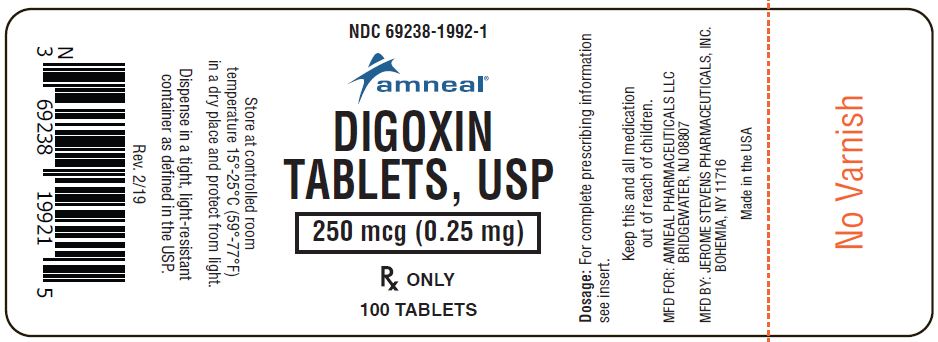
PRINCIPAL DISPLAY PANEL — 250 mcg Container Label NDC 69238-1992-1 DIGOXIN TABLETS, USP 250 mcg (0.25 mg) Rx ONLY 100 TABLETS 250