
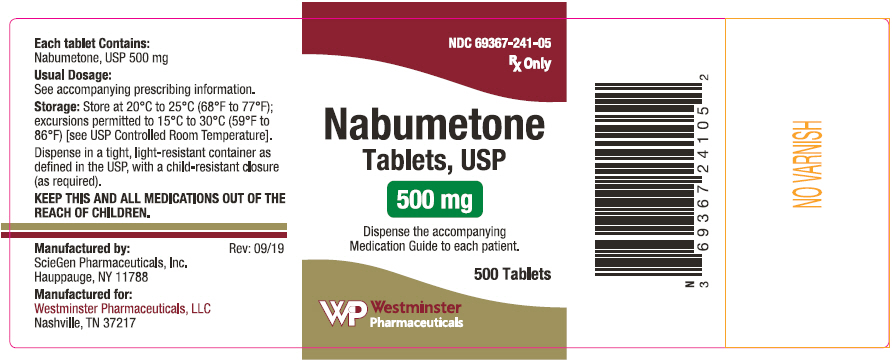
Nabumetone 500 mg Tablet, 500-count
🆔 Identity & classification
Where does this data come from?
🏷️ RxNorm drug class
This medicine belongs to the Nonsteroidal Anti-inflammatory Drug class.
Where does this data come from?
🏭 Manufacturer & labeler
Where does this data come from?
🩺 Clinical
- Nabumetone is a prescription anti-inflammatory medication used to ease the pain, swelling, and stiffness that come with osteoarthritis and rheumatoid arthritis. It won't cure arthr...
- Yes, you can take it with or without food — both are fine. Taking it with food or milk does speed up how quickly it gets into your system, so if you want faster relief, with a meal...
- Can I take nabumetone with food? Does it matter?
- The most common ones are digestive — things like diarrhea, indigestion, and stomach pain. Those are bothersome but usually manageable. What you really want to watch out for are bla...
Patient education
Supplement & herbal interactions
Some supplements/herbs that may interact with Nabumetone — tap one for details:
Nabumetone may be associated with lower levels of 1 nutrient — worth a chat with your pharmacist, not a cause for alarm.
Where does this data come from?
Ask a licensed pharmacist directly — free, answered by our team.
💊 What it looks like
Where does this data come from?
🧪 Inactive Ingredients / Excipients
Inactive ingredients, also called excipients, are components of the drug product other than the active ingredient. They may include fillers, dyes, coatings, preservatives, flavors, or other formulation ingredients.
Where does this data come from?
IACT rows and label-wide narrative are kept separate; availability and product-level specificity depend on the submitted label.Inactive ingredient FAQ
Are inactive ingredients the same for every manufacturer?
Why might an inactive ingredient be missing?
Can inactive ingredients matter?
💲 Pricing
A drug doesn't have one price. Each row is a different public payment system, and none is what you'd pay at the counter — that depends on your insurance. The ⓘ on each row explains what it measures.
| Price system | Per ea | Per package |
|---|---|---|
| Retail pharmacies payNADAC · weekly | $0.128 | $64.10 / 500 tablets |
| Medicaid paysCMS SDUD · 12 mo | $0.3501 | $175.05 / 500 tablets |
| Medicare drug plans payPart D · Q2 2026 | $0.3203 | $160.15 / 500 tablets |
Where does this data come from?
🔁 Therapeutic equivalents
| Product | Labeler | Pack | NADAC/unit | TE | Status | Price vs. this |
|---|---|---|---|---|---|---|
| Nabumetone 500 mg 00591-3670-01 | Actavis | 100 tablets | $0.128 | — | Availability likely | — |
| Nabumetone 500 mg 50228-0465-01 | ScieGen | 100 tablets | $0.128 | AB | Availability likely | — |
| Nabumetone 500 mg 60687-0630-21 | American | 1 tablet | $0.128 | AB | Availability likely | — |
| Nabumetone 500 mg 62135-0145-60 | Chartwell | 60 tablets | $0.128 | AB | Availability likely | — |
| Nabumetone 500 mg 69097-0965-07 | Cipla | 100 tablets | $0.128 | AB | Availability likely | — |
| Nabumetone 500 mgthis 69367-0241-05 | Westminster | 500 tablets | $0.128 | AB | Availability likely | — |
| Nabumetone 500 mg 70954-0784-10 | ANI | 100 tablets | $0.128 | AB | Availability likely | — |
| Nabumetone 500 mg 76282-0257-01 | Exelan | 100 tablets | $0.128 | AB | Availability likely | — |
| Nabumetone 500 mg 43063-0972-20 | PD-Rx | 20 tablets | — | AB | FDA listed | — |
| Nabumetone 500 mg 50090-5294-00 | A-S | 60 tablets | — | AB | FDA listed | — |
| Nabumetone 500 mg 51655-0396-25 | Northwind | 60 tablets | — | AB | FDA listed | — |
| Nabumetone 500 mg 51655-0446-20 | Northwind | 20 tablets | — | AB | FDA listed | — |
| Nabumetone 500 mg 55700-0845-30 | Quality | 30 tablets | — | AB | Discontinued | — |
| Nabumetone 500 mg 60760-0368-15 | St. | 15 tablets | — | AB | FDA listed | — |
| Nabumetone 500 mg 63629-8506-01 | Bryant | 500 tablets | — | AB | FDA listed | — |
| Nabumetone 500 mg 63629-8508-01 | Bryant | 100 tablets | — | AB | FDA listed | — |
| Nabumetone 500 mg 67296-2137-03 | Redpharm | 30 tablets | — | AB | FDA listed | — |
| Nabumetone 500 mg 68788-7765-01 | Preferred | 100 tablets | — | AB | FDA listed | — |
| Nabumetone 500 mg 70518-3835-00 | REMEDYREPACK | 14 tablets | — | AB | FDA listed | — |
| Nabumetone 500 mg 71205-0030-20 | Proficient | 20 tablets | — | AB | FDA listed | — |
| Nabumetone 500 mg 71205-0977-00 | Proficient | 100 tablets | — | AB | FDA listed | — |
| Nabumetone 500 mg 71335-1234-01 | Bryant | 20 tablets | — | AB | FDA listed | — |
| Nabumetone 500 mg 71335-1391-01 | Bryant | 20 tablets | — | AB | FDA listed | — |
| Nabumetone 500 mg 71335-2292-01 | Bryant | 500 tablets | — | AB | FDA listed | — |
| Nabumetone 500 mg 72162-1557-01 | Bryant | 100 tablets | — | AB | FDA listed | — |
| Nabumetone 500 mg 72189-0184-14 | direct | 14 tablets | — | AB | FDA listed | — |
| Nabumetone 500 mg 76420-0210-07 | Asclemed | 7 tablets | — | AB | FDA listed | — |
| Nabumetone 500 mg 79739-7076-01 | LGM | 100 tablets | — | — | FDA listed | — |
| Nabumetone 500 mg 80425-0053-01 | Advanced | 60 tablets | — | AB | FDA listed | — |
| Nabumetone 500 mg 80425-0054-01 | Advanced | 60 tablets | — | AB | FDA listed | — |
| Nabumetone 500 mg 85766-0261-01 | Sportpharm | 100 tablets | — | AB | FDA listed | — |
Where does this data come from?
⏳ Availability & generic status
This product is an FDA-approved generic. Other versions of the same drug are listed under Therapeutic equivalents, least expensive first.
Where does this data come from?
🗺️ Medicaid utilization & spend
💊 Medicaid utilization by pack size
📊 Medicare Part D spend CMS · PART D · 2026 (Q1)
🔬 Reported adverse events (FAERS)
Top reported reactions
Age at onset
Reporter sex
Serious outcomes
Where does this data come from?
📦 Packaging — all sizes for this product
| Package NDC | Description | Per unit | Per pack | Marketing start | Status |
|---|---|---|---|---|---|
| 69367-0241-01 | 100 TABLET in 1 BOTTLE, PLASTIC (69367-241-01) | $0.1282 / ea | $12.82 | 2019-09-25 | Active |
| 69367-0241-05 You're viewing this | 500 TABLET in 1 BOTTLE, PLASTIC (69367-241-05) | $0.1282 / ea | $64.08 | 2019-09-25 | Active |
You're viewing the largest of 2 pack sizes for this product.
This pack effectively ties for the lowest per-ea cost of the 2 priced pack sizes ($0.1282 NADAC).
In Medicaid, this is the most-dispensed pack of this product — about 71% of fills over the last four reported quarters. See all packs ↓
Pack size FAQ
What quantity is in NDC 69367-0241-05?
What is the difference between NDC 69367-0241-05 and NDC 69367-0241-01?
What NDC number is used to bill for this package of Nabumetone 500 mg Tablet?
Prices are the latest CMS NADAC pharmacy acquisition cost per NDC; per-pack figures are per-unit × pack quantity, shown only when the pack is denominated in the same measure NADAC prices.
📄 Full prescribing information FDA SPL
🚨 Boxed Warning ▾
Cardiovascular Thrombotic Events Nonsteroidal anti-inflammatory drugs (NSAIDs) cause an increased risk of serious cardiovascular thrombotic events, including myocardial infarction and stroke, which can be fatal. This risk may occur early in treatment and may increase with duration of use [see Warnings and Precautions ]. Nabumetone tablets are contraindicated in the setting of coronary artery bypass graft (CABG) surgery [see Contraindications and Warnings ].
Gastrointestinal Risk NSAIDs Throughout this package insert, the term NSAID refers to a non-aspirin non-steroidal anti-inflammatory drug. cause an increased risk of serious gastrointestinal adverse events including bleeding, ulceration, and perforation of the stomach or intestines, which can be fatal. These events can occur at any time during use and without warning symptoms. Elderly patients are at greater risk for serious gastrointestinal events (see WARNINGS ).
🎯 Indications and Usage ▾
INDICATIONS AND USAGE Carefully consider the potential benefits and risks of nabumetone tablets, USP and other treatment options before deciding to use nabumetone tablets. Use the lowest effective dose for the shortest duration consistent with individual patient treatment goals (see WARNINGS ). Nabumetone tablets, USP are indicated for relief of signs and symptoms of osteoarthritis and rheumatoid arthritis.
⏱️ Dosage and Administration ▾
DOSAGE AND ADMINISTRATION Carefully consider the potential benefits and risks of nabumetone tablets and other treatment options before deciding to use nabumetone. Use the lowest effective dose for the shortest duration consistent with individual patient treatment goals (see WARNINGS ). After observing the response to initial therapy with nabumetone tablets, the dose and frequency should be adjusted to suit an individual patient's needs.
Osteoarthritis and Rheumatoid Arthritis The recommended starting dose is 1,000 mg taken as a single dose with or without food. Some patients may obtain more symptomatic relief from 1,500 mg to 2,000 mg per day. Nabumetone tablets can be given in either a single or twice-daily dose.
Dosages greater than 2,000 mg per day have not been studied. The lowest effective dose should be used for chronic treatment (see WARNINGS, Renal Effects ). Patients weighing under 50 kg may be less likely to require dosages beyond 1,000 mg; therefore, after observing the response to initial therapy, the dose should be adjusted to meet individual patients' requirements.
⛔ Contraindications ▾
CONTRAINDICATIONS Nabumetone tablets are contraindicated in patients with known hypersensitivity to nabumetone or its excipients. Nabumetone tablets should not be given to patients who have experienced asthma, urticaria, or allergic-type reactions after taking aspirin or other NSAIDs. Severe, rarely fatal, anaphylactic-like reactions to NSAIDs have been reported in such patients (see WARNINGS, Anaphylactoid Reactions , and PRECAUTIONS, General, Preexisting Asthma ).
Nabumetone tablets are contraindicated in the setting of coronary artery bypass graft (CABG) surgery (see WARNINGS ).
⚠️ Warnings ▾
WARNINGS CARDIOVASCULAR EFFECTS Cardiovascular Thrombotic Events Clinical trials of several COX-2 selective and nonselective NSAIDs of up to three years duration have shown an increased risk of serious cardiovascular (CV) thrombotic events, including myocardial infarction (MI) and stroke, which can be fatal. Based on available data, it is unclear that the risk for CV thrombotic events is similar for all NSAIDs. The relative increase in serious CV thrombotic events over baseline conferred by NSAID use appears to be similar in those with and without known CV disease or risk factors for CV disease.
However, patients with known CV disease or risk factors had a higher absolute incidence of excess serious CV thrombotic events, due to their increased baseline rate. Some observational studies found that this increased risk of serious CV thrombotic events began as early as the first weeks of treatment. The increase in CV thrombotic risk has been observed most consistently at higher doses.
To minimize the potential risk for an adverse CV event in NSAID-treated patients, use the lowest effective dose for the shortest duration possible. Physicians and patients should remain alert for the development of such events, throughout the entire treatment course, even in the absence of previous CV symptoms. Patients should be informed about the symptoms of serious CV events and the steps to take if they occur.
There is no consistent evidence that concurrent use of aspirin mitigates the increased risk of serious CV thrombotic events associated with NSAID use. The concurrent use of aspirin and an NSAID, such as Nabumetone, increases the risk of serious gastrointestinal (GI) events [see Warnings ] . Status Post Coronary Artery Bypass Graft (CABG) Surgery Two large, controlled clinical trials of a COX-2 selective NSAID for the treatment of pain in the first 10 to 14 days following CABG surgery found an increased incidence of myocardial infarction and stroke.
NSAIDs are contraindicated in the setting of CABG [see Contraindications ]. Post-MI Patients Observational studies conducted in the Danish National Registry have demonstrated that patients treated with NSAIDs in the post-MI period were at increased risk of reinfarction, CV-related death, and all-cause mortality beginning in the first week of treatment. In this same cohort, the incidence of death in the first year post MI was 20 per 100 person years in NSAID-treated patients compared to 12 per 100 person years in non-NSAID exposed patients.
Although the absolute rate of death declined somewhat after the first year post-MI, the increased relative risk of death in NSAID users persisted over at least the next four years of follow-up. Avoid the use of nabumetone tablets in patients with a recent MI unless the benefits are expected to outweigh the risk of recurrent CV thrombotic events. If nabumetone tablets are used in patients with a recent MI, monitor patients for signs of cardiac ischemia.
Hypertension NSAIDs, including nabumetone tablets, can lead to onset of new hypertension or worsening of preexisting hypertension, either of which may contribute to the increased incidence of CV events. Patients taking thiazides or loop diuretics may have impaired response to these therapies when taking NSAIDs. NSAIDs, including nabumetone tablets, should be used with caution in patients with hypertension.
Blood pressure (BP) should be monitored closely during the initiation of NSAID treatment and throughout the course of therapy. Heart Failure and Edema The Coxib and traditional NSAID Trialists' Collaboration meta-analysis of randomized controlled trials demonstrated an approximately two-fold increase in hospitalizations for heart failure in COX-2 selective-treated patients and nonselective NSAID-treated patients compared to placebo-treated patients. In a Danish National Registry study of patients with heart failure, NSAID use increased the risk of MI, hospitalization for heart failure, and death.
Additionally, f…
🤒 Adverse Reactions ▾
ADVERSE REACTIONS Adverse reaction information was derived from blinded-controlled and open-labeled clinical trials and from worldwide marketing experience. In the description below, rates of the more common events (greater than 1%) and many of the less common events (less than 1%) represent results of US clinical studies. Of the 1,677 patients who received nabumetone during US clinical trials, 1,524 were treated for at least 1 month, 1,327 for at least 3 months, 929 for at least a year, and 750 for at least 2 years.
More than 300 patients have been treated for 5 years or longer. The most frequently reported adverse reactions were related to the gastrointestinal tract and included diarrhea, dyspepsia, and abdominal pain. Incidence ≥1%— Probably Causally Related Gastrointestinal: Diarrhea (14%), dyspepsia (13%), abdominal pain (12%), constipation Incidence of reported reaction between 3% and 9%.
Reactions occurring in 1% to 3% of the patients are unmarked. , flatulence , nausea , positive stool guaiac , dry mouth, gastritis, stomatitis, vomiting. Central Nervous System: Dizziness , headache , fatigue, increased sweating, insomnia, nervousness, somnolence. Dermatologic: Pruritus , rash .
Special Senses: Tinnitus . Miscellaneous: Edema . Incidence <1%—Probably Causally Related Adverse reactions reported only in worldwide postmarketing experience or in the literature, not seen in clinical trials, are considered rarer and are italicized.
Gastrointestinal: Anorexia, jaundice, duodenal ulcer, dysphagia, gastric ulcer, gastroenteritis, gastrointestinal bleeding, increased appetite, liver function abnormalities, melena, hepatic failure . Central Nervous System: Asthenia, agitation, anxiety, confusion, depression, malaise, paresthesia, tremor, vertigo. Dermatologic: Bullous eruptions, photosensitivity, urticaria, pseudoporphyria cutanea tarda, exfoliative dermatitis, toxic epidermal necrolysis, erythema multiforme, Stevens-Johnson syndrome, and fixed drug eruption (FDE).
Cardiovascular: Vasculitis. Metabolic: Weight gain. Respiratory: Dyspnea, eosinophilic pneumonia, hypersensitivity pneumonitis, idiopathic interstitial pneumonitis .
Genitourinary: Albuminuria, azotemia, hyperuricemia, interstitial nephritis, nephrotic syndrome, vaginal bleeding, renal failure . Special Senses: Abnormal vision. Hematologic / Lymphatic: Thrombocytopenia Hypersensitivity: Anaphylactoid reaction, anaphylaxis, angioneurotic edema Incidence <1%—Causal Relationship Unknown Gastrointestinal: Bilirubinuria, duodenitis, eructation, gallstones, gingivitis, glossitis, pancreatitis, rectal bleeding.
Central Nervous System: Nightmares. Dermatologic: Acne, alopecia. Cardiovascular: Angina, arrhythmia, hypertension, myocardial infarction, palpitations, syncope, thrombophlebitis.
Respiratory: Asthma, cough. Genitourinary: Dysuria, hematuria, impotence, renal stones. Special Senses: Taste disorder.
Body as a Whole: Fever, chills. Hematologic / Lymphatic: Anemia, leukopenia, granulocytopenia. Metabolic / Nutritional: Hyperglycemia, hypokalemia, weight loss.
🔄 Drug Interactions ▾
Drug Interactions ACE-inhibitors Reports suggest that NSAIDs may diminish the antihypertensive effect of ACE-inhibitors. This interaction should be given consideration in patients taking NSAIDs concomitantly with ACE-inhibitors. Aspirin When nabumetone tablets are administered with aspirin, its protein binding is reduced, although the clearance of free nabumetone is not altered.
The clinical significance of this interaction is not known; however, as with other NSAIDs, concomitant administration of nabumetone tablets and aspirin is not generally recommended because of the potential of increased adverse effects. Diuretics Clinical studies, as well as post marketing observations, have shown that nabumetone can reduce the natriuretic effect of furosemide and thiazides in some patients. This response has been attributed to inhibition of renal prostaglandin synthesis.
During concomitant therapy with NSAIDs, the patient should be observed closely for signs of renal failure (see WARNINGS, Renal Effects ), as well as to assure diuretic efficacy. Lithium NSAIDs have produced an elevation of plasma lithium levels and a reduction in renal lithium clearance. The mean minimum lithium concentration increased 15% and the renal clearance was decreased by approximately 20%.
These effects have been attributed to inhibition of renal prostaglandin synthesis by the NSAID. Thus, when NSAIDs and lithium are administered concurrently, subjects should be observed carefully for signs of lithium toxicity. Methotrexate NSAIDs have been reported to competitively inhibit methotrexate accumulation in rabbit kidney slices.
This may indicate that they could enhance the toxicity of methotrexate. Caution should be used when NSAIDs are administered concomitantly with methotrexate. Warfarin The effects of warfarin and NSAIDs on GI bleeding are synergistic, such that users of both drugs together have a risk of serious GI bleeding higher than users of either drug alone.
In vitro studies have shown that, because of its affinity for protein, 6MNA may displace other protein-bound drugs from their binding site. Caution should be exercised when administering nabumetone with warfarin since interactions have been seen with other NSAIDs. Concomitant administration of an aluminum-containing antacid had no significant effect on the bioavailability of 6MNA.
When administered with food or milk, there is more rapid absorption; however, the total amount of 6MNA in the plasma is unchanged (see CLINICAL PHARMACOLOGY, Pharmacokinetics ).
🤰 Pregnancy ▾
Pregnancy Risk Summary Use of NSAIDs, including nabumetone tablets, can cause premature closure of the fetal ductus arteriosus and fetal renal dysfunction leading to oligohydramnios and, in some cases, neonatal renal impairment. Because of these risks, limit dose and duration of nabumetone tablets use between about 20 and 30 weeks of gestation, and avoid nabumetone tablets use at about 30 weeks of gestation and later in pregnancy [see WARNINGS; Fetal Toxicity ]. Premature Closure of Fetal Ductus Arteriosus Use of NSAIDs, including nabumetone tablets, at about 30 weeks gestation or later in pregnancy increases the risk of premature closure of the fetal ductus arteriosus.
Oligohydramnios/Neonatal Renal Impairment Use of NSAIDs at about 20 weeks gestation or later in pregnancy has been associated with cases of fetal renal dysfunction leading to oligohydramnios, and in some cases, neonatal renal impairment. Data from observational studies regarding other potential embryofetal risks of NSAID use in women in the first or second trimesters of pregnancy are inconclusive.Reproductive studies conducted in rats and rabbits have not demonstrated evidence of developmental abnormalities. However, animal reproduction studies are not always predictive of human response.
Based on animal data, prostaglandins have been shown to have an important role in endometrial vascular permeability, blastocyst implantation, and decidualization. In animal studies, administration of prostaglandin synthesis inhibitors such as nabumetone, resulted in increased pre- and post-implantation loss. Prostaglandins also have been shown to have an important role in fetal kidney development.
In published animal studies, prostaglandin synthesis inhibitors have been reported to impair kidney development when administered at clinically relevant doses. The estimated background risk of major birth defects and miscarriage for the indicated population(s) is unknown. All pregnancies have a background risk of birth defect, loss, or other adverse outcomes.
In the U.S. general population, the estimated background risk of major birth defects and miscarriage in clinically recognized pregnancies is 2% to 4% and 15% to 20%, respectively. Clinical Considerations Fetal/Neonatal Adverse Reactions Premature Closure of Fetal Ductus Arteriosus Avoid use of NSAIDs in women at about 30 weeks gestation and later in pregnancy, because NSAIDs, including nabumetone tablets, can cause premature closure of the fetal ductus arteriosus (see WARNINGS; Fetal Toxicity ). Oligohydramnios/Neonatal Renal Impairment If an NSAID is necessary at about 20 weeks gestation or later in pregnancy, limit the use to the lowest effective dose and shortest duration possible.
If nabumetone tablets treatment extends beyond 48 hours, consider monitoring with ultrasound for oligohydramnios. If oligohydramnios occurs, discontinue nabumetone tablets and follow up according to clinical practice (see WARNINGS; Fetal Toxicity ). Data Human Data There are no adequate, well-controlled studies in pregnant women.
Nabumetone tablets should be used in pregnancy only if the potential benefit justifies the potential risk to the fetus. Premature Closure of Fetal Ductus Arteriosus Published literature reports that the use of NSAIDs at about 30 weeks of gestation and later in pregnancy may cause premature closure of the fetal ductus arteriosus. Oligohydramnios/Neonatal Renal Impairment Published studies and postmarketing reports describe maternal NSAID use at about 20 weeks gestation or later in pregnancy associated with fetal renal dysfunction leading to oligohydramnios, and in some cases, neonatal renal impairment.
These adverse outcomes are seen, on average, after days to weeks of treatment, although oligohydramnios has been infrequently reported as soon as 48 hours after NSAID initiation. In many cases, but not all, the decrease in amniotic fluid was transient and reversible with cessation of the drug. There have been a limited number…
🧒 Pediatric Use ▾
Pediatric Use Safety and effectiveness in pediatric patients have not been established.
🧓 Geriatric Use ▾
Geriatric Use As with any NSAIDs, caution should be exercised in treating the elderly (65 years and older). Of the 1,677 patients in US clinical studies who were treated with nabumetone, 411 patients (24%) were 65 years or older; 22 patients (1%) were 75 years or older. No overall differences in efficacy or safety were observed between these older patients and younger ones.
Similar results were observed in a 1-year, non-US postmarketing surveillance study of 10,800 patients treated with nabumetone, of whom 4,577 patients (42%) were 65 years or older.
🆘 Overdosage ▾
OVERDOSAGE Symptoms following acute NSAIDs overdoses are usually limited to lethargy, drowsiness, nausea, vomiting, and epigastric pain, which are generally reversible with supportive care. Gastrointestinal bleeding can occur. Hypertension, acute renal failure, respiratory depression, and coma may occur, but are rare.
Anaphylactoid reactions have been reported with therapeutic ingestion of NSAIDs, and may occur following an overdose. Patients should be managed by symptomatic and supportive care following a NSAIDs overdose. There are no specific antidotes.
Emesis and/or activated charcoal (60 to 100 grams in adults, 1 to 2 g/kg in children), and/or osmotic cathartic may be indicated in patients seen within 4 hours of ingestion with symptoms or following a large overdose (5 to 10 times the usual dose). Forced diuresis, alkalinization of urine, hemodialysis, or hemoperfusion may not be useful due to high protein binding. There have been overdoses of up to 25 grams of nabumetone reported with no long-term sequelae following standard emergency treatment (i.e., activated charcoal, gastric lavage, IV H 2 -blockers, etc.).
🧬 Clinical Pharmacology ▾
CLINICAL PHARMACOLOGY Nabumetone is a non-steroidal anti-inflammatory drug (NSAID) that exhibits anti-inflammatory, analgesic, and antipyretic properties in pharmacologic studies. As with other non-steroidal anti-inflammatory agents, its mode of action is not known; however, the ability to inhibit prostaglandin synthesis may be involved in the anti-inflammatory effect. The parent compound is a prodrug, which undergoes hepatic biotransformation to the active component, 6-methoxy-2-naphthylacetic acid (6MNA) that is a potent inhibitor of prostaglandin synthesis.
6-methoxy-2-naphthylacetic acid (6MNA) It is acidic and has an n-octanol: phosphate buffer partition coefficient of 0.5 at pH 7.4. Chemical Structure Pharmacokinetics After oral administration, approximately 80% of a radiolabeled dose of nabumetone is found in the urine, indicating that nabumetone is well absorbed from the gastrointestinal tract. Nabumetone itself is not detected in the plasma because, after absorption, it undergoes rapid biotransformation to the principal active metabolite, 6-methoxy-2-naphthylacetic acid (6MNA).
Approximately 35% of a 1,000-mg oral dose of nabumetone is converted to 6MNA and 50% is converted into unidentified metabolites which are subsequently excreted in the urine. Following oral administration of nabumetone, 6MNA exhibits pharmacokinetic characteristics that generally follow a one-compartment model with first order input and first order elimination. 6MNA is more than 99% bound to plasma proteins.
The free fraction is dependent on total concentration of 6MNA and is proportional to dose over the range of 1,000 mg to 2,000 mg. It is 0.2% to 0.3% at concentrations typically achieved following administration of 1,000 mg of nabumetone and is approximately 0.6% to 0.8% of the total concentrations at steady state following daily administration of 2,000 mg. Steady-state plasma concentrations of 6MNA are slightly lower than predicted from single-dose data.
This may result from higher fraction of unbound 6MNA which undergoes greater hepatic clearance. Coadministration of food increases the rate of absorption and subsequent appearance of 6MNA in the plasma but does not affect the extent of conversion of nabumetone into 6MNA. Peak plasma concentrations of 6MNA are increased by approximately one third.
Coadministration with an aluminum-containing antacid had no significant effect on the bioavailability of 6MNA. Table 1. Mean Pharmacokinetic Parameters of Nabumetone Active Metabolite (6MNA) at Steady State Following Oral Administration of 1,000 mg or 2,000 mg Doses of nabumetone Abbreviation (Units) Young Adults Mean ± SD 1,000 mg n = 31 Young Adults Mean ± SD 2,000 mg n = 12 Elderly Mean ± SD 1,000 mg n = 27 T max (hr) 3.0 (1.0 to 12.0) 2.5 (1.0 to 8.0) 4.0 (1.0 to 10.0) t 1/2 (hr) 22.5 ± 3.7 26.2 ± 3.7 29.8 ±
8.1CL ss /F (ml/min) 26.1 ± 17.3 21.0 ± 4.0 18.6 ±
13.4Vd ss /F (L) 55.4 ± 26.4 53.4 ± 11.3 50.2 ±
25.3The simulated curves in the graph below illustrate the range of active metabolite plasma concentrations that would be expected from 95% of patients following 1,000 mg to 2,000 mg doses to steady state. The cross-hatched area represents the expected overlap in plasma concentrations due to intersubject variation following oral administration of 1,000 mg to 2,000 mg of nabumetone. Nabumetone Active Metabolite (6MNA) Plasma Concentrations at Steady State Following Once-Daily Dosing of Nabumetone 1000 mg (n=31) 2000 mg (n=12) 6MNA undergoes biotransformation in the liver, producing inactive metabolites that are eliminated as both free metabolites and conjugates.
None of the known metabolites of 6MNA has been detected in plasma. Preliminary in vivo and in vitro studies suggest that unlike other NSAIDs, there is no evidence of enterohepatic recirculation of the active metabolite. Approximately 75% of a radiolabeled dose was recovered in urine in 48 hours.
Approximately 80% was recovered in 168 hours. A further 9% appeared in the feces. In the f…
📦 How Supplied / Storage and Handling ▾
HOW SUPPLIED Nabumetone Tablets USP Nabumetone tablets USP, 500 mg are white colored, oval shaped, biconvex, film coated tablets, debossed with 'SG' on one side '465' on other side. Bottles of 100 NDC 69367-241-01 Bottles of 500 NDC 69367-241-05 Nabumetone tablets USP, 750 mg are white colored, oval shaped, biconvex, film coated tablets, debossed with 'SG' on one side '466' on other side. Bottles of 100 NDC 69367-242-01 Bottles of 500 NDC 69367-242-05 Store at 20° to 25°C (68° to 77°F); excursions permitted to 15° to 30°C (59° to 86°F) [see USP Controlled Room Temperature].
Dispense in tight, light-resistant container as defined in the USP, with a child-resistant closure (as required).
📦 Storage and Handling ▾
Store at 20° to 25°C (68° to 77°F); excursions permitted to 15° to 30°C (59° to 86°F) [see USP Controlled Room Temperature]. Dispense in tight, light-resistant container as defined in the USP, with a child-resistant closure (as required).
📋 Description ▾
DESCRIPTION Nabumetone, USP is a naphthylalkanone designated chemically as 4-(6-methoxy-2- naphthalenyl)-2-butanone. It has the following structure: C 15 H 16 O 2 M.W. 228.3 Nabumetone, USP is a white or almost white crystalline substance with a molecular weight of 228.3.
It is nonacidic, freely soluble in acetone, sparingly soluble in alcohol and in methanol, practically insoluble in water. It has an n-octanol:phosphate buffer partition coefficient of 2400 at pH 7.4. Each tablet, for oral administration contains either 500 mg or 750 mg of nabumetone, USP.
In addition, each tablet contains the following inactive ingredients: hypromellose, microcrystalline cellulose, sodium lauryl sulfate, sodium starch glycolate, polyethylene glycol and titanium dioxide. Chemical Structure
💬 Information for Patients ▾
Information for Patients Patients should be informed of the following information before initiating therapy with an NSAID and periodically during the course of ongoing therapy. Patients should also be encouraged to read the NSAID Medication Guide that accompanies each prescription dispensed. Cardiovascular Thrombotic Events Advise patients to be alert for the symptoms of cardiovascular thrombotic events, including chest pain, shortness of breath, weakness, or slurring of speech, and to report any of these symptoms to their health care provider immediately [see Warnings ].
Nabumetone tablets, like other NSAIDs, can cause GI discomfort and, rarely, serious GI side effects, such as ulcers and bleeding, which may result in hospitalization and even death. Although serious GI tract ulcerations and bleeding can occur without warning symptoms, patients should be alert for the signs and symptoms of ulcerations and bleeding, and should ask for medical advice when observing any indicative sign or symptoms including epigastric pain, dyspepsia, melena, and hematemesis. Patients should be apprised of the importance of this follow-up (see WARNINGS, Gastrointestinal Effects - Risk of Ulceration, Bleeding, and Perforation ).
Serious Skin Reactions, including DRESS Advise patients to stop taking nabumetone tablets immediately if they develop any type of rash or fever and to contact their healthcare provider as soon as possible [see Warnings ]. Heart Failure And Edema Advise patients to be alert for the symptoms of congestive heart failure including shortness of breath, unexplained weight gain, or edema and to contact their healthcare provider if such symptoms occur [see Warnings ]. Patients should be informed of the warning signs and symptoms of hepatotoxicity (e.g., nausea, fatigue, lethargy, pruritus, jaundice, right upper quadrant tenderness, and "flu-like" symptoms).
If these occur, patients should be instructed to stop therapy and seek immediate medical therapy. Patients should be informed of the signs of an anaphylactoid reaction (e.g. difficulty breathing, swelling of the face or throat). If these occur, patients should be instructed to seek immediate emergency help (see WARNINGS ).
Fetal Toxicity Inform pregnant women to avoid use of nabumetone tablets and other NSAIDs starting at 30 weeks gestation because of the risk of the premature closing of the fetal ductus arteriosus. If treatment with nabumetone tablets is needed for a pregnant woman between about 20 to 30 weeks gestation, advise her that she may need to be monitored for oligohydramnios, if treatment continues for longer than 48 hours [see WARNINGS; Fetal Toxicity , PRECAUTIONS; Pregnancy ].
💬 Medication Guide ▾
Medication Guide for Non-Steroidal Anti-Inflammatory Drugs (NSAIDs) What is the most important information I should know about medicines called NonSteroidal Anti-Inflammatory Drugs (NSAIDs)? NSAIDs can cause serious side effects, including: Increased risk of a heart attack or stroke that can lead to death. This risk may happen early in treatment and may increase: with increasing doses of NSAIDs with longer use of NSAIDs Do not take NSAIDs right before or after a heart surgery called a "coronary artery bypass graft (CABG)." Avoid taking NSAIDs after a recent heart attack, unless your healthcare provider tells you to.
You may have an increased risk of another heart attack if you take NSAIDs after a recent heart attack. Increased risk of bleeding, ulcers, and tears (perforation) of the esophagus (tube leading from the mouth to the stomach), stomach and intestines: anytime during use without warning symptoms that may cause death The risk of getting an ulcer or bleeding increases with: past history of stomach ulcers, or stomach or intestinal bleeding with use of NSAIDs taking medicines called "corticosteroids", "anticoagulants", "SSRIs", or "SNRIs" increasing doses of NSAIDs longer use of NSAIDs smoking drinking alcohol older age poor health advanced liver disease bleeding problems NSAIDs should only be used: exactly as prescribed at the lowest dose possible for your treatment for the shortest time needed What are NSAIDs?
NSAIDs are used to treat pain and redness, swelling, and heat (inflammation) from medical conditions such as different types of arthritis, menstrual cramps, and other types of short-term pain. Who should not take NSAIDs? Do not take NSAIDs: if you have had an asthma attack, hives, or other allergic reaction with aspirin or any other NSAIDs. right before or after heart bypass surgery.
Before taking NSAIDS, tell your healthcare provider about all of your medical conditions, including if you: have liver or kidney problems have high blood pressure have asthma are pregnant or plan to become pregnant. Taking NSAIDs at about 20 weeks of pregnancy or later may harm your unborn baby. If you need to take NSAIDs for more than 2 days when you are between 20 and 30 weeks of pregnancy, your healthcare provider may need to monitor the amount of fluid in your womb around your baby.
You should not take NSAIDs after about 30 weeks of pregnancy. are breastfeeding or plan to breast feed. Tell your healthcare provider about all of the medicines you take, including prescription or over-the-counter medicines, vitamins or herbal supplements. NSAIDs and some other medicines can interact with each other and cause serious side effects .
Do not start taking any new medicine without talking to your healthcare provider first. What are the possible side effects of NSAIDs? NSAIDs can cause serious side effects, including: See " What is the most important information I should know about medicines called Nonsteroidal Antiinflammatory Drugs (NSAIDs)? new or worse high blood pressure heart failure liver problems including liver failure kidney problems including kidney failure low red blood cells (anemia) life-threatening skin reactions life threatening allergic reactions Other side effects of NSAIDs include: stomach pain, constipation, diarrhea, gas, heartburn, nausea, vomiting, and dizziness.
Get emergency help right away if you get any of the following symptoms: shortness of breath or trouble breathing chest pain weakness in one part or side of your body slurred speech swelling of the face or throat Stop taking your NSAID and call your healthcare provider right away if you get any of the following symptoms: nausea more tired or weaker than usual diarrhea itching your skin or eyes look yellow indigestion or stomach pain flu-like symptoms vomit blood there is blood in your bowel movement or it is black and sticky like tar unusual weight gain skin rash or blisters with fever swelling of the arms, legs, hands and feet If you take too much of your NSAI…