
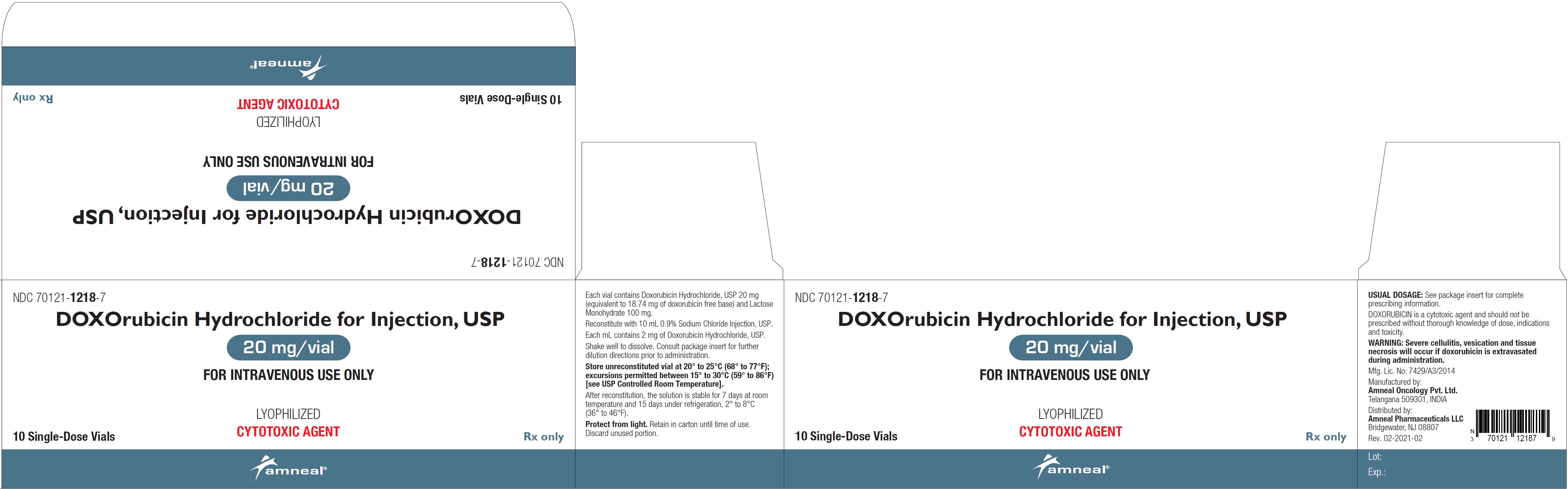
Doxorubicin Hydrochloride 2 mg/mL Injection, Powder, Lyophilized, For Solution — NDC 70121-1219-1 (Billing 70121-1219-01)
This is a package of Doxorubicin Hydrochloride 2 mg/mL Injection, Powder, Lyophilized, For Solution from Amneal Pharmaceuticals LLC, marketed since Feb 2017 and currently FDA-listed. It is this product's only package size.
NDC database record
One package, one record: these facts belong to NDC 70121-1219-1 alone.
- Record
- FDA NDC Directory package listing · Human prescription drug
- Code segments
- 70121 labeler · 1219 product · 1 package
- Package marketed since
- Feb 17, 2017
- Sample package
- No — commercial package
- Listing certified through
- Dec 31, 2026
- Barcode (UPC-A, from the NDC)
- 3 7012112191 6
- FDA record last changed
- Oct 8, 2026
Other active recalls for Doxorubicin Hydrochloride (different manufacturers) — 1 · tap to view
Identity & classification
Regulatory identifiers FDA, NLM and CMS codes for this package
- RxCUI (RxNorm): 1790095
Where does this data come from?
- FDA openFDA NDC Directory · synced Oct 8, 2026
- FDA label on DailyMed · label index refreshed Oct 6, 2026
- RxNorm (NLM RxNav) · catalog refreshed Oct 1, 2026
- Medi-Span GPI (licensed)
- First Databank (licensed) · refreshed Oct 8, 2026
RxNorm drug class
This medicine belongs to the Anthracycline Topoisomerase Inhibitor class.
Where does this data come from?
- RxClass (NLM) · catalog refreshed Oct 1, 2026
Clinical
- It is a chemotherapy medicine for many cancers. Standard forms treat breast cancer, leukemias, lymphomas, and several spread cancers. Liposomal forms like Doxil treat ovarian cance...
- A healthcare professional gives it into a vein in treatment cycles, usually every few weeks. You do not take it by mouth. Your team sets the exact schedule.
- Tiredness, nausea, vomiting, mouth sores, diarrhea or constipation, rash, and low blood counts are common. Liposomal forms can cause hand-foot syndrome. Let your team know about an...
- Call right away for fever or chills, unusual bleeding, shortness of breath, leg swelling, a racing heartbeat, or pain, redness, or swelling where the IV is. Heart problems can also...
Patient education
Supplement & herbal interactions
Doxorubicin may be associated with lower levels of 1 nutrient — worth a chat with your pharmacist, not a cause for alarm.
Where does this data come from?
- MedlinePlus (NLM) · refreshed Oct 1, 2026
- FDA label on DailyMed · label index refreshed Oct 6, 2026
Ask a licensed pharmacist directly — free, answered by our team.
Pricing
A drug doesn't have one price. Each row is a different public payment system, and none is what you'd pay at the counter — that depends on your insurance. The ⓘ on each row explains what it measures.
| Price system | Per mL | Per package |
|---|---|---|
| Retail pharmacies payNADAC · weekly | Not in the retail survey — common for institutional, discontinued, or low-volume packs. | |
| Medicaid paysCMS SDUD · 12 mo | No recent Medicaid claims on file for this NDC — rare and low-volume NDCs are suppressed in the public data. | |
| Medicare drug plans payPart D · quarterly | No Part D plan price is available for this NDC in our data. | |
Where does this data come from?
- CMS NADAC weekly file
- CMS ASP pricing files · refreshed Sep 20, 2026
- CMS Medicaid State Drug Utilization Data · refreshed Oct 8, 2026
- CMS Part D plan pricing files · refreshed Sep 24, 2026
- VA National Acquisition Center price file
Packaging — all sizes for this product
| Package NDC | Description | Marketing start | Marketing end | Status |
|---|---|---|---|---|
| 70121-1219-01 You're viewing this Main listing | 1 VIAL in 1 CARTON / 25 mL in 1 VIAL | 2017-02-17 | — | Active |
Therapeutic equivalents
| Product | Labeler | Pack | NADAC/unit | TE | Status | Price vs. this |
|---|---|---|---|---|---|---|
| Doxorubicin Hydrochloride 2 mg/mL 00143-9093-01 | Hikma | 1 vial | — | — | FDA listed | — |
| Doxorubicin Hydrochloride 2 mg/mL 67457-0436-50 | Mylan | 1 vial | — | — | FDA listed | — |
| Doxorubicin Hydrochloride 2 mg/mLthis 70121-1219-01 | Amneal | 1 vial | — | AP | FDA listed | — |
| Doxorubicin Hydrochloride 2 mg/mL 49315-0008-03 | Zydus | 1 vial | — | AB | FDA listed | — |
| Doxorubicin Hydrochloride 2 mg/mL 49315-0009-07 | Zydus | 1 vial | — | AB | FDA listed | — |
| DOXOrubicin Hydrochloride 2 mg/mL 62756-0826-40 | Sun | 1 vial | — | AP | FDA listed | — |
| DOXOrubicin Hydrochloride 2 mg/mL 62756-0827-40 | Sun | 1 vial | — | AP | FDA listed | — |
| Doxorubicin Hydrochloride 2 mg/mL 68001-0345-26 | BluePoint | 1 vial | — | AB | FDA listed | — |
| Doxorubicin Hydrochloride 2 mg/mL 16714-0742-01 | NorthStar | 1 vial | — | AB | Discontinued | — |
| Doxorubicin Hydrochloride 2 mg/mL 16714-0856-01 | NorthStar | 1 vial | — | AB | Discontinued | — |
| Doxorubicin Hydrochloride 2 mg/mL 00069-0343-02 | Pfizer | 1 vial | — | AP | FDA listed | — |
| Doxorubicin Hydrochloride 2 mg/mL 00143-9085-01 | Hikma | 1 vial | — | AP | FDA listed | — |
| Doxorubicin Hydrochloride 2 mg/mL 63323-0883-05 | Fresenius | 1 vial | — | AP | FDA listed | — |
| Doxorubicin Hydrochloride 2 mg/mL 68001-0492-36 | BluePoint | 1 vial | — | AB | FDA listed | — |
| Doxorubicin Hydrochloride 2 mg/mL 68001-0704-26 | BluePoint | 1 vial | — | AB | FDA listed | — |
| Doxorubicin Hydrochloride 2 mg/mL 00069-0277-02 | Pfizer | 1 vial | — | AP | FDA listed | — |
| Doxorubicin hydrochloride 2 mg/mL 45963-0733-55 | Actavis | 1 vial | — | AP | FDA listed | — |
| Doxil 2 mg/mL 00338-0063-01 | Baxter | 1 vial | — | AB | FDA listed | — |
| Doxorubicin Hydrochloride 2 mg/mL 68083-0248-01 | Gland | 1 vial | — | AP | FDA listed | — |
| Doxorubicin Hydrochloride 2 mg/mL 00069-1442-04 | Pfizer | 1 vial | — | AP | FDA listed | — |
| Doxorubicin Hydrochloride 2 mg/mL 00069-3358-25 | Pfizer | 1 vial | — | AP | FDA listed | — |
| Doxorubicin Hydrochloride 2 mg/mL 00069-4031-12 | Pfizer | 1 vial | — | AP | FDA listed | — |
| Doxorubicin Hydrochloride 2 mg/mL 00143-9084-01 | Hikma | 1 vial | — | AP | FDA listed | — |
| Doxorubicin Hydrochloride 2 mg/mL 00143-9090-01 | Hikma | 1 vial | — | AP | FDA listed | — |
| doxorubicin hydrochloride 2 mg/mL 62332-0810-10 | Alembic | 1 vial | — | AB | FDA listed | — |
| Doxorubicin Hydrochloride 2 mg/mL 68083-0249-01 | Gland | 1 vial | — | AP | FDA listed | — |
| Doxorubicin Hydrochloride 2 mg/mL 00069-1542-20 | Pfizer | 1 vial | — | AP | FDA listed | — |
| Doxorubicin Hydrochloride 2 mg/mL 47335-0049-40 | Sun | 1 vial | — | AB | FDA listed | — |
| Doxil 2 mg/mL 00338-9665-01 | Baxter | 1 vial | — | AB | FDA listed | — |
| Doxorubicin Hydrochloride 2 mg/mL 68001-0703-36 | BluePoint | 1 vial | — | AB | FDA listed | — |
| doxorubicin hydrochloride 2 mg/mL 75907-0363-01 | Dr. | 1 vial | — | AB | FDA listed | — |
| Doxorubicin Hydrochloride 2 mg/mL 00069-0358-20 | Pfizer | 1 vial | — | AP | FDA listed | — |
| Doxorubicin Hydrochloride 2 mg/mL 00069-4205-05 | Pfizer | 1 vial | — | AP | FDA listed | — |
| Doxorubicin Hydrochloride 2 mg/mL 00143-9092-01 | Hikma | 1 vial | — | — | FDA listed | — |
| doxorubicin hydrochloride 2 mg/mL 46708-0810-10 | Alembic | 1 vial | — | AB | FDA listed | — |
| doxorubicin hydrochloride 2 mg/mL 62332-0525-25 | Alembic | 1 vial | — | AB | FDA listed | — |
| Doxorubicin Hydrochloride 2 mg/mL 68001-0493-26 | BluePoint | 1 vial | — | AB | FDA listed | — |
| Doxorubicin Hydrochloride 2 mg/mL 68001-0629-26 | BluePoint | 1 vial | — | AB | FDA listed | — |
| Doxorubicin Hydrochloride 2 mg/mL 70748-0340-01 | Lupin | 1 vial | — | AB | FDA listed | — |
| Doxorubicin Hydrochloride 2 mg/mL 00069-0255-10 | Pfizer | 1 vial | — | AP | FDA listed | — |
| Doxorubicin Hydrochloride 2 mg/mL 00143-9086-01 | Hikma | 1 vial | — | AP | FDA listed | — |
| Doxorubicin Hydrochloride 2 mg/mL 00143-9087-01 | Hikma | 1 vial | — | AP | FDA listed | — |
| Doxorubicin Hydrochloride 2 mg/mL 72603-0103-01 | NorthStar | 1 vial | — | AB | FDA listed | — |
| Doxorubicin Hydrochloride 2 mg/mL 72603-0200-01 | NorthStar | 1 vial | — | AB | FDA listed | — |
| Doxorubicin Hydrochloride 2 mg/mL 00143-9091-01 | Hikma | 1 vial | — | AP | FDA listed | — |
| Doxorubicin Hydrochloride 2 mg/mL 70710-1531-01 | Zydus | 1 vial | — | AB | FDA listed | — |
| doxorubicin hydrochloride 2 mg/mL 75907-0364-01 | Dr. | 1 vial | — | AB | FDA listed | — |
| Doxorubicin Hydrochloride 2 mg/mL 00069-5629-05 | Pfizer | 1 vial | — | AP | FDA listed | — |
| Doxorubicin Hydrochloride Liposome 2 mg/mL 25021-0263-10 | Sagent | 1 vial | — | AB | FDA listed | — |
| doxorubicin hydrochloride 2 mg/mL 46708-0525-25 | Alembic | 1 vial | — | AB | FDA listed | — |
| Doxorubicin Hydrochloride 2 mg/mL 68083-0250-01 | Gland | 1 vial | — | AP | FDA listed | — |
| Doxorubicin Hydrochloride 2 mg/mL 47335-0050-40 | Sun | 1 vial | — | AB | FDA listed | — |
| Doxorubicin Hydrochloride 2 mg/mL 63323-0101-61 | Fresenius | 1 vial | — | AP | FDA listed | — |
| doxorubicin hydrochloride 2 mg/mL 25021-0207-25 | Sagent | 1 vial | — | AP | FDA listed | — |
| Doxorubicin Hydrochloride 2 mg/mL 00143-9088-01 | Hikma | 1 vial | — | AP | FDA listed | — |
| Doxorubicin Hydrochloride 2 mg/mL 00143-9089-01 | Hikma | 1 vial | — | AP | FDA listed | — |
| doxorubicin hydrochloride, Liposomal 2 mg/mL 00338-9581-02 | Baxter | 1 vial | — | — | FDA listed | — |
| Doxil 2 mg/mL 00338-9667-01 | Baxter | 1 vial | — | AB | FDA listed | — |
| Doxorubicin Hydrochloride 2 mg/mL 70710-1530-01 | Zydus | 1 vial | — | AB | FDA listed | — |
| Doxorubicin Hydrochloride 2 mg/mL 70748-0339-01 | Lupin | 1 vial | — | AB | FDA listed | — |
| doxorubicin hydrochloride 2 mg/mL 68001-0706-36 | BluePoint | 1 vial | — | AB | FDA listed | — |
| doxorubicin hydrochloride 2 mg/mL 68001-0707-26 | BluePoint | 1 vial | — | AB | FDA listed | — |
Where does this data come from?
- FDA openFDA NDC Directory · synced Oct 8, 2026
- FDA Orange Book · refreshed Oct 3, 2026
- CMS NADAC weekly file
Availability & generic status
This product is an FDA-approved generic. Other versions of the same drug are listed under Therapeutic equivalents, least expensive first.
Where does this data come from?
- FDA Orange Book · refreshed Oct 3, 2026
Inactive Ingredients / Excipients
Inactive ingredients, also called excipients, are components of the drug product other than the active ingredient. They may include fillers, dyes, coatings, preservatives, flavors, or other formulation ingredients.
🧪 Avoiding an ingredient? See Doxorubicin inactive ingredients by manufacturer: every current product's list side by side, so you can ask your pharmacy for the version that does not list it.
💡 Tap an ingredient (hover on desktop) to see what it is and why it’s used.
-
UNII EWQ57Q8I5X
Lactose monohydrate is a natural sugar derived from milk. It serves as a filler and binder in tablets and capsules, helping create the proper size, texture, and consistency of the medicine.
1 inactive ingredient listed in the exact product block matched to this NDC.
Where does this data come from?
ingredient classCode="IACT" elements from the exact product block matched by this NDC. Label-section narrative from DailyMed / the openFDA label index is shown separately when available.- FDA label on DailyMed · label index refreshed Oct 6, 2026
- FDA openFDA NDC Directory · synced Oct 8, 2026
Inactive ingredient FAQ
Are inactive ingredients the same for every manufacturer?
Why might an inactive ingredient be missing?
Can inactive ingredients matter?
Manufacturer & labeler
More NDCs from Amneal Pharmaceuticals LLC labeler code 70121
- Furosemide 20 mg/2mL Injection NDC 70121-1163-5
- Furosemide 40 mg/4mL Injection NDC 70121-1164-5
- Triamcinolone Acetonide 200 mg/5mL Injection, Suspension NDC 70121-1168-1
- Triamcinolone Acetonide 400 mg/10mL Injection, Suspension NDC 70121-1169-1
- Sodium nitroprusside 25 mg/mL Injection NDC 70121-1189-1
- Doxorubicin Hydrochloride 2 mg/mL Injection, Powder, Lyophilized, For Solution NDC 70121-1218-7
- Docetaxel 20 mg/mL Injection NDC 70121-1221-1
- Docetaxel 80 mg/4mL Injection NDC 70121-1222-1
- Docetaxel 160 mg/8mL Injection NDC 70121-1223-1
- Clofarabine 1 mg/mL Injection NDC 70121-1236-1
- Azacitidine 100 mg Injection, Powder, Lyophilized, For Solution NDC 70121-1237-1
- Cyclophosphamide 500 mg/25mL Injection, Powder, For Solution NDC 70121-1238-1
Where does this data come from?
- FDA openFDA NDC Directory · synced Oct 8, 2026
- Drugs@FDA
Full prescribing information FDA SPL
🚨 Boxed Warning ▾
WARNING: CARDIOMYOPATHY, SECONDARY MALIGNANCIES, EXTRAVASATION AND TISSUE NECROSIS, and SEVERE MYELOSUPPRESSION Cardiomyopathy: Myocardial damage, including acute left ventricular failure, can occur with doxorubicin hydrochloride. The risk of cardiomyopathy is proportional to the cumulative exposure with incidence rates from 1% to 20% for cumulative doses ranging from 300 mg/m 2 to 500 mg/m 2 when doxorubicin hydrochloride is administered every 3 weeks. The risk of cardiomyopathy is further increased with concomitant cardiotoxic therapy.
Assess left ventricular ejection fraction (LVEF) before and regularly during and after treatment with doxorubicin hydrochloride [see Warnings and Precautions (5.1) ] . Secondary Malignancies: Secondary acute myelogenous leukemia (AML) and myelodysplastic syndrome (MDS) occur at a higher incidence in patients treated with anthracyclines, including doxorubicin hydrochloride [see Warnings and Precautions (5.2) ] . Extravasation and Tissue Necrosis: Extravasation of doxorubicin hydrochloride can result in severe local tissue injury and necrosis requiring wide excision of the affected area and skin grafting.
Immediately terminate the drug and apply ice to the affected area [see Warnings and Precautions (5.3) ] . Severe myelosuppression resulting in serious infection, septic shock, requirement for transfusions, hospitalization, and death may occur [see Warnings and Precautions (5.4) ] . WARNING: CARDIOMYOPATHY, SECONDARY MALIGNANCIES, EXTRAVASATION AND TISSUE NECROSIS, and SEVERE MYELOSUPPRESSION See full prescribing information for complete boxed warning.
Cardiomyopathy: Myocardial damage can occur with doxorubicin hydrochloride with incidences from 1% to 20% for cumulative doses from 300 mg/m 2 to 500 mg/m 2 when doxorubicin hydrochloride is administered every 3 weeks. The risk of cardiomyopathy is further increased with concomitant cardiotoxic therapy. Assess left ventricular ejection fraction (LVEF) before and regularly during and after treatment with doxorubicin hydrochloride.
( 5.1 ) Secondary Malignancies: Secondary acute myelogenous leukemia (AML) and myelodysplastic syndrome (MDS) occur at a higher incidence in patients treated with anthracyclines, including doxorubicin hydrochloride. ( 5.2 ) Extravasation and Tissue Necrosis: Extravasation of doxorubicin hydrochloride can result in severe local tissue injury and necrosis requiring wide excision and skin grafting. Immediately terminate the drug, and apply ice to the affected area.
( 5.3 ) Severe myelosuppression resulting in serious infection, septic shock, requirement for transfusions, hospitalization, and death may occur. ( 5.4 )
🎯 Indications and Usage ▾
1 INDICATIONS AND USAGE Doxorubicin hydrochloride for injection is an anthracycline topoisomerase inhibitor indicated: as a component of multiagent adjuvant chemotherapy for treatment of women with axillary lymph node involvement following resection of primary breast cancer ( 1.1 ). for the treatment of: acute lymphoblastic leukemia, acute myeloblastic leukemia, Hodgkin lymphoma, Non-Hodgkin lymphoma, metastatic breast cancer, metastatic Wilms’ tumor, metastatic neuroblastoma, metastatic soft tissue sarcoma, metastatic bone sarcomas, metastatic ovarian carcinoma, metastatic transitional cell bladder carcinoma, metastatic thyroid carcinoma, metastatic gastric carcinoma, metastatic bronchogenic carcinoma ( 1.2 ).
1.1Adjuvant Breast Cancer Doxorubicin hydrochloride for injection is indicated as a component of multi-agent adjuvant chemotherapy for treatment of women with axillary lymph node involvement following resection of primary breast cancer.
1.2Other Cancers Doxorubicin hydrochloride for injection is indicated for the treatment of acute lymphoblastic leukemia acute myeloblastic leukemia Hodgkin lymphoma non-Hodgkin lymphoma (NHL) metastatic breast cancer metastatic Wilms’ tumor metastatic neuroblastoma metastatic soft tissue sarcoma metastatic bone sarcoma metastatic ovarian carcinoma metastatic transitional cell bladder carcinoma metastatic thyroid carcinoma metastatic gastric carcinoma metastatic bronchogenic carcinoma
⏱️ Dosage and Administration ▾
2 DOSAGE AND ADMINISTRATION Single agent : 60 to 75 mg/m 2 given intravenously every 21 days ( 2.1 ). In combination: 40 to 75 mg/m 2 given intravenously every 21 to 28 days ( 2.1 ). Discontinue doxorubicin hydrochloride for injection in patients who develop signs or symptoms of cardiomyopathy ( 2.2 ). Reduce dose in patients with hepatic impairment ( 2.3 ).
2.1Recommended Dosage for Adjuvant Breast Cancer The recommended dosage of doxorubicin hydrochloride for injection is 60 mg/m 2 administered as an intravenous bolus on day 1 of each 21-day treatment cycle, in combination with cyclophosphamide, for a total of four cycles.
2.2Recommended Dosage for Other Cancers The recommended dosage of doxorubicin hydrochloride for injection when used as a single agent is 60 mg/m 2 to 75 mg/m 2 intravenously every 21 days. The recommended dosage of doxorubicin hydrochloride for injection, when administered in combination with other chemotherapy drugs, is 40 mg/m 2 to 75 mg/m 2 intravenously every 21 to 28 days. Consider use of the lower doxorubicin hydrochloride for injection dose in the recommended dosage range or longer intervals between cycles for heavily pretreated patients, elderly patients, or obese patients.
Cumulative doses above 550 mg/m 2 are associated with an increased risk of cardiomyopathy [see Warnings and Precautions (5.1) ] .
2.3Dosage Modifications for Adverse Reactions Cardiomyopathy Discontinue doxorubicin hydrochloride for injection in patients who develop signs or symptoms of cardiomyopathy [see Warnings and Precautions (5.1) ] .
2.4Dosage Modifications for Hepatic Impairment Doxorubicin hydrochloride for injection is contraindicated in patients with severe hepatic impairment (Child-Pugh Class C or serum bilirubin greater than 5 mg/dL) [see Contraindications (4) ]. Dosage modifications for doxorubicin hydrochloride for injection in patients with elevated serum total bilirubin concentrations [see Warnings and Precautions (5.5) , Use in Specific Populations (8.6) ] are provided in Table 1. Table 1.
Recommended Dosage Modification for Elevated Serum Total Bilirubin Serum total bilirubin concentration Dosage Modification 1.2 to 3 mg/dL 50% 3.1 to 5 mg/dL 75% greater than 5 mg/dL Do not initiate doxorubicin hydrochloride for injection; discontinue doxorubicin hydrochloride for injection
2.5Preparation and Administration Doxorubicin hydrochloride for injection is a cytotoxic drug. Follow applicable special handling and disposal procedures. 1 Preparation Reconstitution of Doxorubicin Hydrochloride for Injection Reconstitute doxorubicin hydrochloride for injection with 0.9% Sodium Chloride Injection to obtain a final concentration of 2 mg per mL as follows: 10 mL 0.9% Sodium Chloride Injection, USP to reconstitute 20 mg vial 25 mL 0.9% Sodium Chloride Injection, USP to reconstitute 50 mg vial Gently shake vial until the contents have dissolved.
Protect reconstituted solution from light. Dilution of Reconstituted Doxorubicin Hydrochloride for Injection Dilute reconstituted doxorubicin hydrochloride for injection in 0.9% Sodium Chloride Injection, USP or 5% Dextrose Injection, USP. Protect from light following preparation until completion of infusion.
Use within 1 hour. If not used within 1 hour, discard the diluted product. Administration Visually inspect for particulate matter and discoloration prior to administration, whenever solution and container permit.
Discard if the solution is discolored, cloudy, or contains particulate matter. Administration by Intravenous Injection Administer diluted reconstituted doxorubicin hydrochloride for injection as an intravenous injection through a central intravenous line or a secure and free-flowing peripheral venous line containing 0.9% Sodium Chloride Injection, USP, 0.45% Sodium Chloride Injection, USP, or 5% Dextrose Injection, USP. Administer intravenously over 3 to 10 minutes.
Decrease the rate of infusion if erythematous streaking along the vein proximal to the site of infusio… [Excerpted — this section continues on DailyMed.]
💊 Dosage Forms and Strengths ▾
3 DOSAGE FORMS AND STRENGTHS Doxorubicin Hydrochloride for Injection, USP: Vials contain 20 mg/vial and 50 mg/vial of doxorubicin hydrochloride, USP as a red to orange-red lyophilized cake or powder in single-dose vials for reconstitution. For Injection: 20 mg/vial and 50 mg/vial as a lyophilized powder in single-dose vials for reconstitution ( 3 ).
⛔ Contraindications ▾
4 CONTRAINDICATIONS Doxorubicin hydrochloride for injection is contraindicated in patients with: Severe myocardial insufficiency [see Warnings and Precautions (5.1) ] Recent (occurring within the past 4 to 6 weeks) myocardial infarction [see Warnings and Precautions (5.1) ] Severe persistent drug-induced myelosuppression [see Warnings and Precautions (5.4) ] Severe hepatic impairment (defined as Child Pugh Class C or serum bilirubin level greater than 5 mg/dL) [see Warnings and Precautions (5.5) ] Severe hypersensitivity reaction to doxorubicin hydrochloride, including anaphylaxis [see Adverse Reactions (6.2) ] Severe myocardial insufficiency ( 4 ).
Recent myocardial infarction ( 4 ). Severe persistent drug-induced myelosuppression ( 4 ). Severe hepatic impairment ( 4 ).
Severe hypersensitivity to doxorubicin hydrochloride ( 4 ).
⚠️ Warnings and Cautions ▾
5 WARNINGS AND PRECAUTIONS Radiation-Induced Toxicity: Can be increased by the administration of doxorubicin hydrochloride for injection. Radiation recall can occur in patients who receive doxorubicin hydrochloride for injection after prior radiation therapy ( 5.7 ). Embryo-Fetal Toxicity: Can cause fetal harm.
Advise females of reproductive potential of the potential risk to a fetus and on the use of effective contraception. Advise males with female partners of reproductive potential to use effective contraception. Advise males with pregnant partners to use condoms ( 5.8 , 8.1 , 8.3 ).
5.1Cardiomyopathy and Arrhythmias Cardiomyopathy Doxorubicin hydrochloride can result in myocardial damage, including acute left ventricular failure. The risk of cardiomyopathy is generally proportional to the cumulative exposure. Include prior doses of other anthracyclines or anthracenediones in calculations of total cumulative dosage for doxorubicin hydrochloride.
Cardiomyopathy may develop during treatment or up to several years after completion of treatment and can include decrease in LVEF and signs and symptoms of congestive heart failure (CHF). The probability of developing cardiomyopathy is estimated to be 1% to 2% at a total cumulative dose of 300 mg/m 2 of doxorubicin hydrochloride, 3% to 5% at a dose of 400 mg/m 2 , 5% to 8% at a dose of 450 mg/m 2 , and 6% to 20% at a dose of 500 mg/m 2 , when doxorubicin hydrochloride is administered every 3 weeks. There is an additive or potentially synergistic increase in the risk of cardiomyopathy in patients who have received radiotherapy to the mediastinum or concomitant therapy with other known cardiotoxic agents, such as cyclophosphamide and trastuzumab.
Pericarditis and myocarditis have also been reported during or following doxorubicin hydrochloride treatment. Assess left ventricular cardiac function (e.g., MUGA or echocardiogram) prior to initiation of doxorubicin hydrochloride for injection, during treatment to detect acute changes, and after treatment to detect delayed cardiotoxicity. Increase the frequency of assessments as the cumulative dose exceeds 300 mg/m 2 .
Use the same method of assessment of LVEF at all time points [see Use in Specific Populations (8.4) ] . Discontinue doxorubicin hydrochloride for injection in patients who develop signs or symptoms of cardiomyopathy [see Dosage and Administration (2.3) ] . Consider the use of dexrazoxane to reduce the incidence and severity of cardiomyopathy due to doxorubicin hydrochloride administration in patients who have received a cumulative doxorubicin hydrochloride dose of 300 mg/m 2 and who will continue to receive doxorubicin hydrochloride.
Arrhythmias Doxorubicin hydrochloride can result in arrhythmias, including life-threatening arrhythmias, during or within a few hours after doxorubicin hydrochloride administration and at any time point during treatment. Tachyarrhythmias, including sinus tachycardia, premature ventricular contractions, and ventricular tachycardia, as well as bradycardia, can occur. Electrocardiographic changes, including non-specific ST-T wave changes, atrioventricular and bundle-branch block can also occur.
These electrocardiographic changes may be transient and self-limited and may not require a dosage modification of doxorubicin hydrochloride.
5.2Secondary Malignancies The risk of developing secondary acute myelogenous leukemia (AML) and myelodysplastic syndrome (MDS) is increased following treatment with doxorubicin hydrochloride. Cumulative incidences ranged from 0.2% at five years to 1.5% at 10 years in two separate trials involving the adjuvant treatment of women with breast cancer. These leukemias generally occur within 1 to 3 years of treatment.
5.3Extravasation and Tissue Necrosis Extravasation of doxorubicin hydrochloride can cause severe local tissue injury manifesting as blistering, ulceration, and necrosis requiring wide excision of the affected area and skin grafting. Extravasation should be cons… [Excerpted — this section continues on DailyMed.]
🤒 Adverse Reactions ▾
6 ADVERSE REACTIONS The following clinically significant adverse reactions are described elsewhere in the labeling. Cardiomyopathy and Arrhythmias [see Warnings and Precautions (5.1) ] Secondary Malignancies [see Warnings and Precautions (5.2) ] Extravasation and Tissue Necrosis [see Warnings and Precautions (5.3) ] Severe Myelosuppression [see Warnings and Precautions (5.4) ] Tumor Lysis Syndrome [see Warnings and Precautions (5.6) ] Radiation Sensitization and Radiation Recall [see Warnings and Precautions (5.7) ] The most common (> 10%) adverse reactions are alopecia, nausea and vomiting ( 6.1 ).
To report SUSPECTED ADVERSE REACTIONS, contact Amneal Pharmaceuticals at 1-877-835-5472 or FDA at 1-800-FDA-1088 or www.fda.gov/medwatch.
6.1Clinical Trials Experience Because clinical trials are conducted under widely varying conditions, adverse reaction rates observed in the clinical trials of a drug cannot be directly compared to rates in the clinical trials of another drug and may not reflect the rates observed in practice. Breast Cancer The safety data below were collected from 1,492 women who received doxorubicin hydrochloride at a dose of 60 mg/m 2 and cyclophosphamide at a dose of 600 mg/m 2 (AC) every 3 weeks for 4 cycles for the adjuvant treatment of axillary lymph node positive breast cancer.
The median number of cycles received was 4. Selected adverse reactions reported in this study are provided in Table 2. No treatment-related deaths were reported in patients on either arm of the study.
Table 2. Selected Adverse Reactions in Patients with Early Breast Cancer Involving Axillary Lymph Nodes Adverse Reactions AC* N=1,492 Conventional CMF N=739 % % Alopecia 92 71 Vomiting Vomiting ≤ 12 hours Vomiting > 12 hours Intractable 34 37 5 25 12 2 Leukopenia Grade 3 (1,000 to 1,999 /mm 3 ) Grade 4 (< 1,000 /mm 3 ) 3.4 0.3 9.4
0.3Shock, sepsis 2 1 Systemic infection 2 1 Cardiac dysfunction Asymptomatic Transient Symptomatic 0.2 0.1 0.1 0.1 0 0 Thrombocytopenia Grade 3 (25,000 to 49,999 /mm 3 ) Grade 4 (< 25,000 /mm 3 ) 0 0.1 0.3 0 AC = doxorubicin hydrochloride, cyclophosphamide; CMF = cyclophosphamide, methotrexate, fluorouracil * Includes pooled data from patients who received either AC for 4 cycles or AC for 4 cycles followed by CMF for 3 cycles
6.2Post-marketing Experience The following adverse reactions have been identified during post-approval use of doxorubicin hydrochloride for injection. Because these reactions are reported voluntarily from a population of uncertain size, it is not always possible to reliably estimate their frequency or establish a causal relationship to drug exposure. Cardiac – Cardiogenic shock Cutaneous – Skin and nail hyperpigmentation, oncolysis, rash, itching, photosensitivity, urticaria, acral erythema, palmar plantar erythrodysesthesia Gastrointestinal – Nausea, mucositis, stomatitis, necrotizing colitis, typhlitis, gastric erosions, gastrointestinal tract bleeding, hematochezia, esophagitis, anorexia, abdominal pain, dehydration, diarrhea, hyperpigmentation of the oral mucosa Hypersensitivity – Anaphylaxis Laboratory Abnormalities – Increased ALT, increased AST Neurological – Peripheral sensory and motor neuropathy, seizures, coma Ocular – Conjunctivitis, keratitis, lacrimation Vascular – Phlebosclerosis, phlebitis/thrombophlebitis, hot flashes, thromboembolism Other – Malaise/asthenia, fever, chills, weight gain
🔄 Drug Interactions ▾
7 DRUG INTERACTIONS Avoid concomitant use of doxorubicin hydrochloride with inhibitors and inducers of CYP3A4, CYP2D6, and/or P-gp ( 7.1 ). Do not administer doxorubicin hydrochloride in combination with trastuzumab due to increased risk of cardiac dysfunction ( 5.1 , 7.2 ).
7.1Effect of Other Drugs on Doxorubicin Hydrochloride for Injection Inhibitors of CYP3A4, CYP2D6, and P-gp Concomitant use of doxorubicin hydrochloride with inhibitors of CYP3A4, CYP2D6, or P-glycoprotein (P-gp), increased concentrations of doxorubicin, which may increase the incidence and severity of adverse reactions of doxorubicin hydrochloride. Avoid concomitant use of doxorubicin hydrochloride for injection with inhibitors of CYP3A4, CYP2D6, or P-gp. Inducers of CYP3A4, CYP2D6, or P-gp Concomitant use of doxorubicin hydrochloride with inducers of CYP3A4, CYP2D6, or P-gp may decrease the concentration of doxorubicin.
Avoid concomitant use of doxorubicin hydrochloride for injection with inducers of CYP3A4, CYP2D6, or P-gp. Paclitaxel Paclitaxel, when given prior to doxorubicin hydrochloride, increases the plasma-concentrations of doxorubicin and its metabolites. Administer doxorubicin hydrochloride for injection prior to paclitaxel if used concomitantly.
7.2Concomitant Use of Trastuzumab Concomitant use of trastuzumab and doxorubicin hydrochloride results in an increased risk of cardiac dysfunction. Avoid concomitant administration of doxorubicin hydrochloride for injection and trastuzumab [see Warnings and Precautions (5.1) ]. Patients receiving doxorubicin after stopping treatment with trastuzumab may also be at an increased risk of developing cardiotoxicity.
Trastuzumab may persist in the circulation for up to 7 months. Therefore, avoid anthracycline-based therapy for up to 7 months after stopping trastuzumab when possible. If anthracyclines are used before this time, carefully monitor cardiac function.
7.3Concomitant Use of Dexrazoxane Do not administer dexrazoxane as a cardioprotectant at the initiation of doxorubicin hydrochloride-containing chemotherapy regimens. In a randomized trial in women with metastatic breast cancer, initiation of dexrazoxane with doxorubicin hydrochloride-based chemotherapy resulted in a significantly lower tumor response rate (48% vs. 63%; p = 0.007) and shorter time to progression compared to doxorubicin hydrochloride-based chemotherapy alone.
7.4Concomitant Use of 6-Mercaptopurine Doxorubicin hydrochloride may potentiate 6-mercaptopurine-induced hepatotoxicity. In 11 patients with refractory leukemia treated with 6-mercaptopurine (500 mg/m 2 intravenously daily for 5 days per cycle every 2 to 3 weeks) and doxorubicin hydrochloride (50 mg/m 2 intravenous once per cycle every 2 to 3 weeks) alone or with vincristine and prednisone, all developed hepatic dysfunction manifested by increased total serum bilirubin, alkaline phosphatase and aspartate aminotransferase.
👥 Use in Specific Populations ▾
8 USE IN SPECIFIC POPULATIONS Lactation: Advise not to breastfeed ( 8.2 ). Females and Males of Reproductive Potential: May impair fertility ( 8.3 ).
8.1Pregnancy Risk Summary Based on findings in animals and its mechanism of action, doxorubicin hydrochloride for injection can cause fetal harm when administered to a pregnant woman; avoid the use of doxorubicin hydrochloride for injection during the 1 st trimester. Available human data do not establish the presence or absence of major birth defects and miscarriage related to the use of doxorubicin hydrochloride during the 2 nd and 3 rd trimesters. Doxorubicin hydrochloride was teratogenic and embryotoxic in rats and embryotoxic in rabbits when administered during organogenesis at doses approximately 0.07 times (based on body surface area) the recommended human dose of 60 mg/m 2 (see Data) .
Advise pregnant women of the potential risk to a fetus. In the U.S. general population, the estimated background risk of major birth defects and miscarriage in clinically recognized pregnancies is 2% to 4% and 15% to 20%, respectively. Data Animal Data Doxorubicin hydrochloride was teratogenic and embryotoxic at doses of 0.8 mg/kg/day (about 0.07 times the recommended human dose based on body surface area) when administered during the period of organogenesis in rats.
Teratogenicity and embryotoxicity were also seen using discrete periods of treatment. The most susceptible was the 6- to 9-day gestation period at doses of 1.25 mg/kg/day and greater. Characteristic malformations included esophageal and intestinal atresia, tracheo-esophageal fistula, hypoplasia of the urinary bladder, and cardiovascular anomalies.
Doxorubicin hydrochloride was embryotoxic (increase in embryofetal deaths) and abortifacient at 0.4 mg/kg/day (about 0.07 times the recommended human dose based on body surface area) in rabbits when administered during the period of organogenesis.
8.2Lactation Risk Summary Doxorubicin was measured in the milk of one lactating patient after therapy with 70 mg/m 2 of doxorubicin hydrochloride given as a 15-minute intravenous infusion. The peak milk concentration at 24 hours after treatment was 4.4-fold greater than the corresponding plasma concentration. Doxorubicin was detectable in the milk up to 72 hours.
There are no data on the effects of doxorubicin hydrochloride on the breastfed child or the effects on milk production. Because of the potential for serious adverse reactions in the breastfed child, advise women not to breastfeed during treatment with doxorubicin hydrochloride for injection and for 10 days after the final dose.
8.3Females and Males of Reproductive Potential Pregnancy Testing Verify the pregnancy status of females of reproductive potential prior to initiating doxorubicin hydrochloride for injection. Contraception Females Doxorubicin hydrochloride for injection can cause fetal harm when administered to pregnant women [see Use in Specific Populations (8.1) ] . Advise female patients of reproductive potential to use highly effective contraception during treatment with doxorubicin hydrochloride for injection and for 6 months after treatment [see Use in Specific Populations (8.1) ] .
Males Doxorubicin hydrochloride may damage spermatozoa and testicular tissue, resulting in possible genetic fetal abnormalities. Due to the potential for genotoxicity, advise males with female partners of reproductive potential to use effective contraception during treatment with doxorubicin hydrochloride for injection and for 3 months after treatment [see Nonclinical Toxicology (13.1) ] . Males with pregnant partners should use condoms during treatment and for at least 10 days after the final dose [see Nonclinical Toxicology (13.1) , Use in Specific Populations (8.1) ] .
Infertility Females In females of reproductive potential, doxorubicin hydrochloride may cause infertility and result in amenorrhea. Premature menopause can occur. Recovery of menses and ovulation is related to age at treat… [Excerpted — this section continues on DailyMed.]
🤰 Pregnancy ▾
8.1Pregnancy Risk Summary Based on findings in animals and its mechanism of action, doxorubicin hydrochloride for injection can cause fetal harm when administered to a pregnant woman; avoid the use of doxorubicin hydrochloride for injection during the 1 st trimester. Available human data do not establish the presence or absence of major birth defects and miscarriage related to the use of doxorubicin hydrochloride during the 2 nd and 3 rd trimesters. Doxorubicin hydrochloride was teratogenic and embryotoxic in rats and embryotoxic in rabbits when administered during organogenesis at doses approximately 0.07 times (based on body surface area) the recommended human dose of 60 mg/m 2 (see Data) .
Advise pregnant women of the potential risk to a fetus. In the U.S. general population, the estimated background risk of major birth defects and miscarriage in clinically recognized pregnancies is 2% to 4% and 15% to 20%, respectively. Data Animal Data Doxorubicin hydrochloride was teratogenic and embryotoxic at doses of 0.8 mg/kg/day (about 0.07 times the recommended human dose based on body surface area) when administered during the period of organogenesis in rats.
Teratogenicity and embryotoxicity were also seen using discrete periods of treatment. The most susceptible was the 6- to 9-day gestation period at doses of 1.25 mg/kg/day and greater. Characteristic malformations included esophageal and intestinal atresia, tracheo-esophageal fistula, hypoplasia of the urinary bladder, and cardiovascular anomalies.
Doxorubicin hydrochloride was embryotoxic (increase in embryofetal deaths) and abortifacient at 0.4 mg/kg/day (about 0.07 times the recommended human dose based on body surface area) in rabbits when administered during the period of organogenesis.
🧒 Pediatric Use ▾
8.4Pediatric Use Based on post-marketing reports, pediatric patients treated with doxorubicin hydrochloride are at risk for developing late cardiovascular dysfunction. Risk factors include young age at treatment (especially < 5 years), high cumulative doses and receipt of combined modality therapy. Long-term periodic cardiovascular monitoring is recommended for all pediatric patients who have received doxorubicin hydrochloride.
Doxorubicin hydrochloride, as a component of intensive chemotherapy regimens administered to pediatric patients, may contribute to prepubertal growth failure and may also contribute to gonadal impairment, which is usually temporary. There are no recommended dose adjustments based on age. Doxorubicin clearance was increased in patients aged 2 years to 20 years as compared to adults, while doxorubicin clearance was similar in infants less than 2 years as compared to adults [see Clinical Pharmacology (12.3) ] .
🧓 Geriatric Use ▾
8.5Geriatric Use Clinical experience in patients who were 65 years of age and older who received doxorubicin hydrochloride-based chemotherapy regimens for metastatic breast cancer showed no overall differences in safety and effectiveness compared with younger patients.
🆘 Overdosage ▾
10 OVERDOSAGE Few cases of overdose have been described. A 58-year-old man with acute lymphoblastic leukemia received 10-fold overdose of doxorubicin hydrochloride (300 mg/m 2 ) in one day. He was treated with charcoal filtration, hemopoietic growth factor (G-CSF), proton pump inhibitor and antimicrobial prophylaxis.
The patient suffered sinus tachycardia, grade 4 neutropenia and thrombocytopenia for 11 days, severe mucositis and sepsis. The patient recovered completely 26 days after the overdose. A 17-year-old girl with osteogenic sarcoma received 150 mg of doxorubicin hydrochloride daily for 2 days (intended dose was 50 mg per day for 3 days).
The patient developed severe mucositis on days 4 to 7 after the overdose and chills and pyrexia on day 7. The patient was treated with antibiotics and platelets and recovered 18 days after overdose.
🧬 Clinical Pharmacology ▾
12 CLINICAL PHARMACOLOGY
12.1Mechanism of Action The cytotoxic effect of doxorubicin hydrochloride on malignant cells and its toxic effects on various organs are thought to be related to nucleotide base intercalation and cell membrane lipid binding activities of doxorubicin. Intercalation inhibits nucleotide replication and action of DNA and RNA polymerases. The interaction of doxorubicin with topoisomerase II to form DNA-cleavable complexes appears to be an important mechanism of doxorubicin hydrochloride cytocidal activity.
12.3Pharmacokinetics Pharmacokinetic studies conducted in patients with various types of tumors have shown that doxorubicin follows multiphasic disposition after intravenous injection. In four patients, doxorubicin demonstrated dose-independent pharmacokinetics across a dose range of 30 mg/m 2 to 70 mg/m 2 . Distribution The distribution half-life is approximately 5 minutes.
Steady-state distribution volume ranges from 809 L/m 2 to 1214 L/m 2 . Binding of doxorubicin and its major metabolite, doxorubicinol, to plasma proteins is 75% and is independent of plasma concentration of doxorubicin up to 1.1 mcg/mL. Doxorubicin does not cross the blood brain barrier.
Elimination Plasma clearance is ranges from 324 mL/min/m 2 to 809 mL/min/m 2 . The terminal half-life is 20 hours to 48 hours. Metabolism Doxorubicin is a substrate of CYP3A4, CYP2D6, and P-gp.
Enzymatic reduction at the 7 position and cleavage of the daunosamine sugar yields aglycones which are accompanied by free radical formation, the local production of which may contribute to the cardiotoxic activity of doxorubicin hydrochloride. Disposition of doxorubicinol in patients is formation rate limited, with the terminal half-life of doxorubicinol being similar to doxorubicin. The relative exposure of doxorubicinol, i.e. the ratio between the AUC of doxorubicinol and the AUC of doxorubicin is approximately 0.5.
Excretion Plasma clearance is predominately by metabolism and biliary excretion. Approximately 40% of the dose appears in the bile in 5 days, while only 5% to 12% of the drug and its metabolites appear in the urine during the same time period. In urine, < 3% of the dose was recovered as doxorubicinol over 7 days.
Specific Populations Weight Systemic clearance of doxorubicin is significantly reduced in obese women with ideal body weight greater than 130%. There was a significant reduction in clearance without any change in volume of distribution in obese patients when compared with normal patients with less than 115% ideal body weight. Pediatric Patients Following administration of doses ranging from 10 mg/m 2 to 75 mg/m 2 of doxorubicin hydrochloride to 60 patients ranging from 2 months to 20 years, doxorubicin clearance averaged 1,443 ± 114 mL/min/m 2 .
Further analysis demonstrated that clearance in 52 patients ranging from 2 to 20 years (1540 mL/min/m 2 ) was increased compared with adults. However, clearance in infants younger than 2 years of age (813 mL/min/m 2 ) was decreased compared with older patients (ranging from 2 to 20 years) and approached the range of clearance values determined in adults [see Use in Specific Populations (8.4) ] . Sex A published clinical study involving 6 men and 21 women with no prior anthracycline therapy reported a significantly higher median doxorubicin clearance in men compared to women (1,088 mL/min/m 2 versus 433 mL/min/m 2 ).
However, the terminal half-life of doxorubicin was longer in men compared to women (54 versus 35 hours). Patients with Hepatic Impairment The clearance of doxorubicin and doxorubicinol was reduced in patients with elevated serum total bilirubin concentrations [see Dosage and Administration (2.4) , Warnings and Precautions (5.5) ] .
🧬 Mechanism of Action ▾
12.1Mechanism of Action The cytotoxic effect of doxorubicin hydrochloride on malignant cells and its toxic effects on various organs are thought to be related to nucleotide base intercalation and cell membrane lipid binding activities of doxorubicin. Intercalation inhibits nucleotide replication and action of DNA and RNA polymerases. The interaction of doxorubicin with topoisomerase II to form DNA-cleavable complexes appears to be an important mechanism of doxorubicin hydrochloride cytocidal activity.
📦 How Supplied / Storage and Handling ▾
16 HOW SUPPLIED/STORAGE AND HANDLING Doxorubicin Hydrochloride for Injection, USP is a sterile red to orange-red lyophilized cake or powder, available in Type 1 glass vials in single vial packs or 10 vial packs as: 20 mg/vial : Single-Dose Vial in mono-carton NDC 70121-1218-1 10 mono-cartons in Outer Carton NDC 70121-1218-7 50 mg/vial: Single-Dose Vial in a Carton NDC 70121-1219-1 Storage Store all vials at 20° to 25°C (68° to 77°F); excursions permitted between 15° to 30°C (59° to 86°F) [see USP Controlled Room Temperature].
Protect from light. Retain in carton until time of use. Discard unused portion.
Handling and Disposal Doxorubicin Hydrochloride for Injection, USP is a cytotoxic drug. Follow applicable special handling and disposal procedures. 1
📋 Description ▾
11 DESCRIPTION Doxorubicin hydrochloride is an anthracycline topoisomerase inhibitor isolated from cultures of Streptomyces peucetius var. caesius. The chemical name of doxorubicin hydrochloride is 5,12-Naphthacenedione, 10-[(3-amino-2,3,6-trideoxy-α-L- lyx o-hexopyranosyl)oxy]-7,8,9,10tetrahydro-6,8,11-trihydroxy-8-(hydroxylacetyl)-1-methoxy-, hydrochloride (8S- ci s)-. The chemical structure of doxorubicin hydrochloride is: Doxorubicin Hydrochloride for Injection, USP, for intravenous use is a sterile red to orange-red lyophilized cake or powder, provided in single-dose vials.
Each 20 mg/vial contains 20 mg of doxorubicin hydrochloride, USP (equivalent to 18.74 mg of doxorubicin free base) and 100 mg of lactose monohydrate. Each 50 mg/vial contains 50 mg of doxorubicin hydrochloride, USP (equivalent to 46.86 mg of doxorubicin free base) and 250 mg of lactose monohydrate. formula_
💬 Information for Patients ▾
17 PATIENT COUNSELING INFORMATION Advise the patient to read the FDA-approved patient labeling (Patient Information). Cardiomyopathy Advise patients that doxorubicin hydrochloride for injection can cause irreversible myocardial damage and to contact a healthcare provider for symptoms of heart failure during or after treatment [see Warnings and Precautions (5.1) ] . Secondary Malignancy Advise patients of the increased risk of treatment-related leukemia [see Warnings and Precautions (5.2) ] .
Myelosuppression Advise patients that doxorubicin hydrochloride for injection can reduce the absolute neutrophil count resulting in an increased risk of infection and to contact a healthcare provider for new onset fever or symptoms of infection [see Warnings and Precautions (5.4) ] . Embryo-Fetal Toxicity Advise pregnant women and females of reproductive potential of the potential risk to a fetus, and to inform their healthcare provider of a known or suspected pregnancy [see Warnings and Precautions (5.8) , Use in Specific Populations (8.1) ] .
Advise females of reproductive potential to use effective contraception during treatment with doxorubicin hydrochloride for injection and for 6 months after treatment [see Warnings and Precautions (5.8) , Use in Specific Populations (8.3) ] . Advise patients that doxorubicin hydrochloride for injection may induce chromosomal damage in sperm, which may lead to loss of fertility and offspring with birth defects. Advise males with female partners of reproductive potential to use effective contraception during treatment with doxorubicin hydrochloride for injection and for 3 months after treatment [see Warnings and Precautions (5.8) , Use in Specific Populations (8.3) , Nonclinical Toxicology (13.1) ] .
Advise males with pregnant partners to use condoms during treatment with doxorubicin hydrochloride for injection and for at least 10 days after the final dose [see Use in Specific Populations (8.3) ] . Lactation Advise females not to breastfeed during treatment with doxorubicin hydrochloride for injection and for 10 days after the final dose [see Use in Specific Populations (8.2) ] . Infertility Advise females and males of the potential loss of fertility from doxorubicin hydrochloride for injection [see Use in Specific Populations (8.3) ] .
Gastrointestinal and Dermatologic Adverse Reactions Advise patients that doxorubicin hydrochloride for injection can cause nausea, vomiting, diarrhea, mouth/oral pain and sores and to contact a healthcare provider should they develop any severe symptoms that prevent them from eating and drinking [see Adverse Reactions (6) ] . Advise patients that doxorubicin hydrochloride for Injection can cause alopecia [see Adverse Reactions (6.1) ] . Administration Advise patients that doxorubicin hydrochloride for injection can cause their urine to appear red for 1 to 2 days after administration.
This product’s label may have been updated. For full prescribing information, please visit www.amneal.com. Manufactured by: Amneal Oncology Pvt.
Ltd. Telangana 509301, INDIA Distributed by: Amneal Pharmaceuticals LLC Bridgewater, NJ 08807 Rev. 05-2024-03
🍼 Nursing Mothers ▾
8.3Females and Males of Reproductive Potential Pregnancy Testing Verify the pregnancy status of females of reproductive potential prior to initiating doxorubicin hydrochloride for injection. Contraception Females Doxorubicin hydrochloride for injection can cause fetal harm when administered to pregnant women [see Use in Specific Populations (8.1) ] . Advise female patients of reproductive potential to use highly effective contraception during treatment with doxorubicin hydrochloride for injection and for 6 months after treatment [see Use in Specific Populations (8.1) ] .
Males Doxorubicin hydrochloride may damage spermatozoa and testicular tissue, resulting in possible genetic fetal abnormalities. Due to the potential for genotoxicity, advise males with female partners of reproductive potential to use effective contraception during treatment with doxorubicin hydrochloride for injection and for 3 months after treatment [see Nonclinical Toxicology (13.1) ] . Males with pregnant partners should use condoms during treatment and for at least 10 days after the final dose [see Nonclinical Toxicology (13.1) , Use in Specific Populations (8.1) ] .
Infertility Females In females of reproductive potential, doxorubicin hydrochloride may cause infertility and result in amenorrhea. Premature menopause can occur. Recovery of menses and ovulation is related to age at treatment [see Nonclinical Toxicology (13.1) ] .
Males Doxorubicin hydrochloride may result in oligospermia, azoospermia, and permanent loss of fertility. Sperm counts have been reported to return to normal levels in some men. This may occur several years after the end of therapy [see Nonclinical Toxicology (13.1) ] .
🧬 Pharmacokinetics ▾
12.3Pharmacokinetics Pharmacokinetic studies conducted in patients with various types of tumors have shown that doxorubicin follows multiphasic disposition after intravenous injection. In four patients, doxorubicin demonstrated dose-independent pharmacokinetics across a dose range of 30 mg/m 2 to 70 mg/m 2 . Distribution The distribution half-life is approximately 5 minutes.
Steady-state distribution volume ranges from 809 L/m 2 to 1214 L/m 2 . Binding of doxorubicin and its major metabolite, doxorubicinol, to plasma proteins is 75% and is independent of plasma concentration of doxorubicin up to 1.1 mcg/mL. Doxorubicin does not cross the blood brain barrier.
Elimination Plasma clearance is ranges from 324 mL/min/m 2 to 809 mL/min/m 2 . The terminal half-life is 20 hours to 48 hours. Metabolism Doxorubicin is a substrate of CYP3A4, CYP2D6, and P-gp.
Enzymatic reduction at the 7 position and cleavage of the daunosamine sugar yields aglycones which are accompanied by free radical formation, the local production of which may contribute to the cardiotoxic activity of doxorubicin hydrochloride. Disposition of doxorubicinol in patients is formation rate limited, with the terminal half-life of doxorubicinol being similar to doxorubicin. The relative exposure of doxorubicinol, i.e. the ratio between the AUC of doxorubicinol and the AUC of doxorubicin is approximately 0.5.
Excretion Plasma clearance is predominately by metabolism and biliary excretion. Approximately 40% of the dose appears in the bile in 5 days, while only 5% to 12% of the drug and its metabolites appear in the urine during the same time period. In urine, < 3% of the dose was recovered as doxorubicinol over 7 days.
Specific Populations Weight Systemic clearance of doxorubicin is significantly reduced in obese women with ideal body weight greater than 130%. There was a significant reduction in clearance without any change in volume of distribution in obese patients when compared with normal patients with less than 115% ideal body weight. Pediatric Patients Following administration of doses ranging from 10 mg/m 2 to 75 mg/m 2 of doxorubicin hydrochloride to 60 patients ranging from 2 months to 20 years, doxorubicin clearance averaged 1,443 ± 114 mL/min/m 2 .
Further analysis demonstrated that clearance in 52 patients ranging from 2 to 20 years (1540 mL/min/m 2 ) was increased compared with adults. However, clearance in infants younger than 2 years of age (813 mL/min/m 2 ) was decreased compared with older patients (ranging from 2 to 20 years) and approached the range of clearance values determined in adults [see Use in Specific Populations (8.4) ] . Sex A published clinical study involving 6 men and 21 women with no prior anthracycline therapy reported a significantly higher median doxorubicin clearance in men compared to women (1,088 mL/min/m 2 versus 433 mL/min/m 2 ).
However, the terminal half-life of doxorubicin was longer in men compared to women (54 versus 35 hours). Patients with Hepatic Impairment The clearance of doxorubicin and doxorubicinol was reduced in patients with elevated serum total bilirubin concentrations [see Dosage and Administration (2.4) , Warnings and Precautions (5.5) ] .
🔬 Clinical Studies ▾
14 CLINICAL STUDIES
14.1Adjuvant Breast Cancer The efficacy of doxorubicin hydrochloride-containing regimens for the post-operative, adjuvant treatment of surgically resected breast cancer was evaluated in a meta-analysis conducted by the Early Breast Cancer Trialists Collaborative Group (EBCTCG). The EBCTCG meta-analyses compared cyclophosphamide, methotrexate, and fluorouracil (CMF) to no chemotherapy (19 trials including 7,523 patients) and doxorubicin hydrochloride-containing regimens with CMF as an active control (6 trials including 3,510 patients).
Data from the meta-analysis of trials comparing CMF to no therapy were used to establish the historical treatment effect size for CMF regimens. The major efficacy outcome measures were disease-free survival (DFS) and overall survival (OS). Of the 3,510 women (2,157 received doxorubicin hydrochloride-containing regimens and 1,353 received CMF treatment) with early breast cancer involving axillary lymph nodes included in the six trials from the meta-analyses, approximately 70% were premenopausal and 30% were postmenopausal.
At the time of the meta-analysis, 1,745 first recurrences and 1,348 deaths had occurred. The analyses demonstrated that doxorubicin hydrochloride-containing regimens retained at least 75% of the historical CMF adjuvant effect on DFS with a hazard ratio (HR) of 0.91 (95% CI: 0.82, 1.01) and on OS with a HR of 0.91 (95% CI: 0.81, 1.03). Efficacy results are provided in Table 3 and Figures 1 and 2.
Table 3. Summary of Randomized Trials Comparing Doxorubicin Hydrochloride-Containing Regimens Versus CMF in Meta-Analysis Study (starting year) Regimens No. of Cycles No. of Patients Doxorubicin Hydrochloride-Containing Regimens vs. CMF HR** (95% CI) DFS OS NSABP B-15 (1984) AC CMF 4 6 1,562* 776 0.93 (0.82, 1.06) 0.97 (0.83, 1.12) SECSG 2 (1976) FAC CMF 6 6 260 268 0.86 (0.66, 1.13) 0.93 (0.69, 1.26) ONCOFRANCE (1978) FACV CMF 12 12 138 113 0.71 (0.49, 1.03) 0.65 (0.44, 0.96) SE Sweden BCG A (1980) AC CMF 6 6 21 22 0.59 (0.22, 1.61) 0.53 (0.21, 1.37) NSABC Israel Br0283 (1983) AVbCMF † CMF 4 6 6 55 50 0.91 (0.53, 1.57) 0.88 (0.47, 1.63) Austrian BCSG 3 (1984) CMFVA CMF 6 8 121 124 1.07 (0.73, 1.55) 0.93 (0.64, 1.35) Combined Studies Doxorubicin Hydrochloride-Containing Regimen CMF 2,157 1,353 0.91 (0.82, 1.01) 0.91 (0.81, 1.03) Abbreviations: DFS = disease free survival; OS = overall survival; AC = doxorubicin hydrochloride, cyclophosphamide; AVbCMF = doxorubicin hydrochloride, vinblastine, cyclophosphamide, methotrexate, fluorouracil; CMF = cyclophosphamide, methotrexate, fluorouracil; CMFVA = cyclophosphamide, methotrexate, fluorouracil, vincristine, doxorubicin hydrochloride; FAC = fluorouracil, doxorubicin hydrochloride, cyclophosphamide; FACV = fluorouracil, doxorubicin hydrochloride, cyclophosphamide, vincristine; HR = hazard ratio; CI = confidence interval * Includes pooled data from patients who received either AC alone for 4 cycles, or who were treated with AC for 4 cycles followed by 3 cycles of CMF. ** Hazard ratio of less than 1 indicates that the treatment with doxorubicin hydrochloride-containing regimens is associated with lower risk of disease recurrences or death compared to the treatment with CMF. † Patients received alternating cycles of AVb and CMF.
Figure 1. Meta-analysis of Disease-Free Survival Figure 2. Meta-analysis of Overall Survival 1 2
🧪 Nonclinical Toxicology ▾
13 NONCLINICAL TOXICOLOGY
13.1Carcinogenesis, Mutagenesis, Impairment of Fertility Doxorubicin hydrochloride treatment can increase the risk of secondary malignancies based on post-marketing reports [see Warnings and Precautions (5.2) ] . Doxorubicin hydrochloride was mutagenic in the in vitro Ames assay, and clastogenic in multiple in vitro assays (CHO cell, V79 hamster cell, human lymphoblast, and SCE assays) and the in vivo mouse micronucleus assay. Doxorubicin hydrochloride decreased fertility in female rats at the doses of 0.05 and 0.2 mg/kg/day (approximately 0.005 and 0.02 times the recommended human dose, based on body surface area).
A single intravenous dose of 0.1 mg/kg doxorubicin hydrochloride (approximately 0.01 times the recommended human dose based on body surface area) was toxic to male reproductive organs in animal studies, producing testicular atrophy, diffuse degeneration of the seminiferous tubules, and oligospermia/hypospermia in rats. Doxorubicin hydrochloride induces DNA damage in rabbit spermatozoa and dominant lethal mutations in mice.
📄 Carcinogenesis, Mutagenesis, Impairment of Fertility ▾
13.1Carcinogenesis, Mutagenesis, Impairment of Fertility Doxorubicin hydrochloride treatment can increase the risk of secondary malignancies based on post-marketing reports [see Warnings and Precautions (5.2) ] . Doxorubicin hydrochloride was mutagenic in the in vitro Ames assay, and clastogenic in multiple in vitro assays (CHO cell, V79 hamster cell, human lymphoblast, and SCE assays) and the in vivo mouse micronucleus assay. Doxorubicin hydrochloride decreased fertility in female rats at the doses of 0.05 and 0.2 mg/kg/day (approximately 0.005 and 0.02 times the recommended human dose, based on body surface area).
A single intravenous dose of 0.1 mg/kg doxorubicin hydrochloride (approximately 0.01 times the recommended human dose based on body surface area) was toxic to male reproductive organs in animal studies, producing testicular atrophy, diffuse degeneration of the seminiferous tubules, and oligospermia/hypospermia in rats. Doxorubicin hydrochloride induces DNA damage in rabbit spermatozoa and dominant lethal mutations in mice.
📚 References ▾
15 REFERENCES 1. “Hazardous Drugs”. OSHA . http://www.osha.gov/SLTC/hazardousdrugs/index.html
📄 Patient Package Insert ▾
Patient Information DOXORUBICIN HYDROCHLORIDE (dox” oh roo’ bi sin hye″ droe klor′ ide) for injection, for intravenous use What is the most important information I should know about doxorubicin hydrochloride for injection? Doxorubicin hydrochloride for injection may cause serious side effects including: Heart muscle problems. Doxorubicin hydrochloride for injection can cause heart muscle damage that may lead to heart failure.
Heart failure means your heart does not pump blood well. Heart failure is irreversible in some cases and can lead to death. Heart failure can happen during your treatment with doxorubicin hydrochloride for injection or months to years after stopping treatment.
Your risk of heart muscle damage increases with higher total amounts of doxorubicin hydrochloride for injection that you receive in your lifetime. Your risk of heart failure is higher if you: have other heart problems have had or are currently receiving radiation therapy to your chest have had treatment with certain other anti-cancer medicines take other medicines that can have severe side effects on your heart Tell your healthcare provider if you get any of these symptoms of heart failure during or after treatment with doxorubicin hydrochloride for injection: extreme tiredness or weakness shortness of breath fast heartbeat swelling of your feet and ankles Your healthcare provider will do tests to check the strength of your heart muscle before, during, and after your treatment with doxorubicin hydrochloride for injection.
Heart rhythm problems. Doxorubicin hydrochloride for injection can cause serious heart rhythm problems that may lead to death. This can happen during your infusion, within a few hours after your infusion or anytime during treatment with doxorubicin hydrochloride for injection.
Tell your healthcare provider if you get any symptoms of heart rhythm problems, such as feeling as if your heart is beating fast, irregular or slow, or you feel lightheaded, dizzy, short of breath, chest discomfort or you faint. Risk of new cancers. You may have an increased risk of developing certain blood cancers called acute myelogenous leukemia (AML) or myelodysplastic syndrome (MDS) after treatment with doxorubicin hydrochloride for injection.
Talk with your healthcare provider about your risk of developing new cancers if you receive doxorubicin hydrochloride for injection. Skin damage at or near the vein where doxorubicin hydrochloride for injection is given. Doxorubicin hydrochloride for injection can damage the skin if it leaks out of the vein and might cause blisters, skin sores or severe tissue damage, which may require skin grafts.
Tell your healthcare provider if you get burning or stinging during your infusion. Decreased blood cell counts. Doxorubicin hydrochloride for injection can cause a decrease in neutrophils (a type of white blood cell important in fighting bacterial infections) and platelets (important for clotting and to control bleeding).
This may lead to a serious infection, the need for blood transfusions, treatment in a hospital or death. Your healthcare provider will check your blood cell counts before each infusion and during treatment with doxorubicin hydrochloride for injection. Call your healthcare provider right away if you get a fever (temperature of 100.4°F or higher) or chills with shivering.
What is doxorubicin hydrochloride for injection? Doxorubicin hydrochloride for injection is a prescription medicine used to treat certain types of cancers. Doxorubicin may be used alone or along with other anti-cancer medicines.
Do not receive doxorubicin hydrochloride for injection if: you have had a recent heart attack (within the past 4 to 6 weeks) or have severe heart problems. your blood cell counts (platelets, red blood cells, and white blood cells) are very low because of prior chemotherapy. you have severe liver problems. you have had a severe allergic reaction to doxorubicin. Before you receive doxorubicin hydrochloride for inje… [Excerpted — this section continues on DailyMed.]
📄 Package Label / Principal Display Panel ▾
PRINCIPAL DISPLAY PANEL Doxorubicin Hydrochloride for Injection USP 20 mg/vial Rev. 02-2021-02 Doxorubicin Hydrochloride for Injection USP 50 mg/vial Rev. 02-2021-02 1 1 1 1 1
About this NDC listing & data coverage
What data is (and isn’t) available for this NDC — tap to expand
| NDC identity (package / product / labeler codes) | ✓ Available |
| Labeler | ✓ Available |
| Product & package description | ✓ Available |
| Marketing category & status | ✓ Available |
| Active ingredient / dosage form / route | ✓ Available |
| FDA label (SPL via DailyMed) | ✓ Available |
| Package photos | ✓ Available |
| Inactive ingredients (structured) | ✓ Available |
| NADAC pharmacy acquisition price (CMS) | — Not published for this NDC CMS publishes NADAC only for NDCs reported in its retail-pharmacy survey. |
| Orange Book / therapeutic-equivalence data | ✓ Available |
| HCPCS J-code billing crosswalk | — Not published for this NDC Most self-administered / retail products have no J-code — that is normal. |
| Medicaid utilization (CMS SDUD) | — Not published for this NDC CMS reports utilization only for NDCs with Medicaid claims above its privacy threshold. |