
SAJAZIR ICATIBANT 30 mg/3mL Injection — NDC 70709-013-01 (Billing 70709-0013-01)
This is a package of SAJAZIR ICATIBANT 30 mg/3mL Injection from Cycle Pharmaceuticals Ltd-Uk, marketed since Jun 2021 and currently FDA-listed. It is the main listing for this product, which comes in 2 package sizes.
NDC database record
One package, one record: these facts belong to NDC 70709-013-01 alone.
- Record
- FDA NDC Directory package listing · Human prescription drug
- Code segments
- 70709 labeler · 013 product · 01 package
- Package marketed since
- Jun 3, 2021
- Sample package
- No — commercial package
- Listing certified through
- Dec 31, 2026
- Barcode (UPC-A, from the NDC)
- 3 7070901301 5
- Medicaid fills, this package
- 64 prescriptions in the last four reported quarters
- FDA record last changed
- Jul 24, 2026
Identity & classification
Regulatory identifiers FDA, NLM and CMS codes for this package
Drug-database identifiers Medi-Span GPI and First Databank GCN / HICL / AHFS classification
- GSN (GCN sequence number): 064564
- GCN: 14778
- GPI-14 (Medi-Span): 8582004010E520
- HICL (First Databank): 035962
- AHFS class code: 24:48.04.00
- RxCUI (RxNorm): 1148141
Where does this data come from?
- FDA openFDA NDC Directory · synced Oct 1, 2026
- FDA label on DailyMed · label index refreshed Oct 3, 2026
- RxNorm (NLM RxNav) · catalog refreshed Oct 1, 2026
- Medi-Span GPI (licensed)
- First Databank (licensed) · refreshed Oct 1, 2026
RxNorm drug class
This medicine belongs to the Bradykinin B2 Receptor Antagonist class.
Where does this data come from?
- RxClass (NLM) · catalog refreshed Oct 1, 2026
Clinical
Icatibant is used to treat attacks of hereditary angioedema (HAE; an inherited condition that causes episodes of swelling in the hands, feet, face, airway, or intestines) in adults. Icatibant is in a class of medications called bradykinin B2 receptor antagonists. It works by preventing the binding and therefore, action of bradykinin, a substance responsible for the symptoms of angioedema, in the body.
Read the full MedlinePlus article ↗Patient education
Supplement & herbal interactions
Where does this data come from?
- MedlinePlus (NLM) · refreshed Oct 1, 2026
- FDA label on DailyMed · label index refreshed Oct 3, 2026
Ask a licensed pharmacist directly — free, answered by our team.
Pricing
A drug doesn't have one price. Each row is a different public payment system, and none is what you'd pay at the counter — that depends on your insurance. The ⓘ on each row explains what it measures.
| Price system | Per each | Per package |
|---|---|---|
| Retail pharmacies payNADAC · weekly | Not in the retail survey — common for institutional, discontinued, or low-volume packs. | |
| Medicaid paysCMS SDUD · 12 mo | $3,383.93 | $3,383.93 / 1 syringe |
| Medicare drug plans payPart D · Q2 2026 | $1,238.64 | $1,238.64 / 1 syringe |
Where does this data come from?
- CMS NADAC weekly file
- CMS ASP pricing files · refreshed Sep 20, 2026
- CMS Medicaid State Drug Utilization Data · through Q1 2026
- CMS Part D plan pricing files · refreshed Sep 24, 2026
- VA National Acquisition Center price file
Packaging — all sizes for this product
| Package NDC | Description | Marketing start | Marketing end | Status |
|---|---|---|---|---|
| 70709-0013-01 You're viewing this Main listing | 1 SYRINGE, GLASS in 1 CARTON / 3 mL in 1 SYRINGE, GLASS | 2021-06-03 | — | Active |
| 70709-0013-03 70709-013-03 | 3 SYRINGE, GLASS in 1 CARTON / 3 mL in 1 SYRINGE, GLASS | 2021-06-03 | — | Active |
Pack size FAQ
What quantity is in this package?
What NDC number is used to bill for this package of SAJAZIR ICATIBANT 30 mg/3mL Injection?
Therapeutic equivalents
| Product | Labeler | Pack | NADAC/unit | TE | Status | Price vs. this |
|---|---|---|---|---|---|---|
| Icatibant 10 mg/mL 00093-3066-34 | Teva | 1 syringe | — | AP | FDA listed | — |
| Icatibant 30 mg/3mL 24201-0207-01 | Hikma | 1 syringe | — | AP | FDA listed | — |
| Icatibant 30 mg/3mL 46708-0654-03 | Alembic | 1 syringe | — | AP | FDA listed | — |
| Firazyr 30 mg/3mL 54092-0702-01 | Takeda | 1 syringe | — | AP | FDA listed | — |
| Icatibant 30 mg/3mL 55150-0351-01 | Eugia | 1 syringe | — | AP | FDA listed | — |
| Icatibant 30 mg/3mL 62332-0654-03 | Alembic | 1 syringe | — | AP | FDA listed | — |
| Icatibant 10 mg/mL 63323-0574-86 | Fresenius | 1 syringe | — | AP | FDA listed | — |
| Icatibant 30 mg/3mL 69097-0664-34 | Cipla | 1 syringe | — | AP | FDA listed | — |
| Sajazir 30 mg/3mLthis 70709-0013-01 | Cycle | 1 syringe | — | AP | FDA listed | — |
Where does this data come from?
- FDA openFDA NDC Directory · synced Oct 1, 2026
- FDA Orange Book · refreshed Oct 3, 2026
- CMS NADAC weekly file
Availability & generic status
This product is an FDA-approved generic. Other versions of the same drug are listed under Therapeutic equivalents, least expensive first.
Where does this data come from?
- FDA Orange Book · refreshed Oct 3, 2026
Inactive Ingredients / Excipients
Inactive ingredients, also called excipients, are components of the drug product other than the active ingredient. They may include fillers, dyes, coatings, preservatives, flavors, or other formulation ingredients.
💡 Tap an ingredient (hover on desktop) to see what it is and why it’s used.
-
3.96 mg / 3 mL
UNII Q40Q9N063P
Acetic acid is a weak organic acid commonly used in medicines as a buffer and pH adjuster. It helps maintain the proper acidity level to ensure the drug remains stable and effective in its formulation.
-
22.35 mg / 3 mL
UNII 451W47IQ8X
Sodium chloride is common table salt. It's used in medicines as a buffer to maintain proper pH, as a filler to add bulk, or to adjust the osmotic balance in liquid formulations.
-
1.92 mg / 3 mL
UNII 55X04QC32I
A strong alkaline chemical used to adjust and maintain the pH balance of liquid medicines. It helps keep the medicine stable and ensures it stays effective during storage.
-
UNII 059QF0KO0R
Water is a liquid solvent that dissolves and mixes ingredients together in liquid medicines, syrups, and injections. It helps distribute the active drug evenly throughout the product.
4 inactive ingredients listed in the exact product block matched to this NDC.
Where does this data come from?
ingredient classCode="IACT" elements from the exact product block matched by this NDC. Label-section narrative from DailyMed / the openFDA label index is shown separately when available.- FDA label on DailyMed · label index refreshed Oct 3, 2026
- FDA openFDA NDC Directory · synced Oct 1, 2026
Inactive ingredient FAQ
Are inactive ingredients the same for every manufacturer?
Why might an inactive ingredient be missing?
Can inactive ingredients matter?
Manufacturer & labeler
More NDCs from Cycle Pharmaceuticals Ltd-Uk labeler code 70709
- NITYR Nitisinone 10 mg Tablet NDC 70709-000-60
- NITYR Nitisinone 2 mg Tablet NDC 70709-002-60
- NITYR Nitisinone 5 mg Tablet NDC 70709-005-60
- TASCENSO ODT Fingolimod Lauryl Sulfate .25 mg Tablet, Orally Disintegrating NDC 70709-062-30
- TASCENSO ODT Fingolimod Lauryl Sulfate .5 mg Tablet, Orally Disintegrating NDC 70709-065-30
- ORMALVI Dichlorphenamide 50 mg Tablet NDC 70709-085-10
- AAGYLUR Penicillamine 250 mg Capsule NDC 70709-102-10
- Harliku nitisinone 2 mg Tablet NDC 70709-112-60
- Venxxiva tiopronin 100 mg Tablet, Delayed Release NDC 70709-121-30
Where does this data come from?
- FDA openFDA NDC Directory · synced Oct 1, 2026
- Drugs@FDA
Full prescribing information FDA SPL
🎯 Indications and Usage ▾
1 INDICATIONS AND USAGE SAJAZIR (icatibant) injection is indicated for the treatment of acute attacks of hereditary angioedema (HAE) in adults 18 years of age and older. SAJAZIR (icatibant) injection is a bradykinin B2 receptor antagonist indicated for treatment of acute attacks of hereditary angioedema (HAE) in adults 18 years of age and older. ( 1 )
⏱️ Dosage and Administration ▾
2 DOSAGE AND ADMINISTRATION 30 mg injected subcutaneously in the abdominal area. ( 2.1 ) If response is inadequate or symptoms recur, additional injections of 30 mg may be administered at intervals of at least 6 hours. ( 2.1 ) Do not administer more than 3 injections in 24 hours. ( 2.1 ) Patients may self-administer upon recognition of an HAE attack. ( 2.2 )
2.1Recommended Dosing The recommended dose of SAJAZIR is 30 mg administered by subcutaneous (SC) injection in the abdominal area. Additional doses may be administered at intervals of at least 6 hours if response is inadequate or if symptoms recur. No more than 3 doses may be administered in any 24 hour period.
2.2Administration Instructions SAJAZIR should be inspected visually for particulate matter and discoloration prior to administration. The drug solution should be clear and colorless. Do not administer if the product contains particulates or is discolored.
Attach the provided 25 gauge needle to the syringe hub and screw on securely. Do not use a different needle. Disinfect the injection site and administer SAJAZIR by subcutaneous injection over at least 30 seconds.
Patients may self-administer SAJAZIR upon recognition of symptoms of an HAE attack after training under the guidance of a healthcare professional [see Patient Counseling Information ( 17 )] .
💊 Dosage Forms and Strengths ▾
3 DOSAGE FORMS AND STRENGTHS SAJAZIR is supplied in a prefilled syringe delivering 30 mg icatibant. Each syringe delivers 3 mL solution with a concentration of 10 mg per mL. Injection: 10 mg per mL ( 3 )
⛔ Contraindications ▾
4 CONTRAINDICATIONS None. None. ( 4 )
⚠️ Warnings and Cautions ▾
5 WARNINGS AND PRECAUTIONS Laryngeal attacks: Following treatment of laryngeal attacks with SAJAZIR, advise patients to seek immediate medical attention. ( 5.1 )
5.1Laryngeal Attacks Given the potential for airway obstruction during acute laryngeal HAE attacks, patients should be advised to seek medical attention in an appropriate healthcare facility immediately in addition to treatment with SAJAZIR.
🤒 Adverse Reactions ▾
6 ADVERSE REACTIONS The most commonly reported adverse reactions were injection site reactions, which occurred in almost all patients (97%) in clinical trials. Other common adverse reactions occurring in greater than 1% of patients included pyrexia, transaminase increase, dizziness, and rash. ( 6.1 ) To report SUSPECTED ADVERSE REACTIONS, contact Cycle Pharmaceuticals Ltd at 1-800-836-4380 or FDA at 1-800-FDA-1088 or www.fda.gov/medwatch
6.1Clinical Trials Experience The safety of icatibant was evaluated in three controlled trials that included 223 patients who received icatibant injection 30 mg (n=113), placebo (n=75), or comparator (n=38). The mean age at study entry was 38 years (range 18 to 83 years), 64% were female, and 95% were white. The data described below represent adverse reactions observed from the two placebo-controlled trials, consisting of 77 patients who received icatibant injection at a dose of 30 mg SC, and 75 who received placebo.
The most frequently reported adverse reactions (occurring in greater than 1% of patients and at a higher rate with icatibant injection versus placebo) are shown in Table 1. Because clinical trials are conducted under widely varying conditions, adverse reaction rates observed in the clinical trials of a drug cannot be directly compared to rates in the clinical trials of another drug and may not reflect the rates observed in practice. Table 1 Adverse reactions observed in >1% of patients with acute attacks of HAE and at a higher rate with Icatibant injection versus placebo in the placebo-controlled trials a a Events occurring within 14 days of study drug administration b Injection site bruising, Injection site hematoma, Injection site burning, Injection site erythema, Injection site hypoesthesia, Injection site irritation, Injection site numbness, Injection site edema, Injection site pain, Injection site pressure sensation, Injection site pruritus, Injection site swelling, Injection site urticaria, and Injection site warmth I catibant injection (N =77) Placebo (N = 75) System Organ Class Preferred Term Subjects (%) Subjects (%) General disorders and administration site conditions Injection site reaction b 75 (97) 25 (33) Pyrexia 3 (4) 0 Investigations Transaminase increased 3 (4) 0 Nervous system disorders Dizziness 2 (3) 1 (1) The third trial was active-controlled and was comprised of 35 patients who received icatibant injection 30 mg and 38 patients who received the comparator.
Adverse reactions for icatibant injection were similar in nature and frequency to those reported in Table 1. In all three controlled trials, patients were eligible for treatment of subsequent attacks in an open-label extension. Patients were treated with icatibant injection 30 mg and could receive up to 3 doses of icatibant injection 30 mg administered at least 6 hours apart for each attack.
A total of 225 patients were treated with 1,076 doses of 30 mg icatibant injection for 987 attacks of acute HAE. Adverse reactions similar in nature and frequency were observed to those seen in the controlled phase of the trials. Other adverse reactions reported included rash, nausea, and headache in patients exposed to icatibant injection.
The safety of self-administration was evaluated in a separate, open-label trial in 56 patients with HAE. In this trial, the safety profile of icatibant injection in patients who self-administered icatibant injection was similar in nature and frequency to that of patients whose therapy was administered by healthcare professionals.
6.2Immunogenicity Across repeated treatment in the controlled trials, 4 patients tested positive for anti-icatibant antibodies. Three of these patients had subsequent tests which were negative. No hypersensitivity or anaphylactic reactions were reported with icatibant injection. No association between anti-icatibant antibodies and efficacy was observed.
6.3Postmarketing Experience The following adverse reactions have been identified during post approval u… [Excerpted — this section continues on DailyMed.]
🔄 Drug Interactions ▾
7 DRUG INTERACTIONS
7.1ACE Inhibitors Icatibant is a bradykinin B2 receptor antagonist and thereby has the potential to have a pharmacodynamic interaction with ACE inhibitors where icatibant may attenuate the antihypertensive effect of ACE inhibitors. Clinical trials to date have excluded subjects taking ACE inhibitors.
👥 Use in Specific Populations ▾
8 USE IN SPECIFIC POPULATIONS Elderly patients demonstrate increased systemic exposure to icatibant. Differences in efficacy and safety between elderly and younger patients have not been identified. ( 8.5 )
8.1Pregnancy Risk Summary Available data from published literature and the pharmacovigilance database with icatibant use in pregnant women have not identified a drug-associated risk of major birth defects, miscarriage or adverse maternal or fetal outcomes. In animal reproduction studies, icatibant, administered by the subcutaneous route during the period of organogenesis, did not cause structural abnormalities in rats or rabbits; however, premature birth and abortion were observed in rabbits at doses approximately 0.025 times the maximum recommended human dose (MRHD) and higher.
Decreased embryofetal survival was observed in rabbits at a subcutaneous dose that was 13 times the MRHD. In a pre-and post-natal development study in rats, delayed parturition was observed at subcutaneous doses 0.5 times the MRHD and higher, which resulted in deaths of dams at doses 2 times the MRHD and higher. Fetal death and early pup deaths were observed with doses 2 times the MRHD ( see Data ).
The estimated background risk of major birth defects and miscarriage for the indicated population is unknown. All pregnancies have a background risk of birth defect, loss, or other adverse outcomes. In the U.S. general population, the estimated background risk of major birth defects and miscarriage in clinically recognized pregnancies is 2% to 4% and 15% to 20%, respectively.
Data Animal Data In an embryo-fetal development study with rats that received icatibant from gestation days 7 to 18, there was no evidence of any treatment-related structural abnormalities or effects on embryo-fetal survival with maternal doses up to 2.7 times the MRHD (on a mg/m 2 basis with maternal subcutaneous doses up to 25 mg/kg/day). In a fertility and early embryonic development study with rats, icatibant increased pre-implantation loss at a dose that was 7 times the MRHD (on an AUC basis at a maternal dose of 10 mg/kg/day).
In an embryo-fetal development study with rabbits that received icatibant from gestation days 7 to 18, premature birth and abortion rates increased at doses approximately 0.025 times the MRHD and higher (on a mg/m 2 basis at maternal subcutaneous doses of 0.1 mg/kg and higher). Icatibant treatment resulted in dose-related decreases of total implantations and total number of live fetuses as well as dose-related increases of percent pre-implantation loss at a dose that was 13 times the MRHD (on an AUC basis with a maternal subcutaneous dose of 10 mg/kg/day).
There was no evidence of any treatment-related structural abnormalities with maternal doses up to 13 times the MRHD (on an AUC basis with maternal subcutaneous doses up to 10 mg/kg/day). In a pre- and post-natal development study in the rat, dams received icatibant by the subcutaneous route at doses of 1, 3, and 10 mg/kg/day from gestation day 6 to post-partum (PPD) day 20. Delayed parturition was observed at doses 0.5 times the MRHD and higher (on an AUC basis with maternal subcutaneous doses of 1 mg/kg/day and higher), which resulted in deaths of dams at doses 2 times the MRHD and higher (on an AUC basis with maternal subcutaneous doses of 3 mg/kg/day and higher).
Fetal death and increased pup deaths through PPD 4 were observed with doses 2 times the MRHD (on an AUC with a maternal subcutaneous dose of 3 mg/kg/day and higher). Impairment of pup righting reflex and decreased pup hair growth were also observed at 7 times the MRHD (on an AUC basis with a maternal dose of 10 mg/kg). Icatibant and the M2 metabolite were found in maternal milk following subcutaneous administration of icatibant.
The no effect dose for F1 pups was identified at a dose 0.5 times the MRHD (on an AUC basis with a maternal subcutaneous dose of 1 mg/kg/day). A no effect dose was not identified for F 0 maternal toxicity.
8.2Lact… [Excerpted — this section continues on DailyMed.]
🤰 Pregnancy ▾
8.1Pregnancy Risk Summary Available data from published literature and the pharmacovigilance database with icatibant use in pregnant women have not identified a drug-associated risk of major birth defects, miscarriage or adverse maternal or fetal outcomes. In animal reproduction studies, icatibant, administered by the subcutaneous route during the period of organogenesis, did not cause structural abnormalities in rats or rabbits; however, premature birth and abortion were observed in rabbits at doses approximately 0.025 times the maximum recommended human dose (MRHD) and higher.
Decreased embryofetal survival was observed in rabbits at a subcutaneous dose that was 13 times the MRHD. In a pre-and post-natal development study in rats, delayed parturition was observed at subcutaneous doses 0.5 times the MRHD and higher, which resulted in deaths of dams at doses 2 times the MRHD and higher. Fetal death and early pup deaths were observed with doses 2 times the MRHD ( see Data ).
The estimated background risk of major birth defects and miscarriage for the indicated population is unknown. All pregnancies have a background risk of birth defect, loss, or other adverse outcomes. In the U.S. general population, the estimated background risk of major birth defects and miscarriage in clinically recognized pregnancies is 2% to 4% and 15% to 20%, respectively.
Data Animal Data In an embryo-fetal development study with rats that received icatibant from gestation days 7 to 18, there was no evidence of any treatment-related structural abnormalities or effects on embryo-fetal survival with maternal doses up to 2.7 times the MRHD (on a mg/m 2 basis with maternal subcutaneous doses up to 25 mg/kg/day). In a fertility and early embryonic development study with rats, icatibant increased pre-implantation loss at a dose that was 7 times the MRHD (on an AUC basis at a maternal dose of 10 mg/kg/day).
In an embryo-fetal development study with rabbits that received icatibant from gestation days 7 to 18, premature birth and abortion rates increased at doses approximately 0.025 times the MRHD and higher (on a mg/m 2 basis at maternal subcutaneous doses of 0.1 mg/kg and higher). Icatibant treatment resulted in dose-related decreases of total implantations and total number of live fetuses as well as dose-related increases of percent pre-implantation loss at a dose that was 13 times the MRHD (on an AUC basis with a maternal subcutaneous dose of 10 mg/kg/day).
There was no evidence of any treatment-related structural abnormalities with maternal doses up to 13 times the MRHD (on an AUC basis with maternal subcutaneous doses up to 10 mg/kg/day). In a pre- and post-natal development study in the rat, dams received icatibant by the subcutaneous route at doses of 1, 3, and 10 mg/kg/day from gestation day 6 to post-partum (PPD) day 20. Delayed parturition was observed at doses 0.5 times the MRHD and higher (on an AUC basis with maternal subcutaneous doses of 1 mg/kg/day and higher), which resulted in deaths of dams at doses 2 times the MRHD and higher (on an AUC basis with maternal subcutaneous doses of 3 mg/kg/day and higher).
Fetal death and increased pup deaths through PPD 4 were observed with doses 2 times the MRHD (on an AUC with a maternal subcutaneous dose of 3 mg/kg/day and higher). Impairment of pup righting reflex and decreased pup hair growth were also observed at 7 times the MRHD (on an AUC basis with a maternal dose of 10 mg/kg). Icatibant and the M2 metabolite were found in maternal milk following subcutaneous administration of icatibant.
The no effect dose for F1 pups was identified at a dose 0.5 times the MRHD (on an AUC basis with a maternal subcutaneous dose of 1 mg/kg/day). A no effect dose was not identified for F 0 maternal toxicity.
🧒 Pediatric Use ▾
8.4Pediatric Use Safety and effectiveness in pediatric patients below the age of 18 years have not been established. Juvenile Toxicity Data Subcutaneous daily administration of icatibant to young rats during the juvenile period of development (postnatal days 22-70) delayed the sexual maturation of male reproductive tissues (atrophy of testes and epididymides) at exposures approximating one-third or greater the MRHD on a mg/m 2 basis. Impaired fertility and reproductive performance were also observed in male rats at the end of the postnatal treatment period at exposures approximating the MRHD or greater on a mg/m 2 basis.
No effects were observed in females at exposures approximating 3-fold the MRHD on a mg/m 2 basis. The observed tissue findings in males were consistent with those seen in sexually mature rats and dogs and are attributed to antagonism of the bradykinin B2 receptor and subsequent effects on gonadotropins. The observed effects may be a consequence of daily icatibant administration.
Toxicity to the testis did not occur in dogs treated twice a week for 9 months [see Carcinogenesis, Mutagenesis, Impairment of Fertility ( 13.1 )] .
🧓 Geriatric Use ▾
8.5Geriatric Use Clinical studies of icatibant injection did not include sufficient numbers of subjects aged 65 and over to determine whether they respond differently from younger subjects. Elderly patients are likely to have increased systemic exposure to icatibant injection compared to younger (18-45 years) patients [see Clinical Pharmacology ( 12.3 )] . Since other reported clinical experience has not identified differences in efficacy and safety between elderly and younger patients, no dose adjustment is recommended.
🆘 Overdosage ▾
10 OVERDOSAGE In a clinical study evaluating a 90 mg dose (30 mg in each of 3 subcutaneous sites), the adverse event profile was similar to that seen with 30 mg administered in a single subcutaneous site. In another clinical study, a dose of 3.2 mg/kg administered intravenously (approximately 8 times the therapeutic dose for HAE) caused erythema, itching and hypotension in healthy subjects. No therapeutic intervention was necessary.
🧬 Clinical Pharmacology ▾
12 CLINICAL PHARMACOLOGY
12.1Mechanism of Action Icatibant is a competitive antagonist selective for the bradykinin B2 receptor, with an affinity similar to bradykinin. Hereditary angioedema is caused by an absence or dysfunction of C1-esterase-inhibitor, a key regulator of the Factor XII/kallikrein proteolytic cascade that leads to bradykinin production. Bradykinin is a vasodilator which is thought to be responsible for the characteristic HAE symptoms of localized swelling, inflammation, and pain.
Icatibant inhibits bradykinin from binding the B2 receptor and thereby treats the clinical symptoms of an acute, episodic attack of HAE.
12.2Pharmacodynamics Following bradykinin challenge, intravenous administration of icatibant injection caused dose and time-dependent inhibition of development of bradykinin-induced hypotension, vasodilation, and reflex tachycardia in healthy young subjects. Icatibant injection intravenous doses of 0.4 and 0.8 mg/kg infused over 4 hours inhibited response to bradykinin challenge for 6 to 8 hours following completion of the infusion. Based on exposure-response analysis, a subcutaneous dose of 30 mg icatibant injection is predicted to be effective against bradykinin challenge for at least 6 hours.
The clinical significance of these findings is unknown. The effect of icatibant injection 30 and 90 mg following a single subcutaneous injection on QTc interval was evaluated in a randomized, placebo-, and active-controlled (moxifloxacin 400 mg) four-period crossover thorough QT study in 72 healthy subjects. In a study with demonstrated ability to detect small effects, the upper bound of the one-sided 95% confidence interval for the largest placebo adjusted, baseline-corrected QTc based on individual correction method (QTcI) was below 10 ms, the threshold for regulatory concern.
The dose of 90 mg is adequate to represent the high exposure clinical scenario.
12.3Pharmacokinetics The pharmacokinetics of icatibant injection has been characterized in studies using both intravenous and subcutaneous administration to healthy subjects and patients. The pharmacokinetic profile of icatibant injection in patients with HAE is similar to that in healthy subjects. The absolute bioavailability of icatibant injection following a 30 mg subcutaneous dose is approximately 97%.
Following subcutaneous administration of a single 30 mg dose of icatibant injection to healthy subjects (N=96), a mean (± standard deviation) maximum plasma concentration (C max ) of 974 ± 280 ng/mL was observed after approximately 0.75 hours. The mean area under the concentration-time curve (AUC 0-∞ ) after a single 30 mg dose was 2165 ± 568 ng·hr/mL, with no evidence of accumulation of icatibant following three 30 mg doses administered 6 hours apart. Following subcutaneous administration, plasma clearance was 245 ± 58 mL/min with a mean elimination half-life of 1.4 ± 0.4 hours and volume of distribution at steady state (V ss ) of 29.0 ±
8.7L. Icatibant is extensively metabolized by proteolytic enzymes to inactive metabolites that are primarily excreted in the urine, with less than 10% of the dose eliminated as unchanged drug. Icatibant is not degraded by oxidative metabolic pathways, is not an inhibitor of major cytochrome P450 (CYP) isoenzymes (CYP 1A2, 2A6, 2B6, 2C8, 2C9, 2C19, 2D6, 2E1, and 3A4) and is not an inducer of CYP 1A2 and 3A4.
Special populations Hepatic Impairment The pharmacokinetic parameters of icatibant injection were found to be generally comparable between healthy subjects (n=8) and mild to moderate (Child Pugh scores of 5 to 8) hepatic impaired patients (n=8) following a dose of 0.15 mg/kg/day as continuous intravenous infusion over 3 days. In a separate study, icatibant injection clearance in subjects with a wide range of hepatic impairment (Child-Pugh scores of 7 to 15) was similar to that in healthy subjects. No dose adjustment is necessary for patients with impairment of hepatic function [see Use in Specific Populations (… [Excerpted — this section continues on DailyMed.]
🧬 Mechanism of Action ▾
12.1Mechanism of Action Icatibant is a competitive antagonist selective for the bradykinin B2 receptor, with an affinity similar to bradykinin. Hereditary angioedema is caused by an absence or dysfunction of C1-esterase-inhibitor, a key regulator of the Factor XII/kallikrein proteolytic cascade that leads to bradykinin production. Bradykinin is a vasodilator which is thought to be responsible for the characteristic HAE symptoms of localized swelling, inflammation, and pain.
Icatibant inhibits bradykinin from binding the B2 receptor and thereby treats the clinical symptoms of an acute, episodic attack of HAE.
📦 How Supplied / Storage and Handling ▾
16 HOW SUPPLIED/STORAGE AND HANDLING
16.1How Supplied SAJAZIR (icatibant) injection is supplied as a single-dose, prefilled syringe for subcutaneous administration. Each syringe delivers 3 mL of a sterile solution of icatibant 30 mg (as icatibant acetate). Each glass syringe has a bromobutyl plunger stopper, which is not made of latex natural rubber.
SAJAZIR is available in cartons containing one single-dose, prefilled syringe and one 25 G Luer lock needle. NDC 70709-013-01. SAJAZIR is also available in a pack containing 3 cartons; each carton contains one single-dose, prefilled syringe and one 25 G Luer lock needle.
NDC 70709-013-03.
16.2Storage and Handling Keep out of the reach of children. Store between 2 - 25° C (36 - 77° F). Do not freeze. Store in carton until time of administration.
16.1How Supplied SAJAZIR (icatibant) injection is supplied as a single-dose, prefilled syringe for subcutaneous administration. Each syringe delivers 3 mL of a sterile solution of icatibant 30 mg (as icatibant acetate). Each glass syringe has a bromobutyl plunger stopper, which is not made of latex natural rubber.
SAJAZIR is available in cartons containing one single-dose, prefilled syringe and one 25 G Luer lock needle. NDC 70709-013-01. SAJAZIR is also available in a pack containing 3 cartons; each carton contains one single-dose, prefilled syringe and one 25 G Luer lock needle.
NDC 70709-013-03.
📦 Storage and Handling ▾
16.2Storage and Handling Keep out of the reach of children. Store between 2 - 25° C (36 - 77° F). Do not freeze. Store in carton until time of administration.
📋 Description ▾
11 DESCRIPTION SAJAZIR (icatibant) is a synthetic decapeptide with five non-proteinogenic amino acids. The chemical structure of icatibant acetate is presented in Figure 1. Figure 1 Chemical Structure Chemical name: D-Arginyl-L-arginyl-L-prolyl-L[(4R)-4-hydroxyprolyl]-glycyl-L[3-(2-thienyl)alanyl]-L-seryl-D-(1,2,3,4-tetrahydroisoquinolin-3-ylcarbonyl)-L[(3aS,7aS)-octahydroindol-2-ylcarbonyl]-L-arginine, acetate salt SAJAZIR (icatibant) injection 30 mg/3ml (10 mg/mL) is provided as a sterile, isotonic, and buffered solution of icatibant acetate in a single-dose, prefilled syringe for subcutaneous administration.
Each mL of the solution contains 10 mg of icatibant (free base) which is equivalent to 11.38 mg of icatibant acetate. Each prefilled syringe delivers 3 mL of solution equivalent to a 30 mg icatibant dose. The solution is clear and colorless.
The solution also contains sodium chloride (isotonicity reagent), glacial acetic acid (pH adjuster), sodium hydroxide (pH adjuster) and water for injection with a pH of approximately 5.5. The solution does not contain preservatives. Pharmacological class: Icatibant is a bradykinin B2 receptor antagonist.
Image
💬 Information for Patients ▾
17 PATIENT COUNSELING INFORMATION Advise the patient to read the FDA-approved patient labeling (Patient Information and Instructions for Use).
17.1Information for Patients Patients may self-administer SAJAZIR upon recognition of an HAE attack after training under the guidance of a healthcare professional. Patients with laryngeal symptoms should seek medical attention immediately in an appropriate healthcare facility after administration of SAJAZIR [see Warnings and Precautions ( 5.1 )]. Injection site reactions are reported in most patients after administration of SAJAZIR.
Other adverse reactions reported after administration of SAJAZIR include pyrexia, increase in transaminases, dizziness, and rash [see Adverse Reactions ( 6.1 )]. Tiredness, drowsiness, and dizziness have been reported following the use of SAJAZIR. Patients should be advised not to drive or use machinery if they feel tired or dizzy.
Manufactured by: Cipla Ltd., India At M/s. Gland Pharma Limited, Hyderabad-500 043, Telangana, India Manufactured for: Cycle Pharmaceuticals Ltd The Broers Building 21 JJ Thomson Ave Cambridge, CB3 0FA, United Kingdom Revised: 02/2024
17.1Information for Patients Patients may self-administer SAJAZIR upon recognition of an HAE attack after training under the guidance of a healthcare professional. Patients with laryngeal symptoms should seek medical attention immediately in an appropriate healthcare facility after administration of SAJAZIR [see Warnings and Precautions ( 5.1 )]. Injection site reactions are reported in most patients after administration of SAJAZIR.
Other adverse reactions reported after administration of SAJAZIR include pyrexia, increase in transaminases, dizziness, and rash [see Adverse Reactions ( 6.1 )]. Tiredness, drowsiness, and dizziness have been reported following the use of SAJAZIR. Patients should be advised not to drive or use machinery if they feel tired or dizzy.
Manufactured by: Cipla Ltd., India At M/s. Gland Pharma Limited, Hyderabad-500 043, Telangana, India Manufactured for: Cycle Pharmaceuticals Ltd The Broers Building 21 JJ Thomson Ave Cambridge, CB3 0FA, United Kingdom Revised: 02/2024
🧬 Pharmacokinetics ▾
12.3Pharmacokinetics The pharmacokinetics of icatibant injection has been characterized in studies using both intravenous and subcutaneous administration to healthy subjects and patients. The pharmacokinetic profile of icatibant injection in patients with HAE is similar to that in healthy subjects. The absolute bioavailability of icatibant injection following a 30 mg subcutaneous dose is approximately 97%.
Following subcutaneous administration of a single 30 mg dose of icatibant injection to healthy subjects (N=96), a mean (± standard deviation) maximum plasma concentration (C max ) of 974 ± 280 ng/mL was observed after approximately 0.75 hours. The mean area under the concentration-time curve (AUC 0-∞ ) after a single 30 mg dose was 2165 ± 568 ng·hr/mL, with no evidence of accumulation of icatibant following three 30 mg doses administered 6 hours apart. Following subcutaneous administration, plasma clearance was 245 ± 58 mL/min with a mean elimination half-life of 1.4 ± 0.4 hours and volume of distribution at steady state (V ss ) of 29.0 ±
8.7L. Icatibant is extensively metabolized by proteolytic enzymes to inactive metabolites that are primarily excreted in the urine, with less than 10% of the dose eliminated as unchanged drug. Icatibant is not degraded by oxidative metabolic pathways, is not an inhibitor of major cytochrome P450 (CYP) isoenzymes (CYP 1A2, 2A6, 2B6, 2C8, 2C9, 2C19, 2D6, 2E1, and 3A4) and is not an inducer of CYP 1A2 and 3A4.
Special populations Hepatic Impairment The pharmacokinetic parameters of icatibant injection were found to be generally comparable between healthy subjects (n=8) and mild to moderate (Child Pugh scores of 5 to 8) hepatic impaired patients (n=8) following a dose of 0.15 mg/kg/day as continuous intravenous infusion over 3 days. In a separate study, icatibant injection clearance in subjects with a wide range of hepatic impairment (Child-Pugh scores of 7 to 15) was similar to that in healthy subjects. No dose adjustment is necessary for patients with impairment of hepatic function [see Use in Specific Populations ( 8.6 )].
Renal Impairment Since renal clearance of icatibant is a minor eliminating pathway, renal impairment is not expected to affect the pharmacokinetics of icatibant injection and hence a formal renal impairment study was not conducted for icatibant injection. In 10 patients with hepatorenal syndrome (GFR 30-60 mL/min), clearance of icatibant injection was not dependent on renal function and therefore, did not show any observable differences in the plasma levels of icatibant or its metabolites compared to subjects with normal renal function.
No dose adjustment is necessary for patients with impairment of renal function [see Use in Specific Populations ( 8.7 )] . Age and Gender Three 30 mg subcutaneous doses of icatibant injection administered every 6 hours were studied in young (18 to 45 years of age) and elderly (over 65 years of age) healthy male and female subjects. Following single-dose administration of 30 mg subcutaneous icatibant injection, elderly males and females showed approximately 2-fold higher AUC compared to young males and females, respectively.
However, only minor differences (~12-14%) between C max of gender–matched elderly and young subjects were observed. Older subjects tend to exhibit lower clearance compared to younger subjects and therefore higher systemic exposure. Gender effect on icatibant injection pharmacokinetics was also observed in addition to age effect.
Clearance of icatibant injection is significantly correlated with bodyweight with lower clearance values noted for lower bodyweights. Hence, females with typically lower body weights compared to males exhibit lower clearance values, resulting in approximately 2-fold higher systemic exposure (both AUC and C max ) compared to males. Differences in efficacy and safety between elderly and younger patients and male and female patients have not been identified.
Dose adjustment based on age and gender… [Excerpted — this section continues on DailyMed.]
🧬 Pharmacodynamics ▾
12.2Pharmacodynamics Following bradykinin challenge, intravenous administration of icatibant injection caused dose and time-dependent inhibition of development of bradykinin-induced hypotension, vasodilation, and reflex tachycardia in healthy young subjects. Icatibant injection intravenous doses of 0.4 and 0.8 mg/kg infused over 4 hours inhibited response to bradykinin challenge for 6 to 8 hours following completion of the infusion. Based on exposure-response analysis, a subcutaneous dose of 30 mg icatibant injection is predicted to be effective against bradykinin challenge for at least 6 hours.
The clinical significance of these findings is unknown. The effect of icatibant injection 30 and 90 mg following a single subcutaneous injection on QTc interval was evaluated in a randomized, placebo-, and active-controlled (moxifloxacin 400 mg) four-period crossover thorough QT study in 72 healthy subjects. In a study with demonstrated ability to detect small effects, the upper bound of the one-sided 95% confidence interval for the largest placebo adjusted, baseline-corrected QTc based on individual correction method (QTcI) was below 10 ms, the threshold for regulatory concern.
The dose of 90 mg is adequate to represent the high exposure clinical scenario.
🔬 Clinical Studies ▾
14 CLINICAL STUDIES The efficacy and safety of icatibant injection for the treatment of acute attacks of HAE in adults were studied in three controlled clinical trials. Among the 223 patients in these studies, the mean age was 38 years, 64% were female, and 95% were white. Approximately 57% of patients reported use of attenuated androgens, antifibrinolytic agents, or C1 inhibitors.
Response to therapy was primarily assessed using visual analog scores on a 100 mm scale and patient- and physician-reported symptom scores for abdominal and cutaneous pain and swelling. Trial 1 was a randomized, placebo-controlled, double-blind, parallel-group study of 98 adult patients with a median age of 36 years. Patients who had developed moderate to severe cutaneous or abdominal or mild to moderate laryngeal attacks of HAE were randomized to receive either icatibant injection 30 mg or placebo by subcutaneous injection.
Patients with severe laryngeal attacks of HAE received open-label icatibant injection 30 mg. The primary endpoint was assessed using a 3-item composite visual analog score (VAS), comprised of averaged assessments of skin swelling, skin pain, and abdominal pain. Response was defined as at least a 50% reduction from the pretreatment composite 3-item VAS score (Figure 2).
The median time to 50% reduction in symptoms for patients with cutaneous or abdominal attacks treated with icatibant injection (n=43) compared to placebo (n=45) was 2.0 hours [95% CI 1.5, 3.0] versus 19.8 hours [95% CI 6.1, 26.3], respectively (p<0.001). Figure 2 Time to 50% reduction from baseline in 3-item VAS score. Other evaluated endpoints included time to almost complete symptom relief (VAS<10 mm) and rescue medication use.
In Trial 1, the median times to almost complete symptom relief were 8.0 versus 36.0 hours for icatibant injection and placebo, respectively. In terms of rescue medication use, 3/43 (7%) patients treated with icatibant injection used additional rescue medication in comparison to 18/45 (40%) patients treated with placebo. In a second placebo-controlled trial and an active-controlled trial, a total of 26 and 35 patients, respectively, received icatibant injection 30 mg for the treatment of an acute HAE attack.
Across the three trials, icatibant injection had a median time to 50% reduction from baseline symptoms ranging from 2.0 to 2.3 hours. Recurrent attacks In all three controlled trials, patients were eligible for treatment of subsequent attacks in an open-label extension. Patients were treated with icatibant injection 30 mg and could receive up to 3 doses of icatibant injection 30 mg administered at least 6 hours apart for each attack.
A total of 225 patients were treated with 1,076 doses of 30 mg icatibant injection for 987 attacks of acute HAE in these trials. In an assessment of the first 5 icatibant injection-treated attacks (621 doses for 582 attacks), the median times to a 50% reduction from the pretreatment composite 3-itemVAS score were similar across attacks (2.0, 2.0, 2.4, 2.0, 1.5 hours). The majority (93%) of these attacks of HAE were treated with a single dose of icatibant injection.
Laryngeal attacks A total of 60 patients with laryngeal attacks were treated with icatibant injection in the controlled trials. Efficacy results were similar to those observed for non-laryngeal (cutaneous and abdominal) sites of attack. Self-administration Self-administration of icatibant injection by 56 patients was assessed in an open label trial.
Patients who administered icatibant injection during an acute attack of HAE had a median time to 50% reduction from the pretreatment composite 3-itemVAS score of 2.6 hours. Image
🧪 Nonclinical Toxicology ▾
13 NONCLINICAL TOXICOLOGY
13.1Carcinogenesis, Mutagenesis, Impairment of Fertility Two-year studies were conducted in CD1 mice and Wistar rats to assess the carcinogenic potential of icatibant. No evidence of tumorigenicity was observed in mice and rats at icatibant subcutaneous doses up to 15 mg/kg/day (twice per week) and 6 mg/kg/day (daily), respectively (approximately 10-fold and 6-fold greater than the MRHD on an AUC basis, respectively). Icatibant tested negative for genotoxicity in the in vitro Ames bacterial reverse mutation test, in vitro Chinese hamster bone marrow chromosome aberration assay, and in vivo mouse micronucleus test.
Daily subcutaneous administration of icatibant to rats and dogs caused ovarian, uterine, and testicular atrophy/degeneration and adverse effects on the mammary and prostate glands. In rats, testicular atrophy, reduced prostate gland secretion, decreased testosterone levels and degenerate corpora lutea occurred at doses greater than or equal to 3 mg/kg (approximately 5-fold greater than the MRHD in males and 2-fold greater than the MRHD in females on an AUC basis) and a decrease in developing ovarian follicles, mammary gland masculinization, and uterine atrophy occurred at doses greater than or equal to 10 mg/kg (approximately 6-fold greater than MRHD in females on an AUC basis).
In dogs, reduced sperm counts and uterine atrophy occurred at doses greater than or equal to 1 mg/kg (approximately 2-fold greater than the MRHD on an AUC basis). Atrophy of the testes and prostate with decreased testosterone levels, decreased ovary size and decreased number of developing follicles occurred at a dose of 10 mg/kg (approximately 30-fold greater than the MRHD in males and 15-fold greater than at the MRHD in females on an AUC basis). In contrast to the effects of daily icatibant administration, toxicity to the ovary, uterus, testis, mammary gland, and prostate did not occur in dogs treated twice a week for 9 months.
AUC exposures from a dose of 3 mg/kg in these dogs were 5- and 3-fold the MRHD exposures in men and women, respectively. Sperm counts and testosterone remained unaffected over the course of the study in male dogs dosed twice a week. Reproduction studies in male mice and rats with daily administration of icatibant found no effects on fertility or reproductive performance with intravenous doses up to 81 mg/kg (approximately 5-fold greater than the MRHD on a mg/m 2 basis) or subcutaneous doses up to 10 mg/kg (approximately 11-fold greater than the MRHD on an AUC basis), respectively.
13.2Animal Toxicology and/or Pharmacology The B2 receptor has been implicated in the cardioprotective effects of bradykinin and antagonism of this receptor could potentially have negative cardiovascular effects during reperfusion after acute ischemia. Icatibant decreased coronary blood flow in the isolated guinea pig heart and aggravated the duration of post-ischemic reperfusion arrhythmias in the isolated rat heart. Intracoronary infusion of icatibant in an anesthetized myocardial infarction dog model increased mortality rate 2-fold over saline ischemia.
There is limited human experience in acute ischemia. Icatibant injection should be used during acute coronary ischemia, unstable angina pectoris, or in the weeks following a stroke only if the benefit exceeds the theoretical risk to the patient.
📄 Patient Package Insert ▾
PATIENT INFORMATION SAJAZIR® (Sah ja' zeer) (icatibant) Injection, for subcutaneous use Please read this Patient Information before you use SAJAZIR® and each time you get a refill. There may be new information. This information does not take the place of talking with your healthcare provider about your medical condition or your treatment.
What is SAJAZIR? SAJAZIR is a medicine used to treat acute attacks of hereditary angioedema (HAE) in adults 18 years and older. It is not known if SAJAZIR is safe or effective for children under 18 years of age.
What should I tell my healthcare provider before using SAJAZIR? Before you use SAJAZIR, tell your healthcare provider about all your medical conditions including if you: are pregnant or plan to become pregnant. It is not known if SAJAZIR will harm your unborn baby.
You and your healthcare provider will decide if SAJAZIR is right for you. are breastfeeding or plan to breastfeed. It is not known if SAJAZIR passes into your breast milk. Talk to your healthcare provider about the best way to feed your baby if you use SAJAZIR.
Tell your healthcare provider about all the medicines you take, including prescription and over the counter medicines, vitamins, and herbal supplements. How should I use SAJAZIR? Read the Instructions for Use at the end of this Patient Information leaflet for detailed instructions about the right way to use SAJAZIR.
Use SAJAZIR exactly as your healthcare provider tells you to use it. Your healthcare provider will prescribe the right dose of SAJAZIR for you and tell you when to use it. Your healthcare provider will teach you or a caregiver how to give SAJAZIR injections.
If your symptoms continue or come back, you may repeat your SAJAZIR injection at least six hours apart. Do not use more than 3 doses in 24 hours. If you have a laryngeal attack , inject SAJAZIR and then go to the nearest hospital emergency room right away.
What should I avoid while using SAJAZIR? Tiredness, drowsiness, and dizziness can happen in people who take SAJAZIR. If this happens, do not drive a car, use machinery, or do anything that needs you to be alert.
What are the possible side effects of SAJAZIR? The most common side effects of SAJAZIR include: redness, bruising, swelling, warmth, burning, itching, irritation, hives, numbness, pressure, or pain at the injection site fever too much of an enzyme called transaminase in your blood dizziness nausea headache rash Tell your healthcare provider if you have any side effect that bothers you or that does not go away. These are not all of the possible side effects of SAJAZIR.
For more information, ask your healthcare provider or pharmacist. Call your doctor for medical advice about side effects. You may report side effects to FDA at 1-800-FDA-1088.
How should I store SAJAZIR? Store SAJAZIR between 36˚F to 77˚F (2˚C to 25˚C). Do not freeze.
Store SAJAZIR in the original carton until you are ready to use it. Keep SAJAZIR and all medicines out of the reach of children. General information about the safe and effective use of SAJAZIR Medicines are sometimes prescribed for purposes other than those listed in a Patient Information leaflet.
Do not use SAJAZIR for a condition for which it was not prescribed. Do not give SAJAZIR to other people, even if they have the same symptoms that you have. It may harm them.
This Patient Information leaflet summarizes the most important information about SAJAZIR. If you would like more information, talk with your healthcare provider. You can ask your pharmacist or healthcare provider for information about SAJAZIR that is written for health professionals.
For more information, call 1-800-836-4380. What are the ingredients in SAJAZIR? Active ingredient: icatibant acetate Inactive Ingredients: sodium chloride (isotonicity reagent), glacial acetic acid (pH adjuster), sodium hydroxide (pH adjuster), and water INSTRUCTIONS FOR USE SAJAZIR ( Sah ja' zeer ) (icatibant) Injection, for subcutaneous use Step 1.
Preparing your dose… [Excerpted — this section continues on DailyMed.]
📄 Package Label / Principal Display Panel ▾
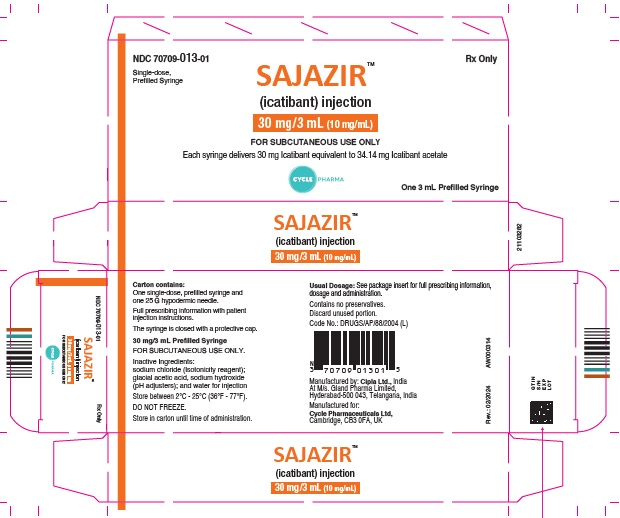
PACKAGE LABEL.PRINCIPAL DISPLAY PANEL Rx Only NDC 70709-013-01 SAJAZIR TM Icatibant Injection 30 mg/3 mL (10 mg/mL) Single-dose Prefilled Syringe One 3 mL Prefilled Syringe FOR SUBCUTANEOUS USE ONLY Manufactured by: Cipla Ltd., India At M/s. Gland Pharma Limited, India Manufactured for: Manufactured for: Cycle Pharmaceuticals Ltd, Cambridge, CB3 0FA, UK Rx Only NDC 70709-013-03 SAJAZIR TM Icatibant Injection 30 mg/3 mL (10 mg/mL) Single-dose Prefilled Syringe One 3 mL Prefilled Syringe Manufactured by: Cipla Ltd., India At M/s.
Gland Pharma Limited, India Manufactured for: Cycle Pharmaceuticals Ltd, Cambridge, CB3 0FA, UK Rx Only NDC 70709-013-01 SAJAZIR TM Icatibant Injection 30 mg/3 mL (10 mg/mL) Single-dose, Prefilled Syringe One 3 mL Prefilled Syringe FOR SUBCUTANEOUS USE ONLY Each syringe delivers 30 mg Icatibant equivalent to 34.14 mg Icatibant acetate CYCLE PHARMA Manufactured by: Cipla Ltd., India At M/s. Gland Pharma Limited, India Manufactured for: Manufactured for: Cycle Pharmaceuticals Ltd, Cambridge, CB3 0FA, UK Rx Only NDC 70709-013-03 SAJAZIR TM Icatibant Injection 30 mg/3 mL (10 mg/mL) Single-dose Prefilled Syringe One 3 mL Prefilled Syringe FOR SUBCUTANEOUS USE ONLY Each syringe delivers 30 mg Icatibant equivalent to 34.14 mg Icatibant acetate CYCLE PHARMA Manufactured by : Cipla Ltd., India At M/s.
Gland Pharma Limited, India Manufactured for: Cycle Pharmaceuticals Ltd, Cambridge, CB3 0FA, UK Rx Only NDC 70709-013-03 Single-dose, Prefilled syringe SAJAZIR TM Icatibant Injection 30 mg/3 mL (10 mg/mL) FOR SUBCUTANEOUS USE ONLY Each syringe delivers 30 mg Icatibant equivalent to 34.14 mg Icatibant acetate 3 x 3 mL Prefilled Syringes CYCLE PHARMA Carton contains: Three cartons, each with one single dose prefilled syringe and one 25 G hypodermic needle. Full prescribing information with patient injection instructions.
The syringe is closed with a protective cap. sajazir-syringe-1s-pack sajazir-syringe-3s-pack sajazir-carton-1s-pack1 sajazir-inner-carton-3s-pack1 sajazir-outer-carton-3s-pack1
Medicaid utilization & spend
Medicaid utilization by pack size
Medicare Part D spend CMS · PART D · 2026 (Q1)
About this NDC listing & data coverage
What data is (and isn’t) available for this NDC — tap to expand
| NDC identity (package / product / labeler codes) | ✓ Available |
| Labeler | ✓ Available |
| Product & package description | ✓ Available |
| Marketing category & status | ✓ Available |
| Active ingredient / dosage form / route | ✓ Available |
| FDA label (SPL via DailyMed) | ✓ Available |
| Package photos | ✓ Available |
| Inactive ingredients (structured) | ✓ Available |
| NADAC pharmacy acquisition price (CMS) | — Not published for this NDC CMS publishes NADAC only for NDCs reported in its retail-pharmacy survey. |
| Orange Book / therapeutic-equivalence data | ✓ Available |
| HCPCS J-code billing crosswalk | — Not published for this NDC Most self-administered / retail products have no J-code — that is normal. |
| Medicaid utilization (CMS SDUD) | ✓ Available |