
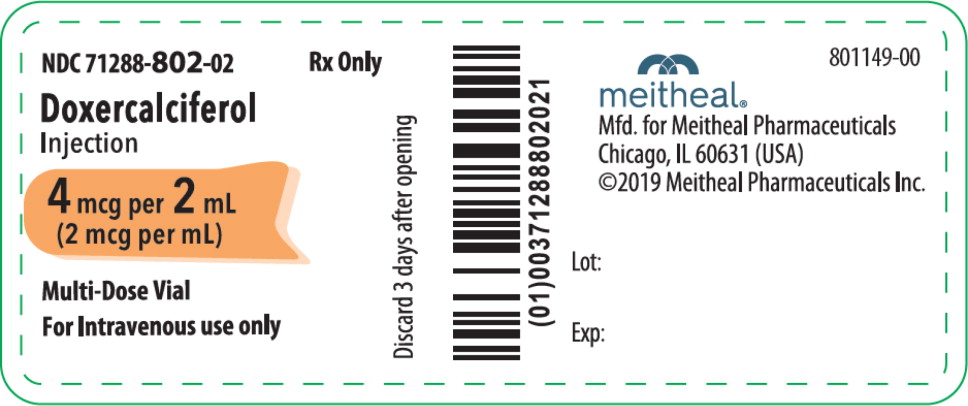
Doxercalciferol 4 ug/2mL Injection, Solution — NDC 71288-802-03 (Billing 71288-0802-03)
This is a package of Doxercalciferol 4 ug/2mL Injection, Solution from Meitheal Pharmaceuticals Inc., no longer marketed (first marketed Feb 2020), no longer in the FDA NDC Directory.
NDC database record
One package, one record: these facts belong to NDC 71288-802-03 alone.
- Record
- FDA NDC Directory package listing · Human prescription drug
- Code segments
- 71288 labeler · 802 product · 03 package
- Listing certified through
- Dec 31, 2026
- Barcode (UPC-A, from the NDC)
- 3 7128880203 8
- FDA record last changed
- Jul 24, 2026
Identity & classification
Regulatory identifiers FDA, NLM and CMS codes for this package
Drug-database identifiers Medi-Span GPI and First Databank GCN / HICL / AHFS classification
- GSN (GCN sequence number): 064864
- GCN: 16897
- GPI-14 (Medi-Span): 30905040002020
- HICL (First Databank): 020533
- AHFS class code: 88:16.00.00
- RxCUI (RxNorm): 282609
Where does this data come from?
- FDA openFDA NDC Directory · synced Oct 1, 2026
- FDA label on DailyMed · label index refreshed Oct 5, 2026
- RxNorm (NLM RxNav) · catalog refreshed Oct 1, 2026
- Medi-Span GPI (licensed)
- First Databank (licensed) · refreshed Oct 1, 2026
RxNorm drug class
This medicine belongs to the Vitamin D2 Analog class.
Where does this data come from?
- RxClass (NLM) · catalog refreshed Oct 1, 2026
Clinical
Doxercalciferol injection is used to treat secondary hyperparathyroidism (a condition in which the body produces too much parathyroid hormone [PTH; a natural substance needed to control the amount of calcium in the blood] in people receiving dialysis (medical treatment to clean the blood when the kidneys are not working properly). Doxercalciferol injection is in a class of medications called vitamin D analogs. It works by helping the body to use more of the calcium found in foods or supplements and regulating the body's production of parathyroid hormone.
Read the full MedlinePlus article ↗- It treats secondary hyperparathyroidism in adults with chronic kidney disease on dialysis. That means your parathyroid glands are making too much PTH. This medicine helps bring it...
- A healthcare professional gives it into a vein at the end of your dialysis session, usually three times a week. Your team checks your calcium, phosphorus and PTH regularly and adju...
- Common ones include headache, feeling unwell, swelling, nausea, vomiting, dizziness, itching and shortness of breath. Mention anything that bothers you or gets worse.
- Call about tiredness, trouble thinking, poor appetite, nausea, vomiting, constipation, extra thirst or urination, or weight loss, which can signal high calcium. Swelling of the fac...
Patient education
Supplement & herbal interactions
Some supplements/herbs that may interact with Doxercalciferol — tap one for details:
Where does this data come from?
- MedlinePlus (NLM) · refreshed Oct 1, 2026
- FDA label on DailyMed · label index refreshed Oct 5, 2026
Ask a licensed pharmacist directly — free, answered by our team.
Pricing
A drug doesn't have one price. Each row is a different public payment system, and none is what you'd pay at the counter — that depends on your insurance. The ⓘ on each row explains what it measures.
| Price system | Per mL | Per package |
|---|---|---|
| Retail pharmacies payNADAC · weekly | Not in the retail survey — common for institutional, discontinued, or low-volume packs. | |
| Medicaid paysCMS SDUD · 12 mo | No recent Medicaid claims on file for this NDC — rare and low-volume NDCs are suppressed in the public data. | |
| Medicare drug plans payPart D · quarterly | No Part D plan price is available for this NDC in our data. | |
| Medicare Part B allowsASP · J1270 | $0.325 / J1270 unit | — |
Where does this data come from?
- CMS NADAC weekly file
- CMS ASP pricing files · refreshed Sep 20, 2026
- CMS Medicaid State Drug Utilization Data · refreshed Oct 5, 2026
- CMS Part D plan pricing files · refreshed Sep 24, 2026
- VA National Acquisition Center price file
Billing & reimbursement
Where does this data come from?
- CMS ASP NDC-HCPCS crosswalk · refreshed Sep 22, 2026
- DMEPDAC NDC-HCPCS crosswalk
- openFDA NSDE billing units · refreshed Sep 7, 2026
Packaging — all sizes for this product
| Package NDC | Description | Marketing start | Marketing end | Status |
|---|---|---|---|---|
| 71288-0802-03 You're viewing this | 50 VIAL, MULTI-DOSE in 1 CARTON / 2 mL in 1 VIAL, MULTI-DOSE | 2020-02-11 | — | Discontinued by firm |
| 71288-0802-04 71288-802-04 Main listing | 25 VIAL, MULTI-DOSE in 1 CARTON / 2 mL in 1 VIAL, MULTI-DOSE | 2022-02-09 | — | Active |
This pack accounts for about 3.0% of this product's recent Medicaid fills; most go to a different pack size. See all packs ↓
Pack size FAQ
What quantity is in this package?
What NDC number is used to bill for this package of Doxercalciferol 4 ug/2mL Injection, Solution?
Therapeutic equivalents
| Product | Labeler | Pack | NADAC/unit | TE | Status | Price vs. this |
|---|---|---|---|---|---|---|
| Doxercalciferol 4 ug/2mL 43598-0850-50 | Dr.Reddy's | 50 vials | — | AP | FDA listed | — |
| Doxercalciferol 4 ug/2mL 55150-0359-50 | Eugia | 1 vial | — | — | FDA listed | — |
| Doxercalciferol 4 ug/2mL 62332-0690-30 | Alembic | 50 vials | — | AP | FDA listed | — |
| Doxercalciferol 4 ug/2mL 68083-0359-50 | Gland | 50 vials | — | AP | FDA listed | — |
| Doxercalciferol 4 ug/2mLthis 71288-0802-03 | Meitheal | 50 vials | — | AP | Discontinued | — |
| Doxercalciferol 4 ug/2mL 68083-0300-50 | Gland | 50 vials | — | AP | FDA listed | — |
| Doxercalciferol 4 ug/2mL 55150-0358-50 | Eugia | 1 vial | — | — | FDA listed | — |
Where does this data come from?
- FDA openFDA NDC Directory · synced Oct 1, 2026
- FDA Orange Book · refreshed Oct 3, 2026
- CMS NADAC weekly file
Availability & generic status
This product is an FDA-approved generic. Other versions of the same drug are listed under Therapeutic equivalents, least expensive first.
Where does this data come from?
- FDA Orange Book · refreshed Oct 3, 2026
Inactive Ingredients / Excipients
Inactive ingredients, also called excipients, are components of the drug product other than the active ingredient. They may include fillers, dyes, coatings, preservatives, flavors, or other formulation ingredients.
💡 Tap an ingredient (hover on desktop) to see what it is and why it’s used.
-
UNII 3K9958V90M
A liquid solvent derived from fermentation or chemical synthesis. In medicines, alcohol dissolves active ingredients, helps preserve the product, and improves how the body absorbs certain drugs.
-
UNII 1P9D0Z171K
BHT is a synthetic antioxidant that prevents fats and oils in medicines from breaking down and becoming rancid. It helps keep the product stable and effective during storage.
-
UNII 7FLD91C86K
Edetate disodium is a chemical compound that binds and removes certain metal ions. In medicines, it acts as a preservative and stabilizer by preventing metals like calcium from interfering with the product's shelf life and consistency.
-
UNII 7T1F30V5YH
A synthetic emulsifier derived from sorbitol and oleic acid. It helps mix oil and water-based ingredients together and keeps them from separating in liquid formulations.
-
UNII 451W47IQ8X
Sodium chloride is common table salt. It's used in medicines as a buffer to maintain proper pH, as a filler to add bulk, or to adjust the osmotic balance in liquid formulations.
-
UNII 22ADO53M6F
A mineral salt derived from phosphoric acid, used as a buffer to maintain the pH balance of the medication and help stabilize the active ingredients.
-
UNII 593YOG76RN
A salt made from sodium and phosphate that helps regulate acidity and maintain proper pH balance in the medicine. It also acts as a buffer to keep the product stable.
7 inactive ingredients listed in the exact product block matched to this NDC.
Where does this data come from?
ingredient classCode="IACT" elements from the exact product block matched by this NDC. Label-section narrative from DailyMed / the openFDA label index is shown separately when available.- FDA label on DailyMed · label index refreshed Oct 5, 2026
- FDA openFDA NDC Directory · synced Oct 1, 2026
Inactive ingredient FAQ
Are inactive ingredients the same for every manufacturer?
Why might an inactive ingredient be missing?
Can inactive ingredients matter?
Manufacturer & labeler
More NDCs from Meitheal Pharmaceuticals Inc. labeler code 71288
- Ropivacaine Hydrochloride 5 mg/mL Injection, Solution NDC 71288-735-31
- Ropivacaine Hydrochloride 7.5 mg/mL Injection, Solution NDC 71288-736-21
- Ropivacaine Hydrochloride 10 mg/mL Injection, Solution NDC 71288-737-11
- Ropivacaine Hydrochloride 10 mg/mL Injection, Solution NDC 71288-738-21
- Vecuronium Bromide 10 mg/10mL Injection, Powder, Lyophilized, For Solution NDC 71288-744-11
- Vecuronium Bromide 20 mg/20mL Injection, Powder, Lyophilized, For Solution NDC 71288-745-21
- Mycophenolate Mofetil 500 mg/20mL Injection, Powder, Lyophilized, For Solution NDC 71288-803-21
- Isosulfan Blue 10 mg/mL Injection, Solution NDC 71288-805-06
- Zoledronic Acid 5 mg/100mL Injection, Solution NDC 71288-806-51
- PHENYLEPHRINE HYDROCHLORIDE 10 mg/mL Injection NDC 71288-807-02
- PHENYLEPHRINE HYDROCHLORIDE 10 mg/mL Injection NDC 71288-808-76
- Methylene Blue 5 mg/mL Injection NDC 71288-811-11
Where does this data come from?
- FDA openFDA NDC Directory · synced Oct 1, 2026
- Drugs@FDA
Full prescribing information FDA SPL
🎯 Indications and Usage ▾
1 INDICATIONS AND USAGE Doxercalciferol Injection is indicated for the treatment of secondary hyperparathyroidism in adult patients with CKD on dialysis. Doxercalciferol Injection is a synthetic vitamin D 2 analog: Doxercalciferol Injection is indicated for the treatment of secondary hyperparathyroidism in adult patients with CKD on dialysis. ( 1 )
⏱️ Dosage and Administration ▾
2 DOSAGE AND ADMINISTRATION Before initiating treatment, ensure serum calcium is not above the upper limit of normal. ( 2.1 ) Dosage for doxercalciferol injection in patients with CKD on dialysis : Initiate dosing at 4 mcg by bolus intravenous administration three times weekly at the end of dialysis (no more frequently than every other day). Maximum dose is 18 mcg weekly.
( 2.4 ) Target the maintenance dose of doxercalciferol injection to intact parathyroid hormone (PTH) levels within the desired therapeutic range and serum calcium within normal limits. ( 2 ) See Full Prescribing Information for dose titration, laboratory monitoring, and important administration instructions. ( 2 )
2.1Prior to Initiation of Doxercalciferol Injection Ensure serum calcium is not above the upper limit of normal before initiating treatment with doxercalciferol injection [see Warnings and Precautions ( 5.1 )].
2.4Important Administration Instructions for Doxercalciferol Injection Administer doxercalciferol injection intravenously as a bolus dose at the end of dialysis. Inspect doxercalciferol injection visually prior to administration; the solution should appear clear and colorless. Do not use if the solution is not clear or particles are present.
After initial vial use, store opened multi-dose vial for up to 3 days at 2°C to 8°C (36°F to 46°F). Discard unused portion of multi-dose vial after 3 days [see How Supplied/Storage and Handling ( 16 )].
2.5Dosage Recommendations for Doxercalciferol Injection in Patients with CKD on Dialysis Initiate doxercalciferol injection at a dose of 4 mcg given by bolus intravenous administration three times weekly at the end of dialysis (no more frequently than every other day). Target the maintenance dose of doxercalciferol to intact parathyroid hormone (PTH) levels within the desired therapeutic range and serum calcium within normal limits. Monitor serum calcium, phosphorus, and intact PTH levels weekly after initiation of therapy or dose adjustment.
Titrate the dose of doxercalciferol injection based on intact PTH. The dose may be increased at 8-week intervals by 1 mcg to 2 mcg if intact PTH is not lowered by 50% and fails to reach the target range. The maximum dose is 18 mcg weekly.
Prior to raising the dose, ensure serum calcium is within normal limits. Suspend or decrease the dose if intact PTH is persistently and abnormally low to reduce the risk of adynamic bone disease [see Warnings and Precautions ( 5.4 )] or if serum calcium is consistently above the normal range to reduce the risk of hypercalcemia [see Warnings and Precautions ( 5.1 )]. If suspended, the drug should be restarted one week later at a dose that is at least 1 mcg lower.
2.6Drug Interactions that May Require Dosage Adjustments of Doxercalciferol Injection Increased monitoring of serum calcium and dose adjustment of doxercalciferol may be necessary when given concomitantly with drugs that may increase the risk of hypercalcemia [see Drug Interactions ( 7 )]. Increased monitoring of both serum calcium and intact PTH as well as dose adjustment of doxercalciferol may be necessary when given concomitantly with cytochrome P450 inhibitors or enzyme inducers [see Drug Interactions ( 7 )].
💊 Dosage Forms and Strengths ▾
3 DOSAGE FORMS AND STRENGTHS Injection: clear and colorless solution available as follows: 4 mcg per 2 mL (2 mcg per mL) multi-dose vial Injection: ( 3 ) 4 mcg per 2 mL (2 mcg per mL) multi-dose vial
⛔ Contraindications ▾
4 CONTRAINDICATIONS Doxercalciferol is contraindicated in patients with: Hypercalcemia [see Warnings and Precautions ( 5.1 )] Vitamin D toxicity [see Warnings and Precautions ( 5.1 )] Known hypersensitivity to doxercalciferol or any of the inactive ingredients of doxercalciferol injection; serious hypersensitivity reactions including anaphylaxis and angioedema have been reported [see Warnings and Precautions ( 5.3 ), Adverse Reactions ( 6.2 )]. Hypercalcemia ( 4 ) Vitamin D toxicity ( 4 ) Know hypersensitivity to doxercalciferol or any of the inactive ingredients of doxercalciferol injection ( 4 )
⚠️ Warnings and Cautions ▾
5 WARNINGS AND PRECAUTIONS Hypercalcemia : Can occur during treatment with doxercalciferol and can lead to cardiac arrhythmias and seizures. Severe hypercalcemia may require emergency attention. Risk may be increased when used concomitantly with high dose calcium preparations, thiazide diuretics, or vitamin D compounds.
Monitor serum calcium prior to initiation and during treatment and adjust dose accordingly. ( 2 , 5.1 ) Digitalis Toxicity : Hypercalcemia increases the risk of digitalis toxicity. In patients using digitalis compounds, monitor serum calcium and patients for signs and symptoms of digitalis toxicity.
Increase frequency of monitoring when initiating or adjusting the dose of doxercalciferol. ( 5.2 ) Serious Hypersensitivity Reactions : Anaphylaxis, with symptoms of angioedema, hypotension, unresponsiveness, chest discomfort, shortness of breath, and cardiopulmonary arrest, has been reported in hemodialysis patients after administration of doxercalciferol. Monitor patients upon treatment initiation for hypersensitivity reactions.
Should a reaction occur, discontinue and treat. ( 5.3 ) Adynamic Bone Disease : May develop and increase risk of fractures if intact PTH levels are suppressed to abnormally low levels. Monitor intact PTH levels to avoid oversuppression and adjust dose if needed.
( 5.4 )
5.1Hypercalcemia Hypercalcemia may occur during doxercalciferol treatment. Acute hypercalcemia may increase the risk of cardiac arrhythmias and seizures and may potentiate the effect of digitalis on the heart [see Warnings and Precautions ( 5.2 )] . Chronic hypercalcemia can lead to generalized vascular calcification and other soft-tissue calcification.
Severe hypercalcemia may require emergency attention. Hypercalcemia may be exacerbated by concomitant administration of high doses of calcium-containing preparations, thiazide diuretics, or other vitamin D compounds [see Drug Interactions ( 7 )]. In addition, high intake of calcium and phosphate concomitantly with vitamin D compounds may lead to hypercalciuria and hyperphosphatemia.
Patients with a history of hypercalcemia prior to initiating therapy may be at increased risk for development of hypercalcemia with doxercalciferol. In these circumstances, frequent serum calcium monitoring and doxercalciferol dose adjustments may be required. When initiating doxercalciferol or adjusting doxercalciferol dose, measure serum calcium frequently (weekly in patients with CKD on dialysis or every 2 weeks for patients with stage 3 or 4 CKD).
Once a maintenance dose has been established, measure serum calcium monthly for 3 months and then every 3 months. If hypercalcemia occurs, reduce the dose or discontinue doxercalciferol until serum calcium is normal [see Dosage and Administration ( 2 )] . Inform patients about the symptoms of elevated calcium (feeling tired, difficulty thinking clearly, loss of appetite, nausea, vomiting, constipation, increased thirst, increased urination and weight loss) and instruct them to report new or worsening symptoms when they occur.
5.2Digitalis Toxicity Doxercalciferol can cause hypercalcemia [see Warnings and Precautions ( 5.1 )] which increases the risk of digitalis toxicity. In patients using doxercalciferol concomitantly with digitalis compounds, monitor both serum calcium and patients for signs and symptoms of digitalis toxicity. Increase the frequency of monitoring when initiating or adjusting the dose of doxercalciferol [see Drug Interactions ( 7 )].
5.3Serious Hypersensitivity Reactions Serious hypersensitivity reactions, including fatal outcome, have been reported post marketing in patients on hemodialysis following administration of doxercalciferol injection. Hypersensitivity reactions include anaphylaxis with symptoms of angioedema (involving face, lips, tongue and airways), hypotension, unresponsiveness, chest discomfort, shortness of breath, and cardiopulmonary arrest. These reactions may occur separately or together.
Monitor patients rece… [Excerpted — this section continues on DailyMed.]
🤒 Adverse Reactions ▾
6 ADVERSE REACTIONS The following adverse reactions are discussed in greater detail in another section of the label: Hypercalcemia [see Warnings and Precautions ( 5.1 )] Serious Hypersensitivity Reactions [see Warnings and Precautions ( 5.3 )] Adynamic Bone Disease [see Warnings and Precautions ( 5.4 )] The most common adverse reactions in patients with Stage 3 or 4 CKD (incidence >5%) were infection, urinary tract infection, chest pain, angina pectoris, constipation, dyspepsia, anemia, leucopenia, dehydration, edema, depression, hypertonia, insomnia, asthenia, paresthesia, cough increased, dyspnea, pruritus, sinusitis, and rhinitis.
( 6.1 ) The most common adverse reactions in patients with CKD on dialysis (incidence >5%) were headache, malaise, edema, nausea/vomiting, dyspnea, dizziness, pruritus, and bradycardia. ( 6.1 ) To report SUSPECTED ADVERSE REACTIONS, contact Meitheal Pharmaceuticals Inc. at 1-844-824-8426 or FDA at 1-800-FDA-1088 or www.fda.gov/medwatch.
6.1Clinical Trials Experience Because clinical trials are conducted under widely varying conditions, adverse reaction rates observed in the clinical trials of a drug cannot be directly compared to rates in the clinical trials of another drug and may not reflect the rates observed in practice. Doxercalciferol Capsules Adverse reactions in patients with stage 3 or 4 CKD Doxercalciferol capsules have been evaluated in two placebo-controlled, double-blind 24 week studies in patients with Stage 3 or 4 CKD. Patients were treated with doxercalciferol capsules (n=27) or placebo (n=28) [see Clinical Studies ( 14.1 )] .
Adverse reactions occurring in the doxercalciferol capsules group at a frequency of 5% or greater and more frequently than in the placebo group are presented in Table 1 . Table 1: Adverse Reactions Occurring in ≥5% Doxercalciferol Capsule-Treated Patients with CKD on Predialysis and Greater than Placebo in Two Double-Blind Clinical Studies * Pooled data on adverse reactions from clinical study reports (Studies BCI-CH-115 and BCI-CH-119). Adverse Reaction* Doxercalciferol (n=27) % Placebo (n=28) % Infection/bacterial infection/viral infection 30 25 Constipation 26 11 Rhinitis 22 11 Anemia 19 4 Cough 19 4 Dyspnea 19 11 Paresthesia 15 11 Asthenia 15 11 Insomnia 15 4 Hypertonia 11 4 Angina pectoris 8 0 Dehydration 7 4 Depression 7 0 Dyspepsia 7 4 Edema 7 4 Urinary tract infection 7 4 Leukopenia 7 0 Chest pain 7 4 Pruritus 7 4 Sinusitis 7 4 Adverse reactions in patients with CKD on dialysis Doxercalciferol capsules have been evaluated in two placebo-controlled, double-blind studies in patients with CKD on hemodialysis.
Patients were treated with doxercalciferol capsules (n=61) or placebo (n=61) [see Clinical Studies ( 14.2 )] . After randomization to two groups, eligible patients underwent an 8-week washout period during which no vitamin D derivatives were administered to either group. Subsequently, all patients received doxercalciferol capsules in an open-label fashion for 16 weeks followed by a double-blind period of 8 weeks during which patients received either doxercalciferol capsules or placebo.
Adverse reactions occurring in the doxercalciferol capsule groups at a frequency of 2% or greater, and more frequently than in the placebo group are presented in Table 2 . Table 2: Adverse Reactions Occurring in ≥2% Doxercalciferol Capsule-Treated Patients with CKD on Dialysis and Greater than Placebo in Two Double-Blind Clinical Studies * A patient who reported the same medical term more than once was counted only once for that medical term. Adverse Reaction* Doxercalciferol (n=61) % Placebo (n=61) % Edema 34 21 Malaise 28 20 Headache 28 18 Nausea/Vomiting 21 20 Dizziness 12 10 Dyspnea 12 7 Pruritus 8 7 Bradycardia 7 5 Anorexia 5 3 Dyspepsia 5 2 Arthralgia 5 0 Weight increase 5 0 Abscess 3 0 Sleep disorder 3 0 Doxercalciferol Injection Adverse reactions in patients with CKD on hemodialysis Doxercalciferol injection has been studied in 70 patients with CKD on hemodia… [Excerpted — this section continues on DailyMed.]
🔄 Drug Interactions ▾
7 DRUG INTERACTIONS Tables 3 and 4 include clinically significant drug interactions with doxercalciferol. Table 3: Clinically Significant Drug Interactions with Doxercalciferol Injection and Doxercalciferol Capsules Drugs that May Increase the Risk of Hypercalcemia Clinical Impact Concomitant administration of high doses of calcium-containing preparations or other vitamin D compounds may increase the risk of hypercalcemia. Thiazide diuretics are known to induce hypercalcemia by reducing excretion of calcium in the urine.
Examples Calcium-containing products, other vitamin D compounds or thiazide diuretics Intervention Monitor serum calcium concentrations more frequently and adjust doxercalciferol dose as needed [see Warnings and Precautions ( 5.1 )]. Digitalis Compounds Clinical Impact Doxercalciferol can cause hypercalcemia which can potentiate the risk of digitalis toxicity. Intervention Monitor patients for signs and symptoms of digitalis toxicity and increase frequency of serum calcium monitoring when initiating or adjusting the dose of doxercalciferol in patients receiving digitalis compounds [see Warnings and Precautions ( 5.2 )].
Cytochrome P450 Inhibitors Clinical Impact Doxercalciferol is activated by CYP 27 in the liver. Cytochrome P450 inhibitors may inhibit the 25-hydroxylation of doxercalciferol and thus reduce the formation of active doxercalciferol moiety [see Clinical Pharmacology ( 12.3 )]. Examples Ketoconazole and erythromycin Intervention If a patient initiates or discontinues therapy with a cytochrome P450 inhibitor, dose adjustment of doxercalciferol may be necessary.
Monitor intact PTH and serum calcium concentrations closely. Enzyme Inducers Clinical Impact Doxercalciferol is activated by CYP 27 in the liver. Enzyme inducers may affect the 25-hydroxylation of doxercalciferol [see Clinical Pharmacology ( 12.3 )].
Examples Glutethimide and phenobarbital Intervention If a patient initiates or discontinues therapy with an enzyme inducer, dose adjustment of doxercalciferol may be necessary. Monitor intact PTH and serum calcium concentrations closely. Magnesium-containing Products Clinical Impact Concomitant administration of doxercalciferol and high doses of magnesium-containing products may increase the risk of hypermagnesemia.
Examples Magnesium-containing products such as antacids Intervention Avoid use of magnesium-containing products and doxercalciferol in patients on chronic renal dialysis. Table 4: Clinically Significant Drug Interactions with Doxercalciferol Capsules Cholestyramine Clinical Impact Cholestyramine has been reported to reduce intestinal absorption of fat-soluble vitamins. Therefore, it may impair intestinal absorption of doxercalciferol capsules.
Intervention Administer doxercalciferol capsules at least 1 hour before or 4 to 6 hours after taking cholestyramine. Mineral Oil or other Substances that May Affect Absorption of Fat Clinical Impact The use of mineral oil or other substances that may affect absorption of fat may influence the absorption and availability of doxercalciferol. Intervention Administer doxercalciferol capsules at least 1 hour before or 4 to 6 hours after taking mineral oil or other substances that may affect absorption of fat.
Cytochrome P450 inhibitors : Formation of the active doxercalciferol moiety may be hindered and may necessitate dosage adjustment. Monitor intact PTH and serum calcium concentrations closely. ( 7 ) Enzyme inducers : Formation of the active doxercalciferol moiety may be affected and may necessitate dosage adjustment.
Monitor intact PTH and serum calcium concentrations closely. ( 7 ) Magnesium-containing products : Combined use may cause hypermagnesemia. Monitor serum magnesium concentrations more frequently and adjust dose as needed.
( 7 ) Cholestyramine : May impair absorption of doxercalciferol capsules. Administer doxercalciferol capsules at least 1 hour before or 4 to 6 hours after taking cholestyramine. ( 7 ) Mineral oil or other substances… [Excerpted — this section continues on DailyMed.]
👥 Use in Specific Populations ▾
8 USE IN SPECIFIC POPULATIONS
8.1Pregnancy Risk Summary The limited available data with doxercalciferol in pregnant women are insufficient to identify a drug-associated risk for major birth defects, miscarriage or adverse maternal or fetal outcomes. There are risks to the mother and fetus associated with chronic kidney disease in pregnancy [see Clinical Considerations ] . In reproduction studies in rats and rabbits administered doxercalciferol during organogenesis at up to 20 mcg/kg/day and 0.1 mcg/kg/day, respectively (approximately 25 times (rats) and less than (rabbits) the maximum recommended human oral dose of 60 mcg/week based on mcg/m 2 body surface area), no adverse developmental effects were observed [see Data ] .
The estimated background risk of major birth defects and miscarriage for the indicated population is unknown. In the U.S. general population, the estimated background risk of major birth defects and miscarriage in clinically recognized pregnancies is 2%-4% and 15%-20%, respectively. Clinical Considerations Disease-associated maternal and/or embryo/fetal risk Chronic kidney disease in pregnancy increases the risk for maternal hypertension and preeclampsia, miscarriage, preterm delivery polyhydramnios, stillbirth, and low-birth-weight infants.
Data Animal data There were no adverse effects on fetal development when doxercalciferol was administered at doses up to 20 mcg/kg/day in pregnant rats or doses up to 0.1 mcg/kg/day in pregnant rabbits during the period of organogenesis.
8.2Lactation Risk Summary There is no information available on the presence of doxercalciferol in human milk, the effects of the drug on the breastfed infant, or the effects of the drug on milk production. Infants exposed to doxercalciferol through breast milk should be monitored for signs and symptoms of hypercalcemia [see Clinical Considerations ] . The developmental and health benefits of breastfeeding should be considered along with the mother's clinical need for doxercalciferol and any potential adverse effects on the breastfed child from doxercalciferol or from the underlying maternal condition.
Clinical Considerations Infants exposed to Doxercalciferol Injection through breast milk should be monitored for signs and symptoms of hypercalcemia, including seizures, vomiting, constipation and weight loss. Monitoring of serum calcium in the infant should be considered.
8.4Pediatric Use Safety and efficacy of doxercalciferol in pediatric patients have not been established.
8.5Geriatric Use Clinical studies of doxercalciferol did not include sufficient numbers of patients 65 years or over to determine whether they respond differently from younger subjects. In general, dose selection for an elderly patient should be cautious, usually starting at the low end of the dosing range, reflecting the greater frequency of decreased hepatic or cardiac function, and of concomitant disease or other drug therapy.
8.6Hepatic Impairment Patients with hepatic impairment may not metabolize doxercalciferol appropriately. More frequent monitoring of intact PTH, calcium, and phosphorus levels should be done in patients with hepatic impairment.
🤰 Pregnancy ▾
8.1Pregnancy Risk Summary The limited available data with doxercalciferol in pregnant women are insufficient to identify a drug-associated risk for major birth defects, miscarriage or adverse maternal or fetal outcomes. There are risks to the mother and fetus associated with chronic kidney disease in pregnancy [see Clinical Considerations ] . In reproduction studies in rats and rabbits administered doxercalciferol during organogenesis at up to 20 mcg/kg/day and 0.1 mcg/kg/day, respectively (approximately 25 times (rats) and less than (rabbits) the maximum recommended human oral dose of 60 mcg/week based on mcg/m 2 body surface area), no adverse developmental effects were observed [see Data ] .
The estimated background risk of major birth defects and miscarriage for the indicated population is unknown. In the U.S. general population, the estimated background risk of major birth defects and miscarriage in clinically recognized pregnancies is 2%-4% and 15%-20%, respectively. Clinical Considerations Disease-associated maternal and/or embryo/fetal risk Chronic kidney disease in pregnancy increases the risk for maternal hypertension and preeclampsia, miscarriage, preterm delivery polyhydramnios, stillbirth, and low-birth-weight infants.
Data Animal data There were no adverse effects on fetal development when doxercalciferol was administered at doses up to 20 mcg/kg/day in pregnant rats or doses up to 0.1 mcg/kg/day in pregnant rabbits during the period of organogenesis.
🧒 Pediatric Use ▾
8.4Pediatric Use Safety and efficacy of doxercalciferol in pediatric patients have not been established.
🧓 Geriatric Use ▾
8.5Geriatric Use Clinical studies of doxercalciferol did not include sufficient numbers of patients 65 years or over to determine whether they respond differently from younger subjects. In general, dose selection for an elderly patient should be cautious, usually starting at the low end of the dosing range, reflecting the greater frequency of decreased hepatic or cardiac function, and of concomitant disease or other drug therapy.
🆘 Overdosage ▾
10 OVERDOSAGE Overdosage of doxercalciferol may lead to hypercalcemia, hypercalciuria, and hyperphosphatemia [see Warnings and Precautions ( 5.1 )] . The treatment of acute overdosage should consist of supportive measures and discontinuation of doxercalciferol administration. Serum calcium levels should be measured until normal.
Based on similarities between doxercalciferol and its active metabolite, 1α,25-(OH) 2 D 2 , it is expected that doxercalciferol is not removed from the blood by dialysis.
🧬 Clinical Pharmacology ▾
12 CLINICAL PHARMACOLOGY
12.1Mechanism of Action Doxercalciferol is a synthetic vitamin D 2 analog that requires metabolic activation to form the active 1α,25-(OH) 2 D 2 metabolite, which binds to the vitamin D receptor (VDR) to result in the selective activation of vitamin D responsive pathways. Vitamin D and doxercalciferol have been shown to reduce PTH levels by inhibiting PTH synthesis and secretion.
12.3Pharmacokinetics Absorption In healthy volunteers, peak blood levels of 1α,25-(OH) 2 D 2 , the major metabolite of doxercalciferol, are attained at 8 hours after a single intravenous dose of doxercalciferol and at 11 to 12 hours following capsule doses. Elimination The mean elimination half-life of 1α,25-(OH) 2 D 2 after an oral dose is approximately 32 to 37 hours with a range of up to 96 hours. Metabolism Doxercalciferol is activated by CYP 27 in the liver to form 1α,25-(OH) 2 D 2 (major metabolite) and 1α,24-dihydroxyvitamin D 2 (minor metabolite).
Activation of doxercalciferol does not require the involvement of the kidneys. Specific Populations Patients with renal impairment The mean elimination half-life of 1α,25-(OH) 2 D 2 in patients with end-stage renal disease (ESRD) and in healthy volunteers appears to be similar following an oral dose. Hemodialysis causes a temporary increase in 1α,25-(OH) 2 D 2 mean concentrations, presumably due to volume contraction.
1α,25-(OH) 2 D 2 is not removed from blood during hemodialysis.
🧬 Mechanism of Action ▾
12.1Mechanism of Action Doxercalciferol is a synthetic vitamin D 2 analog that requires metabolic activation to form the active 1α,25-(OH) 2 D 2 metabolite, which binds to the vitamin D receptor (VDR) to result in the selective activation of vitamin D responsive pathways. Vitamin D and doxercalciferol have been shown to reduce PTH levels by inhibiting PTH synthesis and secretion.
📦 How Supplied / Storage and Handling ▾
16 HOW SUPPLIED/STORAGE AND HANDLING How Supplied Doxercalciferol Injection is a clear, colorless solution supplied in 2 mL amber glass multi-dose vials. Each vial includes an aluminum seal and an orange plastic flip-off cap, and is supplied as follows: NDC Doxercalciferol Injection (2 mcg per mL) Package Factor 71288- 802 -04 4 mcg per 2 mL Multi-Dose Vial 25 vials per carton Storage and Handling Store at 20° to 25°C (68° to 77°F); excursions permitted between 15° and 30°C (59° and 86°F). [See USP Controlled Room Temperature.] Store unopened vial in original carton.
Opened vials : Store for up to 3 days at 2° to 8°C (36° to 46°F). Discard unused portion after 3 days. Protect from light.
Sterile, Nonpyrogenic. The container closure is not made with natural rubber latex.
📦 Storage and Handling ▾
Storage and Handling Store at 20° to 25°C (68° to 77°F); excursions permitted between 15° and 30°C (59° and 86°F). [See USP Controlled Room Temperature.] Store unopened vial in original carton. Opened vials : Store for up to 3 days at 2° to 8°C (36° to 46°F). Discard unused portion after 3 days. Protect from light. Sterile, Nonpyrogenic. The container closure is not made with natural rubber latex.
📋 Description ▾
11 DESCRIPTION Doxercalciferol Injection contains doxercalciferol, which is a synthetic vitamin D 2 analog. Doxercalciferol undergoes metabolic activation in vivo to form 1α,25-dihydroxyvitamin D 2 (1α,25-(OH) 2 D 2 ), a naturally occurring, biologically active form of vitamin D 2 . Doxercalciferol is a colorless crystalline compound with a calculated molecular weight of 412.65 and a molecular formula of C 28 H 44 O 2 .
It is soluble in oils and organic solvents, but is relatively insoluble in water. Chemically, doxercalciferol is (1α,3β,5Z,7E,22E)-9,10-secoergosta-5,7,10(19),22-tetraene-1,3-diol. The structural formula is: Doxercalciferol Injection 2 mL multi-dose vials contain 4 mcg per 2 mL (2 mcg per mL) of doxercalciferol.
Each milliliter (mL) of solution contains 2 mcg doxercalciferol and the following inactive ingredients: butylated hydroxytoluene, 20 mcg; edetate disodium, 1.1 mg; dehydrated alcohol, 59.25 mg; polysorbate 20, 10 mg; sodium chloride, 1.5 mg; disodium hydrogen phosphate, anhydrous, 7.63 mg; and monosodium phosphate monohydrate, 1.8 mg. Structural Formula
💬 Information for Patients ▾
17 PATIENT COUNSELING INFORMATION Hypercalcemia Advise patients to contact a health care provider if they develop symptoms of elevated calcium (e.g. feeling tired, difficulty thinking clearly, loss of appetite, nausea, vomiting, constipation, increased thirst, increased urination and weight loss) [see Warnings and Precautions ( 5.1 )] . Hypersensitivity Inform patients that hypersensitivity reactions can occur with doxercalciferol [see Warnings and Precautions ( 5.3 )] . Monitoring Inform patients that they will need routine monitoring of laboratory parameters such as calcium and intact PTH while receiving doxercalciferol.
Inform patients that more frequent monitoring is necessary during the initiation of therapy, following dose changes or when potentially interacting medications are started or discontinued [see Dosage and Administration ( 2 ), Drug Interactions ( 7 )] . Drug Interactions Advise patients to inform their physician of all medications, including prescription and nonprescription drugs, and supplements they are taking. Advise patients to also inform their physician that they are receiving doxercalciferol if a new medication is prescribed [see Drug Interactions ( 7 )] . meitheal ® Mfd. for Meitheal Pharmaceuticals Chicago, IL 60631 (USA) ©2024 Meitheal Pharmaceuticals Inc.
Revised: July 2024 8C5ABU9-02
🧬 Pharmacokinetics ▾
12.3Pharmacokinetics Absorption In healthy volunteers, peak blood levels of 1α,25-(OH) 2 D 2 , the major metabolite of doxercalciferol, are attained at 8 hours after a single intravenous dose of doxercalciferol and at 11 to 12 hours following capsule doses. Elimination The mean elimination half-life of 1α,25-(OH) 2 D 2 after an oral dose is approximately 32 to 37 hours with a range of up to 96 hours. Metabolism Doxercalciferol is activated by CYP 27 in the liver to form 1α,25-(OH) 2 D 2 (major metabolite) and 1α,24-dihydroxyvitamin D 2 (minor metabolite).
Activation of doxercalciferol does not require the involvement of the kidneys. Specific Populations Patients with renal impairment The mean elimination half-life of 1α,25-(OH) 2 D 2 in patients with end-stage renal disease (ESRD) and in healthy volunteers appears to be similar following an oral dose. Hemodialysis causes a temporary increase in 1α,25-(OH) 2 D 2 mean concentrations, presumably due to volume contraction.
1α,25-(OH) 2 D 2 is not removed from blood during hemodialysis.
🔬 Clinical Studies ▾
14 CLINICAL STUDIES
14.1Clinical Studies of Doxercalciferol Capsules in Patients with Stage 3 or 4 CKD The safety and effectiveness of doxercalciferol capsules were evaluated in two clinical studies in 55 patients with Stage 3 or 4 CKD. Eighty-two percent of the patients were male, the average age was 65 years, 51% were Caucasian, 40% African-American, and the average serum intact PTH level at baseline was 195 pg/mL. While levels of 25-(OH) vitamin D were not evaluated at baseline, retrospective assessments of stored serum revealed that the mean ± SD serum 25-(OH) vitamin D was 19 ± 8 ng/mL (range: <5 to 54 ng/mL) in the study population.
After randomization to two groups, eligible patients underwent an 8-week washout period during which no vitamin D derivatives were administered to either group. Subsequently, one group received doxercalciferol capsules and the other placebo during the double-blind period of 24 weeks. The initial dose of doxercalciferol capsules was 1 mcg per day.
The dosage of doxercalciferol capsules was adjusted as necessary by the investigator to reduce intact PTH levels to a target of ≥30% below postwashout baseline. The maximum dosage was limited to 3.5 mcg per day. If at any time during the trial intact PTH fell below 15 pg/mL, doxercalciferol capsules were immediately suspended and restarted at a lower dosage the following week.
Decreases in the mean plasma intact PTH from baseline values were calculated using as baseline the average of the last 2 values obtained during the 8-week washout phase. In analyses of pooled data from the two studies, intact PTH levels decreased from baseline by an average of 101 pg/mL in the doxercalciferol capsules group and by 4 pg/mL in the placebo group (p<0.001). Twenty (74%) of 27 subjects in the doxercalciferol capsules group achieved mean plasma intact PTH suppression of ≥30% from baseline for the last four weeks of treatment, whereas two (7%) of the 28 subjects treated with placebo achieved this level of intact PTH suppression.
14.2Clinical Studies of Doxercalciferol Capsules in Patients with CKD on Dialysis The safety and effectiveness of doxercalciferol capsules were evaluated in two double-blind, placebo-controlled, multicenter clinical studies (Study A and Study B) in a total of 138 patients with CKD on hemodialysis. Patients in Study A were an average age of 52 years (range: 22 to 75), were 55% male, and were 58% African-American, 31% Caucasian, and 11% Hispanic, and had been on hemodialysis for an average of 53 months. Patients in Study B were an average of 52 years (range: 27 to 75), were 45% male, and 99% African-American, and 1% Caucasian, and had been on hemodialysis for an average of 56 months.
After randomization to two groups, eligible patients underwent an 8-week washout period during which no vitamin D derivatives were administered to either group. Subsequently, all patients received doxercalciferol capsules in an open-label fashion for 16 weeks followed by a double-blind period of 8 weeks during which patients received either doxercalciferol capsules or placebo. The initial dose of doxercalciferol capsules during the open-label phase was 10 mcg after each dialysis session (3 times weekly) for a total of 30 mcg per week.
The dosage of doxercalciferol was adjusted as necessary by the investigator to achieve intact PTH levels within 150 pg/mL to 300 pg/mL. The maximum dosage was limited to 20 mcg after each dialysis session (60 mcg/week). If at any time during the trial intact PTH fell below 150 pg/mL, doxercalciferol was immediately suspended and restarted at a lower dosage the following week.
Mean weekly doses during the 16-week open-label period ranged from 15 mcg to 29 mcg in Study A and from 19 mcg to 28 mcg in Study B. One hundred and six (77%) of the 138 patients who were treated with doxercalciferol capsules during the 16-week open-label phase achieved intact PTH levels ≤300 pg/mL. Ninety-four (68%) of these patients exhibited plasma intact PTH… [Excerpted — this section continues on DailyMed.]
🧪 Nonclinical Toxicology ▾
13 NONCLINICAL TOXICOLOGY
13.1Carcinogenesis, Mutagenesis, Impairment of Fertility In a 104-week carcinogenicity study in rats, there was an increased incidence of benign and malignant adrenal pheochromocytomas in both males and females at oral doses of 0.04, 0.13, and 0.39 mcg/kg/day (less than the maximum recommended human oral dose of 60 mcg/week based on mcg/m 2 body surface area). This increased incidence of pheochromocytomas in rats may be due to altered calcium homeostasis by doxercalciferol. No evidence of genetic toxicity was observed in an in vitro bacterial mutagenicity assay (Ames test) or a mouse lymphoma gene mutation assay.
Doxercalciferol caused structural chromatid and chromosome aberrations in an in vitro human lymphocyte clastogenicity assay with metabolic activation. However, doxercalciferol was negative in an in vivo mouse micronucleus clastogenicity assay. Doxercalciferol had no effect on male or female fertility in rats at oral doses up to 2.5 mcg/kg/day (approximately 3 times the maximum recommended human oral dose of 60 mcg/week based on mcg/m 2 body surface area).
📄 Carcinogenesis, Mutagenesis, Impairment of Fertility ▾
13.1Carcinogenesis, Mutagenesis, Impairment of Fertility In a 104-week carcinogenicity study in rats, there was an increased incidence of benign and malignant adrenal pheochromocytomas in both males and females at oral doses of 0.04, 0.13, and 0.39 mcg/kg/day (less than the maximum recommended human oral dose of 60 mcg/week based on mcg/m 2 body surface area). This increased incidence of pheochromocytomas in rats may be due to altered calcium homeostasis by doxercalciferol. No evidence of genetic toxicity was observed in an in vitro bacterial mutagenicity assay (Ames test) or a mouse lymphoma gene mutation assay.
Doxercalciferol caused structural chromatid and chromosome aberrations in an in vitro human lymphocyte clastogenicity assay with metabolic activation. However, doxercalciferol was negative in an in vivo mouse micronucleus clastogenicity assay. Doxercalciferol had no effect on male or female fertility in rats at oral doses up to 2.5 mcg/kg/day (approximately 3 times the maximum recommended human oral dose of 60 mcg/week based on mcg/m 2 body surface area).
📄 Package Label / Principal Display Panel ▾
Principal Display Panel – 4 mcg per 2 mL Vial Label NDC 71288- 802 -02 Doxercalciferol Injection 4 mcg per 2 mL (2 mcg per mL) Multi-Dose Vial For Intravenous use only Rx Only Principal Display Panel – 4 mcg per 2 mL Vial Label
Principal Display Panel – 4 mcg per 2 mL Carton (25-pack) NDC 71288- 802 -04 25 x 2 mL Multi-Dose Vials Discard vial 3 days after opening Rx Only Doxercalciferol Injection 4 mcg per 2 mL (2 mcg per mL) For Intravenous use only Principal Display Panel – 4 mcg per 2 mL Carton (25-pack)
Medicaid utilization by pack size
Medicare Part D spend CMS · PART D · 2026 (Q1)
Reported adverse events (FAERS)
Top reported reactions
Age at onset
Reporter sex
Serious outcomes
Where does this data come from?
About this NDC listing & data coverage
What data is (and isn’t) available for this NDC — tap to expand
| NDC identity (package / product / labeler codes) | ✓ Available |
| Labeler | ✓ Available |
| Product & package description | ✓ Available |
| Marketing category & status | ✓ Available |
| Active ingredient / dosage form / route | ✓ Available |
| FDA label (SPL via DailyMed) | ✓ Available |
| Package photos | ✓ Available |
| Inactive ingredients (structured) | ✓ Available |
| NADAC pharmacy acquisition price (CMS) | — Not published for this NDC CMS publishes NADAC only for NDCs reported in its retail-pharmacy survey. |
| Orange Book / therapeutic-equivalence data | ✓ Available |
| HCPCS J-code billing crosswalk | ✓ Available |
| Medicaid utilization (CMS SDUD) | — Not published for this NDC CMS reports utilization only for NDCs with Medicaid claims above its privacy threshold. |