
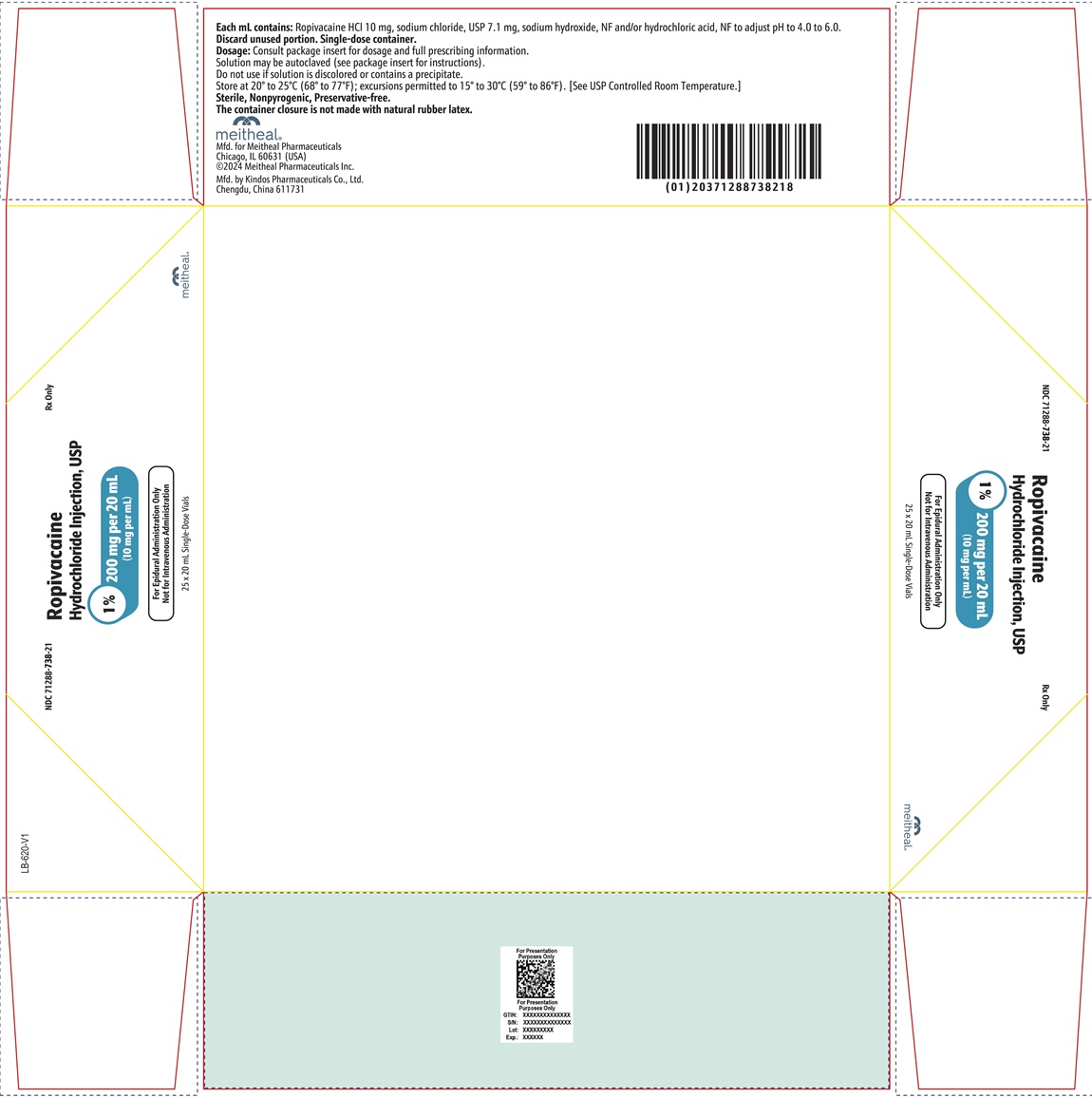
Ropivacaine Hydrochloride 10 mg/mL Injection, Solution — NDC 71288-738-21 (Billing 71288-0738-21)
This is a package of Ropivacaine Hydrochloride 10 mg/mL Injection, Solution from Meitheal Pharmaceuticals Inc., marketed since Jul 2024 and currently FDA-listed. It is this product's only package size.
NDC database record
One package, one record: these facts belong to NDC 71288-738-21 alone.
- Record
- FDA NDC Directory package listing · Human prescription drug
- Code segments
- 71288 labeler · 738 product · 21 package
- Package marketed since
- Jul 30, 2024
- Sample package
- No — commercial package
- Listing certified through
- Dec 31, 2026
- Barcode (UPC-A, from the NDC)
- 3 7128873821 4
- FDA record last changed
- Jul 24, 2026
Other active recalls for Ropivacaine Hydrochloride (different manufacturers) — 2 · tap to view
Identity & classification
Regulatory identifiers FDA, NLM and CMS codes for this package
Drug-database identifiers Medi-Span GPI and First Databank GCN / HICL / AHFS classification
- GSN (GCN sequence number): 028222
- GCN: 46086
- HICL (First Databank): 036674
- AHFS class code: 72:00.00.00
- RxCUI (RxNorm): 905189
Where does this data come from?
- FDA openFDA NDC Directory · synced Oct 1, 2026
- FDA label on DailyMed · label index refreshed Oct 6, 2026
- RxNorm (NLM RxNav) · catalog refreshed Oct 1, 2026
- Medi-Span GPI (licensed)
- First Databank (licensed) · refreshed Oct 1, 2026
RxNorm drug class
This medicine belongs to the Amide Local Anesthetic class.
Where does this data come from?
- RxClass (NLM) · catalog refreshed Oct 1, 2026
Clinical
- It numbs part of your body for surgery, such as an epidural for cesarean section, a nerve block or numbing around the incision. It also helps control short-term pain, like after su...
- A trained clinician gives it as an injection or infusion, so you won't take it at home. It is given slowly in small steps, and your team picks the dose for your procedure.
- The most common are low blood pressure, nausea, vomiting, a slower heart rate, fever, headache and itching. Your team watches for these and can treat them.
- Mention ringing in your ears, tingling around the mouth, a metallic taste, dizziness, blurred vision, drowsiness, chest symptoms, trouble breathing, hives or swelling, or bluish sk...
Patient education
Supplement & herbal interactions
Where does this data come from?
- MedlinePlus (NLM) · refreshed Oct 1, 2026
- FDA label on DailyMed · label index refreshed Oct 6, 2026
Ask a licensed pharmacist directly — free, answered by our team.
Pricing
A drug doesn't have one price. Each row is a different public payment system, and none is what you'd pay at the counter — that depends on your insurance. The ⓘ on each row explains what it measures.
| Price system | Per mL | Per package |
|---|---|---|
| Retail pharmacies payNADAC · weekly | Not in the retail survey — common for institutional, discontinued, or low-volume packs. | |
| Medicaid paysCMS SDUD · 12 mo | No recent Medicaid claims on file for this NDC — rare and low-volume NDCs are suppressed in the public data. | |
| Medicare drug plans payPart D · quarterly | No Part D plan price is available for this NDC in our data. | |
| Medicare Part B allowsASP · J2795 | $0.039 / J2795 unit | — |
Where does this data come from?
- CMS NADAC weekly file
- CMS ASP pricing files · refreshed Sep 20, 2026
- CMS Medicaid State Drug Utilization Data · refreshed Oct 6, 2026
- CMS Part D plan pricing files · refreshed Sep 24, 2026
- VA National Acquisition Center price file
Billing & reimbursement
Where does this data come from?
- CMS ASP NDC-HCPCS crosswalk · refreshed Sep 22, 2026
- DMEPDAC NDC-HCPCS crosswalk
- openFDA NSDE billing units · refreshed Sep 7, 2026
Packaging — all sizes for this product
| Package NDC | Description | Marketing start | Marketing end | Status |
|---|---|---|---|---|
| 71288-0738-21 You're viewing this Main listing | 25 VIAL, SINGLE-DOSE in 1 CARTON / 20 mL in 1 VIAL, SINGLE-DOSE | 2024-07-30 | — | Active |
Therapeutic equivalents
| Product | Labeler | Pack | NADAC/unit | TE | Status | Price vs. this |
|---|---|---|---|---|---|---|
| Ropivacaine Hydrochloride 10 mg/mL 00143-9266-10 | Hikma | 10 vials | — | AP | FDA listed | — |
| Ropivacaine Hydrochloride 10 mg/mL 43066-0027-10 | Baxter | 10 vials | — | AP | FDA listed | — |
| Ropivacaine Hydrochloride 10 mg/mL 55150-0201-20 | Eugia | 25 vials | — | AP | FDA listed | — |
| Naropin 10 mg/mL 63323-0288-27 | Fresenius | 5 ampules | — | AP | FDA listed | — |
| Ropivacaine Hydrochloride 10 mg/mL 65145-0110-10 | Caplin | 10 vials | — | AP | FDA listed | — |
| Ropivacaine Hydrochloride 10 mg/mL 68462-0795-55 | Glenmark | 25 vials | — | AP | FDA listed | — |
| Ropivacaine Hydrochloride 10 mg/mL 70069-0067-10 | Somerset | 10 vials | — | AP | FDA listed | — |
| Ropivacaine Hydrochloride 10 mg/mLthis 71288-0738-21 | Meitheal | 25 vials | — | AP | FDA listed | — |
| Ropivacaine Hydrochloride 10 mg/mL 72603-0219-25 | NorthStar | 25 vials | — | AP | Discontinued | — |
| Ropivacaine Hydrochloride 10 mg/mL 83854-0015-25 | Anthea | 25 vials | — | AP | FDA listed | — |
| Ropivacaine Hydrochloride 10 mg/mL 55150-0200-10 | Eugia | 25 vials | — | AP | FDA listed | — |
| Ropivacaine Hydrochloride 10 mg/mL 71288-0737-11 | Meitheal | 25 vials | — | AP | FDA listed | — |
| Ropivacaine Hydrochloride 10 mg/mL 70069-0066-10 | Somerset | 10 vials | — | AP | FDA listed | — |
Where does this data come from?
- FDA openFDA NDC Directory · synced Oct 1, 2026
- FDA Orange Book · refreshed Oct 3, 2026
- CMS NADAC weekly file
Availability & generic status
This product is an FDA-approved generic. Other versions of the same drug are listed under Therapeutic equivalents, least expensive first.
Where does this data come from?
- FDA Orange Book · refreshed Oct 3, 2026
Inactive Ingredients / Excipients
Inactive ingredients, also called excipients, are components of the drug product other than the active ingredient. They may include fillers, dyes, coatings, preservatives, flavors, or other formulation ingredients.
🧪 Avoiding an ingredient? See Ropivacaine inactive ingredients by manufacturer: every current product's list side by side, so you can ask your pharmacy for the version that does not list it.
💡 Tap an ingredient (hover on desktop) to see what it is and why it’s used.
-
UNII QTT17582CB
A strong acid used to adjust and maintain the proper pH level in liquid medicines, ensuring stability and preventing breakdown of active ingredients.
-
7.1 mg / 1 mL
UNII 451W47IQ8X
Sodium chloride is common table salt. It's used in medicines as a buffer to maintain proper pH, as a filler to add bulk, or to adjust the osmotic balance in liquid formulations.
-
UNII 55X04QC32I
A strong alkaline chemical used to adjust and maintain the pH balance of liquid medicines. It helps keep the medicine stable and ensures it stays effective during storage.
-
UNII 059QF0KO0R
Water is a liquid solvent that dissolves and mixes ingredients together in liquid medicines, syrups, and injections. It helps distribute the active drug evenly throughout the product.
4 inactive ingredients listed in the exact product block matched to this NDC.
Where does this data come from?
ingredient classCode="IACT" elements from the exact product block matched by this NDC. Label-section narrative from DailyMed / the openFDA label index is shown separately when available.- FDA label on DailyMed · label index refreshed Oct 6, 2026
- FDA openFDA NDC Directory · synced Oct 1, 2026
Inactive ingredient FAQ
Are inactive ingredients the same for every manufacturer?
Why might an inactive ingredient be missing?
Can inactive ingredients matter?
Manufacturer & labeler
More NDCs from Meitheal Pharmaceuticals Inc. labeler code 71288
- Ropivacaine Hydrochloride 2 mg/mL Injection, Solution NDC 71288-732-11
- Ropivacaine Hydrochloride 2 mg/mL Injection, Solution NDC 71288-733-21
- Ropivacaine Hydrochloride 5 mg/mL Injection, Solution NDC 71288-734-21
- Ropivacaine Hydrochloride 5 mg/mL Injection, Solution NDC 71288-735-31
- Ropivacaine Hydrochloride 7.5 mg/mL Injection, Solution NDC 71288-736-21
- Ropivacaine Hydrochloride 10 mg/mL Injection, Solution NDC 71288-737-11
- Vecuronium Bromide 10 mg/10mL Injection, Powder, Lyophilized, For Solution NDC 71288-744-11
- Vecuronium Bromide 20 mg/20mL Injection, Powder, Lyophilized, For Solution NDC 71288-745-21
- Doxercalciferol 4 ug/2mL Injection, Solution NDC 71288-802-03
- Mycophenolate Mofetil 500 mg/20mL Injection, Powder, Lyophilized, For Solution NDC 71288-803-21
- Isosulfan Blue 10 mg/mL Injection, Solution NDC 71288-805-06
- Zoledronic Acid 5 mg/100mL Injection, Solution NDC 71288-806-51
Where does this data come from?
- FDA openFDA NDC Directory · synced Oct 1, 2026
- Drugs@FDA
Full prescribing information FDA SPL
🎯 Indications and Usage ▾
1 INDICATIONS AND USAGE Ropivacaine Hydrochloride Injection is indicated for the production of local or regional anesthesia for surgery and for acute pain management. Surgical Anesthesia : epidural block for surgery including cesarean section; major nerve block; local infiltration Acute Pain Management : epidural continuous infusion or intermittent bolus, e.g., postoperative or labor; local infiltration Ropivacaine Hydrochloride Injection is an amide local anesthetic indicated in adults for the production of local or regional anesthesia for surgery and for acute pain management.
Surgical Anesthesia : epidural block for surgery including cesarean section; major nerve block; local infiltration Acute Pain Management : epidural continuous infusion or intermittent bolus, e.g., postoperative or labor; local infiltration
⏱️ Dosage and Administration ▾
2 DOSAGE AND ADMINISTRATION See Table 1 for Dosage Recommendations ( 2.2 )
2.1Important Administration Instructions There have been adverse event reports of chondrolysis in patients receiving intra-articular infusions of local anesthetics following arthroscopic and other surgical procedures. Ropivacaine hydrochloride injection is not approved for this use [see Warnings and Precautions (5.3) ] . The rapid injection of a large volume of local anesthetic solution should be avoided and fractional (incremental) doses should always be used.
The smallest dose and concentration required to produce the desired result should be administered. The dose of any local anesthetic administered varies with the anesthetic procedure, the area to be anesthetized, the vascularity of the tissues, the number of neuronal segments to be blocked, the depth of anesthesia and degree of muscle relaxation required, the duration of anesthesia desired, individual tolerance, and the physical condition of the patient. Patients in poor general condition due to aging or other compromising factors such as partial or complete heart conduction block, advanced liver disease or severe renal dysfunction require special attention although regional anesthesia is frequently indicated in these patients.
To reduce the risk of potentially serious adverse reactions, attempts should be made to optimize the patient's condition before major blocks are performed, and the dosage should be adjusted accordingly. Use an adequate test dose (3 to 5 mL of a short acting local anesthetic solution containing epinephrine) prior to induction of complete block. This test dose should be repeated if the patient is moved in such a fashion as to have displaced the epidural catheter.
Allow adequate time for onset of anesthesia following administration of each test dose. These products are intended for single dose and are free from preservatives. Any solution remaining from an opened container should be discarded promptly.
2.2Dosage Recommendations Table 1 Dosage Recommendations * = Not Applicable † = The dose for a major nerve block must be adjusted according to site of administration and patient status. Supraclavicular brachial plexus blocks may be associated with a higher frequency of serious adverse reactions, regardless of the local anesthetic used [see Warnings and Precautions (5.7) ] . ‡ = Median dose of 21 mg per hour was administered by continuous infusion or by incremental injections (top-ups) over a median delivery time of 5.5 hours. § = Cumulative doses up to 770 mg of ropivacaine hydrochloride over 24 hours (intraoperative block plus postoperative infusion); Continuous epidural infusion at rates up to 28 mg per hour for 72 hours have been well tolerated in adults, i.e., 2016 mg plus surgical dose of approximately 100 to 150 mg as top-up.
Conc. Volume mL Dose mg Onset min Duration hours mg per mL (%) SURGICAL ANESTHESIA Lumbar Epidural Administration Surgery 5 7.5 10 (0.5%) (0.75%) (1%) 15 to 30 15 to 25 15 to 20 75 to 150 113 to 188 150 to 200 15 to 30 10 to 20 10 to 20 2 to 4 3 to 5 4 to 6 Lumbar Epidural Administration Cesarean Section 5 7.5 (0.5%) (0.75%) 20 to 30 15 to 20 100 to 150 113 to 150 15 to 25 10 to 20 2 to 4 3 to 5 Thoracic Epidural Administration Surgery 5 7.5 (0.5%) (0.75%) 5 to 15 5 to 15 25 to 75 38 to 113 10 to 20 10 to 20 n/a* n/a* Major Nerve Block † (e.g., brachial plexus block) Field Block (e.g., minor nerve blocks and infiltration) 5 7.5 5 (0.5%) (0.75%) (0.5%) 35 to 50 10 to 40 1 to 40 175 to 250 75 to 300 5 to 200 15 to 30 10 to 25 1 to 15 5 to 8 6 to 10 2 to 6 LABOR PAIN MANAGEMENT Lumbar Epidural Administration Initial Dose Continuous infusion ‡ Incremental injections (top-up) ‡ 2 2 2 (0.2%) (0.2%) (0.2%) 10 to 20 6 to 14 mL/h 10 to 15 mL/h 20 to 40 12 to 28 mg/h 20 to 30 mg/h 10 to 15 n/a* n/a* 0.5 to 1.5 n/a* n/a* POSTOPERATIVE PAIN MANAGEMENT Lumbar Epidural Administration Continuous infusion § 2 (0.2%) 6 to 14 mL/h 12 to 28 mg/h n/a* n/a* Thoracic Epi… [Excerpted — this section continues on DailyMed.]
💊 Dosage Forms and Strengths ▾
3 DOSAGE FORMS AND STRENGTHS Ropivacaine Hydrochloride Injection, USP is a clear, colorless, preservative-free solution available as: Ropivacaine Hydrochloride Injection, USP Single-Dose Vials 0.2%, 20 mg per 10 mL (2 mg per mL), in 10 mL single-dose vial 0.2%, 40 mg per 20 mL (2 mg per mL), in 20 mL single-dose vial 0.5%, 100 mg per 20 mL (5 mg per mL), 20 mL single-dose vial 0.5%, 150 mg per 30 mL (5 mg per mL), 30 mL single-dose vial 0.75%, 150 mg per 20 mL (7.5 mg per mL), 20 mL single-dose vial 1%, 100 mg per 10 mL (10 mg per mL), 10 mL single-dose vial 1%, 200 mg per 20 mL (10 mg per mL), 20 mL single-dose vial Injection: 2 mg per mL (0.2%), 5 mg per mL (0.5%), 7.5 mg per mL (0.75%) or 10 mg per mL (1%) in single-dose vials ( 3 )
⛔ Contraindications ▾
4 CONTRAINDICATIONS Ropivacaine hydrochloride injection is contraindicated in patients with a known hypersensitivity to ropivacaine or to any local anesthetic agent of the amide type. History of hypersensitivity to local anesthetics of the amide type.
⚠️ Warnings and Cautions ▾
5 WARNINGS AND PRECAUTIONS Delay in proper management of dose-related toxicity, underventilation, and/or altered sensitivity may lead to the development of acidosis, cardiac arrest and, possibly, death. ( 5.1 ) In performing ropivacaine hydrochloride blocks, unintended intravenous injection is possible and may result in cardiac arrhythmia or cardia arrest. ( 5.2 ) Intra-articular infusions of local anesthetics may cause chondrolysis.
Ropivacaine hydrochloride injection is not approved for this use. ( 5.3 ). Signs of methemoglobinemia may occur.
( 5.4 )
5.1General Warnings and Precautions Prior to receiving major blocks the general condition of the patient should be optimized and the patient should have an IV line inserted. All necessary precautions should be taken to avoid intravascular injection. Local anesthetics should only be administered by clinicians who are well versed in the diagnosis and management of dose-related toxicity and other acute emergencies which might arise from the block to be employed, and then only after insuring the immediate (without delay) availability of oxygen, other resuscitative drugs, cardiopulmonary resuscitative equipment, and the personnel resources needed for proper management of toxic reactions and related emergencies [see Adverse Reactions (6) and Overdosage (10.1) ].
Delay in proper management of dose-related toxicity, underventilation from any cause, and/or altered sensitivity may lead to the development of acidosis, cardiac arrest and, possibly, death. The safe and effective use of local anesthetics depends on proper dosage, correct technique, adequate precautions and readiness for emergencies. Resuscitative equipment, oxygen and other resuscitative drugs should be available for immediate use [see Adverse Reactions (6) ] .
The lowest dosage that results in effective anesthesia should be used to avoid high plasma levels and serious adverse events. Injections should be made slowly and incrementally, with frequent aspirations before and during the injection to avoid intravascular injection. When a continuous catheter technique is used, syringe aspirations should also be performed before and during each supplemental injection.
During the administration of epidural anesthesia, it is recommended that a test dose of a local anesthetic with a fast onset be administered initially and that the patient be monitored for central nervous system and cardiovascular toxicity, as well as for signs of unintended intrathecal administration before proceeding. When clinical conditions permit, consideration should be given to employing local anesthetic solutions, which contain epinephrine for the test dose because circulatory changes compatible with epinephrine may also serve as a warning sign of unintended intravascular injection.
An intravascular injection is still possible even if aspirations for blood are negative. Administration of higher than recommended doses of ropivacaine hydrochloride to achieve greater motor blockade or increased duration of sensory blockade may result in cardiovascular depression, particularly in the event of inadvertent intravascular injection. Tolerance to elevated blood levels varies with the physical condition of the patient.
Debilitated, elderly patients and acutely ill patients should be given reduced doses commensurate with their age and physical condition. Local anesthetics should also be used with caution in patients with hypotension, hypovolemia or heart block. Solutions of ropivacaine hydrochloride should not be used for the production of obstetrical paracervical block anesthesia, retrobulbar block, or spinal anesthesia (subarachnoid block) due to insufficient data to support such use.
Intravenous regional anesthesia (bier block) should not be performed due to a lack of clinical experience and the risk of attaining toxic blood levels of ropivacaine. It is essential that aspiration for blood, or cerebrospinal fluid (where applicable), be done prior to injecting any local… [Excerpted — this section continues on DailyMed.]
🤒 Adverse Reactions ▾
6 ADVERSE REACTIONS Reactions to ropivacaine are characteristic of those associated with other amide-type local anesthetics. A major cause of adverse reactions to this group of drugs may be associated with excessive plasma levels, which may be due to overdosage, unintentional intravascular injection or slow metabolic degradation. The reported adverse events are derived from clinical studies conducted in the U.S. and other countries.
The reference drug was usually bupivacaine. The studies used a variety of premedications, sedatives, and surgical procedures of varying length. A total of 3,988 patients have been exposed to ropivacaine hydrochloride at concentrations up to 1% in clinical trials.
Each patient was counted once for each type of adverse event. Because clinical trials are conducted under widely conditions, adverse reactions rates observed in the clinical trials of a drug cannot be directly compared to rates in the clinical trials of another drug and may not reflect the rates observed in practice. Incidence ≥ 5% For the indications of epidural administration in surgery, cesarean section, postoperative pain management, peripheral nerve block, and local infiltration, the following treatment-emergent adverse events were reported with an incidence of ≥ 5% in all clinical studies (N=3988): hypotension (37%), nausea (24.8%), vomiting (11.6%), bradycardia (9.3%), fever (9.2%), pain (8%), postoperative complications (7.1%), anemia (6.1%), paresthesia (5.6%), headache (5.1%), pruritus (5.1%), and back pain (5%).
Incidence 1 to 5% Urinary retention, dizziness, rigors, hypertension, tachycardia, anxiety, oliguria, hypoesthesia, chest pain, hypokalemia, dyspnea, cramps, and urinary tract infection. Incidence in Controlled Clinical Trials The reported adverse events are derived from controlled clinical studies with ropivacaine hydrochloride (concentrations ranged from 0.125% to 1% for ropivacaine hydrochloride and 0.25% to 0.75% for bupivacaine) in the U.S. and other countries involving 3,094 patients. Table 2 and Table 3 list adverse events (number and percentage) that occurred in at least 1% of ropivacaine hydrochloride-treated patients in these studies.
The majority of patients receiving concentrations higher than 5 mg per mL (0.5%) were treated with ropivacaine hydrochloride. Table 2 Adverse Events Reported in ≥1% of Adult Patients Receiving Regional or Local Anesthesia (Surgery, Labor, Cesarean Section, Postoperative Pain Management, Peripheral Nerve Block and Local Infiltration) Adverse Reaction Ropivacaine Hydrochloride total N=1661 Bupivacaine total N=1433 N % N % Hypotension 536 (32.3) 408 (28.5) Nausea 283 (17) 207 (14.4) Vomiting 117 (7) 88 (6.1) Bradycardia 96 (5.8) 73 (5.1) Headache 84 (5.1) 68 (4.7) Paresthesia 82 (4.9) 57 (4) Back pain 73 (4.4) 75 (5.2) Pain 71 (4.3) 71 (5) Pruritus 63 (3.8) 40 (2.8) Fever 61 (3.7) 37 (2.6) Dizziness 42 (2.5) 23 (1.6) Rigors (Chills) 42 (2.5) 24 (1.7) Postoperative complications 41 (2.5) 44 (3.1) Hypoesthesia 27 (1.6) 24 (1.7) Urinary retention 23 (1.4) 20 (1.4) Progression of labor poor/failed 23 (1.4) 22 (1.5) Anxiety 21 (1.3) 11 (0.8) Breast disorder, breast-feeding 21 (1.3) 12 (0.8) Rhinitis 18 (1.1) 13 (0.9) Table 3 Adverse Events Reported in ≥1% of Fetuses or Neonates of Mothers Who Received Regional Anesthesia (Cesarean Section and Labor Studies) Adverse Reaction Ropivacaine Hydrochloride total N = 639 Bupivacaine total N = 573 N % N % Fetal bradycardia 77 (12.1) 68 (11.9) Neonatal jaundice 49 (7.7) 47 (8.2) Neonatal complication-NOS 42 (6.6) 38 (6.6) Apgar score low 18 (2.8) 14 (2.4) Neonatal respiratory disorder 17 (2.7) 18 (3.1) Neonatal tachypnea 14 (2.2) 15 (2.6) Neonatal fever 13 (2) 14 (2.4) Fetal tachycardia 13 (2) 12 (2.1) Fetal distress 11 (1.7) 10 (1.7) Neonatal infection 10 (1.6) 8 (1.4) Neonatal hypoglycemia 8 (1.3) 16 (2.8) Incidence <1% The following adverse events were reported during the ropivacaine hydrochloride clinical program in more than one patient (N=398… [Excerpted — this section continues on DailyMed.]
🔄 Drug Interactions ▾
7 DRUG INTERACTIONS Patients who are administered local anesthetics are at increased risk of developing methemoglobinemia when concurrently exposed to the following drugs, which could include other local anesthetics [see Warnings and Precautions (5.4) ] : Examples of Drugs Associated with Methemoglobinemia Class Examples Nitrates/Nitrites nitric oxide, nitroglycerin, nitroprusside, nitrous oxide Local anesthetics articaine, benzocaine, bupivacaine, lidocaine, mepivacaine, prilocaine, procaine, ropivacaine, tetracaine Antineoplastic agents cyclophosphamide, flutamide, hydroxyurea, ifosfamide, rasburicase Antibiotics dapsone, nitrofurantoin, para-aminosalicylic acid, sulfonamides Antimalarials chloroquine, primaquine Anticonvulsants phenobarbital, phenytoin, sodium valproate Other drugs acetaminophen, metoclopramide, quinine, sulfasalazine Ropivacaine hydrochloride should be used with caution in patients receiving other local anesthetics or agents structurally related to amide-type local anesthetics, since the toxic effects of these drugs are additive.
Cytochrome P4501A2 is involved in the formation of 3-hydroxy ropivacaine, the major metabolite. In vivo , the plasma clearance of ropivacaine was reduced by 70% during coadministration of fluvoxamine (25 mg bid for 2 days), a selective and potent CYP1A2 inhibitor. Thus strong inhibitors of cytochrome P4501A2, such as fluvoxamine, given concomitantly during administration of ropivacaine hydrochloride, can interact with ropivacaine hydrochloride leading to increased ropivacaine plasma levels.
Caution should be exercised when CYP1A2 inhibitors are coadministered. Possible interactions with drugs known to be metabolized by CYP1A2 via competitive inhibition such as theophylline and imipramine may also occur. Coadministration of a selective and potent inhibitor of CYP3A4, ketoconazole (100 mg bid for 2 days with ropivacaine infusion administered 1 hour after ketoconazole) caused a 15% reduction in in vivo plasma clearance of ropivacaine.
Specific trials studying the interaction between ropivacaine and class III antiarrhythmic drugs (e.g., amiodarone) have not been performed, but caution is advised [see Warnings and Precautions (5.13) ] . Agents structurally related to amide-type local anesthetics: Concurrent use may cause additive effects. ( 7 )
👥 Use in Specific Populations ▾
8 USE IN SPECIFIC POPULATIONS
8.1Pregnancy Risk Summary There are no available human data on use of ropivacaine hydrochloride injection in pregnant women to evaluate a drug-associated risk of major birth defects, miscarriage, or other adverse maternal or fetal outcomes. Local anesthetics may cause varying degrees of toxicity to the mother and fetus and adverse reactions include alterations of the central nervous system, peripheral vascular tone, and cardiac function (see Clinical Considerations ) . No teratogenicity was observed at doses up to 0.3 times the maximum recommended human dose of 770 mg/24 hours for epidural use, and equal to the MRHD of 250 mg for nerve block use, based on body surface area (BSA) comparisons and a 60 kg human weight (see Animal data ) .
The estimated background risk of major birth defects and miscarriage for the indicated population is unknown. All pregnancies have a background risk of birth defect, loss, or other adverse outcomes. In the U.S. general population, the estimated background risk of major birth defects and miscarriage in clinically recognized pregnancies is 2% to 4% and 15% to 20%, respectively.
Clinical Considerations Labor or Delivery Local anesthetics, including ropivacaine, rapidly cross the placenta, and when used for epidural block can cause varying degrees of maternal, fetal, and neonatal toxicity [see Clinical Pharmacology (12) ] . The incidence and degree of toxicity depend upon the procedure performed, the type and amount of drug used, and the technique of drug administration. Adverse reactions in the parturient, fetus and neonate involve alterations of the central nervous system, peripheral vascular tone and cardiac function.
Maternal Adverse reactions Maternal hypotension has resulted from regional anesthesia. Local anesthetics produce vasodilation by blocking sympathetic nerves. Therefore, during treatment of systemic toxicity, maternal hypotension or fetal bradycardia following regional block, the parturient should be maintained in the left lateral decubitus position if possible, or manual displacement of the uterus off the great vessels be accomplished.
Elevating the patient's legs will also help prevent decreases in blood pressure. The fetal heart rate also should be monitored continuously, and electronic fetal monitoring is highly advisable. Data Animal data No malformations were reported in embryo-fetal development toxicity studies conducted in pregnant New Zealand white rabbits and Sprague-Dawley rats.
During gestation days 6 to 18, rabbits received daily subcutaneous doses of ropivacaine at 1.3, 4.2, or 13 mg/kg/day (equivalent to 0.03, 0.10, and 0.33 times the maximum recommended human dose (MRHD) of 770 mg/24 hours, respectively, and 0.10, 0.32, and 1.0 times the MRHD of 250 mg for nerve block use, respectively based on body surface area (BSA) comparisons and a 60 kg human weight). Rats received daily subcutaneous doses of 5.3, 11, and 26 mg/kg/day (equivalent to 0.07, 0.14, and 0.33 times the MRHD for epidural use, respectively, and 0.21, 0.43, and 1.0 times the MRHD for nerve block use, respectively, based on BSA comparisons) during GD 6 to 15.
No treatment-related effects on late fetal development, parturition, litter size, lactation, neonatal viability, or growth of the offspring were reported in a prenatal and postnatal reproductive and development toxicity study; however functional endpoints were not evaluated. Female rats were dosed daily subcutaneously from GD 15 to Lactation Day 20 at doses of 5.3, 11, and 26 mg/kg/day (equivalent to 0.07, 0.1, and 0.3 times the MRHD for epidural use, respectively, and 0.21, 0.43, and 1.0 times the MRHD for nerve block use, respectively), with maternal toxicity exhibited at the high dose.
No adverse effects in physical developmental milestones or in behavioral tests were reported in a 2-generational reproduction study, in which rats received daily subcutaneous doses of 6.3, 12, and 23 mg/kg/day (equivalent to 0.08, 0.15,… [Excerpted — this section continues on DailyMed.]
🤰 Pregnancy ▾
8.1Pregnancy Risk Summary There are no available human data on use of ropivacaine hydrochloride injection in pregnant women to evaluate a drug-associated risk of major birth defects, miscarriage, or other adverse maternal or fetal outcomes. Local anesthetics may cause varying degrees of toxicity to the mother and fetus and adverse reactions include alterations of the central nervous system, peripheral vascular tone, and cardiac function (see Clinical Considerations ) . No teratogenicity was observed at doses up to 0.3 times the maximum recommended human dose of 770 mg/24 hours for epidural use, and equal to the MRHD of 250 mg for nerve block use, based on body surface area (BSA) comparisons and a 60 kg human weight (see Animal data ) .
The estimated background risk of major birth defects and miscarriage for the indicated population is unknown. All pregnancies have a background risk of birth defect, loss, or other adverse outcomes. In the U.S. general population, the estimated background risk of major birth defects and miscarriage in clinically recognized pregnancies is 2% to 4% and 15% to 20%, respectively.
Clinical Considerations Labor or Delivery Local anesthetics, including ropivacaine, rapidly cross the placenta, and when used for epidural block can cause varying degrees of maternal, fetal, and neonatal toxicity [see Clinical Pharmacology (12) ] . The incidence and degree of toxicity depend upon the procedure performed, the type and amount of drug used, and the technique of drug administration. Adverse reactions in the parturient, fetus and neonate involve alterations of the central nervous system, peripheral vascular tone and cardiac function.
Maternal Adverse reactions Maternal hypotension has resulted from regional anesthesia. Local anesthetics produce vasodilation by blocking sympathetic nerves. Therefore, during treatment of systemic toxicity, maternal hypotension or fetal bradycardia following regional block, the parturient should be maintained in the left lateral decubitus position if possible, or manual displacement of the uterus off the great vessels be accomplished.
Elevating the patient's legs will also help prevent decreases in blood pressure. The fetal heart rate also should be monitored continuously, and electronic fetal monitoring is highly advisable. Data Animal data No malformations were reported in embryo-fetal development toxicity studies conducted in pregnant New Zealand white rabbits and Sprague-Dawley rats.
During gestation days 6 to 18, rabbits received daily subcutaneous doses of ropivacaine at 1.3, 4.2, or 13 mg/kg/day (equivalent to 0.03, 0.10, and 0.33 times the maximum recommended human dose (MRHD) of 770 mg/24 hours, respectively, and 0.10, 0.32, and 1.0 times the MRHD of 250 mg for nerve block use, respectively based on body surface area (BSA) comparisons and a 60 kg human weight). Rats received daily subcutaneous doses of 5.3, 11, and 26 mg/kg/day (equivalent to 0.07, 0.14, and 0.33 times the MRHD for epidural use, respectively, and 0.21, 0.43, and 1.0 times the MRHD for nerve block use, respectively, based on BSA comparisons) during GD 6 to 15.
No treatment-related effects on late fetal development, parturition, litter size, lactation, neonatal viability, or growth of the offspring were reported in a prenatal and postnatal reproductive and development toxicity study; however functional endpoints were not evaluated. Female rats were dosed daily subcutaneously from GD 15 to Lactation Day 20 at doses of 5.3, 11, and 26 mg/kg/day (equivalent to 0.07, 0.1, and 0.3 times the MRHD for epidural use, respectively, and 0.21, 0.43, and 1.0 times the MRHD for nerve block use, respectively), with maternal toxicity exhibited at the high dose.
No adverse effects in physical developmental milestones or in behavioral tests were reported in a 2-generational reproduction study, in which rats received daily subcutaneous doses of 6.3, 12, and 23 mg/kg/day (equivalent to 0.08, 0.15, and 0.29 times the MRHD for e… [Excerpted — this section continues on DailyMed.]
🧒 Pediatric Use ▾
8.4Pediatric Use The safety and efficacy of ropivacaine hydrochloride in pediatric patients have not been established.
🧓 Geriatric Use ▾
8.5Geriatric Use Of the 2,978 subjects that were administered ropivacaine hydrochloride injection in 71 controlled and uncontrolled clinical studies, 803 patients (27%) were 65 years of age or older which includes 127 patients (4%) 75 years of age and over. Ropivacaine hydrochloride injection was found to be safe and effective in the patients in these studies. Clinical data in one published article indicate that differences in various pharmacodynamic measures were observed with increasing age.
In one study, the upper level of analgesia increased with age, the maximum decrease of mean arterial pressure (MAP) declined with age during the first hour after epidural administration, and the intensity of motor blockade increased with age. This drug and its metabolites are known to be excreted by the kidney, and the risk of toxic reactions to this drug may be greater in patients with impaired renal function. Elderly patients are more likely to have decreased hepatic, renal, or cardiac function, as well as concomitant disease.
Therefore, care should be taken in dose selection, starting at the low end of the dosage range, and it may be useful to monitor renal function [see Clinical Pharmacology (12.3) ] .
🆘 Overdosage ▾
10 OVERDOSAGE Acute emergencies from local anesthetics are generally related to high plasma levels encountered, or large doses administered, during therapeutic use of local anesthetics or to unintended subarachnoid or intravascular injection of local anesthetic solution [see Adverse Reactions (6) and Warnings and Precautions (5.1 , 5.2 , 5.6 )].
10.1Treatment Therapy with ropivacaine hydrochloride should be discontinued at the first sign of toxicity. No specific information is available for the treatment of toxicity with ropivacaine hydrochloride; therefore, treatment should be symptomatic and supportive. The first consideration is prevention, best accomplished by incremental injection of ropivacaine hydrochloride, careful and constant monitoring of cardiovascular and respiratory vital signs and the patient’s state of consciousness after each local anesthetic and during continuous infusion.
At the first sign of change in mental status, oxygen should be administered. The first step in the management of systemic toxic reactions, as well as underventilation or apnea due to unintentional subarachnoid injection of drug solution, consists of immediate attention to the establishment and maintenance of a patent airway and effective assisted or controlled ventilation with 100% oxygen with a delivery system capable of permitting immediate positive airway pressure by mask. Circulation should be assisted as necessary.
This may prevent convulsions if they have not already occurred. If necessary, use drugs to control convulsions. Intravenous barbiturates, anticonvulsant agents, or muscle relaxants should only be administered by those familiar with their use.
Immediately after the institution of these ventilatory measures, the adequacy of the circulation should be evaluated. Supportive treatment of circulatory depression may require administration of intravenous fluids, and, when appropriate, a vasopressor dictated by the clinical situation (such as ephedrine or epinephrine to enhance myocardial contractile force). Should cardiac arrest occur, prolonged resuscitative efforts may be required to improve the probability of a successful outcome.
The mean dosages of ropivacaine producing seizures, after intravenous infusion in dogs, nonpregnant and pregnant sheep were 4.9, 6.1 and 5.9 mg/kg, respectively. These doses were associated with peak arterial total plasma concentrations of 11.4, 4.3 and 5 mcg/mL, respectively. In human volunteers given intravenous ropivacaine hydrochloride, the mean (min-max) maximum tolerated total and free arterial plasma concentrations were 4.3 (3.4 to 5.3) and 0.6 (0.3 to 0.9) mcg/mL respectively, at which time moderate CNS symptoms (muscle twitching) were noted.
Clinical data from patients experiencing local anesthetic induced convulsions demonstrated rapid development of hypoxia, hypercarbia and acidosis within a minute of the onset of convulsions. These observations suggest that oxygen consumption and carbon dioxide production are greatly increased during local anesthetic convulsions and emphasize the importance of immediate and effective ventilation with oxygen which may avoid cardiac arrest. If difficulty is encountered in the maintenance of a patent airway or if prolonged ventilatory support (assisted or controlled) is indicated, endotracheal intubation, employing drugs and techniques familiar to the clinician, may be indicated after initial administration of oxygen by mask.
The supine position is dangerous in pregnant women at term because of aortocaval compression by the gravid uterus. Therefore, during treatment of systemic toxicity, maternal hypotension or fetal bradycardia following regional block, the parturient should be maintained in the left lateral decubitus position if possible, or manual displacement of the uterus off the great vessels should be accomplished. Resuscitation of obstetrical patients may take longer than resuscitation of non-pregnant patients and closed-chest cardiac compression may be… [Excerpted — this section continues on DailyMed.]
🧬 Clinical Pharmacology ▾
12 CLINICAL PHARMACOLOGY
12.1Mechanism of Action Ropivacaine is a member of the amino amide class of local anesthetics and is supplied as the pure S-(-)-enantiomer. Local anesthetics block the generation and the conduction of nerve impulses, presumably by increasing the threshold for electrical excitation in the nerve, by slowing the propagation of the nerve impulse, and by reducing the rate of rise of the action potential. In general, the progression of anesthesia is related to the diameter, myelination and conduction velocity of affected nerve fibers.
Clinically, the order of loss of nerve function is as follows: (1) pain, (2) temperature, (3) touch, (4) proprioception, and (5) skeletal muscle tone.
12.2Pharmacodynamics Studies in humans have demonstrated that, unlike most other local anesthetics, the presence of epinephrine has no major effect on either the time of onset or the duration of action of ropivacaine. Likewise, addition of epinephrine to ropivacaine has no effect on limiting systemic absorption of ropivacaine. Systemic absorption of local anesthetics can produce effects on the central nervous and cardiovascular systems.
At blood concentrations achieved with therapeutic doses, changes in cardiac conduction, excitability, refractoriness, contractility, and peripheral vascular resistance have been reported. Toxic blood concentrations depress cardiac conduction and excitability, which may lead to atrioventricular block, ventricular arrhythmias and to cardiac arrest, sometimes resulting in fatalities. In addition, myocardial contractility is depressed and peripheral vasodilation occurs, leading to decreased cardiac output and arterial blood pressure.
Following systemic absorption, local anesthetics can produce central nervous system stimulation, depression or both. Apparent central stimulation is usually manifested as restlessness, tremors and shivering, progressing to convulsions, followed by depression and coma, progressing ultimately to respiratory arrest. However, the local anesthetics have a primary depressant effect on the medulla and on higher centers.
The depressed stage may occur without a prior excited stage. In 2 clinical pharmacology studies (total n=24) ropivacaine and bupivacaine were infused (10 mg/min) in human volunteers until the appearance of CNS symptoms, e.g., visual or hearing disturbances, perioral numbness, tingling and others. Similar symptoms were seen with both drugs.
In 1 study, the mean ± SD maximum tolerated intravenous dose of ropivacaine infused (124 ± 38 mg) was significantly higher than that of bupivacaine (99 ± 30 mg) while in the other study the doses were not different (115 ± 29 mg of ropivacaine and 103 ± 30 mg of bupivacaine). In the latter study, the number of subjects reporting each symptom was similar for both drugs with the exception of muscle twitching which was reported by more subjects with bupivacaine than ropivacaine at comparable intravenous doses. At the end of the infusion, ropivacaine in both studies caused significantly less depression of cardiac conductivity (less QRS widening) than bupivacaine.
Ropivacaine and bupivacaine caused evidence of depression of cardiac contractility, but there were no changes in cardiac output. Clinical data in one published article indicate that differences in various pharmacodynamic measures were observed with increasing age. In one study, the upper level of analgesia increased with age, the maximum decrease of mean arterial pressure (MAP) declined with age during the first hour after epidural administration, and the intensity of motor blockade increased with age.
However, no pharmacokinetic differences were observed between elderly and younger patients. In non-clinical pharmacology studies comparing ropivacaine and bupivacaine in several animal species, the cardiac toxicity of ropivacaine was less than that of bupivacaine, although both were considerably more toxic than lidocaine. Arrhythmogenic and cardio-depressant effects were se… [Excerpted — this section continues on DailyMed.]
🧬 Mechanism of Action ▾
12.1Mechanism of Action Ropivacaine is a member of the amino amide class of local anesthetics and is supplied as the pure S-(-)-enantiomer. Local anesthetics block the generation and the conduction of nerve impulses, presumably by increasing the threshold for electrical excitation in the nerve, by slowing the propagation of the nerve impulse, and by reducing the rate of rise of the action potential. In general, the progression of anesthesia is related to the diameter, myelination and conduction velocity of affected nerve fibers.
Clinically, the order of loss of nerve function is as follows: (1) pain, (2) temperature, (3) touch, (4) proprioception, and (5) skeletal muscle tone.
📦 How Supplied / Storage and Handling ▾
16 HOW SUPPLIED/STORAGE AND HANDLING Ropivacaine Hydrochloride Injection, USP is a clear, colorless, and preservative-free solution and is supplied as follows: Ropivacaine Hydrochloride Injection, USP Single-Dose Vials NDC Ropivacaine Hydrochloride Injection, USP 0.2% (2 mg per mL) Package Factor 71288- 732 -11 20 mg per 10 mL Single-Dose Vial 25 vials per carton 71288- 733 -21 40 mg per 20 mL Single-Dose Vial 25 vials per carton NDC Ropivacaine Hydrochloride Injection, USP 0.5% (5 mg per mL) Package Factor 71288- 734 -21 100 mg per 20 mL Single-Dose Vial 25 vials per carton 71288- 735 -31 150 mg per 30 mL Single-Dose Vial 25 vials per carton NDC Ropivacaine Hydrochloride Injection, USP 0.75% (7.5 mg per mL) Package Factor 71288- 736 -21 150 mg per 20 mL Single-Dose Vial 25 vials per carton NDC Ropivacaine Hydrochloride Injection, USP 1% (10 mg per mL) Package Factor 71288- 737 -11 100 mg per 10 mL Single-Dose Vial 25 vials per carton 71288- 738 -21 200 mg per 20 mL Single-Dose Vial 25 vials per carton Discard unused portion.
Storage Solutions should be stored at 20° to 25°C (68° to 77°F); excursions permitted to 15° to 30°C (59° to 86°F). [See USP Controlled Room Temperature.] Sterile, Nonpyrogenic, Preservative-free. The container closure is not made with natural rubber latex.
📋 Description ▾
11 DESCRIPTION Ropivacaine Hydrochloride Injection, USP is a sterile, isotonic solution that contains ropivacaine hydrochloride as the active pharmaceutical ingredient. Ropivacaine hydrochloride is a member of the amino amide class of local anesthetics. Ropivacaine Hydrochloride Injection, USP is administered parenterally by for infiltration, epidural, and nerve block.
Ropivacaine hydrochloride is chemically described as S-(-)-1-propyl-2’,6’-pipecoloxylidide hydrochloride monohydrate. The drug substance is a white crystalline powder, with the following structural formula: C 17 H 26 N 2 O•HCl•H 2 O M.W. 328.88 At 25°C ropivacaine hydrochloride has a solubility of 53.8 mg/mL in water, a distribution ratio between n -octanol and phosphate buffer at pH 7.4 of 14:1 and a pKa of 8.07 in
0.1M KCl solution. The pKa of ropivacaine is approximately the same as bupivacaine (8.1) and is similar to that of mepivacaine (7.7). However, ropivacaine has an intermediate degree of lipid solubility compared to bupivacaine and mepivacaine.
Ropivacaine Hydrochloride Injection, USP is a clear, colorless, and preservative-free solution. Each mL contains 2.1 mg, 5.3 mg, 7.9 mg or 10.6 mg ropivacaine hydrochloride monohydrate, USP (equivalent to 2 mg, 5 mg, 7.5 mg or 10 mg of ropivacaine hydrochloride anhydrous), and 8.6 mg, 8 mg, 7.5 mg or 7.1 mg of sodium chloride, USP; respectively, and sodium hydroxide, NF and hydrochloric acid, NF as pH adjusters, in water for injection, USP. The pH is adjusted between 4.0 to 6.0.
The specific gravity of Ropivacaine Hydrochloride Injection, USP solutions range from 1.002 to 1.005 at 25°C. Structural Formula
💬 Information for Patients ▾
17 PATIENT COUNSELING INFORMATION
17.1Information for Patients and Caregivers When appropriate, patients should be informed in advance that they may experience temporary loss of sensation and motor activity in the anesthetized part of the body following proper administration of lumbar epidural anesthesia. Also, when appropriate, the physician should discuss other information including adverse reactions in the ropivacaine hydrochloride injection package insert. Inform patients that use of local anesthetics may cause methemoglobinemia, a serious condition that must be treated promptly.
Advise patients or caregivers to seek immediate medical attention if they or someone in their care experience the following signs or symptoms: pale, gray, or blue colored skin (cyanosis); headache; rapid heart rate; shortness of breath; lightheadedness; or fatigue. meitheal ® Mfd. for Meitheal Pharmaceuticals Chicago, IL 60631 (USA) ©2024 Meitheal Pharmaceuticals Inc. Mfd. by Kindos Pharmaceuticals Co., Ltd. Chengdu, China 611731 July 2024 LB-624-V1
🧬 Pharmacokinetics ▾
12.3Pharmacokinetics Absorption The systemic concentration of ropivacaine is dependent on the total dose and concentration of drug administered, the route of administration, the patient's hemodynamic/circulatory condition, and the vascularity of the administration site. From the epidural space, ropivacaine shows complete and biphasic absorption. The half-lives of the 2 phases, (mean ± SD) are 14 ± 7 minutes and 4.2 ± 0.9 h, respectively.
The slow absorption is the rate limiting factor in the elimination of ropivacaine that explains why the terminal half-life is longer after epidural than after intravenous administration. Ropivacaine shows dose-proportionality up to the highest intravenous dose studied, 80 mg, corresponding to a mean ± SD peak plasma concentration of 1.9 ± 0.3 mcg/mL. Table 7 Pharmacokinetic (Plasma Concentration-Time) Data From Clinical Trials * Continuous 72 hour epidural infusion after an epidural block with 5 or 10 mg per mL. † Epidural anesthesia with 7.5 mg per mL (0.75%) for cesarean delivery. ‡ Brachial plexus block with 7.5 mg per mL (0.75%) ropivacaine. § 20 minute IV infusion to volunteers (40 mg). ¶ C max measured at the end of infusion (i.e., at 72 hr). # C max measured at the end of infusion (i.e., at 20 minutes). ♠ n/a=not applicable ♥ t ½ is the true terminal elimination half-life.
On the other hand, t ½ follows absorption dependent elimination (flip-flop) after non-intravenous administration. Route Epidural Infusion* Epidural Infusion* Epidural Block † Epidural Block † Plexus Block ‡ IV Infusion § Dose (mg) 1493 ± 10 2075 ± 206 1217 ± 277 150 187.5 300 40 N 12 12 11 8 8 10 12 C max (mg/L) 2.4 ± 1 ¶ 2.8 ± 0.5 ¶ 2.3 ± 1.1 ¶ 1.1 ± 0.2 1.6 ± 0.6 2.3 ± 0.8 1.2 ± 0.2 # T max (min) n/a ♠ n/a n/a 43 ± 14 34 ± 9 54 ± 22 n/a AUC 0- (mg.h/L) 135.5 ± 50 145 ± 34 161 ± 90 7.2 ± 2 11.3 ± 4 13 ± 3.3 1.8 ±
0.6CL (L/h) 11.03 13.7 n/a 5.5 ± 2 5 ± 2.6 n/a 21.2 ± 7 t 1/2 (hr) ♥ 5 ± 2.5 5.7 ± 3 6 ± 3 5.7 ± 2 7.1 ± 3 6.8 ± 3.2 1.9 ±
0.5In some patients after a 300 mg dose for brachial plexus block, free plasma concentrations of ropivacaine may approach the threshold for CNS toxicity [see Warnings and Precautions (5.7) ] . At a dose of greater than 300 mg, for local infiltration, the terminal half-life may be longer (>30 hours). Distribution After intravascular infusion, ropivacaine has a steady-state volume of distribution of 41 ± 7 liters.
Ropivacaine is 94% protein bound, mainly to α1-acid glycoprotein. An increase in total plasma concentrations during continuous epidural infusion has been observed, related to a postoperative increase of α1-acid glycoprotein. Variations in unbound, i.e., pharmacologically active, concentrations have been less than in total plasma concentration.
Ropivacaine readily crosses the placenta and equilibrium in regard to unbound concentration will be rapidly reached [see Warnings and Precautions (5) and Use in Specific Population (8.1) ] . Metabolism Ropivacaine is extensively metabolized in the liver, predominantly by aromatic hydroxylation mediated by cytochrome P4501A to 3-hydroxy ropivacaine. After a single IV dose approximately 37% of the total dose is excreted in the urine as both free and conjugated 3-hydroxy ropivacaine.
Low concentrations of 3-hydroxy ropivacaine have been found in the plasma. Urinary excretion of the 4 hydroxy ropivacaine, and both the 3-hydroxy N de alkylated (3-OH-PPX) and 4-hydroxy N-de-alkylated (4-OH-PPX) metabolites account for less than 3% of the dose. An additional metabolite, 2-hydroxy-methyl-ropivacaine, has been identified but not quantified in the urine.
The N-de-alkylated metabolite of ropivacaine (PPX) and 3-OH-ropivacaine are the major metabolites excreted in the urine during epidural infusion. Total PPX concentration in the plasma was about half as that of total ropivacaine; however, mean unbound concentrations of PPX were about 7 to 9 times higher than that of unbound ropivacaine following continuous epidural infusion up to 72 hours. Unbound… [Excerpted — this section continues on DailyMed.]
🧬 Pharmacodynamics ▾
12.2Pharmacodynamics Studies in humans have demonstrated that, unlike most other local anesthetics, the presence of epinephrine has no major effect on either the time of onset or the duration of action of ropivacaine. Likewise, addition of epinephrine to ropivacaine has no effect on limiting systemic absorption of ropivacaine. Systemic absorption of local anesthetics can produce effects on the central nervous and cardiovascular systems.
At blood concentrations achieved with therapeutic doses, changes in cardiac conduction, excitability, refractoriness, contractility, and peripheral vascular resistance have been reported. Toxic blood concentrations depress cardiac conduction and excitability, which may lead to atrioventricular block, ventricular arrhythmias and to cardiac arrest, sometimes resulting in fatalities. In addition, myocardial contractility is depressed and peripheral vasodilation occurs, leading to decreased cardiac output and arterial blood pressure.
Following systemic absorption, local anesthetics can produce central nervous system stimulation, depression or both. Apparent central stimulation is usually manifested as restlessness, tremors and shivering, progressing to convulsions, followed by depression and coma, progressing ultimately to respiratory arrest. However, the local anesthetics have a primary depressant effect on the medulla and on higher centers.
The depressed stage may occur without a prior excited stage. In 2 clinical pharmacology studies (total n=24) ropivacaine and bupivacaine were infused (10 mg/min) in human volunteers until the appearance of CNS symptoms, e.g., visual or hearing disturbances, perioral numbness, tingling and others. Similar symptoms were seen with both drugs.
In 1 study, the mean ± SD maximum tolerated intravenous dose of ropivacaine infused (124 ± 38 mg) was significantly higher than that of bupivacaine (99 ± 30 mg) while in the other study the doses were not different (115 ± 29 mg of ropivacaine and 103 ± 30 mg of bupivacaine). In the latter study, the number of subjects reporting each symptom was similar for both drugs with the exception of muscle twitching which was reported by more subjects with bupivacaine than ropivacaine at comparable intravenous doses. At the end of the infusion, ropivacaine in both studies caused significantly less depression of cardiac conductivity (less QRS widening) than bupivacaine.
Ropivacaine and bupivacaine caused evidence of depression of cardiac contractility, but there were no changes in cardiac output. Clinical data in one published article indicate that differences in various pharmacodynamic measures were observed with increasing age. In one study, the upper level of analgesia increased with age, the maximum decrease of mean arterial pressure (MAP) declined with age during the first hour after epidural administration, and the intensity of motor blockade increased with age.
However, no pharmacokinetic differences were observed between elderly and younger patients. In non-clinical pharmacology studies comparing ropivacaine and bupivacaine in several animal species, the cardiac toxicity of ropivacaine was less than that of bupivacaine, although both were considerably more toxic than lidocaine. Arrhythmogenic and cardio-depressant effects were seen in animals at significantly higher doses of ropivacaine than bupivacaine.
The incidence of successful resuscitation was not significantly different between the ropivacaine and bupivacaine groups.
🔬 Clinical Studies ▾
14 CLINICAL STUDIES Ropivacaine was studied as a local anesthetic both for surgical anesthesia and for acute pain management [see Dosage and Administration (2) ] . The onset, depth and duration of sensory block are, in general, similar to bupivacaine. However, the depth and duration of motor block, in general, are less than that with bupivacaine.
14.1Epidural Administration in Surgery There were 25 clinical studies performed in 900 patients to evaluate ropivacaine hydrochloride epidural injection for general surgery. Ropivacaine hydrochloride was used in doses ranging from 75 to 250 mg. In doses of 100 to 200 mg, the median (1st to 3rd quartile) onset time to achieve a T10 sensory block was 10 (5 to 13) minutes and the median (1st to 3rd quartile) duration at the T10 level was 4 (3 to 5) hours [see Dosage and Administration (2.2) ] .
Higher doses produced a more profound block with a greater duration of effect.
14.2Epidural Administration in Cesarean Section A total of 12 studies were performed with epidural administration of ropivacaine hydrochloride for cesarean section. Eight of these studies involved 218 patients using the concentration of 5 mg per mL (0.5%) in doses up to 150 mg. Median onset measured at T6 ranged from 11 to 26 minutes.
Median duration of sensory block at T6 ranged from 1.7 to 3.2 h, and duration of motor block ranged from 1.4 to 2.9 h. Ropivacaine hydrochloride provided adequate muscle relaxation for surgery in all cases. In addition, 4 active controlled studies for cesarean section were performed in 264 patients at a concentration of 7.5 mg per mL (0.75%) in doses up to 187.5 mg.
Median onset measured at T6 ranged from 4 to 15 minutes. Seventy-seven to 96% of ropivacaine hydrochloride-exposed patients reported no pain at delivery. Some patients received other anesthetic, analgesic, or sedative modalities during the course of the operative procedure.
14.3Epidural Administration in Labor and Delivery A total of 9 double-blind clinical studies, involving 240 patients were performed to evaluate ropivacaine hydrochloride for epidural block for management of labor pain. When administered in doses up to 278 mg as intermittent injections or as a continuous infusion, ropivacaine hydrochloride produced adequate pain relief. A prospective meta-analysis on 6 of these studies provided detailed evaluation of the delivered newborns and showed no difference in clinical outcomes compared to bupivacaine.
There were significantly fewer instrumental deliveries in mothers receiving ropivacaine as compared to bupivacaine. Table 8 Labor and Delivery Meta-analysis: Mode of Delivery *p=0.004 versus bupivacaine Delivery Mode Ropivacaine Hydrochloride Bupivacaine n = 199 n = 188 n % n % Spontaneous Vertex 116 58 92 49 Vacuum Extractor 26 33 }27* }40 Forceps 28 42 Cesarean Section 29 15 21 11
14.4Epidural Administration in Postoperative Pain Management There were 8 clinical studies performed in 382 patients to evaluate ropivacaine hydrochloride 2 mg per mL (0.2%) for postoperative pain management after upper and lower abdominal surgery and after orthopedic surgery. The studies utilized intravascular morphine via PCA as a rescue medication and quantified as an efficacy variable. Epidural anesthesia with ropivacaine hydrochloride 5 mg per mL, (0.5%) was used intraoperatively for each of these procedures prior to initiation of postoperative ropivacaine hydrochloride.
The incidence and intensity of the motor block were dependent on the dose rate of ropivacaine hydrochloride and the site of injection. Cumulative doses of up to 770 mg of ropivacaine were administered over 24 hours (intraoperative block plus postoperative continuous infusion). The overall quality of pain relief, as judged by the patients, in the ropivacaine groups was rated as good or excellent (73% to 100%).
The frequency of motor block was greatest at 4 hours and decreased during the infusion period in all groups. At least 80% of patients in the upper and lower abd… [Excerpted — this section continues on DailyMed.]
🧪 Nonclinical Toxicology ▾
13 NONCLINICAL TOXICOLOGY
13.1Carcinogenesis, Mutagenesis, Impairment of Fertility Carcinogenesis Long-term studies in animals to evaluate the carcinogenic potential of ropivacaine have not been conducted. Mutagenesis Weak mutagenic activity was seen in the mouse lymphoma test. However, ropivacaine was negative in an in vitro Ames assay and an in vivo mouse micronucleus assay.
Impairment of Fertility No adverse effects on fertility or early embryonic development were reported in a 2-generational reproduction study in which female rats (F 0 ) were administered subcutaneous doses of 6.3, 12, and 23 mg/kg/day (equivalent to 0.08, 0.15, and 0.29 times the maximum recommended human dose (MRHD) of 770 mg/24 hours for epidural use, respectively, and 0.24, 0.45, and 0.88 times the MRHD of 250 mg for nerve block use, respectively, based on BSA comparisons and a 60 kg human) throughout the mating period and pregnancy, partus, and lactation.
13.2Animal Toxicology and/or Pharmacology The mean dosages of ropivacaine producing seizures, after intravenous infusion in dogs, nonpregnant and pregnant sheep were 4.9, 6.1 and 5.9 mg/kg (HED: 5.3, 6.6, and 6.4 mg/kg, based on 75 kg sheep weight and 60 kg human weight), respectively. These doses were associated with peak arterial total plasma concentrations of 11.4, 4.3 and 5 mcg/mL, respectively.
📄 Carcinogenesis, Mutagenesis, Impairment of Fertility ▾
13.1Carcinogenesis, Mutagenesis, Impairment of Fertility Carcinogenesis Long-term studies in animals to evaluate the carcinogenic potential of ropivacaine have not been conducted. Mutagenesis Weak mutagenic activity was seen in the mouse lymphoma test. However, ropivacaine was negative in an in vitro Ames assay and an in vivo mouse micronucleus assay.
Impairment of Fertility No adverse effects on fertility or early embryonic development were reported in a 2-generational reproduction study in which female rats (F 0 ) were administered subcutaneous doses of 6.3, 12, and 23 mg/kg/day (equivalent to 0.08, 0.15, and 0.29 times the maximum recommended human dose (MRHD) of 770 mg/24 hours for epidural use, respectively, and 0.24, 0.45, and 0.88 times the MRHD of 250 mg for nerve block use, respectively, based on BSA comparisons and a 60 kg human) throughout the mating period and pregnancy, partus, and lactation.
📄 Package Label / Principal Display Panel ▾
PRINCIPAL DISPLAY PANEL – Ropivacaine Hydrochloride Injection, USP 20 mg per 10 mL Vial Label NDC 71288- 732 -10 Rx Only Ropivacaine Hydrochloride Injection, USP 0.2% 20 mg per 10 mL (2 mg per mL) For Infiltration, Nerve Block, and Epidural Administration Only Not for Intravenous Administration 10 mL Single-Dose Vial PRINCIPAL DISPLAY PANEL – Ropivacaine Hydrochloride Injection, USP 20 mg per 10 mL Vial Label
PRINCIPAL DISPLAY PANEL – Ropivacaine Hydrochloride Injection, USP 20 mg per 10 mL Carton NDC 71288- 732 -11 Rx Only Ropivacaine Hydrochloride Injection, USP 0.2% 20 mg per 10 mL (2 mg per mL) For Infiltration, Nerve Block, and Epidural Administration Only Not for Intravenous Administration 25 x 10 mL Single-Dose Vials PRINCIPAL DISPLAY PANEL – Ropivacaine Hydrochloride Injection, USP 20 mg per 10 mL Carton
PRINCIPAL DISPLAY PANEL – Ropivacaine Hydrochloride Injection, USP 40 mg per 20 mL Vial Label NDC 71288- 733 -20 Rx Only Ropivacaine Hydrochloride Injection, USP 0.2% 40 mg per 20 mL (2 mg per mL) For Infiltration, Nerve Block, and Epidural Administration Only Not for Intravenous Administration 20 mL Single-Dose Vial PRINCIPAL DISPLAY PANEL – Ropivacaine Hydrochloride Injection, USP 40 mg per 20 mL Vial Label
PRINCIPAL DISPLAY PANEL – Ropivacaine Hydrochloride Injection, USP 40 mg per 20 mL Carton NDC 71288- 733 -21 Rx Only Ropivacaine Hydrochloride Injection, USP 0.2% 40 mg per 20 mL (2 mg per mL) For Infiltration, Nerve Block, and Epidural Administration Only Not for Intravenous Administration 25 x 20 mL Single-Dose Vials PRINCIPAL DISPLAY PANEL – Ropivacaine Hydrochloride Injection, USP 40 mg per 20 mL Carton
PRINCIPAL DISPLAY PANEL – Ropivacaine Hydrochloride Injection, USP 100 mg per 20 mL Vial Label NDC 71288- 734 -20 Rx Only Ropivacaine Hydrochloride Injection, USP 0.5% 100 mg per 20 mL (5 mg per mL) For Infiltration, Nerve Block, and Epidural Administration Only Not for Intravenous Administration 20 mL Single-Dose Vial PRINCIPAL DISPLAY PANEL – Ropivacaine Hydrochloride Injection, USP 100 mg per 20 mL Vial Label
PRINCIPAL DISPLAY PANEL – Ropivacaine Hydrochloride Injection, USP 100 mg per 20 mL Carton NDC 71288- 734 -21 Rx Only Ropivacaine Hydrochloride Injection, USP 0.5% 100 mg per 20 mL (5 mg per mL) For Infiltration, Nerve Block, and Epidural Administration Only Not for Intravenous Administration 25 x 20 mL Single-Dose Vials PRINCIPAL DISPLAY PANEL – Ropivacaine Hydrochloride Injection, USP 100 mg per 20 mL Carton
PRINCIPAL DISPLAY PANEL – Ropivacaine Hydrochloride Injection, USP 150 mg per 30 mL Vial Label NDC 71288- 735 -30 Rx Only Ropivacaine Hydrochloride Injection, USP 0.5% 150 mg per 30 mL (5 mg per mL) For Infiltration, Nerve Block, and Epidural Administration Only Not for Intravenous Administration 30 mL Single-Dose Vial PRINCIPAL DISPLAY PANEL – Ropivacaine Hydrochloride Injection, USP 150 mg per 30 mL Vial Label
PRINCIPAL DISPLAY PANEL – Ropivacaine Hydrochloride Injection, USP 150 mg per 30 mL Carton NDC 71288- 735 -31 Rx Only Ropivacaine Hydrochloride Injection, USP 0.5% 150 mg per 30 mL (5 mg per mL) For Infiltration, Nerve Block, and Epidural Administration Only Not for Intravenous Administration 25 x 30 mL Single-Dose Vials PRINCIPAL DISPLAY PANEL – Ropivacaine Hydrochloride Injection, USP 150 mg per 30 mL Carton
PRINCIPAL DISPLAY PANEL – Ropivacaine Hydrochloride Injection, USP 150 mg per 20 mL Vial Label NDC 71288- 736 -20 Rx Only Ropivacaine Hydrochloride Injection, USP 0.75% 150 mg per 20 mL (7.5 mg per mL) For Nerve Block and Epidural Administration Only Not for Intravenous Administration 20 mL Single-Dose Vial PRINCIPAL DISPLAY PANEL – Ropivacaine Hydrochloride Injection, USP 150 mg per 20 mL Vial Label
PRINCIPAL DISPLAY PANEL – Ropivacaine Hydrochloride Injection, USP 150 mg per 20 mL Carton NDC 71288- 736 -21 Rx Only Ropivacaine Hydrochloride Injection, USP 0.75% 150 mg per 20 mL (7.5 mg per mL) For Nerve Block and Epidural Administration Only Not for Intravenous Administrati… [Excerpted — this section continues on DailyMed.]
About this NDC listing & data coverage
What data is (and isn’t) available for this NDC — tap to expand
| NDC identity (package / product / labeler codes) | ✓ Available |
| Labeler | ✓ Available |
| Product & package description | ✓ Available |
| Marketing category & status | ✓ Available |
| Active ingredient / dosage form / route | ✓ Available |
| FDA label (SPL via DailyMed) | ✓ Available |
| Package photos | ✓ Available |
| Inactive ingredients (structured) | ✓ Available |
| NADAC pharmacy acquisition price (CMS) | — Not published for this NDC CMS publishes NADAC only for NDCs reported in its retail-pharmacy survey. |
| Orange Book / therapeutic-equivalence data | ✓ Available |
| HCPCS J-code billing crosswalk | ✓ Available |
| Medicaid utilization (CMS SDUD) | — Not published for this NDC CMS reports utilization only for NDCs with Medicaid claims above its privacy threshold. |