
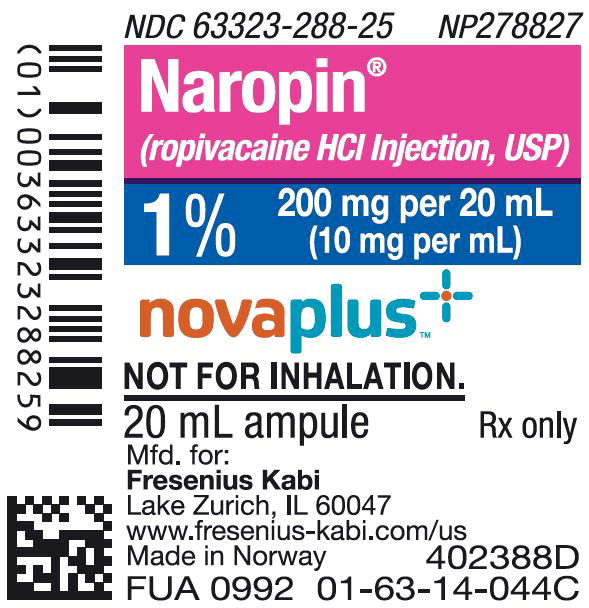
Naropin ROPIVACAINE HYDROCHLORIDE 10 mg/mL Injection, Solution — NDC 63323-288-27 (Billing 63323-0288-27)
This is a package of Naropin ROPIVACAINE HYDROCHLORIDE 10 mg/mL Injection, Solution from Fresenius Kabi USA, LLC, marketed since Sep 1996 and currently FDA-listed.
NDC database record
One package, one record: these facts belong to NDC 63323-288-27 alone.
- Record
- FDA NDC Directory package listing · Human prescription drug
- Code segments
- 63323 labeler · 288 product · 27 package
- Listing certified through
- Dec 31, 2026
- Barcode (UPC)
- 0363323286033, 0363323285074, 0363323285036, 0363323285579 +8 more
- FDA record last changed
- Oct 1, 2026
Other active recalls for Ropivacaine Hydrochloride (different manufacturers) — 1 · tap to view
Identity & classification
Regulatory identifiers FDA, NLM and CMS codes for this package
Drug-database identifiers Medi-Span GPI and First Databank GCN / HICL / AHFS classification
- GSN (GCN sequence number): 028223
- GCN: 46087
- GPI-14 (Medi-Span): 69100070102040
- HICL (First Databank): 036674
- AHFS class code: 72:00.00.00
- RxCUI (RxNorm): 905189
Where does this data come from?
- FDA openFDA NDC Directory · synced Oct 1, 2026
- FDA label on DailyMed · label index refreshed Oct 5, 2026
- RxNorm (NLM RxNav) · catalog refreshed Oct 1, 2026
- Medi-Span GPI (licensed)
- First Databank (licensed) · refreshed Oct 1, 2026
RxNorm drug class
This medicine belongs to the Amide Local Anesthetic class.
Where does this data come from?
- RxClass (NLM) · catalog refreshed Oct 1, 2026
Clinical
- It numbs part of your body for surgery, such as an epidural for cesarean section, a nerve block or numbing around the incision. It also helps control short-term pain, like after su...
- A trained clinician gives it as an injection or infusion, so you won't take it at home. It is given slowly in small steps, and your team picks the dose for your procedure.
- The most common are low blood pressure, nausea, vomiting, a slower heart rate, fever, headache and itching. Your team watches for these and can treat them.
- Mention ringing in your ears, tingling around the mouth, a metallic taste, dizziness, blurred vision, drowsiness, chest symptoms, trouble breathing, hives or swelling, or bluish sk...
Patient education
Supplement & herbal interactions
Where does this data come from?
- MedlinePlus (NLM) · refreshed Oct 1, 2026
- FDA label on DailyMed · label index refreshed Oct 5, 2026
Ask a licensed pharmacist directly — free, answered by our team.
Pricing
A drug doesn't have one price. Each row is a different public payment system, and none is what you'd pay at the counter — that depends on your insurance. The ⓘ on each row explains what it measures.
| Price system | Per mL | Per package |
|---|---|---|
| Retail pharmacies payNADAC · weekly | Not in the retail survey — common for institutional, discontinued, or low-volume packs. | |
| Medicaid paysCMS SDUD · 12 mo | No recent Medicaid claims on file for this NDC — rare and low-volume NDCs are suppressed in the public data. | |
| Medicare drug plans payPart D · quarterly | No Part D plan price is available for this NDC in our data. | |
| Medicare Part B allowsASP · J2795 | $0.039 / J2795 unit | — |
Where does this data come from?
- CMS NADAC weekly file
- CMS ASP pricing files · refreshed Sep 20, 2026
- CMS Medicaid State Drug Utilization Data · refreshed Oct 5, 2026
- CMS Part D plan pricing files · refreshed Sep 24, 2026
- VA National Acquisition Center price file
Billing & reimbursement
Where does this data come from?
- CMS ASP NDC-HCPCS crosswalk · refreshed Sep 22, 2026
- DMEPDAC NDC-HCPCS crosswalk
- openFDA NSDE billing units · refreshed Sep 7, 2026
Packaging — all sizes for this product
| Package NDC | Description | Marketing start | Marketing end | Status |
|---|---|---|---|---|
| 63323-0288-27 You're viewing this | 5 AMPULE in 1 BOX / 20 mL in 1 AMPULE | 2009-08-04 | — | Active |
| 63323-0288-10 63323-288-10 | 5 AMPULE in 1 BOX / 10 mL in 1 AMPULE | 2011-05-31 | — | Active |
| 63323-0288-11 63323-288-11 Main listing | 25 VIAL, SINGLE-DOSE in 1 CARTON / 10 mL in 1 VIAL, SINGLE-DOSE | 2011-05-31 | — | Active |
| 63323-0288-20 63323-288-20 | 5 AMPULE in 1 BOX / 20 mL in 1 AMPULE | 2011-05-31 | — | Active |
| 63323-0288-21 63323-288-21 | 25 VIAL, SINGLE-DOSE in 1 CARTON / 20 mL in 1 VIAL, SINGLE-DOSE | 2011-05-31 | — | Active |
| 63323-0288-29 63323-288-29 | 25 VIAL, SINGLE-DOSE in 1 CARTON / 20 mL in 1 VIAL, SINGLE-DOSE | 2009-08-04 | — | Active |
This pack shows little to no recent Medicaid volume — a different pack size carries most fills. See all packs ↓
Pack size FAQ
What quantity is in this package?
What NDC number is used to bill for this package of Naropin ROPIVACAINE HYDROCHLORIDE 10 mg/mL Injection, Solution?
Therapeutic equivalents
| Product | Labeler | Pack | NADAC/unit | TE | Status | Price vs. this |
|---|---|---|---|---|---|---|
| Ropivacaine Hydrochloride 10 mg/mL 55150-0200-10 | Eugia | 25 vials | — | AP | FDA listed | — |
| Naropin 10 mg/mLthis 63323-0288-27 | Fresenius | 5 ampules | — | AP | FDA listed | — |
| Ropivacaine Hydrochloride 10 mg/mL 71288-0738-21 | Meitheal | 25 vials | — | AP | FDA listed | — |
| Ropivacaine Hydrochloride 10 mg/mL 71288-0737-11 | Meitheal | 25 vials | — | AP | FDA listed | — |
| Ropivacaine Hydrochloride 10 mg/mL 65145-0110-10 | Caplin | 10 vials | — | AP | FDA listed | — |
| Ropivacaine Hydrochloride 10 mg/mL 70069-0067-10 | Somerset | 10 vials | — | AP | FDA listed | — |
| Ropivacaine Hydrochloride 10 mg/mL 55150-0201-20 | Eugia | 25 vials | — | AP | FDA listed | — |
| Ropivacaine Hydrochloride 10 mg/mL 70069-0066-10 | Somerset | 10 vials | — | AP | FDA listed | — |
| Ropivacaine Hydrochloride 10 mg/mL 72603-0219-25 | NorthStar | 25 vials | — | AP | Discontinued | — |
| Ropivacaine Hydrochloride 10 mg/mL 00143-9266-10 | Hikma | 10 vials | — | AP | FDA listed | — |
Where does this data come from?
- FDA openFDA NDC Directory · synced Oct 1, 2026
- FDA Orange Book · refreshed Oct 3, 2026
- CMS NADAC weekly file
Availability & generic status
The FDA lists approved generic versions of this medicine, but that does not always mean a pharmacy can get one today. Patent rules, launch agreements, supply and pricing can affect when generics actually arrive.
Why the date isn’t exact: Generic timing can change because patents may be challenged, settled, licensed, added, removed, or worked around with a narrower label — and FDA approval does not always mean a pharmacy can get the generic today.
🛈 What do these terms mean?
- Patent
- Legal protection listed in the Orange Book that may delay generic approval or launch. Issued by the U.S. Patent & Trademark Office.
- Substance patent
- Covers the active drug molecule itself — the hardest to design around. A generic generally can’t launch until it expires.
- Formulation (product) patent
- Covers a specific formulation or dosage form. A generic can sometimes work around it with a different formulation.
- Method-of-use patent
- A patent covering one specific approved use of the drug — not necessarily the whole molecule. A generic can sometimes launch with a “skinny label” that carves out the protected use and keeps the others.
- Skinny label
- A generic label that omits a still-patented use when the FDA allows it — letting a generic reach the market for the unprotected uses.
- Exclusivity
- FDA-granted marketing protection, separate from patents — e.g. 5-yr new chemical entity, 7-yr orphan drug, or a +6-month pediatric extension.
- Paragraph IV
- A generic applicant’s formal challenge to a listed patent. It can potentially lead to earlier generic entry, but often involves litigation or a settlement.
- RLD / RS
- Reference Listed Drug — the brand product the FDA uses as the reference for generic applications. Reference Standard — the product the FDA expects generics to compare against in bioequivalence testing.
- TE / AB rating
- FDA therapeutic-equivalence rating. An AB rating generally means the FDA considers a generic therapeutically equivalent to — and substitutable for — the brand.
- LOE (loss of exclusivity)
- The latest patent or exclusivity currently listed — the loss-of-exclusivity / latest-listed-protection date shown on this page. Paragraph-IV challenges and settlements can move the real date earlier; FDA approval and a manufacturer’s decision to market can move it later.
Built from the FDA Orange Book. The bars above are scaled to each protection’s expiry; the red LOE marker is the last one to lapse.
| Patent | Type | Use code | Expires |
|---|---|---|---|
| US 7857802 ↗ | Drug product | — | Nov 28, 2026 |
| US 7857802 ↗ | Drug product | — | Nov 28, 2026 |
Is there a generic version of NAROPIN 1% 200 MG/20 ML AMPULE?
The FDA approved a generic — why can’t I get it at my pharmacy yet?
Why do different websites show different generic release dates?
What does “FDA listed” mean?
What does a patent or protection date mean here?
What does “current Orange Book estimate” mean?
Can a generic come out before the last patent expires?
Can a generic come out after the listed dates?
What is the difference between patents and exclusivity?
Why are there multiple patent dates?
Where does this data come from?
- FDA Orange Book · refreshed Oct 3, 2026
Inactive Ingredients / Excipients
Inactive ingredients, also called excipients, are components of the drug product other than the active ingredient. They may include fillers, dyes, coatings, preservatives, flavors, or other formulation ingredients.
🧪 Avoiding an ingredient? See Ropivacaine inactive ingredients by manufacturer: every current product's list side by side, so you can ask your pharmacy for the version that does not list it.
💡 Tap an ingredient (hover on desktop) to see what it is and why it’s used.
-
UNII QTT17582CB
A strong acid used to adjust and maintain the proper pH level in liquid medicines, ensuring stability and preventing breakdown of active ingredients.
-
7.1 mg / 1 mL
UNII 451W47IQ8X
Sodium chloride is common table salt. It's used in medicines as a buffer to maintain proper pH, as a filler to add bulk, or to adjust the osmotic balance in liquid formulations.
-
UNII 55X04QC32I
A strong alkaline chemical used to adjust and maintain the pH balance of liquid medicines. It helps keep the medicine stable and ensures it stays effective during storage.
3 inactive ingredients listed in the exact product block matched to this NDC.
Where does this data come from?
ingredient classCode="IACT" elements from the exact product block matched by this NDC. Label-section narrative from DailyMed / the openFDA label index is shown separately when available.- FDA label on DailyMed · label index refreshed Oct 5, 2026
- FDA openFDA NDC Directory · synced Oct 1, 2026
Inactive ingredient FAQ
Are inactive ingredients the same for every manufacturer?
Why might an inactive ingredient be missing?
Can inactive ingredients matter?
Manufacturer & labeler
More NDCs from Fresenius Kabi USA, LLC labeler code 63323
- Fluphenazine Hydrochloride 2.5 mg/mL Injection, Solution NDC 63323-281-10
- Polocaine MEPIVACAINE HYDROCHLORIDE 10 mg/mL Injection, Solution NDC 63323-283-57
- VANCOMYCIN HYDROCHLORIDE 1 g/20mL Injection, Powder, Lyophilized, For Solution NDC 63323-284-20
- Naropin ROPIVACAINE HYDROCHLORIDE 2 mg/mL Injection, Solution NDC 63323-285-10
- Naropin ropivacaine hydrochloride 5 mg/mL Injection, Solution NDC 63323-286-00
- Naropin ROPIVACAINE HYDROCHLORIDE 7.5 mg/mL Injection, Solution NDC 63323-287-20
- Polocaine-MPF MEPIVACAINE HYDROCHLORIDE 15 mg/mL Injection, Solution NDC 63323-293-37
- Polocaine-MPF MEPIVACAINE HYDROCHLORIDE 20 mg/mL Injection, Solution NDC 63323-294-27
- Vancomycin Hydrochloride 5 g/100mL Injection, Powder, Lyophilized, For Solution NDC 63323-295-61
- Polocaine MEPIVACAINE HYDROCHLORIDE 20 mg/mL Injection, Solution NDC 63323-296-57
- Piperacillin and Tazobactam 3 g/15mL; .375 g/15mL Injection, Powder, For Solution NDC 63323-300-30
- Tobramycin 1200 mg/30mL Injection, Powder, For Solution NDC 63323-303-51
Where does this data come from?
- FDA openFDA NDC Directory · synced Oct 1, 2026
- Drugs@FDA
Full prescribing information FDA SPL
🎯 Indications and Usage ▾
INDICATIONS AND USAGE: Naropin is indicated for the production of local or regional anesthesia for surgery and for acute pain management. Surgical Anesthesia: epidural block for surgery including cesarean section; major nerve block; local infiltration Acute Pain Management: epidural continuous infusion or intermittent bolus, e.g., postoperative or labor; local infiltration
⏱️ Dosage and Administration ▾
DOSAGE AND ADMINISTRATION: The rapid injection of a large volume of local anesthetic solution should be avoided and fractional (incremental) doses should always be used. The smallest dose and concentration required to produce the desired result should be administered. There have been adverse event reports of chondrolysis in patients receiving intra-articular infusions of local anesthetics following arthroscopic and other surgical procedures.
Naropin is not approved for this use (see WARNINGS and DOSAGE AND ADMINISTRATION ). The dose of any local anesthetic administered varies with the anesthetic procedure, the area to be anesthetized, the vascularity of the tissues, the number of neuronal segments to be blocked, the depth of anesthesia and degree of muscle relaxation required, the duration of anesthesia desired, individual tolerance, and the physical condition of the patient. Patients in poor general condition due to aging or other compromising factors such as partial or complete heart conduction block, advanced liver disease or severe renal dysfunction require special attention although regional anesthesia is frequently indicated in these patients.
To reduce the risk of potentially serious adverse reactions, attempts should be made to optimize the patient's condition before major blocks are performed, and the dosage should be adjusted accordingly. Use an adequate test dose (3 to 5 mL of a short acting local anesthetic solution containing epinephrine) prior to induction of complete block. This test dose should be repeated if the patient is moved in such a fashion as to have displaced the epidural catheter.
Allow adequate time for onset of anesthesia following administration of each test dose. Parenteral drug products should be inspected visually for particulate matter and discoloration prior to administration, whenever solution and container permit. Solutions which are discolored or which contain particulate matter should not be administered.
Table 7 Dosage Recommendations Conc. Volume Dose Onset Duration mg/mL (%) mL mg min hours SURGICAL ANESTHESIA Lumbar Epidural 5 (0.5%) 15 to 30 75 to 150 15 to 30 2 to 4 Administration 7.5 (0.75%) 15 to 25 113 to 188 10 to 20 3 to 5 Surgery 10 (1%) 15 to 20 150 to 200 10 to 20 4 to 6 Lumbar Epidural 5 (0.5%) 20 to 30 100 to 150 15 to 25 2 to 4 Administration 7.5 (0.75%) 15 to 20 113 to 150 10 to 20 3 to 5 Cesarean Section Thoracic Epidural 5 (0.5%) 5 to 15 25 to 75 10 to 20 n/a = Not Applicable Administration 7.5 (0.75%) 5 to 15 38 to 113 10 to 20 n/a Surgery Major Nerve Block = The dose for a major nerve block must be adjusted according to site of administration and patient status.
Supraclavicular brachial plexus blocks may be associated with a higher frequency of serious adverse reactions, regardless of the local anesthetic used (see PRECAUTIONS). 5 (0.5%) 35 to 50 175 to 250 15 to 30 5 to 8 (e.g., brachial plexus block) 7.5 (0.75%) 10 to 40 75 to 300 10 to 25 6 to 10 Field Block 5 (0.5%) 1 to 40 5 to 200 1 to 15 2 to 6 (e.g., minor nerve blocks and infiltration) LABOR PAIN MANAGEMENT Lumbar Epidural Administration Initial Dose 2 (0.2%) 10 to 20 20 to 40 10 to 15 0.5 to
1.5Continuous infusion = Median dose of 21 mg per hour was administered by continuous infusion or by incremental injections (top-ups) over a median delivery time of 5.5 hours. 2 (0.2%) 6 to 14 mL/h 12 to 28 mg/h n/a n/a Incremental injections (top-up) 2 (0.2%) 10 to 15 mL/h 20 to 30 mg/h n/a n/a POSTOPERATIVE PAIN MANAGEMENT Lumbar Epidural Administration Continuous infusion = Cumulative doses up to 770 mg of Naropin over 24 hours (intraoperative block plus postoperative infusion); Continuous epidural infusion at rates up to 28 mg per hour for 72 hours have been well tolerated in adults, i.e., 2016 mg plus surgical dose of approximately 100 to 150 mg as top-up.
2 (0.2%) 6 to 14 mL/h 12 to 28 mg/h n/a n/a Thoracic Epidural Administration 2 (0.2%) 6 to 14 mL/h 12 to 28 mg/h n/a n/a Continuous infusion Infiltration 2 (0.2%… [Excerpted — this section continues on DailyMed.]
⛔ Contraindications ▾
CONTRAINDICATIONS: Naropin is contraindicated in patients with a known hypersensitivity to ropivacaine or to any local anesthetic agent of the amide type.
⚠️ Warnings ▾
WARNINGS: In performing Naropin blocks, unintended intravenous injection is possible and may result in cardiac arrhythmia or cardiac arrest. The potential for successful resuscitation has not been studied in humans. There have been rare reports of cardiac arrest during the use of Naropin for epidural anesthesia or peripheral nerve blockade, the majority of which occurred after unintentional accidental intravascular administration in elderly patients and in patients with concomitant heart disease.
In some instances, resuscitation has been difficult. Should cardiac arrest occur, prolonged resuscitative efforts may be required to improve the probability of a successful outcome. Naropin should be administered in incremental doses.
It is not recommended for emergency situations, where a fast onset of surgical anesthesia is necessary. Historically, pregnant patients were reported to have a high risk for cardiac arrhythmias, cardiac/circulatory arrest and death when 0.75% bupivacaine (another member of the amino amide class of local anesthetics) was inadvertently rapidly injected intravenously. Prior to receiving major blocks the general condition of the patient should be optimized and the patient should have an IV line inserted.
All necessary precautions should be taken to avoid intravascular injection. Local anesthetics should only be administered by clinicians who are well versed in the diagnosis and management of dose-related toxicity and other acute emergencies which might arise from the block to be employed, and then only after insuring the immediate (without delay) availability of oxygen, other resuscitative drugs, cardiopulmonary resuscitative equipment, and the personnel resources needed for proper management of toxic reactions and related emergencies (see also ADVERSE REACTIONS , PRECAUTIONS and MANAGEMENT OF LOCAL ANESTHETIC EMERGENCIES ).
Delay in proper management of dose-related toxicity, underventilation from any cause, and/or altered sensitivity may lead to the development of acidosis, cardiac arrest and, possibly, death. Solutions of Naropin should not be used for the production of obstetrical paracervical block anesthesia, retrobulbar block, or spinal anesthesia (subarachnoid block) due to insufficient data to support such use. Intravenous regional anesthesia (bier block) should not be performed due to a lack of clinical experience and the risk of attaining toxic blood levels of ropivacaine.
Intra-articular infusions of local anesthetics following arthroscopic and other surgical procedures is an unapproved use, and there have been post-marketing reports of chondrolysis in patients receiving such infusions. The majority of reported cases of chondrolysis have involved the shoulder joint; cases of gleno-humeral chondrolysis have been described in pediatric and adult patients following intra-articular infusions of local anesthetics with and without epinephrine for periods of 48 to 72 hours. There is insufficient information to determine whether shorter infusion periods are not associated with these findings.
The time of onset of symptoms, such as joint pain, stiffness and loss of motion can be variable, but may begin as early as the 2 nd month after surgery. Currently, there is no effective treatment for chondrolysis; patients who experienced chondrolysis have required additional diagnostic and therapeutic procedures and some required arthroplasty or shoulder replacement. It is essential that aspiration for blood, or cerebrospinal fluid (where applicable), be done prior to injecting any local anesthetic, both the original dose and all subsequent doses, to avoid intravascular or subarachnoid injection.
However, a negative aspiration does not ensure against an intravascular or subarachnoid injection. A well-known risk of epidural anesthesia may be an unintentional subarachnoid injection of local anesthetic. Two clinical studies have been performed to verify the safety of Naropin at a volume of 3 mL injected into the subar… [Excerpted — this section continues on DailyMed.]
🤒 Adverse Reactions ▾
ADVERSE REACTIONS: To report SUSPECTED ADVERSE REACTIONS, contact Fresenius Kabi USA, LLC at 1-800-551-7176 or FDA at 1-800-FDA-1088 or www.fda.gov/medwatch. Reactions to ropivacaine are characteristic of those associated with other amide-type local anesthetics. A major cause of adverse reactions to this group of drugs may be associated with excessive plasma levels, which may be due to overdosage, unintentional intravascular injection or slow metabolic degradation.
The reported adverse events are derived from clinical studies conducted in the U.S. and other countries. The reference drug was usually bupivacaine. The studies used a variety of premedications, sedatives, and surgical procedures of varying length.
A total of 3,988 patients have been exposed to Naropin at concentrations up to 1% in clinical trials. Each patient was counted once for each type of adverse event. Incidence ≥5% For the indications of epidural administration in surgery, cesarean section, postoperative pain management, peripheral nerve block, and local infiltration, the following treatment-emergent adverse events were reported with an incidence of ≥ 5% in all clinical studies (N=3988): hypotension (37%), nausea (24.8%), vomiting (11.6%), bradycardia (9.3%), fever (9.2%), pain (8%), postoperative complications (7.1%), anemia (6.1%), paresthesia (5.6%), headache (5.1%), pruritus (5.1%), and back pain (5%).
Incidence 1 to 5% Urinary retention, dizziness, rigors, hypertension, tachycardia, anxiety, oliguria, hypoesthesia, chest pain, hypokalemia, dyspnea, cramps, and urinary tract infection. Incidence in Controlled Clinical Trials The reported adverse events are derived from controlled clinical studies with Naropin (concentrations ranged from 0.125% to 1% for Naropin and 0.25% to 0.75% for bupivacaine) in the U.S. and other countries involving 3,094 patients. Table 3A and 3B list adverse events (number and percentage) that occurred in at least 1% of Naropin-treated patients in these studies.
The majority of patients receiving concentrations higher than 5 mg/mL (0.5%) were treated with Naropin. Table 3A Adverse Events Reported in ≥1% of Adult Patients Receiving Regional or Local Anesthesia (Surgery, Labor, Cesarean Section, Postoperative Pain Management, Peripheral Nerve Block and Local Infiltration) Adverse Reaction Naropin total N=1661 Bupivacaine total N=1433 N (%) N (%) Hypotension 536 (32.3) 408 (28.5) Nausea 283 (17) 207 (14.4) Vomiting 117 (7) 88 (6.1) Bradycardia 96 (5.8) 73 (5.1) Headache 84 (5.1) 68 (4.7) Paresthesia 82 (4.9) 57 (4) Back pain 73 (4.4) 75 (5.2) Pain 71 (4.3) 71 (5) Pruritus 63 (3.8) 40 (2.8) Fever 61 (3.7) 37 (2.6) Dizziness 42 (2.5) 23 (1.6) Rigors (Chills) 42 (2.5) 24 (1.7) Postoperative complications 41 (2.5) 44 (3.1) Hypoesthesia 27 (1.6) 24 (1.7) Urinary retention 23 (1.4) 20 (1.4) Progression of labor poor/failed 23 (1.4) 22 (1.5) Anxiety 21 (1.3) 11 (0.8) Breast disorder, breast-feeding 21 (1.3) 12 (0.8) Rhinitis 18 (1.1) 13 (0.9) Table 3B Adverse Events Reported in ≥1% of Fetuses or Neonates of Mothers Who Received Regional Anesthesia (Cesarean Section and Labor Studies) Adverse Reaction Naropin total N=639 Bupivacaine total N=573 N (%) N (%) Fetal bradycardia 77 (12.1) 68 (11.9) Neonatal jaundice 49 (7.7) 47 (8.2) Neonatal complication-NOS 42 (6.6) 38 (6.6) Apgar score low 18 (2.8) 14 (2.4) Neonatal respiratory disorder 17 (2.7) 18 (3.1) Neonatal tachypnea 14 (2.2) 15 (2.6) Neonatal fever 13 (2) 14 (2.4) Fetal tachycardia 13 (2) 12 (2.1) Fetal distress 11 (1.7) 10 (1.7) Neonatal infection 10 (1.6) 8 (1.4) Neonatal hypoglycemia 8 (1.3) 16 (2.8) Incidence <1% The following adverse events were reported during the Naropin clinical program in more than one patient (N=3988), occurred at an overall incidence of <1%, and were considered relevant: Application Site Reactions - injection site pain Cardiovascular System - vasovagal reaction, syncope, postural hypotension, non-specific ECG abnormalities Female Reproductive - poor progressi… [Excerpted — this section continues on DailyMed.]
🧓 Geriatric Use ▾
Geriatric Use Of the 2,978 subjects that were administered Naropin Injection in 71 controlled and uncontrolled clinical studies, 803 patients (27%) were 65 years of age or older which includes 127 patients (4%) 75 years of age and over. Naropin Injection was found to be safe and effective in the patients in these studies. Clinical data in one published article indicate that differences in various pharmacodynamic measures were observed with increasing age.
In one study, the upper level of analgesia increased with age, the maximum decrease of mean arterial pressure (MAP) declined with age during the first hour after epidural administration, and the intensity of motor blockade increased with age. This drug and its metabolites are known to be excreted by the kidney, and the risk of toxic reactions to this drug may be greater in patients with impaired renal function. Elderly patients are more likely to have decreased hepatic, renal, or cardiac function, as well as concomitant disease.
Therefore, care should be taken in dose selection, starting at the low end of the dosage range, and it may be useful to monitor renal function (see PHARMACOKINETICS , Elimination ).
🆘 Overdosage ▾
OVERDOSAGE: Acute emergencies from local anesthetics are generally related to high plasma levels encountered, or large doses administered, during therapeutic use of local anesthetics or to unintended subarachnoid or intravascular injection of local anesthetic solution (see ADVERSE REACTIONS , WARNINGS , and PRECAUTIONS ).
🧬 Clinical Pharmacology ▾
CLINICAL PHARMACOLOGY: Mechanism of Action Ropivacaine is a member of the amino amide class of local anesthetics and is supplied as the pure S-(-)-enantiomer. Local anesthetics block the generation and the conduction of nerve impulses, presumably by increasing the threshold for electrical excitation in the nerve, by slowing the propagation of the nerve impulse, and by reducing the rate of rise of the action potential. In general, the progression of anesthesia is related to the diameter, myelination and conduction velocity of affected nerve fibers.
Clinically, the order of loss of nerve function is as follows: (1) pain, (2) temperature, (3) touch, (4) proprioception, and (5) skeletal muscle tone.
🧬 Mechanism of Action ▾
Mechanism of Action Ropivacaine is a member of the amino amide class of local anesthetics and is supplied as the pure S-(-)-enantiomer. Local anesthetics block the generation and the conduction of nerve impulses, presumably by increasing the threshold for electrical excitation in the nerve, by slowing the propagation of the nerve impulse, and by reducing the rate of rise of the action potential. In general, the progression of anesthesia is related to the diameter, myelination and conduction velocity of affected nerve fibers.
Clinically, the order of loss of nerve function is as follows: (1) pain, (2) temperature, (3) touch, (4) proprioception, and (5) skeletal muscle tone.
📦 How Supplied / Storage and Handling ▾
HOW SUPPLIED: Naropin (ropivacaine HCl Injection, USP) is supplied as follows: Product Code Unit of Sale Strength Each NP278827 NDC 63323-288-27 Unit of 5 1% 200 mg per 20 mL (10 mg per mL) NDC 63323-288-25 20 mL Plastic Ampule The solubility of ropivacaine is limited at pH above 6. Thus, care must be taken as precipitation may occur if Naropin is mixed with alkaline solutions. Disinfecting agents containing heavy metals, which cause release of respective ions (mercury, zinc, copper, etc.) should not be used for skin or mucous membrane disinfection since they have been related to incidents of swelling and edema.
When chemical disinfection of the container surface is desired, either isopropyl alcohol (91%) or ethyl alcohol (70%) is recommended. It is recommended that chemical disinfection be accomplished by wiping the ampule or vial stopper thoroughly with cotton or gauze that has been moistened with the recommended alcohol just prior to use. When a container is required to have a sterile outside, a Sterile-Pak should be chosen.
Glass containers may, as an alternative, be autoclaved once. Stability has been demonstrated using a targeted F 0 of 7 minutes at 121°C. Solutions should be stored at 20º to 25°C (68º to 77°F) [see USP Controlled Room Temperature].
The container closure is not made with natural rubber latex. These products are intended for single dose and are free from preservatives. Any solution remaining from an opened container should be discarded promptly.
In addition, continuous infusion bottles should not be left in place for more than 24 hours. NAROPIN is a trademark of Fresenius Kabi USA, LLC. Novaplus is a registered trademark of Vizient, Inc.
📋 Description ▾
DESCRIPTION: Naropin ® Injection contains ropivacaine HCl which is a member of the amino amide class of local anesthetics. Naropin Injection is a sterile, isotonic solution that contains the enantiomerically pure drug substance, sodium chloride for isotonicity and water for injection. Sodium hydroxide and/or hydrochloric acid may be used for pH adjustment.
It is administered parenterally. Ropivacaine HCl is chemically described as S-(-)-1-propyl-2',6'-pipecoloxylidide hydrochloride monohydrate. The drug substance is a white crystalline powder, with the following structural formula: At 25°C ropivacaine HCl has a solubility of 53.8 mg/mL in water, a distribution ratio between n-octanol and phosphate buffer at pH 7.4 of 14:1 and a pKa of 8.07 in
0.1M KCl solution. The pKa of ropivacaine is approximately the same as bupivacaine (8.1) and is similar to that of mepivacaine (7.7). However, ropivacaine has an intermediate degree of lipid solubility compared to bupivacaine and mepivacaine.
Naropin Injection is preservative-free and is available in single dose containers in 2 (0.2%), 5 (0.5%), 7.5 (0.75%) and 10 mg/mL (1%) concentrations. The specific gravity of Naropin Injection solutions range from 1.002 to 1.005 at 25°C. structure
⚠️ Precautions ▾
PRECAUTIONS: General The safe and effective use of local anesthetics depends on proper dosage, correct technique, adequate precautions and readiness for emergencies. Resuscitative equipment, oxygen and other resuscitative drugs should be available for immediate use (see WARNINGS and ADVERSE REACTIONS ). The lowest dosage that results in effective anesthesia should be used to avoid high plasma levels and serious adverse events.
Injections should be made slowly and incrementally, with frequent aspirations before and during the injection to avoid intravascular injection. When a continuous catheter technique is used, syringe aspirations should also be performed before and during each supplemental injection. During the administration of epidural anesthesia, it is recommended that a test dose of a local anesthetic with a fast onset be administered initially and that the patient be monitored for central nervous system and cardiovascular toxicity, as well as for signs of unintended intrathecal administration before proceeding.
When clinical conditions permit, consideration should be given to employing local anesthetic solutions, which contain epinephrine for the test dose because circulatory changes compatible with epinephrine may also serve as a warning sign of unintended intravascular injection. An intravascular injection is still possible even if aspirations for blood are negative. Administration of higher than recommended doses of Naropin to achieve greater motor blockade or increased duration of sensory blockade may result in cardiovascular depression, particularly in the event of inadvertent intravascular injection.
Tolerance to elevated blood levels varies with the physical condition of the patient. Debilitated, elderly patients and acutely ill patients should be given reduced doses commensurate with their age and physical condition. Local anesthetics should also be used with caution in patients with hypotension, hypovolemia or heart block.
Careful and constant monitoring of cardiovascular and respiratory vital signs (adequacy of ventilation) and the patient's state of consciousness should be performed after each local anesthetic injection. It should be kept in mind at such times that restlessness, anxiety, incoherent speech, light-headedness, numbness and tingling of the mouth and lips, metallic taste, tinnitus, dizziness, blurred vision, tremors, twitching, depression, or drowsiness may be early warning signs of central nervous system toxicity. Because amide-type local anesthetics such as ropivacaine are metabolized by the liver, these drugs, especially repeat doses, should be used cautiously in patients with hepatic disease.
Patients with severe hepatic disease, because of their inability to metabolize local anesthetics normally, are at a greater risk of developing toxic plasma concentrations. Local anesthetics should also be used with caution in patients with impaired cardiovascular function because they may be less able to compensate for functional changes associated with the prolongation of A-V conduction produced by these drugs. Many drugs used during the conduct of anesthesia are considered potential triggering agents for malignant hyperthermia (MH).
Amide-type local anesthetics are not known to trigger this reaction. However, since the need for supplemental general anesthesia cannot be predicted in advance, it is suggested that a standard protocol for MH management should be available. Epidural Anesthesia During epidural administration, Naropin should be administered in incremental doses of 3 to 5 mL with sufficient time between doses to detect toxic manifestations of unintentional intravascular or intrathecal injection.
Syringe aspirations should also be performed before and during each supplemental injection in continuous (intermittent) catheter techniques. An intravascular injection is still possible even if aspirations for blood are negative. During the administration of epidural anesthesia, it is recommended that… [Excerpted — this section continues on DailyMed.]
🧬 Pharmacokinetics ▾
PHARMACOKINETICS: Absorption The systemic concentration of ropivacaine is dependent on the total dose and concentration of drug administered, the route of administration, the patient's hemodynamic/circulatory condition, and the vascularity of the administration site. From the epidural space, ropivacaine shows complete and biphasic absorption. The half-lives of the 2 phases, (mean ± SD) are 14 ± 7 minutes and 4.2 ± 0.9 h, respectively.
The slow absorption is the rate limiting factor in the elimination of ropivacaine that explains why the terminal half-life is longer after epidural than after intravenous administration. Ropivacaine shows dose-proportionality up to the highest intravenous dose studied, 80 mg, corresponding to a mean ± SD peak plasma concentration of 1.9 ± 0.3 mcg/mL. Table 1 Pharmacokinetic (plasma concentration-time) data from clinical trials Route Epidural Infusion* Epidural Infusion* Epidural Block † Epidural Block † Plexus Block ‡ IV Infusion § Dose (mg) 1493 ± 10 2075 ± 206 1217 ± 277 150 187.5 300 40 N 12 12 11 8 8 10 12 C max (mg/L) 2.4 ± 1 ¶ 2.8 ± 0.5 ¶ 2.3 ± 1.1 ¶ 1.1 ± 0.2 1.6 ± 0.6 2.3 ± 0.8 1.2 ± 0.2 # T max (min) n/a ♠ n/a n/a 43 ± 14 34 ± 9 54 ± 22 n/a AUC 0- (mg.h/L) 135.5 ± 50 145 ± 34 161 ± 90 7.2 ± 2 11.3 ± 4 13 ± 3.3 1.8 ±
0.6CL (L/h) 11.03 13.7 n/a 5.5 ± 2 5 ± 2.6 n/a 21.2 ± 7 t 1/2 (hr)♥ 5 ± 2.5 5.7 ± 3 6 ± 3 5.7 ± 2 7.1 ± 3 6.8 ± 3.2 1.9 ± 0.5 *Continuous 72 hour epidural infusion after an epidural block with 5 or 10 mg/mL. † Epidural anesthesia with 7.5 mg/mL (0.75%) for cesarean delivery. ‡ Brachial plexus block with 7.5 mg/mL (0.75%) ropivacaine. § 20 minute IV infusion to volunteers (40 mg). ¶ C max measured at the end of infusion (i.e., at 72 hr). # C max measured at the end of infusion (i.e., at 20 minutes). ♠ n/a=not applicable ♥ t ½ is the true terminal elimination half-life.
On the other hand, t ½ follows absorption-dependent elimination (flip-flop) after non-intravenous administration. In some patients after a 300 mg dose for brachial plexus block, free plasma concentrations of ropivacaine may approach the threshold for CNS toxicity (see PRECAUTIONS ). At a dose of greater than 300 mg, for local infiltration, the terminal half-life may be longer (>30 hours).
Distribution After intravascular infusion, ropivacaine has a steady-state volume of distribution of 41 ± 7 liters. Ropivacaine is 94% protein bound, mainly to α 1 -acid glycoprotein. An increase in total plasma concentrations during continuous epidural infusion has been observed, related to a postoperative increase of α 1 -acid glycoprotein.
Variations in unbound, i.e., pharmacologically active, concentrations have been less than in total plasma concentration. Ropivacaine readily crosses the placenta and equilibrium in regard to unbound concentration will be rapidly reached (see PRECAUTIONS , Labor and Delivery ). Metabolism Ropivacaine is extensively metabolized in the liver, predominantly by aromatic hydroxylation mediated by cytochrome P4501A to 3-hydroxy ropivacaine.
After a single IV dose approximately 37% of the total dose is excreted in the urine as both free and conjugated 3-hydroxy ropivacaine. Low concentrations of 3-hydroxy ropivacaine have been found in the plasma. Urinary excretion of the 4-hydroxy ropivacaine, and both the 3-hydroxy N-de-alkylated (3-OH-PPX) and 4-hydroxy N-de-alkylated (4-OH-PPX) metabolites account for less than 3% of the dose.
An additional metabolite, 2-hydroxy-methyl-ropivacaine, has been identified but not quantified in the urine. The N-de-alkylated metabolite of ropivacaine (PPX) and 3-OH-ropivacaine are the major metabolites excreted in the urine during epidural infusion. Total PPX concentration in the plasma was about half as that of total ropivacaine; however, mean unbound concentrations of PPX were about 7 to 9 times higher than that of unbound ropivacaine following continuous epidural infusion up to 72 hours.
Unbound PPX, 3-hydroxy and 4-hydroxy ropivacaine, have a pharmacological act… [Excerpted — this section continues on DailyMed.]
🧬 Pharmacodynamics ▾
Pharmacodynamics Studies in humans have demonstrated that, unlike most other local anesthetics, the presence of epinephrine has no major effect on either the time of onset or the duration of action of ropivacaine. Likewise, addition of epinephrine to ropivacaine has no effect on limiting systemic absorption of ropivacaine. Systemic absorption of local anesthetics can produce effects on the central nervous and cardiovascular systems.
At blood concentrations achieved with therapeutic doses, changes in cardiac conduction, excitability, refractoriness, contractility, and peripheral vascular resistance have been reported. Toxic blood concentrations depress cardiac conduction and excitability, which may lead to atrioventricular block, ventricular arrhythmias and to cardiac arrest, sometimes resulting in fatalities. In addition, myocardial contractility is depressed and peripheral vasodilation occurs, leading to decreased cardiac output and arterial blood pressure.
Following systemic absorption, local anesthetics can produce central nervous system stimulation, depression or both. Apparent central stimulation is usually manifested as restlessness, tremors and shivering, progressing to convulsions, followed by depression and coma, progressing ultimately to respiratory arrest. However, the local anesthetics have a primary depressant effect on the medulla and on higher centers.
The depressed stage may occur without a prior excited stage. In 2 clinical pharmacology studies (total n=24) ropivacaine and bupivacaine were infused (10 mg/min) in human volunteers until the appearance of CNS symptoms, e.g., visual or hearing disturbances, perioral numbness, tingling and others. Similar symptoms were seen with both drugs.
In 1 study, the mean ± SD maximum tolerated intravenous dose of ropivacaine infused (124 ± 38 mg) was significantly higher than that of bupivacaine (99 ± 30 mg) while in the other study the doses were not different (115 ± 29 mg of ropivacaine and 103 ± 30 mg of bupivacaine). In the latter study, the number of subjects reporting each symptom was similar for both drugs with the exception of muscle twitching which was reported by more subjects with bupivacaine than ropivacaine at comparable intravenous doses. At the end of the infusion, ropivacaine in both studies caused significantly less depression of cardiac conductivity (less QRS widening) than bupivacaine.
Ropivacaine and bupivacaine caused evidence of depression of cardiac contractility, but there were no changes in cardiac output. Clinical data in one published article indicate that differences in various pharmacodynamic measures were observed with increasing age. In one study, the upper level of analgesia increased with age, the maximum decrease of mean arterial pressure (MAP) declined with age during the first hour after epidural administration, and the intensity of motor blockade increased with age.
However, no pharmacokinetic differences were observed between elderly and younger patients. In non-clinical pharmacology studies comparing ropivacaine and bupivacaine in several animal species, the cardiac toxicity of ropivacaine was less than that of bupivacaine, although both were considerably more toxic than lidocaine. Arrhythmogenic and cardio-depressant effects were seen in animals at significantly higher doses of ropivacaine than bupivacaine.
The incidence of successful resuscitation was not significantly different between the ropivacaine and bupivacaine groups.
📄 Package Label / Principal Display Panel ▾
PACKAGE LABEL - PRINCIPAL DISPLAY - Naropin 20 mL Ampule Label NDC 63323-288-25 NP278827 Naropin ® (ropivacaine HCl Injection, USP) 1% 200 mg per 20 mL (10 mg per mL) NOT FOR INHALATION. 20 mL ampule Rx only PACKAGE LABEL - PRINCIPAL DISPLAY - Naropin 20 mL Ampule Lidding Label NDC 63323-288-25 NP278827 Naropin ® (ropivacaine HCl Injection, USP) Sterile-Pak 1% 200 mg per 20 mL (10 mg per mL) For Epidural Administration Only. Not for Intravenous Administration.
PACKAGE LABEL - PRINCIPAL DISPLAY - Naropin 20 mL Ampule Carton Panel NDC 63323-288-27 NP278827 Naropin ® (ropivacaine HCl Injection, USP) 1% 200 mg per 20 mL (10 mg per mL) For Epidural Administration Only. Not for Intravenous Administration. Contains Five Presterilized 20 mL Plastic Ampule Units NOT FOR INHALATION.
Rx only np278827-amp np278827-ldg np278827-box
Medicaid utilization by pack size
About this NDC listing & data coverage
What data is (and isn’t) available for this NDC — tap to expand
| NDC identity (package / product / labeler codes) | ✓ Available |
| Labeler | ✓ Available |
| Product & package description | ✓ Available |
| Marketing category & status | ✓ Available |
| Active ingredient / dosage form / route | ✓ Available |
| FDA label (SPL via DailyMed) | ✓ Available |
| Package photos | ✓ Available |
| Inactive ingredients (structured) | ✓ Available |
| NADAC pharmacy acquisition price (CMS) | — Not published for this NDC CMS publishes NADAC only for NDCs reported in its retail-pharmacy survey. |
| Orange Book / therapeutic-equivalence data | ✓ Available |
| HCPCS J-code billing crosswalk | ✓ Available |
| Medicaid utilization (CMS SDUD) | — Not published for this NDC CMS reports utilization only for NDCs with Medicaid claims above its privacy threshold. |