
Amitriptyline Hydrochloride 10 mg Tablet, Film Coated, 30-count — NDC 71335-0395-1 (Billing 71335-0395-01)
This is a package of 30 tablets of Amitriptyline Hydrochloride 10 mg Tablet, Film Coated from Bryant Ranch Prepack, marketed since Dec 2014 and currently FDA-listed.
NDC database record
One package, one record: these facts belong to NDC 71335-0395-1 alone.
- Record
- FDA NDC Directory package listing · Human prescription drug
- Code segments
- 71335 labeler · 0395 product · 1 package
- Package marketed since
- Dec 5, 2014
- Sample package
- No — commercial package
- Listing certified through
- Dec 31, 2026
- Billing quantity
- 30 EA per package
- Barcode (UPC-A, from the NDC)
- 3 7133503951 6
- FDA record last changed
- Jul 24, 2026
Identity & classification
Regulatory identifiers FDA, NLM and CMS codes for this package
Drug-database identifiers Medi-Span GPI and First Databank GCN / HICL / AHFS classification
- GSN (GCN sequence number): 046043
- GCN: 16512
- GPI-14 (Medi-Span): 58200010100305
- HICL (First Databank): 001643
- AHFS class code: 28:16.04.28
- RxCUI (RxNorm): 856762
Where does this data come from?
- FDA openFDA NDC Directory · synced Oct 8, 2026
- FDA label on DailyMed · label index refreshed Oct 8, 2026
- RxNorm (NLM RxNav) · catalog refreshed Oct 8, 2026
- Medi-Span GPI (licensed)
- First Databank (licensed) · refreshed Oct 8, 2026
RxNorm drug class
This medicine belongs to the Tricyclic Antidepressant class.
Where does this data come from?
- RxClass (NLM) · catalog refreshed Oct 8, 2026
Clinical
Amitriptyline is used to treat symptoms of depression. Amitriptyline is in a class of medications called tricyclic antidepressants. It works by increasing the amounts of certain natural substances in the brain that are needed to maintain mental balance.
Read the full MedlinePlus article ↗- It's used to relieve symptoms of depression. It tends to work best for endogenous depression. Your prescriber can explain why it was chosen for you.
- You may feel sleepy before your mood improves. Full benefit can take as long as 30 days. Keep taking it as directed and keep in touch with your prescriber.
- It's taken by mouth, and your prescriber may split the dose or have you take it at bedtime. It can make you drowsy, so bedtime dosing is common. Follow your label directions.
- Please don't stop suddenly. After long use, stopping abruptly can cause nausea, headache and malaise. Your prescriber will lower the dose gradually and often continues treatment fo...
Patient education
Supplement & herbal interactions
Amitriptyline may be associated with lower levels of 3 nutrients — worth a chat with your pharmacist, not a cause for alarm.
Where does this data come from?
- MedlinePlus (NLM) · refreshed Oct 8, 2026
- FDA label on DailyMed · label index refreshed Oct 8, 2026
Ask a licensed pharmacist directly — free, answered by our team.
Pricing
A drug doesn't have one price. Each row is a different public payment system, and none is what you'd pay at the counter — that depends on your insurance. The ⓘ on each row explains what it measures.
| Price system | Per each | Per package |
|---|---|---|
| Retail pharmacies payNADAC · weekly | Not in the retail survey — common for institutional, discontinued, or low-volume packs. | |
| Medicaid paysCMS SDUD · 12 mo | No recent Medicaid claims on file for this NDC — rare and low-volume NDCs are suppressed in the public data. | |
| Medicare drug plans payPart D · Q2 2026 | $0.1608 | $4.82 / 30 tablets |
Where does this data come from?
- CMS NADAC weekly file
- CMS ASP pricing files · refreshed Sep 20, 2026
- CMS Medicaid State Drug Utilization Data · refreshed Oct 9, 2026
- CMS Part D plan pricing files · refreshed Sep 24, 2026
- VA National Acquisition Center price file
Packaging — all sizes for this product
| Package NDC | Description | Marketing start | Marketing end | Status |
|---|---|---|---|---|
| 71335-0395-00 71335-0395-0 Main listing | 100 TABLET, FILM COATED in 1 BOTTLE | 2014-12-05 | — | Active |
| 71335-0395-01 You're viewing this | 30 TABLET, FILM COATED in 1 BOTTLE | 2014-12-05 | — | Active |
| 71335-0395-02 71335-0395-2 | 15 TABLET, FILM COATED in 1 BOTTLE | 2014-12-05 | — | Active |
| 71335-0395-03 71335-0395-3 | 60 TABLET, FILM COATED in 1 BOTTLE | 2014-12-05 | — | Active |
| 71335-0395-04 71335-0395-4 | 90 TABLET, FILM COATED in 1 BOTTLE | 2014-12-05 | — | Active |
| 71335-0395-05 71335-0395-5 | 28 TABLET, FILM COATED in 1 BOTTLE | 2014-12-05 | — | Active |
| 71335-0395-06 71335-0395-6 | 120 TABLET, FILM COATED in 1 BOTTLE | 2014-12-05 | — | Active |
| 71335-0395-07 71335-0395-7 | 50 TABLET, FILM COATED in 1 BOTTLE | 2014-12-05 | — | Active |
| 71335-0395-08 71335-0395-8 | 180 TABLET, FILM COATED in 1 BOTTLE | 2014-12-05 | — | Active |
| 71335-0395-09 71335-0395-9 | 6 TABLET, FILM COATED in 1 BOTTLE | 2014-12-05 | — | Active |
You're viewing one of 10 pack sizes for this product.
Pack size FAQ
What quantity is in this package?
How does this package differ from NDC 71335-0395-09?
What NDC number is used to bill for this package of Amitriptyline Hydrochloride 10 mg Tablet, Film Coated?
Therapeutic equivalents
| Product | Labeler | Pack | NADAC/unit | TE | Status | Price vs. this |
|---|---|---|---|---|---|---|
| Amitriptyline Hydrochloride 10 mg 00781-1486-01 | Sandoz | 100 tablets | $0.030 | AB | Availability likely | — |
| Amitriptyline Hydrochloride 10 mg 11788-0077-01 | AiPing | 100 tablets | $0.030 | AB | Availability likely | — |
| Amitriptyline Hydrochloride 10 mg 16571-0105-01 | Rising | 100 tablets | $0.030 | AB | Availability likely | — |
| Amitriptyline Hydrochloride 10 mg 16714-0257-01 | Northstar | 100 tablets | $0.030 | AB | Availability likely | — |
| Amitriptyline Hydrochloride 10 mg 29300-0419-01 | Unichem | 100 tablets | $0.030 | AB | Availability likely | — |
| Amitriptyline Hydrochloride 10 mg 50268-0037-15 | AvPAK | 1 tablet | $0.030 | AB | Availability likely | — |
| Amitriptyline Hydrochloride 10 mg 57664-0687-18 | Sun | 1000 tablets | $0.030 | AB | Availability likely | — |
| Amitriptyline Hydrochloride 10 mg 69367-0388-01 | Westminster | 100 tablets | $0.030 | AB | Availability likely | — |
| Amitriptyline Hydrochloride 10 mg 70710-1225-00 | Zydus | 1000 tablets | $0.030 | AB | Availability likely | — |
| Amitriptyline Hydrochloride 10 mg 70756-0201-11 | Lifestar | 100 tablets | $0.030 | AB | Availability likely | — |
| Amitriptyline Hydrochloride 10 mg 72888-0067-00 | Advagen | 1000 tablets | $0.030 | AB | Availability likely | — |
| Amitriptyline Hydrochloride 10 mg 16729-0171-01 | Accord | 100 tablets | $0.032 | AB | Availability likely | — |
| Amitriptyline Hydrochloride 10 mg 50090-6179-00 | A-S | 30 tablets | — | AB | FDA listed | — |
| Amitriptyline Hydrochloride 10 mg 50090-7424-00 | A-S | 30 tablets | — | AB | FDA listed | — |
| Amitriptyline Hydrochloride 10 mg 51407-0793-01 | Golden | 100 tablets | — | AB | FDA listed | — |
| Amitriptyline Hydrochloride 10 mg 51655-0084-26 | Northwind | 90 tablets | — | AB | FDA listed | — |
| Amitriptyline Hydrochloride 10 mg 51655-0632-26 | Northwind | 90 tablets | — | AB | FDA listed | — |
| Amitriptyline Hydrochloride 10 mg 60760-0556-15 | St. | 15 tablets | — | AB | FDA listed | — |
| Amitriptyline Hydrochloride 10 mg 63187-0637-30 | Proficient | 30 tablets | — | AB | FDA listed | — |
| Amitriptyline Hydrochloride 10 mg 64330-0630-01 | Centaur | 100 tablets | — | — | FDA listed | — |
| Amitriptyline Hydrochloride 10 mg 68071-3913-03 | NuCare | 30 tablets | — | AB | FDA listed | — |
| Amitriptyline Hydrochloride 10 mg 68071-4092-02 | NuCare | 20 tablets | — | AB | FDA listed | — |
| Amitriptyline Hydrochloride 10 mg 68071-4104-01 | NuCare | 100 tablets | — | AB | FDA listed | — |
| Amitriptyline Hydrochloride 10 mg 68788-8218-03 | Preferred | 30 tablets | — | AB | FDA listed | — |
| Amitriptyline Hydrochloride 10 mg 70518-3621-00 | REMEDYREPACK | 30 tablets | — | AB | FDA listed | — |
| Amitriptyline Hydrochloride 10 mg 70518-4234-00 | REMEDYREPACK | 60 tablets | — | AB | FDA listed | — |
| Amitriptyline Hydrochloride 10 mg 70771-1173-00 | Zydus | 1000 tablets | — | AB | FDA listed | — |
| Amitriptyline Hydrochloride 10 mgthis 71335-0395-01 | Bryant | 30 tablets | — | AB | FDA listed | — |
| Amitriptyline Hydrochloride 10 mg 71335-3007-00 | Bryant | 100 tablets | — | AB | FDA listed | — |
| Amitriptyline Hydrochloride 10 mg 71335-9637-00 | Bryant | 100 tablets | — | AB | FDA listed | — |
| Amitriptyline Hydrochloride 10 mg 71610-0710-30 | Aphena | 30 tablets | — | AB | FDA listed | — |
| Amitriptyline Hydrochloride 10 mg 71610-0750-30 | Aphena | 30 tablets | — | AB | FDA listed | — |
| Amitriptyline HCL 10 mg 72189-0431-90 | Direct_Rx | 90 tablets | — | AB | FDA listed | — |
| Amitriptyline Hydrochloride 10 mg 76420-0693-01 | Asclemed | 100 tablets | — | AB | FDA listed | — |
| Amitriptyline HCL 10 mg 80425-0172-01 | Advanced | 30 tablets | — | AB | FDA listed | — |
| Amitriptyline Hydrochloride 10 mg 80425-0386-01 | Advanced | 30 tablets | — | AB | FDA listed | — |
| Amitriptyline Hydrochloride 10 mg 82804-0092-30 | Proficient | 30 tablets | — | AB | FDA listed | — |
| Amitriptyline Hydrochloride 10 mg 82868-0093-90 | Northwind | 90 tablets | — | AB | FDA listed | — |
Where does this data come from?
- FDA openFDA NDC Directory · synced Oct 8, 2026
- FDA Orange Book · refreshed Oct 3, 2026
- CMS NADAC weekly file
Availability & generic status
This product is an FDA-approved generic. Other versions of the same drug are listed under Therapeutic equivalents, least expensive first.
Where does this data come from?
- FDA Orange Book · refreshed Oct 3, 2026
What it looks like
Where does this data come from?
- FDA label on DailyMed · label index refreshed Oct 8, 2026
Inactive Ingredients / Excipients
Inactive ingredients, also called excipients, are components of the drug product other than the active ingredient. They may include fillers, dyes, coatings, preservatives, flavors, or other formulation ingredients.
🧪 Avoiding an ingredient? See Amitriptyline inactive ingredients by manufacturer: every current product's list side by side, so you can ask your pharmacy for the version that does not list it.
💡 Tap an ingredient (hover on desktop) to see what it is and why it’s used.
-
UNII M28OL1HH48
Croscarmellose sodium is a plant-based substance derived from cellulose. It acts as a disintegrant, helping tablets and capsules break down quickly in the digestive system so the medicine can be absorbed.
-
UNII 1K09F3G675
Ferric oxide red is an inorganic iron compound used as a colorant in medicines. It gives tablets, capsules, or other dosage forms a red or reddish tint for identification and appearance.
-
UNII EWQ57Q8I5X
Lactose monohydrate is a natural sugar derived from milk. It serves as a filler and binder in tablets and capsules, helping create the proper size, texture, and consistency of the medicine.
-
UNII 1DI56QDM62
A natural fatty substance from soybeans that helps mix oil and water-based ingredients together. It acts as an emulsifier and lubricant in medicines to improve texture and help the product break down properly in your body.
-
UNII 70097M6I30
Magnesium stearate is a salt made from magnesium and stearic acid, a fatty substance. It's used in tablets and capsules as a lubricant and glidant to help ingredients flow smoothly during manufacturing and prevent sticking.
-
UNII OP1R32D61U
Microcrystalline cellulose is a purified form of cellulose, a natural fiber from plant sources. It acts as a binder and filler in tablets and capsules, helping hold ingredients together and give the medicine its shape and size.
-
UNII 532B59J990
Polyvinyl alcohol is a synthetic polymer made from plant-derived materials. It's used as a binder to hold ingredients together, a film-former in coatings, and a thickener in liquid formulations.
-
UNII ETJ7Z6XBU4
Silicon dioxide is a naturally occurring mineral used as a glidant and anti-caking agent. It helps powder ingredients flow smoothly and prevents clumping during manufacturing and storage.
-
UNII 7SEV7J4R1U
A powder made from a naturally occurring mineral. In medicines, talc works as a glidant and anti-caking agent, helping tablets and capsules flow smoothly during manufacturing and preventing clumping.
-
UNII 15FIX9V2JP
Titanium dioxide is a bright white mineral powder commonly used as a colorant and opacifying agent. It makes pills and tablets white or lighter in color and helps make coatings non-transparent.
-
UNII TTV12P4NEE
Xanthan gum is a thickening and stabilizing ingredient made from fermented corn or other sugars. It's added to medicines to improve texture, prevent separation of liquids and solids, and help the product stay consistent.
11 inactive ingredients listed in the exact product block matched to this NDC.
Where does this data come from?
ingredient classCode="IACT" elements from the exact product block matched by this NDC. Label-section narrative from DailyMed / the openFDA label index is shown separately when available.- FDA label on DailyMed · label index refreshed Oct 8, 2026
- FDA openFDA NDC Directory · synced Oct 8, 2026
Inactive ingredient FAQ
Are inactive ingredients the same for every manufacturer?
Why might an inactive ingredient be missing?
Can inactive ingredients matter?
Manufacturer & labeler
More NDCs from Bryant Ranch Prepack labeler code 71335
- Metaxalone 800 mg Tablet NDC 71335-0375-0
- Citalopram 10 mg Tablet, Film Coated NDC 71335-0377-1
- Fosinopril Sodium 10 mg Tablet NDC 71335-0381-1
- Furosemide 20 mg Tablet NDC 71335-0384-1
- Duloxetine Delayed-Release DULOXETINE HYDROCHLORIDE 30 mg Capsule, Delayed Release Pellets NDC 71335-0392-1
- Oxaprozin 600 mg Tablet, Film Coated NDC 71335-0393-1
- Tamsulosin Hydrochloride .4 mg Capsule NDC 71335-0398-1
- Etodolac 500 mg Tablet, Film Coated NDC 71335-0399-1
- Spironolactone 50 mg Tablet, Film Coated NDC 71335-0401-1
- Duloxetine 60 mg Capsule, Delayed Release NDC 71335-0402-1
- Sertraline Hydrochloride 50 mg Tablet, Film Coated NDC 71335-0403-1
- meloxicam 7.5 mg Tablet NDC 71335-0406-0
Where does this data come from?
- FDA openFDA NDC Directory · synced Oct 8, 2026
- Drugs@FDA
Full prescribing information FDA SPL
🚨 Boxed Warning ▾
Suicidality and Antidepressant Drugs: Antidepressants increased the risk compared to placebo of suicidal thinking and behavior (suicidality) in children, adolescents, and young adults in short-term studies of major depressive disorder (MDD) and other psychiatric disorders. Anyone considering the use of amitriptyline hydrochloride tablets or any other antidepressant in a child, adolescent, or young adult must balance this risk with the clinical need. Short-term studies did not show an increase in the risk of suicidality with antidepressants compared to placebo in adults beyond age 24; there was a reduction in risk with antidepressants compared to placebo in adults aged 65 and older.
Depression and certain other psychiatric disorders are themselves associated with increases in the risk of suicide. Patients of all ages who are started on antidepressant therapy should be monitored appropriately and observed closely for clinical worsening, suicidality, or unusual changes in behavior. Families and caregivers should be advised of the need for close observation and communication with the prescriber.
Amitriptyline hydrochloride is not approved for use in pediatric patients. (See WARNINGS: Clinical Worsening and Suicide Risk , PRECAUTIONS: Information for Patients , and PRECAUTIONS: Pediatric Use )
🎯 Indications and Usage ▾
INDICATIONS AND USAGE For the relief of symptoms of depression. Endogenous depression is more likely to be alleviated than are other depressive states.
⏱️ Dosage and Administration ▾
DOSAGE AND ADMINISTRATION Oral Dosage Dosage should be initiated at a low level and increased gradually, noting carefully the clinical response and any evidence of intolerance. Initial Dosage for Adults For outpatients, 75 mg of amitriptyline HCl a day in divided doses is usually satisfactory. If necessary, this may be increased to a total of 150 mg per day.
Increases are made preferably in the late afternoon and/or bedtime doses. A sedative effect may be apparent before the antidepressant effect is noted, but an adequate therapeutic effect may take as long as 30 days to develop. An alternate method of initiating therapy in outpatients is to begin with 50 to 100 mg amitriptyline HCl at bedtime.
This may be increased by 25 or 50 mg as necessary in the bedtime dose to a total of 150 mg per day. Hospitalized patients may require 100 mg a day initially. This can be increased gradually to 200 mg a day if necessary.
A small number of hospitalized patients may need as much as 300 mg a day. Adolescent and Elderly Patients In general, lower dosages are recommended for these patients. Ten mg 3 times a day with 20 mg at bedtime may be satisfactory in adolescent and elderly patients who do not tolerate higher dosages.
Maintenance The usual maintenance dosage of amitriptyline HCl is 50 to 100 mg per day. In some patients, 40 mg per day is sufficient. For maintenance therapy, the total daily dosage may be given in a single dose, preferably at bedtime.
When satisfactory improvement has been reached, dosage should be reduced to the lowest amount that will maintain relief of symptoms. It is appropriate to continue maintenance therapy 3 months or longer to lessen the possibility of relapse. Usage in Pediatric Patients In view of the lack of experience with the use of this drug in pediatric patients, it is not recommended at the present time for patients under 12 years of age.
Plasma Levels Because of the wide variation in the absorption and distribution of tricyclic antidepressants in body fluids, it is difficult to directly correlate plasma levels and therapeutic effect. However, determination of plasma levels may be useful in identifying patients who appear to have toxic effects and may have excessively high levels, or those in whom lack of absorption or noncompliance is suspected. Because of increased intestinal transit time and decreased hepatic metabolism in elderly patients, plasma levels are generally higher for a given oral dose of amitriptyline hydrochloride than in younger patients.
Elderly patients should be monitored carefully and quantitative serum levels obtained as clinically appropriate. Adjustments in dosage should be made according to the patient’s clinical response and not on the basis of plasma levels. Hollister, L.E.; Monitoring Tricyclic Antidepressant Plasma Concentrations.
JAMA 1979; 241(23):2530-2533.
⛔ Contraindications ▾
CONTRAINDICATIONS Amitriptyline hydrochloride is contraindicated in patients who have shown prior hypersensitivity to it. It should not be given concomitantly with monoamine oxidase inhibitors. Hyperpyretic crises, severe convulsions, and deaths have occurred in patients receiving tricyclic antidepressant and monoamine oxidase inhibiting drugs simultaneously.
When it is desired to replace a monoamine oxidase inhibitor with amitriptyline hydrochloride, a minimum of 14 days should be allowed to elapse after the former is discontinued. Amitriptyline hydrochloride should then be initiated cautiously with gradual increase in dosage until optimum response is achieved. Amitriptyline hydrochloride should not be given with cisapride due to the potential for increased QT interval and increased risk for arrhythmia.
This drug is not recommended for use during the acute recovery phase following myocardial infarction.
⚠️ Warnings ▾
WARNINGS Clinical Worsening and Suicide Risk Patients with major depressive disorder (MDD), both adult and pediatric, may experience worsening of their depression and/or the emergence of suicidal ideation and behavior (suicidality) or unusual changes in behavior, whether or not they are taking antidepressant medications, and this risk may persist until significant remission occurs. Suicide is a known risk of depression and certain other psychiatric disorders, and these disorders themselves are the strongest predictors of suicide.
There has been a long-standing concern, however, that antidepressants may have a role in inducing worsening of depression and the emergence of suicidality in certain patients during the early phases of treatment. Pooled analyses of short-term placebo-controlled trials of antidepressant drugs (SSRIs and others) showed that these drugs increase the risk of suicidal thinking and behavior (suicidality) in children, adolescents, and young adults (ages 18 to 24) with major depressive disorder (MDD) and other psychiatric disorders.
Short-term studies did not show an increase in the risk of suicidality with antidepressants compared to placebo in adults beyond age 24; there was a reduction with antidepressants compared to placebo in adults aged 65 and older. The pooled analyses of placebo-controlled trials in children and adolescents with MDD, obsessive compulsive disorder (OCD), or other psychiatric disorders included a total of 24 short-term trials of 9 antidepressant drugs in over 4400 patients. The pooled analyses of placebo-controlled trials in adults with MDD or other psychiatric disorders included a total of 295 short-term trials (median duration of 2 months) of 11 antidepressant drugs in over 77,000 patients.
There was considerable variation in risk of suicidality among drugs, but a tendency toward an increase in the younger patients for almost all drugs studied. There were differences in absolute risk of suicidality across the different indications, with the highest incidence in MDD. The risk differences (drug vs placebo), however, were relatively stable within age strata and across indications.
These risk differences (drug-placebo difference in the number of cases of suicidality per 1000 patients treated) are provided in Table 1. Table 1 Age Range Drug-Placebo Difference in Number of Cases of Suicidality per 1000 Patients Treated Increases Compared to Placebo <18 14 additional cases 18 to 24 5 additional cases Decreases Compared to Placebo 25 to 64 1 fewer case ≥65 6 fewer cases No suicides occurred in any of the pediatric trials. There were suicides in the adult trials, but the number was not sufficient to reach any conclusion about drug effect on suicide.
It is unknown whether the suicidality risk extends to longer-term use, i.e., beyond several months. However, there is substantial evidence from placebo-controlled maintenance trials in adults with depression that the use of antidepressants can delay the recurrence of depression. All patients being treated with antidepressants for any indication should be monitored appropriately and observed closely for clinical worsening, suicidality, and unusual changes in behavior, especially during the initial few months of a course of drug therapy, or at times of dose changes, either increases or decreases.
The following symptoms, anxiety, agitation, panic attacks, insomnia, irritability, hostility, aggressiveness, impulsivity, akathisia (psychomotor restlessness), hypomania, and mania, have been reported in adult and pediatric patients being treated with antidepressants for major depressive disorder as well as for other indications, both psychiatric and nonpsychiatric. Although a causal link between the emergence of such symptoms and either the worsening of depression and/or the emergence of suicidal impulses has not been established, there is concern that such symptoms may represent precursors to emerging suicidality.
Consideration should be given to changin… [Excerpted — this section continues on DailyMed.]
🤒 Adverse Reactions ▾
ADVERSE REACTIONS Within each category the following adverse reactions are listed in order of decreasing severity. Included in the listing are a few adverse reactions which have not been reported with this specific drug. However, pharmacological similarities among the tricyclic antidepressant drugs require that each of the reactions be considered when amitriptyline is administered.
Cardiovascular: Myocardial infarction; stroke; nonspecific ECG changes and changes in AV conduction; heart block; arrhythmias; hypotension, particularly orthostatic hypotension; syncope; hypertension; tachycardia; palpitation. CNS and Neuromuscular: Coma; seizures; hallucinations; delusions; confusional states; disorientation; incoordination; ataxia; tremors; peripheral neuropathy; numbness, tingling and paresthesias of the extremities; extrapyramidal symptoms including abnormal involuntary movements and tardive dyskinesia; dysarthria; disturbed concentration; excitement; anxiety; insomnia; restlessness; nightmares; drowsiness; dizziness; weakness; fatigue; headache; syndrome of inappropriate ADH (antidiuretic hormone) secretion; tinnitus; alteration in EEG patterns.
Anticholinergic: Paralytic ileus, hyperpyrexia; urinary retention, dilatation of the urinary tract; constipation; blurred vision, disturbance of accommodation, increased ocular pressure, mydriasis; dry mouth. Allergic: Skin rash; urticaria; photosensitization; edema of face and tongue. Hematologic: Bone marrow depression including agranulocytosis, leukopenia, thrombocytopenia; purpura; eosinophilia.
Gastrointestinal: Rarely hepatitis (including altered liver function and jaundice); nausea; epigastric distress; vomiting; anorexia; stomatitis; peculiar taste; diarrhea; parotid swelling; black tongue. Endocrine: Testicular swelling and gynecomastia in the male; breast enlargement and galactorrhea in the female; increased or decreased libido; impotence; elevation and lowering of blood sugar levels. Other: Alopecia; edema; weight gain or loss; urinary frequency; increased perspiration.
Withdrawal Symptoms After prolonged administration, abrupt cessation of treatment may produce nausea, headache, and malaise. Gradual dosage reduction has been reported to produce, within two weeks, transient symptoms including irritability, restlessness, and dream and sleep disturbance. These symptoms are not indicative of addiction.
Rare instances have been reported of mania or hypomania occurring within 2 to 7 days following cessation of chronic therapy with tricyclic antidepressants. Causal Relationship Unknown Other reactions, reported under circumstances where a causal relationship could not be established, are listed to serve as alerting information to physicians: Body as a Whole: Lupus-like syndrome (migratory arthritis, positive ANA and rheumatoid factor). Digestive: Hepatic failure, ageusia.
Postmarketing Adverse Events A syndrome resembling neuroleptic malignant syndrome (NMS) has been very rarely reported after starting or increasing the dose of amitriptyline hydrochloride, with and without concomitant medications known to cause NMS. Symptoms have included muscle rigidity, fever, mental status changes, diaphoresis, tachycardia, and tremor. Very rare cases of serotonin syndrome (SS) have been reported with amitriptyline hydrochloride in combination with other drugs that have a recognized association with SS.
🔄 Drug Interactions ▾
Drug Interactions Topiramate Some patients may experience a large increase in amitriptyline concentration in the presence of topiramate and any adjustments in amitriptyline dose should be made according to the patient's clinical response and not on the basis of plasma levels. Drugs Metabolized by P450 2D6 The biochemical activity of the drug metabolizing isozyme cytochrome P450 2D6 (debrisoquin hydroxylase) is reduced in a subset of the caucasian population (about 7 to 10% of Caucasians are so called “poor metabolizers”); reliable estimates of the prevalence of reduced P450 2D6 isozyme activity among Asian, African and other populations are not yet available.
Poor metabolizers have higher than expected plasma concentrations of tricyclic antidepressants (TCAs) when given usual doses. Depending on the fraction of drug metabolized by P450 2D6, the increase in plasma concentration may be small, or quite large (8 fold increase in plasma AUC of the TCA). In addition, certain drugs inhibit the activity of this isozyme and make normal metabolizers resemble poor metabolizers.
An individual who is stable on a given dose of TCA may become abruptly toxic when given one of these inhibiting drugs as concomitant therapy. The drugs that inhibit cytochrome P450 2D6 include some that are not metabolized by the enzyme (quinidine; cimetidine) and many that are substrates for P450 2D6 (many other antidepressants, phenothiazines, and the Type 1C antiarrhythmics propafenone and flecainide). While all the selective serotonin reuptake inhibitors (SSRIs), e.g., fluoxetine, sertraline, and paroxetine, inhibit P450 2D6, they may vary in the extent of inhibition.
The extent to which SSRI-TCA interactions may pose clinical problems will depend on the degree of inhibition and the pharmacokinetics of the SSRI involved. Nevertheless, caution is indicated in the coadministration of TCAs with any of the SSRIs and also in switching from one class to the other. Of particular importance, sufficient time must elapse before initiating TCA treatment in a patient being withdrawn from fluoxetine, given the long half-life of the parent and active metabolite (at least 5 weeks may be necessary).
Concomitant use of tricyclic antidepressants with drugs that can inhibit cytochrome P450 2D6 may require lower doses than usually prescribed for either the tricyclic antidepressant or the other drug. Furthermore, whenever one of these other drugs is withdrawn from co-therapy, an increased dose of tricyclic antidepressant may be required. It is desirable to monitor TCA plasma levels whenever a TCA is going to be coadministered with another drug known to be an inhibitor of P450 2D6.
Monoamine oxidase inhibitors – see CONTRAINDICATIONS section. Guanethidine or similarly acting compounds; thyroid medication; alcohol, barbiturates and other CNS depressants; and disulfiram – see WARNINGS section. When amitriptyline is given with anticholinergic agents or sympathomimetic drugs, including epinephrine combined with local anesthetics, close supervision and careful adjustment of dosages are required.
Hyperpyrexia has been reported when amitriptyline is administered with anticholinergic agents or with neuroleptic drugs, particularly during hot weather. Paralytic ileus may occur in patients taking tricyclic antidepressants in combination with anticholinergic-type drugs. Cimetidine is reported to reduce hepatic metabolism of certain tricyclic antidepressants, thereby delaying elimination and increasing steady-state concentrations of these drugs.
Clinically significant effects have been reported with the tricyclic antidepressants when used concomitantly with cimetidine. Increases in plasma levels of tricyclic antidepressants, and in the frequency and severity of side effects, particularly anticholinergic, have been reported when cimetidine was added to the drug regimen. Discontinuation of cimetidine in well-controlled patients receiving tricyclic antidepressants and cimetidine may decrease the p… [Excerpted — this section continues on DailyMed.]
🤰 Pregnancy ▾
Usage in Pregnancy Pregnancy Category C Teratogenic effects were not observed in mice, rats, or rabbits when amitriptyline was given orally at doses of 2 to 40 mg/kg/day (up to 13 times the maximum recommended human dose Based on a maximum recommended amitriptyline dose of 150 mg/day or 3 mg/kg/day for a 50 kg patient. ). Studies in literature have shown amitriptyline to be teratogenic in mice and hamsters when given by various routes of administration at doses of 28 to 100 mg/kg/day (9 to 33 times the maximum recommended human dose), producing multiple malformations.
Another study in the rat reported that an oral dose of 25 mg/kg/day (8 times the maximum recommended human dose) produced delays in ossification of fetal vertebral bodies without other signs of embryotoxicity. In rabbits, an oral dose of 60 mg/kg/day (20 times the maximum recommended human dose) was reported to cause incomplete ossification of cranial bones. Amitriptyline has been shown to cross the placenta.
Although a causal relationship has not been established, there have been a few reports of adverse events, including CNS effects, limb deformities, or developmental delay, in infants whose mothers had taken amitriptyline during pregnancy. There are no adequate and well-controlled studies in pregnant women. Amitriptyline hydrochloride should be used during pregnancy only if the potential benefit to the mother justifies the potential risk to the fetus.
🧒 Pediatric Use ▾
Pediatric Use Safety and effectiveness in the pediatric population have not been established (see BOX WARNING and WARNINGS: Clinical Worsening and Suicide Risk ). Anyone considering the use of amitriptyline in a child or adolescent must balance the potential risks with the clinical need.
🧓 Geriatric Use ▾
Geriatric Use Clinical experience has not identified differences in responses between elderly and younger patients. In general, dose selection for an elderly patient should be cautious, usually starting at the low end of the dosing range, reflecting the greater frequency of decreased hepatic function, concomitant disease and other drug therapy in elderly patients. Geriatric patients are particularly sensitive to the anticholinergic side effects of tricyclic antidepressants including amitriptyline hydrochloride.
Peripheral anticholinergic effects include tachycardia, urinary retention, constipation, dry mouth, blurred vision, and exacerbation of narrow-angle glaucoma. Central nervous system anticholinergic effects include cognitive impairment, psychomotor slowing, confusion, sedation, and delirium. Elderly patients taking amitriptyline hydrochloride may be at increased risk for falls.
Elderly patients should be started on low doses of amitriptyline hydrochloride and observed closely (see DOSAGE AND ADMINISTRATION ).
🆘 Overdosage ▾
OVERDOSAGE Deaths may occur from overdosage with this class of drugs. Multiple drug ingestion (including alcohol) is common in deliberate tricyclic antidepressant overdose. As the management is complex and changing, it is recommended that the physician contact a poison control center for current information on treatment.
Signs and symptoms of toxicity develop rapidly after tricyclic antidepressant overdose, therefore, hospital monitoring is required as soon as possible. Manifestations Critical manifestations of overdose include: cardiac dysrhythmias, severe hypotension, convulsions, and CNS depression, including coma. Changes in the electrocardiogram particularly in QRS axis or width, are clinically significant indicators of tricyclic antidepressant toxicity.
In addition, a rightward axis shift in the terminal QRS complex together with a prolonged QT interval and sinus tachycardia are specific and sensitive indicators of first generation tricyclic overdose. The absence of these findings is not exclusionary. Prolonged PR interval, ST-T wave changes, ventricular tachycardia and fibrillation may also occur.
Other signs of overdose may include: impaired myocardial contractility, confusion, disturbed concentration, transient visual hallucinations, dilated pupils, disorders of ocular motility, agitation, hyperactive reflexes polyradiculoneuropathy, stupor, drowsiness, muscle rigidity, vomiting, hypothermia, hyperpyrexia, or any of the symptoms listed under ADVERSE REACTIONS . Management General Obtain an ECG and immediately initiate cardiac monitoring. Protect the patient’s airway, establish an intravenous line and initiate gastric decontamination.
A minimum of six hours of observation with cardiac monitoring and observation for signs of CNS or respiratory depression, hypotension, cardiac dysrhythmias and/or conduction blocks, and seizures is necessary. If signs of toxicity occur at any time during the period extended monitoring is required. There are case reports of patients succumbing to fatal dysrhythmias late after overdose; these patients had clinical evidence of significant poisoning prior to death and most received inadequate gastrointestinal decontamination.
Monitoring of plasma drug levels should not guide management of the patient. Gastrointestinal Decontamination All patients suspected of tricyclic antidepressant overdose should receive gastrointestinal decontamination. This should include, large volume gastric lavage followed by activated charcoal.
If consciousness is impaired, the airway should be secured prior to lavage. EMESIS IS CONTRAINDICATED. Cardiovascular A maximal limb-lead QRS duration of ≥0.10 seconds may be the best indication of the severity of the overdose.
Intravenous sodium bicarbonate should be used to maintain the serum pH in the range of 7.45 to 7.55. If the pH response is inadequate, hyperventilation may also be used. Concomitant use of hyperventilation and sodium bicarbonate should be done with extreme caution, with frequent pH monitoring.
A pH >7.60 or a pCO 2 <20 mm Hg is undesirable. Dysrhythmias unresponsive to sodium bicarbonate therapy/hyperventilation may respond to lidocaine, bretylium or phenytoin. Type 1 A and 1 C antiarrhythmics are generally contraindicated (e.g., quinidine, disopyramide, and procainamide).
In rare instances, hemoperfusion may be beneficial in acute refractory cardiovascular instability in patients with acute toxicity. However, hemodialysis, peritoneal dialysis, exchange transfusions, and forced diuresis generally have been reported as ineffective in tricyclic antidepressant poisoning. CNS In patients with CNS depression early intubation is advised because of the potential for abrupt deterioration.
Seizures should be controlled with benzodiazepines, or if these are ineffective, other anticonvulsants (e.g., phenobarbital, phenytoin). Physostigmine is not recommended except to treat life-threatening symptoms that have been unresponsive to other therapies, and then only in… [Excerpted — this section continues on DailyMed.]
🧬 Clinical Pharmacology ▾
CLINICAL PHARMACOLOGY Amitriptyline HCl is an antidepressant with sedative effects. Its mechanism of action in man is not known. It is not a monoamine oxidase inhibitor and it does not act primarily by stimulation of the central nervous system.
Amitriptyline inhibits the membrane pump mechanism responsible for uptake of norepinephrine and serotonin in adrenergic and serotonergic neurons. Pharmacologically, this action may potentiate or prolong neuronal activity since reuptake of these biogenic amines is important physiologically in terminating transmitting activity. This interference with reuptake of norepinephrine and/or serotonin is believed by some to underlie the antidepressant activity of amitriptyline.
📦 How Supplied / Storage and Handling ▾
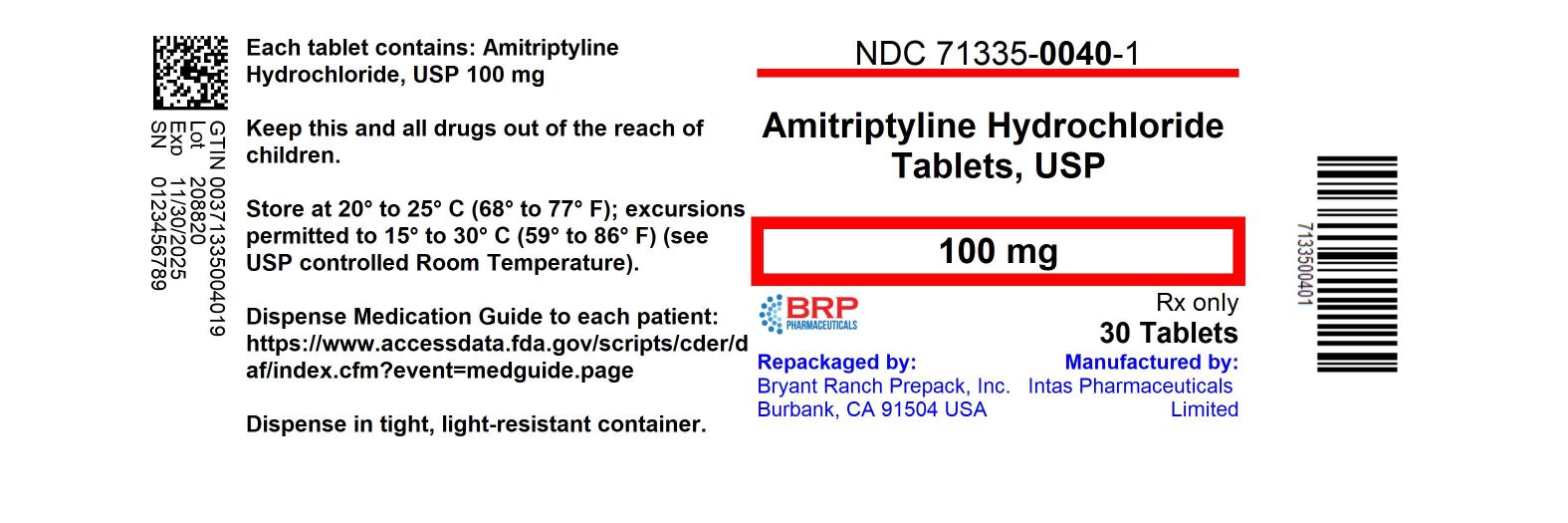
HOW SUPPLIED Amitriptyline hydrochloride tablets, USP: 100 mg: Brown coloured, round, biconvex, film coated tablet debossed with “I5” on one side and plain on other side, and supplied as: NDC: 71335-0040-1 30 TABLET, FILM COATED in a BOTTLE NDC: 71335-0040-2 60 TABLET, FILM COATED in a BOTTLE NDC: 71335-0040-3 90 TABLET, FILM COATED in a BOTTLE NDC: 71335-0040-4 180 TABLET, FILM COATED in a BOTTLE NDC: 71335-0040-5 28 TABLET, FILM COATED in a BOTTLE NDC: 71335-0040-6 120 TABLET, FILM COATED in a BOTTLE NDC: 71335-0040-7 18 TABLET, FILM COATED in a BOTTLE NDC: 71335-0040-8 8 TABLET, FILM COATED in a BOTTLE 75 mg: Brown coloured, round, biconvex, film coated tablet debossed with “I4” on one side and plain on other side, and supplied as: NDC: 71335-0173-1 30 TABLET, FILM COATED in a BOTTLE NDC: 71335-0173-2 100 TABLET, FILM COATED in a BOTTLE NDC: 71335-0173-3 28 TABLET, FILM COATED in a BOTTLE NDC: 71335-0173-4 60 TABLET, FILM COATED in a BOTTLE NDC: 71335-0173-5 90 TABLET, FILM COATED in a BOTTLE 25 mg: Brown coloured, round, biconvex, film coated tablet debossed with “I2” on one side and plain on other side, and supplied as: NDC: 71335-0306-0 120 TABLET, FILM COATED in a BOTTLE NDC: 71335-0306-1 20 TABLET, FILM COATED in a BOTTLE NDC: 71335-0306-2 30 TABLET, FILM COATED in a BOTTLE NDC: 71335-0306-3 100 TABLET, FILM COATED in a BOTTLE NDC: 71335-0306-4 60 TABLET, FILM COATED in a BOTTLE NDC: 71335-0306-5 50 TABLET, FILM COATED in a BOTTLE NDC: 71335-0306-6 90 TABLET, FILM COATED in a BOTTLE NDC: 71335-0306-7 45 TABLET, FILM COATED in a BOTTLE NDC: 71335-0306-8 28 TABLET, FILM COATED in a BOTTLE NDC: 71335-0306-9 56 TABLET, FILM COATED in a BOTTLE 50 mg: Brown coloured, round, biconvex, film coated tablet debossed with “I3” on one side and plain on other side, and supplied as: NDC: 71335-0366-1 100 TABLET, FILM COATED in a BOTTLE NDC: 71335-0366-2 30 TABLET, FILM COATED in a BOTTLE NDC: 71335-0366-3 60 TABLET, FILM COATED in a BOTTLE NDC: 71335-0366-4 90 TABLET, FILM COATED in a BOTTLE NDC: 71335-0366-5 20 TABLET, FILM COATED in a BOTTLE NDC: 71335-0366-6 28 TABLET, FILM COATED in a BOTTLE NDC: 71335-0366-7 56 TABLET, FILM COATED in a BOTTLE NDC: 71335-0366-8 180 TABLET, FILM COATED in a BOTTLE 10 mg: Brown coloured, round, biconvex, film coated tablet debossed with “I1” on one side and plain on other side, and supplied as: NDC: 71335-0395-0 100 TABLET, FILM COATED in a BOTTLE NDC: 71335-0395-1 30 TABLET, FILM COATED in a BOTTLE NDC: 71335-0395-2 15 TABLET, FILM COATED in a BOTTLE NDC: 71335-0395-3 60 TABLET, FILM COATED in a BOTTLE NDC: 71335-0395-4 90 TABLET, FILM COATED in a BOTTLE NDC: 71335-0395-5 28 TABLET, FILM COATED in a BOTTLE NDC: 71335-0395-6 120 TABLET, FILM COATED in a BOTTLE NDC: 71335-0395-7 50 TABLET, FILM COATED in a BOTTLE NDC: 71335-0395-8 180 TABLET, FILM COATED in a BOTTLE NDC: 71335-0395-9 6 TABLET, FILM COATED in a BOTTLE 150 mg: Brown coloured, capsule shaped, biconvex, film coated tablet debossed with “I6” on one side and plain on other side, and supplied as: NDC: 71335-0566-1 30 TABLET, FILM COATED in a BOTTLE NDC: 71335-0566-2 120 TABLET, FILM COATED in a BOTTLE NDC: 71335-0566-3 60 TABLET, FILM COATED in a BOTTLE NDC: 71335-0566-4 90 TABLET, FILM COATED in a BOTTLE NDC: 71335-0566-5 18 TABLET, FILM COATED in a BOTTLE Store at 20º to 25ºC (68º to 77ºF) [see USP Controlled Room Temperature].
Dispense in a tight, light-resistant container. Repackaged/Relabeled by: Bryant Ranch Prepack, Inc. Burbank, CA 91504
📋 Description ▾
DESCRIPTION Amitriptyline HCl, a dibenzocycloheptadiene derivative, is a white, or practically white, odorless, crystalline compound which is freely soluble in water and alcohol. It is designated chemically as 10,11-Dihydro-N,N-dimethyl-5 H-dibenzo[a,d] cycloheptene-Δ 5, γ-propylamine hydrochloride. It has the following structural formula: Each tablet for oral administration contains 10, 25, 50, 75, 100, or 150 mg amitriptyline hydrochloride.
Inactive ingredients include colloidal anhydrous silica, croscarmellose sodium, lactose (monohydrate), lecithin, magnesium stearate, microcrystalline cellulose, polyvinyl alcohol, iron oxide red, talc, titanium dioxide and xanthan gum. amitriptyline HCl chemical structure
💬 Information for Patients ▾
Information for Patients Prescribers or other health professionals should inform patients, their families, and their caregivers about the benefits and risks associated with treatment with amitriptyline hydrochloride and should counsel them in its appropriate use. A patient Medication Guide about “Antidepressant Medicines, Depression and other Serious Mental Illnesses, and Suicidal Thoughts or Actions” is available for amitriptyline hydrochloride. The prescriber or health professional should instruct patients, their families, and their caregivers to read the Medication Guide and should assist them in understanding its contents.
Patients should be given the opportunity to discuss the contents of the Medication Guide and to obtain answers to any questions they may have. The complete text of the Medication Guide is reprinted at the end of this document. Patients should be advised of the following issues and asked to alert their prescriber if these occur while taking amitriptyline hydrochloride.
💬 Medication Guide ▾
MEDICATION GUIDE Antidepressant Medicines, Depression and other Serious Mental Illnesses, and Suicidal Thoughts or Actions Read the Medication Guide that comes with you or your family member’s antidepressant medicine. This Medication Guide is only about the risk of suicidal thoughts and actions with antidepressant medicines. Talk to your, or your family member’s, healthcare provider about: all risks and benefits of treatment with antidepressant medicines all treatment choices for depression or other serious mental illness What is the most important information I should know about antidepressant medicines, depression and other serious mental illnesses, and suicidal thoughts or actions?
Antidepressant medicines may increase suicidal thoughts or actions in some children, teenagers, and young adults within the first few months of treatment. Depression and other serious mental illnesses are the most important causes of suicidal thoughts and actions. Some people may have a particularly high risk of having suicidal thoughts or actions.
These include people who have (or have a family history of) bipolar illness (also called manic-depressive illness) or suicidal thoughts or actions. How can I watch for and try to prevent suicidal thoughts and actions in myself or a family member? Pay close attention to any changes, especially sudden changes, in mood, behaviors, thoughts, or feelings.
This is very important when an antidepressant medicine is started or when the dose is changed. Call the healthcare provider right away to report new or sudden changes in mood, behavior, thoughts, or feelings. Keep all follow-up visits with the healthcare provider as scheduled.
Call the healthcare provider between visits as needed, especially if you have concerns about symptoms. Call a healthcare provider right away if you or your family member has any of the following symptoms, especially if they are new, worse, or worry you: thoughts about suicide or dying attempts to commit suicide new or worse depression new or worse anxiety feeling very agitated or restless panic attacks trouble sleeping (insomnia) new or worse irritability acting aggressive, being angry, or violent acting on dangerous impulses an extreme increase in activity and talking (mania) other unusual changes in behavior or mood What else do I need to know about antidepressant medicines?
Never stop an antidepressant medicine without first talking to a healthcare provider. Stopping an antidepressant medicine suddenly can cause other symptoms. Antidepressants are medicines used to treat depression and other illnesses.
It is important to discuss all the risks of treating depression and also the risks of not treating it. Patients and their families or other caregivers should discuss all treatment choices with the healthcare provider, not just the use of antidepressants. Antidepressant medicines have other side effects.
Talk to the healthcare provider about the side effects of the medicine prescribed for you or your family member. Antidepressant medicines can interact with other medicines. Know all of the medicines that you or your family member takes.
Keep a list of all medicines to show the healthcare provider. Do not start new medicines without first checking with your healthcare provider. Not all antidepressant medicines prescribed for children are FDA approved for use in children.
Talk to your child’s healthcare provider for more information. Call your doctor for medical advice about side effects. You may report side effects to FDA at 1-800-FDA-1088.
This Medication Guide has been approved by the U.S. Food and Drug Administration for all antidepressants.
⚠️ Precautions ▾
PRECAUTIONS Schizophrenic patients may develop increased symptoms of psychosis; patients with paranoid symptomatology may have an exaggeration of such symptoms. Depressed patients, particularly those with known manic-depressive illness, may experience a shift to mania or hypomania. In these circumstances the dose of amitriptyline may be reduced or a major tranquilizer such as perphenazine may be administered concurrently.
The possibility of suicide in depressed patients remains until significant remission occurs. Potentially suicidal patients should not have access to large quantities of this drug. Prescriptions should be written for the smallest amount feasible.
Concurrent administration of amitriptyline hydrochloride and electroshock therapy may increase the hazards associated with such therapy. Such treatment should be limited to patients for whom it is essential. When possible, the drug should be discontinued several days before elective surgery.
Both elevation and lowering of blood sugar levels have been reported. Amitriptyline hydrochloride should be used with caution in patients with impaired liver function. Information for Patients Prescribers or other health professionals should inform patients, their families, and their caregivers about the benefits and risks associated with treatment with amitriptyline hydrochloride and should counsel them in its appropriate use.
A patient Medication Guide about “Antidepressant Medicines, Depression and other Serious Mental Illnesses, and Suicidal Thoughts or Actions” is available for amitriptyline hydrochloride. The prescriber or health professional should instruct patients, their families, and their caregivers to read the Medication Guide and should assist them in understanding its contents. Patients should be given the opportunity to discuss the contents of the Medication Guide and to obtain answers to any questions they may have.
The complete text of the Medication Guide is reprinted at the end of this document. Patients should be advised of the following issues and asked to alert their prescriber if these occur while taking amitriptyline hydrochloride. Clinical Worsening and Suicide Risk Patients, their families, and their caregivers should be encouraged to be alert to the emergence of anxiety, agitation, panic attacks, insomnia, irritability, hostility, aggressiveness, impulsivity, akathisia (psychomotor restlessness), hypomania, mania, other unusual changes in behavior, worsening of depression, and suicidal ideation, especially early during antidepressant treatment and when the dose is adjusted up or down.
Families and caregivers of patients should be advised to look for the emergence of such symptoms on a day-to-day basis, since changes may be abrupt. Such symptoms should be reported to the patient’s prescriber or health professional, especially if they are severe, abrupt in onset, or were not part of the patient’s presenting symptoms. Symptoms such as these may be associated with an increased risk for suicidal thinking and behavior and indicate a need for very close monitoring and possibly changes in the medication.
While on therapy with amitriptyline hydrochloride, patients should be advised as to the possible impairment of mental and/or physical abilities required for performance of hazardous tasks, such as operating machinery or driving a motor vehicle. Drug Interactions Topiramate Some patients may experience a large increase in amitriptyline concentration in the presence of topiramate and any adjustments in amitriptyline dose should be made according to the patient's clinical response and not on the basis of plasma levels.
Drugs Metabolized by P450 2D6 The biochemical activity of the drug metabolizing isozyme cytochrome P450 2D6 (debrisoquin hydroxylase) is reduced in a subset of the caucasian population (about 7 to 10% of Caucasians are so called “poor metabolizers”); reliable estimates of the prevalence of reduced P450 2D6 isozyme activity among Asian, African and ot… [Excerpted — this section continues on DailyMed.]
🍼 Nursing Mothers ▾
Nursing Mothers Amitriptyline is excreted into breast milk. In one report in which a patient received amitriptyline 100 mg/day while nursing her infant, levels of 83 to 141 ng/mL were detected in the mother’s serum. Levels of 135 to 151 ng/mL were found in the breast milk, but no trace of the drug could be detected in the infant’s serum.
Because of the potential for serious adverse reactions in nursing infants from amitriptyline, a decision should be made whether to discontinue nursing or to discontinue the drug, taking into account the importance of the drug to the mother.
📚 References ▾
REFERENCES Ayd, F.J., Jr.: Amitriptyline therapy for depressive reactions, Psychosom. 1: 320-325, Nov.-Dec. 1960.
Diamond, S.: Human metabolization of amitriptyline tagged with carbon 14, Curr. Therap. Res.
7: 170-175, Mar. 1965. Dorfman, W.: Clinical experiences with amitriptyline (A preliminary report), Psychosom.
1: 153-155, May-June 1960. Fallette, J.M.; Stasney, C.R.; Mintz, A.A.: Amitriptyline poisoning treated with physostigmine, S. Med.
J. 63: 1492-1493, Dec. 1970 (in Soc.
Proc.). Hollister, L.E.; Overall, J.E.; Johnson, M.; Pennington, V.; Katz, G.; Shelton, J.: Controlled comparison of amitriptyline, imipramine and placebo in hospitalized depressed patients, J. Nerv. and Ment.
Dis. 139: 370-375, Oct. 1964.
Hordern, A.; Burt, C.G.; Holt, N.F.: Depressive states. A pharmacotherapeutic study, Springfield, Ill., Charles C. Thomas, 1965.
Jenike, M.A.: Treatment of Affective Illness in the Elderly with Drugs and Electroconvulsive Therapy, J. Geriatr. Psychiatry 1989;22(1).77-112.
Klerman, G.L.; Cole, J.O.: Clinical pharmacology of imipramine and related antidepressant compounds, Int. J. Psychiat.
3: 267-304, Apr. 1976. Liu, B.; Anderson, C.; Mittman, N. et al: Use of selective serotonin-reuptake inhibitors or tricyclic antidepressants and risk of hip fractures in elderly people.
Lancet 1998; 351 (91 12):1303-1307. McConaghy, N.; Joffe, A.D.; Kingston, W.R.; Stevenson, H.G.; Atkinson, I.; Cole, E.; Fennessy, L.A.; Correlation of clinical features of depressed outpatients with response to amitriptyline and protriptyline, Brit. J.
Psychiat. 114: 103-106, Jan. 1968.
McDonald, I.M.; Perkins, M.; Marjerrison, G.; Podilsky, M.: A controlled comparison of amitriptyline and electroconvulsive therapy in the treatment of depression, Amer. J. Psychiat.
122: 1427-1431. June 1966 (in Brief Communications). Slovis, T.; Ott, J.; Teitelbaum, D.; Lipscomb, W.: Physostigmine therapy in acute tricyclic antidepressant poisoning, Clin.
Toxicol. 4: 451-459, Sept. 1971.
Symposium on depression with special studies of a new antidepressant, amitriptyline, Dis. Nerv. Syst.
22: 5-56, May 1961 (Sect. 2). Manufactured For: Accord Healthcare, Inc., 1009, Slater Road, Suite 210-B, Durham, NC 27703, USA.
Manufactured By: Intas Pharmaceuticals Limited, Ahmedabad- 380 009, India. 10 0374 1 667968 Issued August 2016
📄 Package Label / Principal Display Panel ▾
Amitriptyline 100mg Tablet image description
Amitriptyline Hcl 75mg Tablet image description
Amitriptyline HCL 25mg Tablet image description
Amitriptyline HCL 50mg Tablet image description
Amitriptyline Hcl 10mg Tablet image description
Amitriptyline 150mg Tablet image description
About this NDC listing & data coverage
What data is (and isn’t) available for this NDC — tap to expand
| NDC identity (package / product / labeler codes) | ✓ Available |
| Labeler | ✓ Available |
| Product & package description | ✓ Available |
| Marketing category & status | ✓ Available |
| Active ingredient / dosage form / route | ✓ Available |
| FDA label (SPL via DailyMed) | ✓ Available |
| Package photos | ✓ Available |
| Inactive ingredients (structured) | ✓ Available |
| NADAC pharmacy acquisition price (CMS) | — Not published for this NDC CMS publishes NADAC only for NDCs reported in its retail-pharmacy survey. |
| Orange Book / therapeutic-equivalence data | ✓ Available |
| HCPCS J-code billing crosswalk | — Not published for this NDC Most self-administered / retail products have no J-code — that is normal. |
| Medicaid utilization (CMS SDUD) | — Not published for this NDC CMS reports utilization only for NDCs with Medicaid claims above its privacy threshold. |