
Diltiazem Hydrochloride 240 mg Capsule, Extended Release, 30-count — NDC 71335-0867-1 (Billing 71335-0867-01)
This is a package of 30 capsules of Diltiazem Hydrochloride 240 mg Capsule, Extended Release from Bryant Ranch Prepack, marketed since Dec 1999 and currently FDA-listed. It is the main listing for this product, which comes in 3 package sizes.
Other active recalls for Diltiazem Hydrochloride (different manufacturers) — 6 · tap to view
Identity & classification
Regulatory identifiers FDA, NLM and CMS codes for this package
- RxCUI (RxNorm): 830837
Where does this data come from?
- FDA openFDA NDC Directory · synced Oct 1, 2026
- FDA label on DailyMed · label index refreshed Oct 1, 2026
- RxNorm (NLM RxNav) · catalog refreshed Oct 1, 2026
- Medi-Span GPI (licensed)
- First Databank (licensed) · refreshed Oct 1, 2026
RxNorm drug class
This medicine belongs to the Calcium Channel Blocker class.
Where does this data come from?
- RxClass (NLM) · catalog refreshed Oct 1, 2026
Clinical
Diltiazem is used to treat high blood pressure and to control angina (chest pain). Diltiazem is in a class of medications called calcium-channel blockers. It works by relaxing the blood vessels so the heart does not have to pump as hard. It also increases the supply of blood and oxygen to the heart. High blood pressure is a common condition, and when not treated it can cause damage to the brain, heart, blood vessels, kidneys, and other parts of the body. Damage to these organs may cause heart disease, a heart attack, heart failure, stroke, kidney failure, loss of vision, and other problems. In...
Read the full MedlinePlus article ↗- The pills and capsules you take by mouth are used for high blood pressure and for chronic stable angina, which is chest pain from the heart's workload. Some capsule brands, such as...
- Usually it's taken once a day, and you should swallow it whole. Don't open, chew or crush the capsules. Some products, like DILT-XR, are best taken in the morning on an empty stoma...
- How should I take my extended-release capsule or tablet?
- The most common ones are a stuffy or runny nose, headache, sore throat, constipation, cough, and swelling in the legs or ankles. Most are mild. Call your doctor if you faint, feel...
Patient education
Supplement & herbal interactions
Diltiazem may be associated with lower levels of 2 nutrients — worth a chat with your pharmacist, not a cause for alarm.
Where does this data come from?
- MedlinePlus (NLM) · refreshed Oct 1, 2026
- FDA label on DailyMed · label index refreshed Oct 1, 2026
Ask a licensed pharmacist directly — free, answered by our team.
Pricing
A drug doesn't have one price. Each row is a different public payment system, and none is what you'd pay at the counter — that depends on your insurance. The ⓘ on each row explains what it measures.
| Price system | Per each | Per package |
|---|---|---|
| Retail pharmacies payNADAC · weekly | Not in the retail survey — common for institutional, discontinued, or low-volume packs. | |
| Medicaid paysCMS SDUD · 12 mo | No recent Medicaid claims on file for this NDC — rare and low-volume NDCs are suppressed in the public data. | |
| Medicare drug plans payPart D · Q2 2026 | $0.3502 | $10.51 / 30 capsules |
Where does this data come from?
- CMS NADAC weekly file
- CMS ASP pricing files · refreshed Sep 20, 2026
- CMS Medicaid State Drug Utilization Data · refreshed Oct 3, 2026
- CMS Part D plan pricing files · refreshed Sep 24, 2026
- VA National Acquisition Center price file
Packaging — all sizes for this product
| Package NDC | Description | Marketing start | Marketing end | Status |
|---|---|---|---|---|
| 71335-0867-01 You're viewing this Main listing | 30 CAPSULE, EXTENDED RELEASE in 1 BOTTLE | 2018-06-21 | — | Active |
| 71335-0867-02 71335-0867-2 | 90 CAPSULE, EXTENDED RELEASE in 1 BOTTLE | 2018-06-21 | — | Active |
| 71335-0867-03 71335-0867-3 | 18 CAPSULE, EXTENDED RELEASE in 1 BOTTLE | 2018-06-21 | — | Active |
You're viewing one of 3 pack sizes for this product.
Pack size FAQ
What quantity is in this package?
How does this package differ from NDC 71335-0867-03?
What NDC number is used to bill for this package of Diltiazem Hydrochloride 240 mg Capsule, Extended Release?
Therapeutic equivalents
| Product | Labeler | Pack | NADAC/unit | TE | Status | Price vs. this |
|---|---|---|---|---|---|---|
| Diltiazem Hydrochloride 240 mg 00904-7219-61 | Major | 1 capsule | $0.197 | AB3 | Availability likely | — |
| Diltiazem Hydrochloride Extended-Release 240 mg 10370-0831-05 | Endo | 500 capsules | $0.197 | AB3 | Discontinued | — |
| Diltiazem Hydrochloride 240 mg 24979-0028-02 | Upsher-Smith | 500 capsules | $0.197 | AB3 | Availability likely | — |
| Diltiazem Hydrochloride Extended-Release 240 mg 60687-0217-01 | American | 1 capsule | $0.197 | AB3 | Availability likely | — |
| Cartia XT 240 mg 62037-0599-05 | Actavis | 500 capsules | $0.197 | AB3 | Availability likely | — |
| Diltiazem hydrochloride 240 mg 63304-0720-05 | Sun | 500 capsules | $0.198 | — | FDA listed | — |
| Diltiazem Hydrochloride 240 mg 68682-0997-98 | OCEANSIDE | 90 capsules | $0.232 | AB3 | FDA listed | — |
| Diltiazem Hydrochloride 240 mg 47335-0671-13 | Sun | 500 capsules | $0.342 | — | FDA listed | — |
| Diltiazem Hydrochloride EXTENDED RELEASE 240 mg 68682-0369-90 | Oceanside | 90 capsules | $0.342 | AB4 | FDA listed | — |
| Diltiazem Hydrochloride 240 mg 16714-0525-01 | NORTHSTAR | 100 capsules | $0.489 | AB2 | Availability likely | — |
| Diltiazem Hydrochloride 240 mg 60505-0016-06 | Apotex | 100 capsules | $0.489 | AB2 | Availability likely | — |
| Diltiazem Hydrochloride 240 mg 62332-0817-31 | Alembic | 100 capsules | $0.489 | AB2 | Availability likely | — |
| Diltiazem Hydrochloride 240 mg 70436-0193-01 | Slate | 100 capsules | $0.489 | AB2 | Availability likely | — |
| Diltiazem Hydrochloride 240 mg 16729-0305-01 | Accord | 100 capsules | $0.520 | AB2 | Availability likely | — |
| Cardizem CD 240 mg 00187-0797-30 | Bausch | 30 capsules | — | AB3 | FDA listed | — |
| Tiazac Extended Release 240 mg 00187-2614-30 | Bausch | 30 capsules | — | AB4 | FDA listed | — |
| diltiazem hydrochloride 240 mg 00615-8381-39 | NCS | 30 capsules | — | AB3 | FDA listed | — |
| Diltiazem Hydrochloride 240 mg 33342-0523-02 | Macleods | 6 capsules | — | AB3 | FDA listed | — |
| Diltiazem Hydrochloride 240 mg 46708-0727-30 | Alembic | 30 capsules | — | AB3 | FDA listed | — |
| Diltiazem Hydrochloride 240 mg 46708-0817-31 | Alembic | 100 capsules | — | AB2 | FDA listed | — |
| Diltiazem Hydrochloride 240 mg 47335-0677-13 | Sun | 500 capsules | — | — | FDA listed | — |
| Diltiazem Hydrochloride 240 mg 50090-5452-00 | A-S | 30 capsules | — | AB3 | FDA listed | — |
| Diltiazem Hydrochloride 240 mg 50090-7815-00 | A-S | 30 capsules | — | AB3 | FDA listed | — |
| diltiazem hydrochloride 240 mg 50742-0250-05 | Ingenus | 500 capsules | — | AB3 | FDA listed | — |
| Diltiazem Hydrochloride 240 mg 51407-0475-90 | Golden | 90 capsules | — | AB3 | FDA listed | — |
| Diltiazem Hydrochloride 240 mg 55154-2627-00 | Cardinal | 1 capsule | — | AB3 | FDA listed | — |
| Diltiazem Hydrochloride 240 mg 62332-0727-30 | Alembic | 30 capsules | — | AB3 | FDA listed | — |
| Diltiazem Hydrochloride Extended-Release 240 mg 63629-2158-01 | Bryant | 30 capsules | — | AB3 | FDA listed | — |
| Diltiazem Hydrochloride 240 mg 68071-4005-03 | NuCare | 30 capsules | — | AB3 | FDA listed | — |
| diltiazem hydrochloride 240 mg 68382-0597-01 | Zydus | 100 capsules | — | AB3 | FDA listed | — |
| Tiadylt Er 240 mg 68382-0747-01 | Zydus | 100 capsules | — | AB4 | FDA listed | — |
| diltiazem hydrochloride 240 mg 70771-1032-01 | Zydus | 100 capsules | — | AB3 | FDA listed | — |
| Tiadylt Er 240 mg 70771-1037-00 | Zydus | 1000 capsules | — | AB4 | FDA listed | — |
| Diltiazem Hydrochloride Extended-Release 240 mg 71335-0009-01 | Bryant | 30 capsules | — | AB3 | Discontinued | — |
| Diltiazem Hydrochloride 240 mgthis 71335-0867-01 | Bryant | 30 capsules | — | AB3 | FDA listed | — |
| Diltiazem Hydrochloride EXTENDED RELEASE 240 mg 71335-1585-01 | Bryant | 30 capsules | — | AB4 | Discontinued | — |
| diltiazem hydrochloride 240 mg 71335-3091-01 | Bryant | 30 capsules | — | AB3 | FDA listed | — |
| Diltiazem Hydrochloride Extended Release 240 mg 72189-0248-90 | direct | 90 capsules | — | AB4 | FDA listed | — |
| diltiazem hydrochloride 240 mg 84677-0041-90 | Golden | 90 capsules | — | AB3 | FDA listed | — |
Where does this data come from?
- FDA openFDA NDC Directory · synced Oct 1, 2026
- FDA Orange Book · refreshed Oct 3, 2026
- CMS NADAC weekly file
Availability & generic status
This product is an FDA-approved generic. Other versions of the same drug are listed under Therapeutic equivalents, least expensive first.
Where does this data come from?
- FDA Orange Book · refreshed Oct 3, 2026
What it looks like
Where does this data come from?
- FDA label on DailyMed · label index refreshed Oct 1, 2026
Inactive Ingredients / Excipients
Inactive ingredients, also called excipients, are components of the drug product other than the active ingredient. They may include fillers, dyes, coatings, preservatives, flavors, or other formulation ingredients.
Where does this data come from?
IACT rows and label-wide narrative are kept separate; availability and product-level specificity depend on the submitted label.- FDA label on DailyMed · label index refreshed Oct 1, 2026
- FDA openFDA NDC Directory · synced Oct 1, 2026
Inactive ingredient FAQ
Are inactive ingredients the same for every manufacturer?
Why might an inactive ingredient be missing?
Can inactive ingredients matter?
Manufacturer & labeler
Where does this data come from?
- FDA openFDA NDC Directory · synced Oct 1, 2026
- Drugs@FDA
Full prescribing information FDA SPL
🎯 Indications and Usage ▾
INDICATIONS AND USAGE Diltiazem Hydrochloride Extended-Release Capsules (Once-a-Day Dosage) are indicated for the treatment of hypertension. It may be used alone or in combination with other antihypertensive medications. Diltiazem Hydrochloride Extended-Release Capsules (Once-a-Day Dosage) are indicated for the management of chronic stable angina and angina due to coronary artery spasm.
⏱️ Dosage and Administration ▾
DOSAGE AND ADMINISTRATION Patients controlled on diltiazem alone or in combination with other medications may be switched to Diltiazem Hydrochloride Extended-Release Capsules (Once-a-Day Dosage) at the nearest equivalent total daily dose. Higher doses of Diltiazem Hydrochloride Extended-Release Capsules (Once-a-Day Dosage) may be needed in some patients. Monitor patients closely.
Subsequent titration to higher or lower doses may be necessary. There is limited general clinical experience with doses above 360 mg, but doses to 540 mg have been studied in clinical trials. The incidence of side effects increases as the dose increases with first-degree AV block, dizziness, and sinus bradycardia bearing the strongest relationship to dose.
Hypertension: Adjust dosage to individual patient needs. When used as monotherapy, reasonable starting doses are 180 to 240 mg once daily, although some patients may respond to lower doses. Maximum antihypertensive effect is usually observed by 14 days of chronic therapy; therefore, schedule dosage adjustments accordingly.
The usual dosage range studied in clinical trials was 240 to 360 mg once daily. Individual patients may respond to higher doses of up to 480 mg once daily. Angina: Dosages for the treatment of angina should be adjusted to each patient's needs, starting with a dose of 120 or 180 mg once daily.
Individual patients may respond to higher doses of up to 480 mg once daily. When necessary, titration may be carried out over a 7- to 14-day period. Concomitant Use with Other Cardiovascular Agents Sublingual NTG: May be taken as required to abort acute anginal attacks during Diltiazem Hydrochloride Extended-Release Capsules (Once-a-Day Dosage) therapy.
Prophylactic Nitrate Therapy: Diltiazem Hydrochloride Extended-Release Capsules (Once-a-Day Dosage) may be safely coadministered with short- and long-acting nitrates. Beta-Blockers: (See WARNINGS and PRECAUTIONS ). Antihypertensives: Diltiazem Hydrochloride Extended-Release Capsules (Once-a-Day Dosage) has an additive antihypertensive effect when used with other antihypertensive agents.
Therefore, the dosage of Diltiazem Hydrochloride Extended-Release Capsules (Once-a-Day Dosage) or the concomitant antihypertensives may need to be adjusted when adding one to the other.
⛔ Contraindications ▾
CONTRAINDICATIONS Diltiazem is contraindicated in (1) patients with sick sinus syndrome except in the presence of a functioning ventricular pacemaker, (2) patients with second- or third-degree AV block except in the presence of a functioning ventricular pacemaker, (3) patients with hypotension (less than 90 mm Hg systolic), (4) patients who have demonstrated hypersensitivity to the drug, and (5) patients with acute myocardial infarction and pulmonary congestion documented by x-ray on admission.
⚠️ Warnings ▾
WARNINGS Cardiac Conduction: Diltiazem prolongs AV node refractory periods without significantly prolonging sinus node recovery time, except in patients with sick sinus syndrome. This effect may rarely result in abnormally slow heart rates (particularly in patients with sick sinus syndrome) or second- or third-degree AV block (13 of 3290 patients or 0.40%). Concomitant use of diltiazem with beta-blockers or digitalis may result in additive effects on cardiac conduction.
A patient with Prinzmetal's angina developed periods of asystole (2 to 5 seconds) after a single dose of 60 mg of diltiazem (see ADVERSE REACTIONS ). Congestive Heart Failure: Although diltiazem has a negative inotropic effect in isolated animal tissue preparations, hemodynamic studies in humans with normal ventricular function have not shown a reduction in cardiac index nor consistent negative effects on contractility (dP/dt). An acute study of oral diltiazem in patients with impaired ventricular function (ejection fraction 24% ± 6%) showed improvement in indices of ventricular function without significant decrease in contractile function (dP/dt).
Worsening of congestive heart failure has been reported in patients with preexisting impairment of ventricular function. Experience with the use of diltiazem in combination with beta-blockers in patients with impaired ventricular function is limited. Caution should be exercised when using this combination.
Hypotension: Decreases in blood pressure associated with diltiazem therapy may occasionally result in symptomatic hypotension. Acute Hepatic Injury: Mild elevations of transaminases with and without concomitant elevation in alkaline phosphatase and bilirubin have been observed in clinical studies. Such elevations were usually transient and frequently resolved even with continued diltiazem treatment.
In rare instances, significant elevations in enzymes such as alkaline phosphatase, LDH, SGOT, SGPT, and other phenomena consistent with acute hepatic injury have been noted. These reactions tended to occur early after therapy initiation (1 to 8 weeks) and have been reversible upon discontinuation of drug therapy. The relationship to diltiazem is uncertain in some cases, but probable in some (see PRECAUTIONS ).
🤒 Adverse Reactions ▾
ADVERSE REACTIONS Serious adverse reactions have been rare in studies carried out to date, but it should be recognized that patients with impaired ventricular function and cardiac conduction abnormalities have usually been excluded from these studies. The following table presents the most common adverse reactions reported in placebo-controlled angina and hypertension trials in patients receiving Diltiazem Hydrochloride Extended-Release Capsules (Once-a-Day Dosage) up to 360 mg with rates in placebo patients shown for comparison.
Diltiazem Hydrochloride Extended-Release capsules (Once-a-Day) Placebo-Controlled Angina and Hypertension Trials Combined Adverse Reactions Diltiazem Hydrochloride Extended-Release capsules (Once-a-Day) (n=607) Placebo (Once-a-Day) (n=301) Headache 5.4% 5.0% Dizziness 3.0% 3.0% Bradycardia 3.3% 1.3% AV Block First Degree 3.3% 0.0% Edema 2.6% 1.3% Asthenia 1.8% 1.7% In addition, the following events were reported infrequently (less than 1%) in angina or hypertension trials: Cardiovascular: Congestive heart failure, palpitations, syncope, ventricular extrasystoles.
Nervous System: Abnormal dreams, amnesia, depression, gait abnormality, hallucinations, insomnia, nervousness, paresthesia, personality change, somnolence, tinnitus, tremor. Gastrointestinal: Anorexia, constipation, diarrhea, dry mouth, dysgeusia, dyspepsia, mild elevations of SGOT, SGPT, LDH, and alkaline phosphatase (see WARNINGS, Acute Hepatic Injury ), thirst, vomiting, weight increase. Dermatological: Petechiae, photosensitivity, pruritus, urticaria.
Other: Amblyopia, CPK increase, dyspnea, epistaxis, eye irritation, hyperglycemia, hyperuricemia, impotence, muscle cramps, nasal congestion, nocturia, osteoarticular pain, polyuria, sexual difficulties. The following postmarketing events have been reported infrequently in patients receiving diltiazem: acute generalized exanthematous pustulosis, allergic reactions, alopecia, angioedema (including facial or periorbital edema), asystole, erythema multiforme (including Stevens-Johnson syndrome, toxic epidermal necrolysis), exfoliative dermatitis, extrapyramidal symptoms, gingival hyperplasia, hemolytic anemia, increased bleeding time, leukopenia, photosensitivity (including lichenoid keratosis and hyperpigmentation at sun-exposed skin areas), purpura, retinopathy, myopathy, and thrombocytopenia.
In addition, events such as myocardial infarction have been observed which are not readily distinguishable from the natural history of the disease in these patients. A number of well-documented cases of generalized rash, some characterized as leukocytoclastic vasculitis, have been reported. However, a definitive cause and effect relationship between these events and diltiazem therapy is yet to be established.
To report SUSPECTED ADVERSE REACTIONS, contact Valeant Pharmaceuticals North America LLC at 1-800-321-4576 or FDA at 1-800-FDA-1088 or www.fda.gov/medwatch.
🔄 Drug Interactions ▾
Drug Interactions Because of the potential for additive effects, slow titration is warranted in patients receiving diltiazem concomitantly with other agents known to affect cardiac contractility and/or conduction (see WARNINGS ). Pharmacologic studies indicate that there may be additive effects in prolonging AV conduction when using beta-blockers or digitalis concomitantly with diltiazem (see WARNINGS ). Diltiazem is both a substrate and an inhibitor of the cytochrome P450 3A4 enzyme system.
Other drugs that are specific substrates, inhibitors, or inducers of this enzyme system may have a significant impact on the efficacy and side effect profile of diltiazem. Patients taking other drugs that are substrates of CYP450 3A4, especially patients with renal and/or hepatic impairment, may require dosage adjustment when starting or stopping concomitantly administered diltiazem in order to maintain optimum therapeutic blood levels. Anesthetics: The depression of cardiac contractility, conductivity, and automaticity as well as the vascular dilation associated with anesthetics may be potentiated by calcium channel blockers.
When used concomitantly, titrate anesthetics and calcium blockers slowly. Benzodiazepines: Studies showed that diltiazem increased the AUC of midazolam and triazolam by 3- to 4-fold and the C max by 2-fold, compared to placebo. The elimination half-life of midazolam and triazolam also increased (1.5- to 2.5-fold) during coadministration with diltiazem.
These pharmacokinetic effects seen during diltiazem coadministration can result in increased clinical effects (e.g., prolonged sedation) of both midazolam and triazolam. Beta-blockers: Controlled and uncontrolled domestic studies suggest that concomitant use of diltiazem and beta-blockers is usually well tolerated, but available data are not sufficient to predict the effects of concomitant treatment in patients with left ventricular dysfunction or cardiac conduction abnormalities. Administration of diltiazem hydrochloride concomitantly with propranolol in five normal volunteers resulted in increased propranolol levels in all subjects and bioavailability of propranolol was increased approximately 50%.
In vitro , propranolol appears to be displaced from its binding sites by diltiazem. If combination therapy is initiated or withdrawn in conjunction with propranolol, an adjustment in the propranolol dose may be warranted (see WARNINGS ). Buspirone: In nine healthy subjects, diltiazem significantly increased the mean buspirone AUC 5.5-fold and C max 4.1-fold compared to placebo.
The T 1/2 and T max of buspirone were not significantly affected by diltiazem. Enhanced effects and increased toxicity of buspirone may be possible during concomitant administration with diltiazem. Subsequent dose adjustments may be necessary during coadministration, and should be based on clinical assessment.
Carbamazepine: Concomitant administration of diltiazem with carbamazepine has been reported to result in elevated serum levels of carbamazepine (40% to 72% increase), resulting in toxicity in some cases. Cimetidine: A study in six healthy volunteers has shown a significant increase in peak diltiazem plasma levels (58%) and area under the curve (53%) after a 1-week course of cimetidine at 1200 mg per day and a single dose of diltiazem 60 mg. Ranitidine produced smaller, nonsignificant increases.
The effect may be mediated by cimetidine's known inhibition of hepatic cytochrome P450, the enzyme system responsible for the first-pass metabolism of diltiazem. Patients currently receiving diltiazem therapy should be carefully monitored for a change in pharmacological effect when initiating and discontinuing therapy with cimetidine. An adjustment in the diltiazem dose may be warranted.
Clonidine: Sinus bradycardia resulting in hospitalization and pacemaker insertion has been reported in association with the use of clonidine concurrently with diltiazem. Monitor heart rate in patients receiving concomit… [Excerpted — this section continues on DailyMed.]
🤰 Pregnancy ▾
Pregnancy Reproduction studies have been conducted in mice, rats, and rabbits. Administration of doses ranging from five to ten times greater (on a mg/kg basis) than the daily recommended therapeutic dose has resulted in embryo and fetal lethality. These doses, in some studies, have been reported to cause skeletal abnormalities.
In the perinatal/postnatal studies, there was an increased incidence of stillbirths at doses of 20 times the human dose or greater. There are no well-controlled studies in pregnant women; therefore, use diltiazem in pregnant women only if the potential benefit justifies the potential risk to the fetus.
🧒 Pediatric Use ▾
Pediatric Use Safety and effectiveness in pediatric patients have not been established.
🧓 Geriatric Use ▾
Geriatric Use Clinical studies of diltiazem did not include sufficient numbers of subjects aged 65 and over to determine whether they respond differently from younger subjects. Other reported clinical experience has not identified differences in responses between the elderly and younger patients. In general, dose selection for an elderly patient should be cautious, usually starting at the low end of the dosing range, reflecting the greater frequency of decreased hepatic, renal, or cardiac function, and of concomitant disease or other drug therapy.
🆘 Overdosage ▾
OVERDOSAGE The oral LD 50 s in mice and rats range from 415 to 740 mg/kg and from 560 to 810 mg/kg, respectively. The intravenous LD 50 s in these species were 60 and 38 mg/kg, respectively. The oral LD 50 in dogs is considered to be in excess of 50 mg/kg, while lethality was seen in monkeys at 360 mg/kg.
The toxic dose in man is not known. Because of its extensive metabolism, blood levels after a standard dose of diltiazem can vary over tenfold, limiting the usefulness of blood levels in overdose cases. There have been reports of diltiazem overdose in amounts ranging from <1 g to 18 g.
Of cases with known outcome, most patients recovered and in cases with a fatal outcome, the majority involved multiple drug ingestion. Events observed following diltiazem overdose included bradycardia, hypotension, heart block, and cardiac failure. Most reports of overdose described some supportive medical measure and/or drug treatment.
Bradycardia frequently responded favorably to atropine, as did heart block, although cardiac pacing was also frequently utilized to treat heart block. Fluids and vasopressors were used to maintain blood pressure and in cases of cardiac failure, inotropic agents were administered. In addition, some patients received treatment with ventilatory support, gastric lavage, activated charcoal, and/or intravenous calcium.
In the event of overdose or exaggerated response, appropriate supportive measures should be employed in addition to gastrointestinal decontamination. Diltiazem does not appear to be removed by peritoneal or hemodialysis. Limited data suggest that plasmapheresis or charcoal hemoperfusion may hasten diltiazem elimination following overdose.
Based on the known pharmacological effects of diltiazem and/or reported clinical experiences, the following measures may be considered: Bradycardia: Administer atropine (0.60 to 1.0 mg). If there is no response to vagal blockade, administer isoproterenol cautiously. High-Degree AV Block: Treat as for bradycardia above.
Fixed high-degree AV block should be treated with cardiac pacing. Cardiac Failure: Administer inotropic agents (isoproterenol, dopamine, or dobutamine) and diuretics. Hypotension: Vasopressors (e.g., dopamine or norepinephrine).
Actual treatment and dosage should depend on the severity of the clinical situation and the judgment and experience of the treating physician.
🧬 Clinical Pharmacology ▾
CLINICAL PHARMACOLOGY The therapeutic effects of Diltiazem Hydrochloride Extended-Release Capsules (Once-a-Day Dosage) are believed to be related to its ability to inhibit the cellular influx of calcium ions during membrane depolarization of cardiac and vascular smooth muscle. Mechanisms of Action Hypertension: Diltiazem produces its antihypertensive effect primarily by relaxation of vascular smooth muscle and the resultant decrease in peripheral vascular resistance. The magnitude of blood pressure reduction is related to the degree of hypertension; thus hypertensive individuals experience an antihypertensive effect, whereas there is only a modest fall in blood pressure in normotensives.
Angina: Diltiazem has been shown to produce increases in exercise tolerance, probably due to its ability to reduce myocardial oxygen demand. This is accomplished via reductions in heart rate and systemic blood pressure at submaximal and maximal workloads. Diltiazem has been shown to be a potent dilator of coronary arteries, both epicardial and subendocardial.
Spontaneous and ergonovine-induced coronary artery spasms are inhibited by diltiazem. In animal models, diltiazem interferes with the slow inward (depolarizing) current in excitable tissue. It causes excitation-contraction uncoupling in various myocardial tissues without changes in the configuration of the action potential.
Diltiazem produces relaxation of coronary vascular smooth muscle and dilation of both large and small coronary arteries at drug levels that cause little or no negative inotropic effect. The resultant increases in coronary blood flow (epicardial and subendocardial) occur in ischemic and nonischemic models and are accompanied by dose-dependent decreases in systemic blood pressure and decreases in peripheral resistance. Hemodynamic and Electrophysiologic Effects Like other calcium channel antagonists, diltiazem decreases sinoatrial and atrioventricular conduction in isolated tissues and has a negative inotropic effect in isolated preparations.
In the intact animal, prolongation of the AH interval can be seen at higher doses. In man, diltiazem prevents spontaneous and ergonovine-provoked coronary artery spasm. It causes a decrease in peripheral vascular resistance and a modest fall in blood pressure in normotensive individuals and, in exercise tolerance studies in patients with ischemic heart disease, reduces the heart rate-blood pressure product for any given workload.
Studies, primarily in patients with good ventricular function, have not revealed evidence of a negative inotropic effect; cardiac output, ejection fraction, and left ventricular end diastolic pressure have not been affected. Such data have no predictive value with respect to effects in patients with poor ventricular function, and increased heart failure has been reported in patients with preexisting impairment of ventricular function. There are few data on the interaction of diltiazem and beta-blockers in patients with poor ventricular function.
Resting heart rate is usually slightly reduced by diltiazem. In hypertensive patients, Diltiazem Hydrochloride Extended-Release produces antihypertensive effects both in the supine and standing positions. In a double-blind, parallel, dose-response study utilizing doses ranging from 90 to 540 mg once daily, Diltiazem Hydrochloride Extended-Release Capsules (Once-a-Day Dosage) lowered supine diastolic blood pressure in an apparent linear manner over the entire dose range studied.
The changes in diastolic blood pressure, measured at trough, for placebo, 90 mg, 180 mg, 360 mg, and 540 mg were -2.9, -4.5, -6.1, -9.5, and -10.5 mm Hg, respectively. Postural hypotension is infrequently noted upon suddenly assuming an upright position. No reflex tachycardia is associated with the chronic anti-hypertensive effects.
Diltiazem decreases vascular resistance, increases cardiac output (by increasing stroke volume), and produces a slight decrease or no change in heart rate. During… [Excerpted — this section continues on DailyMed.]
🧬 Mechanism of Action ▾
Mechanisms of Action Hypertension: Diltiazem produces its antihypertensive effect primarily by relaxation of vascular smooth muscle and the resultant decrease in peripheral vascular resistance. The magnitude of blood pressure reduction is related to the degree of hypertension; thus hypertensive individuals experience an antihypertensive effect, whereas there is only a modest fall in blood pressure in normotensives. Angina: Diltiazem has been shown to produce increases in exercise tolerance, probably due to its ability to reduce myocardial oxygen demand.
This is accomplished via reductions in heart rate and systemic blood pressure at submaximal and maximal workloads. Diltiazem has been shown to be a potent dilator of coronary arteries, both epicardial and subendocardial. Spontaneous and ergonovine-induced coronary artery spasms are inhibited by diltiazem.
In animal models, diltiazem interferes with the slow inward (depolarizing) current in excitable tissue. It causes excitation-contraction uncoupling in various myocardial tissues without changes in the configuration of the action potential. Diltiazem produces relaxation of coronary vascular smooth muscle and dilation of both large and small coronary arteries at drug levels that cause little or no negative inotropic effect.
The resultant increases in coronary blood flow (epicardial and subendocardial) occur in ischemic and nonischemic models and are accompanied by dose-dependent decreases in systemic blood pressure and decreases in peripheral resistance.
📦 How Supplied / Storage and Handling ▾
HOW SUPPLIED Diltiazem Hydrochloride Extended-Release Capsules 180mg (Dark green opaque/light green opaque capsule imprinted with BVF 180) NDC 71335-0634-1: 30 CAPSULE in a BOTTLE NDC 71335-0634-2: 90 CAPSULE in a BOTTLE 240mg ( Dark green opaque capsule imprinted with BVF 240 ) NDC 71335-0867-1: 30 CAPSULE in a BOTTLE NDC 71335-0867-2: 90 CAPSULE in a BOTTLE NDC 71335-0867-3: 18 CAPSULE in a BOTTLE 120mg ( Light green opaque capsule imprinted with BVF 120) NDC 71335-1389-1: 30 CAPSULE in a BOTTLE NDC 71335-1389-2: 90 CAPSULE in a BOTTLE Storage Conditions: Store at 25°C (77°F); excursions permitted to 15° to 30°C (59° to 86°F) [see USP Controlled Room Temperature].
Avoid excessive humidity. Repackaged/Relabeled by: Bryant Ranch Prepack, Inc. Burbank, CA 91504
📋 Description ▾
DESCRIPTION Diltiazem hydrochloride is a calcium ion cellular influx inhibitor (slow channel blocker or calcium antagonist). Chemically, diltiazem hydrochloride is 1,5-Benzothiazepin-4(5 H )-one,3-(acetyloxy)-5-[2-(dimethylamino)ethyl]-2, 3-dihydro-2-(4-methoxyphenyl)-, monohydrochloride, (+)- cis -. The chemical structure is: Diltiazem hydrochloride is a white to off-white crystalline powder with a bitter taste.
It is soluble in water, methanol, and chloroform. It has a molecular weight of 450.98. Diltiazem Hydrochloride Extended-Release Capsule (Once-a-Day Dosage), is formulated as a once-a-day extended-release capsule containing 120 mg, 180 mg, 240 mg, or 300 mg diltiazem hydrochloride.
Also contains: D&C Yellow #10, FD&C Green #3, gelatin, hypromellose, magnesium stearate, microcrystalline cellulose, ethyl acrylate and methyl methacrylate copolymer, polysorbate, povidone, simethicone emulsion, sucrose stearate, talc, and titanium dioxide. Diltiazem Hydrochloride Extended-Release Capsule meets USP Dissolution Test 12. For oral administration.
Chemical Structure
⚠️ Precautions ▾
PRECAUTIONS General Diltiazem hydrochloride is extensively metabolized by the liver and excreted by the kidneys and in bile. Laboratory parameters of renal and hepatic function should be monitored at regular intervals. In subacute and chronic dog and rat studies designed to produce toxicity, high doses of diltiazem were associated with hepatic damage.
In special subacute hepatic studies, oral doses of 125 mg/kg and higher in rats were associated with histological changes in the liver which were reversible when the drug was discontinued. In dogs, doses of 20 mg/kg were also associated with hepatic changes; however, these changes were reversible with continued dosing. Dermatological events (see ADVERSE REACTIONS ) may be transient and may disappear despite continued use of diltiazem.
However, skin eruptions progressing to erythema multiforme and/or exfoliative dermatitis have also been infrequently reported. Should a dermatologic reaction persist, the drug should be discontinued. Drug Interactions Because of the potential for additive effects, slow titration is warranted in patients receiving diltiazem concomitantly with other agents known to affect cardiac contractility and/or conduction (see WARNINGS ).
Pharmacologic studies indicate that there may be additive effects in prolonging AV conduction when using beta-blockers or digitalis concomitantly with diltiazem (see WARNINGS ). Diltiazem is both a substrate and an inhibitor of the cytochrome P450 3A4 enzyme system. Other drugs that are specific substrates, inhibitors, or inducers of this enzyme system may have a significant impact on the efficacy and side effect profile of diltiazem.
Patients taking other drugs that are substrates of CYP450 3A4, especially patients with renal and/or hepatic impairment, may require dosage adjustment when starting or stopping concomitantly administered diltiazem in order to maintain optimum therapeutic blood levels. Anesthetics: The depression of cardiac contractility, conductivity, and automaticity as well as the vascular dilation associated with anesthetics may be potentiated by calcium channel blockers. When used concomitantly, titrate anesthetics and calcium blockers slowly.
Benzodiazepines: Studies showed that diltiazem increased the AUC of midazolam and triazolam by 3- to 4-fold and the C max by 2-fold, compared to placebo. The elimination half-life of midazolam and triazolam also increased (1.5- to 2.5-fold) during coadministration with diltiazem. These pharmacokinetic effects seen during diltiazem coadministration can result in increased clinical effects (e.g., prolonged sedation) of both midazolam and triazolam.
Beta-blockers: Controlled and uncontrolled domestic studies suggest that concomitant use of diltiazem and beta-blockers is usually well tolerated, but available data are not sufficient to predict the effects of concomitant treatment in patients with left ventricular dysfunction or cardiac conduction abnormalities. Administration of diltiazem hydrochloride concomitantly with propranolol in five normal volunteers resulted in increased propranolol levels in all subjects and bioavailability of propranolol was increased approximately 50%.
In vitro , propranolol appears to be displaced from its binding sites by diltiazem. If combination therapy is initiated or withdrawn in conjunction with propranolol, an adjustment in the propranolol dose may be warranted (see WARNINGS ). Buspirone: In nine healthy subjects, diltiazem significantly increased the mean buspirone AUC 5.5-fold and C max 4.1-fold compared to placebo.
The T 1/2 and T max of buspirone were not significantly affected by diltiazem. Enhanced effects and increased toxicity of buspirone may be possible during concomitant administration with diltiazem. Subsequent dose adjustments may be necessary during coadministration, and should be based on clinical assessment.
Carbamazepine: Concomitant administration of diltiazem with carbamazepine has been reported to result in elevated ser… [Excerpted — this section continues on DailyMed.]
🍼 Nursing Mothers ▾
Nursing Mothers Diltiazem is excreted in human milk. One report suggests that concentrations in breast milk may approximate serum levels. If use of diltiazem is deemed essential, an alternative method of infant feeding should be instituted.
🧬 Pharmacokinetics ▾
Pharmacokinetics and Metabolism Diltiazem is well absorbed from the gastrointestinal tract and is subject to an extensive first-pass effect, giving an absolute bioavailability (compared to intravenous administration) of about 40%. Diltiazem undergoes extensive metabolism in which only 2% to 4% of the unchanged drug appears in the urine. Drugs which induce or inhibit hepatic microsomal enzymes may alter diltiazem disposition.
Total radioactivity measurement following short IV administration in healthy volunteers suggests the presence of other unidentified metabolites, which attain higher concentrations than those of diltiazem and are more slowly eliminated; half-life of total radioactivity is about 20 hours compared to 2 to 5 hours for diltiazem. In vitro binding studies show diltiazem is 70% to 80% bound to plasma proteins. Competitive in vitro ligand binding studies have also shown diltiazem binding is not altered by therapeutic concentrations of digoxin, hydrochlorothiazide, phenylbutazone, propranolol, salicylic acid, or warfarin.
The plasma elimination half-life following single or multiple drug administration is approximately 3.0 to 4.5 hours. Desacetyl diltiazem is also present in the plasma at levels of 10% to 20% of the parent drug and is 25% to 50% as potent as a coronary vasodilator as diltiazem. Minimum therapeutic plasma diltiazem concentrations appear to be in the range of 50 to 200 ng/mL.
There is a departure from linearity when dose strengths are increased; the half-life is slightly increased with dose. A study that compared patients with normal hepatic function to patients with cirrhosis found an increase in half-life and a 69% increase in bioavailability in the hepatically impaired patients. A single study in nine patients with severely impaired renal function showed no difference in the pharmacokinetic profile of diltiazem compared to patients with normal renal function.
Diltiazem Hydrochloride Extended-Release Capsules (Once-a-Day Dosage) : When compared to a regimen of diltiazem hydrochloride tablets at steady-state, more than 95% of drug is absorbed from the Diltiazem Hydrochloride Extended-Release capsules formulation. A single 360 mg dose of the capsule results in detectable plasma levels within 2 hours and peak plasma levels between 10 and 14 hours; absorption occurs throughout the dosing interval. When Diltiazem Hydrochloride Extended-Release Capsules (Once-a-Day Dosage) were coadministered with a high fat content breakfast, the extent of diltiazem absorption was not affected.
Dose-dumping does not occur. The apparent elimination half-life after single or multiple dosing is 5 to 8 hours. A departure from linearity similar to that seen with diltiazem hydrochloride tablets and Diltiazem Hydrochloride Extended-Release capsules is observed.
As the dose of Diltiazem Hydrochloride Extended-Release Capsules (Once-a-Day Dosage) is increased from a daily dose of 120 mg to 240 mg, there is an increase in the area under the curve of 2.7 times. When the dose is increased from 240 mg to 360 mg, there is an increase in the area under the curve of 1.6 times. In an in vitro dissolution study, the release rate of diltiazem from Diltiazem Hydrochloride Extended-Release capsules increased significantly as the alcohol percentage in the dissolution medium increased.
The effect of alcohol on the release rate may lead to a change in the pharmacokinetics of diltiazem, such as a more rapid absorption and/or an increase in the systemic exposure of diltiazem (see PRECAUTIONS, Drug Interactions ).
📄 Carcinogenesis, Mutagenesis, Impairment of Fertility ▾
Carcinogenesis, Mutagenesis, Impairment of Fertility A 24-month study in rats at oral dosage levels of up to 100 mg/kg/day and a 21-month study in mice at oral dosage levels of up to 30 mg/kg/day showed no evidence of carcinogenicity. There was also no mutagenic response in vitro or in vivo in mammalian cell assays or in vitro in bacteria. No evidence of impaired fertility was observed in a study performed in male and female rats at oral dosages of up to 100 mg/kg/day.
📄 Package Label / Principal Display Panel ▾
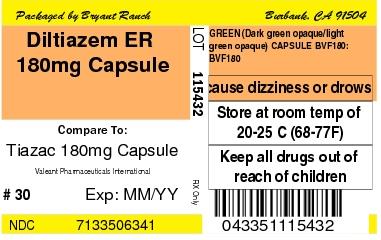
Diltiazem Hydrochloride Extended-Release 180mg Capsules Label Image
Diltiazem Hydrochloride Extended-Release 240mg Capsules Label Image
Diltiazem Hydrochloride Extended-Release 120mg Capsules Label Image
About this NDC listing & data coverage
What data is (and isn’t) available for this NDC — tap to expand
| NDC identity (package / product / labeler codes) | ✓ Available |
| Labeler | ✓ Available |
| Product & package description | ✓ Available |
| Marketing category & status | ✓ Available |
| Active ingredient / dosage form / route | ✓ Available |
| FDA label (SPL via DailyMed) | ✓ Available |
| Package photos | ✓ Available |
| Inactive ingredients (structured) | — Not published for this NDC The labeler did not submit a structured excipient list, or no SPL is available. |
| NADAC pharmacy acquisition price (CMS) | — Not published for this NDC CMS publishes NADAC only for NDCs reported in its retail-pharmacy survey. |
| Orange Book / therapeutic-equivalence data | ✓ Available |
| HCPCS J-code billing crosswalk | — Not published for this NDC Most self-administered / retail products have no J-code — that is normal. |
| Medicaid utilization (CMS SDUD) | — Not published for this NDC CMS reports utilization only for NDCs with Medicaid claims above its privacy threshold. |