
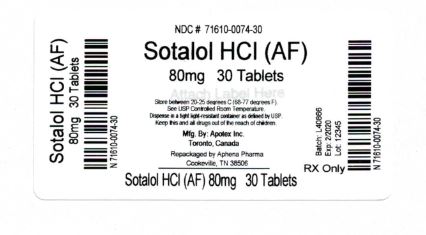
Sotalol Hydrochloride 80 mg Tablet, 90-count — NDC 71610-074-60 (Billing 71610-0074-60)
This is a package of 90 tablets of Sotalol Hydrochloride 80 mg Tablet from Aphena Pharma Solutions - Tennessee, LLC, marketed since Sep 2003 and currently FDA-listed.
NDC database record
One package, one record: these facts belong to NDC 71610-074-60 alone.
- Record
- FDA NDC Directory package listing · Human prescription drug
- Code segments
- 71610 labeler · 074 product · 60 package
- Package marketed since
- May 21, 2018
- Sample package
- No — commercial package
- Listing certified through
- Dec 31, 2026
- Billing quantity
- 90 EA per package
- Barcode (UPC-A, from the NDC)
- 3 7161007460 7
- FDA record last changed
- Jul 24, 2026
Identity & classification
Regulatory identifiers FDA, NLM and CMS codes for this package
Drug-database identifiers Medi-Span GPI and First Databank GCN / HICL / AHFS classification
- GSN (GCN sequence number): 017196
- GCN: 39512
- GPI-14 (Medi-Span): 33100045120310
- HICL (First Databank): 004791
- AHFS class code: 12:16.08.04
- RxCUI (RxNorm): 1922765
Where does this data come from?
- FDA openFDA NDC Directory · synced Oct 1, 2026
- FDA label on DailyMed · label index refreshed Oct 6, 2026
- RxNorm (NLM RxNav) · catalog refreshed Oct 1, 2026
- Medi-Span GPI (licensed)
- First Databank (licensed) · refreshed Oct 1, 2026
RxNorm drug class
This medicine belongs to the Antiarrhythmic class.
Where does this data come from?
- RxClass (NLM) · catalog refreshed Oct 1, 2026
Clinical
- Sotalol treats life-threatening ventricular arrhythmias. Some products also help keep a normal rhythm in people with highly symptomatic atrial fibrillation or flutter. It has not b...
- Sotalol can cause dangerous rhythm problems, especially in the first days or after a dose increase. In the hospital your heart is monitored continuously and your kidney function is...
- Why do I have to start it in the hospital?
- No. Stopping suddenly can cause chest pain or even a heart attack, especially if you have heart disease. If you need to stop, your doctor will usually lower the dose over 1 to 2 we...
Patient education
Supplement & herbal interactions
Some supplements/herbs that may interact with Sotalol Hydrochloride — tap one for details:
Sotalol Hydrochloride may be associated with lower levels of 1 nutrient — worth a chat with your pharmacist, not a cause for alarm.
Where does this data come from?
- MedlinePlus (NLM) · refreshed Oct 1, 2026
- FDA label on DailyMed · label index refreshed Oct 6, 2026
Ask a licensed pharmacist directly — free, answered by our team.
Pricing
A drug doesn't have one price. Each row is a different public payment system, and none is what you'd pay at the counter — that depends on your insurance. The ⓘ on each row explains what it measures.
| Price system | Per each | Per package |
|---|---|---|
| Retail pharmacies payNADAC · weekly | Not in the retail survey — common for institutional, discontinued, or low-volume packs. | |
| Medicaid paysCMS SDUD · 12 mo | No recent Medicaid claims on file for this NDC — rare and low-volume NDCs are suppressed in the public data. | |
| Medicare drug plans payPart D · Q2 2026 | $0.1725 | $15.53 / 90 tablets |
Where does this data come from?
- CMS NADAC weekly file
- CMS ASP pricing files · refreshed Sep 20, 2026
- CMS Medicaid State Drug Utilization Data · refreshed Oct 7, 2026
- CMS Part D plan pricing files · refreshed Sep 24, 2026
- VA National Acquisition Center price file
Packaging — all sizes for this product
| Package NDC | Description | Marketing start | Marketing end | Status |
|---|---|---|---|---|
| 71610-0074-30 71610-074-30 Main listing | 30 TABLET in 1 BOTTLE, PLASTIC | 2018-05-21 | — | Active |
| 71610-0074-60 You're viewing this | 90 TABLET in 1 BOTTLE, PLASTIC | 2018-05-21 | — | Active |
You're viewing the largest of 2 pack sizes for this product.
Pack size FAQ
What quantity is in this package?
How does this package differ from NDC 71610-0074-30?
What NDC number is used to bill for this package of Sotalol Hydrochloride 80 mg Tablet?
Therapeutic equivalents
| Product | Labeler | Pack | NADAC/unit | TE | Status | Price vs. this |
|---|---|---|---|---|---|---|
| Sotalol hydrochloride 80 mg 42806-0121-01 | Epic | 100 tablets | $0.071 | AB | Availability likely | — |
| Sotalol Hydrochloride 80 mg 59651-0775-01 | Aurobindo | 100 tablets | $0.071 | AB | Availability likely | — |
| Sotalol Hydrochloride 80 mg 60505-0222-01 | Apotex | 100 tablets | $0.071 | AB | Availability likely | — |
| Sotalol Hydrochloride AF 80 mg 76385-0125-01 | UNICHEM | 100 tablets | $0.071 | AB | Availability likely | — |
| Sotalol Hydrochloride 80 mg 69584-0841-10 | Oxford | 100 tablets | $0.071 | AB | Availability likely | — |
| Sotalol 80 mg 76385-0114-01 | UNICHEM | 100 tablets | $0.071 | AB | Availability likely | — |
| Sotalol Hydrochloride 80 mg 00904-7143-61 | Major | 100 tablets | $0.071 | AB | Availability likely | — |
| Sotalol Hydrochloride 80 mg 11788-0051-01 | AiPing | 100 tablets | $0.071 | AB | Availability likely | — |
| Sotalol Hydrochloride 80 mg 00093-1061-01 | Teva | 100 tablets | $0.071 | AB | Availability likely | — |
| Sotalol Hydrochloride 80 mg 60505-0080-00 | Apotex | 100 tablets | $0.071 | AB | Discontinued | — |
| Sotalol Hydrochloride 80 mg 68084-0654-01 | American | 100 tablets | $0.071 | AB | Availability likely | — |
| Sotalol Hydrochloride 80 mg 50268-0724-15 | AvPAK | 50 tablets | $0.071 | AB | Availability likely | — |
| Sotalol Hydrochloride 80 mgthis 71610-0074-60 | Aphena | 90 tablets | — | AB | FDA listed | — |
| Betapace Af 80 mg 83107-0008-60 | Legacy | 60 tablets | — | AB | FDA listed | — |
| Sotalol Hydrochloride 80 mg 71610-0474-60 | Aphena | 90 tablets | — | AB | FDA listed | — |
| Sotalol Hydrochloride 80 mg 50090-1299-00 | A-S | 60 tablets | — | AB | FDA listed | — |
| Sotalol Hydrochloride 80 mg 63187-0804-30 | Proficient | 30 tablets | — | AB | FDA listed | — |
| Sotalol Hydrochloride 80 mg 71335-1917-01 | Bryant | 60 tablets | — | AB | FDA listed | — |
| Sotalol Hydrochloride 80 mg 71610-0723-30 | Aphena | 30 tablets | — | AB | FDA listed | — |
| Sotalol Hydrochloride 80 mg 55154-8179-00 | Cardinal | 10 tablets | — | AB | FDA listed | — |
| Sotalol Hydrochloride 80 mg 60429-0748-01 | Golden | 100 tablets | — | AB | FDA listed | — |
| Sotalol Hydrochloride 80 mg 72162-2583-01 | Bryant | 100 tablets | — | AB | FDA listed | — |
| Sotalol Hydrochloride 80 mg 50090-7796-00 | A-S | 60 tablets | — | AB | FDA listed | — |
| Sotalol Hydrochloride 80 mg 71335-0260-01 | Bryant | 60 tablets | — | AB | FDA listed | — |
| Betapace 80 mg 83107-0005-10 | Legacy | 100 tablets | — | AB | FDA listed | — |
| Sotalol Hydrochloride 80 mg 71205-0046-30 | Proficient | 30 tablets | — | AB | FDA listed | — |
| Sotalol Hydrochloride 80 mg 71610-0889-80 | Aphena | 180 tablets | — | AB | FDA listed | — |
| Sotalol Hydrochloride 80 mg 72162-1931-01 | Bryant | 100 tablets | — | AB | FDA listed | — |
| Sotalol Hydrochloride 80 mg 63629-2422-01 | Bryant | 100 tablets | — | AB | FDA listed | — |
| Sotalol Hydrochloride 80 mg 71335-2823-01 | Bryant | 100 tablets | — | AB | FDA listed | — |
| Sotalol 80 mg 71335-1189-01 | Bryant | 60 tablets | — | AB | FDA listed | — |
| Sotalol Hydrochloride 80 mg 72162-2118-01 | Bryant | 100 tablets | — | AB | FDA listed | — |
| Sotalol Hydrochloride 80 mg 82804-0974-00 | Proficient | 100 tablets | — | AB | FDA listed | — |
| Sotalol Hydrochloride 80 mg 71610-0849-80 | Aphena | 180 tablets | — | AB | FDA listed | — |
| Sotalol 80 mg 72162-2524-01 | Bryant | 100 tablets | — | AB | FDA listed | — |
| Sotalol Hydrochloride 80 mg 72789-0137-01 | PD-Rx | 100 tablets | — | AB | FDA listed | — |
Where does this data come from?
- FDA openFDA NDC Directory · synced Oct 1, 2026
- FDA Orange Book · refreshed Oct 3, 2026
- CMS NADAC weekly file
Availability & generic status
This product is an FDA-approved generic. Other versions of the same drug are listed under Therapeutic equivalents, least expensive first.
Where does this data come from?
- FDA Orange Book · refreshed Oct 3, 2026
Inactive Ingredients / Excipients
Inactive ingredients, also called excipients, are components of the drug product other than the active ingredient. They may include fillers, dyes, coatings, preservatives, flavors, or other formulation ingredients.
🧪 Avoiding an ingredient? See Sotalol inactive ingredients by manufacturer: every current product's list side by side, so you can ask your pharmacy for the version that does not list it.
💡 Tap an ingredient (hover on desktop) to see what it is and why it’s used.
-
UNII OP1R32D61U
Microcrystalline cellulose is a purified form of cellulose, a natural fiber from plant sources. It acts as a binder and filler in tablets and capsules, helping hold ingredients together and give the medicine its shape and size.
-
UNII 70097M6I30
Magnesium stearate is a salt made from magnesium and stearic acid, a fatty substance. It's used in tablets and capsules as a lubricant and glidant to help ingredients flow smoothly during manufacturing and prevent sticking.
2 inactive ingredients listed in the exact product block matched to this NDC.
Where does this data come from?
ingredient classCode="IACT" elements from the exact product block matched by this NDC. Label-section narrative from DailyMed / the openFDA label index is shown separately when available.- FDA label on DailyMed · label index refreshed Oct 6, 2026
- FDA openFDA NDC Directory · synced Oct 1, 2026
Inactive ingredient FAQ
Are inactive ingredients the same for every manufacturer?
Why might an inactive ingredient be missing?
Can inactive ingredients matter?
Manufacturer & labeler
More NDCs from Aphena Pharma Solutions - Tennessee, LLC labeler code 71610
- Allopurinol 300 mg Tablet NDC 71610-064-45
- Carvedilol 12.5 mg Tablet, Film Coated NDC 71610-066-60
- Carvedilol 25 mg Tablet, Film Coated NDC 71610-067-60
- Diclofenac Sodium 50 mg Tablet, Delayed Release NDC 71610-068-80
- gabapentin 600 mg Tablet, Film Coated NDC 71610-069-45
- Gabapentin 100 mg Capsule NDC 71610-072-60
- Rosuvastatin calcium 40 mg Tablet, Film Coated NDC 71610-078-15
- Metoprolol Tartrate 100 mg Tablet, Film Coated NDC 71610-080-53
- Ciprofloxacin 500 mg Tablet, Film Coated NDC 71610-081-83
- Losartan Potassium 100 mg Tablet, Film Coated NDC 71610-083-30
- Gabapentin 300 mg Capsule NDC 71610-088-53
- Citalopram Hydrobromide 20 mg Tablet NDC 71610-092-15
Where does this data come from?
- FDA openFDA NDC Directory · synced Oct 1, 2026
- Drugs@FDA
Full prescribing information FDA SPL
🚨 Boxed Warning ▾
To minimize the risk of induced arrhythmia, patients initiated or re-initiated on sotalol hydrochloride tablets (AF) should be placed for a minimum of three days (on their maintenance dose) in a facility that can provide cardiac resuscitation, continuous electrocardiographic monitoring and calculations of creatinine clearance. For detailed instructions regarding dose selection and special cautions for people with renal impairment, see DOSAGE AND ADMINISTRATION . Sotalol is also indicated for the treatment of documented life-threatening ventricular arrhythmias and is marketed under the brand name Betapace ( sotalol hydrochloride) .
Sotalol hydrochloride tablets, however, must not be substituted for Betapace AF (sotalol hydrochloride tablets, USP (AF)) because of significant differences in labeling (i.e. patient package insert, dosing administration and safety information).
This summary contains important patient information that has been reviewed and approved by the U.S. Food and Drug Administration. This summary is not meant to take the place of your doctor's instructions. Read this patient information carefully before you start taking sotalol hydrochloride tablets, USP (AF). Each time you get a refill, you will receive patient information. Be sure to read it because it may contain new information that you need to know.
🎯 Indications and Usage ▾
INDICATIONS AND USAGE Sotalol hydrochloride tablets, USP (AF) are indicated for the maintenance of normal sinus rhythm [delay in time to recurrence of atrial fibrillation/atrial flutter (AFIB/AFL)] in patients with symptomatic AFIB/AFL who are currently in sinus rhythm. Because sotalol hydrochloride tablets, USP (AF) can cause life-threatening ventricular arrhythmias, it should be reserved for patients in whom AFIB/AFL is highly symptomatic. Patients with paroxysmal AFIB whose AFIB/AFL that is easily reversed (by Valsalva maneuver, for example) should usually not be given sotalol hydrochloride tablets, USP (AF) (see WARNINGS ).
In general, antiarrhythmic therapy for AFIB/AFL aims to prolong the time in normal sinus rhythm. Recurrence is expected in some patients (see CLINICAL STUDIES ). Sotalol is also indicated for the treatment of documented life-threatening ventricular arrhythmias and is marketed under the brand name Betapace (sotalol hydrochloride) .
Sotalol hydrochloride tablets, however, must not be substituted for Betapace AF (sotalol hydrochloride tablets, USP (AF) because of significant differences in labeling (i.e. patient package insert, dosing administration and safety information).
⏱️ Dosage and Administration ▾
DOSAGE AND ADMINISTRATION Dosing and Administration in Adults Therapy with sotalol hydrochloride tablets (AF) must be initiated (and, if necessary, titrated) in a setting that provides continuous electrocardiographic (ECG) monitoring and in the presence of personnel trained in the management of serious ventricular arrhythmias. Patients should continue to be monitored in this way for a minimum of 3 days on the maintenance dose. In addition, patients should not be discharged within 12 hours of electrical or pharmacological conversion to normal sinus rhythm.
The QT interval is used to determine patient eligibility for sotalol hydrochloride tablet (AF) treatment and for monitoring safety during treatment. The baseline QT interval must be ≤450 msec in order for a patient to be started on sotalol hydrochloride tablet (AF) therapy. During initiation and titration, the QT interval should be monitored 2 to 4 hours after each dose.
If the QT interval prolongs to 500 msec or greater, the dose must be reduced or the drug discontinued. The dose of Sotalol Hydrochloride Tablets, USP (AF) must be individualized according to calculated creatinine clearance. In patients with a creatinine clearance >60 mL/min Sotalol Hydrochloride Tablets, USP (AF) is administered twice daily (BID) while in those with a creatinine clearance between 40 and 60 mL/min, the dose is administered once daily (QD).
In patients with a creatinine clearance less than 40 mL/min Sotalol Hydrochloride Tablets, USP (AF) is contraindicated. The recommended initial dose of Sotalol Hydrochloride Tablets, USP (AF) is 80 mg and is initiated as shown in the dosing algorithm described below. The 80 mg dose can be titrated upward to 100mg or 120mg during initial hospitalization or after discharge on 80 mg in the event of recurrence, by rehospitalization and repeating the same steps used during the initiation of therapy (see Upward Titration of Dose ).
Patients with atrial fibrillation should be anticoagulated according to usual medical practice. Hypokalemia should be corrected before initiation of sotalol hydrochloride tablet (AF) therapy (see WARNINGS , Ventricular Arrhythmia ). Patients to be discharged on sotalol hydrochloride tablet (AF) therapy from an in-patient setting should have an adequate supply of sotalol hydrochloride tablets (AF), to allow uninterrupted therapy until the patient can fill a sotalol hydrochloride tablets (AF) prescription.
Initiation of Sotalol Hydrochloride Tablets, USP (AF) Therapy Step 1 . Electrocardiographic assessment: Prior to administration of the first dose, the QT interval must be determined using an average of 5 beats. If the baseline QT is greater than 450 msec (JT ≥330 msec if QRS over 100 msec), sotalol hydrochloride tablets (AF) are contraindicated.
Step 2 . Calculation of creatinine clearance: Prior to the administration of the first dose, the patient's creatinine clearance should be calculated using the following formula: creatinine clearance (male) = (140-age)x body weight in kg 72 x serum creatinine (mg/dL) creatinine clearance (female) = (140-age)x body weight in kg x 0.85 72 x serum creatinine (mg/dL) When serum creatinine is given in mcmol/L, divide the value by 88.4 (1 mg/dL= 88.4 mcmol/L). Step 3 .
Starting Dose: The starting dose of sotalol hydrochloride tablets (AF) is 80 mg twice daily (BID) if the creatinine clearance is >60 mL/min, and 80 mg once daily (QD) if the creatinine clearance is 40 to 60 mL/min. If the creatinine clearance is <40 mL/min sotalol hydrochloride tablets (AF) are contraindicated. Step 4 .
Administer the appropriate daily dose of sotalol hydrochloride tablets (AF) and begin continuous ECG monitoring with QT interval measurements 2 to 4 hours after each dose. Step 5 . If the 80 mg dose level is tolerated and the QT interval remains <500 msec after at least 3 days (after 5 or 6 doses if patient receiving QD dosing), the patient can be discharged.
Alternatively, during hospitalization, the dose can be increase… [Excerpted — this section continues on DailyMed.]
⛔ Contraindications ▾
CONTRAINDICATIONS Sotalol hydrochloride is contraindicated in patients with sinus bradycardia (<50 bpm during waking hours), sick sinus syndrome or second and third degree AV block (unless a functioning pacemaker is present), congenital or acquired long QT syndromes, baseline QT interval >450 msec, cardiogenic shock, uncontrolled heart failure, hypokalemia (<4 mEq/L), creatinine clearance <40 mL/min, bronchial asthma and previous evidence of hypersensitivity to sotalol.
⚠️ Warnings ▾
WARNINGS Ventricular Arrhythmia Sotalol (AF) can cause serious ventricular arrhythmias, primarily Torsade de Pointes (TdP) type ventricular tachycardia, a polymorphic ventricular tachycardia associated with QT interval prolongation. QT interval prolongation is directly related to the dose of sotalol (AF). Factors such as reduced creatinine clearance, gender (female) and larger doses increase the risk of TdP.
The risk of TdP can be reduced by adjustment of the sotalol (AF) dose according to creatinine clearance and by monitoring the ECG for excessive increases in the QT interval. Treatment with sotalol (AF) must therefore be started only in patients observed for a minimum of three days on their maintenance dose in a facility that can provide electrocardiographic monitoring and in the presence of personnel trained in the management of serious ventricular arrhythmias. Calculation of the creatinine clearance must precede administration of the first dose of sotalol (AF).
For detailed instructions regarding dose selection, see DOSAGE AND ADMINISTRATION . Proarrhythmia in Atrial Fibrillation/Atrial Flutter Patients In eight controlled trials of patients with AFIB/AFL and other supraventricular arrhythmias (N=659) there were four cases of Torsade de Pointes reported (0.6%) during the controlled phase of treatment with sotalol (AF). The incidence of Torsade de Pointes was significantly lower in those patients receiving total daily doses of 320 mg or less (0.3%), as summarized in Table 5 below.
Both patients who had Torsade de Pointes in the group receiving >320 mg/day were receiving 640 mg/day. In the group receiving ≤320 mg daily, one case of TdP occurred at a daily dose of 320 mg on day 4 of treatment and one case occurred on a daily dose of 160 mg on day 1 of treatment. Table 5 Incidence of Torsade de Pointes in Controlled Trials of AFIB and Other Supraventricular Arrhythmias Sotalol Hydrochloride (AF) (Daily Dose) Any Dose (N=659) >320 mg/day (N=62) ≤320 mg/day (N=597) ≤240 mg/day (N=340) Placebo (N=358) n(%) n(%) n(%) n(%) n(%) Torsade de Pointes 4(0.6%) 2(3.2%) 2(0.3%) 1(0.3%) 0 Prolongation of the QT interval is dose related, increasing from baseline an average of 25, 40, and 50 msec in the 80, 120, and 160 mg groups, respectively, in the clinical dose-response study.
In this clinical trial sotalol (AF) treatment was not initiated if the QT interval was greater than 450 msec and during therapy the dose was reduced or discontinued if the QT interval was ≥520 msec. Experience in patients with ventricular arrhythmias is also pertinent to the risk of Torsade de Pointes in patients with AFIB/AFL (see below). Proarrhythmia in Ventricular Arrhythmia Patients [ see Sotalol Hydrochloride Package Insert] In patients with a history of sustained ventricular tachycardia, the incidence of Torsade de Pointes during sotalol treatment was 4% and worsened VT in about 1%; in patients with other less serious ventricular arrhythmias the incidence of Torsade de Pointes was 1% and new or worsened VT in about 0.7%.
Additionally, in approximately 1% of patients, deaths were considered possibly drug related; such cases, although difficult to evaluate, may have been associated with proarrhythmic events. Torsade de Pointes arrhythmias in patients with VT/VF were dose related, as was the prolongation of QT (QT c ) interval, as shown in Table 6 below. Table 6 Percent Incidence of Torsade de Pointes and Mean QT c Interval by Dose For Patients With Sustained VT/VF Daily Dose (mg) Incidence of Torsade de Pointes Mean QT C * (msec) 80 0 (69) 463 (17) 160 0.5 (832) 467 (181) 320 1.6 (835) 473 (344) 480 4.4 (459) 483 (234) 640 3.7 (324) 490 (185) >640 5.8 (103) 512 (62) ( ) Number of patients assessed * highest on-therapy value Table 7 below relates the incidence of Torsade de Pointes to on-therapy QT c and change in QT c from baseline.
It should be noted, however, that the highest on therapy QT c was in many cases the one obtained at the time of the Torsade de Po… [Excerpted — this section continues on DailyMed.]
🤒 Adverse Reactions ▾
ADVERSE REACTIONS Adverse events that are clearly related to sotalol AF are those which are typical of its Class II (beta-blocking) and Class III (cardiac action potential duration prolongation) effects. The common documented beta-blocking adverse events (bradycardia, dyspnea, and fatigue) and Class III effects (QT interval prolongation) are dose related. In a pooled clinical trial population consisting of four placebo-controlled studies with 275 patients with AFIB/AFL treated with 160 to 320 mg doses of sotalol hydrochloride (AF), the following adverse events were reported at a rate of 2% or more in the 160 to 240 mg treated patients and greater than the rate in placebo patients (see Table 8).
The data are presented by incidence of events in the sotalol (AF) and placebo groups by body system and daily dose. No significant irreversible non-cardiac end-organ toxicity was observed. Table 8 Incidence (%) of Common Adverse Events (≥2% in the 160 to 240 mg group and more frequent than on placebo) in Four Placebo-Controlled Studies of Patients with AFIB/AFL Placebo Sotalol Hydrochloride(AF) Total Daily Dose Body System/ Adverse Event (Preferred Term) N=282 160-240 N=153 >240-320 N=122 CARDIOVASCULAR Abnormality ECG 0.4 3.3
2.5Angina Pectoris 1.1 2.0
1.6Bradycardia 2.5 13.1
12.3Chest Pain Cardiac/Non-Anginal 4.6 4.6
2.5Disturbance Rhythm Atrial 2.1 2.0
1.6Disturbance Rhythm Subjective 9.9 9.8
7.4GASTROINTESTINAL Appetite Decreased 0.4 2.0
1.6Diarrhea 2.1 5.2
5.7Distention Abdomen 0.4 0.7
2.5Dyspepsia/Heartburn 1.8 2.0
2.5Nausea/Vomiting 5.3 7.8
5.7Pain Abdomen 2.5 3.9
2.5GENERAL Fatigue 8.5 19.6
18.9Fever 0.7 0.7
3.3Hyperhidrosis 3.2 5.2
4.9Influenza 0.4 2.0
0.8Sensation Cold 0.7 2.0
2.5Weakness 3.2 5.2
4.9MUSCULOSKELETAL/CONNECTIVE TISSUE Pain Chest Musculoskeletal 1.4 2.0
2.5Pain Musculoskeletal 2.8 2.6
4.1NERVOUS SYSTEM Dizziness 12.4 16.3
13.1Headache 5.3 3.3
11.5Insomnia 1.1 2.6
4.1RESPIRATORY Cough 2.5 3.3
2.5Dyspnea 7.4 9.2
9.8Infection Upper Respiratory 1.1 2.6
3.3Tracheobronchitis 0.7 0.7
3.3SPECIAL SENSES Disturbance Vision 0.7 2.6
0.8Overall, discontinuation because of unacceptable adverse events was necessary in 17% of the patients, and occurred in 10% of patients less than two weeks after starting treatment. The most common adverse events leading to discontinuation of sotalol hydrochloride (AF) were: fatigue 4.6%, bradycardia 2.4%, proarrhythmia 2.2%, dyspnea 2%, and QT interval prolongation 1.4%. In clinical trials involving 1292 patients with sustained VT/VF, the common adverse events (occurring in ≥2% of patients) were similar to those described for the AFIB/AFL population.
Occasional reports of elevated serum liver enzymes have occurred with sotalol therapy but no cause and effect relationship has been established. One case of peripheral neuropathy, which resolved on discontinuation of sotalol and recurred when the patient was rechallenged with the drug, was reported in an early dose tolerance study. Elevated blood glucose levels and increased insulin requirements can occur in diabetic patients.
In an unblinded multicenter trial of 25 patients with SVT and/or VT receiving daily doses of 30, 90 and 210 mg/m 2 with dosing every 8 hours for a total of 9 doses, no Torsades de Pointes or other serious new arrhythmias were observed. One (1) patient, receiving 30 mg/m 2 daily, was discontinued because of increased frequency of sinus pauses/bradycardia. Additional cardiovascular AEs were seen at the 90 and 210 mg/m 2 daily dose levels.
They included QT prolongations (2 patients), sinus pauses/bradycardia (1 patient), increased severity of atrial flutter and reported chest pain (1 patient). Values for QT c ≥525 msec were seen in 2 patients at the 210 mg/m 2 daily dose level. Serious adverse events including death, Torsades de Pointes, other proarrhythmias, high-degree A-V blocks and bradycardia have been reported in infants and/or children.
Potential Adverse Effects Foreign marketing experience wit… [Excerpted — this section continues on DailyMed.]
🔄 Drug Interactions ▾
Drug Interactions Drugs undergoing CYP450 metabolism Sotalol is primarily eliminated by renal excretion; therefore, drugs that are metabolized by CYP450 are not expected to alter the pharmacokinetics of sotalol. Digoxin Proarrhythmic events were more common in sotalol treated patients also receiving digoxin; it is not clear whether this represents an interaction or is related to the presence of CHF, a known risk factor for proarrhythmia, in the patients receiving digoxin. Both digitalis glycosides and beta-blockers slow atrioventricular conduction and decrease heart rate.
Concomitant use can increase the risk of bradycardia. Calcium blocking drugs Sotalol (AF) should be administered with caution in conjunction with calcium blocking drugs because of possible additive effects on atrioventricular conduction or ventricular function. Additionally, concomitant use of these drugs may have additive effects on blood pressure, possibly leading to hypotension.
Catecholamine-depleting agents Concomitant use of catecholamine-depleting drugs, such as reserpine and guanethidine, with a beta-blocker may produce an excessive reduction of resting sympathetic nervous tone. Patients treated with sotalol (AF) plus a catecholamine depletor should therefore be closely monitored for evidence of hypotension and/or marked bradycardia which may produce syncope. Insulin and oral antidiabetics Hyperglycemia may occur, and the dosage of insulin or antidiabetic drugs may require adjustment.
Symptoms of hypoglycemia may be masked. Beta-2-receptor stimulants Beta-agonists such as salbutamol, terbutaline and isoprenaline may have to be administered in increased dosages when used concomitantly with sotalol (AF). Clonidine Beta-blocking drugs may potentiate the rebound hypertension sometimes observed after discontinuation of clonidine; therefore, caution is advised when discontinuing clonidine in patients receiving sotalol (AF).
Other No pharmacokinetic interactions were observed with hydrochlorothiazide or warfarin. Antacids Administration of sotalol (AF) within 2 hours of antacids containing aluminum oxide and magnesium hydroxide should be avoided because it may result in a reduction in C max and AUC of 26% and 20%, respectively and consequently in a 25% reduction in the bradycardic effect at rest. Administration of the antacid two hours after sotalol (AF) has no effect on the pharmacokinetics or pharmacodynamics of sotalol.
Drug/Laboratory Test Interactions The presence of sotalol in the urine may result in falsely elevated levels of urinary metanephrine when measured by fluorimetric or photometric methods. In screening patients suspected of having a pheochromocytoma and being treated with sotalol, a specific method, such as a high performance liquid chromatographic assay with solid phase extraction (e.g., J. Chromatogr.
385:241, 1987) should be employed in determining levels of catecholamines. Carcinogenesis, Mutagenesis, Impairment of Fertility No evidence of carcinogenic potential was observed in rats during a 24-month study at 137 to 275 mg/kg/day (approximately 30 times the maximum recommended human oral dose (MRHD) as mg/kg or 5 times the MRHD as mg/m 2 ) or in mice, during a 24-month study at 4141 to 7122 mg/kg/day (approximately 450 to 750 times the MRHD as mg/kg or 36 to 63 times the MRHD as mg/m 2 ). Sotalol has not been evaluated in any specific assay of mutagenicity or clastogenicity.
No significant reduction in fertility occurred in rats at oral doses of 1000 mg/kg/day (approximately 100 times the MRHD as mg/kg or 9 times the MRHD as mg/m 2 ) prior to mating, except for a small reduction in the number of offspring per litter. Pregnancy Category B Reproduction studies in rats and rabbits during organogenesis at 100 and 22 times the MRHD as mg/kg (9 and 7 times the MRHD as mg/m 2 ), respectively, did not reveal any teratogenic potential associated with sotalol hydrochloride. In rabbits, a high dose of sotalol hydrochloride (160 mg/kg/day) at 16 tim… [Excerpted — this section continues on DailyMed.]
🔄 Drug / Laboratory Test Interactions ▾
Drug/Laboratory Test Interactions The presence of sotalol in the urine may result in falsely elevated levels of urinary metanephrine when measured by fluorimetric or photometric methods. In screening patients suspected of having a pheochromocytoma and being treated with sotalol, a specific method, such as a high performance liquid chromatographic assay with solid phase extraction (e.g., J. Chromatogr.
385:241, 1987) should be employed in determining levels of catecholamines.
🧒 Pediatric Use ▾
Pediatric Use The safety and effectiveness of sotalol (AF) in children have not been established. However, the Class III electrophysiologic and beta-blocking effects, the pharmacokinetics, and the relationship between the effects (QT c interval and resting heart rate) and drug concentrations have been evaluated in children aged between 3 days and 12 years old (see CLINICAL PHARMACOLOGY ).
🆘 Overdosage ▾
OVERDOSAGE Intentional or accidental overdosage with sotalol has rarely resulted in death. Symptoms and Treatment of Overdosage The most common signs to be expected are bradycardia, congestive heart failure, hypotension, bronchospasm and hypoglycemia. In cases of massive intentional overdosage (2 to 16 grams) of sotalol the following clinical findings were seen: hypotension, bradycardia, cardiac asystole, prolongation of QT interval, Torsade de Pointes, ventricular tachycardia, and premature ventricular complexes.
If overdosage occurs, therapy with sotalol (AF) should be discontinued and the patient observed closely. Because of the lack of protein binding, hemodialysis is useful for reducing sotalol plasma concentrations. Patients should be carefully observed until QT intervals are normalized and the heart rate returns to levels >50 bpm.
The occurrence of hypotension following an overdose may be associated with an initial slow drug elimination phase (half life of 30 hours) thought to be due to a temporary reduction of renal function caused by the hypotension. In addition, if required, the following therapeutic measures are suggested: Bradycardia or Cardiac Asystole : Atropine, another anticholinergic drug, a beta-adrenergic agonist or transvenous cardiac pacing. Heart Block : (second and third degree) transvenous cardiac pacemaker.
Hypotension : (depending on associated factors) epinephrine rather than isoproterenol or norepinephrine may be useful. Bronchospasm : Aminophylline or aerosol beta-2-receptor stimulant. Torsade de Pointes : DC cardioversion, transvenous cardiac pacing, epinephrine, magnesium sulfate.
🧬 Clinical Pharmacology ▾
CLINICAL PHARMACOLOGY Mechanism of Action Sotalol hydrochloride has both beta-adrenoreceptor blocking (Vaughan Williams Class II) and cardiac action potential duration prolongation (Vaughan Williams Class III) antiarrhythmic properties. Sotalol hydrochloride is a racemic mixture of d- and l-sotalol. Both isomers have similar Class III antiarrhythmic effects, while the l-isomer is responsible for virtually all of the beta-blocking activity.
The beta-blocking effect of sotalol is non-cardioselective, half maximal at about 80 mg/day and maximal at doses between 320 and 640 mg/day. Sotalol does not have partial agonist or membrane stabilizing activity. Although significant beta-blockade occurs at oral doses as low as 25 mg, significant Class III effects are seen only at daily doses of 160 mg and above.
In children, a Class III electrophysiological effect can be seen at daily doses of 210 mg/m 2 body surface area (BSA). A reduction of the resting heart rate due to the beta-blocking effect of sotalol is observed at daily doses ≥90 mg/m 2 in children. Electrophysiology Sotalol hydrochloride prolongs the plateau phase of the cardiac action potential in the isolated myocyte, as well as in isolated tissue preparations of ventricular or atrial muscle (Class III activity).
In intact animals it slows heart rate, decreases AV nodal conduction and increases the refractory periods of atrial and ventricular muscle and conduction tissue. In man, the Class II (beta-blockade) electrophysiological effects of sotalol are manifested by increased sinus cycle length (slowed heart rate), decreased AV nodal conduction and increased AV nodal refractoriness. The Class III electrophysiological effects in man include prolongation of the atrial and ventricular monophasic action potentials, and effective refractory period prolongation of atrial muscle, ventricular muscle, and atrio-ventricular accessory pathways (where present) in both the anterograde and retrograde directions.
With oral doses of 160 to 640 mg/day, the surface ECG shows dose-related mean increases of 40 to 100 msec in QT and 10 to 40 msec in QT c . In a study of patients with atrial fibrillation (AFIB)/flutter (AFIB/AFL) receiving three different oral doses of sotalol hydrochloride (AF) given q12h (or q24h in patients with a reduced creatinine clearance), mean increases in QT intervals measured from 12-lead ECGs of 25 msec, 40 msec and 54 msec were found in the 80 mg, 120 mg, and 160 mg dose groups, respectively. (See WARNINGS for description of relationship between QT c and Torsade de Pointes type arrhythmias.) No significant alteration in QRS interval is observed.
In a small study (n=25) of patients with implanted defibrillators treated concurrently with sotalol, the average defibrillatory threshold was 6 joules (range 2 to 15 joules) compared to a mean of 16 joules for a non-randomized comparative group primarily receiving amiodarone. In a dose-response trial comparing three dose levels of sotalol hydrochloride (AF), 80 mg, 120 mg, and 160 mg with placebo given q12h (or q24h in patients with a reduced renal creatinine clearance) for the prevention of recurrence of symptomatic atrial fibrillation (AFIB)/flutter (AFL), the mean ventricular rate during recurrence of AFIB/AFL was 125, 107, 110 and 99 beats/min in the placebo, 80 mg, 120 mg and 160 mg dose groups, respectively (p <0.017 for each sotalol dose group versus placebo).
In another placebo controlled trial in which sotalol hydrochloride (AF) was titrated to a dose between 160 and 320 mg/day in patients with chronic AFIB, the mean ventricular rate during recurrence of AFIB was 107 and 84 beats/min in the placebo and sotalol hydrochloride (AF) groups, respectively (p <0.001). Twenty-five children in an unblinded, multicenter trial with supraventricular (SVT) and/or ventricular (VT) tachyarrhythmias, aged between 3 days and 12 years (mostly neonates and infants), received an ascending titration regimen with daily doses of 30, 90 and 210… [Excerpted — this section continues on DailyMed.]
📦 How Supplied / Storage and Handling ▾
HOW SUPPLIED Sotalol hydrochloride tablets, USP (AF) 80 mg are available for oral administration as white to off-white, capsule shaped, scored tablets, imprinted "APO" on one side and "AF" bisect "80" on the other side; supplied in bottles of 100 (NDC 60505-0222-1) and bottles of 1,000 (NDC 60505-0222-2). Sotalol hydrochloride tablets, USP (AF) 120 mg are available for oral administration as white to off-white, capsule shaped, scored tablets, imprinted "APO" on one side and "AF" bisect "120" on the other side; supplied in bottles of 100 (NDC 60505-0223-1) and bottles of 1,000 (NDC 60505-0223-2).
Sotalol hydrochloride tablets, USP (AF) 160 mg are available for oral administration as white to off-white, capsule shaped, scored tablets, imprinted "APO" on one side and "AF" bisect "160" on the other side; supplied in bottles of 100 (NDC 60505-0224-1) and bottles of 1,000 (NDC 60505-0224-2). Store at 20° to 25°C (68° to 77°F) [see USP Controlled Room Temperature]. Dispense in a tight, light-resistant container [see USP].
APOTEX INC. SOTALOL HYDROCHLORIDE TABLETS, USP (AF) 80 mg, 120 mg and 160 mg Manufactured by Manufactured for Apotex Inc. Apotex Corp.
Toronto, Ontario Weston, Florida Canada M9L 1T9 33326 Revised: July 2015 Rev. 2
📋 Description ▾
DESCRIPTION Sotalol hydrochloride, is an antiarrhythmic drug with Class II (beta-adrenoreceptor blocking) and Class III (cardiac action potential duration prolongation) properties. It is supplied as a white to off-white, capsule-shaped, scored tablet for oral administration. Sotalol hydrochloride is a white, crystalline solid with a molecular weight of 308.8.
It is hydrophilic, soluble in water, propylene glycol and ethanol, but is only slightly soluble in chloroform. Chemically, sotalol hydrochloride is d,l- N -[4-[1-hydroxy-2-[(1-methylethyl) amino]ethyl]phenyl]methane-sulfonamide monohydrochloride. The molecular formula is C 12 H 20 N 2 O 3 S•HCl and is represented by the following structural formula: Each tablet for oral administration, contains 80 mg, 120 mg or 160 mg of sotalol hydrochloride.
In addition, each tablet also contains the following inactive ingredients: magnesium stearate and microcrystalline cellulose. structure
💬 Information for Patients ▾
Information for Patients Please refer to the patient package insert. Prior to initiation of sotalol (AF) therapy, the patient should be advised to read the patient package insert and reread it each time therapy is renewed. The patient should be fully instructed on the need for compliance with the recommended dosing of sotalol (AF), the potential interactions with drugs that prolong the QT interval and other antiarrhythmics, and the need for periodic monitoring of QT and renal function to minimize the risk of serious abnormal rhythms.
Medications and Supplements Assessment of patients' medication history should include all over-counter, prescription and herbal/natural preparations with emphasis on preparations that may affect the pharmacodynamics of sotalol (AF) such as other cardiac antiarrhythmic drugs, some phenothiazines, bepridil, tricyclic antidepressants and oral macrolides (see WARNINGS , Use With Drugs That Prolong QT Interval and Antiarrhythmic Agents ). Patients should be instructed to notify their health care providers of any change in over-the-counter, prescription or supplement use.
If a patient is hospitalized or is prescribed a new medication for any condition, the patient must inform the health care provider of ongoing sotalol (AF) therapy. Patients should also check with their health care provider and/or pharmacist prior to taking a new over-the-counter medicine. Electrolyte Imbalance If patients experience symptoms that may be associated with altered electrolyte balance, such as excessive or prolonged diarrhea, sweating, or vomiting, or loss of appetite or thirst, these conditions should be immediately reported to their health care provider.
Dosing Schedule Patients should be instructed NOT to double the next dose if a dose is missed. The next dose should be taken at the usual time.
⚠️ Precautions ▾
PRECAUTIONS Renal Impairment Sotalol hydrochloride (AF) is eliminated principally via the kidneys through glomerular filtration and to a small degree by tubular secretion. There is a direct relationship between renal function, as measured by serum creatinine or creatinine clearance, and the elimination rate of sotalol hydrochloride (AF). Guidance for dosing in conditions of renal impairment can be found under DOSAGE AND ADMINISTRATION .
Information for Patients Please refer to the patient package insert. Prior to initiation of sotalol (AF) therapy, the patient should be advised to read the patient package insert and reread it each time therapy is renewed. The patient should be fully instructed on the need for compliance with the recommended dosing of sotalol (AF), the potential interactions with drugs that prolong the QT interval and other antiarrhythmics, and the need for periodic monitoring of QT and renal function to minimize the risk of serious abnormal rhythms.
Medications and Supplements Assessment of patients' medication history should include all over-counter, prescription and herbal/natural preparations with emphasis on preparations that may affect the pharmacodynamics of sotalol (AF) such as other cardiac antiarrhythmic drugs, some phenothiazines, bepridil, tricyclic antidepressants and oral macrolides (see WARNINGS , Use With Drugs That Prolong QT Interval and Antiarrhythmic Agents ). Patients should be instructed to notify their health care providers of any change in over-the-counter, prescription or supplement use.
If a patient is hospitalized or is prescribed a new medication for any condition, the patient must inform the health care provider of ongoing sotalol (AF) therapy. Patients should also check with their health care provider and/or pharmacist prior to taking a new over-the-counter medicine. Electrolyte Imbalance If patients experience symptoms that may be associated with altered electrolyte balance, such as excessive or prolonged diarrhea, sweating, or vomiting, or loss of appetite or thirst, these conditions should be immediately reported to their health care provider.
Dosing Schedule Patients should be instructed NOT to double the next dose if a dose is missed. The next dose should be taken at the usual time.
🍼 Nursing Mothers ▾
Nursing Mothers Sotalol is excreted in the milk of laboratory animals and has been reported to be present in human milk. Because of the potential for adverse reactions in nursing infants from sotalol (AF), a decision should be made whether to discontinue nursing or to discontinue the drug, taking into account the importance of the drug to the mother.
🔬 Clinical Studies ▾
Clinical Studies Prolongation of Time to Recurrence of Symptomatic Atrial Fibrillation/Flutter Sotalol hydrochloride (AF) has been studied in patients with symptomatic AFIB/AFL in two principal studies, one in patients with primarily paroxysmal AFIB/AFL, the other in patients with primarily chronic AFIB. In one study, a U.S. multicenter, randomized, placebo-controlled, double-blind, dose-response trial of patients with symptomatic primarily paroxysmal AFIB/AFL, three fixed dose levels of sotalol hydrochloride (AF) (80 mg, 120 mg and 160 mg) twice daily and placebo were compared in 253 patients.
In patients with reduced creatinine clearance (40 to 60 mL/min) the same doses were given once daily. Patients were not randomized for the following reasons: QT >450 msec; creatinine clearance <40 mL/min; intolerance to beta-blockers; bradycardia-tachycardia syndrome in the absence of an implanted pacemaker; AFIB/AFL was asymptomatic or was associated with syncope, embolic CVA or TIA; acute myocardial infarction within the previous 2 months; congestive heart failure; bronchial asthma or other contraindications to beta-blocker therapy; receiving potassium losing diuretics without potassium replacement or without concurrent use of ACE-inhibitors; uncorrected hypokalemia (serum potassium <3.5 meq/L) or hypomagnesemia (serum magnesium <1.5 meq/L); received chronic oral amiodarone therapy for >1 month within previous 12 weeks; congenital or acquired long QT syndromes; history of Torsade de Pointes with other antiarrhythmic agents which increase the duration of ventricular repolarization; sinus rate <50 bpm during waking hours; unstable angina pectoris; receiving treatment with other drugs that prolong the QT interval; and AFIB/AFL associated with the Wolff-Parkinson-White (WPW) syndrome.
If the QT interval increased to ≥520 msec (or JT ≥430 msec if QRS >100 msec) the drug was discontinued. The patient population in this trial was 64% male, and the mean age was 62 years. No structural heart disease was present in 43% of the patients.
Doses were administered once daily in 20% of the patients because of reduced creatinine clearance. Sotalol hydrochloride (AF) was shown to prolong the time to the first symptomatic, ECG-documented recurrence of AFIB/AFL, as well as to reduce the risk of such recurrence at both 6 and 12 months. The 120 mg dose was more effective than 80 mg, but 160 mg did not appear to have an added benefit.
Note that these doses were given twice or once daily, depending on renal function. The results are shown in Figure 1 and Tables 1 and 2. Figure 1 Study 1 – Time to First ECG-Documented Recurrence of Symptomatic AFIB/AFL Since Randomization Table 1 Study 1 - Patient Status at 12 Months Placebo Sotalol Hydrochloride (AF) Dose 80 mg 120 mg 160 mg Randomized 69 59 63 62 On treatment in NSR at 12 months without recurrence a 23% 22% 29% 23% Recurrence a,b 67% 58% 49% 42% D/C for AEs 6% 12% 18% 29% a Symptomatic AFIB/AFL b Efficacy endpoint of Study 1: study treatment stopped Please note that columns do not add up to 100% due to discontinuations (D/C) for "other" reasons.
Table 2 Study 1 - Median Time to Recurrence of Symptomatic AFIB/AFL and Relative Risk (vs. Placebo) at 12 Months Placebo Sotalol Hydrochloride (AF) Dose 80 mg 120 mg 160 mg p-value vs placebo p=0.325 p=0.018 p=0.029 Relative Risk (RR) to placebo 0.81 0.59
0.59Median time to recurrence(days) 27 106 229 175 Discontinuation because of adverse events was dose related. In a second multicenter, randomized, placebo-controlled, double-blind study of 6 months duration in 232 patients with chronic AFIB, sotalol hydrochloride (AF) was titrated over a dose range from 80 mg/day to 320 mg/day. The patient population of this trial was 70% male with a mean age of 65 years.
Structural heart disease was present in 49% of the patients. All patients had chronic AFIB for >2 weeks but <1 year at entry with a mean duration of 4.1 months. Patients were excluded if they had significant ele… [Excerpted — this section continues on DailyMed.]
📄 Carcinogenesis, Mutagenesis, Impairment of Fertility ▾
Carcinogenesis, Mutagenesis, Impairment of Fertility No evidence of carcinogenic potential was observed in rats during a 24-month study at 137 to 275 mg/kg/day (approximately 30 times the maximum recommended human oral dose (MRHD) as mg/kg or 5 times the MRHD as mg/m 2 ) or in mice, during a 24-month study at 4141 to 7122 mg/kg/day (approximately 450 to 750 times the MRHD as mg/kg or 36 to 63 times the MRHD as mg/m 2 ). Sotalol has not been evaluated in any specific assay of mutagenicity or clastogenicity. No significant reduction in fertility occurred in rats at oral doses of 1000 mg/kg/day (approximately 100 times the MRHD as mg/kg or 9 times the MRHD as mg/m 2 ) prior to mating, except for a small reduction in the number of offspring per litter.
📄 Patient Package Insert ▾
PATIENT INFORMATION WHAT YOU SHOULD KNOW ABOUT SOTALOL HYDROCHLORIDE TABLETS, USP (AF) (soe' ta lol hye'' droe klor' ide) This summary contains important patient information that has been reviewed and approved by the U.S. Food and Drug Administration. This summary is not meant to take the place of your doctor's instructions.
Read this patient information carefully before you start taking sotalol hydrochloride tablets, USP (AF). Each time you get a refill, you will receive patient information. Be sure to read it because it may contain new information that you need to know.
What is the most important information I should know about sotalol hydrochloride tablets, USP (AF)? Because you have irregular heartbeats (atrial fibrillation) that are troublesome to you, sotalol hydrochloride tablets (AF) have been prescribed to help your heart to beat in a more normal way. However, in some patients sotalol hydrochloride (AF) can cause a different type of abnormal heartbeat that can be dangerous, and in rare instances can even cause death.
You may feel this different type of abnormal heartbeat as a fast beating of the heart with lightheadedness and fainting. The possibility of this different type of abnormal heartbeat is the reason you and your doctor have discussed whether your symptoms are troublesome enough for you to start taking sotalol hydrochloride tablets (AF). Clinical studies using sotalol hydrochloride tablets (AF) have shown that the most important way to decrease your chance of getting this different type of dangerous abnormal heartbeat is for you to take the dose of sotalol hydrochloride tablets (AF) that is right for you.
If this abnormal heartbeat occurs, it usually happens during the first few days of treatment. This is why you should be started on sotalol hydrochloride tablets (AF) in a hospital or another place where your heartbeat can be watched closely by health care professionals for the first few days. They can help you if problems occur.
When sotalol hydrochloride (AF) is started this way, this different type of abnormal heartbeat is rare and the hospital staff is there to treat it. It is important that when you go home, you take the exact dose the doctor prescribed for you. At any time while you are taking sotalol hydrochloride tablets (AF), watch for signs that you may be getting this different type of abnormal heartbeat and call your doctor if they occur.
Call your doctor right away if you: faint, become dizzy, or have fast heartbeats. If you cannot reach your doctor, go to the nearest hospital emergency room. Take your sotalol hydrochloride tablets (AF) with you and show them to the doctor or nurse.
Also, call your doctor right away if you have any of the following conditions: severe diarrhea unusual sweating vomiting less appetite than normal, or more thirst than normal. These are conditions that will make you more likely to get the different type of abnormal heartbeat. If you take sotalol hydrochloride (AF) with certain other medicines, you will increase your chance of getting this different type of abnormal heartbeat.
These medicines are listed below under " Who should not take sotalol hydrochloride tablets, USP (AF)? " . Once your doctor finds the right dose for you, always take that exact amount of sotalol hydrochloride (AF). Never take an extra dose and never skip a dose of sotalol hydrochloride tablets (AF).
What are sotalol hydrochloride tablets, USP (AF)? Sotalol hydrochloride tablets (AF) is a medicine that is given to patients with atrial fibrillation (irregular heartbeats). Atrial fibrillation happens when certain parts of the heart (the chambers known as atria) beat too fast or irregularly.
When this happens, your heart cannot pump blood through your body as well as it should. This may make you feel weak and tired, or get out of breath easily. You may get an uncomfortable feeling in your chest and "fluttering" or "palpitations".
Atrial fibrillation can be changed back (converted) to normal heart rhyt… [Excerpted — this section continues on DailyMed.]
📄 Package Label / Principal Display Panel ▾
PRINCIPAL DISPLAY PANEL - 80 mg NDC 71610-074 - Sotalol HCl (AF) 80 mg - Rx Only Bottle Label 80 mg
About this NDC listing & data coverage
What data is (and isn’t) available for this NDC — tap to expand
| NDC identity (package / product / labeler codes) | ✓ Available |
| Labeler | ✓ Available |
| Product & package description | ✓ Available |
| Marketing category & status | ✓ Available |
| Active ingredient / dosage form / route | ✓ Available |
| FDA label (SPL via DailyMed) | ✓ Available |
| Package photos | ✓ Available |
| Inactive ingredients (structured) | ✓ Available |
| NADAC pharmacy acquisition price (CMS) | — Not published for this NDC CMS publishes NADAC only for NDCs reported in its retail-pharmacy survey. |
| Orange Book / therapeutic-equivalence data | ✓ Available |
| HCPCS J-code billing crosswalk | — Not published for this NDC Most self-administered / retail products have no J-code — that is normal. |
| Medicaid utilization (CMS SDUD) | — Not published for this NDC CMS reports utilization only for NDCs with Medicaid claims above its privacy threshold. |