
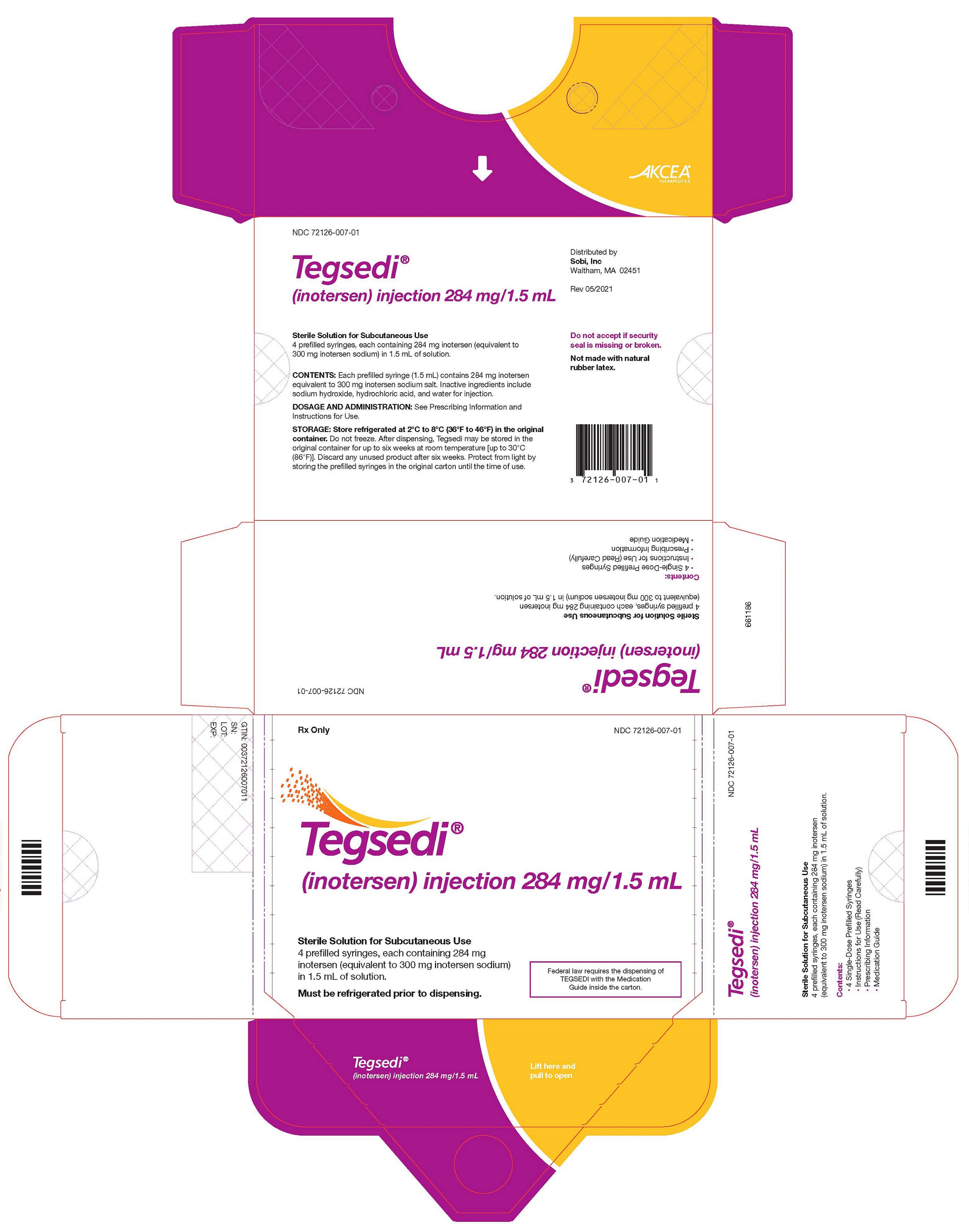
Tegsedi inotersen 284 mg/1.5mL Injection, Solution — NDC 72126-007-01 (Billing 72126-0007-01)
This is a package of Tegsedi inotersen 284 mg/1.5mL Injection, Solution from Akcea Therapeutics, Inc., no longer marketed, no longer in the FDA NDC Directory. It is this product's only package size.
NDC database record
One package, one record: these facts belong to NDC 72126-007-01 alone.
- Record
- FDA NDC Directory package listing · Human prescription drug
- Code segments
- 72126 labeler · 007 product · 01 package
- Barcode (UPC-A, from the NDC)
- 3 7212600701 1
- FDA record last changed
- Jul 15, 2026
Identity & classification
Regulatory identifiers FDA, NLM and CMS codes for this package
Drug-database identifiers Medi-Span GPI and First Databank GCN / HICL / AHFS classification
- GSN (GCN sequence number): 079122
- GCN: 45559
- HICL (First Databank): 045353
- AHFS class code: 92:18.00.00
Where does this data come from?
- FDA openFDA NDC Directory · synced Oct 1, 2026
- FDA label on DailyMed · label index refreshed Oct 3, 2026
- RxNorm (NLM RxNav) · catalog refreshed Oct 1, 2026
- Medi-Span GPI (licensed)
- First Databank (licensed) · refreshed Oct 1, 2026
Clinical
Patient education
Supplement & herbal interactions
Some supplements/herbs that may interact with Inotersen — tap one for details:
Where does this data come from?
- MedlinePlus (NLM) · refreshed Oct 1, 2026
- FDA label on DailyMed · label index refreshed Oct 3, 2026
Ask a licensed pharmacist directly — free, answered by our team.
Pricing
A drug doesn't have one price. Each row is a different public payment system, and none is what you'd pay at the counter — that depends on your insurance. The ⓘ on each row explains what it measures.
| Price system | Per mL | Per package |
|---|---|---|
| Retail pharmacies payNADAC · weekly | Not in the retail survey — common for institutional, discontinued, or low-volume packs. | |
| Medicaid paysCMS SDUD · 12 mo | No recent Medicaid claims on file for this NDC — rare and low-volume NDCs are suppressed in the public data. | |
| Medicare drug plans payPart D · quarterly | No Part D plan price is available for this NDC in our data. | |
Where does this data come from?
- CMS NADAC weekly file
- CMS ASP pricing files · refreshed Sep 20, 2026
- CMS Medicaid State Drug Utilization Data · refreshed Oct 4, 2026
- CMS Part D plan pricing files · refreshed Sep 24, 2026
- VA National Acquisition Center price file
Packaging — all sizes for this product
| Package NDC | Description | Marketing start | Marketing end | Status |
|---|---|---|---|---|
| 72126-0007-01 You're viewing this Main listing | 4 TRAY in 1 CARTON / 1 SYRINGE in 1 TRAY / 1.5 mL in 1 SYRINGE | 2018-10-05 | — | Inactivated by FDA |
Therapeutic equivalents
| Product | Labeler | Pack | NADAC/unit | TE | Status | Price vs. this |
|---|---|---|---|---|---|---|
| Tegsedi 284 mg/1.5mLthis 72126-0007-01 | Akcea | 1 syringe | — | — | Discontinued | — |
Where does this data come from?
- FDA openFDA NDC Directory · synced Oct 1, 2026
- FDA Orange Book · refreshed Oct 3, 2026
- CMS NADAC weekly file
Availability & generic status
We did not find an FDA-approved generic match for this exact strength, form and route. Patent/protection dates below may affect future generic timing.
Why the date isn’t exact: Generic timing can change because patents may be challenged, settled, licensed, added, removed, or worked around with a narrower label — and FDA approval does not always mean a pharmacy can get the generic today.
🛈 What do these terms mean?
- Patent
- Legal protection listed in the Orange Book that may delay generic approval or launch. Issued by the U.S. Patent & Trademark Office.
- Substance patent
- Covers the active drug molecule itself — the hardest to design around. A generic generally can’t launch until it expires.
- Formulation (product) patent
- Covers a specific formulation or dosage form. A generic can sometimes work around it with a different formulation.
- Method-of-use patent
- A patent covering one specific approved use of the drug — not necessarily the whole molecule. A generic can sometimes launch with a “skinny label” that carves out the protected use and keeps the others.
- Skinny label
- A generic label that omits a still-patented use when the FDA allows it — letting a generic reach the market for the unprotected uses.
- Exclusivity
- FDA-granted marketing protection, separate from patents — e.g. 5-yr new chemical entity, 7-yr orphan drug, or a +6-month pediatric extension.
- Paragraph IV
- A generic applicant’s formal challenge to a listed patent. It can potentially lead to earlier generic entry, but often involves litigation or a settlement.
- RLD / RS
- Reference Listed Drug — the brand product the FDA uses as the reference for generic applications. Reference Standard — the product the FDA expects generics to compare against in bioequivalence testing.
- TE / AB rating
- FDA therapeutic-equivalence rating. An AB rating generally means the FDA considers a generic therapeutically equivalent to — and substitutable for — the brand.
- LOE (loss of exclusivity)
- The latest patent or exclusivity currently listed — the loss-of-exclusivity / latest-listed-protection date shown on this page. Paragraph-IV challenges and settlements can move the real date earlier; FDA approval and a manufacturer’s decision to market can move it later.
Built from the FDA Orange Book. The bars above are scaled to each protection’s expiry; the red LOE marker is the last one to lapse.
| Patent | Type | Use code | Expires |
|---|---|---|---|
| US 9399774 ↗ | Method of use | U-2430 | Apr 29, 2031 |
| US 9061044 ↗ | Drug substance | — | Apr 29, 2031 |
| US 8697860 ↗ | Drug product | — | Apr 29, 2031 |
Is there a generic version of TEGSEDI 284 MG/1.5 ML SYRINGE?
The FDA approved a generic — why can’t I get it at my pharmacy yet?
Why do different websites show different generic release dates?
What does “FDA listed” mean?
What does a patent or protection date mean here?
What does “current Orange Book estimate” mean?
Can a generic come out before the last patent expires?
Can a generic come out after the listed dates?
What is the difference between patents and exclusivity?
Why are there multiple patent dates?
Where does this data come from?
- FDA Orange Book · refreshed Oct 3, 2026
What it looks like
Where does this data come from?
- FDA label on DailyMed · label index refreshed Oct 3, 2026
Inactive Ingredients / Excipients
Inactive ingredients, also called excipients, are components of the drug product other than the active ingredient. They may include fillers, dyes, coatings, preservatives, flavors, or other formulation ingredients.
💡 Tap an ingredient (hover on desktop) to see what it is and why it’s used.
-
UNII QTT17582CB
A strong acid used to adjust and maintain the proper pH level in liquid medicines, ensuring stability and preventing breakdown of active ingredients.
-
UNII 55X04QC32I
A strong alkaline chemical used to adjust and maintain the pH balance of liquid medicines. It helps keep the medicine stable and ensures it stays effective during storage.
-
UNII 059QF0KO0R
Water is a liquid solvent that dissolves and mixes ingredients together in liquid medicines, syrups, and injections. It helps distribute the active drug evenly throughout the product.
3 inactive ingredients listed in the exact product block matched to this NDC.
Where does this data come from?
ingredient classCode="IACT" elements from the exact product block matched by this NDC. Label-section narrative from DailyMed / the openFDA label index is shown separately when available.- FDA label on DailyMed · label index refreshed Oct 3, 2026
- FDA openFDA NDC Directory · synced Oct 1, 2026
Inactive ingredient FAQ
Are inactive ingredients the same for every manufacturer?
Why might an inactive ingredient be missing?
Can inactive ingredients matter?
Manufacturer & labeler
Where does this data come from?
- FDA openFDA NDC Directory · synced Oct 1, 2026
- Drugs@FDA
Full prescribing information FDA SPL
🚨 Boxed Warning ▾
WARNING: THROMBOCYTOPENIA AND GLOMERULONEPHRITIS Thrombocytopenia TEGSEDI causes reductions in platelet count that may result in sudden and unpredictable thrombocytopenia, which can be life-threatening. One clinical trial patient died from intracranial hemorrhage. TEGSEDI is contraindicated in patients with a platelet count below 100 x 10 9 /L [see Contraindications ( 4 ) and Warnings and Precautions ( 5.2 )].
Prior to starting TEGSEDI, obtain a platelet count [see Dosage and Administration ( 2.3 )]. During treatment, monitor platelet counts weekly if values are 75 x 10 9 /L or greater, and more frequently if values are less than 75 x 10 9 /L [see Dosage and Administration ( 2.4 ) and Warnings and Precautions ( 5.1 )] . If a patient develops signs or symptoms of thrombocytopenia, obtain a platelet count as soon as possible.
The patient should not receive additional TEGSEDI unless a platelet count is determined to be interpretable and acceptable by a medical professional [see Warnings and Precautions ( 5.1 )] . Following discontinuation of treatment for any reason, continue to monitor platelet count for 8 weeks, or longer if platelet counts are less than 100 x 10 9 /L, to verify that platelet counts remain above 75 x 10 9 /L [see Dosage and Administration ( 2.4 )] . Glomerulonephritis TEGSEDI can cause glomerulonephritis that may require immunosuppressive treatment and may result in dialysis-dependent renal failure.
One clinical trial patient who developed glomerulonephritis and did not receive immunosuppressive treatment remained dialysis-dependent. In clinical trials, cases of glomerulonephritis were accompanied by nephrotic syndrome, which can have manifestations of edema, hypercoagulability with venous or arterial thrombosis, and increased susceptibility to infection [see Warnings and Precautions ( 5.2 )] . TEGSEDI should generally not be initiated in patients with urinary protein to creatinine ratio (UPCR) of 1000 mg/g or higher [see Dosage and Administration ( 2.4 ) and Warnings and Precautions ( 5.2 )] .
Prior to starting TEGSEDI, measure the serum creatinine, estimated glomerular filtration rate (eGFR), urine protein to creatinine ratio (UPCR), and perform a urinalysis [see Dosage and Administration ( 2.3 )] . During treatment, monitor serum creatinine, eGFR urinalysis, and UPCR every two weeks. TEGSEDI should not be given to patients who develop a UPCR of 1000 mg/g or higher, or eGFR below 45 mL/minute/1.73 m 2 , pending further evaluation of the cause.
If a dose is held, once eGFR increases to ≥45 mL/minute/1.73 m 2 , UPCR decreases to below 1000 mg/g, or the underlying cause of the decline in renal function is corrected, weekly dosing may be reinitiated. In patients with UPCR of 2000 mg/g or higher, perform further evaluation for acute glomerulonephritis, as clinically indicated. If acute glomerulonephritis is confirmed, TEGSEDI should be permanently discontinued [see Dosage and Administration ( 2.4 ) and Warnings and Precautions ( 5.2 )] .
TEGSEDI REMS Program Because of the risks of serious bleeding caused by severe thrombocytopenia and because of glomerulonephritis, both of which require frequent monitoring, TEGSEDI is available only through a restricted distribution program under a Risk Evaluation and Mitigation Strategy (REMS) called the TEGSEDI REMS Program [see Warnings and Precautions ( 5.3 )] . WARNING: THROMBOCYTOPENIA AND GLOMERULONEPHRITIS See full prescribing information for complete boxed warning. Thrombocytopenia TEGSEDI causes reductions in platelet count that may result in sudden and unpredictable thrombocytopenia, which can be life-threatening.
( 5.1 ) Testing prior to treatment and monitoring during treatment is required ( 2.3 , 2.4 , 5.1 ) Glomerulonephritis TEGSEDI can cause glomerulonephritis that may require immunosuppressive treatment and may result in dialysis-dependent renal failure. ( 5.2 ) Testing prior to treatment and monitoring during treatment is required ( 2.3 , 2.4 , 5.2 ) TEGSEDI is… [Excerpted — this section continues on DailyMed.]
🎯 Indications and Usage ▾
1 INDICATIONS AND USAGE TEGSEDI is indicated for the treatment of the polyneuropathy of hereditary transthyretin-mediated amyloidosis in adults. TEGSEDI is a transthyretin-directed antisense oligonucleotide indicated for treatment of the polyneuropathy of hereditary transthyretin-mediated amyloidosis in adults ( 1 ).
⏱️ Dosage and Administration ▾
2 DOSAGE AND ADMINISTRATION The recommended dosage is 284 mg administered by subcutaneous injection once weekly. ( 2.1 ) Laboratory tests must be measured prior to treatment, continue to be monitored after treatment initiation, and for 8 weeks following discontinuation of treatment, as directed. ( 2.3 , 2.4 )
2.1Dosing Information The recommended dose of TEGSEDI is 284 mg injected subcutaneously once weekly. For consistency of dosing, patients should be instructed to give the injection on the same day every week. If a dose is missed, patients should be instructed to take the missed dose as soon as possible, unless the next scheduled dose is within 2 days.
In this situation, the patient should be directed to skip the missed dose and take the next scheduled dose on the scheduled day.
2.2Administration TEGSEDI is intended for subcutaneous use only. The first injection administered by the patient or caregiver should be performed under the guidance of an appropriately qualified healthcare professional. Patients and/or caregivers should be trained in the subcutaneous administration of TEGSEDI in accordance with the Instructions for Use.
Parenteral drug products should be inspected visually for particulate matter and discoloration prior to administration, whenever solution and container permit [see How Supplied/Storage and Handling ( 16 )]. Sites for injection include the abdomen, upper thigh region, or outer area of the upper arm. It is important to rotate sites for injection. - If injected in the upper arm, the injection should be administered by a person other than the patient. - Injection should be avoided at the waistline and other sites where pressure or rubbing from clothing may occur. - TEGSEDI should not be injected into areas of skin disease or injury. - Tattoos and scars should also be avoided.
TEGSEDI prefilled syringe should be allowed to reach room temperature prior to injection. - Remove from refrigerated storage at least 30 minutes prior to use. - Other warming methods should not be used. Use each prefilled syringe only once.
2.3Assessment Prior to Initiating TEGSEDI Measure platelet count, serum creatinine, estimated glomerular filtration rate (eGFR), urine protein to creatinine ratio (UPCR), alanine aminotransferase (ALT), aspartate aminotransferase (AST), and total bilirubin, and perform urinalysis prior to treatment with TEGSEDI and as directed following treatment initiation [see Dosage and Administration ( 2.4 ) and Warnings and Precautions ( 5.1 and 5.2 )] .
2.4Laboratory Testing and Monitoring to Assess Safety after Initiating TEGSEDI Monitor platelet count, serum creatinine, estimated glomerular filtration rate (eGFR), urinalysis, urine protein to creatinine ratio (UPCR), alanine aminotransferase (ALT), aspartate aminotransferase (AST), and total bilirubin during treatment with TEGSEDI, and for 8 weeks following discontinuation of treatment. Platelet Count Do not initiate TEGSEDI in patients with a platelet count less than 100 x 10 9 /L. Monitor platelet count during the entire course of treatment with Tegsedi and for 8 weeks following discontinuation of treatment.
Recommendations for platelet monitoring frequency and TEGSEDI dosing are specified in Table 1 . If a patient develops signs or symptoms of thrombocytopenia, obtain a platelet count as soon as possible, and hold dosing until platelet count is confirmed. Recheck the platelet count as soon as possible if a platelet measurement is uninterpretable (e.g., clumped sample) [see Warnings and Precautions ( 5.8 ] .
Table 1: TEGSEDI Monitoring and Treatment Recommendations for Platelet Count * It is strongly recommended that, unless the patient has a medical contraindication to receiving glucocorticoids, the patient receive glucocorticoid therapy to reverse the platelet decline [see Warnings and Precautions ( 5.1 )] . # Additional risk factors for bleeding include age >60 years, receiving anticoagulant or antiplatelet medicinal products, or prior history of… [Excerpted — this section continues on DailyMed.]
💊 Dosage Forms and Strengths ▾
3 DOSAGE FORMS AND STRENGTHS Injection: 284 mg/1.5 mL clear, colorless to pale yellow solution in a single-dose prefilled syringe. Injection: 284 mg/ 1.5 mL in a single-dose prefilled syringe ( 3 )
⛔ Contraindications ▾
4 CONTRAINDICATIONS TEGSEDI is contraindicated in patients with: Platelet count below 100 x 10 9 /L [see Warnings and Precautions ( 5.1 )] History of acute glomerulonephritis caused by TEGSEDI [see Warnings and Precautions ( 5.2 )] History of a hypersensitivity reaction to TEGSEDI [see Warnings and Precautions ( 5.7 )] . Platelet count less than 100 x 10 9 /L ( 4 , 5.1 ) History of acute glomerulonephritis caused by TEGSEDI ( 4 , 5.2 ) Patients with a history of a hypersensitivity reaction to TEGSEDI ( 4 , 5.7 )
⚠️ Warnings and Cautions ▾
5 WARNINGS AND PRECAUTIONS Stroke and Cervicocephalic Arterial Dissection: These adverse events occurred within 2 days of first dose and with symptoms of cytokine release. Educate patients on symptoms of stroke and central nervous system arterial dissection. ( 5.4 ) Inflammatory and Immune Effects : Serious neurologic adverse reactions consistent with inflammatory and immune effects occurred.
( 5.5 ) Liver Injury: Monitor alanine amino-transferase, aspartate aminotransferase, and total bilirubin every 4 months during treatment and in case of symptoms of hepatic dysfunction. ( 5.6 ) Hypersensitivity Reactions: If these occur, discontinue and initiate appropriate therapy. ( 5.7 ) Uninterpretable Platelet Counts: Reaction between Antiplatelet Antibodies and ethylenediaminetetra-acetic acid : Platelet clumping can cause uninterpretable platelet measurement; repeat test if this is suspected.
( 5.8 ) Reduced Serum Vitamin A Levels and Recommended Supplementation: Supplement with the recommended daily allowance of vitamin A. Refer to an ophthalmologist if ocular symptoms suggestive of vitamin A deficiency occur. ( 5.9 )
5.1Thrombocytopenia TEGSEDI causes reductions in platelet count at any time during treatment that may result in sudden and unpredictable thrombocytopenia that can be life-threatening. In Study 1 [see Clinical studies ( 14 )] , platelet counts below 100 x 10 9 /L occurred in 25% of TEGSEDI-treated patients, compared with 2% of patients on placebo. Platelet counts below 75 x 10 9 /L occurred in 14% of TEGSEDI-treated patients, compared to no patient on placebo.
In Study 1 and its extension study, 39% of TEGSEDI-treated patients with a baseline platelet count below 200 x10 9 /L had a nadir platelet count below 75 x 10 9 /L, compared to 6% of patients with baseline platelet counts 200 x10 9 /L or higher. Three TEGSEDI-treated patients (3%) had sudden severe thrombocytopenia (platelet count below 25 x 10 9 /L), which can have potentially fatal bleeding complications, including spontaneous intracranial or intrapulmonary hemorrhage. One patient in a clinical trial experienced a fatal intracranial hemorrhage.
In clinical trials, all 3 patients with severe thrombocytopenia had treatment-emergent antiplatelet IgG antibodies detected shortly before or at the time of the severe thrombocytopenia. In 2 patients, platelet clumping caused uninterpretable platelet measurements that delayed the diagnosis and treatment of severe thrombocytopenia. Platelet clumping can be caused by a reaction between antiplatelet antibodies and ethylenediaminetetraacetic acid (EDTA) [see Warnings and Precautions ( 5.8 )] .
Monitoring and Dosing Patients who are not able to adhere to the recommended laboratory monitoring or to the related treatment recommendations must not receive TEGSEDI. Do not initiate TEGSEDI in patients with a platelet count below 100 x 10 9 /L. Follow recommended monitoring and treatment recommendations for platelet count [see Dosage and Administration ( 2.4 )] .
If a patient develops signs or symptoms of thrombocytopenia, obtain a platelet count as soon as possible, and hold TEGSEDI dosing unless the platelet count is confirmed to be acceptable. Recheck the platelet count as soon as possible if a platelet measurement is uninterpretable (e.g., clumped sample) [see Warnings and Precautions ( 5.8 )] . Hold TEGSEDI dosing until an acceptable platelet count is confirmed with an interpretable blood sample.
Concomitant Medications with Platelet Effects When considering use of TEGSEDI concomitantly with antiplatelet drugs or anticoagulants, be aware of the risk of potential bleeding from thrombocytopenia with TEGSEDI, and consider discontinuation of these drugs in patients with a platelet count less than 50 x 10 9 /L [see Drug Interactions ( 7.1 )] . Symptoms of Thrombocytopenia Symptoms of thrombocytopenia can include unusual or prolonged bleeding (e.g., petechiae, easy bruising, hematoma, subconjunctival bleeding, gingival bleeding, epi… [Excerpted — this section continues on DailyMed.]
🤒 Adverse Reactions ▾
6 ADVERSE REACTIONS The following serious adverse reactions are discussed in greater detail in other sections of the labeling: Thrombocytopenia [see Warnings and Precautions ( 5.1 )] Glomerulonephritis and Renal Toxicity [see Warnings and Precautions ( 5.2 )] Stroke and Cervicocephalic Arterial Dissection [see Warnings and Precautions ( 5.4 )] Inflammatory and Immune Effects [see Warnings and Precautions ( 5.5 )] Liver Injury [see Warnings and Precautions ( 5.6 )] Hypersensitivity [see Warnings and Precautions ( 5.7 )] Reducted Serum Vitamin A Levels and Recommended Supplementation [see Warnings and Precautions ( 5.9 )] The most common adverse reactions (those that occurred in at least 20% of TEGSEDI-treated patients and more frequently than on placebo) were injection site reactions, nausea, headache, fatigue, thrombocytopenia, and fever ( 6.1 ).
To report SUSPECTED ADVERSE REACTIONS, contact Sobi, Inc. at 1-833-642-5232 or FDA at 1-800-FDA-1088 or www.fda.gov/medwatch .
6.1Clinical Trials Experience Because clinical trials are conducted under widely varying conditions, adverse reaction rates observed in the clinical trials of TEGSEDI cannot be directly compared to rates in clinical trials of other drugs and may not reflect the rates observed in practice. A total of 112 adult patients with polyneuropathy caused by hereditary transthyretin-mediated amyloidosis (hATTR) received TEGSEDI in Study 1 and 60 patients received placebo. The, mean age of the study patients was 59 years (27 to 78 years of age).
Of the TEGSEDI-treated patients, 69% were male and 94% were Caucasian, with a mean exposure of 385 days, and median exposure of 449 days. Baseline disease characteristics were largely similar in TEGSEDI-treated patients and patients in the placebo control group. Sixty-seven percent of patients were in Stage 1 of the disease at baseline, and 33% in Stage 2.
Fifty-two percent of patients had Val30Met mutations in the TTR gene, with the remaining 48% comprised of 26 different other point mutations. Table 2 presents common adverse reactions that occurred in at least 5% of TEGSEDI-treated patients and that occurred at least 5% more frequently or two times more frequently than on placebo. The most common adverse reactions that occurred in at least 20% of TEGSEDI-treated patients and more frequently than on placebo were injection site reactions, nausea, headache, fatigue, thrombocytopenia, and fever.
Serious adverse reactions were more frequent in TEGSEDI-treated patients (32%) than in patients on placebo (21%). The most common adverse reactions leading to discontinuation were thrombocytopenia and cachexia. Table 2: Adverse Reactions Reported in At Least 5% TEGSEDI-Treated Patients and that Occurred At Least 5% More Frequently or At Least Two Times More Frequently than Placebo Patients (Study 1) a Includes bruising, erythema, hematoma, hemorrhage, induration, inflammation, mass, edema, pain, pruritus, rash, swelling, and urticaria. b Includes arrhythmia, atrial fibrillation, atrial flutter, bradyarrhythmia, bradycardia, extrasystoles, sinus arrhythmia, sinus bradycardia, supraventricular extrasystoles, tachycardia, and ventricular extrasystoles. c Includes bacteremia, cellulitis staphylococcal, clostridium difficile infection, conjunctivitis bacterial, cystitis Escherichia, Helicobacter gastritis, Helicobacter infection, Staphylococcal infection.
TEGSEDI (N=112) % Placebo (N=60) % Injection site reactions a 49 10 Nausea 31 12 Headache 26 12 Fatigue 25 20 Thrombocytopenia 24 2 Fever 20 8 Peripheral edema 19 10 Chills 18 3 Anemia 17 3 Vomiting 15 5 Myalgia 15 10 Decreased renal function 14 5 Arrhythmia b 13 5 Arthralgia 13 8 Pre-syncope or syncope 13 5 Decreased appetite 10 0 Paresthesia 10 3 Dyspnea 9 3 Elevated liver function test 9 3 Orthostasis 8 2 Influenza-like illness 8 3 Contusion 7 2 Bacterial infection c 7 3 Eosinophilia 5 0 Dry mouth 5 2
6.2Immunogenicity The detection of antibody formation is highly dependent on the sensitivi… [Excerpted — this section continues on DailyMed.]
🔄 Drug Interactions ▾
7 DRUG INTERACTIONS
7.1Antiplatelet Drugs or Anticoagulant Medications Because of the risk of thrombocytopenia, caution should be used when using antiplatelet drugs (e.g., adenosine, clopidogrel, prasugrel, ticagrelor, or ticlopidine), including non-prescription products that affect platelets (e.g., aspirin, nonsteroidal anti-inflammatory drugs), or anticoagulants (e.g., heparin, warfarin), concomitantly with TEGSEDI [see Warnings and Precautions ( 5.1 )] .
7.2Nephrotoxic Drugs Because of the risk of glomerulonephritis and renal toxicity, caution should be used when using nephrotoxic drugs and other drugs that may impair renal function concomitantly with TEGSEDI [see Warnings and Precautions ( 5.2 )] .
👥 Use in Specific Populations ▾
8 USE IN SPECIFIC POPULATIONS
8.1Pregnancy Pregnancy Exposure Registry There is a pregnancy exposure registry that monitors pregnancy outcomes in women exposed to TEGSEDI during pregnancy. Health care providers are encouraged to register patients and pregnant women are encouraged to register themselves by calling: 1-877-465-7510, emailing: [email protected] , or visiting online at: www.tegsedipregnancystudy.com . Risk Summary There are no data on the developmental risk associated with the use of TEGSEDI in pregnant women.
TEGSEDI treatment leads to a decrease in serum vitamin A levels, and vitamin A supplementation is advised for patients taking TEGSEDI. Vitamin A is essential for normal embryofetal development; however, excessive levels of Vitamin A are associated with adverse developmental effects. The effects on the fetus of a reduction in maternal serum TTR caused by TEGSEDI and of vitamin A supplementation are unknown [see Clinical Pharmacology ( 12.2 ), Warnings and Precautions ( 5.9 )] .
In animal studies, subcutaneous administration of inotersen to pregnant rabbits resulted in premature delivery and reduced fetal body weight at the highest dose tested, which was associated with maternal toxicity. No adverse developmental effects were observed when inotersen or a pharmacologically-active surrogate was administered to pregnant mice. In the U.S. general population, the estimated background risk of major birth defects and miscarriage in clinically recognized pregnancies is 2-4% and 15-20%, respectively.
The background risk of major birth defects and miscarriage for the indicated population is unknown. Data Animal Data Subcutaneous administration of inotersen (0, 3, 15, or 25 mg/kg) or a rodent-specific surrogate (15 mg/kg) to male and female mice every other day prior to and during mating and continuing in females throughout the period of organogenesis produced no adverse effects on embryofetal development. Subcutaneous administration of inotersen (0, 2.5, 5, or 15 mg/kg) to pregnant rabbits every other day throughout the period of organogenesis resulted in premature delivery and reduced fetal body weight at the highest dose tested, which was associated with maternal toxicity (reduced body weight and food consumption).
Subcutaneous administration of inotersen (0, 2.9, 11.4, or 22.9 mg/kg) or a rodent-specific surrogate (11.4 mg/kg) to mice every other day throughout pregnancy and lactation produced no adverse effects on pre- or postnatal development.
8.2Lactation Risk Summary There is no information regarding the presence of TEGSEDI in human milk, the effects on the breast-fed infant, or the effects on milk production. A study in lactating mice has shown excretion of inotersen in milk. The development and health benefits of breastfeeding should be considered along with the mother’s clinical need for TEGSEDI and any potential adverse effects on the breastfed infant from TEGSEDI or from the underlying maternal condition.
8.4Pediatric Use Safety and effectiveness in pediatric patients have not been established.
8.5Geriatric Use Clinical studies of TEGSEDI included 69 patients (45%) aged 65 and over. No differences in pharmacokinetics or effectiveness were observed between these patients and younger patients. Patients 65 years and older may be at increased risk of certain adverse reactions, such as congestive heart failure, chills, myalgia, and extremity pain.
8.6Renal Impairment No dose adjustment is necessary in patients with mild to moderate renal impairment (estimated glomerular filtration rate [eGFR] ≥30 to <90 mL/min/1.73 m 2 ) [see Clinical Pharmacology ( 12.3 )] . TEGSEDI has not been studied in patients with severe renal impairment or end-stage renal disease.
8.7Hepatic Impairment No dose adjustment is necessary in patients with mild hepatic impairment [see Clinical Pharmacology ( 12.3 )] . TEGSEDI has not been studied in patients with other degrees of hepatic impairment.
🤰 Pregnancy ▾
8.1Pregnancy Pregnancy Exposure Registry There is a pregnancy exposure registry that monitors pregnancy outcomes in women exposed to TEGSEDI during pregnancy. Health care providers are encouraged to register patients and pregnant women are encouraged to register themselves by calling: 1-877-465-7510, emailing: [email protected] , or visiting online at: www.tegsedipregnancystudy.com . Risk Summary There are no data on the developmental risk associated with the use of TEGSEDI in pregnant women.
TEGSEDI treatment leads to a decrease in serum vitamin A levels, and vitamin A supplementation is advised for patients taking TEGSEDI. Vitamin A is essential for normal embryofetal development; however, excessive levels of Vitamin A are associated with adverse developmental effects. The effects on the fetus of a reduction in maternal serum TTR caused by TEGSEDI and of vitamin A supplementation are unknown [see Clinical Pharmacology ( 12.2 ), Warnings and Precautions ( 5.9 )] .
In animal studies, subcutaneous administration of inotersen to pregnant rabbits resulted in premature delivery and reduced fetal body weight at the highest dose tested, which was associated with maternal toxicity. No adverse developmental effects were observed when inotersen or a pharmacologically-active surrogate was administered to pregnant mice. In the U.S. general population, the estimated background risk of major birth defects and miscarriage in clinically recognized pregnancies is 2-4% and 15-20%, respectively.
The background risk of major birth defects and miscarriage for the indicated population is unknown. Data Animal Data Subcutaneous administration of inotersen (0, 3, 15, or 25 mg/kg) or a rodent-specific surrogate (15 mg/kg) to male and female mice every other day prior to and during mating and continuing in females throughout the period of organogenesis produced no adverse effects on embryofetal development. Subcutaneous administration of inotersen (0, 2.5, 5, or 15 mg/kg) to pregnant rabbits every other day throughout the period of organogenesis resulted in premature delivery and reduced fetal body weight at the highest dose tested, which was associated with maternal toxicity (reduced body weight and food consumption).
Subcutaneous administration of inotersen (0, 2.9, 11.4, or 22.9 mg/kg) or a rodent-specific surrogate (11.4 mg/kg) to mice every other day throughout pregnancy and lactation produced no adverse effects on pre- or postnatal development.
🧒 Pediatric Use ▾
8.4Pediatric Use Safety and effectiveness in pediatric patients have not been established.
🧓 Geriatric Use ▾
8.5Geriatric Use Clinical studies of TEGSEDI included 69 patients (45%) aged 65 and over. No differences in pharmacokinetics or effectiveness were observed between these patients and younger patients. Patients 65 years and older may be at increased risk of certain adverse reactions, such as congestive heart failure, chills, myalgia, and extremity pain.
🧬 Clinical Pharmacology ▾
12 CLINICAL PHARMACOLOGY
12.1Mechanism of Action Inotersen is an antisense oligonucleotide that causes degradation of mutant and wild-type TTR mRNA through binding to the TTR mRNA, which results in a reduction of serum TTR protein and TTR protein deposits in tissues.
12.2Pharmacodynamics The pharmacodynamic effects of TEGSEDI were evaluated in hATTR amyloidosis patients treated with 284 mg TEGSEDI via subcutaneous injection once weekly. With repeat dosing, the mean percent decreases from baseline in serum TTR from Week 13 to Week 65 of treatment ranged from 68% to 74% (median range: 75% to 79%). Similar TTR reductions were observed regardless of TTR mutation, sex, age, or race.
Serum TTR is a carrier of retinol binding protein, which is involved in the transport of vitamin A in the blood. Mean reductions in serum retinol binding of 71%, and serum vitamin A of 63%, were observed at Week 65 [see Warnings and Precautions ( 5.6 )] . Cardiac Electrophysiology Formal QTc studies have not been conducted with TEGSEDI.
The potential for QTc prolongation with inotersen was evaluated in a randomized, placebo-controlled trial in healthy volunteers. No large changes in the mean QTc interval (>20 ms) were detected in the trial. In the 66-week controlled efficacy trial, 5.4% of TEGSEDI-treated patients had evidence of QRS prolongation on their electrocardiograms (ECGs) to greater than 160 msec and greater than 25% above baseline, compared to and in 1.7% of patients on placebo.
12.3Pharmacokinetics Following subcutaneous administration, systemic exposure to inotersen increased in a dose-proportional manner over the range of 150-400 mg of inotersen sodium salt. At the recommended TEGSEDI dosing regimen of 284 mg every week, steady state is reached after approximately 3 months. The estimated geometric mean (90% confidence interval) steady state peak concentrations (Cmax), trough concentrations (Ctrough), and area under the curve (AUCτ) were 6.39 (5.65, 7.20) µg/mL, 0.034 (0.031, 0.038) µg/mL, and 90 (82.4, 97.4) µg·h/mL, respectively.
Plasma Cmax and AUC do not exhibit accumulation at steady state. Absorption Following subcutaneous administration, TEGSEDI is absorbed rapidly into systemic circulation in a dose-dependent fashion, with the median time to maximum plasma concentrations (C max ) of 2 to 4 hours. Distribution TEGSEDI is highly bound to human plasma proteins (>94%) and the fraction bound is independent of drug concentration.
Based on animal studies (mouse, rat and monkey), TEGSEDI rapidly distributes broadly to tissues, with the highest concentrations observed in the kidney and liver. TEGSEDI does not cross the blood-brain barrier. The apparent volume of distribution of TEGSEDI at steady-state (mean and 90% confidence interval) is 293 (268, 320) L in patients with hATTR.
Elimination The terminal elimination half-life (mean and 90% confidence interval) for TEGSEDI is 32.3 (29.4, 35.5) days. Inotersen is mainly cleared through metabolism, and the total body clearance (mean and 90% confidence interval) is 3.18 (3.08, 3.29) L/h. Metabolism Inotersen is metabolized by nucleases to nucleotides of various lengths.
Excretion Less than 1% of the administered dose of inotersen is excreted unchanged into urine within 24 hours. Specific Populations Age, race, and sex had no impact on the steady state pharmacokinetics of inotersen or TTR reduction. Population pharmacokinetic and pharmacodynamic analyses indicated no impact of mild or moderate renal impairment (eGFR ≥30 to <90 mL/min/1.73 m 2 ) or mild hepatic impairment (bilirubin less than or equal to 1.5 x ULN and/or AST less than 1.9 x ULN) on inotersen exposure or TTR reduction.
TEGSEDI has not been studied in patients with severe renal impairment, end-stage renal disease, moderate or severe hepatic impairment, or in patients with prior liver transplant. Drug Interaction Studies No formal clinical drug interaction studies have been performed. TEGSEDI is not a substrate or inhibitor/inducer… [Excerpted — this section continues on DailyMed.]
🧬 Mechanism of Action ▾
12.1Mechanism of Action Inotersen is an antisense oligonucleotide that causes degradation of mutant and wild-type TTR mRNA through binding to the TTR mRNA, which results in a reduction of serum TTR protein and TTR protein deposits in tissues.
📦 How Supplied / Storage and Handling ▾
16 HOW SUPPLIED/STORAGE AND HANDLING TEGSEDI is a clear, colorless to pale yellow solution supplied in a single-dose, prefilled syringe with a SSD. Each prefilled syringe of TEGSEDI is filled to deliver 1.5 mL of solution containing 284 mg of inotersen (equivalent to 300 mg inotersen sodium salt). TEGSEDI is available in cartons containing 1 or 4 prefilled syringes supplied in individual trays.
Pack of 1 prefilled syringe: NDC 72126-007-03 Pack of 4 prefilled syringes: NDC 72126-007-01 The individual tray of 1 syringe is NDC 72126-007-02. Pharmacy Store refrigerated at 2°C to 8°C (36°F to 46°F) in the original container and protect from direct light. Do not freeze.
For Patients/Caregivers Store refrigerated at 2°C to 8°C (36°F to 46°F) in the original container. Do not freeze. TEGSEDI can be kept at room temperature (up to 30°C [86°F]) in the original container for up to 6 weeks; if not used within the 6 weeks, discard TEGSEDI.
Remove from refrigerated storage (2°C to 8°C [36°F to 46°F]) at least 30 minutes before use. [TEGSEDI] prefilled syringe should be allowed to reach room temperature prior to injection. Avoid exposure to temperatures above 30°C (86°F).
📋 Description ▾
11 DESCRIPTION Inotersen is an antisense oligonucleotide (ASO) inhibitor of human transthyretin (TTR) protein synthesis. TEGSEDI contains inotersen sodium as the active ingredient. Inotersen sodium is a white to pale yellow solid and it is freely soluble in water and in phosphate buffer (pH 7.5 to 8.5).
The chemical name of inotersen sodium is DNA, d( P -thio)([2'- O -(2-methoxyethyl)]m 5 rU-[2'- O -(2-methoxyethyl)]m 5 rC-[2'- O -(2-methoxyethyl)]m 5 rU-[2'- O -(2-methoxyethyl)]m 5 rU-[2'- O -(2-methoxyethyl)]rG-G-T-T-A-m 5 C-A-T-G-A-A-[2'- O -(2-methoxyethyl)]rA-[2'- O -(2-methoxyethyl)]m 5 rU-[2'- O -(2-methoxyethyl)]m 5 rC-[2'- O -(2-methoxyethyl)]m 5 rC-[2'- O -(2-methoxyethyl)]m 5 rC). The molecular formula of inotersen sodium is C 230 H 299 N 69 Na 19 O 121 P 19 S 19 and the molecular weight is 7600.73 Da. It has the following structural formula: The molecular formula of inotersen free base is C 230 H 318 N 69 O 121 P 19 S 19 and its molecular weight is 7183.08.
TEGSEDI is a sterile, preservative-free, aqueous solution for subcutaneous injection. It is supplied in a prefilled syringe (PFS). Each PFS contains 1.5 mL of solution containing 284 mg inotersen (equivalent to 300 mg inotersen sodium salt) TEGSEDI is formulated in Water for Injection and may include hydrochloric acid and/or sodium hydroxide for pH adjustment to 7.5-8.5.
Chemical Structure
💬 Information for Patients ▾
17 PATIENT COUNSELING INFORMATION Advise the patient and caregiver to read the FDA-approved patient labeling ( Medication Guide and Instructions for Use ). Thrombocytopenia Inform patients that TEGSEDI can cause reductions in platelet count that may result in thrombocytopenia. Instruct patients to notify a healthcare provider immediately if they show symptoms of thrombocytopenia (e.g., unusual or prolonged bleeding, neck stiffness, or atypical severe headache).
Advise patients of the importance of monitoring during treatment with TEGSEDI [see Warnings and Precautions ( 5.1 )] . Also instruct patients to notify their healthcare provider of all medications, including over-the-counter, that they are taking [see Drug Interactions ( 7.1 )] . Glomerulonephritis and Renal Toxicity Inform patients that glomerulonephritis has occurred in patients treated with TEGSEDI.
Advise patients of the importance of monitoring of urine protein to creatinine ratio (UPCR during treatment with TEGSEDI) [see Warnings and Precautions ( 5.2 )] . TEGSEDI REMS Program TEGSEDI is available only through a restricted program called the TEGSEDI REMS Program [see Warnings and Precautions ( 5.3 )] . Inform the patient of the following notable requirements: Patients must enroll in the program and comply with ongoing monitoring requirements.
TEGSEDI is available only from certified pharmacies participating in the program. Therefore, provide patients with the telephone number and website for information on how to obtain the product. Stroke and Cervicocephalic Arterial Dissection Educate patient on symptoms of stroke and central nervous system arterial dissection and instruct them to seek help as soon as possible if symptoms of these or other serious neurologic adverse reactions occur [see Warnings and Precautions ( 5.4 )] .
Liver Injury Instruct patients to inform a healthcare professional of symptoms suggestive of hepatic dysfunction that occur after administration of TEGSEDI [see Warnings and Precautions ( 5.6 )] . Hypersensitivity Instruct patients to inform a healthcare professional of symptoms suggestive of hypersensitivity that occur after administration of TEGSEDI [see Warnings and Precautions ( 5.7 )] . Recommended Vitamin A Supplementation Inform patients that TEGSEDI treatment leads to a decrease in vitamin A levels measured in the serum.
Instruct patients to take the recommended daily allowance of vitamin A. Advise patients to contact their healthcare provider if they experience ocular symptoms suggestive of vitamin A deficiency (e.g., night blindness) and refer them to an ophthalmologist if they develop these symptoms [see Warnings and Precautions ( 5.9 )] . Administration Instructions Train patients and caregivers on proper subcutaneous administration technique and how to use the single-dose prefilled syringe.
Instruct patients and/or caregivers to read and follow the Instructions for Use each time they use TEGSEDI. Pregnancy Instruct patients that if they are pregnant or plan to become pregnant while taking TEGSEDI they should inform their healthcare provider. Advise female patients of childbearing potential of the potential risk to the fetus.
Encourage patients to enroll in the TEGSEDI Pregnancy Registry if they become pregnant while taking TEGSEDI [see Use in Specific Populations ( 8.1 )] . For more information about TEGSEDI, go to www.TEGSEDIREMS.com or call 1-844-483-4736 Distributed by: Sobi, Inc. Waltham, MA 02451 TEGSEDI is a registered trademark of Akcea Therapeutics, Inc.
💬 Medication Guide ▾
This Medication Guide has been approved by the U.S. Food and Drug Administration. Issued: 01/2024 MEDICATION GUIDE TEGSEDI (Teg-SED-ee) (inotersen) injection, for subcutaneous use What is the most important information I should know about TEGSEDI?
TEGSEDI can cause serious side effects, including: low platelet counts (thrombocytopenia). TEGSEDI may cause the number of platelets in your blood to be reduced reduced at any time during treatment. This is a common side effect of TEGSEDI.
When your platelet count is too low, your body cannot form clots. You could have serious bleeding that could lead to death. Call your healthcare provider immediately if you have: unusual bruising or a rash of tiny reddish-purple spots, often on the lower legs bleeding from skin cuts that does not stop or oozes bleeding from your gums or nose blood in your urine or stools bleeding into the whites of your eyes sudden severe headaches or neck stiffness vomiting or coughing up blood abnormal or heavy periods (menstrual bleeding) kidney inflammation (glomerulonephritis).
Your kidneys may stop working properly. Glomerulonephritis can lead to severe kidney damage and kidney failure that needs dialysis. Call your healthcare provider immediately if you have: puffiness or swelling in your face, feet or hands new onset or worsening shortness of breath and coughing blood in your urine or brown urine foamy urine (proteinuria) passed less urine than usual Your healthcare provider will do laboratory tests to check your platelet count and kidneys before you start TEGSEDI and while you are using it.
Your healthcare provider should also do laboratory tests for 8 weeks after you stop TEGSEDI. It is important that you make sure you get these laboratory tests done. Because of the risk of serious bleeding caused by low platelet counts and because of the risk of kidney problems, TEGSEDI is available only through a restricted program called the TEGSEDI Risk Evaluation and Mitigation (REMS) Program.
Before you begin using TEGSEDI, you must enroll in the TEGSEDI REMS Program. Talk to your healthcare provider about how to enroll in the TEGSEDI REMS Program. You must agree to get your laboratory testing done while you are in the TEGSEDI REMS Program.
You can only get TEGSEDI from a certified pharmacy that participates in the TEGSEDI REMS Program. Your healthcare provider can give you information on how to find a certified pharmacy. For more information, including a list of certified pharmacies go to www.TEGSEDIREMS.com or call 1-844-483-4736.
What is TEGSEDI? TEGSEDI is a medicine used to treat the polyneuropathy of hereditary transthyretin-mediated (hATTR) amyloidosis in adults. It is not known if TEGSEDI is safe and effective in children.
Do not use TEGSEDI if you have: a platelet count that is low. had kidney inflammation (glomerulonephritis) caused by TEGSEDI. had an allergic reaction to inotersen or any of the ingredients in TEGSEDI. See the end of this Medication Guide for a complete list of ingredients in TEGSEDI. Before you start using TEGSEDI, tell your healthcare provider about all your medical conditions, including if you: have or had bleeding problems have or had kidney problems have received a liver transplant are pregnant or plan to become pregnant.
It is not known if TEGSEDI can harm your unborn baby. There is a registry for women who become pregnant during treatment with TEGSEDI. If you become pregnant while taking TEGSEDI, talk to your healthcare provider about registering with the TEGSEDI Pregnancy Exposure Registry.
The purpose of this registry is to collect information about your health and your baby’s health. You can get more information about this registry by calling: 1-877-465-7510, emailing: [email protected] , or visiting online at: www.tegsedipregnancystudy.com . are breastfeeding or plan to breastfeed. It is not known if TEGSEDI can pass into your breast milk or harm your baby.
Talk with your healthcare provider about the best way to feed you… [Excerpted — this section continues on DailyMed.]
🧬 Pharmacokinetics ▾
12.3Pharmacokinetics Following subcutaneous administration, systemic exposure to inotersen increased in a dose-proportional manner over the range of 150-400 mg of inotersen sodium salt. At the recommended TEGSEDI dosing regimen of 284 mg every week, steady state is reached after approximately 3 months. The estimated geometric mean (90% confidence interval) steady state peak concentrations (Cmax), trough concentrations (Ctrough), and area under the curve (AUCτ) were 6.39 (5.65, 7.20) µg/mL, 0.034 (0.031, 0.038) µg/mL, and 90 (82.4, 97.4) µg·h/mL, respectively.
Plasma Cmax and AUC do not exhibit accumulation at steady state. Absorption Following subcutaneous administration, TEGSEDI is absorbed rapidly into systemic circulation in a dose-dependent fashion, with the median time to maximum plasma concentrations (C max ) of 2 to 4 hours. Distribution TEGSEDI is highly bound to human plasma proteins (>94%) and the fraction bound is independent of drug concentration.
Based on animal studies (mouse, rat and monkey), TEGSEDI rapidly distributes broadly to tissues, with the highest concentrations observed in the kidney and liver. TEGSEDI does not cross the blood-brain barrier. The apparent volume of distribution of TEGSEDI at steady-state (mean and 90% confidence interval) is 293 (268, 320) L in patients with hATTR.
Elimination The terminal elimination half-life (mean and 90% confidence interval) for TEGSEDI is 32.3 (29.4, 35.5) days. Inotersen is mainly cleared through metabolism, and the total body clearance (mean and 90% confidence interval) is 3.18 (3.08, 3.29) L/h. Metabolism Inotersen is metabolized by nucleases to nucleotides of various lengths.
Excretion Less than 1% of the administered dose of inotersen is excreted unchanged into urine within 24 hours. Specific Populations Age, race, and sex had no impact on the steady state pharmacokinetics of inotersen or TTR reduction. Population pharmacokinetic and pharmacodynamic analyses indicated no impact of mild or moderate renal impairment (eGFR ≥30 to <90 mL/min/1.73 m 2 ) or mild hepatic impairment (bilirubin less than or equal to 1.5 x ULN and/or AST less than 1.9 x ULN) on inotersen exposure or TTR reduction.
TEGSEDI has not been studied in patients with severe renal impairment, end-stage renal disease, moderate or severe hepatic impairment, or in patients with prior liver transplant. Drug Interaction Studies No formal clinical drug interaction studies have been performed. TEGSEDI is not a substrate or inhibitor/inducer of major CYP enzymes or a substrate or inhibitor of major transporters.
In a population pharmacokinetic analysis, concomitant use of diuretics, antithrombotic, and analgesics did not impact the pharmacokinetic parameters of inotersen. TEGSEDI is not expected to cause drug-drug interactions or to be affected by inhibitors or inducers of cytochrome P450 enzymes.
🧬 Pharmacodynamics ▾
12.2Pharmacodynamics The pharmacodynamic effects of TEGSEDI were evaluated in hATTR amyloidosis patients treated with 284 mg TEGSEDI via subcutaneous injection once weekly. With repeat dosing, the mean percent decreases from baseline in serum TTR from Week 13 to Week 65 of treatment ranged from 68% to 74% (median range: 75% to 79%). Similar TTR reductions were observed regardless of TTR mutation, sex, age, or race.
Serum TTR is a carrier of retinol binding protein, which is involved in the transport of vitamin A in the blood. Mean reductions in serum retinol binding of 71%, and serum vitamin A of 63%, were observed at Week 65 [see Warnings and Precautions ( 5.6 )] . Cardiac Electrophysiology Formal QTc studies have not been conducted with TEGSEDI.
The potential for QTc prolongation with inotersen was evaluated in a randomized, placebo-controlled trial in healthy volunteers. No large changes in the mean QTc interval (>20 ms) were detected in the trial. In the 66-week controlled efficacy trial, 5.4% of TEGSEDI-treated patients had evidence of QRS prolongation on their electrocardiograms (ECGs) to greater than 160 msec and greater than 25% above baseline, compared to and in 1.7% of patients on placebo.
🔬 Clinical Studies ▾
14 CLINICAL STUDIES The efficacy of TEGSEDI was demonstrated in a randomized, double-blind, placebo-controlled, multicenter clinical trial in adult patients with polyneuropathy caused by hATTR amyloidosis (Study 1; NCT 01737398). Patients were randomized in a 2:1 ratio to receive either TEGSEDI (284 mg inotersen) (N=113) or placebo (N=60), respectively, as a subcutaneous injection administered once per week for 65 weeks (3 doses were administered during the first week of treatment). Seventy seven percent of TEGSEDI-treated patients and 87% of patients on placebo completed 66 weeks of the assigned treatment.
The co-primary efficacy endpoints were the change from baseline to Week 66 in the modified Neuropathy Impairment Scale+7 (mNIS+7) composite score and the Norfolk Quality of Life-Diabetic Neuropathy (QoL-DN) total score The mNIS+7 is an objective assessment of neuropathy, and comprises the NIS and Modified +7 composite scores. In the version of the mNIS+7 used in the trial, the NIS objectively measures deficits in cranial nerve function, muscle strength, reflexes, and sensations, and the Modified +7 assesses heart rate response to deep breathing, postural blood pressure, quantitative sensory testing (touch-pressure and heat-pain), and peripheral nerve electrophysiology.
The maximum possible score was 346.32 points, with higher scores representing a greater severity of disease. The clinical meaningfulness of effects on the mNIS+7 was assessed by the change from baseline to Week 66 in Norfolk Quality of Life-Diabetic Neuropathy (QoL-DN) total score. The Norfolk QoL-DN scale is a patient-reported assessment that evaluates the subjective experience of neuropathy in the following domains: physical functioning/large fiber neuropathy, activities of daily living, symptoms, small fiber neuropathy, and autonomic neuropathy.
The version of the Norfolk QoL-DN that was used in the trial had a maximum possible total score of 136 points, with higher scores representing greater impairment. The changes from baseline to Week 66 on both the mNIS+7 and the Norfolk QoL-DN significantly favored TEGSEDI ( Table 3 , Figures 1 and 3 ). The distributions of changes in mNIS+7 and Norfolk QoL-DN scores from baseline to Week 66 by percent of patients are shown in Figure 2 and Figure 4, respectively.
Table 3: Clinical Efficacy Results from Study 1 CI, confidence interval; LS, least squares; mNIS, modified Neuropathy Impairment Score; QoL-DN, Quality of Life – Diabetic Neuropathy a All endpoints analyzed using the mixed-effect model repeated measures (MMRM) method. b A lower value indicates less impairment/fewer symptoms. c The primary analysis population for the mNIS+7 analysis included N=95 TEGSEDI patients and N=56 placebo patients d The primary analysis population for the Norfolk QOL-DN analysis included N=94 TEGSEDI patients and N=57 placebo patients Endpoint Baseline Change from Baseline to Week 66 (LS Mean) TEGSEDI – placebo Treatment Difference LS Mean (95% CI) p - value TEGSEDI Placebo TEGSEDI Placebo Primary a mNIS+7 b, c 80.2 75.3 5.8 25.5 -19.7 [-26.4, -13.0] <0.001 Norfolk QOL- DN b, d 48.7 48.7 1.0 12.7 -11.7 [-18.3, -5.1] <0.001 Figure 1: Change from Baseline in mNIS+7 Figure 2: Histogram of mNIS+7 Change from Baseline at Week 66 Figure 3: Change from Baseline in Norfolk QoL-DN Score Figure 4: Histogram of Norfolk QoL-DN Change from Baseline at Week 66 Patients receiving TEGSEDI experienced similar improvements relative to placebo in mNIS+7 and Norfolk QoL-DN score across all subgroups including age, sex, race, region, NIS score, Val30Met mutation status, and disease stage.
Figure 1: Change from Baseline in mNIS+7 Figure 2: Histogram of mNIS+7 Change from Baseline at Week 66 Figure 3: Change from Baseline in Norfolk QoL-DN Score Figure 4: Histogram of Norfolk QoL-DN Change from Baseline at Week 66
🧪 Nonclinical Toxicology ▾
13 NONCLINICAL TOXICOLOGY
13.1Carcinogenesis, Mutagenesis, Impairment of Fertility Carcinogenesis In a 26-week carcinogenicity study in transgenic (TgRasH2) mice, weekly subcutaneous administration of inotersen (0, 10, 30, or 80 mg/kg) or a rodent-specific (pharmacologically active) surrogate (30 mg/kg) did not result in an increase in tumors. In a 94-week carcinogenicity study in rats, weekly subcutaneous administration of inotersen (0, 0.5, 2, or 6 mg/kg) resulted in an increase in tumors at or near the injection site in males at all but the lowest dose (0.5 mg/kg) tested.
Subcutaneous malignant pleomorphic fibrosarcoma was increased at the mid and high doses and combined subcutaneous malignant pleomorphic fibrosarcoma and monomorphic fibrosarcoma were increased at the high dose. These tumors are considered a response to chronic tissue irritation and inflammation caused by repeated subcutaneous injection. Mutagenesis Inotersen was negative for genotoxicity in in vitro (bacterial mutagenicity, chromosomal aberration in Chinese hamster lung) and in vivo (mouse bone marrow micronucleus) assays.
Impairment of Fertility Subcutaneous administration of inotersen (0, 3, 15, or 25 mg/kg) or a rodent-specific surrogate (15 mg/kg) to male and female mice every other day prior to and during mating and continuing in females throughout the period of organogenesis produced no adverse effects on fertility.
📄 Carcinogenesis, Mutagenesis, Impairment of Fertility ▾
13.1Carcinogenesis, Mutagenesis, Impairment of Fertility Carcinogenesis In a 26-week carcinogenicity study in transgenic (TgRasH2) mice, weekly subcutaneous administration of inotersen (0, 10, 30, or 80 mg/kg) or a rodent-specific (pharmacologically active) surrogate (30 mg/kg) did not result in an increase in tumors. In a 94-week carcinogenicity study in rats, weekly subcutaneous administration of inotersen (0, 0.5, 2, or 6 mg/kg) resulted in an increase in tumors at or near the injection site in males at all but the lowest dose (0.5 mg/kg) tested.
Subcutaneous malignant pleomorphic fibrosarcoma was increased at the mid and high doses and combined subcutaneous malignant pleomorphic fibrosarcoma and monomorphic fibrosarcoma were increased at the high dose. These tumors are considered a response to chronic tissue irritation and inflammation caused by repeated subcutaneous injection. Mutagenesis Inotersen was negative for genotoxicity in in vitro (bacterial mutagenicity, chromosomal aberration in Chinese hamster lung) and in vivo (mouse bone marrow micronucleus) assays.
Impairment of Fertility Subcutaneous administration of inotersen (0, 3, 15, or 25 mg/kg) or a rodent-specific surrogate (15 mg/kg) to male and female mice every other day prior to and during mating and continuing in females throughout the period of organogenesis produced no adverse effects on fertility.
📖 Instructions for Use ▾
This Instructions for Use has been approved by the U.S. Food and Drug Administration Issued:10/2018 TEGSEDI (Teg-SED-ee) (inotersen) injection for subcutaneous use Instructions For Use Introduction Before using your TEGSEDI prefilled syringe, your healthcare provider should show you or your caregiver how to use it the right way. If you or your caregiver have any questions, ask your healthcare provider.
Read this Instructions for Use before you start using your TEGSEDI prefilled syringe and each time you get a refill. There may be new information. This information does not take the place of talking to your healthcare provider about your medical condition or your treatment.
Guide to parts Important information Store TEGSEDI in the refrigerator between 36°F to 46°F (2°C to 8°C) in the original container. Do not freeze. TEGSEDI prefilled syringes can also be kept at room temperature that is no higher than 86°F (30°C) in the original container for up to 6 weeks.
Do not let TEGSEDI reach temperatures above 86°F (30°C). If you do not use TEGSEDI kept at room temperature within the 6 weeks, throw it away. Protect from light.
Keep TEGSEDI and all medicines out of reach of children. Each TEGSEDI prefilled syringe contains 1 dose of TEGSEDI and is for 1-time use only. Warnings Do not remove needle cap until you have reached Step 6 of the Injection phase of these instructions and are ready to inject TEGSEDI Do not share your syringe with another person or re-use your syringe Do not use if dropped onto a hard surface or damaged Do not shake or freeze the prefilled syringe Do not use if the expiration date on the side of the syringe body has passed If any of the above happens, throw away the prefilled syringe in a puncture-resistant (sharps) container and use a new prefilled syringe.
Preparation Step 1. Gather supplies 1 TEGSEDI prefilled syringe from the refrigerator 1 Alcohol wipe (not supplied) 1 Gauze pad or cotton ball (not supplied) 1 Puncture-resistant (sharps) container (not supplied) Do not perform the injection without all the supplies listed. Step 2.
Prepare to use your TEGSEDI prefilled syringe Remove the TEGSEDI tray from the carton and check the expiration date. Do not use if the expiration date has passed. Let TEGSEDI warm up at room temperature 68°F to 77°F (20°C to 25°C) for 30 minutes before giving the injection.
Do not warm the syringe in any other way. For example, do not warm in a microwave or hot water, or near other heat sources. Remove the syringe from the tray by holding onto the syringe body.
Do not move the plunger Do not remove the syringe from the tray by holding onto the needle cap or plunger. Step 3. Check medicine in the syringe Look in the inspection area to check that the TEGSEDI solution is clear and colorless or pale yellow in color.
It is normal to see air bubbles in the solution. You do not need to do anything about it. Do not use if the solution looks cloudy, discolored, or has particles.
Throw the prefilled syringe away in a puncture resistant (sharps) container, and use a new prefilled syringe. Step 4. Choose the injection site Choose an injection site on your abdomen or the front of your thigh.
Do not inject into the same site each time. Do not inject into the 2 inch area around the belly-button (naval). Do not inject where skin is bruised, tender, red, or hard.
Do not inject into areas of the skin with scars or tattoos. Do not inject through clothing. Step 5.
Clean the injection site Wash your hands with soap and water. Clean the injection site with an alcohol wipe in a circular motion. Let the skin air dry.
Do not touch the area again before injecting. Injection Step 6. Remove the needle cap Hold the syringe by the body, with the needle facing away from you.
Remove needle cap by pulling it straight off. Do not to twist it off. You may see a drop of liquid at the end of the needle.
This is normal. Keep your hands away from the plunger to avoid pushing the plunger before you are ready to inject. Do… [Excerpted — this section continues on DailyMed.]
📄 Recent Major Changes ▾
Dosage and Administration ( 2.4 ) 1/2024 Warnings and Precautions ( 5.1 , 5.6 ) 1/2024
📄 Package Label / Principal Display Panel ▾
PRINCIPAL DISPLAY PANEL - NDC: 72126-007-02 - Syringe Label Syringe Label
PRINCIPAL DISPLAY PANEL - NDC: 72126-007-02 - 1-count Tray Label 1-count Tray Label
PRINCIPAL DISPLAY PANEL - NDC: 72126-007-01 - 4-count Carton Label 4-count Carton Label
About this NDC listing & data coverage
What data is (and isn’t) available for this NDC — tap to expand
| NDC identity (package / product / labeler codes) | ✓ Available |
| Labeler | ✓ Available |
| Product & package description | ✓ Available |
| Marketing category & status | ✓ Available |
| Active ingredient / dosage form / route | ✓ Available |
| FDA label (SPL via DailyMed) | ✓ Available |
| Package photos | ✓ Available |
| Inactive ingredients (structured) | ✓ Available |
| NADAC pharmacy acquisition price (CMS) | — Not published for this NDC CMS publishes NADAC only for NDCs reported in its retail-pharmacy survey. |
| Orange Book / therapeutic-equivalence data | ✓ Available |
| HCPCS J-code billing crosswalk | — Not published for this NDC Most self-administered / retail products have no J-code — that is normal. |
| Medicaid utilization (CMS SDUD) | — Not published for this NDC CMS reports utilization only for NDCs with Medicaid claims above its privacy threshold. |