
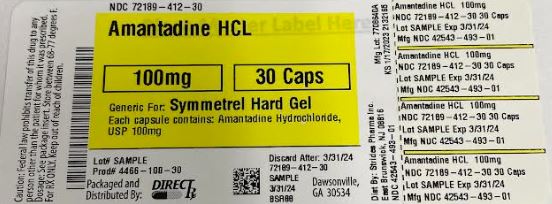
Amantadine HCL 100 mg Capsule, 30-count — NDC 72189-412-30 (Billing 72189-0412-30)
This is a package of 30 capsules of Amantadine HCL 100 mg Capsule from Direct_Rx, marketed since Jan 2023 and currently FDA-listed. It is this product's only package size.
Identity & classification
Regulatory identifiers FDA, NLM and CMS codes for this package
Drug-database identifiers Medi-Span GPI and First Databank GCN / HICL / AHFS classification
- GSN (GCN sequence number): 004575
- GCN: 17520
- HICL (First Databank): 001898
- AHFS class code: 08:18.04.00
- RxCUI (RxNorm): 849389
Where does this data come from?
- FDA openFDA NDC Directory · synced Oct 1, 2026
- FDA label on DailyMed · label index refreshed Oct 1, 2026
- RxNorm (NLM RxNav) · catalog refreshed Oct 1, 2026
- Medi-Span GPI (licensed)
- First Databank (licensed) · refreshed Oct 1, 2026
RxNorm drug class
This medicine belongs to the Influenza A M2 Protein Inhibitor class.
Where does this data come from?
- RxClass (NLM) · catalog refreshed Oct 1, 2026
Clinical
Amantadine is used to treat the symptoms of Parkinson's disease (PD; a disorder of the nervous system that causes difficulties with movement, muscle control, and balance) and other similar conditions. It is also used to control movement problems that are a side effect of certain medications used to treat Parkinson's disease. Amantadine extended-release capsules (Gocovri®) are used along with the combination of levodopa and carbidopa (Rytary®, Sinemet®) to treat ''off'' episodes (times of difficulty moving, walking, and speaking that may happen when other medications wear off) in people with Pa...
Read the full MedlinePlus article ↗- It depends on the product. Standard amantadine capsules, tablets and oral solution prevent and treat influenza A and treat parkinsonism and drug-induced movement problems. Gocovri...
- Take it by mouth exactly as your prescriber directs. Standard forms can be taken once a day or split into two doses. Gocovri is taken at bedtime and swallowed whole, with or withou...
- Common ones include dizziness, dry mouth, constipation, leg swelling, and sometimes hallucinations. Stand up slowly to avoid lightheadedness. Call me or your doctor if you see thin...
- Call for thoughts of suicide, new depression, hallucinations, fainting, falling asleep during daily activities, or sudden blurry vision or eye pain. Also call about uncontrollable...
Patient education
Supplement & herbal interactions
Where does this data come from?
- MedlinePlus (NLM) · refreshed Oct 1, 2026
- FDA label on DailyMed · label index refreshed Oct 1, 2026
Ask a licensed pharmacist directly — free, answered by our team.
Pricing
A drug doesn't have one price. Each row is a different public payment system, and none is what you'd pay at the counter — that depends on your insurance. The ⓘ on each row explains what it measures.
| Price system | Per each | Per package |
|---|---|---|
| Retail pharmacies payNADAC · weekly | Not in the retail survey — common for institutional, discontinued, or low-volume packs. | |
| Medicaid paysCMS SDUD · 12 mo | No recent Medicaid claims on file for this NDC — rare and low-volume NDCs are suppressed in the public data. | |
| Medicare drug plans payPart D · Q2 2026 | $0.2518 | $7.55 / 30 capsules |
Where does this data come from?
- CMS NADAC weekly file
- CMS ASP pricing files · refreshed Sep 20, 2026
- CMS Medicaid State Drug Utilization Data · refreshed Oct 3, 2026
- CMS Part D plan pricing files · refreshed Sep 24, 2026
- VA National Acquisition Center price file
Packaging — all sizes for this product
| Package NDC | Description | Marketing start | Marketing end | Status |
|---|---|---|---|---|
| 72189-0412-30 You're viewing this Main listing | 30 CAPSULE in 1 BOTTLE | 2023-01-18 | — | Active |
Therapeutic equivalents
| Product | Labeler | Pack | NADAC/unit | TE | Status | Price vs. this |
|---|---|---|---|---|---|---|
| Amantadine Hydrochloride 100 mg 00832-1015-00 | Upsher-Smith | 100 capsules | $0.143 | AB | Availability likely | — |
| Amantadine Hydrochloride 100 mg 00904-7042-06 | Major | 50 capsules | $0.143 | AB | Availability likely | — |
| Amantadine Hydrochloride 100 mg 16571-0834-01 | Rising | 100 capsules | $0.143 | AB | Availability likely | — |
| Amantadine Hydrochloride 100 mg 23155-0362-01 | Heritage | 100 capsules | $0.143 | AB | Availability likely | — |
| Amantadine HCl 100 mg 50268-0069-15 | AvPAK | 1 capsule | $0.143 | AB | Availability likely | — |
| Amantadine 100 mg 60687-0422-01 | American | 100 capsules | $0.143 | AB | Availability likely | — |
| Amantadine Hydrochloride 100 mg 62135-0609-90 | Chartwell | 90 capsules | $0.143 | AB | Availability likely | — |
| amantadine hydrochloride 100 mg 68382-0512-01 | Zydus | 100 capsules | $0.143 | AB | Availability likely | — |
| Amantadine HCl 100 mg 69452-0142-20 | Bionpharma | 100 capsules | $0.143 | AB | Availability likely | — |
| Amantadine Hydrochloride 100 mg 42543-0493-01 | Strides | 100 capsules | $0.162 | AB | Availability likely | — |
| Amantadine Hydrochloride 100 mg 00615-8263-39 | NCS | 30 capsules | — | AB | FDA listed | — |
| Amantadine Hydrochloride 100 mg 10135-0693-01 | Marlex | 100 capsules | — | AB | FDA listed | — |
| Amantadine HCl 100 mg 42291-0125-50 | AvKARE | 500 capsules | — | AB | FDA listed | — |
| amantadine hydrochloride 100 mg 42806-0716-05 | EPIC | 500 capsules | — | AB | FDA listed | — |
| amantadine 100 mg 46708-0246-30 | Alembic | 30 capsules | — | AB | FDA listed | — |
| Amantadine Hydrochloride 100 mg 50090-0020-00 | A-S | 16 capsules | — | AB | FDA listed | — |
| Amantadine Hydrochloride 100 mg 60760-0779-30 | ST. | 30 capsules | — | AB | FDA listed | — |
| amantadine 100 mg 62332-0246-30 | Alembic | 30 capsules | — | AB | FDA listed | — |
| Amantadine Hydrochloride 100 mg 64380-0862-06 | Strides | 100 capsules | — | AB | FDA listed | — |
| amantadine hydrochloride 100 mg 65841-0835-01 | Zydus | 100 capsules | — | AB | FDA listed | — |
| amantadine hydrochloride 100 mg 67046-1508-03 | Coupler | 30 capsules | — | AB | FDA listed | — |
| Amantadine Hydrochloride 100 mg 71205-0223-20 | Proficient | 20 capsules | — | AB | FDA listed | — |
| amantadine hydrochloride 100 mg 71205-0702-20 | Proficient | 20 capsules | — | AB | FDA listed | — |
| amantadine hydrochloride 100 mg 71335-0469-01 | Bryant | 20 capsules | — | AB | FDA listed | — |
| Amantadine Hydrochloride 100 mg 71335-2570-01 | Bryant | 20 capsules | — | AB | FDA listed | — |
| Amantadine Hydrochloride 100 mg 71335-2664-01 | Bryant | 20 capsules | — | AB | FDA listed | — |
| Amantadine Hydrochloride 100 mg 71335-2919-01 | Bryant | 500 capsules | — | AB | FDA listed | — |
| Amantadine Hydrochloride 100 mg 71335-2959-01 | Bryant | 100 capsules | — | AB | FDA listed | — |
| Amantadine Hydrochloride 100 mg 71335-9618-01 | Bryant | 20 capsules | — | AB | FDA listed | — |
| Amantadine Hydrochloride 100 mg 72162-2408-01 | Bryant | 100 capsules | — | AB | FDA listed | — |
| Amantadine HCL 100 mgthis 72189-0412-30 | Direct_Rx | 30 capsules | — | AB | FDA listed | — |
| Amantadine HCL 100 mg 72189-0657-30 | Direct | 30 capsules | — | AB | FDA listed | — |
| Amantadine Hydrochloride 100 mg 72888-0033-00 | Advagen | 1000 capsules | — | AB | FDA listed | — |
| amantadine hydrochloride 100 mg 73190-0094-50 | AvKARE | 500 capsules | — | AB | FDA listed | — |
| Amantadine Hydrochloride 100 mg 82804-0196-20 | Proficient | 20 capsules | — | AB | FDA listed | — |
Where does this data come from?
- FDA openFDA NDC Directory · synced Oct 1, 2026
- FDA Orange Book · refreshed Sep 3, 2026
- CMS NADAC weekly file
Availability & generic status
This product is an FDA-approved generic. Other versions of the same drug are listed under Therapeutic equivalents, least expensive first.
Where does this data come from?
- FDA Orange Book · refreshed Sep 3, 2026
What it looks like
Where does this data come from?
- FDA label on DailyMed · label index refreshed Oct 1, 2026
Inactive Ingredients / Excipients
Inactive ingredients, also called excipients, are components of the drug product other than the active ingredient. They may include fillers, dyes, coatings, preservatives, flavors, or other formulation ingredients.
💡 Tap an ingredient (hover on desktop) to see what it is and why it’s used.
-
UNII 5138Q19F1X
Ammonia is a colorless gas made from nitrogen and hydrogen. It's used in medicines as a pH buffer to maintain the correct acidity level and help keep the product stable.
-
UNII OP1R32D61U
Microcrystalline cellulose is a purified form of cellulose, a natural fiber from plant sources. It acts as a binder and filler in tablets and capsules, helping hold ingredients together and give the medicine its shape and size.
-
UNII M28OL1HH48
Croscarmellose sodium is a plant-based substance derived from cellulose. It acts as a disintegrant, helping tablets and capsules break down quickly in the digestive system so the medicine can be absorbed.
-
UNII H3UP11403C
Ethylcellulose is a plant-derived polymer that thickens and forms protective coatings on tablets and capsules. It slows medicine release into the body and protects the contents from moisture and air.
-
UNII H3R47K3TBD
FD&C Blue No. 1 is a synthetic blue dye approved for use in foods and medicines. It serves as a colorant to give the medication its distinctive appearance and help with product identification.
-
UNII WZB9127XOA
A synthetic red dye used to color medications and make them easier to identify. It serves as a colorant in tablets, capsules, and liquid formulations.
-
UNII 2G86QN327L
Gelatin is a protein derived from animal collagen, commonly used in medicines as a gelling agent and capsule material. It helps create soft or hard capsule shells that hold and release medication, and can also thicken liquid formulations.
-
UNII 70097M6I30
Magnesium stearate is a salt made from magnesium and stearic acid, a fatty substance. It's used in tablets and capsules as a lubricant and glidant to help ingredients flow smoothly during manufacturing and prevent sticking.
-
UNII WZH3C48M4T
Potassium hydroxide is a strong alkaline chemical used in medicines to adjust and maintain the pH level of liquid formulations, helping keep the product stable and the active ingredients effective.
-
UNII 6DC9Q167V3
Propylene glycol is a clear liquid derived from petroleum or vegetable sources. It acts as a solvent, humectant, and preservative in medicines, helping dissolve active ingredients and maintain product stability.
-
UNII 46N107B71O
Shellac is a natural resin secreted by the lac beetle. It's used as a coating on tablets and capsules to control how quickly the medicine dissolves and to improve appearance and stability.
-
UNII 368GB5141J
A detergent and foaming agent derived from coconut or palm oil. In medications, it helps break down and mix oil and water-based ingredients, aids in tablet disintegration, and improves how the drug dissolves and spreads in the mouth or digestive system.
-
UNII O8232NY3SJ
A plant-based carbohydrate derived from corn kernels. It acts as a filler to add bulk, a binder to hold ingredients together, and a disintegrant to help the tablet break apart in your stomach for absorption.
-
UNII 15FIX9V2JP
Titanium dioxide is a bright white mineral powder commonly used as a colorant and opacifying agent. It makes pills and tablets white or lighter in color and helps make coatings non-transparent.
14 inactive ingredients listed in the exact product block matched to this NDC.
Where does this data come from?
ingredient classCode="IACT" elements from the exact product block matched by this NDC. Label-section narrative from DailyMed / the openFDA label index is shown separately when available.- FDA label on DailyMed · label index refreshed Oct 1, 2026
- FDA openFDA NDC Directory · synced Oct 1, 2026
Inactive ingredient FAQ
Are inactive ingredients the same for every manufacturer?
Why might an inactive ingredient be missing?
Can inactive ingredients matter?
Manufacturer & labeler
Where does this data come from?
- FDA openFDA NDC Directory · synced Oct 1, 2026
- Drugs@FDA
Full prescribing information FDA SPL
🎯 Indications and Usage ▾
Amantadine hydrochloride capsules are indicated for the prophylaxis and treatment of signs and symptoms of infection caused by various strains of influenza A virus. Amantadine hydrochloride capsules are also indicated in the treatment of parkinsonism and drug-induced extrapyramidal reactions. Influenza A Prophylaxis Amantadine hydrochloride capsules are indicated for chemoprophylaxis against signs and symptoms of influenza A virus infection.
Because amantadine does not completely prevent the host immune response to influenza A infection, individuals who take this drug may still develop immune responses to natural disease or vaccination and may be protected when later exposed to antigenically related viruses. Following vaccination during an influenza A outbreak, amantadine prophylaxis should be considered for the 2- to 4-week time period required to develop an antibody response. Influenza A Treatment Amantadine hydrochloride capsules are also indicated in the treatment of uncomplicated respiratory tract illness caused by influenza A virus strains especially when administered early in the course of illness.
There are no well-controlled clinical studies demonstrating that treatment with amantadine hydrochloride capsules will avoid the development of influenza A virus pneumonitis or other complications in high risk patients. There is no clinical evidence indicating that amantadine hydrochloride capsules are effective in the prophylaxis or treatment of viral respiratory tract illnesses other than those caused by influenza A virus strains. The following points should be considered before initiating treatment or prophylaxis with amantadine hydrochloride capsules.
Amantadine hydrochloride capsules are not a substitute for early vaccination on an annual basis as recommended by the Centers for Disease Control and Prevention Advisory Committee on Immunization Practices. Influenza viruses change over time. Emergence of resistance mutations could decrease drug effectiveness.
Other factors (for example, changes in viral virulence) might also diminish clinical benefit of antiviral drugs. Prescribers should consider available information on influenza drug susceptibility patterns and treatment effects when deciding whether to use amantadine hydrochloride capsules. Parkinson's Disease/Syndrome Amantadine hydrochloride capsules are indicated in the treatment of idiopathic Parkinson's disease (Paralysis Agitans), postencephalitic parkinsonism and symptomatic parkinsonism which may follow injury to the nervous system by carbon monoxide intoxication.
It is indicated in those elderly patients believed to develop parkinsonism in association with cerebral arteriosclerosis. In the treatment of Parkinson's disease, amantadine is less effective than levodopa, (-)-3-(3,4-dihydroxyphenyl)-L-alanine, and its efficacy in comparison with the anticholinergic antiparkinson drugs has not yet been established. Drug-Induced Extrapyramidal Reactions Amantadine hydrochloride is indicated in the treatment of drug-induced extrapyramidal reactions.
Although anticholinergic-type side effects have been noted with amantadine when used in patients with drug-induced extrapyramidal reactions, there is a lower incidence of these side effects than that observed with the anticholinergic antiparkinson drugs.
⏱️ Dosage and Administration ▾
The dose of amantadine hydrochloride capsules may need reduction in patients with congestive heart failure, peripheral edema, orthostatic hypotension, or impaired renal function (see Dosage for Impaired Renal Function) Dosage for Prophylaxis and Treatment of Uncomplicated Influenza A Virus Illness Adult The adult daily dosage of amantadine hydrochloride capsules is 200 mg; two 100 mg capsules as a single daily dose. The daily dosage may be split into one capsule of 100 mg twice a day. If central nervous system effects develop in once-a-day dosage, a split dosage schedule may reduce such complaints.
In persons 65 years of age or older, the daily dosage of amantadine hydrochloride capsules is 100 mg. A 100 mg daily dose has also been shown in experimental challenge studies to be effective as prophylaxis in healthy adults who are not at high risk for influenza-related complications. However, it has not been demonstrated that a 100 mg daily dose is as effective as a 200 mg daily dose for prophylaxis, nor has the 100 mg daily dose been studied in the treatment of acute influenza illness.
In recent clinical trials, the incidence of central nervous system (CNS) side effects associated with the 100 mg daily dose was at or near the level of placebo. The 100 mg dose is recommended for persons who have demonstrated intolerance to 200 mg of amantadine hydrochloride daily because of CNS or other toxicities. Pediatric Patients 1 yr. to 9 yrs. of age The total daily dose should be calculated on the basis of 2 to 4 mg/lb/day (4.4 to 8.8 mg/kg/day), but not to exceed 150 mg per day.
9 yrs. to 12 yrs. of age The total daily dose is 200 mg given as one capsule of 100 mg twice a day. The 100 mg daily dose has not been studied in this pediatric population. Therefore, there are no data which demonstrate that this dose is as effective as or is safer than the 200 mg daily dose in this patient population.
Prophylactic dosing should be started in anticipation of an influenza A outbreak and before or after contact with individuals with influenza A virus respiratory tract illness. Amantadine hydrochloride capsules should be continued daily for at least 10 days following a known exposure. If amantadine is used chemoprophylactically in conjunction with inactivated influenza A virus vaccine until protective antibody responses develop, then it should be administered for 2 to 4 weeks after the vaccine has been given.
When inactivated influenza A virus vaccine is unavailable or contraindicated, amantadine hydrochloride capsules should be administered for the duration of known influenza A in the community because of repeated and unknown exposure. Treatment of influenza A virus illness should be started as soon as possible, preferably within 24 to 48 hours after onset of signs and symptoms, and should be continued for 24 to 48 hours after the disappearance of signs and symptoms. Dosage for Parkinsonism Adult The usual dose of amantadine hydrochloride capsules is 100 mg twice a day when used alone.
Amantadine has an onset of action usually within 48 hours. The initial dose of amantadine hydrochloride capsules is 100 mg daily for patients with serious associated medical illnesses or who are receiving high doses of other antiparkinson drugs. After one to several weeks at 100 mg once daily, the dose may be increased to 100 mg twice daily, if necessary.
Occasionally, patients whose responses are not optimal with amantadine hydrochloride capsules at 200 mg daily may benefit from an increase up to 400 mg daily in divided doses. However, such patients should be supervised closely by their physicians. Patients initially deriving benefit from amantadine hydrochloride capsules not uncommonly experience a fall-off of effectiveness after a few months.
Benefit may be regained by increasing the dose to 300 mg daily. Alternatively, temporary discontinuation of amantadine hydrochloride capsules for several weeks, followed by reinitiation of the drug, may result in regaining bene… [Excerpted — this section continues on DailyMed.]
⛔ Contraindications ▾
Amantadine hydrochloride capsules are contraindicated in patients with known hypersensitivity to amantadine hydrochloride or to any of the other ingredients in Amantadine hydrochloride capsules.
⚠️ Warnings ▾
Deaths Deaths have been reported from overdose with amantadine. The lowest reported acute lethal dose was 1 gram. Acute toxicity may be attributable to the anticholinergic effects of amantadine.
Drug overdose has resulted in cardiac, respiratory, renal or central nervous system toxicity. Cardiac dysfunction includes arrhythmia, tachycardia and hypertension (see OVERDOSAGE) Deaths due to drug accumulation (overdosage) have been reported in patients with renal impairment, who were prescribed higher than recommended doses of Amantadine Hydrochloride for their level of renal function (see DOSAGE AND ADMINISTRATION; Dosage of Impaired Renal Function and OVERDOSAGE) Suicide Attempts Suicide attempts, some of which have been fatal, have been reported in patients treated with amantadine, many of whom received short courses for influenza treatment or prophylaxis.
The incidence of suicide attempts is not known and the pathophysiologic mechanism is not understood. Suicide attempts and suicidal ideation have been reported in patients with and without prior history of psychiatric illness. Amantadine can exacerbate mental problems in patients with a history of psychiatric disorders or substance abuse.
Patients who attempt suicide may exhibit abnormal mental states which include disorientation, confusion, depression, personality changes, agitation, aggressive behavior, hallucinations, paranoia, other psychotic reactions and somnolence or insomnia. Because of the possibility of serious adverse effects, caution should be observed when prescribing amantadine hydrochloride capsules to patients being treated with drugs having CNS effects, or for whom the potential risks outweigh the benefit of treatment. CNS Effects Patients with a history of epilepsy or other "seizures" should be observed closely for possible increased seizure activity.
Patients receiving amantadine hydrochloride capsules who note central nervous system effects or blurring of vision should be cautioned against driving or working in situations where alertness and adequate motor coordination are important. Other Patients with a history of congestive heart failure or peripheral edema should be followed closely as there are patients who developed congestive heart failure while receiving amantadine hydrochloride capsules. Patients with Parkinson's disease improving on amantadine hydrochloride capsules should resume normal activities gradually and cautiously, consistent with other medical considerations, such as the presence of osteoporosis or phlebothrombosis.
Because Amantadine Hydrochloride Capsules has anticholinergic effects and may cause mydriasis, it should not be given to patients with untreated angle closure glaucoma.
🤒 Adverse Reactions ▾
The adverse reactions reported most frequently at the recommended dose of amantadine (5 to 10%) are: nausea, dizziness (lightheadedness), and insomnia. Less frequently (1 to 5%) reported adverse reactions are: depression, anxiety and irritability, hallucinations, confusion, anorexia, dry mouth, constipation, ataxia, livedo reticularis, peripheral edema, orthostatic hypotension, headache, somnolence, nervousness, dream abnormality, agitation, dry nose, diarrhea and fatigue Infrequently (0.1 to 1%) occurring adverse reactions are: congestive heart failure, psychosis, urinary retention, dyspnea, skin rash, vomiting, weakness, slurred speech, euphoria, thinking abnormality, amnesia, hyperkinesia, hypertension, decreased libido, and visual disturbance, including punctate subepithelial or other corneal opacity, corneal edema, decreased visual acuity, sensitivity to light, and optic nerve palsy.
Rare (less than 0.1%) occurring adverse reactions are: instances of convulsion, leukopenia, neutropenia, eczematoid dermatitis, oculogyric episodes, suicidal attempt, suicide, and suicidal ideation (see WARNINGS) Other adverse reactions reported during postmarketing experience with amantadine usage include: Nervous System/Psychiatric coma, stupor, delirium, hypokinesia, hypertonia, delusions, aggressive behavior, paranoid reaction, manic reaction, involuntary muscle contractions, gait abnormalities, paresthesia, EEG changes, and tremor.
Abrupt discontinuation may also precipitate delirium, agitation, delusions, hallucinations, paranoid reaction, stupor, anxiety, depression and slurred speech; Cardiovascular cardiac arrest, arrhythmias including malignant arrhythmias, hypotension, and tachycardia; Respiratory acute respiratory failure, pulmonary edema, and tachypnea; Gastrointestinal dysphagia; Hematologic leukocytosis, agranulocytosis; Special Senses keratitis and mydriasis; Skin and Appendages pruritus and diaphoresis; Miscellaneous neuroleptic malignant syndrome (see WARNINGS), allergic reactions including anaphylactic reactions, edema and fever.
Laboratory Test elevated: CPK, BUN, serum creatinine, alkaline phosphatase, LDH, bilirubin, GGT, SGOT, and SGPT. To report SUSPECTED ADVERSE REACTIDNS, contact Strides Pharma Inc. at 1-877-244-9825 or go to www.strides.com or FDA at 1-800-FDA-1088 or www.fda.gov/medwatch.
🆘 Overdosage ▾
Deaths have been reported from overdose with amantadine. The lowest reported acute lethal dose was 1 gram. Because some patients have attempted suicide by overdosing with amantadine, prescriptions should be written for the smallest quantity consistent with good patient management.
Acute toxicity may be attributable to the anticholinergic effects of amantadine. Drug overdose has resulted in cardiac, respiratory, renal or central nervous system toxicity. Cardiac dysfunction includes arrhythmia, tachycardia and hypertension.
Pulmonary edema and respiratory distress (including adult respiratory distress syndrome – ARDS) have been reported; renal dysfunction including increased BUN, decreased creatinine clearance and renal insufficiency can occur. Central nervous system effects that have been reported include insomnia, anxiety, agitation, aggressive behavior, hypertonia, hyperkinesia, ataxia, gait abnormality, tremor, confusion, disorientation, depersonalization, fear, delirium, hallucinations, psychotic reactions, lethargy, somnolence and coma.
Seizures may be exacerbated in patients with prior history of seizure disorders. Hyperthermia has also been observed in cases where a drug overdose has occurred. There is no specific antidote for an overdose of amantadine.
However, slowly administered intravenous physostigmine in 1 and 2 mg doses in an adult2 at 1- to 2-hour intervals and 0.5 mg doses in a child3 at 5- to 10-minute intervals up to a maximum of 2 mg/hour have been reported to be effective in the control of central nervous system toxicity caused by amantadine hydrochloride. For acute overdosing, general supportive measures should be employed along with immediate gastric lavage or induction of emesis. Fluids should be forced, and if necessary, given intravenously.
The pH of the urine has been reported to influence the excretion rate of amantadine. Since the excretion rate of amantadine increases rapidly when the urine is acidic, the administration of urine acidifying drugs may increase the elimination of the drug from the body. The blood pressure, pulse, respiration and temperature should be monitored.
The patient should be observed for hyperactivity and convulsions; if required, sedation, and anticonvulsant therapy should be administered. The patient should be observed for the possible development of arrhythmias and hypotension; if required, appropriate antiarrhythmic and antihypotensive therapy should be given. Electrocardiographic monitoring may be required after ingestion, since malignant tachyarrhythmias can appear after overdose.
Care should be exercised when administering adrenergic agents, such as isoproterenol, to patients with an amantadine overdose, since the dopaminergic activity of amantadine has been reported to induce malignant arrhythmias. The blood electrolytes, urine pH and urinary output should be monitored. If there is no record of recent voiding, catheterization should be done.
🧬 Clinical Pharmacology ▾
Pharmacodynamics Mechanism of Action Antiviral The mechanism by which amantadine exerts its antiviral activity is not clearly understood. It appears to mainly prevent the release of infectious viral nucleic acid into the host cell by interfering with the function of the transmembrane domain of the viral M2 protein. In certain cases, amantadine is also known to prevent virus assembly during virus replication.
It does not appear to interfere with the immunogenicity of inactivated influenza A virus vaccine. Antiviral Activity Amantadine inhibits the replication of influenza A virus isolates from each of the subtypes, i.e., H1N1, H2N2 and H3N2. It has very little or no activity against influenza B virus isolates.
A quantitative relationship between the in vitro susceptibility of influenza A virus to amantadine and the clinical response to therapy has not been established in man. Sensitivity test results, expressed as the concentration of amantadine required to inhibit by 50% the growth of virus (ED50) in tissue culture vary greatly (from 0.1 mcg/mL to 25.0 mcg/mL) depending upon the assay protocol used, size of virus inoculum, isolates of influenza A virus strains tested, and the cell type used. Host cells in tissue culture readily tolerated amantadine up to a concentration of 100 mcg/mL.
Drug Resistance Influenza A variants with reduced in vitro sensitivity to amantadine have been isolated from epidemic strains in areas where adamantane derivatives are being used. Influenza viruses with reduced in vitro sensitivity have been shown to be transmissible and to cause typical influenza illness. The quantitative relationship between the in vitro sensitivity of influenza A variants to amantadine and the clinical response to therapy has not been established.
Mechanism of Action Parkinson's Disease The mechanism of action of amantadine in the treatment of Parkinson's disease and drug-induced extrapyramidal reactions is not known. Data from earlier animal studies suggest that amantadine may have direct and indirect effects on dopamine neurons. More recent studies have demonstrated that amantadine is a weak, non-competitive NMDA receptor antagonist (K1 = 10μM).
Although amantadine has not been shown to possess direct anticholinergic activity in animal studies, clinically, it exhibits anticholinergic-like side effects such as dry mouth, urinary retention, and constipation. Pharmacokinetics Amantadine is well absorbed orally. Maximum plasma concentrations are directly related to dose for doses up to 200 mg/day.
Doses above 200 mg/day may result in a greater than proportional increase in maximum plasma concentrations. It is primarily excreted unchanged in the urine by glomerular filtration and tubular secretion. Eight metabolites of amantadine have been identified in human urine.
One metabolite, an N-acetylated compound, was quantified in human urine and accounted for 5 to 15% of the administered dose. Plasma acetylamantadine accounted for up to 80% of the concurrent amantadine plasma concentration in 5 of 12 healthy volunteers following the ingestion of a 200 mg dose of amantadine. Acetylamantadine was not detected in the plasma of the remaining seven volunteers.
The contribution of this metabolite to efficacy or toxicity is not known There appears to be a relationship between plasma amantadine concentrations and toxicity. As concentration increases, toxicity seems to be more prevalent, however, absolute values of amantadine concentrations associated with adverse effects have not been fully defined. Amantadine pharmacokinetics were determined in 24 normal adult male volunteers after the oral administration of a single amantadine hydrochloride 100 mg soft gel capsule.
The mean ± SD maximum plasma concentration was 0.22 ± 0.03 mcg/mL (range: 0.18 to 0.32 mcg/mL). The time to peak concentration was 3.3 ± 1.5 hours (range 1.5 to 8.0 hours). The apparent oral clearance was 0.28 ±
0.11L/hr/kg (range: 0.14 to
0.62L/hr/kg). The half-life was 17 ± 4… [Excerpted — this section continues on DailyMed.]
📦 How Supplied / Storage and Handling ▾
Amantadine hydrochloride capsules for oral administration are available as: 100 mg: Hard gelatin capsules with Red cherry colored cap and body, imprinted "S 493" in both body and cap with white ink containing white to off-white granular powder and supplied as: NDC 72189-412-01: Bottles of 100 capsules NDC 72189-412-05: Bottles of 500 capsules Store at 20°C to 25°C (68°F to 77°F) [see USP Controlled Room Temperature]. Dispense in a tight, light-resistant container as defined in the USP.
📋 Description ▾
Amantadine hydrochloride USP is designated chemically as 1-adamantanamine hydrochloride. Its molecular weight is 187.71 with a molecular formula C10 H18NCl. It has the following structural formula: [amantadine-hcl-structure] Amantadine hydrochloride USP is a white or practically white crystalline powder, freely soluble in water and soluble in alcohol and in chloroform.
Amantadine hydrochloride USP has pharmacological actions as both an anti-Parkinson and an antiviral drug. Amantadine hydrochloride USP is available as 100 mg capsules for oral administration. Inactive ingredients: corn starch, croscarmellose sodium, ethylcellulose, FD&C Blue #1, FD&C Red #40, gelatin, magnesium stearate, microcrystalline cellulose, potassium hydroxide, pregelatinized starch, propylene glycol, shellac, sodium lauryl sulfate, strong ammonia solution and titanium dioxide.
⚠️ Precautions ▾
Amantadine should not be discontinued abruptly in patients with Parkinson's disease since a few patients have experienced a parkinsonian crisis, i.e., a sudden marked clinical deterioration, when this medication was suddenly stopped. The dose of anticholinergic drugs or of amantadine should be reduced if atropine-like effects appear when these drugs are used concurrently. Abrupt discontinuation may also precipitate delirium, agitation, delusions, hallucinations, paranoid reaction, stupor, anxiety, depression and slurred speech.
Neuroleptic Malignant Syndrome (NMS) Sporadic cases of possible Neuroleptic Malignant Syndrome (NMS) have been reported in association with dose reduction or withdrawal of amantadine therapy. Therefore, patients should be observed carefully when the dosage of amantadine is reduced abruptly or discontinued, especially if the patient is receiving neuroleptics. NMS is an uncommon but life-threatening syndrome characterized by fever or hyperthermia; neurologic findings including muscle rigidity, involuntary movements, altered consciousness; mental status changes; other disturbances such as autonomic dysfunction, tachycardia, tachypnea, hyper- or hypotension; laboratory findings such as creatine phosphokinase elevation, leukocytosis, myoglobinuria, and increased serum myoglobin.
The early diagnosis of this condition is important for the appropriate management of these patients. Considering NMS as a possible diagnosis and ruling out other acute illnesses (e.g., pneumonia, systemic infection, etc.) is essential. This may be especially complex if the clinical presentation includes both serious medical illness and untreated or inadequately treated extrapyramidal signs and symptoms (EPS).
Other important considerations in the differential diagnosis include central anticholinergic toxicity, heat stroke, drug fever and primary central nervous system (CNS) pathology. The management of NMS should include: 1) intensive symptomatic treatment and medical monitoring, and 2) treatment of any concomitant serious medical problems for which specific treatments are available. Dopamine agonists, such as bromocriptine, and muscle relaxants, such as dantrolene are often used in the treatment of NMS, however, their effectiveness has not been demonstrated in controlled studies.
Renal Disease Because amantadine is mainly excreted in the urine, it accumulates in the plasma and in the body when renal function declines. Thus, the dose of amantadine should be reduced in patients with renal impairment and in individuals who are 65 years of age or older (see DOSAGE AND ADMINISTRATION: Dosage for Impaired Renal Function) Liver Disease Care should be exercised when administering amantadine to patients with liver disease. Rare instances of reversible elevation of liver enzymes have been reported in patients receiving amantadine, though a specific relationship between the drug and such changes has not been established.
Impulse Control/Compulsive Behaviors Postmarketing reports suggest that patients treated with anti-Parkinson medications can experience intense urges to gamble, increased sexual urges, intense urges to spend money uncontrollably, and other intense urges. Patients may be unable to control these urges while taking one or more of the medications that are generally used for the treatment of Parkinson's disease and that increase central dopaminergic tone, including amantadine hydrochloride. In some cases, although not all, these urges were reported to have stopped when the dose was reduced or the medication was discontinued.
Because patients may not recognize these behaviors as abnormal it is important for prescribers to specifically ask patients or their caregivers about the development of new or increased gambling urges, sexual urges, uncontrolled spending or other urges while being treated with amantadine hydrochloride. Physicians should consider dose reduction or stopping the medication if a patient develops such urges while ta… [Excerpted — this section continues on DailyMed.]
📚 References ▾
W.W. Wilson and A.H. Rajput, Amantadine-Dyazide Interaction, Can Med Assoc J. 129:974-975, 1983. D.F. Casey, N. Engl. J. Med. 298:516, 1978 C.D. Berkowitz, J. Pediatr. 95:144, 1979. Manufactured by: Strides Pharma Science Ltd. Puducherry – 605014, India Distributed by: Strides Pharma Inc. East Brunswick, NJ 08816 Revised: 08/2019
📄 Package Label / Principal Display Panel ▾
72189-412-30
Medicare Part D spend CMS · PART D · 2026 (Q1)
About this NDC listing & data coverage
What data is (and isn’t) available for this NDC — tap to expand
| NDC identity (package / product / labeler codes) | ✓ Available |
| Labeler | ✓ Available |
| Product & package description | ✓ Available |
| Marketing category & status | ✓ Available |
| Active ingredient / dosage form / route | ✓ Available |
| FDA label (SPL via DailyMed) | ✓ Available |
| Package photos | ✓ Available |
| Inactive ingredients (structured) | ✓ Available |
| NADAC pharmacy acquisition price (CMS) | — Not published for this NDC CMS publishes NADAC only for NDCs reported in its retail-pharmacy survey. |
| Orange Book / therapeutic-equivalence data | ✓ Available |
| HCPCS J-code billing crosswalk | — Not published for this NDC Most self-administered / retail products have no J-code — that is normal. |
| Medicaid utilization (CMS SDUD) | — Not published for this NDC CMS reports utilization only for NDCs with Medicaid claims above its privacy threshold. |