
Paroxetine 37.5 mg Tablet, Film Coated, Extended Release, 30-count — NDC 72241-031-22 (Billing 72241-0031-22)
This is a package of 30 tablets of Paroxetine 37.5 mg Tablet, Film Coated, Extended Release from Modavar Pharmaceuticals LLC, marketed since Oct 2021 and currently FDA-listed; retail pharmacies pay about $0.3974 per tablet (NADAC). It is the main listing for this product, which comes in 2 package sizes.
NDC database record
One package, one record: these facts belong to NDC 72241-031-22 alone.
- Record
- FDA NDC Directory package listing · Human prescription drug
- Code segments
- 72241 labeler · 031 product · 22 package
- Package marketed since
- Oct 20, 2021
- Sample package
- No — commercial package
- Listing certified through
- Dec 31, 2026
- Billing quantity
- 30 EA per package
- Barcode (UPC)
- 0372241031229, 0372241031106, 0372241029103, 0372241030109 +2 more
- Medicaid fills, this package
- 1,833 prescriptions in the last four reported quarters
- FDA record last changed
- Jul 24, 2026
Identity & classification
Regulatory identifiers FDA, NLM and CMS codes for this package
Drug-database identifiers Medi-Span GPI and First Databank GCN / HICL / AHFS classification
- GSN (GCN sequence number): 050138
- GCN: 17079
- GPI-14 (Medi-Span): 58160060007540
- HICL (First Databank): 007344
- AHFS class code: 28:16.04.20
- RxCUI (RxNorm): 1738803
Where does this data come from?
- FDA openFDA NDC Directory · synced Oct 1, 2026
- FDA label on DailyMed · label index refreshed Oct 5, 2026
- RxNorm (NLM RxNav) · catalog refreshed Oct 1, 2026
- Medi-Span GPI (licensed)
- First Databank (licensed) · refreshed Oct 1, 2026
RxNorm drug class
This medicine belongs to the Serotonin Reuptake Inhibitor class.
Where does this data come from?
- RxClass (NLM) · catalog refreshed Oct 1, 2026
Clinical
- It depends on the product. Tablets and oral suspension treat depression, OCD, panic disorder, social anxiety, generalized anxiety, and PTSD in adults. Extended-release tablets trea...
- Take it once a day, usually in the morning, with or without food. The menopause capsule is taken at bedtime. Swallow extended-release tablets whole, and shake the suspension well....
- The most common are nausea, sleepiness, dry mouth, sweating, constipation or diarrhea, dizziness, trouble sleeping, and sexual side effects. Tell me or your doctor if they're bothe...
- Yes. Never combine it with MAOIs, thioridazine, or pimozide. Be careful with other serotonin-affecting drugs like triptans, tramadol, or St. John's Wort, and with aspirin, NSAIDs,...
Patient education
Supplement & herbal interactions
Some supplements/herbs that may interact with Paroxetine — tap one for details:
Paroxetine may be associated with lower levels of 1 nutrient — worth a chat with your pharmacist, not a cause for alarm.
Where does this data come from?
- MedlinePlus (NLM) · refreshed Oct 1, 2026
- FDA label on DailyMed · label index refreshed Oct 5, 2026
Ask a licensed pharmacist directly — free, answered by our team.
Pricing
A drug doesn't have one price. Each row is a different public payment system, and none is what you'd pay at the counter — that depends on your insurance. The ⓘ on each row explains what it measures.
| Price system | Per ea | Per package |
|---|---|---|
| Retail pharmacies payNADAC · weekly | $0.397 | $11.92 / 30 tablets |
| Medicaid paysCMS SDUD · 12 mo | $0.7268 | $21.80 / 30 tablets |
| Medicare drug plans payPart D · Q2 2026 | $1.09 | $32.56 / 30 tablets |
Where does this data come from?
- CMS NADAC weekly file · file of Sep 30, 2026
- CMS ASP pricing files · refreshed Sep 20, 2026
- CMS Medicaid State Drug Utilization Data · through Q4 2025
- CMS Part D plan pricing files · refreshed Sep 24, 2026
- VA National Acquisition Center price file
Packaging — all sizes for this product
| Package NDC | Description | Per unit | Per pack | Marketing start | Marketing end | Status |
|---|---|---|---|---|---|---|
| 72241-0031-10 72241-031-10 | 500 TABLET, FILM COATED, EXTENDED RELEASE in 1 BOTTLE | — | — | 2021-10-20 | — | Active |
| 72241-0031-22 You're viewing this Main listing | 30 TABLET, FILM COATED, EXTENDED RELEASE in 1 BOTTLE | $0.3974 / ea | $11.92 | 2021-10-20 | — | Active |
You're viewing the smallest of 2 pack sizes for this product.
In Medicaid, this is the most-dispensed pack of this product — about 100% of fills over the last four reported quarters. See all packs ↓
Pack size FAQ
What quantity is in this package?
How does this package differ from NDC 72241-0031-10?
What NDC number is used to bill for this package of Paroxetine 37.5 mg Tablet, Film Coated, Extended Release?
Prices are the latest CMS NADAC pharmacy acquisition cost per NDC; per-pack figures are per-unit × pack quantity, shown only when the pack is denominated in the same measure NADAC prices.
Therapeutic equivalents
| Product | Labeler | Pack | NADAC/unit | TE | Status | Price vs. this |
|---|---|---|---|---|---|---|
| Paroxetine Hydrochloride 37.5 mg 60505-1318-03 | Apotex | 30 tablets | $0.397 | AB | Availability likely | — |
| Paroxetine 37.5 mg 62135-0427-30 | Chartwell | 30 tablets | $0.397 | AB | Availability likely | — |
| Paroxetine Hydrochloride 37.5 mg 62175-0472-32 | Lannett | 30 tablets | $0.397 | AB | Availability likely | — |
| Paroxetine 37.5 mg 69367-0337-30 | Westminster | 30 tablets | $0.397 | AB | Availability likely | — |
| Paroxetine 37.5 mgthis 72241-0031-22 | Modavar | 30 tablets | $0.397 | AB | Availability likely | — |
| Paroxetine 37.5 mg 42858-0707-03 | Rhodes | 30 tablets | $0.409 | AB | Discontinued | +3% |
| Paroxetine 37.5 mg 46708-0768-30 | Alembic | 30 tablets | — | AB | FDA listed | — |
| Paxil Cr 37.5 mg 60505-4379-03 | Apotex | 30 tablets | — | AB | FDA listed | — |
| Paroxetine 37.5 mg 62332-0768-30 | Alembic | 30 tablets | — | AB | FDA listed | — |
| Paroxetine 37.5 mg 63629-9500-01 | Bryant | 30 tablets | — | AB | Discontinued | — |
| Paroxetine 37.5 mg 68180-0645-01 | Lupin | 100 tablets | — | — | FDA listed | — |
| Paroxetine 37.5 mg 71209-0096-01 | Cadila | 30 tablets | — | AB | FDA listed | — |
Where does this data come from?
- FDA openFDA NDC Directory · synced Oct 1, 2026
- FDA Orange Book · refreshed Oct 3, 2026
- CMS NADAC weekly file · file of Sep 30, 2026
Availability & generic status
This product is an FDA-approved generic. Other versions of the same drug are listed under Therapeutic equivalents, least expensive first.
Where does this data come from?
- FDA Orange Book · refreshed Oct 3, 2026
What it looks like
Where does this data come from?
- FDA label on DailyMed · label index refreshed Oct 5, 2026
Inactive Ingredients / Excipients
Inactive ingredients, also called excipients, are components of the drug product other than the active ingredient. They may include fillers, dyes, coatings, preservatives, flavors, or other formulation ingredients.
💡 Tap an ingredient (hover on desktop) to see what it is and why it’s used.
-
UNII EX438O2MRT
Ferric oxide yellow is a naturally occurring iron compound used as a colorant in medications. It gives tablets, capsules, and other forms a yellow or golden hue for identification and appearance.
-
UNII R8WTH25YS2
Glyceryl dibehenate is a wax-like substance made from behenate fatty acids and glycerol. It functions as a binder and release-control agent in tablets and capsules, helping hold ingredients together and regulate how quickly the medicine dissolves and releases in your body.
-
UNII 3NXW29V3WO
Hypromellose is a plant-based thickener made from cellulose. It's used in medicines as a binder to hold ingredients together, a coating for tablets, and a thickener for liquids.
-
UNII EWQ57Q8I5X
Lactose monohydrate is a natural sugar derived from milk. It serves as a filler and binder in tablets and capsules, helping create the proper size, texture, and consistency of the medicine.
-
UNII 70097M6I30
Magnesium stearate is a salt made from magnesium and stearic acid, a fatty substance. It's used in tablets and capsules as a lubricant and glidant to help ingredients flow smoothly during manufacturing and prevent sticking.
-
UNII NX76LV5T8J
A synthetic plastic polymer made from methacrylic acid and ethyl acrylate. It's used as a coating or binder to control how and where the medicine dissolves in your digestive system.
-
UNII 3WJQ0SDW1A
Polyethylene glycol is a synthetic liquid or solid polymer used in medicines as a solvent, lubricant, and humectant. It helps dissolve active ingredients, reduces friction during manufacturing, and retains moisture in the final product.
-
UNII 6OZP39ZG8H
Polysorbate 80 is a synthetic emulsifier derived from sorbitol and oleic acid. It helps mix oil and water-based ingredients together in medications and improves how the product disperses in the body.
-
UNII U725QWY32X
Povidone K30 is a synthetic polymer made from petroleum. It acts as a binder to hold tablet ingredients together and as a disintegrant to help the tablet break apart in the stomach so the medicine can be absorbed.
-
UNII ETJ7Z6XBU4
Silicon dioxide is a naturally occurring mineral used as a glidant and anti-caking agent. It helps powder ingredients flow smoothly and prevents clumping during manufacturing and storage.
-
UNII 368GB5141J
A detergent and foaming agent derived from coconut or palm oil. In medications, it helps break down and mix oil and water-based ingredients, aids in tablet disintegration, and improves how the drug dissolves and spreads in the mouth or digestive system.
-
UNII 7SEV7J4R1U
A powder made from a naturally occurring mineral. In medicines, talc works as a glidant and anti-caking agent, helping tablets and capsules flow smoothly during manufacturing and preventing clumping.
-
UNII 15FIX9V2JP
Titanium dioxide is a bright white mineral powder commonly used as a colorant and opacifying agent. It makes pills and tablets white or lighter in color and helps make coatings non-transparent.
-
UNII 8Z96QXD6UM
Triethyl citrate is a clear liquid derived from citric acid. It acts as a plasticizer and solvent in tablet coatings and film formulations, helping the coating remain flexible and adhere properly to the medicine.
14 inactive ingredients listed in the exact product block matched to this NDC.
Where does this data come from?
ingredient classCode="IACT" elements from the exact product block matched by this NDC. Label-section narrative from DailyMed / the openFDA label index is shown separately when available.- FDA label on DailyMed · label index refreshed Oct 5, 2026
- FDA openFDA NDC Directory · synced Oct 1, 2026
Inactive ingredient FAQ
Are inactive ingredients the same for every manufacturer?
Why might an inactive ingredient be missing?
Can inactive ingredients matter?
Manufacturer & labeler
More NDCs from Modavar Pharmaceuticals LLC labeler code 72241
- Celecoxib 400 mg Capsule NDC 72241-025-03
- Acyclovir 400 mg Tablet NDC 72241-026-05
- Acyclovir 800 mg Tablet NDC 72241-027-05
- Acyclovir 200 mg Capsule NDC 72241-028-05
- Paroxetine 12.5 mg Tablet, Film Coated, Extended Release NDC 72241-029-10
- Paroxetine 25 mg Tablet, Film Coated, Extended Release NDC 72241-030-10
- Nebivolol 2.5 mg Tablet NDC 72241-032-04
- Nebivolol 5 mg Tablet NDC 72241-033-04
- Nebivolol 10 mg Tablet NDC 72241-034-04
- Nebivolol 20 mg Tablet NDC 72241-035-04
- Erythromycin 250 mg Tablet, Film Coated NDC 72241-036-05
- Erythromycin 500 mg Tablet, Film Coated NDC 72241-037-05
Where does this data come from?
- FDA openFDA NDC Directory · synced Oct 1, 2026
- Drugs@FDA
Full prescribing information FDA SPL
🚨 Boxed Warning ▾
WARNING: SUICIDAL THOUGHTS AND BEHAVIORS Antidepressants increased the risk of suicidal thoughts and behaviors in pediatric and young adult patients in short-term studies. Closely monitor all antidepressant-treated patients for clinical worsening, and for emergence of suicidal thoughts and behaviors [see Warnings and Precautions ( 5.1 )]. Paroxetine extended-release tablets are not approved for use in pediatric patients [see Use in Specific Populations ( 8.4 )].
WARNING: SUICIDAL THOUGHTS AND BEHAVIORS See full prescribing information for complete boxed warning. Increased risk of suicidal thoughts and behavior in pediatric and young adult patients taking antidepressants. Closely monitor all antidepressant- treated patients for clinical worsening and emergence of suicidal thoughts and behaviors.
Paroxetine extended-release tablets are not approved for use in pediatric patients. ( 5.1 , 8.4 )
🎯 Indications and Usage ▾
1 INDICATIONS AND USAGE Paroxetine extended-release tablets are indicated in adults for the treatment of: • Major depressive disorder (MDD) • Panic disorder (PD) • Social anxiety disorder (SAD) • Premenstrual dysphoric disorder (PMDD) Paroxetine extended-release tablets are selective serotonin reuptake inhibitor (SSRI) indicated in adults for the treatment of ( 1 ): • Major Depressive Disorder (MDD) • Panic Disorder (PD) • Social Anxiety Disorder (SAD) • Premenstrual Dysphoric Disorder (PMDD)
⏱️ Dosage and Administration ▾
2 DOSAGE AND ADMINISTRATION • Swallow tablet whole; do not chew or crush. ( 2.1 ) • Recommended starting and maximum daily dosage: ( 2.2 , 2.3 ) Ind ication St a rting Dose M a x imum Dose MDD 25 mg/day 62.5 mg/day PD 12.5 mg/day 75 mg/day SAD 12.5 mg/day 37.5 mg/day PMDD 12.5 mg/day 25 mg/day • For PMDD, dose continuously or intermittently (luteal phase only). ( 2.3 ) • If inadequate response to starting dosage, titrate in 12.5 mg per day increments once weekly.
( 2.2 , 2.3 ) • Elderly patients, patients with severe renal impairment or severe hepatic impairment: Starting dose is 12.5 mg per day. Do not exceed 50 mg per day for treatment of MDD and PD and 37.5 mg per day for treatment of SAD. ( 2.5 ) • When discontinuing paroxetine extended-release tablets, reduce dose gradually.
( 2.7 )
2.1Important Administration Instructions Administer paroxetine extended-release tablets as a single daily dose in the morning, with or without food. Swallow tablets whole and do not chew or crush.
2.2Dosage in Patients with Major Depressive Disorder, Panic Disorder, and Social Anxiety Disorder The recommended initial dosage and maximum dosage of paroxetine extended-release tablets in patients with MDD, PD, and SAD are presented in Table 1. In patients with an inadequate response, dosage may be increased in increments of 12.5 mg per day at intervals of at least 1 week, depending on tolerability. Table 1: Recommended Daily Dosage of Paroxetine Extended-Release Tablets in Patients with MDD, PD, and SAD Indication Starting Dose M aximum Dose MDD 25 mg 62.5 mg PD 12.5 mg 75 mg SAD 12.5 mg 37.5 mg
2.3Dosage in Patients with Premenstrual Dysphoric Disorder The recommended starting dosage in women with PMDD is 12.5 mg per day. Paroxetine extended-release tablets may be administered either continuously (every day throughout the menstrual cycle) or intermittently (only during the luteal phase of the menstrual cycle, i.e., starting the daily dosage 14 days prior to the anticipated onset of menstruation and continuing through the onset of menses). Intermittent dosing is repeated with each new cycle.
In patients with an inadequate response, the dosage may be increased to the maximum recommended dosage of 25 mg per day, depending on tolerability. Institute dosage adjustments at intervals of at least 1 week.
2.4Screen for Bipolar Disorder Prior to Starting Paroxetine Extended-Release Tablets Prior to initiating treatment with paroxetine extended-release tablets or another antidepressant, screen patients for a personal or family history of bipolar disorder, mania, or hypomania [ see Warnings and Precautions ( 5.6 )].
2.5Dosage Modifications for Elderly Patients, Patients with Severe Renal Impairment and Patients with Severe Hepatic Impairment The recommended initial dose of paroxetine extended-release tablets is 12.5 mg per day for elderly patients, patients with severe renal impairment, and patients with severe hepatic impairment. Reduce initial dose and increase up-titration intervals if necessary. Dosage should not exceed 50 mg per day for MDD or PD and should not exceed 37.5 mg per day for SAD [see Use in Specific Populations ( 8.5 , 8.6 )].
2.6Switching Patients to or from a Monoamine Oxidase Inhibitor Antidepressant At least 14 days must elapse between discontinuation of an monoamine oxidase inhibitor (MAOI) antidepressant and initiation of paroxetine extended-release tablets. In addition, at least 14 days must elapse after stopping paroxetine extended-release tablets before starting an MAOI antidepressant [see Contraindications ( 4 ), Warnings and Precautions ( 5.2 )].
2.7Discontinuation of Treatment with Paroxetine Extended-Release Tablets Adverse reactions may occur upon discontinuation of paroxetine extended-release tablets [see Warnings and Precautions ( 5.7 )]. Gradually reduce the dosage rather than stopping paroxetine extended-release tablets abruptly whenever possible.
💊 Dosage Forms and Strengths ▾
3 DOSAGE FORMS AND STRENGTHS Paroxetine extended-release tablets are available as: • 12.5 mg yellow, biconvex, enteric film-coated, extended release, round tablets, debossed with “X1” on one side and plain on the other side. The tablets should be free from all physical defects. • 25 mg pink, biconvex, enteric film-coated, extended release, round tablets debossed with "X2" on one side and plain on the other side. The tablets should be free from all physical defects. • 37.5 mg blue, biconvex, enteric film-coated, extended release, round tablets debossed with "X3" on one side and plain on the other side.
The tablets should be free from all physical defects. Extended-release tablets: 12.5 mg, 25 mg, and 37.5 mg tablets. ( 3 )
⛔ Contraindications ▾
4 CONTRAINDICATIONS Paroxetine extended-release tablets are contraindicated in patients: • Taking, or within 14 days of stopping, MAOIs (including the MAOIs linezolid and intravenous methylene blue) because of an increased risk of serotonin syndrome [See Warnings and Precautions ( 5.2 ), Drug Interactions ( 7 )] . • Taking thioridazine because of risk of QT prolongation [see Warnings and Precautions ( 5.3 ), Drug Interactions ( 7 )] . • Taking pimozide because of risk of QT prolongation [see Warnings and Precautions ( 5.3 ), Drug Interactions ( 7 )]. • With known hypersensitivity (e.g., anaphylaxis, angioedema, Stevens-Johnson syndrome) to paroxetine or to any of the inactive ingredients in paroxetine extended-release tablets [see Adverse Reactions ( 6.1 , 6.2 )] . • Concomitant use of monoamine oxidase inhibitors (MAOIs) or use within 14 days of discontinuing a MAOIs.
( 4 , 5.2 , 7 ) • Concomitant use of pimozide or thioridazine. ( 4 , 5.3 , 7 ) • Known hypersensitivity to paroxetine or to any of the inactive ingredients in paroxetine extended-release tablets. ( 4 )
⚠️ Warnings and Cautions ▾
5 WARNINGS AND PRECAUTIONS • Serotonin Syndrome : Increased risk when co-administered with other serotonergic agents, but also when taken alone. If occurs, discontinue paroxetine extended-release tablets and serotonergic agents and initiate supportive measures. ( 5.2 ) • Embryofetal Toxicity : May cause fetal harm.
Meta-analysis of epidemiological studies have shown increased risk (less than 2-fold) of cardiovascular malformations with exposure during the first trimester. ( 5.4 , 8.1 ) • Increased Risk of Bleeding : Concomitant use of aspirin, nonsteroidal anti- inflammatory drugs, other antiplatelet drugs, warfarin, and other anticoagulant drugs may increase risk. ( 5.5 ) • Activation of Mania/Hypomania : Screen patients for bipolar disorder.
( 5.6 ) • Seizures : Use with caution in patients with seizure disorders. ( 5.8 ) • Angle-Closure Glaucoma : Angle-closure glaucoma has occurred in patients with untreated anatomically narrow angles, treated with antidepressants ( 5.9 ) • Sexual Dysfunction : Paroxetine extended-release tablets may cause symptoms of sexual dysfunction. ( 5.13 )
5.1Suicidal Thoughts and Behaviors in Adolescents and Young Adults In pooled analyses of placebo-controlled trials of antidepressant drugs (SSRIs and other antidepressant classes) that included approximately 77,000 adult patients and 4,500 pediatric patients, the incidence of suicidal thoughts and behaviors in antidepressant-treated patients age 24 years and younger was greater than in placebo-treated patients. There was considerable variation in risk of suicidal thoughts and behaviors among drugs, but there was an increased risk identified in young patients for most drugs studied.
There were differences in absolute risk of suicidal thoughts and behaviors across the different indications, with the highest incidence in patients with MDD. The drug-placebo differences in the number of cases of suicidal thoughts and behaviors per 1,000 patients treated are provided in Table 2. Table 2: Risk Differences of the Number of Patients of Suicidal Thoughts and Behaviors in the Pooled Placebo-Controlled Trials of Antidepressants in Pediatric and Adult Patients Age Range Drug-Placebo Difference in Number of Patients of Suicidal Thoughts and Behaviors per 1,000 Patients Treated Increases Compared to Placebo <18 years old 14 additional patients 18 to 24 years old 5 additional patients Decreases Compared to Placebo 25 to 64 years old 1 fewer patient ≥65 years old 6 fewer patients It is unknown whether the risk of suicidal thoughts and behaviors in children, adolescents, and young adults extends to longer-term use, i.e., beyond four months.
However, there is substantial evidence from placebo-controlled maintenance trials in adults with MDD that antidepressants delay the recurrence of depression and that depression itself is a risk factor for suicidal thoughts and behaviors. Monitor all antidepressant-treated patients for any indication for clinical worsening and emergence of suicidal thoughts and behaviors, especially during the initial few months of drug therapy, and at times of dosage changes. Counsel family members or caregivers of patients to monitor for changes in behavior and to alert the healthcare provider.
Consider changing the therapeutic regimen, including possibly discontinuing paroxetine extended-release tablets, in patients whose depression is persistently worse, or who are experiencing emergent suicidal thoughts or behaviors.
5.2Serotonin Syndrome Serotonin-norepinephrine reuptake inhibitors (SNRIs) and SSRIs, including paroxetine extended-release tablets, can precipitate serotonin syndrome, a potentially life-threatening condition. The risk is increased with concomitant use of other serotonergic drugs (including triptans, tricyclic antidepressants, fentanyl, lithium, tramadol, meperidine, methadone, tryptophan, buspirone, amphetamines, and St. John's Wort) and with drugs that impair metabolism of serotonin, i.e., MAOIs [see Contraindications ( 4 )… [Excerpted — this section continues on DailyMed.]
🤒 Adverse Reactions ▾
6 ADVERSE REACTIONS The following adverse reactions are included in more detail in other sections of the prescribing information: • Hypersensitivity reactions to paroxetine [see Contraindications ( 4 )] • Suicidal Thoughts and Behaviors [see Warnings and Precautions ( 5.1 )] • Serotonin Syndrome [see Warnings and Precautions ( 5.2 )] • Embryofetal and Neonatal Toxicity [see Warnings and Precautions ( 5.4 )] • Increased Risk of Bleeding [see Warnings and Precautions ( 5.5 )] • Activation of Mania/Hypomania [see Warnings and Precautions ( 5.6 )] • Discontinuation Syndrome [see Warnings and Precautions ( 5.7 )] • Seizures [see Warnings and Precautions ( 5.8 )] • Angle-closure Glaucoma [see Warnings and Precautions ( 5.9 )] • Hyponatremia [see Warnings and Precautions ( 5.10 )] • Bone Fracture [see Warnings and Precautions ( 5.12 )] • Sexual Dysfunction [see Warnings and Precautions ( 5.13 )] Most common adverse reactions (≥5% and at least twice placebo) in placebo- controlled MDD, PD, SAD, and PMDD clinical trials: abnormal ejaculation, abnormal vision, asthenia, constipation, decreased appetite, diarrhea, dizziness, dry mouth, female genital disorder, impotence, insomnia, libido decreased, nausea, somnolence, sweating, tremor.
( 6.1 ) To report SUSPECTED ADVERSE REACTIONS, contact Modavar Pharmaceuticals LLC at 800 688 4697 or www.modavar.com or FDA at 1-800-FDA-1088 or www.fda.gov/medwatch .
6.1Clinical Trials Experience Because clinical trials are conducted under widely varying conditions, adverse reaction rates observed in the clinical trials of a drug cannot be directly compared to rates in the clinical trials of another drug and may not reflect the rates observed in practice. Safety data for paroxetine extended-release tablets is from 11 short-term, placebo-controlled clinical trials including 3 studies in patients with major depressive disorder (MDD) (Studies 1, 2, and 3), 3 studies in patients with panic disorder (PD) (Studies 4, 5, and 6), 1 study in patients with social anxiety disorder (SAD) (Study 7), and 4 studies in female patients with premenstrual dysphoric disorder (PMDD) (Studies 8, 9, 10, and 11) [see Clinical Studies ( 14 )].
These 11 trials included 1,627 patients treated with paroxetine extended-release tablets. • Studies 1 and 2 were 12-week studies that enrolled patients 18 to 65 years old who received paroxetine extended-release tablets at doses ranging from 25 mg to 62.5 mg once daily. Study 3 was a 12-week study in patients 60 to 88 years old who received paroxetine extended-release tablets at doses ranging from 12.5 mg to 50 mg once daily. • Studies 4, 5, and 6 were 10-week studies in patients 19 to 72 years old who received paroxetine extended-release tablets at doses ranging from 12.5 mg to 75 mg once daily. • Study 7 was a 12-week study that enrolled adult patients who received paroxetine extended-release tablets at doses ranging from 12.5 mg to 37.5 mg once daily. • Studies 8, 9, and 10 were 12-week, placebo-controlled trials in female patients 18 to 46 years old who received paroxetine extended-release tablets at doses of 12.5 mg or 25 mg once daily.
Study 11 was a 12-week placebo-controlled trial in patients 18 to 46 years old who received paroxetine extended-release tablets 2 weeks prior to the onset of menses (luteal phase dosing) at doses of 12.5 mg or 25 mg once daily. Adverse Reactions Leading to Discontinuation in Patients with MDD, PD, SAD, and PMDD In pooled studies in patients with MDD, PD and SAD, the most common adverse reactions leading to study withdrawal were: nausea (up to 4% of patients), asthenia, headache, depression, insomnia, and abnormal liver function tests (each occurring in up to 2% of patients), and dizziness, somnolence, and diarrhea (each occurring in up to 1% of patients).
In pooled studies for PMDD, the most common adverse reactions leading to study withdrawal were: nausea (occurring in up to 6% of patients), asthenia (occurring in up to 5% of patients), somnolence (… [Excerpted — this section continues on DailyMed.]
🔄 Drug Interactions ▾
7 DRUG INTERACTIONS • Drugs Highly Bound to Plasma Protein : Monitor for adverse reactions and reduce dosage of paroxetine extended-release tablets or other protein-bound drugs (e.g., warfarin) as warranted. ( 7 ) • Drugs Metabolized by CYP2D6 : Reduce dosage of drugs metabolized by CYP2D6 as warranted. ( 7 ) • Concomitant use with Tamoxifen : Consider use of an alternative antidepressant with little or no CYP2D6 inhibition. ( 5.11 , 7 )
7.1Clinically Significant Drug Interactions with Paroxetine Extended-Release Tablets Table 6 includes clinically significant drug interactions with Paroxetine Extended-Release Tablets. Table 6: Clinically Significant Drug Interactions with Paroxetine Extended-Release Tablets M onoamine Oxidase Inhibitors (MAOIs) Clinical Impact The concomitant use of SSRIs, including paroxetine extended-release tablets, and MAOIs increases the risk of serotonin syndrome. I ntervention Paroxetine extended-release tablets are contraindicated in patients taking MAOIs, including MAOIs such as linezolid or intravenous methylene blue [see Dosage and Administration ( 2.6 ), Contraindications ( 4 ), Warnings and Precautions ( 5.2 )].
Ex amples selegiline, tranylcypromine, isocarboxazid, phenelzine, linezolid, methylene blue P i m o z ide and Thioridazine Clinical Impact Increased plasma concentrations of pimozide and thioridazine, drugs with a narrow therapeutic index, may increase the risk of QTc prolongation and ventricular arrhythmias. I ntervention Paroxetine extended-release tablets is contraindicated in patients taking pimozide or thioridazine [see Contraindications ( 4 )]. Other Serotonergic Drugs Clinical Impact The concomitant use of serotonergic drugs with paroxetine extended-release tablets increases the risk of serotonin syndrome.
I ntervention Monitor patients for signs and symptoms of serotonin syndrome, particularly during treatment initiation and dosage increases. If serotonin syndrome occurs, consider discontinuation of paroxetine extended-release tablets and/or concomitant serotonergic drugs [see Warnings and Precautions ( 5.2 )]. Ex amples Other SSRIs, SNRIs, triptans, tricyclic antidepressants, opioids, lithium, tryptophan, buspirone, St.
John’s Wort Dr ugs that Interfere with Hemostasis (antiplatelet agents and anticoagulants) Clinical Impact The concurrent use of an antiplatelet agent or anticoagulant with paroxetine extended-release tablets may potentiate the risk of bleeding. I ntervention Inform patients of the increased risk of bleeding associated with the concomitant use of paroxetine extended-release tablets and antiplatelet agents and anticoagulants. For patients taking warfarin, carefully monitor the international normalized ratio [see Warnings and Precautions ( 5.5 )].
Ex amples aspirin, clopidogrel, heparin, warfarin Dr ugs Highly Bound to Plasma Protein Clinical Impact Paroxetine extended-release tablets are highly bound to plasma protein. The concomitant use of paroxetine extended-release tablets with another drug that is highly bound to plasma protein may increase free concentrations of paroxetine extended-release tablets or other tightly-bound drugs in plasma. I ntervention Monitor for adverse reactions and reduce dosage of paroxetine extended-release tablets or other protein-bound drugs as warranted.
Ex amples warfarin Dr ugs Metabolized by CYP2D6 Clinical Impact Paroxetine extended-release tablets are a CYP2D6 inhibitor [see Clinical Pharmacology ( 12.3 )] . The concomitant use of paroxetine extended-release tablets with a CYP2D6 substrate may increase the exposure of the CYP2D6 substrate. Intervention Decrease the dosage of a CYP2D6 substrate if needed with concomitant paroxetine extended-release tablets use.
Conversely, an increase in dosage of a CYP2D6 substrate may be needed if paroxetine extended-release tablets are discontinued. Ex amples propafenone, flecainide, atomoxetine, desipramine, dextromethorphan, metoprolol, nebivolol, perphenazine, tolterodine, venlafaxine, rispe… [Excerpted — this section continues on DailyMed.]
👥 Use in Specific Populations ▾
8 USE IN SPECIFIC POPULATIONS • Pregnancy : SSRI use, particularly later in pregnancy, may increase the risk of persistent pulmonary hypertension and symptoms of poor adaptation (respiratory distress, temperature instability, feeding difficulty, hypotonia, irritability) in the neonate. ( 5.4 , 8.1 ) • Nursing Mothers : Discontinue drug or nursing taking into consideration importance of drug to mother. ( 8.3 )
8.1Pregnancy Pregnancy Exposure Registry There is a pregnancy exposure registry that monitors pregnancy outcomes in women exposed to antidepressants during pregnancy. Healthcare providers are encouraged to register patients by calling the National Pregnancy Registry for Antidepressants at 1-866-961-2388 or visiting online at https://womensmentalhealth.org/clinical-and-researchprograms/pregnancyregistry/antidepressants/. Risk Summary Based on data from published observational studies, exposure to SSRIs, particularly in the month before delivery, has been associated with a less than 2-fold increase in the risk of postpartum hemorrhage [see Warnings and Precautions ( 5.5 ) and Clinical Considerations] .
Paroxetine extended-release tablets are associated with a less than 2-fold increase in cardiovascular malformations when administered to a pregnant woman during the first trimester. While individual epidemiological studies on the association between paroxetine use and cardiovascular malformations have reported inconsistent findings, some meta-analyses of epidemiological studies have identified an increased risk of cardiovascular malformations ( see Data ). There are risks of persistent pulmonary hypertension of the newborn (PPHN) ( see Data ) and/or poor neonatal adaptation with exposure to selective serotonin reuptake inhibitors (SSRIs), including Paroxetine extended-release tablets, during pregnancy.
There also are risks associated with untreated depression in pregnancy ( see Clinical Considerations ). For women who intend to become pregnant or who are in their first trimester of pregnancy, paroxetine should be initiated only after consideration of the other available treatment options. No evidence of treatment related malformations was observed in animal reproduction studies, when paroxetine was administered during the period of organogenesis at doses up to 50 mg/kg/day in rats and 6 mg/kg/day in rabbits.
These doses are approximately 6 (rat) and less than 2 (rabbit) times the maximum recommended human dose (MRHD – 75 mg) on an mg/m 2 basis. When paroxetine was administered to female rats during the last trimester of gestation and continued through lactation, there was an increase in the number of pup deaths during the first four days of lactation. This effect occurred at a dose of 1 mg/kg/day which is less than the MRHD on an mg/m 2 basis ( see Data ).
The estimated background risks of major birth defects and miscarriage for the indicated populations are unknown. All pregnancies have a background risk of birth defect, loss, or other adverse outcomes. In the US general population, the estimated background risk of major birth defects and miscarriage in clinically recognized pregnancies is 2 to 4% and 15 to 20%, respectively.
Clinical Considerations Disease-associated maternal and/or embryo/fetal risk Women who discontinue antidepressants during pregnancy are more likely to experience a relapse of major depression than women who continue antidepressants. This finding is from a prospective longitudinal study of 201 pregnant women with a history of major depressive disorder who were euthymic and taking antidepressants at the beginning of pregnancy. Consider the risks of untreated depression when discontinuing or changing treatment with antidepressant medication during pregnancy and postpartum.
Maternal Adverse Reactions Use of Paroxetine extended-release tablets in the month before delivery may be associated with an increased risk of postpartum hemorrhage [see Warnings and Precautions ( 5.5 )] . Fetal/Neonatal adverse reactio… [Excerpted — this section continues on DailyMed.]
🤰 Pregnancy ▾
8.1Pregnancy Pregnancy Exposure Registry There is a pregnancy exposure registry that monitors pregnancy outcomes in women exposed to antidepressants during pregnancy. Healthcare providers are encouraged to register patients by calling the National Pregnancy Registry for Antidepressants at 1-866-961-2388 or visiting online at https://womensmentalhealth.org/clinical-and-researchprograms/pregnancyregistry/antidepressants/. Risk Summary Based on data from published observational studies, exposure to SSRIs, particularly in the month before delivery, has been associated with a less than 2-fold increase in the risk of postpartum hemorrhage [see Warnings and Precautions ( 5.5 ) and Clinical Considerations] .
Paroxetine extended-release tablets are associated with a less than 2-fold increase in cardiovascular malformations when administered to a pregnant woman during the first trimester. While individual epidemiological studies on the association between paroxetine use and cardiovascular malformations have reported inconsistent findings, some meta-analyses of epidemiological studies have identified an increased risk of cardiovascular malformations ( see Data ). There are risks of persistent pulmonary hypertension of the newborn (PPHN) ( see Data ) and/or poor neonatal adaptation with exposure to selective serotonin reuptake inhibitors (SSRIs), including Paroxetine extended-release tablets, during pregnancy.
There also are risks associated with untreated depression in pregnancy ( see Clinical Considerations ). For women who intend to become pregnant or who are in their first trimester of pregnancy, paroxetine should be initiated only after consideration of the other available treatment options. No evidence of treatment related malformations was observed in animal reproduction studies, when paroxetine was administered during the period of organogenesis at doses up to 50 mg/kg/day in rats and 6 mg/kg/day in rabbits.
These doses are approximately 6 (rat) and less than 2 (rabbit) times the maximum recommended human dose (MRHD – 75 mg) on an mg/m 2 basis. When paroxetine was administered to female rats during the last trimester of gestation and continued through lactation, there was an increase in the number of pup deaths during the first four days of lactation. This effect occurred at a dose of 1 mg/kg/day which is less than the MRHD on an mg/m 2 basis ( see Data ).
The estimated background risks of major birth defects and miscarriage for the indicated populations are unknown. All pregnancies have a background risk of birth defect, loss, or other adverse outcomes. In the US general population, the estimated background risk of major birth defects and miscarriage in clinically recognized pregnancies is 2 to 4% and 15 to 20%, respectively.
Clinical Considerations Disease-associated maternal and/or embryo/fetal risk Women who discontinue antidepressants during pregnancy are more likely to experience a relapse of major depression than women who continue antidepressants. This finding is from a prospective longitudinal study of 201 pregnant women with a history of major depressive disorder who were euthymic and taking antidepressants at the beginning of pregnancy. Consider the risks of untreated depression when discontinuing or changing treatment with antidepressant medication during pregnancy and postpartum.
Maternal Adverse Reactions Use of Paroxetine extended-release tablets in the month before delivery may be associated with an increased risk of postpartum hemorrhage [see Warnings and Precautions ( 5.5 )] . Fetal/Neonatal adverse reactions Neonates exposed to Paroxetine extended-release tablets and other SSRIs late in the third trimester have developed complications requiring prolonged hospitalization, respiratory support, and tube feeding. Such complications can arise immediately upon delivery.
Reported clinical findings have included respiratory distress, cyanosis, apnea, seizures, temperature instability, feeding difficulty, vomiting, hypo… [Excerpted — this section continues on DailyMed.]
🧒 Pediatric Use ▾
8.4Pediatric Use The safety and effectiveness of paroxetine extended-release tablets in pediatric patients have not been established [see Boxed Warning, Warnings and Precautions ( 5.1 )]. Three placebo-controlled trials in 752 pediatric patients with MDD have been conducted with immediate-release paroxetine, and effectiveness was not established in pediatric patients. Decreased appetite and weight loss have been observed in association with the use of SSRIs.
In placebo-controlled clinical trials conducted with pediatric patients, the following adverse reactions were reported in at least 2% of pediatric patients treated with immediate-release paroxetine hydrochloride and at a rate at least twice that for pediatric patients receiving placebo: emotional lability (including self-harm, suicidal thoughts, attempted suicide, crying, and mood fluctuations), hostility, decreased appetite, tremor, sweating, hyperkinesia, and agitation. Adverse reactions upon discontinuation of treatment with immediate-release paroxetine hydrochloride in the pediatric clinical trials that included a taper phase regimen, which occurred in at least 2% of patients and at a rate at least twice that of placebo, were: emotional lability (including suicidal ideation, suicide attempt, mood changes, and tearfulness), nervousness, dizziness, nausea, and abdominal pain.
🧓 Geriatric Use ▾
8.5Geriatric Use SSRIs and SNRIs, including paroxetine extended-release tablets, have been associated with cases of clinically significant hyponatremia in elderly patients, who may be at greater risk for this adverse reaction [see Warnings and Precautions ( 5.9 )]. In premarketing clinical trials with immediate-release paroxetine hydrochloride, 17% of paroxetine treated patients (approximately 700) were 65 years or older. Pharmacokinetic studies revealed a decreased clearance in the elderly, and a lower starting dose is recommended; however, no overall differences in safety or effectiveness were observed between these subjects and younger subjects [see Dosage and Administration ( 2.5 ), Clinical Pharmacology ( 12.3 )].
🆘 Overdosage ▾
10 OVERDOSAGE The following have been reported with paroxetine tablet overdosage: • Seizures, which may be delayed, and altered mental status including coma. • Cardiovascular toxicity, which may be delayed, including QRS and QTc interval prolongation. Hypertension most commonly seen, but rarely can see hypotension alone or with co-ingestants including alcohol. • Serotonin syndrome (patients with a multiple drug overdosage with other proserotonergic drugs may have a higher risk). Gastrointestinal decontamination with activated charcoal should be considered in patients who present early after a paroxetine overdose.
Consider contacting a Poison Center (1-800-222-1222) or a medical toxicologist for additional overdosage management recommendations.
🧬 Clinical Pharmacology ▾
12 CLINICAL PHARMACOLOGY
12.1Mechanism of Action The mechanism of action of paroxetine in the treatment of major depressive disorder (MDD), panic disorder (PD), social anxiety disorder (SAD), and premenstrual dysphoric disorder (PMDD) is unknown, but is presumed to be linked to potentiation of serotonergic activity in the central nervous system resulting from inhibition of neuronal reuptake of serotonin (5-HT).
12.2Pharmacodynamics Studies at clinically relevant doses in humans have demonstrated that paroxetine blocks the uptake of serotonin into human platelets. In vitro studies in animals also suggest that paroxetine is a potent and highly selective inhibitor of neuronal serotonin reuptake (SSRI) and has only very weak effects on norepinephrine and dopamine neuronal reuptake.
12.3Pharmacokinetics Absorption Tablets of paroxetine extended-release tablets contain a degradable polymeric matrix designed to control the dissolution rate of paroxetine over a period of approximately 4 to 5 hours. In addition to controlling the rate of drug release in vivo , an enteric coat delays the start of drug release until tablets of paroxetine extended-release tablets have left the stomach. Paroxetine extended-release tablets are completely absorbed after oral dosing of a solution of the hydrochloride salt.
In a study in which normal male and female subjects (n = 23) received single oral doses of paroxetine extended-release tablets at 4 dosage strengths (12.5 mg, 25 mg, 37.5 mg, and 50 mg), paroxetine C max and AUC 0-inf increased disproportionately with dose (as seen also with immediate-release formulations). Mean C max and AUC 0-inf values at these doses were 2.0, 5.5, 9.0, and 12.5 ng/mL, and 121, 261, 338, and 540 ng•hr. /mL, respectively. T max was observed typically between 6 and 10 hours post-dose, reflecting a reduction in absorption rate compared with immediate-release formulations.
The bioavailability of 25 mg paroxetine extended-release tablets are not affected by food. Distribution Paroxetine distributes throughout the body, including the CNS, with only 1% remaining in the plasma. Approximately 95% and 93% of paroxetine is bound to plasma protein at 100 ng/mL and 400 ng/mL, respectively.
Under clinical conditions, paroxetine concentrations would normally be less than 400 ng/mL. Paroxetine does not alter the in vitro protein binding of phenytoin or warfarin. Elimination Metabolism The mean elimination half-life of paroxetine was 15 to 20 hours throughout a range of single doses of paroxetine extended-release tablets (12.5 mg, 25 mg, 37.5 mg, and 50 mg).
During repeated administration of paroxetine extended-release tablets (25 mg once daily), steady state was reached within 2 weeks (i.e., comparable to immediate-release formulations). In a repeat-dose study in which normal male and female subjects (n = 23) received paroxetine extended-release tablets (25 mg daily), mean steady state C max , C min , and AUC 0-24 values were 30 ng/mL, 20 ng/mL, and 550 ng•hr./mL, respectively. Based on studies using immediate-release formulations, steady-state drug exposure based on AUC 0-24 was several-fold greater than would have been predicted from single-dose data.
The excess accumulation is a consequence of the fact that 1 of the enzymes that metabolizes paroxetine is readily saturable. In steady-state dose proportionality studies involving elderly and nonelderly patients, at doses of the immediate-release formulation of 20 mg to 40 mg daily for the elderly and 20 mg to 50 mg daily for the nonelderly, some nonlinearity was observed in both populations, again reflecting a saturable metabolic pathway (Figure 3). Paroxetine is extensively metabolized after oral administration.
The principal metabolites are polar and conjugated products of oxidation and methylation, which are readily cleared. Conjugates with glucuronic acid and sulfate predominate, and major metabolites have been isolated and identified. Data indicate that the metabolites have no m… [Excerpted — this section continues on DailyMed.]
🧬 Mechanism of Action ▾
12.1Mechanism of Action The mechanism of action of paroxetine in the treatment of major depressive disorder (MDD), panic disorder (PD), social anxiety disorder (SAD), and premenstrual dysphoric disorder (PMDD) is unknown, but is presumed to be linked to potentiation of serotonergic activity in the central nervous system resulting from inhibition of neuronal reuptake of serotonin (5-HT).
📦 How Supplied / Storage and Handling ▾
16 HOW SUPPLIED/STORAGE AND HANDLING Paroxetine extended-release tablets are supplied as follows: Paroxetine extended-release tablets 12.5 mg are yellow, biconvex, enteric film-coated, extended- release, round tablets, debossed with “X1” on one side and plain on the other side. The tablets should be free from all physical defects. NDC 72241-029-22 Bottle of 30’s NDC 72241-029-10 Bottle of 500’s Paroxetine extended-release tablets 25 mg are pink, biconvex, enteric film-coated, extended- release, round tablets debossed with "X2" on one side and plain on the other side.
The tablets should be free from all physical defects. NDC 72241-030-22 Bottle of 30’s NDC 72241-030-10 Bottle of 500’s Paroxetine extended-release tablets 37.5 mg are blue, biconvex, enteric film-coated, extended- release, round tablets debossed with "X3" on one side and plain on the other side. The tablets should be free from all physical defects.
NDC 72241-031-22 Bottle of 30’s NDC 72241-031-10 Bottle of 500’s Store at or below 20°C to 25°C (68°F to 77°F) excursions permitted between 15° to 30°C (59° to 86°F) [see USP Controlled Room Temperature].
📋 Description ▾
11 DESCRIPTION Paroxetine extended-release tablets, contains paroxetine hydrochloride hemihydrate, USP an SSRI. It is the hydrochloride salt of a phenylpiperidine compound identified chemically as (3S,4R)-3-[(1,3 benzodioxol-5-yloxy)methyl]-4-(4-fluorophenyl) piperidine hydrochloride hemihydrate or Piperidine, 3-[(1,3-benzodioxol-5-yloxy)methyl]- 4-( 4-fluorophenyl)-, hydrochloride, (3S-trans)- and has the empirical formula of C 19 H 20 FNO 3 •HCl• 1 / 2 H 2 O. The molecular weight is 374.8 g/mol (329.4 g/mol as free base).
The structural formula of paroxetine hydrochloride is: Paroxetine hydrochloride hemihydrate, USP is a white to off white solid (or) powder, having a melting point range of 120°C to 142°C and soluble in methanol and in alcohol; slightly soluble in water. Paroxetine extended-release tablets are intended for oral administration. Each film-coated, extended-release tablet contains paroxetine hydrochloride USP equivalent to paroxetine 12.5 mg, 25 mg and 37.5 mg.
One layer of the tablet consists of a degradable barrier layer and the other contains the active material in a hydrophilic matrix. Inactive ingredients consist of ferric oxide yellow, glyceryl behenate, hypromellose, lactose monohydrate, magnesium stearate, methacrylic acid – ethyl acrylate copolymer (1:1) type A, polyethylene glycols, polysorbate 80, polyvinylpyrrolidone, silicon dioxide, sodium lauryl sulfate, talc, titanium dioxide, triethyl citrate, film-coating material contains - FD&C Yellow #6/sunset yellow FCF aluminum lake, FD&C blue #2/Indigo carmine AL 3% to 5% and D&C Yellow #10 aluminum lake for 12.5 mg; D&C Red #30/Helendon pink aluminum lake for 25 mg and FD&C blue #2/Indigo carmine AL 3% to 5% and FD&C blue #2 Indigo carmine aluminum lake for 37.5 mg. paroxetine-strc-spl
💬 Information for Patients ▾
17 PATIENT COUNSELING INFORMATION Advise the patient to read the FDA-approved patient labeling (Medication Guide). Suicidal Thoughts and Behaviors Advise patients and caregivers to look for the emergence of suicidality, especially early during treatment and when the dosage is adjusted up or down, and instruct them to report such symptoms to the healthcare provider [see Boxed Warning and Warnings and Precautions ( 5.1 )]. Important Administration Instructions Instruct patients to swallow paroxetine extended-release tablets whole and to not chew or crush the tablets [see Dosage and Administration ( 2.1 )].
Serotonin Syndrome Caution patients about the risk of serotonin syndrome, particularly with the concomitant use of paroxetine extended-release tablets with other serotonergic drugs including triptans, tricyclic antidepressants, opioids, lithium, tryptophan, buspirone, amphetamines, St. John’s Wort, and with drugs that impair metabolism of serotonin (in particular, MAOIs, both those intended to treat psychiatric disorders and also others, such as linezolid). Instruct patients to contact their health care provider or report to the emergency room if they experience signs or symptoms of serotonin syndrome [see Warnings and Precautions ( 5.2 ), Drug Interactions ( 7.1 )].
Concomitant Medications Advise patients to inform their physician if they are taking, or plan to take, any prescription or over-the-counter drugs, since there is a potential for drug-drug interactions [see Warning and Precautions ( 5.3 ), Drug Interactions ( 7 )]. Increased Risk of Bleeding Inform patients about the concomitant use of paroxetine extended-release tablets with aspirin, NSAIDs, other antiplatelet drugs, warfarin, or other anticoagulants because the combined use has been associated with an increased risk of bleeding.
Advise patients to inform their health care providers if they are taking or planning to take any prescription or over-the counter medications that increase the risk of bleeding [see Warnings and Precautions ( 5.5 )]. Activation of Mania/Hypomania Advise patients and their caregivers to observe for signs of activation of mania/hypomania and instruct them to report such symptoms to the healthcare provider [see Warnings and Precautions ( 5.6 )]. Discontinuation Syndrome Advise patients not to abruptly discontinue paroxetine extended-release tablets and to discuss any tapering regimen with their healthcare provider.
Inform patients that adverse reactions can occur when paroxetine extended-release tablets are discontinued [See Warnings and Precautions ( 5.7 )]. Sexual Dysfunction Advise patients that use of paroxetine extended-release tablets may cause symptoms of sexual dysfunction in both male and female patients. Inform patients that they should discuss any changes in sexual function and potential management strategies with their healthcare provider [see Warnings and Precautions ( 5.13 )].
Embryo-Fetal Toxicity Advise women to notify their healthcare provider if they become pregnant or intend to become pregnant during treatment with Paroxetine extended-release tablets. Advise women of risks associated with first trimester use of Paroxetine extended-release tablets and that use later in pregnancy may lead to an increased risk for neonatal complications requiring prolonged hospitalization, respiratory support, tube feeding, and/or persistent pulmonary hypertension of the newborn (PPHN) [see Warnings and Precautions ( 5.4 ), Use in Specific Populations ( 8.1 )] .
Advise women that there is a pregnancy exposure registry that monitors pregnancy outcomes in women exposed to Paroxetine extended-release tablets during pregnancy [see Warnings and Precautions ( 5.4 ), Use in Specific Populations ( 8.1 )] . Lactation Advise breastfeeding women using Paroxetine extended-release tablets to monitor infants for agitation, irritability, poor feeding and poor weight gain and to seek medical care if they notice these signs [see Use in Specific Populations (… [Excerpted — this section continues on DailyMed.]
🍼 Nursing Mothers ▾
8.3Females and Males of Reproductive Potential Infertility Male Based on findings from clinical studies, paroxetine may affect sperm quality which may impair fertility; it is not known if this effect is reversible [ see Nonclinical Toxicology ( 13.1 ) ].
🧬 Pharmacokinetics ▾
12.3Pharmacokinetics Absorption Tablets of paroxetine extended-release tablets contain a degradable polymeric matrix designed to control the dissolution rate of paroxetine over a period of approximately 4 to 5 hours. In addition to controlling the rate of drug release in vivo , an enteric coat delays the start of drug release until tablets of paroxetine extended-release tablets have left the stomach. Paroxetine extended-release tablets are completely absorbed after oral dosing of a solution of the hydrochloride salt.
In a study in which normal male and female subjects (n = 23) received single oral doses of paroxetine extended-release tablets at 4 dosage strengths (12.5 mg, 25 mg, 37.5 mg, and 50 mg), paroxetine C max and AUC 0-inf increased disproportionately with dose (as seen also with immediate-release formulations). Mean C max and AUC 0-inf values at these doses were 2.0, 5.5, 9.0, and 12.5 ng/mL, and 121, 261, 338, and 540 ng•hr. /mL, respectively. T max was observed typically between 6 and 10 hours post-dose, reflecting a reduction in absorption rate compared with immediate-release formulations.
The bioavailability of 25 mg paroxetine extended-release tablets are not affected by food. Distribution Paroxetine distributes throughout the body, including the CNS, with only 1% remaining in the plasma. Approximately 95% and 93% of paroxetine is bound to plasma protein at 100 ng/mL and 400 ng/mL, respectively.
Under clinical conditions, paroxetine concentrations would normally be less than 400 ng/mL. Paroxetine does not alter the in vitro protein binding of phenytoin or warfarin. Elimination Metabolism The mean elimination half-life of paroxetine was 15 to 20 hours throughout a range of single doses of paroxetine extended-release tablets (12.5 mg, 25 mg, 37.5 mg, and 50 mg).
During repeated administration of paroxetine extended-release tablets (25 mg once daily), steady state was reached within 2 weeks (i.e., comparable to immediate-release formulations). In a repeat-dose study in which normal male and female subjects (n = 23) received paroxetine extended-release tablets (25 mg daily), mean steady state C max , C min , and AUC 0-24 values were 30 ng/mL, 20 ng/mL, and 550 ng•hr./mL, respectively. Based on studies using immediate-release formulations, steady-state drug exposure based on AUC 0-24 was several-fold greater than would have been predicted from single-dose data.
The excess accumulation is a consequence of the fact that 1 of the enzymes that metabolizes paroxetine is readily saturable. In steady-state dose proportionality studies involving elderly and nonelderly patients, at doses of the immediate-release formulation of 20 mg to 40 mg daily for the elderly and 20 mg to 50 mg daily for the nonelderly, some nonlinearity was observed in both populations, again reflecting a saturable metabolic pathway (Figure 3). Paroxetine is extensively metabolized after oral administration.
The principal metabolites are polar and conjugated products of oxidation and methylation, which are readily cleared. Conjugates with glucuronic acid and sulfate predominate, and major metabolites have been isolated and identified. Data indicate that the metabolites have no more than 1/50 the potency of the parent compound at inhibiting serotonin uptake.
The metabolism of paroxetine is accomplished in part by CYP2D6. Saturation of this enzyme at clinical doses appears to account for the nonlinearity of paroxetine kinetics with increasing dose and increasing duration of treatment. The role of this enzyme in paroxetine metabolism also suggests potential drug-drug interactions [see Drug Interactions ( 7.1 )].
Excretion Approximately 64% of a 30-mg oral solution dose of paroxetine was excreted in the urine with 2% as the parent compound and 62% as metabolites over a 10-day post-dosing period. About 36% was excreted in the feces (probably via the bile), mostly as metabolites and less than 1% as the parent compound over the 10-day post-dosing period. The el… [Excerpted — this section continues on DailyMed.]
🧬 Pharmacodynamics ▾
12.2Pharmacodynamics Studies at clinically relevant doses in humans have demonstrated that paroxetine blocks the uptake of serotonin into human platelets. In vitro studies in animals also suggest that paroxetine is a potent and highly selective inhibitor of neuronal serotonin reuptake (SSRI) and has only very weak effects on norepinephrine and dopamine neuronal reuptake.
🔬 Clinical Studies ▾
14 CLINICAL STUDIES
14.1Major Depressive Disorder The efficacy of paroxetine extended-release tablets as a treatment for major depressive disorder (MDD) was established in two 12-week, multicenter, randomized, double-blind, placebo-controlled, flexible dose studies with paroxetine extended-release tablets (Study 1 and Study 2) in adult patients who met Diagnostic and Statistical Manual of Mental Disorders (DSM)-IV criteria for MDD. Study 1 and 2 included patients 18 to 65 years old who received paroxetine extended-release tablets doses of 25 to 62.5 mg/day (N= 212) or placebo (N= 211) once daily compared to immediate-release paroxetine 20 to 50 mg (N=217).
A third 12-week, multicenter, randomized, double-blind, placebo-controlled, flexible dose study with paroxetine extended-release tablets (Study 3) included elderly patients, ranging in age from 60 to 88 years old and used paroxetine extended-release tablets doses of 12.5 to 50 mg/day (N=104) or placebo (N=109) once daily compared to immediate- release paroxetine 10 to 40 mg (N=106). In all three studies, paroxetine extended-release tablets were statistically superior to placebo in improving depressive symptoms as measured by the following: the mean change from baseline in the Hamilton Depression Rating Scale (HDRS) total score at Week 12, the mean change from baseline in the Hamilton Depressed Mood item score at Week 12, and the mean change from baseline in the Clinical Global Impression (CGI)–Severity of Illness score.
Long-term efficacy of paroxetine for treatment of MDD in outpatients was established with one randomized withdrawal study with immediate-release paroxetine. Patients who responded to immediate-release paroxetine (HDRS total score <8) during an initial 8-week open-label treatment phase were then randomized to continue immediate-release paroxetine or placebo, for up to 1 year. Patients treated with immediate-release paroxetine demonstrated a statistically significant lower relapse rate during the withdrawal phase (15%) compared to those on placebo (39%).
Effectiveness was similar for male and female patients.
14.2Panic Disorder The effectiveness of paroxetine extended-release tablets in the treatment of panic disorder (PD) was evaluated in three 10-week, multicenter, flexible-dose studies (Studies 4, 5, and 6) comparing paroxetine extended-release tablets (12.5 to 75 mg daily) to placebo in adult outpatients 19 to 72 years of age who met panic disorder (with or without agoraphobia) criteria according to DSM-IV. These trials were assessed on the basis of their outcomes on 3 variables: (1) the proportions of patients free of full panic attacks at Week 10; (2) change from baseline to Week 10 in the median number of full panic attacks; and (3) change from baseline to Week 10 in the median Clinical Global Impression Severity score.
For Studies 4 and 5, paroxetine extended-release tablets was superior to placebo on 2 of these 3 variables. Study 6 failed to consistently demonstrate a statistically significant difference between paroxetine extended-release tablets and placebo on any of these variables. For all 3 studies, the mean dose of paroxetine extended-release tablets for completers at Week 10 was approximately 50 mg/day.
Subgroup analyses did not indicate that there were any differences in treatment outcomes as a function of age or gender. Long-term maintenance effects of paroxetine in patients with PD were demonstrated in a randomized-withdrawal study using immediate-release paroxetine. Patients who were responders during a 10-week, double-blind trial (followed by a 3-month double-blind maintenance phase) of immediate-release paroxetine were re-randomized to continue immediate-release paroxetine or placebo in a 3-month, double-blind withdrawal phase.
Patients randomized to immediate-release paroxetine were statistically significantly less likely to relapse than placebo-treated patients.
14.3Social Anxiety Disorder The efficacy of paroxetine extended-release t… [Excerpted — this section continues on DailyMed.]
🧪 Nonclinical Toxicology ▾
13 NONCLINICAL TOXICOLOGY
13.1Carcinogenesis, Mutagenesis, Impairment of Fertility Carcinogenesis Two-year carcinogenicity studies were conducted in rodents given paroxetine in the diet at 1, 5, and 25 mg/kg/day (mice) and 1, 5, and 20 mg/kg/day (rats). These doses are up to approximately 1.6 (mouse) and 2.5 (rat) times the MRHD on an mg/m 2 basis. There was a significantly greater number of male rats in the high-dose group with reticulum cell sarcomas (1/100, 0/50, 0/50, and 4/50 for control, low-, middle-, and high-dose groups, respectively) and a significantly increased linear trend across dose groups for the occurrence of lymphoreticular tumors in male rats.
Female rats were not affected. Although there was a dose-related increase in the number of tumors in mice, there was no drug-related increase in the number of mice with tumors. The relevance of these findings to humans is unknown.
Mutagenesis Paroxetine produced no genotoxic effects in a battery of 5 in vitro and 2 in vivo assays that included the following: Bacterial mutation assay, mouse lymphoma mutation assay, unscheduled DNA synthesis assay, and tests for cytogenetic aberrations in vivo in mouse bone marrow and in vitro in human lymphocytes and in a dominant lethal test in rats. Impairment of Fertility A reduced pregnancy rate was found in reproduction studies in rats at a dose of paroxetine of 15 mg/kg/day, which is approximately twice the MRHD on an mg/m 2 basis.
Irreversible lesions occurred in the reproductive tract of male rats after dosing in toxicity studies for 2 to 52 weeks. These lesions consisted of vacuolation of epididymal tubular epithelium at 50 mg/kg/day and atrophic changes in the seminiferous tubules of the testes with arrested spermatogenesis at 25 mg/kg/day (approximately 6 and 3 times the MRHD on an mg/m 2 basis).
📄 Carcinogenesis, Mutagenesis, Impairment of Fertility ▾
13.1Carcinogenesis, Mutagenesis, Impairment of Fertility Carcinogenesis Two-year carcinogenicity studies were conducted in rodents given paroxetine in the diet at 1, 5, and 25 mg/kg/day (mice) and 1, 5, and 20 mg/kg/day (rats). These doses are up to approximately 1.6 (mouse) and 2.5 (rat) times the MRHD on an mg/m 2 basis. There was a significantly greater number of male rats in the high-dose group with reticulum cell sarcomas (1/100, 0/50, 0/50, and 4/50 for control, low-, middle-, and high-dose groups, respectively) and a significantly increased linear trend across dose groups for the occurrence of lymphoreticular tumors in male rats.
Female rats were not affected. Although there was a dose-related increase in the number of tumors in mice, there was no drug-related increase in the number of mice with tumors. The relevance of these findings to humans is unknown.
Mutagenesis Paroxetine produced no genotoxic effects in a battery of 5 in vitro and 2 in vivo assays that included the following: Bacterial mutation assay, mouse lymphoma mutation assay, unscheduled DNA synthesis assay, and tests for cytogenetic aberrations in vivo in mouse bone marrow and in vitro in human lymphocytes and in a dominant lethal test in rats. Impairment of Fertility A reduced pregnancy rate was found in reproduction studies in rats at a dose of paroxetine of 15 mg/kg/day, which is approximately twice the MRHD on an mg/m 2 basis.
Irreversible lesions occurred in the reproductive tract of male rats after dosing in toxicity studies for 2 to 52 weeks. These lesions consisted of vacuolation of epididymal tubular epithelium at 50 mg/kg/day and atrophic changes in the seminiferous tubules of the testes with arrested spermatogenesis at 25 mg/kg/day (approximately 6 and 3 times the MRHD on an mg/m 2 basis).
📄 Recent Major Changes ▾
Warnings and Precautions ( 5.2 , 5.4 , 5.5 ) 8/2023
📄 Package Label / Principal Display Panel ▾
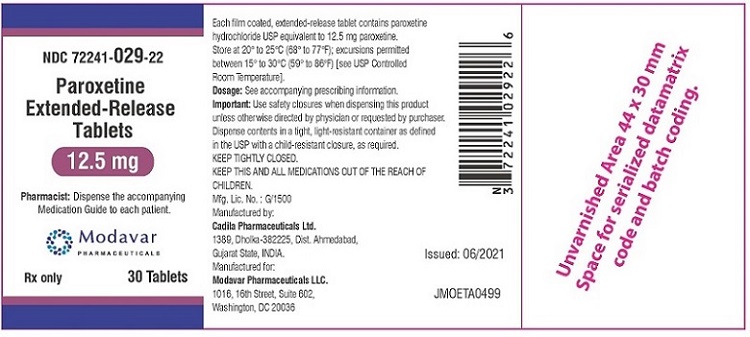
PACKAGE LABEL.PRINCIPAL DISPLAY PANEL Paroxetine Extended-Release Tablets - Container Label 30 Tablets NDC 72241-029-22 Paroxetine Extended-Release Tablets 12.5 mg Pharmacist: Dispense the accompanying Medication Guide to each patient. RX only 30 Tablets Paroxetine Extended-Release Tablets - Container Label 500 Tablets NDC 72241-029-10 Paroxetine Extended-Release Tablets 12.5 mg Pharmacist: Dispense the accompanying Medication Guide to each patient. RX only 500 Tablets Paroxetine Extended-Release Tablets - Container Label 30 Tablets NDC 72241-030-22 Paroxetine Extended-Release Tablets 25 mg Pharmacist: Dispense the accompanying Medication Guide to each patient.
RX only 30 Tablets Paroxetine Extended-Release Tablets - Container Label 500 Tablets NDC 72241-030-10 Paroxetine Extended-Release Tablets 25 mg Pharmacist: Dispense the accompanying Medication Guide to each patient. RX only 500 Tablets Paroxetine Extended-Release Tablets - Container Label 30 Tablets NDC 72241-031-22 Paroxetine Extended-Release Tablets 37.5 mg Pharmacist: Dispense the accompanying Medication Guide to each patient. RX only 30 Tablets Paroxetine Extended-Release Tablets - Container Label 500 Tablets NDC 72241-031-10 Paroxetine Extended-Release Tablets 37.5 mg Pharmacist: Dispense the accompanying Medication Guide to each patient.
RX only 500 Tablets cont-label-12-5mg-30-tab cont-label-12-5mg-500-tab cont-label-25mg-30-tab cont-label-25mg-500-tab cont-label-37-5mg-30-tab cont-label-37-5mg-500-tab