
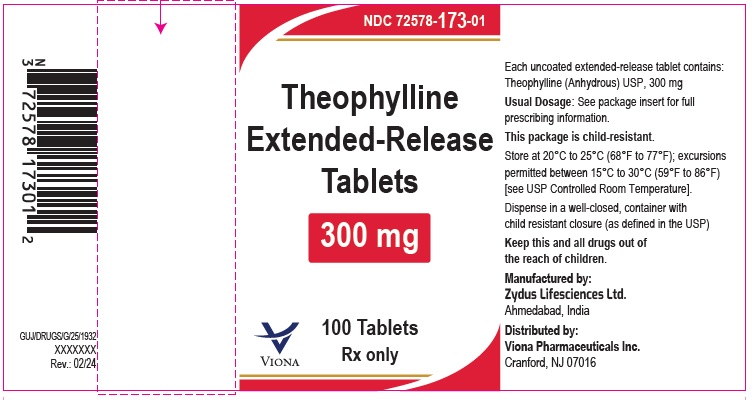
Theophylline 300 mg Tablet, Extended Release, 100-count
Other active recalls for Theophylline (different manufacturers) — 2 · tap to view
🆔 Identity & classification
Where does this data come from?
🏷️ RxNorm drug class
This medicine belongs to the Methylxanthine class.
Where does this data come from?
🏭 Manufacturer & labeler
Where does this data come from?
🩺 Clinical
- Theophylline is a long-term controller medicine for chronic asthma, emphysema, and chronic bronchitis. It works by relaxing the muscles around your airways so they stay more open,...
- What exactly is theophylline supposed to do for me?
- Yes, timing matters. If you're on Theo-24 extended-release capsules once a day, take it every morning at roughly the same time — taking it at night is not recommended because your...
- How should I take my theophylline, and does it matter when I take it?
Patient education
Supplement & herbal interactions
Some supplements/herbs that may interact with Theophylline — tap one for details:
Theophylline may be associated with lower levels of 2 nutrients — worth a chat with your pharmacist, not a cause for alarm.
Where does this data come from?
Ask a licensed pharmacist directly — free, answered by our team.
💊 What it looks like
Where does this data come from?
🧪 Inactive Ingredients / Excipients
Inactive ingredients, also called excipients, are components of the drug product other than the active ingredient. They may include fillers, dyes, coatings, preservatives, flavors, or other formulation ingredients.
💡 Tap an ingredient (hover on desktop) to see what it is and why it’s used.
-
UNII B1QE5P712K
Hypromellose 2208 is a plant-derived thickening agent that dissolves in water. It's used as a binder to help hold tablet ingredients together and as a coating on pills to control how quickly the medicine releases in your body.
-
UNII EWQ57Q8I5X
Lactose monohydrate is a natural sugar derived from milk. It serves as a filler and binder in tablets and capsules, helping create the proper size, texture, and consistency of the medicine.
-
UNII 70097M6I30
Magnesium stearate is a salt made from magnesium and stearic acid, a fatty substance. It's used in tablets and capsules as a lubricant and glidant to help ingredients flow smoothly during manufacturing and prevent sticking.
-
UNII FZ989GH94E
Povidone is a synthetic polymer made from a plastic-like material. It acts as a binder to hold tablet ingredients together and as a disintegrant to help the tablet break apart in your stomach so the medicine can be absorbed.
4 inactive ingredients listed in the exact product block matched to this NDC.
Where does this data come from?
ingredient classCode="IACT" elements from the exact product block matched by this NDC. Label-section narrative from DailyMed / the openFDA label index is shown separately when available.Inactive ingredient FAQ
Are inactive ingredients the same for every manufacturer?
Why might an inactive ingredient be missing?
Can inactive ingredients matter?
💲 Pricing
A drug doesn't have one price. Each row is a different public payment system, and none is what you'd pay at the counter — that depends on your insurance. The ⓘ on each row explains what it measures.
| Price system | Per ea | Per package |
|---|---|---|
| Retail pharmacies payNADAC · weekly | $0.330 | $32.95 / 100 tablets |
| Medicaid paysCMS SDUD · 12 mo | $0.8172 | $81.72 / 100 tablets |
| Medicare drug plans payPart D · Q2 2026 | $0.8789 | $87.89 / 100 tablets |
Where does this data come from?
🔁 Therapeutic equivalents
| Product | Labeler | Pack | NADAC/unit | TE | Status | Price vs. this |
|---|---|---|---|---|---|---|
| Theophylline 300 mg 00480-3310-01 | Teva | 100 tablets | $0.330 | AB | Availability likely | — |
| Theophylline 300 mg 23155-0741-01 | Heritage | 100 tablets | $0.330 | AB | Availability likely | — |
| Theophylline 300 mg 31722-0077-01 | Camber | 100 tablets | $0.330 | AB | Availability likely | — |
| theophylline 300 mg 60219-2045-01 | Amneal | 100 tablets | $0.330 | AB | Availability likely | — |
| Theophylline 300 mg 62135-0457-90 | Chartwell | 90 tablets | $0.330 | AB | Availability likely | — |
| Theophylline 300 mg 64380-0243-01 | Strides | 100 tablets | $0.330 | AB | Availability likely | — |
| Theophylline 300 mg 68462-0721-01 | Glenmark | 100 tablets | $0.330 | AB | Availability likely | — |
| Theophylline 300 mg 69315-0226-01 | Leading | 100 tablets | $0.330 | AB | Availability likely | — |
| Theophylline 300 mg 69452-0267-20 | Bionpharma | 100 tablets | $0.330 | AB | Availability likely | — |
| Theophylline 300 mgthis 72578-0173-01 | Viona | 100 tablets | $0.330 | AB | Availability likely | — |
| Theophylline 300 mg 27241-0272-01 | Ajanta | 100 tablets | — | — | FDA listed | — |
| Theophylline 300 mg 42291-0922-01 | AvKARE | 100 tablets | — | AB | FDA listed | — |
| Theophylline 300 mg 46708-0025-30 | Alembic | 30 tablets | — | AB | FDA listed | — |
| Theophylline 300 mg 62332-0025-30 | Alembic | 30 tablets | — | AB | FDA listed | — |
| Theophylline 300 mg 70771-1782-01 | Zydus | 100 tablets | — | AB | FDA listed | — |
| Theophylline 300 mg 71321-0502-10 | Brandywine | 100 tablets | — | — | Discontinued | — |
| Theophylline 300 mg 72789-0441-01 | PD-Rx | 100 tablets | — | AB | FDA listed | — |
| Theophylline 300 mg 82638-0105-02 | Harman | 100 tablets | — | AB | FDA listed | — |
Where does this data come from?
⏳ Availability & generic status
This product is an FDA-approved generic. Other versions of the same drug are listed under Therapeutic equivalents, least expensive first.
Where does this data come from?
🗺️ Medicaid utilization & spend
📊 Medicare Part D spend CMS · PART D · 2026 (Q1)
🔬 Reported adverse events (FAERS)
Top reported reactions
Age at onset
Reporter sex
Serious outcomes
Where does this data come from?
📦 Packaging — all sizes for this product
| Package NDC | Description | Marketing start | Status |
|---|---|---|---|
| 72578-0173-01 You're viewing this | 100 TABLET, EXTENDED RELEASE in 1 BOTTLE (72578-173-01) | 2024-05-25 | Active |
📄 Full prescribing information FDA SPL
🎯 Indications and Usage ▾
INDICATIONS AND USAGE Theophylline extended-release tablets are indicated for the treatment of the symptoms and reversible airflow obstruction associated with chronic asthma and other chronic lung diseases, e.g., emphysema and chronic bronchitis.
⏱️ Dosage and Administration ▾
DOSAGE AND ADMINISTRATION Taking theophylline extended-release tablets immediately after a high-fat content meal may result in a somewhat higher C max and delayed T max and somewhat greater extent of absorption. However, the differences are usually not great and this product may normally be administered without regard to meals (see CLINICAL PHARMACOLOGY, Drug interactions, Drug-Food Interactions ). Theophylline extended-release tablets are recommended for chronic or long-term management and prevention of symptoms and not for use in treating acute symptoms of asthma and reversible bronchospasm.
General considerations The steady-state peak serum theophylline concentration is a function of the dose, the dosing interval and the rate of theophylline absorption and clearance in the individual patient. Because of marked individual differences in the rate of theophylline clearance, the dose required to achieve a peak serum theophylline concentration in the 10 mcg/mL to 20 mcg/mL range varies fourfold among otherwise similar patients in the absence of factors known to alter theophylline clearance (e.g., 400 mg/day to 1,600 mg/day in adults < 60 years old and 10 mg/kg/day to 36 mg/kg/day in children 1 year to 9 years old).
For a given population there is no single theophylline dose that will provide both safe and effective serum concentrations for all patients. Administration of the median theophylline dose required to achieve a therapeutic serum theophylline concentration in a given population may result in either sub-therapeutic or potentially toxic serum theophylline concentrations in individual patients. For example, at a dose of 900 mg/d in adults < 60 years or 22 mg/kg/d in children 1 year to 9 years, the steady-state peak serum theophylline concentration will be < 10 mcg/mL in about 30% of patients, 10 mcg/mL to 20 mcg/mL in about 50% and 20 mcg/mL to 30 mcg/mL in about 20% of patients.
The dose of theophylline must be individualized on the basis of peak serum theophylline concentration measurements in order to achieve a dose that will provide maximum potential benefit with minimal risk of adverse effects. Transient caffeine-like adverse effects and excessive serum concentrations in slow metabolizers can be avoided in most patients by starting with a sufficiently low dose and slowly increasing the dose, if judged to be clinically indicated, in small increments (see Table 5). Dose increases should only be made if the previous dosage is well tolerated and at intervals of no less than 3 days to allow serum theophylline concentrations to reach the new steady state.
Dosage adjustment should be guided by serum theophylline concentration measurement (see PRECAUTIONS, Laboratory Tests and DOSAGE AND ADMINISTRATION, Table 6 ). Health care providers should instruct patients and care givers to discontinue any dosage that causes adverse effects, to withhold the medication until these symptoms are gone and to then resume therapy at a lower, previously tolerated dosage (see WARNINGS ). If the patient's symptoms are well controlled, there are no apparent adverse effects and no intervening factors that might alter dosage requirements (see WARNINGS and PRECAUTIONS ), serum theophylline concentrations should be monitored at 6 month intervals for rapidly growing children and at yearly intervals for all others.
In acutely ill patients, serum theophylline concentrations should be monitored at frequent intervals, e.g., every 24 hours. Theophylline distributes poorly into body fat, therefore, mg/kg dose should be calculated on the basis of ideal body weight. Table 5 contains theophylline dosing titration schema recommended for patients in various age groups and clinical circumstances.
Table 6 contains recommendations for theophylline dosage adjustment based upon serum theophylline concentrations. Application of these general dosing recommendations to individual patients must take into account the unique clinical characteristics of each patient. In gene…
⛔ Contraindications ▾
CONTRAINDICATIONS Theophylline extended-release tablets are contraindicated in patients with a history of hypersensitivity to theophylline or other components in the product.
⚠️ Warnings ▾
WARNINGS Concurrent Illness Theophylline should be used with extreme caution in patients with the following clinical conditions due to the increased risk of exacerbation of the concurrent condition: Active peptic ulcer disease Seizure disorders Cardiac arrhythmias (not including bradyarrhythmias) Conditions that Reduce Theophylline Clearance There are several readily identifiable causes of reduced theophylline clearance. If the total daily dose is not appropriately reduced in the presence of these risk factors, severe and potentially fatal theophylline toxicity can occur.
Careful consideration must be given to the benefits and risks of theophylline use and the need for more intensive monitoring of serum theophylline concentrations in patients with the following risk factors: Age: Neonates (term and premature), Children < 1year, Elderly (> 60 years) Concurrent Diseases: Acute pulmonary edema, congestive heart failure, cor-pulmonale, fever (≥ 102° for 24 hours or more; or lesser temperature elevations for longer periods), reduced renal function in infants < 3 months of age, sepsis with multiorgan failure and shock.
Cessation of Smoking Drug Interactions: Adding a drug that inhibits theophylline metabolism (e.g., cimetidine, erythromycin, tacrine) or stopping a concurrently administered drug that enhances theophylline metabolism (e.g., carbamazepine, rifampin). (see PRECAUTIONS, Drug Interactions, Table 2 ). When Signs or Symptoms of Theophylline Toxicity Are Present Whenever a patient receiving theophylline develops nausea or vomiting, particularly repetitive vomiting or other signs or symptoms consistent with theophylline toxicity (even if another cause may be suspected), additional doses of theophylline should be withheld and a serum theophylline concentration measured immediately .
Patients should be instructed not to continue any dosage that causes adverse effects and to withhold subsequent doses until the symptoms have resolved, at which time the healthcare professional may instruct the patient to resume the drug at a lower dosage (see DOSAGE AND ADMINISTRATION, Dosing Guidelines, Table 6 ). Dosage Increases: Increases in the dose of theophylline should not be made in response to an acute exacerbation of symptoms of chronic lung disease since theophylline provides little added benefit to inhaled beta 2 -selective agonists and systemically administered cortico-steroids in this circumstance and increases the risk of adverse effects.
A peak steady-state serum theophylline concentration should be measured before increasing the dose in response to persistent chronic symptoms to ascertain whether an increase in dose is safe. Before increasing the theophylline dose on the basis of a low serum concentration, the healthcare professional should consider whether the blood sample was obtained at an appropriate time in relationship to the dose and whether the patient has adhered to the prescribed regimen (see PRECAUTIONS, Laboratory Tests ). As the rate of theophylline clearance may be dose-dependent (i.e., steady-state serum concentrations may increase disproportionately to the increase in dose), an increase in dose based upon a sub-therapeutic serum concentration measurement should be conservative.
In general, limiting dose increases to about 25% of the previous total daily dose will reduce the risk of unintended excessive increases in serum theophylline concentration (see DOSAGE AND ADMINISTRATION, Table 6 ).
🤒 Adverse Reactions ▾
ADVERSE REACTIONS Adverse reactions associated with theophylline are generally mild when peak serum theophylline concentrations are < 20 mcg/mL and mainly consist of transient caffeine-like adverse effects such as nausea, vomiting, headache and insomnia. When peak serum theophylline concentrations exceed 20 mcg/mL, however, theophylline produces a wide range of adverse reactions including persistent vomiting, cardiac arrhythmias and intractable seizures which can be lethal (see OVERDOSAGE ). The transient caffeine-like adverse reactions occur in about 50% of patients when theophylline therapy is initiated at doses higher than recommended initial doses (e.g.,> 300 mg/day in adults and > 12 mg/kg/day in children beyond 1 year of age).
During the initiation of theophylline therapy, caffeine-like adverse effects may transiently alter patient behavior, especially in school age children, but this response rarely persists. Initiation of theophylline therapy at a low dose with subsequent slow titration to a predetermined age-related maximum dose will significantly reduce the frequency of these transient adverse effects (see DOSAGE AND ADMINISTRATION, Table 5 ). In a small percentage of patients (< 3% of children and < 10% of adults) the caffeine-like adverse effects persist during maintenance therapy, even at peak serum theophylline concentrations within the therapeutic range (i.e., 10 mcg/mL to 20 mcg/mL).
Dosage reduction may alleviate the caffeine-like adverse effects in these patients, however, persistent adverse effects should result in a reevaluation of the need for continued theophylline therapy and the potential therapeutic benefit of alternative treatment. Other adverse reactions that have been reported at serum theophylline concentrations < 20 mcg/mL include diarrhea, irritability, restlessness, fine skeletal muscle tremors and transient diuresis. In patients with hypoxia secondary to COPD, multifocal atrial tachycardia and flutter have been reported at serum theophylline concentrations ≥ 15 mcg/mL.
There have been a few isolated reports of seizures at serum theophylline concentrations < 20 mcg/mL in patients with an underlying neurological disease or in elderly patients. The occurrence of seizures in elderly patients with serum theophylline concentrations < 20 mcg/mL may be secondary to decreased protein binding resulting in a larger proportion of the total serum theophylline concentration in the pharmacologically active unbound form. The clinical characteristics of the seizures reported in patients with serum theophylline concentrations < 20 mcg/mL have generally been milder than seizures associated with excessive serum theophylline concentrations resulting from an overdose (i.e. they have generally been transient, often stopped without anticonvulsant therapy and did not result in neurological residua).
Table 4 Manifestations of theophylline toxicity * * These data are derived from two studies in patients with serum theophylline concentrations > 30 mcg/mL. In the first study (Study #1 - Shanon, Ann Intern Med 1993; 119:1161-67), data were prospectively collected from 249 consecutive cases of theophylline toxicity referred to a regional poison center for consultation. In the second study (Study #2 - Sessler, Am J Med 1990;88:567-76), data were retrospectively collected from 116 cases with serum theophylline concentrations > 30 mcg/mL among 6,000 blood samples obtained for measurement of serum theophylline concentrations in three emergency departments.
Differences in the incidence of manifestations of theophylline toxicity between the two studies may reflect sample selection as a result of study design (e.g., in Study #1, 48% of the patients had acute intoxications versus only 10% in Study #2) and different methods of reporting results. ** NR = Not reported in a comparable manner. Percentage of patients reported with sign or symptoms Actual Overdose (Large Single Ingestion) Chronic Overdosage (Multiple Excessive Doses) Sign…
🆘 Overdosage ▾
OVERDOSAGE General: The chronicity and pattern of theophylline overdosage significantly influences clinical manifestations of toxicity, management and outcome. There are two common presentations: (1) acute overdose , i.e., ingestion of a single large excessive dose (> 10 mg/kg) as occurs in the context of an attempted suicide or isolated medication error and (2) chronic overdosage , i.e., ingestion of repeated doses that are excessive for the patient's rate of theophylline clearance. The most common causes of chronic theophylline overdosage include patient or care giver error in dosing, healthcare professional prescribing of an excessive dose or a normal dose in the presence of factors known to decrease the rate of theophylline clearance and increasing the dose in response to an exacerbation of symptoms without first measuring the serum theophylline concentration to determine whether a dose increase is safe.
Severe toxicity from theophylline overdose is a relatively rare event. In one health maintenance organization, the frequency of hospital admissions for chronic overdosage of theophylline was about 1 per 1,000 person-years exposure. In another study, among 6,000 blood samples obtained for measurement of serum theophylline concentration, for any reason, from patients treated in an emergency department, 7% were in the 20 mcg/mL to 30 mcg/mL range and 3% were > 30 mcg/mL.
Approximately two-thirds of the patients with serum theophylline concentrations in the 20 mcg/mL to 30 mcg/mL range had one or more manifestations of toxicity while > 90% of patients with serum theophylline concentrations > 30 mcg/mL were clinically intoxicated. Similarly, in other reports, serious toxicity from theophylline is seen principally at serum concentrations > 30 mcg/mL. Several studies have described the clinical manifestations of theophylline overdose and attempted to determine the factors that predict life-threatening toxicity.
In general, patients who experience an acute overdose are less likely to experience seizures than patients who have experienced a chronic overdosage, unless the peak serum theophylline concentration is > 100 mcg/mL. After a chronic overdosage, generalized seizures, life-threatening cardiac arrhythmias and death may occur at serum theophylline concentrations > 30 mcg/mL. The severity of toxicity after chronic overdosage is more strongly correlated with the patient's age than the peak serum theophylline concentration; patients > 60 years are at the greatest risk for severe toxicity and mortality after a chronic overdosage.
Preexisting or concurrent disease may also significantly increase the susceptibility of a patient to a particular toxic manifestation, e.g., patients with neurologic disorders have an increased risk of seizures and patients with cardiac disease have an increased risk of cardiac arrhythmias for a given serum theophylline concentration compared to patients without the underlying disease. The frequency of various reported manifestations of theophylline overdose according to the mode of overdose are listed in Table 4. Other manifestations of theophylline toxicity include increases in serum calcium, creatine kinase, myoglobin and leukocyte count, decreases in serum phosphate and magnesium, acute myocardial infarction and urinary retention in men with obstructive uropathy.
Seizures associated with serum theophylline concentrations > 30 mcg/mL are often resistant to anticonvulsant therapy and may result in irreversible brain injury if not rapidly controlled. Death from theophylline toxicity is most often secondary to cardiorespiratory arrest and/or hypoxic encephalopathy following prolonged generalized seizures or intractable cardiac arrhythmias causing hemodynamic compromise. Overdose Management General Recommendations for Patients with Symptoms of Theophylline Overdose or Serum Theophylline Concentrations > 30 mcg/mL (Note: Serum theophylline concentrations may continue to increase after presentation of the pat…
🧬 Clinical Pharmacology ▾
CLINICAL PHARMACOLOGY Mechanism of Action Theophylline has two distinct actions in the airways of patients with reversible obstruction; smooth muscle relaxation (i.e., bronchodilation) and suppression of the response of the airways to stimuli (i.e., non-bronchodilator prophylactic effects). While the mechanisms of action of theophylline are not known with certainty, studies in animals suggest that bronchodilation is mediated by the inhibition of two isozymes of phosphodiesterase (PDE III and to a lesser extent, PDE IV) while non-bronchodilator prophylactic actions are probably mediated through one or more different molecular mechanisms, that do not involve inhibition of PDE III or antagonism of adenosine receptors.
Some of the adverse effects associated with theophylline appear to be mediated by inhibition of PDE III (e.g., hypotension, tachycardia, headache and emesis) and adenosine receptor antagonism (e.g., alterations in cerebral blood flow). Theophylline increases the force of contraction of diaphragmatic muscles. This action appears to be due to enhancement of calcium uptake through an adenosine-mediated channel.
Serum Concentration-Effect Relationship Bronchodilation occurs over the serum theophylline concentration range of 5 mcg/mL to 20 mcg/mL. Clinically important improvement in symptom control has been found in most studies to require peak serum theophylline concentrations > 10 mcg/mL, but patients with mild disease may benefit from lower concentrations. At serum theophylline concentrations ˃ 20 mcg/mL, both the frequency and severity of adverse reactions increase.
In general, maintaining peak serum theophylline concentrations between 10 mcg/mL and 15 mcg/mL will achieve most of the drug's potential therapeutic benefit while minimizing the risk of serious adverse events. Pharmacokinetics Overview: Theophylline is rapidly and completely absorbed after oral administration in solution or immediate-release solid oral dosage form. Theophylline does not undergo any appreciable pre-systemic elimination, distributes freely into fat-free tissues and is extensively metabolized in the liver.
The pharmacokinetics of theophylline vary widely among similar patients and cannot be predicted by age, sex, body weight or other demographic characteristics. In addition, certain concurrent illnesses and alterations in normal physiology (see Table 1) and coadministration of other drugs (see Table 2) can significantly alter the pharmacokinetic characteristics of theophylline. Within-subject variability in metabolism has also been reported in some studies, especially in acutely ill patients.
It is, therefore, recommended that serum theophylline concentrations be measured frequently in acutely ill patients (e.g., at 24-hr intervals) and periodically in patients receiving long-term therapy, e.g., at 6 months to 12 months intervals. More frequent measurements should be made in the presence of any condition that may significantly alter theophylline clearance (see PRECAUTIONS, Laboratory Tests ). Table 1 Mean and range of total body clearance and half-life of theophylline related to age and altered physiological states ¶ ¶ For various North American patient populations from literature reports.
Different rates of elimination and consequent dosage requirements have been observed among other peoples. * Clearance represents the volume of blood completely cleared of theophylline by the liver in one minute. Values listed were generally determined at serum theophylline concentrations < 20 mcg/mL; clearance may decrease and half-life may increase at higher serum concentrations due to non-linear pharmacokinetics. †† Reported range or estimated range (mean ± 2 SD) where actual range not reported. † NR = not reported or not reported in a comparable format. ** Median Population Characteristics Total body clearance * mean (range) †† (mL/kg/min) Half-life mean (range) †† (hr) Age Premature neonates postnatal age 3 days to 15 days 0.29 (0.09 to 0.49) 30 (17 to…
📦 How Supplied / Storage and Handling ▾
HOW SUPPLIED Theophylline extended-release tablets, 300 mg are white to off white, capsule shaped, biconvex, uncoated tablets, debossed with "7" and "28" on either side of score on one side and plain on the other side and are supplied as follows: NDC 72578-173-01 in bottle of 100 with child-resistant closure. Theophylline extended-release tablets, 450 mg are white to off white, capsule shaped, biconvex, uncoated tablets, debossed with "7" and "29" on either side of score on one side and plain on the other side and are supplied as follows: NDC 72578-174-01 in bottle of 100 with child-resistant closure.
Store at 20°C to 25°C (68ºF to 77°F); excursions permitted between 15°C to 30°C (59°F to 86°F) [See USP Controlled Room Temperature]. Dispense in a well-closed container, with child resistant closure [as defined in the USP]. Call your doctor for medical advice about side effects.
You may report side effects to FDA at 1-800-FDA-1088. Please address medical inquiries to, [email protected] or Tel.: 1-888-304-5011.
📋 Description ▾
DESCRIPTION Theophylline, USP is structurally classified as a methylxanthine. It occurs as a white, odorless, crystalline powder with a bitter taste. Anhydrous theophylline has the chemical name 1 H- Purine-2, 6-dione, 3,7-dihydro-1, 3-dimethyl-, and is represented by the following structural formula: C 7 H 8 N 4 O 2 M.W.
180.17. This product allows a 12-hour dosing interval for a majority of patients and a 24-hour dosing interval for selected patients (see DOSAGE AND ADMINISTRATION section for description of appropriate patient populations). Each extended-release tablet for oral administration contains either 300 mg or 450 mg of anhydrous theophylline, USP.
Tablets also contain as inactive ingredients: hypromellose, lactose monohydrate, magnesium stearate and povidone. Image