
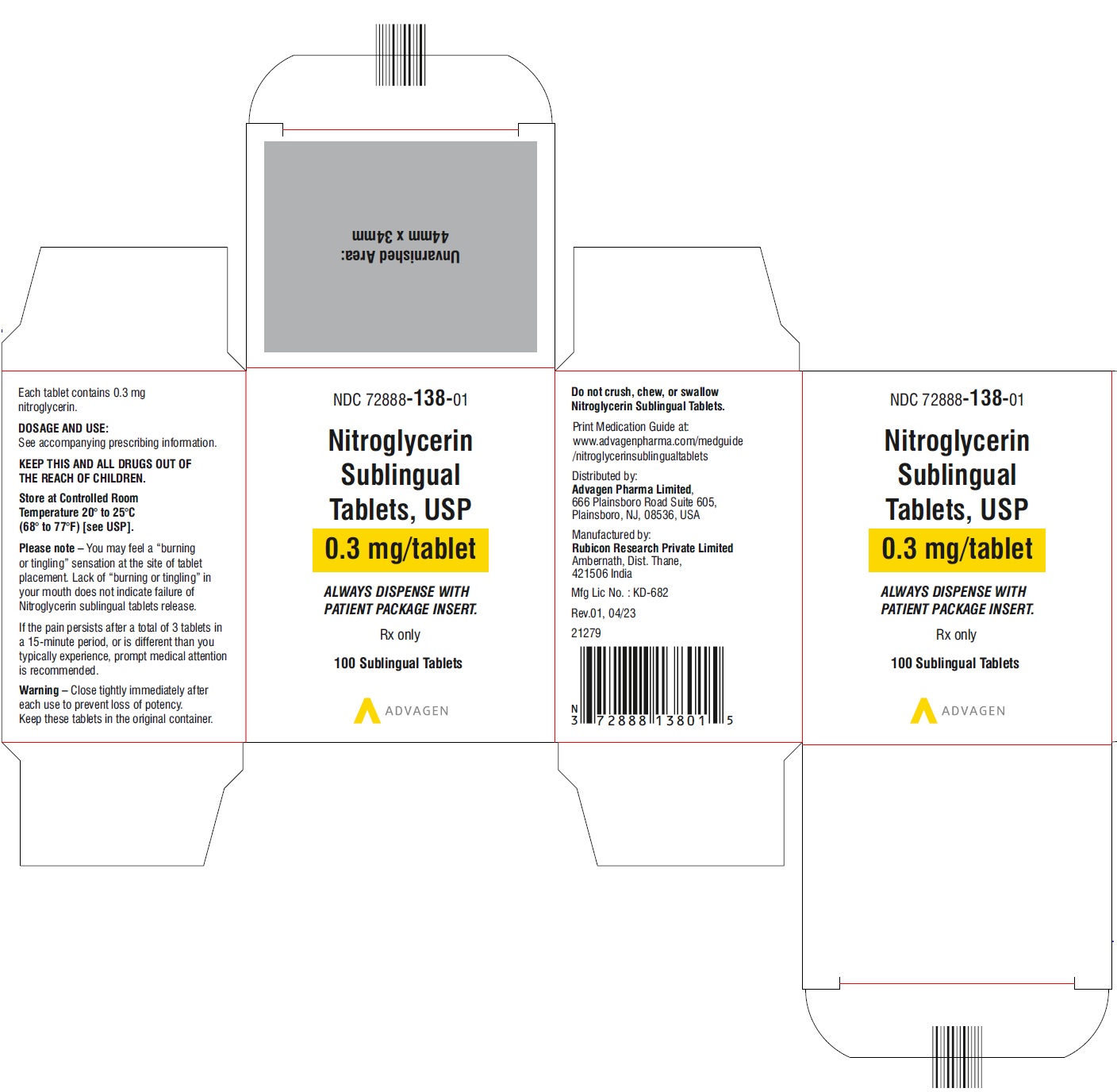
Nitroglycerin .3 mg Tablet, 100-count — NDC 72888-138-01 (Billing 72888-0138-01)
This is a package of 100 tablets of Nitroglycerin .3 mg Tablet from Advagen Pharma Ltd, marketed since May 2021 and currently FDA-listed; retail pharmacies pay about $0.0632 per tablet (NADAC). It is this product's only package size.
Other active recalls for Nitroglycerin (different manufacturers) — 3 · tap to view
Identity & classification
Regulatory identifiers FDA, NLM and CMS codes for this package
Drug-database identifiers Medi-Span GPI and First Databank GCN / HICL / AHFS classification
- GSN (GCN sequence number): 000474
- GCN: 01771
- GPI-14 (Medi-Span): 32100030000710
- HICL (First Databank): 000159
- AHFS class code: 24:08.08.00
- RxCUI (RxNorm): 198038
Where does this data come from?
- FDA openFDA NDC Directory · synced Oct 1, 2026
- FDA label on DailyMed · label index refreshed Oct 1, 2026
- RxNorm (NLM RxNav) · catalog refreshed Oct 1, 2026
- Medi-Span GPI (licensed)
- First Databank (licensed) · refreshed Oct 1, 2026
RxNorm drug class
This medicine belongs to the Nitrate Vasodilator class.
Where does this data come from?
- RxClass (NLM) · catalog refreshed Oct 1, 2026
Clinical
- It is mainly used to relieve or prevent angina, which is chest pain from coronary artery disease. Rectal ointment treats chronic anal fissure pain, and IV forms are used in hospita...
- Use your spray or tablet at the first sign of an attack, ideally sitting down. You can repeat it about every 5 minutes, up to three doses in 15 minutes. If the pain continues or fe...
- How do I use it during an angina attack?
- Headache is the most common one, and it often eases with continued use. You may also feel lightheaded. Sit down if you feel dizzy, and call for help if you faint or feel very weak,...
Patient education
Supplement & herbal interactions
Some supplements/herbs that may interact with Nitroglycerin — tap one for details:
Where does this data come from?
- MedlinePlus (NLM) · refreshed Oct 1, 2026
- FDA label on DailyMed · label index refreshed Oct 1, 2026
Ask a licensed pharmacist directly — free, answered by our team.
Pricing
A drug doesn't have one price. Each row is a different public payment system, and none is what you'd pay at the counter — that depends on your insurance. The ⓘ on each row explains what it measures.
| Price system | Per ea | Per package |
|---|---|---|
| Retail pharmacies payNADAC · weekly | $0.063 | $6.32 / 100 tablets |
| Medicaid paysCMS SDUD · 12 mo | $0.1475 | $14.75 / 100 tablets |
| Medicare drug plans payPart D · Q2 2026 | $0.1595 | $15.95 / 100 tablets |
Where does this data come from?
- CMS NADAC weekly file · file of Sep 30, 2026
- CMS ASP pricing files · refreshed Sep 20, 2026
- CMS Medicaid State Drug Utilization Data · through Q1 2026
- CMS Part D plan pricing files · refreshed Sep 24, 2026
- VA National Acquisition Center price file
Packaging — all sizes for this product
| Package NDC | Description | Marketing start | Marketing end | Status |
|---|---|---|---|---|
| 72888-0138-01 You're viewing this Main listing | 1 BOTTLE in 1 CARTON / 100 TABLET in 1 BOTTLE | 2023-05-20 | — | Active |
Therapeutic equivalents
| Product | Labeler | Pack | NADAC/unit | TE | Status | Price vs. this |
|---|---|---|---|---|---|---|
| Nitroglycerin .3 mg 43598-0435-01 | Dr. | 100 tablets | $0.063 | AB | Availability likely | — |
| Nitroglycerin .3 mg 59651-0657-00 | Aurobindo | 100 tablets | $0.063 | AB | Availability likely | — |
| Nitroglycerin .3 mg 59762-4921-01 | Mylan | 100 tablets | $0.063 | AB | Availability likely | — |
| Nitroglycerin .3 mg 68462-0638-01 | Glenmark | 100 tablets | $0.063 | AB | Availability likely | — |
| Nitroglycerin .3 mg 69339-0173-01 | Natco | 1 tablet | $0.063 | AB | Availability likely | — |
| nitroglycerin .3 mg 70756-0013-11 | Lifestar | 100 tablets | $0.063 | AB | Availability likely | — |
| Nitroglycerin .3 mgthis 72888-0138-01 | Advagen | 100 tablets | $0.063 | AB | Availability likely | — |
| Nitroglycerin .3 mg 43547-0985-04 | Solco | 100 tablets | — | AB | FDA listed | — |
| Nitrostat .3 mg 58151-0309-01 | Viatris | 100 tablets | — | AB | FDA listed | — |
| Nitroglycerin .3 mg 60429-0839-01 | Golden | 100 tablets | — | AB | FDA listed | — |
Where does this data come from?
- FDA openFDA NDC Directory · synced Oct 1, 2026
- FDA Orange Book · refreshed Oct 3, 2026
- CMS NADAC weekly file · file of Sep 30, 2026
Availability & generic status
This product is an FDA-approved generic. Other versions of the same drug are listed under Therapeutic equivalents, least expensive first.
Where does this data come from?
- FDA Orange Book · refreshed Oct 3, 2026
What it looks like
Where does this data come from?
- FDA label on DailyMed · label index refreshed Oct 1, 2026
Inactive Ingredients / Excipients
Inactive ingredients, also called excipients, are components of the drug product other than the active ingredient. They may include fillers, dyes, coatings, preservatives, flavors, or other formulation ingredients.
💡 Tap an ingredient (hover on desktop) to see what it is and why it’s used.
-
UNII 776XM7047L
Calcium stearate is a white powder derived from stearic acid and calcium. It works as a lubricant and glidant to help the medicine flow smoothly during manufacturing and prevent ingredients from sticking to equipment.
-
UNII 73CJJ317SR
A waxy substance derived from plant oils, used as a binder and lubricant to help hold tablet ingredients together and improve how the medicine flows during manufacturing.
-
UNII EWQ57Q8I5X
Lactose monohydrate is a natural sugar derived from milk. It serves as a filler and binder in tablets and capsules, helping create the proper size, texture, and consistency of the medicine.
-
UNII ETJ7Z6XBU4
Silicon dioxide is a naturally occurring mineral used as a glidant and anti-caking agent. It helps powder ingredients flow smoothly and prevents clumping during manufacturing and storage.
-
UNII H8AV0SQX4D
A modified starch derived from potato or corn starch. It absorbs water quickly and helps tablets or capsules break apart and dissolve in the stomach, acting as a disintegrant to ensure the medicine releases its active ingredients properly.
5 inactive ingredients listed in the exact product block matched to this NDC.
Where does this data come from?
ingredient classCode="IACT" elements from the exact product block matched by this NDC. Label-section narrative from DailyMed / the openFDA label index is shown separately when available.- FDA label on DailyMed · label index refreshed Oct 1, 2026
- FDA openFDA NDC Directory · synced Oct 1, 2026
Inactive ingredient FAQ
Are inactive ingredients the same for every manufacturer?
Why might an inactive ingredient be missing?
Can inactive ingredients matter?
Manufacturer & labeler
Where does this data come from?
- FDA openFDA NDC Directory · synced Oct 1, 2026
- Drugs@FDA
Full prescribing information FDA SPL
🎯 Indications and Usage ▾
1 INDICATIONS AND USAGE Nitroglycerin sublingual tablets are indicated for the acute relief of an attack or acute prophylaxis of angina pectoris due to coronary artery disease. Nitroglycerin is a nitrate vasodilator indicated for relief of an attack or prophylaxis of angina pectoris due to coronary artery disease. ( 1 )
⏱️ Dosage and Administration ▾
2 DOSAGE AND ADMINISTRATION Administer one tablet under the tongue or in the buccal pouch at the first sign of an acute anginal attack. Allow tablet to dissolve without swallowing. One additional tablet may be administered every 5 minutes until relief is obtained.
No more than three tablets are recommended within a 15-minute period. If the pain persists after a total of 3 tablets in a 15-minute period, or if the pain is different than is typically experienced, seek prompt medical attention. Nitroglycerin sublingual tablets may be used prophylactically 5 to 10 minutes prior to engaging in activities that might precipitate an acute attack.
For patients with xerostomia, a small sip of water prior to placing the tablet under the tongue may help maintain mucosal hydration and aid dissolution of the tablet. Administer nitroglycerin sublingual tablets at rest, preferably in the sitting position. At the onset of an attack, administer one tablet under the tongue or buccal pouch.
One additional tablet may be administered every 5 minutes as needed. No more than 3 total tablets are recommended within a 15 minute period. ( 2 ) If chest pain persists after three tablets, seek prompt medical attention.
( 2 ) May be used prophylactically 5 to 10 minutes prior to engaging in activities that might precipitate an acute attack. ( 2 )
💊 Dosage Forms and Strengths ▾
3 DOSAGE FORMS AND STRENGTHS Nitroglycerin sublingual tablets, USP are supplied as white to off white, round, flat-faced tablets in three strengths: 0.3 mg ("Ʌ 6" debossed on one side and plain on the other side). 0.4 mg ("Ʌ 7" debossed on one side and plain on the other side). 0.6 mg ("Ʌ 8" debossed on one side and plain on the other side). Sublingual tablets, 0.3 mg; 0.4 mg; 0.6 mg ( 3 )
⛔ Contraindications ▾
4 CONTRAINDICATIONS Use of phosphodiesterase type 5 (PDE-5) inhibitors, such as avanafil, sildenafil, tadalafil, or vardenafil, or soluble guanylate cyclase (sGC) stimulators. ( 4.1 , 7.1 ) Severe anemia ( 4.2 ) Increased intracranial pressure ( 4.3 ) Hypersensitivity to nitroglycerin or to other nitrates or nitrites or any excipient ( 4.4 ) Circulatory failure and shock ( 4.5 )
4.1PDE-5-Inhibitors and sGC-Stimulators Do not use nitroglycerin in patients who are taking PDE-5 Inhibitors, such as avanafil, sildenafil, tadalafil, vardenafil hydrochloride. Concomitant use can cause severe hypotension, syncope, or myocardial ischemia [see Drug Interactions (7.1) ]. Do not use nitroglycerin in patients who are taking the soluble guanylate cyclase stimulators, such as riociguat. Concomitant use can cause hypotension.
4.2Severe Anemia Nitroglycerin is contraindicated in patients with severe anemia (large doses of nitroglycerin may cause oxidation of hemoglobin to methemoglobin and could exacerbate anemia).
4.3Increased Intracranial Pressure Nitroglycerin may precipitate or aggravate increased intracranial pressure and thus should not be used in patients with possible increased intracranial pressure (e.g., cerebral hemorrhage or traumatic brain injury).
4.4Hypersensitivity Nitroglycerin is contraindicated in patients who are allergic to nitroglycerin, other nitrates or nitrites or any excipient.
4.5Circulatory Failure and Shock Nitroglycerin is contraindicated in patients with acute circulatory failure or shock.
⚠️ Warnings and Cautions ▾
5 WARNINGS AND PRECAUTIONS Tolerance: Excessive use may lead to tolerance. ( 5.1 ) Hypotension: Severe hypotension may occur. ( 5.2 )
5.1Tolerance Excessive use may lead to the development of tolerance. Only the smallest dose required for effective relief of the acute angina attack should be used. A decrease in therapeutic effect of sublingual nitroglycerin may result from use of long-acting nitrates.
5.2Hypotension Severe hypotension, particularly with upright posture, may occur with small doses of nitroglycerin particularly in patients with constrictive pericarditis, aortic or mitral stenosis, patients who may be volume-depleted, or are already hypotensive. Hypotension induced by nitroglycerin may be accompanied by paradoxical bradycardia and increased angina pectoris. Symptoms of severe hypotension (nausea, vomiting, weakness, pallor, perspiration and collapse/syncope) may occur even with therapeutic doses.
5.3Hypertrophic Obstructive Cardiomyopathy Nitrate therapy may aggravate the angina caused by hypertrophic cardiomyopathy.
5.4Headache Nitroglycerin produces dose-related headaches, especially at the start of nitroglycerin therapy, which may be severe and persist but usually subside with continued use.
🤒 Adverse Reactions ▾
6 ADVERSE REACTIONS The following adverse reactions are discussed in more detail elsewhere in the label: Hypotension [see Warnings and Precautions (5.2) ] Headache [see Warnings and Precautions (5.4) ] Hypersensitivity [see Contraindications (4.4) ] Vertigo, dizziness, weakness, palpitation, and other manifestations of postural hypotension may develop occasionally, particularly in erect, immobile patients. Marked sensitivity to the hypotensive effects of nitrates (manifested by nausea, vomiting, weakness, diaphoresis, pallor, and collapse) may occur at therapeutic doses.
Syncope due to nitrate vasodilatation has been reported. Flushing, drug rash, and exfoliative dermatitis have been reported in patients receiving nitrate therapy. Most common adverse reactions occurring at a frequency greater than 2% are headache, dizziness and paresthesia.
( 6 ) To report SUSPECTED ADVERSE REACTIONS, contact Advagen Pharma Ltd, at 866-488-0312 or FDA at 1-800-FDA-1088 or www.fda.gov/medwatch .
🔄 Drug Interactions ▾
7 DRUG INTERACTIONS Ergotamine: increased bioavailability of ergotamine. Avoid concomitant use. ( 7.2 )
7.1PDE-5-Inhibitors and sGC-Stimulators Nitroglycerin is contraindicated in patients who are using a selective inhibitor of cyclic guanosine monophosphate (cGMP)-specific phosphodiesterase type 5 (PDE-5). PDE-5-Inhibitors such as avanafil, sildenafil, vardenafil, and tadalafil have been shown to potentiate the hypotensive effects of organic nitrates. Nitroglycerin is contraindicated in patients who are taking soluble guanylate cyclase (sGC) stimulators.
Concomitant use can cause hypotension. The time course and dose dependence of these interactions have not been studied, and use within a few days of one another is not recommended. Appropriate supportive care for the severe hypotension has not been studied, but it seems reasonable to treat this as a nitrate overdose, with elevation of the extremities and with central volume expansion.
7.2Ergotamine Oral administration of nitroglycerin markedly decreases the first-pass metabolism of dihydroergotamine and subsequently increases its oral bioavailability. Ergotamine is known to precipitate angina pectoris. Therefore, patients receiving sublingual nitroglycerin should avoid ergotamine and related drugs or be monitored for symptoms of ergotism if this is not possible.
👥 Use in Specific Populations ▾
8 USE IN SPECIFIC POPULATIONS
8.1Pregnancy Risk summary Limited published data on the use of nitroglycerin are insufficient to determine a drug associated risk of major birth defects or miscarriage. In animal reproduction studies, there were no adverse developmental effects when nitroglycerin was administered intravenously to rabbits or intraperitoneally to rats during organogenesis at doses greater than 64-times the human dose (see Data ) . The estimated background risk of major birth defects and miscarriage for the indicated population is unknown.
In the U.S. general population, the estimated background risk of major birth defects and miscarriage in clinically recognized pregnancies is 2-4% and 15-20%, respectively. Data Animal Data No embryotoxic or postnatal development effects were observed with transdermal application in pregnant rabbits and rats at doses up to 80 and 240 mg/kg/day, respectively, at intraperitoneal doses in pregnant rats up to 20 mg/kg/day from gestation day 7-17, and at intravenous doses in pregnant rabbits up to 4 mg/kg/day from gestation day 6-18.
8.2Lactation Risk summary Sublingual nitroglycerin has not been studied in lactating women. It is not known if nitroglycerin is present in human milk or if nitroglycerin has effects on milk production.
8.4Pediatric Use The safety and effectiveness of nitroglycerin in pediatric patients have not been established.
8.5Geriatric Use Clinical studies of nitroglycerin did not include sufficient numbers of subjects aged 65 and over to determine whether they respond differently from younger subjects. Other reported clinical experience has not identified differences in responses between the elderly and younger patients. In general, dose selection for an elderly patient should be cautious, usually starting at the low end of the dosing range, reflecting the greater frequency of decreased hepatic, renal, or cardiac function, and of concomitant disease or other drug therapy.
🤰 Pregnancy ▾
8.1Pregnancy Risk summary Limited published data on the use of nitroglycerin are insufficient to determine a drug associated risk of major birth defects or miscarriage. In animal reproduction studies, there were no adverse developmental effects when nitroglycerin was administered intravenously to rabbits or intraperitoneally to rats during organogenesis at doses greater than 64-times the human dose (see Data ) . The estimated background risk of major birth defects and miscarriage for the indicated population is unknown.
In the U.S. general population, the estimated background risk of major birth defects and miscarriage in clinically recognized pregnancies is 2-4% and 15-20%, respectively. Data Animal Data No embryotoxic or postnatal development effects were observed with transdermal application in pregnant rabbits and rats at doses up to 80 and 240 mg/kg/day, respectively, at intraperitoneal doses in pregnant rats up to 20 mg/kg/day from gestation day 7-17, and at intravenous doses in pregnant rabbits up to 4 mg/kg/day from gestation day 6-18.
🧒 Pediatric Use ▾
8.4Pediatric Use The safety and effectiveness of nitroglycerin in pediatric patients have not been established.
🧓 Geriatric Use ▾
8.5Geriatric Use Clinical studies of nitroglycerin did not include sufficient numbers of subjects aged 65 and over to determine whether they respond differently from younger subjects. Other reported clinical experience has not identified differences in responses between the elderly and younger patients. In general, dose selection for an elderly patient should be cautious, usually starting at the low end of the dosing range, reflecting the greater frequency of decreased hepatic, renal, or cardiac function, and of concomitant disease or other drug therapy.
🆘 Overdosage ▾
10 OVERDOSAGE
10.1Signs and Symptoms, Methemoglobinemia Nitrate overdosage may result in: severe hypotension, persistent throbbing headache, vertigo, palpitation, visual disturbance, flushing and perspiring skin (later becoming cold and cyanotic), nausea and vomiting (possibly with colic and even bloody diarrhea), syncope (especially in the upright posture), methemoglobinemia with cyanosis and anorexia, initial hyperpnea, dyspnea and slow breathing, slow pulse (dicrotic and intermittent), heart block, increased intracranial pressure with cerebral symptoms of confusion and moderate fever, paralysis and coma followed by clonic convulsions, and possibly death due to circulatory collapse.
Case reports of clinically significant methemoglobinemia are rare at conventional doses of organic nitrates. The formation of methemoglobin is dose-related and in the case of genetic abnormalities of hemoglobin that favor methemoglobin formation, even conventional doses of organic nitrates could produce harmful concentrations of methemoglobin.
10.2Treatment of Overdosage As hypotension associated with nitroglycerin overdose is the result of venodilatation and arterial hypovolemia, prudent therapy in this situation should be directed toward increase in central fluid volume. No specific antagonist to the vasodilator effects of nitroglycerin is known. Keep the patient recumbent in a shock position and comfortably warm.
Passive movement of the extremities may aid venous return. Intravenous infusion of normal saline or similar fluid may also be necessary. Administer oxygen and artificial ventilation, if necessary.
If methemoglobinemia is present, administration of methylene blue (1% solution), 1-2 mg per kilogram of body weight intravenously, may be required unless the patient is known to have G-6-PD deficiency. If an excessive quantity of nitroglycerin has been recently swallowed gastric lavage may be of use. As epinephrine is ineffective in reversing the severe hypotensive events associated with overdosage, it is not recommended for resuscitation.
🧬 Clinical Pharmacology ▾
12 CLINICAL PHARMACOLOGY
12.1Mechanism of Action Nitroglycerin forms free radical nitric oxide (NO) which activates guanylate cyclase, resulting in an increase of guanosine 3'5' monophosphate (cyclic GMP) in smooth muscle and other tissues. These events lead to dephosphorylation of myosin light chains, which regulate the contractile state in smooth muscle, and result in vasodilatation.
12.2Pharmacodynamics The principal pharmacological action of nitroglycerin is relaxation of vascular smooth muscle. Although venous effects predominate, nitroglycerin produces, in a dose-related manner, dilation of both arterial and venous beds. Dilation of postcapillary vessels, including large veins, promotes peripheral pooling of blood, decreases venous return to the heart, and reduces left ventricular end-diastolic pressure (preload).
Nitroglycerin also produces arteriolar relaxation, thereby reducing peripheral vascular resistance and arterial pressure (afterload), and dilates large epicardial coronary arteries; however, the extent to which this latter effect contributes to the relief of exertional angina is unclear. Therapeutic doses of nitroglycerin may reduce systolic, diastolic, and mean arterial blood pressure. Effective coronary perfusion pressure is usually maintained, but can be compromised if blood pressure falls excessively, or increased heart rate decreases diastolic filling time.
Elevated central venous and pulmonary capillary wedge pressures, and pulmonary and systemic vascular resistance are also reduced by nitroglycerin therapy. Heart rate is usually slightly increased, presumably due to a compensatory response to the fall in blood pressure. Cardiac index may be increased, decreased, or unchanged.
Myocardial oxygen consumption or demand (as measured by the pressure-rate product, tension-time index, and stroke-work index) is decreased and a more favorable supply-demand ratio can be achieved. Patients with elevated left ventricular filling pressures and increased systemic vascular resistance in association with a depressed cardiac index are likely to experience an improvement in cardiac index. In contrast, when filling pressures and cardiac index are normal, cardiac index may be slightly reduced following nitroglycerin administration.
Consistent with the symptomatic relief of angina, digital plethysmography indicates that onset of the vasodilatory effect occurs approximately 1 to 3 minutes after sublingual nitroglycerin administration and reaches a maximum by 5 minutes postdose. Effects persist for at least 25 minutes following nitroglycerin sublingual tablets administration.
12.3Pharmacokinetics Absorption Nitroglycerin is rapidly absorbed following sublingual administration of nitroglycerin tablets. Mean peak nitroglycerin plasma concentrations occur at a mean time of approximately 6 to 7 minutes postdose (Table 1). Maximum plasma nitroglycerin concentrations (C max ) and area under the plasma concentration- time curves (AUC) increase dose-proportionally following 0.3 to 0.6 mg nitroglycerin.
The absolute bioavailability of nitroglycerin from nitroglycerin sublingual tablets is approximately 40% but tends to be variable due to factors influencing drug absorption, such as sublingual hydration and mucosal metabolism. Table 1 Mean Nitroglycerin (SD) Values 2 × 0.3 mg 1 × 0.6 mg Parameter Nitroglycerin sublingual tablets Nitroglycerin sublingual tablets C max , ng/mL 2.3 (1.7) 2.1 (1.5) T max , min 6.4 (2.5) 7.2 (3.2) AUC(0–∞), min 14.9 (8.2) 14.9 (11.4) t½, min 2.8 (1.1) 2.6 (0.6) Distribution The volume of distribution (V Area ) of nitroglycerin following intravenous administration is
3.3L/kg. At plasma concentrations between 50 and 500 ng/mL, the binding of nitroglycerin to plasma proteins is approximately 60%, while that of 1,2- and 1,3-dinitroglycerin is 60% and 30%, respectively. Metabolism A liver reductase enzyme is of primary importance in the metabolism of nitroglycerin to glycerol di- and mononitrate metabolites an… [Excerpted — this section continues on DailyMed.]
🧬 Mechanism of Action ▾
12.1Mechanism of Action Nitroglycerin forms free radical nitric oxide (NO) which activates guanylate cyclase, resulting in an increase of guanosine 3'5' monophosphate (cyclic GMP) in smooth muscle and other tissues. These events lead to dephosphorylation of myosin light chains, which regulate the contractile state in smooth muscle, and result in vasodilatation.
📦 How Supplied / Storage and Handling ▾
16 HOW SUPPLIED/STORAGE AND HANDLING Nitroglycerin sublingual tablets, USP are supplied as white to off white , round, flat-faced tablets in three strengths (0.3 mg, 0.4 mg, and 0.6 mg) in bottles containing 100 tablets each, additionally 0.4 mg strength is available in bottles of 25 tablets also. 0.3 mg: "Ʌ6" debossed on one side and plain on the other side. NDC 72888-138-01- Bottle of 100 tablets 0.4 mg: "Ʌ7" debossed on one side and plain on the other side.
NDC 72888-139-01- Bottle of 100 tablets NDC 72888-139-33- Patient Convenience Package of 4 Bottles of 25 tablets. 0.6 mg: "Ʌ8" debossed on one side and plain on the other side. NDC 72888-140-01- Bottle of 100 tablets Store at Controlled Room Temperature 20°–25°C (68°–77°F) [see USP].
Nitroglycerin sublingual tablets should be kept in the original glass container and must be tightly capped after each use to prevent loss of tablet potency.
📋 Description ▾
11 DESCRIPTION Nitroglycerin sublingual tablets, USP are stabilized sublingual compressed nitroglycerin tablet that contains 0.3 mg, 0.4 mg , or 0.6 mg nitroglycerin; as well as lactose monohydrate, colloidal silicon dioxide, sodium starch glycolate, calcium stearate and glyceryl behenate. Nitroglycerin, an organic nitrate, is a vasodilating agent. The chemical name for nitroglycerin is 1, 2, 3 propanetriol trinitrate and the chemical structure is: Molecular weight: 227.09 Nitroglycerin Chemical Structure
💬 Information for Patients ▾
17 PATIENT COUNSELING INFORMATION Advise the patient to read the FDA-approved patient labeling (Patient Information). This product’s label may have been updated. For full prescribing information, please visit www.advagenpharma.com . All the brands are trademarks of their respective owners. Manufactured by: Rubicon Research Limited Thane, 421506 India Distributed by: Advagen Pharma Ltd East Windsor, NJ 08520, USA. Revised: 1/2026
🧬 Pharmacokinetics ▾
12.3Pharmacokinetics Absorption Nitroglycerin is rapidly absorbed following sublingual administration of nitroglycerin tablets. Mean peak nitroglycerin plasma concentrations occur at a mean time of approximately 6 to 7 minutes postdose (Table 1). Maximum plasma nitroglycerin concentrations (C max ) and area under the plasma concentration- time curves (AUC) increase dose-proportionally following 0.3 to 0.6 mg nitroglycerin.
The absolute bioavailability of nitroglycerin from nitroglycerin sublingual tablets is approximately 40% but tends to be variable due to factors influencing drug absorption, such as sublingual hydration and mucosal metabolism. Table 1 Mean Nitroglycerin (SD) Values 2 × 0.3 mg 1 × 0.6 mg Parameter Nitroglycerin sublingual tablets Nitroglycerin sublingual tablets C max , ng/mL 2.3 (1.7) 2.1 (1.5) T max , min 6.4 (2.5) 7.2 (3.2) AUC(0–∞), min 14.9 (8.2) 14.9 (11.4) t½, min 2.8 (1.1) 2.6 (0.6) Distribution The volume of distribution (V Area ) of nitroglycerin following intravenous administration is
3.3L/kg. At plasma concentrations between 50 and 500 ng/mL, the binding of nitroglycerin to plasma proteins is approximately 60%, while that of 1,2- and 1,3-dinitroglycerin is 60% and 30%, respectively. Metabolism A liver reductase enzyme is of primary importance in the metabolism of nitroglycerin to glycerol di- and mononitrate metabolites and ultimately to glycerol and organic nitrate.
Known sites of extrahepatic metabolism include red blood cells and vascular walls. In addition to nitroglycerin, 2 major metabolites 1,2 and 1,3-dinitroglycerin, are found in plasma. Mean peak 1,2- and 1,3-dinitroglycerin plasma concentrations occur at approximately 15 minutes postdose.
The elimination half-life of 1,2- and 1,3-dinitroglycerin is 36 and 32 minutes, respectively. The 1,2- and 1,3-dinitroglycerin metabolites have been reported to possess approximately 2% and 10%, respectively, of the pharmacological activity of nitroglycerin. Higher plasma concentrations of the dinitro metabolites, along with their nearly 10-fold longer elimination half-lives, may contribute significantly to the duration of pharmacologic effect.
Glycerol mononitrate metabolites of nitroglycerin are biologically inactive. Elimination Nitroglycerin plasma concentrations decrease rapidly, with a mean elimination half-life of 2 to 3 minutes. Half-life values range from 1.5 to 7.5 minutes.
Clearance (13.6 L/min) greatly exceeds hepatic blood flow. Metabolism is the primary route of drug elimination. Drug interactions Aspirin: Coadministration of nitroglycerin with high dose aspirin (1000 mg) results in increased exposure to nitroglycerin.
The vasodilatory and hemodynamic effects of nitroglycerin may be enhanced by concomitant administration of nitroglycerin with high dose aspirin. Tissue-type plasminogen activator (t-PA) : Concomitant administration of t-PA and intravenous nitroglycerin has been shown to reduce plasma levels of t-PA and its thrombolytic effect.
🧬 Pharmacodynamics ▾
12.2Pharmacodynamics The principal pharmacological action of nitroglycerin is relaxation of vascular smooth muscle. Although venous effects predominate, nitroglycerin produces, in a dose-related manner, dilation of both arterial and venous beds. Dilation of postcapillary vessels, including large veins, promotes peripheral pooling of blood, decreases venous return to the heart, and reduces left ventricular end-diastolic pressure (preload).
Nitroglycerin also produces arteriolar relaxation, thereby reducing peripheral vascular resistance and arterial pressure (afterload), and dilates large epicardial coronary arteries; however, the extent to which this latter effect contributes to the relief of exertional angina is unclear. Therapeutic doses of nitroglycerin may reduce systolic, diastolic, and mean arterial blood pressure. Effective coronary perfusion pressure is usually maintained, but can be compromised if blood pressure falls excessively, or increased heart rate decreases diastolic filling time.
Elevated central venous and pulmonary capillary wedge pressures, and pulmonary and systemic vascular resistance are also reduced by nitroglycerin therapy. Heart rate is usually slightly increased, presumably due to a compensatory response to the fall in blood pressure. Cardiac index may be increased, decreased, or unchanged.
Myocardial oxygen consumption or demand (as measured by the pressure-rate product, tension-time index, and stroke-work index) is decreased and a more favorable supply-demand ratio can be achieved. Patients with elevated left ventricular filling pressures and increased systemic vascular resistance in association with a depressed cardiac index are likely to experience an improvement in cardiac index. In contrast, when filling pressures and cardiac index are normal, cardiac index may be slightly reduced following nitroglycerin administration.
Consistent with the symptomatic relief of angina, digital plethysmography indicates that onset of the vasodilatory effect occurs approximately 1 to 3 minutes after sublingual nitroglycerin administration and reaches a maximum by 5 minutes postdose. Effects persist for at least 25 minutes following nitroglycerin sublingual tablets administration.
🧪 Nonclinical Toxicology ▾
13 NONCLINICAL TOXICOLOGY
13.1Carcinogenesis, Mutagenesis, Impairment of Fertility Animal carcinogenesis studies with sublingually administered nitroglycerin have not been performed. Carcinogenicity potential of nitroglycerin was evaluated in rats receiving up to 434 mg/kg/day of dietary nitroglycerin for 2 years. Rats developed dose-related fibrotic and neoplastic changes in liver, including carcinomas, and interstitial cell tumors in testes.
At high dose, the incidences of hepatocellular carcinomas in males was 48% and in females was 33%, compared to 0% in untreated controls. Incidences of testicular tumors were 52% vs. 8% in controls.
Lifetime dietary administration of up to 1058 mg/kg/day of nitroglycerin was not tumorigenic in mice. Nitroglycerin was mutagenic in Ames tests performed in 2 different laboratories. Nevertheless, there was no evidence of mutagenicity in an in vivo dominant lethal assay with male rats treated with doses up to about 363 mg/kg/day, PO, or in ex vivo cytogenetic tests in rat and dog cells.
In a 3-generation reproduction study, rats received dietary nitroglycerin at doses up to about 434 mg/kg/day for 6 months prior to mating of the F0 generation, with treatment continuing through successive F1 and F2 generations. The high dose was associated with decreased feed intake and body weight gain in both sexes at all matings. No specific effect on the fertility of the F0 generation was seen.
Infertility noted in subsequent generations, however, was attributed to increased interstitial cell tissue and aspermatogenesis in the high-dose males. In this 3-generation study, there was no clear evidence of teratogenicity.
📄 Carcinogenesis, Mutagenesis, Impairment of Fertility ▾
13.1Carcinogenesis, Mutagenesis, Impairment of Fertility Animal carcinogenesis studies with sublingually administered nitroglycerin have not been performed. Carcinogenicity potential of nitroglycerin was evaluated in rats receiving up to 434 mg/kg/day of dietary nitroglycerin for 2 years. Rats developed dose-related fibrotic and neoplastic changes in liver, including carcinomas, and interstitial cell tumors in testes.
At high dose, the incidences of hepatocellular carcinomas in males was 48% and in females was 33%, compared to 0% in untreated controls. Incidences of testicular tumors were 52% vs. 8% in controls.
Lifetime dietary administration of up to 1058 mg/kg/day of nitroglycerin was not tumorigenic in mice. Nitroglycerin was mutagenic in Ames tests performed in 2 different laboratories. Nevertheless, there was no evidence of mutagenicity in an in vivo dominant lethal assay with male rats treated with doses up to about 363 mg/kg/day, PO, or in ex vivo cytogenetic tests in rat and dog cells.
In a 3-generation reproduction study, rats received dietary nitroglycerin at doses up to about 434 mg/kg/day for 6 months prior to mating of the F0 generation, with treatment continuing through successive F1 and F2 generations. The high dose was associated with decreased feed intake and body weight gain in both sexes at all matings. No specific effect on the fertility of the F0 generation was seen.
Infertility noted in subsequent generations, however, was attributed to increased interstitial cell tissue and aspermatogenesis in the high-dose males. In this 3-generation study, there was no clear evidence of teratogenicity.
📄 Patient Package Insert ▾
Nitroglycerin (nye" troe glis' er in) Sublingual Tablets, USP Read this information carefully before you start nitroglycerin sublingual tablets and each time you refill your prescription. There may be new information. This information does not replace talking with your doctor.
If you have any questions about nitroglycerin sublingual tablets , ask your doctor. Your doctor will know if nitroglycerin sublingual tablets are right for you. What are nitroglycerin sublingual tablets?
Nitroglycerin is a type of medicine known as an organic nitrate and is a vasodilating agent. It is used to treat a type of chest pain called angina. What is Angina?
Angina is a pain or discomfort that keeps coming back when part of your heart does not get enough blood. Angina feels like a pressing or squeezing pain, usually in your chest under the breastbone. Sometimes you can feel it in your shoulders, arms, neck, jaws, or back.
Nitroglycerin can relieve this pain. Who should not use nitroglycerin sublingual tablets? Do not use nitroglycerin if you are allergic to organic nitrates (like the active ingredient in nitroglycerin sublingual tablets ).
You should not take nitroglycerin sublingual tablets if you have the following conditions: very recent heart attack severe anemia increased pressure in the head Do not take nitroglycerin sublingual tablets with drugs for erectile dysfunction, like VIAGRA ® (sildenafil citrate), CIALIS ® (tadalafil), or LEVITRA ® (vardenafil hydrochloride), as this may lead to extreme lowering of your blood pressure . Do not take nitroglycerin sublingual tablets if you take medicines called guanylate cyclase stimulators which include riociguat, a medicine that treats pulmonary arterial hypertension and chronic-thromboembolic pulmonary hypertension.
What should I tell my doctor before taking nitroglycerin sublingual tablets? Before using nitroglycerin sublingual tablets , tell your doctor if: You are taking any medicines that are used to treat angina, heart failure, or an irregular heartbeat. You are taking any medicines that reduce blood pressure.
You are taking any diuretics (water pills). You are taking medicines that can cause dry mouth such as tricyclic antidepressants (e.g. amitriptyline, desipramine, doxepin), anticholinergic drugs, or any antimuscarinic drugs (e.g. atropine). You are taking ergotamine or similar drugs for migraine headaches.
You are taking aspirin. You are taking any medicines for erectile dysfunction. You are pregnant or plan to become pregnant.
You are breastfeeding. How should I take nitroglycerin sublingual tablets? Do not chew, crush, or swallow nitroglycerin sublingual tablets.
You should sit down when taking nitroglycerin sublingual tablets and use caution when you stand up. This eliminates the possibility of falling due to lightheadedness or dizziness. One tablet should be dissolved under the tongue or in the oral cavity at the first sign of chest pain.
The dose may be repeated approximately every 5 minutes, until the chest pain is relieved. If the pain persists after a total of 3 tablets in a 15-minute period, or is different than you typically experience, call your doctor or seek emergency help. Nitroglycerin sublingual tablets may be used 5 to 10 minutes prior to activities that might cause chest pain.
You may feel a burning or tingling sensation in your mouth when you take nitroglycerin sublingual tablets . What should I avoid while taking nitroglycerin sublingual tablets? Do not breastfeed.
It is not known if nitroglycerin will pass through your milk. Do not consume alcohol while taking nitroglycerin sublingual tablets , as this can lower your blood pressure. Do not start any new prescription or non-prescription medicines or supplements, unless you check with your doctor first.
What are the possible side effects of nitroglycerin sublingual tablets? Nitroglycerin sublingual tablet may cause the following side effects: headache vertigo (a major symptom of balance disorder) dizziness weakness he… [Excerpted — this section continues on DailyMed.]
📄 Package Label / Principal Display Panel ▾
PRINCIPAL DISPLAY PANEL Nitroglycerin Sublingual Tablets, USP 0.3 mg - NDC 72888-138-01 - Carton Label Nitroglycerin Sublingual Tablets, USP 0.3 mg - NDC 72888-138-01 - Container Label Nitroglycerin Sublingual Tablets, USP 0.4 mg - NDC 72888-139-33 - Carton Label Nitroglycerin Sublingual Tablets, USP 0.4 mg - NDC 72888-139-01 - Carton Label Nitroglycerin Sublingual Tablets, USP 0.4 mg - NDC 72888-139-01 - Container Label Nitroglycerin Sublingual Tablets, USP 0.4 mg - NDC 72888-139-32 - 25 Tablets Container Label Nitroglycerin Sublingual Tablets, USP 0.6 mg - NDC 72888-140-01 - Carton Label Nitroglycerin Sublingual Tablets, USP 0.6 mg - NDC 72888-140-01 - Container Label Nitroglycerin Sublingual Tablets, USP 0.3 mg - NDC 72888-138-01 - Carton Label Nitroglycerin Sublingual Tablets, USP 0.3 mg - NDC 72888-138-01 - Container Label Nitroglycerin Sublingual Tablets, USP 0.4 mg - NDC 72888-139-33 - Carton Label Nitroglycerin Sublingual Tablets, USP 0.4 mg - NDC 72888-139-01 - 100s - Carton Label Nitroglycerin Sublingual Tablets, USP 0.4 mg - NDC 72888-139-01 - 100s - Container Label Nitroglycerin Sublingual Tablets, USP 0.4 mg - NDC 72888-139-32 - 25 Tablets Container Label Nitroglycerin Sublingual Tablets, USP 0.6 mg - NDC 72888-140-01 - Carton Label Nitroglycerin Sublingual Tablets, USP 0.6 mg - NDC 72888-140-01 - Container Label