
PROLEUKIN aldesleukin 1.1 mg/mL Injection, Powder, Lyophilized, For Solution, 1 vial — NDC 73776-022-01 (Billing 73776-0022-01)
This is a package of 1 vial of PROLEUKIN aldesleukin 1.1 mg/mL Injection, Powder, Lyophilized, For Solution from Iovance Biotherapeutics, Inc, marketed since May 1992 and currently FDA-listed. It is this product's only package size.
Identity & classification
Regulatory identifiers FDA, NLM and CMS codes for this package
Drug-database identifiers Medi-Span GPI and First Databank GCN / HICL / AHFS classification
- GSN (GCN sequence number): 016805
- GCN: 49031
- HICL (First Databank): 006402
- AHFS class code: 10:00.00.00
- RxCUI (RxNorm): 105648
Where does this data come from?
- FDA openFDA NDC Directory · synced Oct 1, 2026
- FDA label on DailyMed · label index refreshed Oct 1, 2026
- RxNorm (NLM RxNav) · catalog refreshed Oct 1, 2026
- Medi-Span GPI (licensed)
- First Databank (licensed) · refreshed Oct 1, 2026
RxNorm drug class
This medicine belongs to the Lymphocyte Growth Factor class.
Where does this data come from?
- RxClass (NLM) · catalog refreshed Oct 1, 2026
Clinical
Aldesleukin is used to treat advanced renal cell carcinoma (RCC, a type of cancer that begins in the kidney) that has spread to other parts of your body. Aldesleukin is also used to treat melanoma (a type of skin cancer) that has spread to other parts of your body. Aldesleukin is in a class of drugs known as cytokines. It is a man-made version of a naturally occurring protein that stimulates the body to produce other chemicals which increase the body's ability to fight cancer.
Read the full MedlinePlus article ↗- Proleukin is the brand name for aldesleukin, a man-made version of a natural immune protein called interleukin-2. It's approved to treat two types of advanced cancer: metastatic ki...
- What exactly is Proleukin, and why has my doctor prescribed it for me?
- You will need to be in the hospital for every dose — there's no at-home version of this treatment. Proleukin is given as a short IV drip (about 15 minutes) every 8 hours in cycles....
- Will I be able to take this at home, or do I have to stay in the hospital?
Patient education
Supplement & herbal interactions
Some supplements/herbs that may interact with Aldesleukin — tap one for details:
Aldesleukin may be associated with lower levels of 1 nutrient — worth a chat with your pharmacist, not a cause for alarm.
Where does this data come from?
- MedlinePlus (NLM) · refreshed Oct 1, 2026
- FDA label on DailyMed · label index refreshed Oct 1, 2026
Ask a licensed pharmacist directly — free, answered by our team.
Pricing
A drug doesn't have one price. Each row is a different public payment system, and none is what you'd pay at the counter — that depends on your insurance. The ⓘ on each row explains what it measures.
| Price system | Per mL | Per package |
|---|---|---|
| Retail pharmacies payNADAC · weekly | Not in the retail survey — common for institutional, discontinued, or low-volume packs. | |
| Medicaid paysCMS SDUD · 12 mo | No recent Medicaid claims on file for this NDC — rare and low-volume NDCs are suppressed in the public data. | |
| Medicare drug plans payPart D · quarterly | No Part D plan price is available for this NDC in our data. | |
Where does this data come from?
- CMS NADAC weekly file
- CMS ASP pricing files · refreshed Sep 20, 2026
- CMS Medicaid State Drug Utilization Data · refreshed Oct 3, 2026
- CMS Part D plan pricing files · refreshed Sep 24, 2026
- VA National Acquisition Center price file
Packaging — all sizes for this product
| Package NDC | Description | Marketing start | Marketing end | Status |
|---|---|---|---|---|
| 73776-0022-01 You're viewing this Main listing | 1 VIAL, SINGLE-DOSE in 1 CARTON / 1 mL in 1 VIAL, SINGLE-DOSE | 2024-07-15 | — | Active |
Therapeutic equivalents
| Product | Labeler | Pack | NADAC/unit | TE | Status | Price vs. this |
|---|---|---|---|---|---|---|
| Proleukin 1.1 mg/mLthis 73776-0022-01 | Iovance | 1 vial | — | — | FDA listed | — |
Where does this data come from?
- FDA openFDA NDC Directory · synced Oct 1, 2026
- FDA Purple Book · refreshed Sep 5, 2026
- CMS NADAC weekly file
Availability & biosimilar status
Biologics have no small-molecule generics; biosimilar competition is tracked in the FDA Purple Book.
Where does this data come from?
- FDA Purple Book · refreshed Sep 5, 2026
What it looks like
Where does this data come from?
- FDA label on DailyMed · label index refreshed Oct 1, 2026
Inactive Ingredients / Excipients
Inactive ingredients, also called excipients, are components of the drug product other than the active ingredient. They may include fillers, dyes, coatings, preservatives, flavors, or other formulation ingredients.
💡 Tap an ingredient (hover on desktop) to see what it is and why it’s used.
-
UNII 3OWL53L36A
A natural sugar alcohol derived from seaweed or synthesized in the lab. It's used as a filler to add bulk, a sweetener in sugar-free formulas, and a disintegrant to help tablets break apart in the stomach.
-
UNII 368GB5141J
A detergent and foaming agent derived from coconut or palm oil. In medications, it helps break down and mix oil and water-based ingredients, aids in tablet disintegration, and improves how the drug dissolves and spreads in the mouth or digestive system.
-
UNII GR686LBA74
Sodium phosphate, dibasic is a salt derived from phosphoric acid. It acts as a buffer to help maintain the medicine's pH balance and may serve as a binder or filler in tablets and capsules.
-
UNII 3980JIH2SW
A salt form of phosphoric acid that acts as a buffer and pH adjuster in medicines. It helps keep the product at the correct acidity level for stability and effectiveness.
-
UNII 059QF0KO0R
Water is a liquid solvent that dissolves and mixes ingredients together in liquid medicines, syrups, and injections. It helps distribute the active drug evenly throughout the product.
5 inactive ingredients listed in the exact product block matched to this NDC.
Where does this data come from?
ingredient classCode="IACT" elements from the exact product block matched by this NDC. Label-section narrative from DailyMed / the openFDA label index is shown separately when available.- FDA label on DailyMed · label index refreshed Oct 1, 2026
- FDA openFDA NDC Directory · synced Oct 1, 2026
Inactive ingredient FAQ
Are inactive ingredients the same for every manufacturer?
Why might an inactive ingredient be missing?
Can inactive ingredients matter?
Manufacturer & labeler
Where does this data come from?
- FDA openFDA NDC Directory · synced Oct 1, 2026
- Drugs@FDA
Full prescribing information FDA SPL
🚨 Boxed Warning ▾
WARNING: CAPILLARY LEAK SYNDROME (CLS), NEUROLOGIC TOXICITIES and SERIOUS INFECTIONS Capillary leak syndrome (CLS), including life threatening or fatal reactions, has occurred in patients treated with Proleukin. Do not administer Proleukin to patients with significant cardiac, pulmonary, renal, and hepatic impairment. Administer Proleukin in a hospital setting with an intensive care facility.
Withhold or discontinue Proleukin as recommended [see Dosage and Administration (2.4) , Contraindications (4) , Warnings and Precautions (5.1) ] . Neurologic toxicities, which may be life-threatening or result in coma or permanent neurological deficits, have occurred in patients treated with Proleukin. Withhold or discontinue Proleukin as recommended [see Dosage and Administration (2.4) , Warnings and Precautions (5.2) ] .
Serious Infections including sepsis and bacterial endocarditis have occurred in patients treated with Proleukin. Treat pre-existing bacterial infections prior to initiation of Proleukin therapy and withhold Proleukin as recommended [see Dosage and Administration (2.4) , Warnings and Precautions (5.3) ] . WARNING: CAPILLARY LEAK SYNDROME (CLS), NEUROLOGIC TOXICITY, AND SERIOUS INFECTIONS See full prescribing information for complete boxed warning.
Capillary Leak Syndrome (CLS) including life-threatening or fatal reactions, has occurred in patients treated with Proleukin. Administer Proleukin in a hospital setting with an intensive care unit. Withhold or discontinue Proleukin as recommended.
( 2.4 , 4 , 5.1 ) Neurologic toxicities, which may be life-threatening or result in coma or permanent neurological deficits, have occurred in patients treated with Proleukin. Withhold or discontinue Proleukin as recommended. ( 2.4 , 5.2 ) Serious infections including sepsis and bacterial endocarditis have occurred in patients treated with Proleukin.
Treat preexisting bacterial infections prior to initiating Proleukin and withhold Proleukin as recommended. ( 2.4 , 5.3 )
🎯 Indications and Usage ▾
1 INDICATIONS AND USAGE Proleukin is a lymphocyte growth factor indicated for: The treatment of adults with metastatic renal cell carcinoma. ( 1.1 ) The treatment of adults with metastatic melanoma. ( 1.2 )
1.1Metastatic Renal Cell Carcinoma Proleukin is indicated for the treatment of adults with metastatic renal cell carcinoma (RCC).
1.2Metastatic Melanoma Proleukin is indicated for the treatment of adults with metastatic melanoma.
⏱️ Dosage and Administration ▾
2 DOSAGE AND ADMINISTRATION Administer Proleukin in an inpatient hospital setting with an intensive care facility. Evaluate cardiovascular, pulmonary, neurologic and renal function before beginning Proleukin. ( 2.1 ) See Full Prescribing Information for Premedication and Supportive medications.
( 2.3 ) Recommended dosage: 600,000 IU/kg (0.037 mg/kg) every 8 hours by a 15-minute intravenous infusion for a maximum of 14 doses. Following 9 days of rest, repeat the schedule for a maximum of another 14 doses (total of 28 doses per course, as tolerated). ( 2.2 ) Evaluate patients approximately 4 weeks after completion of a course of therapy and again immediately prior to the start of the next course.
( 2.2 ) Dose modification for toxicity should be accomplished by withholding or interrupting a dose. ( 2.4 ) Follow reconstitution and dilution procedures. ( 2.5 )
2.1Recommended Evaluation and Testing Before Initiating Proleukin Conduct baseline hematologic, chemistry, renal and hepatic function tests. Additionally, evaluate cardiac ejection fraction, coronary artery disease as appropriate, pulmonary function with PFTs, and evaluate for renal, hepatic, and CNS impairment prior to initiating treatment with Proleukin [see Contraindications (4) , Warnings and Precautions (5.1 , 5.2) ]. Verify pregnancy status of females of reproductive potential prior to initiating Proleukin [see Warnings and Precautions (5.6) , Use in Specific Populations (8.1 , 8.3) ].
2.2Recommended Dosage Administer Proleukin in an inpatient hospital setting. An intensive care facility with specialists skilled in cardiopulmonary or intensive care medicine must be available [see Warnings and Precautions (5.1) ] . The recommended dosage of Proleukin for metastatic renal cell carcinoma and metastatic melanoma is described in Table 1.
Administer Proleukin as an intravenous infusion after dilution [see Dosage and Administration (2.5) ] . Administer pre-infusion medications and supportive treatment, as appropriate, prior to and during each infusion [see Dosage and Administration (2.3) ]. Discontinue Proleukin for unacceptable toxicity [see Dosage and Administration (2.4) ].
Table 1: Recommended Dosage of Proleukin Each course of therapy consists of the following: Cycle 1 Days 1-5 600,000 IU/kg (0.037 mg/kg) every 8 hours; maximum of 14 doses A maximum of 28 doses (2 cycles) per treatment course Rest period Days 6-14 Cycle 2 Days 15-19 600,000 IU/kg (0.037 mg/kg) every 8 hours; maximum of 14 doses Evaluate patients for response approximately 4 weeks after completion of a course of therapy and again immediately prior to the scheduled start of the next treatment course. Additional courses of treatment may be administered to patients if there is a treatment response following the last course, and the patient did not experience any adverse reactions in previous course(s) that led to permanent discontinuation [see Dosage and Administration (2.4) ].
Separate each treatment course by a rest period of at least 7 weeks from the date of hospital discharge.
2.3Premedication and Supportive Medications Premedicate patients with an antipyretic immediately prior to beginning Proleukin. Continue antipyretics during treatment as needed for fever [see Warnings and Precautions (5.1 , 5.10) ]. Administer prophylactic antibiotics per institutional guidelines prior to beginning Proleukin and throughout the treatment course for patients with indwelling central catheters [see Warnings and Precautions (5.3) ].
Administer prophylactic medication for gastrointestinal irritation and bleeding during each Proleukin treatment course [see Adverse Reactions (6.1) ]. Additional medications may be needed if patients experience hypotension, dyspnea, rigors, nausea, diarrhea, pruritis, or dermatitis [see Warnings and Precautions (5.1 , 5.8 , 5.9) ].
2.4Dosage Modifications for Adverse Reactions No dose reduction for Proleukin is recommended for adverse reactions. In general, withhold or interrupt a dose or… [Excerpted — this section continues on DailyMed.]
💊 Dosage Forms and Strengths ▾
3 DOSAGE FORMS AND STRENGTHS For Injection: 22 million International Units (1.3 mg) of aldesleukin available as a white to off-white, lyophilized powder in a single-dose vial for reconstitution. When reconstituted, each mL contains 18 million International Units (1.1 mg) aldesleukin. For Injection: 22 million International Units (1.3 mg) lyophilized powder in a single-dose vial. ( 3 )
⛔ Contraindications ▾
4 CONTRAINDICATIONS Severe Hypersensitivity Reactions Proleukin is contraindicated in patients with a known history of severe hypersensitivity to aldesleukin or any component of the Proleukin formulation [see Adverse Reactions (6.2) ]. Organ Allografts Proleukin is contraindicated in patients with organ allografts [see Warnings and Precautions (5.5) ] . Significant Organ Impairment Proleukin is contraindicated in patients with significant cardiac (including those with an abnormal cardiac ejection fraction, impaired wall motion, or significant coronary artery disease), pulmonary (including those with an FEV1 ≤ 2 liters or < 75% predicted for height and age), renal, hepatic, or CNS impairment [see Warnings and Precautions (5.1 , 5.2 , 5.4) ] .
Hypersensitivity to aldesleukin. ( 4 ) Organ allografts. ( 4 ) Significant organ impairment.
( 4 )
⚠️ Warnings and Cautions ▾
5 WARNINGS AND PRECAUTIONS Renal Toxicity: Monitor renal function at baseline and throughout treatment. Withhold Proleukin or permanently discontinue, based on severity. ( 2.4 , 5.4 ) Immune-mediated Adverse Reactions: Exacerbation of pre-existing autoimmune disease or initial presentation of autoimmune and inflammatory disorders can occur in any system or tissue.
Proleukin may increase the risk of allograft rejection in transplant patients. Monitor patients and treat as indicated. ( 5.5 ) Severe Hypersensitivity Reaction: Permanently discontinue Proleukin for severe hypersensitivity reactions.
( 4 , 5.9 ) Embryo-Fetal Toxicity : May cause fetal harm. Advise females of reproductive potential of potential risk to a fetus and to use effective contraception. ( 5.6 , 8.1 , 8.3 )
5.1Capillary Leak Syndrome Severe and life-threatening capillary leak syndrome (CLS) characterized by hypotension, dyspnea, edema, and hypoalbuminemia can occur with Proleukin, and can result in end organ toxicity including cardiac, respiratory, renal, hepatic toxicity, or death. Do not administer Proleukin to patients with significant cardiac, pulmonary, renal, or hepatic impairment. Avoid concomitant use of Proleukin with other products known to cause hypotension including antihypertensive drugs, those that cause renal toxicity, or hepatotoxicity.
CLS may begin immediately after Proleukin treatment is initiated. Monitor for signs and symptoms of CLS including assessments of vital signs, weight, fluid intake, albumin levels and urine output. Withhold or discontinue Proleukin for failure to maintain organ perfusion as demonstrated by altered mental status, reduced urine output, oxygen saturation <90%, a fall in the systolic blood pressure below 90 mm Hg, or onset of cardiac arrhythmias.
Initiate standard management for CLS, which may include intensive care [see Dosage and Administration (2.4) , Use in Specific Populations (8.1) ] .
5.2Neurologic Toxicity Proleukin can cause neurologic toxicities including mental status changes, speech difficulties, cortical blindness, limb or gait ataxia, hallucinations, agitation, obtundation, demyelinating polyneuropathy, and coma. Alterations in mental status may progress for several days before recovery begins. Permanent neurologic deficits have occurred.
Radiological findings included multiple and, less commonly, single cortical lesions on MRI and evidence of demyelination. One case of possible cerebral vasculitis has been reported. Monitor patients for signs and symptoms of neurological toxicity during Proleukin treatment.
Withhold Proleukin in patients developing moderate to severe lethargy or somnolence; continued administration may result in coma. Permanently discontinue Proleukin for coma or toxic psychosis lasting >48 hours or for repetitive or difficult to control seizures [see Dosage and Administration (2.4) ]. Evaluate and treat CNS metastases prior to initiation of Proleukin.
If possible, avoid concomitant use of Proleukin with other product(s) with a known potential to cause neurotoxicity, and avoid Proleukin in patients with seizure disorders or abnormal intracranial imaging [see Contraindications (4) , Adverse Reactions (6.1 , 6.2) ] . Concomitant use of Proleukin with other products that cause neurotoxicity may result in a greater risk of severe neurotoxicity.
5.3Serious Infections Including Sepsis Proleukin can cause impaired neutrophil function (reduced chemotaxis) and an increased risk of disseminated infection, including sepsis and bacterial endocarditis. Treat pre-existing bacterial infections prior to initiating Proleukin. Consider antibiotic prophylaxis in patients with indwelling central lines.
Monitor patients for the development of signs and symptoms of infection during treatment and withhold Proleukin based on severity [see Dosage and Administration (2.4) ].
5.4Renal Toxicity Serious renal toxicity, including oliguria and renal failure can occur with Proleukin [see Adverse Reactions (6.1 ,… [Excerpted — this section continues on DailyMed.]
🤒 Adverse Reactions ▾
6 ADVERSE REACTIONS The following clinically significant adverse reactions are described elsewhere in the labeling: Capillary Leak Syndrome [see Warnings and Precautions (5.1) ]. Neurotoxicity [see Warnings and Precautions (5.2) ]. Serious Infections Including Sepsis [see Warnings and Precautions (5.3) ].
Renal Toxicity [see Warnings and Precautions (5.4) ]. Immune-Mediated Adverse Reactions [see Warnings and Precautions (5.5) ]. Serious Manifestations of Eosinophilia [see Warnings and Precautions (5.7) ].
Severe Hypersensitivity Reactions [see Warnings and Precautions (5.9) ]. Infusion-Related Reactions [see Warnings and Precautions (5.10) ] . Most common (≥ 30%) adverse reactions including laboratory abnormalities are hypotension, hyperbilirubinemia, dyspnea, rash, diarrhea, oliguria, chills, vomiting, thrombocytopenia, nausea, confusional state and increased creatinine.
( 6.1 ) To report SUSPECTED ADVERSE REACTIONS, contact Iovance Biotherapeutics Manufacturing LLC. at 1 844-845-IOVA or FDA at 1-800-FDA-1088 or www.fda.gov/medwatch.
6.1Clinical Trials Experience Because clinical trials are conducted under widely varying conditions, adverse reaction rates observed in the clinical trials of a drug cannot be directly compared to rates in the clinical trials of another drug and may not reflect the rates observed in practice. The safety of Proleukin was evaluated in a series of single and multicenter, controlled studies enrolling a total of 525 patients with metastatic renal cell carcinoma (mRCC studies) or metastatic melanoma (metastatic melanoma studies) [see Clinical Studies (14.1 , 14.2) ] .
In patients who received Proleukin in these studies, fatal adverse reactions occurred in 4% (11/255) of the patients with metastatic RCC, and 2% (6/270) of the patients with metastatic melanoma. In these studies, >90% of patients had doses withheld for adverse reactions [see Dosage and Administration (2.4) ]. The most common (≥30%) adverse reactions were hypotension, hyperbilirubinemia, dyspnea, rash, diarrhea, oliguria, chills, vomiting, thrombocytopenia, nausea, confusional state, and increased creatinine.
Table 4 summarizes adverse reactions that occurred in these studies. Table 4: Adverse Reactions (≥10% all grades or ≥1% Grade 4) in Patients with Metastatic Renal Cell Carcinoma or Metastatic Melanoma (n=525) receiving Proleukin Adverse Reaction Proleukin N = 525 All Grades (%) Grade 4 (%) General disorders Chills 52 0 Pyrexia 29 1 Edema peripheral 28 0 Malaise 27 0 Asthenia 23 0 Edema 15 0 Pain 12 0 Cardiac disorders Hypotension 71 3 Blood pressure fluctuation Not documented 1 Tachycardia 23 0 Dilated veins 13 0 Supraventricular tachycardia 12 1 Ventricular tachycardia <10 1 Cardiovascular disorder Cardiovascular disorder: Electrocardiogram abnormal, cardiac failure congestive.
11 0 Myocardial infarction <10 1 Arrhythmia 10 0 Cardiac arrest <10 1 Gastrointestinal disorders Diarrhea 67 2 Vomiting 50 0 Nausea 35 0 Stomatitis 22 <1 Decreased appetite 20 0 Abdominal pain 11 0 Abdominal distention 10 0 Blood and lymphatic system disorders Thrombocytopenia 37 1 Anemia 29 0 Leukopenia 16 0 Disseminated intravascular coagulation <10 1 Infections Infections 13 1 Sepsis <10 1 Hepatobiliary disorders Hyperbilirubinemia 40 2 Aspartate aminotransferase increased 23 1 Metabolic and nutritional disorders Weight increased 16 0 Acidosis 12 1 Hypomagnesemia 12 0 Hypocalcemia 11 <1 Blood alkaline phosphatase increased 10 0 Nervous system disorders Confusional state 34 1 Stupor <10 1 Coma <10 2 Psychotic disorder <10 1 Somnolence 22 0 Anxiety 12 0 Dizziness 11 0 Respiratory, thoracic, and mediastinal disorders Dyspnea 43 1 Lung disorder Lung disorder: Pulmonary congestion, rales, rhonchi.
24 0 Respiratory disorder Respiratory disorder: Acute respiratory distress syndrome, lung infiltration, lung disorder, respiratory failure, endotracheal intubation. 11 3 Apnea <10 1 Cough 11 0 Rhinitis 10 0 Skin and subcutaneous tissue disorders Rash 42 0 Pruritis 24… [Excerpted — this section continues on DailyMed.]
🔄 Drug Interactions ▾
7 DRUG INTERACTIONS Drug interaction studies with Proleukin have not been conducted. The drug interaction information described below have been observed post-marketing. See Full Prescribing Information for important drug interactions. ( 7 )
7.1Effect of Other Drugs on Proleukin Glucocorticoids Avoid concomitant use of glucocorticoids. Coadministration with glucocorticoids may reduce aldesleukin antitumor effectiveness.
7.2Effect of Proleukin on Other Drugs Radiographic Iodinated Contrast Media Monitor for delayed adverse reactions in patients receiving iodinated contrast media following Proleukin. Administration of radiographic iodinated contrast media following administration of interleukin-2 resulted in acute, atypical adverse reactions that resemble the immediate side effects caused by Proleukin in some patients [see Warnings and Precautions (5.8) ] . Effect on Cytochrome P-450 Substrates For certain CYP substrates, minimal changes in the concentration may lead to serious adverse reactions.
Monitor for toxicity or drug concentration changes of such CYP substrates when co-administered with Proleukin. Aldesleukin causes release of cytokines [see Clinical Pharmacology (12.2) ] that may suppress activity of CYP enzymes, resulting in increased exposure of CYP substrates.
👥 Use in Specific Populations ▾
8 USE IN SPECIFIC POPULATIONS Pregnancy: May cause fetal harm. ( 8.1 ) Lactation: Advise not to breastfeed. ( 8.2 )
8.1Pregnancy Risk Summary Based on findings in an animal study and its mechanism of action, Proleukin may cause fetal harm or loss of pregnancy when administered to a pregnant woman [see Clinical Pharmacology (12.1) ]. Data on the use of Proleukin in pregnant women are limited and insufficient to assess the drug-associated risk of major birth defects, miscarriage, or other adverse maternal or fetal outcomes; however, development of capillary leak syndrome during pregnancy can lead to adverse fetal outcomes (see Clinical Considerations ) .
Intravenous administration of aldesleukin to pregnant rats during the period of organogenesis resulted in embryo lethality at doses 27 times and maternal toxicities at doses 2.1 times the human exposure at the recommended clinical dose (see Data ) . Advise pregnant women of the potential risk to a fetus. In the U.S. general population, the estimated background risk of major birth defects and miscarriage in clinically recognized pregnancies is 2%–4% and 15–20%, respectively.
Clinical Considerations Fetal/Neonatal Adverse Reactions Capillary leak syndrome in women who are exposed to Proleukin during pregnancy may result in maternal hypotension and decreased placental perfusion. Severe or prolonged maternal hypotension and decreased placental perfusion can lead to intrauterine growth restriction, perinatal asphyxia, or fetal/neonatal demise. Monitor fetal and neonatal status in pregnant women who develop capillary leak syndrome associated with Proleukin.
Data Animal Data Aldesleukin has been shown to have embryolethal effects in rats when given in doses at 27 to 36 times the human dose (scaled by body weight). Significant maternal toxicities were observed in pregnant rats administered aldesleukin by IV injection at doses 2.1 to 36 times higher than the human dose during critical period of organogenesis.
8.2Lactation Risk Summary There are no data on the presence of aldesleukin in either human or animal milk, the effects on the breastfed child, or the effects on milk production. Maternal cytokines are known to be present in human breast milk. Because of the potential for serious adverse reactions from Proleukin in a breastfed child, such as impaired immune function, advise women not to breastfeed during treatment.
8.3Females and Males of Reproductive Potential Based on animal data and mechanism of action, Proleukin may cause embryo-fetal harm [see Use in Specific Populations (8.1) ]. Pregnancy Testing Verify pregnancy status of females of reproductive potential prior to initiating Proleukin [see Use in Specific Populations (8.1) ]. Contraception Females Advise females of reproductive potential to use effective contraception during treatment with Proleukin.
8.4Pediatric Use The safety and effectiveness of Proleukin have not been established in pediatric patients.
8.5Geriatric Use Clinical studies of Proleukin did not include sufficient numbers of patients 65 years of age and older to determine whether they respond differently from younger adult patients.
🤰 Pregnancy ▾
8.1Pregnancy Risk Summary Based on findings in an animal study and its mechanism of action, Proleukin may cause fetal harm or loss of pregnancy when administered to a pregnant woman [see Clinical Pharmacology (12.1) ]. Data on the use of Proleukin in pregnant women are limited and insufficient to assess the drug-associated risk of major birth defects, miscarriage, or other adverse maternal or fetal outcomes; however, development of capillary leak syndrome during pregnancy can lead to adverse fetal outcomes (see Clinical Considerations ) .
Intravenous administration of aldesleukin to pregnant rats during the period of organogenesis resulted in embryo lethality at doses 27 times and maternal toxicities at doses 2.1 times the human exposure at the recommended clinical dose (see Data ) . Advise pregnant women of the potential risk to a fetus. In the U.S. general population, the estimated background risk of major birth defects and miscarriage in clinically recognized pregnancies is 2%–4% and 15–20%, respectively.
Clinical Considerations Fetal/Neonatal Adverse Reactions Capillary leak syndrome in women who are exposed to Proleukin during pregnancy may result in maternal hypotension and decreased placental perfusion. Severe or prolonged maternal hypotension and decreased placental perfusion can lead to intrauterine growth restriction, perinatal asphyxia, or fetal/neonatal demise. Monitor fetal and neonatal status in pregnant women who develop capillary leak syndrome associated with Proleukin.
Data Animal Data Aldesleukin has been shown to have embryolethal effects in rats when given in doses at 27 to 36 times the human dose (scaled by body weight). Significant maternal toxicities were observed in pregnant rats administered aldesleukin by IV injection at doses 2.1 to 36 times higher than the human dose during critical period of organogenesis.
🧒 Pediatric Use ▾
8.4Pediatric Use The safety and effectiveness of Proleukin have not been established in pediatric patients.
🧓 Geriatric Use ▾
8.5Geriatric Use Clinical studies of Proleukin did not include sufficient numbers of patients 65 years of age and older to determine whether they respond differently from younger adult patients.
🆘 Overdosage ▾
10 OVERDOSAGE Exceeding the recommended dose of Proleukin has been associated with a more rapid onset of severe or life-threatening toxicities. Treat toxicities supportively; life-threatening toxicities may be ameliorated by the intravenous administration of dexamethasone.
🧬 Clinical Pharmacology ▾
12 CLINICAL PHARMACOLOGY
12.1Mechanism of Action Aldesleukin is an interleukin-2 lymphocyte growth factor. The antitumor activity of aldesleukin has not been fully characterized. In vitro studies performed on human cell lines show enhancement of lymphocyte mitogenesis and cytotoxicity, induction of killer cell activity [lymphokine-activated killer (LAK) and natural killer (NK) cells] and interferon gamma production, and proliferation of human interleukin-2-dependent cell lines.
Administration of aldesleukin in animals and humans produces multiple immunological effects in a dose-dependent manner. These effects include activation of cellular immunity and the production of cytokines including tumor necrosis factor, IL-1, and interferon gamma. In vivo experiments in murine melanoma and sarcoma tumor models have shown inhibition of tumor growth.
12.2Pharmacodynamics Dose-dependent immunological effects including activation of cellular immunity with lymphocytosis, eosinophilia, and thrombocytopenia, and the production of cytokines including tumor necrosis factor, IL-1, and gamma interferon were observed following administration of aldesleukin in animals and humans. Aldesleukin exposure-response relationships and the time course of pharmacodynamic response are unknown.
12.3Pharmacokinetics Aldesleukin serum concentrations change proportionally with the Proleukin dosage. Distribution Aldesleukin is rapidly distributed (distribution half-life of 13 minutes) into the extravascular space following a Proleukin intravenous infusion. Elimination The serum elimination half-life aldesleukin is 85 minutes in patients with cancer following a 5-minute intravenous infusion of Proleukin.
The mean clearance rate of aldesleukin is 268 mL/min. Metabolism Aldesleukin is metabolized to amino acids in the proximal convoluted tubules of the kidney. Excretion Aldesleukin is primarily excreted in the kidney by both glomerular filtration and peritubular extraction.
In the kidney it is metabolized and excreted into urine with little or no aldesleukin present.
12.6Immunogenicity The observed incidence of anti-drug antibodies is highly dependent on the sensitivity and specificity of the assay. Differences in assay methods preclude meaningful comparisons of the incidence of anti-drug antibodies in the studies described below with the incidence of anti-drug antibodies in other studies. In clinical studies, using an enzyme-linked immunosorbent assay (ELISA), low titers of anti-aldesleukin antibodies were observed in 74% (57 of 77) of patients with metastatic renal cell carcinoma treated with an every 8-hour Proleukin regimen and in 66% (33 of 50) of patients with metastatic melanoma treated with a variety of intravenous regimens.
In a separate study in 13 patients, following the first cycle of therapy, the geometric mean aldesleukin exposure (AUC) on Day 15 compared to Day 1 increased by 68% in 11 patients who developed anti-aldesleukin antibodies while no change was observed in the 2 antibody-negative patients. Overall, neutralizing antibodies were detected in 1 patient. Based on these data, the clinical relevance of anti-aldesleukin antibodies could not be assessed.
🧬 Mechanism of Action ▾
12.1Mechanism of Action Aldesleukin is an interleukin-2 lymphocyte growth factor. The antitumor activity of aldesleukin has not been fully characterized. In vitro studies performed on human cell lines show enhancement of lymphocyte mitogenesis and cytotoxicity, induction of killer cell activity [lymphokine-activated killer (LAK) and natural killer (NK) cells] and interferon gamma production, and proliferation of human interleukin-2-dependent cell lines.
Administration of aldesleukin in animals and humans produces multiple immunological effects in a dose-dependent manner. These effects include activation of cellular immunity and the production of cytokines including tumor necrosis factor, IL-1, and interferon gamma. In vivo experiments in murine melanoma and sarcoma tumor models have shown inhibition of tumor growth.
📦 How Supplied / Storage and Handling ▾
16 HOW SUPPLIED/STORAGE AND HANDLING Proleukin ® (aldesleukin) for injection is supplied in single-dose vials. Each vial contains 22 million International Units (1.3 mg) of Proleukin. NDC 73776-022-01 Individually boxed single-dose vial Store unopened vials refrigerated at 2° to 8°C (36° to 46°F) in the original carton to protect from light. Do not use beyond the expiration date printed on the vial. NOTE: This product contains no preservative.
📦 Storage and Handling ▾
Store unopened vials refrigerated at 2° to 8°C (36° to 46°F) in the original carton to protect from light. Do not use beyond the expiration date printed on the vial. NOTE: This product contains no preservative.
📋 Description ▾
11 DESCRIPTION Aldesleukin is a human interleukin-2 lymphocyte growth factor produced by recombinant DNA technology using a genetically engineered E. coli strain containing an analog of the human interleukin-2 gene. It is a purified protein with a molecular weight of approximately 15,300 Da. This recombinant form differs from native interleukin-2 in the following ways: a) aldesleukin is not glycosylated; b) the molecule has no N-terminal alanine; c) the molecule has serine substituted for cysteine at amino acid position 125.
Proleukin exists as biologically active, non-covalently bound microaggregates with an average size of 27 recombinant interleukin-2 molecules; the aggregation state of aldesleukin may differ compared to native interleukin-2. The manufacturing process for aldesleukin involves fermentation in a defined medium containing tetracycline hydrochloride. The presence of tetracycline hydrochloride is not detectable in the final product.
Proleukin (aldesleukin) for injection is a sterile, preservative-free white to off-white, lyophilized powder, which has a cake-like appearance, supplied in single-dose vials for intravenous administration after reconstitution and dilution. When reconstituted with 1.2 mL Sterile Water for Injection, USP, each mL contains 18 million International Units (1.1 mg) aldesleukin, mannitol (50 mg), sodium dodecyl sulfate (0.19 mg), buffered with disodium hydrogen phosphate dihydrate (1.12 mg) and sodium dihydrogen phosphate dihydrate (0.19 mg) to a pH of 7.5 (range 7.2 to 7.8).
💬 Information for Patients ▾
17 PATIENT COUNSELING INFORMATION Inform patients or caregivers of the following risks of Proleukin: Capillary Leak Syndrome Advise patients about the risk of capillary leak syndrome and to inform their healthcare provider immediately if they develop new or worsening symptoms of hypotension, dyspnea, or edema [see Warnings and Precautions (5.1) ]. Neurotoxicity Advise the patient to inform their healthcare provider immediately if they develop mental status changes, speech difficulties, blindness, ataxia, hallucinations, agitation, or experienced a seizure [see Warnings and Precautions (5.2) ].
Serious Infections Including Sepsis Advise patients to inform their healthcare provider immediately if they develop signs of infection or sepsis including fever, chills, weakness, dyspnea [see Warnings and Precautions (5.3) ]. Immune-mediated Adverse Reactions Advise patients that Proleukin can cause immune-mediated adverse reactions and can exacerbate pre-existing autoimmune disease. These immune-mediated adverse reactions can occur in any organ system or tissue.
Proleukin may also increase the risk of allograft rejection in transplant patients. Advise patients to contact their healthcare provider for any new or worsening signs or symptoms [see Warnings and Precautions (5.5) ] . Hypothyroidism, sometimes preceded by hyperthyroidism, has been reported following Proleukin treatment.
Evaluate thyroid function at baseline and periodically during treatment and initiate thyroid replacement therapy as clinically indicated. Hyperglycemia and/or diabetes mellitus has been reported during Proleukin therapy. Monitor patients for hyperglycemia and initiate treatment with insulin as clinically indicated.
Serious Manifestations of Eosinophilia Advise patients to inform their healthcare provider immediately if they develop serious symptoms of eosinophilia including new severe rash or dyspnea [see Warnings and Precautions (5.7) ]. Delayed Adverse Reactions to Iodinated Contrast Media Advise patients to inform their health care provider that they received Proleukin prior to undergoing imaging that requires iodinated contrast material [see Warnings and Precautions (5.8) ]. Embryo-Fetal Toxicity Advise females of reproductive potential to use effective contraception during treatment with Proleukin [see Warnings and Precautions (5.6) , Use in Specific Populations (8.1 , 8.3) ] .
Proleukin may cause fetal harm. Advise females of reproductive potential to inform their healthcare provider of a known or suspected pregnancy [see Warnings and Precautions (5.6) , Use in Specific Populations (8.1 , 8.3) ] . Lactation Advise females not to breastfeed during treatment with Proleukin [see Use in Specific Populations (8.2) ] .
Hypersensitivity Advise patients to inform their healthcare provider if they develop signs and symptoms of hypersensitivity reactions [see Warnings and Precautions (5.9) ].
🧬 Pharmacokinetics ▾
12.3Pharmacokinetics Aldesleukin serum concentrations change proportionally with the Proleukin dosage. Distribution Aldesleukin is rapidly distributed (distribution half-life of 13 minutes) into the extravascular space following a Proleukin intravenous infusion. Elimination The serum elimination half-life aldesleukin is 85 minutes in patients with cancer following a 5-minute intravenous infusion of Proleukin.
The mean clearance rate of aldesleukin is 268 mL/min. Metabolism Aldesleukin is metabolized to amino acids in the proximal convoluted tubules of the kidney. Excretion Aldesleukin is primarily excreted in the kidney by both glomerular filtration and peritubular extraction.
In the kidney it is metabolized and excreted into urine with little or no aldesleukin present.
🧬 Pharmacodynamics ▾
12.2Pharmacodynamics Dose-dependent immunological effects including activation of cellular immunity with lymphocytosis, eosinophilia, and thrombocytopenia, and the production of cytokines including tumor necrosis factor, IL-1, and gamma interferon were observed following administration of aldesleukin in animals and humans. Aldesleukin exposure-response relationships and the time course of pharmacodynamic response are unknown.
🔬 Clinical Studies ▾
14 CLINICAL STUDIES
14.1Metastatic Renal Cell Cancer The efficacy of Proleukin was evaluated in two hundred fifty-five patients with metastatic renal cell carcinoma (mRCC) in 7 clinical studies conducted at 21 institutions (mRCC studies). Eligible patients had an Eastern Cooperative Oncology Group (ECOG) Performance Status (PS) of 0 or 1 and normal organ function as determined by cardiac stress test, pulmonary function tests, and creatinine ≤1.5 mg/dL. Studies excluded patients with brain metastases, active infections, organ allografts, and diseases requiring steroid treatment.
Not all patients in these studies received the recommended Proleukin dosing regimen. The major efficacy outcome measure was objective response rate (ORR) determined by investigator assessment per ECOG response criteria for solid tumors (1982). Efficacy results are summarized in Table 5.
Table 5: Proleukin Efficacy Results in mRCC Studies Proleukin (n=255) Objective Response Rate ORR (95% CI), % 15% (11, 20) Complete Response (CR), % 7% Partial Response (PR), % 8% Duration of response (months) Number of Patients Who Responded n= 37 Median (months) 54 Range (months) 3, 131 Denotes ongoing responses
14.2Metastatic Melanoma The efficacy of Proleukin was evaluated in two hundred seventy patients with metastatic melanoma in 8 clinical studies conducted at 22 institutions (metastatic melanoma studies). Eligible patients had an Eastern Cooperative Oncology Group (ECOG) Performance Status (PS) of 0 or 1 and normal organ function as determined by cardiac stress test, pulmonary function tests, and creatinine ≤1.5 mg/dL. Studies excluded patients with brain metastases, active infections, organ allografts, and diseases requiring steroid treatment.
Not all patients in these studies received the recommended Proleukin dosing regimen. Patients with metastatic melanoma received a median of 18 of the 28 scheduled doses of Proleukin during the first course of therapy. The major efficacy outcome measure was objective response rate (ORR) determined by investigator assessment per ECOG response criteria for solid tumors (1982).
Efficacy results are summarized in Table 6. Table 6: Proleukin Efficacy Results in Metastatic Melanoma Studies Proleukin (n=270) Objective Response Rate ORR (95% CI) 16% (12, 21) Complete Response (CR), % 6% Partial Response (PR), % 10% Duration of response (months) Number of Patients Who Responded n= 43 Median (months) (95% CI) 9 Range (months) 1, 122 Denotes ongoing responses
🧪 Nonclinical Toxicology ▾
13 NONCLINICAL TOXICOLOGY
13.1Carcinogenesis, Mutagenesis, Impairment of Fertility The carcinogenic and genotoxic potential of aldesleukin have not been evaluated. Animal fertility studies have not been conducted with aldesleukin.
13.2Animal Toxicology and/or Pharmacology Repeated doses of aldesleukin administered to animals intravenously resulted in dose-dependent extramedullary hematopoiesis and lymphoid hyperplasia.
📄 Carcinogenesis, Mutagenesis, Impairment of Fertility ▾
13.1Carcinogenesis, Mutagenesis, Impairment of Fertility The carcinogenic and genotoxic potential of aldesleukin have not been evaluated. Animal fertility studies have not been conducted with aldesleukin.
📄 Package Label / Principal Display Panel ▾
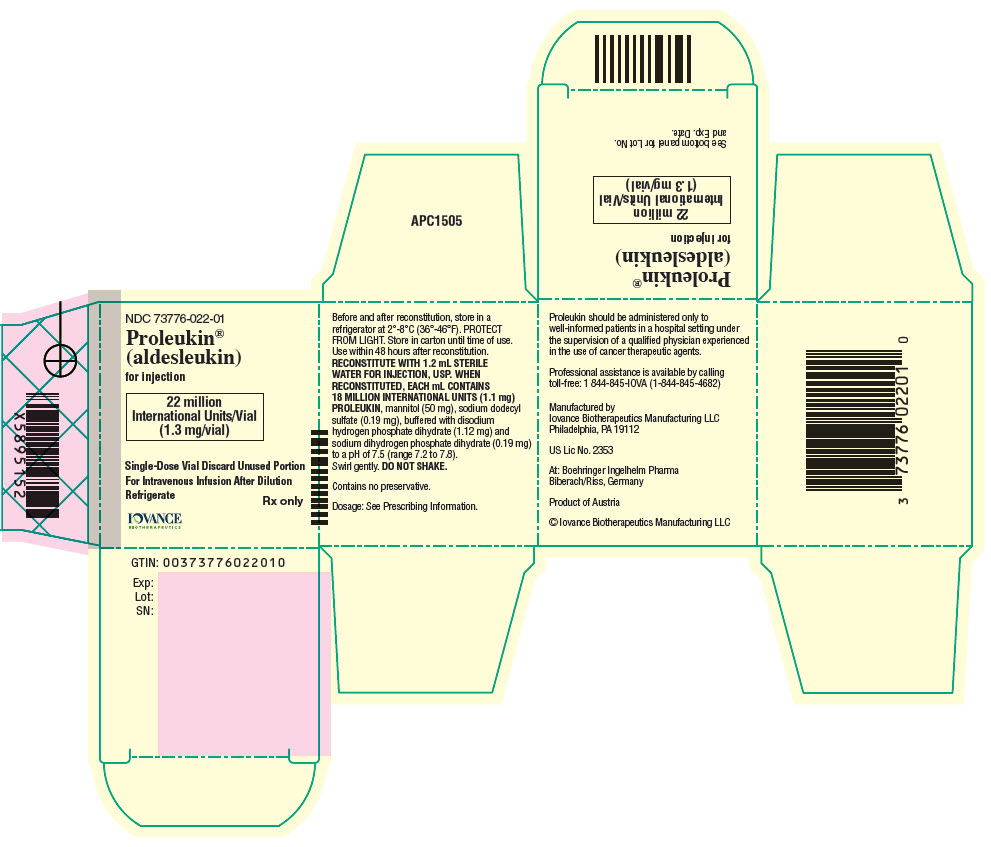
PRINCIPAL DISPLAY PANEL - 1.3 mg Vial Carton NDC 73776-022-01 Proleukin ® (aldesleukin) for injection 22 million International Units/Vial (1.3 mg/vial) Single-Dose Vial Discard Unused Portion For Intravenous Infusion After Dilution Refrigerate Rx only IOVANCE BIOTHERAPEUTICS PRINCIPAL DISPLAY PANEL - 1.3 mg Vial Carton
Reported adverse events (FAERS)
Top reported reactions
Age at onset
Reporter sex
Serious outcomes
Where does this data come from?
About this NDC listing & data coverage
What data is (and isn’t) available for this NDC — tap to expand
| NDC identity (package / product / labeler codes) | ✓ Available |
| Labeler | ✓ Available |
| Product & package description | ✓ Available |
| Marketing category & status | ✓ Available |
| Active ingredient / dosage form / route | ✓ Available |
| FDA label (SPL via DailyMed) | ✓ Available |
| Package photos | ✓ Available |
| Inactive ingredients (structured) | ✓ Available |
| NADAC pharmacy acquisition price (CMS) | — Not published for this NDC CMS publishes NADAC only for NDCs reported in its retail-pharmacy survey. |
| Orange Book / therapeutic-equivalence data | — Not published for this NDC Applies only to products approved under an NDA/ANDA; many listings are out of scope. |
| HCPCS J-code billing crosswalk | — Not published for this NDC Most self-administered / retail products have no J-code — that is normal. |
| Medicaid utilization (CMS SDUD) | — Not published for this NDC CMS reports utilization only for NDCs with Medicaid claims above its privacy threshold. |