
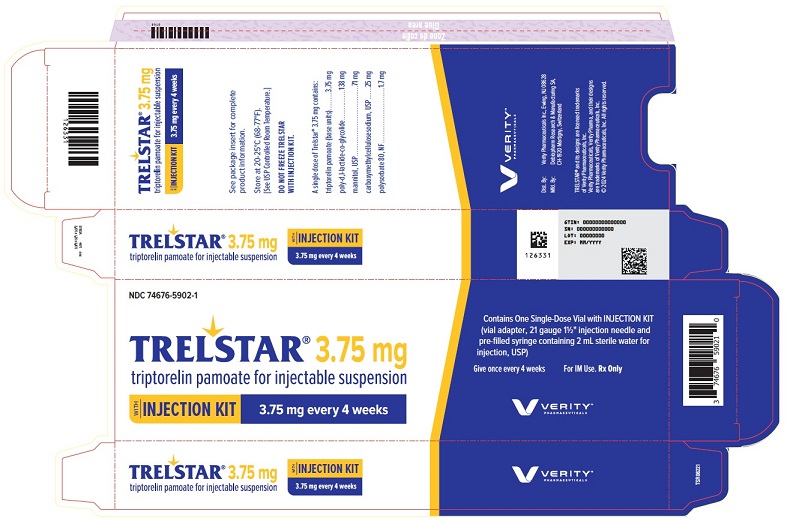
Trelstar triptorelin pamoate Kit
🆔 Identity & classification
Where does this data come from?
🏷️ RxNorm drug class
This medicine belongs to the Gonadotropin Releasing Hormone Receptor Agonist class.
Where does this data come from?
🏭 Manufacturer & labeler
Where does this data come from?
🩺 Clinical
Triptorelin injection is used to treat certain types of prostate cancer. It is also used to treat central precocious puberty (CPP; a condition causing children to enter puberty too soon, resulting in faster than normal bone growth and development of sexual characteristics). Triptorelin injection is in a class of medications called gonadotropin-releasing hormone (GnRH) agonists. It works by decreasing the amount of certain hormones in the body.
Read the full MedlinePlus article ↗Patient education
Supplement & herbal interactions
Where does this data come from?
Ask a licensed pharmacist directly — free, answered by our team.
🧪 Inactive Ingredients / Excipients
Inactive ingredients, also called excipients, are components of the drug product other than the active ingredient. They may include fillers, dyes, coatings, preservatives, flavors, or other formulation ingredients.
Where does this data come from?
IACT rows and label-wide narrative are kept separate; availability and product-level specificity depend on the submitted label.Inactive ingredient FAQ
Are inactive ingredients the same for every manufacturer?
Why might an inactive ingredient be missing?
Can inactive ingredients matter?
💲 Pricing
A drug doesn't have one price. Each row is a different public payment system, and none is what you'd pay at the counter — that depends on your insurance. The ⓘ on each row explains what it measures.
| Price system | Per each | Per package |
|---|---|---|
| Retail pharmacies payNADAC · weekly | Not in the retail survey — common for institutional, discontinued, or low-volume packs. | |
| Medicaid paysCMS SDUD · 12 mo | $1,277.78 | — |
| Medicare drug plans payPart D · Q2 2026 | $2,800.33 | — |
| Medicare Part B allowsASP · J3315 | $466.365 / J3315 unit | — |
Where does this data come from?
🧾 Billing & reimbursement
Where does this data come from?
🔁 Therapeutic equivalents
| Product | Labeler | Pack | NADAC/unit | TE | Status | Price vs. this |
|---|---|---|---|---|---|---|
| Trelstar 74676-5902-01 | Verity | 1 kit | — | — | FDA listed | — |
| Trelstarthis 74676-5904-01 | Verity | 1 kit | — | — | FDA listed | — |
| Trelstar 74676-5906-01 | Verity | 1 kit | — | — | FDA listed | — |
Where does this data come from?
⏳ Availability & generic status
We did not find an FDA-approved generic match for this exact strength, form and route.
Where does this data come from?
🗺️ Medicaid utilization & spend
📊 Medicare Part D spend CMS · PART D · 2026 (Q1)
📦 Packaging — all sizes for this product
| Package NDC | Description | Marketing start | Status |
|---|---|---|---|
| 74676-5904-01 You're viewing this | 1 KIT in 1 CARTON (74676-5904-1) * 2 mL in 1 VIAL, SINGLE-DOSE (74676-5904-0) * 2 mL in 1 SYRINGE | 2001-06-29 | Active |
🧭 About this NDC listing & data coverage
Kit / multi-component package
This NDC identifies a kit — a package containing more than one component. Structured data (pricing, ingredients, equivalents) is often reported per component rather than for the kit NDC itself, which can make this page look thinner than the components' own pages.
What data is (and isn’t) available for this NDC — tap to expand
| NDC identity (package / product / labeler codes) | ✓ Available |
| Labeler | ✓ Available |
| Product & package description | ✓ Available |
| Marketing category & status | ✓ Available |
| Active ingredient / dosage form / route | ✓ Available |
| FDA label (SPL via DailyMed) | ✓ Available |
| Package photos | ✓ Available |
| Inactive ingredients (structured) | — Not published for this NDC The labeler did not submit a structured excipient list, or no SPL is available. |
| NADAC pharmacy acquisition price (CMS) | — Not published for this NDC CMS publishes NADAC only for NDCs reported in its retail-pharmacy survey. |
| Orange Book / therapeutic-equivalence data | — Not published for this NDC Applies only to products approved under an NDA/ANDA; many listings are out of scope. |
| HCPCS J-code billing crosswalk | ✓ Available |
| Medicaid utilization (CMS SDUD) | ✓ Available |
Questions about this listing
Why is there no price listed?
Is the NDC printed on the package the same as the 11-digit billing NDC?
What do the three segments of this NDC mean?
Is this package still being marketed?
Who lists this product with the FDA?
Do I need a prescription for this product?
Does this product have a billing J-code?
Where does this data come from?
📄 Full prescribing information FDA SPL
🎯 Indications and Usage ▾
1 INDICATIONS AND USAGE TRELSTAR is indicated for the treatment of advanced prostate cancer [ see Clinical Studies (14) ]. TRELSTAR is a gonadotropin releasing hormone (GnRH) agonist indicated for the treatment of advanced prostate cancer. ( 1 )
⏱️ Dosage and Administration ▾
2 DOSAGE AND ADMINISTRATION TRELSTAR is administered as a single intramuscular injection in either buttock. Due to different release characteristics, the dosage strengths are not additive and must be selected based upon the desired dosing schedule. ( 2.1 ) 3.75 mg every 4 weeks. ( 2.1 ) 11.25 mg every 12 weeks. ( 2.1 ) 22.5 mg every 24 weeks. ( 2.1 ) Trelstar injection kit
2.1Dosing Information TRELSTAR must be administered under the supervision of a physician. TRELSTAR is administered by a single intramuscular injection in either buttock. Dosing schedule depends on the product strength selected (Table 1).
The lyophilized microgranules are to be reconstituted in sterile water . No other diluent should be used. Table 1.
TRELSTAR Recommended Dosing Dosage 3.75 mg 11.25 mg 22.5 mg Recommended dose 1 injection every 4 weeks 1 injection every 12 weeks 1 injection every 24 weeks Due to different release characteristics, the dosage strengths are not additive and must be selected based upon the desired dosing schedule. The suspension should be administered within 2 minutes after reconstitution. As with other drugs administered by intramuscular injection, the injection site should be alternated periodically.
Parenteral drug products should be inspected visually for particulate matter and discoloration prior to administration, whenever solution and container permit.
2.2Reconstitution Instructions for TRELSTAR Important: Please read the instructions completely and prepare the patient before you begin the injection kit activation and drug administration procedure. *The strength indicated on the vial in the figure above is for representative purposes only. All three strengths of the Trelstar vial have their individual strengths indicated on the label. Users will see either 3.75 mg, 11.25 mg or 22.5 mg, with the corresponding duration of treatment (4, 12 or 24 weeks respectively).
Preparation and Activation Check that you are using the prescribed strength/dose (3.75 mg, 11.25 mg, or 22.5 mg) and that the expiry date has not passed, before preparation and activation. Wash your hands with soap and hot water and put on gloves immediately prior to preparing the injection. Place the sealed tray on a clean, flat surface that is covered with a sterile pad or cloth.
Peel the cover away from the tray and remove the injection kit components and TRELSTAR vial. General Instructions and Recommendations The product is a suspension of microgranules that can settle in the diluent. The final product to be administered is a suspension of microgranules with a milky, homogeneous appearance.
If the product settles in the vial, shake it again to resuspend the microgranules. If the microgranules settle in the syringe, this will block the needle during administration. It is very important to inject the product within 2 minutes following reconstitution in the vial.
If the product settles in the syringe, draw some air back into the syringe, shake it again, and expel the air (without priming the needle) before administering it. STEP 1 – PREPARE VIAL Remove the flip-off button cap from the vial, revealing the rubber stopper. Place the vial in a standing upright position on the prepared surface.
Disinfect the rubber stopper with the alcohol wipe. Discard the alcohol wipe and allow the stopper to dry. STEP 2 – APPLY VIAL ADAPTER Peel the cover away from the blister pack containing the vial adapter.
Do not remove the vial adapter from the blister pack . On a level surface, place the blister pack containing the vial adapter firmly on the vial top. Ensure the spike is centered and vertical when piercing the vial .
Push down gently until you feel it snap into place. Remove the blister pack from the vial adapter. STEP 3 – PREPARE SYRINGE AND CONNECT TO VIAL ADAPTER (a) Grasp the plastic ‘spin lock’ collar on the syringe barrel with index finger and thumb.
Unscrew and discard the gray rubber cap from the syringe barrel. (b) Maintaining your grip on the spin lock, attach the…
💊 Dosage Forms and Strengths ▾
3 DOSAGE FORMS AND STRENGTHS For injectable suspension: 3.75 mg, 11.25 mg, 22.5 mg of slightly yellow lyophilized microgranules in a single-dose vial for reconstitution with an injection kit containing one syringe filled with sterile water for injection, a vial adapter to help with reconstitution, and one needle (see figure in section 2.2). For injectable suspension: 3.75 mg, 11.25 mg, 22.5 mg. ( 3 )
⛔ Contraindications ▾
4 CONTRAINDICATIONS Known hypersensitivity to triptorelin or any other component of the product, or other GnRH agonists or GnRH. ( 4 )
4.1Hypersensitivity TRELSTAR is contraindicated in individuals with a known hypersensitivity to triptorelin or any other component of the product, or other GnRH agonists or GnRH [ see Warnings and Precautions (5.1) ].
⚠️ Warnings and Cautions ▾
5 WARNINGS AND PRECAUTIONS Hypersensitivity: Anaphylactic shock, hypersensitivity, and angioedema have been reported. In the event of a reaction, discontinue TRELSTAR and initiate appropriate medical management. ( 5.1 ) Tumor Flare: Transient increase in serum testosterone levels can occur within the first few weeks of treatment.
This may worsen prostate cancer and result in spinal cord compression and urinary tract obstruction. Monitor patients at risk and manage as appropriate. ( 5.2 ) Metabolic Syndrome: The use of GnRH agonists may lead to an increased risk of metabolic changes such as hyperglycemia, diabetes, hyperlipidemia, and non-alcoholic fatty liver disease.
Monitor for signs and symptoms of metabolic syndrome including lipids, blood glucose level and/or HbA1c and manage according to institutional guidelines. ( 5.3 ) Cardiovascular Diseases: Increased risk of myocardial infarction, sudden cardiac death and stroke has been reported in men. Monitor for cardiovascular disease and manage according to current clinical practice.
( 5.4 ) Convulsions: Convulsions have occurred in patients treated with GnRH analogs (including TRELSTAR) with or without a history of predisposing factors. Manage patients who experience convulsions according to institutional guidelines. ( 5.5 ) Severe Cutaneous Adverse Reactions (SCARs): SCARs have been reported in patients receiving GnRH agonists, including triptorelin products.
Interrupt TRELSTAR if signs or symptoms of SCARs develop. Permanently discontinue TRELSTAR if SCARs are confirmed. ( 5.6 ) Effect on QT/QTc Interval: Androgen deprivation therapy may prolong the QT interval.
Consider risks and benefits. ( 5.7 ) Embryo-Fetal Toxicity: TRELSTAR may cause fetal harm. ( 5.10 , 8.1 )
5.1Hypersensitivity Reactions Anaphylactic shock, hypersensitivity, and angioedema related to TRELSTAR administration have been reported. In the event of a hypersensitivity reaction, discontinue TRELSTAR immediately and administer the appropriate supportive and symptomatic care.
5.2Tumor Flare Initially, triptorelin (TRELSTAR), like other GnRH agonists, causes a transient increase in serum testosterone levels [ see Clinical Pharmacology (12.2) ]. As a result, worsening signs and symptoms of prostate cancer during the first weeks of treatment have been reported with GnRH agonists. Patients may experience worsening of symptoms or onset of new symptoms, including bone pain, neuropathy, hematuria, or urethral or bladder outlet obstruction.
Closely monitor patients with metastatic vertebral lesions and/or with urinary tract obstruction during the first few weeks of therapy.
5.3Metabolic Syndrome The use of GnRH agonists (including TRELSTAR) may lead to metabolic changes such as hyperglycemia, diabetes mellitus, and hyperlipidemia. Non-alcoholic fatty liver disease, including cirrhosis, occurred in the post-marketing setting. Hyperglycemia may represent new-onset of diabetes mellitus or worsening of glycemic control in patients with pre-existing diabetes.
Monitor for changes in serum lipids, blood glucose and/or glycosylated hemoglobin (HbA1c) periodically in patients receiving TRELSTAR and manage according to institutional guidelines.
5.4Cardiovascular Diseases Increased risk of developing myocardial infarction, sudden cardiac death and stroke has been reported in association with the use of GnRH agonists (including TRELSTAR) in men. The risk appears low based on the reported odds ratios and should be evaluated carefully along with cardiovascular risk factors when determining a treatment for patients with prostate cancer. Monitor patients receiving TRELSTAR for symptoms and signs suggestive of development of cardiovascular disease and manage according to current institutional guidelines.
5.5Convulsions Convulsions have occurred in patients treated with GnRH analog (including TRELSTAR). These events included patients with risk factors for seizures such as a history of epilepsy, intracranial tumors or co-medication…
🤒 Adverse Reactions ▾
6 ADVERSE REACTIONS The following is discussed in more detail in other sections of the labeling: Hypersensitivity Reactions [ see Warnings and Precautions ( 5.1 ) ] Tumor Flare [ see Warnings and Precautions ( 5.2 ) ]. Metabolic Syndrome [ see Warnings and Precautions ( 5.3 ) ] Cardiovascular Diseases [ see Warnings and Precautions ( 5.4 ) ]. Convulsions [ see Warnings and Precautions ( 5.5 ) ].
Severe Cutaneous Adverse Reactions [ see Warnings and Precautions ( 5.6 ) ]. Effect of QT/QTc Interval [ see Warnings and Precautions ( 5.7 ) ]. 3.75 mg: The most common adverse reactions (≥ 5%) during TRELSTAR 3.75 mg therapy included hot flushes, skeletal pain, impotence, and headache.
( 6.1 ) 11.25 mg: The most common adverse reactions (≥ 5%) during TRELSTAR 11.25 mg therapy included hot flushes, skeletal pain, headache, edema in legs, and leg pain. ( 6.1 ) 22.5 mg: The most common adverse reactions (≥ 5%) during TRELSTAR 22.5 mg therapy included hot flushes, erectile dysfunction, and testicular atrophy. ( 6.1 ) To report SUSPECTED ADVERSE REACTIONS, contact Verity Pharma at 1-844-837-4891 or FDA at 1-800-FDA-1088 or www.fda.gov/medwatch.
6.1Clinical Trials Experience Because clinical trials are conducted under widely varying conditions, adverse reaction rates observed in the clinical trials of a drug cannot be directly compared with rates in the clinical trials of another drug and may not reflect the rates observed in practice. The safety of the three TRELSTAR formulations was evaluated in clinical trials involving patients with advanced prostate cancer. Mean testosterone levels increased above baseline during the first week following the initial injection, declining thereafter to baseline levels or below by the end of the second week of treatment.
The transient increase in testosterone levels may be associated with temporary worsening of disease signs and symptoms, including bone pain, neuropathy, hematuria, and urethral or bladder outlet obstruction. Spinal cord compression with weakness or paralysis of the lower extremities have occurred [ see Warnings and Precautions (5.2) ]. Adverse reactions reported for each of the three TRELSTAR formulations in the clinical trials, are presented in Table 2, Table 3, and Table 4.
The majority of adverse reactions related to TRELSTAR are a result of its pharmacological action, i.e., the induced variation in serum testosterone levels, either an increase in testosterone at the initiation of treatment, or a decrease in testosterone once castration is achieved. Local reactions at the injection site or allergic reactions may occur. The following adverse reactions were reported to have a possible or probable relationship to therapy as described by the treating physician in at least 1% of patients receiving TRELSTAR 3.75 mg.
Table 2. TRELSTAR 3.75 mg: Treatment-Related Adverse Reactions Reported by 1% or More of Patients During Treatment Adverse Reaction s * TRELSTAR 3.75 mg N = 140 N % Application Site Disorders Injection site pain 5
3.6 Body as a Whole Hot flush 82
58.6 Pain 3
2.1 Leg pain 3
2.1 Fatigue 3
2.1 Cardiovascular Disorders Hypertension 5
3.6 Central and Peripheral Nervous System Disorders Headache 7
5.0 Dizziness 2
1.4 Gastrointestinal Disorders Diarrhea 2
1.4 Vomiting 3
2.1 Musculoskeletal System Disorders Skeletal pain 17
12.1 Psychiatric Disorders Insomnia 3
2.1 Impotence 10
7.1 Emotional lability 2
1.4 Red Blood Cell Disorders Anemia 2
1.4 Skin and Appendages Disorders Pruritus 2
1.4 Urinary System Disorders Urinary tract infection 2
1.4Urinary retention 2 1.4 * Adverse reactions for TRELSTAR 3.75 mg are coded using the WHO Adverse Reactions Terminology (WHOART) The following adverse reactions were reported to have a possible or probable relationship to therapy as described by the treating physician in at least 1% of patients receiving TRELSTAR 11.25 mg. Table 3. TRELSTAR 11.25 mg: Treatment-Related Adverse Reactions Reported by 1% or More of Patients During Treatment Adverse Reac…
🔄 Drug Interactions ▾
7 DRUG INTERACTIONS No drug-drug interaction studies involving TRELSTAR have been conducted. Human pharmacokinetic data with triptorelin suggest that C-terminal fragments produced by tissue degradation are either degraded completely within tissues, are rapidly degraded further in plasma, or cleared by the kidneys. Therefore, hepatic microsomal enzymes are unlikely to be involved in triptorelin metabolism.
However, in the absence of relevant data and as a precaution, hyperprolactinemic drugs should not be used concomitantly with TRELSTAR since hyperprolactinemia reduces the number of pituitary GnRH receptors.
👥 Use in Specific Populations ▾
8 USE IN SPECIFIC POPULATIONS Females and males of reproductive potential: TRELSTAR may impair fertility. ( 8.3 )
8.1Pregnancy Risk Summary Based on findings in animal studies and mechanism of action, TRELSTAR can cause fetal harm when administered to a pregnant woman [see Clinical Pharmacology (12.1) ] . Expected hormonal changes that occur with TRELSTAR treatment increase the risk for pregnancy loss. In animal developmental and reproductive toxicology studies, daily administration of triptorelin to pregnant rats during the period of organogenesis caused maternal toxicity and embryo-fetal toxicities, including loss of pregnancy, at doses as low as 0.2, 0.8, and 8 times the estimated human daily dose based on body surface area.
Advise pregnant patients and females of reproductive potential of the potential risk to the fetus. Data Animal Data Studies in pregnant rats administered triptorelin at doses of 2, 10, and 100 mcg/kg/day (approximately equivalent to 0.2, 0.8, and 8 times the estimated human daily dose based on body surface area) during the period of organogenesis demonstrated maternal toxicity and embryo-fetal toxicities. Embryo-fetal toxicities consisted of pre-implantation loss, increased resorption, and reduced mean number of viable fetuses at the high dose.
Teratogenic effects were not observed in viable fetuses in rats or mice. Doses administered to mice were 2, 20, and 200 mcg/kg/day (approximately equivalent to 0.1, 0.7, and 7 times the estimated human daily dose based on body surface area).
8.2Lactation The safety and efficacy of TRELSTAR have not been established in females. There are no data on the presence of triptorelin in human milk, the effects of the drug on milk production, or the effects of the drug on the breastfed child. Because of the potential for serious adverse reactions in a breastfed child from TRELSTAR, a decision should be made to either discontinue breastfeeding, or discontinue the drug taking into account the importance of the drug to the mother.
8.3Females and Males of Reproductive Potential Infertility Males Based on mechanism of action, TRELSTAR may impair fertility in males of reproductive potential [see Clinical Pharmacology ( 12.1 )] .
8.4Pediatric Use The safety and effectiveness of TRELSTAR in pediatric patients have not been established.
8.5Geriatric Use Prostate cancer occurs primarily in an older population. Clinical studies with TRELSTAR have been conducted primarily in patients ≥ 65 years [ see Clinical Pharmacology (12.3) and Clinical Studies (14) ].
8.6Renal Impairment Subjects with renal impairment had higher exposure than young healthy males [ see Clinical Pharmacology (12.3) ].
8.7Hepatic Impairment Subjects with hepatic impairment had higher exposure than young healthy males [ see Clinical Pharmacology (12.3) ].
🤰 Pregnancy ▾
8.1Pregnancy Risk Summary Based on findings in animal studies and mechanism of action, TRELSTAR can cause fetal harm when administered to a pregnant woman [see Clinical Pharmacology (12.1) ] . Expected hormonal changes that occur with TRELSTAR treatment increase the risk for pregnancy loss. In animal developmental and reproductive toxicology studies, daily administration of triptorelin to pregnant rats during the period of organogenesis caused maternal toxicity and embryo-fetal toxicities, including loss of pregnancy, at doses as low as 0.2, 0.8, and 8 times the estimated human daily dose based on body surface area.
Advise pregnant patients and females of reproductive potential of the potential risk to the fetus. Data Animal Data Studies in pregnant rats administered triptorelin at doses of 2, 10, and 100 mcg/kg/day (approximately equivalent to 0.2, 0.8, and 8 times the estimated human daily dose based on body surface area) during the period of organogenesis demonstrated maternal toxicity and embryo-fetal toxicities. Embryo-fetal toxicities consisted of pre-implantation loss, increased resorption, and reduced mean number of viable fetuses at the high dose.
Teratogenic effects were not observed in viable fetuses in rats or mice. Doses administered to mice were 2, 20, and 200 mcg/kg/day (approximately equivalent to 0.1, 0.7, and 7 times the estimated human daily dose based on body surface area).
🧒 Pediatric Use ▾
8.4Pediatric Use The safety and effectiveness of TRELSTAR in pediatric patients have not been established.
🧓 Geriatric Use ▾
8.5Geriatric Use Prostate cancer occurs primarily in an older population. Clinical studies with TRELSTAR have been conducted primarily in patients ≥ 65 years [ see Clinical Pharmacology (12.3) and Clinical Studies (14) ].
🧬 Clinical Pharmacology ▾
12 CLINICAL PHARMACOLOGY
12.1Mechanism of Action Triptorelin is a synthetic decapeptide agonist analog of gonadotropin releasing hormone (GnRH). Comparative in vitro studies showed that triptorelin was 100-fold more active than native GnRH in stimulating luteinizing hormone release from monolayers of dispersed rat pituitary cells in culture and 20-fold more active than native GnRH in displacing 125 I-GnRH from pituitary receptor sites. In animal studies, triptorelin pamoate was found to have 13‑fold higher luteinizing hormone-releasing activity and 21-fold higher follicle-stimulating hormone-releasing activity compared to the native GnRH.
12.2Pharmacodynamics Following the first administration, there is a transient surge in circulating levels of luteinizing hormone (LH), follicle-stimulating hormone (FSH), testosterone, and estradiol [ see Adverse Reactions (6) ]. After chronic and continuous administration, usually 2 to 4 weeks after initiation of therapy, a sustained decrease in LH and FSH secretion and marked reduction of testicular steroidogenesis are observed. A reduction of serum testosterone concentration to a level typically seen in surgically castrated men is obtained.
Consequently, the result is that tissues and functions that depend on these hormones for maintenance become quiescent. These effects are usually reversible after cessation of therapy. Following a single intramuscular injection of TRELSTAR: TRELSTAR 3.75 mg : serum testosterone levels first increased, peaking on Day 4, and declined thereafter to low levels by Week 4 in healthy male volunteers.
TRELSTAR 11.25 mg : serum testosterone levels first increased, peaking on Days 2 – 3, and declined thereafter to low levels by Weeks 3 – 4 in men with advanced prostate cancer. TRELSTAR 22.5 mg : serum testosterone levels first increased, peaking on Day 3, and declined thereafter to low levels by Weeks 3 – 4 in men with advanced prostate cancer.
12.3Pharmacokinetics Results of pharmacokinetic investigations conducted in healthy men indicate that after intravenous bolus administration, triptorelin is distributed and eliminated according to a 3-compartment model and corresponding half-lives are approximately 6 minutes, 45 minutes, and 3 hours. Absorption Following a single intramuscular injection of TRELSTAR to patients with prostate cancer, mean peak serum concentrations of 28.4 ng/mL, 38.5 ng/mL, and 44.1 ng/mL occurred in 1 to 3 hours after the 3.75 mg, 11.25 mg, and 22.5 mg formulations, respectively.
Triptorelin did not accumulate over 9 months (3.75 mg and 11.25 mg) or 12 months (22.5 mg) of treatment. Distribution The volume of distribution following a single intravenous bolus dose of 0.5 mg of triptorelin peptide was 30 – 33 L in healthy male volunteers. There is no evidence that triptorelin, at clinically relevant concentrations, binds to plasma proteins.
Elimination Metabolism The metabolism of triptorelin in humans is unknown but is unlikely to involve hepatic microsomal enzymes (cytochrome P-450). The effect of triptorelin on the activity of other drug metabolizing enzymes is also unknown. Thus far, no metabolites of triptorelin have been identified.
Pharmacokinetic data suggest that C-terminal fragments produced by tissue degradation are either completely degraded in the tissues, or rapidly degraded in plasma, or cleared by the kidneys. Excretion Triptorelin is eliminated by both the liver and the kidneys. Following intravenous administration of 0.5 mg triptorelin peptide to six healthy male volunteers with a creatinine clearance of 149.9 mL/min, 41.7% of the dose was excreted in urine as intact peptide with a total triptorelin clearance of 211.9 mL/min.
This percentage increased to 62.3% in patients with liver disease who have a lower creatinine clearance (89.9 mL/min). It has also been observed that the nonrenal clearance of triptorelin (patient anuric, CI creat = 0) was 76.2 mL/min, thus indicating that the nonrenal elimination of triptorelin is ma…
🧬 Mechanism of Action ▾
12.1Mechanism of Action Triptorelin is a synthetic decapeptide agonist analog of gonadotropin releasing hormone (GnRH). Comparative in vitro studies showed that triptorelin was 100-fold more active than native GnRH in stimulating luteinizing hormone release from monolayers of dispersed rat pituitary cells in culture and 20-fold more active than native GnRH in displacing 125 I-GnRH from pituitary receptor sites. In animal studies, triptorelin pamoate was found to have 13‑fold higher luteinizing hormone-releasing activity and 21-fold higher follicle-stimulating hormone-releasing activity compared to the native GnRH.
📦 How Supplied / Storage and Handling ▾
16 HOW SUPPLIED/STORAGE AND HANDLING TRELSTAR (triptorelin pamoate for injectable suspension) is supplied as a single dose vial with a Flip-Off cap containing sterile lyophilized triptorelin pamoate microgranules incorporated in a biodegradable copolymer of lactic and glycolic acids, with injection kit consisting of a vial adapter, a 21 gauge 1 ½” injection needle, and a pre-filled syringe containing sterile water for injection, USP, 2 mL. TRELSTAR 3.75 mg – NDC 74676-5902-1: 3.75 mg of slightly yellow microgranules provided in a vial with a violet flip-off cap with injection kit.
TRELSTAR 11.25 mg – NDC 74676-5904-1: 11.25 mg of slightly yellow microgranules provided in a vial with a yellow green flip-off cap with injection kit. TRELSTAR 22.5 mg – NDC 74676-5906-1: 22.5 mg of slightly yellow microgranules provided in a vial with a dark green flip-off cap with injection kit. Storage Store at 20-25°C (68-77°F). [See USP Controlled Room Temperature.] Do not freeze TRELSTAR.
📋 Description ▾
11 DESCRIPTION TRELSTAR is a white to slightly yellow lyophilized cake. When reconstituted, TRELSTAR has a milky appearance. It contains a pamoate salt of triptorelin, a synthetic decapeptide agonist analog of gonadotropin releasing hormone (GnRH).
The chemical name of triptorelin pamoate is 5-oxo-L-prolyl-L-histidyl-L-tryptophyl-L-seryl-L-tyrosyl-D-tryptophyl-L-leucyl-L-arginyl-L-prolylglycine amide (pamoate salt). The empirical formula is C 64 H 82 N 18 O 13 · C 23 H 16 O 6 and the molecular weight is 1699.9. The structural formula is: Structural formula for TRELSTAR (triptorelin pamoate).
The TRELSTAR products are sterile, lyophilized biodegradable microgranule formulations supplied as single dose vials. Refer to Table 5 for the composition of each TRELSTAR product. Table 5.
TRELSTAR Composition Ingredients TRELSTAR 3.75 mg TRELSTAR 11.25 mg TRELSTAR 22.5 mg triptorelin pamoate (base units) 3.75 mg 11.25 mg 22.5 mg poly- d,l -lactide-co-glycolide 138 mg 120 mg 183 mg mannitol, USP 71 mg 74 mg 74 mg carboxymethylcellulose sodium, USP 25 mg 26 mg 26 mg polysorbate 80, NF 1.7 mg 1.7 mg 1.7 mg When 2 mL sterile water is added to the vial containing TRELSTAR and mixed, a suspension is formed which is intended as an intramuscular injection. TRELSTAR is available in a vial plus a vial adapter, and a separate pre-filled syringe that contains sterile water for injection, USP, 2 mL.
💬 Information for Patients ▾
17 PATIENT COUNSELING INFORMATION Hypersensitivity Inform patients that if they have experienced hypersensitivity with other GnRH agonist drugs like TRELSTAR, TRELSTAR is contraindicated [see Contraindications (4) ]. Tumor Flare Inform patients that TRELSTAR can cause tumor flare during the first weeks of treatment. Inform patients that the increase in testosterone can cause an increase in urinary symptoms or pain.
Advise patients to contact their healthcare provider if urethral obstruction, spinal cord compression, paralysis, or new or worsened symptoms occur after beginning TRELSTAR treatment [see Warnings and Precautions (5.2) ]. Metabolic Syndrome Advise patients that there is an increased risk of metabolic changes such as hyperglycemia, diabetes, hyperlipidemia, and non-alcoholic fatty liver disease with TRELSTAR therapy. Inform patients that periodic monitoring for hyperglycemia and diabetes is required when being treated with TRELSTAR [see Warnings and Precautions (5.3) ].
Cardiovascular Disease Inform patients that there is an increased risk of myocardial infarction, sudden cardiac death, and stroke with TRELSTAR treatment. Advise patients to immediately report signs and symptoms associated with these events to their healthcare provider for evaluation [see Warnings and Precautions (5.4) ]. Convulsions Inform patients that there is an increased risk of convulsions with TRELSTAR treatment.
Advise patients to immediately contact their healthcare provider if they experience convulsions [see Warnings and Precautions ( 5.5 )] . Severe Cutaneous Adverse Reactions Inform patients that severe cutaneous adverse reactions (SCARs), including Stevens-Johnson syndrome (SJS), toxic epidermal necrolysis (TEN), drug reaction with eosinophilia and systemic symptoms (DRESS), and acute generalized exanthematous pustulosis (AGEP), which may be life threatening or fatal, may occur during treatment with TRELSTAR. Advise patients to contact their healthcare provider or seek medical attention right away if they experience signs or symptoms of SCARs, e.g. a prodrome of fever, flu-like symptoms, mucosal lesions, progressive skin rash, or lymphadenopathy [see Warnings and Precautions ( 5.6 )].
Urogenital Disorders Advise patients that TRELSTAR may cause impotence. Infertility Inform patients that TRELSTAR may cause infertility [(see Use In Specific Populations (8.3) ]. Continuation of TRELSTAR Treatment Inform patients that TRELSTAR is usually continued, often with additional medication, after the development of metastatic castration-resistant prostate cancer [see Dosage and Administration (2.1) ].
For all medical inquiries contact: Verity Pharma, Medical Affairs 1-844-VERITY-1 (1-844-837-4891) Distributed by: Verity Pharmaceuticals, Inc. Ewing, NJ 08628 Manufactured by: Debiopharm Research & Manufacturing SA CH-1920 Martigny, Switzerland TRELSTAR® and its design are registered trademarks of Verity Pharmaceuticals, Inc. Verity Pharmaceuticals, Verity Pharma, and their designs are trademarks of Verity Pharmaceuticals, Inc. © 2026 Verity Pharmaceuticals Inc.
All rights reserved.