
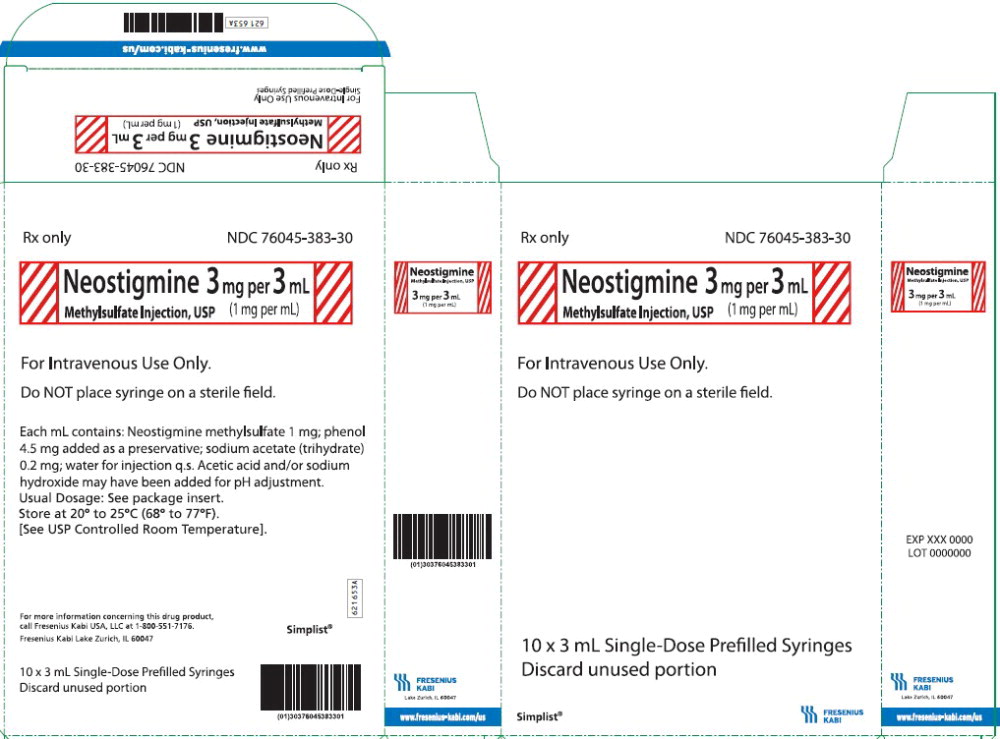
Neostigmine Methylsulfate 1 mg/mL Injection, Solution — NDC 76045-383-30 (Billing 76045-0383-30)
This is a package of Neostigmine Methylsulfate 1 mg/mL Injection, Solution from Fresenius Kabi USA, LLC, marketed since Sep 2018 and currently FDA-listed. It is this product's only package size.
NDC database record
One package, one record: these facts belong to NDC 76045-383-30 alone.
- Record
- FDA NDC Directory package listing · Human prescription drug
- Code segments
- 76045 labeler · 383 product · 30 package
- Package marketed since
- Sep 18, 2018
- Sample package
- No — commercial package
- Listing certified through
- Dec 31, 2026
- Barcode (UPC-A, from the NDC)
- 3 7604538330 0
- Medicaid fills, this package
- 421 prescriptions in the last four reported quarters
- FDA record last changed
- Jul 24, 2026
Identity & classification
Regulatory identifiers FDA, NLM and CMS codes for this package
Drug-database identifiers Medi-Span GPI and First Databank GCN / HICL / AHFS classification
- GSN (GCN sequence number): 075112
- GCN: 40085
- GPI-14 (Medi-Span): 7600004020E510
- HICL (First Databank): 001988
- AHFS class code: 12:04.00.00
- RxCUI (RxNorm): 2105413
Where does this data come from?
- FDA openFDA NDC Directory · synced Oct 1, 2026
- FDA label on DailyMed · label index refreshed Oct 6, 2026
- RxNorm (NLM RxNav) · catalog refreshed Oct 1, 2026
- Medi-Span GPI (licensed)
- First Databank (licensed) · refreshed Oct 1, 2026
RxNorm drug class
This medicine belongs to the Cholinesterase Inhibitor class.
Where does this data come from?
- RxClass (NLM) · catalog refreshed Oct 1, 2026
Clinical
- It reverses the muscle-relaxing effects of certain anesthesia drugs (non-depolarizing neuromuscular blocking agents) after surgery. It helps your muscles, including the ones you br...
- A trained healthcare provider gives it as a slow injection into a vein. The dose depends on your weight and how much your muscles have already recovered. They use a nerve stimulato...
- Neostigmine can slow your heart rate and cause other side effects like extra secretions. Atropine or glycopyrrolate is given before or with it to help prevent those effects.
- Why do I also get atropine or glycopyrrolate?
Patient education
Supplement & herbal interactions
Some supplements/herbs that may interact with Neostigmine Methylsulfate — tap one for details:
Where does this data come from?
- MedlinePlus (NLM) · refreshed Oct 1, 2026
- FDA label on DailyMed · label index refreshed Oct 6, 2026
Ask a licensed pharmacist directly — free, answered by our team.
Pricing
A drug doesn't have one price. Each row is a different public payment system, and none is what you'd pay at the counter — that depends on your insurance. The ⓘ on each row explains what it measures.
| Price system | Per mL | Per package |
|---|---|---|
| Retail pharmacies payNADAC · weekly | Not in the retail survey — common for institutional, discontinued, or low-volume packs. | |
| Medicaid paysCMS SDUD · 12 mo | $6.66 | $199.91 / 30 ml |
| Medicare drug plans payPart D · quarterly | No Part D plan price is available for this NDC in our data. | |
| Medicare Part B allowsASP · J2710 | No ASP payment limit on file for J2710 this quarter. | |
Where does this data come from?
- CMS NADAC weekly file
- CMS ASP pricing files · refreshed Sep 20, 2026
- CMS Medicaid State Drug Utilization Data · through Q4 2025
- CMS Part D plan pricing files · refreshed Sep 24, 2026
- VA National Acquisition Center price file
Billing & reimbursement
Where does this data come from?
- CMS ASP NDC-HCPCS crosswalk · refreshed Sep 22, 2026
- DMEPDAC NDC-HCPCS crosswalk
- openFDA NSDE billing units · refreshed Sep 7, 2026
Packaging — all sizes for this product
| Package NDC | Description | Marketing start | Marketing end | Status |
|---|---|---|---|---|
| 76045-0383-30 You're viewing this Main listing | 10 BLISTER PACK in 1 CARTON / 1 SYRINGE, GLASS in 1 BLISTER PACK / 3 mL in 1 SYRINGE, GLASS | 2018-09-18 | — | Active |
Therapeutic equivalents
| Product | Labeler | Pack | NADAC/unit | TE | Status | Price vs. this |
|---|---|---|---|---|---|---|
| Neostigmine Methylsulfate 1 mg/mL 43598-0945-58 | Dr.Reddys | 1 syringe | — | AP | FDA listed | — |
| Neostigmine Methylsulfate 1 mg/mL 76045-0214-30 | Fresenius | 1 syringe | — | AP | FDA listed | — |
| Neostigmine Methylsulfate 1 mg/mLthis 76045-0383-30 | Fresenius | 1 syringe | — | AP | FDA listed | — |
| Neostigmine Methylsulfate 1 mg/mL 00548-9602-00 | Amphastar | 1 vial | — | AP | FDA listed | — |
| Neostigmine Methylsulfate 1 mg/mL 25021-0611-10 | Sagent | 10 vials | — | AP | Discontinued | — |
| neostigmine methylsulfate 1 mg/mL 31722-0995-31 | Camber | 10 vials | — | AP | FDA listed | — |
| Neostigmine Methylsulfate 1 mg/mL 65145-0112-10 | Caplin | 10 vials | — | AP | FDA listed | — |
| Neostigmine Methylsulfate 1 mg/mL 70069-0806-10 | Somerset | 10 vials | — | AP | FDA listed | — |
| Neostigmine Methylsulfate 1 mg/mL 70594-0072-02 | Xellia | 10 vials | — | AP | FDA listed | — |
| Neostigmine methylsulfate 1 mg/mL 71839-0106-10 | BE | 10 vials | — | AP | FDA listed | — |
| Neostigmine Methylsulfate 1 mg/mL 63323-0415-10 | Fresenius | 10 vials | — | AP | FDA listed | — |
| Neostigmine Methylsulfate 1 mg/mL 71872-7016-01 | Medical | 1 vial | — | AP | FDA listed | — |
| Neostigmine Methylsulfate 1 mg/mL 71872-7143-01 | Medical | 1 vial | — | AP | FDA listed | — |
| Neostigmine Methylsulfate 1 mg/mL 71872-7271-01 | Medical | 1 vial | — | AP | FDA listed | — |
| Neostigmine Methylsulfate 1 mg/mL 00641-6265-10 | Hikma | 10 vials | — | AP | FDA listed | — |
| Neostigmine Methylsulfate 1 mg/mL 23155-0518-41 | Heritage | 10 vials | — | AP | FDA listed | — |
| Neostigmine Methylsulfate 1 mg/mL 51662-1557-03 | HF | 10 pouches | — | AP | FDA listed | — |
| Neostigmine Methylsulfate 1 mg/mL 00641-6277-10 | Hikma | 10 vials | — | AP | FDA listed | — |
| Neostigmine methylsulfate 1 mg/mL 68083-0384-10 | Gland | 1 vial | — | AP | FDA listed | — |
| Neostigmine Methylsulfate 1 mg/mL 72572-0462-10 | Civica, | 10 vials | — | AP | FDA listed | — |
| Bloxiverz 1 mg/mL 51754-1200-03 | Exela | 10 syringes | — | — | FDA listed | — |
| Neostigmine Methylsulfate 1 mg/mL 00641-6149-10 | Hikma | 10 vials | — | AP | FDA listed | — |
| Neostigmine Methylsulfate 1 mg/mL 14445-0414-01 | Indoco | 1 vial | — | AP | FDA listed | — |
| Neostigmine methylsulfate 1 mg/mL 70700-0172-22 | Xiromed | 1 vial | — | AP | FDA listed | — |
| Neostigmine Methylsulfate 1 mg/mL 65219-0811-10 | Fresenius | 10 vials | — | AP | FDA listed | — |
| Neostigmine Methylsulfate 1 mg/mL 71872-7322-01 | Medical | 1 vial | — | AP | FDA listed | — |
| Neostigmine methylsulfate 1 mg/mL 84549-0172-23 | ProPharma | 10 ml | — | AP | FDA listed | — |
| Neostigmine Methylsulfate 1 mg/mL 42023-0189-10 | Par | 10 vials | — | AP | FDA listed | — |
| Neostigmine Methylsulfate 1 mg/mL 55150-0349-10 | Eugia | 10 vials | — | — | FDA listed | — |
| Neostigmine methylsulfate 1 mg/mL 70121-1479-07 | Amneal | 10 vials | — | AP | FDA listed | — |
Where does this data come from?
- FDA openFDA NDC Directory · synced Oct 1, 2026
- FDA Orange Book · refreshed Oct 3, 2026
- CMS NADAC weekly file
Availability & generic status
The FDA lists approved generic versions of this medicine, but that does not always mean a pharmacy can get one today. Patent rules, launch agreements, supply and pricing can affect when generics actually arrive.
Where does this data come from?
- FDA Orange Book · refreshed Oct 3, 2026
Inactive Ingredients / Excipients
Inactive ingredients, also called excipients, are components of the drug product other than the active ingredient. They may include fillers, dyes, coatings, preservatives, flavors, or other formulation ingredients.
🧪 Avoiding an ingredient? See Neostigmine Methylsulfate inactive ingredients by manufacturer: every current product's list side by side, so you can ask your pharmacy for the version that does not list it.
💡 Tap an ingredient (hover on desktop) to see what it is and why it’s used.
-
UNII Q40Q9N063P
Acetic acid is a weak organic acid commonly used in medicines as a buffer and pH adjuster. It helps maintain the proper acidity level to ensure the drug remains stable and effective in its formulation.
-
4.5 mg / 1 mL
UNII 339NCG44TV
Phenol is a chemical compound derived from coal tar or petroleum. It serves as a preservative and antimicrobial agent in medicines, helping prevent bacterial and fungal growth to keep the product stable and safe during storage.
-
0.2 mg / 1 mL
UNII 4550K0SC9B
Sodium acetate is a salt derived from acetic acid. It acts as a buffer to help maintain the medicine's pH stability and may serve as a preservative or solubilizer in liquid formulations.
-
UNII 55X04QC32I
A strong alkaline chemical used to adjust and maintain the pH balance of liquid medicines. It helps keep the medicine stable and ensures it stays effective during storage.
-
UNII 059QF0KO0R
Water is a liquid solvent that dissolves and mixes ingredients together in liquid medicines, syrups, and injections. It helps distribute the active drug evenly throughout the product.
5 inactive ingredients listed in the exact product block matched to this NDC.
Where does this data come from?
ingredient classCode="IACT" elements from the exact product block matched by this NDC. Label-section narrative from DailyMed / the openFDA label index is shown separately when available.- FDA label on DailyMed · label index refreshed Oct 6, 2026
- FDA openFDA NDC Directory · synced Oct 1, 2026
Inactive ingredient FAQ
Are inactive ingredients the same for every manufacturer?
Why might an inactive ingredient be missing?
Can inactive ingredients matter?
Manufacturer & labeler
More NDCs from Fresenius Kabi USA, LLC labeler code 76045
- sugammadex 100 mg/mL Injection, Solution NDC 76045-219-20
- Rocuronium 10 mg/mL Injection, Solution NDC 76045-220-50
- Rocuronium 10 mg/mL Injection, Solution NDC 76045-221-50
- Glycopyrrolate .2 mg/mL Injection NDC 76045-223-30
- Diphenhydramine Hydrochloride 50 mg/mL Injection, Solution NDC 76045-235-10
- Morphine Sulfate 1 mg/.5mL Injection, Solution NDC 76045-238-10
Where does this data come from?
- FDA openFDA NDC Directory · synced Oct 1, 2026
- Drugs@FDA
Full prescribing information FDA SPL
🎯 Indications and Usage ▾
1 INDICATIONS AND USAGE Neostigmine Methylsulfate Injection, a cholinesterase inhibitor, is indicated for reversal of the effects of nondepolarizing neuromuscular blocking agents (NMBA) after surgery. Neostigmine Methylsulfate, a cholinesterase inhibitor, is indicated for reversal of the effects of nondepolarizing neuromuscular blocking agents (NMBA) after surgery ( 1 ).
⏱️ Dosage and Administration ▾
2 DOSAGE AND ADMINISTRATION Dosage Should be administered by trained healthcare providers ( 2.1 ) Recommend use of a peripheral nerve stimulator to determine whether neostigmine methylsulfate should be administered and to monitor recovery from neuromuscular blockade ( 2.1 ). Recommended dosage range is 0.03 mg/kg to 0.07mg/kg for reversing non-depolarizing neuromuscular block when administered with an anticholinergic agent (atropine or glycopyrrolate) ( 2.2 , 2.3 , 2.4 ) For reversal of NMBAs with shorter half-lives, when first twitch response is substantially greater than 10% of baseline, or when a second twitch is present: 0.03 mg/kg by intravenous route ( 2.2 ) For reversal of NMBAs with longer half-lives or when first twitch response is close to 10% of baseline: 0.07 mg/kg by intravenous route ( 2.2 ) Maximum total dosage is 0.07 mg/kg or up to a total of 5 mg (whichever is less) ( 2.2 ) An anticholinergic agent, e.g., atropine sulfate or glycopyrrolate, should be administered prior to or concomitantly with neostigmine methylsulfate ( 2.4 ) Dose of Anticholinergic Agent (atropine or glycopyrrolate) Administer atropine sulfate (~15 mcg/kg) or glycopyrrolate (~10 mcg/kg) intravenously either several minutes before or concomitantly with neostigmine methylsulfate (using separate syringes) ( 2.4 )
2.1Important Dosage and Administration Instructions Neostigmine should be administered by trained healthcare providers familiar with the use, actions, characteristics, and complications of neuromuscular blocking agents (NMBA) and neuromuscular block reversal agents. Prior to Neostigmine Methylsulfate Injection administration and up until complete recovery of normal ventilation, the patient should be well ventilated and a patent airway maintained. Use a peripheral nerve stimulator capable of delivering a train-of-four (TOF) stimulus to evaluate the extent of recovery of neuromuscular function, and to determine the time of the first dose and the need for additional doses of Neostigmine Methylsulfate Injection.
Prior to the administration of Neostigmine Methylsulfate Injection, there must be a twitch response to the first stimulus in the TOF of at least 10% of its baseline level (i.e., the response prior to NMBA administration). Dose selection should be based on the extent of spontaneous recovery at time of injection, half-life of the neuromuscular blocking agent (NMBA) to be reversed, and need for rapid NMBA reversal. Patients should continue to be monitored for adequacy of reversal of the effect of NMBAs for a period of time that would assure full recovery based on the patient's medical condition and the pharmacokinetics of neostigmine and the NMBA used.
Neostigmine Methylsulfate Injection is administered by intravenous bolus injection. Additional, carefully adjusted bolus doses are administered according to the patient's response. An anticholinergic agent (e.g., atropine or glycopyrrolate) should be administered prior to or concomitantly with Neostigmine Methylsulfate Injection [ see Dosage and Administration ( 2.4 ), Warnings and Precautions ( 5.5 ) ].
TOF monitoring alone should not be relied upon to determine the adequacy of reversal of neuromuscular blockade. Satisfactory recovery should be judged by the patient's ability to maintain a patent airway, adequacy of ventilation, and skeletal muscle tone.
2.2Recommended Dosage in Adults The recommended dose range of Neostigmine Methylsulfate Injection is 0.03 mg/kg to 0.07 mg/kg administered as an intravenous bolus. A dose less than 0.04 mg/kg is recommended for reversal of the effect of NMBAs with shorter half-lives (e.g., rocuronium), or when the first twitch response to the TOF stimulus is substantially greater than 10% of baseline, or when a second twitch is present. A dose of 0.07 mg/kg is recommended for the reversal of the effect of NMBAs with longer half-lives (e.g., vecuronium or pancuronium), or when first twitch response is not substantially greater than 10% of baseline, o… [Excerpted — this section continues on DailyMed.]
💊 Dosage Forms and Strengths ▾
3 DOSAGE FORMS AND STRENGTHS Injection: 3 mg per 3mL (1 mg per mL) solution in 3 mL single-dose prefilled syringe. Injection: 3 mg per 3 mL (1 mg per mL) solution in 3 mL single-dose prefilled syringe ( 3 )
⛔ Contraindications ▾
4 CONTRAINDICATIONS Neostigmine is contraindicated in patients with: known hypersensitivity to neostigmine methylsulfate (known hypersensitivity reactions have included urticaria, angioedema, erythema multiforme, generalized rash, facial swelling, peripheral edema, pyrexia, flushing, hypotension, bronchospasm, bradycardia and anaphylaxis). peritonitis or mechanical obstruction of the urinary or intestinal tracts. Hypersensitivity to neostigmine ( 4 ) Peritonitis or mechanical obstruction of urinary or intestinal tracts ( 4 )
⚠️ Warnings and Cautions ▾
5 WARNINGS AND PRECAUTIONS Bradycardia: Atropine or glycopyrrolate should be administered prior to administration of neostigmine methylsulfate injection to lessen risk of bradycardia ( 5.1 ) Coexisting Conditions: Patients with known cardiac disease, cardiac arrhythmias, or recent coronary artery occlusion may be particularly sensitive to the hemodynamic effects of neostigmine; their blood pressure and electrocardiogram should be continuously monitored with the initiation of neostigmine treatment and for a duration sufficient to assure hemodynamic stability.
( 5.2 ) Neuromuscular Dysfunction: Can occur if large doses of neostigmine methylsulfate are administered when there is minimal neuromuscular blockade; reduce the dose if recovery from neuromuscular blockade is nearly complete. ( 5.4 )
5.1Bradycardia Neostigmine has been associated with bradycardia. An anticholinergic agent, (e.g., atropine sulfate or glycopyrrolate) should be administered prior to Neostigmine Methylsulfate Injection administration to lessen the risk of bradycardia [ see Dosage and Administration ( 2.4 ) ].
5.2Cardiovascular Complications Cardiac arrhythmias, nonspecific electrocardiogram changes, cardiac arrest, syncope and hypotension have been reported with neostigmine methylsulfate. In patients with certain cardiovascular conditions such as coronary artery disease, cardiac arrhythmias or recent acute coronary syndrome, the risk of blood pressure and heart rate complications may be increased. Risk of these complications may also be increased in patients with myasthenia gravis.
Standard antagonism with anticholinergics (e.g., atropine) is generally successful to mitigate the risk of cardiovascular complications.
5.3Hypersensitivity (Anaphylaxis) Hypersensitivity reactions including anaphylaxis have been reported with neostigmine. Ensure that appropriate medical support measures, including atropine, cardiopulmonary resuscitation equipment, and medications to treat anaphylaxis are readily available.
5.4Neuromuscular Dysfunction Neuromuscular dysfunction has been associated with administration of large doses of neostigmine when neuromuscular blockade is minimal. To mitigate the risk of neuromuscular dysfunction, consider reducing the dose of neostigmine if recovery from neuromuscular blockade is nearly complete.
5.5Cholinergic Crisis Overdosage of neostigmine may cause cholinesterase inhibitor toxicity or cholinergic crisis which may be difficult to differentiate from myasthenia crisis since both conditions present with similar symptoms. Both conditions result in extreme muscle weakness but require radically different treatments. Cholinergic crisis requires immediate withdrawal of all anticholinergic medication and immediate use of atropine [ see Overdosage ( 10 ) ].
🤒 Adverse Reactions ▾
6 ADVERSE REACTIONS The most common adverse reactions include bradycardia and nausea and vomiting. ( 6 ) To report SUSPECTED ADVERSE REACTIONS, contact Fresenius Kabi USA, LLC at 1-800-551-7176 or FDA at 1-800-FDA-1088 or www.fda.gov/medwatch .
6.1Clinical Trial Experience Because clinical trials are conducted under widely varying conditions, adverse reaction rates observed in the clinical trials of a drug cannot be directly compared to rates in the clinical trials of another drug and may not reflect the rates observed in practice. The following serious adverse reactions are described below and elsewhere in the labeling: Bradycardia [ see Warnings and Precautions ( 5.1 ) ] Cardiovascular Complications [ see Warnings and Precautions ( 5.2 ) ] Hypersensitivity (Anaphylaxis) [ see Warnings and Precautions ( 5.3 ) ] Adverse reactions to neostigmine methylsulfate are most often attributable to exaggerated pharmacological effects, in particular, at muscarinic receptor sites.
The use of an anticholinergic agent, e.g., atropine sulfate or glycopyrrolate, may prevent or mitigate these reactions. Quantitative adverse event data are available from trials of neostigmine methylsulfate in which 200 adult patients were exposed to the product. Adverse reactions that occurred with an overall frequency of 1% or greater included the following: Allergic: Allergic reactions and anaphylaxis.
Neurological: Dizziness, syncope, weakness, convulsions, loss of consciousness, drowsiness, headache, dysarthria, miosis and visual changes. Cardiovascular: Cardiac arrhythmias including bradycardia, tachycardia, atrioventricular block and nodal rhythm, as well as cardiac arrest, and hypotension. Respiratory: Increased oral, pharyngeal and bronchial secretions, dyspnea, respiratory depression, oxygen desaturation, respiratory arrest and bronchospasm.
Dermatologic: Diaphoresis, flushing, rash, pruritus, and urticaria. Gastrointestinal: Dry mouth, nausea, emesis, flatulence and increased peristalsis. Genitourinary: Increased urinary frequency.
Musculoskeletal: Muscle cramps and spasm, arthralgia. Psychiatric: Insomnia. General: Incision site complication, pharyngolaryngeal pain, procedural complication, procedural pain.
6.2Post-Marketing Experience The following adverse reactions have been identified during parenteral use of neostigmine methylsulfate. Because these reactions are reported voluntarily from a population of uncertain size, it is not always possible to reliably estimate their frequency or establish a causal relationship to drug exposure. Allergic Disorders: Allergic reactions, anaphylaxis Nervous System Disorders: Convulsions, drowsiness, dysarthria, fasciculation, loss of consciousness, miosis, visual changes Cardiovascular Disorders: Cardiac arrest, cardiac arrhythmias (A-V block, nodal rhythm), hypotension, nonspecific EKG changes, syncope Respiratory, Thoracic and Mediastinal Disorders: Bronchospasm; increased oral, pharyngeal and bronchial secretions; respiratory arrest; respiratory depression Skin and Subcutaneous Tissue Disorders: Rash, urticaria diaphoresis, flushing Gastrointestinal Disorders: Bowel cramps, diarrhea, flatulence, increased peristalsis Renal and Urinary Disorders: Urinary frequency Musculoskeletal and Connective Tissue Disorders: Arthralgia, muscle cramps, spasms, weakness
🔄 Drug Interactions ▾
7 DRUG INTERACTIONS The pharmacokinetic interaction between neostigmine methylsulfate and other drugs has not been studied. Neostigmine methylsulfate is metabolized by microsomal enzymes in the liver. Closely monitor patients for a longer period of time when using Neostigmine Methylsulfate Injection with other drugs which may alter the activity of metabolizing enzymes or transporters.
7.1Depolarizing Muscle Relaxants Use of neostigmine to reverse the effects of depolarizing muscle relaxants such as succinylcholine is not recommended, because it may prolong the phase-1 block.
7.2Antibiotics Certain antibiotics, particularly neomycin, streptomycin and kanamycin have nondepolarizing neuromuscular blocking action, and therefore, neostigmine dose adjustments may be required to reverse neuromuscular block in patients who have been taking these drugs. There was no effect on neostigmine action on rocuronium reversal by cefuroxime, metronidazole, cefuroxime or metronidazole.
👥 Use in Specific Populations ▾
8 USE IN SPECIFIC POPULATIONS Pregnancy: No human data and limited animal exist. Use only if clearly needed. ( 8 )
8.1Pregnancy Risk Summary There are no adequate or well-controlled studies of Neostigmine Methylsulfate Injection in pregnant women. It is not known whether Neostigmine Methylsulfate Injection can cause fetal harm when administered to a pregnant woman or can affect reproductive capacity. The incidence of malformations in human pregnancies has not been established for neostigmine as the data are limited.
All pregnancies, regardless of drug exposure, have a background risk of 2 to 4% for major birth defects, and 15 to 20% for pregnancy loss. No adverse effects were noted in rats or rabbits treated with human equivalent doses of neostigmine methylsulfate doses up to 8.1 and 13 mcg/kg/day, respectively, during organogenesis (0.1 to 0.2-times the maximum recommended human dose of 5 mg/60 kg person/day based on body surface area comparisons). Anticholinesterase drugs, including neostigmine may cause uterine irritability and induce premature labor when administered to pregnant women near term.
Neostigmine Methylsulfate Injection should be given to a pregnant woman only if clearly needed. Data Animal Data In embryofetal development studies, rats and rabbits were administered neostigmine methylsulfate at human equivalent doses (HED, on a mg/m 2 basis) of 1.6, 4 and 8.1 mcg/kg/day 3.2, 8.1, and 13 mcg/kg/day, respectively, during the period of organogenesis (Gestation Days 6 through 17 for rats and Gestation Days 6 through 18 for rabbits). There was no evidence for a teratogenic effect in rats and rabbits up to HED 8.1 and 13 mcg/kg/day, which are approximately 0.097-times and 0.16-times the MRHD of 5 mg/60 kg, respectively in the presence of minimal maternal toxicity (tremors, ataxia, and prostration).
The studies resulted in exposures in the animals well below predicted exposures in humans. In a pre- and postnatal development study in rats, neostigmine methylsulfate was administered to pregnant female rats at human equivalent doses (HED) of 1.6, 4 and 8.1 mcg/kg/day from Day 6 of gestation through Day 20 of lactation, with weaning on Day 21. There were no adverse effects on physical development, behavior, learning ability, or fertility in the offspring occurred at HED doses up 8.1 mcg/kg/day which is 0.097-times the MRHD of 5 mg/60 kg on a mg/m 2 basis in the presence of minimal maternal toxicity (tremors, ataxia, and prostration).
The studies resulted in exposures in the animals well below predicted exposures in humans.
8.2Lactation It is not known whether Neostigmine Methylsulfate Injection is excreted in human milk. Because many drugs are excreted in human milk and because of the potential for serious adverse reactions from Neostigmine Methylsulfate Injection in nursing infants, a decision should be made whether to discontinue nursing or to discontinue the drug, taking into account the importance of the drug to the mother.
8.4Pediatric Use Data from published literature support the intravenous use of neostigmine methylsulfate for reversal of nondepolarizing neuromuscular blocking agents in all pediatric age groups. Recovery of neuromuscular activity occurs more rapidly with smaller doses of cholinesterase inhibitors in infants and children than in adults. However, infants and small children may be at greater risk of complications from incomplete reversal of neuromuscular blockade due to decreased respiratory reserve.
The risks associated with incomplete reversal outweigh any risk from giving higher doses of Neostigmine Methylsulfate (up to 0.07 mg/kg or up to a total of 5 mg, whichever is lower). The dose of Neostigmine Methylsulfate required to reverse neuromuscular blockade in children varies between 0.03 mg to 0.07 mg/kg, the same dose range shown to be effective in adults, and should be selected using the same criteria as used for adult patients [ see Clinical Pharmacology ( 12.3 ) ]. Since the blood pressure in… [Excerpted — this section continues on DailyMed.]
🤰 Pregnancy ▾
8.1Pregnancy Risk Summary There are no adequate or well-controlled studies of Neostigmine Methylsulfate Injection in pregnant women. It is not known whether Neostigmine Methylsulfate Injection can cause fetal harm when administered to a pregnant woman or can affect reproductive capacity. The incidence of malformations in human pregnancies has not been established for neostigmine as the data are limited.
All pregnancies, regardless of drug exposure, have a background risk of 2 to 4% for major birth defects, and 15 to 20% for pregnancy loss. No adverse effects were noted in rats or rabbits treated with human equivalent doses of neostigmine methylsulfate doses up to 8.1 and 13 mcg/kg/day, respectively, during organogenesis (0.1 to 0.2-times the maximum recommended human dose of 5 mg/60 kg person/day based on body surface area comparisons). Anticholinesterase drugs, including neostigmine may cause uterine irritability and induce premature labor when administered to pregnant women near term.
Neostigmine Methylsulfate Injection should be given to a pregnant woman only if clearly needed. Data Animal Data In embryofetal development studies, rats and rabbits were administered neostigmine methylsulfate at human equivalent doses (HED, on a mg/m 2 basis) of 1.6, 4 and 8.1 mcg/kg/day 3.2, 8.1, and 13 mcg/kg/day, respectively, during the period of organogenesis (Gestation Days 6 through 17 for rats and Gestation Days 6 through 18 for rabbits). There was no evidence for a teratogenic effect in rats and rabbits up to HED 8.1 and 13 mcg/kg/day, which are approximately 0.097-times and 0.16-times the MRHD of 5 mg/60 kg, respectively in the presence of minimal maternal toxicity (tremors, ataxia, and prostration).
The studies resulted in exposures in the animals well below predicted exposures in humans. In a pre- and postnatal development study in rats, neostigmine methylsulfate was administered to pregnant female rats at human equivalent doses (HED) of 1.6, 4 and 8.1 mcg/kg/day from Day 6 of gestation through Day 20 of lactation, with weaning on Day 21. There were no adverse effects on physical development, behavior, learning ability, or fertility in the offspring occurred at HED doses up 8.1 mcg/kg/day which is 0.097-times the MRHD of 5 mg/60 kg on a mg/m 2 basis in the presence of minimal maternal toxicity (tremors, ataxia, and prostration).
The studies resulted in exposures in the animals well below predicted exposures in humans.
🧒 Pediatric Use ▾
8.4Pediatric Use Data from published literature support the intravenous use of neostigmine methylsulfate for reversal of nondepolarizing neuromuscular blocking agents in all pediatric age groups. Recovery of neuromuscular activity occurs more rapidly with smaller doses of cholinesterase inhibitors in infants and children than in adults. However, infants and small children may be at greater risk of complications from incomplete reversal of neuromuscular blockade due to decreased respiratory reserve.
The risks associated with incomplete reversal outweigh any risk from giving higher doses of Neostigmine Methylsulfate (up to 0.07 mg/kg or up to a total of 5 mg, whichever is lower). The dose of Neostigmine Methylsulfate required to reverse neuromuscular blockade in children varies between 0.03 mg to 0.07 mg/kg, the same dose range shown to be effective in adults, and should be selected using the same criteria as used for adult patients [ see Clinical Pharmacology ( 12.3 ) ]. Since the blood pressure in pediatric patients, particularly infants and neonates is sensitive to changes in heart rate, the effects of an anticholinergic agent (e.g., atropine) should be observed prior to administration of neostigmine to lessen the probability of bradycardia and hypotension.
🧓 Geriatric Use ▾
8.5Geriatric Use Elderly patients are likely to have decreased renal function, which may prolong the duration of action of neostigmine methylsulfate. However, elderly patients also experience slower spontaneous recovery from neuromuscular blocking agents. Therefore, dosage adjustments are generally not needed in geriatric patients; however, they should be monitored for longer periods than younger adults to assure additional doses of Neostigmine Methylsulfate Injection are not required.
The duration of monitoring should be predicated on the anticipated duration of action for the neuromuscular blocking agents used on the patient.
🆘 Overdosage ▾
10 OVERDOSAGE Muscarinic symptoms (nausea, vomiting, diarrhea, sweating, increased bronchial and salivary secretions, and bradycardia) may appear with overdosage of neostigmine methylsulfate, but may be managed by the use of additional atropine or glycopyrrolate. The possibility of iatrogenic overdose can be lessened by carefully monitoring the muscle twitch response to peripheral nerve stimulation. Should overdosage occur, ventilation should be supported by artificial means until the adequacy of spontaneous respiration is assured, and cardiac function should be monitored.
Overdosage of neostigmine may also cause a cholinergic crisis, which is characterized by increasing muscle weakness, and through involvement of the muscles of respiration, may result in death if not promptly treated. The treatment of an overdose of neostigmine includes immediate withdrawal of all anticholinergic medication and immediate use of atropine is also recommended. Assistance of ventilation may be required if respiration is severely depressed.
Myasthenic crisis, due to an increase in the severity of the disease, is also accompanied by extreme muscle weakness and may be difficult to distinguish from cholinergic crisis on a symptomatic basis. However, such differentiation is extremely important because increases in the dose of neostigmine methylsulfate or other drugs in this class, in the presence of cholinergic crisis or of a refractory or “insensitive” state, could have grave consequences. The two types of crises may be differentiated by the use of edrophonium chloride as well as by clinical judgment.
Treatment of the two conditions differs radically. Whereas the presence of myasthenic crisis requires more intensive anticholinesterase therapy, cholinergic crisis calls for the prompt withdrawal of all drugs of this type. The immediate use of atropine in cholinergic crisis is also recommended.
Atropine may also be used to lessen gastrointestinal side effects or other muscarinic reactions; but such use, by masking signs of overdosage, can lead to inadvertent induction of cholinergic crisis.
🧬 Clinical Pharmacology ▾
12 CLINICAL PHARMACOLOGY
12.1Mechanism of Action Neostigmine methylsulfate is a competitive cholinesterase inhibitor. By reducing the breakdown of acetylcholine, neostigmine methylsulfate induces an increase in acetylcholine in the synaptic cleft which competes for the same binding site as nondepolarizing neuromuscular blocking agents, and reverses the neuromuscular blockade.
12.2Pharmacodynamics Neostigmine is an anticholinesterase agent, and inhibits the hydrolysis of acetylcholine by competing with acetylcholine for binding to acetylcholinesterase at sites of cholinergic transmission. By reducing the breakdown of acetylcholine, neuromuscular transmission is facilitated. Neostigmine also has direct postsynaptic cholinomimetic effects which can be managed clinically by the co-administration of atropine or glycopyrrolate.
12.3Pharmacokinetics Distribution Protein binding of neostigmine to human serum albumin ranges from 15 to 25%. The observed volume of distribution is between 0.12 and
1.4L/kg following intravenous injection. Elimination Neostigmine is metabolized by microsomal enzymes in the liver and the observed elimination half-life reported is between 24 and 113 minutes. Metabolism Neostigmine is metabolized by microsomal enzymes in the liver.
Excretion The observed elimination half-life reported is between 24 and 113 minutes following intravenous injection. Specific Populations Pediatric Population: After intravenous administration as a 2-minute infusion (infants 2 to 10 months old: 100 mcg/kg; children 1 to 6 years old: 70 mcg/kg), the elimination half-life for infants and children were 39 ± 5 min and 48 ± 16 min (mean ± SD), respectively. Clearance for infants and children were 13.6 ± 2.8 and 11.1 ± 2.7 mL/min/kg (mean ± SD), respectively.
Renal Impairment Elimination half-life was prolonged in anephric patients compared to normal subjects; elimination half-life for normal, transplant and anephric patients were 79.8 ± 48.6, 104.7 ± 64 and 181 ± 54 min (mean ± SD), respectively. Hepatic Impairment The pharmacokinetics of neostigmine in patients with hepatic impairment has not been studied. Neostigmine is metabolized by microsomal enzymes in the liver and its concentration may increase in patients with impaired hepatic functions.
Drug Interactions The pharmacokinetic interaction between neostigmine and other drugs has not been studied. Neostigmine concentration may increase or decrease if concomitantly used drugs inhibit or induce the activity of metabolizing enzymes or transporters, respectively.
🧬 Mechanism of Action ▾
12.1Mechanism of Action Neostigmine methylsulfate is a competitive cholinesterase inhibitor. By reducing the breakdown of acetylcholine, neostigmine methylsulfate induces an increase in acetylcholine in the synaptic cleft which competes for the same binding site as nondepolarizing neuromuscular blocking agents, and reverses the neuromuscular blockade.
📦 How Supplied / Storage and Handling ▾
16 HOW SUPPLIED/STORAGE AND HANDLING Neostigmine Methylsulfate Injection, USP is supplied as a colorless liquid in a prefilled syringe as follows: Product Code Unit of Sale Strength Each 763830 NDC 76045-383-30 Unit of 10 3 mg per 3 mL (1 mg per mL) NDC 76045-383-13 3 mL single-dose prefilled syringe RF763830 NDC 76045-214-30 Unit of 10 3 mg per 3 mL (1 mg per mL) NDC 76045-214-00 3 mL single-dose prefilled syringe This product contains an RFID Store at 20° to 25°C (68° to 77°F) [see USP Controlled Room Temperature].
📋 Description ▾
11 DESCRIPTION Neostigmine Methylsulfate Injection, a cholinesterase inhibitor, has an empirical formula of C 13 H 22 N 2 O 6 S, a molecular weight of 334.39 g/mol and the following structural formula: Neostigmine Methylsulfate Injection, USP is formulated with neostigmine methylsulfate, a white crystalline powder, chemically designated as (m-hydroxyphenyl) trimethylammonium methylsulfate dimethylcarbamate. Neostigmine Methylsulfate Injection is available in the following dosage strength; 3 mg per 3 mL (1 mg per mL) in a single-dose prefilled syringe.
The composition per mL is as follows: Ingredients mg/mL Neostigmine Methylsulfate 1 Phenol (as Liquefied Phenol, USP)
4.5 Sodium Acetate, USP (Trihydrate)
0.2Water for Injection q.s Phenol is added as a preservative. Acetic acid and/or sodium hydroxide may have been added for pH adjustment. Structural Formula
🧬 Pharmacokinetics ▾
12.3Pharmacokinetics Distribution Protein binding of neostigmine to human serum albumin ranges from 15 to 25%. The observed volume of distribution is between 0.12 and
1.4L/kg following intravenous injection. Elimination Neostigmine is metabolized by microsomal enzymes in the liver and the observed elimination half-life reported is between 24 and 113 minutes. Metabolism Neostigmine is metabolized by microsomal enzymes in the liver.
Excretion The observed elimination half-life reported is between 24 and 113 minutes following intravenous injection. Specific Populations Pediatric Population: After intravenous administration as a 2-minute infusion (infants 2 to 10 months old: 100 mcg/kg; children 1 to 6 years old: 70 mcg/kg), the elimination half-life for infants and children were 39 ± 5 min and 48 ± 16 min (mean ± SD), respectively. Clearance for infants and children were 13.6 ± 2.8 and 11.1 ± 2.7 mL/min/kg (mean ± SD), respectively.
Renal Impairment Elimination half-life was prolonged in anephric patients compared to normal subjects; elimination half-life for normal, transplant and anephric patients were 79.8 ± 48.6, 104.7 ± 64 and 181 ± 54 min (mean ± SD), respectively. Hepatic Impairment The pharmacokinetics of neostigmine in patients with hepatic impairment has not been studied. Neostigmine is metabolized by microsomal enzymes in the liver and its concentration may increase in patients with impaired hepatic functions.
Drug Interactions The pharmacokinetic interaction between neostigmine and other drugs has not been studied. Neostigmine concentration may increase or decrease if concomitantly used drugs inhibit or induce the activity of metabolizing enzymes or transporters, respectively.
🧬 Pharmacodynamics ▾
12.2Pharmacodynamics Neostigmine is an anticholinesterase agent, and inhibits the hydrolysis of acetylcholine by competing with acetylcholine for binding to acetylcholinesterase at sites of cholinergic transmission. By reducing the breakdown of acetylcholine, neuromuscular transmission is facilitated. Neostigmine also has direct postsynaptic cholinomimetic effects which can be managed clinically by the co-administration of atropine or glycopyrrolate.
🔬 Clinical Studies ▾
14 CLINICAL STUDIES Data from published literature support the intravenous use of neostigmine methylsulfate for reversal of nondepolarizing neuromuscular blocking agents. Randomized, spontaneous-recovery-controlled or placebo-controlled studies using similar efficacy endpoints evaluated a total of 404 adult and 80 pediatric patients undergoing various surgical procedures. Patients had reductions in their recovery time from neuromuscular blockade with neostigmine methylsulfate treatment compared to spontaneous recovery and placebo treatments.
🧪 Nonclinical Toxicology ▾
13 NONCLINICAL TOXICOLOGY
13.1Carcinogenesis, Mutagenesis, Impairment of Fertility Carcinogenesis: Long-term animal studies have not been performed to evaluate the carcinogenic potential of neostigmine methylsulfate. Mutagenesis: Neostigmine Methylsulfate Injection was not genotoxic in the in vitro bacterial reverse mutation assay (Ames test), in the in vitro chromosome aberration assay, or the in vivo rat micronucleus assay. Impairment of Fertility: In a fertility and early embryonic development study in rats, male rats were treated for 28 days prior to mating and female rats were treated for 14 days prior to mating with intravenous neostigmine methylsulfate (human equivalent doses of 1.6, 4, and 8.1 mcg/kg/day, based on body surface area).
No adverse effects were reported at any dose (up to 0.1-times the MRHD of 5 mg/60 kg person based on a body surface area comparison).
📄 Carcinogenesis, Mutagenesis, Impairment of Fertility ▾
13.1Carcinogenesis, Mutagenesis, Impairment of Fertility Carcinogenesis: Long-term animal studies have not been performed to evaluate the carcinogenic potential of neostigmine methylsulfate. Mutagenesis: Neostigmine Methylsulfate Injection was not genotoxic in the in vitro bacterial reverse mutation assay (Ames test), in the in vitro chromosome aberration assay, or the in vivo rat micronucleus assay. Impairment of Fertility: In a fertility and early embryonic development study in rats, male rats were treated for 28 days prior to mating and female rats were treated for 14 days prior to mating with intravenous neostigmine methylsulfate (human equivalent doses of 1.6, 4, and 8.1 mcg/kg/day, based on body surface area).
No adverse effects were reported at any dose (up to 0.1-times the MRHD of 5 mg/60 kg person based on a body surface area comparison).
📖 Instructions for Use ▾
INSTRUCTIONS FOR USE Figure 1: Outer Packaging and Prefilled Syringe NOTES: - Do not introduce any other fluid into the syringe at any time. - Do not dilute for IV push. - Do not re-sterilize the syringe. - Do not use this product on a sterile field. - This product is for single dose only. Inspect the outer packaging (blister pack) to confirm the integrity of the packaging. Do not use if the blister pack or the prefilled syringe has been damaged.
Remove the syringe from the outer packaging. (See Figure 2 ) Figure 2 Visually inspect the syringe. Parenteral drug products should be inspected visually for particulate matter and discoloration prior to administration, whenever solution and container permit.
Twist off the syringe tip cap. Do not remove the label around the luer lock collar. (See Figure 3 ) Figure 3 Expel air bubble(s).
Adjust the dose (if applicable). Administer the dose ensuring that pressure is maintained on the plunger rod during the entire administration. Discard the used syringe into an appropriate receptacle.
For more information concerning this drug, please call Fresenius Kabi USA, LLC at 1-800-551-7176. To report SUSPECTED ADVERSE REACTIONS, contact Fresenius Kabi USA, LLC at 1-800-551-7176 or FDA at 1-800-FDA-1088 or www.fda.gov/medwatch. U.S.
Patents 9,731,082 and 10,661,018 Lake Zurich, IL 60047 www.fresenius-kabi.com/us 451585B Figure 1 Figure 2 Figure 3 Fresenius Kabi Logo
📄 Package Label / Principal Display Panel ▾
PACKAGE LABEL - PRINCIPAL DISPLAY - Neostigmine 3 mL Syringe Label 3 mL Single-Dose Prefilled Syringe. For IV use only. Rx only Neostigmine Methylsulfate Injection, USP 3 mg per 3 mL (1 mg per mL) PACKAGE LABEL - PRINCIPAL DISPLAY - Neostigmine 3 mL Syringe Label
PACKAGE LABEL - PRINCIPAL DISPLAY - Neostigmine 3 mL Syringe Blister Label Rx only NDC 76045-383-13 Neostigmine Methylsulfate Injection, USP 3 mg per 3 mL (1 mg per mL) For Intravenous Use Only. PACKAGE LABEL - PRINCIPAL DISPLAY - Neostigmine 3 mL Syringe Blister Label
PACKAGE LABEL - PRINCIPAL DISPLAY - Neostigmine 3 mL Syringe Carton Panel Rx only NDC 76045-383-30 Neostigmine Methylsulfate Injection, USP 3 mg per 3 mL (1 mg per mL) For Intravenous Use Only. Do NOT place syringe on a sterile field. 10 x 3 mL Single-Dose Prefilled Syringes Discard unused portion PACKAGE LABEL - PRINCIPAL DISPLAY - Neostigmine 3 mL Syringe Carton Panel
PACKAGE LABEL – PRINCIPAL DISPLAY – Neostigmine 3 mL Syringe Label 3 mL Single-Dose Prefilled Syringe. For IV use only. Rx only Neostigmine Methylsulfate Injection, USP 3 mg per 3 mL (1 mg per mL) PACKAGE LABEL – PRINCIPAL DISPLAY – Neostigmine 3 mL Syringe Label
PACKAGE LABEL – PRINCIPAL DISPLAY – Neostigmine 3 mL Syringe Blister Label RF763830 NDC 76045-214-00 Neostigmine Methylsulfate Injection, USP 3 mg per 3 mL (1 mg per mL) For Intravenous Use Only. Rx only PACKAGE LABEL – PRINCIPAL DISPLAY – Neostigmine 3 mL Syringe Blister Label
PACKAGE LABEL – PRINCIPAL DISPLAY – Neostigmine 3 mL Syringe Carton Label Rx only NDC 76045-214-30 Neostigmine Methylsulfate Injection, USP 3 mg per 3 mL (1 mg per mL) For Intravenous Use Only. Do NOT place syringe on a sterile field. 10 x 3 mL Single-Dose Prefilled Syringes Discard unused portion PACKAGE LABEL – PRINCIPAL DISPLAY – Neostigmine 3 mL Syringe Carton Label
Medicaid utilization & spend
About this NDC listing & data coverage
What data is (and isn’t) available for this NDC — tap to expand
| NDC identity (package / product / labeler codes) | ✓ Available |
| Labeler | ✓ Available |
| Product & package description | ✓ Available |
| Marketing category & status | ✓ Available |
| Active ingredient / dosage form / route | ✓ Available |
| FDA label (SPL via DailyMed) | ✓ Available |
| Package photos | ✓ Available |
| Inactive ingredients (structured) | ✓ Available |
| NADAC pharmacy acquisition price (CMS) | — Not published for this NDC CMS publishes NADAC only for NDCs reported in its retail-pharmacy survey. |
| Orange Book / therapeutic-equivalence data | ✓ Available |
| HCPCS J-code billing crosswalk | ✓ Available |
| Medicaid utilization (CMS SDUD) | ✓ Available |