
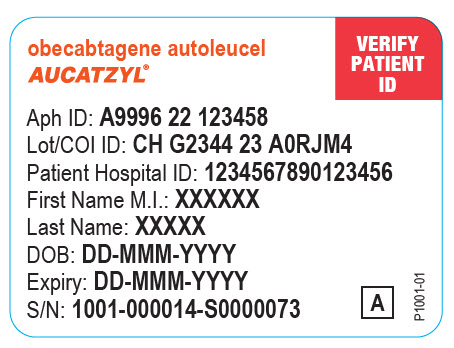
AUCATZYL Obecabtagene autoleucel Kit
🆔 Identity & classification
Where does this data come from?
🏷️ RxNorm drug class
This medicine belongs to the Antineoplastic cell and gene therapy class.
Where does this data come from?
🏭 Manufacturer & labeler
Where does this data come from?
🩺 Clinical
Obecabtagene autoleucel injection is used to treat acute lymphoblastic leukemia (ALL; also called acute lymphoblastic leukemia and acute lymphatic leukemia; a type of cancer that begins in the white blood cells) in adults that has returned or is unresponsive to other treatment(s). Obecabtagene autoleucel injection is in a class of medications called autologous cellular immunotherapy, a type of medication prepared using cells from the patient's own blood. It works by causing the body's immune system (a group of cells, tissues, and organs that protects the body from attack by bacteria, viruses,...
Read the full MedlinePlus article ↗Patient education
Supplement & herbal interactions
Where does this data come from?
Ask a licensed pharmacist directly — free, answered by our team.
🧪 Inactive Ingredients / Excipients
Inactive ingredients, also called excipients, are components of the drug product other than the active ingredient. They may include fillers, dyes, coatings, preservatives, flavors, or other formulation ingredients.
Where does this data come from?
IACT rows and label-wide narrative are kept separate; availability and product-level specificity depend on the submitted label.Inactive ingredient FAQ
Are inactive ingredients the same for every manufacturer?
Why might an inactive ingredient be missing?
Can inactive ingredients matter?
💲 Pricing
A drug doesn't have one price. Each row is a different public payment system, and none is what you'd pay at the counter — that depends on your insurance. The ⓘ on each row explains what it measures.
| Price system | Per each | Per package |
|---|---|---|
| Retail pharmacies payNADAC · weekly | Not in the retail survey — common for institutional, discontinued, or low-volume packs. | |
| Medicaid paysCMS SDUD · 12 mo | No recent Medicaid claims on file for this NDC — rare and low-volume NDCs are suppressed in the public data. | |
| Medicare drug plans payPart D · quarterly | No Part D plan price is available for this NDC in our data. | |
| Medicare Part B allowsASP · Q2058 | No ASP payment limit on file for Q2058 this quarter. | |
Where does this data come from?
🧾 Billing & reimbursement
Where does this data come from?
🔁 Therapeutic equivalents
| Product | Labeler | Pack | NADAC/unit | TE | Status | Price vs. this |
|---|---|---|---|---|---|---|
| Aucatzylthis 83047-0410-04 | Autolus | 1 kit | — | — | FDA listed | — |
Where does this data come from?
⏳ Availability & biosimilar status
Biologics have no small-molecule generics; biosimilar competition is tracked in the FDA Purple Book.
Why the date isn’t exact: Biosimilar timing can change because patents may be challenged, settled, licensed, added or removed, and litigation can move the real date earlier or later.
🛈 What do these terms mean?
- Biologic patent
- A patent the reference product’s maker has publicly listed. A biosimilar generally can’t launch until these expire — unless they’re invalidated or resolved in a settlement.
- Reference-product exclusivity
- A flat 12 years of FDA market protection from the biologic’s first licensure (the BPCIA). No biosimilar can be licensed before it ends, regardless of patents.
- Interchangeable exclusivity
- The first interchangeable biosimilar can earn a period as the only interchangeable version (pharmacists can substitute it without the prescriber).
- Earliest biosimilar (LOE)
- The latest of all the dates above — the soonest a biosimilar can realistically reach the market. Litigation and settlements can move it earlier.
Biologics have no small-molecule “generics” — competition comes from FDA-licensed biosimilars, tracked in the FDA Purple Book.
| Code | What it grants | Expires |
|---|---|---|
| RefProduct | Reference-product exclusivity (12-year, BPCIA) — no biosimilar can be licensed before this date | Nov 8, 2036 |
Is there a biosimilar for AUCATZYL 410 X 10E6 DOSE?
Why do different websites show different biosimilar dates?
Can a biosimilar launch before the last patent expires?
What does “current Purple Book estimate” mean?
What does “FDA listed” mean?
What does a patent or protection date mean here?
Where does this data come from?
📦 Packaging — all sizes for this product
| Package NDC | Description | Marketing start | Status |
|---|---|---|---|
| 83047-0410-04 You're viewing this | 1 KIT in 1 PACKAGE (83047-410-04) * 1 SUSPENSION in 1 BAG (83047-100-30) * 1 SUSPENSION in 1 BAG (83047-100-10) * 1 SUSPENSION in 1 BAG (83047-300-30) * 1 SUSPENSION in 1 BAG (83047-010-10) | 2024-11-08 | Active |
🧭 About this NDC listing & data coverage
Kit / multi-component package
This NDC identifies a kit — a package containing more than one component. Structured data (pricing, ingredients, equivalents) is often reported per component rather than for the kit NDC itself, which can make this page look thinner than the components' own pages.
What data is (and isn’t) available for this NDC — tap to expand
| NDC identity (package / product / labeler codes) | ✓ Available |
| Labeler | ✓ Available |
| Product & package description | ✓ Available |
| Marketing category & status | ✓ Available |
| Active ingredient / dosage form / route | ✓ Available |
| FDA label (SPL via DailyMed) | ✓ Available |
| Package photos | ✓ Available |
| Inactive ingredients (structured) | — Not published for this NDC The labeler did not submit a structured excipient list, or no SPL is available. |
| NADAC pharmacy acquisition price (CMS) | — Not published for this NDC CMS publishes NADAC only for NDCs reported in its retail-pharmacy survey. |
| Orange Book / therapeutic-equivalence data | ✓ Available |
| HCPCS J-code billing crosswalk | ✓ Available |
| Medicaid utilization (CMS SDUD) | — Not published for this NDC CMS reports utilization only for NDCs with Medicaid claims above its privacy threshold. |
Questions about this listing
Why is there no price listed?
Is the NDC printed on the package the same as the 11-digit billing NDC?
What do the three segments of this NDC mean?
Is this package still being marketed?
Who lists this product with the FDA?
Does this product have a billing J-code?
Where does this data come from?
📄 Full FDA label FDA SPL
🚨 Boxed Warning ▾
WARNING: CYTOKINE RELEASE SYNDROME, NEUROLOGIC TOXICITIES, and SECONDARY HEMATOLOGICAL MALIGNANCIES Cytokine Release Syndrome (CRS) occurred in patients receiving AUCATZYL. Do not administer AUCATZYL to patients with active infection or inflammatory disorders. Prior to administering AUCATZYL, ensure that healthcare providers have immediate access to medications and resuscitative equipment to manage CRS [see Dosage and Administration (2.2 , 2.3) , Warnings and Precautions (5.1) ].
Immune Effector Cell-Associated Neurotoxicity Syndrome (ICANS), including fatal or life-threatening reactions, occurred in patients receiving AUCATZYL, including concurrently with CRS or after CRS resolution. Monitor for neurologic signs and symptoms after treatment with AUCATZYL. Prior to administering AUCATZYL, ensure that healthcare providers have immediate access to medications and resuscitative equipment to manage neurologic toxicities.
Provide supportive care and/or corticosteroids, as needed [see Dosage and Administration (2.2 , 2.3) , Warnings and Precautions (5.2) ]. T cell malignancies have occurred following treatment of hematologic malignancies with BCMA- and CD19-directed genetically modified autologous T cell immunotherapies [see Warnings and Precautions (5.8) ]. WARNING: CYTOKINE RELEASE SYNDROME, NEUROLOGIC TOXICITIES, and SECONDARY HEMATOLOGICAL MALIGNANCIES See full prescribing information for complete boxed warning.
Cytokine Release Syndrome (CRS) occurred in patients receiving AUCATZYL. Do not administer AUCATZYL to patients with active infection or inflammatory disorders. Prior to administering AUCATZYL, ensure that healthcare providers have immediate access to medications and resuscitative equipment to manage CRS.
( 2.2 , 2.3 , 5.1 ). Immune Effector Cell-Associated Neurotoxicity Syndrome (ICANS), including fatal or life-threatening reactions, occurred in patients receiving AUCATZYL, including concurrently with CRS or after CRS resolution. Monitor for neurologic signs and symptoms after treatment with AUCATZYL.
Prior to administering AUCATZYL, ensure that healthcare providers have immediate access to medications and resuscitative equipment to manage neurologic toxicities ( 2.2 , 2.3 , 5.2 ). T cell malignancies have occurred following treatment of hematologic malignancies with BCMA- and CD19-directed genetically modified autologous T cell immunotherapies ( 5.8 ).
🎯 Indications and Usage ▾
1 INDICATION AND USAGE AUCATZYL is indicated for the treatment of adults with relapsed or refractory B-cell precursor acute lymphoblastic leukemia (ALL). AUCATZYL is a CD19-directed genetically modified autologous T cell immunotherapy indicated for the treatment of adults with relapsed or refractory B-cell precursor acute lymphoblastic leukemia (ALL) ( 1 ).
⏱️ Dosage and Administration ▾
2 DOSAGE AND ADMINISTRATION For autologous use only. For intravenous use only. Do NOT use a leukodepleting filter ( 2.4 ).
Prior to infusion Administer a lymphodepleting chemotherapy regimen of fludarabine/cyclophosphamide. ( 2.3 ). Ensure availability of bone marrow assessment results from a sample obtained within 7 days prior to start of lymphodepleting chemotherapy ( 2.3 ).
Premedicate with acetaminophen ( 2.3 ). Confirm availability of tocilizumab prior to infusion ( 2.3 ). AUCATZYL Dose and Administration Verify patient's identity prior to infusion ( 2.3 ).
Dosing is based on the Dose Schedule Planner ( 2.3 ). The total recommended dose of AUCATZYL is 410 × 10 6 CD19 chimeric antigen receptor (CAR)-positive viable T cells ( 2.1 ). The treatment regimen consists of a split dose infusion to be administered on Day 1 and Day 10 (± 2 days) ( 2.1 ).
Dose to be administered is determined by the patient bone marrow blast assessment. See Full Prescribing Information for important preparation and administration information ( 2.3 , 2.4 ).
2.1Dose For autologous use only. For intravenous use only. Strictly follow Administration instructions to minimize dosing errors [see Overdosage (10) ] .
The total recommended dose of AUCATZYL is 410 × 10 6 CD19 chimeric antigen receptor (CAR)-positive viable T cells supplied in three to five infusion bags. Bags are supplied in three color-coded bag configurations (10 × 10 6 , 100 × 10 6 , 300 × 10 6 ) for split dose administration. Table 1: AUCATZYL Infusion Bag Configurations CAR-positive T Cell Dose (Bag Configuration) Color Code Volume Fully Infused 10 × 10 6 Blue 10 mL No (See Section 2.3 ) 100 × 10 6 Orange Variable Yes 300 × 10 6 Red Variable Yes The treatment regimen consists of a split dose infusion to be administered on Day 1 and Day 10 (± 2 days), see Figure 1 and Figure 3 .
The dosage regimen will be determined by the tumor burden assessed by bone marrow blast percentage from a sample obtained within 7 days prior to the start of lymphodepletion [see Dosing and Administration (2.3 , 2.4) , Figure 1 and Figure 3 ] . See the Release for Infusion certificate and Dose Schedule Planner for the actual cell counts and volumes to be infused and to select the appropriate dosage regimen [see Dosage and Administration (2.4) and Dosage Forms and Strengths (3) ] .
2.2Dosage Modification for Adverse Reactions Table 2: Dosage Modifications Intended to Reduce the Risk of Adverse Reactions Adverse Event Severity 1. Based on the Common Terminology Criteria for Adverse Events (CTCAE) v5.0. Grade 1 is mild, Grade 2 is moderate, Grade 3 is severe, and Grade 4 is life-threatening.
Actions Second Split Dose Day 10 (± 2 days) Cytokine Release Syndrome following the first split dose [see Warnings and Precautions (5.1) ]. Grade 2 Consider postponing AUCATZYL infusion up to Day 21 to allow for the CRS to resolve to Grade ≤ 1. Grade ≥ 3 Discontinue treatment.
Immune Effector Cell-associated Neurotoxicity Syndrome following the first split dose [see Warnings and Precautions (5.2) ]. Grade 1 Consider postponing AUCATZYL infusion up to Day 21 to allow for the ICANS to completely resolve. Grade ≥ 2 Discontinue treatment.
Pulmonary or cardiac toxicities following the first split dose. Grade ≥ 3 Discontinue treatment. Severe intercurrent infection at the time of AUCATZYL infusion [see Warnings and Precautions (5.4) ].
Grade ≥ 3 Consider postponing AUCATZYL infusion up to Day 21 until the severe intercurrent infection is considered controlled. Requirement for supplementary oxygen. Grade ≥ 3 Consider postponing AUCATZYL treatment up to Day 21 to allow for the adverse reaction to resolve.
Other clinically relevant adverse reactions following the first split dose [see Warnings and Precautions (5) ]. Grade ≥ 3 Consider postponing AUCATZYL infusion up to Day 21 to allow for the adverse reaction to resolve.
2.3Administration AUCATZYL is for autologous use only. The patient's identity must match the patient identifiers on the…
💊 Dosage Forms and Strengths ▾
3 DOSAGE FORMS AND STRENGTHS AUCATZYL is a cell suspension for infusion. AUCATZYL contains a total recommended dose of 410 × 10 6 CD19 CAR-positive viable T cells supplied in three to five infusion bags. The infusion volume is variable and is calculated based on the concentration of CD19 CAR-positive viable T cells [see How Supplied/Storage and Handling (16) ] .
See the Release for Infusion certificate for actual cell counts. The Release for Infusion certificate and Dose Schedule Planner will be provided to the infusion site in the product shipper and via Autolus' Scheduling Portal. AUCATZYL is a cell suspension for infusion ( 3 ).
AUCATZYL contains a total recommended dose of 410 × 10 6 CD19 CAR-positive viable T cells supplied in 3 to 5 infusion bags ( 3 ).
⛔ Contraindications ▾
4 CONTRAINDICATIONS None. None ( 4 ).
⚠️ Warnings and Cautions ▾
5 WARNINGS AND PRECAUTIONS Prolonged Cytopenias: Patients may exhibit Grade 3 or higher cytopenias for several weeks following AUCATZYL infusion. Monitor complete blood counts ( 5.3 ). Infections: Monitor patients for signs and symptoms of infection; treat appropriately ( 5.4 ).
Hypogammaglobulinemia: Monitor and consider immunoglobulin replacement therapy ( 5.5 ). Hemophagocytic Lymphohistiocytosis/ Macrophage Activation Syndrome: Administer treatment per institutional standards ( 5.6 ). Hypersensitivity Reactions: Monitor for hypersensitivity reactions during infusion ( 5.7 ).
Secondary Malignancies: T cell malignancies have occurred following treatment of hematologic malignancies with BCMA- and CD19-directed genetically modified autologous T cell immunotherapies. In the event that a secondary malignancy occurs after treatment with AUCATZYL, contact Autolus Inc at 1-855-288-5227 ( 5.8 ).
5.1Cytokine Release Syndrome Cytokine Release Syndrome (CRS) occurred following treatment with AUCATZYL. CRS was reported in 75% (75/100) of patients including Grade 3 CRS in 3% of patients. The median time to onset of CRS was 8 days (range: 1 to 23 days) with a median duration of 5 days (range: 1 to 21 days).
Sixty-eight percent of patients (51/75) experienced CRS after the first infusion, but prior to the second infusion of AUCATZYL with a median time to onset of 6 days (range: 1 to 10 days). Among patients with CRS, the most common manifestations of CRS included fever (100%), hypotension (35%) and hypoxia (19%) [see Adverse Reactions (6) ] . The primary treatment for CRS was tocilizumab (73%; 55/75), with patients also receiving corticosteroids (21%; 16/75).
Prior to administering AUCATZYL, ensure that healthcare providers have immediate access to medications and resuscitative equipment to manage CRS. During and following treatment with AUCATZYL, closely monitor patients for signs and symptoms of CRS daily for at least 7 days following each infusion. Continue to monitor patients for CRS for at least 2 weeks following each infusion with AUCATZYL [see Dosage and Administration (2.1) ] .
Counsel patients to seek immediate medical attention should signs or symptoms of CRS occur at any time. At the first sign of CRS, immediately evaluate the patient for hospitalization and institute treatment with supportive care based on severity and consider further management per current practice guidelines.
5.2Neurologic Toxicities Neurologic toxicities including Immune Effector Cell-associated Neurotoxicity Syndrome (ICANS), which were fatal or life-threatening, occurred following treatment with AUCATZYL. Neurologic toxicities were reported in 64% (64/100) of patients, including Grade ≥ 3 in 12% of patients. The median time to onset of neurologic toxicities was 10 days (range: 1 to 246 days) with a median duration of 13 days (range: 1 to 904 days).
Fifty-five percent of patients (35/64) experienced neurologic toxicities after the first infusion but prior to the second infusion of AUCATZYL with a median time to onset of 6 days (range: 1 to 11 days). Among patients with neurologic toxicities, the most common symptoms (> 5%) included ICANS (38%), headache (34%), encephalopathy (33%), dizziness (22%), tremor (13%), anxiety (9%), insomnia (9%), and delirium (8%) [see Adverse Reactions (6) ] . Immune Effector Cell-associated Neurotoxicity Syndrome (ICANS) ICANS events occurred in 24% (24/100) of patients, including Grade ≥ 3 in 7% (7/100) of patients.
Of the 24 patients who experienced ICANS, 33% (8/24) experienced an onset after the first infusion, but prior to the second infusion of AUCATZYL. The median time to onset for ICANS events after the first infusion was 8 days (range: 1 to 10 days) and 6.5 days (range: 2 to 22 days) after the second infusion, with a median duration of 8.5 days (range: 1 to 53 days). Eighty-eight percent (21/24) of patients received treatment for ICANS.
All treated patients received high-dose corticosteroids and 42% (10/24) of patie…
🤒 Adverse Reactions ▾
6 ADVERSE REACTIONS The most common (non-laboratory) adverse reactions (incidence ≥ 20%) are: CRS, infections - pathogen unspecified, musculoskeletal pain, viral infections, fever, nausea, bacterial infectious disorders, diarrhea, febrile neutropenia, ICANS, hypotension, pain, fatigue, headache, encephalopathy, and hemorrhage ( 6.1 ). To report SUSPECTED ADVERSE REACTIONS, contact Autolus Inc at toll-free phone 1-855-288-5227 or FDA at 1-800-FDA-1088 or www.fda.gov/medwatch ( 17 ).
6.1Clinical Trials Experience Because clinical trials are conducted under widely varying conditions, adverse reaction rates observed in the clinical trials of a drug cannot be directly compared to rates in the clinical trials of another drug and may not reflect the rates observed in practice. The safety of AUCATZYL was evaluated in the FELIX study in which 100 patients with relapsed or refractory B-cell acute lymphoblastic leukemia (B-ALL) received AUCATZYL at a median dose of 410 × 10 6 CD19 CAR-positive viable T cells (range: 10 to 480 × 10 6 CD19 CAR-positive viable T cells with 90% of patients receiving the recommended dose of 410 × 10 6 ± 25%) [see Clinical Studies (14) ] .
The most common serious adverse reactions of any Grade (incidence ≥ 2%) included infections-pathogen unspecified, febrile neutropenia, ICANS, CRS, fever, bacterial infectious disorders, encephalopathy, fungal infections, hemorrhage, respiratory failure, hypotension, ascites, HLH/MAS, thrombosis and hypoxia. Nine patients (9%) experienced fatal adverse reactions which included infections (sepsis, pneumonia, peritonitis), ascites, pulmonary embolism, acute respiratory distress syndrome, HLH/MAS and ICANS. Of the 9 patients, five patients who died from infections had pre-existing and ongoing neutropenia prior to receiving bridging therapy, lymphodepletion chemotherapy treatment and/or AUCATZYL.
Table 3 summarizes the adverse reactions (excluding laboratory abnormalities) that occurred in at least 10% of patients. Table 4 presents the most common Grade 3 or 4 laboratory abnormalities, occurring in at least 10% of patients. Table 3: Adverse Reactions Occurring in ≥ 10% of Patients in FELIX Study (N=100) Adverse Reaction Any Grade (%) Grade 3 or Higher (%) Blood and lymphatic system disorders Febrile neutropenia 26 26 Coagulopathy Is a composite that includes multiple related terms.
10 6 Cardiac disorders Tachycardia 12 0 Gastrointestinal disorders Nausea 29 2 Diarrhea 26 0 Vomiting 18 0 Abdominal pain 16 1 Constipation 11 0 General disorders and administration site conditions Fever 29 1 Pain 23 0 Fatigue 22 3 Edema 12 0 Chills 11 0 Immune system disorders Cytokine release syndrome 75 3 Hypogammaglobulinemia 10 2 Infections and infestations Infections - pathogen unspecified 44 31 Viral infections excluding COVID-19 16 1 COVID-19 18 6 Bacterial infections 26 11 Fungal infections 15 5 Investigations Weight decreased 11 2 Metabolism and nutrition disorders Decreased appetite 13 3 Musculoskeletal and connective tissue disorders Musculoskeletal pain 36 4 Nervous system disorders Immune effector cell-associated neurotoxicity syndrome 24 7 Headache 22 0 Encephalopathy Encephalopathy includes aphasia, cognitive disorder, confusional state, depressed level of consciousness, disturbance in attention, dysarthria, dysgraphia, encephalopathy, lethargy, memory impairment, mental status changes, posterior reversible encephalopathy syndrome, somnolence.
21 4 Dizziness 14 0 Respiratory, thoracic and mediastinal disorders Cough 14 0 Skin and subcutaneous tissue disorders Rash 17 1 Vascular disorders Hypotension 23 4 Hemorrhage 20 4 Other clinically important adverse reactions that occurred in less than 10% of patients treated with AUCATZYL include the following: Cardiac disorders: arrhythmia (5%), palpitations (2%), cardiac failure (1%). Endocrine disorders: adrenal insufficiency (2%). Eye disorders: visual impairment (2%).
Gastrointestinal disorders: stomatitis (5%), ascites (4%). Immune system d…
👥 Use in Specific Populations ▾
8 USE IN SPECIFIC POPULATIONS
8.1Pregnancy Risk Summary There are limited available data with AUCATZYL use in pregnant women. In the FELIX study, one patient became pregnant 6 months following treatment with AUCATZYL. The patient had a premature delivery at 30 weeks of pregnancy.
No animal reproductive and developmental toxicity studies have been conducted with AUCATZYL to assess whether AUCATZYL can cause fetal harm when administered to a pregnant woman. It is not known if AUCATZYL has the potential to be transferred to the fetus and cause fetal toxicity. Based on the mechanism of action of AUCATZYL, if the transduced cells cross the placenta, they may cause fetal toxicity, including B-cell lymphocytopenia and hypogammaglobinemia.
Therefore, AUCATZYL is not recommended for women who are pregnant. Pregnancy after AUCATZYL infusion should be discussed with the treating physician. In the U.S. general population, the estimated background risk of major birth defects is 2% to 4% and of miscarriage is 15% to 20% of clinically recognized pregnancies.
8.2Lactation Risk Summary There is no information regarding the presence of AUCATZYL in human milk, the effect on the breastfed infant, and the effects on milk production. The developmental and health benefits of breastfeeding should be considered along with the mother's clinical need for AUCATZYL and any potential adverse effects on the breastfed infant from AUCATZYL or from the underlying maternal condition.
8.3Females and Males of Reproductive Potential Pregnancy Testing Pregnancy status of females with reproductive potential should be verified. Sexually active females of reproductive potential should have a negative pregnancy test before starting treatment with AUCATZYL. Contraception See the prescribing information for fludarabine and cyclophosphamide for information on the need for effective contraception in patients who receive lymphodepleting chemotherapy treatment.
There are insufficient exposure data to provide a recommendation concerning duration of contraception following treatment with AUCATZYL. Infertility There are no data on the effect of AUCATZYL on fertility.
8.4Pediatric Use The safety and efficacy of AUCATZYL have not been established in pediatric patients.
8.5Geriatric Use Of the 100 patients treated with AUCATZYL, 20 (20%) were 65 years of age and over. No overall differences in safety or effectiveness were observed between these patients and younger patients.
🤰 Pregnancy ▾
8.1Pregnancy Risk Summary There are limited available data with AUCATZYL use in pregnant women. In the FELIX study, one patient became pregnant 6 months following treatment with AUCATZYL. The patient had a premature delivery at 30 weeks of pregnancy.
No animal reproductive and developmental toxicity studies have been conducted with AUCATZYL to assess whether AUCATZYL can cause fetal harm when administered to a pregnant woman. It is not known if AUCATZYL has the potential to be transferred to the fetus and cause fetal toxicity. Based on the mechanism of action of AUCATZYL, if the transduced cells cross the placenta, they may cause fetal toxicity, including B-cell lymphocytopenia and hypogammaglobinemia.
Therefore, AUCATZYL is not recommended for women who are pregnant. Pregnancy after AUCATZYL infusion should be discussed with the treating physician. In the U.S. general population, the estimated background risk of major birth defects is 2% to 4% and of miscarriage is 15% to 20% of clinically recognized pregnancies.
🧒 Pediatric Use ▾
8.4Pediatric Use The safety and efficacy of AUCATZYL have not been established in pediatric patients.
🧓 Geriatric Use ▾
8.5Geriatric Use Of the 100 patients treated with AUCATZYL, 20 (20%) were 65 years of age and over. No overall differences in safety or effectiveness were observed between these patients and younger patients.
🆘 Overdosage ▾
10 OVERDOSAGE In FELIX study (all cohorts N=127), occurrences of overdose were observed at the administration of the first dose in 4% (5/127) of patients. All 5 patients had bone marrow blasts > 20% and should have received a first dose of 10 × 10 6 CAR-positive viable T cells but instead received a higher dose between 68 and 103 × 10 6 CAR-positive viable T cells. CRS, ICANS and HLH, including severe events, were observed in patients who received overdose of AUCATZYL.
In the event of a suspected overdose, closely monitor patients for any adverse reactions and administer treatment according to institutional practice and treatment guidelines.
🧬 Clinical Pharmacology ▾
12 CLINICAL PHARMACOLOGY
12.1Mechanism of Action AUCATZYL is a CD19-directed genetically modified autologous T cell immunotherapy consisting of the patient's own T cells expressing an anti-CD19 CAR. Engagement of anti-CD19 CAR-positive T cells with CD19 expressed on target cells, such as cancer cells and normal B cells, leads to activation of the anti-CD19 CAR-positive T cells and downstream signaling through the CD3-zeta domain. Proliferation and persistence by the anti-CD19 CAR-positive T cells following activation are enhanced by the presence of the 4-1BB co-stimulatory domain.
This binding to CD19 results in anti-tumor activity and killing of CD19-expressing target cells.
12.2Pharmacodynamics Serum levels of cytokines such as IL-2, IL-5, IL-6, IL-7, IL-8, IL-10, IL-15, TNF-α, IFN-γ, and granulocyte-macrophage colony-stimulating factors were evaluated pre- and post-AUCATZYL infusion, over 3 months. Peak elevation of plasma cytokines was observed within the first month after infusion and levels returned to baseline by Month 3. Due to the on-target effect of AUCATZYL, a period of B cell aplasia is expected.
B cell aplasia was observed in 93.1% of patients at 3 months and 80.0% at 6 months.
12.3Pharmacokinetics The pharmacokinetics (PK) of AUCATZYL were assessed in 90 patients with relapsed or refractory CD19+ B-ALL receiving a median dose of 410 × 10 6 CD19 CAR-positive viable T cells (range: 10 to 480 × 10 6 CD19 CAR-positive viable T cells). Following Day 1 infusion, levels of the AUCATZYL transgene in peripheral blood exhibited an initial rapid expansion. The median time of maximal expansion to peak (T max ) occurred at Day 14 (range: Day 2-55), demonstrated by a geometric mean peak CAR T concentration (C max ) of 115,193 copies/µg genomic DNA (gDNA; range: 129-600,000) and a geometric mean area under the curve between Days 0 and 28 (AUC 0-28d ) of 1,147,631 day*copies/μg DNA (range: 17,900-7,230,000 day*copies/μg DNA).
A higher expansion was observed in patients with bone marrow blasts > 20% compared to patients with bone marrow blast ≤ 20%. Table 5: Summary of Pharmacokinetics Parameters for Transgene Levels by ddPCR in Peripheral Blood by Dose Regimen Received Parameter Statistics Bone Marrow Blast Bone Marrow Blast > 20% = dosage regimen of 10 × 10 6 then 400 × 10 6 CD19 CAR-positive viable T cells. > 20% (N=59) Bone Marrow Blast Bone Marrow Blast ≤ 20% = dosage regimen 100 × 10 6 then 310 × 10 6 CD19 CAR-positive viable T cells. ≤ 20% (N=31) Total (N=90) AUC 0-28d =area under the concentration-time curve (exposure) from Day 0 to Day 28; C max = maximum serum concentration; ddPCR = droplet digital polymerase chain reaction; DNA = deoxyribonucleic acid; Geo-CV% = geometric mean coefficient of variation; T max = time to maximum concentration.
C max (copies/µg DNA) n 59 31 90 Geometric Mean 146,314 73,074 115,193 (Geo-CV%) (294.4) (186.9) (267.0) Min–Max 129–600,000 9290–589,000 129–600,000 T max (days) n 59 31 90 Median 20 11 14 Min–Max 6–55 2–28 2–55 AUC 0-28d (day*copies/µg DNA) n 52 29 81 Geometric Mean 1,521,310 692,307 1,147,631 (Geo-CV%) (191.3) (226.8) (219.5) Min–Max 17,900–6,730,000 70,400–7,230,000 17,900–7,230,000 No substantial differences in AUCATZYL expansion were observed between responding (CR/CRi) and non-responding (non-CR/CRi) patients.
Furthermore, 75.9% (22/29) of patients who had ongoing remission had ongoing CAR T persistency at the last laboratory assessment, with a maximum observed persistency of 36.5 months. Patients who received a first split dose of 10 × 10 6 cells (> 20% blast) demonstrated a higher expansion of CAR T cells (C max and AUC 0-28d ) compared to patients who received a first split dose of 100 × 10 6 cells (≤ 20% blast). Persistency was not impacted by tumor burden.
Patients who experience CRS had 1.8-fold higher mean bone marrow blast percentage and higher CAR T cell expansion (5.0-fold higher C max and 6.8-fold higher AUC 0-28d [geometric mean]) compared to patients without C…
🧬 Mechanism of Action ▾
12.1Mechanism of Action AUCATZYL is a CD19-directed genetically modified autologous T cell immunotherapy consisting of the patient's own T cells expressing an anti-CD19 CAR. Engagement of anti-CD19 CAR-positive T cells with CD19 expressed on target cells, such as cancer cells and normal B cells, leads to activation of the anti-CD19 CAR-positive T cells and downstream signaling through the CD3-zeta domain. Proliferation and persistence by the anti-CD19 CAR-positive T cells following activation are enhanced by the presence of the 4-1BB co-stimulatory domain.
This binding to CD19 results in anti-tumor activity and killing of CD19-expressing target cells.
📦 How Supplied / Storage and Handling ▾
16 HOW SUPPLIED/STORAGE AND HANDLING AUCATZYL 410 × 10 6 CD19 CAR-positive viable T cells NDC (83047-410-04) is supplied in three to five infusion bags (see below) containing a frozen suspension of genetically modified autologous T cells in PBS, HSA, EDTA and 7.5% DMSO. Each infusion bag of AUCATZYL is individually packed within an overwrap and then enclosed within a metal cassette. AUCATZYL is shipped from the manufacturing facility to the cellular therapy laboratory associated with the infusion center in a cryogenic shipper charged with liquid nitrogen.
A Release for Infusion certificate is provided to the infusion site in the shipper and via the Autolus Scheduling Portal with the product. Table 7: Infusion Bag Configurations Infusion bag configurations Color Code Fill Volume Range (min – max) NDC Number 10 × 10 6 CD19 CAR-positive viable T cells in one 50 mL infusion bag Blue 10 mL 83047-010-10 100 × 10 6 CD19 CAR-positive viable T cells in one or more 50 mL infusion bags Orange 10 to 20 mL 83047-100-10 100 × 10 6 CD19 CAR-positive viable T cells in one 250 mL infusion bag Orange 30 to 70 mL 83047-100-30 300 × 10 6 CD19 CAR-positive viable T cells in one or more 250 mL infusion bags Red 30 to 70 mL 83047-300-30 Match the identity of the patient with the patient identifiers on the infusion bag upon receipt [see Dosage and Administration (2.3) ] .
Store AUCATZYL frozen in the vapor phase of liquid nitrogen (below minus 150°C) [see Dosage and Administration (Section 2.3) ] . Thaw AUCATZYL prior to infusion [see Dosage and Administration (2.3) ] . Do not re-freeze after thawing.
Do not irradiate AUCATZYL, as this could lead to inactivation.
📦 Storage and Handling ▾
Match the identity of the patient with the patient identifiers on the infusion bag upon receipt [see Dosage and Administration (2.3) ] . Store AUCATZYL frozen in the vapor phase of liquid nitrogen (below minus 150°C) [see Dosage and Administration (Section 2.3) ] . Thaw AUCATZYL prior to infusion [see Dosage and Administration (2.3) ] . Do not re-freeze after thawing. Do not irradiate AUCATZYL, as this could lead to inactivation.
📋 Description ▾
11 DESCRIPTION AUCATZYL (obecabtagene autoleucel) is a CD19-directed genetically modified autologous Tcell immunotherapy comprised of the patient's T cells that are transduced with a lentiviral vector to express an anti-CD19 chimeric antigen receptor (CAR). The CAR is composed of a murine anti-CD19 single chain variable fragment (scFv) linked to 4-1BB and CD3-zeta co-stimulatory domains. AUCATZYL is prepared from the patient's own peripheral blood mononuclear cells, which are collected via a standard leukapheresis procedure.
The mononuclear cells are enriched for T cells, activated and transduced with a replication-incompetent lentiviral vector containing the CD19 CAR transgene. The transduced T cells are expanded in cell culture, washed, formulated into a suspension, and then cryopreserved. AUCATZYL is frozen in patient-specific infusion bag(s) and thawed prior to infusion [see Dosage and Administration (2.3) , How Supplied/Storage and Handling (16) ] .
The product must pass a sterility test before it is released to the treatment center. The thawed product is a colorless to pale yellow, very opalescent suspension that is essentially free from visible foreign particles. In addition to T cells, AUCATZYL also contains non-transduced autologous T cells and non-T cells.
The formulation contains phosphate-buffered saline (PBS) human serum albumin (HSA), ethylenediaminetetraacetic acid (EDTA) and 7.5% DMSO.
💬 Information for Patients ▾
17 PATIENT COUNSELING INFORMATION Advise the patient to read the FDA-approved patient labeling (Medication Guide). Discuss the following with the patient: Inform patients that there is a risk of manufacturing failure (4.5% [5/112 in clinical studies]). Therefore, a second manufacturing of AUCATZYL may be attempted, after a second leukapheresis collection.
Inform patients that additional therapy (other than lymphodepletion) may be necessary before AUCATZYL manufacturing is completed. This may increase the risk of adverse events during the pre-infusion period, which could delay or prevent the administration of AUCATZYL. Advise patients to seek immediate attention if any of the following occur: Cytokine Release Syndrome: Inform patients that symptoms may include fever, hypotension and hypoxia [see Warnings and Precautions (5.1) and Adverse Reactions (6) ] .
Neurologic Toxicity/ICANS: Inform patients that symptoms may include ICANS, headache, dizziness, anxiety, insomnia, delirium, tremor, and encephalopathy [see Warnings and Precautions (5.2) and Adverse Reactions (6) ] . Prolonged Cytopenias: Inform patients that symptoms may include neutropenia, anemia, thrombocytopenia, or bleeding [see Warnings and Precautions (5.3) and Adverse Reactions (6) ] . Severe Infections: Inform patients that they may exhibit signs or symptoms associated with infection, and that past infections can be reactivated following treatment with AUCATZYL [see Warnings and Precautions (5.4) and Adverse Reactions (6) ] .
Secondary Malignancies: Secondary malignancies, including T cell malignancies, have occurred following treatment with BCMA- and CD19-directed genetically modified autologous T cell immunotherapies [see Boxed Warning , Warnings and Precautions (5.8) , Adverse Reactions (6) ] . Advise patients of the need to: Avoid driving for at least 2 weeks after each infusion. Have periodic monitoring of blood counts.
Contact Autolus Inc at 1-855-288-5227 if they are diagnosed with a secondary malignancy [see Warnings and Precautions (5.8) ] .
💬 Medication Guide ▾
MEDICATION GUIDE AUCATZYL ® [pronounced aw-kat-zil] (obecabtagene autoleucel) Read this Medication Guide before you start your AUCATZYL treatment. The more you know about your treatment, the more active you can be in your care. Talk with your healthcare provider if you have questions about your health condition or treatment.
Reading this Medication Guide does not take the place of talking with your healthcare provider about your treatment. What is the most important information I should know about AUCATZYL? AUCATZYL may cause side effects that are life-threatening and can lead to death.
Call or see your healthcare provider or get emergency help right away if you get any of the following: Fever (100.4°F/38°C or higher) Severe nausea, vomiting, diarrhea Severe headache Dizziness or light-headedness Difficulty breathing Confusion Fast or irregular heartbeat Low blood pressure Chills/shivering Shaking or twitching (tremor) It is important to tell your healthcare provider that you received AUCATZYL and to show them your AUCATZYL Patient Wallet Card. Your healthcare provider may give you other medicines to treat your side effects.
What is AUCATZYL? AUCATZYL is a treatment for adults with acute lymphoblastic leukemia. It is used following disease progression while on or after other treatment.
AUCATZYL is a medicine made from your own white blood cells, which have been changed (genetically modified) to recognize and attack your leukemic cells. Before getting AUCATZYL, tell your healthcare provider about all of your medical problems, including if you have or have had: Neurologic problems (such as seizures, stroke, new or worsening memory loss) Lung or breathing problems Heart problems A recent or active infection Past infections which can be reactivated following treatment with AUCATZYL Pregnancy, you think you may be pregnant, or plan to become pregnant Breastfeeding Tell your healthcare provider about all the medication you take, including prescription and over-the-counter medicines, vitamins, dietary supplements, and herbal supplements.
How will I receive AUCATZYL? AUCATZYL is made from your own white blood cells, so your blood will be collected by a process called "leukapheresis" (loo-kah-fur-ee-sis), which will concentrate your white blood cells. Step 1: Your blood cells will be sent to a manufacturing center to make your AUCATZYL.
While waiting for AUCATZYL to be made, you may get other medicines to stabilize your cancer. This is so that your acute lymphoblastic leukemia does not get worse. Within 7 days before you start treatment, a sample of your cells will be taken to confirm your disease burden, this will determine which infusion dose you are given first.
Your infusion dose will be tailored to the burden of your disease. This will be provided as two separate infusions. Step 2: Before you receive AUCATZYL, your healthcare provider will give you chemotherapy for a few days to make room in the bone marrow.
When your AUCATZYL is ready, your healthcare provider will give it to you through a catheter (tube) placed into your vein (intravenous infusion). After you receive your AUCATZYL first infusion you will receive your second infusion 10 days (± 2 days) later. 30 minutes before you are given AUCATZYL, you may be given medicines for fever (such as acetaminophen).
Step 3: After AUCATZYL infusion, you will be monitored daily for at least 7 days after the infusion so that your healthcare team can closely monitor your recovery. You should plan to stay close to a healthcare facility for at least 2 weeks after getting AUCATZYL. Your healthcare provider will help you with any side effects that may occur.
You may be hospitalized for side effects. Your healthcare provider will determine when you can go home. Your healthcare provider will want to do blood tests to follow your progress.
It is important that you do have your blood tested. If you miss an appointment, call your healthcare provider as soon as possible to reschedule. What should I…