
Co-Q10 & Red Yeast Rice Ingredients & Drug Interactions
by DC
What is this page for?
First and foremost: checking Co-Q10 & Red Yeast Rice against your medications. The heart of this page is the interaction checker and the full interaction report — how this product’s ingredients may interact with prescription and over-the-counter medicines you may be taking.
Around that, we add a pharmacist’s high-level view of the product as a whole — what’s inside, the evidence for its stated use, how transparent the label is, and what safety data exists — so you can see the full picture in one place. It’s educational information from our licensed clinical databases and the clinical staff at HelloPharmacist — not medical advice — and we don’t sell or endorse products. Our editorial policy
Co-Q10 & Red Yeast Rice is a dietary supplement by DC with 3 active ingredients. Its ingredients are commonly taken for heart health, statin-related muscle aches, migraine prevention.Based on those ingredients, 1,304 medications have a known interaction with it, the most serious rated moderate. The ingredients most likely to interact are BioPerine, Red Yeast Rice powder, Coenzyme Q10. Use the checker below to test your specific medication, or read the full HelloPharmacist Interaction Report.
Check Your Meds Against Co-Q10 & Red Yeast Rice by DC
Ask about any prescription or over-the-counter medication and we check it for interactions with Co-Q10 & Red Yeast Rice by DC — and tell you which ingredient is responsible.
AI summaries are generated from our interaction database for education only — always confirm with your pharmacist. How we use AI
Ask the Pharmacist
A licensed pharmacist will answer your question by email — free, usually within 24 hours.
Got it — thank you!
A licensed pharmacist will answer within 24 hours. Keep an eye on your email (worth checking spam, just in case).
HelloPharmacist Scorecard of Co-Q10 & Red Yeast Rice by DC
Our pharmacy team’s full take, with four database checks built into the cards below — a summary of what is known, not a grade of the product itself.
What’s inside
Full disclosure
This product contains three active ingredients. Coenzyme Q10 is an antioxidant that your cells naturally make and use for energy; it's been used to support heart health and energy production.
Red Yeast Rice powder is made by fermenting rice with yeast and acts like a statin drug — it contains lovastatin and is used to help manage cholesterol levels. BioPerine is a black pepper extract (the active compound is piperine) used in supplements to boost how well other ingredients are absorbed.
You'll also find cellulose, magnesium stearate, and silica listed as inactive ingredients — these are binders and fillers that hold the capsule together.
Does it work?
Strong evidence
Coenzyme Q10 is likely effective for CoQ10 deficiency and possibly effective for fibromyalgia, migraine headaches, congestive heart failure, and diabetic neuropathy. Red Yeast Rice is possibly effective for HIV/AIDS-related high cholesterol and heart attack prevention.
For BioPerine on its own, we don't have established effectiveness data — the evidence isn't there for hay fever, asthma, athletic performance, headache, depression, or diarrhea.
How safe is it?
Well-documented data
Coenzyme Q10 is generally well tolerated; in clinical trials no serious side effects were reported. The most common ones — less than 1% of users — are stomach upset, nausea, diarrhea, and heartburn; higher daily doses above 100 mg are less likely to cause these if you split them up.
Headache, dizziness, and insomnia have been reported, and very rarely skin itching or allergic rash. There isn't enough safety data for CoQ10 in pregnancy, so it's best to avoid unless your doctor advises otherwise; breastfeeding safety hasn't been well studied either.
BioPerine is generally safe in food amounts, but concentrated supplement doses haven't been well studied — use caution. The most common side effects are burning aftertaste and heartburn.
Allergic reactions are rare. Red Yeast Rice works like a statin and carries similar risks: the most common side effects are abdominal discomfort, diarrhea, dizziness, headache, heartburn, nausea, and myopathy (muscle weakness).
Rarely, serious liver damage or rhabdomyolysis (severe muscle breakdown) have been reported, likely linked to the lovastatin in the product. Red Yeast Rice is unsafe in pregnancy because of its statin-like activity.
It should be avoided while breastfeeding due to its statin activity and lack of safety data.
Meds to double-check
Moderate interaction found
Check these medication types before taking this product: blood thinners like warfarin (Moderate risk — Red Yeast Rice may reduce its effect); statin drugs like atorvastatin, simvastatin, or any HMG-CoA reductase inhibitor (Moderate — combining them risks muscle damage); cyclosporine used after transplants (Moderate — Red Yeast Rice may dangerously raise lovastatin levels); gemfibrozil for triglycerides (Moderate — risk of muscle breakdown); niacin, especially high-dose (Moderate — risk of muscle breakdown); anti-seizure drugs like phenytoin (Moderate — BioPerine may raise levels); HIV drugs like nevirapine (Moderate — BioPerine may raise levels); tuberculosis antibiotics like rifampin (Moderate — BioPerine may raise levels); heart drugs like propranolol (Moderate — BioPerine may raise levels); asthma drugs like theophylline (Moderate — BioPerine may raise levels); sedatives like pentobarbital (Moderate — BioPerine may increase drowsiness); and blood pressure drugs (Minor — CoQ10 may add to the effect). Also check if you take any drugs that damage the liver or any that slow your liver's CYP3A4 enzyme.
The bottom line
Scorecard at a glanceFully disclosed formula with strong clinical evidence behind its ingredients' uses. Moderate medication interactions have been identified, and safety information is well characterized.
This product combines CoQ10 for heart health with Red Yeast Rice for cholesterol, but Red Yeast Rice acts like a prescription statin — so it's not for everyone. If you take any prescription medications, especially blood thinners, cholesterol drugs, HIV drugs, anti-seizure drugs, or heart medications, you must check your exact drugs with the tool on this page before starting.
Talk with your pharmacist or doctor about whether this is right for you and whether your current medications will be affected.
Educational only — not medical advice; always confirm with your pharmacist. Our editorial policy · How we use AI
Assessment coverage: 3 of 3 active ingredients matched to our full ingredient reviews (monographs). Based on the product label dated Jun 25, 2025.
This Scorecard evaluates available label information, ingredient evidence, and known medication-safety considerations. It does not independently verify product identity, purity, potency, contamination, or manufacturing quality. How these ratings are computed
General information
Key facts about Co-Q10 & Red Yeast Rice, straight from the product label.
| Brand | DC |
|---|---|
| Net contents | 60 Veg. Capsule(s) |
| Market status | On market |
| Date entered into DSLD | Jun 25, 2025 |
| DSLD ID | 331327 |
| Product type | Other Combinations |
| Supplement form | Capsule |
| Dietary claims / uses | All Other, Structure/Function |
| Intended target group(s) | Adult (18 - 50 Years), Women (not pregnant or lactating), Gluten Free |
Everything in this section is reproduced from the manufacturer’s own product label — it’s the label speaking, not HelloPharmacist. We show it so you can see exactly what the maker states; we don’t verify or endorse those statements.
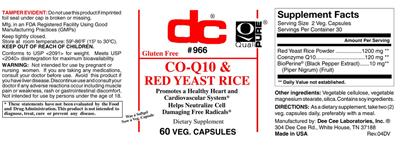
Supplement Facts
The label details for Co-Q10 & Red Yeast Rice by DC, sourced from the NIH Dietary Supplement Label Database.
Supplement Facts
| Ingredient | Amount | % DV |
|---|---|---|
| Coenzyme Q10 | 120 mg | -- |
| BioPerine | 10 mg | -- |
| Red Yeast Rice powder | 1200 mg | -- |
Other ingredients: Cellulose, Magnesium Stearate, Silica
Tap any ingredient to jump to its full detail below.
These statements are the manufacturer’s wording, reproduced from the product label — the label is saying it, not HelloPharmacist. We don’t verify or endorse them.
Precautions
Tamper Evident: Do not use this product if imprinted foil seal under cap is broken or missing.
Keep out of reach of children.
Warning: Not intended for use by pregnant or nursing women. If you are taking any medications, consult your doctor before use.
Avoid this product if you have liver disease. Discontinue use and consult your doctor if any adverse reactions occur including muscle pain or weakness, rash or gastrointestinal discomfort.
Not intended for use by persons under the age of 18.
Formulation
Mfg. in an FDA Registered Facility using Good Manufacturing Practices (GMPs)
Conforms to USP <2091> for weight. Meets USP <2040> disintegration for maximum bioavailability.
Gluten free
Promotes a healthy heart and cardiovascular system Helps neutralize cell damaging free radicals
Made in USA
Storage
Keep tightly closed. Store at room temperature: 59 degrees - 86 degrees F (15 degrees to 30 degrees C).
FDA Disclaimer Statement
These statements have not been evaluated by the Food and Drug Administration. This product is not intended to diagnose, treat, cure or prevent any disease.
Seals/Symbols
Quali Pure
FDA Statement of Identity
Dietary Supplement
Suggested/Recommended/Usage/Directions
Directions: As a dietary supplement, take two (2) veg. capsules daily, preferably with a meal.
General Statements
Was a softgel now a veg. capsule
Is this label outdated? Report a formula or label change and our pharmacy team will review it.
Co-Q10 & Red Yeast Rice by DC label
The label scan from the NIH Dietary Supplement Label Database. Tap to enlarge.
Label images are published by the NIH Dietary Supplement Label Database for the version of this product on file. Always read your actual product label.
View the full label (PDF)The Ingredients in Co-Q10 & Red Yeast Rice by DC
These are the 3 active ingredients this product is made of. Select any to open its full monograph.
Serving size2 Vegan Capsule(s) Dosage formCapsule Servings per container30 Amounts shown are per serving.
Most supplement products combine several ingredients, and a medication can interact with the product through any one of them. Each ingredient below shows whether it has known drug interactions.
Coenzyme Q10
Interacts with198 drugs
CoQ10 is a vitamin-like substance your body makes naturally that helps cells produce energy and acts as an antioxidant. It is generally well tolerated...
Coenzyme Q10 monograph & interactionsBioPerine
Interacts with1,019 drugs
Black pepper is a common kitchen spice that is generally safe in the amounts used in food. Its extract, piperine, is mostly added to supplements to he...
BioPerine monograph & interactionsRed Yeast Rice powder
Interacts with477 drugs
Red yeast rice contains monacolin K, which is chemically identical to the prescription statin lovastatin, and it can lower LDL ('bad') cholesterol. Be...
Red Yeast Rice powder monograph & interactionsOther (inactive) ingredients: Cellulose, Magnesium Stearate, Silica. These complete the product’s ingredient list but are not active constituents.
Co-Q10 & Red Yeast Rice by DC Drug Interactions
HelloPharmacist Interaction Report
Co-Q10 & Red Yeast Rice by DC contains three active ingredients, and the product does interact with medications.
The most serious concern is Red Yeast Rice, which contains lovastatin (a statin drug). Taking it with certain cholesterol drugs called HMG-CoA reductase inhibitors (statins) is a Moderate interaction — combining them may push lovastatin to unsafe levels and raise the risk of muscle damage.
Red Yeast Rice also interacts Moderately with cyclosporine (used after transplants), gemfibrozil (a triglyceride drug), and high-dose niacin — all can sharply increase lovastatin levels or the risk of serious muscle injury (rhabdomyolysis). It may also increase liver damage risk (Moderate) if you take other hepatotoxic drugs, and it interacts Moderately with CYP3A4 inhibitors (drugs that slow how your liver breaks down lovastatin).
Read the full breakdown — every affected drug type, severity by severity
BioPerine (black pepper extract) has Moderate interactions with several medications: it can raise blood levels of propranolol (a beta-blocker for blood pressure and heart rhythm), nevirapine (an HIV drug), rifampin (a tuberculosis antibiotic), phenytoin (an anti-seizure drug), cyclosporine (transplant drug), pentobarbital (a sedative), atorvastatin (a statin), and theophylline (an asthma drug). Coenzyme Q10 interacts Moderately with blood thinners like warfarin — case reports show it may reduce how well warfarin works — and with alkylating chemotherapy drugs, where its antioxidant effects might weaken the cancer drug's action.
It has Minor interactions with blood pressure medications and may add to their effect.
Although some ingredients have no known interactions documented in our data, altogether these interactions span 1,283 individual medications. Use the medication checker on this page to look up your exact drugs before you start.
Check your own medications below · Editorial policy · How we use AI
Want to check YOUR meds against Co-Q10 & Red Yeast Rice?
Ask about interactions with your drugs in plain English — “Can I take it with lisinopril?” — and we find you the answer in seconds, ingredient by ingredient.
Go to the checkerIngredients driving the most interactions
Individual Drug Interactions
The ingredients in Co-Q10 & Red Yeast Rice interact with 1,304 drugs. Click any drug to see the details.
3 of the 3 ingredients in Co-Q10 & Red Yeast Rice interact with drugs. Each result below shows which ingredient is responsible. BioPerine Red Yeast Rice powder Coenzyme Q10
6-mercaptopurinePurinethol
How 6-mercaptopurine interacts with Co-Q10 & Red Yeast Rice — through 1 ingredient. Tap an ingredient for the detail:
Red Yeast Rice PowderHepatotoxic Drugs Moderate
Interaction Summary
Theoretically, concomitant use might increase the risk of liver damage.
Read the full Red Yeast Rice Powder + 6-mercaptopurine interactionAdo-trastuzumab EmtansineKadcyla
How Ado-trastuzumab Emtansine interacts with Co-Q10 & Red Yeast Rice — through 1 ingredient. Tap an ingredient for the detail:
BioperineCytochrome P450 3a4 (cyp3a4) Substrates Moderate
Interaction Summary
Theoretically, black pepper might increase levels of drugs metabolized by CYP3A4.
Read the full Bioperine + Ado-trastuzumab Emtansine interactionAbacavir Sulfate, Dolutegravir, LamivudineTriumeq
How Abacavir Sulfate, Dolutegravir, Lamivudine interacts with Co-Q10 & Red Yeast Rice — through 1 ingredient. Tap an ingredient for the detail:
Red Yeast Rice PowderHepatotoxic Drugs Moderate
Interaction Summary
Theoretically, concomitant use might increase the risk of liver damage.
Read the full Red Yeast Rice Powder + Abacavir Sulfate, Dolutegravir, Lamivudine interactionAbacavir, LamivudineEpzicom
How Abacavir, Lamivudine interacts with Co-Q10 & Red Yeast Rice — through 1 ingredient. Tap an ingredient for the detail:
Red Yeast Rice PowderHepatotoxic Drugs Moderate
Interaction Summary
Theoretically, concomitant use might increase the risk of liver damage.
Read the full Red Yeast Rice Powder + Abacavir, Lamivudine interactionAbametapirXeglyze
How Abametapir interacts with Co-Q10 & Red Yeast Rice — through 1 ingredient. Tap an ingredient for the detail:
Red Yeast Rice PowderCytochrome P450 3a4 (cyp3a4) Inhibitors Moderate
Interaction Summary
Theoretically, drugs that inhibit the CYP3A4 enzymes might increase levels of lovastatin from red yeast rice.
Read the full Red Yeast Rice Powder + Abametapir interactionAbciximabReoPro
How Abciximab interacts with Co-Q10 & Red Yeast Rice — through 1 ingredient. Tap an ingredient for the detail:
BioperineAnticoagulant/antiplatelet Drugs Moderate
Interaction Summary
Theoretically, black pepper might increase the risk of bleeding when taken with antiplatelet or anticoagulant drugs.
Read the full Bioperine + Abciximab interactionAbemaciclibVerzenio
How Abemaciclib interacts with Co-Q10 & Red Yeast Rice — through 1 ingredient. Tap an ingredient for the detail:
BioperineCytochrome P450 3a4 (cyp3a4) Substrates Moderate
Interaction Summary
Theoretically, black pepper might increase levels of drugs metabolized by CYP3A4.
Read the full Bioperine + Abemaciclib interactionAbiraterone
How Abiraterone interacts with Co-Q10 & Red Yeast Rice — through 2 ingredients. Tap an ingredient for the detail:
BioperineCytochrome P450 3a4 (cyp3a4) Substrates Moderate
Interaction Summary
Theoretically, black pepper might increase levels of drugs metabolized by CYP3A4.
Read the full Bioperine + Abiraterone interactionRed Yeast Rice PowderHepatotoxic Drugs, Cytochrome P450 3a4 (cyp3a4) Inhibitors Moderate
Interaction Summary
Theoretically, concomitant use might increase the risk of liver damage.
Read the full Red Yeast Rice Powder + Abiraterone interactionAbiraterone AcetateYonsa, Zytiga
How Abiraterone Acetate interacts with Co-Q10 & Red Yeast Rice — through 2 ingredients. Tap an ingredient for the detail:
Red Yeast Rice PowderHepatotoxic Drugs Moderate
Interaction Summary
Theoretically, concomitant use might increase the risk of liver damage.
Read the full Red Yeast Rice Powder + Abiraterone Acetate interactionBioperineCytochrome P450 3a4 (cyp3a4) Substrates Moderate
Interaction Summary
Theoretically, black pepper might increase levels of drugs metabolized by CYP3A4.
Read the full Bioperine + Abiraterone Acetate interactionAbrocitinibCibinqo
How Abrocitinib interacts with Co-Q10 & Red Yeast Rice — through 1 ingredient. Tap an ingredient for the detail:
BioperineAnticoagulant/antiplatelet Drugs Moderate
Interaction Summary
Theoretically, black pepper might increase the risk of bleeding when taken with antiplatelet or anticoagulant drugs.
Read the full Bioperine + Abrocitinib interactionAcalabrutinibCalquence
How Acalabrutinib interacts with Co-Q10 & Red Yeast Rice — through 1 ingredient. Tap an ingredient for the detail:
BioperineP-glycoprotein Substrates, Cytochrome P450 3a4 (cyp3a4) Substrates Moderate
Interaction Summary
Theoretically, black pepper might increase levels of P-glycoprotein substrates.
Read the full Bioperine + Acalabrutinib interactionAcarboseGlucobay, Prandase, Precose
How Acarbose interacts with Co-Q10 & Red Yeast Rice — through 2 ingredients. Tap an ingredient for the detail:
BioperineAntidiabetes Drugs Moderate
Interaction Summary
Theoretically, black pepper might increase the risk of hypoglycemia when taken with antidiabetes drugs.
Read the full Bioperine + Acarbose interactionRed Yeast Rice PowderHepatotoxic Drugs Moderate
Interaction Summary
Theoretically, concomitant use might increase the risk of liver damage.
Read the full Red Yeast Rice Powder + Acarbose interactionAcebutololRhotral, Sectral
How Acebutolol interacts with Co-Q10 & Red Yeast Rice — through 2 ingredients. Tap an ingredient for the detail:
Red Yeast Rice PowderHepatotoxic Drugs Moderate
Interaction Summary
Theoretically, concomitant use might increase the risk of liver damage.
Read the full Red Yeast Rice Powder + Acebutolol interactionCoenzyme Q10Antihypertensive Drugs Minor
Interaction Summary
Theoretically, coenzyme Q10 might have additive effects with antihypertensive drugs.
Read the full Coenzyme Q10 + Acebutolol interactionAcenocoumarolSintrom
How Acenocoumarol interacts with Co-Q10 & Red Yeast Rice — through 1 ingredient. Tap an ingredient for the detail:
BioperineAnticoagulant/antiplatelet Drugs Moderate
Interaction Summary
Theoretically, black pepper might increase the risk of bleeding when taken with antiplatelet or anticoagulant drugs.
Read the full Bioperine + Acenocoumarol interactionAcetaminophenChildren's Tylenol, Children's Tylenol Meltaways, Tylenol, Tylenol Ex Strength
How Acetaminophen interacts with Co-Q10 & Red Yeast Rice — through 2 ingredients. Tap an ingredient for the detail:
Red Yeast Rice PowderHepatotoxic Drugs Moderate
Interaction Summary
Theoretically, concomitant use might increase the risk of liver damage.
Read the full Red Yeast Rice Powder + Acetaminophen interactionBioperineCytochrome P450 1a2 (cyp1a2) Substrates Minor
Interaction Summary
Theoretically, black pepper might decrease levels and clinical effects of drugs metabolized by CYP1A2.
Read the full Bioperine + Acetaminophen interactionAcetaminophen, AspirinGemnisyn
How Acetaminophen, Aspirin interacts with Co-Q10 & Red Yeast Rice — through 2 ingredients. Tap an ingredient for the detail:
BioperineAnticoagulant/antiplatelet Drugs, Cytochrome P450 1a2 (cyp1a2) Substrates Moderate
Interaction Summary
Theoretically, black pepper might increase the risk of bleeding when taken with antiplatelet or anticoagulant drugs.
Read the full Bioperine + Acetaminophen, Aspirin interactionRed Yeast Rice PowderHepatotoxic Drugs Moderate
Interaction Summary
Theoretically, concomitant use might increase the risk of liver damage.
Read the full Red Yeast Rice Powder + Acetaminophen, Aspirin interactionAcetaminophen, Aspirin, CaffeineExcedrin, Excedrin Extra Strength, Excedrin Migraine
How Acetaminophen, Aspirin, Caffeine interacts with Co-Q10 & Red Yeast Rice — through 2 ingredients. Tap an ingredient for the detail:
Red Yeast Rice PowderHepatotoxic Drugs Moderate
Interaction Summary
Theoretically, concomitant use might increase the risk of liver damage.
Read the full Red Yeast Rice Powder + Acetaminophen, Aspirin, Caffeine interactionBioperineCytochrome P450 1a2 (cyp1a2) Substrates, Anticoagulant/antiplatelet Drugs +1 Moderate
Interaction Summary
Theoretically, black pepper might decrease levels and clinical effects of drugs metabolized by CYP1A2.
Read the full Bioperine + Acetaminophen, Aspirin, Caffeine interactionAcetaminophen, Brompheniramine, PhenylpropanolamineDimetapp Cold and Flu
How Acetaminophen, Brompheniramine, Phenylpropanolamine interacts with Co-Q10 & Red Yeast Rice — through 2 ingredients. Tap an ingredient for the detail:
Red Yeast Rice PowderHepatotoxic Drugs Moderate
Interaction Summary
Theoretically, concomitant use might increase the risk of liver damage.
Read the full Red Yeast Rice Powder + Acetaminophen, Brompheniramine, Phenylpropanolamine interactionBioperineCytochrome P450 1a2 (cyp1a2) Substrates Minor
Interaction Summary
Theoretically, black pepper might decrease levels and clinical effects of drugs metabolized by CYP1A2.
Read the full Bioperine + Acetaminophen, Brompheniramine, Phenylpropanolamine interactionAcetaminophen, ButalbitalAxocet, Bancap, Bucet, Butex Forte, Esgic CF, Orbivan CF +5 more
How Acetaminophen, Butalbital interacts with Co-Q10 & Red Yeast Rice — through 2 ingredients. Tap an ingredient for the detail:
Red Yeast Rice PowderHepatotoxic Drugs Moderate
Interaction Summary
Theoretically, concomitant use might increase the risk of liver damage.
Read the full Red Yeast Rice Powder + Acetaminophen, Butalbital interactionBioperineCytochrome P450 1a2 (cyp1a2) Substrates Minor
Interaction Summary
Theoretically, black pepper might decrease levels and clinical effects of drugs metabolized by CYP1A2.
Read the full Bioperine + Acetaminophen, Butalbital interactionAcetaminophen, Butalbital, CaffeineEsgic, Esgic Plus, Fiogesic, Fioricet, Repan, Tecnal +1 more
How Acetaminophen, Butalbital, Caffeine interacts with Co-Q10 & Red Yeast Rice — through 2 ingredients. Tap an ingredient for the detail:
Red Yeast Rice PowderHepatotoxic Drugs Moderate
Interaction Summary
Theoretically, concomitant use might increase the risk of liver damage.
Read the full Red Yeast Rice Powder + Acetaminophen, Butalbital, Caffeine interactionBioperineCytochrome P450 3a4 (cyp3a4) Substrates, Cytochrome P450 1a2 (cyp1a2) Substrates Moderate
Interaction Summary
Theoretically, black pepper might increase levels of drugs metabolized by CYP3A4.
Read the full Bioperine + Acetaminophen, Butalbital, Caffeine interactionAcetaminophen, Butalbital, Caffeine, CodeineEsgic with Codeine, Fioricet w/ Codeine
How Acetaminophen, Butalbital, Caffeine, Codeine interacts with Co-Q10 & Red Yeast Rice — through 2 ingredients. Tap an ingredient for the detail:
BioperineCytochrome P450 1a2 (cyp1a2) Substrates, Cytochrome P450 2d6 (cyp2d6) Substrates +1 Moderate
Interaction Summary
Theoretically, black pepper might decrease levels and clinical effects of drugs metabolized by CYP1A2.
Read the full Bioperine + Acetaminophen, Butalbital, Caffeine, Codeine interactionRed Yeast Rice PowderHepatotoxic Drugs Moderate
Interaction Summary
Theoretically, concomitant use might increase the risk of liver damage.
Read the full Red Yeast Rice Powder + Acetaminophen, Butalbital, Caffeine, Codeine interactionAcetaminophen, Butalbital, CodeineBancap w/ Codeine
How Acetaminophen, Butalbital, Codeine interacts with Co-Q10 & Red Yeast Rice — through 2 ingredients. Tap an ingredient for the detail:
Red Yeast Rice PowderHepatotoxic Drugs Moderate
Interaction Summary
Theoretically, concomitant use might increase the risk of liver damage.
Read the full Red Yeast Rice Powder + Acetaminophen, Butalbital, Codeine interactionBioperineCytochrome P450 1a2 (cyp1a2) Substrates, Cytochrome P450 2d6 (cyp2d6) Substrates Moderate
Interaction Summary
Theoretically, black pepper might decrease levels and clinical effects of drugs metabolized by CYP1A2.
Read the full Bioperine + Acetaminophen, Butalbital, Codeine interactionAcetaminophen, Butalbital, Codeine PhosphatePhrenilin #3
How Acetaminophen, Butalbital, Codeine Phosphate interacts with Co-Q10 & Red Yeast Rice — through 2 ingredients. Tap an ingredient for the detail:
BioperineCytochrome P450 2d6 (cyp2d6) Substrates, Cytochrome P450 1a2 (cyp1a2) Substrates Moderate
Interaction Summary
Theoretically, black pepper might increase levels of drugs metabolized by CYP2D6.
Read the full Bioperine + Acetaminophen, Butalbital, Codeine Phosphate interactionRed Yeast Rice PowderHepatotoxic Drugs Moderate
Interaction Summary
Theoretically, concomitant use might increase the risk of liver damage.
Read the full Red Yeast Rice Powder + Acetaminophen, Butalbital, Codeine Phosphate interactionAcetaminophen, Caffeine, Chlorpheniramine, Hydrocodone, PhenylephrineHycomine Compound
How Acetaminophen, Caffeine, Chlorpheniramine, Hydrocodone, Phenylephrine interacts with Co-Q10 & Red Yeast Rice — through 2 ingredients. Tap an ingredient for the detail:
Red Yeast Rice PowderHepatotoxic Drugs Moderate
Interaction Summary
Theoretically, concomitant use might increase the risk of liver damage.
Read the full Red Yeast Rice Powder + Acetaminophen, Caffeine, Chlorpheniramine, Hydrocodone, Phenylephrine interactionBioperineCytochrome P450 2d6 (cyp2d6) Substrates, Cytochrome P450 1a2 (cyp1a2) Substrates +1 Moderate
Interaction Summary
Theoretically, black pepper might increase levels of drugs metabolized by CYP2D6.
Read the full Bioperine + Acetaminophen, Caffeine, Chlorpheniramine, Hydrocodone, Phenylephrine interactionAcetaminophen, Caffeine, CodeineGesic C15, Gesic C30, Gesic C8, Lenoltec 1, Lenoltec 2, Lenoltec 3 +1 more
How Acetaminophen, Caffeine, Codeine interacts with Co-Q10 & Red Yeast Rice — through 2 ingredients. Tap an ingredient for the detail:
BioperineCytochrome P450 3a4 (cyp3a4) Substrates, Cytochrome P450 1a2 (cyp1a2) Substrates +1 Moderate
Interaction Summary
Theoretically, black pepper might increase levels of drugs metabolized by CYP3A4.
Read the full Bioperine + Acetaminophen, Caffeine, Codeine interactionRed Yeast Rice PowderHepatotoxic Drugs Moderate
Interaction Summary
Theoretically, concomitant use might increase the risk of liver damage.
Read the full Red Yeast Rice Powder + Acetaminophen, Caffeine, Codeine interactionAcetaminophen, Caffeine, Codeine, SalicylamideCodalan No.1, Codalan No.2, Codalan No.3
How Acetaminophen, Caffeine, Codeine, Salicylamide interacts with Co-Q10 & Red Yeast Rice — through 2 ingredients. Tap an ingredient for the detail:
BioperineCytochrome P450 2d6 (cyp2d6) Substrates, Cytochrome P450 3a4 (cyp3a4) Substrates +1 Moderate
Interaction Summary
Theoretically, black pepper might increase levels of drugs metabolized by CYP2D6.
Read the full Bioperine + Acetaminophen, Caffeine, Codeine, Salicylamide interactionRed Yeast Rice PowderHepatotoxic Drugs Moderate
Interaction Summary
Theoretically, concomitant use might increase the risk of liver damage.
Read the full Red Yeast Rice Powder + Acetaminophen, Caffeine, Codeine, Salicylamide interactionAcetaminophen, Caffeine, DihydrocodeineDHC Plus, Panlor DC, Panlor SS
How Acetaminophen, Caffeine, Dihydrocodeine interacts with Co-Q10 & Red Yeast Rice — through 2 ingredients. Tap an ingredient for the detail:
Red Yeast Rice PowderHepatotoxic Drugs Moderate
Interaction Summary
Theoretically, concomitant use might increase the risk of liver damage.
Read the full Red Yeast Rice Powder + Acetaminophen, Caffeine, Dihydrocodeine interactionBioperineCytochrome P450 2d6 (cyp2d6) Substrates, Cytochrome P450 3a4 (cyp3a4) Substrates +1 Moderate
Interaction Summary
Theoretically, black pepper might increase levels of drugs metabolized by CYP2D6.
Read the full Bioperine + Acetaminophen, Caffeine, Dihydrocodeine interactionAcetaminophen, Caffeine, IsomethepteneMigralam
How Acetaminophen, Caffeine, Isometheptene interacts with Co-Q10 & Red Yeast Rice — through 2 ingredients. Tap an ingredient for the detail:
BioperineCytochrome P450 1a2 (cyp1a2) Substrates, Cytochrome P450 3a4 (cyp3a4) Substrates Moderate
Interaction Summary
Theoretically, black pepper might decrease levels and clinical effects of drugs metabolized by CYP1A2.
Read the full Bioperine + Acetaminophen, Caffeine, Isometheptene interactionRed Yeast Rice PowderHepatotoxic Drugs Moderate
Interaction Summary
Theoretically, concomitant use might increase the risk of liver damage.
Read the full Red Yeast Rice Powder + Acetaminophen, Caffeine, Isometheptene interactionAcetaminophen, Caffeine, PyrilamineMidol Max Strength Menstrual
How Acetaminophen, Caffeine, Pyrilamine interacts with Co-Q10 & Red Yeast Rice — through 2 ingredients. Tap an ingredient for the detail:
BioperineCytochrome P450 1a2 (cyp1a2) Substrates, Cytochrome P450 3a4 (cyp3a4) Substrates Moderate
Interaction Summary
Theoretically, black pepper might decrease levels and clinical effects of drugs metabolized by CYP1A2.
Read the full Bioperine + Acetaminophen, Caffeine, Pyrilamine interactionRed Yeast Rice PowderHepatotoxic Drugs Moderate
Interaction Summary
Theoretically, concomitant use might increase the risk of liver damage.
Read the full Red Yeast Rice Powder + Acetaminophen, Caffeine, Pyrilamine interactionAcetaminophen, Chlorpheniramine Maleate, Dextromethorphan HbrVicks Formula 44M Cough, Cold & Flu Relief
How Acetaminophen, Chlorpheniramine Maleate, Dextromethorphan Hbr interacts with Co-Q10 & Red Yeast Rice — through 2 ingredients. Tap an ingredient for the detail:
BioperineCytochrome P450 2d6 (cyp2d6) Substrates, Cytochrome P450 3a4 (cyp3a4) Substrates +1 Moderate
Interaction Summary
Theoretically, black pepper might increase levels of drugs metabolized by CYP2D6.
Read the full Bioperine + Acetaminophen, Chlorpheniramine Maleate, Dextromethorphan Hbr interactionRed Yeast Rice PowderHepatotoxic Drugs Moderate
Interaction Summary
Theoretically, concomitant use might increase the risk of liver damage.
Read the full Red Yeast Rice Powder + Acetaminophen, Chlorpheniramine Maleate, Dextromethorphan Hbr interactionEach ingredient & the kinds of drugs it affects
For each ingredient in Co-Q10 & Red Yeast Rice with known interactions, here are the types of medications they can affect. Open any type for the detail — or search your exact drug in the checker above.
BioPerine
Anticoagulant/Antiplatelet Drugs
Theoretically, black pepper might increase the risk of bleeding when taken with antiplatelet or anticoagulant drugs.
In vitro research shows that piperine, a constituent of black pepper, seems to inhibit platelet aggregation. This has not been reported in humans.
Antidiabetes Drugs
Theoretically, black pepper might increase the risk of hypoglycemia when taken with antidiabetes drugs.
Animal research shows that piperine, a constituent of black pepper, can reduce blood glucose levels. Monitor blood glucose levels closely. Dose adjustments might be necessary.
Atorvastatin (Lipitor)
Theoretically, black pepper might increase blood levels of atorvastatin.
Animal research shows that taking piperine, a constituent of black pepper, 35 mg/kg can increase the maximum serum concentration of atorvastatin three-fold. This has not been reported in humans.
Cyclosporine (Neoral, Sandimmune)
Theoretically, black pepper might increase the effects and side effects of cyclosporine.
In vitro research shows that piperine, a constituent of black pepper, increases the bioavailability of cyclosporine. This has not been reported in humans.
Cytochrome P450 2D6 (Cyp2D6) Substrates
Theoretically, black pepper might increase levels of drugs metabolized by CYP2D6.
In vitro research suggests that some constituents of black pepper inhibit CYP2D6. This has not been reported in humans.
Cytochrome P450 3A4 (Cyp3A4) Substrates
Theoretically, black pepper might increase levels of drugs metabolized by CYP3A4.
In vitro research and pharmacokinetic simulation data suggest that piperine, a constituent of black pepper, as well as the pepper fruit seem to inhibit CYP3A4. This has not been reported in humans.
Lithium
Theoretically, black pepper might increase blood levels of lithium due to its diuretic effects. The dose of lithium might need to be reduced.
Black pepper is thought to have diuretic properties.
Nevirapine (Viramune)
Black pepper might increase blood levels of nevirapine.
Clinical research shows that piperine, a constituent of black pepper, increases the plasma concentration of nevirapine. However, no adverse effects were observed in this study.
P-Glycoprotein Substrates
Theoretically, black pepper might increase levels of P-glycoprotein substrates.
In vitro research shows that piperine, a constituent of black pepper, seems to inhibit P-glycoprotein.
Pentobarbital (Nembutal)
Theoretically, black pepper might increase the sedative effects of pentobarbital.
Animal research shows that piperine, a constituent of black pepper, increases pentobarbital-induced sleeping time.
Phenytoin (Dilantin)
Black pepper might increase blood levels of phenytoin.
Clinical research shows that piperine, a constituent of black pepper, seems to increase absorption, slow elimination, and increase levels of phenytoin. Taking a single dose of black pepper 1 gram along with phenytoin seems to double the serum concentration of phenytoin. Consuming a soup with black pepper providing piperine 44 mg/200 mL of soup along with phenytoin also seems to increase phenytoin levels when compared with consuming the same soup without black pepper.
Propranolol (Inderal)
Black pepper might increase blood levels of propranolol.
Clinical research shows that piperine, a constituent of black pepper, seems to increase absorption and slow elimination of propranolol.
Rifampin (Rifadin)
Black pepper might increase blood levels of rifampin.
Clinical research shows that piperine, a constituent of black pepper, seems to increase absorption and serum levels of rifampin.
Theophylline
Black pepper might increase blood levels of theophylline.
Clinical research shows that piperine, a constituent of black pepper, seems to increase absorption and slow elimination of theophylline.
Amoxicillin (Amoxil, Trimox)
Theoretically, black pepper might increase the effects and side effects of amoxicillin.
Animal research shows that taking piperine, a constituent of black pepper, with amoxicillin increases plasma levels of amoxicillin. This has not been reported in humans.
Carbamazepine (Tegretol)
Theoretically, black pepper might increase blood levels of carbamazepine, potentially increasing the effects and side effects of carbamazepine.
One clinical study in patients taking carbamazepine 300 mg or 500 mg twice daily shows that taking a single 20 mg dose of purified piperine, a constituent of black pepper, increases carbamazepine levels. Piperine may increase carbamazepine absorption by increasing blood flow to the GI tract, increasing the surface area of the small intestine, or inhibiting cytochrome P450 3A4 (CYP3A4) in the gut wall. Absorption was significantly increased by 7-10 mcg/mL/hour. The time to eliminate carbamazepine was also increased by 4-8 hours. Although carbamazepine levels were increased, this did not appear to increase side effects. In vitro research also shows that piperine can increase carbamazepine levels by 11% in a time-dependent manner.
Cytochrome P450 1A2 (Cyp1A2) Substrates
Theoretically, black pepper might decrease levels and clinical effects of drugs metabolized by CYP1A2.
In vitro research suggests that black pepper induces CYP1A2. This has not been reported in humans.
Red Yeast Rice powder
Cyclosporine (Neoral, Sandimmune)
Theoretically, taking red yeast rice in combination with cyclosporine might increase the risk of myopathy.
Red yeast rice contains varying levels of the statin drug lovastatin. Cyclosporine has been reported to increase plasma levels of lovastatin by 5- to 20-fold, resulting in reports of myopathy and rhabdomyolysis.
Cytochrome P450 3A4 (Cyp3A4) Inhibitors
Theoretically, drugs that inhibit the CYP3A4 enzymes might increase levels of lovastatin from red yeast rice.
Red yeast rice contains varying levels of the statin drug lovastatin, which is metabolized by CYP3A4. Combining red yeast rice with CYP3A4 inhibitors might increase serum levels of lovastatin from red yeast rice.
Gemfibrozil (Lopid)
Theoretically, taking red yeast rice in combination with gemfibrozil might increase the risk of rhabdomyolysis.
Red yeast rice contains varying levels of the statin drug lovastatin. Gemfibrozil has been reported to increase the risk of rhabdomyolysis when used in combination with lovastatin.
Hepatotoxic Drugs
Theoretically, concomitant use might increase the risk of liver damage.
Red yeast rice contains varying levels of the drug lovastatin. Lovastatin can cause liver damage in some people. Some clinical research suggests that supplements containing red yeast rice might increase liver enzyme levels in some, but not all, participants. Cases of acute hepatitis have been associated with red yeast rice. Combining it with hepatotoxic drugs might further increase this risk.
Hmg-Coa Reductase Inhibitors ("Statins")
Theoretically, taking red yeast rice with other statins might increase the risk of potential adverse effects.
Red yeast rice contains varying levels of the statin drug lovastatin and might result in supratherapeutic levels when used with other statins. Based on evaluation of data from the US Food and Drug Administration's adverse event reporting system (FAERS), it is recommended that red yeast rice products be avoided in people taking prescription statins.
Niacin
Theoretically, taking red yeast rice in combination with high-dose niacin might increase the risk of rhabdomyolysis.
Red yeast rice contains varying levels of the statin drug lovastatin and has been linked to reports of myopathy. Niacin has been reported to increase the risk of rhabdomyolysis when used in combination with lovastatin.
Coenzyme Q10
Alkylating Agents
Coenzyme Q10 has antioxidant effects. Theoretically, this may reduce the activity of chemotherapy drugs that generate free radicals.
Theoretically, antioxidants such as coenzyme Q10 might protect tumor cells from chemotherapeutic agents that work by inducing oxidative stress, such as alkylating agents (e.g., cyclophosphamide) and radiation therapy. The clinical importance of this interaction is unknown.
Warfarin (Coumadin)
Coenzyme Q10 is chemically similar to menaquinone and might have vitamin K-like procoagulant effects, which could decrease the effects of warfarin.
Concomitant use of coenzyme Q10 and warfarin might reduce the anticoagulant effects of warfarin. Four cases of decreased warfarin efficacy thought to be due to coenzyme Q10 have been reported. However, there is some preliminary clinical research that suggests coenzyme Q10 might not significantly decrease the effects of warfarin in patients who have a stable INR.
Antihypertensive Drugs
Theoretically, coenzyme Q10 might have additive effects with antihypertensive drugs.
Some clinical research shows that coenzyme Q10 can significantly lower blood pressure, although other studies have shown conflicting results.
Brand information
Manufacturer and brand details for Co-Q10 & Red Yeast Rice, from the product label.
DC
See all DC products- Name
- Dee Cee Laboratories, Inc.
- Street Address
- 304 Dee Cee Rd.
- City
- White House
- State
- TN
- ZipCode
- 37188
Co-Q10 & Red Yeast Rice by DC: Common Questions
Does Co-Q10 & Red Yeast Rice by DC interact with any medications?
How can one product interact with so many drugs?
Where does this information come from?
Will this product make my cholesterol medication work less well?
What's BioPerine in here and why?
Can I take this if I'm pregnant?
Can I breastfeed while taking this?
What side effects does Red Yeast Rice cause?
Is CoQ10 safe for heart patients?
Written and reviewed by the HelloPharmacist editorial staff. Our editorial policy
Not sure if Co-Q10 & Red Yeast Rice is safe with your meds?
Our pharmacists answer your medication & supplement questions — free.
Label information is sourced from the NIH Dietary Supplement Label Database and reflects the product version on file; always read your actual product label. This page is for education only and is not a substitute for professional medical advice. Confirm with your pharmacist or doctor before combining supplements and medications.
The Full Monographs Behind Co-Q10 & Red Yeast Rice’s Ingredients
Every ingredient we hold a full HelloPharmacist monograph for — uses, evidence, safety, and the complete interaction list.
Coenzyme Q10
Interacts with 198 drugsCoQ10 is a vitamin-like substance your body makes naturally that helps cells produce energy and acts as an antioxidant. It is generally well tolerated and is most studied for heart condition...
Read the full Coenzyme Q10 monograph → Herb & supplement monographBlack Pepper
Interacts with 1,019 drugsBlack pepper is a common kitchen spice that is generally safe in the amounts used in food. Its extract, piperine, is mostly added to supplements to help the body absorb other ingredients (li...
Read the full Black Pepper monograph → Herb & supplement monographRed Yeast Rice
Interacts with 477 drugsRed yeast rice contains monacolin K, which is chemically identical to the prescription statin lovastatin, and it can lower LDL ('bad') cholesterol. Because of this, it carries the same risks...
Read the full Red Yeast Rice monograph →Sources & How We Checked
Co-Q10 & Red Yeast Rice's label data comes from the NIH Dietary Supplement Label Database; the ingredient interaction data is from the Natural Medicines database, reviewed by our pharmacists.
- NIH Dietary Supplement Label Database (DSLD) — The official product label on file for this supplement.
- Natural Medicines (Therapeutic Research Center) — Evidence-graded clinical reference behind the ingredient interaction data.
Content is written and reviewed by licensed HelloPharmacist pharmacists. See our data sources and editorial standards for how this information is built and checked.
The 119 references behind this product’s interaction data
Every citation that drives the interaction findings for this product’s ingredients, from the evidence-graded Natural Medicines (TRC Healthcare) database. Open an ingredient to browse its citations — links open the study on PubMed or the publisher’s site.
Coenzyme Q10 40 references
- Kamikawa T, Kobayashi A, Yamashita T, et al. Effects of coenzyme Q10 on exercise tolerance in chronic stable angina pectoris. Am J Cardiol 1985;56:247-51. PubMed
- Langsjoen P, Willis R, Folkers K. Treatment of essential hypertension with coenzyme Q10. Mol Aspects Med 1994;S265-72. PubMed
- Spigset O. Reduced effect of warfarin caused by ubidecarenone. Lancet 1994;334:1372-3. PubMed
- Singh RB, Niaz MA, Rastogi SS, et al. Effect of hydrosoluble coenzyme Q10 on blood pressures and insulin resistance in hypertensive patients with coronary artery disease. J Hum Hypertens 1999;13:203-8. PubMed
- Portakal O, Ozkaya O, Erden Inal M, et al. Coenzyme Q10 concentrations and antioxidant status in tissues of breast cancer patients. Clin Biochem 2000;33:279-84. PubMed
- Lund EL, Quistorff B, Spang-Thomsen M, Kristjansen PE. Effect of radiation therapy on small-cell lung cancer is reduced by ubiquinone intake. Folia Microbiol (Praha) 1998;43:505-6. PubMed
- Langsjoen PH, Langsjoen PH, Folkers K. Long-term efficacy and safety of coenzyme Q10 therapy for idiopathic dilated cardiomyopathy. Am J Cardiol 1990;65:521-3. PubMed
- Heck AM, DeWitt BA, Lukes AL. Potential interactions between alternative therapies and warfarin. Am J Health Syst Pharm 2000;57:1221-7. DOI
- Landbo C, Almdal TP. [Interaction between warfarin and coenzyme Q10]. Ugeskr Laeger 1998;160:3226-7.
- Baggio E, Gandini R, Plauncher AC, et al. Italian multicenter study on the safety and efficacy of coenzyme Q10 as adjunctive therapy in heart failure. CoQ10 Drug Surveillance Investigators. Mol Aspects Med 1994;15 Suppl:S287-94. PubMed
- Burke BE, Neuenschwander R, Olson RD. Randomized, double-blind, placebo-controlled trial of coenzyme Q10 in isolated systolic hypertension. South Med J 2001;94:1112-7. PubMed
- The Huntington Study Group. A randomized, placebo-controlled trial of coenzyme Q10 and remacemide in Huntington's disease. Neurology 2001;57:397-404.
- Hodgson JM, Watts GF, Playford DA, et al. Coenzyme Q10 improves blood pressure and glycaemic control: a controlled trial in subjects with type 2 diabetes. Eur J Clin Nutr 2002;56:1137-42. PubMed
- Singh RB, Neki NS, Kartikey K, et al. Effect of coenzyme Q10 on risk of atherosclerosis in patients with recent myocardial infarction. Mol Cell Biochem 2003;246:75-82. DOI
- Porterfield LM. Why did the response to warfarin change? RN 2000;63:107.
- Sandor PS, Di Clemente L, Coppola G, et al. Efficacy of coenzyme Q10 in migraine prophylaxis: A randomized controlled trial. Neurology 2005;64:713-5. PubMed
- Engelsen J, Nielsen JD, Winther K. Effect of coenzyme Q10 and Ginkgo biloba on warfarin dosage in stable, long-term warfarin treated outpatients. A randomised, double blind, placebo-crossover trial. Thromb Haemost 2002;87:1075-6. DOI
- Berman M, Erman A, Ben-Gal T, et al. Coenzyme Q10 in patients with end-stage heart failure awaiting cardiac transplantation: a randomized, placebo-controlled study. Clin Cardiol 2004;27:295–9. PubMed
- Storch A, Jost WH, Vieregge P, et al. Randomized, double-blind, placebo-controlled trial on symptomatic effects of coenzyme Q10 in Parkinson disease. Arch Neurol 2007;64:938-44. DOI
- Digiesi V, Cantini F, Oradei A, et al. Coenzyme Q10 in essential hypertension. Mol Aspects Med 1994;15 Suppl:s257-63. PubMed
- Yamagami T, Takagi M, Akagami H, et al. Effect of coenzyme Q10 on essential hypertension, a double blind controlled study. In: Folkers KA, Yamamura Y, eds. Biomedical and Clinical Aspects of Coenzyme Q, Vol. 5. Amsterdam: Elsevier Science Publications, 19
- Ho MJ, Bellusci A, Wright JM. Blood pressure lowering efficacy of coenzyme Q10 for primary hypertension (review). Cochrane Database Syst Rev 2009;(4):CD007435. PubMed
- Rosenfeldt, F. L., Haas, S. J., Krum, H., Hadj, A., Ng, K., Leong, J. Y., and Watts, G. F. Coenzyme Q10 in the treatment of hypertension: a meta-analysis of the clinical trials. J Hum.Hypertens. 2007;21(4):297-306. PubMed
- Stamelou, M., Reuss, A., Pilatus, U., Magerkurth, J., Niklowitz, P., Eggert, K. M., Krisp, A., Menke, T., Schade-Brittinger, C., Oertel, W. H., and Hoglinger, G. U. Short-term effects of coenzyme Q10 in progressive supranuclear palsy: a randomized, place DOI
- Keogh A, Fenton S, Leslie C, et al. Randomised double-blind, placebo-controlled trial of coenzyme Q, therapy in class II and III systolic heart failure. Heart Lung Circ. 2003;12:135-41.
- Gane, E. J., Weilert, F., Orr, D. W., Keogh, G. F., Gibson, M., Lockhart, M. M., Frampton, C. M., Taylor, K. M., Smith, R. A., and Murphy, M. P. The mitochondria-targeted anti-oxidant mitoquinone decreases liver damage in a phase II study of hepatitis C
- Lynch, D. R., Perlman, S. L., and Meier, T. A phase 3, double-blind, placebo-controlled trial of idebenone in friedreich ataxia. Arch Neurol. 2010;67(8):941-947. PubMed
- Young, J. M., Florkowski, C. M., Molyneux, S. L., McEwan, R. G., Frampton, C. M., Nicholls, M. G., Scott, R. S., and George, P. M. A randomized, double-blind, placebo-controlled crossover study of coenzyme Q10 therapy in hypertensive patients with the me
- Ishiyama, T., Morita, Y., Toyama, S., Yamagami, T., and Tsukamoto, N. A clinical study of the effect of coenzyme Q on congestive heart failure. Jpn.Heart J 1976;17(1):32-42. PubMed
- Matthews, P. M., Ford, B., Dandurand, R. J., Eidelman, D. H., O'Connor, D., Sherwin, A., Karpati, G., Andermann, F., and Arnold, D. L. Coenzyme Q10 with multiple vitamins is generally ineffective in treatment of mitochondrial disease. Neurology 1993;43(5
- Malm, C., Svensson, M., Sjoberg, B., Ekblom, B., and Sjodin, B. Supplementation with ubiquinone-10 causes cellular damage during intense exercise. Acta Physiol Scand. 1996;157(4):511-512. PubMed
- Singh, R. B., Wander, G. S., Rastogi, A., Shukla, P. K., Mittal, A., Sharma, J. P., Mehrotra, S. K., Kapoor, R., and Chopra, R. K. Randomized, double-blind placebo-controlled trial of coenzyme Q10 in patients with acute myocardial infarction. Cardiovasc. PubMed
- Digiesi V, Cantini F, and Brodbeck B. Effect of coenzyme Q10 on essential arterial hypertension. Current Therapeutic Research 1990;47(5):841-845.
- Parkinson Study Group QE3 Investigators, Beal MF, Oakes D, et al. A randomized clinical trial of high-dosage coenzyme Q10 in early Parkinson disease: no evidence of benefit. JAMA Neurol. 2014;71(5):543-52.
- Alehagen U, Johansson P, Bjornstedt M, et al. Cardiovascular mortality and N-terminal-proBNP reduced after combined selenium and coenzyme Q10 supplementation: A 5-year prospective randomized double-blind placebo-controlled trial among elderly Swedish citi
- Ho MJ, Li EC, Wright JM. Blood pressure lowering efficacy of coenzyme Q10 for primary hypertension. Cochrane Database Syst Rev. 2016 Mar 3;3:CD007435. doi: 10.1002/14651858.CD007435.pub3. PubMed
- Tabrizi R, Akbari M, Sharifi N, Lankarani KB, Moosazadeh M, Kolahdooz F, et al. The effects of coenzyme Q10 supplementation on blood pressures among patients with metabolic diseases: a systematic review and meta-analysis of randomized controlled trials. PubMed
- Tsai IC, Hsu CW, Chang CH, Tseng PT, Chang KV. Effectiveness of coenzyme Q10 supplementation for reducing fatigue: A systematic review and meta-analysis of randomized controlled trials. Front Pharmacol 2022;13:883251. PubMed
- Yaghini O, Hoseini N, Ghazavi MR, et al. A comparative study on the efficacy of coenzyme Q10 and amitriptyline in the prophylactic treatment of migraine headaches in children: A randomized controlled trial. Adv Biomed Res 2022;11:43. PubMed
- Hansen KS, Mogensen TH, Agergaard J, et al. High-dose coenzyme Q10 therapy versus placebo in patients with post COVID-19 condition: A randomized, phase 2, crossover trial. Lancet Reg Health Eur 2022. PubMed
Black Pepper 29 references
- Leung AY, Foster S. Encyclopedia of Common Natural Ingredients Used in Food, Drugs and Cosmetics. 2nd ed. New York, NY: John Wiley & Sons, 1996.
- Brinker F. Herb Contraindications and Drug Interactions. 2nd ed. Sandy, OR: Eclectic Medical Publications, 1998.
- Bano G, Amla V, Raina RK, et al. The effect of piperine on pharmacokinetics of phenytoin in healthy volunteers. Planta Med 1987;53:568-9. PubMed
- Bano G, et al. Effect of piperine on bioavailability and pharmacokinetics of propranolol and theophylline in healthy volunteers. Eur J Clin Pharmacol 1991;41;615-7. PubMed
- Cohle SD, Trestrail JD III, Graham MA, et al. Fatal pepper aspiration. Am J Dis Child 1988;142:633-6. PubMed
- Bhardwaj RK, Glaeser H, Becquemont L, et al. Piperine, a major constituent of black pepper, inhibits human P-glycoprotein and CYP3A4. J Pharmacol Exp Ther 2002;302:645-50. PubMed
- Velpandian T, Jasuja R, Bhardwaj RK, et al. Piperine in food: interference in the pharmacokinetics of phenytoin. Eur J Drug Metab Pharmacokinet 2001;26:241-7. PubMed
- Pattanaik S, Hota D, Prabhakar S, et al. Pharmacokinetic interaction of a single dose of piperine with steady-state carbamazepine in epilepsy patients. Phytother Res 2009;23:1281-6.
- Munakata, M., Kobayashi, K., Niisato-Nezu, J., Tanaka, S., Kakisaka, Y., Ebihara, T., Ebihara, S., Haginoya, K., Tsuchiya, S., and Onuma, A. Olfactory stimulation using black pepper oil facilitates oral feeding in pediatric patients receiving long-term en
- Myers, B. M., Smith, J. L., and Graham, D. Y. Effect of red pepper and black pepper on the stomach. Am J Gastroenterol 1987;82(3):211-214.
- Raghavendra, R. H. and Naidu, K. A. Spice active principles as the inhibitors of human platelet aggregation and thromboxane biosynthesis. Prostaglandins Leukot.Essent.Fatty Acids 2009;81(1):73-78. PubMed
- Subehan, Usia, T., Kadota, S., and Tezuka, Y. Mechanism-based inhibition of human liver microsomal cytochrome P450 2D6 (CYP2D6) by alkamides of Piper nigrum. Planta Med 2006;72(6):527-532.
- Kasibhatta, R. and Naidu, M. U. Influence of piperine on the pharmacokinetics of nevirapine under fasting conditions: a randomised, crossover, placebo-controlled study. Drugs R.D. 2007;8(6):383-391. PubMed
- Usia, T., Iwata, H., Hiratsuka, A., Watabe, T., Kadota, S., and Tezuka, Y. CYP3A4 and CYP2D6 inhibitory activities of Indonesian medicinal plants. Phytomedicine. 2006;13(1-2):67-73. PubMed
- Mujumdar, A. M., Dhuley, J. N., Deshmukh, V. K., Raman, P. H., Thorat, S. L., and Naik, S. R. Effect of piperine on pentobarbitone induced hypnosis in rats. Indian J Exp.Biol. 1990;28(5):486-487.
- Panda, S. and Kar, A. Piperine lowers the serum concentrations of thyroid hormones, glucose and hepatic 5'D activity in adult male mice. Horm.Metab Res. 2003;35(9):523-526. PubMed
- Lawless, H. and Stevens, D. A. Effects of oral chemical irritation on taste. Physiol Behav. 1984;32(6):995-998. PubMed
- Hiwale, A. R., Dhuley, J. N., and Naik, S. R. Effect of co-administration of piperine on pharmacokinetics of beta-lactam antibiotics in rats. Indian J Exp.Biol. 2002;40(3):277-281.
- Han, Y., Chin Tan, T. M., and Lim, L. Y. In vitro and in vivo evaluation of the effects of piperine on P-gp function and expression. Toxicol.Appl.Pharmacol. 8-1-2008;230(3):283-289. PubMed
- Sharma, P., Varma, M. V., Chawla, H. P., and Panchagnula, R. In situ and in vivo efficacy of peroral absorption enhancers in rats and correlation to in vitro mechanistic studies. Farmaco 2005;60(11-12):874-883. PubMed
- Aher, S., Biradar, S., Gopu, C. L., and Paradkar, A. Novel pepper extract for enhanced P-glycoprotein inhibition. J Pharm.Pharmacol. 2009;61(9):1179-1186. PubMed
- Zutshi, R. K., Singh, R., Zutshi, U., Johri, R. K., and Atal, C. K. Influence of piperine on rifampicin blood levels in patients of pulmonary tuberculosis. J Assoc.Physicians India 1985;33(3):223-224.
- Marotta, R. B. and Floch, M. H. Diet and nutrition in ulcer disease. Med Clin North Am 1991;75(4):967-979. PubMed
- Subehan, Usia, T., Iwata, H., Kadota, S., and Tezuka, Y. Mechanism-based inhibition of CYP3A4 and CYP2D6 by Indonesian medicinal plants. J Ethnopharmacol. 5-24-2006;105(3):449-455. PubMed
- Gimenez L, Zacharisen M. Severe pepper allergy in a young child. WMJ. 2011 Jun;110(3):138-9.
- Ren T, Yang M, Xiao M, Zhu J, Xie W, Zuo Z. Time-dependent inhibition of carbamazepine metabolism by piperine in anti-epileptic treatment. Life Sci. 2019;218:314-323. PubMed
- Thomas AB, Choudhary DC, Raje A, Nagrik SS. Pharmacokinetics and pharmacodynamic herb-drug interaction of piperine with atorvastatin in rats. J Chromatogr Sci 2021;59(4):371-80. PubMed
- Haron MH, Dale O, Martin K, et al. Evaluation of the Herb-Drug Interaction Potential of Commonly Used Botanicals on the US Market with Regard to PXR- and AhR-Mediated Influences on CYP3A4 and CYP1A2. J Diet Suppl 2022. PubMed
- Lin F, Hu Y, Zhang Y, Zhao L, Zhong D, Liu J. Predicting Food-Drug Interactions between Piperine and CYP3A4 Substrate Drugs Using PBPK Modeling. Int J Mol Sci 2024;25(20):10955. PubMed
Red Yeast Rice 50 references
- Hebel SK, ed. Drug Facts and Comparisons. 52nd ed. St. Louis: Facts and Comparisons, 1998.
- Heber D, Yip I, Ashley JM, et al. Cholesterol-lowering effects of a proprietary Chinese red-yeast-rice dietary supplement. Am J Clin Nutr 1999;69:231-6. PubMed
- Wang J, Lu A, Chi J. Multicenter clinical trial of the serum lipid-lowering effects of a monascus purpureus (red yeast) rice preparation from traditional Chinese medicine. Cur Ther Res 1997;58:964-78. DOI
- Wigger-Alberti W, Bauer A, Hipler UC, Elsner P. Anaphylaxis due to Monascus purpureus-fermented rice (red yeast rice). Allergy 1999;54:1330-1.
- Prasad GV, Wong T, Meliton G, Bhaloo S. Rhabdomyolysis due to red yeast rice (Monascus purpureus) in a renal transplant recipient. Transplantation 2002;74:1200-1. PubMed
- Heber D, Lembertas A, Lu QY, et al. An analysis of nine proprietary Chinese red yeast rice dietary supplements: implications of variability in chemical profile and contents. J Altern Complement Med 2001;7:133-9. PubMed
- Mueller PS. Symptomatic myopathy due to red yeast rice. Ann Intern Med 2006;145:474-5. PubMed
- Roselle H, Ekatan A, Tzeng J, et al. Symptomatic hepatitis associated with the use of herbal red yeast rice. Ann Intern Med 2008;149:516-7. PubMed
- Lapi F, Gallo E, Bernasconi S, et al. Myopathies associated with red yeast rice and liquorice: spontaneous reports from the Italian Surveillance System of Natural Health Products. Br J Clin Pharmacol 2008;66:572-74. PubMed
- Becker DJ, Gordon RY, Halbert SC, et al. Red yeast rice for dyslipidemia in statin-intolerant patients: A randomized trial. Ann Intern Med 2009;150:830-9. PubMed
- Halbert SC, French B, Gordon RY, et al. Tolerability of red yeast rice (2,400 mg twice daily) versus pravastatin (20 mg twice daily) in patients with previous statin intolerance. Am J Cardiol 2010;105:198-204. PubMed
- Gordon RY, Cooperman T, Obermeyer W, Becker DJ. Marked variability of monacolin levels in commercial red yeast rice products: buyer beware! Arch Intern Med 2010;170:1722-7. PubMed
- Karl M, Rubenstein M, Rudnick C, Brejda J. A multicenter study of nutraceutical drinks for cholesterol (evaluating effectiveness and tolerability). J Clin Lipidology 2012;6:150-158. PubMed
- Huang, J., Frohlich, J., and Ignaszewski, A. P. The impact of dietary changes and dietary supplements on lipid profile. Can J Cardiol 2011;27(4):488-505. PubMed
- Grieco, A., Miele, L., Pompili, M., Biolato, M., Vecchio, F. M., Grattagliano, I., and Gasbarrini, G. Acute hepatitis caused by a natural lipid-lowering product: when "alternative" medicine is no "alternative" at all. J Hepatol 2009;50(6):1273-1277. PubMed
- Smith, D. J. and Olive, K. E. Chinese red rice-induced myopathy. South.Med J 2003;96(12):1265-1267. PubMed
- Liu, B. H., Wu, T. S., Su, M. C., Chung, C. P., and Yu, F. Y. Evaluation of citrinin occurrence and cytotoxicity in Monascus fermentation products. J Agric.Food Chem. 1-12-2005;53(1):170-175.
- Lin, C. C., Li, T. C., and Lai, M. M. Efficacy and safety of Monascus purpureus Went rice in subjects with hyperlipidemia. Eur J Endocrinol 2005;153(5):679-686. PubMed
- Zhao, S. P., Lu, Z. L., Du, B. M., Chen, Z., Wu, Y. F., Yu, X. H., Zhao, Y. C., Liu, L., Ye, H. J., and Wu, Z. H. Xuezhikang, an extract of cholestin, reduces cardiovascular events in type 2 diabetes patients with coronary heart disease: subgroup analysis
- Lu, Z., Kou, W., Du, B., Wu, Y., Zhao, S., Brusco, O. A., Morgan, J. M., Capuzzi, D. M., and Li, S. Effect of Xuezhikang, an extract from red yeast Chinese rice, on coronary events in a Chinese population with previous myocardial infarction. Am J Cardiol PubMed
- Li, J. J., Lu, Z. L., Kou, W. R., Chen, Z., Wu, Y. F., Yu, X. H., and Zhao, Y. C. Beneficial impact of Xuezhikang on cardiovascular events and mortality in elderly hypertensive patients with previous myocardial infarction from the China Coronary Secondary
- Li, J. J., Lu, Z. L., Kou, W. R., Chen, Z., Wu, Y. F., Yu, X. H., and Zhao, Y. C. Impact of Xuezhikang on coronary events in hypertensive patients with previous myocardial infarction from the China Coronary Secondary Prevention Study (CCSPS). Ann Med 2010 PubMed
- Li, J. J., Lu, Z. L., Kou, W. R., Chen, Z., Wu, Y. F., Yu, X. H., and Zhao, Y. C. Long-term effects of Xuezhikang on blood pressure in hypertensive patients with previous myocardial infarction: data from the Chinese Coronary Secondary Prevention Study (CC
- Liu, Z. L., Liu, J. P., Zhang, A. L., Wu, Q., Ruan, Y., Lewith, G., and Visconte, D. Chinese herbal medicines for hypercholesterolemia. Cochrane Database Syst Rev 2011;(7):CD008305. PubMed
- Chagas, G. M., Kluppel, M. L., Campello, Ade P., Buchi, Dde F., and de Oliveira, M. B. Alterations induced by citrinin in cultured kidney cells. Cell Struct.Funct. 1994;19(2):103-108. PubMed
- Krejci, M. E., Bretz, N. S., and Koechel, D. A. Citrinin produces acute adverse changes in renal function and ultrastructure in pentobarbital-anesthetized dogs without concomitant reductions in [potassium] plasma. Toxicology 1-8-1996;106(1-3):167-177. PubMed
- Blanc PJ, Laussac JP, Le Bars J, et al. Characterization of monascidin A from Monascus as citrinin. Int J Food Microbiol. 1995;27(2-3):201-213. PubMed
- Lu, Z. L., Xu, S., and Kou, W. R. The clinical observation of treatment of hyperlipidemia with different dose of Xuezhikang. National Symposium of Clinical Therapies for Cardiovascular Diseases 1995;1997:53-57.
- Bonovich, K., Colfer, H., Petoskey, M. I., and et al. A multi-center, self-controlled study of cholestin in subjects with elevated cholesterol. Journal of Investigative Medicine 1999;47(2):54A.
- Pisciotta, L., Boscarini, M., and Corio, R. Studi clinici su Normolip5, integratore alimentare per il controllo del colesterolo. Medicina Naturale 2004;68-70.
- Barrat E, Zaïr Y, Sirvent P, et al. Effect on LDL-cholesterol of a large dose of a dietary supplement with plant extracts in subjects with untreated moderate hypercholesterolaemia: a randomised, double-blind, placebo-controlled study. Eur J Nutr. 2013;52( PubMed
- Kumari S, Sherriff JM, Spooner D, Beckett R. Peripheral neuropathy induced by red yeast rice in a patient with a known small bowel gastrointestinal tumour. BMJ Case Rep. 2013;2013. PubMed
- Mazzanti G, Moro PA, Raschi E, Da Cas R, Menniti-Ippolito F. Adverse reactions to dietary supplements containing red yeast rice: assessment of cases from the Italian surveillance system. Br J Clin Pharmacol 2017;83(4):894-908. PubMed
- Gerards MC, Terlou RJ, Yu H, Koks CH, Gerdes VE. Traditional Chinese lipid-lowering agent red yeast rice results in significant LDL reduction but safety is uncertain - a systematic review and meta-analysis. Atherosclerosis. 2015;240(2):415-23. doi: 10.101 PubMed
- Venhuis BJ, van Hunsel F, van de Koppel S, Keizers PH, Jeurissen SM, De Kaste D. Pharmacologically effective red yeast rice preparations marketed as dietary supplements illustrated by a case report. Drug Test Anal. 2016;8(3-4):315-8. doi: 10.1002/dta.1929 PubMed
- Raschi E, Girardi A, Poluzzi E, et al. Adverse events to food supplements containing red yeast rice: comparative analysis of FAERS and CAERS reporting systems. Drug Saf 2018;41(8):745-52. doi: 10.1007/s40264-018-0661-3. PubMed
- Mercurio V, Pucci G, Bosso G, et al. A nutraceutical combination reduces left ventricular mass in subjects with metabolic syndrome and left ventricular hypertrophy: A multicenter, randomized, double-blind, placebo-controlled trial. Clin Nutr. 2020;39(5):1 PubMed
- Prescribing Information. Mevacor (lovastatin). Whitehouse Station, NJ: Merck & Co., Inc., February 2012.
- Cicero AFG, Kennedy C, Knezevic T, et al. Efficacy and Safety of Armolipid Plus(®): An Updated PRISMA Compliant Systematic Review and Meta-Analysis of Randomized Controlled Clinical Trials. Nutrients 2021;13(2):638. PubMed
- Cicero AFG, Bove M, Cincione RI, Fogacci F, Veronesi M. Effect of combined lipid-lowering and antioxidant nutraceutical on plasma lipids, endothelial function, and estimated cardiovascular disease risk in moderately hypercholesterolemic patients: a double
- 7-20-21 FDA Drug Safety Communication. FDA requests removal of strongest warning against using cholesterol-lowering statins during pregnancy; still advises most pregnant patients should stop taking statins. Available at: https://www.fda.gov/drugs/drug-s
- García-García MD, Bellido Muñoz F, Cordero Ruiz P, Caunedo Álvarez Á. Drug-induced liver injury associated to red yeast rice. Rev Esp Enferm Dig 2023. PubMed
- Santos S, Gomes S, Carvalho I, Bonito I, Carmo C. Rhabdomyolysis Related to Red Yeast Rice Ingestion. Cureus 2023;15(1):e33532. PubMed
- Banach M, Norata GD. Rhabdomyolysis or severe acute hepatitis associated with the use of red yeast rice extracts: an update from the adverse event reporting systems. Curr Atheroscler Rep 2023;25(11):879-888. PubMed
- Wang YH, Zhang SS, Li HT, Zhi HW, Wu HY. Rhabdomyolysis-induced acute kidney injury after administration of a red yeast rice supplement: A case report. World J Clin Cases 2023;11(23):5547-5553. PubMed
- Norata GD, Banach M. The Impact of Red Yeast Rice Extract Use on the Occurrence of Muscle Symptoms and Liver Dysfunction: An Update from the Adverse Event Reporting Systems and Available Meta-Analyses. Nutrients 2024;16(3):444. PubMed
- Trogkanis E, Karalexi MA, Sergentanis TN, Kornarou E, Vassilakou T. Safety and Efficacy of the Consumption of the Nutraceutical "Red Yeast Rice Extract" for the Reduction of Hypercholesterolemia in Humans: A Systematic Review and Meta-Analysis. Nutrients PubMed
- Maiguma M, Kihara M, Hamaguchi M, et al. Successful treatment of acute tubulointerstitial nephritis probably due to Benikoji CholesteHelp(®), a supplement containing red yeast rice. CEN Case Rep 2024. PubMed
- Oda K, Murata T, Tanaka F, et al. A case of acute kidney injury and Fanconi syndrome while taking multiple supplements, including Red Yeast Rice Cholesterol Help(®). CEN Case Rep 2024. PubMed
- Miyazaki R, Takahashi Y, Kawamura T, Ueda H, Tsuboi N, Yokoo T. Acute kidney tubular injury after ingestion of red yeast rice supplement. Clin Kidney J 2024;17(6):sfae151. PubMed
Parts of this content are provided by the Therapeutic Research Center, LLC.
DISCLAIMER: Currently this does not check for drug-drug interactions. This is not an all-inclusive comprehensive list of potential interactions and is for informational purposes only. Not all interactions are known or well-reported in the scientific literature, and new interactions are continually being reported. Input is needed from a qualified healthcare provider including a pharmacist before starting any therapy. Application of clinical judgment is necessary.
© 2021 Therapeutic Research Center, LLC