
CreatineX3 Ingredients & Drug Interactions
by Six Star
What is this page for?
First and foremost: checking CreatineX3 against your medications. The heart of this page is the interaction checker and the full interaction report — how this product’s ingredients may interact with prescription and over-the-counter medicines you may be taking.
Around that, we add a pharmacist’s high-level view of the product as a whole — what’s inside, the evidence for its stated use, how transparent the label is, and what safety data exists — so you can see the full picture in one place. It’s educational information from our licensed clinical databases and the clinical staff at HelloPharmacist — not medical advice — and we don’t sell or endorse products. Our editorial policy
CreatineX3 is a dietary supplement by Six Star with 3 active ingredients. Its ingredients are commonly taken for replacing fluids and electrolytes, preventing dehydration during exercise or illness, treating low blood sodium (under medical care).Based on those ingredients, 463 medications have a known interaction with it, the most serious rated moderate. The ingredients most likely to interact are Sodium. Use the checker below to test your specific medication, or read the full HelloPharmacist Interaction Report.
Check Your Meds Against CreatineX3 by Six Star
Ask about any prescription or over-the-counter medication and we check it for interactions with CreatineX3 by Six Star — and tell you which ingredient is responsible.
AI summaries are generated from our interaction database for education only — always confirm with your pharmacist. How we use AI
Ask the Pharmacist
A licensed pharmacist will answer your question by email — free, usually within 24 hours.
Got it — thank you!
A licensed pharmacist will answer within 24 hours. Keep an eye on your email (worth checking spam, just in case).
HelloPharmacist Scorecard of CreatineX3 by Six Star
Our pharmacy team’s full take, with four database checks built into the cards below — a summary of what is known, not a grade of the product itself.
What’s inside
Low disclosure
CreatineX3 contains six active ingredients: sodium, alpha-lipoic acid, creatine monohydrate, creatine pyruvate, L-carnosine, and creatine phosphate. Three of these are forms of creatine — the muscle compound that helps fuel your cells during exercise and may support muscle strength and athletic performance.
Alpha-lipoic acid is an antioxidant, and L-carnosine is an amino acid compound. Sodium is included as an electrolyte.
The product also contains inactive ingredients like cellulose, croscarmellose sodium, stearic acid, and several others that serve as binders and flow agents in the capsule.
Does it work?
Moderate evidence
Creatine (in its three forms here) is possibly effective for muscle strength, athletic performance, sarcopenia — age-related muscle loss — and cerebral creatine deficiency syndromes. It appears possibly ineffective for Huntington disease and osteopenia.
Alpha-lipoic acid is possibly effective for diabetic neuropathy, high cholesterol (hyperlipidemia), and obesity. L-carnosine has insufficient evidence for most claims in the data we hold — including age-related cognitive decline, Alzheimer disease, athletic performance, and cataracts — and appears possibly ineffective for autism spectrum disorder.
Sodium's effectiveness ratings in our data relate to cystic fibrosis (likely effective) and amphotericin B kidney toxicity (possibly effective), neither of which is a typical reason someone would use a muscle-building supplement.
How safe is it?
Well-documented data
Creatine is generally well tolerated in healthy adults, though those with kidney disease should be cautious. The most common side effects are dehydration, diarrhea, stomach upset, muscle cramps, and water retention.
Rare serious effects include kidney inflammation, kidney insufficiency, and muscle breakdown. Alpha-lipoic acid is generally well tolerated, with common side effects being headache, heartburn, nausea, and vomiting; rash and itching have also been reported.
Sodium is fine in normal dietary amounts, but too much is linked to high blood pressure and heart strain — avoid sodium supplements or very high intake without medical advice. L-carnosine is generally well tolerated short-term, though long-term data are limited; reported side effects include decreased appetite, dry mouth, weight changes, foot and joint pain, and rare cases of pneumonia.
For pregnancy and breastfeeding: alpha-lipoic acid and L-carnosine don't have enough safety information — the facts advise against use. Creatine safety hasn't been established in pregnancy or breastfeeding — avoid both.
Sodium ratings in the data are mixed: likely safe in pregnancy but possibly unsafe while breastfeeding.
Meds to double-check
Moderate interaction found
Check with your pharmacist before using CreatineX3 if you take blood pressure medications (antihypertensives), blood thinners or antiplatelet drugs, diabetes medications, thyroid hormone, chemotherapy drugs, corticosteroids, lithium, or any sodium-containing products. These interactions are Moderate severity — they can meaningfully affect how your medications work or raise safety concerns.
The bottom line
Scorecard at a glanceFormula with limited ingredient disclosure with some supporting evidence for its stated purpose. Moderate medication interactions have been identified, and safety information is well characterized.
CreatineX3 is designed for folks interested in muscle strength and athletic performance, especially if you're training hard. If you take blood pressure medications, blood thinners, diabetes drugs, thyroid hormone, chemotherapy, corticosteroids, lithium, or other sodium-containing products, talk with your pharmacist or doctor first — this product's ingredients interact with quite a few medications.
Pregnant or breastfeeding? Skip it and check with your doctor.
Those with kidney disease should also get clearance before starting.
Educational only — not medical advice; always confirm with your pharmacist. Our editorial policy · How we use AI
Assessment coverage: 6 of 6 active ingredients matched to our full ingredient reviews (monographs). Based on the product label dated Oct 24, 2024.
This Scorecard evaluates available label information, ingredient evidence, and known medication-safety considerations. It does not independently verify product identity, purity, potency, contamination, or manufacturing quality. How these ratings are computed
General information
Key facts about CreatineX3, straight from the product label.
| Brand | Six Star |
|---|---|
| Barcode (UPC) | 631656602630 |
| Net contents | 60 Caplet(s) |
| Market status | On market |
| Date entered into DSLD | Oct 24, 2024 |
| DSLD ID | 316993 |
| Product type | Other Combinations |
| Supplement form | Other (e.g. Tea Bag) |
| Dietary claims / uses | All Other, Structure/Function |
| Intended target group(s) | Adult (18 - 50 Years), Women (not pregnant or lactating) |
Everything in this section is reproduced from the manufacturer’s own product label — it’s the label speaking, not HelloPharmacist. We show it so you can see exactly what the maker states; we don’t verify or endorse those statements.
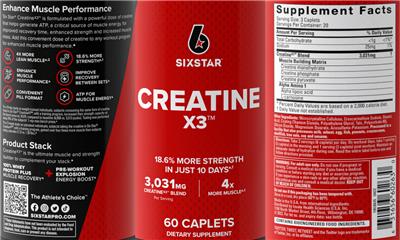
Supplement Facts
The label details for CreatineX3 by Six Star, sourced from the NIH Dietary Supplement Label Database.
Supplement Facts
| Ingredient | Amount | % DV |
|---|---|---|
| Total Carbohydrates | 1 Gram(s) | 1% |
| Sodium | 25 mg | 1% |
| Alpha-Lipoic Acid | 0 NP | -- |
| Creatine Monohydrate | 0 NP | -- |
| Creatine Pyruvate | 0 NP | -- |
| L-Carnosine | 0 NP | -- |
| Creatine Phosphate | 0 NP | -- |
| CreatineX3 Blend | 3031 mg | -- |
| Muscle Building Matrix: | 0 NP | -- |
| Alpha Amino 1 | 0 NP | -- |
Other ingredients: Microcrystalline Cellulose, Croscarmellose Sodium, Stearic Acid, Titanium Dioxide, Polyethylene Glycol, Talc, Polysorbate 80, Silicon Dioxide, Magnesium Stearate, Acesulfame Potassium
Tap any ingredient to jump to its full detail below.
These statements are the manufacturer’s wording, reproduced from the product label — the label is saying it, not HelloPharmacist. We don’t verify or endorse them.
Formulation
Enhance muscle performance
4X more lean muscle 18.6% more strength Enhance muscle performance Improve recovery between sets Convenient pill format In a 10-day study on weight-trained individuals, subjects consuming the same form of creatine found in Six Star CreatineX3, with a training program, increased their strength capacity on the bench press by 18.6% compared to baseline (6,658 vs. 5,513 joules). Testing was performed using 70% of the subjects 1-rep max bench press. In a 12-week study on untrained individuals, subjects taking the creatine in Six Star CreatineX3, with a training program, gained over four times more muscle than subjects using a placebo (7.12 vs. 1.30 lbs).
Product Stack CreatineX3 is the ultimate muscle and strength builder to complement your stack. 100% Whey Protein Plus muscle recovery + Pre-Workout Explosion energy boost
18.6% more strength in just 10 days 4X more muscle
Made in the U.S.A. from international ingredients.
Formula
Six Star CreatineX3 is formulated with a powerful dose of creatine that helps generate ATP, a critical source of muscle energy, for improved recovery time, enhanced strength and increased muscle mass.
3,031 mg CreatineX3 blend per serving
Suggested/Recommended/Usage/Directions
Add this convenient dose of creatine to any workout program for enhanced muscle performance.
Directions: Take 2 servings (6 caplets) per day. On workout days, take 1 serving (3 caplets) in the morning and 1 serving (3 caplets) post-workout. Maintain an adequate state of hydration during use. Read the entire label before use and follow directions provided.
Brand IP Statement(s)
Six Star The Athlete's Choice
Copyright 2022.
Twitter, Tweet, Retweet and Twitter logo are trademarks of Twitter, Inc. or its affliates.
FDA Disclaimer Statement
These statements have not been evaluated by the Food and Drug Administration. This product is not intended to diagnose, treat, cure or prevent any disease.
FDA Statement of Identity
Dietary Supplement
Precautions
Processed in a facility that also processes milk, wheat, egg, fish, peanuts, crustaceans, shellfish, tree nuts, soy and sesame.
Warning: For adult use only. Keep out of reach of children.
Do not use if pregnant or nursing.
Consult a medical doctor if you have a medical condition or before starting any diet or exercise program.
If you experience a skin rash or any other allergic reaction, discontinue use and consult a medical doctor.
Do not use if this packaging has been tampered with.
Contains bioengineered food ingredients.
Storage
Store in a cool, dry place (60 degrees F to 80 degrees F).
Is this label outdated? Report a formula or label change and our pharmacy team will review it.
CreatineX3 by Six Star label
The label scan from the NIH Dietary Supplement Label Database. Tap to enlarge.
Label images are published by the NIH Dietary Supplement Label Database for the version of this product on file. Always read your actual product label.
View the full label (PDF)The Ingredients in CreatineX3 by Six Star
These are the 3 active ingredients this product is made of. Select any to open its full monograph.
Serving size3 Caplet(s) Dosage formOther (e.g. Tea Bag) Servings per container20 Amounts shown are per serving.
Most supplement products combine several ingredients, and a medication can interact with the product through any one of them. Each ingredient below shows whether it has known drug interactions.
Sodium
Interacts with205 drugs
Sodium is an essential mineral and electrolyte your body needs to balance fluids, support nerves, and help muscles work. Most people in modern diets g...
Sodium monograph & interactionsCreatineX3 Blend
- › Muscle Building Matrix:
- › Alpha Amino 1
Other (inactive) ingredients: Microcrystalline Cellulose, Croscarmellose Sodium, Stearic Acid, Titanium Dioxide, Polyethylene Glycol, Talc, Polysorbate 80, Silicon Dioxide, Magnesium Stearate, Acesulfame Potassium. These complete the product’s ingredient list but are not active constituents.
CreatineX3 by Six Star Drug Interactions
HelloPharmacist Interaction Report
CreatineX3 by Six Star contains sodium and alpha-lipoic acid, both of which interact with medications.
Sodium is the ingredient with the most serious interactions — it's Moderate severity across multiple drug types. High sodium intake can reduce how well blood pressure medications (antihypertensives) work, and it can dangerously raise sodium levels if you're also taking corticosteroids, the HIV drug didanosine, certain bowel-prep solutions (sodium phosphates), or tolvaptan (used to treat low sodium).
Sodium also affects lithium levels; too much sodium can lower lithium in your blood, while cutting back on sodium can raise it to toxic levels.
Read the full breakdown — every affected drug type, severity by severity
Alpha-lipoic acid carries Moderate interactions with blood thinners and antiplatelet drugs — it may increase bleeding risk. It also theoretically affects chemotherapy drugs (both alkylating agents and antitumor antibiotics) by interfering with how they work.
Additionally, it may lower thyroid hormone effectiveness and can cause low blood sugar (hypoglycemia) if combined with diabetes medications — though this is Minor severity. Creatine monohydrate, creatine pyruvate, and creatine phosphate have no known interactions documented in our data.
L-carnosine has one Moderate interaction: it may raise the risk of low blood sugar when used with diabetes drugs.
Altogether, these interactions span 463 individual medications. Use the search tool on this page to check your exact prescriptions before starting CreatineX3.
Check your own medications below · Editorial policy · How we use AI
Want to check YOUR meds against CreatineX3?
Ask about interactions with your drugs in plain English — “Can I take it with lisinopril?” — and we find you the answer in seconds, ingredient by ingredient.
Go to the checkerIngredients driving the most interactions
Individual Drug Interactions
The ingredients in CreatineX3 interact with 463 drugs. Click any drug to see the details.
1 of the 3 ingredients in CreatineX3 interact with drugs. Each result below shows which ingredient is responsible. Sodium
AbciximabReoPro
How Abciximab interacts with CreatineX3 — through 1 ingredient. Tap an ingredient for the detail:
Alpha-lipoic AcidAnticoagulant/antiplatelet Drugs Moderate
Interaction Summary
Theoretically, alpha-lipoic acid may have antiplatelet effects and may increase the risk of bleeding if used with anticoagulant or antiplatelet drugs.
Read the full Alpha-lipoic Acid + Abciximab interactionAbrocitinibCibinqo
How Abrocitinib interacts with CreatineX3 — through 1 ingredient. Tap an ingredient for the detail:
Alpha-lipoic AcidAnticoagulant/antiplatelet Drugs Moderate
Interaction Summary
Theoretically, alpha-lipoic acid may have antiplatelet effects and may increase the risk of bleeding if used with anticoagulant or antiplatelet drugs.
Read the full Alpha-lipoic Acid + Abrocitinib interactionAcarboseGlucobay, Prandase, Precose
How Acarbose interacts with CreatineX3 — through 2 ingredients. Tap an ingredient for the detail:
L-carnosineAntidiabetes Drugs Moderate
Interaction Summary
Theoretically, taking carnosine with antidiabetes drugs might increase the risk of hypoglycemia.
Read the full L-carnosine + Acarbose interactionAlpha-lipoic AcidAntidiabetes Drugs Minor
Interaction Summary
Theoretically, taking alpha-lipoic acid with antidiabetes drugs might increase the risk of hypoglycemia.
Read the full Alpha-lipoic Acid + Acarbose interactionAcebutololRhotral, Sectral
How Acebutolol interacts with CreatineX3 — through 1 ingredient. Tap an ingredient for the detail:
SodiumAntihypertensive Drugs Moderate
Interaction Summary
Theoretically, a high intake of dietary sodium might reduce the effectiveness of antihypertensive drugs.
Read the full Sodium + Acebutolol interactionAcenocoumarolSintrom
How Acenocoumarol interacts with CreatineX3 — through 1 ingredient. Tap an ingredient for the detail:
Alpha-lipoic AcidAnticoagulant/antiplatelet Drugs Moderate
Interaction Summary
Theoretically, alpha-lipoic acid may have antiplatelet effects and may increase the risk of bleeding if used with anticoagulant or antiplatelet drugs.
Read the full Alpha-lipoic Acid + Acenocoumarol interactionAcetaminophen, AspirinGemnisyn
How Acetaminophen, Aspirin interacts with CreatineX3 — through 1 ingredient. Tap an ingredient for the detail:
Alpha-lipoic AcidAnticoagulant/antiplatelet Drugs Moderate
Interaction Summary
Theoretically, alpha-lipoic acid may have antiplatelet effects and may increase the risk of bleeding if used with anticoagulant or antiplatelet drugs.
Read the full Alpha-lipoic Acid + Acetaminophen, Aspirin interactionAcetaminophen, Aspirin, CaffeineExcedrin, Excedrin Extra Strength, Excedrin Migraine
How Acetaminophen, Aspirin, Caffeine interacts with CreatineX3 — through 1 ingredient. Tap an ingredient for the detail:
Alpha-lipoic AcidAnticoagulant/antiplatelet Drugs Moderate
Interaction Summary
Theoretically, alpha-lipoic acid may have antiplatelet effects and may increase the risk of bleeding if used with anticoagulant or antiplatelet drugs.
Read the full Alpha-lipoic Acid + Acetaminophen, Aspirin, Caffeine interactionAcetaminophen, IbuprofenCombogesic
How Acetaminophen, Ibuprofen interacts with CreatineX3 — through 1 ingredient. Tap an ingredient for the detail:
Alpha-lipoic AcidAnticoagulant/antiplatelet Drugs Moderate
Interaction Summary
Theoretically, alpha-lipoic acid may have antiplatelet effects and may increase the risk of bleeding if used with anticoagulant or antiplatelet drugs.
Read the full Alpha-lipoic Acid + Acetaminophen, Ibuprofen interactionAcetazolamideAk-Zol, Diamox
How Acetazolamide interacts with CreatineX3 — through 1 ingredient. Tap an ingredient for the detail:
SodiumAntihypertensive Drugs Moderate
Interaction Summary
Theoretically, a high intake of dietary sodium might reduce the effectiveness of antihypertensive drugs.
Read the full Sodium + Acetazolamide interactionAcetohexamideDymelor
How Acetohexamide interacts with CreatineX3 — through 2 ingredients. Tap an ingredient for the detail:
L-carnosineAntidiabetes Drugs Moderate
Interaction Summary
Theoretically, taking carnosine with antidiabetes drugs might increase the risk of hypoglycemia.
Read the full L-carnosine + Acetohexamide interactionAlpha-lipoic AcidAntidiabetes Drugs Minor
Interaction Summary
Theoretically, taking alpha-lipoic acid with antidiabetes drugs might increase the risk of hypoglycemia.
Read the full Alpha-lipoic Acid + Acetohexamide interactionAcetylsalicylic AcidEntrophen
How Acetylsalicylic Acid interacts with CreatineX3 — through 1 ingredient. Tap an ingredient for the detail:
Alpha-lipoic AcidAnticoagulant/antiplatelet Drugs Moderate
Interaction Summary
Theoretically, alpha-lipoic acid may have antiplatelet effects and may increase the risk of bleeding if used with anticoagulant or antiplatelet drugs.
Read the full Alpha-lipoic Acid + Acetylsalicylic Acid interactionAlbiglutideTanzeum
How Albiglutide interacts with CreatineX3 — through 2 ingredients. Tap an ingredient for the detail:
L-carnosineAntidiabetes Drugs Moderate
Interaction Summary
Theoretically, taking carnosine with antidiabetes drugs might increase the risk of hypoglycemia.
Read the full L-carnosine + Albiglutide interactionAlpha-lipoic AcidAntidiabetes Drugs Minor
Interaction Summary
Theoretically, taking alpha-lipoic acid with antidiabetes drugs might increase the risk of hypoglycemia.
Read the full Alpha-lipoic Acid + Albiglutide interactionAliskirenTekturna
How Aliskiren interacts with CreatineX3 — through 1 ingredient. Tap an ingredient for the detail:
SodiumAntihypertensive Drugs Moderate
Interaction Summary
Theoretically, a high intake of dietary sodium might reduce the effectiveness of antihypertensive drugs.
Read the full Sodium + Aliskiren interactionAlogliptinNesina
How Alogliptin interacts with CreatineX3 — through 2 ingredients. Tap an ingredient for the detail:
L-carnosineAntidiabetes Drugs Moderate
Interaction Summary
Theoretically, taking carnosine with antidiabetes drugs might increase the risk of hypoglycemia.
Read the full L-carnosine + Alogliptin interactionAlpha-lipoic AcidAntidiabetes Drugs Minor
Interaction Summary
Theoretically, taking alpha-lipoic acid with antidiabetes drugs might increase the risk of hypoglycemia.
Read the full Alpha-lipoic Acid + Alogliptin interactionAlogliptin, MetforminKazano
How Alogliptin, Metformin interacts with CreatineX3 — through 2 ingredients. Tap an ingredient for the detail:
L-carnosineAntidiabetes Drugs Moderate
Interaction Summary
Theoretically, taking carnosine with antidiabetes drugs might increase the risk of hypoglycemia.
Read the full L-carnosine + Alogliptin, Metformin interactionAlpha-lipoic AcidAntidiabetes Drugs Minor
Interaction Summary
Theoretically, taking alpha-lipoic acid with antidiabetes drugs might increase the risk of hypoglycemia.
Read the full Alpha-lipoic Acid + Alogliptin, Metformin interactionAlogliptin, PioglitazoneOseni
How Alogliptin, Pioglitazone interacts with CreatineX3 — through 2 ingredients. Tap an ingredient for the detail:
L-carnosineAntidiabetes Drugs Moderate
Interaction Summary
Theoretically, taking carnosine with antidiabetes drugs might increase the risk of hypoglycemia.
Read the full L-carnosine + Alogliptin, Pioglitazone interactionAlpha-lipoic AcidAntidiabetes Drugs Minor
Interaction Summary
Theoretically, taking alpha-lipoic acid with antidiabetes drugs might increase the risk of hypoglycemia.
Read the full Alpha-lipoic Acid + Alogliptin, Pioglitazone interactionAlteplase, TpaActilyse, Activase
How Alteplase, Tpa interacts with CreatineX3 — through 1 ingredient. Tap an ingredient for the detail:
Alpha-lipoic AcidAnticoagulant/antiplatelet Drugs Moderate
Interaction Summary
Theoretically, alpha-lipoic acid may have antiplatelet effects and may increase the risk of bleeding if used with anticoagulant or antiplatelet drugs.
Read the full Alpha-lipoic Acid + Alteplase, Tpa interactionAltretamineHexalen
How Altretamine interacts with CreatineX3 — through 1 ingredient. Tap an ingredient for the detail:
Alpha-lipoic AcidAlkylating Agents Moderate
Interaction Summary
Theoretically, the antioxidant effects of alpha-lipoic acid might alter the effectiveness of alkylating agents.
Read the full Alpha-lipoic Acid + Altretamine interactionAluminum Hydroxide, Aspirin, Codeine Phosphate, Magnesium HydroxideAscriptin Codeine #2
How Aluminum Hydroxide, Aspirin, Codeine Phosphate, Magnesium Hydroxide interacts with CreatineX3 — through 1 ingredient. Tap an ingredient for the detail:
Alpha-lipoic AcidAnticoagulant/antiplatelet Drugs Moderate
Interaction Summary
Theoretically, alpha-lipoic acid may have antiplatelet effects and may increase the risk of bleeding if used with anticoagulant or antiplatelet drugs.
Read the full Alpha-lipoic Acid + Aluminum Hydroxide, Aspirin, Codeine Phosphate, Magnesium Hydroxide interactionAluminum Hydroxide, Aspirin, Magnesium HydroxideAscriptin
How Aluminum Hydroxide, Aspirin, Magnesium Hydroxide interacts with CreatineX3 — through 1 ingredient. Tap an ingredient for the detail:
Alpha-lipoic AcidAnticoagulant/antiplatelet Drugs Moderate
Interaction Summary
Theoretically, alpha-lipoic acid may have antiplatelet effects and may increase the risk of bleeding if used with anticoagulant or antiplatelet drugs.
Read the full Alpha-lipoic Acid + Aluminum Hydroxide, Aspirin, Magnesium Hydroxide interactionAmbrisentanLetairis, Volibris
How Ambrisentan interacts with CreatineX3 — through 1 ingredient. Tap an ingredient for the detail:
SodiumAntihypertensive Drugs Moderate
Interaction Summary
Theoretically, a high intake of dietary sodium might reduce the effectiveness of antihypertensive drugs.
Read the full Sodium + Ambrisentan interactionAmilorideAmilamont, Midamor
How Amiloride interacts with CreatineX3 — through 1 ingredient. Tap an ingredient for the detail:
SodiumAntihypertensive Drugs Moderate
Interaction Summary
Theoretically, a high intake of dietary sodium might reduce the effectiveness of antihypertensive drugs.
Read the full Sodium + Amiloride interactionAmiloride, HydrochlorothiazideAmil-Co, Amilzide, Moduret 25, Moduretic
How Amiloride, Hydrochlorothiazide interacts with CreatineX3 — through 1 ingredient. Tap an ingredient for the detail:
SodiumAntihypertensive Drugs Moderate
Interaction Summary
Theoretically, a high intake of dietary sodium might reduce the effectiveness of antihypertensive drugs.
Read the full Sodium + Amiloride, Hydrochlorothiazide interactionAmlodipineNorliqva
How Amlodipine interacts with CreatineX3 — through 1 ingredient. Tap an ingredient for the detail:
SodiumAntihypertensive Drugs Moderate
Interaction Summary
Theoretically, a high intake of dietary sodium might reduce the effectiveness of antihypertensive drugs.
Read the full Sodium + Amlodipine interactionAmlodipine BenzoateKaterzia
How Amlodipine Benzoate interacts with CreatineX3 — through 1 ingredient. Tap an ingredient for the detail:
SodiumAntihypertensive Drugs Moderate
Interaction Summary
Theoretically, a high intake of dietary sodium might reduce the effectiveness of antihypertensive drugs.
Read the full Sodium + Amlodipine Benzoate interactionAmlodipine BesilateIstin
How Amlodipine Besilate interacts with CreatineX3 — through 1 ingredient. Tap an ingredient for the detail:
SodiumAntihypertensive Drugs Moderate
Interaction Summary
Theoretically, a high intake of dietary sodium might reduce the effectiveness of antihypertensive drugs.
Read the full Sodium + Amlodipine Besilate interactionAmlodipine BesylateNorvasc
How Amlodipine Besylate interacts with CreatineX3 — through 1 ingredient. Tap an ingredient for the detail:
SodiumAntihypertensive Drugs Moderate
Interaction Summary
Theoretically, a high intake of dietary sodium might reduce the effectiveness of antihypertensive drugs.
Read the full Sodium + Amlodipine Besylate interactionAmlodipine Besylate, BenazeprilLotrel
How Amlodipine Besylate, Benazepril interacts with CreatineX3 — through 1 ingredient. Tap an ingredient for the detail:
SodiumAntihypertensive Drugs Moderate
Interaction Summary
Theoretically, a high intake of dietary sodium might reduce the effectiveness of antihypertensive drugs.
Read the full Sodium + Amlodipine Besylate, Benazepril interactionAmlodipine, CelecoxibConsensi
How Amlodipine, Celecoxib interacts with CreatineX3 — through 1 ingredient. Tap an ingredient for the detail:
SodiumAntihypertensive Drugs Moderate
Interaction Summary
Theoretically, a high intake of dietary sodium might reduce the effectiveness of antihypertensive drugs.
Read the full Sodium + Amlodipine, Celecoxib interactionAmmonium ChlorideAmmonium Chloride
How Ammonium Chloride interacts with CreatineX3 — through 1 ingredient. Tap an ingredient for the detail:
SodiumAntihypertensive Drugs Moderate
Interaction Summary
Theoretically, a high intake of dietary sodium might reduce the effectiveness of antihypertensive drugs.
Read the full Sodium + Ammonium Chloride interactionEach ingredient & the kinds of drugs it affects
For each ingredient in CreatineX3 with known interactions, here are the types of medications it can affect. Open any type for the detail — or search your exact drug in the checker above.
Sodium
Antihypertensive Drugs
Theoretically, a high intake of dietary sodium might reduce the effectiveness of antihypertensive drugs.
High intake of dietary sodium can increase systolic and diastolic blood pressure. Also, high intake of sodium may necessitate increased use of antihypertensive medications to achieve blood pressure control in some patients, such as those with chronic kidney disease.
Corticosteroids
Concomitant use of mineralocorticoids and some glucocorticoids with sodium supplements might increase the risk of hypernatremia.
Mineralocorticoids and some glucocorticoids (corticosteroids) cause sodium retention. This effect is dose-related and depends on mineralocorticoid potency. It is most common with hydrocortisone, cortisone, and fludrocortisone, followed by prednisone and prednisolone.
Didanosine (Videx)
Concomitant use of didanosine with additional sodium from dietary or supplemental sources may increase the risk of hypernatremia.
Didanosine formulations contain a significant amount of sodium.
Lithium
Altering dietary intake of sodium might alter the levels and clinical effects of lithium.
High sodium intake can reduce plasma concentrations of lithium by increasing lithium excretion. Reducing sodium intake can significantly increase plasma concentrations of lithium and cause lithium toxicity in patients being treated with lithium carbonate. Stabilizing sodium intake is shown to reduce the percentage of patients with lithium level fluctuations above 0.8 mEq/L. Patients taking lithium should avoid significant alterations in their dietary intake of sodium.
Sodium Phosphates
Theoretically, concomitant use of sodium phosphate with sodium supplements might increase the risk of hypernatremia.
Use of high doses (> 45 mL in 24 hours) of sodium phosphate, such as those used for bowel cleansing before surgery, can lead to serious electrolyte disturbances, including hypernatremia. The risk of hypernatremia is highest in the elderly and people with other risk factors for electrolyte disturbances.
Sodium-Containing Drugs
Concomitant use of sodium-containing drugs with additional sodium from dietary or supplemental sources may increase the risk of hypernatremia and long-term sodium-related complications.
The Chronic Disease Risk Reduction (CDRR) intake level of 2.3 grams of sodium daily indicates the intake at which it is believed that chronic disease risk increases for the apparently healthy population. Some medications contain high quantities of sodium. When used in conjunction with sodium supplements or high-sodium diets, the CDRR may be exceeded. Additionally, concomitant use may increase the risk for hypernatremia; this risk is highest in the elderly and people with other risk factors for electrolyte disturbances.
Tolvaptan (Samsca)
Theoretically, concomitant use of tolvaptan with sodium might increase the risk of hypernatremia.
Tolvaptan is a vasopressin receptor 2 antagonist that is used to increase sodium levels in patients with hyponatremia. Patients taking tolvaptan should use caution with the use of sodium salts such as sodium chloride.
Brand information
Manufacturer and brand details for CreatineX3, from the product label.
Six Star
See all Six Star products- Name
- Iovate Health Sciences U.S.A. Inc.
- Street Address
- 1100 North Market Street, 4th Floor
- City
- Wilmington
- State
- DE
- ZipCode
- 19890
- Web Address
- sixstarpro.com
CreatineX3 by Six Star: Common Questions
Does CreatineX3 by Six Star interact with any medications?
How can one product interact with so many drugs?
Where does this information come from?
Will CreatineX3 work for building muscle?
Can I take this if I have kidney disease?
What are the most common side effects?
Is it safe to take while pregnant or breastfeeding?
What is alpha-lipoic acid doing in a muscle-building supplement?
Can I take this with my diabetes medication?
Written and reviewed by the HelloPharmacist editorial staff. Our editorial policy
Not sure if CreatineX3 is safe with your meds?
Our pharmacists answer your medication & supplement questions — free.
Label information is sourced from the NIH Dietary Supplement Label Database and reflects the product version on file; always read your actual product label. This page is for education only and is not a substitute for professional medical advice. Confirm with your pharmacist or doctor before combining supplements and medications.
The Full Monographs Behind CreatineX3’s Ingredients
Every ingredient we hold a full HelloPharmacist monograph for — uses, evidence, safety, and the complete interaction list.
Sources & How We Checked
CreatineX3's label data comes from the NIH Dietary Supplement Label Database; the ingredient interaction data is from the Natural Medicines database, reviewed by our pharmacists.
- NIH Dietary Supplement Label Database (DSLD) — The official product label on file for this supplement.
- Natural Medicines (Therapeutic Research Center) — Evidence-graded clinical reference behind the ingredient interaction data.
Content is written and reviewed by licensed HelloPharmacist pharmacists. See our data sources and editorial standards for how this information is built and checked.
The 179 references behind this product’s interaction data
Every citation that drives the interaction findings for this product’s ingredients, from the evidence-graded Natural Medicines (TRC Healthcare) database. Open an ingredient to browse its citations — links open the study on PubMed or the publisher’s site.
Sodium 40 references
- Garabedian-Ruffalo SM, Ruffalo RL. Drug and nutrient interactions. Am Fam Physician 1986;33:165-74.
- Food and Drug Administration Science Background: Safety of Sodium Phosphates Oral Solution. September 17, 2001. Available at: http://www.fda.gov/cder/drug/safety/sodiumphospate.htm
- Coton T, Mallaret C, Coilliot C, Carre D, Guisset M. Severe acute ulcerated gastritis induced by salt. Presse Med 2009;38(3):499-500. PubMed
- Frings-Meuthen P, Buehlmeier J, Baecker N, et al. High sodium chloride intake exacerbates immobilization-induced bone resorption and protein losses. J Appl Physiol 2011;111(2):537-542. PubMed
- Frings-Meuthen P, Baecker N, Heer M. Low-grade metabolic acidosis may be the cause of sodium chloride-induced exaggerated bone resorption. J Bone Miner Res 2008;23(4):517-524. PubMed
- Alam S, Johnson AG. A meta-analysis of randomised controlled trials (RCT) among healthy normotensive and essential hypertensive elderly patients to determine the effect of high salt (NaCl) diet of blood pressure. J Hum Hypertens 1999;13(6):367-74.
- Boudville N, Ward S, Benaroia M, House AA. Increased sodium intake correlates with greater use of antihypertensive agents by subjects with chronic kidney disease. Am J Hypertens 2005;18(10):1300-5. PubMed
- Bennett WM. Drug interactions and consequences of sodium restriction. Am J Clin Nutr 1997;65(2 Suppl):678S-681S. PubMed
- Okusa MD, Crystal LJ. Clinical manifestations and management of acute lithium intoxication. Am J Med 1994;97(4):383-9. PubMed
- Food and Nutrition Board, Institute of Medicine. Dietary reference intakes for water, potassium, sodium, chloride, and sulfate. Washington, DC: National Academy Press, 2005. Available at: http://www.nap.edu/openbook.php?record_id=10925. DOI
- D'Elia L, Rossi G, Ippolito R, Cappuccio FP, Strazzullo P. Habitual salt intake and risk of gastric cancer: a meta-analysis of prospective studies. Clin Nutr 2012;31(4):489-98. PubMed
- Goldsmith SR. Hyponatremia in heart failure: time for a trial. J Card Fail 2013;19(6):398-400. PubMed
- Willocks L, Brettle R, Keen J, Valentine C, Pinching AJ. Formulations of didanosine (ddI) and salt overload. Lancet 1992;339(8786):190.
- Chen L, Zhang Z, Chen W, Whelton PK, Appel LJ. Lower Sodium Intake and Risk of Headaches: Results From the Trial of Nonpharmacologic Interventions in the Elderly. Am J Public Health. 2016;106(7):1270-5. PubMed
- Cook NR, Appel LJ, Whelton PK. Lower levels of sodium intake and reduced cardiovascular risk. Circulation. 2014;129(9):981-9. PubMed
- Cook NR, Appel LJ, Whelton PK. Sodium Intake and All-Cause Mortality Over 20 Years in the Trials of Hypertension Prevention. J Am Coll Cardiol. 2016;68(15):1609-1617. PubMed
- Mente A, O'Donnell M, Rangarajan S, et al. Associations of urinary sodium excretion with cardiovascular events in individuals with and without hypertension: a pooled analysis of data from four studies. Lancet. 2016;388(10043):465-75. PubMed
- Moosavian SP, Haghighatdoost F, Surkan PJ, Azadbakht L. Salt and obesity: a systematic review and meta-analysis of observational studies. Int J Food Sci Nutr. 2017;68(3):265-277. PubMed
- O'Donnell M, Mente A, Rangarajan S, et al. Urinary sodium and potassium excretion, mortality, and cardiovascular events. N Engl J Med. 2014;371(7):612-23. DOI
- Poggio R, Gutierrez L, Matta MG, Elorriaga N, Irazola V, Rubinstein A. Daily sodium consumption and CVD mortality in the general population: systematic review and meta-analysis of prospective studies. Public Health Nutr. 2015;18(4):695-704. PubMed
- Stallings VA, Harrison M, Oria M; Committee to Review the Dietary Reference Intakes for Sodium and Potassium, Food and Nutrition Board, Health and Medicine Division, National Academies of Sciences, Engineering, and Medicine. Washington (DC): National Acad
- Mahtani KR, Heneghan C, Onakpoya I, et al. Reduced Salt Intake for Heart Failure: A Systematic Review. JAMA Intern Med. 2018 Dec 1;178(12):1693-1700. PubMed
- Yancy CW. Sodium Restriction in Heart Failure: Too Much Uncertainty-Do the Trials. JAMA Intern Med. 2018 Dec 1;178(12):1700-1701. PubMed
- He FJ, Campbell NRC, Ma Y, MacGregor GA, Cogswell ME, Cook NR. Errors in estimating usual sodium intake by the Kawasaki formula alter its relationship with mortality: implications for public health. Int J Epidemiol. 2018;47(6):1784-1795. PubMed
- Murthy K, Ondrey GJ, Malkani N, et al. THE EFFECTS OF HYPONATREMIA ON BONE DENSITY AND FRACTURES: A SYSTEMATIC REVIEW AND META-ANALYSIS. Endocr Pract. 2019;25(4):366-378. PubMed
- Messerli FH, Hofstetter L, Syrogiannouli L, et al. Sodium intake, life expectancy, and all-cause mortality. Eur Heart J 2021;42(21):2103-2112. PubMed
- Graudal NA, Hubeck-Graudal T, Jurgens G. Effects of low sodium diet versus high sodium diet on blood pressure, renin, aldosterone, catecholamines, cholesterol, and triglyceride. Cochrane Database Syst Rev 2020;12(12):CD004022. PubMed
- Giatti S, Santos RB, Aielo AN, et al. Association of sodium with obstructive sleep apnea. The ELSA-Brasil study. Ann Am Thorac Soc 2021;18(3):502-510. PubMed
- Nan X, Lu H, Wu J, et al. The interactive association between sodium intake, alcohol consumption and hypertension among elderly in northern China: a cross-sectional study. BMC Geriatr 2021;21(1):135. PubMed
- Kyozuka H, Fukusda T, Murata T, et al. Impact of preconception sodium intake on hypertensive disorders of pregnancy: The Japan Environment and Children's study. Pregnancy Hypertens 2021;23:66-72. PubMed
- Zhao L, Ogden CL, Yang Q, et al. Association of usual sodium intake with obesity among US children and adolescents, NHANES 2009-2016. Obesity (Silver Spring) 2021;29(3):587-594. PubMed
- Ma Y, He FJ, Sun Q, et al. 24-Hour urinary sodium and potassium excretion and cardiovascular risk. N Engl J Med 2022;386(3):252-263. PubMed
- Liu J, Yang X, Zhang P, et al. Association of urinary sodium excretion and left ventricular hypertrophy in people with type 2 diabetes mellitus: A cross-sectional study. Front Endocrinol (Lausanne) 2021;12:728493. PubMed
- Filippini T, Malavolti M, Whelton PK, Vinceti M. Sodium intake and risk of hypertension: A systematic review and dose-response meta-analysis of observational cohort studies. Curr Hypertens Rep 2022;24(5):133-144. PubMed
- Wang DD, Li Y, Nguyen XT, et al. Dietary sodium and potassium intake and risk of non-fatal cardiovascular diseases: The million veteran program. Nutrients 2022;14(5):1121. PubMed
- Kwak JH, Park CH, Eun CS, et al. The associations of dietary intake of high sodium and low zinc with gastric cancer mortality: A prospective cohort study in Korea. Nutr Cancer 2022;74(10):3501-3508. PubMed
- George S, Maiti R, Mishra BR, Jena M, Mohapatra D. Effect of regulated add-on sodium chloride intake on stabilization of serum lithium concentration in bipolar disorder: A randomized controlled trial. Bipolar Disord 2023;25(1):66-75. PubMed
- Zhou TL, Schütten MTJ, Kroon AA, et al. Urinary Sodium Excretion and Salt Intake Are Not Associated With Blood Pressure Variability in a White General Population. J Am Heart Assoc 2023;12(1):e026578. PubMed
- Gan L, Zhao B, Inoue-Choi M, et al. Sex-specific associations between sodium and potassium intake and overall and cause-specific mortality: a large prospective U.S. cohort study, systematic review, and updated meta-analysis of cohort studies. BMC Med 2024 PubMed
- Liu D, Tian Y, Wang R, et al. Sodium, potassium intake, and all-cause mortality: confusion and new findings. BMC Public Health 2024;24(1):180. PubMed
Alpha-lipoic Acid 48 references
- Labriola D, Livingston R. Possible interactions between dietary antioxidants and chemotherapy. Oncology 1999;13:1003-8.
- Anon. Alpha-lipoic acid. Altern Med Rev 1998;3:308-10.
- Konrad T, Vicini P, Kusterer K, et al. Alpha-lipoic acid treatment decreases serum lactate and pyruvate concentrations and improves glucose effectiveness in lean and obese patients with Type 2 diabetes. Diabetes Care 1999;22:280-7. PubMed
- Ziegler D, Hanefeld M, Ruhnau KJ, et al. Treatment of symptomatic diabetic peripheral neuropathy with the antioxidant alpha-lipoic acid: A 3-week, multicentre randomized controlled trial (ALADIN Study). Diabetologia 1995;38:1425-33.
- Gleiter CH, Schreeb KH, Freudenthaler S, et al. Lack of interaction between thioctic acid, glibenclamide and acarbose. Br J Clin Pharmacol 1999;48:819-25. PubMed
- Jacob S, Henriksen EJ, Tritschler HJ, et al. Improvement of insulin-stimulated glucose-disposal in type 2 diabetes after repeated parenteral administration of thioctic acid. Exp Clin Endocrinol Diabet 1996;104:284-8. PubMed
- Jacob S, Henriksen EJ, Schiemann AL, et al. Enhancement of glucose disposal in patients with type 2 diabetes by alpha-lipoic acid. Arzneimittelforschung 1995;45:872-4.
- Jacob S, Ruus P, Hermann R, et al. Oral administration of RAC-alpha-lipoic acid modulates insulin sensitivity in patients with type-2 diabetes mellitus: a placebo-controlled, pilot trial. Free Rad Biol Med 1999;27:309-14.
- Segermann J, Hotze A, Ulrich H, Rao GS. Effect of alpha-lipoic acid on the peripheral conversion of thyroxine to triiodothyronine and on serum lipid-, protein- and glucose levels. Arzneimittelforschung 1991;41:1294-8.
- Beitner H. Randomized, placebo controlled, double-blind study on the clinical efficacy of a cream containing 5% alpha-lipoic acid related to photoaging of facial skin. Br J Dermatol 2003;149:841-9.
- Ziegler D, Nowak H, Kempler P, et al. Treatment of symptomatic diabetic polyneuropathy with the antioxidant alpha-lipoic acid: A meta-analysis. Diabet Med 2004;21:114-21.
- Prasad KN. Rationale for using high-dose multiple dietary antioxidants as an adjunct to radiation therapy and chemotherapy. J Nutr 2004;134:3182S-3S. PubMed
- Conklin KA. Cancer chemotherapy and antioxidants. J Nutr 2004;134:3201S-3204S. PubMed
- Vincent HK, Bourguignon CM, Vincent KR, Taylor AG. Effects of alpha-lipoic acid supplementation in peripheral arterial disease: a pilot study. J Alt Complement Med 2007;13:577-84. PubMed
- Furukawa N, Miyamura N, Nishida K, et al. Possible relevance of alpha lipoic acid contained in a health supplement in a case of insulin autoimmune syndrome. Diabetes Res Clin Pract 2007;75:366-7. PubMed
- Ziegler D., Ametov A., Barinov A., Dyck P. J., Gurieva I., Low P. A., Munzel U., Yakhno N., Raz I., Novosadova M., Maus J., Samigullin, R. Oral treatment with alpha-lipoic acid improves symptomatic diabetic polyneuropathy: the SYDNEY 2 trial. Diabetes Car
- Gu X. M., Zhang S. S., Wu J. C., Tang Z. Y., Lu Z. Q., Li H., Liu C., Chen L., Ning, G. [Efficacy and safety of high-dose a-lipoic acid in the treatment of diabetic polyneuropathy]. Zhonghua Yi Xue Za Zhi 2010;90(35):2473-2476.
- Porasuphatana S., Suddee S., Nartnampong A., Konsil J., Harnwong B., Santaweesuk A. Glycemic and oxidative status of patients with type 2 diabetes mellitus following oral administration of alpha-lipoic acid: a randomized double-blinded placebo-controlled
- Ansar H., Mazloom Z., Kazemi F., Hejazi N. Effect of alpha-lipoic acid on blood glucose, insulin resistance and glutathione peroxidase of type 2 diabetic patients. Saudi Med J 2011;32(6):584-588. DOI
- de Oliveira A. M., Rondó P. H., Luzia L. A., D'Abronzo F. H., Illison V. K. The effects of lipoic acid and a-tocopherol supplementation on the lipid profile and insulin sensitivity of patients with type 2 diabetes mellitus: a randomized, double-blind, pla
- Mazloom Z., Ansar H. The Effect of Alpha-Lipoic Acid on Blood Pressure in Type 2 Diabetics. Iranian Journal of Endocrinology and Metabolism 2009;11(3):245-250.
- Volchegorskii I. A., Rassokhina L. M., Koliadich M. I., Alekseev M. I. [Comparative study of alpha-lipoic acid and mexidol effects on affective status, cognitive functions and quality of life in diabetes mellitus patients]. Eksp Klin Farmakol 2011;74(11):
- Cavalcanti D. R., da Silveira F. R. Alpha lipoic acid in burning mouth syndrome--a randomized double-blind placebo-controlled trial. J Oral Pathol Med 2009;38(3):254-261. PubMed
- Koh E. H., Lee W. J., Lee S. A., Kim E. H., Cho E. H., Jeong E., Kim D. W., Kim M. S., Park J. Y., Park K. G., Lee H. J., Lee I. K., Lim S., Jang H. C., Lee K. H., Lee K. U. Effects of alpha-lipoic Acid on body weight in obese subjects. Am J Med 2011;124( PubMed
- Bergqvist-Karlsson, A., Thelin, I., and Bergendorff, O. Contact dermatitis to alpha-lipoic acid in an anti-wrinkle cream. Contact Dermatitis 2006;55(1):56-57.
- Tang, J., Wingerchuk, D. M., Crum, B. A., Rubin, D. I., and Demaerschalk, B. M. Alpha-lipoic acid may improve symptomatic diabetic polyneuropathy. Neurologist. 2007;13(3):164-167. PubMed
- Hegazy SK, Tolba OA, Mostafa TM, Eid MA, El-Afify DR. Alpha-lipoic acid improves subclinical left ventricular dysfunction in asymptomatic patients with type 1 diabetes. Rev Diabet Stud 2013;10(1):58-67. PubMed
- Huang Z, Wan X, Liu J, et al. Short-term continuous subcutaneous insulin infusion combined with insulin sensitizers rosiglitazone, metformin, or antioxidant a-lipoic acid in patients with newly diagnosed type 2 diabetes mellitus. Diabetes Technol Ther 201
- Sarezky D, Raquib AR, Dunaief JL, Kim BJ. Tolerability in the elderly population of high-dose alpha lipoic acid: a potential antioxidant therapy for the eye. Clin Ophthalmol. 2016 Sep 29;10:1899-1903. PubMed
- Boriani F, Granchi D, Roatti G, Merlini L, Sabattini T, Baldini N. Alpha-lipoic acid after median nerve decompression at the carpal tunnel: a randomized controlled trial. J Hand Surg Am. 2017 Apr;42(4):236-42. PubMed
- Karkabounas S, Papadopoulos N, Anastasiadou C, et al. Effects of a-lipoic Acid, carnosine, and thiamine supplementation in obese patients with type 2 diabetes mellitus: A randomized, double-blind study. J Med Food. 2018;21(12):1197-1203.
- Murray GL, Colombo J. (r)Alpha lipoic acid is a safe, effective pharmacologic therapy of chronic orthostatic hypotension associated with low sympathetic tone. Int J Angiol. 2019;28(3):188-193. PubMed
- Bobe G, Michels AJ, Zhang WJ, et al. A randomized controlled trial of long-term (R)-α-lipoic acid supplementation promotes weight loss in overweight or obese adults without altering baseline elevated plasma triglyceride concentrations. J Nutr. 2020:
- Passiatore M, Perna A, De-Vitis R, Taccardo G. The use of alfa-lipoic acid-R (ALA-R) in patients with mild-moderate carpal tunnel syndrome: A randomised controlled open label prospective study. Malays Orthop J. 2020;14(1):1-6. PubMed
- El-Nahas MR, Elkannishy G, Abdelhafez H, Elkhamisy ET, El-Sehrawy AA. Oral alpha lipoic acid treatment for symptomatic diabetic peripheral neuropathy: A randomized double-blinded placebo-controlled study. Endocr Metab Immune Disord Drug Targets. 2020. PubMed
- Kim BJ, Hunter A, Brucker AJ, et al. Orally administered alpha lipoic acid as a treatment for geographic atrophy: A randomized clinical trial. Ophthalmol Retina. 2020;4(9):889-898. PubMed
- Derosa G, D'Angelo A, Preti P, Maffioli P. Safety and efficacy of alpha lipoic acid during 4 years of observation: A retrospective, clinical trial in healthy subjects in primary prevention. Drug Des Devel Ther. 2020;14:5367-5374.
- Sun Y, Guan X, Wang H, et al. Randomized clinical trial of combined therapy with oral a-lipoic acid and NB-UVB for nonsegmental stable vitiligo. Dermatol Ther. 2021;34(1):e14610.
- Gilron I, Robb S, Tu D, et al. Double-blind, randomized, placebo-controlled crossover trial of alpha-lipoic acid for the treatment of fibromyalgia pain: the IMPALA trial. Pain. 2021;162(2):561-568. PubMed
- Gullo D, Evans JL, Sortino G, Goldfine ID, Vigneri R. Insulin autoimmune syndrome (Hirata Disease) in European Caucasians taking a-lipoic acid. Clin Endocrinol (Oxf). 2014;81(2):204-9.
- Yukina M, Nuralieva N, Solovyev M, Troshina E, Vasilyev E. Insulin autoimmune syndrome. Endocrinol Diabetes Metab Case Rep. 2020;2020:19-0159. PubMed
- Moffa S, Improta I, Rocchetti S, Mezza T, Giaccari A. Potential cause-effect relationship between insulin autoimmune syndrome and alpha lipoic acid: Two case reports. Nutrition. 2019;57:1-4. PubMed
- Izzo V, Greco C, Corradini D, et al. Insulin autoimmune syndrome in an Argentine woman taking a-lipoic acid: A case report and review of the literature. SAGE Open Med Case Rep. 2018;6:2050313X18819601.
- EFSA Panel on Nutrition, Novel Foods and Food Allergens (NDA), Turck D, et al. Scientific opinion on the relationship between intake of alpha-lipoic acid (thioctic acid) and the risk of insulin autoimmune syndrome. EFSA J 2021;19(6):e06577. PubMed
- Jibril AT, Jayedi A, Shab-Bidar S. Efficacy and safety of oral alpha-lipoic acid supplementation for type 2 diabetes management: a systematic review and dose-response meta-analysis of randomized trials. Endocr Connect 2022;11(10):e220322. PubMed
- Corazza M, Arlotti E, Schettini N, Pacetti L, Bianchi A, Borghi A. Allergic contact dermatitis due to a-lipoic acid in a topical over-the-counter product: A case report. Contact Dermatitis 2023.
- Velasco-Amador JP, Prados-Carmona Á, Navarro-Triviño FJ. Contact urticaria syndrome caused by alpha-lipoic acid in a master formula for vulvar lichen sclerosus. Contact Dermatitis 2023;89(2):136-137. PubMed
- Sehgal T, Ohri U, Mittal N, Attri P, Dishant F. A Case of Insulin Autoimmune Syndrome in an Indian Male Taking Alpha-Lipoic Acid. Cureus 2023;15(8):e43743. PubMed
Creatine 86 references
- Koshy KM, Griswold E, Schneeberger EE. Interstitial nephritis in a patient taking creatine. N Engl J Med 1999;340:814-5. PubMed
- Vahedi K, Domingo V, Amarenco P, Bousser MG. Ischemic stroke in a sportsman who consumed MaHuang extract and creatine monohydrate for bodybuilding. J Neurol Neurosurg Psychiatr 2000;68:112-3.
- Greenhaff P. Renal dysfunction accompanying oral creatine supplements. Lancet 1998;352:233-4. PubMed
- Vandenberghe K, Goris M, Van Hecke P, et al. Long-term creatine intake is beneficial to muscle performance during resistance training (abstract). J Appl Physiol 1997;83:2055-63. PubMed
- Hultman E, Soderlund K, Timmons JA, et al. Muscle creatine loading in men. J Appl Physiol 1996;81:232-7. PubMed
- Pritchard NR, Kalra PA. Renal dysfunction accompanying oral creatine supplements. Lancet 1998;351:1252-3. PubMed
- Poortmans JR, Auquier H, Renaut V, et al. Effect of short-term creatine supplementation on renal responses in men (abstract). Eur J Appl Physiol Occup Physiol 1997;76:566-7. PubMed
- Poortmans JR, Francaux M. Long-term oral creatine supplementation does not impair renal function in healthy athletes. Med Sci Sports Exerc 1999;31:1108-10. PubMed
- Mihic S, MacDonald JR, McKenzie S, Tarnopolsky MA. Acute creatine loading increases fat-free mass, but does not affect blood pressure, plasma creatinine, or CK activity in men and women. Med Sci Sports Exerc 2000;32:291-6. PubMed
- Rawson ES, Wehnert ML, Clarkson PM. Effects of 30 days of creatine ingestion in older men. Eur J Appl Physiol Occup Physiol 1999;80:139-44. PubMed
- Earnest CP, Almada AL, Mitchell TL. High-performance capillary electrophoresis-pure creatine monohydrate reduces blood lipids in men and women. Clin Sci (Colch) 1996;91:113-8. PubMed
- Juhn MS. Oral creatine supplementation. Separating fact from hype. Phys Sportsmed 1999;27:47-50,53-54,56,61,89. PubMed
- Juhn MS, O'Kane JW, Vinci DM. Oral creatine supplementation in male collegiate athletes: a survey of dosing habits and side effects. J Am Diet Assoc 1999;99:593-5.
- Green AL, Hultman E, Macdonald IA, et al. Carbohydrate ingestion augments skeletal muscle creatine accumulation during creatine supplementation in humans. Am J Physiol 1996;271:E821-6. PubMed
- Balsom PD, Soderlund K, Sjodin B, Ekblom B. Skeletal muscle metabolism during short duration high-intensity exercise: influence of creatine supplementation. Acta Physiol Scand 1995;154:303-10. PubMed
- Snow RJ, McKenna MJ, Selig SE, et al. Effect of creatine supplementation on sprint exercise performance and muscle metabolism. (abstract) J Appl Physiol 1998;84:1667-73. PubMed
- McNaughton LR, Dalton B, Tarr J. The effects of creatine supplementation on high-intensity exercise performance in elite performers. (abstract) Eur J Appl Physiol Occup Physiol 1998;78:236-40. PubMed
- Groeneveld GJ, Veldink JH, van der Tweel I, et al. A randomized sequential trial of creatine in amyotrophic lateral sclerosis. Ann Neurol 2003;53:437-45. . PubMed
- Robinson SJ. Acute quadriceps compartment syndrome and rhabdomyolysis in a weight lifter using high-dose creatine supplementation. J Am Board Fam Pract 2000;13:134-7. PubMed
- Kammer RT. Lone atrial fibrillation associated with creatine monohydrate supplementation. Pharmacotherapy 2005;25:762-4. PubMed
- Gualano B, Ugrinowitsch C, Novaes RB, et al. Effects of creatine supplementation on renal function: a randomized, double-blind, placebo-controlled clinical trial. Eur J Appl Physiol 2008;103:33-40. PubMed
- Pfeffer, G., Majamaa, K., Turnbull, D. M., Thorburn, D., and Chinnery, P. F. Treatment for mitochondrial disorders. Cochrane Database.Syst.Rev. 2012;4:CD004426. PubMed
- Boos, C. J., White, S. H., Bland, S. A., and McAllister, P. D. Dietary supplements and military operations: caution is advised. J R.Army Med Corps 2010;156(1):41-43. PubMed
- Kreider, R. B. Dietary supplements and the promotion of muscle growth with resistance exercise. Sports Med 1999;27(2):97-110. PubMed
- Juhn, M. S., O'Kane, J. W., and Vinci, D. M. Oral creatine supplementation in male collegiate athletes: a survey of dosing habits and side effects. J Am.Diet.Assoc 1999;99(5):593-595.
- Volek, J. S., Duncan, N. D., Mazzetti, S. A., Putukian, M., Gomez, A. L., and Kraemer, W. J. No effect of heavy resistance training and creatine supplementation on blood lipids. Int J Sport Nutr.Exerc.Metab 2000;10(2):144-156. PubMed
- Robinson, T. M., Sewell, D. A., Casey, A., Steenge, G., and Greenhaff, P. L. Dietary creatine supplementation does not affect some haematological indices, or indices of muscle damage and hepatic and renal function. Br.J Sports Med 2000;34(4):284-288. PubMed
- Tarnopolsky, M. A. Potential benefits of creatine monohydrate supplementation in the elderly. Curr.Opin.Clin Nutr.Metab Care 2000;3(6):497-502. PubMed
- Tarnopolsky, M. A. and MacLennan, D. P. Creatine monohydrate supplementation enhances high-intensity exercise performance in males and females. Int J Sport Nutr.Exerc.Metab 2000;10(4):452-463. PubMed
- Arciero, P. J., Hannibal, N. S., III, Nindl, B. C., Gentile, C. L., Hamed, J., and Vukovich, M. D. Comparison of creatine ingestion and resistance training on energy expenditure and limb blood flow. Metabolism 2001;50(12):1429-1434. PubMed
- Chrusch, M. J., Chilibeck, P. D., Chad, K. E., Davison, K. S., and Burke, D. G. Creatine supplementation combined with resistance training in older men. Med Sci.Sports Exerc. 2001;33(12):2111-2117. PubMed
- Cox, G., Mujika, I., Tumilty, D., and Burke, L. Acute creatine supplementation and performance during a field test simulating match play in elite female soccer players. Int J Sport Nutr.Exerc.Metab 2002;12(1):33-46. PubMed
- Kilduff, L. P., Vidakovic, P., Cooney, G., Twycross-Lewis, R., Amuna, P., Parker, M., Paul, L., and Pitsiladis, Y. P. Effects of creatine on isometric bench-press performance in resistance-trained humans. Med Sci.Sports Exerc. 2002;34(7):1176-1183. PubMed
- Brose, A., Parise, G., and Tarnopolsky, M. A. Creatine supplementation enhances isometric strength and body composition improvements following strength exercise training in older adults. J Gerontol A Biol.Sci.Med Sci. 2003;58(1):11-19. PubMed
- Volek, J. S., Ratamess, N. A., Rubin, M. R., Gomez, A. L., French, D. N., McGuigan, M. M., Scheett, T. P., Sharman, M. J., Hakkinen, K., and Kraemer, W. J. The effects of creatine supplementation on muscular performance and body composition responses to
- Tyler, T. F., Nicholas, S. J., Hershman, E. B., Glace, B. W., Mullaney, M. J., and McHugh, M. P. The effect of creatine supplementation on strength recovery after anterior cruciate ligament (ACL) reconstruction: a randomized, placebo-controlled, double-b DOI
- Groeneveld, G. J., Beijer, C., Veldink, J. H., Kalmijn, S., Wokke, J. H., and van den Berg, L. H. Few adverse effects of long-term creatine supplementation in a placebo-controlled trial. Int J Sports Med 2005;26(4):307-313. PubMed
- Astorino, T. A., Marrocco, A. C., Gross, S. M., Johnson, D. L., Brazil, C. M., Icenhower, M. E., and Kneessi, R. J. Is running performance enhanced with creatine serum ingestion? J Strength.Cond.Res 2005;19(4):730-734. PubMed
- Cramer, J. T., Stout, J. R., Culbertson, J. Y., and Egan, A. D. Effects of creatine supplementation and three days of resistance training on muscle strength, power output, and neuromuscular function. J Strength.Cond.Res 2007;21(3):668-677. PubMed
- Young, P., De, Jonghe P., Stogbauer, F., and Butterfass-Bahloul, T. Treatment for Charcot-Marie-Tooth disease. Cochrane.Database.Syst.Rev. 2008;(1):CD006052. PubMed
- Ostojic, S. M. and Ahmetovic, Z. Gastrointestinal distress after creatine supplementation in athletes: are side effects dose dependent? Res.Sports Med. 2008;16(1):15-22. PubMed
- Whitt, K. N., Ward, S. C., Deniz, K., Liu, L., Odin, J. A., and Qin, L. Cholestatic liver injury associated with whey protein and creatine supplements. Semin.Liver Dis. 2008;28(2):226-231. PubMed
- Koenig CA, Benardot D Cody M Thompson WR. Comparison of creatine monohydrate and carbohydrate supplementation on repeated jump height performance. J Strength Cond Res. 2008;22(4):1081-1086. PubMed
- Gordon, P. H., Cheung, Y. K., Levin, B., Andrews, H., Doorish, C., Macarthur, R. B., Montes, J., Bednarz, K., Florence, J., Rowin, J., Boylan, K., Mozaffar, T., Tandan, R., Mitsumoto, H., Kelvin, E. A., Chapin, J., Bedlack, R., Rivner, M., McCluskey, L.
- Bender, A., Samtleben, W., Elstner, M., and Klopstock, T. Long-term creatine supplementation is safe in aged patients with Parkinson disease. Nutr.Res. 2008;28(3):172-178. PubMed
- Parness, J. You're "hot" from pumping iron? Anesth.Analg. 2009;108(3):711-713. PubMed
- Gualano, B., Ferreira, D. C., Sapienza, M. T., Seguro, A. C., and Lancha, A. H., Jr. Effect of short-term high-dose creatine supplementation on measured GFR in a young man with a single kidney. Am.J.Kidney Dis. 2010;55(3):e7-e9. PubMed
- Saidi, H. and Mani, M. Severe metabolic acidosis secondary to coadministration of creatine and metformin, a case report. Am.J.Emerg.Med. 2010;28(3):388-6. PubMed
- Gualano, B., de, Salles Painelli, V, Roschel, H., Lugaresi, R., Dorea, E., Artioli, G. G., Lima, F. R., da Silva, M. E., Cunha, M. R., Seguro, A. C., Shimizu, M. H., Otaduy, M. C., Sapienza, M. T., da Costa, Leite C., Bonfa, E., and Lancha Junior, A. H.
- Neves, M., Jr., Gualano, B., Roschel, H., Lima, F. R., Lucia, de Sa-Pinto, Seguro, A. C., Shimizu, M. H., Sapienza, M. T., Fuller, R., Lancha, A. H., Jr., and Bonfa, E. Effect of creatine supplementation on measured glomerular filtration rate in postmeno
- Gufford, B. T., Sriraghavan, K., Miller, N. J., Miller, D. W., Gu, X., Vennerstrom, J. L., and Robinson, D. H. Physicochemical characterization of creatine N-methylguanidinium salts. J.Diet.Suppl 2010;7(3):240-252.
- Lugaresi, R., Leme, M., de, Salles Painelli, V, Murai, I. H., Roschel, H., Sapienza, M. T., Lancha Junior, A. H., and Gualano, B. Does long-term creatine supplementation impair kidney function in resistance-trained individuals consuming a high-protein di
- Poortmans, J. R. and Francaux, M. Renal dysfunction accompanying oral creatine supplements. Lancet 7-18-1998;352(9123):234. PubMed
- Maganaris, C. N. and Maughan, R. J. Creatine supplementation enhances maximum voluntary isometric force and endurance capacity in resistance trained men. Acta Physiol Scand. 1998;163(3):279-287. PubMed
- Vandebuerie, F., Vanden Eynde, B., Vandenberghe, K., and Hespel, P. Effect of creatine loading on endurance capacity and sprint power in cyclists. Int J Sports Med 1998;19(7):490-495. PubMed
- Juhn, M. S. and Tarnopolsky, M. Oral creatine supplementation and athletic performance: a critical review. Clin J Sport Med 1998;8(4):286-297. PubMed
- Vandenberghe K, Van Hecke P, Van Leemputte M, and et al. Inhibition of muscle phosphocreatine resynthesis by caffeine after creatine loading. Med Sci Sports Exerc 1997;29(5 Supplement):249.
- Ziegenfuss T, Lowery LM, and Lemon PW. Acute fluid volume changes in men during three days of creatine supplementation. J Exerc Physiol Online 1998;1(3): .
- Kuehl K, Goldberg L, and Elliot D. Renal insufficiency after creatine supplementation in a college football athlete. Med Sci Sports Exerc 1998;30(5 Suppl ):S235. DOI
- Balsom PD, Ekblom B, Soderlund K, and et al. Creatine supplementation and dynamic high-intensity intermittent excercise. Scand J Med Sci Sports 1993;3:143-149.
- Kirksey KB, Warren BJ, Stone MH, and et al. The effects of six weeks of creatine monohydrate supplementation in male and female track athletes. Med Sci Sports Exerc 1997;29(5 Suppl):S145.
- Kreider R, Ransom J, Rasmussen C, and et al. Creatine supplementation during pre-season football does not affect markers of renal function. 83rd Annual Experimental Biology Meeting 1999;
- Rasmussen C, Kreider R, Ransom J, and et al. Creatine supplementation during pre-season football training does not affect fluid or electrolyte status. 46th Annual American College of Sports Medicine Annual Meeting 1999; DOI
- Tan CW, Hae Tha M, Joo Ng H. Creatine supplementation and venous thrombotic events. Am J Med 2014;127(8):e7-8. PubMed
- Young C, Oladipo O, Frasier S, et al. Hemorrhagic stroke in young healthy male following use of sports supplement Jack3d. Mil Med 2012;177(12):1450-4. PubMed
- Vilella AL, Limsuwat C, Williams DR, Seifert CF. Cholestatic jaundice as a result of combination designer supplement ingestion. Ann Pharmacother 2013;47(7-8):e33. PubMed
- Li N, Hauser R, Holford T, et al. Muscle-building supplement use and increased risk of testicular germ cell cancer in men from Connecticut and Massachusetts. Br J Cancer 2015;112(7):1247-50. PubMed
- Centers for Disease Control and Prevention (CDC). Hyperthermia and dehydration-related deaths associated with rapid weight loss in three collegiate wrestlers - North Carolina, Wisconsin, and Michigan, November-December 1997. MMWR Morb Mortal Wkly Rep 1998
- Litsky F. Collegiate wrestling deaths raise fears about training. The New York Times. December 19, 1997. Available at: http://www.nytimes.com/1997/12/19/sports/wrestling-collegiate-wrestling-deaths-raise-fears-about-training.html.
- The Associated Press. Creatine ruled out in athletes' deaths. The New York Times. May 2, 1998. Available at: http://www.nytimes.com/1998/05/02/sports/plus-college-wrestling-creatine-ruled-out-in-athletes-deaths.html.
- Creatine in the dock. Men's Fitness Magazine (Australia). September 2013. Available at: http://www.mensfitnessmagazine.com.au/2013/09/creatine-in-the-dock/.
- Galvan E, Walker Dk, Simbo SY, et al. Acute and chronic safety and efficacy of dose dependent creatine nitrate supplementation and exercise performance. J Int Soc Sports Nutr. 2016 Mar 31;13:12. PubMed
- Deminice R, Rosa FT, Pfrimer K, Ferrioli E, Jorao AA, Freitas E. Creatine supplementation increases total body water in soccer players: a deuterium oxide dilution study. Int J Sports Med. 2016 Feb;37(2):149-53. PubMed
- Wilkinson TJ, Lemmy AB, Jones AG, et al. Can creatine supplementation improve body composition and objective physical function in Rheumatoid Arthritis patients? A randomized controlled trial. Arthritis Care Res (Hoboken). 2016 Jun;68(6):729-37. PubMed
- Kreider RB, Kalman DS, Antonio J, et al. International Society of Sports Nutrition position stand: safety and efficacy of creating supplementation in exercise, sport, and medicine. J Int Soc Sports Nutr. 2017;14:18.
- de Guingand DL, Palmer KR, Snow RJ, Davies-Tuck ML, Ellery SJ. Risk of adverse outcomes in females taking oral creatine monohydrate: a systematic review and meta-analysis. Nutrients. 2020;12(6):E1780. PubMed
- Almeida D, Colombini A, Machado M. Creatine supplementation improves performance, but is it safe? Double-blind placebo-controlled study. J Sports Med Phys Fitness. 2020;60(7):1034-9. PubMed
- Mills S, Candow DG, Forbes SC, Neary JP, Ormsbee MJ, Antonio J. Effects of creatine supplementation during resistance training sessions in physically active young adults. Nutrients. 2020;12(6):1880. PubMed
- Whinton AK, Donahoe K, Gao R, et al. Repeated application of a novel creatine cream improves muscular peak and average power in male subjects. J Strength Cond Res. 2020;34(9):2482-2491. PubMed
- Dover S, Stephens S, Schneiderman JE, et al. The effect of creatine supplementation on muscle function in childhood myositis: A randomized, double-blind, placebo-controlled feasibility study. J Rheumatol. 2020:jrheum.191375. PubMed
- Chilibeck PD, Candow DG, Landeryou T, Kaviani M, Paus-Jenssen L. Effects of creatine and resistance training on bone health in postmenopausal women. Med Sci Sports Exerc. 2015;47(8):1587-95. PubMed
- Forbes SC, Candow DG, Ostojic SM, Roberts MD, Chilibeck PD. Meta-analysis examining the importance of creatine ingestion strategies on lean tissue mass and strength in older adults. Nutrients 2021;13(6):1912. PubMed
- Silva C, Fung AWS, Masson V, et al. Vitamin D toxicity from an unusual and unexpected source: a report of 2 cases. Horm Res Paediatr 2022. PubMed
- Delpino FM, Figueiredo LM, Forbes SC, Candow DG, Santos HO. Influence of age, sex, and type of exercise on the efficacy of creatine supplementation on lean body mass: A systematic review and meta-analysis of randomized clinical trials. Nutrition 2022;103- PubMed
- Todorovic N, Korovljev D, Stajer V, Jorga J, Ostojic SM. Creatine consumption and liver disease manifestations in individuals aged 12?years and over. Food Sci Nutr 2022;11(2):1134-1141. PubMed
- Robles EL, Pache KM, Gluck JS. Acute compartment syndrome of the leg caused by cocaine use, creatine supplementation and vigorous exercise. J Surg Case Rep 2022;2022(11):rjac502. PubMed
Carnosine 5 references
- Chengappa KN, Turkin SR, DeSanti S, et al. A preliminary, randomized, double-blind, placebo-controlled trial of L-carnosine to improve cognition in schizophrenia. Schizophr Res 2012;142(1-3):145-52. PubMed
- Karkabounas S, Papadopoulos N, Anastasiadou C, et al. Effects of a-lipoic Acid, carnosine, and thiamine supplementation in obese patients with type 2 diabetes mellitus: A randomized, double-blind study. J Med Food. 2018;21(12):1197-1203.
- Peng W, Mao P, Liu L, et al. Effect of carnosine supplementation on lipid profile, fasting blood glucose, HbA1C and insulin resistance: a systematic review and meta-analysis of long-term randomized controlled trials. Complement Ther Med 2020;48:102241. PubMed
- Siriwattanasit N, Satirapoj B, Supasyndh O. Effect of oral carnosine supplementation on urinary TGF-ß in diabetic nephropathy: a randomized controlled trial. BMC Nephrol 2021;22(1):236. PubMed
- Sureshkumar K, Durairaj M, Srinivasan K, et al. Effect of L-Carnosine in Patients with Age-Related Diseases: A Systematic Review and Meta-Analysis. Front Biosci (Landmark Ed) 2023;28(1):18. PubMed
Parts of this content are provided by the Therapeutic Research Center, LLC.
DISCLAIMER: Currently this does not check for drug-drug interactions. This is not an all-inclusive comprehensive list of potential interactions and is for informational purposes only. Not all interactions are known or well-reported in the scientific literature, and new interactions are continually being reported. Input is needed from a qualified healthcare provider including a pharmacist before starting any therapy. Application of clinical judgment is necessary.
© 2021 Therapeutic Research Center, LLC