
Daily Multiple Wild Cherry Flavor Ingredients & Drug Interactions
by Zemvelo
What is this page for?
First and foremost: checking Daily Multiple Wild Cherry Flavor against your medications. The heart of this page is the interaction checker and the full interaction report — how this product’s ingredients may interact with prescription and over-the-counter medicines you may be taking.
Around that, we add a pharmacist’s high-level view of the product as a whole — what’s inside, the evidence for its stated use, how transparent the label is, and what safety data exists — so you can see the full picture in one place. It’s educational information from our licensed clinical databases and the clinical staff at HelloPharmacist — not medical advice — and we don’t sell or endorse products. Our editorial policy
Daily Multiple Wild Cherry Flavor is a dietary supplement by Zemvelo with 7 active ingredients. Its ingredients are commonly taken for replacing fluids and electrolytes, preventing dehydration during exercise or illness, treating low blood sodium (under medical care).Based on those ingredients, 1,082 medications have a known interaction with it, the most serious rated major. The ingredients most likely to interact are Beet Root Juice, Honey, Aloe Vera. Use the checker below to test your specific medication, or read the full HelloPharmacist Interaction Report.
Check Your Meds Against Daily Multiple Wild Cherry Flavor by Zemvelo
Ask about any prescription or over-the-counter medication and we check it for interactions with Daily Multiple Wild Cherry Flavor by Zemvelo — and tell you which ingredient is responsible.
AI summaries are generated from our interaction database for education only — always confirm with your pharmacist. How we use AI
Ask the Pharmacist
A licensed pharmacist will answer your question by email — free, usually within 24 hours.
Got it — thank you!
A licensed pharmacist will answer within 24 hours. Keep an eye on your email (worth checking spam, just in case).
HelloPharmacist Scorecard of Daily Multiple Wild Cherry Flavor by Zemvelo
Our pharmacy team’s full take, with four database checks built into the cards below — a summary of what is known, not a grade of the product itself.
What’s inside
Low disclosure
This 7-ingredient liquid formula contains sodium, honey, aloe vera, brown seaweed extract (Ascophyllum nodosum), sour cherry concentrate (CherryPURE), Aquamin, and beet root juice, plus a proprietary blend. The inactive ingredients are water, citric acid, fulvic acid, natural flavors, and two preservatives.
Each of these active ingredients plays a different role—sodium is an electrolyte; honey and aloe have been used traditionally for skin and digestive support; brown seaweed provides iodine and minerals; sour cherry and beet root are included for their antioxidant and nutrient profiles; and Aquamin is a mineral ingredient. The proprietary blend's exact composition and amounts are not disclosed on the label.
Does it work?
Not established
The evidence for this product's ingredients varies widely. Sour cherry is possibly effective for athletic performance and exercise-related muscle soreness, though evidence for ADHD, cognitive function, and infection prevention is insufficient.
Beet root is possibly effective for athletic performance and exercise soreness but showed no clear benefit in studies for COPD and lacks sufficient evidence for cholesterol and cognitive effects. Aloe has possibly effective evidence for acne, psoriasis, burns, and constipation, and possibly for blood sugar and weight.
Honey is possibly effective for cold sores, cough, mouth sores, burns, and dry eye. Sodium's role in cystic fibrosis is rated likely effective, and it's possibly effective for amphotericin B–related kidney damage, but evidence for heart failure and bipolar disorder is insufficient.
Brown seaweed extract lacks sufficient evidence for prediabetes, weight, reflux, iodine deficiency, and inflammatory bowel disease. We hold no effectiveness data for Aquamin.
How safe is it?
Well-documented data
Sodium is well tolerated at normal dietary amounts but poses risks at high intake—it's linked to high blood pressure, heart strain, and kidney disease in some people, and should not be supplemented without medical advice. Honey is generally safe as a food for people over 1 year old and is likely safe in pregnancy and lactation; common side effects are nausea and stomach pain when taken by mouth, or burning and stinging if applied topically.
Avoid honey from the Black Sea coast of Turkey because it may contain grayanotoxins from rhododendrons, which can cause heart rhythm problems and dangerous drops in blood pressure. Aloe gel (the clear inner part) applied to skin is generally well tolerated, but oral aloe latex can cause abdominal pain, cramps, diarrhea, and—rarely—severe potassium loss and heart rhythm problems.
Aloe is possibly unsafe in pregnancy because it may stimulate the uterus and acts as a strong laxative, and is possibly unsafe while breastfeeding. Brown seaweed is generally well tolerated as a food but should be avoided in pregnancy and lactation due to high iodine levels and possible contaminants.
Sour cherry and beet root are generally well tolerated; beet commonly causes red or black stools (harmless), and tart cherry may cause abdominal pain or loose stools.
Meds to double-check
Major interaction found
Before taking this product, check with your pharmacist if you take digoxin or other heart medications, blood pressure drugs, lithium, thyroid or antithyroid medications, diabetes drugs, diuretics (water pills), blood thinners or antiplatelet drugs, corticosteroids, or laxatives. Additionally check if you take drugs broken down by your liver, such as certain cholesterol, cancer, immunosuppressant, or psychiatric medications, because beet root and honey may affect how your body clears them.
The bottom line
Scorecard at a glanceFormula with limited ingredient disclosure with no established evidence rating for its marketed use. Major medication interactions have been identified, and safety information is well characterized.
This multivitamin is not suitable if you take digoxin, blood pressure drugs, lithium, thyroid medications, diabetes drugs, water pills, blood thinners like warfarin, or corticosteroids without a careful check of your exact medications with a pharmacist. Because sodium, aloe, and several other ingredients carry documented interactions, talk with your pharmacist or doctor before starting, especially if you have heart, kidney, or thyroid disease.
Educational only — not medical advice; always confirm with your pharmacist. Our editorial policy · How we use AI
Assessment coverage: 6 of 7 active ingredients matched to our full ingredient reviews (monographs). Based on the product label dated Jul 24, 2025.
This Scorecard evaluates available label information, ingredient evidence, and known medication-safety considerations. It does not independently verify product identity, purity, potency, contamination, or manufacturing quality. How these ratings are computed
General information
Key facts about Daily Multiple Wild Cherry Flavor, straight from the product label.
| Brand | Zemvelo |
|---|---|
| Barcode (UPC) | 891663002254 |
| Net contents | 16.2 Fluid Ounce(s); 480 Milliliter(s) |
| Market status | On market |
| Date entered into DSLD | Jul 24, 2025 |
| DSLD ID | 333495 |
| Product type | Other Combinations |
| Supplement form | Liquid |
| Dietary claims / uses | Nutrient, All Other, Structure/Function |
| Intended target group(s) | Children 4 or More Years of Age, Vegetarian, Adult (18 - 50 Years), Gluten Free |
Everything in this section is reproduced from the manufacturer’s own product label — it’s the label speaking, not HelloPharmacist. We show it so you can see exactly what the maker states; we don’t verify or endorse those statements.
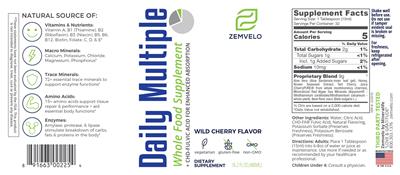
Supplement Facts
The label details for Daily Multiple Wild Cherry Flavor by Zemvelo, sourced from the NIH Dietary Supplement Label Database.
Supplement Facts
| Ingredient | Amount | % DV |
|---|---|---|
| Calories | 5 Calorie(s) | -- |
| Total Carbohydrates | 2 Gram(s) | 1% |
| Sodium | 10 mg | 1% |
| Proprietary Blend | 9 Gram(s) | -- |
| Added Sugars | 1 Gram(s) | 2% |
| Total Sugars | 1 Gram(s) | 1% |
| Honey | 0 NP | -- |
| Aloe Vera | 0 NP | -- |
| Brown Seaweed Extract | 0 NP | -- |
| CherryPURE | 0 NP | -- |
| Aquamin | 0 NP | -- |
| Beet Root Juice | 0 NP | -- |
Other ingredients: Water, Citric Acid, CHD-FA Fulvic Acid, Natural Flavors, Potassium Sorbate, Potassium Benzoate
Tap any ingredient to jump to its full detail below.
These statements are the manufacturer’s wording, reproduced from the product label — the label is saying it, not HelloPharmacist. We don’t verify or endorse them.
FDA Disclaimer Statement
These statements have not been evaluated by the FDA. This product is not intended to diagnose, treat, cure or prevent any disease.
Formula
Natural source of: Vitamins & nutrients: Vitamin A, B1 (Thiamine), B2 (Riboflavin), B3 (Niacin), B5, B6, B12, Biotin, Folate, C, D, & E Macro minerals: Calcium, potassium, chloride, magnesium, phosphorus Trace minerals: 72+ essential trace minerals to support enzyme functions Amino acids: 15+ amino acids support tissue repair & performance + aid essential body functions Enzymes: Amylase, protease, & lipase stimulate breakdown of carbs, fats & proteins in the body
Daily Multiple Whole food supplement + CHD-Fulvic acid for enhanced absorption
Formulation
Vegetarian
Gluten-free Non-GMO
Third party tested
FDA Statement of Identity
Dietary Supplement
Suggested/Recommended/Usage/Directions
Directions: Adults: Place 1 tablespoon (15 ml) into 6-8 oz of water or juice as maintenance. Use more if needed or as recommended by your healthcare professional.
Shake well before use.
Precautions
Children under 4: Consult a physician.
Do not use if tamper evident seal is broken or missing.
Storage
For freshness, keep refrigerated after opening.
General Statements
"Love & gratitude"
Seals/Symbols
Manufactured in the U.S.A.
Is this label outdated? Report a formula or label change and our pharmacy team will review it.
Daily Multiple Wild Cherry Flavor by Zemvelo label
The label scan from the NIH Dietary Supplement Label Database. Tap to enlarge.
Label images are published by the NIH Dietary Supplement Label Database for the version of this product on file. Always read your actual product label.
View the full label (PDF)The Ingredients in Daily Multiple Wild Cherry Flavor by Zemvelo
These are the 7 active ingredients this product is made of. Select any to open its full monograph.
Serving size15 mL Dosage formLiquid Servings per container32 Amounts shown are per serving.
Most supplement products combine several ingredients, and a medication can interact with the product through any one of them. Each ingredient below shows whether it has known drug interactions.
Sodium
Interacts with205 drugs
Sodium is an essential mineral and electrolyte your body needs to balance fluids, support nerves, and help muscles work. Most people in modern diets g...
Sodium monograph & interactionsProprietary Blend
- › Honey
- › Aloe Vera
- › Brown Seaweed Extract
- › CherryPURE
- › Aquamin
- › Beet Root Juice
Other (inactive) ingredients: Water, Citric Acid, CHD-FA Fulvic Acid, Natural Flavors, Potassium Sorbate, Potassium Benzoate. These complete the product’s ingredient list but are not active constituents.
Daily Multiple Wild Cherry Flavor by Zemvelo Drug Interactions
HelloPharmacist Interaction Report
Zemvelo's Daily Multiple Wild Cherry Flavor is a liquid multivitamin with several ingredients that interact with medications.
The most serious concern is aloe vera, which carries a Major-severity interaction with digoxin (a heart medication). Aloe can deplete potassium, which increases the risk of digoxin toxicity even at normal doses.
Read the full breakdown — every affected drug type, severity by severity
Sodium in this product interacts with a broad range of drugs at Moderate severity: antihypertensive medications (blood pressure drugs), corticosteroids, lithium, didanosine, sodium phosphate, tolvaptan, and other sodium-containing medications. High sodium intake can reduce how well blood pressure drugs work, raise sodium levels dangerously when combined with certain steroids or HIV medications, and shift lithium levels unpredictably—potentially causing toxicity.
Honey and beet root juice each carry Minor interactions with drugs broken down by your liver (CYP3A4 and CYP1A2 substrates), and both may theoretically increase bleeding risk with blood thinners and antiplatelet drugs.
Aloe vera also has Moderate interactions with blood thinners, diabetes medications, water pills (diuretics), warfarin, laxatives, and antidiabetic drugs—raising bleeding risk, low blood sugar, or potassium loss depending on which drug you take. Brown seaweed extract interacts with thyroid medications and antithyroid drugs at Moderate severity because of its iodine content.
We could not check Aquamin because we hold no interaction data for it.
Altogether, these interactions span 1,068 individual medications. Use the medication checker on this page to look up your exact prescriptions before starting this product.
Check your own medications below · Editorial policy · How we use AI
Want to check YOUR meds against Daily Multiple Wild Cherry Flavor?
Ask about interactions with your drugs in plain English — “Can I take it with lisinopril?” — and we find you the answer in seconds, ingredient by ingredient.
Go to the checkerIngredients driving the most interactions
Individual Drug Interactions
The ingredients in Daily Multiple Wild Cherry Flavor interact with 1,082 drugs. Click any drug to see the details.
5 of the 7 ingredients in Daily Multiple Wild Cherry Flavor interact with drugs. Each result below shows which ingredient is responsible. Beet Root Juice Honey Aloe Vera Sodium Brown Seaweed Extract
DigoxinDigitek, Lanoxicaps, Lanoxin
How Digoxin interacts with Daily Multiple Wild Cherry Flavor — through 1 ingredient. Tap an ingredient for the detail:
Aloe VeraDigoxin (lanoxin) Major
Interaction Summary
Theoretically, aloe latex might increase the risk of adverse effects when taken with cardiac glycosides.
Read the full Aloe Vera + Digoxin interactionAdo-trastuzumab EmtansineKadcyla
How Ado-trastuzumab Emtansine interacts with Daily Multiple Wild Cherry Flavor — through 2 ingredients. Tap an ingredient for the detail:
Beet Root JuiceCytochrome P450 3a4 (cyp3a4) Substrates Moderate
Interaction Summary
Theoretically, beet might increase the levels of CYP3A4 substrates.
Read the full Beet Root Juice + Ado-trastuzumab Emtansine interactionHoneyCytochrome P450 3a4 (cyp3a4) Substrates Minor
Interaction Summary
Theoretically, honey might decrease levels of drugs metabolized by CYP3A4, but research is conflicting.
Read the full Honey + Ado-trastuzumab Emtansine interactionAbciximabReoPro
How Abciximab interacts with Daily Multiple Wild Cherry Flavor — through 2 ingredients. Tap an ingredient for the detail:
Aloe VeraAnticoagulant/antiplatelet Drugs Moderate
Interaction Summary
Theoretically, aloe gel might increase the risk of bleeding when taken with anticoagulant or antiplatelet drugs.
Read the full Aloe Vera + Abciximab interactionHoneyAnticoagulant/antiplatelet Drugs Minor
Interaction Summary
Theoretically, honey may increase the risk of bleeding when used with anticoagulant or antiplatelet drugs.
Read the full Honey + Abciximab interactionAbemaciclibVerzenio
How Abemaciclib interacts with Daily Multiple Wild Cherry Flavor — through 2 ingredients. Tap an ingredient for the detail:
Beet Root JuiceCytochrome P450 3a4 (cyp3a4) Substrates Moderate
Interaction Summary
Theoretically, beet might increase the levels of CYP3A4 substrates.
Read the full Beet Root Juice + Abemaciclib interactionHoneyCytochrome P450 3a4 (cyp3a4) Substrates Minor
Interaction Summary
Theoretically, honey might decrease levels of drugs metabolized by CYP3A4, but research is conflicting.
Read the full Honey + Abemaciclib interactionAbiraterone
How Abiraterone interacts with Daily Multiple Wild Cherry Flavor — through 2 ingredients. Tap an ingredient for the detail:
Beet Root JuiceCytochrome P450 3a4 (cyp3a4) Substrates Moderate
Interaction Summary
Theoretically, beet might increase the levels of CYP3A4 substrates.
Read the full Beet Root Juice + Abiraterone interactionHoneyCytochrome P450 3a4 (cyp3a4) Substrates Minor
Interaction Summary
Theoretically, honey might decrease levels of drugs metabolized by CYP3A4, but research is conflicting.
Read the full Honey + Abiraterone interactionAbiraterone AcetateYonsa, Zytiga
How Abiraterone Acetate interacts with Daily Multiple Wild Cherry Flavor — through 2 ingredients. Tap an ingredient for the detail:
Beet Root JuiceCytochrome P450 3a4 (cyp3a4) Substrates Moderate
Interaction Summary
Theoretically, beet might increase the levels of CYP3A4 substrates.
Read the full Beet Root Juice + Abiraterone Acetate interactionHoneyCytochrome P450 3a4 (cyp3a4) Substrates Minor
Interaction Summary
Theoretically, honey might decrease levels of drugs metabolized by CYP3A4, but research is conflicting.
Read the full Honey + Abiraterone Acetate interactionAbrocitinibCibinqo
How Abrocitinib interacts with Daily Multiple Wild Cherry Flavor — through 2 ingredients. Tap an ingredient for the detail:
Aloe VeraAnticoagulant/antiplatelet Drugs Moderate
Interaction Summary
Theoretically, aloe gel might increase the risk of bleeding when taken with anticoagulant or antiplatelet drugs.
Read the full Aloe Vera + Abrocitinib interactionHoneyAnticoagulant/antiplatelet Drugs Minor
Interaction Summary
Theoretically, honey may increase the risk of bleeding when used with anticoagulant or antiplatelet drugs.
Read the full Honey + Abrocitinib interactionAcalabrutinibCalquence
How Acalabrutinib interacts with Daily Multiple Wild Cherry Flavor — through 2 ingredients. Tap an ingredient for the detail:
Beet Root JuiceCytochrome P450 3a4 (cyp3a4) Substrates Moderate
Interaction Summary
Theoretically, beet might increase the levels of CYP3A4 substrates.
Read the full Beet Root Juice + Acalabrutinib interactionHoneyCytochrome P450 3a4 (cyp3a4) Substrates Minor
Interaction Summary
Theoretically, honey might decrease levels of drugs metabolized by CYP3A4, but research is conflicting.
Read the full Honey + Acalabrutinib interactionAcarboseGlucobay, Prandase, Precose
How Acarbose interacts with Daily Multiple Wild Cherry Flavor — through 1 ingredient. Tap an ingredient for the detail:
Aloe VeraAntidiabetes Drugs Moderate
Interaction Summary
Aloe might increase the risk of hypoglycemia when taken with antidiabetes drugs.
Read the full Aloe Vera + Acarbose interactionAcebutololRhotral, Sectral
How Acebutolol interacts with Daily Multiple Wild Cherry Flavor — through 2 ingredients. Tap an ingredient for the detail:
SodiumAntihypertensive Drugs Moderate
Interaction Summary
Theoretically, a high intake of dietary sodium might reduce the effectiveness of antihypertensive drugs.
Read the full Sodium + Acebutolol interactionBeet Root JuiceAntihypertensive Drugs Minor
Interaction Summary
Beet and beetroot contain nitrates, which can cause vasodilation, potentially leading to lower blood pressure.
Read the full Beet Root Juice + Acebutolol interactionAcenocoumarolSintrom
How Acenocoumarol interacts with Daily Multiple Wild Cherry Flavor — through 2 ingredients. Tap an ingredient for the detail:
Aloe VeraAnticoagulant/antiplatelet Drugs Moderate
Interaction Summary
Theoretically, aloe gel might increase the risk of bleeding when taken with anticoagulant or antiplatelet drugs.
Read the full Aloe Vera + Acenocoumarol interactionHoneyAnticoagulant/antiplatelet Drugs Minor
Interaction Summary
Theoretically, honey may increase the risk of bleeding when used with anticoagulant or antiplatelet drugs.
Read the full Honey + Acenocoumarol interactionAcetaminophen, AspirinGemnisyn
How Acetaminophen, Aspirin interacts with Daily Multiple Wild Cherry Flavor — through 3 ingredients. Tap an ingredient for the detail:
Aloe VeraAnticoagulant/antiplatelet Drugs, Cytochrome P450 1a2 (cyp1a2) Substrates Moderate
Interaction Summary
Theoretically, aloe gel might increase the risk of bleeding when taken with anticoagulant or antiplatelet drugs.
Read the full Aloe Vera + Acetaminophen, Aspirin interactionHoneyAnticoagulant/antiplatelet Drugs Minor
Interaction Summary
Theoretically, honey may increase the risk of bleeding when used with anticoagulant or antiplatelet drugs.
Read the full Honey + Acetaminophen, Aspirin interactionBeet Root JuiceCytochrome P450 1a2 (cyp1a2) Substrates Minor
Interaction Summary
Theoretically, beet might decrease the levels and clinical effects of CYP1A2 substrates.
Read the full Beet Root Juice + Acetaminophen, Aspirin interactionAcetaminophen, Aspirin, CaffeineExcedrin, Excedrin Extra Strength, Excedrin Migraine
How Acetaminophen, Aspirin, Caffeine interacts with Daily Multiple Wild Cherry Flavor — through 3 ingredients. Tap an ingredient for the detail:
Aloe VeraAnticoagulant/antiplatelet Drugs, Cytochrome P450 1a2 (cyp1a2) Substrates Moderate
Interaction Summary
Theoretically, aloe gel might increase the risk of bleeding when taken with anticoagulant or antiplatelet drugs.
Read the full Aloe Vera + Acetaminophen, Aspirin, Caffeine interactionBeet Root JuiceCytochrome P450 3a4 (cyp3a4) Substrates, Cytochrome P450 1a2 (cyp1a2) Substrates Moderate
Interaction Summary
Theoretically, beet might increase the levels of CYP3A4 substrates.
Read the full Beet Root Juice + Acetaminophen, Aspirin, Caffeine interactionHoneyCytochrome P450 3a4 (cyp3a4) Substrates, Anticoagulant/antiplatelet Drugs Minor
Interaction Summary
Theoretically, honey might decrease levels of drugs metabolized by CYP3A4, but research is conflicting.
Read the full Honey + Acetaminophen, Aspirin, Caffeine interactionAcetaminophen, Butalbital, CaffeineEsgic, Esgic Plus, Fiogesic, Fioricet, Repan, Tecnal +1 more
How Acetaminophen, Butalbital, Caffeine interacts with Daily Multiple Wild Cherry Flavor — through 3 ingredients. Tap an ingredient for the detail:
Beet Root JuiceCytochrome P450 1a2 (cyp1a2) Substrates, Cytochrome P450 3a4 (cyp3a4) Substrates Moderate
Interaction Summary
Theoretically, beet might decrease the levels and clinical effects of CYP1A2 substrates.
Read the full Beet Root Juice + Acetaminophen, Butalbital, Caffeine interactionHoneyCytochrome P450 3a4 (cyp3a4) Substrates Minor
Interaction Summary
Theoretically, honey might decrease levels of drugs metabolized by CYP3A4, but research is conflicting.
Read the full Honey + Acetaminophen, Butalbital, Caffeine interactionAloe VeraCytochrome P450 1a2 (cyp1a2) Substrates Minor
Interaction Summary
Theoretically, aloe might decrease the levels and clinical effects of CYP1A2 substrates.
Read the full Aloe Vera + Acetaminophen, Butalbital, Caffeine interactionAcetaminophen, Butalbital, Caffeine, CodeineEsgic with Codeine, Fioricet w/ Codeine
How Acetaminophen, Butalbital, Caffeine, Codeine interacts with Daily Multiple Wild Cherry Flavor — through 3 ingredients. Tap an ingredient for the detail:
Beet Root JuiceCytochrome P450 1a2 (cyp1a2) Substrates, Cytochrome P450 3a4 (cyp3a4) Substrates Moderate
Interaction Summary
Theoretically, beet might decrease the levels and clinical effects of CYP1A2 substrates.
Read the full Beet Root Juice + Acetaminophen, Butalbital, Caffeine, Codeine interactionHoneyCytochrome P450 3a4 (cyp3a4) Substrates Minor
Interaction Summary
Theoretically, honey might decrease levels of drugs metabolized by CYP3A4, but research is conflicting.
Read the full Honey + Acetaminophen, Butalbital, Caffeine, Codeine interactionAloe VeraCytochrome P450 1a2 (cyp1a2) Substrates Minor
Interaction Summary
Theoretically, aloe might decrease the levels and clinical effects of CYP1A2 substrates.
Read the full Aloe Vera + Acetaminophen, Butalbital, Caffeine, Codeine interactionAcetaminophen, Caffeine, Chlorpheniramine, Hydrocodone, PhenylephrineHycomine Compound
How Acetaminophen, Caffeine, Chlorpheniramine, Hydrocodone, Phenylephrine interacts with Daily Multiple Wild Cherry Flavor — through 3 ingredients. Tap an ingredient for the detail:
Beet Root JuiceCytochrome P450 3a4 (cyp3a4) Substrates, Cytochrome P450 1a2 (cyp1a2) Substrates Moderate
Interaction Summary
Theoretically, beet might increase the levels of CYP3A4 substrates.
Read the full Beet Root Juice + Acetaminophen, Caffeine, Chlorpheniramine, Hydrocodone, Phenylephrine interactionHoneyCytochrome P450 3a4 (cyp3a4) Substrates Minor
Interaction Summary
Theoretically, honey might decrease levels of drugs metabolized by CYP3A4, but research is conflicting.
Read the full Honey + Acetaminophen, Caffeine, Chlorpheniramine, Hydrocodone, Phenylephrine interactionAloe VeraCytochrome P450 1a2 (cyp1a2) Substrates Minor
Interaction Summary
Theoretically, aloe might decrease the levels and clinical effects of CYP1A2 substrates.
Read the full Aloe Vera + Acetaminophen, Caffeine, Chlorpheniramine, Hydrocodone, Phenylephrine interactionAcetaminophen, Caffeine, CodeineGesic C15, Gesic C30, Gesic C8, Lenoltec 1, Lenoltec 2, Lenoltec 3 +1 more
How Acetaminophen, Caffeine, Codeine interacts with Daily Multiple Wild Cherry Flavor — through 3 ingredients. Tap an ingredient for the detail:
Beet Root JuiceCytochrome P450 1a2 (cyp1a2) Substrates, Cytochrome P450 3a4 (cyp3a4) Substrates Moderate
Interaction Summary
Theoretically, beet might decrease the levels and clinical effects of CYP1A2 substrates.
Read the full Beet Root Juice + Acetaminophen, Caffeine, Codeine interactionHoneyCytochrome P450 3a4 (cyp3a4) Substrates Minor
Interaction Summary
Theoretically, honey might decrease levels of drugs metabolized by CYP3A4, but research is conflicting.
Read the full Honey + Acetaminophen, Caffeine, Codeine interactionAloe VeraCytochrome P450 1a2 (cyp1a2) Substrates Minor
Interaction Summary
Theoretically, aloe might decrease the levels and clinical effects of CYP1A2 substrates.
Read the full Aloe Vera + Acetaminophen, Caffeine, Codeine interactionAcetaminophen, Caffeine, Codeine, SalicylamideCodalan No.1, Codalan No.2, Codalan No.3
How Acetaminophen, Caffeine, Codeine, Salicylamide interacts with Daily Multiple Wild Cherry Flavor — through 3 ingredients. Tap an ingredient for the detail:
Beet Root JuiceCytochrome P450 1a2 (cyp1a2) Substrates, Cytochrome P450 3a4 (cyp3a4) Substrates Moderate
Interaction Summary
Theoretically, beet might decrease the levels and clinical effects of CYP1A2 substrates.
Read the full Beet Root Juice + Acetaminophen, Caffeine, Codeine, Salicylamide interactionAloe VeraCytochrome P450 1a2 (cyp1a2) Substrates Minor
Interaction Summary
Theoretically, aloe might decrease the levels and clinical effects of CYP1A2 substrates.
Read the full Aloe Vera + Acetaminophen, Caffeine, Codeine, Salicylamide interactionHoneyCytochrome P450 3a4 (cyp3a4) Substrates Minor
Interaction Summary
Theoretically, honey might decrease levels of drugs metabolized by CYP3A4, but research is conflicting.
Read the full Honey + Acetaminophen, Caffeine, Codeine, Salicylamide interactionAcetaminophen, Caffeine, DihydrocodeineDHC Plus, Panlor DC, Panlor SS
How Acetaminophen, Caffeine, Dihydrocodeine interacts with Daily Multiple Wild Cherry Flavor — through 3 ingredients. Tap an ingredient for the detail:
Beet Root JuiceCytochrome P450 1a2 (cyp1a2) Substrates, Cytochrome P450 3a4 (cyp3a4) Substrates Moderate
Interaction Summary
Theoretically, beet might decrease the levels and clinical effects of CYP1A2 substrates.
Read the full Beet Root Juice + Acetaminophen, Caffeine, Dihydrocodeine interactionAloe VeraCytochrome P450 1a2 (cyp1a2) Substrates Minor
Interaction Summary
Theoretically, aloe might decrease the levels and clinical effects of CYP1A2 substrates.
Read the full Aloe Vera + Acetaminophen, Caffeine, Dihydrocodeine interactionHoneyCytochrome P450 3a4 (cyp3a4) Substrates Minor
Interaction Summary
Theoretically, honey might decrease levels of drugs metabolized by CYP3A4, but research is conflicting.
Read the full Honey + Acetaminophen, Caffeine, Dihydrocodeine interactionAcetaminophen, Caffeine, IsomethepteneMigralam
How Acetaminophen, Caffeine, Isometheptene interacts with Daily Multiple Wild Cherry Flavor — through 3 ingredients. Tap an ingredient for the detail:
Beet Root JuiceCytochrome P450 3a4 (cyp3a4) Substrates, Cytochrome P450 1a2 (cyp1a2) Substrates Moderate
Interaction Summary
Theoretically, beet might increase the levels of CYP3A4 substrates.
Read the full Beet Root Juice + Acetaminophen, Caffeine, Isometheptene interactionAloe VeraCytochrome P450 1a2 (cyp1a2) Substrates Minor
Interaction Summary
Theoretically, aloe might decrease the levels and clinical effects of CYP1A2 substrates.
Read the full Aloe Vera + Acetaminophen, Caffeine, Isometheptene interactionHoneyCytochrome P450 3a4 (cyp3a4) Substrates Minor
Interaction Summary
Theoretically, honey might decrease levels of drugs metabolized by CYP3A4, but research is conflicting.
Read the full Honey + Acetaminophen, Caffeine, Isometheptene interactionAcetaminophen, Caffeine, PyrilamineMidol Max Strength Menstrual
How Acetaminophen, Caffeine, Pyrilamine interacts with Daily Multiple Wild Cherry Flavor — through 3 ingredients. Tap an ingredient for the detail:
Beet Root JuiceCytochrome P450 1a2 (cyp1a2) Substrates, Cytochrome P450 3a4 (cyp3a4) Substrates Moderate
Interaction Summary
Theoretically, beet might decrease the levels and clinical effects of CYP1A2 substrates.
Read the full Beet Root Juice + Acetaminophen, Caffeine, Pyrilamine interactionAloe VeraDiuretic Drugs, Cytochrome P450 1a2 (cyp1a2) Substrates Moderate
Interaction Summary
Theoretically, aloe latex might increase the risk of hypokalemia when taken with diuretic drugs.
Read the full Aloe Vera + Acetaminophen, Caffeine, Pyrilamine interactionHoneyCytochrome P450 3a4 (cyp3a4) Substrates Minor
Interaction Summary
Theoretically, honey might decrease levels of drugs metabolized by CYP3A4, but research is conflicting.
Read the full Honey + Acetaminophen, Caffeine, Pyrilamine interactionAcetaminophen, Chlorpheniramine Maleate, Dextromethorphan HbrVicks Formula 44M Cough, Cold & Flu Relief
How Acetaminophen, Chlorpheniramine Maleate, Dextromethorphan Hbr interacts with Daily Multiple Wild Cherry Flavor — through 3 ingredients. Tap an ingredient for the detail:
Beet Root JuiceCytochrome P450 3a4 (cyp3a4) Substrates, Cytochrome P450 1a2 (cyp1a2) Substrates Moderate
Interaction Summary
Theoretically, beet might increase the levels of CYP3A4 substrates.
Read the full Beet Root Juice + Acetaminophen, Chlorpheniramine Maleate, Dextromethorphan Hbr interactionHoneyCytochrome P450 3a4 (cyp3a4) Substrates Minor
Interaction Summary
Theoretically, honey might decrease levels of drugs metabolized by CYP3A4, but research is conflicting.
Read the full Honey + Acetaminophen, Chlorpheniramine Maleate, Dextromethorphan Hbr interactionAloe VeraCytochrome P450 1a2 (cyp1a2) Substrates Minor
Interaction Summary
Theoretically, aloe might decrease the levels and clinical effects of CYP1A2 substrates.
Read the full Aloe Vera + Acetaminophen, Chlorpheniramine Maleate, Dextromethorphan Hbr interactionAcetaminophen, Chlorpheniramine, Codeine, PhenylephrineColrex
How Acetaminophen, Chlorpheniramine, Codeine, Phenylephrine interacts with Daily Multiple Wild Cherry Flavor — through 3 ingredients. Tap an ingredient for the detail:
Beet Root JuiceCytochrome P450 3a4 (cyp3a4) Substrates, Cytochrome P450 1a2 (cyp1a2) Substrates Moderate
Interaction Summary
Theoretically, beet might increase the levels of CYP3A4 substrates.
Read the full Beet Root Juice + Acetaminophen, Chlorpheniramine, Codeine, Phenylephrine interactionAloe VeraCytochrome P450 1a2 (cyp1a2) Substrates Minor
Interaction Summary
Theoretically, aloe might decrease the levels and clinical effects of CYP1A2 substrates.
Read the full Aloe Vera + Acetaminophen, Chlorpheniramine, Codeine, Phenylephrine interactionHoneyCytochrome P450 3a4 (cyp3a4) Substrates Minor
Interaction Summary
Theoretically, honey might decrease levels of drugs metabolized by CYP3A4, but research is conflicting.
Read the full Honey + Acetaminophen, Chlorpheniramine, Codeine, Phenylephrine interactionAcetaminophen, Chlorpheniramine, DextromethorphanCoricidin II Extra Strength Cold and Flu
How Acetaminophen, Chlorpheniramine, Dextromethorphan interacts with Daily Multiple Wild Cherry Flavor — through 3 ingredients. Tap an ingredient for the detail:
Beet Root JuiceCytochrome P450 1a2 (cyp1a2) Substrates, Cytochrome P450 3a4 (cyp3a4) Substrates Moderate
Interaction Summary
Theoretically, beet might decrease the levels and clinical effects of CYP1A2 substrates.
Read the full Beet Root Juice + Acetaminophen, Chlorpheniramine, Dextromethorphan interactionAloe VeraCytochrome P450 1a2 (cyp1a2) Substrates Minor
Interaction Summary
Theoretically, aloe might decrease the levels and clinical effects of CYP1A2 substrates.
Read the full Aloe Vera + Acetaminophen, Chlorpheniramine, Dextromethorphan interactionHoneyCytochrome P450 3a4 (cyp3a4) Substrates Minor
Interaction Summary
Theoretically, honey might decrease levels of drugs metabolized by CYP3A4, but research is conflicting.
Read the full Honey + Acetaminophen, Chlorpheniramine, Dextromethorphan interactionAcetaminophen, Chlorpheniramine, Dextromethorphan HydrobromideCoricidin HBP Maximum Strength Flu
How Acetaminophen, Chlorpheniramine, Dextromethorphan Hydrobromide interacts with Daily Multiple Wild Cherry Flavor — through 3 ingredients. Tap an ingredient for the detail:
Beet Root JuiceCytochrome P450 3a4 (cyp3a4) Substrates, Cytochrome P450 1a2 (cyp1a2) Substrates Moderate
Interaction Summary
Theoretically, beet might increase the levels of CYP3A4 substrates.
Read the full Beet Root Juice + Acetaminophen, Chlorpheniramine, Dextromethorphan Hydrobromide interactionHoneyCytochrome P450 3a4 (cyp3a4) Substrates Minor
Interaction Summary
Theoretically, honey might decrease levels of drugs metabolized by CYP3A4, but research is conflicting.
Read the full Honey + Acetaminophen, Chlorpheniramine, Dextromethorphan Hydrobromide interactionAloe VeraCytochrome P450 1a2 (cyp1a2) Substrates Minor
Interaction Summary
Theoretically, aloe might decrease the levels and clinical effects of CYP1A2 substrates.
Read the full Aloe Vera + Acetaminophen, Chlorpheniramine, Dextromethorphan Hydrobromide interactionAcetaminophen, Chlorpheniramine, Dextromethorphan, PhenylpropanolamineMulti Symptom Cold Relief
How Acetaminophen, Chlorpheniramine, Dextromethorphan, Phenylpropanolamine interacts with Daily Multiple Wild Cherry Flavor — through 3 ingredients. Tap an ingredient for the detail:
Beet Root JuiceCytochrome P450 3a4 (cyp3a4) Substrates, Cytochrome P450 1a2 (cyp1a2) Substrates Moderate
Interaction Summary
Theoretically, beet might increase the levels of CYP3A4 substrates.
Read the full Beet Root Juice + Acetaminophen, Chlorpheniramine, Dextromethorphan, Phenylpropanolamine interactionAloe VeraCytochrome P450 1a2 (cyp1a2) Substrates Minor
Interaction Summary
Theoretically, aloe might decrease the levels and clinical effects of CYP1A2 substrates.
Read the full Aloe Vera + Acetaminophen, Chlorpheniramine, Dextromethorphan, Phenylpropanolamine interactionHoneyCytochrome P450 3a4 (cyp3a4) Substrates Minor
Interaction Summary
Theoretically, honey might decrease levels of drugs metabolized by CYP3A4, but research is conflicting.
Read the full Honey + Acetaminophen, Chlorpheniramine, Dextromethorphan, Phenylpropanolamine interactionAcetaminophen, Chlorpheniramine, Dextromethorphan, PseudoephedrineChildren's Tylenol Cold Plus Cough, Tylenol Cold Ex Strength
How Acetaminophen, Chlorpheniramine, Dextromethorphan, Pseudoephedrine interacts with Daily Multiple Wild Cherry Flavor — through 3 ingredients. Tap an ingredient for the detail:
Beet Root JuiceCytochrome P450 1a2 (cyp1a2) Substrates, Cytochrome P450 3a4 (cyp3a4) Substrates Moderate
Interaction Summary
Theoretically, beet might decrease the levels and clinical effects of CYP1A2 substrates.
Read the full Beet Root Juice + Acetaminophen, Chlorpheniramine, Dextromethorphan, Pseudoephedrine interactionHoneyCytochrome P450 3a4 (cyp3a4) Substrates Minor
Interaction Summary
Theoretically, honey might decrease levels of drugs metabolized by CYP3A4, but research is conflicting.
Read the full Honey + Acetaminophen, Chlorpheniramine, Dextromethorphan, Pseudoephedrine interactionAloe VeraCytochrome P450 1a2 (cyp1a2) Substrates Minor
Interaction Summary
Theoretically, aloe might decrease the levels and clinical effects of CYP1A2 substrates.
Read the full Aloe Vera + Acetaminophen, Chlorpheniramine, Dextromethorphan, Pseudoephedrine interactionAcetaminophen, Chlorpheniramine, Guaifenesin, Phenylephrine, SalicylamideRhinogesic GG
How Acetaminophen, Chlorpheniramine, Guaifenesin, Phenylephrine, Salicylamide interacts with Daily Multiple Wild Cherry Flavor — through 3 ingredients. Tap an ingredient for the detail:
Beet Root JuiceCytochrome P450 3a4 (cyp3a4) Substrates, Cytochrome P450 1a2 (cyp1a2) Substrates Moderate
Interaction Summary
Theoretically, beet might increase the levels of CYP3A4 substrates.
Read the full Beet Root Juice + Acetaminophen, Chlorpheniramine, Guaifenesin, Phenylephrine, Salicylamide interactionHoneyCytochrome P450 3a4 (cyp3a4) Substrates Minor
Interaction Summary
Theoretically, honey might decrease levels of drugs metabolized by CYP3A4, but research is conflicting.
Read the full Honey + Acetaminophen, Chlorpheniramine, Guaifenesin, Phenylephrine, Salicylamide interactionAloe VeraCytochrome P450 1a2 (cyp1a2) Substrates Minor
Interaction Summary
Theoretically, aloe might decrease the levels and clinical effects of CYP1A2 substrates.
Read the full Aloe Vera + Acetaminophen, Chlorpheniramine, Guaifenesin, Phenylephrine, Salicylamide interactionAcetaminophen, Chlorpheniramine, PhenylephrineAlka-Seltzer PLUS, Histex SR, Protid
How Acetaminophen, Chlorpheniramine, Phenylephrine interacts with Daily Multiple Wild Cherry Flavor — through 3 ingredients. Tap an ingredient for the detail:
Beet Root JuiceCytochrome P450 3a4 (cyp3a4) Substrates, Cytochrome P450 1a2 (cyp1a2) Substrates Moderate
Interaction Summary
Theoretically, beet might increase the levels of CYP3A4 substrates.
Read the full Beet Root Juice + Acetaminophen, Chlorpheniramine, Phenylephrine interactionAloe VeraCytochrome P450 1a2 (cyp1a2) Substrates Minor
Interaction Summary
Theoretically, aloe might decrease the levels and clinical effects of CYP1A2 substrates.
Read the full Aloe Vera + Acetaminophen, Chlorpheniramine, Phenylephrine interactionHoneyCytochrome P450 3a4 (cyp3a4) Substrates Minor
Interaction Summary
Theoretically, honey might decrease levels of drugs metabolized by CYP3A4, but research is conflicting.
Read the full Honey + Acetaminophen, Chlorpheniramine, Phenylephrine interactionAcetaminophen, Chlorpheniramine, Phenylephrine, SalicylamideRhinogesic, Rhinogesic JR
How Acetaminophen, Chlorpheniramine, Phenylephrine, Salicylamide interacts with Daily Multiple Wild Cherry Flavor — through 3 ingredients. Tap an ingredient for the detail:
Beet Root JuiceCytochrome P450 1a2 (cyp1a2) Substrates, Cytochrome P450 3a4 (cyp3a4) Substrates Moderate
Interaction Summary
Theoretically, beet might decrease the levels and clinical effects of CYP1A2 substrates.
Read the full Beet Root Juice + Acetaminophen, Chlorpheniramine, Phenylephrine, Salicylamide interactionAloe VeraCytochrome P450 1a2 (cyp1a2) Substrates Minor
Interaction Summary
Theoretically, aloe might decrease the levels and clinical effects of CYP1A2 substrates.
Read the full Aloe Vera + Acetaminophen, Chlorpheniramine, Phenylephrine, Salicylamide interactionHoneyCytochrome P450 3a4 (cyp3a4) Substrates Minor
Interaction Summary
Theoretically, honey might decrease levels of drugs metabolized by CYP3A4, but research is conflicting.
Read the full Honey + Acetaminophen, Chlorpheniramine, Phenylephrine, Salicylamide interactionEach ingredient & the kinds of drugs it affects
For each ingredient in Daily Multiple Wild Cherry Flavor with known interactions, here are the types of medications they can affect. Open any type for the detail — or search your exact drug in the checker above.
Beet Root Juice
Cytochrome P450 3A4 (Cyp3A4) Substrates
Theoretically, beet might increase the levels of CYP3A4 substrates.
In vitro research suggests that betanin, the major pigment in beet, competitively inhibits CYP3A4 in a dose-dependent manner similarly to strong CYP3A4 inhibitor ketoconazole.
Antihypertensive Drugs
Beet and beetroot contain nitrates, which can cause vasodilation, potentially leading to lower blood pressure. However, a study published in the European Journal of Clinical Nutrition using concentrated beetroot juice found no significant impact on blood pressure or heart rate in different age groups. Other small clinical studies suggest that while beet consumption might transiently lower blood pressure due to vessel dilation, there's no consistent evidence of a lasting effect. Overall, the theoretical risk of reduced blood pressure due to beet's nitrate content exists, but studies generally indicate a low and temporary impact rather than a sustained decrease.
Cytochrome P450 1A2 (Cyp1A2) Substrates
Theoretically, beet might decrease the levels and clinical effects of CYP1A2 substrates.
In vitro research suggests that beet induces CYP1A2 enzymes.
Honey
Phenytoin (Dilantin)
Theoretically, honey might increase levels of phenytoin.
In an animal model, the rate and extent of absorption of phenytoin was increased by honey. This effect has not been reported in humans.
Anticoagulant/Antiplatelet Drugs
Theoretically, honey may increase the risk of bleeding when used with anticoagulant or antiplatelet drugs.
In vitro, honey inhibits platelet aggregation and increases the time to clotting. Furthermore, animal research suggests that feeding mice large doses of honey for 12 days increases bleeding time when compared with no intervention. However, these effects have not been reported in humans.
Cytochrome P450 3A4 (Cyp3A4) Substrates
Theoretically, honey might decrease levels of drugs metabolized by CYP3A4, but research is conflicting.
Some clinical research shows that honey induces CYP3A4. However, other clinical studies found no effect on CYP3A4 activity. Different honey preparations may have different effects on CYP3A4.
Aloe Vera
Digoxin (Lanoxin)
Theoretically, aloe latex might increase the risk of adverse effects when taken with cardiac glycosides.
Overuse of aloe latex can increase the risk of adverse effects from cardiac glycoside drugs, such as digoxin, due to potassium depletion. Overuse of aloe, along with cardiac glycoside drugs, can increase the risk of toxicity.
Anticoagulant/Antiplatelet Drugs
Theoretically, aloe gel might increase the risk of bleeding when taken with anticoagulant or antiplatelet drugs.
In vitro research shows that aloe gel can inhibit platelet aggregation. This inhibition was greater than that seen with celecoxib, but less than that seen with aspirin.
Antidiabetes Drugs
Aloe might increase the risk of hypoglycemia when taken with antidiabetes drugs.
Preliminary clinical research suggests aloe gel might lower blood glucose levels and have additive effects when used with antidiabetes drugs. Monitor blood glucose levels closely.
Diuretic Drugs
Theoretically, aloe latex might increase the risk of hypokalemia when taken with diuretic drugs.
Overuse of aloe latex might compound diuretic-induced potassium loss, increasing the risk of hypokalemia.
Stimulant Laxatives
Theoretically, aloe latex might increase the risk for fluid and electrolyte loss when taken with stimulant laxatives.
Due to cathartic laxative effects of aloe latex, concomitant use with other stimulant laxatives might compound fluid and electrolyte loss.
Warfarin (Coumadin)
Theoretically, aloe latex might increase the risk of bleeding when taken with warfarin.
Aloe latex has stimulant laxative effects. In some people aloe latex can cause diarrhea. Diarrhea can increase the effects of warfarin, increase international normalized ratio (INR), and increase the risk of bleeding. Advise patients who take warfarin not to take excessive amounts of aloe vera.
Cytochrome P450 1A2 (Cyp1A2) Substrates
Theoretically, aloe might decrease the levels and clinical effects of CYP1A2 substrates.
In vitro research shows that aloe extract induces CYP1A2 enzymes.
Sodium
Antihypertensive Drugs
Theoretically, a high intake of dietary sodium might reduce the effectiveness of antihypertensive drugs.
High intake of dietary sodium can increase systolic and diastolic blood pressure. Also, high intake of sodium may necessitate increased use of antihypertensive medications to achieve blood pressure control in some patients, such as those with chronic kidney disease.
Corticosteroids
Concomitant use of mineralocorticoids and some glucocorticoids with sodium supplements might increase the risk of hypernatremia.
Mineralocorticoids and some glucocorticoids (corticosteroids) cause sodium retention. This effect is dose-related and depends on mineralocorticoid potency. It is most common with hydrocortisone, cortisone, and fludrocortisone, followed by prednisone and prednisolone.
Didanosine (Videx)
Concomitant use of didanosine with additional sodium from dietary or supplemental sources may increase the risk of hypernatremia.
Didanosine formulations contain a significant amount of sodium.
Lithium
Altering dietary intake of sodium might alter the levels and clinical effects of lithium.
High sodium intake can reduce plasma concentrations of lithium by increasing lithium excretion. Reducing sodium intake can significantly increase plasma concentrations of lithium and cause lithium toxicity in patients being treated with lithium carbonate. Stabilizing sodium intake is shown to reduce the percentage of patients with lithium level fluctuations above 0.8 mEq/L. Patients taking lithium should avoid significant alterations in their dietary intake of sodium.
Sodium Phosphates
Theoretically, concomitant use of sodium phosphate with sodium supplements might increase the risk of hypernatremia.
Use of high doses (> 45 mL in 24 hours) of sodium phosphate, such as those used for bowel cleansing before surgery, can lead to serious electrolyte disturbances, including hypernatremia. The risk of hypernatremia is highest in the elderly and people with other risk factors for electrolyte disturbances.
Sodium-Containing Drugs
Concomitant use of sodium-containing drugs with additional sodium from dietary or supplemental sources may increase the risk of hypernatremia and long-term sodium-related complications.
The Chronic Disease Risk Reduction (CDRR) intake level of 2.3 grams of sodium daily indicates the intake at which it is believed that chronic disease risk increases for the apparently healthy population. Some medications contain high quantities of sodium. When used in conjunction with sodium supplements or high-sodium diets, the CDRR may be exceeded. Additionally, concomitant use may increase the risk for hypernatremia; this risk is highest in the elderly and people with other risk factors for electrolyte disturbances.
Tolvaptan (Samsca)
Theoretically, concomitant use of tolvaptan with sodium might increase the risk of hypernatremia.
Tolvaptan is a vasopressin receptor 2 antagonist that is used to increase sodium levels in patients with hyponatremia. Patients taking tolvaptan should use caution with the use of sodium salts such as sodium chloride.
Brown Seaweed Extract
Amiodarone (Cordarone)
Theoretically, combining Ascophyllum nodosum with amiodarone might cause excessively high iodine levels.
Ascophyllum nodosum contains iodine, although the bioavailability of iodine from Ascophyllum nodosum is lower than that of potassium iodide. Amiodarone contains 37.3% iodine and can increase iodine levels. Concomitant use might increase the risk of having excessive iodine levels and adversely affecting thyroid function. Monitor thyroid function.
Antithyroid Drugs
Due to its iodine content, Ascophyllum nodosum might alter the effects of antithyroid drugs.
Ascophyllum nodosum contains iodine, although the bioavailability of iodine from Ascophyllum nodosum is lower than that of potassium iodide. Iodine in high doses has been reported to cause both hyperthyroidism and hypothyroidism, depending on the individual's past medical history. Taking Ascophyllum nodosum while using antithyroid drugs could alter the effects of the antithyroid drugs.
Thyroid Hormone
Due to its iodine content, Ascophyllum nodosum might alter the effects of thyroid hormone.
Ascophyllum nodosum contains iodine, although the bioavailability of iodine from Ascophyllum nodosum is lower than that of potassium iodide. Iodine in high doses has been reported to cause both hyperthyroidism and hypothyroidism, depending on the individual's past medical history. Taking Ascophyllum nodosum while using thyroid hormone could alter the effects of thyroid hormone.
Brand information
Manufacturer and brand details for Daily Multiple Wild Cherry Flavor, from the product label.
Zemvelo
See all Zemvelo products- Name
- Zemvelo by Mineralife
- Phone Number
- 800.303.1376
- Web Address
- zemvelo.com
Daily Multiple Wild Cherry Flavor by Zemvelo: Common Questions
Does Daily Multiple Wild Cherry Flavor by Zemvelo interact with any medications?
How can one product interact with so many drugs?
Where does this information come from?
Does this product have any ingredient I should avoid if I'm pregnant?
Can I take this while breastfeeding?
What does the sour cherry do in this formula?
Is there sodium in here, and is that a problem?
What side effects might I experience from the sour cherry?
Does beet root in this product actually do anything?
Written and reviewed by the HelloPharmacist editorial staff. Our editorial policy
Not sure if Daily Multiple Wild Cherry Flavor is safe with your meds?
Our pharmacists answer your medication & supplement questions — free.
Label information is sourced from the NIH Dietary Supplement Label Database and reflects the product version on file; always read your actual product label. This page is for education only and is not a substitute for professional medical advice. Confirm with your pharmacist or doctor before combining supplements and medications.
The Full Monographs Behind Daily Multiple Wild Cherry Flavor’s Ingredients
Every ingredient we hold a full HelloPharmacist monograph for — uses, evidence, safety, and the complete interaction list.
Sodium
Interacts with 205 drugsSodium is an essential mineral and electrolyte your body needs to balance fluids, support nerves, and help muscles work. Most people in modern diets get more than enough—often too much—from...
Read the full Sodium monograph → Herb & supplement monographHoney
Interacts with 738 drugsHoney is a natural food with some real, modest evidence for easing coughs and helping certain wounds, especially when special medical-grade or Manuka honey is used. It is generally safe for...
Read the full Honey monograph → Herb & supplement monographAloe
Interacts with 461 drugsAloe vera gel is widely used on the skin for minor burns and irritation, and some research suggests it may help. Aloe latex (the yellow part) is a strong laxative that can cause cramping and...
Read the full Aloe monograph → Herb & supplement monographAscophyllum Nodosum
Interacts with 22 drugsAscophyllum nodosum (often sold as bladderwrack or brown seaweed) is a nutrient-rich algae that people use for weight, blood sugar, and thyroid support, but solid human evidence is limited f...
Read the full Ascophyllum Nodosum monograph → Herb & supplement monographSour Cherry
Sour cherry (often sold as tart cherry or Montmorency cherry) is a fruit-based supplement rich in antioxidants that people use for muscle recovery, joint and gout symptoms, and sleep. Early...
Read the full Sour Cherry monograph → Herb & supplement monographBeet
Interacts with 863 drugsBeet, especially beetroot juice, is a nitrate-rich food that may modestly lower blood pressure and slightly improve exercise performance in some people. It is generally safe as a food, but s...
Read the full Beet monograph →Sources & How We Checked
Daily Multiple Wild Cherry Flavor's label data comes from the NIH Dietary Supplement Label Database; the ingredient interaction data is from the Natural Medicines database, reviewed by our pharmacists.
- NIH Dietary Supplement Label Database (DSLD) — The official product label on file for this supplement.
- Natural Medicines (Therapeutic Research Center) — Evidence-graded clinical reference behind the ingredient interaction data.
Content is written and reviewed by licensed HelloPharmacist pharmacists. See our data sources and editorial standards for how this information is built and checked.
The 140 references behind this product’s interaction data
Every citation that drives the interaction findings for this product’s ingredients, from the evidence-graded Natural Medicines (TRC Healthcare) database. Open an ingredient to browse its citations — links open the study on PubMed or the publisher’s site.
Sodium 40 references
- Garabedian-Ruffalo SM, Ruffalo RL. Drug and nutrient interactions. Am Fam Physician 1986;33:165-74.
- Food and Drug Administration Science Background: Safety of Sodium Phosphates Oral Solution. September 17, 2001. Available at: http://www.fda.gov/cder/drug/safety/sodiumphospate.htm
- Coton T, Mallaret C, Coilliot C, Carre D, Guisset M. Severe acute ulcerated gastritis induced by salt. Presse Med 2009;38(3):499-500. PubMed
- Frings-Meuthen P, Buehlmeier J, Baecker N, et al. High sodium chloride intake exacerbates immobilization-induced bone resorption and protein losses. J Appl Physiol 2011;111(2):537-542. PubMed
- Frings-Meuthen P, Baecker N, Heer M. Low-grade metabolic acidosis may be the cause of sodium chloride-induced exaggerated bone resorption. J Bone Miner Res 2008;23(4):517-524. PubMed
- Alam S, Johnson AG. A meta-analysis of randomised controlled trials (RCT) among healthy normotensive and essential hypertensive elderly patients to determine the effect of high salt (NaCl) diet of blood pressure. J Hum Hypertens 1999;13(6):367-74.
- Boudville N, Ward S, Benaroia M, House AA. Increased sodium intake correlates with greater use of antihypertensive agents by subjects with chronic kidney disease. Am J Hypertens 2005;18(10):1300-5. PubMed
- Bennett WM. Drug interactions and consequences of sodium restriction. Am J Clin Nutr 1997;65(2 Suppl):678S-681S. PubMed
- Okusa MD, Crystal LJ. Clinical manifestations and management of acute lithium intoxication. Am J Med 1994;97(4):383-9. PubMed
- Food and Nutrition Board, Institute of Medicine. Dietary reference intakes for water, potassium, sodium, chloride, and sulfate. Washington, DC: National Academy Press, 2005. Available at: http://www.nap.edu/openbook.php?record_id=10925. DOI
- D'Elia L, Rossi G, Ippolito R, Cappuccio FP, Strazzullo P. Habitual salt intake and risk of gastric cancer: a meta-analysis of prospective studies. Clin Nutr 2012;31(4):489-98. PubMed
- Goldsmith SR. Hyponatremia in heart failure: time for a trial. J Card Fail 2013;19(6):398-400. PubMed
- Willocks L, Brettle R, Keen J, Valentine C, Pinching AJ. Formulations of didanosine (ddI) and salt overload. Lancet 1992;339(8786):190.
- Chen L, Zhang Z, Chen W, Whelton PK, Appel LJ. Lower Sodium Intake and Risk of Headaches: Results From the Trial of Nonpharmacologic Interventions in the Elderly. Am J Public Health. 2016;106(7):1270-5. PubMed
- Cook NR, Appel LJ, Whelton PK. Lower levels of sodium intake and reduced cardiovascular risk. Circulation. 2014;129(9):981-9. PubMed
- Cook NR, Appel LJ, Whelton PK. Sodium Intake and All-Cause Mortality Over 20 Years in the Trials of Hypertension Prevention. J Am Coll Cardiol. 2016;68(15):1609-1617. PubMed
- Mente A, O'Donnell M, Rangarajan S, et al. Associations of urinary sodium excretion with cardiovascular events in individuals with and without hypertension: a pooled analysis of data from four studies. Lancet. 2016;388(10043):465-75. PubMed
- Moosavian SP, Haghighatdoost F, Surkan PJ, Azadbakht L. Salt and obesity: a systematic review and meta-analysis of observational studies. Int J Food Sci Nutr. 2017;68(3):265-277. PubMed
- O'Donnell M, Mente A, Rangarajan S, et al. Urinary sodium and potassium excretion, mortality, and cardiovascular events. N Engl J Med. 2014;371(7):612-23. DOI
- Poggio R, Gutierrez L, Matta MG, Elorriaga N, Irazola V, Rubinstein A. Daily sodium consumption and CVD mortality in the general population: systematic review and meta-analysis of prospective studies. Public Health Nutr. 2015;18(4):695-704. PubMed
- Stallings VA, Harrison M, Oria M; Committee to Review the Dietary Reference Intakes for Sodium and Potassium, Food and Nutrition Board, Health and Medicine Division, National Academies of Sciences, Engineering, and Medicine. Washington (DC): National Acad
- Mahtani KR, Heneghan C, Onakpoya I, et al. Reduced Salt Intake for Heart Failure: A Systematic Review. JAMA Intern Med. 2018 Dec 1;178(12):1693-1700. PubMed
- Yancy CW. Sodium Restriction in Heart Failure: Too Much Uncertainty-Do the Trials. JAMA Intern Med. 2018 Dec 1;178(12):1700-1701. PubMed
- He FJ, Campbell NRC, Ma Y, MacGregor GA, Cogswell ME, Cook NR. Errors in estimating usual sodium intake by the Kawasaki formula alter its relationship with mortality: implications for public health. Int J Epidemiol. 2018;47(6):1784-1795. PubMed
- Murthy K, Ondrey GJ, Malkani N, et al. THE EFFECTS OF HYPONATREMIA ON BONE DENSITY AND FRACTURES: A SYSTEMATIC REVIEW AND META-ANALYSIS. Endocr Pract. 2019;25(4):366-378. PubMed
- Messerli FH, Hofstetter L, Syrogiannouli L, et al. Sodium intake, life expectancy, and all-cause mortality. Eur Heart J 2021;42(21):2103-2112. PubMed
- Graudal NA, Hubeck-Graudal T, Jurgens G. Effects of low sodium diet versus high sodium diet on blood pressure, renin, aldosterone, catecholamines, cholesterol, and triglyceride. Cochrane Database Syst Rev 2020;12(12):CD004022. PubMed
- Giatti S, Santos RB, Aielo AN, et al. Association of sodium with obstructive sleep apnea. The ELSA-Brasil study. Ann Am Thorac Soc 2021;18(3):502-510. PubMed
- Nan X, Lu H, Wu J, et al. The interactive association between sodium intake, alcohol consumption and hypertension among elderly in northern China: a cross-sectional study. BMC Geriatr 2021;21(1):135. PubMed
- Kyozuka H, Fukusda T, Murata T, et al. Impact of preconception sodium intake on hypertensive disorders of pregnancy: The Japan Environment and Children's study. Pregnancy Hypertens 2021;23:66-72. PubMed
- Zhao L, Ogden CL, Yang Q, et al. Association of usual sodium intake with obesity among US children and adolescents, NHANES 2009-2016. Obesity (Silver Spring) 2021;29(3):587-594. PubMed
- Ma Y, He FJ, Sun Q, et al. 24-Hour urinary sodium and potassium excretion and cardiovascular risk. N Engl J Med 2022;386(3):252-263. PubMed
- Liu J, Yang X, Zhang P, et al. Association of urinary sodium excretion and left ventricular hypertrophy in people with type 2 diabetes mellitus: A cross-sectional study. Front Endocrinol (Lausanne) 2021;12:728493. PubMed
- Filippini T, Malavolti M, Whelton PK, Vinceti M. Sodium intake and risk of hypertension: A systematic review and dose-response meta-analysis of observational cohort studies. Curr Hypertens Rep 2022;24(5):133-144. PubMed
- Wang DD, Li Y, Nguyen XT, et al. Dietary sodium and potassium intake and risk of non-fatal cardiovascular diseases: The million veteran program. Nutrients 2022;14(5):1121. PubMed
- Kwak JH, Park CH, Eun CS, et al. The associations of dietary intake of high sodium and low zinc with gastric cancer mortality: A prospective cohort study in Korea. Nutr Cancer 2022;74(10):3501-3508. PubMed
- George S, Maiti R, Mishra BR, Jena M, Mohapatra D. Effect of regulated add-on sodium chloride intake on stabilization of serum lithium concentration in bipolar disorder: A randomized controlled trial. Bipolar Disord 2023;25(1):66-75. PubMed
- Zhou TL, Schütten MTJ, Kroon AA, et al. Urinary Sodium Excretion and Salt Intake Are Not Associated With Blood Pressure Variability in a White General Population. J Am Heart Assoc 2023;12(1):e026578. PubMed
- Gan L, Zhao B, Inoue-Choi M, et al. Sex-specific associations between sodium and potassium intake and overall and cause-specific mortality: a large prospective U.S. cohort study, systematic review, and updated meta-analysis of cohort studies. BMC Med 2024 PubMed
- Liu D, Tian Y, Wang R, et al. Sodium, potassium intake, and all-cause mortality: confusion and new findings. BMC Public Health 2024;24(1):180. PubMed
Honey 40 references
- The Review of Natural Products by Facts and Comparisons. St. Louis, MO: Wolters Kluwer Co., 1999.
- Leung AY, Foster S. Encyclopedia of Common Natural Ingredients Used in Food, Drugs and Cosmetics. 2nd ed. New York, NY: John Wiley & Sons, 1996.
- Bose B. Honey or sugar in treatment of infected wounds? Lancet 1982;1:963. PubMed
- Ozhan H, Akdemir R, Yazici M, et al. Cardiac emergencies caused by honey ingestion: a single centre experience. Emerg Med J 2004;21:742-4. PubMed
- Centers for Disease Control. Botulism in the Unites Sates, 1899-1996. Handbook for epidemiologists, clinicians, and laboratory workers, 1998. Available online: http://www.cdc.gov/ncidod/dbmd/diseaseinfo/botulism.PDF.
- Simon A, Traynor K, Santos K, et al. Medical honey for wound care - still the 'latest resort'? Evid Based Complement Alternat Med 2009;6:165-73. PubMed
- Gethin G, Cowman S. Case series of use of Manuka honey in leg ulceration. Int Wound J 2005;2:10-15. PubMed
- Ingle R, Levin J, Polinder K. Wound healing with honey - a randomised controlled trial. S Afr Med J 2006;96:831-5.
- Johnson DW, van Eps C, Mudge DW, et al. Randomized, controlled trial of topical exit-site application of honey (Medihoney) versus mupirocin for the prevention of catheter-associated infections in hemodialysis patients. J Am Soc Nephrol 2005;16:1456-62. PubMed
- Sukriti and Garg, S. K. Influence of honey on the pharmacokinetics of phenytoin in rabbits. Ind J Pharmacol 2002;34(147).
- Jung, A. and Ottosson, J. [Infantile botulism caused by honey]. Ugeskr Laeger 2001;163(2):169.
- Gunduz, A., Turedi, S., Uzun, H., and Topbas, M. Mad honey poisoning. Am J Emerg.Med 2006;24(5):595-598.
- van der Vorst, M. M., Jamal, W., Rotimi, V. O., and Moosa, A. Infant botulism due to consumption of contaminated commercially prepared honey. First report from the Arabian Gulf States. Med Princ.Pract. 2006;15(6):456-458. PubMed
- Tushar, T., Vinod, T., Rajan, S., Shashindran, C., and Adithan, C. Effect of honey on CYP3A4, CYP2D6 and CYP2C19 enzyme activity in healthy human volunteers. Basic Clin Pharmacol Toxicol 2007;100(4):269-272. PubMed
- Nilforoushzadeh, M. A., Jaffary, F., Moradi, S., Derakhshan, R., and Haftbaradaran, E. Effect of topical honey application along with intralesional injection of glucantime in the treatment of cutaneous leishmaniasis. BMC Complement Altern Med 2007;7:13. PubMed
- Koca, I. and Koca, A. F. Poisoning by mad honey: a brief review. Food Chem Toxicol 2007;45(8):1315-1318. PubMed
- Akinci, S., Arslan, U., Karakurt, K., and Cengel, A. An unusual presentation of mad honey poisoning: acute myocardial infarction. Int J Cardiol 2008;129(2):e56-e58. PubMed
- Yildirim, N., Aydin, M., Cam, F., and Celik, O. Clinical presentation of non-ST-segment elevation myocardial infarction in the course of intoxication with mad honey. Am J Emerg Med 2008;26(1):108.e-2. PubMed
- Shrestha, P., Vaidya, R., and Sherpa, K. Mad honey poisoning: a rare case report of seven cases. Nepal Med Coll J 2009;11(3):212-213.
- Fetzner, L., Burhenne, J., Weiss, J., Völker, M., Unger, M., Mikus, G., and Haefeli, W. E. Daily honey consumption does not change CYP3A activity in humans. J Clin Pharmacol 2011;51(8):1223-1232. PubMed
- Thamboo, A., Thamboo, A., Philpott, C., Javer, A., and Clark, A. Single-blind study of manuka honey in allergic fungal rhinosinusitis. J Otolaryngol Head Neck Surg 2011;40(3):238-243.
- Ahmed, A., Khan, R. A., Azim, M. K., Saeed, S. A., Mesaik, M. A., Ahmed, S., and Imran, I. Effect of natural honey on human platelets and blood coagulation proteins. Pak.J Pharm Sci 2011;24(3):389-397.
- Yarlioglues, M., Akpek, M., Ardic, I., Elcik, D., Sahin, O., and Kaya, M. G. Mad-honey sexual activity and acute inferior myocardial infarctions in a married couple. Tex.Heart Inst.J 2011;38(5):577-580.
- Biberoglu, S., Biberoglu, K., and Komsuoglu, B. Mad honey. JAMA 4-1-1988;259(13):1943.
- Biberoglu, K., Biberoglu, S., and Komsuoglu, B. Transient Wolff-Parkinson-White syndrome during honey intoxication. Isr.J.Med.Sci. 1988;24(4-5):253-254.
- Gössinger, H., Hruby, K., Pohl, A., Davogg, S., Sutterlütti, G., and Mathis, G. [Poisoning with andromedotoxin-containing honey]. Dtsch Med Wochenschr 1983;108(41):1555-1558.
- Fenicia, L., Ferrini, A. M., Aureli, P., and Pocecco, M. A case of infant botulism associated with honey feeding in Italy. Eur J Epidemiol 1993;9(6):671-673. PubMed
- Sutlupinar, N., Mat, A., and Satganoglu, Y. Poisoning by toxic honey in Turkey. Arch.Toxicol. 1993;67(2):148-150. PubMed
- von Malottki, K. and Wiechmann, H. W. [Acute life-threatening bradycardia: food poisoning by Turkish wild honey]. Dtsch.Med.Wochenschr. 7-26-1996;121(30):936-938.
- Abdulla CO, Ayubi A, Zulfiquer F, Santhanam G, Ahmed MA, Deeb J. Infant botulism following honey ingestion. BMJ Case Rep. 2012 Sep 7;2012.
- Johnson DW, Badve SV, Pascoe EM, Beller E, Cass A, Clark C, de Zoysa J, Isbel NM, McTaggart S, Morrish AT, Playford EG, Scaria A, Snelling P, Vergara LA, Hawley CM; HONEYPOT Study Collaborative Group. Antibacterial honey for the prevention of peritoneal-d
- Matos D, Serrano P, Menezes Brandão F. A case of allergic contact dermatitis caused by propolis-enriched honey. Contact Dermatitis. 2015 Jan;72(1):59-60. PubMed
- Oduwole O, Meremikwu MM, Oyo-Ita A, Udoh EE. Honey for acute cough in children. Cochrane Database Syst Rev. 2014 Dec 23;12:CD007094. PubMed
- Vezir E, Kaya A, Toyran M, Azkur D, Dibek Misirlioglu E, Kocabas CN. Anaphylaxis/angioedema caused by honey ingestion. Allergy Asthma Proc. 2014 Jan-Feb;35(1):71-4. PubMed
- Wang YT, Qi Y, Tang FY, et al. The effect of cupping therapy for low back pain: A meta-analysis based on existing randomized controlled trials. J Back Musculoskelet Rehabil. 2017;30(6):1187-1195. PubMed
- Oduwole O, Udoh EE, Oyo-Ita A, Meremikwu MM. Honey for acute cough in children. Cochrane Database Syst Rev. 2018;4:CD007094. PubMed
- Wong D, Albietz JM, Tran H, et al. Treatment of contact lens related dry eye with antibacterial honey. Cont Lens Anterior Eye. 2017;40(6):389-393. PubMed
- Martina SJ, Ramar LAP, Silaban MRI, Luthfi M, Govindan PAP. Antiplatelet Effectivity between Aspirin with Honey on Cardiovascular Disease Based on Bleeding Time Taken on Mice. Open Access Maced J Med Sci. 2019 Oct 14;7(20):3416-3420. PubMed
- Jhawar N, Gonzalez-Estrada A. Honey-induced anaphylaxis in an adult. QJM 2022;115(5):325-326. PubMed
- Di Costanzo M, De Paulis N, Peveri S, Montagni M, Berni Canani R, Biasucci G. Anaphylaxis caused by artisanal honey in a child: a case report. J Med Case Rep 2021;15(1):235. PubMed
Aloe 41 references
- Newall CA, Anderson LA, Philpson JD. Herbal Medicine: A Guide for Healthcare Professionals. London, UK: The Pharmaceutical Press, 1996.
- Wichtl MW. Herbal Drugs and Phytopharmaceuticals. Ed. N.M. Bisset. Stuttgart: Medpharm GmbH Scientific Publishers, 1994.
- Brinker F. Herb Contraindications and Drug Interactions. 2nd ed. Sandy, OR: Eclectic Medical Publications, 1998.
- Nusko G, Schneider B, Schneider I, et al. Anthranoid laxative use is not a risk factor for colorectal neoplasia: results of a prospective case control study. Gut 2000;46:651-5. PubMed
- Luyckx VA, Ballantine R, Claeys M, et al. Herbal remedy-associated acute renal failure secondary to Cape aloes. Am J Kidney Dis 2002;39:E13. PubMed
- Rajasekaran S, Sivagnanam K, Ravi K, Subramanian S. Hypoglycemic effect of Aloe vera gel on streptozotocin-induced diabetes in experimental rats. J Med Food 2004;7:61-6.
- Williams MS, Burk M, Loprinzi CL, et al. Phase III double-blind evaluation of an aloe vera gel as a prophylactic agent for radiation-induced skin toxicity. Int J Radiat Oncol Biol Phys 1996;36:345-9. PubMed
- Vogler BK, Ernst E. Aloe vera: a systematic review of its clinical effectiveness. Br J Gen Pract 1999;49:823-8.
- Bottenberg MM, Wall GC, Harvey RL, Habib S. Oral aloe vera-induced hepatitis. Ann Pharmacother 2007;41:1740-3. PubMed
- Rabe C, Musch A, Schirmacher P, et al. Acute hepatitis induced by an Aloe vera preparation: a case report. World J Gastroenterol 2005;11:303-4. PubMed
- Kanat O, Ozet A, Ataergin S. Aloe vera-induced acute toxic hepatitis in a healthy young man. Eur J Int Med 2006;17:589. PubMed
- Mueller SO, Stopper H. Characterization of the genotoxicity of anthraquinones in mammalian cells. Biochim Biophys Acta 1999;1428:406-14. PubMed
- Schorkhuber M, Richter M, Dutter A, et al. Effect of anthraquinone laxatives on the proliferation and urokinase secretion of normal, premalignant and malignant colonic epithelial cells. Eur J Cancer 1998;34:1091-8. PubMed
- Yang HN, Kim DJ, Kim YM, et al. Aloe-induced toxic hepatitis. J Korean Med Sci 2010;25:492-5. PubMed
- Choonhakarn C, Busaracome P, Sripanidkulchai B, et al. A prospective, randomized clinical trial comparing topical aloe vera with 0.1% triamcinolone acetonide in mild to moderate plaque psoriasis. J.Eur.Acad.Dermatol.Venereol. 2010;24:168-72. PubMed
- Ishii Y, Tanizawa H, Takino Y. Studies of aloe. IV. Mechanism of cathartic effect. (3). Biol Pharm Bull. 1994;17:495-7. PubMed
- Ishii Y, Tanizawa H, Takino Y. Studies of aloe. V. Mechanism of cathartic effect. (4). Biol Pharm Bull. 1994;17:651-3. PubMed
- Nelemans FA. Clinical and toxicological aspects of anthraquinone laxatives. Pharmacology. 1976;14 Suppl 1:73-7. PubMed
- Paulsen E, Korsholm L, Brandrup F. A double-blind, placebo-controlled study of a commercial Aloe vera gel in the treatment of slight to moderate psoriasis vulgaris. J Eur Acad Dermatol Venereol. 2005;19:326-31.
- Huseini HF, Kianbakht S, Hajiaghaee R, et al. Anti-hyperglycemic and anti-hypercholesterolemic effects of Aloe vera leaf gel in hyperlipidemic type 2 diabetic patients: a randomized double-blind placebo-controlled clinical trial. Planta Med. 2012;78:311-6
- Ferreira, M., Teixeira, M., Silva, E., and Selores, M. Allergic contact dermatitis to Aloe vera. Contact Dermatitis 2007;57(4):278-279.
- Choonhakarn, C., Busaracome, P., Sripanidkulchai, B., and Sarakarn, P. The efficacy of aloe vera gel in the treatment of oral lichen planus: a randomized controlled trial. Br J Dermatol 2008;158(3):573-577. PubMed
- Baretta, Z., Ghiotto, C., Marino, D., and Jirillo, A. Aloe-induced hypokalemia in a patient with breast cancer during chemotherapy. Ann.Oncol. 2009;20(8):1445-1446. PubMed
- Hunter, D. and Frumkin, A. Adverse reactions to vitamin E and aloe vera preparations after dermabrasion and chemical peel. Cutis 1991;47(3):193-196.
- Alvarez-Perea, A., Garcia, A. P., Hernandez, A. L., de, Barrio M., and Baeza, M. L. Urticaria due to aloe vera: a new sensitizer? Ann.Allergy Asthma Immunol. 2010;105(5):404-405. PubMed
- Hogan, D. J. Widespread dermatitis after topical treatment of chronic leg ulcers and stasis dermatitis. CMAJ. 2-15-1988;138(4):336-338.
- Savchak VI. Acute bullous allergic dermatitis due to local application of aloe leaves. Vestnik Dermatologii i Venerologii 1977;12:44-45.
- Nakamura, T. and Kotajima, S. Contact dermatitis from aloe arborescens. Contact Dermatitis 1984;11(1):51. PubMed
- Shoji, A. Contact dermatitis to Aloe arborescens. Contact Dermatitis 1982;8(3):164-167. PubMed
- Morrow, D. M., Rapaport, M. J., and Strick, R. A. Hypersensitivity to aloe. Arch Dermatol. 1980;116(9):1064-1065. DOI
- Cosmetic Ingredient Review Expert Panel. Final report on the safety assessment of AloeAndongensis Extract, Aloe Andongensis Leaf Juice,aloe Arborescens Leaf Extract, Aloe Arborescens Leaf Juice, Aloe Arborescens Leaf Protoplasts, Aloe Barbadensis Flower E
- Bhalang K, Thunyakitpisal P, Rungsirisatean N. Acemannan, a polysaccharide extracted from Aloe vera, is effective in the treatment of oral aphthous ulceration. J Altern Complement Med 2013;19(5):429-34.
- Hajheydari Z, Saeedi M, Morteza-Semnani K, Soltani A. Effect of Aloe vera topical gel combined with tretinoin in treatment of mild and moderate acne vulgaris: a randomized, double-blind, prospective trial. J Dermatolog Treat 2014;25(2):123-9.
- Jiménez-Encarnación E, Ríos G, Muñoz-Mirabal A, Vilá LM. Euforia-induced acute hepatitis in a patient with scleroderma. BMJ Case Rep 2012;2012. PubMed
- Lee J, Lee MS, Nam KW. Acute toxic hepatitis caused by an aloe vera preparation in a young patient: a case report with a literature review. Korean J Gastroenterol 2014;64(1):54-8. PubMed
- Guo X, Mei N. Aloe Vera - A Review of Toxicity and Adverse Clinical Effects. J Environ Sci Health C Environ Carcinog Ecotoxicol Rev 2016;34(2):77-96.
- Hoogenboom TCH, Patel N, Cook NA, Williams R, Taylor-Robinson SD, Lim AKP. The effect of Aloe vera juice on liver enzymes and hepatic structure in a healthy population. Integr Med (Encinitas) 2020;19(3):30-4.
- Mushtaq S, Mushtaq Z, Sarfraz J, et al. Comparison of effect of aloe vera gel with aspirin and celecoxib on platelet aggregation. Professional Med J. 2020; 27(5):973-978. DOI
- Haron MH, Dale O, Martin K, et al. Evaluation of the Herb-Drug Interaction Potential of Commonly Used Botanicals on the US Market with Regard to PXR- and AhR-Mediated Influences on CYP3A4 and CYP1A2. J Diet Suppl 2022. PubMed
- Sabbaghzadegan S, Soltani MH, Kamalinejad M, Bahrami M, Kabir A, Dadmehr M. The effect of a standardized capsule of Aloe vera gel on the quality of life in patients with systolic heart failure: A randomized double-blind placebo-controlled clinical trial.
- Lewis ED, Crowley DC, Guthrie N, Evans M. Healthy adults supplemented with a nutraceutical formulation containing Aloe vera gel, rosemary and Poria cocos enhances the effect of influenza vaccination in a randomized, triple-blind, placebo-controlled trial. PubMed
Ascophyllum Nodosum 5 references
- Food and Nutrition Board, Institute of Medicine. Dietary Reference Intakes for Vitamin A, Vitamin K, Arsenic, Boron, Chromium, Copper, Iodine, Iron, Manganese, Molybdenum, Nickel, Silicon, Vanadium, and Zinc. Washington, DC: National Academy Press, 2002.
- Sterling JB, Heymann WR. Potassium iodide in dermatology: a 19th century drug for the 21st century-uses, pharmacology, adverse effects, and contraindications. J Am Acad Dermatol 2000;43:691-7. PubMed
- Combet E, Ma ZF, Cousins F, et al. Low-level seaweed supplementation improves iodine status in iodine-insufficient women. Br J Nutr 2014;112:753-61. PubMed
- Simmons-Boyce JL, Purcell SL, Nelson CM, MacKinnon SL. Dietary Ascophyllum nodosum increases urinary excretion of tricarboxylic acid cycle intermediates in male Sprague-dawley rats. J Nutr 2009;139:1487-94. PubMed
- Sorge US, Henriksen M, Bastan A, et al. Short communication: Iodine concentrations in serum, milk, and tears after feeding Ascophyllum nodosum to dairy cows-A pilot study. J Dairy Sci 2016;99:8472-6. PubMed
Sour Cherry 4 references
- Schumacher HR, Pullman-Mooar S, Gupta SR, et al. Randomized double-blind crossover study of the efficacy of a tart cherry juice blend in treatment of osteoarthritis (OA) of the knee. Osteoarthritis Cartilage 2013;21(8):1035-41. PubMed
- Seymour EM, Warber SM, Kirakosyan A, et al. Anthocyanin pharmacokinetics and dose-dependent plasma antioxidant pharmacodynamics following whole tart cherry intake in healthy humans. J Funct Food 2014;11:509-16. DOI
- Elliot DL, Kuehl KS, Jones KD, Dulacki K. Using an eccentric exercise-testing protocol to assess the beneficial effects of tart cherry juice in fibromyalgia patients. Integ Med 2010;9(6):25-9.
- Soltanifar A, Moharreri F, Bakhtiari E, Hosseinpour A. The Effect of Adding Sour Cherry Concentrate to The Usual Treatment of Attention Deficit Hyperactivity Disorder In 6 To 12 Years Old Children. J Atten Disord 2023;27(2):214-219. PubMed
Beet 10 references
- Gruenwald J, Brendler T, Jaenicke C. PDR for Herbal Medicines. 1st ed. Montvale, NJ: Medical Economics Company, Inc., 1998.
- Siervo M, Lara J, Ogbonmwan I, Mathers JC. Inorganic nitrate and beetroot juice supplementation reduces blood pressure in adults: a systematic review and meta-analysis. J Nutr 2013;143:818-26. PubMed
- Wylie LJ, Kelly J, Bailey SJ, et al. Beetroot juice and exercise: pharmacodynamic and dose-response relationships. J Appl Physiol (1985). 2013;115(3):325-36. PubMed
- Garnacho-Castaño MV, Palau-Salvà G, Cuenca E, et al. Effects of a single dose of beetroot juice on cycling time trial performance at ventilatory thresholds intensity in male triathletes. J Int Soc Sports Nutr. 2018;15(1):49. PubMed
- Rasica L, Porcelli S, Marzorati M, et al. Ergogenic effects of beetroot juice supplementation during severe-intensity exercise in obese adolescents. Am J Physiol Regul Integr Comp Physiol. 2018;315(3):R453-R460. PubMed
- Henrohn D, Björkstrand K, Lundberg JO, et al. Effects of oral supplementation with nitrate-rich beetroot juice in patients with pulmonary arterial hypertension-results from BEET-PAH, an exploratory randomized, double-blind, placebo-controlled, crosso
- Serra-Payá N, Garnacho-Castaño MV, Sánchez-Nuño S, et al. The relationship between resistance exercise performance and ventilatory efficiency after beetroot juice intake in well-trained athletes. Nutrients 2021;13(4):1094. PubMed
- Haron MH, Dale O, Martin K, et al. Evaluation of the Herb-Drug Interaction Potential of Commonly Used Botanicals on the US Market with Regard to PXR- and AhR-Mediated Influences on CYP3A4 and CYP1A2. J Diet Suppl 2022. PubMed
- Lim SH, Bae S, Lee HS, Han HK, Choi CI. Effect of Betanin, the Major Pigment of Red Beetroot (Beta vulgaris L.), on the Activity of Recombinant Human Cytochrome P450 Enzymes. Pharmaceuticals (Basel) 2023;16(9):1224. PubMed
- Oscherwitz M, Tamayo RM, Heudebert A, Centor R. A Case of Pseudo-Hematochezia from Beet Supplement Ingestion. Am J Med 2023;136(9):e177-e178. PubMed
Parts of this content are provided by the Therapeutic Research Center, LLC.
DISCLAIMER: Currently this does not check for drug-drug interactions. This is not an all-inclusive comprehensive list of potential interactions and is for informational purposes only. Not all interactions are known or well-reported in the scientific literature, and new interactions are continually being reported. Input is needed from a qualified healthcare provider including a pharmacist before starting any therapy. Application of clinical judgment is necessary.
© 2021 Therapeutic Research Center, LLC