
Glutathione 250 mg Ingredients & Drug Interactions
What is this page for?
First and foremost: checking Glutathione 250 mg against your medications. The heart of this page is the interaction checker and the full interaction report — how this product’s ingredients may interact with prescription and over-the-counter medicines you may be taking.
Around that, we add a pharmacist’s high-level view of the product as a whole — what’s inside, the evidence for its stated use, how transparent the label is, and what safety data exists — so you can see the full picture in one place. It’s educational information from our licensed clinical databases and the clinical staff at HelloPharmacist — not medical advice — and we don’t sell or endorse products. Our editorial policy
Glutathione 250 mg is a dietary supplement by ProCaps Laboratories with 3 active ingredients. Its ingredients are commonly taken for sleep quality and insomnia, relaxation, cognitive function.Based on those ingredients, 208 medications have a known interaction with it, the most serious rated moderate. The ingredients most likely to interact are Vitamin C, Glycine. Use the checker below to test your specific medication, or read the full HelloPharmacist Interaction Report.
Check Your Meds Against Glutathione 250 mg by ProCaps Laboratories
Ask about any prescription or over-the-counter medication and we check it for interactions with Glutathione 250 mg by ProCaps Laboratories — and tell you which ingredient is responsible.
AI summaries are generated from our interaction database for education only — always confirm with your pharmacist. How we use AI
Ask the Pharmacist
A licensed pharmacist will answer your question by email — free, usually within 24 hours.
Got it — thank you!
A licensed pharmacist will answer within 24 hours. Keep an eye on your email (worth checking spam, just in case).
HelloPharmacist Scorecard of Glutathione 250 mg by ProCaps Laboratories
Our pharmacy team’s full take, with four database checks built into the cards below — a summary of what is known, not a grade of the product itself.
What’s inside
Full disclosure
This product contains 3 active ingredients. Glycine is an amino acid; vitamin C is a water-soluble antioxidant vitamin; and L-glutathione, reduced is a tripeptide antioxidant compound.
The capsule shell is made from gelatin.
Does it work?
Strong evidence
Glycine is possibly effective for schizophrenia based on available evidence. For glycine's other uses—3-phosphoglycerate dehydrogenase deficiency, ADHD, benign prostatic hyperplasia, and cystic fibrosis—the evidence is insufficient to rate.
Vitamin C is effective for preventing vitamin C deficiency and possibly effective for anemia of chronic disease, atrial fibrillation, cataracts, and exercise-induced respiratory infections. We hold no effectiveness data for L-glutathione, reduced.
How safe is it?
Well-documented data
Glycine is generally well tolerated at typical doses, but long-term safety data are limited and it's best avoided unless your doctor approves. Rare side effects include mild sedation, nausea, soft stools, vomiting, and upper GI discomfort—all resolve quickly if you stop taking it.
Other reported effects (irritability, insomnia, fatigue, memory problems, headache, dry mouth) have unclear connection to glycine. Vitamin C is generally safe at normal dietary and supplement doses.
At higher doses—especially above 2 grams daily—it can cause abdominal cramps, heartburn, nausea, vomiting, osmotic diarrhea, headache, and kidney stones in those prone to them. Very high intravenous doses have rarely caused kidney damage.
Pregnancy and lactation: normal amounts from food and prenatal vitamins are fine, but avoid high-dose supplements unless advised by your doctor.
Meds to double-check
Moderate interaction found
Check these medication types before taking this product: clozapine (antipsychotic), estrogens in birth control and hormone replacement, alkylating agent and antitumor antibiotic chemotherapies, warfarin and other blood thinners, levothyroxine (thyroid medication), fluphenazine (antipsychotic), indinavir (HIV medicine), and aluminum-containing products. All are moderate-severity interactions.
The bottom line
Scorecard at a glanceFully disclosed formula with strong clinical evidence behind its ingredients' uses. Moderate medication interactions have been identified, and safety information is well characterized.
This product may be worth considering if you're interested in glutathione support and your doctor agrees. If you take clozapine for schizophrenia, estrogen-based birth control or hormone therapy, warfarin, levothyroxine, chemotherapy, or certain psychiatric or HIV medications, talk with your pharmacist before starting—several drug interactions need checking.
Anyone prone to kidney stones should be cautious with vitamin C.
Educational only — not medical advice; always confirm with your pharmacist. Our editorial policy · How we use AI
Assessment coverage: 2 of 3 active ingredients matched to our full ingredient reviews (monographs). Based on the product label dated Dec 21, 2024.
This Scorecard evaluates available label information, ingredient evidence, and known medication-safety considerations. It does not independently verify product identity, purity, potency, contamination, or manufacturing quality. How these ratings are computed
General information
Key facts about Glutathione 250 mg, straight from the product label.
| Brand | ProCaps Laboratories |
|---|---|
| Barcode (UPC) | 850268 |
| Net contents | 300 Easy-To-Swallow Capsule(s) |
| Market status | On market |
| Date entered into DSLD | Dec 21, 2024 |
| DSLD ID | 320130 |
| Product type | Other Combinations |
| Supplement form | Capsule |
| Dietary claims / uses | All Other, Structure/Function |
| Intended target group(s) | Adult (18 - 50 Years), No Allergies, Gluten Free, Dairy Free, Sugar Free |
Everything in this section is reproduced from the manufacturer’s own product label — it’s the label speaking, not HelloPharmacist. We show it so you can see exactly what the maker states; we don’t verify or endorse those statements.
Supplement Facts
The label details for Glutathione 250 mg by ProCaps Laboratories, sourced from the NIH Dietary Supplement Label Database.
Supplement Facts
| Ingredient | Amount | % DV |
|---|---|---|
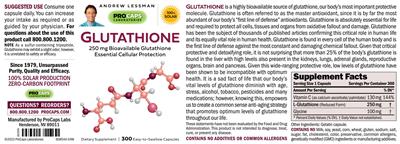
| Glycine | 100 mg | -- |
| L-Glutathione, Reduced | 250 mg | -- |
| Vitamin C | 130 mg | 144% |
Other ingredients: Gelatin
Tap any ingredient to jump to its full detail below.
These statements are the manufacturer’s wording, reproduced from the product label — the label is saying it, not HelloPharmacist. We don’t verify or endorse them.
Suggested/Recommended/Usage/Directions
Suggested Use Consume one capsule daily. You can increase your intake as required or as guided by your physician.
General Statements
For questions about the use of this product call 800.800.1200.
Questions? Reorders? 800.800.1200 procaps.com Andrew Lessman
Formulation
Note as a sulfur-containing tripeptide, glutathione may exhibit a slight odor; however, it is unrelated to safety or efficacy.
Since 1979, unsurpassed purity, quality and efficacy. 100% Solar production Zero-carbon footprint
100% Solar
Essential cellular protection
Contains no additives or common allergens Contains no milk, soy, yeast, corn, wheat, gluten, sodium, salt, sugar, fat, cholesterol, color, preservative, common allergens, genetically modified (GMO) ingredients or manufacturing additives.
Brand IP Statement(s)
Copyright 2023 ProCaps Laboratories
Formula
250 bioavailable glutathione
Glutathione is a highly bioavailable source of glutathione, our body's most important protective molecule. Glutathione is often referred to as the master antioxidant, since it is by far the most abundant of our body's "first line of defense" antioxidants. Glutathione is absolutely essential for life and required to protect all cells, tissues and organs from oxidative fallout and damage. Glutathione has been the subject of thousands of published articles confirming this critical role in human life and its equally vital role in human health. Glutathione is found in every cell of the human body and is the first line of defense against the most constant and damaging chemical fallout. Given that critical protective and detoxifying role, it is not surprising that more than 25% of the body's glutathione is found in the liver with high levels also present in the kidneys, lungs, adrenal glands, reproductive organs, brain and pancreas. Given this wide-ranging protective role, low levels of glutathione have been shown to be incompatible with optimum health. It is a sad fact of life that our body's vital levels of glutathione diminish with age, stress, alcohol, tobacco, pesticides and many medications; however, knowing this, empowers us to create a common sense anti-aging strategy that promotes optimum levels of glutathione throughout our life.
FDA Statement of Identity
Dietary Supplement
FDA Disclaimer Statement
These statements have not been evaluated by the Food and Drug Administration. This product is not intended to diagnose, treat, cure, or prevent any disease.
Is this label outdated? Report a formula or label change and our pharmacy team will review it.
Glutathione 250 mg by ProCaps Laboratories label
The label scan from the NIH Dietary Supplement Label Database. Tap to enlarge.
Label images are published by the NIH Dietary Supplement Label Database for the version of this product on file. Always read your actual product label.
View the full label (PDF)The Ingredients in Glutathione 250 mg by ProCaps Laboratories
These are the 3 active ingredients this product is made of. Select any to open its full monograph.
Serving size1 Capsule(s) Dosage formCapsule Servings per container300 Amounts shown are per serving.
Most supplement products combine several ingredients, and a medication can interact with the product through any one of them. Each ingredient below shows whether it has known drug interactions.
Glycine
Interacts with1 drug
Glycine is a non-essential amino acid your body makes on its own and that also appears in protein-rich foods. It is most studied for improving sleep q...
Glycine monograph & interactionsL-Glutathione, Reduced
Vitamin C
Interacts with207 drugs
Vitamin C (ascorbic acid) is an essential nutrient your body needs but cannot make, so you must get it from food or supplements. It's important for im...
Vitamin C monograph & interactionsOther (inactive) ingredients: Gelatin. These complete the product’s ingredient list but are not active constituents.
Glutathione 250 mg by ProCaps Laboratories Drug Interactions
HelloPharmacist Interaction Report
Glutathione 250 mg by ProCaps Laboratories contains two ingredients with documented drug interactions.
Glycine can worsen symptoms in people taking clozapine (Clozaril) for schizophrenia—a moderate interaction where adding glycine to clozapine therapy made symptoms worse in a small clinical study, though the exact mechanism isn't clear.
Read the full breakdown — every affected drug type, severity by severity
Vitamin C in this product carries moderate interactions with several medication types. It can raise blood levels of estrogens (oral contraceptives and hormone replacement therapy), potentially increasing estrogen-related effects.
It may also interfere with certain chemotherapy drugs (alkylating agents and antitumor antibiotics) by reducing their cancer-fighting activity. Vitamin C can boost absorption of aluminum from aluminum-containing products, increase how much levothyroxine (Synthroid) your body takes in, and reduce the blood-thinning power of warfarin (Coumadin)—especially at higher doses.
It can also lower levels of the antipsychotic fluphenazine (Prolixin) and modestly reduce HIV medication indinavir (Crixivan).
We could not check L-glutathione, reduced for interactions—no data is on file for it. Altogether, these interactions span 208 individual medications.
Run your exact medications through the checker on this page before you start.
Check your own medications below · Editorial policy · How we use AI
Want to check YOUR meds against Glutathione 250 mg?
Ask about interactions with your drugs in plain English — “Can I take it with lisinopril?” — and we find you the answer in seconds, ingredient by ingredient.
Go to the checkerIngredients driving the most interactions
Individual Drug Interactions
The ingredients in Glutathione 250 mg interact with 208 drugs. Click any drug to see the details.
2 of the 3 ingredients in Glutathione 250 mg interact with drugs. Each result below shows which ingredient is responsible. Vitamin C Glycine
Alginic Acid, Aluminum HydroxideRafton
How Alginic Acid, Aluminum Hydroxide interacts with Glutathione 250 mg — through 1 ingredient. Tap an ingredient for the detail:
Vitamin CAluminum Moderate
Interaction Summary
Vitamin C can increase the amount of aluminum absorbed from aluminum compounds.
Read the full Vitamin C + Alginic Acid, Aluminum Hydroxide interactionAltretamineHexalen
How Altretamine interacts with Glutathione 250 mg — through 1 ingredient. Tap an ingredient for the detail:
Vitamin CAlkylating Agents Moderate
Interaction Summary
Theoretically, antioxidant effects of vitamin C might reduce the effectiveness of alkylating agents.
Read the full Vitamin C + Altretamine interactionAluminum Acetate, Benzethonium ChlorideBuro-Sol Otic Solution
How Aluminum Acetate, Benzethonium Chloride interacts with Glutathione 250 mg — through 1 ingredient. Tap an ingredient for the detail:
Vitamin CAluminum Moderate
Interaction Summary
Vitamin C can increase the amount of aluminum absorbed from aluminum compounds.
Read the full Vitamin C + Aluminum Acetate, Benzethonium Chloride interactionAluminum ChlorideAluminum Chloride, Anhydrol Forte, Driclor, Drysol
How Aluminum Chloride interacts with Glutathione 250 mg — through 1 ingredient. Tap an ingredient for the detail:
Vitamin CAluminum Moderate
Interaction Summary
Vitamin C can increase the amount of aluminum absorbed from aluminum compounds.
Read the full Vitamin C + Aluminum Chloride interactionAluminum HydroxideAlu-Cap, Amphojel, Gaviscon
How Aluminum Hydroxide interacts with Glutathione 250 mg — through 1 ingredient. Tap an ingredient for the detail:
Vitamin CAluminum Moderate
Interaction Summary
Vitamin C can increase the amount of aluminum absorbed from aluminum compounds.
Read the full Vitamin C + Aluminum Hydroxide interactionAluminum Hydroxide, Aspirin, Codeine Phosphate, Magnesium HydroxideAscriptin Codeine #2
How Aluminum Hydroxide, Aspirin, Codeine Phosphate, Magnesium Hydroxide interacts with Glutathione 250 mg — through 1 ingredient. Tap an ingredient for the detail:
Vitamin CAspirin, Aluminum Moderate
Interaction Summary
Acidification of the urine by vitamin C might increase aspirin levels.
Read the full Vitamin C + Aluminum Hydroxide, Aspirin, Codeine Phosphate, Magnesium Hydroxide interactionAluminum Hydroxide, Aspirin, Magnesium HydroxideAscriptin
How Aluminum Hydroxide, Aspirin, Magnesium Hydroxide interacts with Glutathione 250 mg — through 1 ingredient. Tap an ingredient for the detail:
Vitamin CAspirin, Aluminum Moderate
Interaction Summary
Acidification of the urine by vitamin C might increase aspirin levels.
Read the full Vitamin C + Aluminum Hydroxide, Aspirin, Magnesium Hydroxide interactionAluminum Hydroxide, Magnesium Hydroxide (otc Drug)Maalox, Mucogel
How Aluminum Hydroxide, Magnesium Hydroxide (otc Drug) interacts with Glutathione 250 mg — through 1 ingredient. Tap an ingredient for the detail:
Vitamin CAluminum Moderate
Interaction Summary
Vitamin C can increase the amount of aluminum absorbed from aluminum compounds.
Read the full Vitamin C + Aluminum Hydroxide, Magnesium Hydroxide (otc Drug) interactionAluminum Hydroxide, Magnesium Hydroxide, Simethicone (otc Drug)Mylanta
How Aluminum Hydroxide, Magnesium Hydroxide, Simethicone (otc Drug) interacts with Glutathione 250 mg — through 1 ingredient. Tap an ingredient for the detail:
Vitamin CAluminum Moderate
Interaction Summary
Vitamin C can increase the amount of aluminum absorbed from aluminum compounds.
Read the full Vitamin C + Aluminum Hydroxide, Magnesium Hydroxide, Simethicone (otc Drug) interactionAluminum, CalciumDomeboro
How Aluminum, Calcium interacts with Glutathione 250 mg — through 1 ingredient. Tap an ingredient for the detail:
Vitamin CAluminum Moderate
Interaction Summary
Vitamin C can increase the amount of aluminum absorbed from aluminum compounds.
Read the full Vitamin C + Aluminum, Calcium interactionAluminum, Magnesium (otc Drug)Almagel
How Aluminum, Magnesium (otc Drug) interacts with Glutathione 250 mg — through 1 ingredient. Tap an ingredient for the detail:
Vitamin CAluminum Moderate
Interaction Summary
Vitamin C can increase the amount of aluminum absorbed from aluminum compounds.
Read the full Vitamin C + Aluminum, Magnesium (otc Drug) interactionAluminum, Magnesium Hydroxide (otc Drug)Wingel
How Aluminum, Magnesium Hydroxide (otc Drug) interacts with Glutathione 250 mg — through 1 ingredient. Tap an ingredient for the detail:
Vitamin CAluminum Moderate
Interaction Summary
Vitamin C can increase the amount of aluminum absorbed from aluminum compounds.
Read the full Vitamin C + Aluminum, Magnesium Hydroxide (otc Drug) interactionAspirin, Aluminum Hydroxide, Codeine Phosphate, Magnesium HydroxideAscriptin Codeine #3
How Aspirin, Aluminum Hydroxide, Codeine Phosphate, Magnesium Hydroxide interacts with Glutathione 250 mg — through 1 ingredient. Tap an ingredient for the detail:
Vitamin CAspirin, Aluminum Moderate
Interaction Summary
Acidification of the urine by vitamin C might increase aspirin levels.
Read the full Vitamin C + Aspirin, Aluminum Hydroxide, Codeine Phosphate, Magnesium Hydroxide interactionBazedoxifene Acetate, Conjugated EstrogensDuavee
How Bazedoxifene Acetate, Conjugated Estrogens interacts with Glutathione 250 mg — through 1 ingredient. Tap an ingredient for the detail:
Vitamin CEstrogens Moderate
Interaction Summary
Vitamin C might increase blood levels of estrogens.
Read the full Vitamin C + Bazedoxifene Acetate, Conjugated Estrogens interactionBendamustineBelrapzo, Treanda, Vivimusta
How Bendamustine interacts with Glutathione 250 mg — through 1 ingredient. Tap an ingredient for the detail:
Vitamin CAlkylating Agents Moderate
Interaction Summary
Theoretically, antioxidant effects of vitamin C might reduce the effectiveness of alkylating agents.
Read the full Vitamin C + Bendamustine interactionBendamustine HydrochlorideBendeka
How Bendamustine Hydrochloride interacts with Glutathione 250 mg — through 1 ingredient. Tap an ingredient for the detail:
Vitamin CAlkylating Agents Moderate
Interaction Summary
Theoretically, antioxidant effects of vitamin C might reduce the effectiveness of alkylating agents.
Read the full Vitamin C + Bendamustine Hydrochloride interactionBleomycinBlenoxane
How Bleomycin interacts with Glutathione 250 mg — through 1 ingredient. Tap an ingredient for the detail:
Vitamin CAntitumor Antibiotics Moderate
Interaction Summary
Theoretically, the antioxidant effects of vitamin C might reduce the effectiveness of antitumor antibiotics.
Read the full Vitamin C + Bleomycin interactionBusulfanBusulfex, Myleran
How Busulfan interacts with Glutathione 250 mg — through 1 ingredient. Tap an ingredient for the detail:
Vitamin CAlkylating Agents Moderate
Interaction Summary
Theoretically, antioxidant effects of vitamin C might reduce the effectiveness of alkylating agents.
Read the full Vitamin C + Busulfan interactionCarboplatinParaplatin
How Carboplatin interacts with Glutathione 250 mg — through 1 ingredient. Tap an ingredient for the detail:
Vitamin CAlkylating Agents Moderate
Interaction Summary
Theoretically, antioxidant effects of vitamin C might reduce the effectiveness of alkylating agents.
Read the full Vitamin C + Carboplatin interactionCarmustineBiCNU, Gliadel, Gliadel Wafer
How Carmustine interacts with Glutathione 250 mg — through 1 ingredient. Tap an ingredient for the detail:
Vitamin CAlkylating Agents Moderate
Interaction Summary
Theoretically, antioxidant effects of vitamin C might reduce the effectiveness of alkylating agents.
Read the full Vitamin C + Carmustine interactionChlorambucilLeukeran
How Chlorambucil interacts with Glutathione 250 mg — through 1 ingredient. Tap an ingredient for the detail:
Vitamin CAlkylating Agents Moderate
Interaction Summary
Theoretically, antioxidant effects of vitamin C might reduce the effectiveness of alkylating agents.
Read the full Vitamin C + Chlorambucil interactionCisplatinPlatinol-AQ
How Cisplatin interacts with Glutathione 250 mg — through 1 ingredient. Tap an ingredient for the detail:
Vitamin CAlkylating Agents Moderate
Interaction Summary
Theoretically, antioxidant effects of vitamin C might reduce the effectiveness of alkylating agents.
Read the full Vitamin C + Cisplatin interactionClozapineClozaril, Versacloz
How Clozapine interacts with Glutathione 250 mg — through 1 ingredient. Tap an ingredient for the detail:
GlycineClozapine (clozaril) Moderate
Interaction Summary
Theoretically, glycine might decrease the effectiveness of clozapine.
Read the full Glycine + Clozapine interactionConjugated EstrogensCenestin, Enjuvia, Premarin, Premarin Vaginal Cream
How Conjugated Estrogens interacts with Glutathione 250 mg — through 1 ingredient. Tap an ingredient for the detail:
Vitamin CEstrogens Moderate
Interaction Summary
Vitamin C might increase blood levels of estrogens.
Read the full Vitamin C + Conjugated Estrogens interactionConjugated Estrogens, Medroxyprogesterone AcetatePremplus, Prempro
How Conjugated Estrogens, Medroxyprogesterone Acetate interacts with Glutathione 250 mg — through 1 ingredient. Tap an ingredient for the detail:
Vitamin CEstrogens Moderate
Interaction Summary
Vitamin C might increase blood levels of estrogens.
Read the full Vitamin C + Conjugated Estrogens, Medroxyprogesterone Acetate interactionConjugated Estrogens, MeprobamatePMB 200, PMB 400
How Conjugated Estrogens, Meprobamate interacts with Glutathione 250 mg — through 1 ingredient. Tap an ingredient for the detail:
Vitamin CEstrogens Moderate
Interaction Summary
Vitamin C might increase blood levels of estrogens.
Read the full Vitamin C + Conjugated Estrogens, Meprobamate interactionConjugated Estrogens, MethyltestosteronePremarin with Methyltestosterone
How Conjugated Estrogens, Methyltestosterone interacts with Glutathione 250 mg — through 1 ingredient. Tap an ingredient for the detail:
Vitamin CEstrogens Moderate
Interaction Summary
Vitamin C might increase blood levels of estrogens.
Read the full Vitamin C + Conjugated Estrogens, Methyltestosterone interactionCyclophosphamideCytoxan, Neosar
How Cyclophosphamide interacts with Glutathione 250 mg — through 1 ingredient. Tap an ingredient for the detail:
Vitamin CAlkylating Agents Moderate
Interaction Summary
Theoretically, antioxidant effects of vitamin C might reduce the effectiveness of alkylating agents.
Read the full Vitamin C + Cyclophosphamide interactionCyproterone Acetate, Ethinyl EstradiolDiane-35, Dianette
How Cyproterone Acetate, Ethinyl Estradiol interacts with Glutathione 250 mg — through 1 ingredient. Tap an ingredient for the detail:
Vitamin CEstrogens Moderate
Interaction Summary
Vitamin C might increase blood levels of estrogens.
Read the full Vitamin C + Cyproterone Acetate, Ethinyl Estradiol interactionDacarbazineDTIC-Dome
How Dacarbazine interacts with Glutathione 250 mg — through 1 ingredient. Tap an ingredient for the detail:
Vitamin CAlkylating Agents Moderate
Interaction Summary
Theoretically, antioxidant effects of vitamin C might reduce the effectiveness of alkylating agents.
Read the full Vitamin C + Dacarbazine interactionEach ingredient & the kinds of drugs it affects
For each ingredient in Glutathione 250 mg with known interactions, here are the types of medications they can affect. Open any type for the detail — or search your exact drug in the checker above.
Vitamin C
Alkylating Agents
Theoretically, antioxidant effects of vitamin C might reduce the effectiveness of alkylating agents.
The use of antioxidants like vitamin C during chemotherapy is controversial. There is concern that antioxidants could reduce the activity of chemotherapy drugs that generate free radicals, such as cyclophosphamide, chlorambucil, carmustine, busulfan, and thiotepa. In contrast, some researchers theorize that antioxidants might make chemotherapy more effective by reducing oxidative stress that could interfere with apoptosis (cell death) of cancer cells. More evidence is needed to determine what effect, if any, antioxidants such as vitamin C have on chemotherapy.
Aluminum
Vitamin C can increase the amount of aluminum absorbed from aluminum compounds.
Research in animals and humans shows that vitamin C increases aluminum absorption, theoretically by chelating aluminum and keeping it in solution where it is available for absorption. In people with normal renal function, urinary excretion of aluminum will likely increase, making aluminum retention and toxicity unlikely. Patients with renal failure who take aluminum-containing compounds such as phosphate binders should avoid vitamin C supplements in doses above the recommended dietary allowances.
Antitumor Antibiotics
Theoretically, the antioxidant effects of vitamin C might reduce the effectiveness of antitumor antibiotics.
The use of antioxidants like vitamin C during chemotherapy is controversial. There is concern that antioxidants could reduce the activity of chemotherapy drugs which generate free radicals, such as doxorubicin. In contrast, some researchers theorize that antioxidants might make chemotherapy more effective by reducing oxidative stress that could interfere with apoptosis (cell death) of cancer cells. More evidence is needed to determine what effects, if any, antioxidants such as vitamin C have on chemotherapy.
Estrogens
Vitamin C might increase blood levels of estrogens.
Increases in plasma estrogen levels of up to 55% occur under some circumstances when vitamin C is taken concurrently with oral contraceptives or hormone replacement therapy, including topical products. It is suggested that vitamin C prevents oxidation of estrogen in the tissues, regenerates oxidized estrogen, and reduces sulfate conjugation of estrogen in the gut wall. When tissue levels of vitamin C are high, these processes are already maximized and supplemental vitamin C does not have any effect on estrogen levels. Increases in plasma estrogen levels may occur when patients who are deficient in vitamin C take supplements. Monitor these patients for estrogen-related side effects.
Fluphenazine (Prolixin)
Theoretically, vitamin C might decrease levels of fluphenazine.
In one patient there was a clinically significant decrease in fluphenazine levels when vitamin C (500 mg twice daily) was started. The mechanism is not known, and there is no further data to confirm this interaction.
Indinavir (Crixivan)
Vitamin C can modestly reduce indinavir levels.
One pharmacokinetic study shows that taking vitamin C 1 gram orally once daily along with indinavir 800 mg orally three times daily reduces the area under the concentration-time curve of indinavir by 14%. The mechanism of this interaction is unknown, but it is unlikely to be clinically significant in most patients. The effect of higher doses of vitamin C on indinavir levels is unknown.
Levothyroxine (Synthroid, Others)
Vitamin C can increase levothyroxine absorption.
Two clinical studies in adults with poorly controlled hypothyroidism show that swallowing levothyroxine with a glass of water containing vitamin C 500-1000 mg in solution reduces thyroid stimulating hormone (TSH) levels and increases thyroxine (T4) levels when compared with taking levothyroxine alone. This suggests that vitamin C increases the oral absorption of levothyroxine, possibly due to a reduction in pH.
Warfarin (Coumadin)
High-dose vitamin C might reduce the levels and effectiveness of warfarin.
Vitamin C in high doses may cause diarrhea and possibly reduce warfarin absorption. There are reports of two people who took up to 16 grams daily of vitamin C and had a reduction in prothrombin time. Lower doses of 5-10 grams daily can also reduce warfarin absorption. In many cases, this does not seem to be clinically significant. However, a case of warfarin resistance has been reported for a patient who took vitamin C 500 mg twice daily. Cessation of vitamin C supplementation resulted in a rapid increase in international normalized ratio (INR). Tell patients taking warfarin to avoid taking vitamin C in excessively high doses (greater than 10 grams daily). Lower doses may be safe, but the anticoagulation activity of warfarin should be monitored. Patients who are stabilized on warfarin while taking vitamin C should avoid adjusting vitamin C dosage to prevent the possibility of warfarin resistance.
Acetaminophen (Tylenol, Others)
High-dose vitamin C might slightly prolong the clearance of acetaminophen.
A small pharmacokinetic study in healthy volunteers shows that taking high-dose vitamin C (3 grams) 1.5 hours after taking acetaminophen 1 gram slightly increases the apparent half-life of acetaminophen from around 2.3 hours to 3.1 hours. Ascorbic acid competitively inhibits sulfate conjugation of acetaminophen. However, to compensate, elimination of acetaminophen glucuronide and unconjugated acetaminophen increases. This effect is not likely to be clinically significant.
Aspirin
Acidification of the urine by vitamin C might increase aspirin levels.
It has been suggested that acidification of the urine by vitamin C could increase reabsorption of salicylates by the renal tubules, and increase plasma salicylate levels. However, short-term use of up to 6 grams daily of vitamin C does not seem to affect urinary pH or salicylate excretion, suggesting this interaction is not clinically significant.
Choline Magnesium Trisalicylate (Trilisate)
Acidification of the urine by vitamin C might increase choline magnesium trisalicylate levels.
It has been suggested that acidification of the urine by vitamin C could increase reabsorption of salicylates by the renal tubules, and increase plasma salicylate levels. However, short-term use of up to 6 grams daily of vitamin C does not seem to affect urinary pH or salicylate excretion, suggesting this interaction probably is not clinically significant.
Niacin
Vitamin C might decrease the beneficial effects of niacin on high-density lipoprotein (HDL) cholesterol levels.
A combination of niacin and simvastatin (Zocor) effectively raises HDL cholesterol levels in patients with coronary disease and low HDL levels. Clinical research shows that taking a combination of antioxidants (vitamin C, vitamin E, beta-carotene, and selenium) along with niacin and simvastatin (Zocor) attenuates this rise in HDL, specifically the HDL-2 and apolipoprotein A1 fractions, by more than 50% in patients with coronary disease. It is not known whether this adverse effect is due to a single antioxidant such as vitamin C, or to the combination. It also is not known whether it will occur in other patient populations.
Salsalate (Disalcid)
Acidification of the urine by vitamin C might increase salsalate levels.
It has been suggested that acidification of the urine by vitamin C could increase reabsorption of salicylates by the renal tubules, and increase plasma salicylate levels. However, short-term use of up to 6 grams/day vitamin C does not seem to affect urinary pH or salicylate excretion, suggesting this interaction probably is not clinically significant.
Glycine
Clozapine (Clozaril)
Theoretically, glycine might decrease the effectiveness of clozapine.
One small clinical study in patients with schizophrenia shows that adding glycine to clozapine therapy worsens symptoms of schizophrenia when compared with clozapine alone. The mechanism of this interaction is unclear.
Brand information
Manufacturer and brand details for Glutathione 250 mg, from the product label.
ProCaps Laboratories
See all ProCaps Laboratories products- Name
- ProCaps Labs
- City
- Henderson
- State
- NV
- ZipCode
- 89011
- Phone Number
- 800.800.1200
- Web Address
- ProCaps.com
Glutathione 250 mg by ProCaps Laboratories: Common Questions
Does Glutathione 250 mg by ProCaps Laboratories interact with any medications?
How can one product interact with so many drugs?
Where does this information come from?
Does this product have any fillers?
Can I take this if I'm pregnant or breastfeeding?
What side effects might I notice?
Is glycine safe to take long-term?
Is this product effective for glutathione support?
Written and reviewed by the HelloPharmacist editorial staff. Our editorial policy
Not sure if Glutathione 250 mg is safe with your meds?
Our pharmacists answer your medication & supplement questions — free.
Label information is sourced from the NIH Dietary Supplement Label Database and reflects the product version on file; always read your actual product label. This page is for education only and is not a substitute for professional medical advice. Confirm with your pharmacist or doctor before combining supplements and medications.
The Full Monographs Behind Glutathione 250 mg’s Ingredients
Every ingredient we hold a full HelloPharmacist monograph for — uses, evidence, safety, and the complete interaction list.
Glycine
Interacts with 1 drugGlycine is a non-essential amino acid your body makes on its own and that also appears in protein-rich foods. It is most studied for improving sleep quality, where early research is promisin...
Read the full Glycine monograph → Herb & supplement monographVitamin C
Interacts with 207 drugsVitamin C (ascorbic acid) is an essential nutrient your body needs but cannot make, so you must get it from food or supplements. It's important for immune function, collagen, and acts as an...
Read the full Vitamin C monograph →Sources & How We Checked
Glutathione 250 mg's label data comes from the NIH Dietary Supplement Label Database; the ingredient interaction data is from the Natural Medicines database, reviewed by our pharmacists.
- NIH Dietary Supplement Label Database (DSLD) — The official product label on file for this supplement.
- Natural Medicines (Therapeutic Research Center) — Evidence-graded clinical reference behind the ingredient interaction data.
Content is written and reviewed by licensed HelloPharmacist pharmacists. See our data sources and editorial standards for how this information is built and checked.
The 56 references behind this product’s interaction data
Every citation that drives the interaction findings for this product’s ingredients, from the evidence-graded Natural Medicines (TRC Healthcare) database. Open an ingredient to browse its citations — links open the study on PubMed or the publisher’s site.
Glycine 5 references
- Heresco-Levy U, Javitt DC, Ermilov M, et al. Efficacy of high-dose glycine in the treatment of enduring negative symptoms of schizophrenia. Arch Gen Psychiatry 1999;56:29-36.. PubMed
- Potkin SG, Jin Y, Bunney BG, Costa J, Gulasekaram B. Effect of clozapine and adjunctive high-dose glycine in treatment-resistant schizophrenia. Am J Psychiatry 1999;156:145-7.. PubMed
- Gusev EI, Skvortsova VI, Dambinova SA, et al. Neuroprotective effects of glycine for therapy of acute ischaemic stroke. Cerebrovasc Dis 2000;10:49-60. PubMed
- Inagawa K, Kawai N, Ono K, Sukegawa E, Tsubuku S, Takahashi M. Assessment of acute adverse effects of glycine ingestion at a high dose in human volunteers. Seikatsu Eisei. 2006; 50:27-32.
- Woods SW, Walsh BC, Hawkins KA, Miller TJ, Saksa JR, D'Souza DC, Pearlson GD, Javitt DC, McGlashan TH, Krystal JH. Glycine treatment of the risk syndrome for psychosis: report of two pilot studies. Eur Neuropsychopharmacol. 2013 Aug;23(8):931-40. PubMed
Vitamin C 51 references
- McEvoy GK, ed. AHFS Drug Information. Bethesda, MD: American Society of Health-System Pharmacists, 1998.
- Back DJ, Breckenridge AM, MacIver M, et al. Interaction of ethinyloestradiol with ascorbic acid in man. Br Med J (Clin Res Ed) 1981;282:1516.
- Morris JC, Beeley L, Ballantine N. Interaction of ethinyloestradiol with ascorbic acid in man [letter]. Br Med J (Clin Res Ed) 1981;283:503.
- Labriola D, Livingston R. Possible interactions between dietary antioxidants and chemotherapy. Oncology 1999;13:1003-8.
- Dwyer JH, Merz NB, Shirocre AM, et al. Progression of early atherosclerosis and intake of vitamin C and vitamin E from supplements and food. The Los Angeles Atherosclerosis Study. 41st Annual Conference on Cardiovascular Disease Epidemiology and Prevent
- Levine M, Rumsey SC, Daruwala R, et al. Criteria and recommendations for vitamin C intake. JAMA 1999;281:1415-23. PubMed
- Hansten PD, Horn JR. Drug Interactions Analysis and Management. Vancouver, WA: Applied Therapeutics Inc., 1997 and updates.
- Segal S, Kaminski S. Drug-nutrient interactions. American Druggist 1996 Jul;42-8.
- Food and Nutrition Board, Institute of Medicine. Dietary Reference Intakes for Vitamin C, Vitamin E, Selenium, and Carotenoids. Washington, DC: National Academy Press, 2000. Available at: http://www.nap.edu/books/0309069351/html/.
- Houston JB, Levy G. Drug biotransformation interactions in man VI: Acetaminophen and ascorbic acid. J Pharm Sci 1976;65:1218-21. PubMed
- Brown BG, Zhao XQ, Chait A, et al. Simvastatin and niacin, antioxidant vitamins, or the combination for the prevention of coronary disease. N Engl J Med 2001;345:1583-93. DOI
- Rosenthal G. Interaction of ascorbic acid and warfarin. JAMA 1971;215:1671. DOI
- Hume R, Johnstone JM, Weyers E. Interaction of ascorbic acid and warfarin. JAMA 1972;219:1479. DOI
- Smith EC, Skalski RJ, Johnson GC, Rossi GV. Interaction of ascorbic acid and warfarin. JAMA 1972;221:1166. DOI
- Traxer O, Huet B, Poindexter J, et al. Effect of ascorbic acid consumption on urinary stone risk factors. J Urol 2003;170:397-401.. PubMed
- Domingo JL, Gomez M, Llobet JM, Richart C. Effect of ascorbic acid on gastrointestinal aluminum absorption (letter). Lancet 1991;338:1467.
- Domingo JL, Gomez M, Llobet JM, Corbella J. Influence of some dietary constituents on aluminum absorption and retention in rats. Kidney Int 1991;39:598-601. PubMed
- Partridge NA, Regnier FE, White JL, Hem SL. Influence of dietary constituents on intestinal absorption of aluminum. Kidney Int 1989;35:1413-7. PubMed
- Mc Leod DC, Nahata MC. Inefficacy of ascorbic acid as a urinary acidifier (letter). N Engl J Med 1977;296:1413. DOI
- Hansten PD, Hayton WL. Effect of antacid and ascorbic acid on serum salicylate concentration. J Clin Pharmacol 1980;20:326-31. PubMed
- Dysken MW, Cumming RJ, Channon RA, Davis JM. Drug interaction between ascorbic acid and fluphenazine. JAMA 1979;241:2008. DOI
- Vihtamaki T, Parantainen J, Koivisto AM, et al. Oral ascorbic acid increases plasma oestradiol during postmenopausal hormone replacement therapy. Maturitas 2002;42:129-35. PubMed
- Slain D, Amsden JR, Khakoo RA, et al. Effect of high-dose vitamin C on the steady-state pharmacokinetics of the protease inhibitor indinavir in healthy volunteers. Pharmacotherapy 2005;25:165-70. PubMed
- Cheung MC, Zhao XQ, Chait A, et al. Antioxidant supplements block the response of HDL to simvastatin-niacin therapy in patients with coronary artery disease and low HDL. Arterioscler Thromb Vasc Biol 2001;21:1320-6. PubMed
- Feetam CL, Leach RH, Meynell MJ. Lack of a clinically important interaction between warfarin and ascorbic acid. Toxicol Appl Pharmacol 1975;31:544-7. PubMed
- Weintraub M, Griner PF. Warfarin and ascorbic acid: lack of evidence for a drug interaction. Toxicol Appl Pharmacol 1974;28:53-6. PubMed
- Lee DH, Folsom AR, Harnack L, et al. Does supplemental vitamin C increase cardiovascular disease risk in women with diabetes? Am J Clin Nutr 2004;80:1194-200. PubMed
- Taylor EN, Stampfer MJ, Curhan GC. Dietary factors and the risk of incident kidney stones in men: new insights after 14 years of follow-up. J Am Soc Nephrol 2004;15:3225-32. PubMed
- Ward NC, Hodgson JM, Croft KD, et al. The combination of vitamin C and grape-seed polyphenols increases blood pressure: a randomized, double-blind, placebo-controlled trial. J Hypertens 2005;23:427-34.. PubMed
- Prasad KN. Rationale for using high-dose multiple dietary antioxidants as an adjunct to radiation therapy and chemotherapy. J Nutr 2004;134:3182S-3S. PubMed
- Conklin KA. Cancer chemotherapy and antioxidants. J Nutr 2004;134:3201S-3204S. PubMed
- Fairweather-Tait S, Hickson K, McGaw B, et al. Orange juice enhances aluminium absorption from antacid preparation. Eur J Clin Nutr. 1994;48(1):71-3.
- Gruenwald, J., Graubaum, H. J., Busch, R., and Bentley, C. Safety and tolerance of ester-C compared with regular ascorbic acid. Adv.Ther. 2006;23(1):171-178.
- Rahimi, R., Nikfar, S., Rezaie, A., and Abdollahi, M. A meta-analysis on the efficacy and safety of combined vitamin C and E supplementation in preeclamptic women. Hypertens.Pregnancy. 2009;28(4):417-434. PubMed
- Einerson, B., Nathorn, C., Kitiyakara, C., Sirada, M., and Thamlikitkul, V. The efficacy of ascorbic acid in suboptimal responsive anemic hemodialysis patients receiving erythropoietin: a meta-analysis. J Med.Assoc.Thai. 2011;94 Suppl 1:S134-S146.
- Li, G., Li, L., Yu, C., and Chen, L. Effect of vitamins C and E supplementation on Helicobacter pylori eradication: a meta-analysis. Br.J Nutr 2011;106(11):1632-1637.
- Chen X, Shen L, Gu X, et al. High-dose supplementation with vitamin C--induced pediatric urolithiasis: the first case report in a child and literature review. Urology. 2014;84(4):922-4. PubMed
- Sattar A, Willman JE, Kolluri R. Possible warfarin resistance due to interaction with ascorbic acid: case report and literature review. Am J Health Syst Pharm. 2013;70(9):782-6. PubMed
- Yaich S, Chaabouni Y, Charfeddine K, et al. Secondary oxalosis due to excess vitamin C intake: a cause of graft loss in a renal transplant recipient. Saudi J Kidney Dis Transpl. 2014;25(1):113-6. PubMed
- Jalloh MA, Gregory PJ, Hein D, et al. Dietary supplement interactions with antiretrovirals: a systematic review. Int J STD AIDS. 2017 Jan;28(1):4-15. PubMed
- Rumbold A, Ota E, Nagata C, Shahrook S, Crowther CA. Vitamin C supplementation in pregnancy. Cochrane Database Syst Rev. 2015;(9):CD004072. PubMed
- Seo MS, Kim JK, Shim JY. High-dose vitamin C promotes regression of multiple pulmonary metastases originating from hepatocellular carcinoma. Yonsei Med J. 2015;56(5):1449-52. PubMed
- Skelin M, Lucijanic T, Amidzic Klaric D, et al. Factors Affecting Gastrointestinal Absorption of Levothyroxine: A Review. Clin Ther. 2017 Feb;39(2):378-403. PubMed
- Jiang K, Tang K, Liu H, Xu H, Ye Z, Chen Z. Ascorbic acid supplements and kidney stones incidence among men and women: a systematic review and meta-analysis. Urol J. 2019;16(2):115-120.
- Thomas S, Patel D, Bittel B, et al. Effect of High-Dose Zinc and Ascorbic Acid Supplementation vs Usual Care on Symptom Length and Reduction Among Ambulatory Patients With SARS-CoV-2 Infection: The COVID A to Z Randomized Clinical Trial. JAMA Netw Open. 2 PubMed
- Giffen MA, McLemore JL. Hyperoxalosis Secondary to Intravenous Vitamin C Administration as a Non-Allopathic Treatment for Cancer. Acad Forensic Pathol 2019;9(1-2):118-126. PubMed
- Maike A, Sturgill D, Gallan A. Oxalate Nephropathy in a Renal Transplant Recipient After Receiving High Dose Ascorbic Acid. Am J Med Sci 2021. PubMed
- Shen ZY, Chen YR, Wang MC, Chang SS. High-dose vitamin C-induced acute oxalate nephropathy in a renal transplant recipient: a case report and literature review. Asian J Surg 2022. PubMed
- Yanase F, Spano S, Maeda A, et al. Mega-dose sodium ascorbate: a pilot, single-dose, physiological effect, double-blind, randomized, controlled trial. Crit Care 2023;27(1):371. PubMed
- Sharma Y, Sumanadasa S, Shahi R, et al. Efficacy and safety of vitamin C supplementation in the treatment of community-acquired pneumonia: a systematic review and meta-analysis with trial sequential analysis. Sci Rep 2024;14(1):11846. PubMed
- Pejcic AV, Petrovic NZ, Djordjic MD, Milosavljevic MN. Vitamin C Levels in Pregnant Women and the Efficacy of Vitamin C Supplements in Preventing Premature Rupture of Membranes: A Systematic Review and Meta-Analysis. Balkan Med J 2024;41(4):248-260. PubMed
Parts of this content are provided by the Therapeutic Research Center, LLC.
DISCLAIMER: Currently this does not check for drug-drug interactions. This is not an all-inclusive comprehensive list of potential interactions and is for informational purposes only. Not all interactions are known or well-reported in the scientific literature, and new interactions are continually being reported. Input is needed from a qualified healthcare provider including a pharmacist before starting any therapy. Application of clinical judgment is necessary.
© 2021 Therapeutic Research Center, LLC